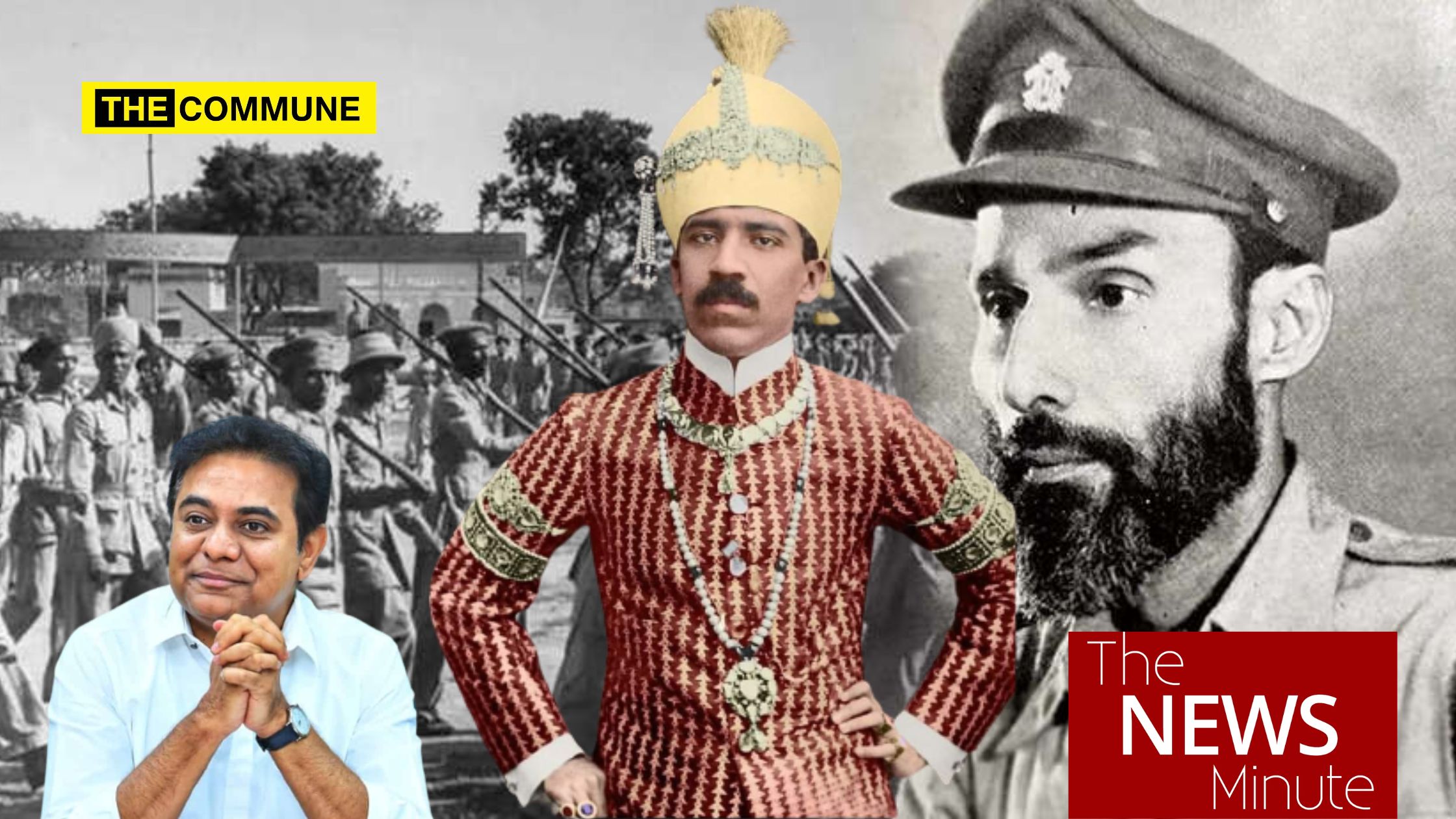
After the trailer of the movie Razakar, was released there is a sense of chaos and anger in the fragile Islamo-leftist ecosystem. The movie Razakar is based on the genocide of Hindus in the erstwhile Islamic kingdom of Hyderabad and it shows how Hindus were targeted in the events preceding the accession of the state into India.
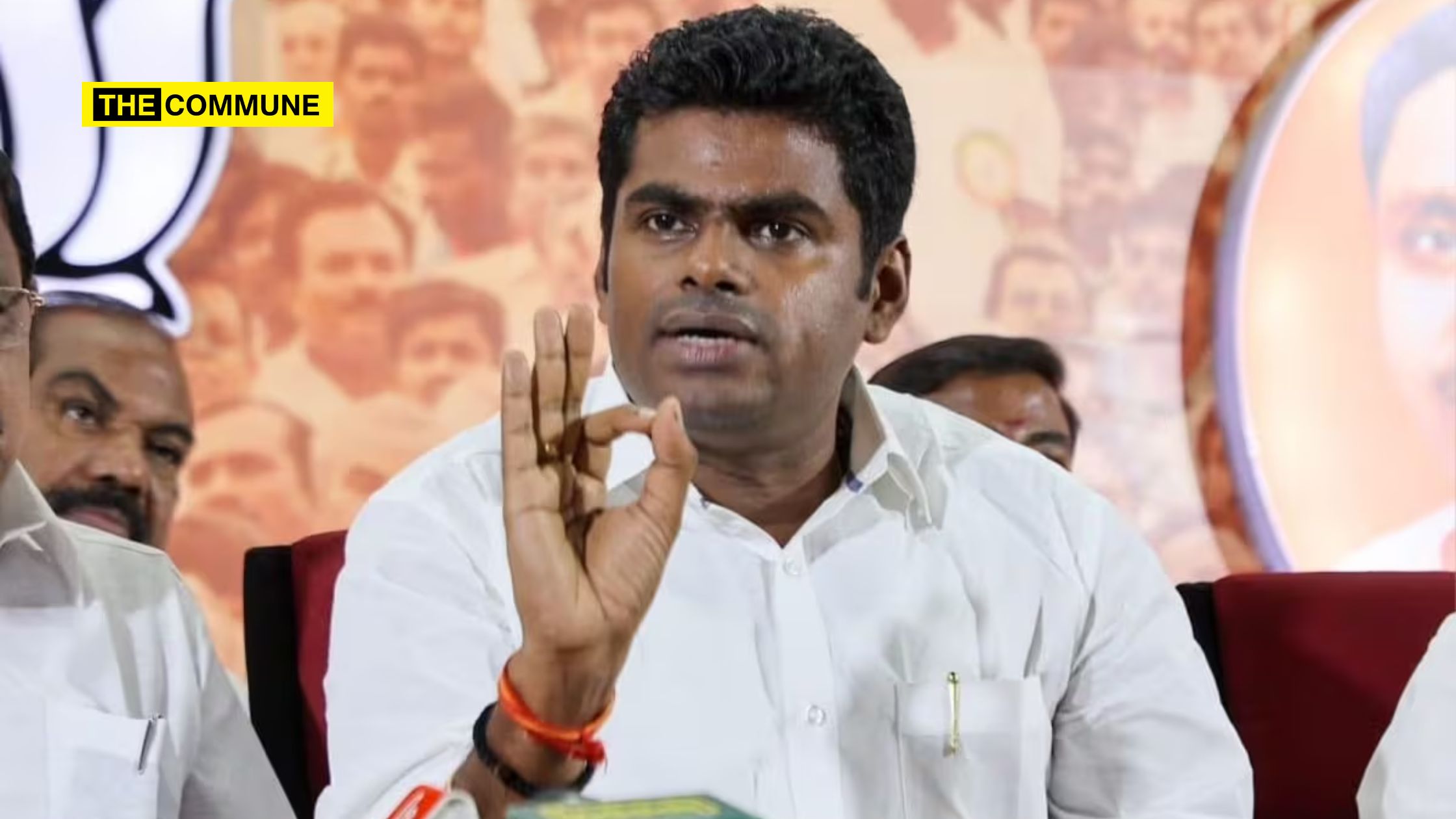
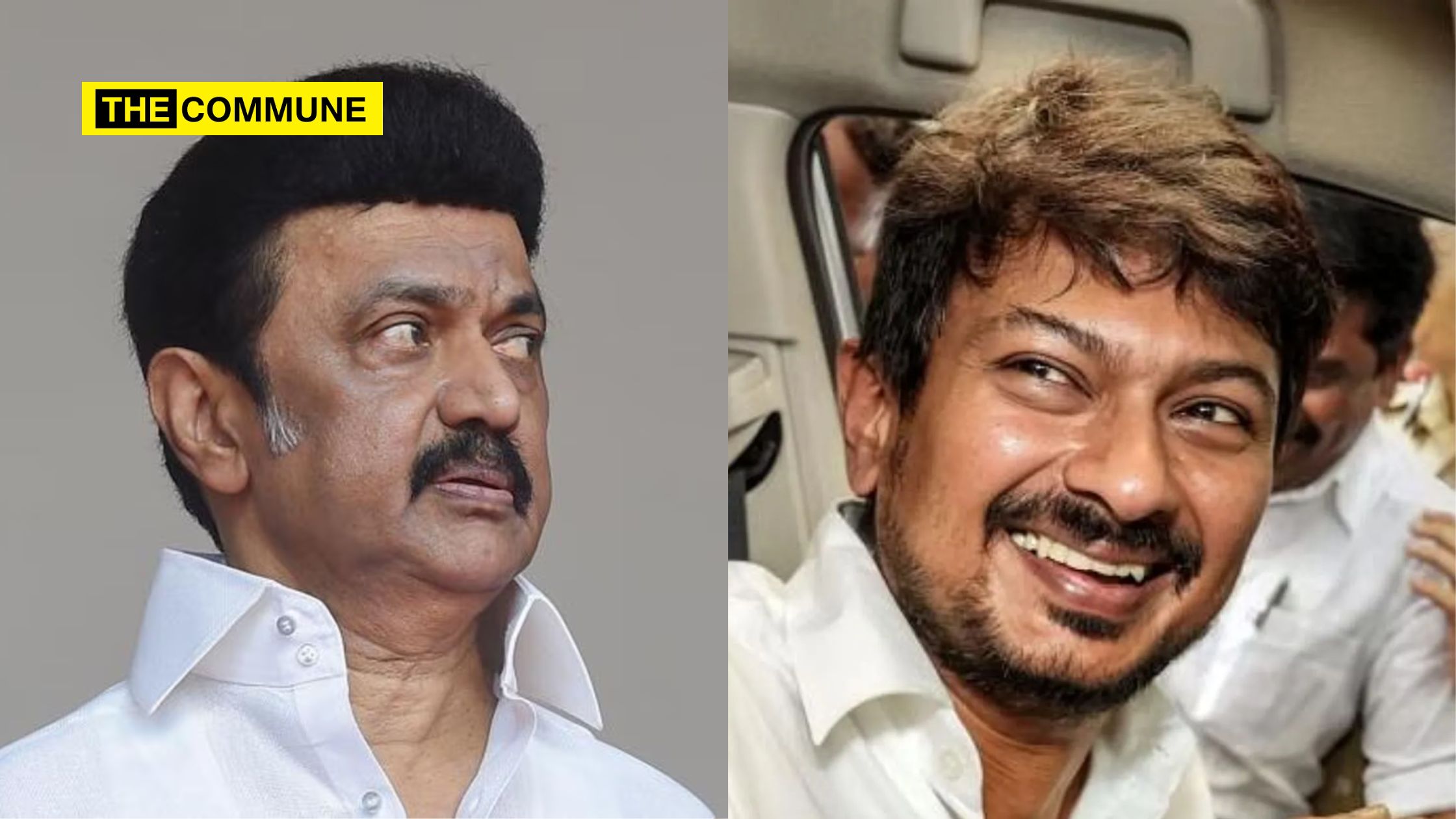
Such is the impact of this film that the ruling party in Telangana, the Telangana Rashtra Samithi (sorry Bharat Rashtra Samithis) leader K Chadrasekhar Rao’s son, K. T. Rama Rao said he will raise the movie with the censor board and the Telangana Police alleging that the BJP is trying to polarize the state.
On X (formally known as Twitter) Rama Rao said, “Some intellectually bankrupt jokers of the BJP are doing their best to instigate communal violence and polarisation for their political propaganda in Telangana. We will take up the matter with the censor board and also the Telangana police to ensure that the law & order situation in Telangana is not affected.”
Dhanya Rajendran who is the Editor-in-Chief of Leftist portal The News Minute said, “After Kashmir Files and Kerala Story, this is a movie that the BJP is banking on. This time, the producer is a BJP MLA. What is the BJP’s plan? What is the real history?” deriding the movie as propaganda of the BJP trivializing the massacre that was unleashed by Razakars at the behest of the Nizam.
She then asked people to read a long-winded article written by her colleague Yunus Lasania that lacked substance and some truths that were conveniently omitted.
The News Minute in its articles have attempted to downplay the religious persecution of Hindus by bringing in the classic leftist trope of “peasant struggle”, just like how leftists have been peddling the same for Moplah Massacre in Kerala in which Moplah Muslims went on a killing spree of Hindus.
The Systemic Oppression And Persecution Of Hindus Under Nizam Rule
Hyderabad was a region with a Hindu-majority population but was under the rule of a Muslim Nizam named Mir Osman Ali Khan. A poem written by the Nizam goes like this: “I am the protector of Islam and a butcher of Kaffirs“. Kaffir is an insulting term used to refer to the people who don’t subscribe to Islam.
The Nizam had around several women as his concubines and most of these women of other religions abducted in raids. He even reportedly purchased 10-12 year old girls from Nuristan (Afghanistan) as sex slaves.
The rule of the Nizam was characterized by intrigue, inequity, injustice and widespread oppression of the majority Hindu populace.
In the Hyderabad of Nizam’s era, Muslims constituted just 13% of the population, yet they held a disproportionate 77% of gazetted government positions. Among government officers, 88% at higher levels and 82% at lower levels were Muslims. Conversely, Hindus faced marginalization not only within the government but throughout Hyderabad as a whole.
In 1891, Hindus made up 90.53% of the population. By 1911, when Osman Ali Khan assumed power, the Hindu population had reduced to 86.15%. By the end of his reign, Hindus had dwindled to just under 80%. To reduce the Hindu population, the Nizam imported around 800,000 Arabs and Afghans, granting them significant state privileges. Many of these foreigners formed a substantial portion of the Nizam’s armed forces. A significant number of Yemeni Arabs, found in Barkas, Hyderabad today, are descendants of the Nizam’s armies. Even his Commander in Chief, Sayyid El Edroos, hailed from an Arab background.
Additionally, the Nizam actively encouraged forced religious conversions. One individual in his service, Siddique, played a key role in founding the Deendar movement, which remained active even after India’s independence and was eventually banned in 2007 due to its involvement in bombings in South India. Siddique, under the Nizam’s directive, conducted forced conversions, some of which took place within government offices. Criminals in prisons were given the option to convert in exchange for their release, and many of these converted individuals later joined the ranks of the Razakars.
KM Munshi, the Agent General of India, in his autobiography “Hyderabad Memoirs: The End of An Era“, Hindus faced official pressure, private harassment, and threats of violence. He writes “Under official pressure, private harassment and threats of violence, Hindus were… prevented from building or repairing a temple in any locality where Muslims resided. Hindu temples were often desecrated but the culprits were rarely traced, never punished. Hindu religious teachers were prohibited from delivering discourses, while the Muslim divines, the members of Ittehad and the Deendars carried on a vigorous campaign of proselytising the Hindus.“
Under the Nizam’s rule, the educational policy aimed to supplant Telugu with Urdu. State-supported education was exclusively delivered in either Urdu or English. In 1915, even the option of English was replaced by Urdu in the state’s schools. At Osmania University, established by the Nizam, Hindu students were required to dress according to Muslim standards and were prohibited from wearing dhotis and kurtas. They were also not allowed to observe Hindu festivals such as Janmashtami. Singing Vande Mataram was forbidden for students, and those who did so were compelled to issue apologies or faced expulsion. This policy was enforced in schools as well, resulting in the expulsion of approximately 1,200 students from colleges and schools. In contrast, festivals like Eid and Milad-un-Nabi were celebrated with great enthusiasm.
How The Nizam Unleashed The Razakars To Massacre Hindus
The Nizam faced a challenging decision, torn between the options of joining India or remaining an independent entity. The Nizam ultimately chose to resist merging with India and, with the backing of Muhammad Ali Jinnah, opposed becoming part of the Indian Union.
Qasim Rizvi, who led the Majlis-e-Itihadul Muslimeen (MIM, a precursor to today’s AIMIM), staunchly advocated for the Nizam’s alignment with Pakistan. However, the majority of Hyderabad’s residents expressed a desire to unite with India. Civil movements, spearheaded by Arya Samaj, Hindu Mahasabha, and Hyderabad State Congress, emerged to champion the rights of Hindus in Hyderabad and advocate for the state’s integration into the Indian Union.
In anticipation of potential unrest, the Nizam authorized the establishment of the Razakars, led by Kasim Razvi, which functioned as a paramilitary wing of the MIM.
The Nizam had become a puppet in the hands of Rizvi who mobilized a fanatic Razakar militia. The Razakars, at the behest of the Nizam, went on a rampage going village after village plundering, kidnapping and murdering people. The Nizam virtually presided over a large scale massacres of Hindus.
During the Vijayadashami celebration in 1947, as women observed the Bathukamma festival and boarded a train at Wadi station, they were forcibly removed at Gandalpur and loaded onto trucks to be taken to a nearby police station. At the police station, these women were subjected to cruel treatment, including disrobing, repeated beatings, and being forced to dance.
On the fateful days of May 9-10, 1948, approximately 2000 Razakaars descended upon the Hindu village of Gorta. They desecrated temples, forcibly removed residents from their homes, and began a ruthless slaughter that spared no one, not even children or pregnant women.
The Bhairanpally Massacre
While many are familiar with the Jallianwala Bagh massacre where General Dyer fired upon a peaceful crowd, resulting in hundreds of casualties, including children, fewer are aware of the wall in Bhairanpally, Telangana, which bears witness to the tyranny of the Razakars. The Razakars had been attempting to enter Bhairanpally since June 1948 but were repelled by villagers using traditional weapons.
However, in August 1948, during the Telugu folk festival of Bathukamma, the barbaric Razakars managed to infiltrate the village with the assistance of the Hyderabad State police. Villagers sought refuge in the village fortress and managed to eliminate some Razakars. Nevertheless, the overwhelming number of Razakars overpowered them. They proceeded to massacre unarmed villagers, shooting all guards at point-blank range and committing heinous acts.
On the dreadful day of August 27, 1948, armed Razakars set homes ablaze, murdered men, assaulted women, killed children and the elderly in a cowardly manner. The reason for this brutality? The villagers’ refusal to pay the jizyah tax imposed by the Nizam. Men were executed, women were subjected to rape, homes were looted, and the entire village was set on fire. To conserve ammunition, 2-3 men were lined up and shot simultaneously. Women were stripped, violated, and forced to dance in front of the lifeless bodies of their loved ones. Many residents died by leaping into open wells in agricultural fields. According to historians and village elders, approximately 118 people lost their lives.
Despite putting up a staunch resistance against the Razakars, the villagers of Bhairanpally were mercilessly slaughtered.
These accounts offer only a glimpse of the atrocities endured by Hindus in the state of Hyderabad under the Nizam’s rule.
The tyranny of the Razakars persisted until the Indian army routed them during Operation Polo in 1948. This operation led to the liberation of Hyderabad from Nizam’s control and its accession to the Indian Union.
Whitewashing Of The Dark History
In 2018, the ruling TRS (sorry BRS) unveiled a portrait of the Nizam adorning the pillars of the Hyderabad metro. The last time the Nizam was praised in public was when he died in 1967. Since then, he was not even mentioned let alone be celebrated by the state government. Such has been the dreaded history of the bigot. Such a character who was relegated to the annals of history being given a new leash of life by the KCR government tells much about the direction in which the party is heading – minority appeasement and galvanizing Muslim votes. Yet KCR’s son KTR and the leftist media ecosystem have the galls to accuse the BJP of indulging in polarization through the Razakar movie.
The Nizam rule in Hyderabad remains one of the darkest chapter in history of Deccan with targeted killings and persecution of Hindu subjects. It is this dark chapter that is being hidden by the likes of TRS aided by TNM.
(Kaushik is a political writer)
Click here to subscribe to The Commune on Telegram and get the best stories of the day delivered to you personally.