Kerala is facing a severe financial crisis, with total outstanding liabilities touching Rs 5.07 lakh crore and pending arrears amounting to Rs 48,733 crore, according to a white paper tabled in the Kerala Assembly on Thursday, 4 June 2026, by the newly elected government, as reported in The New Indian Express.
The report, titled “Kerala’s Fiscal Health: A Status Report”, was prepared by a committee headed by former Cabinet Secretary K.M. Chandrasekhar. Chief Minister and Finance Minister V.D. Satheesan presented the document in the Assembly, describing it as an exercise in transparency aimed at revealing the true state of Kerala’s finances at the beginning of the new government’s tenure.
The white paper paints a troubling picture of a state struggling under the weight of debt, unpaid bills, mounting losses in public sector companies and a shrinking ability to invest in future development.
According to the report, Kerala currently has outstanding liabilities of Rs 5.07 lakh crore. In addition, the government has inherited arrears worth Rs 48,733 crore from the previous administration. These arrears include Rs 21,670 crore in unpaid Dearness Allowance (DA) owed to government employees, Rs 14,387 crore in Dearness Relief arrears owed to pensioners and another Rs 3,431 crore owed to banks and contractors.
The report notes that these unpaid dues are almost equal to the amount Kerala borrows from the market in a year, highlighting the scale of the financial burden facing the state.
One of the most serious concerns raised in the white paper is the government’s spending pattern. It states that 77% of Kerala’s total revenue receipts are consumed by committed expenditure such as salaries, pensions and interest payments. In simple terms, for every Rs 100 earned by the government, Rs 77 is spent on unavoidable expenses before any development work can even begin.
Interest payments alone account for 20.09% of the state’s revenue receipts. As a result, very little money remains for creating new assets, improving infrastructure or funding major development projects.
The impact of this is reflected in Kerala’s capital expenditure, which has fallen to just 1.3% of the state’s Gross State Domestic Product (GSDP). Capital expenditure refers to spending on roads, bridges, schools, hospitals, water projects and other long-term infrastructure. The report notes that Kerala is now among the lowest-spending states in India in terms of capital expenditure.
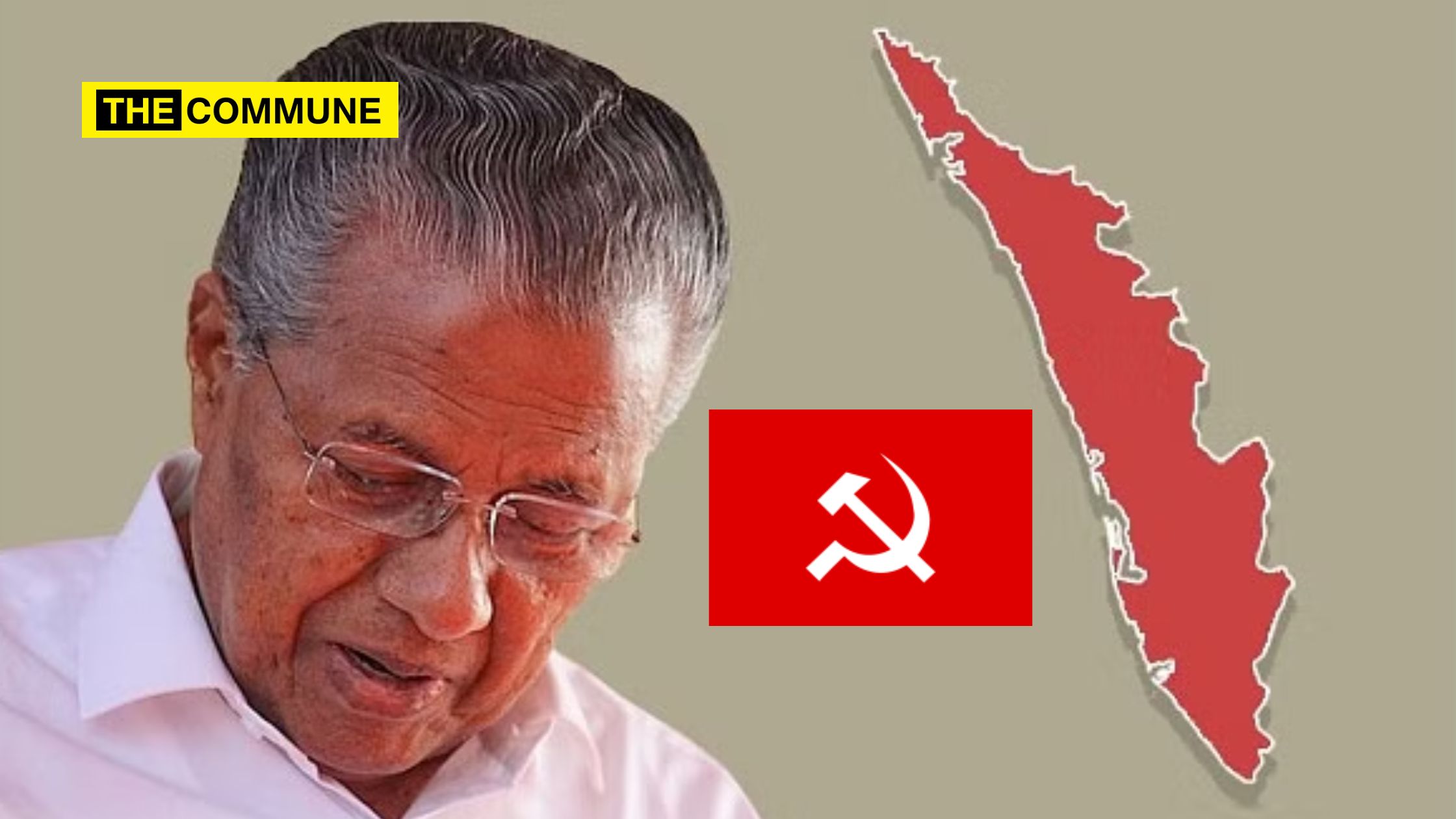
The white paper also scrutinises the functioning of the Kerala Infrastructure Investment Fund Board (KIIFB), which was heavily used by the previous Left Democratic Front (LDF) government to finance infrastructure projects. According to the report, KIIFB spending was often driven by political priorities rather than balanced development needs.
The document points out that nearly 20% of KIIFB’s total expenditure was concentrated in Kannur district, which is widely regarded as a stronghold of the CPI(M), the dominant party in the LDF that governed Kerala from May 2016 to May 2026.
Another major concern highlighted in the report is the deteriorating condition of state-owned public sector enterprises (PSEs). The accumulated losses of 132 active state government-owned enterprises rose dramatically from Rs 31,571 crore in 2021-22 to Rs 78,851 crore in 2024-25.
According to the report, just three entities – the Kerala State Road Transport Corporation (KSRTC), Kerala State Steel Products Limited (KSSPL) and the Kerala Water Authority (KWA) accounted for 72% of the total losses recorded by state public sector enterprises during the last financial year.
The white paper concludes that Kerala’s finances are under significant stress due to rising debt, growing liabilities, increasing losses in public sector undertakings and the large share of revenue being consumed by salaries, pensions and interest payments. It suggests that unless corrective measures are taken, the state’s ability to fund development projects and sustain long-term economic growth could face serious challenges.
Subscribe to our channels on WhatsApp, Telegram, Instagram and YouTube to get the best stories of the day delivered to you personally.