
The Vaccine War: An Antidote To Urduwood Cinema

In the vast tapestry of Indian cinema, there exists a potent thread known as the ‘Emotional Quotient.’ Filmmakers who skillfully weave this emotional thread into their narratives often create lasting impressions and carve their names in the annals of cinematic history. One such maestro of emotional storytelling is Vivek Agnihotri. His latest endeavor, “The Vaccine War,” not only captivates audiences but also sends a powerful message to the world that Bharatiyas in #Urduwood are capable of producing exceptional cinema that resonates deeply with viewers.
A standout element of the film is the triumphant return of Nana Patekar, an actor whose absence from the screen was felt by audiences across the nation. In “The Vaccine War,” Patekar embraces a role that seems tailor-made for his remarkable talents. His portrayal has garnered unanimous appreciation, reaffirming his status as a stalwart of Bharatiya cinema. Credit is due not only to Patekar but also to the casting director for their astute selection of the entire ensemble cast. Brace yourselves, as Patekar’s performance is guaranteed to elicit tears and applause throughout the film.
The film’s background music (BGM) is another facet that deserves special mention. It functions as a silent yet powerful narrator, seamlessly enhancing the emotional depth of each scene. The BGM masterfully conjures feelings of joy, melancholy, and compassion, perfectly aligned with the narrative’s ebb and flow. Rohit Sharma, the maestro behind this musical journey, has undoubtedly done justice to the film with his exceptional composition.
The title of the film, “The Vaccine War,” is a succinct encapsulation of its central theme. Yet, to fully appreciate its essence, one must immerse themselves in its narrative. In an interview, Nana Patekar revealed that Vivek Agnihotri convinced him to join the project with just one scene in mind—a scene in which Patekar had to utter the words ‘India Can Do It.’ This particular moment stands as a testament to Patekar’s formidable acting skills, for which he is celebrated by audiences and critics alike.
Critics, in their discerning scrutiny of films, often evaluate their portrayal of Bharatiya culture and the technical aspects that underpin their storytelling. In the case of “The Vaccine War,” critics will find themselves hard-pressed to identify any shortcomings. This film not only underscores the remarkable prowess of Bharatiya cinema on the international stage but also delivers an exemplar of storytelling, ensuring that there is never a dull moment from start to finish.
One could easily envision every screening of “The Vaccine War” culminating with a thunderous standing ovation—a collective expression of appreciation for the ‘Narishakti’ (women power) depicted in the film. This portrayal beautifully aligns with the historic 33% women reservation policy introduced by the Modi government. The film serves as a poignant reminder that Bharat should rally around cinematic gems like this one, supporting it by thronging theaters in large numbers. “The Vaccine War” merits success not solely due to its celebration of Bharatiya achievements or Nana Patekar’s triumphant return but also because of the sheer cinematic brilliance envisioned by the director during its conceptualization.
“The Vaccine War” is more than just a movie; it represents a milestone in the journey of Bharatiya cinema. It is a celebration of our emotional depth, our cultural richness, and our unyielding spirit—a spirit that asserts, “India Can Do It.” The film not only pays homage to our nation’s accomplishments but also presents them with a touch of cinematic magic, ensuring that audiences of all backgrounds can connect with its narrative.
As viewers immerse themselves in the world of “The Vaccine War”, they will be transported to a realm where storytelling takes center stage. Every frame is meticulously crafted, every dialogue meticulously delivered, and every emotion palpably felt. It is a testament to the director’s vision and the dedication of the entire cast and crew that the film unfolds as a symphony of emotions and storytelling excellence.
Beyond the captivating narrative and the stellar performances, “The Vaccine War” carries a deeper message. It serves as a mirror to society, reflecting the voices that sometimes seek to undermine the very essence of Bharatiya culture. Through its characters, the film boldly confronts and exposes those who espouse anti-Indian sentiments. For every nationalist viewer, watching these voices named and shamed is a satisfying treat.
In conclusion, “The Vaccine War” is not just a cinematic triumph; it is a celebration of Bharatiya cinema’s ability to touch the hearts and souls of audiences worldwide. It is a testament to the power of storytelling, the resilience of our cultural identity, and the unwavering spirit that defines our great nation. As the film graces the silver screen, it calls upon every Indian to unite in support, to celebrate our achievements, and to embrace the emotional journey it offers. “The Vaccine War” is not merely a movie; it is an emotional and cinematic masterpiece that demands recognition and applause, an ode to the rich tapestry of Bharatiya culture and our collective belief that indeed, “India Can Do It.”
Jay Kay is a business analyst with one of the leading IT firm. He is also an RJ for Western Music in AIR, Chennai. He worked as an English Newsreader for a regional channel in Chennai for a couple of years. He is also a host of PGurus Tamil.
Click here to subscribe to The Commune on Telegram and get the best stories of the day delivered to you personally.

DMK’s Interference In Temple Affairs: A Scheme For Destruction-Mutilation-Kaput Of Sanathana Dharma
On the 14 September 2023, just a day before the birth anniversary of Karunanidhi’s mentor, CN Annadurai, the Chief Minister of Tamil Nadu, MK Stalin, tweeted that he had appointed individuals from all castes, including women, to serve as temple priests as part of his Dravidian Model Governance. He wrote:
“Despite women’s achievements as pilots and astronauts, they were barred from the sacred role of temple priests, deemed impure, even in the temples for female deities. But change is finally here! In Tamil Nadu, as our #DravidianModel Government has removed the thorn from Thanthai Periyar’s heart by appointing people of all castes as priests, women are also now stepping into the sanctums, bringing a new era of inclusivity and equality.”
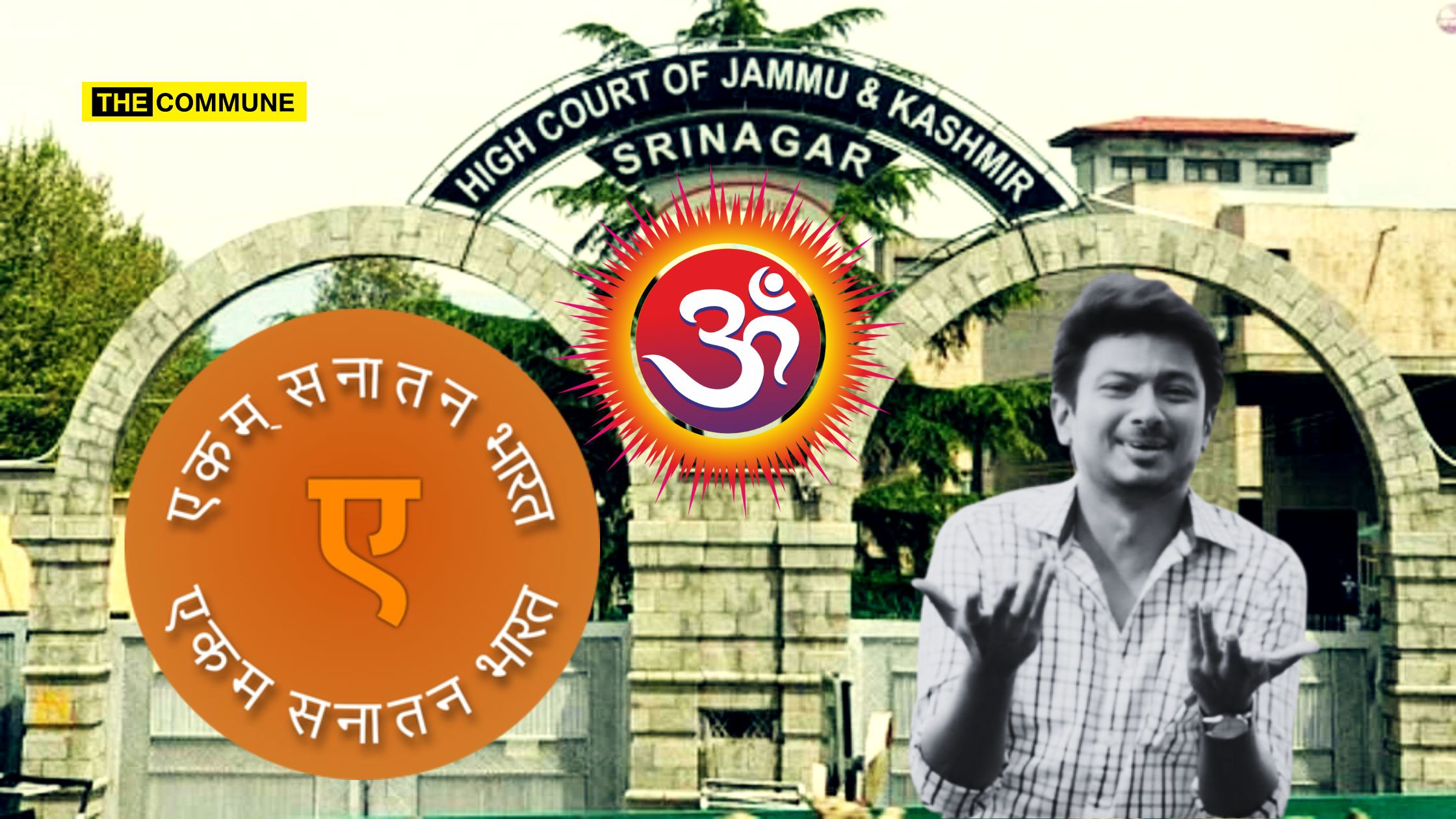
This tweet and the issuance of eligibility certificates on the completion of a one-year course to serve as temple priests to 94 persons, including three women, are seen as part of a larger agenda to destroy Sanatana Dharma, as Udhayanidhi announced a few days prior to this announcement. To clear any doubts about what he said, Udhayanidhi once again reiterated that his party, the DMK, was created with the purpose of eradicating Sanatana Dharma. That may be true, and we, the people, are to blame for not sensing the DMK’s plan when it was formed by Annadurai.
DMK – An Anti-Thesis To Morality And Hindu Culture
Annadurai founded the DMK by severing his ties with EV Ramasamy Naicker (hailed as ‘Periyar’ by his followers) on the pretext of objecting to EVR marrying his adopted daughter, who was 38 years younger than him. Marrying one’s own (or adopted) daughter is certainly not a tenet of Sanatana Dharma, as we learn from the rebuke of Vaali by Rama in Valmiki Ramayana.
In his reply to Vaali, who accused him of hitting him, Rama admonished him for renouncing Sanatana Dharma by misbehaving with Ruma, his brother’s wife, who was like his daughter-in-law (“Bhraatur vartasi bhaaryaayaam tyaktvaa dharmam Sanaatanam,” भ्रातुर् वर्तसि भार्यायाम् त्यक्त्वा धर्मम् सनातनम् Valmiki Ramayana: 4-18-18).
Marrying one’s own daughter or another man’s wife is strictly against Dharma, as the celebrated poet Thiruvalluvar devoted a full chapter to explaining why one should not marry another man’s wife. This was followed by many leaders of the DMK, more as a breach than adherence. Not only this, every kind of Dharmic principle has been flouted by the DMK leaders right from its inception. Dismantling Hindu culture has been their main agenda, which we realized only through decades of their concerted efforts to attack Brahmins, which has now progressed into demolishing the temple culture of the Hindus.
In his very first film named ‘Parashakti,’ which identified Karunanidhi as a renowned dialogue writer, there was abject denigration of Hindu culture, criticism of Hindu beliefs, and idol worship. In that movie, Karunanidhi went to the extent of portraying a temple priest (Brahmin) attempting to rape a woman inside a temple – something outrageous and difficult to even imagine at that time (1952). But he did get away with all that in the name of freedom of speech accorded by none other than a famous Brahmin of those times, Rajaji!
DMK Which Mocked Brahmin Priests As Beggars Appoints Women As Priests
None came to the support of the Brahmins when they were physically assaulted on many occasions and continuously humiliated as beggars for accepting Dakshina offered by the devotees in temples. Ironically, today the same DMK wants people of other castes to pick up the puja plate to receive Dakshina from devotees for a service that even Brahmins themselves are not eligible to do unless they come from a specific family, with exhaustive training and ritual practices.
Priesthood in a Hindu temple is not a gainful vocation that one yearns to make a good living. The girls chosen by the DMK government have completed college studies with which they can make a good living. One of them was an MSc in mathematics, another a BSc in the same subject, and yet another was a BSc graduate in Visual Communications. They expressed their happiness for being gifted with a mobile phone by Udhayanidhi, who hailed this scheme as “Samatva Garbhagriha” (‘Samatva Karuvarai’ in Tamil), least caring that even kings and philanthropists who were instrumental in building temples never entered the Garbhagriha, the sanctum sanctorum of the temple, in deference to the rules of the temple.
If entry into a place of God limited to only a few is a custom that needs to be broken, the DMK first family is welcome to be a trendsetter by inviting these girls to the Puja room of their house to conduct the daily puja for the sake of Udhayanidhi’s mother, who never shied away from making temple tours, but they can never interfere with the temple conventions that have been in place for 1300 years, as Dr. R. Nagaswamy, the eminent epigraphist, once said based on evidence from numerous inscriptions.
So far, sixty-one terms related to temple services have been decoded from the inscriptions, which do not exclude women from service, but not everyone can perform the priestly service of the God. Women were given stately honors and land grants for singing and dancing services in the temple. From supplying flowers and puja items to cleaning the temple premises, women have served the temple with utmost devotion, but they never once considered it as something done for gainful occupation or ‘social equality.’ This term, projected as the theme of the so-called ‘Dravidian Model,’ is indeed an extension of the colonial agenda of breaking Hindu culture to assist Christian missionaries.
DMK Is Carrying Forward The British Legacy And Agenda
Two were the irritants for the British period missionaries – a self-sufficient education system and a selfless spiritual outlook nurtured by the Hindu Sanatan Thought. The Brahmin was the supplier of these two when the British came to our country. The Brahmins served either as teachers or as temple priests and were pivotal in the activities of every household in Bharat of those days. The Census Report of 1871 noted,
“No child is born, named, betrothed, or married; nobody dies or is burnt; no journey is undertaken or auspicious day elected, no home is built, no agricultural operation of importance begins, or harvest gathered in, without the Brahmans being feted or fed; a portion of all the produce of the field is set apart for their use, they are consulted in sickness and in health, they are feasted in sorrow and in joy.”
The influence of the Brahmins in all the affairs of the people is something the British wanted to thwart because the Brahmin posed an obstacle to their missionary and political goals. The Brahmin had to be stopped and discredited somehow. This is reflected in the Census report of 1871, which also says that the people were scared to see the census official because they thought (among other reasons) they had come to levy some new tax for feeding the Brahmins.
“It was variously supposed that the tax would fall on those who trod on the village path, who swung an arm, who carried an umbrella, or who fed Brahmins.”
A persistent campaign to defame Brahmins and separate the locals from them thus started in the middle of the 19th century. It is learned from the reports of the Collectors of Bellary, Malabar, and Madras in 1825 that the British successfully destroyed the education system by taking away the land grants of the Brahmins given by the kings of yore as ‘Acharya Bhog’ to facilitate teaching without a fee, on the death of the Brahmin to create a ‘School Fund.’ Soon this school fund was delinked from education, with the missionaries taking over the education system. Only the Hindu temple system was the unfinished agenda when the British left Bharat. That has been taken over by the Justice Party of EVR and his followers in the DK and the DMK.
The Brahmin, an essential service provider in keeping the sanctity of the temple, is being harassed in every conceivable way. By driving him out of the temple, the DMK thinks that the temple culture can be demolished. With that, the decimation of Hindu culture will be complete. The seeds of this crusade started in 1970 by Karunanidhi, who avowed to “remove the thorn in the heart” of EVR by driving out the Brahmins from the Garbhagriha and placing other castes inside. With the Supreme Court striking it down, he once again tried to introduce his temple agenda in 2006. This time, the Supreme Court delivered a judgment in 2015 that the appointments must be done according to the Agamas – doctrines that govern temple worship – ensuring the fundamental right to equality is not breached.
In the meantime, Karunanidhi, the self-appointed champion of Thirukkural, tacitly encouraged the Christianization of Thiruvalluvar by writing a foreword to a book that claimed that Thiruvalluvar was a Christian. His son made no efforts to conceal his agenda of destroying Hindu temple culture by releasing the first batch of government-certified priests from different castes in 2021 and the second batch now.
On this second occasion, his son Udhayanidhi minced no words on his party’s goal of destroying Sanatana Dharma. His alleged Christian Faith and eulogy of Christian missionaries as promoting education in Tamil Nadu were echoed in the utterances of the Assembly Speaker Appavu that Tamil Nadu would be like Bihar but for the works of Christian missionaries.
The Hindus of Tamil Nadu are facing an existential threat from the DMK, which wants to see a Christian State in Tamil Nadu. Annamalai, the Tamil Nadu BJP President, recently annotated the DMK as Dengue-Malaria-Kosu (which means mosquito). It will be more apt to say that the DMK stands for Destruction-Mutilation-Kaput of the Hindu Sanatan culture.
Jayasree Saranathan is a researcher, writer and astrologer with a Ph.D. in Astrology. Her research areas include Indology, Hindu Epics, Tamil Sangam literature and Astrometeorology. She is the author of “Mahabharata 3136 BCE: Validation of the Traditional Date”.
Click here to subscribe to The Commune on Telegram and get the best stories of the day delivered to you personally.