
Chandra Babu Naidu Arrest: Jagan Reddy’s Political Masterstroke Or A Desperate Game Of Chance?
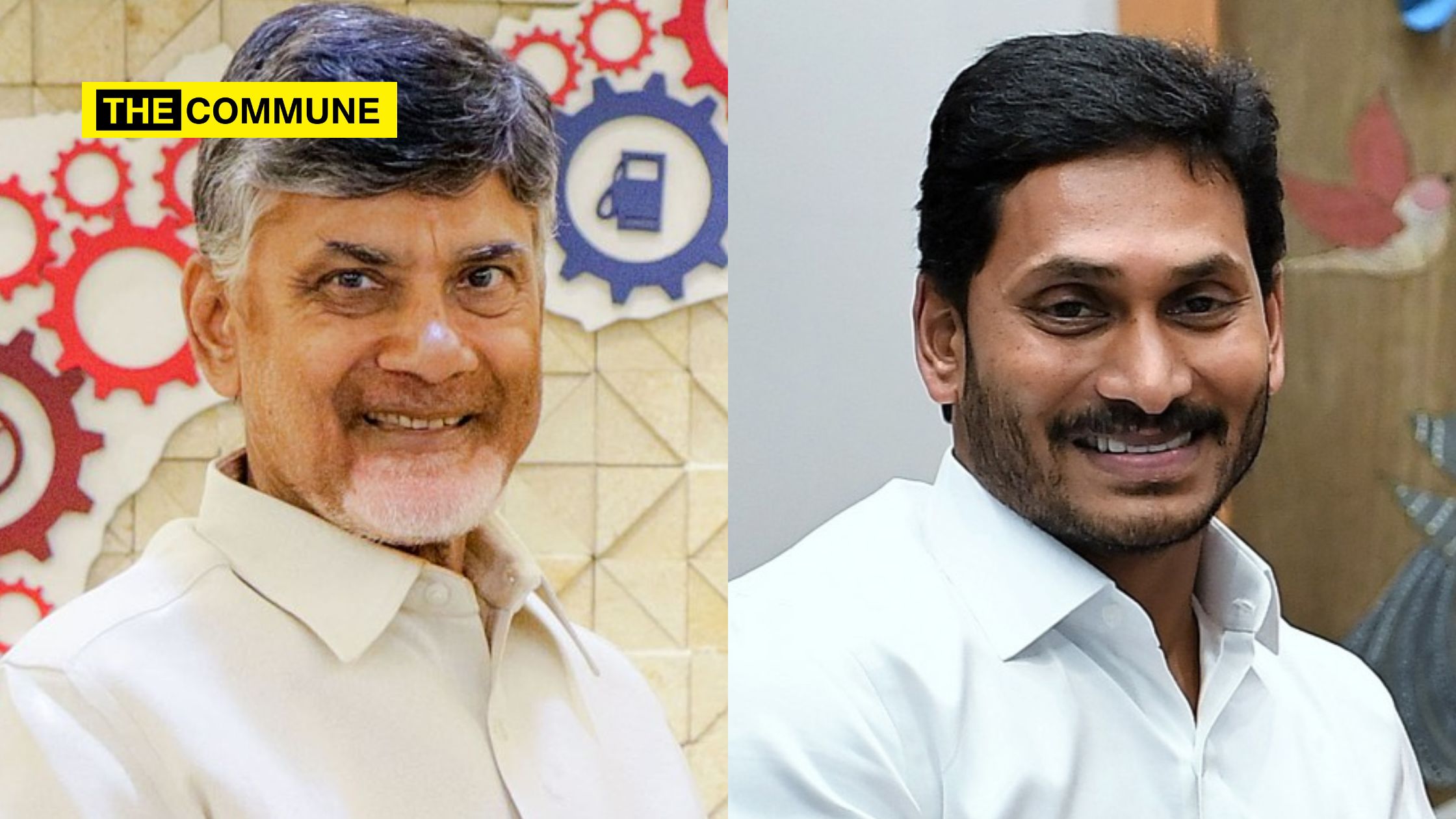
The biggest but very much underplayed political event in the country that happened recently came from the Southern Indian state of Andhra Pradesh. While the rest of the nation watched the central government led by the Bharatiya Janata Party (BJP) and PM Modi conduct an impressive, world-class G20 summit, Andhra was embroiled in yet another political arrest fiasco.
Clearly, next year’s state elections are impacting decisions, both favourable and unfavourable, of the two principal regional parties, the incumbent YSRCP and the opposition TDP, closely watched by the new and eager entrant, the JSP. The TDP has been relentless in its efforts to reach the people directly through customised rallies and padayatras (foot marches) with Jagan and his YSRCP on their toes trying to prevent the successful completion of such rallies and meetings. The YSRCP has not spared any of the opposition parties including the JSP and the state’s BJP unit although it is on agreeable, mutually beneficial terms with the BJP at the Centre.
Jagan Reddy’s Misuse Of Power
Jagan Reddy, the present chief minister of Andhra Pradesh and leader of the YSRCP is using a potent combination of misusing legislative and executive powers and pulling out every loophole in the playbook of Indian politics to intimidate his personal and political opponents. Andhra Pradesh is witnessing a classic case of political vendetta being unleashed ahead of elections in a desperate bid to stay in power. Since defeating and taking over from the TDP after the 2019 state elections, Jagan Reddy has targeted everything from the political rallies of opposition parties and various projects approved by the previous TDP government to stalling the completion of the previously planned and approved capital city of Amaravathi and filing cases on trivial matters with the A.P high court as well as openly defying court judgements/orders and even targeting judges including Justice N.V Ramana who went on to become the 48th Chief Justice of India (CJI, April 2021 – August 2022).
On 9 September 2023, three-time chief minister of Andhra Pradesh, senior political leader, A.P opposition leader, and TDP party supremo, the seventy-three-year-old N Chandrababu Naidu was arrested by the state’s CID (Crime Investigation Department). Naidu was arrested in the early hours of 9 September 2023 and produced in an ACB (Anti Corruption Bureau) court in Vijayawada at around 6 AM on Sunday, 10 September 2023 in connection with an alleged corruption scam in which he is being accused of misusing funds earmarked for the Andhra Pradesh State Skill Development Corporation, which was established when his party the TDP, was in power, with the intent of training unemployed youth.
Political pundits cite several factors for this gross misuse of state machinery and executive power by Jagan Reddy and the ruling YSRCP party, ahead of the state’s elections scheduled for the first half of next year. The most notable ones are:
- The incumbent chief minister and YSRCP leader, Jagan Mohan Reddy is a leader out on bail with more than thirty cases still being pursued by both the CBI and the ED ranging from massive money laundering to cases of a criminal nature including his much talked-about involvement in the murder of his paternal uncle.
- Having failed to unearth any irregularities of a significant nature against Naidu since wresting power from Naidu’s TDP government in the 2019 state elections and being unable to involve central investigative agencies like the CBI & the ED, it appears that Jagan Reddy has utilised the state’s CID to pin frivolous, unsubstantiated charges on Naidu and have them arrest the senior leader in a dramatic, publicity-seeking move.
- Analysts believe that Jagan Reddy wants to divert the people’s attention from his numerous cases as well as neutralise the playing field by finding something to blame Naidu for so that he can claim that both himself & Naidu are tainted with corruption charges and are on an equal footing. Will Jagan’s gamble pay off? Will the people equate Jagan’s track record to that of a senior leader with no proven charges against him?
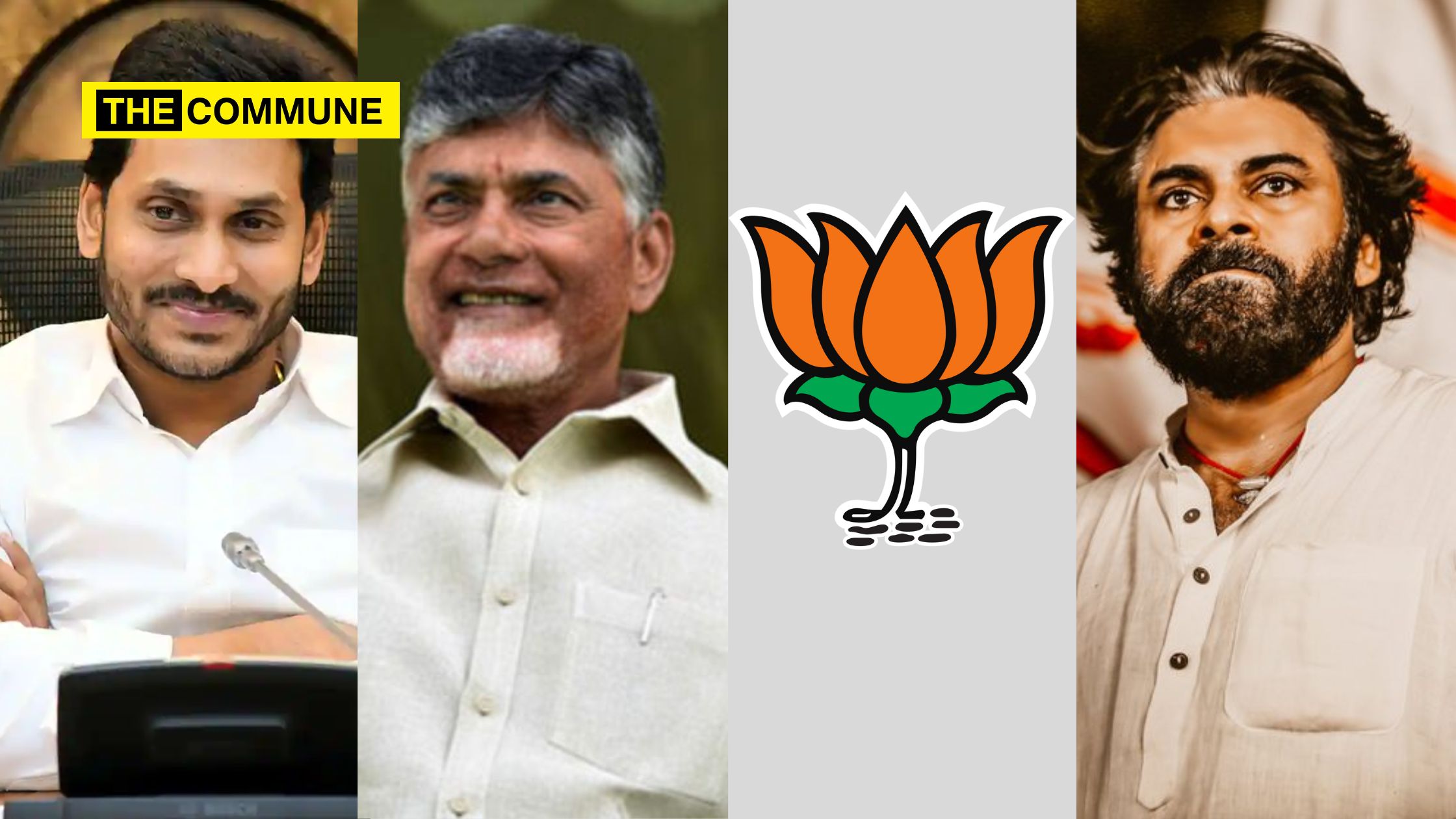
- Some analysts have argued that apart from pulling a fast one to make Naidu look guilty for alleged financial fraud, Reddy is also trying to provoke the BJP into taking up his side or the opposition’s, sooner rather than later, for his own political preparedness. All three parties, Naidu’s TDP, Jagan’s YSRCP, and the relatively new JSP headed by the Tollywood actor Pawan Kalyan, have extended a hand of friendship and gestures of collaboration towards the BJP.
- The BJP has thus far, not given a clear indication of its preference, although it has enjoyed outside support from Jagan’s YSRCP since 2019. Before 2019, the BJP was in an electoral alliance with Naidu’s TDP but the partnership suffered because of differences between the leaders, over the granting of additional funds for Andhra Pradesh after its bifurcation from the larger state which included regions of both Andhra and Telangana. Will Jagan’s arrest of a senior political leader during the busy G20 summit time frame, force the BJP to formally declare its support for one of the Andhra parties or at least trigger serious negotiations between the leaders?
- The people of Andhra are speculating that Jagan deliberately sprung spurious charges on Chandrababu Naidu, not likely to prove him guilty in the long run but create an impression of his guilt in the short run and… in the process of doing so, Jagan and his leaders would be able to gauge the amount and extent of support and sympathy for Naidu and the TDP, ahead of the state elections in the first half of next year. Will the people’s strong reaction to the arrest of a leader known for progressive ideas and a development agenda, indicate the presence of significant support for the TDP among the masses?
- Another conspiracy theory seems to involve Jagan Reddy and his senior leaders wanting to analyse the possibility of a likely partnership between the opposition TDP and JSP, to devise their own election strategy. Both the TDP and the JSP have indicated their interest in partnering and collaborating against Jagan but have not yet finalized a formal agreement. In the aftermath of the TDP leader’s sudden and unexpected arrest, the JSP’s Pawan Kalyan has openly declared his support for the TDP and is looking to the BJP for moral support. Will this result in an advantage for the TDP-JSP team in next year’s elections? Will the BJP now seriously consider the TDP-JSP combine, touted to have certain district and caste-based advantages?
The next few weeks will be an interesting observation of politics at play. What will the people’s reaction be? Many have called the arrest an extra-judicial one, tantamount to political vendetta. Will it backfire on Jagan and his YSRCP, resulting in sympathy and support for A.P.’s opposition instead? What will the BJP do and which side will it finally choose after having waited long enough?
In certain circles, people are also wondering if the BJP’s central leadership may be upset that Jagan pulled a fast one when the Central government was busy with an important international event like the G20 event. The people of Andhra were distracted by the surprise arrest of a high-profile leader and missed watching the BJP’s and PM Modi’s success story of the G20 agenda – how did Jagan’s brash, ill-timed act go down with the BJP’s state and central leadership? Will they bide their time and wait till after the state election results are declared or will they take a decision favoring a pre-election tie-up with Andhra’s opposition or will the BJP decide to instead continue its informal “partnership of convenience” with the YSRCP, in an attempt to reduce the presence of powerful regional parties and eventually grow its own share of the Andhra vote?
What is the Congress party’s stand on the latest political happenings in A.P? Although the fragile, stitched-together opposition alliance of the I.N.D.I.A Bloc, posted a few weak statements in support of Naidu, the Congress party on its own, has chosen to largely remain a mute spectator. After all, Jagan Reddy is an ex-Congressman with his late father and former A.P chief minister, Y S Rajasekhar Reddy having been a lifelong Congressman.
(Shivani is a freelance writer based in Vijayawada)
Click here to subscribe to The Commune on Telegram and get the best stories of the day delivered to you personally.



Exposing PTR’s Duplicity On Social Justice
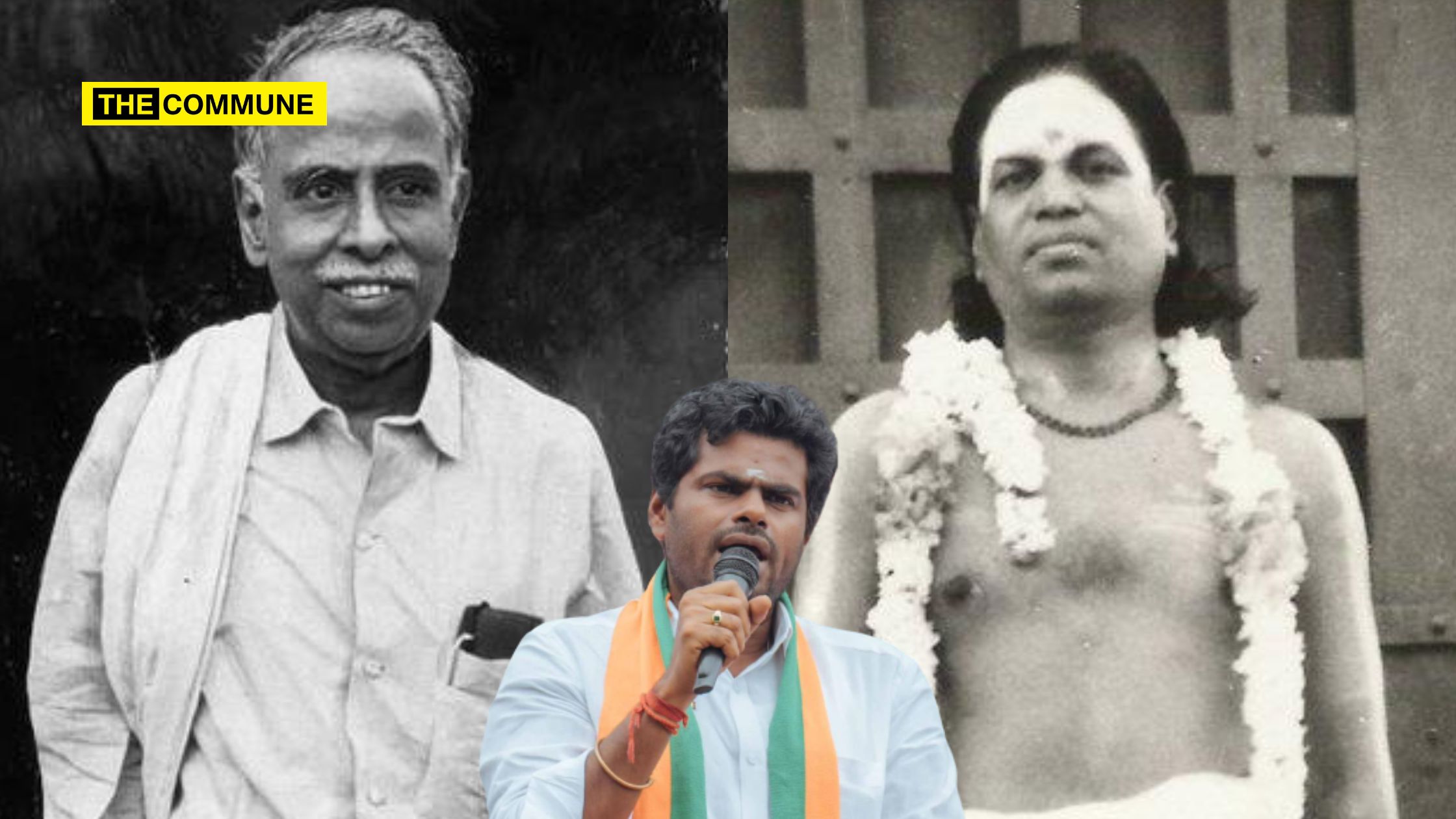
Palanivel Thiagarajan (popularly known as PTR), a fourth generation political dynast currently a Minister in the MK Stalin-led DMK government has a habit of baiting the Brahmin community to score political points. He once even went to the extent of invoking a caste identity of a woman journalist and abusing her just because she posted on social media that a top leader’s son is involved in a mega land grab.
His latest attack on Brahmins coincides with the Prime Minister’s introduction of the Pradhan Mantri Vishwakarma Yojana, aimed at empowering traditional artisans who have faithfully preserved their skills and heritage across generations.
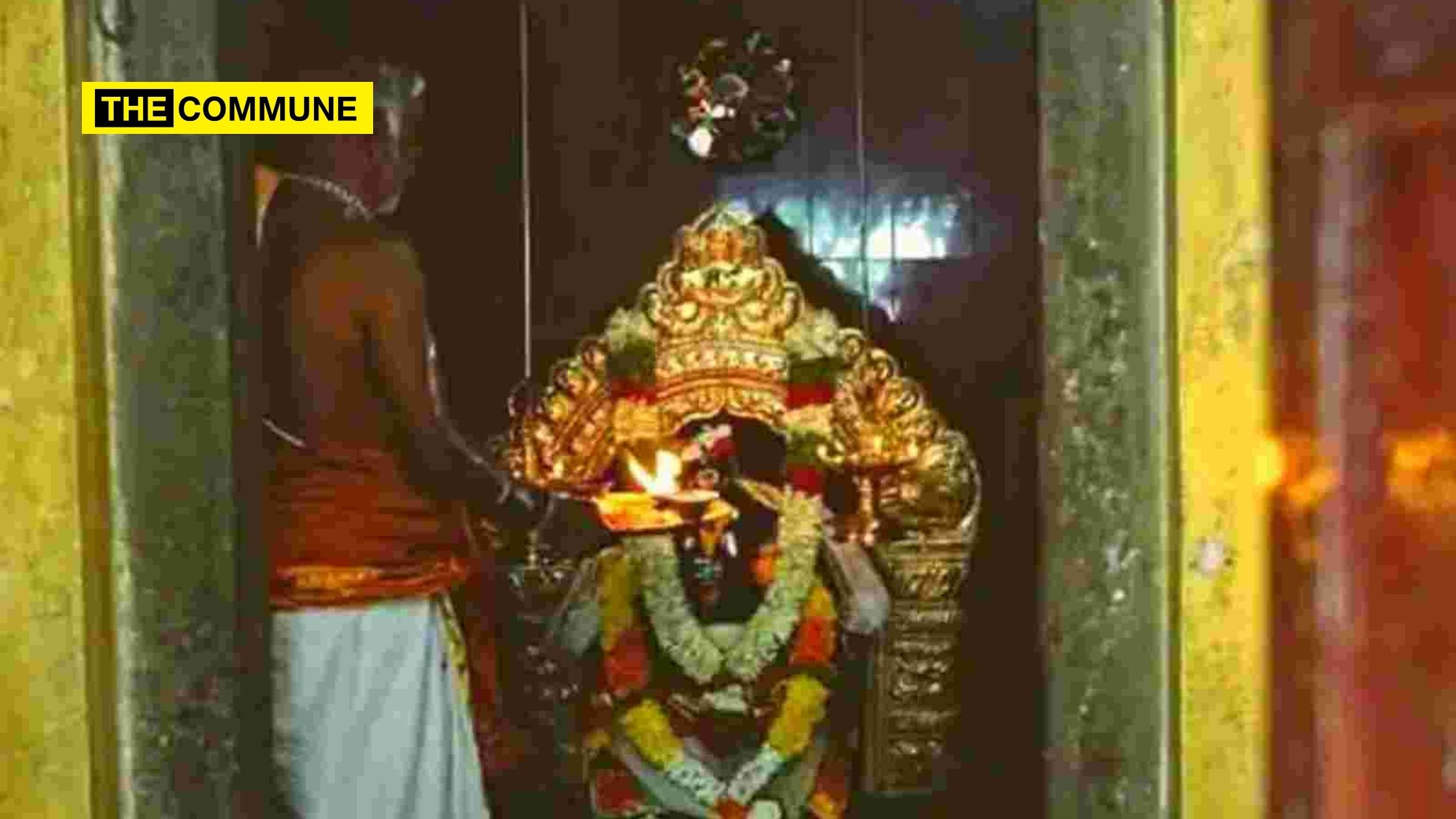
PTR in a recent speech raised questions about the rationale behind promoting hereditary businesses. Speaking at the “India’s Social Justice Festival” organised by Madurai Law College students at the Madurai World Tamil Sangham Hall, he said, “Education brings progress to all, this is an undeniable truth. The ones who gave us all the opportunity to gain that are the upper caste people (hinting at Brahmins). In 1928, my grandfather while speaking at the Self-Respect Conference, PT Rajan asked why should there be a separate community of priests (archakas). We follow all rituals, so why are you entitled to enter the garbagruha and perform pujas? A backlash ensued and they said that only they knew the Slokas and Sanskrit – because only they had studied that, they did not give others an opportunity to learn them. There are a few errors in this argument, the first being there is no rule that yours is the only way to worship God and the other is that you did not give others the opportunity to study.”
He further added “After this government came into power, the Chief Minister has been correcting the second mistake every year. In the past, we have brought all the plans that were made in the era of Kalaignar to fruition – one being that anyone can become a priest scheme. After this government came to power in 2021, yesterday you would have seen that three women priest have received their appointment letters. When we were doing this, the first thing I would like to say is about the manifesto of the Justice Party in 1920. During the election campaign, they made a statement. They asked, how can a community with a population of 3% occupy 40% of the Munsif jobs, 50% of the Government Office jobs, and a majority of the doctor jobs, how can a society with a population of 3% have all the facilities and opportunities? The reason for this is that they are the only ones who have been given the opportunity to study. That’s why we brought in Compulsory Education (Kattaaya Kalvi), Reservation, and Communal GO.”
He added, “Upper caste were the ones who broke the model that you should do only what your father did (kulakalvi). Because the upper caste, when they got a job as a collector, a judge, a Chartered Accountant, a banker, a lawyer, they left their priestly jobs and took up those. So, the upper caste were the ones who showed us that there is no connection between your birth and the work you do. So if you come to us and tell us that you should only do what your father did, how is it justified?”
He continued, “I, as a 4th generation Dravidian, have been trying to achieve social justice for more than 100 years”.
While PTR has mentioned the upper caste in his speech, anybody familiar with the Dravidian political rhetoric can make out that he is targeting Brahmins. It is pertinent to mention that PTR himself belongs to a wealthy landed Mudaliar family and falls under the category of the so-called “upper caste”. In Tamil Nadu, the so-called forward/upper caste include Nagarathars, Thondai Mandala Mudaliars, Balija Naidu, Reddiyar, among others. It is these ‘upper/forward castes’ that form the core vote bank of the DMK which has been inherited from its predecessor Justice Party, a party formed by ego-hurt landed wealthy caste leaders. In fact, the Justice Party, which PTR often boasts about and takes pride in has a history of ill-treating fellow members from the Scheduled Caste. M.C. Rajah, a leader from Dalit community, severed ties with Justice Party over its treatment of Dalits.
But PTR and his Dravidian ilk have gone on to project that “upper caste” meant “Brahmins” often targeting the for all things wrong in the Tamil society. The reason why PTR and his Dravidian ilk often target the Brahmin community is to hide their duplicity on social justice.
Now let us come to PTR’s latest lecture on social justice that has raised several critical questions, highlighting what can be perceived as the inconsistency within his own community, party, and his own self. Here are some questions for the DMK Minister.
1. While PTR thumps his chest about the DMK breaking the Brahminical hegemony in temples through ‘all caste can become archakar’ scheme, will he also advocate for the removal of Vellalar dominance in Aadheenams and the inclusion of all castes in the mutts run by them?
2. Why do Vellalar Aadheenams oppose the traditional practice of Vanniyars and Thevars wearing the poonool/janeu (sacred thread), despite it being a hereditary custom of these communities? Is this linked to the Vellalars’ desire to exert dominance over these groups through Aadheenams?
3. PTR often emphasises that he entered politics due to his family’s three-generation involvement in the field. If he aims to preserve this multi-generational legacy, then why should archakas, with similarly long-standing family traditions, be excluded?
4. Despite PTR’s assertions, Brahmins are notably scarce in political and administrative roles in Tamil Nadu today. In contrast, Vellalars, who constitute just 6% of the state’s population, occupy more than 50% of government positions. What accounts for this preferential treatment by the Dravidian party?
5. Concerning the DMK, why do Vellalars predominantly hold the positions of district secretaries in Vanniyar and Thevar regions like Vizhupuram and Thanjavur? Why is the DMK not ensuring proportional representation for Vanniyars and Thevars?
6. DMK has earned the reputation of being a party of the Vellalars, by the Vellalars, and for the Vellalars. Why has the DMK never permitted a non-Vellalar to hold the positions of party president or Chief Minister?
7. While the DMK criticises the PMK as a casteist party for having Vanniyars (the largest voting bloc in the state) in prominent leadership positions, why shouldn’t the DMK, which predominantly features Vellalars in its leadership, be subjected to the same scrutiny?
8. Why has PTR not issued a statement condemning his caste organisations, which are protesting the use of the term “Devendra Kula Vellalars” to address the Scheduled Caste community?
9. How did PTR’s family come to possess extensive land holdings that originally belonged to a Maravar Zamin family in Theni?
10. Why has the PTR family frequently clashed with Thevar leaders within their own party? Are the allegations of Thevars regarding casteism within the PTR family accurate? Do they indeed practice a two-tumbler system in their homes?
The Dravidian Model of social justice, is nothing but a scam meant to cover up the original perpetrators of casteism through fraudulent and deceitful means of perpetually peddling hatred against one politically insignificant community and making them the eternal scapegoat.
This article is based on the X thread of Aravindalochanan Govindan.
Vallavaraayan is a political writer fighting Dravidianists.