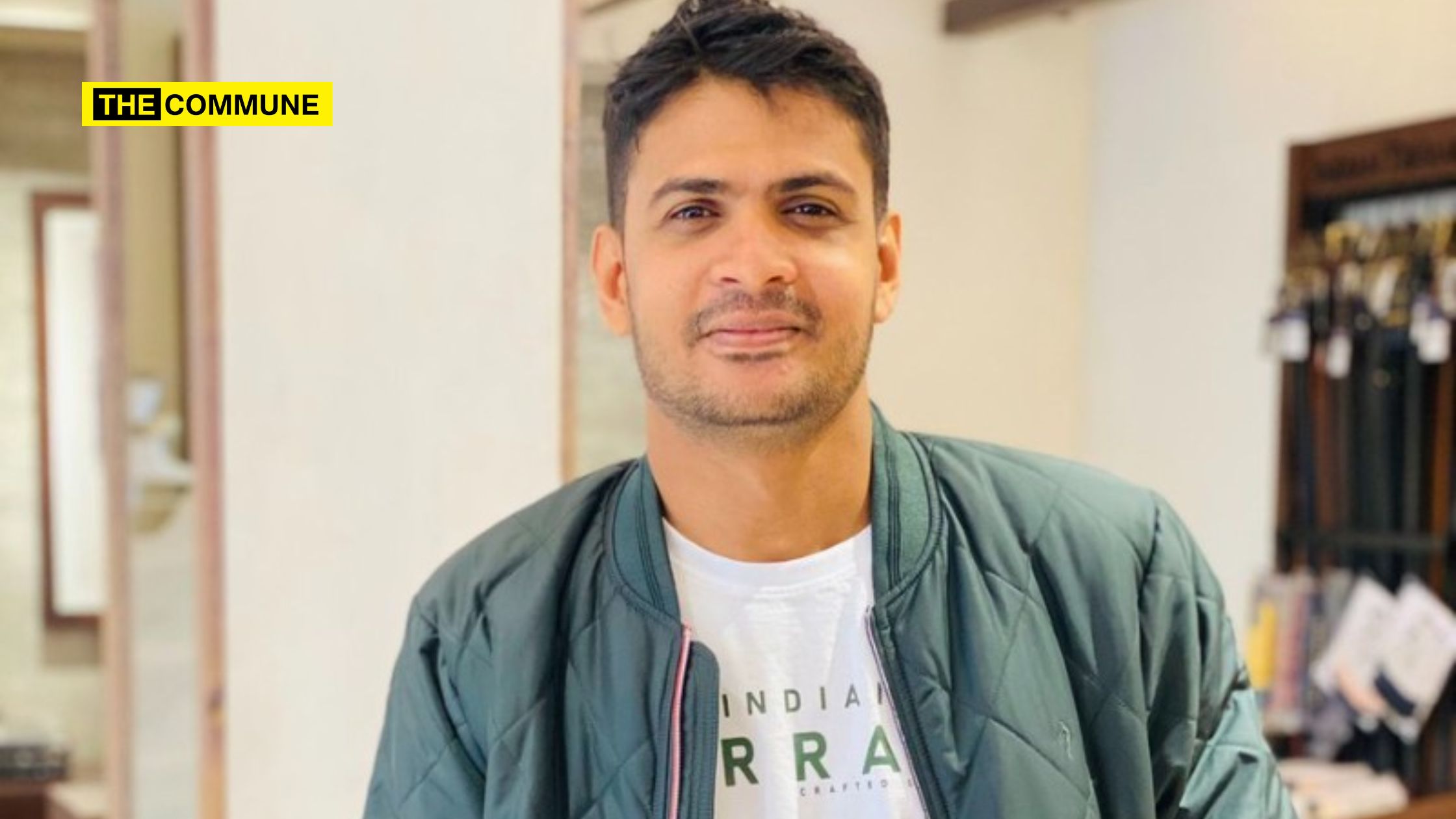
The Madras High Court on 19 September 2023, quashed the case slapped against renowned writer, publisher and political commentator Badri Seshadri.
Badri was arrested by the Tamil Nadu police on 29 July 2023 regarding his comments in an interview to a YouTube channel about the Manipur issue based on a complaint given by one advocate Kaviyarasu.
“Yesterday, the Supreme Court like a big…. I don’t know what word to say. ‘If you can’t do it (contain the violence), we will get down and do it.’ We should give a gun in the hand of Chandrachud (Chief Justice of India) and ask him to go there and do what he can to restore peace. Simply, talking anything without relation. Can you (judiciary) enter into the realm of governance? What fault did you find in what is being done [by the government] there [to restore normalcy]? Two groups are fighting. It is a hilly terrain. A complex land. In that, a few murders will happen. Why did they fight? Could we have prevented the reason for the two groups fighting? It can’t be done easily.”, he can be heard telling in the interview.
These comments about the Chief Justice of India was the reason for the arrest as this clip was picked and shared by Dravidian Stockists and DMK sympathizers.
He was charged with Sections 153 (Wantonly giving provocation with intent to cause riot), 153 A (Promoting enmity between different groups on grounds of religion, race, place of birth, residence, language, etc., and doing acts prejudicial to maintenance of harmony and 505 (Statements conducing to public mischief).
The quash petition came for final hearing on 19 September 2023 and Justice Anand Venkatesh dismissed the case.
Click here to subscribe to The Commune on Telegram and get the best stories of the day delivered to you personally.
Pondy Lit Fest 2023 concluded on a high note, featuring numerous panel discussions that fostered critical thinking. The festival united literature enthusiasts, scholars, and diverse minds, promoting cultural enrichment. On day two the most anticipated discussion concerning the cases of Mathura and Kashi temples was held. Meenakshi Jain and Vishnu Jain participated as speakers with Alo Pal as the moderator.Meenakshi Jain is a renowned historian known for her expertise in the field of Indian temples and Hindu Civilisation. Meenakshi Jain’s book titled “Flight of Deities and Rebirth of Temples: Episodes from Indian History” is a comprehensive exploration of the history and cultural heritage of Indian temples. Vishnu Jain, along with his father, have actively engaged in the legal battle for the Kashi Vishwanath Temple and the Krishna Janmabhoomi, among many other battles for Hindu temples demonstrating their deep commitment to preserve India’s cultural and religious heritage.
Connecting Sri Krishna To Mathura: Literary Evidence
Meenakshi Jain connected various literary evidences to Sri Krishna and Mathura. In popular memory, Sri Krishna is primarily associated with the Gita and Mathura. The earliest literary reference to Sri Krishna can be found in the Chandogya Upanishad, which dates back to around 900 BC, where he is mentioned as “Devaki Putra Sri Krishna.” This Upanishad recounts that Sri Krishna approached his Guru Angirasa and what he had learned from his teacher. Interestingly, the teachings of Sri Krishna align closely with those of Devaki Putra, as highlighted in the Gita.
Beyond the Chandogya Upanishad, she explained the other pre-common era (CE) literary references to Sri Krishna. Panini, a Sanskrit Grammarian from around 600 BC, mentions the term “Krishna Bhakts,” indicating the presence of Krishna’s devotees during that period. Patanjali, who hailed from Mathura, authored a mahabhashya on Panini’s rules, in which he discusses the order of precedence when two names are in the same context. Patanjali notably points out an exception to Panini’s rules, suggesting that when the names “Vasudev” and “Arjun” appear together, “Vasudev” should take precedence as he is the one to be revered.
Additionally, accounts from the time of Megasthenes, before the common era, mention Mathura and Gokul as strongholds of the Vrishni clan, to which Sri Krishna is said to be descended. Even a Roman historian around 1 AD records an incident where Alexander’s army encountered an image of Sri Krishna held by the army of Porus, serving as a source of motivation.
She concluded that the literary references collectively provide valuable insights into the historical and cultural significance of Sri Krishna, tracing his connection to Mathura. But, as a student of civilisational and popular memory, she lamented that popular memory has been vindicated by literary, sculptural, and epigraphic evidence.
Tracing The Path through Inscriptions
Now Meenakshi Jain linked various epigraphical evidence from Mathura to Sri Krishna. She expressed her dismay over the fact that the city had been subjected to indiscriminate plundering for nearly 800 years, from the times of Mohammed Ghaznavi to Ahmad Shah Abdali, which had resulted in only fragmented historical records available for study. An 8 1⁄2 feet tall door jamb (Vasu Doorjamb Inscription) associated with Krishna was discovered at the Katra Keshav Deo temple premises. During the reign of a ruler (that ended in 15 CE), the inscription, of which only parts can be read, describes the Toran and states, “My name is Vasu, and I erected this shrine in honour of Vasudeva, God of Gods.” Approximately a century after Ghaznavi’s invasion, a partial inscription bearing the name Jhaja was discovered, stating, “I have rebuilt the temple.”
The Mora Well inscription, discovered in a well in the village of Mora, located 11 kilometres away from Mathura, mentioned the construction of a stone shrine dedicated to the “Five Vrishni Heroes,” namely Vāsudev, Samkarshan, Pradyumn, Samba, and Aniruddha. In 1911, during excavations at a mound in the Mora area, three sculptures were unearthed, which were headless but had torsos intact and were believed to represent two male deities and one female deity. Renowned art historians from around the world unanimously identified them as Vasudev, his brother Samkarshan, and their sister. She speculated that these markings could potentially have been indications left behind by Sri Krishna, serving as telltale signs to protect his sacred space.
Mentions In Chronicles
In the last set of evidence, Meenakshi Jain referred to various accounts of chroniclers. The historical account provided by Udbi, who chronicled the era of Mohammed Ghaznavi, expressed astonishment at the beauty of the temples and their artistry. He described these temples as creations beyond human capability, suggesting that only Gods could have built such marvels. Accounts from the Lodhi and Tughlaq periods also refer to these temples. During Akbar’s reign, Jesuit Antonio Monserrate noted in his accounts that all temples in the region had been destroyed, with only one temple remaining. In 1670, during the time of Aurangzeb, the Mathura temple was finally demolished, as recorded in Maasir-I-Alamgiri. Subsequently, the name of Mathura was changed to Islamabad.
Aurangzeb ordered destruction of temples at Kashi & Mathura. 'Masir i Alamgiri' – By Mohd Saqi, Musta'idd Khan
Niccolao Manucci, an Italian traveller, documented the presence of a temple in Mathura in his historical accounts.
From Invasions To Legal Battles
Vishnu Jain continued the discussion by summarising the history of the disputed land. He said that 13.37 acres of land originally belonged to the temple. However, the temple currently possesses only around 11 acres, while approximately 2.5 acres are under the Shahi Idgah Masjid Committee. In the Battle of Govardhan (1770), the Marathas wrested control of this area from the Mughals. Subsequently, in 1803, the East India Company took charge of the land. In 1815, through an auction, Raja Patni Mal of Banaras acquired the entire property. During this time, Hindus emerged victorious in over 10 litigations in British courts against the Shahi Eidgah mosque’s claims to the land. In the 1940s, Raja Patni Mal’s descendants sold the land to the “Sri Krishna Janma Bhoomi Trust ” for ₹13,400. In 1958, a trust named Sri Krishna Janma Bhoomi Seva Sangh was established by prominent individuals of that era. They initiated a civil suit to reclaim the land illegally held by the Shahi Idgah Masjid. However, in 1968, an agreement was reached between Sri Krishna Janma Bhoomi Seva Sangh and the Masjid, resulting in the land being ceded to the Masjid. Subsequently, it was discovered that the trust involved in the agreement was fraudulent and lacked any legitimate rights to the land or the authority to make compromises with other parties. The father-son duo identified that in case of a fraudulent land settlement, the same can be challenged at any point in time.
In 2020, a civil suit was filed by Hari Shankar Jain and Vishnu Shankar Jain. Subsequently, they requested a transfer of the case to the Allahabad High Court, citing the need for a more expeditious legal process given the case’s significance. The Allahabad High Court accepted the transfer request, leading to the relocation of all petitions related to the aforementioned matter for the original trial. Despite opposition from the Shahi Idgah Masjid Committee, the Supreme Court concurred with the transfer of all petitions to the Allahabad High Court and instructed a time-bound trial. In conclusion, Vishnu Jain expressed his confidence in a favourable outcome for the Hindu side in the legal battle. He also emphasised that Places of Worship cannot be viewed in a binary manner, highlighting how the religious character of a place remains unchanged once a deity is established there.
Gyanvapi/Kashi
Battling Adversity: A Resilient City’s History
In 1940, during the excavation for a railway line near Raj Ghat, numerous seals and artefacts were discovered. Kashi faced attacks twice during the time of Mohammed Ghaznavi. Copper inscriptions also reveal the resilience of the Gahadavala dynasty, which moved its capital from Kannauj to Kashi to protect the sacred religious site. During the Gahadwala rule, Govind Chandra had a minister named Lakshmi Dhar Bhat, who wrote the book “Kritya Kalpataru ” to guide pilgrims through the temples and sacred sites of Varanasi. After the fall of the Gahadavala dynasty, there are records of the Original Kashi Vishwanath temple’s destruction by Qutubuddin Aibak.
In response to all the pillaging, a pillar of victory was erected as a symbol of resilience by a ruler of the Sena Dynasty. Many local rulers also made efforts to restore dilapidated temples. In the 16th century, six Marathi families migrated to Banaras, with Narayana Bhat authoring a book on this holy place. With the assistance of Raja Todar Mal, Narayana Bhat constructed a temple for devotees. These instances highlighted the endeavours of Hindu rulers and devotees in preserving their religious places. It’s worth noting that a descendant of Narayana Bhat, named Gaga Bhat, participated in the coronation of Chhatrapati Shivaji Maharaj. Meenakshi Jain pointed out that all these episodes narrate a distinct story of Hindus resisting invaders’ destruction. She said that even though Hindus lacked political power, they clung to their spiritual sites and made efforts to rebuild them every time.
A Vigorous Battle
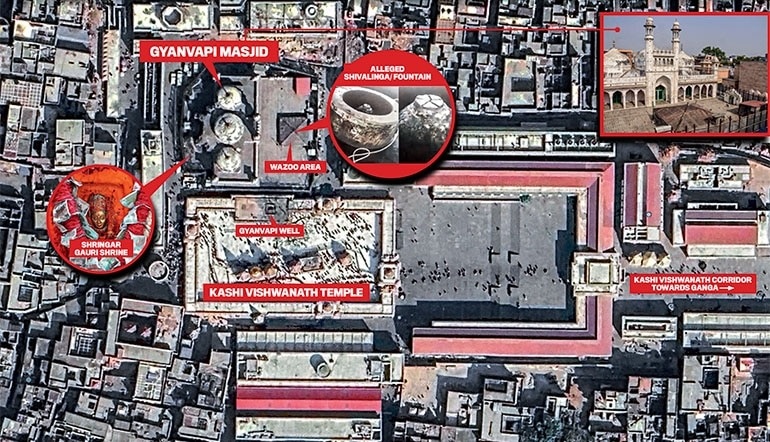
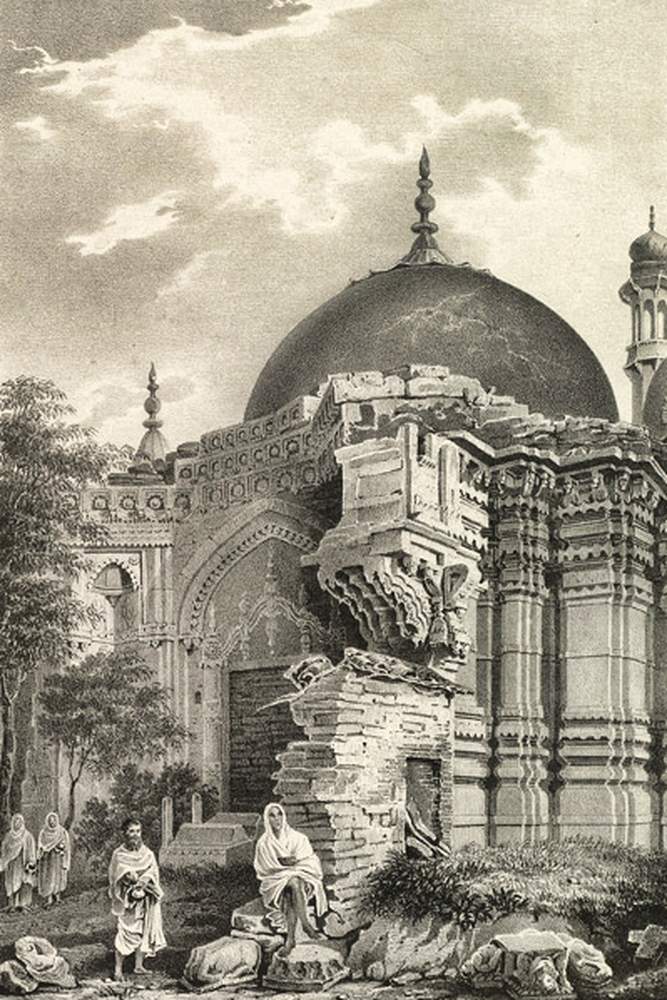
Vishnu Jain continued to explain the nuances in the Gnyanvapi case and added his personal observations. Vishnu Jain voiced his belief that the original temple site is situated within the Gyanvapi mosque and he argued that the Razia Mosque is a newly constructed building that did not “use” the temple ruins. He then quoted a line from James Prinsep which states the importance of Ganga, Kashi, Vishveshwara Temple, and Charity. He also quoted Skanda Purana which exemplifies the importance of Kashi for liberation in a Hindu’s life. A title lawsuit initiated in 1991 continues to endure, as it remains unresolved whether the location falls within the purview of the Places of Worship Act.
Image Source: James Prinsep, Temple of Vishveshwur, Benares, 1834, Lithograph,21.8 x 31.7 cm, British Library
The new temple complex that is currently in use was constructed by Ahilyabai Holkar in 1770. Vishnu Jain explained how the three domes of the Gyanvapi Mosque stood on the existing ruins of Temple Shikharas. Sanskrit slokas and bells could also be seen on all the pillars in the cellars of the existing mosque premises. In 1993, during Mulayam Singh’s government, barricading was done around the mosque in question. The three deities to the north of the mosque were initially inside the barricaded area but were moved outside during this period. Prayers were also being conducted inside the premises in question until that time. In violation of the Places of Worship Act, Hindus were subsequently expelled from the premises in question, and the religious rituals came to an abrupt end.
As per Islam, there is a rule that prayers and namaz can be offered only after performing Wuzu, a ritualistic ablution in which one cleans oneself properly before worship. The devotee is expected to clean their hands, feet, mouth, and arms, among other body parts, before offering their prayers. Vishnu Jain recalled his experience during an inspection of the premises of the Wuzu Tank. When the water level was lowered, a Shiva Lingam became clearly visible. He enthusiastically conveyed the jubilant feelings within the advocate fraternity upon witnessing the Shiva Lingam. He promptly requested the area under dispute to be sealed. After several discussions in the district court and Allahabad High Court, the Archaeological Survey of India (ASI) submitted a report to the Allahabad High Court, suggesting that a test could be conducted on the Shiva Lingam without causing damage. However, the defendants from the Muslim community, while acknowledging it as a Fountain Head, rejected the directions for testing and sought a stay order from the Supreme Court. Although the test on the Shiva Lingam was postponed, Vishnu Jain subsequently approached the District Court to request a survey of the entire disputed mosque area, excluding the Wuzu Tank. On 3 August 2023, the Allahabad High Court ruled in favour of conducting a survey that excluded the Wuzu tank area. In response, the Anjuman Intezamia Masjid Committee appealed to the Supreme Court. The Supreme Court declined to make a ruling and instead directed an ASI survey to be conducted. Vishnu Jain expressed confidence that when the ASI submits its report on October 4th, the outcome will be historical.
Click here to subscribe to The Commune on Telegram and get the best stories of the day delivered to you personally.
Veteran DMK leader, MP, and party Treasurer TR Baalu in a speech asked the DMK scion Udhayanidhi Stalin who said Sanatana Dharma (Hinduism) is like dengue and malaria and needs to be eradicated, to tone down his rhetoric. Udhayanidhi’s comments have cast a shadow upon the I.N.D.I alliance and has created serious political problems for many within the Opposition alliance.
Baalu was addressing an event – Mupperum Vizha on Monday (18 September 2023) when he said, “The entire country is scared of the DMK Youth Wing Head, wondering what he will do next.” This clearly means that all is not well within the party and the words of MK Stalin’s son were extreme.
The senior leader within the DMK did not mince words when he said, that Udhayanidhi is only scared of his father which implying that he does not respect the opinion of other leaders within the party. Baalu said, “He is speaking anything thinking he can manage later. But, I caution him to remember that it is his duty to make sure that the object he holds in his hand should not fall down and break.“
The DMK MP cautioned Udhayanidhi to be mindful of his statements, as they can be twisted out of jealousy.
TR Baalu delivered these remarks while sharing the stage with MK Stalin, the Chief Minister of Tamil Nadu and Udhayanidhi Stalin’s father, as well as A Raja and other party members who had previously made offensive comments about Sanatan Dharma.
He mentioned that leaders from the opposition parties within the I.N.D.I.A. bloc also initially reacted to Udhayanidhi’s comments based on the “misleading” reports. However, they eventually calmed down after being presented with the “accurate” media reports.
Finally the resistance to Udhayanidhi Stalin's hate speech comes from his Sr Leader of DMK, who reaches out to DOTS Alliance Party's everytime after the row stirred by someone in DMK.
DMK LS MP & DMK Treasurer TR Baalu cautions Udhayanidhi nd asks him to speak properly. pic.twitter.com/9l21PvesDc
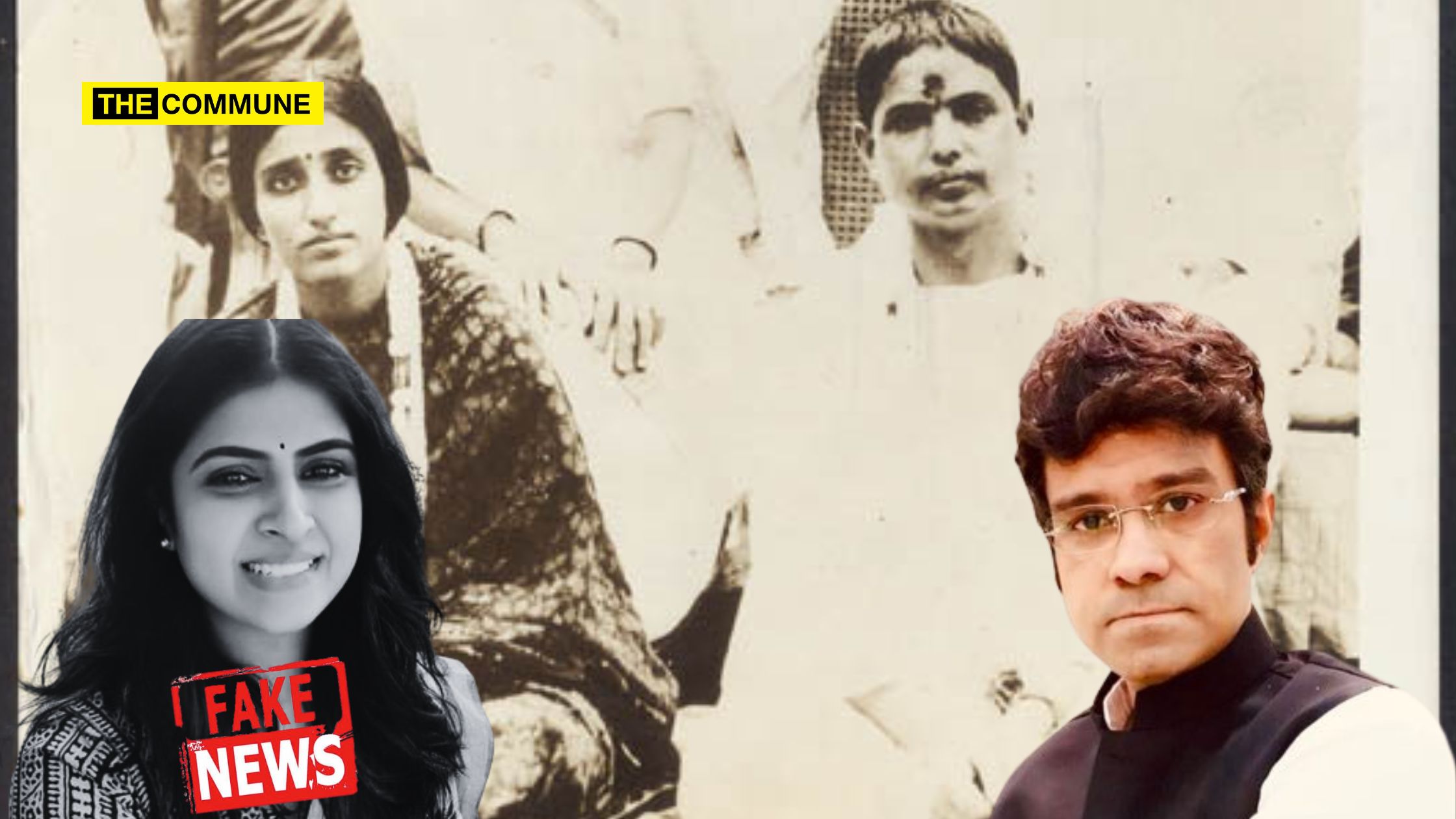
A Dravidian Stockist professor who goes by the name Prof. Sumathi peddled canards about Indian Independence activist C. Rajagopalachari (popularly known as Rajaji) and his family claiming that his daughter was married off as a child and was isolated by her family after she got widowed at a young age.
Prof Sumathi claimed that Lakshmi Rajagopalachari was widowed at a young age and Rajaji’s family had her head shaved and kept her in isolation. According to the Dravidian Stockist professor, it was only after the intervention of EV Ramasamy Naicker (hailed as ‘Periyar’ by his followers) that her remarriage with Gandhi’s son happened. She claims that it was this moment that led to remarriage taking place in large numbers in the Brahmin community.
In a social media post, the Dravidianist professor wrote: “Scholar Rajaji’s daughter was married at a young age. Her husband dies at a young age of 12. Rajaji’s family shaves her head and makes her sit in one corner. Incidentally, Periyar goes to Rajaji’s house. He sees this girl. He scolds Rajaji and makes the girl get back to normal. Periyar then tells this information to Gandhi and arranges for remarriage.“
“As Gandhi and Rajaji are close friends, he tells his son Devdas Gandhi (who founded the Hindi Prachar Sabha) that he will marry Rajaji’s daughter. At that time Rajaji’s daughter was 15 years old and Devdas was 28 years old. After waiting for 5 years, Periyar got them married.“, she claimed adding that in this way, “even Sanatanis need a Periyar“.
She said that Gopal Krishna Gandhi was born to this couple who in the later days was considered as one of the candidates by the Opposition for the Presidential elections.
“Today in the Brahmin society, remarriage is taking place in large numbers and it is because of Periyar”, she said.
To substantiate her claims, she gave a web link to an article of a shady website named “Nakkeran”, not the original Tamil Nadu-based media outlet “Nakkheeran”.
However, Rajaji’s grandson and BJP leader C.R.Kesavan who was former board member of Prasar Bharati repudiated these claim of the Dravidianist professor. Kesavan who had written a book called Unfolding Rajaji said that Lakshmi was aged 21 when she married Devdas Gandhi and was not a widow.
He also pointed out that it was EVR who had met the then Governor-General Rajaji in 1949 in Tiruvannamalai to seek his advice on his remarriage to Maniammai which Rajaji advised against it.
Lakshmi aged 21 married Devdas gandhi and was not a widow.
Periyar in 1949 met Gov-Gen Rajaji in Tiruvannamalai to seek his advice on remarriage . Rajaji advised him against it. Periyar aged 70 married Maniammai aged 32 which led to split of DK and formation of DMK. pic.twitter.com/exrzvryW3u
It must be noted that EVR was 70 years old when he married Maniammai aged 32 who was his adopted daughter and it was this reason that led to the split of Dravida Kazhagam and the formation of Dravida Munnetra Kazhagam.
CR Kesavan also shared a snippet from Rajmohan Gandhi’s book “Rajaji – A Life” in which it is clearly said that though Lakshmi was interested in Devdas Gandhi since she was 15, the couple waited 6 years to get married.
Lakshmi apparently made it clear to that while she would not wed Devdas Gandhi without her father’s permission, he shouldn’t expect her to marry anyone else.
The book also notes that caste was not at all an issue between the Gandhi and Rajaji family and that both Gandhi and Rajaji wanted to ensure that it was indeed love and not infatuation.
Laskhmi who was 15 was told by both her father Rajaji and Gandhi that she should put her love to test by waiting and during the course of her wait there can be no meetings or letters.
In total, Lakshmi and Devdas Gandhi waited for 6 years to get married.
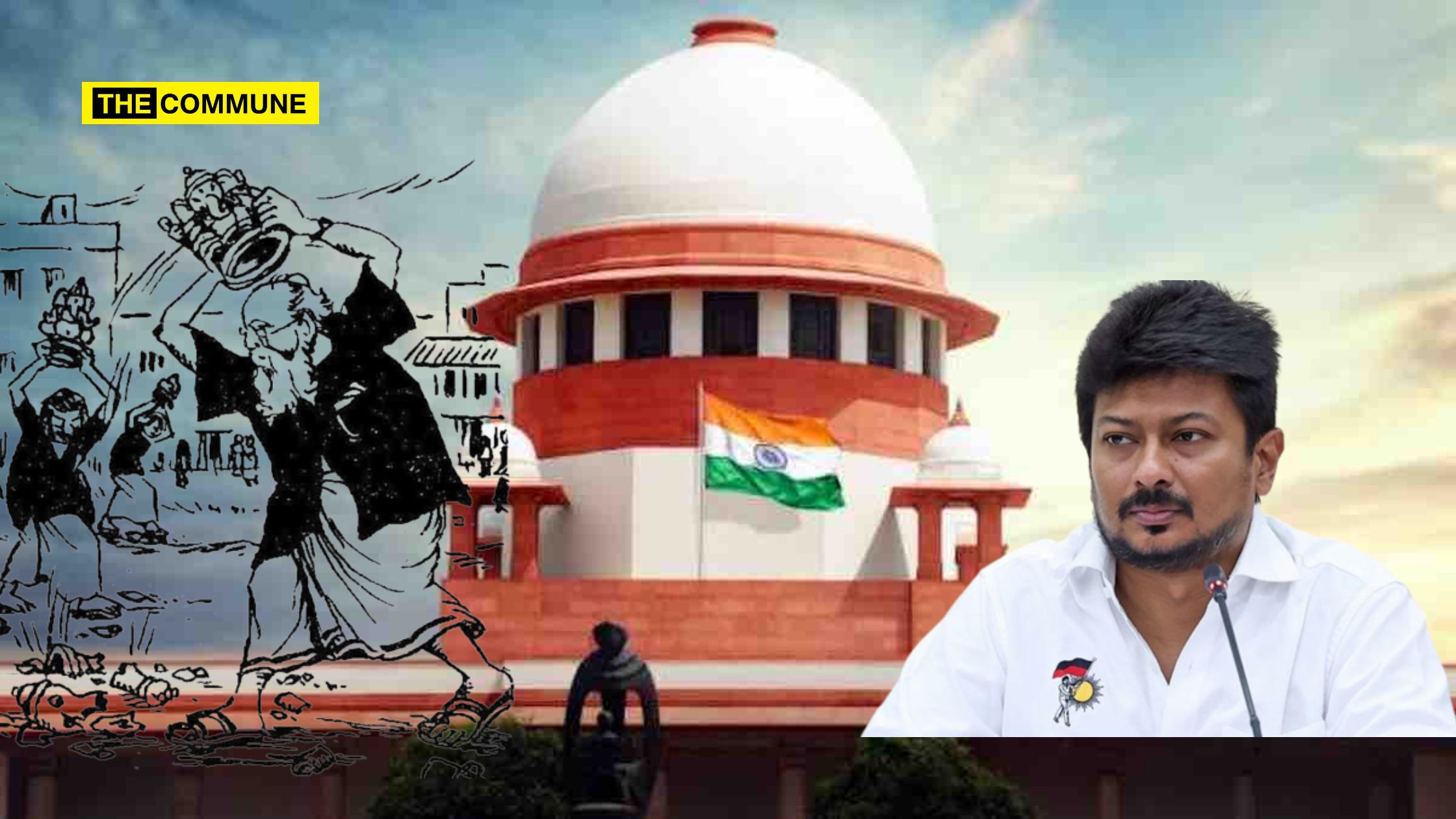
There is a well-known cartoon of EV Ramasamy Naicker (EVR hailed as ‘Periyar’ by his followers) breaking idols of Vinayagar. It based on the real life of incident when EVR smashed an idol of Hindu God Vinayagar in public at the Town Hall maidan in Tiruchirappalli. A Saivite Hindu named S. Veerabadran Chettiar filed a case against EVR under Section 295 and Section 295-A.
According to court records, on 27 May 27 1953, at about 5-30 PM, EVR broke an idol of Vinayagar in public at the Town Hall Maidan, and before breaking the idol, he blatantly stated that his action was intended to insult the feelings of the Hindu community.
The matter first came up to the local court which ordered the police to investigate. The police after investigation said that incident had happened and it was upto the courts to decide whether it was an offense under section 295.
“The mud figure of Ganesa alleged to have been broken by accused is not an object held sacred or worshipped by any class of persons. Simply because it resembled the God Ganesa held in veneration by a section it cannot become an object hold sacred. Even Ganesa idol abandoned by the people as unworthy of worship loses its sanctity and it is no longer an object held sacred by anybody, since such given up idols are found in several places of defilement. It is not an offence if a person treads union any such abandoned idol. Therefore the breaking of mud figure of Ganesa does not amount to an offence under Section 295, Indian Penal Code.“, the lower court magistrate ordered.
The court further added “The speeches delivered by the accused with deliberate and malicious intention of outraging religious feelings of a community, no doubt amount to an offence under Section 295-A, Indian Penal Code. But for laying a complaint under this section the sanction of the Government is necessary. This section has been clearly mentioned in the complaint and it cannot be said it was included by oversight. Without a proper sanction an offence under this section is unsustainable. I therefore see no sufficient ground for proceeding with the complaint and I dismiss the same under section 203, Criminal Procedure Code.”
In effect, the lower court rejected the petitioners arguments stating that a mud representation of a deity did not meet the criteria of being an “object revered by a group of individuals,” as stipulated by IPC section 295.
Subsequently, Veerabadran Chettiar moved the Sessions Court in Trichy for setting aside the lower court’s order. However, the Sessions Court too dismissed Veerabadran Chettiar’s petition saying that it did not amount to an offence.
“I agree with the learned Magistrate that the acts complained of do not amount to an offence. The accused, who profess to be religious reformers in a campaign against idolatory organized a public meeting at which they broke an earthern image of the God Ganesa. The particular image broken was the private property of the accused and was not in itself an object held sacred by any class of persons; nor do I think that idol breaking by a non-believer can reasonably be regarded by a believer as an insult to his religion; and the ingredients of Section 295, Indian Penal Code, are therefore not made out.“, the Sessions Court in Trichy ruled.
The matter then went to the High Court, which citing a few case laws said that this was not an offence under Section 295 and did not allow further appeal.
“The dolls in the shop, though they may resemble several of the deities in the temple, cannot be held to be objects held sacred by any class of persons. In modern society there are several images of the deities in the drawing rooms of several houses. It cannot for a moment be suggested that these images are objects held sacred. These have got to be distinguished from the objects held sacred, which can only be when they are duly installed in a temple and from which they are subsequently taken out in procession on festival occasions. What was broken therefore by the respondents is nothing more than a doll taken either from a shop or made for the occasion, and it cannot by any means be called ail object held sacred. The offence is not made out and the dismissal is therefore justified.“, the High Court had ruled.
However, under the rights guaranteed by the constitution, the petitioners approached the Supreme Court which was very critical of the lower court judgments and opined in the future such narrow interpretation should not be used and those in charge of law and order were supposed to apply the law based on this judgment.
The judgement delivered by Justice BP Sinha said that the legislative intent behind this provision was to enhance protection for the religious sentiments of communities.
“Any object however trivial or destitute of real value in itself, if regarded as sacred by any class of persons would come within the meaning of the penal section. Nor is it absolutely necessary that the object, in order to be held sacred, should have been actually worshipped. An object may be held sacred by a class of persons without being worshipped by them. It is clear, therefore, that the courts below were rather cynical in so lightly brushing aside the religious susceptibilities of that class of persons to which the complainant claims to belong.“, the Supreme Court said.
The Supreme Court ruled that the lower courts had erred in their preliminary determination that the mud idol did not qualify as an “object held sacred by a class of persons.” The Court even suggested that Lord Ganesha was revered by certain segments of the Hindu community, even if the mud idol had not been formally consecrated.
Furthermore, the Court extended the interpretation of this section to include objects that may not necessarily be objects of worship. The Court emphasized the need for the judiciary to show great respect for people’s religious sentiments and refrain from passing judgment on those beliefs, even when they differ from the Court’s own views or appear irrational.
However, considering the protracted duration of the case, which had spanned over five years, the Court deemed the matter “stale” and declined to order further investigation.
Fast forward to 2023, Tamil Nadu Chief Minister MK Stalin’s son and DMK Minister Udhayanidhi Stalin had equated Sanatana Dharma (Hinduism) to dengue, malaria, corona and called for its eradication. There has been massive outrage from across sections cutting across political parties condemning the DMK Minister’s statement. Former judges, government officials, and war veterans have collectively written a letter to the Chief Justice of India, urging him to initiate suo motu proceedings in response to the hate speech delivered by DMK Minister Udhayanidhi Stalin who had equated ‘Sanatan Dharma’ to diseases and mosquitoes and called for its eradication. Infact, the Supreme Court had in Shaheen Abdulla Vs Union of India case, directed the governments and police authorities to take suo motu action in such cases without waiting for the lodging of formal complaints.
However, the bench led by Chief Justice of India DY Chandrachud in the Supreme Court declined to urgently hear a Public Interest Litigation (PIL) on Udhayanidhi Stalin’s “eradicate Sanatana Dharma” remarks.
The Chief Justice of India declined to entertain the plea filed by a lawyer from the Madras High Court, citing that it had not been listed for urgent consideration and that the Standard Operating Procedure laid out by the court needed to be followed.
It is crystal clear that DMK Minister Udhayanidhi Stalin’s speech reeks of hate and targeted towards a particular community. Will Mi Lords take a look at the Hon’ble Court’s own words to atleast condemn the incendiary hate speech of a person holding public office?
Vallavaraayan is a political commentator fighting Dravidian Stockists.
Click here to subscribe to The Commune on Telegram and get the best stories of the day delivered to you personally.
AIADMK leader D Jayakumar made it clear on Monday that there is currently no alliance between his party, led by K. Palaniswami, and the Bharatiya Janata Party (BJP) in Tamil Nadu. He emphasized that the decision regarding any alliance would only be determined during the upcoming 2024 Lok Sabha Elections.
Senior AIADMK figure D Jayakumar strongly criticized BJP state chief K Annamalai for his negative comments about the prominent Dravidian leader C N Annadurai. Jayakumar asserted that his party members would not tolerate any disrespect directed at the late chief minister.
He noted that Annamalai had made critical statements about AIADMK leaders, including the late J Jayalalithaa, prompting the AIADMK to request restraint from the BJP leader. Expressing his frustration, Jayakumar stated that Annamalai did not appear interested in forming an alliance with AIADMK, despite some BJP members desiring it. He questioned why they should endure criticism of their leaders and emphasized that the BJP’s presence in the state was known and attributed to the AIADMK.
Regarding the alliance, Jayakumar clarified that, at present, there was no alliance between the BJP and AIADMK, and any decision on this matter would only be made during the election period. When asked if this was his personal opinion, Jayakumar responded by saying, “Have I ever spoken to you in that capacity? I only convey what the party decides.”
Jayakumar strongly criticized the BJP led by Prime Minister Narendra Modi, suggesting that tensions between the AIADMK and BJP appeared to have reached a breaking point.
It’s worth noting that the BJP has been actively seeking alliances to strengthen its presence in southern states, especially after losing its last stronghold, Karnataka, to the Congress in the recent Assembly elections.
Click here to subscribe to The Commune on Telegram and get the best stories of the day delivered to you personally.
Tamil Nadu Governor RN Ravi delved into the issue of caste-based social discrimination that still persists in various parts of the state during a speech. He also touched upon the controversy surrounding Sanatan Dharma, emphasizing its enduring nature.
RN Ravi addressed the audience at the Siva Kulathar Cultural event, organized by the Tamizh Seva Sangam in the Ozhugacheri hamlet near Anaikkarai in Thanjavur. He lamented the prevalence of caste-based discrimination, describing it as “shameful.” He pointed out that instances of caste discrimination were still occurring in the state, even as the government claimed to prioritize social justice and equality. Ravi drew attention to the troubling practice of youth wearing caste-based wristbands to identify their backgrounds.
The Governor highlighted various distressing incidents, including members of Scheduled castes being barred from entering temples, contamination of water tanks with human excreta, and discrimination faced by minority community children in schools. He stressed that these harmful practices could only be eliminated through social reform rather than exploiting them for political gains.
#WATCH | Tamil Nadu Governor RN Ravi at an event yesterday said, "Our Constitution is not against 'dharma' ..it is the people who want to break this country, they have given a distorted interpretation of secularism. We have to understand the true meaning of secularism in our… pic.twitter.com/TY024btXmW
Ravi emphasized that ‘Bharatiya Dharma’ had the potential to promote social and spiritual equality among citizens and bring about societal reform. He asserted that the concept of Bharat, founded on the principle of equality, had faced threats in the past, particularly during the British era and later through divisive vote bank politics.
#WATCH | Thanjavur: Tamil Nadu Governor RN Ravi participates in the 'Tamil Seva Sangam' program.
He says, "In Rig Veda, our sages revealed the basic principles of 'Dharma' which defines Bharat and which created Bharat. These principles created a culture, a civilisation where… pic.twitter.com/MbVTMYU5Vl
In his speech, the Governor also addressed those who sought to “eradicate Sanatana Dharma”. He noted that such efforts had persisted across generations but would not succeed, as Sanatana Dharma was not confined to temples but deeply ingrained in the DNA of all Indians.
Click here to subscribe to The Commune on Telegram and get the best stories of the day delivered to you personally.
Seven proselytizers were arrested in Rae Bareli, Uttar Pradesh for allegedly trying to convert people to Christianity by luring them with promises of “good food and English education, reports daijiworld.
The arrests were made on Sunday (September 17) evening and as per reports, the arrested people have been identified as Ram Ratan Shankar, Laxmi Shankar, Rajendra Sewak, Pawan Kishan, Rahul Prasad, Virendra Lal, and Akhilesh Kumar.
According to Lalganj SHO Shiv Shankar Sing who said Pitambar Kumar of Bindaganj had informed that Ram Ratan Shankar had organised a prayer at his residence on Sunday and was luring innocent villagers to embrace Christianity by offering them good food and English education.
“A team reached the residence of Ram Ratan to find that they were organizing a prayer and over a dozen villagers were participating. They were being given religious sermons along with booklets and pamphlets while they were being persuaded to convert,” the police said.
In 2023, around 90 people have been arrested in Uttar Pradesh for allegedly converting villagers to Christianity.
Click here to subscribe to The Commune on Telegram and get the best stories of the day delivered to you personally.
A female Saudi citizen was allegedly sexually molested recently by a famous Malayali vlogger Shakir Subhan who operates a social media channel called Mallu Traveller based out of Kannur and has 2.71 million followers on YouTube.
This assault had taken place in a hotel located on MG Road, Bangalore during Zakir’s stay on Tuesday night 12 September 2023. The vlogger who allegedly molested this Saudi National is currently abroad.
According to the victim, she was in a romantic relationship with the man who she had connected via social media and while they were in a hotel room, the assault on her took place. The victim said that as soon as her partner briefly left the room, Zakir saw that as an opportunity and molested her.
The woman and her partner were in Ernakulam for an event when they crossed paths with Shakhir at his hotel. According to her, Shakhir extended an invitation to their room, where the alleged incident took place. She detailed the sequence of events, explaining that they initially met Shakhir in the hotel lobby for a casual conversation, and subsequently, he invited them to his room. It was in his room that she asserted Shakhir molested her, a statement she made in a video later posted on YouTube.
In the video, she recounted how Shakhir persisted in molesting her despite her attempts to fend him off.
She also revealed that she refrained from immediately informing her partner about the assault due to concerns that it might lead to a confrontation with Shakhir. Instead, she chose to disclose the incident to her partner at a later time. Furthermore, she stated that she had reported the incident to the Saudi embassy in Delhi, as well as the Saudi consulate in Mumbai, and had also lodged a formal complaint with the police.
Expressing her gratitude for the prompt response of the authorities, she emphasized, “My father holds a government position, and I hold a Bachelor’s degree in Law. No one should have the right to touch another person’s body without their explicit consent.”
The female vlogger also expressed her astonishment that such an incident occurred in India, a country where she felt warmly embraced by the local culture and hospitality. She stressed that this was the first time anyone had violated her personal boundaries without her consent. She had a message for girls, especially those in Kerala: “If you have experienced any form of molestation by Shakhir or anyone else, I urge you not to hesitate to speak out and report the incident to the police.”
Initially, the victim was too traumatized to file a police complaint but later after she found support from her friends, she filed a complaint. A case under section 354 (Outraging the modesty of a woman) of the Indian Penal Code (IPC) has been registered against Suban.
Whether it's Aisha or any Saudi woman, women are not safe in the hands of PEACEFUL people’s Hand!!
The Ernakulam Central police have initiated an investigation after a Saudi national woman made an allegation of molestation against PEACEFUL MALLU vlogger “Alias Shakir Subhan”,… pic.twitter.com/VNCmkpKphq
However, in a video released on YouTube today, Shakir Subhan vehemently refuted the accusations lodged against him.
Shakir Subhan asserted that the complaint was unfounded. In a video posted on his widely followed YouTube channel, “Mallu Traveller,” boasting over 2.7 million subscribers, he clarified that the couple had initially reached out to him on Instagram, identifying themselves as devoted fans. He explained that they had contacted him while he was attending a gathering of social media influencers in Kochi, requesting a meeting. Following the influencer event, numerous individuals sought to meet him. Shakir mentioned that his brother was present during this time, and he was nearly asleep when the couple arrived at his room. Subsequently, his brother left the room. The couple, he alleged, informed him that they were in dire financial straits and asked for both monetary assistance and support with their social media promotions.
Shakir went on to state that the couple had arrived and departed together, directly contradicting the woman’s claims. He expressed suspicion that this might be an orchestrated scheme against him, referring to it as a potential “honey trap.” Additionally, he pledged to refute the allegations once he returns from Canada.
Click here to subscribe to The Commune on Telegram and get the best stories of the day delivered to you personally.
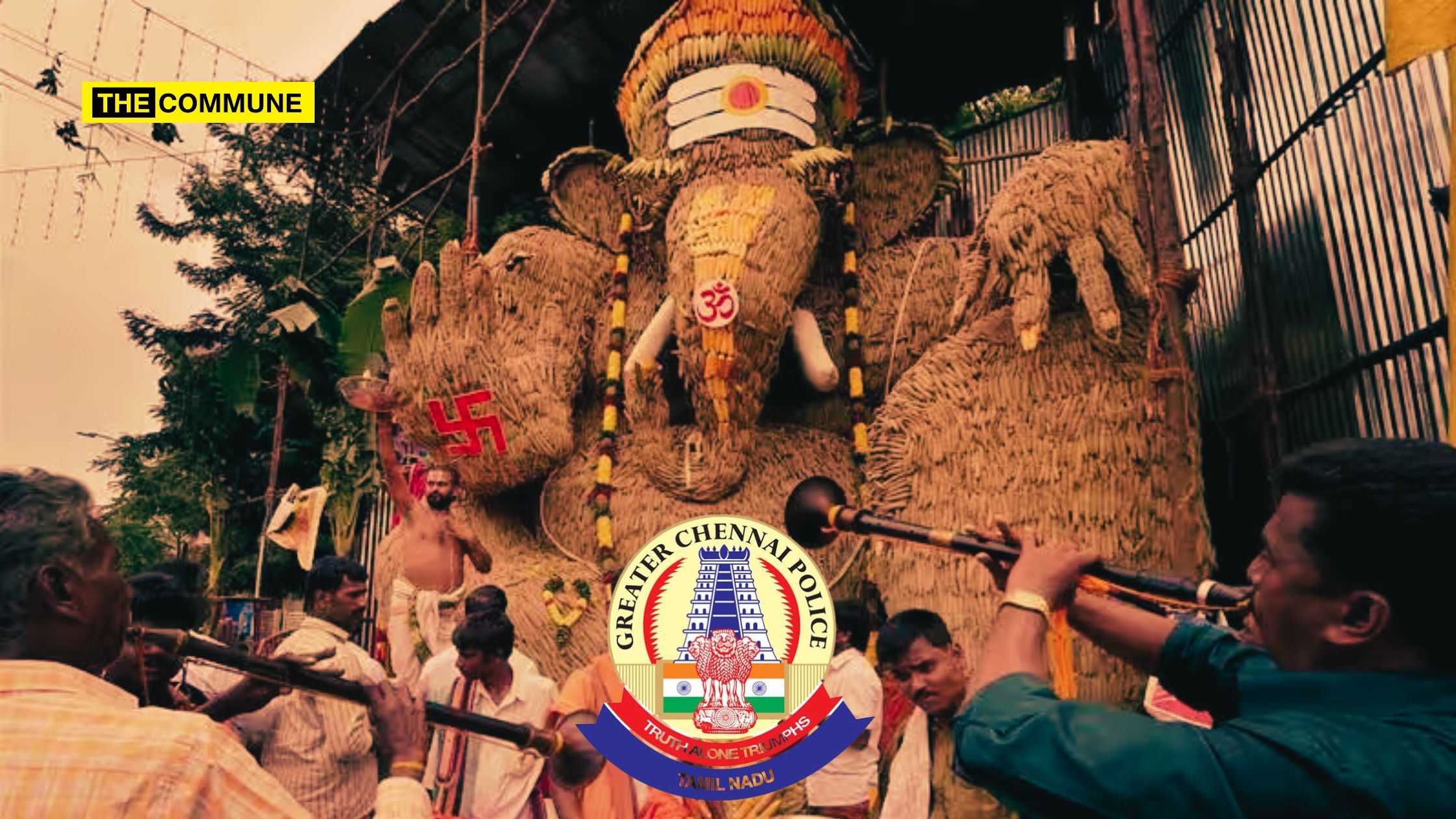
On the eve of the annual Vinayagar Chaturthi celebration, the Greater Chennai Police has issued a set of guidelines on how Hindus should celebrate the festival.
The police have issued 11 sets of guidelines which is being considered as draconian by many making it very difficult for Hindus to celebrate Vinayagar Chaturthi.
A few Vinayagar Pandal organizers that The Commune spoke to said that the process of setting up Vinayagar Pandals has been made extremely bureaucratic, cumbersome and taxing so as to delay or prevent people from erecting one.
Here are some of the commandments issued by the police regarding installation of idols asking organizers to get
1. Landowners where Vinayagar idols are going to be installed must have obtained permission from local bodies concerned, Highway Department or Government Department.
2. Must have obtained No Objection Certificate from Fire Department, Electricity Board, etc.
3. Obtain permission from the police station officer concerned by filling up the forms for installation of Vinayagar idols, undertaking to abide by the restrictions and conditions mentioned therein.
4. The height of the statue to be installed should not exceed 10 feet from the base of the platform.
5. Installation of idols near places of Worship, Hospitals, Educational institutions should be avoided.
6. Two volunteers should be deputed on a 24-hour rotation to ensure the safety of the idols.
7. Banners/billboards in support of any political parties or religious leaders should not be placed at the worship point.
8. Fire safety rules and regulations must be followed, electrical wire connections; Pandals should be monitored periodically to avoid accidents and mishaps.
On the other hand, the Greater Chennai police has given said that shouting slogans that incites “religious hatred” or “hurts the sentiment of other religions” is not allowed. This is being seen as a vague diktat to launch a crackdown on people aligned with a particular ideology as it comes at a time when the political climate is vitiated with even chants of “Jai Shri Ram” being construed as “hurting sentiments of other religion”. The is also a ban on bursting of firecrackers when Vinayagar idols are taken for immersion.
Greater Chennai Police
On the occasion of Vinayagar Chaturthi, instructions for the installation and worship of Vinayagar idols:
1. Land owners where Vinayagar idols are going to be installed must have obtained permission from local bodies concerned, Highway Department or… pic.twitter.com/hYsV5O2PMU
While it is good that the Greater Chennai Police is taking precautionary measures to ensure a smooth celebration of the festival, it has also raised questions about why they failed to show such concerns for AR Rahman’s recent concert in Chennai which turned out to be a nightmare due to crowd mismanagement with stampede like situations, women getting molested and traffic snarls.
Click here to subscribe to The Commune on Telegram and get the best stories of the day delivered to you personally.