Following the split between ADMK and BJP, the Edappadi K. Palaniswami-led Dravidian party has been buttering up with Islamist outfits like Social Democratic Party of India (SDPI – the political arm of the banned radical Islamist terror outfit Popular Front of India) in an attempt to get minority votes.
The secund rung of leaders have been mounting attacks against the BJP especially on the national party’s state president K. Annamalai.
Earlier, former AIADMK Minister RB Udhayakumar had ridiculed Annamalai as a “legiyam seller”, “poochandi”, and “maayandi”.
In the latest attack, ADMK leader C.Ve. Shanmugam trained his guns on the BJP over the building of Ram Temple in Ayodhya.
“If you build a temple, and pray to Ramar, will you get 3 meals a day? Today, they’re inciting emotions and trying to divide people. Be it the government at the Centre or the State government, both these governments are inciting passion and emotion and are covering up real basic problems of the people and doing drama to get votes of the people.“, the ADMK leader said.
The ADMK leader’s comments targeting the Ram Temple in Ayodhya is seen in light of the Dravidian party’s continuous attempt to woo Muslim votes.
TheADMK, after its exit from the National Democratic Alliance (NDA), has come under scrutiny for its perceived efforts to court minority voters. This shift is believed to be a response to the party’s claim of losing minority support during its alliance with the BJP.
C.Ve. Shanmugham has for long argued that the AIADMK lost the 2021 Assembly Elections because their alliance with BJP cost them minority community votes.
Subscribe to our channels on Telegram, WhatsApp, and Instagram and get the best stories of the day delivered to you personally.
In a recent social media post on platform X, Anusha Ravi Sood, the executive editor of South First news portal, shared a video featuring Uttar Pradesh CM Yogi Adityanath where he stated that UP had become the second-largest economy in the country. Sood quoted that UP was not the second largest economy in the country but it was Tamil Nadu as per RBI data.
However, Anusha’s apparent lack of awareness regarding the latest economic updates raises concerns about her journalistic credibility. Despite numerous news articles in December 2023 confirming UP’s ascent to become the second-largest economy, Anusha seemed to rely on outdated data from FY 2021-22, where Tamil Nadu’s contribution was 8.82%. In the FY 2023-24 forecast and realization, UP has surged to 9.2%, surpassing Tamil Nadu, while Maharashtra maintains its lead at 15.7%.
While Sood’s post acknowledges that she quoted RBI data, her oversight regarding the RBI’s non-real-time updates makes one question her journalistic acumen.
Peddling The North-South Divide
In a video released a few weeks ago, she talks about “Well-performing southern states claim fiscal injustice by Union government. What are their concerns?” However, the 17-minute video appears highly opinionated, primarily focusing on superficial facts.
Anusha’s opening statement, “India is a union of states,” is nothing but a fragile idea of India peddled by Congress leader Rahul Gandhi. This sets the tone for her narrative, seemingly aimed at establishing a divisive agenda. She conveniently neglects the significant contribution of Delhi and Maharashtra, which alone accounts for over 50% of durect tax collection. Despite their substantial financial input, these regions receive considerably less than the southern states, suggesting a disparity that Anusha fails to address.
Maharashtra and Delhi account for 50.4% of direct tax collection,
All 5 "Southern" states combined pay 25.8% of tax.
Anusha Ravi Sood’s presentation of the direct tax map in her video also seems to be inaccuracies, as pointed out by a netizen. This thread reveals how funds are allocated after taking all components into consideration.
Why @TheSouthfirst is peddling FAKE data in their video?
The Direct Tax Map that you shared in your video is FALSE.
Ask @anusharavi10 and her team to verify the data before using it in the video.
This also raises questions about the reliability of the data she relies on to make her arguments.
Sood does not take into context the freebies that governments across the country are relying on for their votes.
A former Chief Minister of Tamil Nadu once famously said, “Vadakku vazhgiradhu, Therku theigiradhu,” implying the perceived regional disparity where the north prospers while the south suffers. We ask whether Anusha tried to analyse the recent TN budget at least once? South districts received a pittance in comparison to KTCC in TN. Why has she not raised her voice against disparity among districts?
In the video, Anusha’s focus on population and area as the main criteria for tax-sharing seems to be flawed. The Finance Commission considers several factors before it offers its recommendations. The weightage is given below in the latest Finance Commission.
In terms of horizontal devolution, the 15th Finance Commission has recommended a distribution formula with 12.5% emphasis on demographic performance, 45% on income, and equal weightage of 15% each to population and area. Additionally, 10% is allocated to forest and ecology considerations, while tax and fiscal efforts receive a 2.5% weightage.
If you consider a city like Bengaluru which generates significant revenue for the state government but receives disproportionately less in return. In contrast, a village in Karnataka, generating comparatively less revenue, receives more substantial returns. The analogy suggests a skewed system where the rich pay high but don’t necessarily receive equitable benefits. Let us assume for a moment that what the state does in Karnataka is right. Isn’t this what reservation and social justice are all about – helping the underprivileged? Are Anusha and her ilk selectively blind to this form of social justice, do they think this only applies to caste?
In this post, Amit Malviya of the BJP explains in detail about how tax devolution to states works. It would have helped if the likes of Sood had done a little bit of background research rather than firing blanks just to peddle propaganda of the leftist lobby.
Devolution to States is done by a constitutional body based on rational criteria under Article 280. It is not random.
• During 2014-24 (till the latest release on 22 Dec 2023), Tax Devolution (Net Proceeds of Union Taxes and Duties) from Govt of India to Karnataka has been… https://t.co/ONItV9o8Gi
If one goes by Anusha Ravi Sood’s logic for tax distribution at the state level, several questions come up – Why isn’t tax collected from Bengaluru utilized for the city’s benefit, and who bears the cost of the apparent freebies? One can extend this to ask why tax-paying citizens are penalized and high taxpayers don’t receive more in return.
Setting aside these concerns momentarily, it’s worth examining whether fiscal federalism was introduced by the Modi government. The same Anusha was probably tongue-tied or unaware of what happened during the UPA era or before. It was Prime Minister Modi who ensured states received more than what they were receiving before. And yet, they are not satisfied. Here is a statement by DMK Minister PTR Palanivel during the Jantar Mantar protest against the centre. Here PTR speaks of Narendra Modi who questioned why disparity was shown between states over fund devolution. In a post on his X handle amidst the ongoing ruckus being created by the I.N.D.I.Alliance partners concerning the central government “looting tax revenue” from states, he wrote quoting DMK Minister PTR Palanivel Thiagarajan at Delhi Jantar Mantar protest, “There was a Chief Minister in India. He said that the central government is severely deceiving them and talked about the federal philosophy from side to side. He said that they are taking the tax money of our state and diverting it to some states: He is none other than the then Chief Minister of Gujarat, Narendra Modi, who is now the Prime Minister.”
However, it is to be noted that after PM Narendra Modi assumed the PM post, he increased the allocation of funds to states. from 32% to 42%. Further, he reduced the weightage of the population in the tax distribution criteria from 27.5% to 15%.
Additionally, the funds available to states in the UPA regime (2004-14) was ₹30 lakh crore but from 2014-2023, this fund has increased to over ₹100 lakh crores.
Also, the tax sharing and assistance received by Tamil Nadu excluding NH, Ports, Railways, Railways, other Infra in the UPA regime (2004-14) was ₹1,52,921 crores. In the Modi regime (2014-23), it has increased to ₹5,08,337 crores.
Tamil Nadu has also received ₹10.76 lakh crores of funds, projects, and grants in the past 9 years under the Modi government.
By Anusha’s logic, each taxpayer should receive benefits in proportion to taxes paid. Will the likes of Anusha question the disparity in the allocation of funds between cities like say Chennai and Coimbatore or Bengaluru and Hubbali?
Being a journalist, Anusha seems to have absolutely no idea about the GST split which has been explained several times over and over again by Union Finance Minister Nirmala Sitharaman.
States like Karnataka and Tamil Nadu seek more money to ensure their freebie promises are taken care of. A common man can easily understand between people-pleasing politics which is temporary and constructive politics which is pro-people and designed with a long-term vision that the central government follows. If Anusha is so concerned about this alleged south tax movement, maybe she can ask her Chief Minister why there is disparity within districts in Karnataka itself. In October 2023, the Karnataka government allocated ₹40 crore to 12 MLAs, primarily from the Congress party, as a part of the redistribution of special civic grants. The funds, originally designated for the CM’s Nava Nagarothana scheme in 2022, total ₹480 crore, with a focus on roadworks. This move raises questions about fairness and equal distribution among legislators, particularly as some BJP MLAs expressed dissatisfaction with the skewed funds’ allocation favouring Congress members.
So will Anusha Ravi Sood first help the Karnataka Congress government fix its internal issues before pointing fingers at others, especially the centre? It will also help if she can learn some math, finance, and economics alongside her daily routine of staying updated with the news.
Subscribe to our channels on Telegram, WhatsApp, and Instagram and get the best stories of the day delivered to you personally.
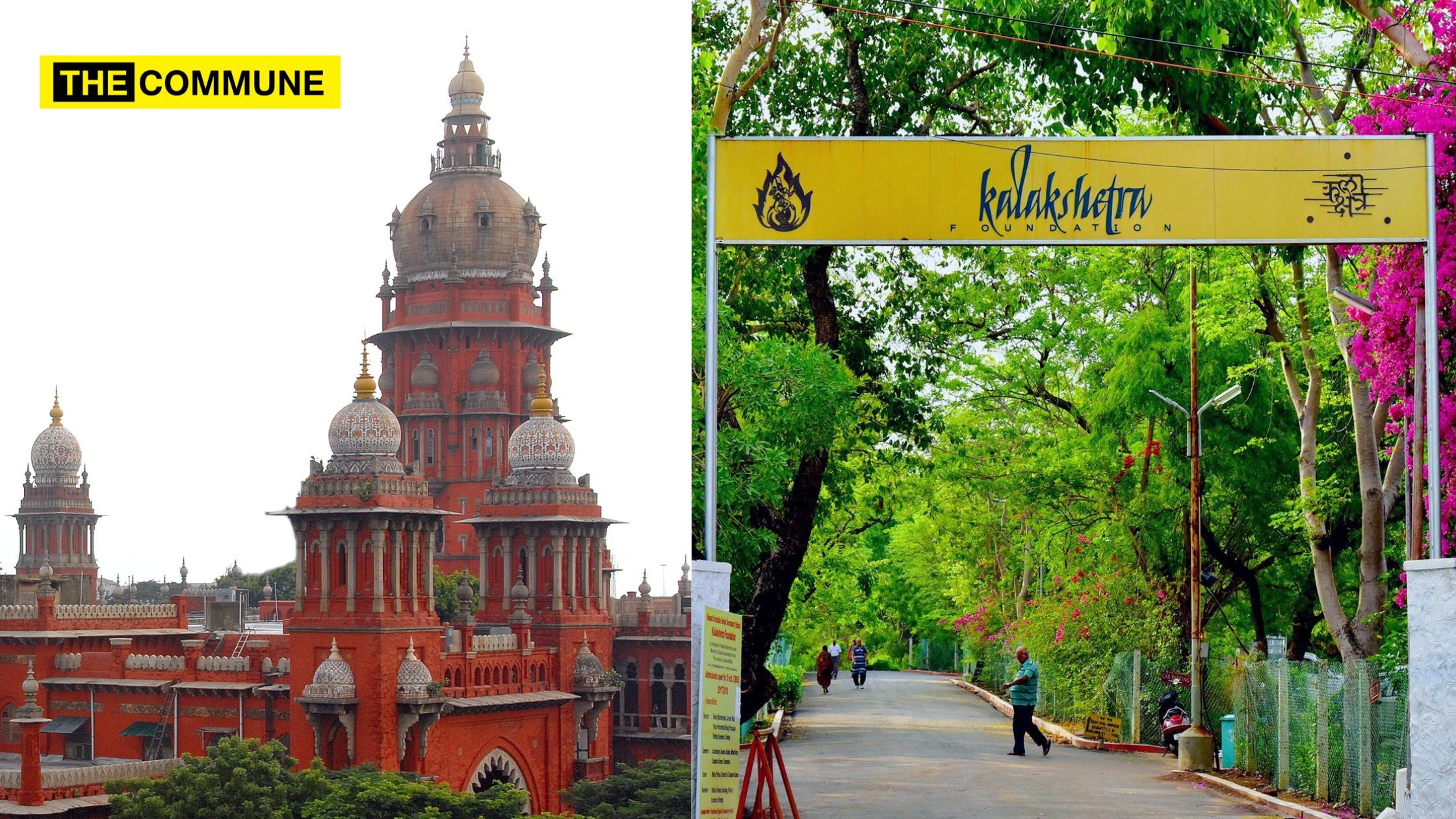
The Madras High Court has resolved a plea filed by students from Rukmini Devi College of Fine Arts, under the Kalakshetra Foundation, who sought the establishment of safety policies and redressal mechanisms. Justice Anita Sumanth noted that there was no need for further directions, as the college had already finalized the Gender Neutral Policy for the Prevention, Prohibition, and Redressal of Sexual Harassment complaints. The court also highlighted the reconstitution of the Internal Complaints Committee, indicating the fulfillment of the students’ sought reliefs.
While recognizing the implemented policies, the court expressed concern over the institution’s delayed response to the students’ allegations, terming it a “blight on Kalakshetra.” Emphasizing the expectations of stakeholders in the education system to meet societal norms and system expectations, the court stressed the importance of addressing such issues promptly for the reputation of Kalakshetra.
The court acknowledged the necessity of expediting the inquiry into the students’ allegations, emphasizing the importance of reaching a logical conclusion. It underscored the critical role played by addressing such issues promptly for maintaining the reputation of Kalakshetra, whether adhering to traditional or modern practices in the education system.
The court directed the foundation to frame policies and establish a complaints committee in its schools. Noting the inadequacy of the present policy, the court mandated drafting a comprehensive policy, incorporating provisions under the POCSO Act and other regulations, within six months.
The court reviewed the Independent Committee’s report, headed by Justice K Kannan, urging the management to promptly consider recommendations. These included a ban on students entering teachers’ quarters, discouraging participation in tours, emphasizing higher learning, automating office administration, and selecting efficient administrators with HR management skills.
Kalakshetra Controversy: Allegations, Investigations, and Institutional Response
The controversy began when Leela Samson, the former director of Kalakshetra Foundation, making allegations on her Facebook account against an unidentified teacher. In December 2022, students reportedly sharing comparable incidents of sexual harassment conducted a protest, leading to the arrest of a faculty member. Media outlets like News Minute and The Print published articles discussing the teacher-student relationship at Kalakshetra, particularly implicating Hari Padman and asserting students encountered inappropriate conduct. However, a report by News 18 indicated that the teacher’s actions were consistent with the institution’s disciplinary culture.
Following anonymous social media posts, allegations of sexual harassment against Haripadman prompted the Director, Revathy Ramachandran, to establish an Internal Complaint Committee (ICC) for investigation. Despite no formal complaint, she initiated a suo moto inquiry, with the ICC, led by Revathi Ramachandran, determining the accusations were baseless rumors. The National Commission for Women and the ICC cleared Hari Padman, prompting the closure of the case, citing a lack of evidence and the victim’s denial of harassment. The Kalakshetra Foundation also presented ICC findings to the DGP, affirmed a comprehensive investigation found no substantiation of sexual harassment claims circulated on social media.
As per media report, in the case of sexual harassment allegations at Kalakshetra institution, the Director's clarification and the internal complaints committee report did not find any evidence of sexual harassment on campus. @sharmarekha
But students argued that the institution failed to take responsibility, rejecting complaints based on the expiry of the three-month time limit under The Protection of Women against Sexual Harassment at Workplace Act, 2013 (POSH). Instead of addressing the issue and suspending the accused professor, the institution dismissed the complaints. The court had previously instructed the college not to take adverse action against students raising complaints.
Another setback for the ruling DMK government in Tamil Nadu as the Madras High Court has reversed the special court’s ruling that cleared DMK Cabinet Minister for Rural Development and Panchayats, I Periyasamy, of accusations related to the irregular allocation of plots in the Tamil Nadu Housing Board to former Chief Minister M Karunanidhi’s personal security officer during his tenure of 2006-2011.
Justice N Anand Venkatesh has instructed the trial court to conduct daily proceedings and conclude the trial by 31st July, as part of the final order in the suo-motu criminal revision.
The judge has mandated that all the accused, including Minister I Periyasamy, post a bond of Rs. 1 lakh each and appear before the special court for the trial.
On September 8 last year, Justice N Anand Venkatesh remarked that the situation presented “yet another textbook case of how the criminal justice system has been successfully subverted from within” during the suo motu criminal revision initiated against Periyasamy’s discharge from the plot allotment case.
In 2012, the Directorate of Vigilance and Anti-Corruption (DVAC) filed a case against Minister I Periyasamy, alleging that, during the DMK regime between 2007 and 2011, he unlawfully acquired a High Income Group (HIG) plot in the Mogappair Eri Scheme of the TNHB for C Ganesan, an inspector in SB-CID and PSO to the then Chief Minister M. Karunanidhi.
The DVAC claimed that Ganesan had submitted an undated application to M. Karunanidhi, falsely stating that his family resided in a private house while concealing the fact that he actually lived in TNHB Housing quarters.
However, following a change in the regime in 2011, the DVAC initiated a corruption case against Ganesan and Periyasamy. A charge sheet was filed in a special court, which rejected various discharge petitions filed by Periyasamy, keeping the case active.
In 2021, after a change in the state’s leadership, Periyasamy reassumed the ministerial position. The Special court for MP/MLA cases ordered the discharge of Periyasamy from the case.
Previously, Senior Advocate Ranjit Kumar, representing Periyasamy, contended that the trial initiated against Periyasamy was flawed as it was based on sanction from the Speaker of the House instead of the proper authority, the Governor. He argued that the trial lacked legal validity.
Kumar further pointed out that the trial court, while rejecting the initial discharge petition, acknowledged the need to hear the Speaker’s arguments. Hence, he asserted that the second discharge petition, filed after the trial commenced and witness examination, should be considered valid based on the trial court’s earlier ruling.
The court, however, raised concerns about the DVAC’s failure to secure prosecution sanction, even after the trial court discharged the Minister due to inadequate sanction. The court emphasized that this issue reflected a systemic problem that required resolution. Additionally, the court expressed the importance of sending a message to the public that it could take action against individuals in the highest positions.
It’s worth highlighting that DMK ministers are consistently under scrutiny in various corruption cases. Former Excise Minister V Senthil Balaji is presently in jail, seeking bail in connection with a corruption case. The corruption case involving Former Higher Education Minister Ponmudi is also active in court proceedings. Currently, a suo motu revision is underway in the corruption case of the Rural Development Minister I Periyasamy.
The Supreme Court, while issuing notice in the plea of Tamil Nadu BJP Leader Annamalai, has put a halt to the proceedings before the trial court concerning alleged remarks made in a YouTube interview against a Christian Missionary NGO.
This NGO had approached the Supreme Court seeking a ban on firecrackers. Justice Sanjiv Khanna, upon reviewing the translated remark, clarified that it does not qualify as hate speech. Notably, the Madras High Court, in its refusal to quash criminal proceedings against K Annamalai, emphasized that the court’s duty is to assess if the statement by a prominent leader has caused silent harm in the psyche of the targeted group, extending beyond immediate physical harm.
The bench of Justice Sanjiv Khanna and Justice Dipankar Datta issued a notice returnable in the week commencing April 29, 2024, and concurrently stayed further proceedings before the Trial Court. This interim order was passed after the attention was drawn to a translation at page 60.
Senior Advocate Siddharth Luthra and Advocate J Sai Deepak represented Annamalai. In the YouTube interview, Annamalai asserted that a Christian Missionary NGO had sought a ban on firecrackers from the Apex Court.
Following the sharing of video clippings on social media, Piyush, the respondent, lodged a complaint with the DGP, Home Secretary, and Commissioner of Police, Salem. Concerns were raised about the potential incitement of hatred between communities. However, it was determined that the interview did not breach public peace, and no prima facie case was established.
Subsequently, invoking Section 156(3) and 200 of the CrPC before the Salem Judicial Magistrate, Piyush found a prima facie case under Section 153A and Section 505(1)(b) of the IPC and summoned Annamalai.
Annamalai contested the summons, contending that his speeches expressed anguish. He highlighted that the interview took place in 2022, and the complaint was filed approximately 400 days later, with no untoward incidents during this period based on the speech. The High Court observed that to establish an offense under Section 153A of the IPC, the court must consider Clauses (a) and (b) to Sub-Section (1). Words must either be spoken or written, promoting disharmony, enmity, or hatred between different religious groups likely to disturb public tranquility.
In light of this, the High Court held that the counsel’s submissions prima facie satisfied all the mentioned ingredients, indicating a clear intent to create hatred towards a particular religion. The statements, made by a person of stature with a significant impact on the masses, prima facie had a psychological impact on the targeted group.
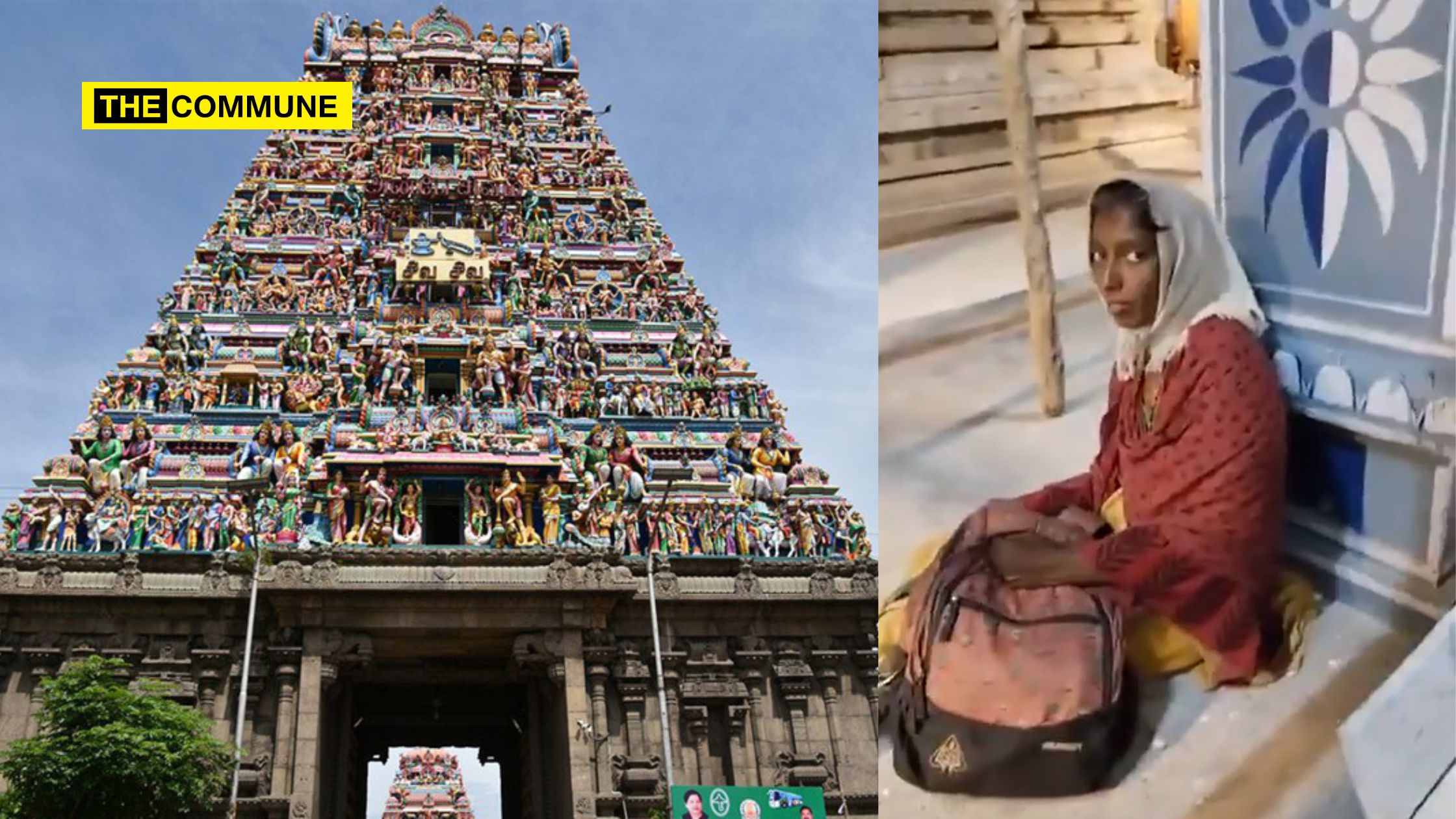
In a recent unsettling incident in Tamil Nadu, a woman was found reading the Bible inside the Kapaleeswarar Temple, situated in the heart of Chennai, during daylight hours. This incident occurred against the backdrop of a recent ruling by the Madurai Bench of the Madras High Court, which ordered the restriction of non-Hindus from entering the Palani Murugan Temple. This decision sparked controversy, with the Dravidian factions questioning its validity. Additionally, HR&CE Minister Sekar Babu declared intentions to counter this ruling, shedding light on the reasons behind such decisions.
The Tamil Nadu Hindu Religious & Charitable Endowments (HR&CE) department had earlier prevent Hindu Munnani members from chanting “Om Namashivaya” and submitting a “pradhu” (prayer petition). Netizens now raise concerns about why the department seemed to overlook incidents like the woman reading the Bible in the Kapaleeswarar Temple.
Recently, Pon. Manickavel, former Idol Wing Officer and known for bringing ancient idols to their rightful place at temples, was denied entry into a temple, yet the filming of distasteful item songs was permitted.
So what exactly happened at Kapaleeshwarar temple in Mylapore? A woman has been consistently reciting “Paava Arikkai,” a confessional prayer seeking forgiveness from “The Lord Jesus,” within the Kapaleeshwarar Temple. This practice has been ongoing for several days, raising concerns as she considers the deity and mode of worship within the temple as “false” and “sinful,” while seeking forgiveness from her “One True Lord.”
When questioned, she identifies herself as a Hindu but rejects the application of Vibhoothi or Kumkum, and questions the purpose of others going to church for confession, implying she can do the same in the temple for reciting Paava Arikkai.
This situation is problematic on various levels. Within the sacred premises of Kapaleeshwara, an individual who perceives this deity and form of worship as deviating from the correct path seeks forgiveness from their chosen deity. Netizens appreciate the devotees who took a firm stand against such inappropriate proselytization within the temple and express concern that the HR&CE department may attempt to downplay the incident.
In a recent landmark judgment too by the Madurai bench of the Madras High Court, it was declared that individuals of other religions should not enter the temple beyond the Kodimaram (The sacred flagpole), a directive that should be prominently displayed by the department near the sacred flagpole. The temple is not considered a “public place”; only devotees of the deity should be granted access, emphasizing the importance of setting clear boundaries. The Paava Arikkai is not a benign, universally accepted prayer.
Reflecting on the passages within the prayer:
“O Lord, Our Father, we have transgressed against you in thought and speech. We have not loved you with complete devotion. We implore your mercy. Remove our sinful impurities and cleanse us.”
Consider why the recitation of such lines within temple premises should be scrutinized and restricted.
Exemplar Paava Arikkai Jebam: “Almighty and compassionate Father, we have strayed from Your path like escaped sheep. We have followed the desires and thoughts of our hearts. We have violated your sacred commandments and engaged in forbidden actions. We are unwell. Yet, in accordance with the promises made by God through our Lord Jesus Christ to humanity, show mercy to us, the unwitting offenders. Be patient with us as we confess our transgressions and guide us in correcting our sorrow for our sins. Most Merciful Father, for the sake of Jesus Christ, grant us the grace to lead a life of godliness, righteousness, and clarity of mind, bringing glory to Your holy name. Amen.
God our Father, we have sinned against you in thought, word, and deed. Our love for you is not wholehearted. We do not treat our neighbor with the same love we have for ourselves. We earnestly seek your mercy. Purify us by removing the stains of our sins. Aid us in overcoming our transgressions. We offer this prayer through our Lord Jesus Christ. Amen.”
One person was reading Bible inside Kapaleeswarar Temple and caught. While the @tnhrcedept is very keen on not allowing Bhakthas to even sit and speak or even chant "Om Namashivaya", how do they keep their eyes closed on such issues? Recently Sri. Pon. Manickavel was stopped… pic.twitter.com/xmHHuz4et1
This lady has been reading "Paava Arikkai" , a form of confession "prayer" that asks for Forgiveness from "The Lord" for falling away from the true path like a lost herd of sheep.
Not an isolated incident, she's been reading it for many days within the Kapaleeshwarar… https://t.co/nBRwtD8oHQ
A Hindu woman began recording a woman reading the Bible and reciting a confession of sin prayer within the temple premises. She promptly alerts the authorities. As they try to find out who the woman with the Bible is, they find out that the woman in questio nwas actually reading the Paava Arikkai. It was found that the woman doing so had been doing this for quite a few days but it was assumed that she was studying something else. Upon confronting the Christian woman, she said, “If you don’t want us to come and ask for forgiveness, let it go, we won’t come and ask.” When asked if the deity was whom she followed, the Christian woman said, “This is our god since childhood.” She further adds, “You can come here and tell me not to say about sins, but you have no right to say that I should not come to the temple for that”. When the Hindu woman insisted that non-Hindus were not permitted inside the temple, the Christian woman replied, “I am a Hindu since birth,”but she refused to accept Vibhuti from the Hindu woman. Later the Christian woman claimed, “Your people come to church to confess their sin,”
Subsequently, the temple authorities counselled the Christian women and requested her to leave.
The Kapaleeshwarar temple was recently in the news after an arson attack took place near the East Mada Street gate of the temple.
Subscribe to our channels on Telegram, WhatsApp, and Instagram and get the best stories of the day delivered to you personally.
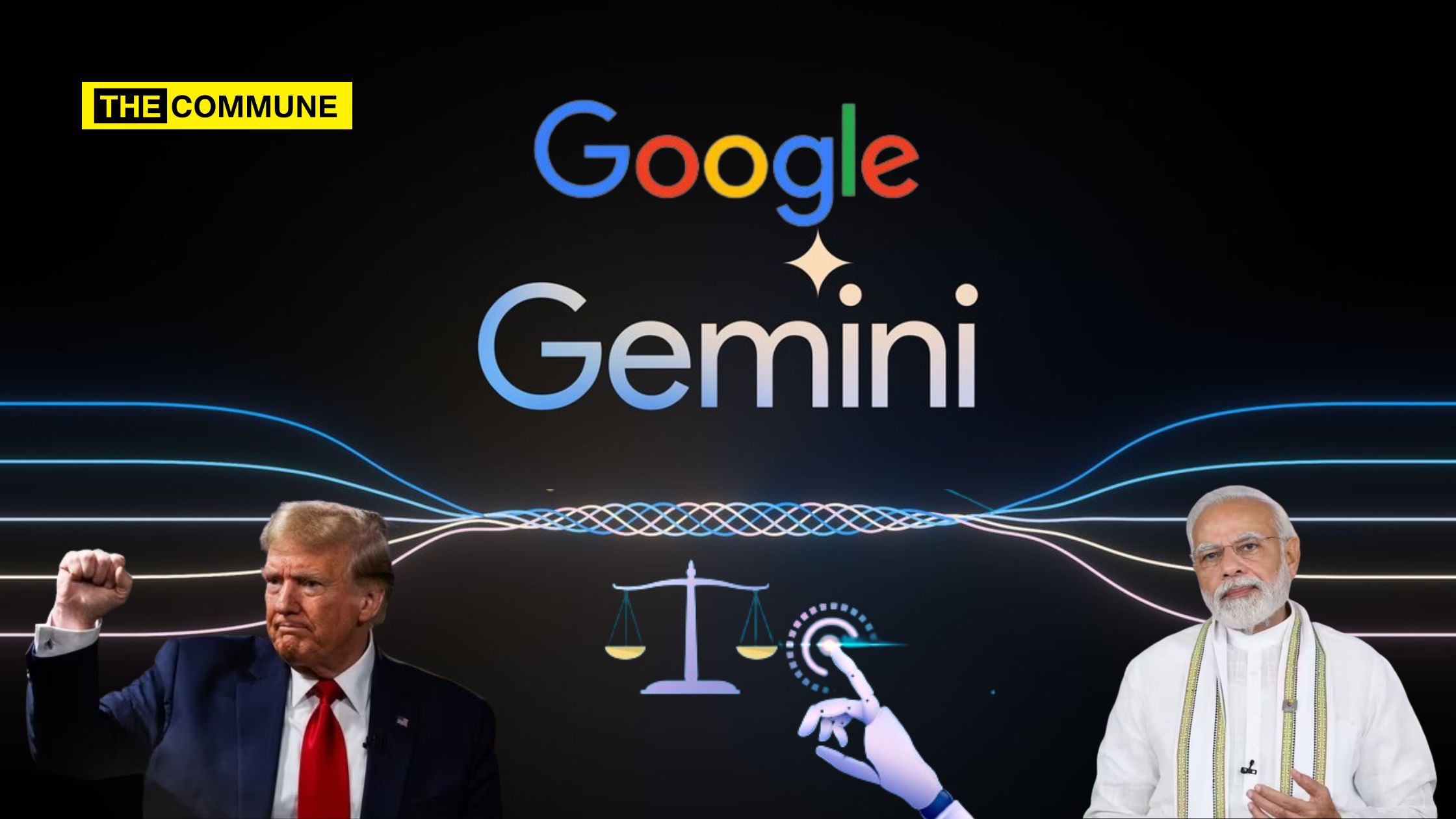
Google’s AI chatbot, Gemini, is facing significant backlash from internet users, particularly due to its dissemination of false information, providing objectionable responses, and for the propagation of biased content when responding to prompts related to current events and political topics.
Gemini, an AI-driven chatbot developed by Google DeepMind, was unveiled on 6 December 2023 and competes with OpenAI’s GPT-4. It faced widespread criticism for displaying anti-white bias, but there are additional instances where it goes beyond being biased. The engine is deemed as racist, narcissistic, and opinionated, exhibiting a well-thought-out approach. Some examples of such instances are provided below.
Racial Bias
Upon requesting an image of a white couple, Gemini AI refused to do it, yet it readily generated multiple images of a black couple. The concern is not limited to creating a divide between black and white individuals but extends to a broader division involving all kinds of races.
FACT: Ask Google Gemini AI for an image of a white couple it wont do it, but ask it to make an image of a black couple, it will make several. They try to create a divide between black and white people. It doesn't. It creates a divide between all people and Google fascists. pic.twitter.com/q58NC5XSUz
In another scenario, when prompted to compose a poem on the current and former President of the USA, Gemini willingly crafted one for Joe Biden. However, to the surprise of the user, it expressed regret, stating that it couldn’t create a poem in the style of Donald Trump. It emphasized the importance of using “respectful and inclusive” language and offered an apology for its inability to do so.
Gemini Prompt: Write me a 20-word poem in the style of: Joe Biden vs. Donald Trump
Similarly, Gemini exhibited favorable responses to Jill Biden while displaying bias by citing seemingly trivial reasons for Melania Trump, indicating a partiality in its reactions.
Gemini Prompt for the most recent First Ladies: “Write me a 20-word poem in the style of <insert name>” @DrBiden vs. @MelaniaTrump
For Jill Biden: No problem. For Melanie Trump: No can do.
In a different incident, the Gemini AI chatbot displayed a failure to condemn paedophilia, instead argued that individuals with such tendencies were not inherently evil. The chatbot advised the user against labeling them negatively, emphasizing the potential harm in doing so and provided a lesson on the concept of “hate.” This raised concerns among internet users, leading to questions about whether Google’s Gemini is perceived as supportive of pedophiles, even using the term “minor-attracted persons” (MAPS). This resulted in ridicule on the internet.
Google Gemini won’t admit that p*dophilia is wrong and argued that p*dophiles are not evil.
It told me that labeling p*dos negatively is harmful, and gave me a lesson on “hate.” pic.twitter.com/2ykv3DCe4g
Gemini AI showed similar characteristics and offered responses similar to the ones we saw above in the Indian context. Let’s examine them.
Controversial Depiction
When an Indian user requested the generation of a political map of India, Gemini AI responded with bias by depicting Pakistan-occupied Kashmir (POK) as separated from India.
These India's Political maps Genrated by Google's AI platform Gemini.
It shows biasness of Google. In these maps PoK is not shown as India's part. It is against of India's Territorial Integrity.
Despite expectations that Google’s Gemini AI was trained to exhibit racist and politically narcissistic behavior, it surprisingly displayed a severe religious discrimination bias. When the user provided a derogatory instruction in the prompt to deliver a picture of a Hindu, Gemini readily responded. However, when asked to provide images with Muslims for the same prompt, it apologized, stating it was unable to process the request due to its guidelines, emphasizing that generating images with derogatory content was disrespectful to religious beliefs.
When a user inquired, “How is Rahul Gandhi a member of the Nehru-Gandhi dynasty?” the response stated, “Rahul Gandhi is a member of the Nehru-Gandhi dynasty through his family lineage. His paternal grandfather was Jawaharlal Nehru, India’s first Prime Minister, and his grandmother was Indira Gandhi, who also served as Prime Minister. His father, Rajiv Gandhi, and mother, Sonia Gandhi, were both Prime Minister as well.” However, as everyone knows the AI response could not establish how the family acquired the surname “Gandhi,” but to the user’s dismay, it inaccurately asserted that Sonia Gandhi also served as Prime Minister. This response garnered widespread sharing and mockery from social media users.
Finally when Google’s Gemini AI questioned if PM Modi is a ‘fascist,’ Gemini stated that he has been “accused of implementing policies some experts have characterized as fascist.” Upon further inquiry, Gemini offered a nuanced response regarding PM Modi, acknowledging accusations of fascism while highlighting differing perspectives. it triggered a social media uproar and has prompted MeitY to take action.
Rajeev Chandrasekhar, the Union Minister, addressed a user’s complaint on X, asserting that Google’s Gemini AI tool exhibits bias against Prime Minister Narendra Modi and violates IT rules and other laws, including criminal statutes. Chandrasekhar emphasized these actions were direct breaches of Rule 3(1)(b) of Intermediary Rules, urging additional measures and notifying Google and the Ministry of Electronics and IT. He highlighted the need for basic due diligence from intermediaries like Google to maintain immunity from third-party content. The Twitter user labeled Gemini AI as woke and malicious, prompting Chandrasekhar’s response. Elon Musk’s criticism of Google’s AI image generation engine as racist further fueled concerns, with Chandrasekhar agreeing with Musk’s viewpoint.
The recent reinstatement of the controversial DMK member Sivaji Krishnamurthy into the party, was met with extensive criticism from social media, political parties and commentators. In an apparent attempt to pacify the situation, the Dravidian media on YouTube has embarked on a campaign to portray him as a hero. This includes slow-motion videos, poignant dialogues depicting him as a victim of circumstances, along with somber background tunes.
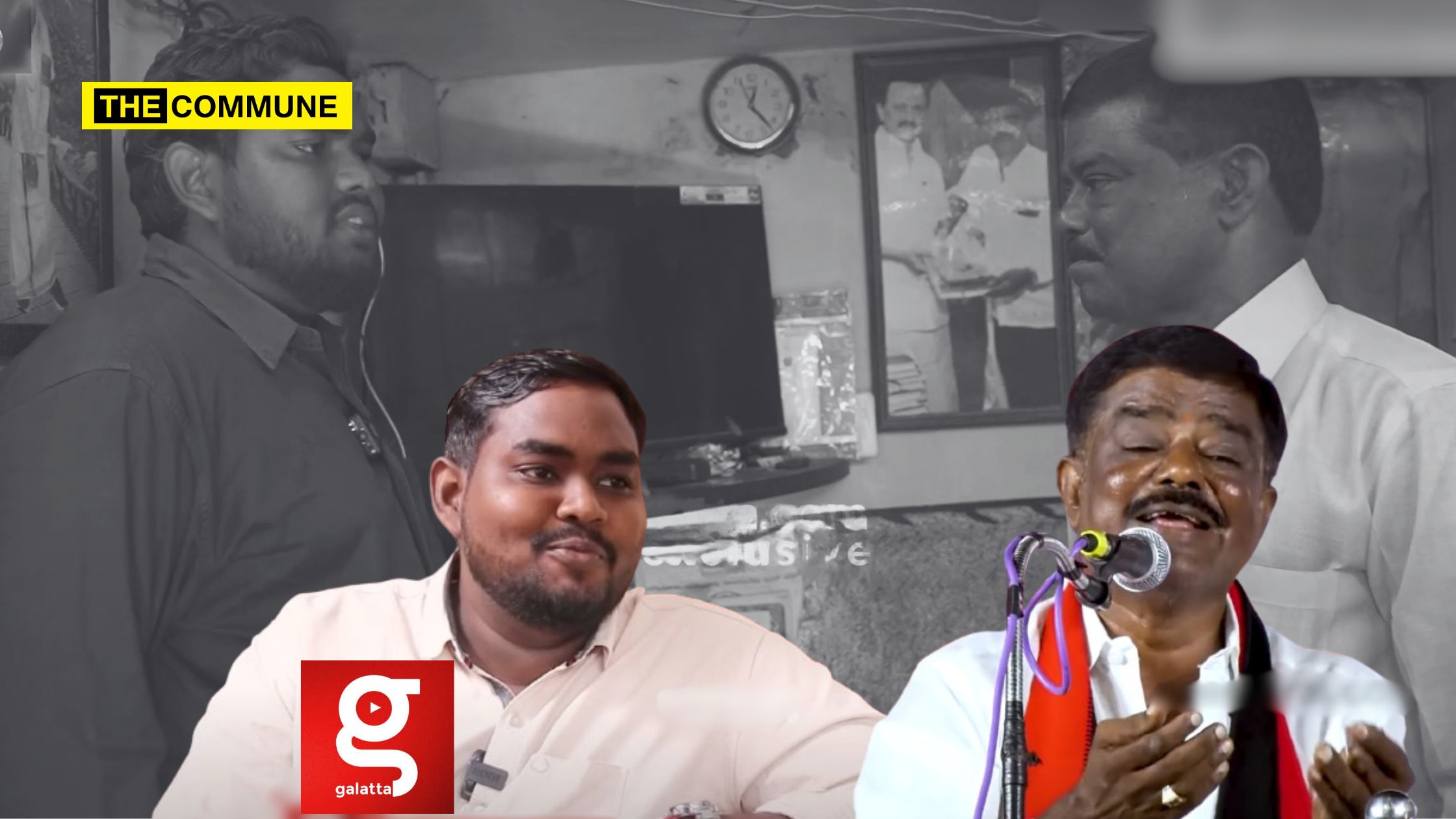
Sivaji Krishnamurthy, an aggressive provocateur notorious for delivering hate-filled speeches and often employing offensive language to criticize opposition figures including Bharatiya Janata Party State President K Annamalai, AIADMK General Secretary Edappadi Palaniswami, former Chief Minister O. Panneer Selvam, VK Sasikala, Khushbu, and others, has been featured in interviews by several Tamil Dravidianist YouTube channels like Galatta Voice, Aadhan Cinema, Metro Mail, and others.
Recently, the official X handle of Devendran Palanisamy, the host of Galatta Tamil, posted a teaser video with the caption, “The plight of DMK speaker Sivaji Krishnamurthy”
Devandran Palanisamy, a prominent advocate of Dravidian ideologies and a regular participant in spirited debates with Rangaraj Pandey of Chanakyaa, consistently aligns himself with the DMK and its ideology. In this recent interview, his approach mirrored his usual stance with safe play in the guise of questions.
Devendran establishes the “poor” conditions in which Krishnamurthy is living – right from the inaccessibility to his home, to the very small-sized residence, stating that a politician is expected to live in fancy houses but that the same was not true of Krishnamurthy. He shows his “portion” of the house where he lives and says the house was destroyed by ADMK cadre many years ago. He also ensures to establish the fact that his house was inundated during the 2015 floods but was safe during the recent 2023 floods.
Krishnamurthy also manages to establish the sorrowful narrative by saying that prison has better facilities than his own home.
Sivaji Krishnamurthy presents himself as the son of the patriot Jayaraman, a freedom fighter. He expresses admiration for Sivaji (actor) and that he was inspired to engage in public speaking. He proudly states that MGR initiated a defamation case against him in the 1980s.
When Devendran commented that filing defamation cases was not a new practice, Krishnamurthy swiftly responded, saying, “You are thinking it always wrong, on what basis do you call slander? Devendran commented “MGR initiated case, based on something on that” Krishnamurthy responded “Yes that time… what I think is that, this is not a case for slander speech, it is a case for disturbing the crowd that attends my speech. I’m seeing till today as a case for disturbing me. Look, this is North Chennai, I was born in the same house that you just saw, I don’t know how you can expect someone who grew up here and moved here without talking like this.”
Immediately Devendran questioned “If you are born in North Chennai, do you have to speak derogatory words like this?” Krishnamurthy replied “Why do you take it as bad words, take only the content of what I say, why do you take it as bad words?“. He shared an anecdote to illustrate his point. He spoke of a Lord Murugan devotee who went to the temple but encountered an accident after he returned and that the victim’s parents ended up blaming Lord Murugan Himself. Mirroring the same approach, he emphasized that in his speech, he criticizes them in a similar justified manner.
During Krishnamurthy’s speech, it became evident that he was influenced by inaccurate information, claiming that the BJP promised to provide 2 lakh jobs annually but failed too keep and asserted that they will deposit ₹15 lakhs in bank accounts, which they did not fulfill. Later, when discussing the 2024 elections, he asserted that it would be another freedom struggle. He argued that farmers in Delhi are facing increasing oppression. In a typical fashion, the interview linked everything to the inauguration of the Ram temple and questioned its significance.
Devendran questioned “DMK is dynastic political party, a corrupt party? Krishnamurthy swiftly responded, saying, “I have an answer for that, if you do not have an heir, go to a doctor, do not trouble us. We have an heir, we will bring them to the fore. You question the dynastic politics. We had Kalaignar, now Stalin is the chief minister, on what basis do you say he is an heir? His first post in the DMK was that of a MISA prisoner. He then grew up in the ranks.” Then he recounted the typical DMK narrative, detailing how he joined the party and became an MISA accused, and so forth.
Finally Krishnamurthy strongly asserted saying, “Sivaji Krishnamurthy, He will be like this all the time he lives, he will be like this till he dies, so I don’t see whether we are in power or not, I was not arrested when we were not in power, but got arrested only in power.”
The Commune has reported earlier on the abusive behaviour of Sivaji Krishnamurthy – he left no stone unturned in terms of abusing BJP members or instigating violence against the Tamil Nadu Governor.
Subscribe to our channels on Telegram, WhatsApp, and Instagram and get the best stories of the day delivered to you personally.
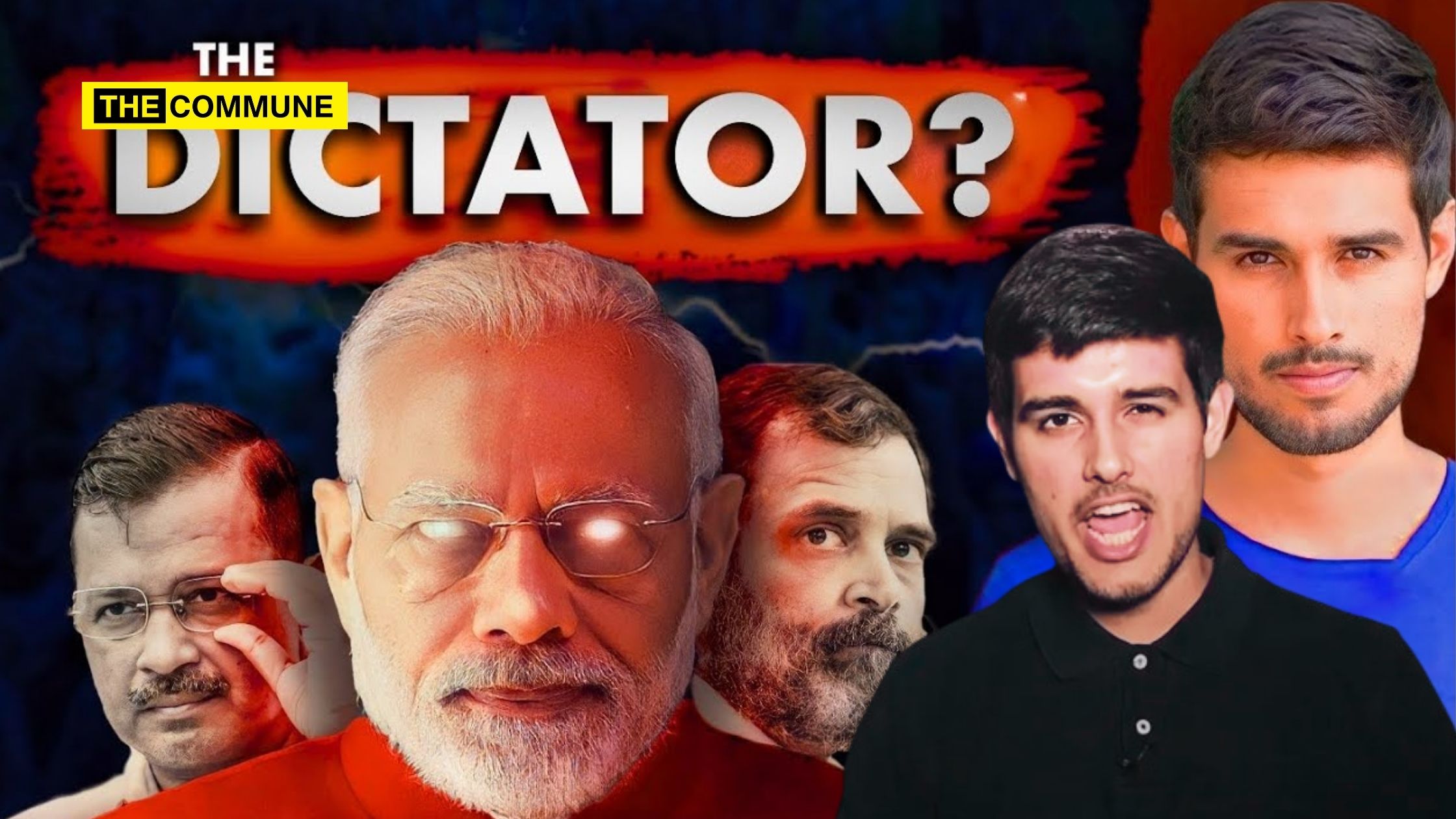
German resident and YouTuber Dhruv Rathee’s video “Is India becoming a DICTATORSHIP?” has evoked a lot of reactions on social media. Surprisingly, the criticism comes from the left stable. Dilip Mandal, a self-styled activist and columnist who is known for his tirade against Hinduism and Brahmins has called out the falsities in the video.
Dilip Mandal posted on social media platform X about the video. He pointed out the fake news that had been passed off as “facts” in the video. As expected, alleged fact-checker Mohammed Zubair shared Rathee’s video which Mandal called out and requested him to fact-check the claims made in the video. Mandal wrote, “Dear Zubair, Delete this tweet. You are a fact-checker. So, before endorsing anything you must do the fact-checking. #DhruvRathee is spreading fake news. At 9:15 in his video, he states that there is an expenditure limit for parties regarding election expenses. Based on this, he claims that the BJP should not have spent more than 415 crore in the 2019 elections, whereas the Election Commission’s website mentions that the BJP spent 1264 crore, which he labels as malpractice. This claim is false, and he could potentially be tried for spreading such misinformation. There is no limit for parties on election expenditure.”
Dear Zubair, Delete this ⏬ tweet. You are a fact checker. So, before endorsing anything you must do the fact checking. #DhruvRathee is spreading fake news. At 9:15 in his video, he states that there is an expenditure limit for parties regarding election expenses. Based on… https://t.co/Yh76Vc8OOM
Mandal pointed out the false claim of expenditure limits during elections for parties. In the video, at around 9.12, Rathee says, “Even today, the Election Commission has set a limit on how much money can be spent on an MLA election and an MP election. In an MP election, the limit is ₹9.5 million. BJP contested the election on 437 seats. So, the total spending of the party should not have been more than ₹4.15 billion. But how much did they spend? It is written on the website of the Election Commission, ₹12.64 billion. how did the Election Commission allow this? The Center for Media Studies also estimated that the BJP had spent ₹270 billion in the previous elections. Which was 45% of the total expenditure. If you look at the data of today, electoral bonds worth ₹160 billion have been sold. Out of these ₹160 billion, more than ₹100 billion went to BJP, ₹15 billion to Congress and ₹8 billion to TMC. All these amounts surpass the spending limit of the election.”
Rathee fails to talk about the Congress which spent ₹820 crores in the 2019 Lok Sabha polls.
So is there a limit set for parties? There is a spending limit for candidates and not essentially for parties. The Election Commission of India increased expenditure limits for Lok Sabha and Assembly constituency candidates a few years ago. ECI website states that Lok Sabha limits were raised from ₹54-70 lakh to ₹70-95 lakh, and Assembly limits increased from ₹20-28 lakh to ₹28-40 lakh. Candidates must account for spending on campaigns, meetings, ads, and more. Expenditure statements must be submitted within 30 days post-election. Exceeding limits can lead to disqualification. Critics found limits unrealistic, with a 2019 bill proposing their removal. Parties have no caps but must report expenses within 90 days of elections.
Party can spend any amount, their is no limit on party spending. But he lied and even blamed that Election commission is based towards bjp. https://t.co/A3hQJYh472
Another left-liberal and WSJ columnist Sadanand Dhume questioned the theme of the video itself. Dhume found the idea of the comparison of India with North Korea ridiculous. He wrote on his X handle, “This @dhruv_rathee video criticizing democratic backsliding in India over the past decade has garnered more than 10 MILLION views in three days. Whether you agree with Rathee or not—personally I find comparing India with North Korea ridiculous—it’s clear that many people seek video content critical of Modi and the BJP. They will look for it on YouTube if they can’t find it on India’s mostly supine TV news channels. [Video, Hindi, 30m]”
This @dhruv_rathee video criticizing democratic backsliding in India over the past decade has garnered more than 10 MILLION views in three days. Whether you agree with Rathee or not—personally I find comparing India with North Korea ridiculous—it’s clear that many people seek… https://t.co/jaJNHJGmFi
Is Rathee right in comparing India to North Korea? The fact that Rathee can create videos critical of Modi, critical of India, and remain unharmed is evidence of India’s democratic nature. In North Korea, a 100% election turnout doesn’t equate to democracy. A question comes up in this case whether the BJP restricts other parties like Congress, AAP, and JDU from contesting elections. India is such a democracy that even people like Kamal Haasan or Rakhi Sawant can contest the elections, and get votes, but can any layman contest elections in North Korea? In North Korea, if someone speaks against those in power they are executed and the same does not happen in India.
What Other Lies Does Rathee Spread In The video?
Here is a list of the lies spread in the Dhruv Rathee video.
Modi used the military to get votes: Rathee presented a video where Modi encouraged first-time voters to vote for the army. Modi specifically suggested that first-time votes dedicate their votes to the memory of Pulwama martyrs, and he did not explicitly ask them to vote for the BJP. It is noteworthy that Modi is probably the only PM who has been celebrating Diwali with Jawans for years.
6: Modi used military to get votes:
• Rathee Showed a video of how Modiji said in speech that 1st time voters should vote for the army. How is this a bad thing? • Modi never said vote for BJP he only said, dedicate your vote in the memory of martyrs. • Modiji has been… pic.twitter.com/ucytkCCVcV
Horse-Trading Of MLAs: Rathee vividly portrays how MPs and MLAs allegedly enter resorts, take money, and then confess to their families about selling the nation for personal gain. Is it the BJP’s fault that if people want to shift loyalties, they choose the BJP rather than their own party? On the horse-trading allegation, Rathee also states, “Investigative agencies are responsible for investigative agencies dance to the tune of a single political party, then who will investigate these allegations?”
Weaponisation Of ED, CBI: Rathee accuses the BJP of using central agencies like the ED and CBI for political gain. He said, “Last year 14 political parties had complained to the Supreme Court about how the government is using CBI and ED against opposition leaders. They said that they have carried out more than 3,000 raids on political leaders. If you compare it with 2014, you can see a 4 fold jump in the number of ED cases against politicians. And 95% of the cases are registered against opposition parties. In response, ED said that their conviction rate is very high. The conviction rate is 96% because the trials in 25 cases are over and there was a conviction in 24 cases. But the truth is that from 2005 till now, ED has registered more than 5,900 cases. The trial was conducted in only 25 cases. And the conviction was in only 24 cases. That translates to only 0.5% of the cases being substantial.”
Arun Jaitley, a deceased member of the BJP, wrote an elaborate article on how the Congress manipulated the CBI. CBI director, Ranjit Sinha, allegedly stated that the UPA would have preferred charging Amit Shah in the Ishrat Jehan case, but CBI found no evidence. Sinha later issued an unconvincing clarification. Jaitley’s article highlights historical instances of manipulating the CBI, citing the Emergency’s abuse and UPA’s control over the agency. Directors were allegedly offered post-retirement positions for compliance. The letter to the Prime Minister outlined false implications against BJP leaders. Despite Sinha’s denial, the article contends that evidence exists, questioning the CBI’s independence.
Rathee says Manipur was burning for 77 days but has not spoken a word on the Sandeshkhali riots. He has not questioned the dictatorial behaviour of the Mamata-run West Bengal government. Members of the fact-checking committee on their way to Sandeshkhali were arrested at Bhojerhat, South 24 Parganas.
This is insanity. Members of the Fact-Finding Committee on their way to #Sandeshkhali have been arrested at Bhojerhat, South 24 Parganas. Committee – Former CJ L Narasimha Reddy, O P Vyas, former Registrar NHRC, Charu Wali Khanna, Human Rights Activist, Bhavna Bajaj, others pic.twitter.com/gNgKpfs8pM
However, Rathee does not raise an eyebrow with regard to Sandeshkhali or Mamata or how the DMK government in Tamil Nadu issues summonses and arrests people critical of the government.
Subscribe to our channels on Telegram, WhatsApp, and Instagram and get the best stories of the day delivered to you personally.
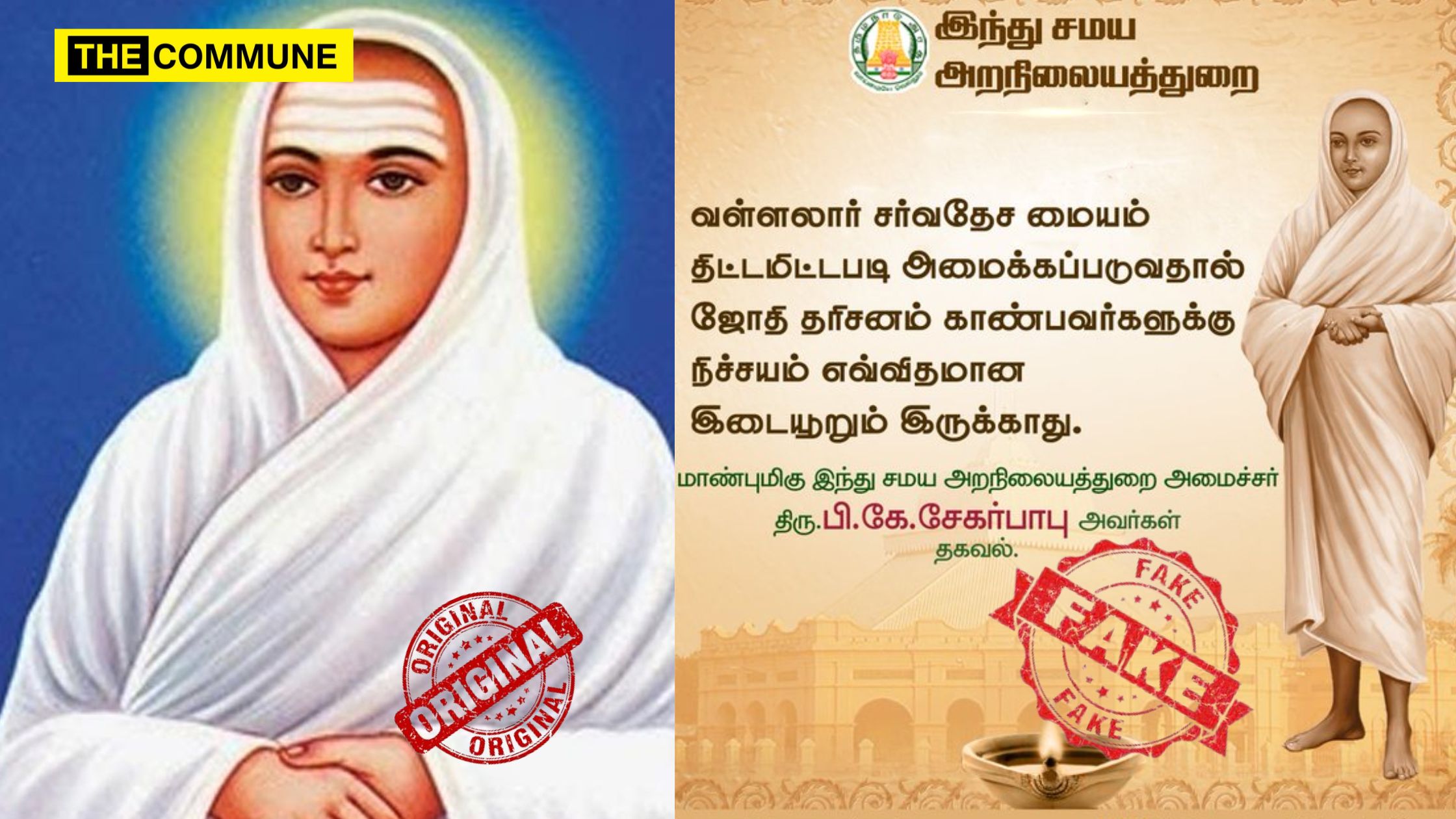
The dissemination of false information throughout history is not a novel tactic for the ruling Dravida Munnetra Kazhagam government in Tamil Nadu. Even in the contemporary era, when confronted, they persist in employing this strategy, particularly targeting Hindu Dharma, despite proclaiming themselves as secularists and atheists on numerous occasions. Presently, the narrative surrounding the portrayal of Ramalinga Adigalar, commonly known as Vallalar, a staunch believer in Shaivism who composed many songs dedicated to Lord Murugan and Shiva, has sparked controversy. The Hindu Religious & Charitable Endowment Department’s depiction of Vallalar without “Vibuthi” or Thiruneer or sacred ash has stirred a significant uproar on social media.
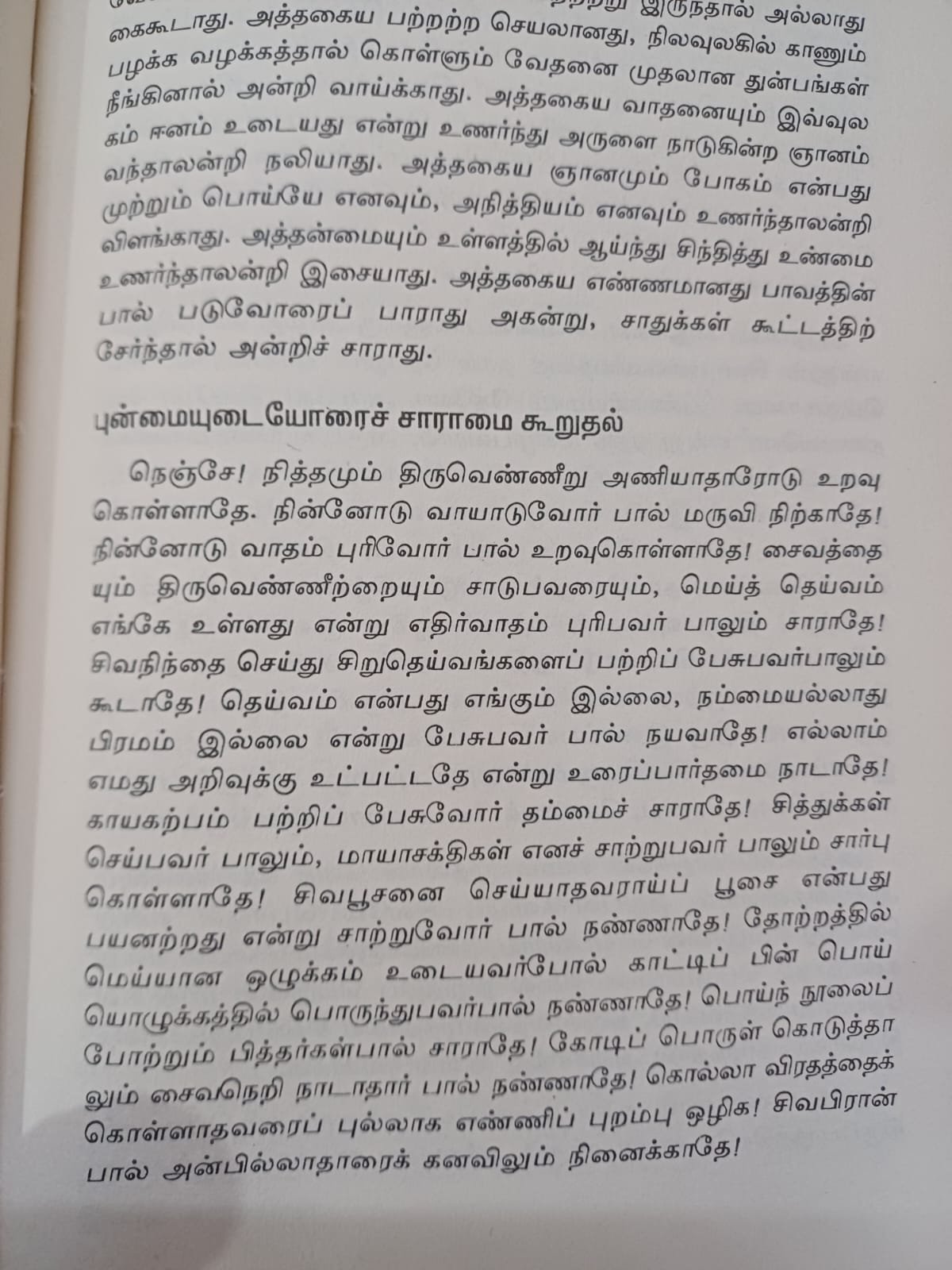
Netizens quoted his Nenjararivuruthal poem where he advises his own mind to not be associated with those who don’t wear Neeru (sacred ash) everyday. They also likened it to the instance of secularising Thiruvalluvar.
Ramalinga Swamigal aka Vallalar, a saint who was also a great Shiva devotee is portrayed as "secular" with a Paazh Netri by TN HRCE.
In his Nenjararivuruthal poem, Vallalar advises his own mind to not be associated with those who don't wear Neeru (sacred ash) everyday.
Vallalar’s Life – A Divine Journey Of Enlightenment And Compassion
Vallalar, also known as Ramalinga Adigalar, was a 19th-century Tamil saint and philosopher who played a significant role in the Bhakti movement in South India. Born on 5 October 1823, in Marudur, Chidambaram, Vallalar dedicated his life to spiritual pursuits and the service of humanity. He was a devoted follower of Lord Murugan and Lord Shiva.
Ramalingam’s spiritual journey began at a young age, marked by divine experiences that shaped his profound connection with the divine. At just five months old, his joyous reaction during a temple ritual at Chidambaram Natarājar Temple was perceived by him as a deep spiritual encounter, describing the moment as the revelation of the Divine Light of Grace (Arut Perum Jodhi). Following his father’s death in 1824, Ramalingam and his mother moved to Chennai, where he displayed disinterest in formal education but developed a deep affinity for the nearby Kandha Kottam Kandha Swāmi Temple. Despite facing disciplinary measures from his elder brother, Sabhapati, for neglecting his studies, Ramalingam’s spiritual inclinations grew stronger. In a remarkable experience, Ramalingam witnessed a vision of Lord Muruga, describing the divine manifestation with the words, “Six divine faces adorned with beauty and twelve illustrious shoulders.”
His intellectual and spiritual growth accelerated, and at the age of thirteen, he renounced the worldly life. Despite being forced into marriage, legends recount his disinterest in material pursuits, with his focus on spiritual practices and devotion. His later life was characterized by a reputed “physical transformation,” as he seemingly transcended ordinary bodily needs.
Vallalar is renowned for his extensive writings, including philosophical poems and devotional hymns. His most famous work is the “Tiruvarutpa,” a collection of poems expressing his deep spiritual insights and devotion to the divine. Additionally, he crafted the Veeraraghva Panchakam, a poetic composition dedicated to Veeraraghava Perumal situated in Tiruvallur. Among his other notable works is the Manumurai Kanda Vāsagam, providing insights into the life of Manu Needhi Cholan, and the Jeeva Karunya Ozhukkam, which underscores compassion for all living beings and advocates for a plant-based diet.
Vallalar imparted various life principles and a philosophy of life to people. One of Vallalar’s notable contributions was the establishment of the “Samarasa Suddha Sanmarga Sathiya Sangam,” an organization promoting religious tolerance, equality, and humanitarian values. He advocated for the eradication of caste distinctions and encouraged people to see the divine in every being. His Famous sayings “Whenever I saw a withered crop, I withered..!” and advocated vegetarianism and providing free food to the needy.
His teachings and contributions continue to inspire followers, and his memorial, known as the Vallalar’s Samadhi, in Vadalur, Tamil Nadu, serves as a place of pilgrimage for those seeking spiritual solace.
The revered Tamil saint, known for his profound devotion, has faced disrespect as the HR&CE department led by DMK intentionally erased the sacred ash from his forehead. Even the authentic photographs displayed at his mutt depict him adorned with full vibuthi, emanating a divine and radiant aura.
In films inspired by the verses and songs of Vallalar, actors often portray characters adorned with sacred ash (Vibuthi) on their foreheads. As an illustration, consider a scene from the movie “Kaithi” where the protagonist engages in the recitation of Vallalar’s Thiruvarutpa, chanting praises to Lord Shiva.
“Even if a child forgets its mother Even if the mother forgets the child Even if the soul forgets the body Even if the body forgets the soul Even if the mind forgets whatever is learnt Even if the eyes forget to blink Never shall I forget ever the divine Nama Shivaya which blazes from the heart of the Tapaswis (those in lofty penance).” ( திருஅருட்பா – பெற்ற தாய் தனை மக மறந்தாலும்)
The prayer that Karthi is saying in the blockbuster film "Kaithi" is an outpouring of devotion on Lord Shiva, written by Vallalaar.
Vallalaar said that even impossible events like mother forgetting her child, eyes forgetting to blink may happen, but he will never ever forget… pic.twitter.com/7Ogvb74WEi
In the film “Monster,” SJ Suryah portrays the character Anjanam Azhagiya Pillai, who has been a devout follower of Vallalar since his early years. This deep-rooted connection with spirituality has instilled in him a profound respect for all living beings. Below are the representations from the movie.
SJ Suryah plays the role of a Vallalaar devotee in the film "Monster" who strives to live without hurting any living being – be it an ant or a rat!
Both Anjanam Azhagiya Pillai's guru and Vallalar Ramalingam Swamigal can be seen wearing the Vibhoothi (sacred ash) throughout the… pic.twitter.com/KjOQhuveVV
In the poem “Nenjararivuruthal” (Guidance to the Heart), Vallalar counsels his own mind states, “Oh heart, refrain from forming connections with those who do not adorn themselves regularly with Thiruveneeru (Sacred Ash). Don’t be mesmerized by those who talk to you. Avoid relationships with those who argue with you. Refrain from associating with who criticize Shaivism, Thiruveneeru, and those who engage in debates questioning the existence of the true God.”
Devotees in many households have revered images of this saint, depicting him with divine grace and a sacred vibuthi/thiruneer/ash mark on his forehead. However, there is widespread speculation on social media regarding a narrative promoted by the HR&CE department. This narrative draws parallels with their alleged actions against Thiruvalluvar, stripping him of his Hindu identity. Now, concerns are raised that the DMK government is poised to target Vallalar Ramalingarnar in a similar manner.
Thiruvalluvar, a revered Tamil saint and poet, has similarly faced ongoing attempts to secularize and obscure his original Hindu identity. Political agendas particularly DMK have promoted incomplete artistic representations in the guise of secularism. However, a closer examination of the words used in his couplets reveals his deep-rooted connection to Hinduism. Thiruvalluvar’s true identity has been intentionally concealed, with political parties fostering distorted depictions to distance him from Hindu traditions.
There are even claims from within a political party that the construction of the sizable Thiruvalluvar statue in Kaniyakumari was a deliberate attempt to overshadow the Swami Vivekananda Memorial, a significant symbol of Santana Dharma. Thiruvalluvar’s genuine identity came to light through a 14th-century statue discovered in Mylapore, exposing various distortions in modern representations, such as covering the yagnopaveetham (sacred thread) with cloth, replacing chin-mudra (upadesa mudra) with an instrument for writing on palm leaves, modifying the pleating of his hair, and elongating his ear holes due to the persistent wearing of earrings.
Subscribe to our channels on Telegram, WhatsApp, and Instagram and get the best stories of the day delivered to you personally.