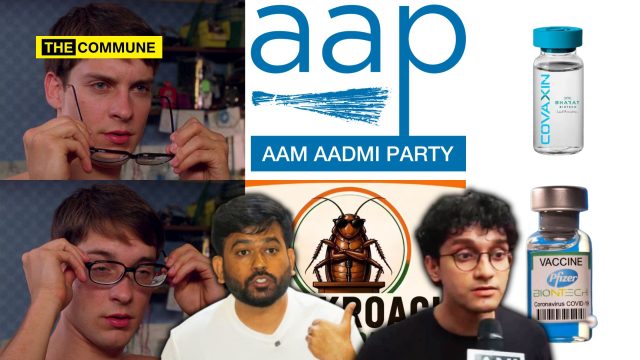
Today, they operate within the Cockroach ecosystem. During the COVID-19 pandemic, many of the same voices were associated with, aligned with, or amplified by the AAP ecosystem — pushing for faster approval of Pfizer while questioning India’s indigenous vaccines.
Now, the political labels have changed, but the playbook remains the same.
With the CJP reportedly planning a protest on the day of the BRICS Summit, the old record of its prominent voices during the COVID vaccine debate has come back into focus.
When Pfizer Was Being Pushed
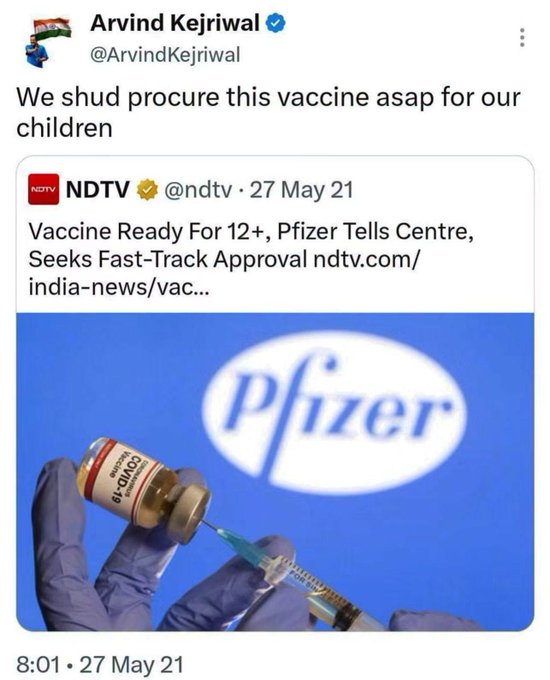
On 27 May 2021, then Delhi Chief Minister Arvind Kejriwal shared an NDTV report stating that Pfizer had a vaccine ready for children aged 12 and above and was seeking fast-track approval.
“We shud procure this vaccine asap for our children,” Kejriwal wrote.
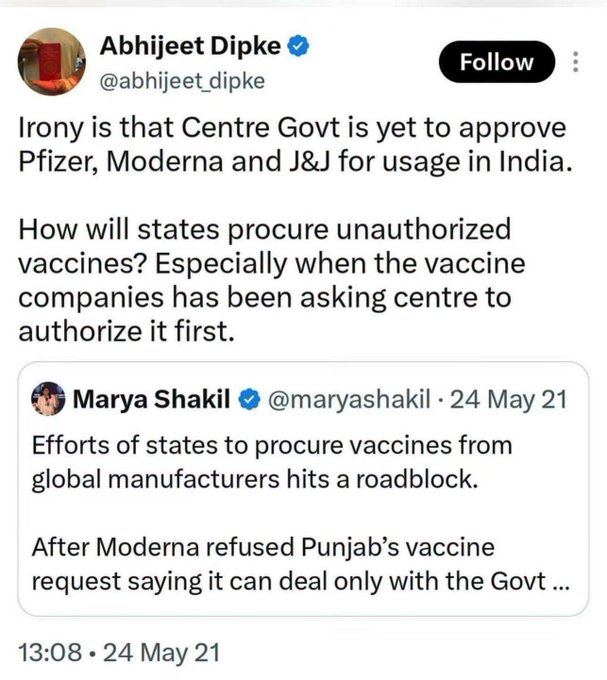
Three days earlier, on May 24, Abhijeet Dipke questioned why foreign vaccines had not been approved for use in India.
“Irony is that Centre Govt is yet to approve Pfizer, Moderna and J&J for usage in India. How will states procure unauthorized vaccines?” he wrote, while commenting on reports that global vaccine manufacturers were not dealing directly with state governments.
At the time, Pfizer had not received approval for use in India.
Pfizer had initially sought emergency-use approval in India but withdrew its application in February 2021 after the Indian regulator required a local safety and immunogenicity study. During the second wave, India subsequently relaxed its rules for foreign vaccines approved by major overseas regulators, while requiring domestic trials after approval.
Pfizer ultimately did not launch its COVID vaccine in India during the crisis.
While Pfizer Was Pushed, Covaxin Was Questioned
The same period also saw attacks on India’s vaccine policy and questions over indigenous vaccines.
On June 4, 2021, Saurav Das wrote, “Who is advising the govt? This shows our scientists in very bad light. Modi govt politicising science to suit its vested interests.”
When another user pointed out that the study being discussed concerned Pfizer, Das replied, “Yeah but one can only imagine what’s up with covaxin…”
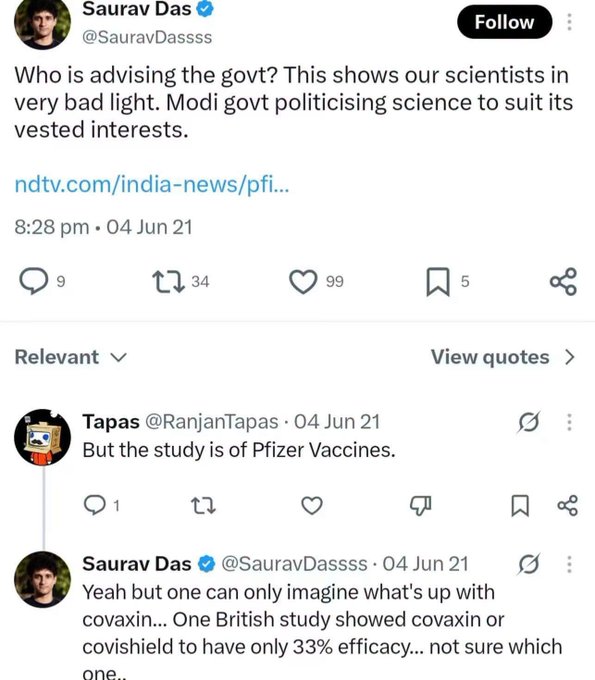
He then cited a British study and questioned whether Covaxin or Covishield had only 33% efficacy.
The posts show the contrasting approach: Pfizer was presented as a vaccine India needed to urgently approve, while India’s own vaccines became targets of suspicion and criticism.
The Indemnity Question
Pfizer had also sought indemnity from legal claims related to adverse events associated with its vaccine. India did not grant such protection to Pfizer, particularly as similar protection was not being extended to Indian vaccine manufacturers.
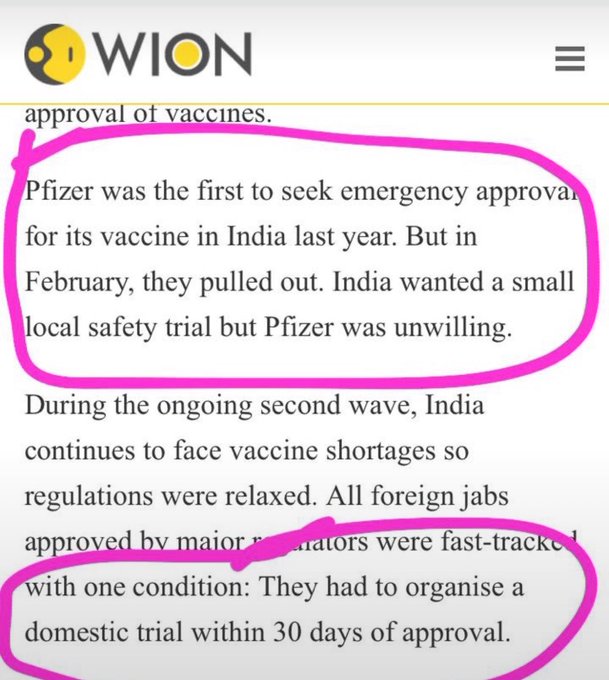
There were also reports of Pfizer seeking extensive indemnity protections in negotiations with various countries. Claims that the company specifically demanded military bases, embassy buildings or other sovereign assets as collateral have circulated widely, but those claims should not be presented as established fact without documentary evidence.
Recall how during the Covid pandemic, there was an entire ecosystem that was posting FAKE negative stories on
made-in-India vaccines & putting pressure on govt for buying Pf!zer vaccine ?Why didn’t it go through?
Pf!zer refused to do bridge trials (local trials on small… https://t.co/f1AnuwoGoA pic.twitter.com/87DwNTfbIR
— PallaviCT (@pallavict) August 24, 2026
From AAP To CJP, The Political Target Remains Modi
Today, the same political ecosystem has largely regrouped under the CJP banner.
During COVID, several of its prominent voices were associated with, aligned with or amplified by the AAP ecosystem. They demanded faster access to foreign vaccines, questioned the Centre’s approval process and raised doubts about India’s indigenous vaccines.
Now the CJP is preparing to protest on the day of the BRICS Summit, when India will host a major international gathering.
That timing matters.
The political labels may have changed, but the pattern is familiar: target the Modi government when India is in the international spotlight.
During the pandemic, the pressure was to open India’s vaccine market to foreign manufacturers while questioning the country’s own vaccine programme. Today, the CJP is taking its protest directly into the middle of a major international event hosted by India.
Prime Minister Narendra Modi, meanwhile, publicly took his COVID-19 vaccine doses with Covaxin.
The issue is not whether the government’s COVID response can be criticised. It can and should be debated on facts. But the record of those who demanded Pfizer’s approval while casting doubt on Indian vaccines also deserves scrutiny.
Yesterday, it was the AAP ecosystem. Today, it is the CJP. The faces and political platforms may have changed. The campaign against the Modi government has not.
Subscribe to our channels on WhatsApp, Telegram, Instagram and YouTube to get the best stories of the day delivered to you personally.