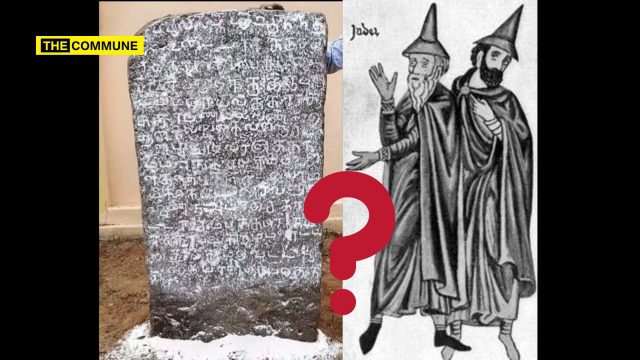
A recently reported 13th-century inscription from Anandur near Pochampalli in Krishnagiri district has been described as Tamil Nadu’s second inscription relating to Jews. However, the central claim, that the term “Soothagar” in the inscription refers to Jew, warrants closer scrutiny before the stone is presented as definitive evidence of a Jewish merchant guild operating in interior Tamil Nadu.
According to a report in Dinamani, the inscription records four merchant groups: Soothagar, Mandala Vanigar, Thennilangai Valanjiyar and Ezhunootruvar—\ coming together to construct a mandapam at the Thanthondeeswaramudaiya Nayanar Temple. Researchers involved in the discovery have identified “Soothagar” with Jews and consequently described the inscription as evidence of Jewish merchants participating in inland trade.
That interpretation, however, raises a basic epigraphic question: what evidence establishes that “Soothagar” meant Jews in this particular inscription?
The Tamil word “Soothagar” is not, by itself, a transliteration of the word “Jew.” Nor does the mere appearance of the word automatically establish the existence of a Jewish merchant guild. A claim of this magnitude requires corroboration from the inscription itself through accompanying terminology, names, religious references, titles, foreign-language equivalents, or other independently identifiable markers.
ஏதாவது ஒரு கல்வெட்டை எடுத்துக்கொண்டு இஷ்டத்துக்குப் படித்து ஒரு பொருளைச் சொல்லவேண்டியது. யூதர்கள் என்பதே தமிழ்ப் படுத்தப்பட்ட வார்த்தை. அது எப்படி சூதகர்கள் என்று திரியும் ? தமிழ்நாட்டில் ஏது அப்படி ஒரு வணிகக் குழு ? யாரும் கேள்வி கேட்காததால் என்ன கதை வேணுமானாலும் சொல்லலாம் போல. pic.twitter.com/JAmG5BU7RH
— 𑀓𑀺𑀭𑀼𑀱𑁆𑀡𑀷𑁆 🇮🇳 (@tskrishnan) August 24, 2026
There is also a need to establish whether “Soothagar” was actually the established name of a merchant guild in medieval Tamil Nadu. The reported account identifies it as the first of four merchant groups but does not, by itself, provide evidence demonstrating that “Soothagar” was a recognised Jewish trading organisation.
This distinction matters because medieval Tamil inscriptions contain numerous references to merchant corporations and occupational or social groups. The Anandur inscription reportedly places “Soothagar” alongside groups such as the Valanjiyar and Ezhunootruvar, making it important to establish precisely what the term signified in its historical and linguistic context rather than assigning an identity to it based solely on a modern interpretation.
The argument also appears to rely heavily on the existence of an earlier inscription at Valantharavai near Periyapattinam, which is associated with a Jewish institution. But evidence that Jews were present in medieval Tamil regions does not automatically prove that every disputed term in another inscription refers to Jews.
The reported discovery is certainly worthy of further study. If the Anandur inscription can independently establish the presence of Jewish merchants in a Tamil merchant corporation, it could be historically significant. But the conclusion should follow the evidence, not the other way around.
Until the original inscription, its complete transcription, linguistic analysis and epigraphic basis for translating “Soothagar” as Jews are made available, calling it Tamil Nadu’s “second Jewish inscription” appears premature.
The question is therefore straightforward: Is “Soothagar” demonstrably a Jewish merchant guild in 13th-century Tamil Nadu, or has a historical identity been inferred from a word whose meaning requires further evidence?
Subscribe to our channels on WhatsApp, Telegram, Instagram and YouTube to get the best stories of the day delivered to you personally.