In January 2019, when the Union Cabinet approved amendments to the Protection of Children from Sexual Offences Act, the debate should have been straightforward: How do we make the law stronger against those who sexually assault children, while ensuring that innocent people are protected by due process?
Instead, The Indian Express published an opinion piece by lawyer Arundhati Katju under the headline “Guilty till proved innocent”, arguing against the introduction of the death penalty for aggravated penetrative sexual assault under POCSO.
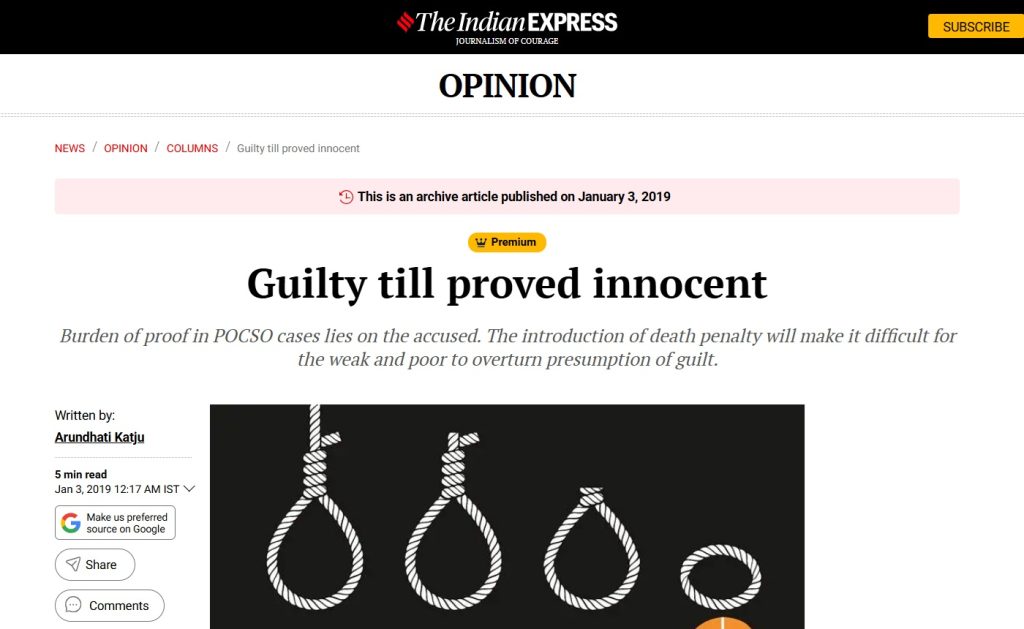
The argument did not merely oppose capital punishment. It placed considerable emphasis on the possibility that stronger punishment would send more “poor, lower caste and religious minority accused to death row.”
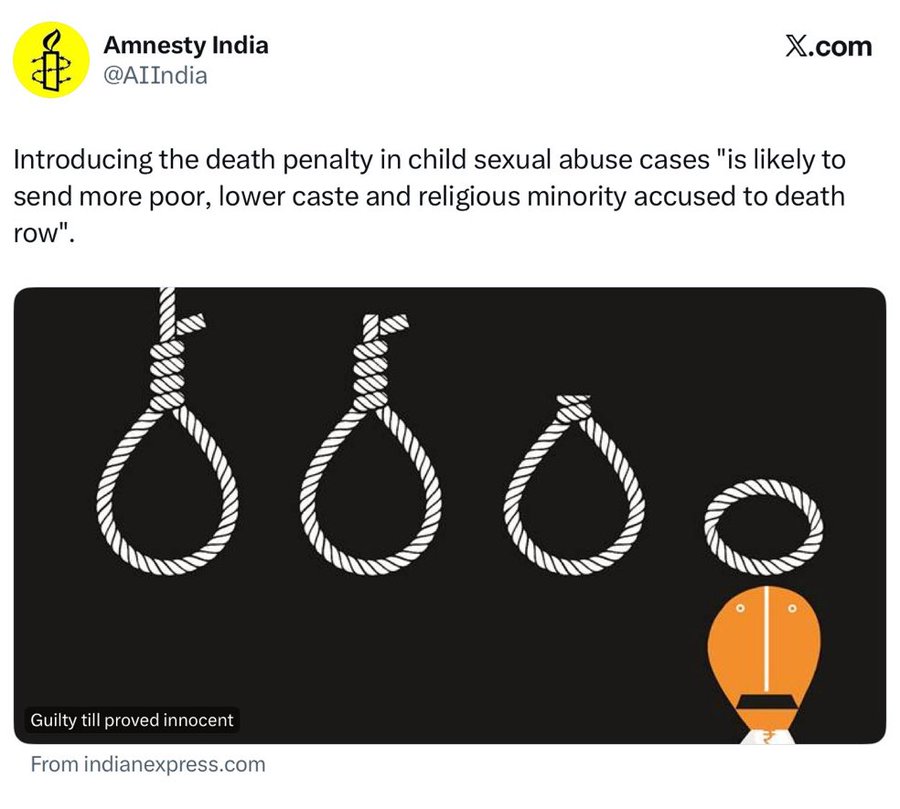
Amnesty India subsequently shared the article, specifically highlighting the conclusion that “Introducing the death penalty in POCSO is likely to send more poor, lower caste and religious minority accused to death row.”
No one is saying that an accused person should be denied a fair trial. Every person has the right to defend themselves in court, and wrongful convictions are a real concern.
But the focus becomes troubling when the debate over punishing those who sexually abuse children shifts mainly to the caste, religion or financial background of the accused.
Amnesty International’s choice of words is significant because Amnesty has long opposed the death penalty in India, including in cases involving some of the country’s most notorious terror convicts. It opposed the executions of Ajmal Kasab, Afzal Guru and Yakub Memon, and has consistently called for the abolition of capital punishment – irrespective of the crime because every sinner has a future?
That makes Amnesty’s position in this debate even more striking. The issue was how to punish people convicted of sexually assaulting children. Yet much of the focus shifted to whether those accused might be poor, from a lower caste or from a religious minority.
No one is saying that an accused person should be denied a fair trial. Every person has the right to defend themselves in court, and wrongful convictions must be prevented.
But once guilt is established through due process, the discussion cannot stop with the rights or background of the offender. The child who was sexually abused has rights too.
The accused is given a voice, a background and a set of concerns. Where is the same concern for the child who has to live with the consequences of the crime?
If Amnesty opposes the death penalty on principle, it is free to make that argument. But when it chooses to highlight the possibility of “poor, lower caste and religious minority accused” being punished, it is important to call out their duplicity and ask why they want to focus so heavily on the person facing punishment and so little on the child who suffered the crime.
The rights of the victim matter more than the rights of the convict.
Subscribe to our channels on WhatsApp, Telegram, Instagram and YouTube to get the best stories of the day delivered to you personally.