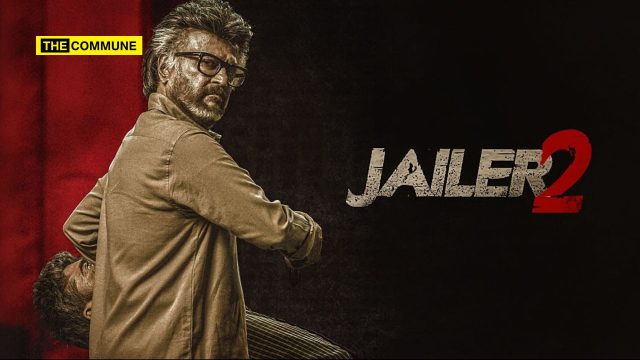
There is an old joke about upma. Throw in every vegetable in the kitchen, add some seasoning and hope for the best. But if the basic preparation is bad, no amount of garnish can save it. Jailer 2 is the cinematic equivalent.
Nelson Dilipkumar has thrown in almost every available star: Rajinikanth, Mohanlal, Shiva Rajkumar, Jackie Shroff, SJ Suryah, Vidya Balan, Ramya Krishnan, Mithun Chakraborty, Nora Fatehi and Hrithik Roshan. The result is an overcrowded film where characters appear, disappear and return for another cameo.
Thankfully, Anirudh Ravichander is in the kitchen. His pounding score, relentless Hukum references and mass elevation shots make this otherwise stale preparation somewhat edible. Explosions, burning jeeps, flying cars and slow-motion Rajini montages will thrill his fans. But beneath all that noise, where is the story?
The Plot, If You Can Call It That
Rajinikanth returns as Tiger Muthuvel Pandian, the retired jailer who now works as a driver for a small-time thug while pursuing an idol-smuggling mafia. His adversaries are the Kalpak trio: SJ Suryah as Bodhi, Vidya Balan as Kantha and Mithun Chakraborty as Chakri.
The problem is that the film barely develops this conflict. Houses explode, vehicles burn and villains die spectacularly, but the actual story moves at a snail’s pace. There are no particularly clever twists or revelations. Nelson simply repeats the formula: conceal Rajini, build anticipation, bring him on screen in slow motion, blast Anirudh’s music and blow something up.
Do it all over again.
Worse, the film feels less like a coherent narrative and more like disconnected scenes stuck together with Fevicol. Every few minutes, another explosion, cameo, punch dialogue or mass moment arrives to jolt the audience, much like Instagram reels delivering one dopamine hit after another. These moments might provoke whistles, but they rarely build towards anything meaningful. The film strings together mass moments with no story. Are they taking the audience for idiots?
The Cameo Buffet
If Jailer 2 is upma, its cameos are the vegetables thrown into the pot without considering whether they belong there.
Mohanlal gets barely a minute or two, prompting his stylist to criticise the makers for cutting his scenes. Jackie Shroff appears briefly. Shiva Rajkumar fares somewhat better, although his character spends much of his screen time in a coma before waking up conveniently for revenge.
Hrithik Roshan turns up, delivers a Bhagwan Dada reference, fires a few guns and leaves. Mithun Chakraborty, the paralysed smuggling mastermind, even gets to dance with Nora Fatehi from his wheelchair.
Every character promises significance but receives barely enough screen time to justify their presence. Even Rajinikanth feels like an extended cameo in his own film.
SJ Suryah: From Menace To Buffoonery
SJ Suryah initially appears menacing as Bodhi Kalpak, but the writing soon reduces him to a comic villain who alternates between threats and clownish behaviour. A formidable antagonist should make the hero’s victory feel earned. Here, he mostly exists to provide Rajini with another opportunity to strike a pose.
Suraj Venjaramoodu, playing Bodhi’s henchman Dileep, brings some life to the first half. The interval stretch is entertaining and packed with mass moments. But the second half descends into an exhausting procession of violence and destruction where Suraj disappears.
Anirudh Cooks. Nelson Keeps Adding Ingredients.
Anirudh’s music is the film’s most dependable asset. Hukum and the callbacks to Rajinikanth’s earlier films, including Moondru Mugam, will evoke whistles from fans longing for vintage Rajini.
But there is a difference between elevating a scene and using music to convince audiences that a scene is exciting when it really isn’t. Jailer 2 rarely allows its background score to breathe, as though silence might expose the absence of a compelling story.
The film keeps shouting but has little to say.
When Every Joke Is A Hit-Or-Miss Gamble
The comedy is similarly uneven. Some jokes land, and a few genuinely clever moments evoke laughter. Many others fall flat, relying on familiar situations rather than sharp writing.
One particularly awkward sequence involves a large woman being asked to sit on a man to keep him pinned down. Whatever the intention, the joke is plainly body-shaming rather than wit. Why does every Rajini film need to bodyshame women? He did that in Sivaji also – where they mocked the twin girls for their skin colour.
The film’s dialogues are loaded with English in situations where it feels unnatural. Instead of making the characters sound cosmopolitan, it often makes their conversations feel artificial and disconnected from the world they inhabit – a remote village!
The Villains Are More Artificial Than Intimidating
Vidya Balan plays Kantha Kalpak, one of the principal antagonists. She is an immensely capable actor, but the film gives her remarkably little to work with.
Her character’s menace is communicated largely through stern expressions, extravagant violence and an insistence on looking formidable. The performance often feels stiff rather than threatening. Even her cigarette-smoking scenes look awkward, as though the film is relying on the mere presence of a cigarette to manufacture a sense of danger. In one interview, she revealed that she had never smoked a cigarette, leave alone holding one – that clearly shows in the movie.
Ramya Krishnan is equally wasted as Muthu’s wife, Viji. After her memorable screen presence in Padayappa, one would expect a more substantial role atleast in Jailer2. Instead, she is once again relegated to the margins, with little opportunity to contribute meaningfully to the story.
The treatment of women is especially telling. The film frequently sexualises its female characters but has a lot less opportunities to give them depth. Within the first hour, the Allele song arrives – this made the crowd go wild but personally, I enjoyed VD Satheesan’s AI video more. Then within half an hour of this song, the second item number arrives, featuring Nora Fatehi dancing in revealing attire alongside young Black children. The sequence feels inserted for spectacle rather than because the story needs it.
Later, a group of scantily clad women associated with Hrithik Roshan’s gang takes down Muthu’s opponents. Apparently, the film’s criminal underworld has discovered that the most efficient way to eliminate an enemy is to recruit a handful of glamorous women and let them do all the shooting.
It is the sort of sequence that looks designed for a trailer rather than a story.
Flirting, Violence And The Absence Of Common Sense
The film’s handling of Muthu’s personal relationships is just as baffling.
Despite being a married man who is shown to be a great human albeit crooked, he flirts with Kantha when she bends towards him. During another exchange, he tells Kantha over the phone that she has not responded to his good-morning or good-evening messages. She cuts the call. Is this supposed to be funny? Isn’t this harassment that is being normalised?
The film appears to expect the audience to read these exchanges as charming banter. These are just unwanted advances.
The revelation concerning Muthu’s son Arjun provides another example of the film’s confused characterisation. Kantha launches into a sermon about how the family disowned Muthu after they learn the truth about Arjun, the son. It is baffling to see Kantha continuing to praise Muthu. It is an odd moral argument coming from a villain whose own conduct offers little reason to expect such a principled intervention.
And then there is the scene in which Muthu beheads a gang member for touching his grandson, right in front of the child. What is this trying to normalise?
The film appears to believe that the audience will automatically cheer the act because it involves a grandfather protecting his family. But the immediate presence of the grandson makes the moment more disturbing than the screenplay seems to realise. It wants the shock value of extreme violence and the emotional satisfaction of a protective family man, without pausing to consider the contradiction.
Anti-Hindu Instances
The idol-smuggling subplot offers some questionable visual choices. One smuggler wears vibhuti and a rudraksha mala while collecting a stolen idol, despite being shown with a young woman in bed in an earlier scene. Dileep also smokes a cigar in front of a smuggled idol.
These images feel more provocative than purposeful. The film introduces religious markers without meaningfully developing what they signify, adding to the sense of disconnected scenes stitched together for effect.
The Climax: Everybody Gets A Turn
Just when the film seems ready to end, the cameo carousel starts spinning again.
Shiva Rajkumar wakes up from his coma at a convenient moment. Mohanlal, Jackie Shroff return for the climax, with their appearances again limited enough to leave one wondering why these characters were assembled in the first place.
Another cameo from Hrithik arrives in the final stretch, because apparently even the ending cannot be trusted to stand on its own.
The final dialogue, in which Muthu declares that countless people have tried to finish him off over the past 50 years without succeeding, may stir the audience. But it also invites an obvious question: who, exactly, is he talking about? Is this a reference to Rajinikanth’s own screen legacy, a nod to his real-life career, or merely another line designed to generate applause?
Verdict: Thanks To Ani For Making This Stale Upma Edible
Jailer 2 has its moments. The first half is entertaining, the interval stretch delivers mass moments, and Anirudh’s music elevates Rajinikanth’s appearances. The explosions, action and slow-motion sequences will thrill his fans. But a film cannot survive on seasoning alone.
Nelson stuffs the screenplay with cameos, underdeveloped characters, flat jokes and spectacular but repetitive action. Even Rajinikanth feels like an extended cameo in his own film.
The result is an overstuffed plate of upma, rescued by Anirudh’s seasoning but lacking substance. Fans may whistle through the flaws, but the stale formula remains unmistakable.
Subscribe to our channels on WhatsApp, Telegram, Instagram and YouTube to get the best stories of the day delivered to you personally.