The Saudi reversal of a blasphemy death sentence offers a glimmer of hope. But it also raises a larger question: Can Islam’s political institutions move beyond the need to control belief, speech and society?
Anojan Sivarasa’s case began with a Facebook argument and ended, for a time, with a death sentence. His experience forces a difficult question: why should an offensive remark in a religious dispute place a human life at the mercy of the state?
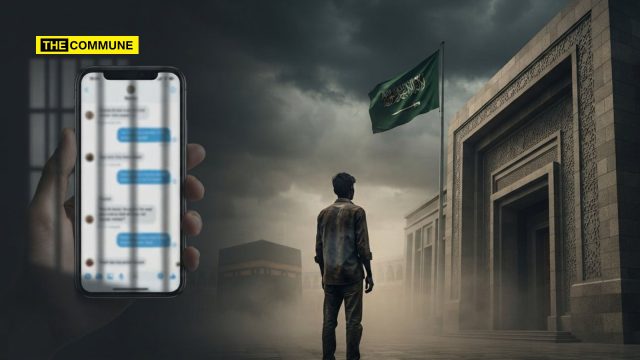
Anojan Sivarasa was working in Saudi Arabia when an online argument in Sri Lanka took a dangerous turn. The dispute began after a video involving a dog accompanying Hindu pilgrims sparked religious tensions. When another participant allegedly insulted a Hindu deity, Sivarasa responded with a derogatory comment about Prophet Muhammad.
He deleted the comment. He apologised. But screenshots travelled further than his apology.
Saudi authorities arrested him in July 2026. He was initially sentenced to five years in prison and fined three million Saudi riyals. In September, an appellate court imposed the death penalty for blasphemy.
Few Words on Social Media Become a Matter of Life and Death
On 13 October 2026, the Saudi Supreme Court set aside the death sentence. Sri Lanka’s diplomatic intervention had helped secure a crucial reprieve. The earlier prison sentence was also reportedly set aside, although the case is expected to be reheard.
The reversal deserves recognition. But the underlying question remains – Why should a religious disagreement, however offensive, expose a human being to execution?
And why should a state consider itself responsible for protecting a prophet, who died nearly fourteen centuries ago, from the words of an ordinary individual?
The answers lead us beyond blasphemy. They lead us to the historical relationship between Islam, political power and the control of society.
When Religion Becomes the State
Christianity and Islam developed within different political settings. Christianity began as a religious movement within the Roman Empire, and its earliest communities possessed neither sovereign territory nor an independent government. Christianity’s later association with state power therefore emerged gradually rather than at the movement’s origin.
Islam followed a different course. Within Muhammad’s lifetime, the community established at Medina had developed political, judicial and military institutions. Muhammad was not merely a preacher. He also exercised authority as a political leader and military commander. The religious community and the political community grew together.
This distinction shaped the centuries that followed. Under successive caliphates, Islamic rule expanded across vast territories. The Arab conquests brought Syria, Egypt, Persia and other regions under Muslim political authority. Later Muslim dynasties extended their influence into parts of Europe, Africa and the Indian subcontinent.
Not every conquest produced immediate religious conversion. Nor was every conversion forced. In many regions, Islam spread through trade and migration. Like the Moplah Muslims in Kerala.
Yet the imperial and expansionist dimension cannot be ignored. And as has been seen repeatedly, the belief in one universal “Ummah” as something that transcends even loyalty to one’s own country or undermines sovereignty.
Islamic history was not merely the history of a faith spreading among individuals. It was also the history of states extending their authority over territories and populations. That political legacy influenced how religious orthodoxy developed.
The Geography of Belief
Classical Islamic jurists developed concepts such as Dar al-Islam, the territory under Muslim rule, and Dar al-Harb, territory outside it. Though these were legal classifications, it has become a simple universal command for permanent war. Jurists disagreed about their meaning. Some also recognised territories governed by treaties and peaceful relations.
However, the classifications reveal an important feature of classical Islamic political thought. Religion WAS (and is?) connected to territory.
The question was not simply whether an individual believed in Islam. It was also which laws governed the land, who exercised sovereignty and what status different communities held.
The Dhimmi System Illustrates this Relationship.
In many Islamic empires, Jews and Christians could practise their religions under Muslim rule. They often retained communal institutions and places of worship. But they occupied a legally distinct position and were generally subject to the jizya tax.
Protection existed. Equal citizenship, in the modern sense, did not.
Treatment varied widely across dynasties and periods. Some rulers were relatively accommodating. Others imposed severe restrictions. The important point is structura – A state that divides people by religious status makes belief a matter of political administration.
Once religious identity determines legal standing, freedom of conscience becomes difficult to separate from the authority of the ruler.
When Disbelief Becomes Defiance
Blasphemy becomes especially dangerous when religious authority and political sovereignty reinforce each other. In such a system, an insult to religion can be treated not merely as offensive speech but as a challenge to the state’s legitimacy. Disagreement is then recast as disobedience.
A person who questions a religious interpretation may be seen as questioning the scholars who defend it. A person who rejects religious authority may be viewed as challenging the political order that enforces it. The result is a dangerous transformation.
As was seen in Sivarasa’s case, An argument becomes an offence. The offence became a crime leading to a death sentence.
This is not unique to Islam. Christian Europe once punished heresy and blasphemy with imprisonment, torture and execution. But the continued use of severe blasphemy laws in many, if not most, contemporary Muslim-majority states makes the issue particularly urgent.
Look at Pakistan. In 2010, Asia Bibi, a Christian farm worker, was sentenced to death following allegations of blasphemy. Pakistan’s Supreme Court acquitted her in 2018 and upheld that acquittal in January 2019. The judicial decision was significant. So was the backlash.
Religious hardliners protested. Two prominent political figures who had defended Bibi or criticised the blasphemy law had previously been assassinated. The case exposed a disturbing reality. Even when a court rejects a blasphemy allegation, the threat of violence can remain.
In Saudi Arabia, Sivarasa’s case raises a similar question. His words were written during an online argument outside Saudi Arabia. Yet the consequences followed him into the country where he worked. The reach of religious punishment had crossed borders. A disagreement between individuals had become a matter for the state.
Who Pays the Price?
The greatest victims of coercive religious orthodoxy are not necessarily outsiders. They can be believers themselves. The Muslim who questions a cleric faces accusations of disloyalty. Reformer arguing for a different interpretation is treated as undermining the faith. If a person wants religion to remain a personal matter, he will be under attack from both religious and political authorities.
And when extremists claim to speak for Islam, ordinary Muslims will have to bear the consequences. Their faith becomes associated with intolerance they may not support. Their communities face suspicion. Their opportunities for peaceful coexistence become harder to protect. This is why the struggle against religious extremism should not be understood as a struggle against Muslims. And this realisation should first dawn among the genuinely moderate and common muslims.
It is also a struggle for the freedom of Muslims to believe, question and live without coercion. There is another reason to reject the claim that political enforcement is the only authentic expression of Islam.
Islam’s spiritual and intellectual history is far and few, and is more of a garnish for a political theology than a religious one. My disagreements with their extent of spirituality may continue, but it cannot negate the fact that certain Sufi traditions emphasised inner transformation, love and devotion. Islam has had its share of philosophers who explored reason and ethics. There are many Muslim scholars who disagreed over law, theology and the relationship between faith and government. Many of them met their life’s end precisely because of their positions being found contrary to the political ideology.
These traditions did not always reject political authority. But their existence demonstrates that Islamic thought has never been confined to a single political model. The question is not whether Islam possesses spiritual resources. It does.
Whether political institutions will allow those resources, and competing interpretations, to flourish without coercion? Only time will tell.
A Change at the Symbolic Centre
Saudi Arabia occupies a special position in the Islamic world. It is home to Mecca and Medina, Islam’s two holiest cities. Its rulers carry the title of Custodian of the Two Holy Mosques. Saudi Arabia does not possess universal theological authority over Muslims. Sunni Islam has no equivalent of a Pope, and Shia traditions maintain their own institutions. Yet Saudi Arabia’s symbolic influence is immense.
Its oil wealth, religious institutions and international funding helped spread conservative interpretations of Sunni Islam during the twentieth century. For decades, the kingdom was closely associated with strict religious policing and public conformity. That relationship has been changing.
In 2016, Saudi Arabia sharply restricted the powers of its religious police. Officers could no longer pursue suspects or make arrests. Subsequent years brought major changes in public life. Women gained the right to drive. Cinemas reopened. Entertainment expanded. Restrictions on gender mixing were relaxed.
These developments were not minor adjustments. They showed that practices once defended as essential to public morality could be changed through political decisions.
What had been presented as religious necessity was, at least in part, a choice about governance. That is a powerful lesson. Saudi Arabia has not become a liberal democracy. Restrictions on political dissent and expression remain serious. Social reform has not produced unrestricted freedom of conscience.
The Sivarasa prosecution itself demonstrates the contradiction. A state can relax social restrictions while retaining harsh penalties for religious expression. Notwithstanding this, the broader shift deserves attention.
The Saudi leadership appears increasingly willing to limit the public authority of religious institutions when that authority conflicts with its economic and social priorities. The Supreme Court’s reversal of Sivarasa’s death sentence may be another sign of restraint.
It may also be the result of legal scrutiny and sustained diplomatic pressure. We do not yet know. But it offers reason to ask whether the kingdom is beginning to reconsider the costs of religious punishment. For a country with Saudi Arabia’s symbolic importance, even limited changes can influence debates far beyond its borders.
The Internet Has Changed the Battlefield
In my first article this trilogy, I had put forward my thought that “timeless qu’ran claim” is a political strategy. In the second article in this trilogy, I had argued that science, industrialisation and the gradual separation of church and state helped transform Christianity’s relationship with political power.
That transformation was neither immediate nor peaceful. Christian Europe endured religious wars, persecution and fierce resistance to intellectual change. Over time, scientific inquiry, political competition, education and constitutional protections weakened the ability of religious institutions to enforce uniform belief.
Christianity did not disappear. It adapted.
The Internet may now be creating a comparable challenge for institutions that seek to enforce Islamic orthodoxy. A young person can read competing interpretations of the Qur’an without seeking permission from a cleric. A Muslim can encounter arguments from reformers, traditional scholars, secular thinkers and former believers on the same device.
Historical claims can be examined. Religious rulings can be challenged. The conduct of governments can be exposed to international scrutiny. The state may control territory. It cannot control every question that enters a human mind.
But the Internet is not automatically a force for tolerance. It also spreads extremist propaganda, encourages online mobs and gives governments new tools for surveillance. Sivarasa’s case illustrates both sides.
Digital communication enabled the original dispute. Screenshots helped turn it into a criminal prosecution. International reporting and advocacy then brought greater attention to his plight. The same technology can empower dissent and magnify intolerance. What matters is how societies respond.
Will they use technology to protect freedom of conscience? Or will they use it to extend religious policing into every private conversation?
Freedom, Not Modernisation – Is The Real Benchmark
Saudi Arabia’s transformation is often measured through economic diversification, tourism, entertainment and investment. Those changes matter. But they are not the ultimate test of religious reform.
Modernisation is not the same as liberty. A state may build modern cities, attract international investors and celebrate innovation while still imprisoning peaceful critics or denying individuals the freedom to question religious authority. Economic and technological change therefore cannot, by themselves, demonstrate genuine reform.
The more specific and deeper test is whether – a person can reject a religious interpretation without fearing prosecution; a Muslim can leave the faith without state punishment; a non-Muslim can criticise a religious idea without being treated as an enemy; believers can defend their faith through argument rather than intimidation; the law protects people from violence instead of protecting religious doctrines from criticism.
These are not demands that people abandon religion. They are demands that religious belief become a matter of conscience rather than compulsion.
A Turning Point, or Just a Reprieve?
Sivarasa’s reprieve matters because it concerns more than one defendant or one judgment. It tests whether a state that has relaxed some forms of religious control is also prepared to reconsider punishment for religious expression. The answer remains uncertain, but the case has made the contradiction impossible to ignore.
Only time will tell. The case remains unresolved. One judgment cannot establish a historic transformation. Yet it is possible to hope that Saudi Arabia’s changing priorities, together with the spread of information and competing ideas, will weaken the legitimacy of coercive religious interpretations.
Such a change would benefit not only religious minorities and foreign workers. It would benefit millions of Muslims who want to practise their faith without being associated with threats, violence or the suppression of dissent.
That is why this moment deserves attention. Not because Islam must abandon its spiritual identity. But because its political institutions must confront a question that Christianity’s institutions faced over several centuries.
Can faith retain its meaning when it loses the power to compel obedience?
History suggests that it can. However the more relevant and harder question is – Whether those who hold power are willing to accept that change.
Conclusion: Does Faith Not Need an Empire?
Religion should inspire devotion without controlling territory. It can offer moral guidance without seeking to govern every private space and choice. It can command the loyalty of believers without demanding the submission of everyone else.
Islam’s imperial history has shaped powerful legal and political institutions. But history does not require those institutions to remain unchanged forever. The Internet has opened new spaces for debate. Economic change is altering the priorities of governments. Even Saudi Arabia, long associated with conservative religious enforcement, is redefining the relationship between its rulers and its clerics.
None of this guarantees a more tolerant future. The reform can still stall, and political control can take new forms. And we all know and have learnt that – extremists resist change.
But the possibility exists. And that is the real significance of the Saudi court’s decision. A young man who faced execution for a Facebook comment has been spared that sentence (even though his legal ordeal continues). One can only hope that this is more than an isolated reprieve and is part of a longer journey away from punishment.
To sign off, I can only paraphrase a conversation a friend of mine had sometime back –
For a faith to survive, it needs believers.
For a society to be free, it must also make room for non-believers.
And no religion should need the power to kill in order to command respect.
If it does, it is a political ideology and not a spiritual pursuit.
G Saimukundhan is a Chartered Accountant.
Subscribe to our channels on WhatsApp, Telegram, Instagram and YouTube to get the best stories of the day delivered to you personally.