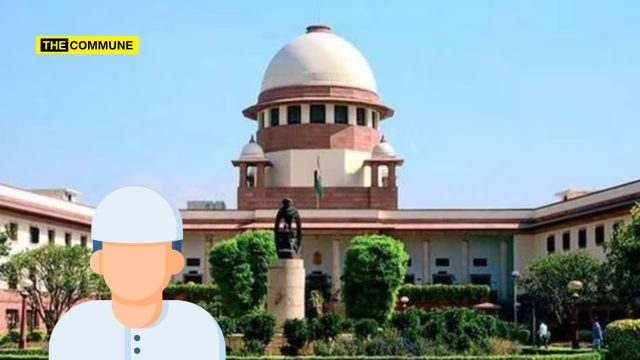
The Supreme Court on 15 October 2026 upheld a Madras High Court judgment holding that a person who converts to Islam cannot claim backward class reservation merely on the basis of their caste or community status before conversion, as reported in LiveLaw.
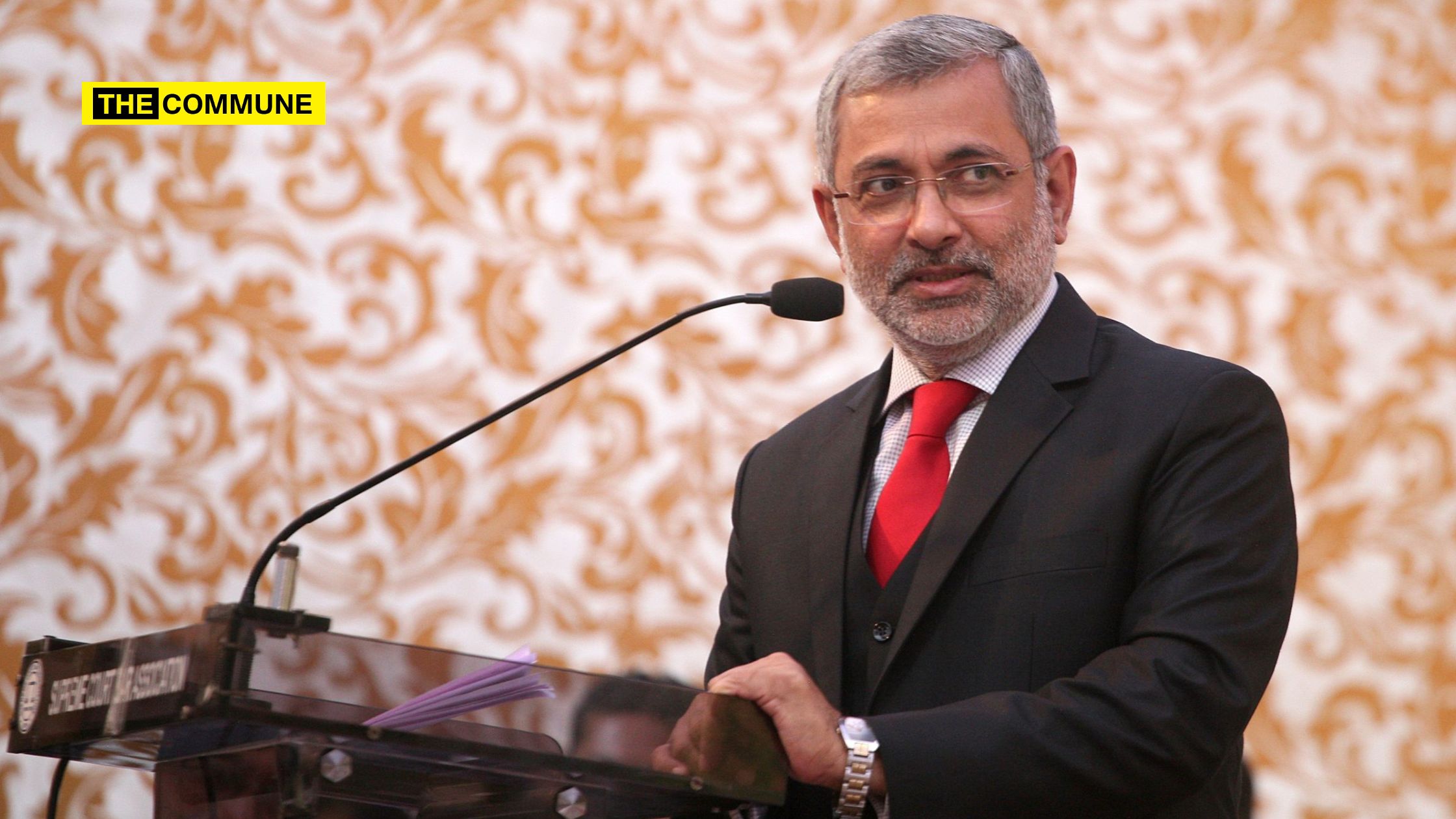
A bench comprising Justice Prashant Kumar Mishra and Justice Shree Chandrashekhar dismissed the challenge filed by the Tamil Nadu government against the High Court’s decision.
The Supreme Court held that conversion to Islam does not automatically entitle a person to membership in any of the seven Muslim communities notified as backward classes in Tamil Nadu. It ruled that a person’s former caste status cannot be transferred to a notified Muslim backward class category merely because of conversion.
The bench ordered: “A person who converts to Islam by that act alone doesn’t become a member of one of the seven notified backward class social communities in the State. His former caste status can’t be transposed to the Muslim backward class category, nor can his private religious body conclusively determine such status entitlement.”
The judgment concerns a Tamil Nadu government order issued in 2024 that permitted people converting to Islam from Backward Classes (BC), Most Backward Classes (MBC), Denotified Communities (DNC) and Scheduled Castes (SC) to be treated as BC (Muslim) and obtain community certificates identifying them as belonging to one of seven notified Muslim communities for reservation benefits.
The Madras High Court had declared the government order unconstitutional. The State subsequently challenged that ruling before the Supreme Court by filing a Special Leave Petition on July 6.
Supreme Court’s conclusions on caste status and conversion
The Supreme Court laid down a series of conclusions concerning the effect of religious conversion on caste identity, backward class status and entitlement to affirmative action under the Constitution.
The bench held that a person converting from the Hindu social order to a non-Hindu social order cannot claim affirmative action under Article 16(4) of the Constitution merely on the basis of social backwardness associated with their pre-conversion status.
It stated that backwardness arising from an antecedent social order cannot, by itself, be carried forward to confer backward class status in the social order to which the person has converted.
The Court also addressed the constitutional restrictions governing Scheduled Caste status. It noted that, under the Constitution (Scheduled Castes) Order, a person professing a religion other than Hinduism, Sikhism or Buddhism cannot be deemed to be a member of a Scheduled Caste.
Consequently, upon conversion to a religion not specified in the Order, a person ceases to possess Scheduled Caste status and cannot claim affirmative action or benefits under Article 16(4) that depend on membership of a Scheduled Caste.
The bench further clarified that conversion to a non-Hindu social order does not automatically confer membership of any particular backward caste community. A person’s pre-conversion caste or community status cannot, merely because of conversion, be transferred to a notified backward class community in the new social order.
It held that the social backwardness underlying a person’s earlier status cannot, by itself, provide the legal basis for conferring membership of a different notified backward class community after conversion.
Supreme Court on Reconversion to Hinduism
The Court also addressed cases in which a person converts from the Hindu social order to a non-Hindu social order and subsequently reconverts to Hinduism.
It held that entitlement to affirmative action in such cases cannot be determined solely by referring to the person’s antecedent status.
Instead, the entitlement requires an independent, fact-specific assessment of whether the original caste or social identity has genuinely revived upon reconversion and whether the person has fulfilled the applicable constitutional and legal requirements.
The bench further ruled that no statutory benefit, protection, reservation or other entitlement under Article 16(4), where enjoyment depends on membership of a particular social order, can be claimed merely on the basis of antecedent membership after conversion to Islam, Christianity or another non-Hindu social order.
The Court stated that such conversion severs the legal foundation of an entitlement conditioned upon membership of the Hindu social order.
Madras High Court had Struck Down 2024 TN GO
The case originated from a government order issued on 9 March 2024, by Tamil Nadu’s Backward Classes, Most Backward Classes and Minorities Welfare Department.
The order allowed people who converted to Islam from BC, MBC, Denotified Communities or Scheduled Castes to be treated as BC (Muslim) and issued community certificates identifying them as belonging to one of the seven notified Muslim communities for the purpose of reservation.
The seven Muslim communities notified as Backward Classes under The Tamil Nadu Backwards Classes, Scheduled Castes and Scheduled Tribes (Reservation of Seats in Educational Institutions and of Appointments or Posts in the Services under the State) Act, 1993, are:
- Ansar
- Dekkani Muslims
- Dubekula
- Labbais, including Rowthar and Marakayar
- Mapilla
- Sheik
- Syed
A Madras High Court bench comprising Justice G.R. Swaminathan and Justice P.B. Balaji had held that the government order was unconstitutional and contrary to judicial pronouncements of both the High Court and the Supreme Court.
The bench held that a person converting to Islam could only be treated as a Muslim and could not automatically be classified as belonging to one of the seven notified Muslim backward class communities on the basis of their former caste status.
Case Arose From a Community Certificate Application by a Muslim Convert
The High Court was hearing a petition filed by Sameer Ahamed, who had converted from Hinduism to Islam in 2015. A gazette notification recording the conversion was issued in 2016.
Sameer subsequently married his wife in accordance with Islamic rites and customs, and the couple had two children.
He later applied for a community certificate identifying him as belonging to the “Muslim Lebbai” community. The Tahsildar rejected his application, prompting Sameer to approach the High Court.
Sameer relied on the government order issued on March 9, 2024, by the Backward Classes, Most Backward Classes and Minorities Welfare Department, arguing that he was eligible to receive the requested community certificate under its provisions.
After examining the government order, the High Court bench expressed the view that it might not withstand judicial scrutiny. The judges subsequently impleaded the Tamil Nadu government as a party to the proceedings to examine the validity of the order.
Tamil Nadu Govt Argued the Order Would Protect Existing Reservation Beneficiaries
Before the High Court, the Tamil Nadu government defended the order and argued that it had not been issued arbitrarily.
The State submitted that the Tamil Nadu Backward Classes Commission, through a letter dated 6 February 2024, had recommended that the government issue community certificates to people belonging to Backward Classes who converted to any one of the seven identified Muslim communities.
The government argued that the order had been issued after detailed deliberations. It further submitted that the measure was intended to ensure that people who had already enjoyed reservation benefits would not lose those benefits merely because they converted to Islam.
The State also argued that extending reservation eligibility to such individuals would not disturb the existing social balance.
The High Court nevertheless declared the government order unconstitutional, prompting the State to challenge the decision before the Supreme Court through a Special Leave Petition filed on July 6.
Subscribe to our channels on WhatsApp, Telegram, Instagram and YouTube to get the best stories of the day delivered to you personally.