Home Blog Page 973

BJP Leader Vanathi Srinivasan’s MLA Office Achieves ISO 9001:2015 Certification, A Milestone For Efficient Governance

Bharatiya Janata Party’s Mahila Morcha President and South Coimbatore MLA Vanathi Srinivasan has announced a significant milestone for her constituency office. In a groundbreaking achievement, her MLA office in Coimbatore South has become the first in Tamil Nadu to receive ISO 9001:2015 certification. Taking to social media platform X to share her excitement, Vanathi Srinivasan expressed her joy and emphasized the importance of this recognition in ensuring a high level of work commitment from herself and her team.

Drawing attention to the BJP’s dedication to efficient governance, Vanathi Srinivasan highlighted a similar certification received by Prime Minister Narendra Modi’s office during his tenure as Chief Minister of Gujarat in 2011. This historic achievement underscores the BJP’s unwavering commitment to providing efficient, effective, and transparent services to the people they serve.

She wrote, “Delighted to share that my MLA office, Coimbatore South has achieved a significant milestone by becoming the first Member of the Legislative Assembly in Tamil Nadu to receive ISO 9001: 2015 certification. This accomplishment underscores our unwavering dedication to public service. The certification recognizes our distinguished quality management system in various aspects of legislative duties, constituency representation, policy influence, community engagement, development initiatives, oversight, and fund allocation. The attainment of ISO certification reflects not only our tireless commitment to excellence but also the dedication of my entire team.

Prime Minister Narendra Modi consistently emphasizes enhancing work culture and achieving maximum governance with minimum government intervention. Similarly, Union Home Minister Shri Amit Shah and BJP National President Shri JP Nadda have prioritized enhancing the party’s work ethos and prioritizing dedicated service to the people & that’s why under their leadership, BJP have office in almost all districts of the country. In 2011, when PM Modi was the CM of Gujarat, his office got the ISO 2001:2015 certification. This speaks about our commitment to continuously provide the efficient, effective and transparent services and support to our people.

This certification serves as a testament to our adherence to international standards in the operations and services provided by my MLA office. I am committed to ensuring enhanced efficiency, transparency, and accountability in all interactions with the office for the constituents of Coimbatore South. Today, I conveyed this achievement to our Honorable Speaker and Deputy Speaker of the Tamil Nadu State Legislative Assembly. This achievement reaffirms both mine and BJP’s commitment to upholding the highest standards of governance and service delivery.”

Subscribe to our channels on TelegramWhatsApp, and Instagram and get the best stories of the day delivered to you personally.
Repackaging Central Govt Schemes As State Govt Schemes, Repeating Old Schemes Over & Over Again: Highlights Of 2024 TN Budget

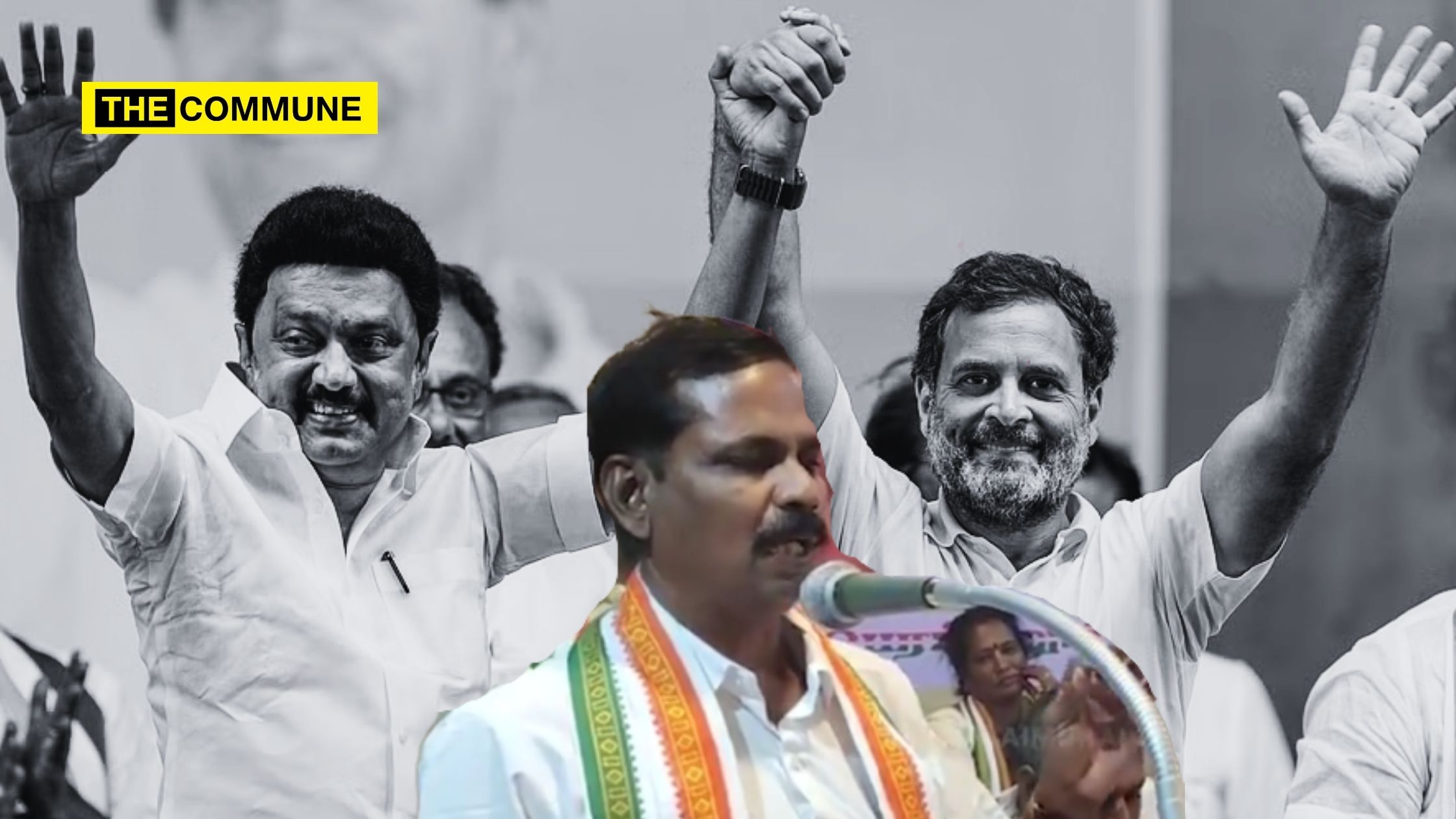
The fiscal year 2024-25 budget unveiled by the Dravida Munnetra Kazhagam-led TN government under MK Stalin, in the state assembly and was presented by Finance Minister Thangam Thennarasu under the theme “crossing obstacles and marching towards growth”. It has faced widespread criticism from political commentators, opposition party leaders, and social media users. Critics argue that the budget is merely a facade, lacking consideration for essential financial aspects, burdening citizens with increased debt, and failing to introduce meaningful welfare schemes. Additionally, they highlight the practice of renaming central government schemes and reiterating old initiatives without addressing key concerns.

Fiscal Status Of Tamil Nadu 

The fiscal deficit of the Tamil Nadu government has exceeded the planned figure for the fiscal year 2024 and is hovering just below the fiscal responsibility limit of 3.5%. The state is facing challenges in managing its expenditures, with outstanding debt surpassing ₹8 lakh crore. The revenue deficit has witnessed a significant increase, reaching ₹49,279 crore for the fiscal year 2024-25, compared to the revised estimate of ₹44,907 crore in 2023-24. It is noteworthy that the revised estimate for 2023-24 has also surpassed the budgeted figure for that year, which was ₹37,540 crore.

The government is also mandated to allocate ₹17,117 crore of loss funding to TANGEDCO in the current year, creating a substantial financial burden that hampers the state’s capacity to fund developmental initiatives. Instead of proactively addressing this issue, the government has appealed to the Union Government to exclude this amount from the state’s Fiscal Deficit and Borrowing Ceiling.

(Photo Credit: Business Line)

The State’s Own Tax Revenue receipts are anticipated to be ₹1,70,147 crore in the Revised Estimates, reflecting a reduction from the initially anticipated growth levels. In terms of Capital Expenditure, the Revised Estimates 2023-24 project ₹42,532 crore, slightly lower than the Budget Estimates. The Fiscal Deficit is estimated to marginally increase to ₹94,060 crore in Revised Estimates 2023-24, constituting 3.45 percent of GSDP, while the government aims for a 1 trillion economy by 2030.

In the Budget Estimates 2024-25, the total revenue expenditure is projected to be ₹3,48,289 crore, featuring increased allocations for Subsidies and Transfers to Kalaignar Magalir Urimai Thogai Thittam, including ₹14,442 crore for TANGEDCO. The Net Loans and Advances are estimated at ₹11,733 crore, raising concerns. Despite frequent references to Thirukkural and Thiruvalluvar, the alarming rise in deficit budget remains unaddressed. Valluvar’s recommendation for a balanced budget echoes: “It is not a great misfortune for a state if its revenues are limited, provided the expenditure is kept within bounds.” Valluvar also emphasized the importance of budgeting for a surplus whenever possible and avoiding budgeting for a deficit.

(Photo Credit: Business Line)

Unfortunately, the government of Tamil Nadu relies significantly on alcohol revenue as one of its primary sources of income.

Welfare Initiatives For Women – Vote Politics Or Genuine Social Welfare?

The government announced an allocation of ₹13,720 crore for the implementation of the Kalaignar Magalir Urimai Thittam, which involves a monthly direct deposit of ₹1,000 into the bank accounts of 1.15 crore women heading households. Additionally, under the ‘Vidiyal Payana Thittam’ initiative, providing free bus travel to women, will now be expanded to cover hilly areas like Nilgiris, Kodaikanal, and Valparai.

Critics argue that although the ₹1,000 appears to be a beneficial initiative for women, the practical impact within households is questionable. There are concerns that the amount may be appropriated by the male head of the family, diverting funds towards purchasing alcohol from TASMAC, a government-owned entity. Alternatively, women in the family may not receive additional financial support. Also they suggest with a budget of ₹13,720 crore annually, it has the potential to construct 10 AIIMS hospitals and establish numerous industries that could generate employment opportunities with an average salary of ₹20,000.

Additionally under the Vidiyal Payana Thittam’, the government has allotted ₹3,050 crore as compensation to the Transport Department. However, it is noteworthy that the Transport Department is already operating at a loss of ₹450 crore, with an annual deficit of ₹5,400 crore. This has raised concerns that the additional financial burden and may further strain the already struggling Transport Department.

Adayar River Revitalization Project

The government announced that the Adyar River, originating in Guduvanchery, will be revitalized and enhanced under the auspices of the Chennai Rivers Restoration Trust. The proposed initiative, with an approximate cost of ₹1,500 crore, will be executed through a public-private partnership. Ironically, this commitment was also made in last year’s budget to rejuvenate the river as part of the ‘one-river one-operator’ project. This drew extensive criticism from netizens and the DMK government faced backlash on social media platforms.

Stray Dog Breeding Issue

In the 2023 budget, the DMK had allocated ₹10 crore to address the issue of stray dog breeding. Surprisingly, in the subsequent 2024 budget, they increased this allocation to ₹20 crore for the same purpose. This caught the attention of netizens who mocked the announcement by sharing and comparing two videos of the finance minister’s speeches in the state legislative assembly. Despite the allocation made last year, stray dog menace has continued to increase by the day in Tamil Nadu.

Recently, Additional Chief Secretary/Commissioner, Greater Chennai Corporation, J Radhakrishnan, had mentioned that Chennai was home to nearly 1.5 lakh stray dogs.

Renaming Central Govt Schemes As State Govt Schemes – Stickering Away

Netizens conducted online searches to compare yesterday’s Tamil Nadu budget with central government schemes. The DMK government faced criticism for allegedly rebranding existing central government programs without making substantial changes, merely renaming them. Some of the highlighted changes include the POSHAN scheme being renamed as the Ensure Nutrition scheme, the PM housing scheme Awas Yojana rebranded as Kalaignar’s Dream House scheme, the PM Gram Sadak Yojana (village road scheme) renamed as the CM village road scheme, SAKHI Nivas rebranded as the Thozhi scheme, Samagra Siksha as Model schools, Vishwakarma scheme as the Artisan development scheme, Jal Jeevan scheme as the Tap Water scheme, and others.

New Modern Film City Poonamallee – Gets More Budget Allocation Than Schools (Puthumai Penn Thittam)

Criticism arose as the government allocated only ₹370 crore for the implementation of the Moovalur Ramamirtham Ammaiyar Puthumai Penn Thittam, specifically for girl students in Government-aided schools studying in Tamil medium. In contrast, a more substantial amount of ₹500 crore was earmarked for the development of a new modern film city in Poonamallee. The project, spanning 140 acres of land, is expected to encompass extensive facilities, including a five-star hotel. Critics argue that this bias is influenced by the fact that the Chief Minister’s son, Udhayanidhi Stalin, is an actor seeking influence in the industry.

Netizens eventually proposed that this budget is merely a superficial attempt, which just entailed the renaming and reconstruction of the previous budget, akin to a comedy scene from a Tamil film.

Poverty Alleviation & Thayumanavar Scheme

The government has outlined its ambitious plan to address poverty comprehensively over the next two years through a flagship initiative called the ‘Chief Minister’s Thayumanavar scheme.’ This initiative aims to uplift approximately five lakh of the poorest families by providing integrated government assistance. However, it is noteworthy that the NITI Aayog’s multidimensional poverty report indicates that 1.43% of the population, roughly 10 lakh people, are currently below the poverty line. Despite this revelation, the government has not provided details on the specific strategies or funding allocations for this poverty alleviation effort.

In conclusion, the Tamil Nadu budget for 2024-25 has been met with significant criticism, encompassing financial mismanagement, questionable allocation of funds, and skepticism about the efficacy of welfare programs. The government’s reliance on renaming existing schemes without addressing underlying issues has further fueled discontent among the public and political commentators.

Subscribe to our channels on TelegramWhatsApp, and Instagram and get the best stories of the day delivered to you personally.
DMK Govt Issues Directive To Omnibus Owners For Passenger Pick-up And Drop-off Only At Three Designated Locations

The Transport Department in Tamil Nadu is currently grappling with challenges on multiple fronts, facing criticism from its own TNSTC employees who are pressing for unresolved demands such as pensions and the release of dearness allowance. On another front, following the construction of the Kalaignar Centenary Bus Terminus (KCBT), there is an ongoing dispute among omni bus owners regarding parking facilities and the determination of pickup and drop-off locations. Simultaneously, commuters accessing the bus stand are expressing their frustration.

In this complex situation, the Stalin-led DMK government of Tamil Nadu issued a directive to omnibus owners, insisting that they adhere to picking up and dropping off passengers at only three designated locations.

The Transport Commissioner has issued a warning specifying that omnibuses traveling from Chennai to southern districts are permitted to pick up and drop off passengers exclusively at Porur toll plaza, Surapattu toll plaza, and Kilambakkam bus terminal.

The Kilambakkam bus stand was inaugurated on 30 December 2023. However, omni bus owners expressed their reluctance to operate from the new terminal, citing inadequate facilities. Despite unsuccessful negotiations with the government administration, the omni bus owners sought legal recourse by filing a case in the High Court on behalf of the Private Omni Bus Owners Association.

Claiming insufficient parking facilities at Kilambakkam, the bus owners requested permission to pick up and drop passengers within the city for passenger convenience. While asserting that only omnibuses would operate from Koyambedu bus stand, the Madras High Court granted their request and instructed them to pick up and drop passengers at designated points around Koyambedu until further notice on the 9th of the month. Furthermore, Justice RN Manjula postponed the hearing to 15 April 2024, stipulating that passengers should be picked up and alighted exclusively at Porur toll plaza, Surapattu toll plaza, and Kilambakkam bus terminal. The court also emphasized that omnibuses traveling to southern districts should not ply without heading to Kilambakkam bus stand.

The owners of omnibuses sought relief from the Supreme Court, but their appeal was dismissed, challenging the directive issued by the Madras High Court. The order mandates that all southbound Omni buses are prohibited from picking up and dropping off passengers at any location other than the designated ones.

In this backdrop, the Transport Commissioner issued a stern warning, stating, “Owners of omnibuses traveling from Chennai to southern districts must strictly adhere to picking up and dropping passengers only at Porur, Surappattu, and Kilambakkam bus stations. This directive is in line with the Supreme Court verdict. Any violation will result in strict action against Omni buses, including the filing of a contempt of court case. Additionally, these three locations should not be misrepresented in ticket booking software and applications such as Red Bus, Abhi Bus, etc., to avoid confusion among the public. Severe consequences will be imposed on Omni buses found violating this instruction. Omni bus owners themselves will be held fully responsible for any inconvenience caused to the public due to their actions in violation of this directive,” he cautioned.

Subscribe to our channels on TelegramWhatsApp, and Instagram and get the best stories of the day delivered to you personally.
“No Concrete Projects Implemented By DMK Govt”, TN BJP Head Annamalai Slams TN Budget 2024

The finance minister of Tamil Nadu, Thangam Thennarasu, presented the budget for the fiscal year 2024-25 in the state assembly. Themed “overcoming obstacles and advancing towards growth,” the budget is said to focus on seven key areas crucial for progress. These areas include improving physical infrastructure, creating job opportunities, enhancing social and healthcare facilities, boosting district export initiatives, refining financial mechanisms, promoting educational excellence, and advocating environmental conservation.

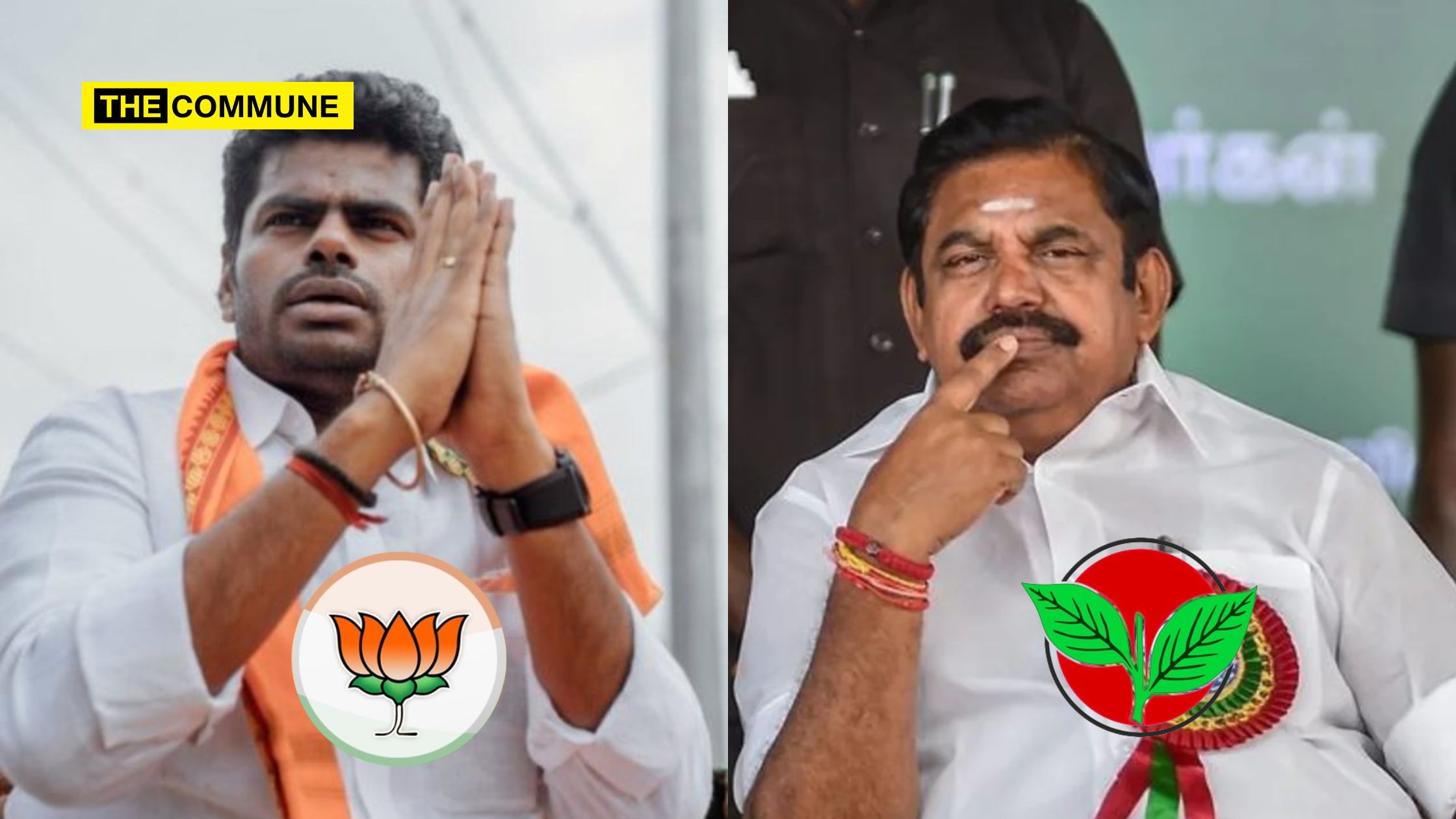
Against this backdrop, the President of the Bharatiya Janata Party in Tamil Nadu strongly criticized the budget and issued an official statement on his official X handle that the DMK government was making empty announcements and failing to deliver on its promises. Annamalai argues that the budget lacks concrete projects, and the government is repeating the same projects from previous years without implementation. He alleged that the DMK had not earmarked funds for most of its announced schemes, relying heavily on the central government’s welfare programs. Annamalai provided examples of how the DMK has renamed central government schemes in the Tamil Nadu budget, such as presenting the POSHAN scheme as ‘Ensure Nutrition’ and the Prime Minister’s Rural Road Scheme as the Chief Minister’s Rural Road Scheme. He claims that the DMK is misleading the public by not acknowledging the central government’s contributions to these programs.

The BJP leader also highlighted discrepancies in the budget, pointing out unfulfilled promises, unspent funds, and the lack of transparency in various allocations. Annamalai questions the effectiveness of the DMK’s financial management, citing concerns about the state’s growing debt burden and the discrepancy between tax revenue growth and government spending.

He wrote, “The DMK, which has been running an advertising regime through empty announcements for three years after coming to power has once again left the people stand in the river who voted for it with a bogus budget.

Apart from the same decorative words appearing in the Tamil Nadu financial report every year, there are no concrete projects made by the Tamil Nadu government. The same projects that have been included in the budget of Tamil Nadu for the last three years, they have not been implemented yet and are being announced again and again every year as new projects. DMK does not seem to have earmarked any funds to implement most of the schemes announced in its election promises.

DMK’s financial statement shows that if the central government’s welfare schemes are removed, what is left is the naming of the bus stand and the advertisements that stand at the level of mere announcements every year. It is a joke that the DMK, which pretends that the central government’s schemes have come up with new names, or hides the central government’s contribution, is stuck unable to fully stage their drama due to lack of foresight.

The press release also pointed out how the TN government had just renamed central government schemes to present them as new schemes. Here are the few of them:

“They have tried to present the central government’s POSHAN scheme as their scheme by calling it ‘Ensure Nutrition’ (Ootachathai Urudhisei). Funding for this is provided by the central government.

The Prime Minister’s House project has been renamed as Kalaignar’s dream house. The funds for the same will go directly to the beneficiaries from the central government. If we change the name of the project, will people believe it? People question as to when Kalaingar, who lived only for his family, thought about the public?

The Prime Minister’s Rural Road Scheme has morphed into the Chief Minister’s Rural Road Scheme. Whether they have implemented them properly is also not the case.

In Tamil Nadu, hill villages are still in a dire situation of being carried on a dolly without road access for emergency medical treatment. This is the true face of the Dravidian model.

Banks provide loan assistance to Women Self Help Groups in the name of central government guidelines. People are wondering what is the DMK government’s contribution in this.

People are not ready to forget easily that the DMK lied in its election promise, that if they came to power, they will waive the jewellery loan. The DMK is advertising about women’s hostels that the central government has come up with in the name of Sakhi Nivas, and renaming them as Thozhi hostels. 20 Sakhi Nivas women’s hostels are functioning in Tamil Nadu. They are unaware of this and have mentioned it as 10 hostels in the financial report of Tamil Nadu.

To increase the green areas of the cities, the project ‘Forests in Cities’ implemented by the Central Government has been in operation since 2020. Already 10 Green ways have been developed in Tamil Nadu through this scheme. Who is the DMK government trying to deceive by hiding this as it is and announcing it as a new scheme?

The Nemmeli, Sea Water Desalination Project was launched in 2020 with a grant of ₹1,200 crore from the Central Government. In April last year, it was reported that the project would be completed and operational. But, like the scheme brought in DMK regime, ₹1,517 Crore allocation in this year’s financial statement is fooling people.

According to the financial report of Tamil Nadu, ₹452 crore has been spent on setting up model schools in Tamil Nadu. But under the Samagra Shiksha scheme, to improve the infrastructure of Tamil Nadu schools, in the last three years more than ten times that Rs. 5,856 crores they forgot to mention that the central government has provided.

Announcing that ₹7,500 crore would be spent over 5 years to improve the infrastructure of schools, till last year, Rs. 3,500 crore of funds have been earmarked under this scheme. But in this year’s report, they said that works worth Rs.2,497 crore are currently being implemented and have allocated another Rs.1,000 crore. This shows that no work has been done till last year.

The central government’s Vishwakarma welfare scheme has been renamed as the Tamil Nadu Artisan Development Scheme. Funding for this is from the central government.

Thus, all the welfare schemes mentioned in the financial statement of the Tamil Nadu government are the schemes which have been implemented for many years under the central government’s financial allocation. DMK stands up to the idea of changing their names and the idea of stickering the Dravidian name on them has become a nose cut.

Has the DMK announced any schemes of their own? Yes, they have. In every annual budget, they announce it without changing a single word. But, nothing has been implemented yet.

An allocation of ₹1,500 crore has been made this year for the rehabilitation of the Adayar river. An allocation of ₹1,500 crore was also made last year for the rehabilitation of Adayar river. We don’t know what happened to those funds.

Every year,  for the restoration of temples under the Hindu Religious & Charitable Endowments Department, ₹100 crores are usually announced. So far the funds have not been fully spent. Instead, they are taking the temple funds and spending them. Another announcement which does not change every year is the announcement of purchase of new buses and  purchase of electric buses. What is the benefit of not filling the driver vacancies to run the existing buses and just making announcements of purchase every year?

Last year, the DMK announced ₹1,000 crores worth of projects to protect the welfare of fishermen, but did not disclose how much money has been spent on them so far. No details have been given about the allocation of funds for fishermen under the scheme.

It is reported that 60,567 people have been given government employment in the last three years. Out of which only 10,600 vacancies are provided by the Tamil Nadu Public Service Commission. The Tamil Nadu government should clarify how the remaining 50,000 posts were filled.

To top it all, Tamil Nadu’s own tax revenue has grown by 19%, but only 12% has grown, questioning the DMK government’s financial management.

The DMK only mentioned that total debt burden of the Tamil Nadu government will rise to 8.3 lakh crores in the next year, but forgot to mention the total debt burden of Tamil Nadu in the financial statement. The total debt burden of Tamil Nadu is Rs. 9.5 lakh crore would be more. DMK’s only achievement was to increase the total loan amount from Rs 5.6 lakh crore last year by raising to Rs 4 lakh crore within 4 years.

DMK’s election promises that were not included in this year’s financial statement either.

  • A subsidy of  ₹100 for each cylinder
  • The 100-day work schedule will be increased to 150 days
  • Cancellation of education loan
  • Earmarking ₹15,000 crore to provide loan assistance in easy installments to re-operate industries closed during the Covid-19 pandemic
  • MSP for paddy will be raised to ₹2500 per quintal, while the MSP for sugarcane will be raised to ₹4000 
  • Petrol price reduction by ₹5 per litre and diesel price by ₹4 per litre
  • Free tablets to students studying in higher secondary schools and colleges in TN – these tablets will be provided with internet connection download facility 10GB per month in 4G & 5G internet service
  • 2 lakh houses will be built for fishermen
  • Permanent job assurance for Part-time teachers and  nurses
  • Electricity to be billed once a month

Annamalai concluded, “What is the benefit to the people of reading financial status report for three consecutive years without any announcements about important promises in 511 election promises? The reality is that the Chief Minister, who goes on pleasure trips with his family to foreign countries every year in the name of attracting investment, has not brought even a single rupee of investment to Tamil Nadu so far. How many days can we go on with this worn-out Dravidian model of putting the burden of debt on the heads of the people, without the thought of people’s welfare programs in the financial statement, without fully implementing the programs already in operation, without fulfilling the election promises? People are watching.

Subscribe to our channels on TelegramWhatsApp, and Instagram and get the best stories of the day delivered to you personally.
Kerala: IS Colonies In Rahul Gandhi’s Wayanad Constituency? Alleged IB Report Points To Their Existence

In a recent revelation reported by Karma News Channel on both their YouTube platform and Facebook handle, a report said to be of the Intelligence Bureau (IB) has brought to light the existence of four Islamic State (IS) colonies in Wayanad, Kerala which is also incidentally the constituency of Congress scion Rahul Gandhi.

The IB report outlines that these colonies, resembling IS practices in Syria and Afghanistan, have been strategically established through extensive land purchases and the construction of walled structures. These self-sufficient villages reportedly housing selected Muslim families, have raised significant security concerns.

Stringent regulations are said to be in place, prohibiting outsiders, especially non-religious individuals, from entering the colonies or acquiring property. This security concern was reportedly highlighted in the IB report submitted to the Union Home Ministry.

The villages are equipped with facilities such as madrasas and religious schools, and their operations are shrouded in mystery due to restricted entry, necessitating further investigation. The IB report allegedly notes that the funding for these colonies originates from Malaysia.

Moreover, funds from Malaysia were reportedly invested in quarries and turf courts in Kerala. Numerous institutions in Wayanad are under IB surveillance, with a specific focus on determining potential links between these colonies and banned organizations, including whether they are being used as hideouts.

The allegations have prompted questions regarding the transparency of the Pinarayi Vijayan-led government and mainstream Malayalam channels, with critics suggesting a possible connection between these actions and allegations of supporting terrorist organizations for election funds and vote bank politics.

Recent events, such as the National Investigation Agency (NIA) confiscating the Popular Front of India’s (PFI) largest weapons training center, Green Valley Academy, at Manjeri in Kerala, have added to growing concerns. The center is reported to have served as a hideout and service wing for individuals involved in serious crimes, including murder.

It is also noteworthy to mention that Rahul Gandhi had declared the Indian Union Muslim League as a “completely secular” party despite the party’s controversial Islamist history.

(with inputs from Karma News)

Subscribe to our channels on TelegramWhatsApp, and Instagram and get the best stories of the day delivered to you personally.
EPS Expels Salem ADMK Functionary Who Levelled Corruption Allegations Against Him And Another Party Functionary

In a recent development within AIADMK circles in the stronghold of Edappadi Palaniswami (EPS), internal party conflicts emerged among his cadres. In this context, EPS announced the removal of Salem West Union AIADMK Secretary AV Raju from the party. The decision came after allegations were made against Salem Metropolitan City AIADMK Secretary Venkatachalam, accusing him of amassing assets exceeding ₹1000 crore.

AIADMK General Secretary Edappadi Palaniswami has officially announced that, “Salem West Union Secretary A.V. Raju from Salem Metropolitan District has been suspended from today for acting contrary to the policy goals and principles of the association, acting contrary to the legality of the association, and acting in such a way as to disrupt the organization’s discipline, defying the control of the association and causing stigma and disrepute to the association. Salem West Union Secretary A.V. Raju is removed from all responsibilities, including that of a basic member of the AIADMK.”

AIADMK Salem union secretary sacked from party What is the reason?

This has caused a stir among AIADMK members, and expressing dissatisfaction with the party’s decision, AV Raju held a press conference at his residence in Alaghapuram, Salem. During the meeting, he made startling accusations, asserting that Salem AIADMK Metropolitan City Secretary Venkatachalam was involved in deceitful practices. The allegations included accepting bribes in exchange for facilitating government job acquisitions for his son-in-law at Periyar University in 2020. An amount of ₹30 lakhs was purportedly given, with no repayment or job secured as promised.

He also alleged in a commercial transaction, Venkatachalam assured AV Raju a sum of ₹20 lakhs to facilitate the acquisition of a plot at a reduced cost near a medical college. However, the promised commission has not been provided he alleged.

In pursuit of Anganwadi positions, AV Raju received ₹5 lakhs from two individuals, which he then handed over to Venkatachalam. However, he explicitly stated that he could not guarantee job security and affirmed that the money would not be refunded. He also stated that in 2011 affidafit of Venkatachalam he declared only assets worth ₹41 lakhs now has amassed a wealth of ₹800 crore.

AV Raju disclosed an extensive list of assets, including 123 acres of agricultural land in Pannapatti, 7 acres in Semmankoodal, 32 acres in Vellalapatti, an 8-crore bungalow with a lift in New Road, 20 acres of farmland in Karur, 15 acres of estate in Yercaud, and an apartment in Mullai Nagar. Additionally, he mentioned ownership of 6 cars, 7 buses, and 6 petrol bunks.

Subsequently, he expressed his astonishment at the party suspending him for exposing corruption rather than addressing the allegations. He issued a warning, suggesting that he might disclose information about corruption involving smuggled milk and ghee during Edappadi Palaniswami’s tenure as the head of the Salem Cooperative Milk Department. Furthermore, he asserted that EPS lacks the authority to expel him from the party. He said “I was the director with you in the dairy farm.  Shall I give you the list how much corruption you have done? Among the two I was with Edappadi Palaniswami as the director. Amma has made me the director of the diary for 5 years, I was the one of the director with him and he was the chairman. I know how much load milk have been smuggled and I know the ghee you took while you were the chairman. What allegation can you say on me?

Subscribe to our channels on TelegramWhatsApp, and Instagram and get the best stories of the day delivered to you personally.
Makkalin Mudhalvar App: Stalin’s Son-In-Law Sabareesan’s Company Rolls Out New App, Subtly Peddles Dravidian Propaganda Against Amul While Also Trying To Indoctrinate Dravidian “Principles” In Youth

A new gaming app that is centred around “Dravidian principles” made its debut at the Chennai Comic Con, just in time for the upcoming Lok Sabha elections.

Developed by Populus Empowerment Network (PEN) connected to MK Stalin’s son-in-law Sabareesan, the app, titled ‘Makkalin Mudhalvar’ (People’s Chief Minister), invites players to assume the role of a chief minister and navigate the complexities of governance. The game is targeted at youth aged between 16 and 25 and “aims to familiarise” users with the principles underlying the “Dravidian model of governance”.

Makkalin Mudhalvar rewards players for decisions aligning with Dravidian principles, emphasising values such as equality, empowerment, and secularism. Pooja Pradeep, a programme manager at PEN, speaking to India Today explained the game’s mechanics, stating that there were no wrong answers, however when one plays the game, it is evident that points are deducted for making logical choices while the player is rewarded when one makes a choice aligning with the Dravidian ideology.

As the virtual chief minister, players are tasked with upholding the core values of Dravidian ideology, reflecting historical Dravidian party stances. Pooja Pradeep told India Today that the “visionary approach” of Sabareesan Vedamurthy, the founder of Populus Empowerment Network (PEN), was reflected in the game.

We downloaded the app and tried working our way around it. Here are some screenshots in the introductory part – clearly peddling a divisive agenda, establishing the basis for ‘us and them’ narrative.

And thus the Dravidian model, the Dravidian way is introduced to the user. In what can be seen as a very good use of imagery to push the Dravidian ideology, one is reminded of how Dravidianists used art and imagery to peddle Nazi-style propaganda against the Brahmins.

Read further this article to understand how Dravidianists have for long used imagery to peddle their propaganda.

In all their artwork and imagery, the Dravidianists made use of what is known as the Picture Superiority Effect – a phenomenon in which imagery/pictures are remembered more than text or words. The same applies to this game as well. Use of AI to the best of their abilities to peddle the Dravidian propaganda.

Coming back to the game, the user plays the role of the Chief Minister of Tamil Nadu and as soon as the CM takes up the position, a lady (probably State Secretary?) briefs the CM about the “current condition of the state”.

So once the introduction is done with, the player takes over as CM and the Dravidian principles of “Social Justice, Rationalism, Women’s Empowerment, Cultural Ethos, and Federalism” are briefed to the player.

You can see for yourself the type of content that is showcased here – unscientific religious beliefs, superstitions are irrational, calling the central government the Union and calling for autonomy – drilling into the brains of the user, the same language that the Dravidian government uses.

The instructions are given to the player and it suggests that if one follows Dravidian values, election can be won easily.

Following these screens, the task is given by different ministries say Education minister or the Health minister or a business leader who visits the CM for some thing or the other. As the player goes over these tasks, points are added or deducted based on the Dravidian principles each selection comes under.

Among these tasks was a task on a brand named “Bimool” which seems to be a wordplay on brand Amul – which was in the news recently as the DMK government opposed its entry into Tamil Nadu. So the Health Minister comes with a complaint or a problem that Bimool is setting up a factory in the state and this can be a problem for the people.

So, rationally thinking, if one clicks the first option to promote a competitive economy and allow the trade, the results are as below:

When one makes logical decisions, points start reducing as above – in the social justice and health fronts.

Here’s another example: The game also tries to pass off the freebie system (free bus travel for women in Tamil Nadu) as a positive principle – Women’s empowerment. Here are the screenshots. You can see at the top how the points reduce if you reject the idea of free bus travel for women scheme.

However, in reality it is evident that the free-bus scheme has not just led to pushing the exchequer in deep debt but has also led to women being mistreated.

As one progresses in the game, the CM is met with different ministers. For example, the Youth Minister comes up to the CM to ask how he can help youth reach their potential as the youth are tomorrow’s decision makers. The options you are given are: Host a Youth Wing Conference to raise awareness or Build their social skills by hosting a big charity event. It is to be noted that MK Stalin’s son Udhayanidhi Stalin, infamous for his remarks against Hinduism, is the Youth Minister and also the DMK Youth Wing Secretary.

Some of the choices are confusing but they are all aimed at achieving only that – confusion and to propagate the so-called Dravidian ideology. Targeting youth in the 16-25 age group can prove to be detrimental if they are exposed to such falsities are an impressionable age and at a time when they are probably going to vote for the first time.

Overall, this app seems to be a waste of time and energy and whose sole aim is to peddle Dravidianist propaganda among unsuspecting first-time voters who they presume to attract through gamification.

Subscribe to our channels on TelegramWhatsApp, and Instagram and get the best stories of the day delivered to you personally.
Tamizh Thatha UVe. Saminatha Iyer – The Man Who Revived Ancient Tamil Literature

Tamil literature right from the Sangam & post-Sangam periods was preserved in manuscripts written on palm leaves for long. While copies of them were made from time to time, they were all preserved only by a few individuals & mathas. Post-16th century, most of them went into oblivion. But for the efforts of one man, U.Ve.Saminatha Iyer, we would have lost a sizeable number of literature and the Tamil heritage & history associated with them. 

Popularly known as ‘U.Ve.Sa’, Iyer hailed from a family of scholars from the village Uthamathanapuram near Tiruvarur in Tamil Nadu. He was born in his maternal grandparents’ home in the village of Suriya Moolai on 19 Feb 1855. His childhood name was ‘Saminathan’ and during his upanayana, he was named ‘Venkataraman’. 

His father wanted him to learn Sanskrit & Music. But Iyer picked up music and learned Carnatic Music from various vidwans which included Gopalakrishnan Bharathiyar, a notable composer of many poems. U.Ve. Sa had developed an interest in Tamil during that time and started learning Tamil literature like Sathakam and Malai. He had also studied all the ‘Tamil Nigandus’ which contains the glossary of Tamil words and meanings. With this knowledge, he started composing small poems in Tamil. However, his quest for knowledge increased more.

Mahavidwan Meenakshi Sundaram Pillai was a Tamil scholar par excellence during those times and U.Ve.Sa pestered his father to take him to Pillai so that he could study Tamil under him. Reluctantly his father agreed, and they went to Mayuram (Mayiladuthurai) for a meeting with Pillai. Iyer told Meenakshisundaram Pillai that his name is ‘Saminathan’, fearing that Pillai may not take him as a student if he told his name is Venkataraman, as Pillai was a staunch Savivite. From that day, he was known as Saminathan only. Meenakshisundaram Pillai was satisfied with Iyer’s knowledge of Tamil after putting him through a test and agreed to take him as his student. Iyer was overjoyed and continued his study till Pillai’s death. 

After that U.Ve.Sa struggled financially and traveled to various places in search of a job. Finally, he had joined Thiruvavaduthurai Adheenam. While he was teaching Tamil to the students there, he also started learning a few of the ancient literature from Subramaniya Desikar, the chief of the Matha. During that time he not only learned some of the important Tamil literature, he also had a chance to debate with Tamil scholars who visited the Adheenam. This has enhanced his Tamil knowledge further.

When U.Ve.Sa was studying under Meenakshisundaram Pillai, chief of Tamil studies at Kumbakonam College, Thiyagaraja Chettiyar used to come to meet Pillai. Thiyagaraja Chettiyar was impressed with Iyer’s Tamil knowledge and wanted to give his job to U.Ve.Sa as he had decided to retire. Initially, Desikar was not keen to leave U.Ve.Sa but eventually agreed due to the constant requests coming from Thigaraja Chettiyar. U.Ve.Sa started working as a Tamil teacher at Kumbakonam College in 1880 for 23 years. 

This period made a marked change in Iyer’s life, who was only studying the ‘Sitrilakkiyam’, smaller books, and Puranas in Tamil. One person named Ramasamy Mudaliar met Iyer and told him about the five epics of Tamil. He had also given one portion of the epic ‘Jivaka Chintamani’ to U.Ve.Sa. On studying Jivaka Chintamani, he started looking for the full text and spent a lot of time traversing various places in Tamil Nadu in search of the manuscripts.

Though he had collected many palm leaves, full & partial parts of the epic, and also the commentaries of the epic from Nachinarkiniyar, he had struggled to get the full meaning of the verses. Jivaka Chintamani was a Jaina Text. So he had visited many Jain households to get the meaning of many verses for which he couldn’t get the right meaning. During the process, he also learned about Thiruthakka Devar, who had written the epic. 

Once he had reached the correct version of the text, including the verses and meaning, he wanted to publish Jivaka Chintamani. He started collecting donations from various sponsors. With a lot of difficulties, he published the epic with a detailed introduction, the history of the author Thiruthakka Devar, and also Nachinarkinyar who wrote the commentary, synopsis of the epic, and the detailed verse-wise commentary in October 1887. This is one of the earliest efforts to publish a Tamil text in such detail. 

While he was searching for the Chintamani manuscripts, he had come across the copies of the Sangam text Pathupattu (Ten Idylls) and Ettu Thogai (Eight Anthologies). So he started the process of publishing them. In 1889, Pathupattu was published by him. Subsequently, the rest of the Sangam Tamil literature and Tamil epics like Silappadhikaram and Manimekalai were published by him. However, Iyer’s quest didn’t stop. He kept on searching for ancient Tamil books and worked on publishing them. 

The contribution of Iyer is not just publishing the literature as such. He had worked dedicatedly to ensure that they were published in the right way. As he had mentioned in his autobiography, he never rushed to put his own meaning to the verses he didn’t understand. He didn’t mind visiting many scholars and commoners to get the correct meaning. Of many examples quoted by Iyer, one is about getting to know the meaning of the word ‘Samavasaranam’ while studying Jivaka Chintamani.

Iyer writes “I didn’t know what is meant by Samavasaranam. I went to one Chandranatha Chettiyar who had some idea about Jain terminology. He told me that Samavasaranam is a Jinalaya and it has many parts. He directed me to visit another person by the name of Gunapala Chettiyar who had a picture of Samvasaranam. So I went to Gunapala Chettiyar’s house and looked at the picture. That gave me a lot of information about the Jinalaya. On seeing me speaking about many such Jain words with Chettiyar, his wife commented about me that “he must be a Bhavya Jeevan” (well versed with Jainism). I know she was also a scholar in Jaina work and if she says I am well versed, that means I had done enough research on this Jaina work and that gave me immense happiness” 

It is not just the meanings of the verses he studied, he worked on the commentaries and the details about them to make it more easy and more interesting for the contemporary Tamil reader. This singular focus made the books published by him revive the Tamil literature. 

Mahakavi Subramaniya Bharathiyar wrote a poem in his honour. Not only that even Ravindranath Tagore wrote a poem in Bengal in honour of U.Ve.Sa. which goes like this :

Adijuker andare thalapatre chilo

Dravida Desar Puradhana Kirti,

Seyi Mahadnidhi, Hey Desikotama

Tomar dwara na ki bahirhail?

Se Kaler Agastyer mathayese Thomarmage

Simhasane reke dile nagitumisa sammane?

Aar pancha maha kavyer majje

Chintamani, Nupurakaatha, Manimekala Ithyathi

Samsodhana Kare Tahar Pada Jugale

Samarpanakarile na Kitumi?

Sange Sange Sangakala Sahityake

Jyotsnai fuditha nitya mallikarmatha

Sophita Karile Nagithumi? Themaagaripranam

Even during his old age, he kept studying various texts and tried to write books & gave many lectures. He writes “Due to my old age and my body not cooperating, I am not able to work on anything all alone. However, my interest in researching various Tamil texts and publishing them is not waning. I think the Tamil goddess is helping me to achieve this impossible task”.

It is a pity that Tamizh Thatha, as he was fondly called, was not honoured as much as one liked him to be during his lifetime and after that. It is at least now we should start continuing his legacy and try to spread Tamil literature which will make him happy. 

TS Krishnan is a Tamil scholar and author.

Subscribe to our channels on TelegramWhatsApp, and Instagram and get the best stories of the day delivered to you personally.
“Just Give Them Their Land And Dignity”: Video Of Prakash Raj Comparing Palestine With Kashmir Goes Viral, Says India Acts Like ‘Big Brother’ To Kashmir

In yet another attempt to come across as ultra-liberal, alleged actor Prakash Raj has found himself in trouble with his words that can be construed as advocation of separation of Kashmir from India.

This time, a video of him speaking at the International Literature Festival on 29 January 2024 at Thrissur on the theme ‘Art and Democracy’ has gone viral.

When discussing the Prana Pratishtha ceremony of the Ayodhya Ram Temple, actor Prakash Raj remarked, “In the evolution in civilization most of the mosques, some of the mosques if you dig there will be a temple. But if you dig the temple there will be a buddha. How deep will you dig? Where will you go?”

If you dig a flourishing city you will find another Harappa or Mohenjadaro. Will that be an information or you want to go back to that age? ”  he questioned.

Then he stated, “See here, they brought in the shock of the new. They have made people comfortable, they have brought them with one Ram, one religion, one element. Sarve jana sukhino bhavantu is for them is just on the tongue not within. They have planned it for years.

Later Prakash Raj emphasized the significance of persisting in the struggle against injustice, even when faced with potential defeat. He drew connections between the issues in Manipur, Palestine, and Kashmir. Regarding Manipur and Palestine, he asserted, “If something happens in the Manipur we should react. If something happens in Palestine.. What is happening in Palestine is justice, what we need is justice you can’t take sides. There is no point in taking sides. You just give them their land that’s it. just give them their land their dignity, how will they survive is none of your business.”

Furthermore, he drew a distinction between the crises in Palestine and Kashmir, “Where are we. We want to be big brothers, we want to big brothers to Kashmir”.

His comments seemingly imply that he is advocating for the secession of Kashmir from India.

Upon viewing the viral video, Netizens swiftly responded strongly to his remarks, criticizing him for drawing parallels between Palestine and Kashmir. They expressed disapproval, highlighting the Kashmiri Pandits’ issue and accusing him of aligning with the left ideology of appeasement politics.

A disgruntled online user expressed anger, stating, “He won’t talk about the land of kashmiri pandits snatched forcefully by his peaceful community.”

Another online user expressed frustration, accompanied by a historical map of India, and questioned, “What more to keep giving away @prakashraaj? Not even a century ago, this is what India was.”

https://twitter.com/raghavendrapv/status/1759180334996828367

Another online user attempted to describe the situation in Palestine, stating that Israel withdrew from the region in the early 2000s. According to this explanation, after gaining freedom to establish a civil society and flourish, the Palestinians received billions in aid. However, the user claimed that instead of using these resources positively, they allegedly supported Hamas, constructed underground tunnels beneath hospitals and schools, and repurposed pipes intended for drinking water to manufacture rockets. The user concluded by asserting that the Palestinians’ ultimate goal is not to acquire land but to eliminate Jews.

Another individual on the internet viewed this as mere political theatrics in the lead-up to the election. The person questions why individuals like Prakash Raj hold such opinions, suggesting that it may be because the consequences do not personally impact them. Drawing a parallel, the user compares Prakash Raj to historical figures like Nehru and Jinnah, asserting that the division of the country into Pakistan and India did not adversely affect them; rather, they gained power. The user implies that Prakash Raj, driven by a desire for power, is willing to articulate any stance for political gain.

Another internet user remarked, “He is being placed tactfully within the ecosystem of anti India forces, the event guys even dnt put efforts – names like these start getting confirmed once the prog is announced.


Preservation Neglect: 1000-Year-Old Inscriptions In Bhojshala, Dhar Protected by Scotch Tape

The shocking state of a temple under the Archaeological Survey of India (ASI) has come to light. Temple activist Shefali Vaidya recently shared on her social media X handle, the apparent apathy towards Hindu monuments by the Archaeological Survey of India (ASI). The heritage site in question was the 1000-year-old Bhojshala in Dhar. 

Vaidya highlighted the stark contrast in ASI’s expenditure, questioning why crores of rupees were allocated annually to illuminate Mughal tombs in Delhi, while a 1000-year-old heritage site in Bhojshala, Dhar, suffers from neglect.

Vaidya expressed her dismay at the use of cheap glass and Scotch tape as makeshift protection for the ancient inscriptions and carvings in Bhojshala. This raises serious concerns about the preservation of invaluable Hindu heritage, as such ad-hoc measures are hardly fitting for the safeguarding of culturally significant artifacts.

The Bhojshala

The Bhojshala is a historic building situated in Dhar, Madhya Pradesh, India. Its name is inspired by King Bhoja, a revered figure from the Paramāra dynasty in central India. King Bhoja was a notable supporter of education and the arts, credited with the authorship of significant Sanskrit works on poetics, yoga, and architecture. The term Bhojshala became associated with the building in the early 20th century. While the architectural elements of the structure span different periods, the main construction is traced back to the 12th century. Additional features, such as Islamic tombs within the campus, were added during the 14th and 15th centuries.

Bhojshala is currently recognised as a Monument of National Importance and falls under the protection of the Archaeological Survey of India, governed by the Archaeological Sites and Remains Act of 1958, also known as the AMASR Act. As per the guidelines set by the Archaeological Survey of India, Muslims are permitted to offer prayers on Fridays and Islamic festivals, while Hindus are allowed to pray on Tuesdays and during the festival dedicated to the goddess Sarasvatī, namely Vasant Panchami. 

Resource Allocation

Vaidya pointed out the urgent need for ASI to allocate resources for the proper preservation of Hindu monuments, stressing that aesthetic considerations should not compromise the integrity of historical relics. Vaidya’s call for action challenges ASI to prioritise the protection of these ancient inscriptions through effective and culturally sensitive means, without resorting to makeshift solutions.

Critics argue that the apparent lack of attention to Hindu monuments raises questions about the organisation’s commitment to preserving India’s diverse cultural heritage. While ASI has the means and resources, the plea is for a shift in priorities, urging the organisation to demonstrate a genuine concern for the rich history encapsulated in Hindu monuments, such as the historic Bhojshala in Dhar.

As this revelation gains traction on social media, it is time the ASI ensures the issue is addressed and takes immediate steps to ensure the proper conservation of Bhojshala and other Hindu heritage sites. 

Subscribe to our channels on TelegramWhatsApp, and Instagram and get the best stories of the day delivered to you personally.