Home Blog Page 951

BJP Activist ‘Minjur’ Saleem Arrested By TN Police For Social Media Posts Targeting DMK, Details Of FIRs That Is Being Killed In Silence By Dravidianist Media

Under the DMK-led government in Tamil Nadu, the police have been arresting social media critics of the party. Minjur Saleem, a pro-BJP activist, was detained and later arrested for criticizing the DMK’s governance on social media platform X. Despite promptly deleting his posts, Saleem was issued a Lookout Circular. He was detained upon arrival from San Francisco, USA, at Bengaluru International Airport at 7:00 Am on 14 March 2024, in the presence of his wife and three infant children. He was handed over to TN CCB Police at 9:00 pm the same day and produced before the ACMM Court after 24 hours.

He was held without explanation for over 24 hours and denied access to legal representation or copies of the FIRs against him. Police sought his remand on charges under IPC Sections 153, 153A(1)(a), and 505(1)(b), alleging a national security threat.

Despite objections citing procedural violations and lack of evidence, the court granted remand. Saleem’s lawyers noted violations of legal rights and a lack of transparency in the process.

4 cases were filed against him and here are their details based on the FIRs accessed by The Commune:

In FIR 01 of 2024, he was remanded on 15 March 2024. Despite objections, including illegal detention and delay in production, remand was allowed by the ACMM Court. Bail arguments were heard on 19 March 2024, and an Affidavit of undertaking was provided on 20 March 2024. The bail petition was posted for Orders on 21 March 2024. This case was filed by D. Daniel for a Twitter post by Minjur Saleem inciting “religious discord”. Saleem’s post questioned whether Muslims can advertise, accompanied by a video featuring Hindu faces in beef biryani and Muslim faces in pork curry shop ads. Daniel, a constable in the Social Media Section of Chennai Metropolitan Police, urges action against Saleem for disrupting religious harmony and inciting hatred. Charges under IPC Sections 153, 153A, and 505 were invoked.

In FIR 25 of 2024 and FIR 30 of 2024, he was arrested in jail on 16 March 2024, and presented for a Prisoner Transfer Warrant on 19 March 2024. Both requests were rejected on 20 March 2024. FIR 30 of 2024 was filed by P. Arul Risab for a Twitter post by Minjur Saleem inciting “religious discord”. Saleem allegedly criticized Muslim students for destroying kumkum on Hindu girls’ foreheads, aiming to fuel animosity between communities. Risab, a constable in the Social Media Section of Chennai Metropolitan Police, urges action against Saleem for his provocative posts. Charges under IPC Sections 153, 153A, and 505 were invoked. FIR 25 of 2024 was filed by D. Daniel for a Twitter post by Minjur Saleem, allegedly “inciting religious discord”. Saleem accused a Muslim government officer of insulting Hindu gods and threatening temple demolition, aiming to provoke enmity and incite violence. Daniel, a constable in the Social Media Section of Chennai Metropolitan Police, urges action against Saleem. Charges under IPC Sections 153, 153A, and 505(1)(b) are mentioned.

In FIR No. 22 of 2023, he was arrested in jail on 16 March 2024, and presented for a Prisoner Transfer Warrant on 19 March 2024. It was granted on 20 March 2024. This case was filed by A. Adil Ahmed and Hasan Ali, for “incitement to riot” on social media. Minjur Saleem posted a video on Twitter, featuring Maulana Samsuddin Qazimi criticizing the government and inciting violence against the Chief Minister. The complaint urges action against both Qazimi and Saleem for “disturbing public peace”. Charges under IPC Sections 153, 153A, and 505(1)(b) were invoked.

Yet another case based in Sivaganagai has been initiated, and it is understood that an FIR has been registered but there are no further details of the same.

Overwhelmed with distress, Saleem’s family has declared their intention to urge him to completely withdraw from all social media platforms.

Subscribe to our channels on TelegramWhatsApp, and Instagram and get the best stories of the day delivered to you personally.

Delhi High Court Admits CBI Appeal Against Acquittal Of DMK MP A. Raja And Others In 2G Spectrum Scam

dmk mp a raja

On Friday (22 March 2024), the Delhi High Court accepted the appeal filed by the Central Bureau of Investigation (CBI) challenging the acquittal of A Raja, K Kanimozhi, and 15 other notable figures, including politicians, businessmen, and bureaucrats, in the 2G spectrum allocation cases.

Justice Dinesh Kumar Sharma granted the CBI “leave to appeal” against the trial court’s decision to acquit the 17 accused in the 2G case. Leave to appeal refers to formal permission granted by a court allowing a party to contest a decision before a higher court.

In his statement, Justice Sharma expressed that upon reviewing the evidence and submissions, he believes a prima facie case exists that warrants further examination of the evidence. He indicated that there is sufficient ground to consider converting the leave to appeal into a regular appeal.

After a prolonged legal process spanning six years and 125 court listings, the plea’s verdict was finally reserved on March 14, 2024. The case underwent hearings before seven different judges before reaching Justice Sharma.

The Special CBI Court at Patiala House had previously acquitted Raja, Kanimozhi, and the other accused in December 2017. According to the CBI’s allegations, Raja, who served as the Union Telecom Minister during the UPA regime, caused significant losses to the state treasury by undervaluing telecom firms for frequency licenses, with an estimated loss of ₹1.76 trillion as per the Comptroller and Auditor General of India.

Among the other accused are former Telecom Secretary Siddharth Behura, Raja’s former private secretary RK Chandolia, Swan Telecom promoters Shahid Usman Balwa and Vinod Goenka, Unitech Managing Director D Sanjay Chandra, and three high-ranking executives of Anil Ambani’s Reliance Group – Gautam Doshi, Surendra Pipara, and Hari Nair.

In February 2012, the Supreme Court nullified 122 telecom licenses and spectrum allocations to nine companies, citing procedural flaws in the allocation process.

The CBI lodged its leave to appeal plea with the High Court in March 2018, contesting the acquittal of all the accused. The plea was first heard on March 21, 2018, with Senior Special Public Prosecutor (SPP) Sanjay Jain presenting the case for the CBI before the High Court.

(With inputs from Bar & Bench)

Subscribe to our channels on TelegramWhatsApp, and Instagram and get the best stories of the day delivered to you personally.
“If Not This Time, Next Time! My Party Knows How To Take Me Forward”: BJP Leader SG Suryah Wins People’s Hearts With Heartening Msg

The BJP on Thursday named its candidates for nine Lok Sabha seats in Tamil Nadu, fielding former Telangana governor Tamilisai Soundararajan from Chennai South and party state unit chief K Annamalai from Coimbatore.

State Secretary of the Tamil Nadu Bharatiya Janata Party (BJP), SG Suryah, speculated to be the frontrunner for the South Chennai MP seat, released a video affirming his support and commitment to the party’s decision to field Tamizhisai Soundararajan. In the video shared on his official X handle, he conveyed a heartfelt message to his supporters, garnering widespread appreciation and winning their loyalty.

He praised Dr.Tamizhisai Soundararajan, acknowledging her pivotal role during her tenure as the Tamil Nadu BJP head. Suryah credited her for providing him with opportunities, including his appointment as the Youth Wing leader and official spokesperson for the TN BJP. He expressed gratitude for the chances she afforded him, which contributed to his current standing.

He pledged to dedicate himself tirelessly for the next 28 days leading up to the election date of 19 April 2024, specifically focusing on South Chennai. He aims to campaign vigorously for the chosen candidate, ensuring Tamil Nadu contributes significantly to Prime Minister Modi’s target of securing 400 seats in parliament this year.

Highlighting the significance of the South Chennai seat, he listed eminent MPs who have represented the prestigious constituency in Parliament, including TT Krishnamachari, Nanjil Manoharan, DMK’s Annadurai, former President Venkatraman, Murasoli Maran, and Vyjayanti Mala.

Describing the South Chennai constituency as the heart of Chennai, Suryah highlighted its significance, boasting over 20 lakh voters. Humbly, he attributed all his efforts in the constituency over the years to the party’s welfare. Acknowledging the party high command’s decision-making prowess in selecting candidates during election time, he vowed to intensify his campaign efforts for Tamizhisai, surpassing even his hypothetical candidacy. He expressed gratitude to party workers for their unwavering support and urged them to ensure Tamizhisai’s victory in the election.

The caption for the video he shared read, “I’ve only two people in my life now. One is my mother & the other is my party #BJP! Yes, I expected the #SouthChennai ticket & was very open about it. But my party has other plans in store for me. I declined the offer to consider contesting from other seats because I want to groom ONE constituency & want to be identified with the same for next 4 to 5 decades. From tomorrow till April 17th I will be walking in all the streets of South Chennai seeking vote for our beloved Akka @DrTamilisaiGuv! Inviting all volunteers interested to work towards the goal #Tamilisai4SouthChennai! Let’s clinch South Chennai for BJP.”

Netizens were disappointed that Suryah didn’t make it to the list as expected but vowed to vote for the BJP to ensure the party has some contribution from TN at the Parliament. 

Subscribe to our channels on TelegramWhatsApp, and Instagram and get the best stories of the day delivered to you personally.
Sympathizing Terrorists, Equating Lord Ram To Dog, Hailing Anti-Hindu EVR And What Not: Unmasking The Hate Politics Of TM Krishna

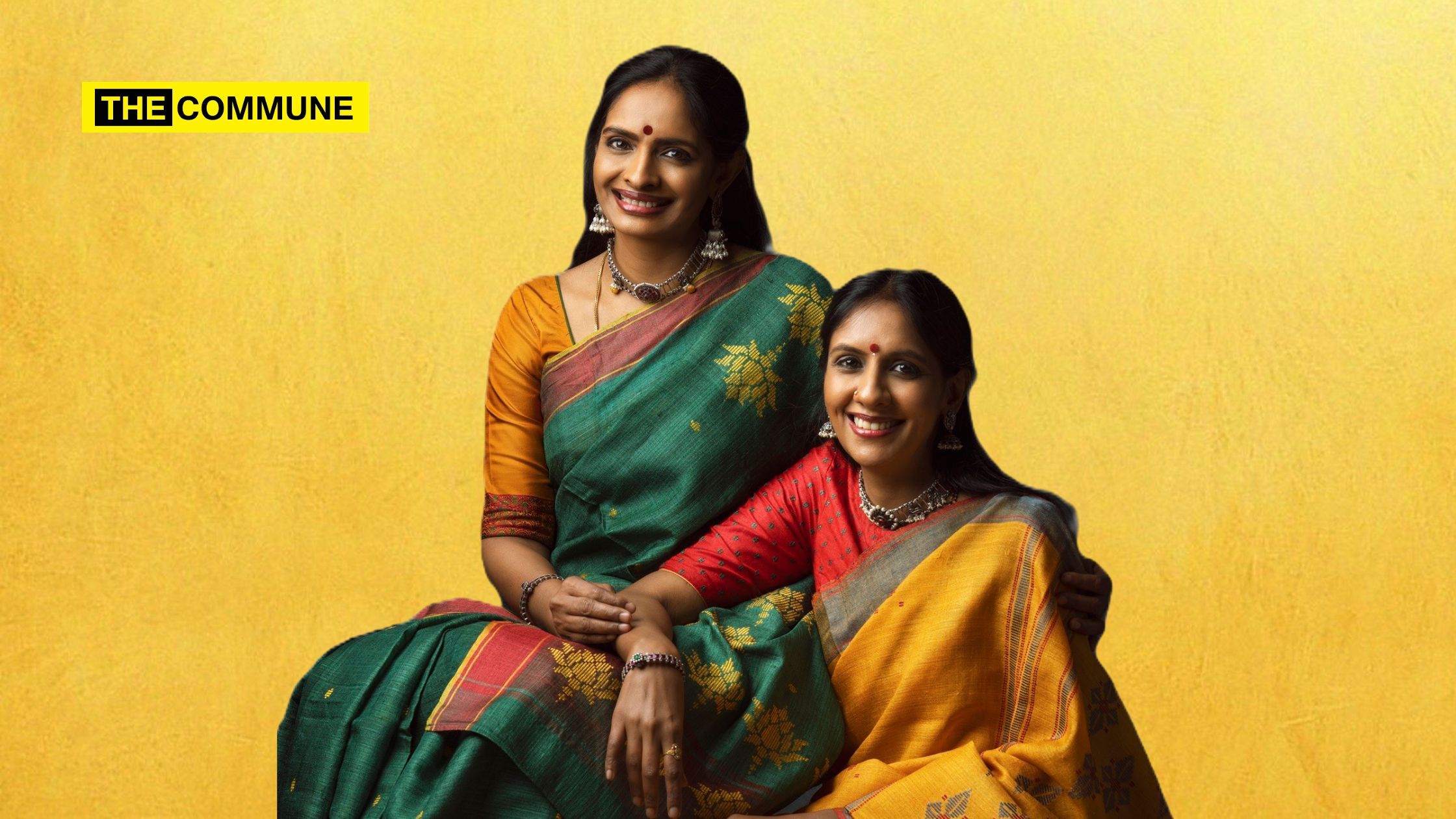
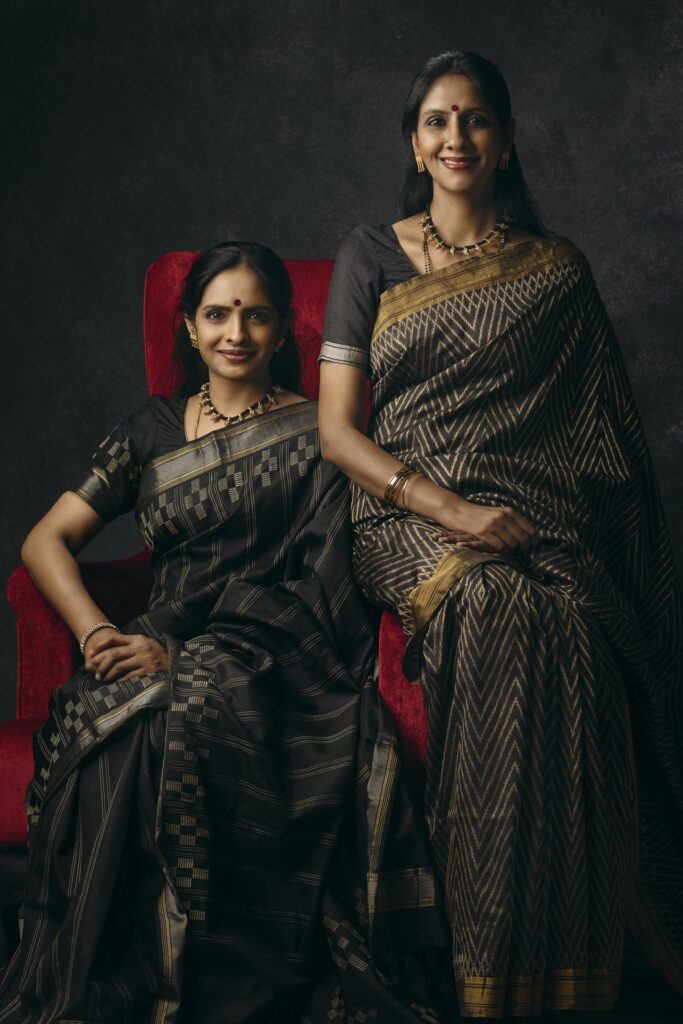
The internet and the Carnatic music world witnessed a surprising turn of events on 20 March 2024 when the Carnatic musician sisters duo Ranjani Gayatri decided to withdraw from participating in the highly anticipated Music Academy’s conference slated for 2024. 

In addition to this, they have also pulled out from presenting their scheduled concert on 25 December 2024.

Most rasikas know about TM Krishna, the musician, his family background, etc. TM Krishna aka Thodur Madabussi Krishna belongs to a family that boasts of a hoary and extremely wealthy past. His grand-uncle is TT Krishnamachari, son of a Madras High Court judge TT Rangachari during the British Raj. An Iyengar by birth, TM Krishna was a student of Semmangudi Srinivasa Iyer. He studied under the guidance of Sangita Kala Acharyas Bhagavatula Seetharama Sarma and Chengalpet Ranganathan before receiving mentorship from Semmangudi Srinivasa Iyer.

TM Krishna is known more for his ‘activism’ than his music. He often courts controversy with his leftist views and plays second fiddle to the tunes of Dravidianists. 

He wrote elaborate pieces on how power emanates from the backseat of a car.” Like a typical leftist, he even wrote how the festival of Raksha Bandhan perpetuates discrimination against women – “..we have to recognise that there are serious sexist issues involved in its construction.” 

Advocated For Human Rights For Terrorist Ajmal Kasab

Yes, he did advocate for the human rights of Jihadis like Ajmal Kasab. In a piece in The Hindu, he wrote elaborately on his opinion. “What do we achieve by hanging or electrocuting a criminal?”, he wrote. He also said, “You also give the person an opportunity to change, to introspect, to realise.”  A few other sentences from his piece include, “Some argue that the death sentence will work as a deterrent to others like Kasab. But there are no statistics to prove that countries that have banned the death sentence have a higher rate of murder or rape. We wanted justice and we got it, let’s not celebrate an execution.”

These words make one reminiscent of a typical leftist like Arundhati Roy or Teesta Setalvad who advocates for an “Azad Kashmir” and human rights for criminals and terrorists, respectively. 

His Leftist Connections

TM Krishna serves on the advisory board of Hindus for Human Rights, which receives funding from Soros and has ties to Jamat-e-Islami. He maintains a close relationship with Sunita Viswanath, the head of HfHR. Organizations such as HfHR, IAMC, and Jamat-e-Islami are perceived as anti-India and anti-Hindu.

This Advisory Board has the likes of Swara Bhasker, Dr Syeda Hameed, and quite a few Christian Pastors, Rajmohan Gandhi (MK Gandhi’s grandson) as well as a “Gandhian” Faisal Khan.

https://twitter.com/tanishq_finance/status/1770680604633522195

Anti-RSS

In an interview with National Herald, he said “Bringing the classical and the devotional world together and tying it up with Hinduism and RSS is a dangerous combination,” and that this can only be fought by “Dalit organisations”. When asked why it was important for an artist to dissent, he said, “The classical Brahamnical culture never gives you this freedom. We have lost Devdasi voice and face from music and dance.”

He wrote in Scroll in 2018 that when the then-President Pranab Mukherjee visited the RSS HQ in Nagpur, he failed the country. He wrote, “Should Mukherjee have attended the Tritiya Varsha Sangh Shiksha Varg? As a citizen of India he has every right to go where he pleases, and, after all, the RSS is not an illegal entity. But, as former head of the state, was he ethically right?” and that “his very presence gave legitimacy to the RSS school of thought.”

He further wrote, “But the problem lies with the belief that the RSS is representative of conservative Hindu nationalism. In fact, the RSS has vulgarised Hindu thought. With all its flaws, its casteist and patriarchal inners, this religion, like any other, allows for the distinct possibility of inquiry, questioning, equality, care, and universality.” He further wrote, “It is essential that we make an effort to wean the conservative Hindu away from the clutches of the RSS.”

On Gauri Lankesh’s Murder

Known for his anti-BJP and anti-RSS stand which is what a typical leftist does, he held the BJP and the RSS for Gauri Lankesh’s murder. He wrote in yet another leftist rag Scroll“It is well known that I am no supporter of Narendra Modi, the Bharatiya Janata Party, Rashtriya Swayamsevak Sangh, Vishwa Hindu Parishad or their affiliates, but right now this is not just political distaste. I hold them morally responsible for permeating religious, intellectual, and cultural hate in this country.” He also justifies that this made people like him unsympathetic to RSS swayamsewaks being murdered – “And let me say this out loud, the BJP and company have not only poisoned the minds of their own supporters, they have achieved a larger goal. They have made the rest of us crass and inhuman to the extent that we are unable to empathise when an RSS member is killed.”

Singing ‘Carnatic’ Christian Hymns

In 2018, numerous notable Carnatic musicians began singing Christian hymns in the Carnatic style, incorporating elements of traditional saints’ compositions. In response, TM Krishna announced his intention to release at least one song per month focusing on Jesus and Allah.

Blatant Hinduphobia

He had also participated in the blatantly anti-Hindu global conference titled “Dismantling Global Hindutva in 2021“. 

On MS Subbulakshmi

He wrote a hitjob piece on the revered carnatic singer Bharat Ratna MS Subbulakshmi for rabidly leftist rag The Caravan. This piece reeked of the typical the leftist-Dravidianist narrative, scrutinizing a revered figure’s private life based on hearsay by repeating her Devadasi origin and her alleged “Brahminization” for social acceptance, which is a derogatory attack on both MS Amma and her heritage.

Overall, the hitjob follows the standard leftist template by invoking phrases and concepts such as patriarchy, feminism, and overdrive of “Brahminical superiority”, suggesting an agenda-driven approach.

However, he sang a different tune when he heard the news of his being conferred with the Sangita Kalanidhi. He said“It is also humbling because the recipients of the awardees include my teacher Semmangudi Srinivasa Iyer, T. Brinda, M.S. Subbulakshmi who you admire and look up to for inspiration.”

On Lord Rama

In an interview with the Open Magazine in 2017, when asked about working with Perumal Murugan, he said “I have worked with Perumal for nearly a year now and we (Shriram Kumar, Krishna, Sangeetha, and Arun Prakash) have tuned 11 of his compositions. His kirtanas cover a wide range of themes— from non-irrigated agricultural land, love, the five elements and the mind to the palm tree. My hope is to keep moving the discourse to a point where it really doesn’t matter what you are singing about. You may get to a point where Rama is equalised with a palm tree or a dog.”

In the same interview, when asked if worldly events and incidents directly affect his music, he says, he subconsciously reacts to events like others. He adds, “In the line ‘Rama nama shu thali re lagi’, I make it ‘Rahim nama’.”

Ironically, 22 January happened to be his birthday. Whether it was intended or not, it is not clear, but he “celebrated the day” with some non-veg food and beer. Whether it was to rub it in the Hindus’ face is not clear. 


When he heard of the news that the President of the country (Ramnath Kovind) had donated to the Ram mandir in Ayodhya in 2021 (in a personal capacity), he found it “deeply upsetting” since the “entire Ayodhya movement has caused the death of so many.”

On the day of Bhoomipoojan in Ayodhya on 5 August 2020, he wrote, “With absolutely no evidence to support this, let me say that the downfall of the BJP begins today. And I am not a superstitious person.”

Back in 2018, he wrote that 6 December 1992 was one of the darkest days in history. “December 6th 1992 was one of the darkest days in our recent history. That moment led us to where we are today, a country where we have nearly normalised communal violence and hatred.”

He also wrote a piece after the Pran Prathistha in The Telegraph titled “Heartless devotion: what ails India’s bhakti fabric”. In this piece, he mainted that there was no proof that the temple existed in the first place. He wrote, “…the Supreme Court verdict that allowed the construction of the Ram temple in Ayodhya stated that there is no proof that a temple had been demolished to build the Babri masjid since there was an intervening gap of about four hundred years between the dating of the underlying structure and when the mosque was built.”

He tried to establish that this form of bhakti was not real bhakti. Well, one might want to ask if his tears and his emotions when he sings Carnatic songs on deities exude bhakti. He also brings in some Modi bashing in the piece, because why not.

Praising EVR

He hailed EVR and has even sung songs revering him. In 2023, he released a song titled “Sindhikka Sonnavar Periyar,” which means “EVR told us to think,” in contrast to what EV Ramasamy Naicker told his Dravidar Kazhagam followers. EV Ramasamy Naicker always wanted his followers not to think and just follow his orders like a military organization.

Very ironic that he sings in praise of the same person who called for the genocide of TM Krishna’s own community. 

Belittled Brahmins

He extended solidarity to controversial ‘activist’ Meena Kandasamy who had called the Brahmin community ‘dicks’ indicating how close-knit he was with the leftist and Dravidianist ecosystem.

In 2020, as a prelude to the release of his book on Mridangam makers titled “Sebastian & Sons: A Brief History of Mrdangam Makers”, The Hindu published an excerpt of the book titled, “Keeping the Cow and the Brahmin Apart”. In an attempt to show the Mridangam makers in a good light, he threw muck on his own community, his music fraternity. His piece was filled with political overtones.

TM Krishna, a controversial, namesake Iyengar who wears a lungi to a kutcheri to sing in praise of Allah or Jesus rather than the Bhakti towards his faith that was inculcated as he grew up. Blessed with musical prowess, Krishna needlessly took the Dravidianist-leftist way to prove a point to whom, one wonders and for what. 

Given his background, upbringing, and musical journey, it’s disheartening to witness Krishna aligning himself with ideologies that only end up contaminating the culture and tradition that he brought with him. Rather than embracing his heritage and using his platform to enrich the art form, he has veered off course, purely engaging in “activism”. 

In hindsight, it’s regrettable to witness the potential of a gifted musician like Krishna being overshadowed by his association with contentious political agendas. One can’t help but ponder what greater contributions he could have made to Carnatic music had he chosen a different path — one focused on fostering tradition and unity, rather than divisive activism.

The Sangita Kalanidhi was earlier conferred to stalwarts like MS Amma, Palghat Mani Iyer, Madurai Mani Iyer, Chembai Vaidyanatha Bhagavatar, DK Pattammal, Papanasam Sivan, Maharajapuram Santhanam – these doyens worked towards uplifting the art form and not denigrating it like TM Krishna is doing.

Conferring the Sangita Kalanidhi on Krishna only gives a platform and lionises the “cause” that the likes of TM Krishna stands for – the leftist and Dravidianist “cause”. In doing so, the Music Academy is only staring at its own downfall.

Hydra is a freelance writer. 

Subscribe to our channels on TelegramWhatsApp, and Instagram and get the best stories of the day delivered to you personally.
Caritas India Accused Of Using Foreign Funds For Religious Proselytization, Complaint Filed To Cancel FCRA License

In a recent development, serious allegations have been raised against Caritas India, an NGO operating under the Foreign Contribution Regulation Act (FCRA: 231650203). Concerns have been voiced by Legal Rights Protection Forum, a legal activist group, regarding its alleged activities, prompting calls for an immediate cancellation of its FCRA registration. The accusations suggest potential threats to national, social, and economic security within India.

It is alleged that Caritas India registered as a society under registration number 3304, stands accused of exploiting its FCRA status to raise funds from abroad under the guise of welfare activities. The NGO’s focus on certain social groups, particularly Scheduled Tribes and Scheduled Castes, has raised suspicions of attempts to divide society along religious lines.

Caritas India’s poverty alleviation efforts are seen as disguised attempts at religious conversion, offering incentives like housing and education. Allegations suggest this leads to social discord and the abandonment of ancestral faiths by Scheduled Tribes. Similarly, their role in combating cross-border human trafficking is questioned. Their ‘All India Network to End Human Trafficking’ is accused of usurping law enforcement functions, with doubts raised about their efficacy compared to established government mechanisms. These accusations raise concerns about NGO interference in sensitive issues and highlight the need for transparency and accountability in their operations. The NGO’s global alliance partners, notably Caritas Australia, have been accused of supporting these activities, with a specific focus on mineral-rich states such as Chhattisgarh and Jharkhand.

It is also argued that such activities align with the economic interests of mining conglomerates, potentially hindering India’s economic development by obstructing the proper utilization of mineral resources. Moreover, Caritas India’s involvement in issues such as human trafficking and social development programs has been called into question, with accusations of overstepping its role and interfering with government functions.

Caritas India’s ‘Global Program India’ aims to include marginalized communities in decision-making processes, purportedly to enhance social cohesion. However, it’s accused of attempting to influence government schemes and decisions, potentially violating FCRA regulations. It is argued that India’s constitution mandates marginalized community inclusion through reservations and specific financial allocations, rendering Caritas India’s interventions unnecessary and disruptive. There are concerns about the NGO’s access to government officials, with suspicions of an agenda to promote religious conversion and obstruct developmental projects. This underscores the need for scrutiny of Caritas India’s activities and their impact on governance and societal harmony.

Legal Rights Protection Forum emphasizes the need for a thorough investigation into Caritas India’s activities, particularly in Chhattisgarh and Jharkhand, and has called for the suspension of its FCRA registration pending the completion of the inquiry.

Subscribe to our channels on TelegramWhatsApp, and Instagram and get the best stories of the day delivered to you personally.
BJP Releases List Of Candidates For Lok Sabha 2024 In Tamil Nadu, Annamalai To Contest From Coimbatore

Tamil Nadu BJP President K. Annamalai will be contesting from Coimbatore South. Here is the list of other candidates.


Subscribe to our channels on TelegramWhatsApp, and Instagram and get the best stories of the day delivered to you personally.

DMK Manifesto Promises Impossible And Unfeasible Fixing Of Fuel Price At ₹75 & Gas Price at ₹500, Ph.D PTR Was Part Of Manifesto Committee

The Dravida Munnetra Kazhagam (DMK) revealed its election manifesto on 20 March 2024, at Arivalayam, the party headquarters in Chennai. The presentation was led by MK Stalin, the party’s president and Chief Minister of Tamil Nadu, with the Election Manifesto Committee, headed by MP Kanimozhi, delivering the manifesto.

While many of the pledges in the manifesto were reiterated, some appeared contradictory, especially concerning financial commitments made without adequate consideration of their fiscal implications. This oversight could potentially strain the government’s revenue generation capacity and burden the treasury. Surprisingly, PTR Palanivel Thiagarajan, a Ph.D. and former Finance Minister of Tamil Nadu, was also part of the election manifesto committee.

Indeed, the agenda number 49 of the DMK’s electoral pledge is very concerning, as the proposed pricing for petrol, diesel, and LPG cylinders at ₹75, ₹65, and ₹500, respectively. Is this even possible? or the DMK’s resorting to its previous approach declaring electoral pledge to decrease petrol prices by ₹5 per liter and diesel prices by ₹4 per liter but reduced only ₹3 per liter. This aspect remains a matter for the architects of this agenda to contemplate.

The present DMK administration appears to be echoing the missteps of the former Congress government at the central level, which led to the escalation in petrol and diesel prices presently. This burden was subsequently shifted to the BJP upon its replacement of the previous regime. Eventually, the BJP, upon assuming power, rectified these errors, effectively restoring stability and profitability to the oil and petroleum sector.

Why This Is Not Possible

The pricing of gasoline in India is predominantly influenced by four key factors.

Firstly, international oil prices play a pivotal role, being tethered to the cost of crude oil, the primary ingredient in petrol. These prices are subject to global supply and demand dynamics, geopolitical tensions, the influence of the oil lobby, and market fluctuations.

Secondly, the exchange rate between the Indian Rupee and the US Dollar holds significance. A weaker Rupee escalates the expense of importing oil into India, consequently driving up gasoline prices.

Thirdly, the expenses incurred in refining crude oil into gasoline, along with the costs of raw materials, contribute to the final price.

Lastly, taxes imposed by the Indian government constitute a substantial portion of the retail price of gasoline, surpassing 50%. These taxes and duties significantly impact the overall pricing structure in the country.

Despite the price of  crude oil in the market, the government is dependent on its taxes to meet its fiscal targets. The revenue generated from these taxes is ultimately allocated to fund various public services and infrastructure projects. Under the leadership of the current Modi government, infrastructure development has been prioritized, with significant investments being made to upgrade India’s infrastructure. One notable initiative is the Sagarmala project, which focuses on port-led development and is projected to cost over $120 billion USD. Another example is the Pradhan Mantri Gram Sadak Yojana, which aims to connect rural areas with all-weather roads and requires several billion dollars in funding. The taxes imposed on petrol are solely contributed to financing these projects.

If DMK is elected to power, from where will they generate revenue for such massive infrastructure commitments? Will they resort to strategies like the Congress’s Oil Bonds which involve sustaining losses for short-term electoral gains and ultimately burdening citizens. Former Prime Minister Manmohan Singh, in a 2008 address to the nation, rightly emphasized that issuing bonds and transferring deficits to oil companies is not a sustainable solution to the problem of high fuel prices. He warned against passing on the burden to future generations who would have to repay such debts.

In India, the pricing of LPG (liquefied petroleum gas) follows a method known as Import Parity Price (IPP), which undergoes monthly revisions. This approach relies on the LPG pricing established by Saudi Aramco, the world’s leading producer. The IPP encompasses various expenses like the free on board (FOB) price, ocean freight, customs duties, port charges, and insurance costs, initially calculated in US dollars and then converted into Indian rupees. Additionally, within the country, extra charges are incorporated into the international price, comprising inland freight expenses, profit margins for oil corporations, bottling expenditures, marketing outlays, dealer commissions, and the Goods and Services Tax (GST). The resultant price determines the retail selling price for non-subsidized cooking gas cylinders across different regions.

While many disadvantaged consumers in India benefit from government subsidies, receiving up to 12 subsidized cylinders under the Pradhan Mantri Ujjwala Yojana, the question arises regarding how the DMK intends to finance such schemes for the impoverished, considering their revenue commitments₹500 per LPG cylinder.

While the DMK’s pledges to fix prices for LPG at ₹500, petrol at ₹75, and diesel at ₹65 per unit may sound appealing, they seem unrealistic as they are proposed without considering their financial consequences. Such measures could hinder the government’s revenue generation capabilities and potentially strain the treasury. As Manmohan Singh aptly remarked, this approach may seem beneficial for citizens in the short term, but it could burden future generations of India with its repercussions.

Subscribe to our channels on TelegramWhatsApp, and Instagram and get the best stories of the day delivered to you personally.
What Ranjani-Gayatri Said Is True – EVR Called For Brahmin Genocide & Used Profanity Against Women – Here’s The Proof

Following Madras Music Academy’s announcement of conferring ‘Sangita Kalanidhi’ award to controversial singer TM Krishna, Carnatic vocalist duo Ranjani and Gayatri announced their decision to withdraw from participating in the Music Academy’s conference slated for 2024, This independent decision taken by the due Ranjani-Gayatri cited their reason for withdrawal. The stance taken by Carnatic musician duo Ranjani Gayatri led to a massive meltdown in the leftist ecosystem.

In their official statement released on the social media platform X, the duo, Ranjani Gayatri, criticized TM Krishna for causing significant harm to the Carnatic music community by disrespecting its sentiments and revered figures like Tyagaraja and MS Subbulakshmi. They accused Krishna of undermining the spirituality inherent in Carnatic music and attempting to instill shame in being a Carnatic musician. Moreover, they condemned his admiration for EV Ramasamy Naicker, also known as ‘Periyar,’ highlighting Periyar’s advocacy for violence against Brahmins, derogatory treatment of women, and promotion of vulgar language in social discourse. Ranjani Gayatri affirmed their dedication to upholding a value system that respects art, artists, and Carnatic music’s cultural heritage. They asserted that participating in events involving Krishna would compromise these values.

The major controversy arose when the statements made by the duo significantly impacted the Dravidian Stocks “Its dangerous to overlook Mr TM Krishna’s glorification of a figure like EVR who

  1. Openly proposed a genocide of ‘brahmins’
  2. Repeatedly called/abused every woman of this community with vile profanity
  3. Relentlessly worked to normalize filthy language in social discourse”

D-Stocks swiftly intervened and made statements positively about EV Ramasamy Naicker, without possessing adequate knowledge about him, “Where did Periyar propose a genocide of Brahmins? – Please cite instances of Periyar using profanity against women? You are so petty, so jealous, that you’ll even taken up the Goebbels enterprise of fake facts manufacture than just COPING that @tmkrishnawas honoured.”

Immediately netizens took this as challenge to break the Periyarists claim and shared threads of instances where EV Ramasamy Naicker (EVR) called for genocide of Brahmins and used profanity against women.

On 28 March 1971, during a wedding ceremony in Madurai, EVR made a statement that, “From now on our women should cut their hair short up to their shoulders. Should wear shirt. Should wear Lungi. Our women are spending half of their time in make-up. Why do they wear make-up? besides, the only reason is to make others (men) take a look at them, the makeup worn by our women arouses desires in others. They are dressing up provocatively such that their body parts are visible. How does this not arouse others?”

In another instance, during a widely celebrated speech revered by followers of Periyarists and D-Stocks, EVR crudely asserted that women visit temples to be groped, “Husbands usually don’t go to temple, but at least to have fun they go. The women who are tied (Married) can go only during festival season. Only by going there, she can rub with four men; If she stays at home ‘Husband will threaten asking ‘what work; If she goes there… ‘Come’ will say the husband; She will say ‘Can’t come they are crushing’; He will say ‘Come, come through them’, She gets all that pleasure only when she is taken to the temple; He is habituated to this because everyone else’s wife is also subject to the same, hence no one will ridicule it. Only because of this, she is holding her life. If we make different arrangements for this, women would not go to temples.”

In another incident, EVR made a direct comparison between Brahmins and Jews, suggesting that Brahmins should be forcibly removed from India. This statement was made in 1938, coinciding with the rise of persecution against Jews in Germany. It is evident that EVR’s intention behind this comparison was to incite prejudice and discrimination against Brahmins. Additionally, he expressed the belief that in order to eliminate caste in India, it was necessary to eradicate God, religion, scriptures, and Brahmins. This rhetoric raises concerns about the promotion of genocide-like sentiments.

3. On Genozide of Bs:
EVR directly compared TBs to Jews & suggested for their forced emigration out of India. This was in 1938, when atrocities against Jews were beginning to take root in Germany.Its clear what was his intent behind the call for more research comparing Jews… pic.twitter.com/lnMEznZrwK— Tamil Labs 2.0 (@labstamil) March 21, 2024

In another instance, during his speech in Karaikudi, EVR openly encouraged non-Brahmins to kill Brahmins. EVR said, “They are celebrating festival it seems , he is celebrating Soora Samhaaram, what is it? He (Soorapathman the demon) was someone who said there is no god, they killed him, therefore now we can kill those buggers… that won’t be wrong (if we kill them) may be legally it will be wrong, that legal offence and all are bullshit we cant be bothered that it is legally wrong. We have to come to the conclusion, wherever we see a temple we must go inside and break all the idols inside, wherever we find Paapan (Brahmins) we must kill and destroy him. He has done like this to us, after all he (Tamil Brahmin) has done things like this only to come to this position. We must also do to the him, whatever he has done, What, a few of us have to die If one tamil dies for one paapan, means only three of us will die out of every hundreds, balance 94% will still remain.”  

The individuals posing these inquiries are well acquainted with the responses beforehand. These seemingly “innocent” inquiries serve merely as a guise, masking pretentiousness and insincerity aimed at preserving the reputation of their ideological mentor, EVR. Presenting a plethora of sources will not sway their stance. When ideology blinds the mind, discerning the truth becomes an arduous task. Alternatively, they may deliberately overlook the truth to advance their own self-serving agenda.

Subscribe to our channels on TelegramWhatsApp, and Instagram and get the best stories of the day delivered to you personally.
Political Relevance Matters Not An Irrelevant Award

As an entrepreneur hailing from the much-maligned Tamil Brahmin community, it is painful to see the community sharply divided and indulging in petty fight in social media over an award given to a Musician by a Music Academy. When the community is indulging in such fights, political parties are announcing the candidates for the upcoming Lok Sabha Polls in 2024. A cursory glance into the candidate list will reveal that not a single ticket been distributed to the Brahmin community so far by all the three major alliances in Tamil Nadu – INDIA, NDA and ADMK.

Communities which are smaller and numerically insignificant than Brahmins have got multiple representation across the spectrum in ticket distribution but Brahmins are left behind. Tamil Brahmins are in a position to influence the outcome big time in about six odd constituencies in the state. They constitute about 30% of the electorate of the South Chennai constituency and about 20% of the Sriperumbudur constituency. They are present in sizeable numbers in Coimbatore, Trichy, Mayiladuthurai and Central Chennai constituencies as well.

Unfortunately, no party or alliance is ready to accommodate them. The community needs to take cognizance of this fact, stay united and consolidate itself rather than to fight in social media and expose themselves badly.

In states like Karnataka, a sense of unity exists among Brahmins resulting in as many as 15 Mlas and 3 MPs for the community folks across the spectrum. Even Telangana state has Brahmin representation in both the assembly as well as the cabinet. When it comes to Tamil Nadu, the current assembly has zero Brahmin MLAs. The lone Brahmin MP, PR Natarajan has been denied ticket by CPM this time and none of the three major fronts are going to field a Brahmin candidate in TN this time going by the grapevine.

The community needs to take into account these facts, put up a united face and protect themselves from political oblivion. Bharatanatayam was alien to Brahmin culture till 1920s though Brahmin composers paid a big role in shaping up Carnatic music since time immemorial. Both the art forms were in the domain of the Devadasis who with great zeal and enthusiasm protected the same for millenniums. With abolition of the Devadasi systems, the elite of 1920s largely from the Brahmin community took up both the art forms, reformed and commercialised the art forms and gave a new lease of life to them. The art forms remain niche and is flourishing in certain families which are rich enough to let their kid pursue the form irrespective of whether they are able to earn enough or not. For majority of the Brahmins, neither Carnatic nor Sadhir matters. What we want is a peaceful atmosphere sans hatred to prevail in our home land Tamil Nadu, not Sabha Awards.

An overwhelming majority of the community largely depends on formal education to uplift itself from poverty. Thanks to liberalisation and the shraddha ingrained by the parents, the Youth of the community have gone places be it sports or corporate. And the community has moved up despite all odds braving genocidal threats largely due to hard work. The community has a greater responsibility now. With increasing hatred and calumny against the community by vested interests amplified in this era of social media, staying politically relevant and protecting the community’s interest should be etched in the minds of every community member.

A Sabha Award or a Trustee seat can at the maximum benefit a few elites but a seat at the assembly or parliament will protect the community from vested interests and help counter malicious propaganda. Hence, I request the community members not to mud sling against each other in the public domain, unite for a larger cause of achieving political representation which is of paramount importance in preventing hate crimes against the community in the coming decades. Burying the ego and protecting the community’s interest politically and electorally is the need of the hour not a sabha award or trusteeship. Staying politically relevant to protect Dharma is needed now not squabble over an Award which in no way can uplift the community or protect it during a crisis. As simple as that!

Subash is a finance professional and a portfolio manager based out of Chennai.

Subscribe to our channels on TelegramWhatsApp, and Instagram and get the best stories of the day delivered to you personally.
DMK Promises Retrieval Of Katchatheevu Island Which It Allowed To Be Ceded To Sri Lanka During Indira Gandhi Regime

Whenever elections approach, the Dravida Munnetra Kazhagam (DMK) consistently raises the issue of reclaiming the Katchatheevu island. However, the pertinent question arises: who permitted its cession? Despite the prevailing sentiment against Indira Gandhi during the 1971 5th Lok Sabha elections, where the opposition was led by Kamaraj from Tamil Nadu and Atal Bihari Vajpayee, DMK led by M Karunanidhi chose to support the Congress instead of supporting a Tamil candidate from Tamil Nadu.

This decision could have influenced Indira Gandhi’s 1974 move to cede Katchatheevu, yet DMK failed to capitalize on this opportunity. Despite later holding key cabinet positions through coalition victories and having Tamil Nadu leaders in influential roles, DMK has consistently failed to address this issue. Nonetheless, they continue to exploit public sentiment for electoral gain, thereby deceiving the people.

Once again, the DMK’s electoral manifesto for 2024, features the same with 27th item on Agenda pledges efforts towards reclaiming Kachchatheevu to safeguard India’s security and ensure the well-being of fishermen.

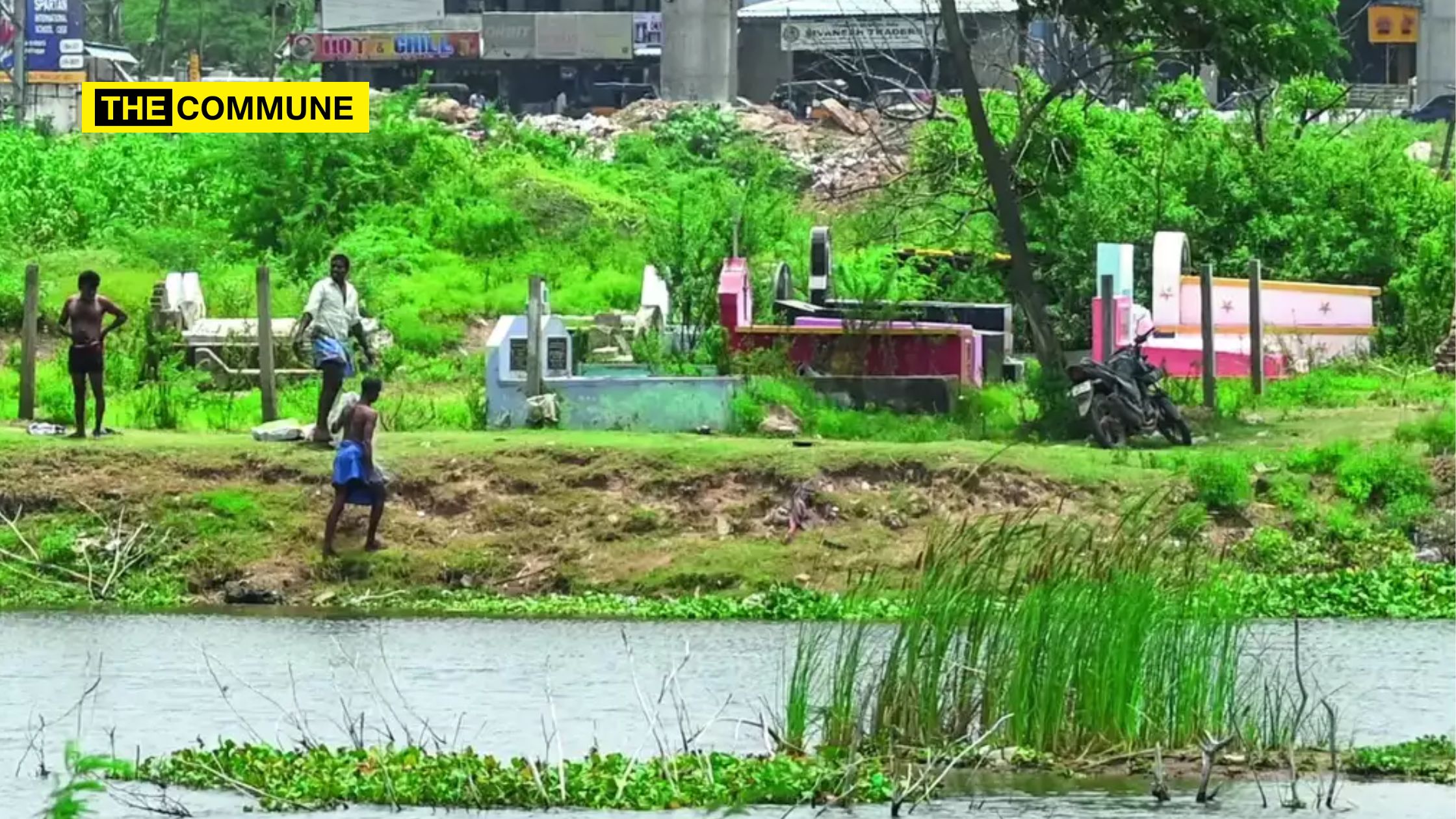
Katchatheevu Island

The island of Katchatheevu was transferred from Indian administration, led by Prime Minister Indira Gandhi, under “Indo-Sri Lankan Maritime agreement” to Sri Lanka administration of Sirimavo Bandaranaike in 1974, as a gesture of bilateral goodwill. This transfer preceded the 1976 correspondence that delineated the maritime boundary line in the Sethusamudram littoral region between the two countries.

Since the commencement of the Sri Lankan civil war in 1983, Katchatheevu has become a contested zone where Indian Tamil fishermen clash with the predominantly Sinhala Sri Lankan navy. These confrontations have resulted in the loss of livelihoods, property, and even lives of Indian fishermen due to accidental breaches of the international maritime boundary line.

Colonial Era

Katchatheevu has a rich historical background, being part of the Ramnad Zamindari established in 1605 by the Nayak dynasty of Madurai. Records, such as a copper plaque from the 17th century, indicate Indian ownership of the territory, extending up to present-day Thalaimannar in Sri Lanka. During British rule, leases and agreements further solidified India’s claim to the island, excluding Sri Lanka’s possession until independence in 1947-48.

In 1921, negotiations between colonial India and Ceylon aimed to address overexploitation of marine resources and the Katchatheevu issue. The Ceylonese delegation contested India’s claim, arguing it belonged to the Zamindari of the Raja of Ramnad. Despite an informal agreement establishing a maritime boundary, the dispute lingered into the postcolonial era. Tamil Nadu continues to assert its rights to Katchatheevu, based on historical ownership claims. Although an informal maritime boundary was agreed upon in 1921, the issue remains unresolved, highlighting ongoing tensions between India and Sri Lanka over territorial disputes.

After Independence

Since 1956, discussions about dividing the international maritime boundary between India and Ceylon have brought up the ‘Katchatheevu Island Dispute’ in the Lok Sabha. However, Prime Minister Jawaharlal Nehru consistently dismissed it, considering it a matter of insufficient national importance to justify conflict with Ceylon. Nonetheless, for Ceylon, Katchatheevu remained a potential military asset, justifying its insistence on the uti possidetis juris principle to maintain colonial boundaries as postcolonial nation-state boundaries.

Katchatheevu’s strategic significance grew in February 1968 when Prime Minister Indira Gandhi ceded land in the Rann of Kutch region to Pakistan. Sensing a similar opportunity, Ceylon began asserting claims to Katchatheevu , contending that St. Antony’s Church fell within the diocese of the Roman Catholic Bishop of northern Jaffna. Despite its inconspicuousness on postcolonial maps, this raised concerns in the Indian parliament, especially when a Colombo-based newspaper published a hoax newsflash titled ‘Ceylon Government takes over Katchatheevu .’

Upon hearing Sri Lanka’s demands, officials in New Delhi were puzzled as to which island in the Gulf of Mannar Sri Lanka was referring to, and why it sought to incorporate an uninhabited atoll lacking drinking water, especially while both nations faced the larger issue of stateless Tamil refugees. Sri Lanka, however, believed Katchatheevu might hold petroleum deposits, as evidenced by recent reports of the Sri Lankan government leasing land around Delft Island and Katchatheevu to Chinese power companies.

In 1974, without considering the profound significance of Katchatheevu to the local fishing communities who depended on it for their livelihoods, Prime Minister Indira Gandhi ceded the land to Sri Lanka. This decision had far-reaching consequences, as the area later became a hotspot for terror organisation such as LTTE. The transfer of Katchatheevu also facilitated the arrest and mistreatment of Tamil and Indian fishermen who ventured into these waters for rich shrimp resources in the region.

Following the end of the Sri Lankan civil war in 2008, Tamil Nadu Chief Minister J Jayalalithaa petitioned the Supreme Court of India, arguing that the agreements of 1974 and 1976 had adversely impacted the livelihoods of Indian fishermen. Four years later, she sought to expedite the hearing on the rights of Tamil fishermen, appealing to the newly elected Prime Minister, Narendra Modi, for support in this matter. Only the central government under the leadership of Narendra Modi is vigorously addressing the issue, formulating a robust strategy to reclaim it.

However, the action taken by the DMK was their typical response of abstaining from parliamentary debates, as they commonly did.

(with inputs from Indian Express)

Subscribe to our channels on TelegramWhatsApp, and Instagram and get the best stories of the day delivered to you personally.