Home Blog Page 948

The Srirangam Massacre – History That Remained Hidden Over The Centuries

 The Panguni Uthiram festival has been celebrated across all temples in Tamil Nadu since ancient times. This usually marks the celestial wedding of God and Goddess in most of the temples. The ‘Bhooloka Vaikuntam’, Srirangam, is no exception to this. For thousands of years, Panguni Thirunal has been one of the important Utsavams celebrated in the temple, in which the day of Uthiram (Uthirapalguni Nakshatra) marks the ‘Serthi’ of Arangan and Thayar. However, this festival also brings back some dark memories of a catastrophe that happened in the early 14th century. 

 After the internal rivalry that plagued the Pandyan country during 1300, Tamilagam was invaded three times by Delhi Sultanate forces. First by Malik Kafur in 1311 in which he returned with a lot of wealth from there. The second was a few years later by Khusrau Khan, which didn’t have a major impact. The third one came in 1323. That was the one that has made a lasting impact on the culture and heritage of Tamil Nadu. 

During the reign of Ghyasuddin Tughlaq, his son Ulugh Khan (who later ascended the Delhi throne as Muhammed Bin Tughlaq) came with an army towards Deccan. His aim was not only to loot the wealth but also to subdue these kingdoms and make them serve under the Delhi Sultanate. He met with success in Warangal, and the Hoysalas, who were ruling the Dwarasamudras, also gave up. Veera Vallala III had to agree to peace with Ulugh Khan and let him pass through the kingdom towards Mabar (Madurai). Even after the raid by Malik Kafur, the Madurai Pandya Kingdom still had a lot of wealth, and that was the target of Ulugh Khan. He passed through the Servarayan Hills and reached Kannanur Koppam, which is now known as Samayapuram. Kannanur served as the second capital of Hoysalas during those days. 

At the same time, Srirangam was busy with the Panguni Uthiram festival. On the evening of the seventh day, after Azhagiya Manavala Perumal, the Utsava Murthy, had completed the procession, the news of the Sultanate forces reaching Samayapuram reached the temple authorities. They discussed whether to go ahead with the next day’s event, in which the Perumal is taken to the Varaha temple near the Kaveri River. It was known as ‘Pandriazhvan Medu’ during that time. Given the proximity of the place to Samayapuram, few objected to this. But there are valid counterarguments. One, the region had seen many battles since the Sangam days between Tamil kings, which didn’t have any impact on temple affairs. Second, they knew that Ulugh Khan was on the way to Madurai, and why would he come to a temple event? Convincing themselves, the temple authorities decided to go ahead with the event on the 8th day of the Panguni festival. 

 They were grossly mistaken. Knowing about the Srirangam temple and the kind of wealth it had, Ulugh Khan decided to attack the temple. His first target was the devotees who were assembled at the Varaha Swami temple. There were thousands of them, including men, women, and children, who came from faraway places to witness the festival. The Sultan’s army mercilessly pounced on them. Without even knowing why they were being attacked, they couldn’t even defend themselves. Kovil Ozhugu, which details the history of Srirangam temple, mentions that about 12,000 devotees were massacred. This was mentioned as ‘Panniraayiravar Mudithiruththiya Pandriyazhvan Metu Kalagam’, a battle that removed the heads of 12000 devotees. 

 The news quickly reached the temple where the Azhagiya Manavala Perumal was all set to leave for the Kaveri River. Realizing the danger, two of the Acharyas, Pillai Lokacharyar and Swami Vedanta Desikan, decided to safeguard the Perumal. As Pillai Lokacharyar was old, it was decided that he would leave for the south of Tamilagam along with the Utsava Murthy in a Palanquin with a few of the temple treasures. Vedanta Desikar left for north Tamil Nadu with all important texts. When Ulugh Khan’s army attacked the temple, they heard that the Azhagiya Manavala Perumal had been taken to safety. One of the divisions of the army was set out to chase them. The rest of the army sacked the temple and killed whoever was there to defend it. 

 Pillai Lokacharya took the Perumal through the jungles safely, avoiding the chasing army. Due to exhaustion, he attained Paramapatham at a place called Jothishkudi near Madurai Anaimalai. His disciples took the Perumal through Tirunelveli and Aralvazmozhi to Kerala. After some years, Perumal went to Melkotte in Karnataka and then to Tirupathi. 

 Meanwhile, Ulugh Khan captured Madurai and installed Jalaluddin Ahsan Khan as governor of Madurai. However, after Ulugh Khan left for Delhi, Ahsan Khan declared independence and made Madurai a separate sultanate. This sultanate created havoc in Tamilagam, and for 48 years it plunged into darkness. Many temples were destroyed, and poojas were stopped. Fortunately, Kumara Kampala of Vijayanagar came with an army in the 1360s and destroyed the sultanate. 

 Gopanna Raya, who was a general of Kampanna, heard about the happenings at Srirangam Temple and decided to bring back Azhagiya Manavala Perumal. He went to Tirupathi, took Perumal with him to Ginjee, performed poojas, and then took the swami to Srirangam. At that time, no one could vouch whether the Vigraha was the same one that was taken away during the raid of Ulugh Khan. Luckily, there was a washerman who lived through this time and he was brought in to verify the vigraha. Unfortunately, he was blind, but just by the smell of the dress, he could confirm that it was indeed ‘Namperumal’—our God. Gopanna installed the Vigraham in the temple and restored all the rituals and pooja. This event was inscribed in the Srirangam temple. 

Nowadays, Srirangam residents started lighting Moksha Deepa in memory of the innocent devotees who gave their lives during the festival. A fitting tribute indeed. 

TS Krishnan is a Tamil scholar and author.

Subscribe to our channels on TelegramWhatsApp, and Instagram and get the best stories of the day delivered to you personally.

Udhayanidhi Claims His Father Only Gave Vaccines To People During COVID, But Here’s How Stalin Fearmongered About Vaccines

In the Dindigul parliamentary constituency, Satchithanandam, representing the Marxist Communist Party, is a candidate in the I.N.D.I Alliance led by the DMK. Seeking support from the electorate, Udhayanidhi Stalin, the DMK Minister for Youth Welfare and Sports Development, appealed for votes at Natham Bus Station, endorsing the Sickle Hammer symbol.

Reflecting on the COVID-19 pandemic, Udhayanidhi contrasted the leadership styles of Prime Minister Modi and the Chief Minister of Tamil Nadu, emphasizing the latter’s focus on vaccination and direct engagement with affected individuals. He praised the Chief Minister’s courage and highlighted the resilience of the people of Tamil Nadu in navigating the pandemic.

Udhayanidhi Stalin said, “We came to power in 2021 and you know what the situation was. COVID pandemic second wave, do you remember? Corona… What did Narendra Modi Union Prime Minister do then? What did he say? He told everyone to go into the house and hide, lock the house, one day suddenly he asked everyone to come out, keep a candle, keep a plate in hand, make a sound and the Covid will run away. Didn’t he say that? Some of us even followed what he said. Don’t forget that.”

“But what did our leader do, he said that vaccine was the only medicine to eradicate Covid, that awareness was the only medicine, and took the vaccine himself, the only chief minister in India who went to the Covid ward in Coimbatore, wearing the Covid PPE kit – only our TN Chief Minister. Moreover, it was our people of Tamil Nadu who guided India that vaccination is the only way to remedy for Covid.

The remarks made by the DMK scion Udhayanidhi Stalin sparked interest among internet users. They dug out old videos of MK Stalin stating something totally different to counter Udhayanidhi Stalin’s lies.

MK Stalin was seen fear mongering with respect to the Covid vaccine. However, now, Udhayanidhi praised his father MK Stalin’s “efforts” in distributing the vaccine to the public. Let us examine Stalin’s speech from the past.

In a speech by the then LOP MK Stalin in February 2021, just around the time when the vaccines were being rolled out to citizens, he raised numerous questions about COVID’s origin and treatment. In one of the ‘gram sabha meet’ organized as part of his election campaign in Maduravoyal, Chennai he said “There is news coming about vaccines. We don’t know if it is 100% success. It will be known only later. The Prime Minister has not taken it (vaccine). The Chief Minister (Edappadi K. Palaniswami) has not taken it. Some doctors are taking it. A few others are taking it. Because, it is just like they are testing (on doctors and other people).”

The online community proceeded to criticize the father-son duo for their deceptive storyline in their election campaign, aiming to manipulate underprivileged for political advantage.

https://twitter.com/Kunthavi5/status/1398933293043646465

https://twitter.com/RaghuTweetbook/status/1771988069496856595

Subscribe to our channels on TelegramWhatsApp, and Instagram and get the best stories of the day delivered to you personally.
Who Mourns For The Devadasi-s?

Gone are the days when History was written by the victors and elitists. During the post-colonial period, many leftist schools of humanities. Subaltern studies are one version of post-colonial studies that focused on representing the voices of the “lower social classes”. These academic narratives gained momentum in the 1980s, thanks to the Subaltern Studies Group (SSG), a group of South Asian scholars pursuing a new approach to (re) writing History, and building postcolonial narratives.

The Devadasi community qualifies as a subaltern study as it had all the elements of “drama” needed to paint a colourful social history of the oppressed and the oppressors. The top most selling point for this narrative is the Devadasi Abolishment Act with a socio-religious angle especially since the Devadasi tradition has a ritualistic angle that traces back to the Hindu Temple Institution. What keeps this narrative going in South India is the fact that the profession of the Devadasi community, in contemporary times, is taken up by the upper-class Brahmins, who are thriving in the art forms.

Who were Devadasi-s? What was their role in the social hierarchy? What happened to them after the Abolishment Act? How does it relate to the recent tensions and divisions as a result of the announcement of 2024 Sangitha Kalanidhi? Is there a similar interplay of power dynamics especially since both involve artistic communities, its institutions, and patrons? 

Origin And Privilege Of The Devadasi Community

Today as academics repeatedly churn out the narratives of the Devadasi system and the Abolishment Act or the disenfranchisement, we have to read it in the context of what was happening elsewhere too. When a certain religion perceived threats from matriarchy it engaged in burning women in the name of witch-hunt. In India, at the same time, the dharmic society was celebrating matriarchy, giving them special status in the society.

In the book Nityasumangali: Devadasi Tradition in South India, Saskia C Keserboom traces the community’s origin to bardic traditions that consisted of male and female communities, both gaining a very prominent social status. In the later medieval times, the communities organised themselves into two orchestras: the periamelam (male nagaswaram virtuoso) who were patriarchal, and the chinnamelam (devadasi-s, consisting of the female dancers and their male guru-s: the nattuvanar-s) who were matriarchal. 

She explains the social and religious aspects of Sangam that suggest that the divine manifested in various intensities that needed mediation; in this space, the form and function of Devadasis were constructed to remove the evil influences of the temple deity. This earned them the special social status as (nityasumangali) the ever-auspicious also.

Amrit Srinivasan, a social anthropologist details that this shared community who lived, married, and worked together, exhibited a competitiveness amongst them. He writes, ‘Most of the nagaswaram players remarked on the greater wealth, fame, and glamour that had been possible for the dancing girls as compared to themselves. Significantly, they claimed this to be the effect of an unfair advantage arising out of the natural attraction for women. According to them, the temple authorities gave the dance pre-eminence at festivals knowing that the people would flock to see the devadasis.’ He is certain that ‘the leading role played by the men of the community in the subsequent reform campaign to abolish the female profession of temple-dancing cannot be understood without reference to this potent fact.’

Devadasi Abolishment And Disenfranchisement

When the native kings and their patronage of the temples weaned, among the many Hindu institutions that crumbled, the devadasi matriarchy suffered the most.

Earlier, the Devadasi women, who enjoyed higher professional status than men with special temple privileges were stripped of their rights as a result of “reform” that was largely politically pushed by some minorities of the community. As a result, the matrifocal household of the community during its prosperity included excessive female residents, a dichotomous power structure where the female members exercised household control, with customary Hindu law supporting their inheritance; from the 1920s began to shift, favouring the males of the community over the females. Although the Madras Act of 1929 enfranchising inams (gifts) and maniams (grants) became tax-free privileges that compensated the communities on the grounds of social justice; the conversion of public land into private taxable “property” also favoured the men over the women of the community. What was once the exclusive right of the professional working class of the community, became available for men of the community to inherit as well.

Yamini Krishnamurthy recounts in her autobiography that Mylapore Gowri Amma, who was once the Queen of Mylapore, lived in penury in her later period of life, bargaining with a street vendor for 2 anna-s, even though she possessed in her palms an unparalleled knowledge that was complemented with mastery in craft. 

 Did the Devadasi Abolishment progress or regress the matriarchy?

Art, society, And Politics

When the institution began to crumble, few male members of the community decided to support their female practitioners. The nattuvanar community spread the art to other communities outside of the guild but were not practitioners of dance, keeping to the norms of the guild. The old families coming out now to perform today shows that time heals. The young girls are encouraged and welcomed by the rasika-s and dance community.

Looking through the lens of socio-political, at that time the scenario prevalent in TN was pushing for anti-Brahminism aggressively between 1920 and 1947 by the Justice Party (now DK/DMK). This was done under the pretext of reinstating “rationalism”, and propagating atheistic programmes, wherein the Backward Classes Movement joined hands with the Christian missionaries with the sole agenda of discrediting Hindu practices and customs on the basis of reforming society. The Backward Classes Movement particularly included the men of the devadasi groups whose focussed agenda was anti-ritualism for both dominance within the household and to reclaim their socio-political status. 

When the Abolishment Bill was passed, the Justice Party, with the official backing of the British through Christian missionaries, had taken great care to protect service benefits in terms of grants and gifts attached to the Devadasi establishment. But another parallel movement existed who were interested in the Devadasi system was the Theosophical movement. The Theosophical Society, which was non-political, became the “unofficial” British wing as its interest was in the nationalisation of Indian art, life, and religious ideals. Into this wing, came contemporary educationalists of post-independent India Rabindranath Tagore, J. Krishnamurthi, and Rukmini Devi.

Given that the Carnatic traditions also had devadasi-s, the seat of Carnatic tradition being Thiruvaiyaru, it produced many vaggyakara-s. Thus, male members of the upper class were already learning and performing the Carnatic tradition from the middle and late 18th Century CE. The stigma of the Devadasi was attached only to Sadir, the traditional dance form of TN, as the vaggyakara-s of sadir belonged to the Devadasi community. This demarcation is important for present and future generations of rasika-s and practitioners to know. 

To remove the stigma attached to the practice of devadasi dance, the form and function needed sanitisation which was done by Rukmini Devi Arundale. In establishing Kalakshetra, Rukmini Devi democratised the dance form. She also broke the gender divide that existed in dance traditions. Her determination and endurance sowed the seed not only for next-generation Bharatanatyam practitioners but also largely helped other regional devadasi dance forms.

In The Present: Have The Wounds Of The Past Healed?

Academics belonging to the History and Anthropology disciplines can write papers on temple institutions and devadasi-s, but none of their studies and collaboration promote the spirit of the devadasi system and are relevant to India’s cultural continuity. Their narratives while staging the Devadasi dance have always only poked into the wounds of the surviving members of the community from time to time, not letting them heal.

In light of the recent announcement of the 2024 awards by the Madras Music Academy, it is clear that the premier institution is sending a political message that does not align with the values and history of what the institution has so long stood for. The Academy has undoubtedly groomed and promoted talent while also maintaining a high level of artistic excellence. However, when T. M. Krishna snubbed The Music Academy on several occasions in the past, the decision of the Academy had startling reactions, raising the eyebrows of not just the artists. The Academy’s choice to place a political ideology over its own institutional values has also definitely let down the larger performing arts community.

The Carnatic community is conflicted as they consider the performing space sacred, but are wary that the next generation of young talent and their intellectual skills will be used to push false narratives that may only lead to polarisation within the Tam-Brahm communities. The Music Academy being at the forefront of the artistic milieu paving the way for such polarisation is tragic. The millennial generation that is witnessing this churning in society needs to ask only one question – should caste and politics creep into the institutions of traditional arts, when the role of arts in society is to explore the ‘form’ that is meant to heal?

At this juncture, it is also extremely important to be sensitive to the art and the artists as both are inseparable and dependent on patronage. The role of patrons and rasika-s will thus play an important role in Margazhi Music and Dance Season here on especially since political agendas are intruding into the art and culture space.

The curtain is still drawn… the drama is yet to unfold!

Suggestions for further reading

  • Bharatanatyam, A Reader – Oxford University Press 2010
  • Saskia C Kersenboom, Nityasumangali, Motilal Banarsidass (1987) 2011, New Delhi
  • Knowledge Tradition Text, Approaches to Bharata’s Natyashastra, Sangeet Natak Akademi 2007
  • Douglas Knight Jr., Balasaraswathi, Her Art & Life, Wesleyan University Press 2010, in India Tranquebar (2011)

Deepa Chakravarthy is a performing artist and a practising academic. She is an Indic cultural expert whose expertise extends Indian cultural history to other practice traditions like Yoga and Vedic chanting.

Subscribe to our channels on TelegramWhatsApp, and Instagram and get the best stories of the day delivered to you personally.
India Set To Unveil Its Own Indigenous Rating System In Response To Biased Western Indices Evaluations

Amidst speculation that India is contemplating the creation of its own rating system due to dissatisfaction with biased Western evaluations, Al Jazeera has reported on potential plans for the country to introduce its own ratings system, likely in collaboration with think tanks advice NITI Aayog and ORF, either before or after the upcoming elections.

Al Jazeera, a Qatar-based news outlet financed by the Qatari government and often perceived to hold critical views towards India reported that Prime Minister Narendra Modi has enlisted the support of a prominent Indian think tank to devise its own assessment system for democracy, aiming to counter recent downgrades in international rankings that could potentially impact the country’s credit rating, as reported by Al Jazeera. It also disclosed that the Observer Research Foundation (ORF), closely collaborating with the Indian government on multiple fronts, is in the process of formulating the criteria for these democracy ratings. An unnamed official mentioned to Al Jazeera that a review session convened by NITI Aayog in January resulted in the decision for ORF to unveil the Democracy Rankings in the coming weeks.

Aljazeera at the time of elections in India have crafted a well-written article designed to captivate readers and maintain their narrative. However, their ability to sustain this narrative is limited. Nonetheless, the question remains: How can a news media outlet or an independent rating agency dictate the policies of a sovereign nation? Let’s examine some past indices to understand why India has opted to develop its own indigenous democracy index instead of relying on Western-influenced rating systems which has a consistent high ratings are typically seen exclusively within regions like the EU, Western Europe, North America, and parts of Latin America and the Caribbean, reflecting a lingering colonial mindset.

The Democracy Index

In the V-Dem’s Democracy Index, India’s position stands at 104, trailing behind nations like Niger, currently under the control of a military junta with the President placed under house arrest since July 2023. India also falls below Kuwait, where the Parliament was dissolved recently due to an incident involving a lawmaker insulting the Emir. In the latest report, India has been classified as an electoral autocracy, marking a notable shift. Adding to this the irony, the 2022 report identifies India among the top 10 countries undergoing autocratization globally, sharing this distinction with El Salvador, Turkey, and Hungary.

It co-related with amendement in  laws such as sedition, defamation, and counterterrorism equated to silence critics and undermining the constitution’s commitment to secularism by amending the Unlawful Activities (Prevention) Act (UAPA) in 2019.

The Happiness Index

India occupies the 126th spot in the Happiness Index, with Pakistan ranking higher at 108 despite facing economic difficulties and terrorist activities. Additionally, India finds itself below countries like Myanmar, experiencing a coup and civil unrest, as well as war-affected regions such as Ukraine and Palestine.

The World Happiness Report, created by the UN Sustainable Development Solutions Network (SDSN), has faced criticism for its Western-centric definition of happiness, leading to biases favoring the Global North. The report relies on Gallup World Poll data and self-reported responses, resulting in subjective measurements. Cultural biases in survey questions and inadequate representation of diverse cultures, particularly in countries like India, undermine the validity of the findings. Methodological flaws include small sample sizes, inconsistent methodologies over different years, and a failure to account for geopolitical factors and varying aspirations across regions. Additionally, the report overlooks important determinants of happiness such as job security, income inequality, and access to education and healthcare. Furthermore, the treatment of missing data raises concerns about the accuracy of rankings. Overall, the report’s relevance and accuracy are questioned, especially in reflecting the realities of the Global South and Bhutan’s unique approach to measuring happiness.

The Press Freedom Index

According to the Press Freedom Index, India is positioned at 161, placing it lower than Taliban-controlled Afghanistan at 152. Pakistan also surpasses India in this ranking, along with countries like the UAE, Brunei, Somalia, and Uganda.

The Paris-based organization Reporters Without Borders (RSF) annually releases the World Press Freedom Index (WPFI) evaluating media freedom in 180 countries. India’s rank in the WPFI has fluctuated over the years, dropping to 142 in the 2020 report. However, concerns have been raised regarding the methodology and transparency of the WPFI. The index is compiled through an online questionnaire answered by NGOs and correspondents, leading to subjective rankings. Critics argue that the survey lacks transparency as scores and respondent details are not disclosed. Additionally, the questionnaire may contain biased questions. Developing countries with government-owned media tend to rank lower, raising questions about the index’s objectivity. Furthermore, RSF’s funding sources are not transparent, undermining its credibility. There are calls for RSF to engage with countries it ranks and revise its methodology to reflect a consensus on press freedom. The Press Council of India has questioned India’s ranking and sought clarification from RSF, but to no avail. Until RSF addresses these concerns and improves transparency, its role as a policy-making aid remains limited.

The Global Hunger Index

The Global Hunger Index 2023 positioned India at 111 out of 121 countries. Within Asia, only Afghanistan ranked lower than India, holding the 109th spot, while countries such as Pakistan (99), Bangladesh (84), Nepal (81), and Sri Lanka (64) all achieved higher rankings. Comparatively, India’s ranking has fluctuated in recent years, standing at 101 out of 116 countries in 2021 and 94 in 2020 on the GHI. New Delhi criticized the Food and Agriculture Organization’s estimates, derived from the “Food Insecurity Experience Scale (FIES)” survey module conducted through the Gallup World Poll. This method, based on a mere “8 questions” posed to a small sample size of 3000 respondents, was deemed insufficient and subjective by Indian authorities. Even though government pulled its bias in 2022 for ranking 107 out of 121 countries,  it repeated its same without any effect transparency or changing the methodology.

India has criticized the Global Hunger Index (GHI) jointly released by Concern Worldwide and Welthungerhilfe for its inaccuracies and biases, particularly in its estimation of the country’s food security and nutritional status. The report, released annually by Concern Worldwide and Welt Hunger Hilfe, has been accused of using flawed methodology, including a small sample size and subjective opinion polls, to calculate the Proportion of Undernourished (PoU) population. India contends that such methods are not representative of its population and fail to acknowledge government efforts, especially during the COVID-19 pandemic, to ensure food security. India argued that the GHI overlooks these initiatives and instead relies heavily on health indicators of children, which may not accurately reflect overall food security. The country urges for a more comprehensive and objective assessment of hunger and nutritional needs.

Propaganda By Other Organisations

Notably, The Economist Group’s Economist Intelligence Unit downgraded India to a “flawed democracy” in its 2022 Democracy Index due to substantial setbacks in democratic freedoms under the Modi government. Additionally, Freedom House, a US-based non-profit organization, lowered India’s status from a free democracy to a “partly free” democracy in its global freedom and internet freedom assessments.

Sanjeev Sanyal, a member of the Economic Advisory Council to the Prime Minister (EAC-PM), Previously asserted in an interview with India Narrative that global rating agencies demonstrate evident biases against India. Addressing various macroeconomic concerns, Sanyal emphasizes the importance of resisting such biases to safeguard investments and trade flows. This initiative to develop a domestically sourced index marks a significant advancement for India, positioning it to potentially challenge prevailing Western perspectives and claim a prominent position on the global stage.

Subscribe to our channels on TelegramWhatsApp, and Instagram and get the best stories of the day delivered to you personally.
Reclaiming Truth: The Untold Stories Of Contributions By Tamil Brahmins To Society

Prologue

The British, experts in the art of divide and rule, have successfully portrayed the entire Brahmin species as a cunning, conceited, clever, covetous, contemptible close-knit clan and pitted the rest of the entire society against them. 

When a falsehood is relentlessly repeated ad nauseam, it starts gaining credibility and over time, it gets vociferous advocates who will spread it further, as a result of which, the factual truth is completely obliterated. The list of such false accusations and the refutation thereof is quite long and deserves altogether a different dissertation. 

Things have gone too long, too far, too much. And the time has come to call it quits. Brahmins have been, for several decades, defamed and denigrated, condemned and castigated, treated as apartheid and outlaws in their own native land to such an extent that, a sizeable section of the Brahmin folk themselves have developed ‘Stockholm Syndrome’, justifying the inhuman treatment being meted out to them. In this loathsome exercise, the anti-national Communist historians, cleverly and cunningly compiled a compendium of false narrations with ignoble intention and indecent haste, as true history and thrust them on the credulous readers as authentic versions to bolster their larger obnoxious agenda of wiping out the eternal ethereal values of our glorious nation.

A Word About The Social Structure Before The British

The modern concepts of division of labour, adoption of congenital core skills for natural advantage in executing various tasks, keeping in mind the welfare of all, and also ensuring maximum benefit for every section of the society were all voluntarily practised in our nation before the advent of the British [The system, christened as ‘Varnashrama Dharma’ and now being groundlessly criticised, chastised and castigated as though it is an elemental and eternal evil for all the ills pervading the society]. It was ‘Each for all and all for each’, without any iota of selfishness. Each section respected the other. No one treated his avocation as merely a job for wages or as a privilege of birth, but as a bounden duty, he owes to the society. Everyone lived a peaceful, happy, contented life. If, by exceptional skills or through extraneous circumstances someone or some group grows rich, the largesse was invariably returned to the society for the welfare of all. The innumerable choultries that were in existence in those days were testimonies to their intrinsic altruism.  

Tiruvalluvar emphasises charity as the cardinal criterion for the householder.

ஈதல் இசைபட வாழ்தல் அதுவல்லது

ஊதியம் இல்லை உயிர்க்கு.

The same tenet is articulated in the following proverb in Sanskrit:

दानं भोगो नाशः तिस्रो गतयो भवन्ति वित्तस्य।

यो न ददाति न भुङ्क्ते तस्य तृतीया गतिः भवति॥

Meaning:

Wealth gets utilised in three ways:

Donation, consumption, and destruction. Wealth of the one who neither gives his wealth for charity nor uses it for appropriate self-consumption has a third destination, destruction!

(It will be of no use to either the individual or to the society).

It is significant to note that here also the priority is provided to philanthropy and not personal pleasure. In the olden days, pilgrims travelled quite comfortably without any inhibition about food or shelter. There used to be choultries everywhere and travellers were accommodated invitingly. 

It is very difficult if not impossible to comprehend the picture of the ideal society that existed in those days. Here is an interesting story.

The Story Of Subbier

It was the later part of the British period. 

Angarai, a small agraharam village near Tiruchi, where around two hundred Brahmin families were living and Subbier was one rich mirasdar among them. He was enjoying around 2000 acres of fertile land. He was a good samaritan to the core. ‘Annadhanam’ to all at any cost was his motto. His house was large and everyone in his household was ever ready to serve strangers with delicious food. 

Pilgrims and pedestrians would unhesitatingly go to his house in large numbers for food and shelter and their complete satisfaction was his cardinal criterion. 

As long as he was rich, he could comfortably engage in charitable exercises. But. Darker days came. His income dwindled and became zero. Still, penury did not deter him. 

 ஆற்றுப் பெருக்கற்று அடிசுடும் அந்நாளும் அவ்வாறு

ஊற்றுப் பெருக்கால் உலகூட்டும் – ஏற்றவர்க்கு

நல்ல குடிப்பிறந்தார் நல்கூர்ந்தார் ஆனாலும்

இல்லையென மாட்டார் இசைந்து. [ஔவையின் நல்வழி

Meaning: 

A river, even when after becoming dry will continue to provide water through its springs. Similarly, a nobleman, even when he becomes poor will not stop his charity.

He sold the jewels of the womenfolk in his house and continued his services. He could not pay his annual taxes to the British government. His dues grew up in arrears. Unfortunately, somebody in the village who was jealous of his fame complained to the collector that he was just pretending to be poor and avoiding payment of dues. The collector assured him that he would take action.

One night, Subbier, while walking outside his house, heard a feeble voice begging for food. For serving such unexpected visitors there would always be sumptuous food in his house. He went inside, filled a flat-bottomed vessel neatly with rice and all side dishes, gave it to that fellow, and told him, ‘Satiate your hunger; now it is pitch dark; return the empty vessel tomorrow morning. Even if you cannot return it, keep it yourself.’

The next day, the collector visited the village to demand the dues from Subbier. After thorough interrogation, here is how the conversation flowed:

Collector: When was the last time you fed a needy?

Subbier: Last night one stranger came and I gave him food.

Subbier went on to narrate the incident in detail.

Collector: Do you have any evidence?

Subbier: No

Collector: Where is that vessel now? Can you show me?

Subbier: No, I told him to either return or keep it himself. 

The collector removed a curtain beneath his table and asked, ‘Is this that vessel?’

Everyone was shocked. Subbier could not believe that it was the collector himself who had come incognito as a beggar to test him. Collector, having understood the greatness of Subbier told him, “I bow down to your charitable character. As long as I am here none from my office will come and disturb you. Go ahead with your service. I wish you all the best.”

This incident was recorded in great detail in a book, ‘Nalluaraikkovai’ by Dr. U V Swaminatha Iyer. The descendants of that lineage are identified with the sobriquet, ‘Annadhanam’ in their names. 

Epilogue

This is just one small incident in one family and like this, there are hundreds of examples where Brahmins served society in different ways but unfortunately, such occurrences did not receive their due recognition and in many cases, were completely forgotten. 

Here are a few names of Brahmins from public life:

Neelakanta Brahmachari. V V S Iyer, Vaidyanatha Iyer, Vanchinathan, Arya Bhashyam, Bhashyam Iyengar, Satyamurthy, Ambujammal, S Srinivasa Aiyengar, Subramania Bharati, N Goplaswamy Iyengar.

With some intense search, we may know a few of them. But, consider these names:

Sankarakrishna Iyer, a young farmer; Jagannatha Ayyangar, a young cook; Harihara Iyer, a young merchant; V. Desikachari, a merchant; Vembu Iyer, a cook; ‘Vande Matharam’ Subramania Iyer, a schoolmaster; Pichumani Iyer, a cook.

These were a few patriotic Brahmins among those arrested along with Neelakanta Brahmachari in the conspiracy of Ashe’s murder by Vanchinathan. Most of them were in their twenties when got arrested. We can easily infer that all of them are from lower middle-class or poor families. They have literally sacrificed their lives for our nation. Do we know anything about them? Don’t we owe them anything for their sacrifice? 

An important disclaimer before we conclude. This article does not, we repeat it does not advocate any acrimony among any group of castes. Far from it. If, by chance, any of the statements are misconstrued and consequently misinterpreted as endorsing ill will, we offer our apologies forthwith. Our message, rather, our plea is that let us not vilify Brahmins as a single entity and throw mud on them. There are good and bad people in each group, in each section of the society. It is unfair to generalise promoting some secretive, sinister agenda. In Merchant of Venice, there is a topic, ‘Shylock is more sinned against than sinning-Discuss’. we can extrapolate that statement, ‘Unfortunate Brahmins are extremely, excessively sinned against over a long period than sinning. A corrective step is called for.  

(with inputs from Project Madurai)

Parasuram Sharma is a retired bank officer and an octogenarian whose interests include Sanathana Dharmam, Samskritam, history and politics.

Subscribe to our channels on TelegramWhatsApp, and Instagram and get the best stories of the day delivered to you personally.
Cab Driver Dies After Assault By TN Cop In Chennai, Police Head Constable Rizwan Suspended

Feature Image Credits: Dinathanthi

Head Constable Rizwan, assigned to the Maduravoyal police station, was apprehended on 23 March 2024 following allegations of his involvement in the fatal assault of a 39-year-old cab driver late Thursday night.

Reportedly, bystanders on the Maduravoyal service road observed Rajkumar lying injured on 21 March 2024 night and promptly informed his family and rushed to the hospital. Rajkumar was pronounced dead reaching Kilpauk government hospital. Initially treated as a suspicious death, the police handed over Rajkumar’s body to his family.

Unaware of the alleged assault, Rajkumar’s family proceeded with his final rites, assuming his demise resulted from a sudden heart attack. However, revelations of Rizwan’s altercation with Rajkumar surfaced when a woman, romantically linked to the deceased, informed his brother.

According to reports, the woman and Rajkumar were conversing in a car on 21st March, when Rizwan and another constable on patrol confronted them. Following an exchange, Rizwan struck Rajkumar, leading to his collapse. Despite attempts at resuscitation by the policemen, Rajkumar succumbed to his injuries. Subsequently, Rizwan coerced the woman to leave, and they fled the scene.

Upon the woman’s disclosure to Rajkumar’s family, his elder brother Jayakumar filed a complaint with the Maduravoyal police. Following an inquiry, Rizwan was charged under Section 304 IPC (culpable homicide not amounting to murder), presented before a magistrate, and remanded to judicial custody.

(With Inputs From TNIE)

Subscribe to our channels on TelegramWhatsApp, and Instagram and get the best stories of the day delivered to you personally.
Complaint Filed Urging Cancellation Of FCRA Registration For Rural Development Trust In Andhra Pradesh

A complaint has been lodged seeking the cancellation of the Foreign Contribution Regulation Act (FCRA) registration of the Rural Development Trust in Andhra Pradesh.

The Rural Development Trust (RDT) in Anantapur, Andhra Pradesh, originally established by Vicente Ferrer, a Spanish Jesuit Missionary, is now led by Moncho Ferrer, who is the son of Vicente Ferrer and a foreigner. It was established in 1978 under the Indian Registration Act of 1908, operates from Anantapuram, Andhra Pradesh. It is registered with the Ministry of Home Affairs under FCRA Registration No: 010120001.

The complaint filed by legal activism NGO Legal Rights Protection Forum (LRPF) highlights various concerns, including the involvement of a foreign national in the NGO’s activities and alleged breaches of FCRA regulations, as well as issues related to privacy, religious conversions, and misuse of government funds.

Mr. Moncho Ferrer, a foreign national residing in India, serves as a Trust Board member of the Rural Development Trust. Additionally, he holds the position of board chairman for the Vicente Ferrer Foundation Inc. USA, a US-registered public charity organization and a major donor to the Rural Development Trust.

The recent amendments to FCRA regulations explicitly prohibit the chief functionary of a recipient Indian organization from being associated with the donor organization, raising concerns about compliance.

Allegations have been made regarding the sharing of sensitive beneficiary data, including minors’ information, with foreign donors. This includes attendance and performance data of high school students, raising privacy and security concerns.

The complaint highlights the misuse of government funds, with the Rural Development Trust allegedly using state-provided financial assistance for its religious conversion activities. It is claimed that free housing projects intended for marginalized communities are being utilized for Christian conversions, with churches being constructed in housing colonies established by the NGO.

Between the fiscal years 2014-15 and 2017-18, the Andhra Pradesh Government’s Housing Corporation Ltd and Rural Water Supply & Sanitation Dept provided funding totaling over Rs 205 crore to the Rural Development Trust for project implementation.

According to Form-990 filed by VFF with the US Government via the IRS Portal, donors receive reports once houses are built for the poor under the Housing Scheme, which include demographic details of the selected families.

Additionally, in Child Sponsorship Programs, US sponsors receive biannual letters from sponsored children at RDT detailing their school progress, sports activities, family, and health situation. This raises questions about the exposure of minor individuals to foreign donors.

Given the seriousness of the allegations pertaining to national and social security, the complaint urges authorities to suspend the FCRA registration of the Rural Development Trust and initiate an inquiry into its financial matters.

The complaint underscores the need for thorough investigation into the activities of the Rural Development Trust, particularly concerning its compliance with FCRA regulations, handling of sensitive data, and use of government funds. It calls for prompt action to address the alleged violations and uphold transparency and accountability in charitable organizations operating in India.

Subscribe to our channels on TelegramWhatsApp, and Instagram and get the best stories of the day delivered to you personally.
Impact Of Arvind Kejriwal’s Arrest On Lok Sabha Elections 2024

SC Grants Bail To CM Kejriwal In Delhi Liquor Scam Case

After ducking the Enforcement Directorate (ED) summons for eight consecutive times, the sitting CM of Delhi, Arvind Kejriwal finally got arrested on March 21st by the ED relating to the alleged Liquor scam for which some of his key Ministers are already languishing in jail. The national TV news channels are abuzz with debates on whether this was a right decision or an unfair one. Kejriwal has earned the reputation of being the first sitting CM to be jailed. I think he also earns the distinction of being one of the rare CMs who skipped so many summons by an institution like ED, proving that he is very different from the aam aadmi that his party claims to represent which has off late become very hard to believe based on the actions of their leader which have been totally contrary to the righteous rhetorical speeches that he had given in his run up to become CM of Delhi for the first time. Let’s see how the narratives that will be played out in the few months to come leading to the polling day.

Kejriwal, a shrewd full-fledged typical Indian politician that he has transformed into over the years, will surely try to rake up the sympathy for him in the minds of the voters. He and his party have already started enacting the predictable script with screenplay and dialogues written by Kejriwal himself from his jail. The appearance of Kejriwal’s wife, Sunita Kejriwal, on news channels reading out her husband’s heart wrenching message that could beat the dialogues of B-grade Bollywood movies that we have seen 10 years back proves that Kejriwal has made his first move on the political chessboard of sympathy card. He might push for continuing as a CM from jail but if that doesn’t work he will most probably have his wife become the CM. If you are reminded of a similar show in Bihar earlier, I can’t help.

People who have observed Kejriwal keenly would know that he sees apologizing as a great virtue that voters appreciate. In 2014, he apologized to people of Delhi for resigning as CM leading to assembly polls. He once promised on his children that he will never align with Congress but he did eventually. He promised people that he will not buy a big car for himself as he wants to be like an aam aadmi and went on to buy not only a big car for his post as a CM but also got himself a lavish bungalow in Sheeshmahal which became the talk of the town. Given all this, I don’t think people of Delhi will get swayed away so easily this time.

People of Delhi have always been clear and have supported Narendra Modi for Lok Sabha and Kejriwal for Assembly. His recent arrest is unlikely to change this trend. Narendra Modi will put forward the dharma of going after the corrupt in this case allegedly being Kejriwal and the public will buy that argument. Had Kejriwal cooperated in the first ED summon itself, there was some valid argument but skipping so many summons giving superficial reasons like doing Vipasana has taken the sheen out of his sympathy act now. AAP and their INDI alliance friends will stage lot of protests against the “dictatorship” of Modi but they will not get many buyers as everyone has earlier seen how Modi and Amit Shah endured court cases against them and came out clean. Kejriwal has missed the bus on that. BJP will keep hammering this into the minds of people, rightly so.

Kejriwal and his party are finding it very hard to counter the argument of BJP that Manish Sisodia and Sanjay Singh have not been granted bail by the court for so many months thereby there is some meat in their claim that there is a clear-cut culpability.  This seems to have dented the popularity that AAP used to enjoy in Delhi once and people are getting tired of them and it will not be a surprise if the AAP fortress in Delhi falls in the next assembly elections. A couple of speeches of Narendra Modi addressing the people of Delhi will neutralize the impact of the protests that AAP does on the streets, unmatched orator that he is today’s times.

AAP will definitely ride on the sympathy wave in Punjab which BJP will care less as they don’t have much presence there anyways. Therefore, I conclude that whether Kejriwal is in jail or comes out on bail, it is not going to have any impact in Delhi or any other states except for Punjab in the upcoming 2024 elections.

Ananth Mahadevan is a political commentator based in Bengaluru.

Subscribe to our channels on TelegramWhatsApp, and Instagram and get the best stories of the day delivered to you personally.
IIT Guwahati Student Detained Following Social Media Proclamation Joining ISIS

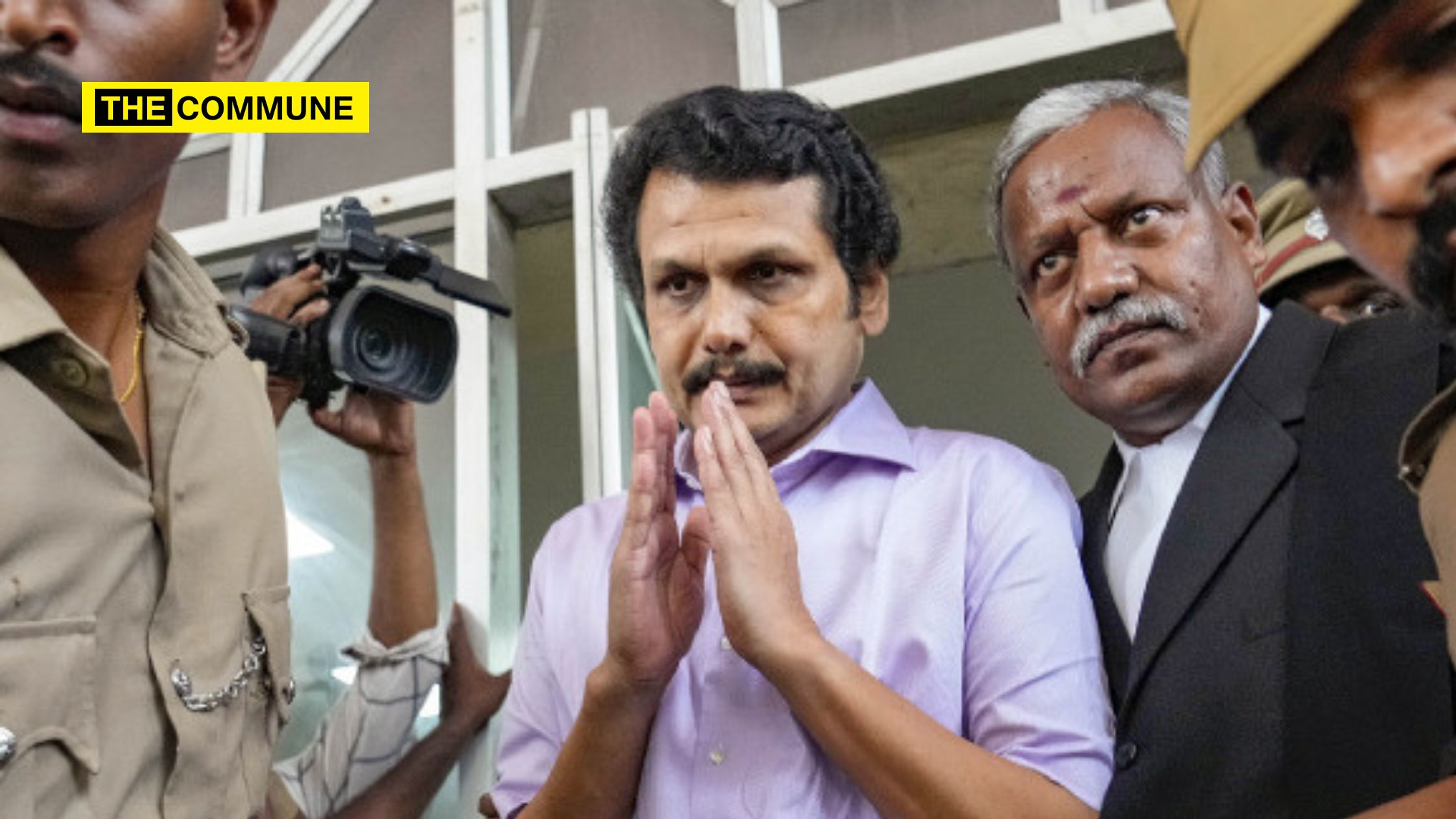
Tauseef Ali Farooqui, a student at IIT Guwahati known for his quiet demeanor and academic excellence in the field of biotechnology, reportedly declared his affiliation with ISIS in a recent LinkedIn post. In his open letter, he cited India as a land of non-believers, urging them to convert to Islam or face consequences. Assam police took him into custody on 23 March 2024.


(Pic Credit: TimesNow)

Tauseef Ali Farooqui penned an open letter declaring his disassociation from the Indian construct and Constitution, asserting allegiance solely to Allah. In the letter, he expressed his aim to emigrate Muslims to the Islamic State in Khorasan Province, challenging non-believers to confront him on his journey starting from Guwahati. Farooqui emphasized the Muslim duty to fight only against non-believers and claimed all land belongs to Allah. He concluded with a call for non-believers to repent, warning of dire consequences otherwise. This letter raised alarm among security agencies upon its publication on LinkedIn.

Kalyan Pathak, the Additional Superintendent of the Special Task Force within the Assam police, stated that a lookout was issued and a search was conducted at the airport. The individual, a student hailing from New Delhi, was eventually found in Hajo. Pathak mentioned that the police are currently interrogating him, noting that the student expressed a preference to remain solitary.

Haris Farooqi, the leader of ISIS operations in India, was apprehended by Assam police on 20 March 2024, alongside his accomplices. Farooqi, who has been involved in such activities since 2019, had long been suspected of orchestrating the radicalization of susceptible Indian youths. Among his associates was Anurag Singh, also known as Rehan, originally from Panipat, who converted to Islam; his spouse is a Bangladeshi citizen. Farooqi had been believed to be evading capture in Bangladesh.

Farooqi has played a significant role in establishing modules across several states in India, including Jharkhand, Delhi, Uttar Pradesh, Madhya Pradesh, Goa, Punjab, Maharashtra, and Karnataka. Originating from Aligarh in Uttar Pradesh, Farooqui was sought by the National Investigation Agency (NIA). He possesses expertise in indoctrination, fund management, and improvised explosive devices (IEDs), resembling Yasin Bhatkal of the Indian Mujahideen (IM), who executed numerous bombings post-2008. Farooqi’s involvement surfaced subsequent to the NIA’s apprehension of Faizan Ansari, a 19-year-old BA Economics Hons student at Aligarh Muslim University (AMU), in July of the preceding year. Ansari had encountered radicalized individuals affiliated with ISIS during his tenure near the AMU campus. Those familiar with the matter assert that Farooqi actively participated in a terrorist plot, which encompassed disseminating ISIS propaganda via social media to radicalize and enlist susceptible youths for various terrorist endeavors.

Farooqi formerly organized multiple modules across India and established exclusive circles, aiming to recruit individuals into ISIS. NIA brought the duo to New Delhi under transit remand. Parthasarathi Mahanta, IGP STF of Assam Police, informed the media, “Fifteen days ago, Assam police received intelligence on ISIS activities. We assembled a team and commenced operations on 18 March. On 19 March, a search operation was conducted in Dharmashala, Dhubri. They were on foot, seeking transportation to leave the area. We possessed photographs of ISIS leaders, which matched theirs.”

He further stated, “As there were ongoing cases with the NIA, we’ve transferred them to their jurisdiction. It’s likely they stayed in Assam for a brief period. Our focus is on addressing their sleeper cells within the state.”

Assam police announced on 20 March 2024,that they had received information from sister agencies indicating that two high-ranking ISIS leaders in India, currently situated in a neighboring country, were planning to enter India through the Dhubri Sector to carry out acts of sabotage. Both individuals are identified by the police as highly indoctrinated and driven leaders or members of ISIS operating within India. They have actively promoted ISIS’s agenda in the country by engaging in schemes related to recruitment, funding, and carrying out terrorist acts using improvised explosive devices (IEDs) in various locations across India. Multiple legal cases against them are currently under investigation by agencies such as the NIA, Delhi, ATS, and Lucknow.

(With Inputs From Economic Times)

Subscribe to our channels on TelegramWhatsApp, and Instagram and get the best stories of the day delivered to you personally.
Artist Deepa Baskar Alleges That She Was Not Paid For Performing At “Kalaignar 100” Event

In a startling revelation made by supporting artist and actress Deepa Baskar in an interview with a YouTube channel, she disclosed that she has not received payment from the administration of Kalaignar TV for her performance at the recent “Kalaignar 100” event held in Chennai. Despite two months having elapsed since the event, she has yet to receive any compensation. What’s even more surprising is that the artists were not provided with basic amenities such as dressing rooms, adding to the grievance, according to the interview.

The Tamil Film Producers Association convened an event titled “Kalaignar 100” on 6 January, 2024, at Chepauk, Chennai, dedicated to commemorating the accomplishments of the late M Karunanidhi, former Chief Minister of Tamil Nadu. This event was aimed to honor Karunanidhi’s contributions to both the film industry and politics. Actors and actresses were in attendance at the event, where artists were invited to showcase their talents through various performances such as drama and dance.

One among the many was actress was Deepa Baskar she had previously worked as suporting artist in TV serials and acted in the movie Karnan has went to particiate in the event. when the anchor of the show question Deepa about the participation in the event, she mentioned she had the anticipation that even on normal show they will treat artists good, and event like Kalaignar 100 she had more expectation but that was contrary, she said ”

Among the performers was actress Deepa Baskar, who had prior experience as a supporting artist in TV serials and had appeared in the movie “Karnan.” When ‘Wow Tamizha’ show’s host asked about her participation in the event in the Kalaignar 100 , Deepa expressed her disappointment. She had anticipated being treated well, as she believed artists are usually respected even in regular shows. However, her expectations for the Kalaignar 100 event were higher, yet she found the reality to be contrary to her hopes. Deepa replied, “Food was not good, and nothing was good, As they called as we went there and performed”

Later, the anchor inquired of Deepa whether the reports regarding technicians and artists not receiving their salaries were accurate. She replied, “We do everything expecting the salary, Even if I call now, they never picks up the phone. I got bored after asking repeatedly. I used to ask about the money appeared in many films and they say now and then, now it has become usual in the media that not giving the payment. That too in Kalaignar centenary event we went in high expectations. They said that the rules are during the three days of shooting, no other shooting should take place, the artistes should do two days of rehearsal and one day of performance on stage. If they have said we will not give (Payment) I’d have gone to act there. At least i’d have received a pay”

She elaborated that besides herself, many others such as drivers, makeup assistants, and hairdressers were not compensated for their services at the event. She emphasized that no one has received payment yet, and there is still an expectation that they will eventually be compensated.

When the anchor inquired whether Deepa believed that the administration (under Stalin/Udhayanidhi) was unaware of the issue of non-payment to artists, she responded by pointing out that numerous voices in the media have raised this concern. She questioned whether it was plausible that (Stalin) himself remained unaware, especially considering that many artists come from economically disadvantaged backgrounds and rely on their wages. Deepa suggested that while it seemed likely that he (Stalin) was aware, the reasons for the lack of action on the matter remained unclear.

Subsequently, she revealed that upon raising the matter on Facebook, she discovered that drivers and advertising agencies not been paid, but also others were affected by the non-payment issue.