Home Blog Page 909

Hindu Munnani Demands Action Against Officials For Allegedly Demolishing Crematorium Used By Hindus In Coimbatore

Hindu Munnani State President Kadeshwara Subramaniam has released a statement demanding that a case be registered against the highways officials responsible for demolishing the compound wall and tombs at the Athupalam crematorium in Coimbatore.

The statement read, “The Hindu crematorium at Athupalam in Coimbatore has been operational for many years. Recently, due to the construction of a flyover in the Athupalam area, the highways department officials demolished the crematorium’s compound wall to lay a sewer pipeline. This unannounced operation resulted in the demolition of over five mausoleums and the exhumation of a recently buried corpse. Upon learning of this, members of the Hindu Munnani immediately visited the site and demanded explanations from the highway and police officials. Consequently, the sewer pipe installation work has been temporarily halted. Officials have promised to rebuild the crematorium’s compound wall and ensure no further graves are disturbed. The destruction of graves under the pretext of laying sewers is deeply condemnable. Hindus hold the burial of their dead and the construction of tombs in high regard, and such actions are a serious breach of trust.

He has also added, “In the same area, there is a longstanding statue of E.V. Ramasamy, which the Highways Department officials carefully preserved during the flyover construction. Additionally, a small dargah, where Muslims worship, exists along the route from Sundarapuram to the bridge. However, the graves within the Hindu crematorium were demolished without any prior notice. The question arises whether the same highway department would approach Christian or Muslim graveyards similarly for public works. In the past, Muslims in the Vandavasi municipality area staged a significant protest when a stone was removed from a mosque’s doorstep to clear a sewer blockage. The Tamil Nadu government has allocated land for several Christian cemeteries, yet it fails to provide facilities for Hindu cremation grounds, and instead, graves are being desecrated.

He requested the police to file case, “According to Section 297 of the Indian Penal Code (IPC), it is an offense to trespass into a crematorium, damage graves, or insult funeral rites. Therefore, the Hindu Munnani demands that a case be registered against those responsible for the damage at the Athupalam crematorium and appropriate action be taken.

Subscribe to our channels on TelegramWhatsApp, and Instagram and get the best stories of the day delivered to you personally. 
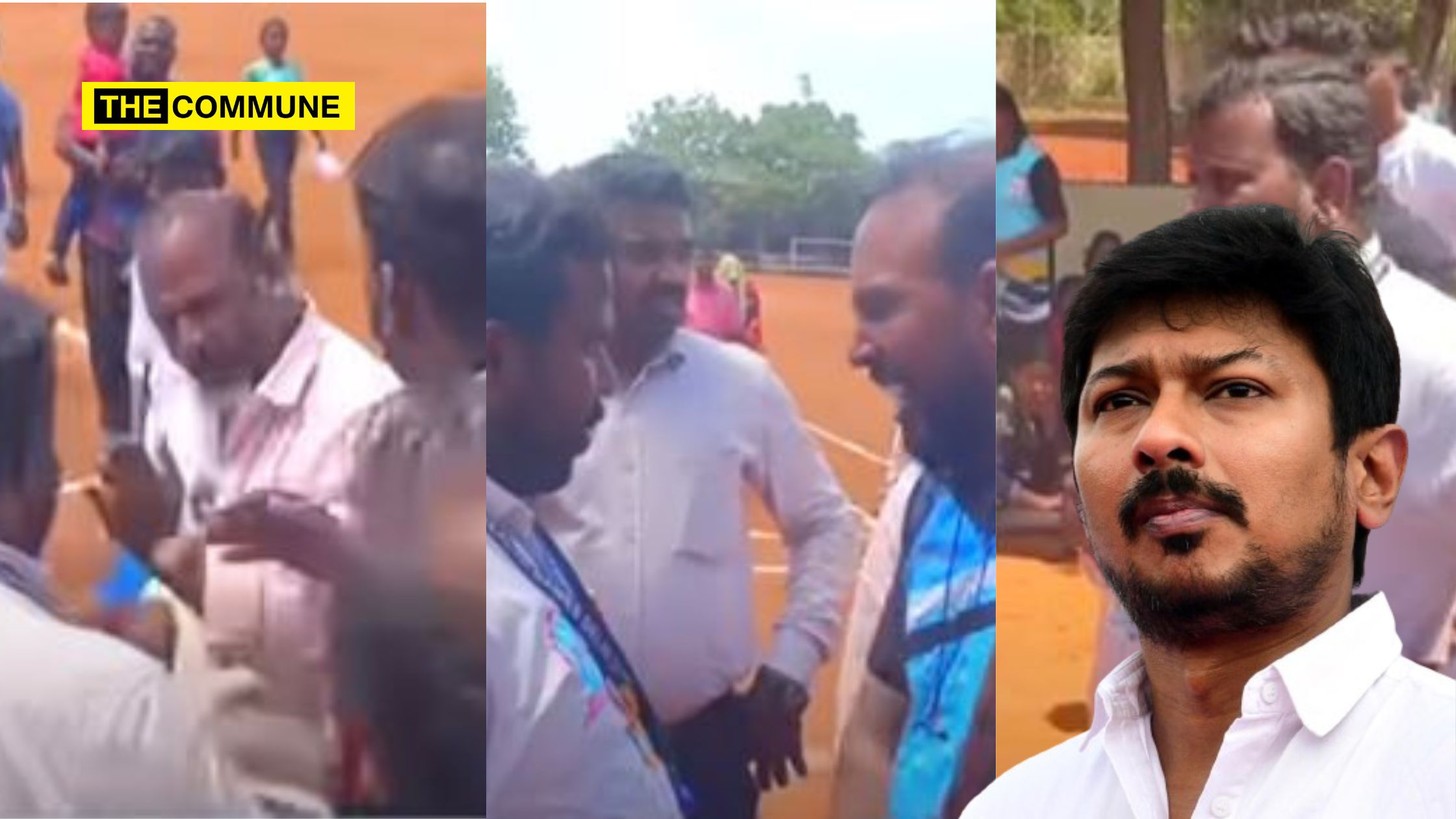
“Sanatana Terrorists Are Moving Freely With Weapons, On Stage, With Ministers”: I.N.D.I. Ally VCK Thirumavalavan Says

If the Congress had coined the term ‘Saffron Terror’ back in the day, its I.N.D.I. ally VCK now, has come up with the term ‘Sanatana Terrorists’ to refer to their ideological and political opponents.

Founder of the Viduthalai Chiruthaigal Katchi, Thol. Thirumvalavan, referred to the subscribers of Hindutva ideology as ‘Sanatana Terrorists’ while presenting the so-called ‘VCK Awards 2024’ in Chennai.

Thirumavalavan presented the annual ‘Ambedkar Sudar’ award to actor Prakash Raj. Additionally, various individuals such as Y. Subbarayulu, S.N. Sikkandar, advocate Arulmozhi, R. Mutharasan, Raj Gowthaman, and Ezra Sargunam received awards named ‘Semmozhi Gnayiru’, ‘Quaid-E-Millath Pirai’, ‘Periyar Oli’, ‘Marx Maamani’, ‘Ayotheethasar Adhavan’, and ‘Kamarajar Kathir’ respectively.

Speaking at the event, Thirumavalavan said “Sanatana terrorists will take any position. They will take any decision. Those belonging to the ML movement (referring to Communis Party of India – Marxist Leninist Liberation) carry weapons, hide in forests and live a life of clandestine. Sanatana terrorists are living within our house and roaming around with weapons. They’ve created a convenience where Sanatana terrorists can come to your house and kill you. A Marxist-Leninist person has to keep changing his name to remain absconding. He’ll be hiding in forests. For him to ‘finish a job’, things are not conducive. But Sanatana terrorists bear weapons and roam on stage in India. That’s important.

Referring to the killings of Gauri Lankesh, Kalburgi, Narendra Dhabolkar, Govind Pansare and, Thirumavalavan further he said that the establishment is staging such atrocities in the land.

They’re not running and hiding anywhere, and don’t live a life of clandestine. Like how Maoists hide in Andhra forests, they don’t hide. They’re on stage, with Ministers. They roam around with weapons. In such kind of a situation, people like Prakash Raj should be protected has been my concern. Even if he says that there’s no need of any award, I wanted to shake his hand, wish him and encourage him. I wanted to tell him to be careful, that’s why I took this initiative.“, Thirumavalavan said.

Subscribe to our channels on TelegramWhatsApp, and Instagram and get the best stories of the day delivered to you personally. 

The Great Indian Election: Narratives, Drama, Dialogues And Goof Ups

Indian elections have never been boring but I believe post 2014 with the advent of Narendra Damordas Modi they have been a roller coaster ride filled with sudden twists, masterstrokes, emotions and strategies. No wonder the TV news channels have something or the other to debate every single day and keep viewers pinned to their couches. It is super interesting to watch the narratives being built as narrative setting is equally important to win elections even though you might have worked hard with sincerity in the last 5 years for the public. In this article, I will take you through the narratives and counter narratives that parties tried out in this Lok Sabha election of 2024 and who got the upper hand.

As always from 2014, Narendra Modi has been the first to set the electoral narrative for the elections. His announcement in parliament of Abki Baar 400 Paar set the ball rolling. All hell broke loose in the opposition camp. They went to the town challenging this and everyone started talking about whether NDA will cross 400 this time or not forgetting the fact for a few months that Modi needed only 272 seats to win and form the government. This was Modi’s two-pronged strategy to energize his cadres and shake them out of complacency but at the same time demoralize the opposition cadres and force them to believe that they have lost the battle before it began. The first narrative was set. It took some time for the opposition to sit back and stop themselves from running after this narrative.

The opposition, the INDI alliance, especially the big brother in that, the Congress party, who by now had a bit of experience with the Modi and were once bitten twice shy now thought of setting their own narrative. Their earlier narrative of democracy in danger, Modi will change the constitution if elected to power again and all institutions are being compromised, BJP washing machine etc. did not stick with public. They came up with their manifesto around early April in which they talked about caste census, socio-economic survey, reservation in contracts etc.

A couple of days later, Rahul Gandhi in a rally talked about wealth redistribution. The first phase of polling happened on 19 April 2024. A few days later, suddenly, Narendra Modi started speaking about the dangerous intent of the Congress party to take the wealth from some people (using the term Mangalsutra to make it more colloquial) and give it to Muslims and illegal immigrants. I thought Congress set the narrative this time and Narendra Modi, a very experienced politician that he is, understood the same quickly and put out his counter-narrative with his bold statement albeit it looked a bit reactive.

During that moment the opposition seemed to have a bit of the upper hand with the narrative. Every TV channel started debating about the wealth redistribution angle and its pros and cons, good or evil and some sympathisers of the Congress started talking about how Modi’s statement was anti-muslim and didn’t sound nice coming from the Prime Minister of the country etc. Rahul Gandhi had to say in a speech later that they didn’t intend to take immediate action. This along with Sam Pitroda’s subsequent remarks about Inheritance Tax and the looks of Indians pushed the Congress party to the backseat and Narendra Modi came quickly back to batting on the front foot in this narrative game and started giving interviews to every big TV channel which left the opposition camp just talking about the usual godi media rant and resorting to usual Modi abuse through their ecosystem. To me, the simple short term strategy that was playing with the wealth redistribution narrative was Congress wanted to split the Hindu votes and weaken Modi whereas Modi wanted to stop that and further consolidate them. We will come to know only on 4 June 2024 who succeeded in their strategy. Mani Shankar Aiyer’s video talking about Pakistan having an atom bomb and saying India should behave well with them did nothing but pushed the Congress further into back foot. After a few more phases of election behind us, we can observe that the shrill of the wealth redistribution and caste census narrative has died down although Rahul Gandhi still mentions it in his speeches but in a guarded generic way.

There were quite a few other narratives that were tried by the different parties. Suddenly Amit Shah spoke about this election being a direct fight between Modi and Rahul Gandhi. The opposition didn’t want to hear anyone projecting one face especially of Rahul Gandhi which they knew would create unwanted confusion in their alliance. They carefully remained silent and this faded away after a few phases too. From nowhere, Yogendra Yadav, put his psephologist hat again and came on TV channels and confidently said that BJP will not cross 272 on its own but given his minimum estimates it showed that NDA will cross the halfway mark which means still Modi will anyways come to power again. This narrative of the opposition ecosystem shows that they are happy to see Narendra Modi going down on the seats whether they come to power or not albeit Congress supporters like Sanjay Jha in his untiring rants with his 2 mins. videos on X  keeps mentioning that Modi will not come to power. Social media influencers on both sides have been trying hard to put out their narratives and counter-narratives. Prashant Kishor’s series of interviews on TV channels saying BJP will equal or do a bit better than their 2019 tally has come as a nullifying counter to the opposition narrative attempt which led their miffed ecosystem go after him forgetting that he was the one who led several of their allies to victory in their assembly elections.

Some time back, Rahul Gandhi suddenly talked about being a good chess player but other than getting a surprise sarcastic comment from the chess legend, Gary Kasparov, no serious narrative was set around this. In the series of TV channel interviews that Narendra Modi is giving now which some say is an act of nervousness and some say confidently leading from the front but not taking any chances, the recent program with India TV’s renowned journalist, Rajat Sharma, of Aap Ki Aadalat fame became quite a big hit. Rahul Gandhi is not giving such long interviews for known reasons but is continuing with his rallies and giving intermittent bytes but the Congress ecosystem is left picking up the statements of Narendra Modi and reacting to it sarcastically which doesn’t set too much of a narrative again to win elections. Other than Arvind Kejriwal trying to do some drama around his arrest in Delhi, I don’t see too much of a narrative setting happening there. The timing of the Swati Maliwal case has also dented his strategy a bit too.

With only the last phase of elections left on 1 June 2024 big game changing narratives are not coming through any more other than some “up in the air” statements like Akhilesh Yadav and Mamata Banerjee vouching that they will win all the seats in their respective states and everyone giving their own convenient predictions about the possible winner. Things are heading to a grinding pause slowly after a super ride of narratives, drama, masala and punch dialogues.

Based on all the above, Narendra Modi still seems to have an upper-hand on the narrative in this election too although it seemed he had to do more of a heavy lifting this time compared to 2014 and 2019. Winning elections for a third time is not going be that easy but the man is visibly out there, active, doing multiple rallies a day and also giving long interviews enthusiastically, present in every moment and leading from the front with the same passion. Let us wait for June 4th to know who emerges as the winner from all this dust, noise and hangama.

Ananth Mahadevan is a political commentator based in Bengaluru.

Subscribe to our channels on TelegramWhatsApp, and Instagram and get the best stories of the day delivered to you personally. 
Why We Need A Four Language Formula

Prologue

We request our readers not to panic at the title even before start. We crave their indulgence to shed their prejudices, extricate themselves from the prevarications of pernicious politicians just for a few minutes, patiently go through the passage and at the end they are at perfect liberty to either concur with the caption or continue to carry a completely contrary conclusion, perhaps with greater conviction. Being conversant with the current contaminated scenario, we do not find fault even if they do not agree with the contents. On the other hand, we do not also guarantee that after going through this article, they will not change their mind and ask a counter question, ‘Why only four and not more?’ In this article we are going to analyse threadbare every aspect of our language formula as also the misconceptions about learning a language.

The Linguistic Richness Of Bharat

The ancient land of Bharat is a sui generic nation with lot of unique features, a kaleidoscopic spectacle of diversity that dazzles and baffles the world.

‘முப்பது கோடி முகமுடையாள் – உயிர் மொய்ம்புற வொன்றுடையாள் – இவள் செப்பு மொழி பதினெட்டுடையாள் – எனிற் சிந்தனை ஒன்றுடையாள்”

Mahakavi Bharati says: Bharatamata has thirty crores faces; still she has a single soul. She speaks in eighteen languages but the core of her thought is only one. [When Bharatiyar wrote this India’s population was around 30 crores. By the number 18, he indicates the major languages.]

Variety is the spice of life and in that aspect, our Bharat is the spiciest land on earth. Variety in religion, language, sects, food habits, topography, colour, culture, arts, fine arts, architecture, festivals, dynasty etc. Thus we, Bharatuyas, are proud of our variety in which language is also one. Each language carries with it the culture and values of each region. They are priceless treasures that our ancestors have bequeathed on us and such unique jewels only our nation proudly possesses. Prudence points to us that we nourish every one of them, thereby preserving and promoting our delectable diversity. The ancient name of India, ‘Rathna Garbha’ [repository of pearls] is not merely for the natural wealth alone but refers more to the gems of wisdom and scholarship easily available for all. Ample scope for learning many languages is one such exclusive gem.

Knowledge Of A Language: Interpretation

The basic misunderstanding starts at the beginning itself and that elemental error at the embryonic stage evolves itself into further excogitation of distressing and disturbing dimensions, casts away all cool, cordial and composed approach, enters into a domain of hysterical outbursts, after which there can be no room for discussion and deliberations, let alone concord and consensus.

What is meant by ‘knowledge’ of a language?

Let us take an example: It is an axiom that almost all the people of Tamil Nadu know the language Tamil. If we ask them, ‘Do you know Tamil?’ the answer invariably will be a definite ‘Yes’. They will retort with, ‘Why do you ask? Tamil is our mother tongue. We know it from our childhood.’ Therefore, we can say with confidence that more than ninety percent of people in Tamil Nadu know the language Tamil. But, if you ask anyone of them a few questions such as

குற்றியலுகரம் என்றால் என்ன? or ஈறுகெட்ட எதிர்மறைப் பெயரெச்சம் – எடுத்துக்காட்டு கூறு.

[These are all questions in Tamil grammar at the school level.]

they will not answer and instead will look at you in a weird fashion as if you are some abnormal person raising arcane questions. Forget such high level questions; If you enter a college in Tamil Nadu and ask an elementary question like ‘How many alphabets Tamil language has? Can you tell them in the correct sequence?’ each one will come out with different answer and almost all of them will be wrong. It is strange but true if you repeat such simple questions to those political leaders of Tamil Nadu who feign in all fora as if they are congenital champions of Tamil and vociferously forbid study of Hindi, they will also not fare any better at all.

Here we are confusing between two things: Erudition and expertise in a language is different from equipping oneself with an elementary knowledge for expressing with ease in that language. They are like chalk and cheese. By studying a language, therefore, we do not imply, ipso facto, producing in plenty any pedagogic pundits but are only enabling the tiny tot to comfortably negotiate in his future life, vocal transactions among different states and different sections in our nation. Is it a burden in the later life of the lad or is it factually a facilitating factor? We request our reader to deliberate deeply and dispassionately on this aspect.

Historical Perspective

There are a few dogged, dogmatic irrational imbeciles among us even now, who continue to harbour the idiotic idea that it was the British who created our nation as one singe state, India. Far from it. Our Bharat Varsha existed from time immemorial with different names like Rathna Garbha, Ajanabha Varsha, Aryavarta, Jambudwipa etc. People travelled from one corner to the opposite, crisscrossing the entire nation, with consummate ease, comfortably communicating with the common folk. Also, they need not bother about food and shelter which were freely available to them thanks to the tenets of our Sanatana Darma. It is a historical fact that Adi Shankara peregrinated from Kerala in the south to Kashmir in the north, discussed and debated with erudite scholars and established his doctrine of Advaita. For easy communication, local languages and link languages like Samskitam, Prakritam [Pali] were there and people were quite comfortable with all of them, since concord and consonance were the cardinal criteria of all Bharatvasis.

The Needless Fear Factor

Once, when the late C N Annadurai was told that one can easily learn Hindi in three months, he retorted with his customary wisecrack, ‘Yes, I agree. what is there to learn beyond three months in that language?’ Although his remarks were meant to be sarcastic, he has perforce admitted the truth that learning a language is not at all a difficult task.

For that matter, one can easily and effortlessly gain conversational skills in any language in just thirty days. It is like learning cycling or swimming. Initially, there will be hick-ups but later, once certain amount of fluency is acquired, it will be an enjoyable experience. Have we not noticed a kid, once he learns cycling or swimming, getting addicted to it and never leaves it?

Example Of Samskrita Bharati

Samskrita Bharati, an organisation that promotes use of simple Samskritam in everyday conversation asserts that thirty days are too much. ‘We can do it in just ten days’, they claim. And they actually do it!

For those who want a design to teach a language in the incredibly easiest method, Samskrita Bharati shows a unique way. It is nothing less than a magic! One need not have any prior knowledge of Samskritam. No proper textbook, no lessons, no writing, just listen, that is all. Listen just two hours a day for ten days. The classes are not a serious coaching sessions, but, indeed a lively avocation, quite an enjoyable evening, a playful pastime. At the end of the third day, you will be wondering at yourself! Yes, what has happened to you? You will yourself start speaking simple sentences in Samskritam. On the tenth day, you will be delivering a talk in Samskritam to your own friends in the group. Nothing less than magic!

Their modus operandi is down-to-earth practical, in consonance with human aptitudes. Listening first; speaking next; encouraging at every moment; no reading, no writing.

The reader need not take the above statements for granted. He is invited to test it himself. No fees. It is free for all. No restrictions whatsoever. What is expected of you is just two hours of active listening, or to be more precise, actively enjoying the time for ten days. Periodical courses are conducted throughout the country at every nook and corner, details of which are available in the net.

Those linguists who want to teach other languages can also learn from them the techniques and adopt them in spreading their own languages; it will be quite useful.

Unfortunately, one Bishop Robert Caldwell (1814 –1891) a missionary of London Missionary Society, who came to India with the single purpose of spreading Christianity, observed to his chargin that we, the entire Bharatiyas are a closely knit class in terms of culture, consanguinity, concordance and compatibility. He found that the language Samskritam played a powerful role in this. So, he ingeniously invented a new interpretation of the word, ‘Dravidian’ with the infernal intention of creating linguistically a wedge between the north and south and was unfortunately successful in his attempt. His toxiferous theory is still being continued by certain disruptive elements to isolate the south and create animosity against Samskritam. On the contrary, if we look at many of the famous literary works in Tamil, we will find that all those authors had exhibited deep knowledge of Samskritam in their works. Kambar had scrupulously scanned every verse Valmiki as could be seen in his Ramayana. Tiruvalluvar could not have written many verses without a deep understanding of Upanishads and other great works in Samskritam. Some of his kurals are verbatim translations of slokas in Samskritam. Of course, as the saying goes, great minds think alike.

The Stock Objection

The recalcitrant polemicist proceeds to his next protestation, proclaiming, ‘why should we be burdened with additional languages that are not ours?

This is sheer opportunism, a chameleon-like posture that cannot hold water. It is strange that the very same persons who come up with that objection are seen to possess knowledge of many languages which they had learnt for their professional progress. Readers would readily recognise those celebrities who mint millions with their own multilingual talents and, simultaneously spurred by sinister motives, voicing vociferously objection to others learning and misusing their popularity in misleading the masses. For instance, Kamal Haasan, who is quite vociferous in opposing Hindi, himself speaks Tamil, Malayalam, Kannada, Telugu, Hindi, Marathi, and English, reaping for himself boundless benefits of a polyglot.

Benefits Of Learning Many Languages

Let us, on the other hand, look at the benefits of knowing many languages.

Research indicates that people who speak more than one language develop a better memory, talent for problem-solving, ability to concentrate, and tendency to be creative than those who speak only one language. A well-known example is our former Prime Minister
P.V.Narasimha Rao, hailed as modern Chanakya, who brought lot of innovative sweeping reforms. He was a scholarly linguist and could speak as many as nine Indian languages [Telugu, Hindi, Oriya, Bengali, Gujarati, Kannada, Samskritam, Tamil and Urdu] and eight foreign languages [English, French, Arabic, Spanish, German, Greek, Latin and Persian]

Language is the easiest way to understand and appreciate the culture of a region. Children who study an additional language in addition to their mother tongue respect the culture associated with that language and exhibit empathy, affinity and warmth, which enhance their sociability to a wider circle.

Travelling becomes a pleasurable pastime, an enchanting experience, a joyous delight, since one can interact with lot of people, forge friendship and exchange pleasantries.

Other economic advantages like wider avenues for career developments, opportunities to participate in newer forums and contributing one’s skills worldwide etc. are obvious.

Conclusion

Opposition to learning many languages stems not from any genuine concern for the children but from a deeper malevolent motive of forging in the young mind psychological seclusion, since inability to express oneself with his counterpart in other states will detach one from the main stream of national activities. This will further breed hatred and hostility towards one’s own brethren in other states which feeling, if not nipped in the bud, will develop fissures in the nation’s camaraderie and result in ultimate fragmentation, the very plan and purpose of those anti-national forces.

Any situation can be viewed from different angles. Either the tumbler is half full or half empty. Both phrases represent a single fact. Life provides us either stepping stones or stumbling blocks. It depends on our approach. Ultimately if we think, ‘we can’, we can. The formula for happiness and success is after all, within us only.

It is the bounden duty of those dedicated to national unity, welfare and progress to counter the poisonous propaganda of the hostile elements, expose them in their true colours and sow seeds for a solid, strong stable nation with all the citizens identifying themselves as Bharatiyas and not with a lop-sided, limited loyalty based purely on language or region.

Parasuram Sharma is a retired bank officer and an octogenarian whose interests include Sanathana Dharmam, Samskritam, history and politics.

Raj Bhavan Reviving Vaikasi Anusham As Thiruvalluvar Day Triggers Meltsdown Among DMK, ADMK, MDMK, Congress

The Raj Bhavan in Tamil Nadu has once again delivered a significant meltdown to the Dravidian ecosystem by reviving the ancient tradition of celebrating the birth of the Tamil poet and saint Thiruvalluvar according to his birth nakshatra on the Tamil calendar. On 24 May 2024, Governor RN Ravi presided over the celebration of Thiruvalluvar’s birth anniversary, known as “Vaikasi Anusham Valluvar Thirunaal”. During the event, tributes were paid to Thiruvalluvar’s portrait, which was adorned with saffron clothes, holy ash, and kumkum on his forehead.

DMK – TKS Elangovan

Organisation Secretary of the DMK TKS Elangovan said, “Thiruvalluvar is a world poet. His sayings have a bearing on the entire world and people living everywhere. He (RN Ravi) is trying to insult the Tamilians by making a Thiruvalluvar in a saffron dress. The problem with the governor is that he intends to insult the Tamilians. By this act, Tamilians living across the world are insulted. This is what he intends today. He is from Bihar, a very backward state whereas Tamil Nadu is a developed state, the people of Tamil Nadu are equanimous, they treat everybody as equals. But Ravi does not want to treat everybody as equals. He is insulting Thiruvalluvar. He is insulting the entire Tamil community living the world over. And he is insulting the language and the culture of the Tamil Nadu. Later stated, “Governor is becoming a joker. Who said May 24 is Thiruvalluvar Day? very person in Tamil Nadu knows that Thiruvalluvar Day is January 15. If somebody decides to distort history to their benefit, then we strongly condemn it,”

MDMK – Vaiko

While MDMK General Secretary Vaiko speaking to the reporters after paying tribute to former MLC SP Adithanar in Chennai said, “This is condemnable. Thiruvalluvar is above caste and religion. He (Governor) is making Raj Bhavan a laughing stock… Let us wait till June 4. INDIA alliance will win (the elections)”

Tamil Nadu Congress – Selvaperunthagai

K Selvaperunthagai, the President of the Tamil Nadu Congress Committee, has expressed his strong condemnation of Tamil Nadu Governor RN Ravi. This criticism arises from an invitation that featured a portrait of Thiruvalluvar adorned with saffron clothes, holy ash, and kumkum on his forehead. Selvaperunthagai shared his disapproval on his official X handle, stating that, “Thiruvalluvar’s photograph, owned by the state, independent of caste, creed, religion, was nationalized in 1991. Since then, the photo has been printed and used by everyone in the country. However, Tamil Nadu Governor RN Ravi changed the photo of Thiruvalluvar approved by the government to the Governor’s House. It is illegal to publish photos based on caste, religion, religion. It is reprehensible for the governor who is responsible for upholding the law to do this. Regrettable.”

DMK Speaker – Appavu

DMK Speaker Appavu has went one step further and criticized the governor asking, “Thiruvalluvar’s photo in saffron is featured in the invitation issued by the Governor’s office. If we portray Governor with Kullah (Taqiyah – Muslim skull cap) and his wife with purdah will he accepts it? then we will also accept wearing saffron for Thiruvalluvar. If he doesn’t accept that, he shouldn’t do this either.”


AIADMK – Jayakumar

Former AIADMK Minister of Finance of Tamil Nadu D Jayakumar said, “There is nothing that is missing in Thirukkural. There is no caste, religion or race for Thiruvalluvar. Depicting such a person in saffron is certainly unacceptable. The governor has as many as a thousand works. What is the need to celebrate Thiruvalluvar Day now? In such a situation, this can only be seen as an act of humiliating Tamil race and Thiruvalluvar as a whole. The Governor’s action is highly condemnable and unacceptable.”

The Controversial Dravidian Thiruvalluvar Day

Archaeologist and historian like S Ramachandran providing background information, states that in 1966, the Congress government issued a Government Order declaring the day of saint Thiruvalluvar’s attainment of ‘Mukthi’ (salvation) as Thiruvalluvar Day. This day, known as Vaikasi Anusham, corresponds to a specific date in the Tamil month of Vaikasi, marked by the star Anusham. On 2 June 1966, Vaikasi Anusham was celebrated as Thiruvalluvar Day, with a statue of Thiruvalluvar unveiled by then-President S Radhakrishnan, in the presence of former Chief Minister M Bhakthavatsalam and Chennai Mayor M Moses, a member of the DMK.

However, in 1971, the DMK regime changed the observance to the second day of the Tamil month of Thai, which falls in January. Ramachandran also mentioned that the Thiruvalluvar temple in Mylapore, Chennai, where Governor Ravi recently offered prayers, dates back to the 14th century CE. In January 2024, Governor Ravi paid floral tributes to a portrait of Thiruvalluvar dressed in saffron attire, prompting Chief Minister M.K. Stalin to assert that no one could ‘stain’ the revered poet.


Subscribe to our channels on TelegramWhatsApp, and Instagram and get the best stories of the day delivered to you personally.
 

Kerala High Court Condemns Pinarayi Government For Misusing Power And Supporting SFI In Pension Benefits Dispute With Principal Dr. Rema

The Kerala High Court condemned the state government, led by the Communist Party of India (Marxist), for “misusing power” and supporting SFI to prevent Dr. Rema from receiving her pension benefits.

Judges A Muhamed Mustaque and Shoba Annamma Eapen annulled two departmental inquiries against Dr. Rema, who retired on 31 March 2024. The ruling, posted on the court’s website on 21st May, came after an order delivered on 9 April 2024.

The Left government in Kerala took strict measures against Dr. Rema M, a college principal, after she criticized the Students’ Federation of India (SFI), a left-wing student organization. Accused of condemning the government, she was removed from her position, subjected to a probe post-retirement, and transferred to a different college. Dr. Rema had alleged that SFI members were involved in organized crime and drug addiction on campus, leading to her being held hostage by SFI members. Instead of addressing the SFI members’ actions, the government targeted her, prompting the Kerala High Court to reprimand the government for its actions.

Kerala’s Higher Education Minister R Bindu dismissed Dr. Rema from her principal position and transferred her to Government Arts and Science College, Koduvally, 200 kilometers away, following an interview where she accused SFI members of drug abuse and immoral activities on campus.

An inquiry commission, comprising Deputy Director of Collegiate Education Sunil John J, Professor Geetha E, and senior clerk Shyamlal I S, was formed in response to a complaint by SFI’s Kasaragod unit secretary, Akshay M K. The panel, rather than addressing the accusations against SFI, recommended transferring Dr. Rema, leading the court to label the inquiry as biased. The court’s verdict criticized the government for defending SFI and not independently investigating her allegations.

Background of the case:

On 20 February 2023, SFI members raised concerns about contaminated drinking water with Dr. Rema, who directed repairs. However, SFI leaders demanded further explanations and accused her of verbally abusing students. On 23 February 2023, around sixty SFI students detained Dr. Rema for hours, preventing her from using the restroom until police intervened. Subsequently, Minister Bindu relieved her of her duties, and SFI barred her from campus. Dr. Rema revealed drug and sexual misconduct on campus in an interview, resulting in a government show-cause notice alleging reputational damage.

Despite Dr. Rema’s defense, the government formed an inquiry committee that recommended her transfer for breaching government conduct rules. She was moved to Government Arts and Science College, Koduvally, on 9 July 2023.

Dr. Rema challenged the transfer order at the Kerala Administrative Tribunal, which suggested relocating her to a nearby college as she was due to retire on 31 March 2024. She was reassigned to Govinda Pai Memorial Government College in Manjeshwar, but remained dissatisfied and took the case to the High Court.

The High Court overturned the application of Service Conduct Rules 62 and 63 by the Directorate of Collegiate Education, noting that Dr. Rema criticized SFI members, not the government. The court emphasized her constitutional right to free speech. However, the government issued another charge notice on March 24, accusing her of rejecting a student’s admission in August 2022 for not bringing her father, as mandated by the Parent-Teacher Association. The High Court previously noted that the investigation aimed to obstruct her pension benefits, and this second notice reinforced that view, concluding it was harassment for extraneous reasons.

(With Inputs From Onmanorama)

Subscribe to our channels on TelegramWhatsApp, and Instagram and get the best stories of the day delivered to you personally.
Two Arrested In Udupi’s Gang War Altercation, Confiscated Daggers And Swords From the Youth

The Karnataka police, so far have arrested two individuals in connection with a recent road rage incident reported at the Udupi Town Police Station. Udupi SP Arun K stated that a viral video showed two factions from the same gang clashing.

A case was subsequently filed at the Udupi Town Police Station on 20th May. Ashiq and Rakib, members of the Garuda Gang, have been taken into custody, while approximately five others involved in the incident are still at large. The police have confiscated two cars, two motorcycles, a talwar, and a dagger. The SP mentioned that the FIR was based on available information as of 20th May and additional charges would be added based on the video evidence.

The SP also noted that although the exact cause of the clash is not yet clear, initial reports indicate that the gang is not very active currently and internal conflicts may be due to one group’s jealousy over the other group’s role in the gang’s decline.

In an incident near Sharada Kalyana Mantap road, two groups engaged in a road rage scenario that seemed like a scene from a movie. CCTV footage showed a white car reversing and hitting a brown car with its doors open, then moving forward amidst youths brandishing a talwar. After reversing again and returning to the main road, the white car struck a man holding a talwar, causing him to fall. Both vehicles continued moving, and two youths were seen attacking the fallen man.

https://twitter.com/BJP4Karnataka/status/1794238849046229090


Meanwhile, a 19-year-old from Barkur in Brahmavar filed a complaint, claiming that between 13 May and 17 May 2024, Dhanush gave him a car to sell. An acquaintance, Mahammed Fazil, took the car for a test drive and allegedly handed it over to Isak and others, who damaged the car, causing a loss of ₹2 lakh. They are also accused of placing a talwar with the intent to commit robbery.

(With Inputs From TOI)

Subscribe to our channels on TelegramWhatsApp, and Instagram and get the best stories of the day delivered to you personally.
How Did The Telugu States Fare In Lok Sabha 2024 Elections?

There was a marked difference in the conduct and participation of political leaders and voters between the Telugu speaking states of Andhra Pradesh and Telangana.

1) Telangana: By and large, mostly peaceful with stray incidents of mischief quickly brought under control.
Andhra Pradesh: Disturbingly violent with higher than anticipated levels of aggressive acts, polling delays and some chaos in the election process.

2) Telangana: Law & Order under control. Mostly, normal conditions and behavioral conduct at all levels of society. Diligent work by the state Police department at the local levels.
Andhra Pradesh: Highly biased, corrupt state Police department with allegations of bribery at all levels of the police force, by the ruling YSR Congress party, causing a breakdown in the Law and Order situation.

3) Telangana: Ample and appropriate state Government and state Police collaboration with the Central Armed Forces as, when and how required, during the election phase.
Andhra Pradesh: Jagan Reddy’s YSR Congress-led government with its administrative staff at all levels and the state police force, completely under its control, displayed inappropriate behaviour in its intent of non-collaboration with the Central Security Forces in Andhra.

4) Telangana: The Central Armed/Security Forces will leave the state after Election day or result announcement date, as is the protocol under normal circumstances.
Andhra Pradesh: A completely different scenario in Andhra Pradesh. Shockingly high levels of pre-poll violence, polling-day violence as well as post-poll aggression with an apathetic, ineffective, unresponsive state police force…. as a result of which, the ECI (Election Commission of India) has recommended an extended stay for the Central Armed Forces for a minimum of two weeks beyond the ballot-counting and results announcement date of June 4.

5) Telangana: Political party leaders, representatives, workers and supporters were largely well behaved.
Andhra Pradesh: Several, shameful incidents of intimidation and physical violence to both people and private/public property by leaders and supporters of the incumbent YSRCP party. A majority of these incidents were recorded by ordinary citizens, waiting in long lines to cast their vote. The state police in collusion with booth officers tried to contain the video evidence of several such offences but the verified video footage of the disgraceful behaviour of Jagan Reddy’s leaders have been telecast on local and national television channels.

6) Telangana: Some Pre poll excitement and buzz in the air without intense rivalry with the potential to turn violent.
Andhra Pradesh: High levels of commotion, rivalry, acts of disruption, violence and large scale betting in Andhra in the pre poll as well as post poll time frames!

7) Telangana: Voter turnout was on the lower side, in the sixties on an average in the state while the Hyderabad area witnessed a dismal low, in its forties.
Andhra Pradesh: one of the highest percentages of voter turnout ever and the highest voter participation at almost eighty two percent, recorded in the country, up to the fourth phase of elections.

8) Telangana: National/ Lok Sabha elections only, conducted in a single phase on May 13.
Andhra Pradesh: Simultaneous National/ Lok Sabha as well as State, Legislative Assembly elections, held in a single phase for both excercises, on May 13.

9) Telangana: Chief Minister, Revanth Reddy and his leaders, resisting any unparliamentary behaviour and waiting for the results to be announced.
Andhra Pradesh: Chief Minister, Jagan Reddy, his YSR Congress party leaders and cadre, continue to use words and actions, not befitting positions of authority and responsibility. The CM’s incumbent government has already claimed a major victory for themselves, while the CM is on a vacation abroad, sparking doubts of his intentions and return to India, based on a large number of CBI and ED cases on him.

Telangana Election Highlights

– Large numbers of Telangana cities like Hyderabad, Warangal and border areas of Khammam district,
are natives of A.P. With both states going to the polls on the same day, urban and border-area voter turnout in Telangana, was significantly impacted. It was reported that certain localities in Hyderabad, wore a deserted look on election day because a majority of the residents had travelled to Andhra for voting.

– One of the most interesting contests was from the Hyderabad old city constituency, a muslim dominant area, where the fairly new, female, Hindu woman candidate of the BJP, Madhavi Latha, squared off with a seasoned, four time, male, muslim MP, Asaduddin Owaisi of the Hyderabad-based AIMIM party.

– Madhavi Latha and her supporters have alleged voter ID tampering and fake, out-of-town voters, by the AIMIM party’s supporters. She is reported to have requested a few muslim women to reveal their faces behind the veils, in order to verify their identity per their voter ID cards. Her request caused a minor stir before eventually fizzling out.

– Telangana-based BRS party appears to be at a disadvantage, with lower prospects for Lok Sabha seats than its rival, the recently elected Congress government in the state.

– The BJP is confident of improving its score in Telangana state, seen as a positive sign of the major strides made by it, in recent times.

– While the state Congress unit is predicted to have an advantage, the BJP is hoping to come in second….by bagging more seats than the regional BRS party.

Shivani is a freelance writer from Vijayawada.

Subscribe to our channels on TelegramWhatsApp, and Instagram and get the best stories of the day delivered to you personally.
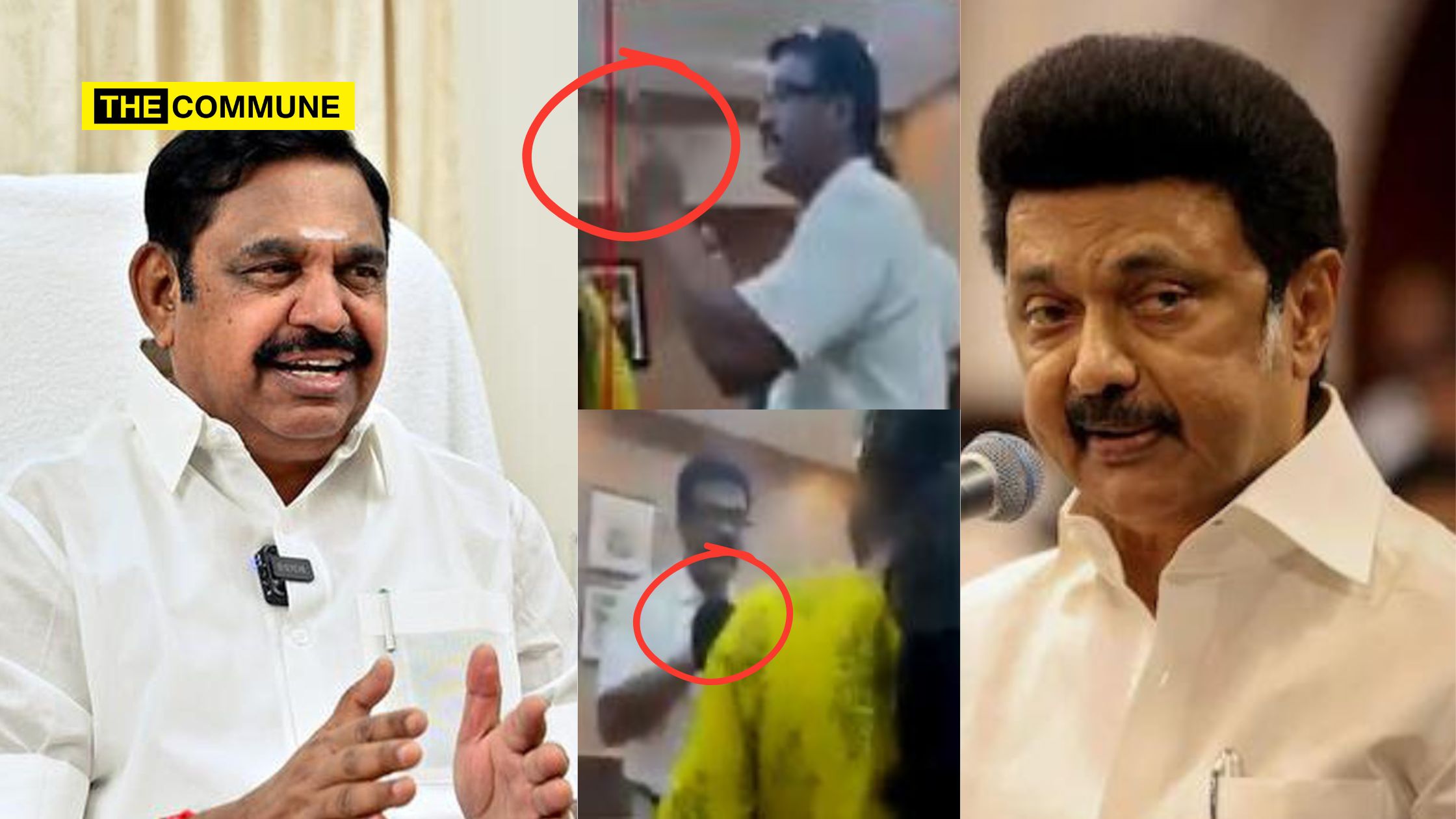
Raj Bhavan Revives Pre-1971 Tradition Of Celebrating Vaikasi Anusham As Thiruvalluvar Day

On 24 May 2024, the Tamil Nadu Governor RN Ravi ignited a new intellectual discussion by commemorating the birth anniversary of Tamil saint Thiruvalluvar on his birth nakshatra. During the event, tributes were paid to Thiruvalluvar’s portrait adorned with saffron clothes, holy ash, and kumkum on his forehead. The Raj Bhavan referred to the day as Vaikasi Anusham Valluvar Thirunaal.

For a few decades, Thiruvalluvar Day has been celebrated by the Tamil Nadu government in mid-January around Pongal. The Raj Bhavan justified the celebration on Vaikasi Anusham by stating, “Thiruvalluvar Thirunaal (Vaikasi Anusham) has been traditionally observed, continuing the legacy of eminent Tamil scholars Maraimalai Adigal, TP Meenakshisundaram, and Vi. Kalyanasundaram.”

During his address at the Thiruvalluvar Thirunaal event held at Bharatiar Mandapam at Raj Bhavan, Governor Ravi proclaimed, “Thirukkural is a true Dharmasastra. This day (Vaikasi Anusham) is the authentic Thiruvalluvar Day. Historically, it hasn’t been given its due importance as Thiruvalluvar Day. As a devotee of Thiruvalluvar, I decided to celebrate this day in a special manner. Vaikasi Anusham itself must be observed as Thiruvalluvar Day in the Tamil calendar.”

Reiterating his views on the translated versions of Thirukkural, Ravi remarked, “As a devotee of Thiruvalluvar, I have read several translations of Thirukkural. Some translations of Thirukkural, the greatest treasure of mankind, appear to be one-sided.”

He also shared his personal connection with Thirukkural, stating, “My relationship with Thirukkural began in class IX. In 1964, during Saraswati Pooja at my school, I found Thirukkural in the library while searching for inspirational books. Through the Kural, I learned that with determination, nothing is impossible. This has guided me throughout my life.”

Thirukkural was the first book I purchased upon arriving in Tamil Nadu. I frequently read Thirukkural. It is a true Dharmasastra. Thiruvalluvar imparts life’s lessons through it. Thirukkural is the most comprehensive compendium and perhaps the most exhaustive treatise on an integral life, covering all its facets and fullness,” he added.

Earlier, Governor Ravi unveiled an e-flipbook titled “Thiruvalluvar – Patron Saint of Tamil Nadu,” authored by DK Hari and DK Hema Hari, during the event.

Notable attendees included Justice of the Madras High Court GR Swaminathan, Swami Mahendra of Adhi Sankarar Thirumadam, Thiruvalluvar Thirunaal Kazhagam President Thiyagarajan, Central Institute of Classical Tamil Director R Chandrasekaran, and Governor’s Secretary Kirlosh Kumar.”

The Controversial Dravidian Thiruvalluvar Day

Archaeologist and historian like S Ramachandran providing background information, states that in 1966, the Congress government issued a Government Order declaring the day of saint Thiruvalluvar’s attainment of ‘Mukthi’ (salvation) as Thiruvalluvar Day. This day, known as Vaikasi Anusham, corresponds to a specific date in the Tamil month of Vaikasi, marked by the star Anusham. On 2 June 1966, Vaikasi Anusham was celebrated as Thiruvalluvar Day, with a statue of Thiruvalluvar unveiled by then-President S Radhakrishnan, in the presence of former Chief Minister M Bhakthavatsalam and Chennai Mayor M Moses, a member of the DMK.

However, in 1971, the DMK regime changed the observance to the second day of the Tamil month of Thai, which falls in January. Ramachandran also mentioned that the Thiruvalluvar temple in Mylapore, Chennai, where Governor Ravi recently offered prayers, dates back to the 14th century CE. In January 2024, Governor Ravi paid floral tributes to a portrait of Thiruvalluvar dressed in saffron attire, prompting Chief Minister M.K. Stalin to assert that no one could ‘stain’ the revered poet.

(With Inputs From DT-Next)

Subscribe to our channels on TelegramWhatsApp, and Instagram and get the best stories of the day delivered to you personally.
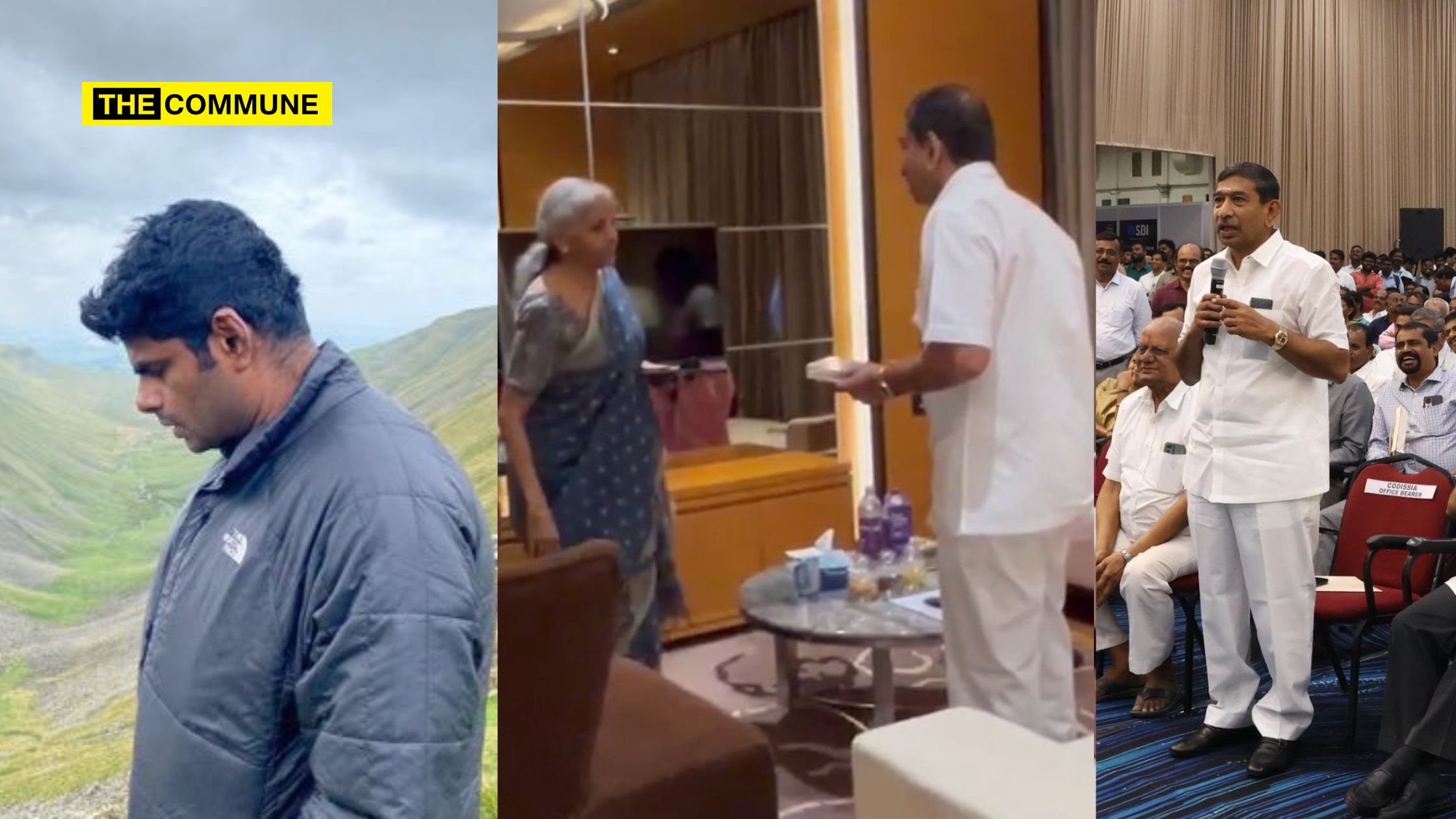
Shashi Tharoor Mocks PM Modi’s Remarks On “Divine Intervention”, Here’s How He Glorified Nehru As A ‘Divine Intervention’ In His Own Book

Neizens have been mocking and criticizing Shashi Tharoor, the Congress MP from Thiruvananthapuram, for his remarks on ‘divinity’ against Prime Minister Narendra Modi. He was unaware that his comments would provoke a strong reaction from the internet community, labeling him a master of hypocrisy, well-suited to comment in his own interest.

Tharoor’s comment comes in response to Prime Minister Modi’s recent statement during a television interview, where he expressed a belief in his divine purpose, stating, “Till my mother was alive, I had the impression that perhaps my birth was a biological one. After her demise when I view after assimilating all the experiences, I am convinced that God has sent me.” 

In reaction to this, Shashi Tharoor took to his official handle to pose what he called an ‘innocent question’ queried, ” can a divine being be eligible for citizenship in India, and if not, does He have the right to vote or to contest elections? Could @ECISVEEP look into the question of a self-proclaimed divinity participating in the electoral fray?”

In Shashi Tharoor’s 2003 biography of Nehru, “Nehru: The Invention of India,” the first chapter, “With little to command me,” recounts the divine blessings received by Motilal Nehru.

The chapter narrates that in January 1889, Motilal Nehru, a 27-year-old lawyer from Allahabad, visited the sacred Hindu town of Rishikesh, burdened by personal loss. After losing his first wife and son during childbirth, he remarried Swarup Rani Kaul, who bore him another son who also died in infancy. Following the death of his brother Nandlal Nehru, Motilal took responsibility for his widow and seven children. Despite these burdens, he yearned for a son of his own.

Image

Motilal and two young Brahmin companions visited a renowned yogi known for his austere practices. The yogi, informed of Motilal’s desire for a son, declared it was not in his destiny. However, Pandit Din Dayal Shastri, one of the companions, respectfully disagreed, stating that the ancient Hindu shastras did not consider such a fate irreversible and that a great karmayogi like the yogi could grant a boon. The yogi, thus challenged, sprinkled water thrice from his brass pitcher onto Motilal, stating that he had sacrificed the benefits of his austerities over many generations.

Image

The yogi passed away the next day, and ten months later, at 11:30 p.m. on November 14, 1889, Swarup Rani gave birth to a healthy baby boy. They named him Jawaharlal “precious jewel”, who would grow up to be one of the most remarkable men of the 20th century.

Image

Tharoor’s description of divine intervention in his book is now being used by netizens to highlight his hypocrisy, given his recent comments on divinity. His strategies and decisions are ridiculed that they align with the interests of his own, suggesting sub serving his masters.

Subscribe to our channels on TelegramWhatsApp, and Instagram and get the best stories of the day delivered to you personally.