Home Blog Page 837

“How Can TN Have Business Ties with A Country That Kills Palestinians”, DMK-Ally MMK Chief Jawahirullah Supports Terror Outfit Hamas, Threatens DMK To Close Israeli Businesses In TN Or Face Protests

DMK-Ally MMK Chief Jawahirullah Supports Terror Outfit Hamas, Threatens DMK To Close Israeli Businesses In TN Or Face Protests

Tamil Nadu’s political landscape is often marked by peculiar statements and ideas that seem disconnected from reality. Recently, M. H. Jawahirullah, the Papanasam MLA and president of the Manithaneya Makkal Katchi (MMK), made a baffling call for the Tamil Nadu government to pass a resolution condemning the Israeli government for the killing of Yahya Sinwar, a Hamas leader and one of Israel’s most-wanted terrorists.

The irony lies in Jawahirullah’s apparent misconception that Tamil Nadu is an independent entity, separate from India, and capable of taking positions on international matters like Israel’s actions. He even went so far as to demand the closure of Israeli businesses in the state, threatening that Tamil Nadu should sever its ties with Israel. This rhetoric raises questions about the extent to which some leaders in the state remain entrenched in ignorance despite Tamil Nadu once being praised for its vast knowledge and intellectual prowess; now seemingly disconnected from the larger reality.

What’s concerning with these political leaders is their hypocrisy of support to “Hamas”, a group designated as a terrorist organization by Israel and many other nations, while simultaneously backing the claims of Sri Lankan Tamils to land in the northern part of Sri Lanka. If these individuals are truly advocating for the “sons of the soil” theory, they should logically support the opposite: the right of people with historical ties to the land to live there.

The Jews, for example, have long had a historical and cultural connection to their land. From being part of the ‘Roman Empire’ during the birth of Christianity, to their exile and eventual re-establishment of Israel as an independent state in 1948, Jews have consistently marked their homeland through history. Their claims to the land are based on a deep historical and religious connection.

However, in Tamil Nadu, this hypocrisy persists as Dravidian parties have allowed divisive ideologies to flourish under the guise of political opportunism and vote-gathering tactics. This has led to an environment where extremist views are nurtured, contributing to a rise in terror-related plots and activities in the state in recent times.

In his latest speech, MLA M. H. Jawahirullah not only spread misinformation but also promoted an artificial narrative, suggesting that Israel will not stop at annexing Palestine and will continue to annex neighboring Muslim states like Saudi Arabia, the UAE, and others. This rhetoric aimed to portray Israel as a villainous state with expansionist ambitions.

He repeatedly peddled the narrative that terrorist organizations and their leaders are, in fact, freedom fighters. Jawahirullah stated, “I would like to point out something very clearly here. Israel has killed many people who joined the Palestinian struggle on a very large scale, and they think that they have finished all of them. For example, to say, in 2004, Israel targeted and killed two of the Hamas founders. Israel said that Hamas was over, but after that in 2007, Hamas captured the places occupied by Israel. So, by targeting the current leader and thinking we have killed the founders of Hamas, and one by one like the current leader the next leader, will these militant groups stop their work? Surely not. Similarly, after Israel killed Abbas al-Musawi, one of the founders of the Hezbollah movement, they thought that Hezbollah was finished. However, Hassan Nasrallah emerged as a stronger leader than Abbas al-Musawi, and today, there is only a point where Israel trembled at Hezbollah.”

At the end of his speech, Jawahirullah stated that they were pressuring the Tamil Nadu government to pass a resolution condemning Israel and supporting Palestine, similar to the one adopted by the Kerala legislature. He added that during the last session, he had already worked with other leaders to pursue this goal, and he would continue to push for it in the next assembly meeting as well.

What was even more shocking was that much like the communists, MMK chief Jawahirullah threatened the Tamil Nadu government. He warned that if businesses run by Israelis were not shut down and the ties between the Tamil Nadu government and Israel were not severed, they would stage protests and target these businesses directly.

Jawahirullah said, “All the companies in Tamil Nadu that are invested by Israel should be closed. How can Tamil Nadu have business ties with a country that not only kills the Palestinian people but also disrespects the UN and its Secretary-General? We will not allow this ever.” Then he threatened the government, saying, “If Tamil Nadu does not take a decision about this and issue a statement, this will not only be a stage speech we will surely protest against the Israeli invested businesses joining all the forces.”

Statements from legislators supporting international terrorist organizations and threatening the government, like those from the DMK, highlight the government’s failure to rein in such behavior. This not only reflects poorly on the administration but also risks portraying the state as a safe haven for such activities.

Israel-Palestine conflict

The Israel-Palestine conflict is incredibly complex, rooted in over a century of history, with deep religious, political, territorial, and cultural implications. Both sides claim they have legitimate grievances, and identifying a singular “wrong” party oversimplifies the situation. Here’s a nuanced breakdown of the perspectives

Historical Context

  1. The Balfour Declaration (1917) and subsequent British mandate over Palestine played a key role in sowing the seeds for conflict. The declaration supported the establishment of a “national home for the Jewish people” in Palestine, which was already home to a majority Arab population.
  2. Post-World War II: After the Holocaust, there was increased global support for the creation of a Jewish state, which led to the “UN Partition Plan (1947)” proposing to divide Palestine into separate Jewish and Arab states. The Jewish leadership accepted it, but the Arab leadership rejected it, believing it unfair to the Palestinian Arabs.
  3. 1948 Arab-Israeli War: After Israel declared independence, neighboring Arab countries invaded, leading to the first of many wars. The result was a victory for Israel, but also the displacement of hundreds of thousands of Palestinian Arabs an event Palestinians call the ‘Nakba’ (catastrophe).
  4. 1967 Six-Day War: Israel captured the West Bank, Gaza Strip, and East Jerusalem territories that Palestinians claim for a future state.

Key Issues

Territorial Disputes: Israel views the West Bank, Gaza, and East Jerusalem territories as essential for security and historical claims to the land, but the Palestinians claim for a future independent state.

Jerusalem: Marks the birth of Christianity the older home of Jews. Both Israel and Palestinians consider Jerusalem their capital. Israel controls the city as its undivided capital, while Palestinians want East Jerusalem as the capital of their future state.

Refugees: Millions of Palestinian refugees, displaced since 1948, and their descendants, continue to live in camps in neighboring Arab countries, claiming a right to return to their homeland.

Israeli views the creation of the state of Israel in 1948 was a legitimate fulfillment of the Jewish people’s right to self-determination, especially in light of the Holocaust. Israel views its actions as necessary for self-defense against violent enemies, including Hamas, Hezbollah, and other militant groups. Currently attempts at peace such as Oslo Accords, Camp David Accords, and the Two-State Solution have failed due to mistrust, internal political pressures, and entrenched positions with militants and terrorists groups perpetuating the conflict.

Subscribe to our channels on TelegramWhatsApp, and Instagram and get the best stories of the day delivered to you personally. 
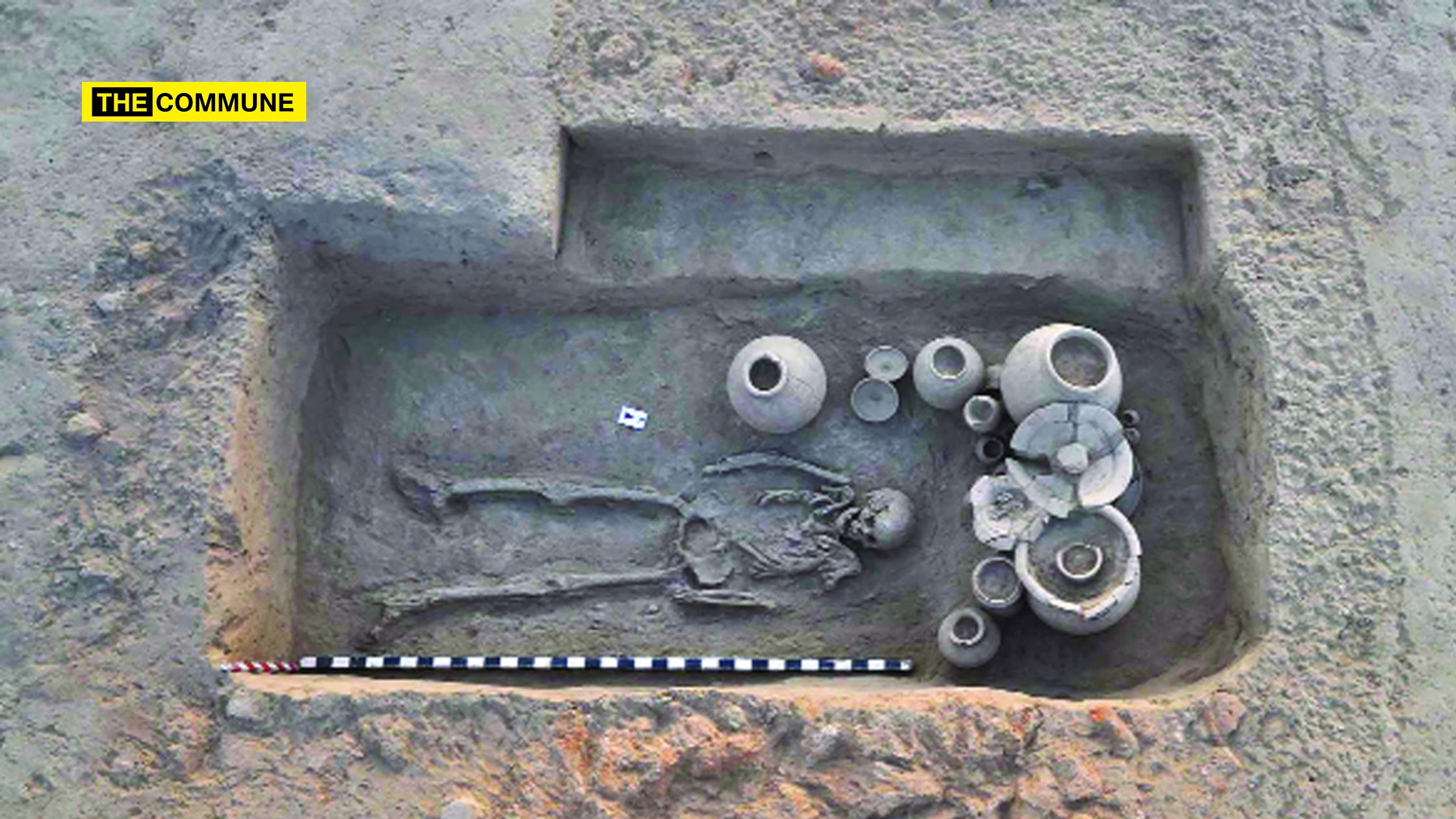
Indus Valley Had Powerful Intercontinental Mercantile Civilisation: Devdutt Pattanaik

Indus Valley Had Powerful Intercontinental Mercantile Civilisation: Devdutt Pattanaik

The 13th edition of the Khushwant Singh Litfest in this Himachal Pradesh tourist resort concluded on Sunday with Devdutt Pattanaik’s historic observation that the Indus Valley civilisation was predominantly a mercantile civilisation in which warfare and punditry are alien concepts.

Making his first public statement on his latest book “Ahimsa” at the Litfest, Pattanaik said the just-released book explored the nuances of the Harappan times which were contemporary to the Mesopotamian civilisation.

He presented insights from his latest book, which offers a fresh perspective on the Harappan civilisation by examining it through the lens of mythology.

Celebrating the 100th anniversary of Sir John Marshall’s discovery of the Harappan civilisation, Pattanaik aims to explore the cultural truths embedded in its art and artefacts rather than the written stories often associated with other ancient civilisations.

His approach delves into how mythology, unlike history, is subjective and shaped by people’s imagination, leading to different interpretations of the past.

In “Ahimsa,” Pattanaik addresses long-held assumptions about Harappa, particularly its lack of imposing architecture, a hallmark of other ancient civilisations like Egypt.

He questioned how certain conclusions about Harappan society, such as marriage customs, were drawn without concrete evidence, highlighting the importance of speculative thinking and embracing uncertainties in understanding the past.

Pattanaik’s fascination with trade and commerce within the Harappan culture forms the backbone of his narrative. He emphasised that the Harappans were more focused on trade than ornamentation, describing them as “merchandisers” rather than warriors. This focus on peaceful trade and the absence of militaristic tendencies distinguishes Harappa from other ancient civilisations.

“Harappa is unique — no war, no weapons, no military,” Pattanaik stated, offering a fresh look at a proto-monastic society where power came from giving up wealth, aligning with traditional Indian values.

Exploring various seals from the Harappan era, including one depicting two men fighting with trees and spears and a woman intervening, Pattanaik suggests that many interpretations have been misrepresentations.

Pattanaik concluded by reflecting on the impact of India’s partition on Harappan discoveries. Despite the division of historical sites, significant discoveries such as Dholavira and Rakhigarhi have expanded our understanding of this ancient civilisation.

He emphasised the importance of sharing knowledge and encouraged audiences not to accept historical narratives at face value but to remain open to multiple interpretations.

–IANS

Subscribe to our channels on TelegramWhatsApp, and Instagram and get the best stories of the day delivered to you personally.
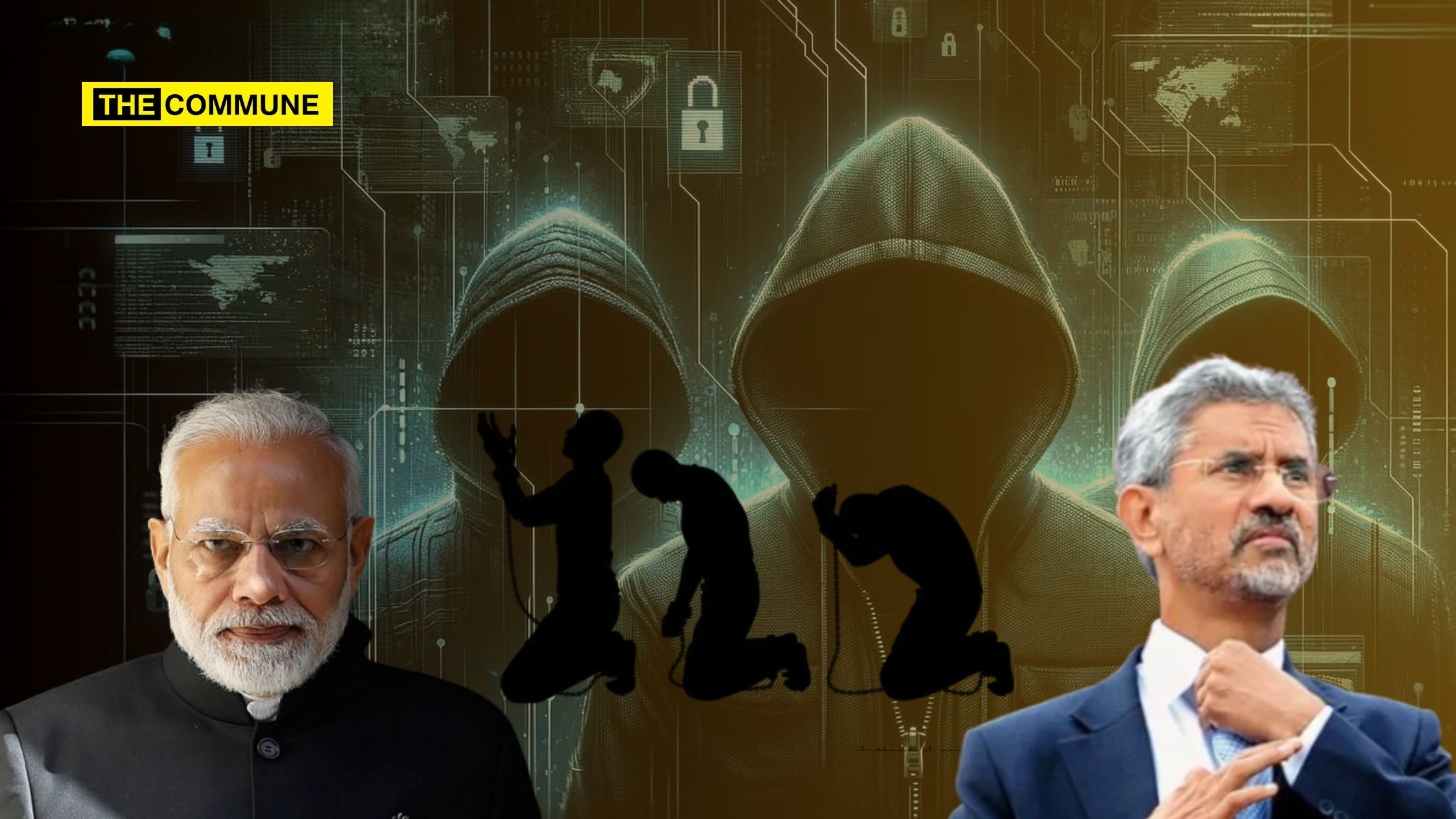
How Modi Govt Has Been Rescuing Indians From Cyber Slavery

A recent episode of Vijay TV’s Neeya Naana programme shed light on a very important topic of scams—cyber slavery was touched upon. In the episode, a victim also recounted how he was treated during that harrowing period. 

Hundreds of thousands worldwide have been victims of human trafficking job scams across Southeast Asia. These scams primarily target young, tech-savvy individuals, luring them with job offers that turn out to involve illegal online work, including money laundering, cryptocurrency fraud, and “love scams,” where they deceive others by pretending to be romantic partners.

According to an August 2023 UN report, approximately 120,000 people in Myanmar and 100,000 in Cambodia have been coerced into running cyber-fraud schemes.

In March 2024, authorities rescued hundreds from a scam operation in the Philippines, where victims were forced to conduct online romance scams using fake identities. Earlier, China facilitated the return of hundreds of its citizens who had been trapped in similar scam operations in Myanmar.

What Is Cyber Slavery?

The alarming rise in these cases has been linked to the phenomenon of ‘cyber slavery‘. Cyber slavery is a modern form of exploitation, as defined by the CyberPeace Foundation, where individuals are initially deceived online and eventually subjected to physical human trafficking. This can manifest in various ways, including forced participation in online criminal activities, exploitation in digital fraud, coercive work in the gig economy, or even involuntary servitude.

In some cases, individuals are lured with promises of lucrative job opportunities, only to find themselves trapped in harsh working conditions, often enduring 16-hour workdays. The illegal activities they are compelled to engage in range from money laundering and cryptocurrency scams to fraudulent online relationships or “love scams.”

where victims are lured by promises of high-paying jobs, only to find themselves forced into cyber fraud and other illegal activities under threat of violence. The Indian Cyber Crime Coordination Centre (I4C) reports that 45% of cybercrimes targeting Indians originate from Southeast Asia, with approximately 100,000 complaints filed since January 2023.

Survivors have recounted harrowing experiences of being trapped, with their passports confiscated, and coerced into fraudulent activities, often involving fake cryptocurrency schemes. The situation underscores the urgent need for collaboration between India and Southeast Asian countries to combat this growing transnational crime network and protect vulnerable citizens.

Indians Caught In Scams

Official data reveals a staggering 29,466 Indians have not returned after traveling to Cambodia, Thailand, Myanmar, and Vietnam on visitor visas between January 2022 and May 2024. Notably, 17,115 of these individuals are aged between 20 and 39, with males comprising the majority at 21,182. A significant portion, over one-third, hails from Punjab, Maharashtra, and Tamil Nadu. Thailand accounts for over 69% of these cases, with 20,450 individuals reported missing.

What Has The Indian Government Done So Far?

Recent data from the Bureau of Immigration reveals that out of 73,138 Indians who traveled to Cambodia, Thailand, Myanmar, and Vietnam on visitor visas between January 2022 and May 2024, a staggering 29,466 have not returned. This group predominantly consists of young adults, with more than half (17,115) aged between 20 and 39, and males making up the majority at 21,182. Notably, over one-third of these missing individuals come from Punjab (3,667), Maharashtra (3,233), and Tamil Nadu (3,124), with Thailand accounting for a significant 69% (20,450 cases).

State-wise data highlights that significant numbers of missing persons also come from Uttar Pradesh (2,946), Kerala (2,659), Delhi (2,140), and Gujarat (2,068). Furthermore, the majority of those who haven’t returned left from Delhi airport (12,493), followed by Mumbai (4,699) and Kolkata (2,395).

The victims, often promised data entry jobs, report being coerced into fraudulent schemes, and creating fake social media profiles to lure unsuspecting investors into cryptocurrency scams. Survivors recounted that their passports were confiscated upon arrival, and they were subjected to threats and violence to ensure compliance.

Additionally, a concerning 45% of cybercrimes targeting Indians are believed to originate from Southeast Asia, with around 100,000 cyber complaints recorded since January 2023. The Centre is now working to improve mechanisms to identify potential victims and prevent further exploitation.

In April 2024, 17 Indian workers were repatriated from Laos after being lured into unsafe and illegal jobs. They had fallen victim to human traffickers and were coerced into conducting online financial scams. The External Affairs Minister, S. Jaishankar, acknowledged their safe return and emphasized the need for thorough background checks on potential employers.

In May 2024, a significant operation led to the rescue of 360 Indians from Cambodia, where they were also involved in online scams. The Indian government has since established a high-level inter-ministerial committee to combat the rising cybercrime that contributes to these exploitative situations. The embassy confirmed that the rescued individuals would soon be repatriated to India.

In July 2024, eleven Indian victims trapped in a job scam in Shwe Ko Ko, Myawaddy, Myanmar, were successfully rescued with the assistance of local authorities. The Indian embassy in Myanmar announced their release, highlighting the city’s notorious reputation for scam jobs. Before this, thirteen other Indians had faced challenges in returning home due to their illegal entry into the country. Reports indicated that many individuals from Tamil Nadu had been ensnared in similar job scams across Myanmar, Cambodia, and Laos.

Earlier in October 2024, 67 Indians trapped in job scams in Cambodia were recently rescued, with 39 already back in India and 28 more set to return soon. The Indian Embassy in Phnom Penh had been actively coordinating the rescue efforts, working closely with Cambodian authorities. The scam, which primarily operated in Southeast Asia, lures individuals with fake job offers—often for data entry roles—through deceptive agents and online advertisements. Once in Cambodia, victims are coerced into participating in illegal cyber activities, such as creating fake social media accounts and running fraudulent schemes.

The Indian Embassy, following specific leads, collaborated with Cambodian police to rescue the 67 victims from Poipet on 22 September 2024. The cyber scam, affecting about 5,000 Indians in Cambodia, has resulted in significant financial losses, with estimates suggesting over ₹500 crore lost to such schemes. The Embassy has been actively repatriating affected individuals since January 2022, having helped over 1,000 return, including nearly 770 in 2024 alone.

In recent months, at least 360 Indian citizens, primarily lured by fake job offers, were rescued from working as “cyber slaves” in Cambodia. These individuals were trapped in exploitative conditions, and forced to engage in online scams after having their passports confiscated upon arrival. The Indian Cyber Crime Coordination Centre (I4C) reported that another 60 Indians are expected to return soon. The victims often reach Cambodia via Thailand, seeking better job opportunities, only to fall prey to human trafficking and organized crime.

Other Measures Taken By Modi Govt

The Indian government has formed a high-level inter-ministerial task force to tackle the growing cybercrime linked to Southeast Asia, with a focus on Cambodia, Myanmar, and Laos. The task force is working to enhance mechanisms to identify potential victims before they travel, addressing vulnerabilities in India’s banking, immigration, and telecom systems. It has also directed all states and Union Territories to conduct ground-level verification of missing individuals as part of the investigation.

The country’s telecom ministry has implemented measures to combat cyber fraud, including disconnecting 21.7 million mobile connections and blocking approximately 226,000 devices. To tackle this issue, an inter-ministerial committee was established, comprising representatives from the Home Ministry, Immigration Bureau, Financial Intelligence Unit, Reserve Bank of India, Information Technology Ministry, and National Investigation Agency (NIA).

Telecom operators have been instructed to prevent incoming international “spoofed calls” that appear to originate from Indian mobile numbers, which constitute around 35% of all international incoming calls. Additionally, telecom companies are required to provide data on Indian numbers using roaming services in countries such as Hong Kong, Cambodia, Laos, the Philippines, and Myanmar.

According to a report by The Indian Express on September 30, there were around 600,000 Indian phones registered as roaming in Southeast Asia from April to June this year.

Subscribe to our channels on Telegram and WhatsApp and get the best stories of the day delivered to you personally.

Delhi School Blast: Police Probe Khalistani Link After Telegram Post

Delhi school blast: Police probe Khalistani link after Telegram post

The Delhi Police were probing a possible Khalistani link in the blast that ripped through the wall of a CRPF school in Delhi’s Rohini after a threatening social media post went viral.

Delhi Police have written to the messaging app Telegram, seeking details of a pro-Khalistani channel that claimed responsibility for the blast on Sunday, officials said.

The blast sent shockwaves across the national capital. No one was injured in the incident.

Delhi Police have said they were investigating the connection after the Telegram post claimed the explosion was in retaliation for the alleged targeting of pro-Khalistan separatists by Indian agents.

The probe team has sought details about the Telegram channel Justice League India. On Sunday evening, a video of the blast with a “Khalistan Zindabad” watermark at the bottom appeared on the channel.

The video carried a message which claimed that Khalistani operatives were behind the attack and gave open threats.

As soon as the video was purportedly posted, it was instantly circulated on many Telegram channels operating in Pakistan. The Pakistani Telegram channels through which the message was spread are the ones often used to share terrorist activities in Kashmir.

Police sources have said preliminary investigations into the explosion have revealed that it was an IED likely controlled with a remote or a timer without deadly shrapnel and was most probably placed late at night on Saturday.

Locals said the blast occurred between 7.35 a.m. and 7.40 a.m. on Sunday. The residents said an explosion, followed by a foul smell engulfed the neighbourhood. They also said that vibrations were felt in the house.

The ongoing probe by Central agencies has revealed traces of low explosives near the site. Apart from the powder-like substance, wires were also found at the scene. Sources have said that NSG officials also found a battery and wire near the blast site and were investigating if these were part of the incident.

–IANS

Subscribe to our channels on Telegram and WhatsApp and get the best stories of the day delivered to you personally.

Palestinian Envoy Calls For Emergency Arab League Meeting Over Gaza

Palestinian envoy calls for emergency Arab League meeting over Gaza

Palestine has requested an emergency meeting of the Arab League Council at the level of permanent representatives amid “intensifying Israeli aggression,” a Palestinian envoy said.

The request comes in light of the escalating Israeli “crimes” committed against the defenceless Palestinian people, said Mohanad A A Alaklouk, the permanent representative of Palestine to the Arab League, according to the Palestinian official news agency WAFA.

Noting the Israeli army’s horrific acts that have caused “forced displacement, destruction, and starvation, particularly in northern Gaza,” Alaklouk called on the Arab League and its member states to assume responsibilities regarding these “unprecedented crimes,” which pose a threat to the security of Arab states as a whole, Xinhua news agency reported.

The Israeli army has continued its ground operation in the Jabalia camp, the largest Palestinian refugee camp in Gaza, for the 16th consecutive day, claiming the operation aims to prevent Hamas fighters from regrouping to launch further attacks.

During the operation, Israeli forces killed hundreds of Palestinians, destroyed dozens of homes and infrastructure, and forced numerous families to flee their residences, according to Palestinian sources.

On Sunday, the Central Committee of the Palestinian National Liberation Movement (Fatah) met in Ramallah, the capital of the West Bank.

Several key issues were discussed, including the ongoing Israeli “crimes” in Gaza, primarily the recent Israeli killings in the north, according to a statement released by the committee after the meeting.

The statement reaffirmed the Palestinian leadership’s continuous efforts to secure international protection from the United Nations for the entirety of the State of Palestine.

Israel has been launching a large-scale offensive against Hamas in Gaza to retaliate against a Hamas rampage through the southern Israeli border on October 7, 2023, during which about 1,200 people were killed and around 250 others were taken hostage.

–IANS

Subscribe to our channels on TelegramWhatsApp, and Instagram and get the best stories of the day delivered to you personally.
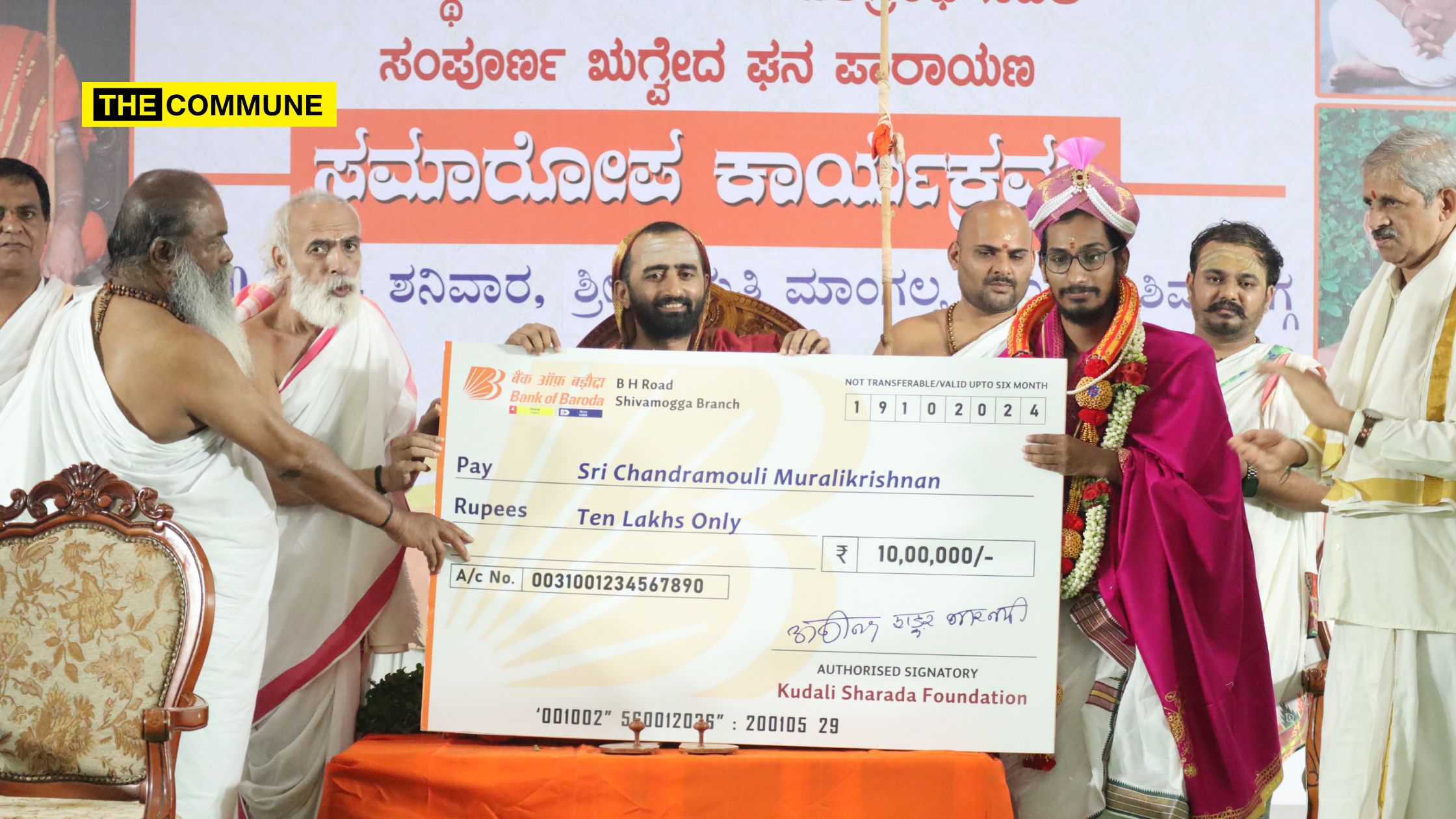
20-Year-Old Vedic Scholar Honored With ₹10 Lakhs For Rig Veda Mastery By Kudali Sringeri Maha Samsthan

20-Year-Old Vedic Scholar Honored With ₹10 Lakhs For Rig Veda Mastery By Kudali Sringeri Maha Samsthan

In a rare and prestigious recognition of Vedic scholarship, 20-year-old Chandramouli Muralikrishnan was honored with a cash award of ₹10 Lakhs by the Kudali Sringeri Maha Samsthan for achieving the highest level of proficiency in Rig Veda recitation. The award was presented by Jagadguru Sri Sri Abhinava Shankara Bharati Mahaswamy, the 72nd Shankaracharya of the Maha Samsthan, during a grand felicitation ceremony at the Gayatri Mangala Mandira in Shimoga.

Chandramouli, hailing from a five-generation lineage of Vedic scholars, achieved this accolade for his mastery of Ghanapaaraayana, a rigorous and intricate oral tradition used to preserve the Vedas. He studied under the guidance of Sri Subrahmanya Ghanapaathi at Jagadguru Vidyasthanam in Srirangam, Tamil Nadu, and has also completed the Dasha Granthi, which encompasses the study of ten foundational texts crucial for Vedic interpretation.

The event attracted a distinguished assembly of scholars, including Sri Dattavadhoot Guruji of Chaitanyashram, Sri Ganeshwar Shastri Dravid of Kashi, and Guruji Narendra Kapre of Bhagyanagar, who came to honor and bless the young scholar. The highlight of the ceremony was Chandramouli’s recitation of all 10,552 hymns of the Rig Veda in the Ghana format from memory—a feat completed over 60 days during the Chaturmasa period, with daily sessions lasting up to eight hours.

The grand procession began at the Gayatri Temple, with Chandramouli being escorted to the Gayatri Mangala Mandira. The streets of Shimoga resonated with Vedic chants, bhajans, and celebrations, as the young scholar was honored by over 800 attendees. The felicitation ceremony was supported by 33 local organizations, signifying a renewed commitment to recognizing traditional scholars.

Jagadguru Sri Abhinava Shankara Bharati, a prominent Vedic authority, emphasized the need to preserve Vedic heritage in its pure form, drawing a parallel between the conservation of seeds and the preservation of the Vedas. He expressed concern over the decline in recognition for Vedic scholars due to shifting cultural values and advocated for greater encouragement and support for those who dedicate their lives to Vedic studies.

In a symbolic gesture to revive traditional reverence, Chandramouli was also presented with a gold seal, a pearl necklace, and a gold bangle. Other dignitaries, including MLA S.N. Channabasappa and representatives of various Brahmin and cultural organizations, attended the ceremony, further underscoring the significance of this remarkable achievement.

The event marked a momentous occasion for Vedic scholarship in Karnataka, with the Maha Samsthan reaffirming its commitment to nurturing traditional learning and ensuring that scholars like Chandramouli receive the recognition and support they deserve.

Subscribe to our channels on TelegramWhatsApp, and Instagram and get the best stories of the day delivered to you personally.

Ex-Andhra Minister Pinipe Viswarup’s Son Srikanth Arrested In Dalit Youth Murder Case

Ex-Andhra Minister Pinipe Viswarup’s son Srikanth arrested in Dalit youth murder case

Andhra Pradesh Police have arrested Pinipe Srikanth, son of YSR Congress Party leader and former Minister Pinipe Viswarup, in connection with the murder of a Dalit youth two years ago.

Srikanth was taken into custody by a team from Andhra Pradesh Police in Madurai, Tamil Nadu. He was being brought to the state on a transit warrant.

He is said to be an accused in the murder of a Dalit youth and a village volunteer, J Durga Prasad.

Police, who had been looking for Srikanth for the last few days, arrested him in Madurai and produced him before a local court to obtain a transit warrant. He was being brought to Konaseema district by road.

Srikanth denied the allegations against him. “I am a doctor. I know only saving lives and not taking lives,” he told media persons in Madurai while the police were taking him away after a medical examination at a hospital. He alleged that he was illegally arrested in the case.

Durga Prasad was killed on June 6, 2022, after the riots in Dr B R Ambedkar Konaseema district.

The police earlier questioned the victim’s friend and YSRCP social media convenor, V Dharmesh. He was arrested on October 18. The police were on the lookout for Srikanth and four other accused.

The deceased was said to be a friend of Dharmesh and Srikanth and actively participated in the party activity.

The motive behind the Dalit youth’s murder is not known. Police believe that he was killed under a well-planned conspiracy.

Dharmesh had allegedly taken Durga Prasad to Kotipalli dock on a two-wheeler. Four men followed them in a car. The victim was then taken onto the boat, and the accused then strangulated Durga Prasad to death.

In response to the victim’s complaint, police registered a missing case. Police later found his body, and the autopsy revealed that he was murdered.

Viswarup was the transport minister in the previous government of the YSR Congress Party. A mob set his house in Amalapuram afire in May 2022 during the violence over the renaming of the Konaseema district. However, the YSRCP leader and his family members were not at home.

–IANS

Subscribe to our TelegramWhatsApp, and Instagram channels and get the best stories of the day delivered to you personally.
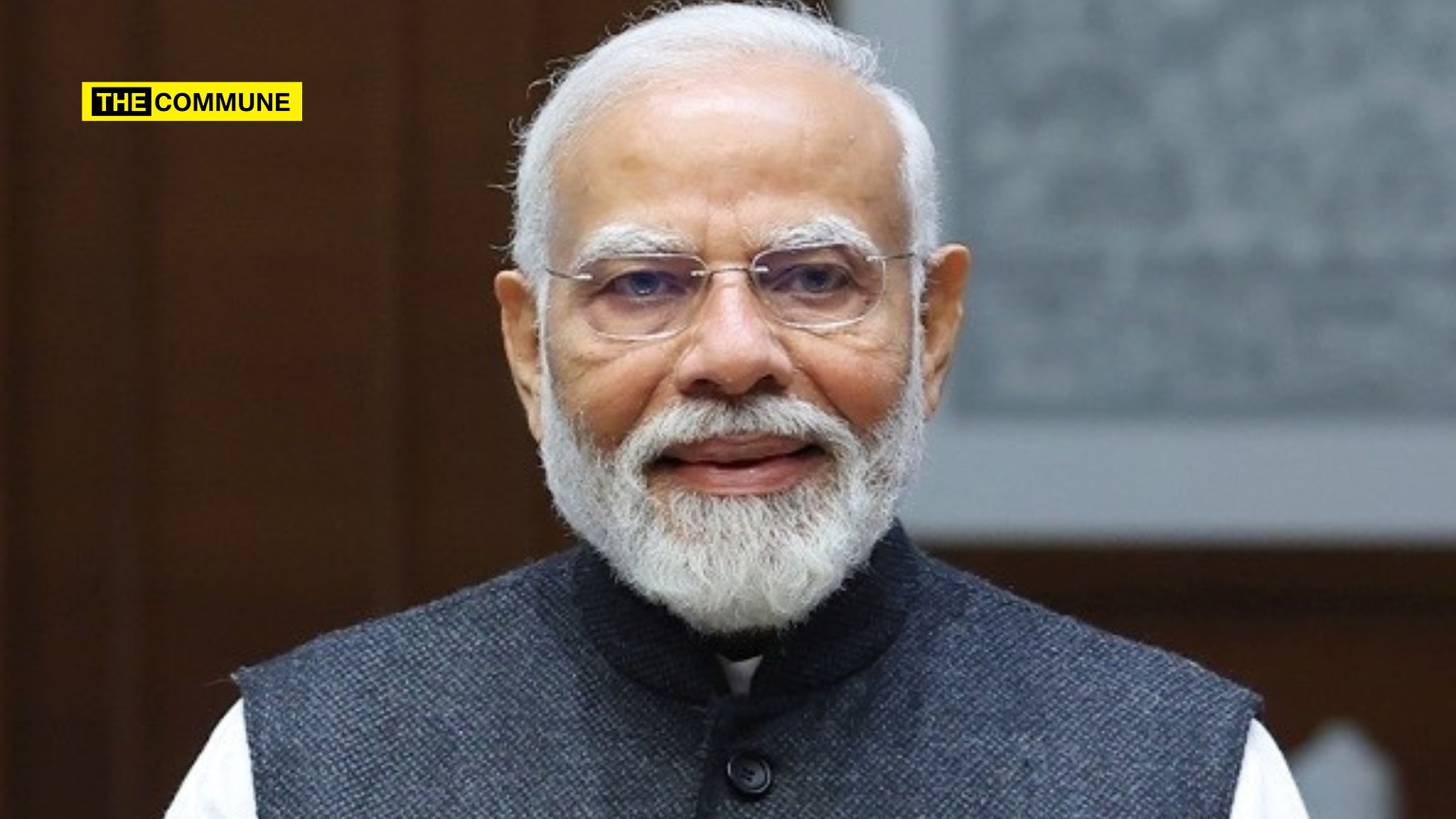
PM Modi Lists Achievements Of Modi 3.0 Government In First 125 days

PM Modi Compliments NC For Its Victory In J&K Polls

Sharing his vision for a developed India by 2047 at the two-day NDTV World Summit, Prime Minister Narendra Modi on Monday listed the achievements of his government in the first 125 days of its third term while emphasising that the country continues to move at an incredible pace in every sector.

“India’s pace and scale is unprecedented. We have completed around 125 days of the third term of our government. In these 125 days, three crore new houses have been approved for the poor, work on Rs 9 lakh crore worth infrastructure projects has been begun, as many as 15 new Vande Bharat trains have been introduced and work has started on construction of eight new airports,” said PM Modi at the ‘NDTV World Summit 2024 – The India Century’ which is being attended by several distinguished dignitaries from all over the world.

The Prime Minister stated that in the last 125 days, his government has allotted a package of Rs two lakh crore for the youth and directly transferred Rs 21,000 crore to the bank accounts of farmers.

“We have also initiated the scheme which provides free treatment up to Rs 5 lakh to the senior citizens above 70 years of age. The pace of India’s development is such that in these few days, rooftop solar plants have been installed in almost 5 lakh houses. As our forex reserves grew from 650 billion to over 700 billion dollars and Sensex and Nifty registered a growth of 6-7 per cent, we have also planted 90 crore trees under the ‘Ek Ped Maa Naam’ campaign,” he added.

Earlier, PM Modi launched ‘NDTV World’ – the new channel from the NDTV stable – as he inaugurated the two-day NDTV World Summit where he laid out his vision for a developed India by 2047.

Following Prime Minister Modi, Bhutan PM Tshering Tobgay, Barbados PM Mia Mottley, former UK Prime Minister David Cameron, External Affairs Minister S Jaishankar, and several other noted personalities from all walks of life will be addressing and discussing key global issues at the key summit.

“If we look at the current events, one thing is common in every discussion. It is a concern related to the future. During Covid pandemic, the concern was how to deal with the global pandemic. Concerns about the global economy also rose in its aftermath. It also facilitated the concerns of inflation, unemployment, along with that of climate change. The wars and conflicts raised the concerns of ruining the global supply chain. Innocent lives have been lost due to the ongoing tensions and conflicts that have become the point of discussions in various global summits,” said PM Modi while opening the event.

He pointed out that, even as the world is battling all these issues, India is discussing the ‘The Indian Century.’

“In the midst of global instability, India is a ray of hope. It is not that we are not affected by global concerns, but there is a sense of positivity that we feel in India. India has emerged as a beacon of hope,” he stated.

–IANS

Subscribe to our channels on TelegramWhatsApp, and Instagram and get the best stories of the day delivered to you personally.

TN: Public Warning For Dengue, Malaria Risks As Northeast Monsoon Sets In

The Tamil Nadu Health Department has advised the public to be cautious regarding possible outbreak of diseases such as dengue, malaria, leptospirosis, and influenza as the northeast monsoon sets in.

Since January 2024, Tamil Nadu has recorded 18,000 dengue cases.

In response, the state’s Public Health Department has urged residents to remove stagnant water from their premises to prevent mosquito breeding.

The department has already launched monsoon camps across the state to identify cases of dengue, malaria, leptospirosis, influenza, and other diseases.

Health Minister Ma Subramanian, while speaking to IANS, said that the department is closely monitoring vector-borne diseases like dengue in Tamil Nadu. He noted that 10 districts—Chennai, Coimbatore, Krishnagiri, Tiruppur, Tiruvallur, Theni, Madurai, Tirunelveli, Thanjavur, and Tiruchi—account for 57 per cent of the total dengue cases in the state.

He said that the government was focusing its efforts on these districts.

Dr T. S. Selvavinayagam, Director of Public Health and Preventive Medicine, emphasised that the health department is monitoring dengue and other fever-related cases reported in both government and private hospitals.

People have been instructed to not store rainwater for long periods in discarded household items, as this can create breeding grounds for mosquitoes.

Additionally, he advised the public to drink only boiled water to prevent waterborne diseases.

Dr Rajani, an entomologist, warned that bacterial diseases like typhoid could also spread during the rainy season.

She recommended that children be given only clean, boiled water and urged parents to keep children away from stagnant or contaminated water, as leptospirosis can spread through water contaminated by animal urine.

The Tamil Nadu Health Department has announced that district health officers will conduct public awareness campaigns on vector-borne diseases.

The department will also monitor private hospitals to identify and treat dengue cases properly.

–IANS

Subscribe to our channels on TelegramWhatsApp, and Instagram and get the best stories of the day delivered to you personally.
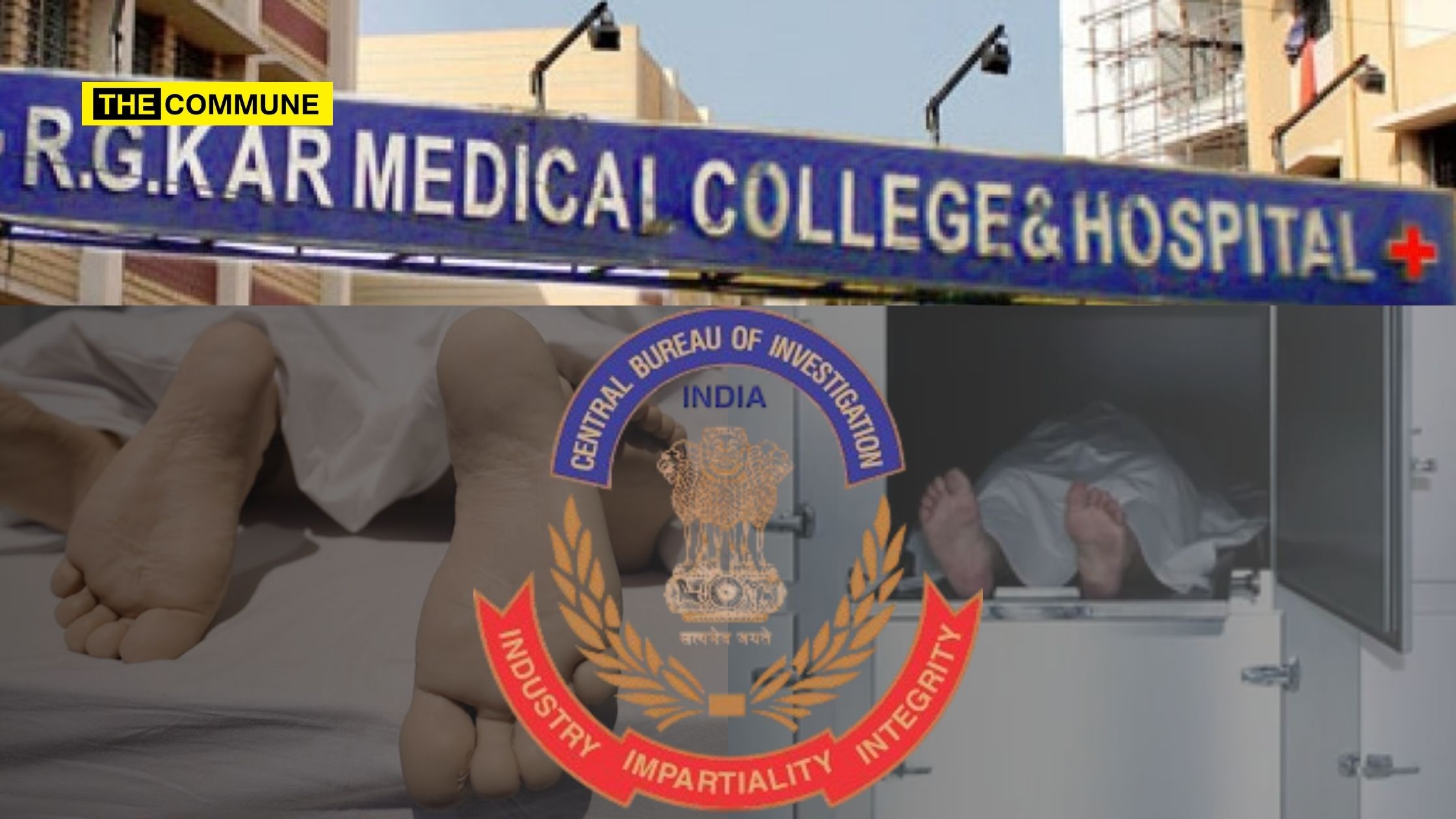
RG Kar Tragedy: CBI Trying To Retrieve Deleted Data From Mobile Phones Of Ghosh, Mondal

"Porn Racket, Sex With Dead Bodies, Missing Bodies And More": CBI Probe Reveals Shocking Details At RG Kar Medical College

The Central Bureau of Investigation (CBI) sleuths probing the ghastly rape and murder of a junior doctor of RG Kar are trying to retrieve the deleted data from the mobile phones of the former principal of the medical college and hospital Sandip Ghosh and the former SHO of Tala Police Station Abhijit Mondal.

Sources said CBI officials have got definite clues that date exchanges between the mobile phones of Ghosh and Mondal on August 9, the day the body of the victim was recovered from the seminar hall, were deleted deliberately to wipe out the communication trail.

Sources added that the investigating officials were also in the process of recovering the recordings of the calls made between Ghosh and Mondal from the morning of August 9 till the cremation of the body of the victim later at night.

Sources said that all the conversations between the two were recorded since both their mobile devices had the “auto-call recording mode” switched on.

However, both deliberately deleted all those call recordings from their devices, probably to destroy the communication records.

Sources added that the investigating officials believe that once the recordings of these conversations are recovered, they will be useful in building up strong cases against Ghosh and Mondal.

The main charges against Ghosh and Mondal are misleading the initial investigation carried out by Kolkata Police before the charge of the probe was handed over to the CBI by the Calcutta High Court and tampering of evidence after the body of the victim was recovered on the morning of August 9.

Last week, Mondal refused to give consent for conducting his polygraph test for which the CBI approached a special court in Kolkata.

On the other hand, Ghosh refused to give consent for his narco-analysis test, though earlier he gave consent for the polygraph test.

-IANS

Subscribe to our channels on TelegramWhatsApp, and Instagram and get the best stories of the day delivered to you personally.