Home Blog Page 836

“Hindu Temples Won’t Offer Jobs To People Of Other Faiths”, Says Andhra CM Chandrababu Naidu; Announces Archaka Wage Increase Among Other Measures For Temple Revitalization

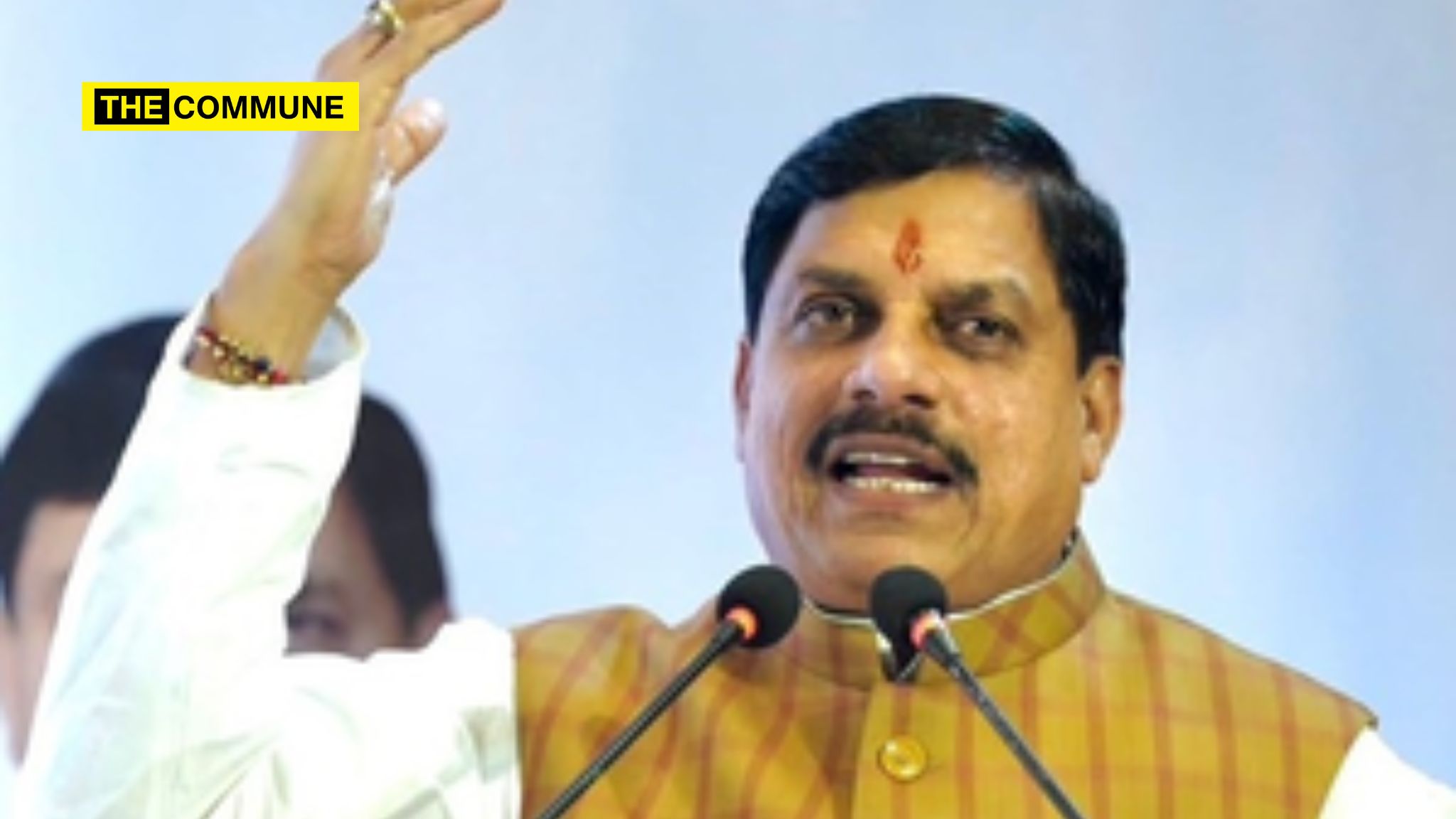
Andhra Pradesh Chief Minister Nara Chandrababu Naidu has launched a bold initiative to protect Hindu jobs within temples, ensuring that temple positions are reserved exclusively for those of the Sanatana faith. At a key meeting with the Hindu Religious Endowment Department, he emphasized this move as part of a broader strategy to prevent forced conversions and preserve the spiritual integrity of Andhra’s sacred Hindu sites.

Key Meeting To Boost Religious Meeting

CM Naidu, during a key meeting with officials from the Hindu Religious Endowment Department, laid out an extensive plan to revitalize temple management, promote religious tourism, and ensure spiritual and cultural integrity across Andhra Pradesh. The meeting, held at the Secretariat in Amaravati, underscored the importance of maintaining the sanctity of temples while introducing measures to enhance the overall experience for devotees.

Spirituality And Cleanliness At Forefront

Addressing the officials, Chief Minister Naidu emphasized the need for spirituality to flourish in every temple across the state. He insisted that temples and their surroundings be impeccably clean, ensuring the spiritual atmosphere remains intact. “Spiritual programmes should be conducted in such a way that devotees who visit the temple are inspired to return, without being extorted for money,” Naidu stated, highlighting the importance of creating a welcoming and serene environment for worshippers.

Temple Tourism

Recognizing the potential of temple tourism, especially in a state rich with religious heritage, Naidu announced the formation of a committee comprising officials from the Tourism Department, Hindu Charities Department, and Forest Department. This committee will oversee the development of temples, particularly those located in forested areas, ensuring that the natural beauty and spiritual significance of these sites are preserved while making them accessible to more visitors.

Strengthening Temple Trusts & Priests’ Welfare

In a significant move, the Chief Minister announced an increase in the number of trustees on the boards of temples that generate more than ₹20 crore annually, raising the number from 15 to 17 members. These additional members will include a Brahmin and a Nai Brahmin, ensuring a more inclusive representation within the temple management.

Naidu also addressed the financial welfare of priests and temple staff. He announced a wage increase for archakas from ₹10,000 to ₹15,000 per month, benefiting 1,683 priests across the state. Additionally, the monthly allocation for Dhoopa Deepa Naivedyam (ritual offerings) in smaller temples will be doubled from ₹5,000 to ₹10,000. This measure is expected to improve the quality of offerings and enhance the spiritual experience for devotees.

The government will provide a monthly incentive of ₹3,000 for Vedic scholars facing financial difficulties, and the minimum wage for Nai Brahmins (barbers, musicians) will be set at ₹25,000. These steps reflect the Chief Minister’s commitment to preserving and promoting traditional Hindu practices and supporting those who uphold them.

Combating Forced Conversions & Protecting Jobs In Temples

During the meeting, Naidu strongly condemned the incidents of attacks on Hindu temples during the previous Y.S. Jagan Mohan Reddy administration, including the burning of a temple chariot.

CM Naidu called for strict action against those responsible for such crimes and emphasized that forced religious conversions would not be tolerated in Andhra Pradesh. Jobs in Hindu temples will not be offered to people from other faiths.

“Forced conversion should not happen in Andhra Pradesh. Hindu temples do not offer jobs to people of other faiths,” he asserted, underlining the need to protect the religious identity of the state’s temples.

Naidu also announced that 87,000 acres of temple land currently occupied illegally would be reclaimed through legal action. “A visible change should be effected on temple premises to win the confidence of devotees,” he added, stressing the importance of restoring and safeguarding temple properties.

Naidu also proposed melting down silver offerings made to temples and converting them into coins bearing the images of the temple’s presiding deities. These coins would then be sold to devotees, providing them with a unique memento of their visit while generating additional revenue for the temples.

The Chief Minister also emphasized the need to develop online systems for temple services, making it easier for devotees to book pujas and other rituals. He suggested improving accommodations near temples, potentially in partnership with private hoteliers, to encourage devotees to stay longer.

Furthermore, Naidu ordered an inquiry into any irregularities in temple management during the past five years, ensuring transparency and accountability in the administration of temple affairs.

It is noteworthy that upon being sworn in as the Chief Minister of Andhra Pradesh, Naidu first visited the Tirumala Tirupati temple and vowed to free TTD of corruption. He also criticised the previous YSRCP government, led by Jagan Mohan Reddy by accusing them of commercializing the Tirumala Tirupati Devasthanam (TTD) and mismanaging its affairs.

Naidu highlighted concerns about the quality and pricing of religious offerings, stressing the need to prevent black market activities around ticket sales for temple visits. He pledged to address these issues, emphasizing the importance of maintaining the sanctity of the shrine. Expressing dismay at the alleged transformation of the temple into a hub for undesirable activities, Naidu vowed to initiate corrective measures starting from the Tirupati Temple.

Subscribe to our TelegramWhatsApp, and Instagram channels and instantly get the day’s best stories.

K’taka Congress Orders Removal Of Street Lights With Hindu Symbols In Hanuman’s Birthplace Gangavathi After SDPI Objects

K'taka Congress Orders Removal Of Street Lights With Hindu Symbols In Hanuman's Birthplace Gangavathi After SDPI Objects

In a move that has sparked widespread dissension, the Congress-led Karnataka government has ordered the removal of bow and arrow symbols from newly installed streetlight poles in Gangavathi, Koppal district. The decision came after the local unit of the Social Democratic Party of India (SDPI) raised objections, claiming that the symbols, installed as part of a town beautification project, were ‘non-secular’ and ‘posed a threat’ to communal harmony.

The streetlights, designed by Karnataka Rural Infrastructure Development Limited (KRIDL), were installed in July 2024 between Nagar Cross and CBS Circle in Gangavathi, a region of significant cultural and religious importance, revered as the birthplace of Lord Hanuman. The poles featured symbols such as a mace, a bow, and the name of Tirupati Thimmappa, a revered Hindu deity, reflecting the area’s deep spiritual heritage. These designs were similar to streetlamps installed in Ayodhya and Tirumala; areas known for their religious significance.

However, the local SDPI unit, led by President Mohammad Ali, filed a complaint with the Gangavathi municipality in August, arguing that the symbols were a “provocation” that could disrupt the town’s social harmony. They demanded the immediate removal of the poles, asserting that the designs were an unnecessary religious display in a public space.

Bowing down to the SDPI’s demand, the Karnataka Congress government issued a directive to remove the symbols through the Tehsildar’s office in Gangavathi. The decision was based on a verbal order from the District Collector of Koppal, who instructed that the poles be cleared to prevent any disturbance to public peace. The order stated that the symbols were installed in a manner that could potentially offend religious sentiments and disturb communal harmony in the city.

Tehsildar’s office also requested that the Karnataka Rural Infrastructure Development Corporation (KRIDL) submit a compliance report and take appropriate action against those responsible for the installation. Copies of the order were sent to various officials, including the Collector of Koppal, the Sub-Divisional Officer of Police in Gangavathi, and the Municipal Commissioner of Gangavathi, for further action.

The decision to remove the symbols has been met with strong opposition from Hindus as well as local Hindu organizations, who argue that the streetlamps were a celebration of the town’s cultural and religious heritage. Critics of the SDPI’s objection have accused the party of using communal harmony as a pretext to erase symbols that are part of the local community’s identity. They argue that the installation of religious symbols in public spaces is a common practice across India and reflects the country’s diverse spiritual landscape.

Speaking to The Organiser, Basavarajappa of the Bajrang Dal defended the installation of the streetlights, pointing out that similar designs in Ayodhya have not led to communal tensions. He criticized the SDPI’s demands as an attempt to suppress Hindu cultural expressions, citing the daily Muslim call to prayer (Azan) as an example of religious practices that the Hindu community tolerates without complaint.

Critics argue that the Congress government’s decision to oblige the SDPI’s demands undermines the secular fabric of the nation and sets a concerning precedent for the future.

Subscribe to our TelegramWhatsApp, and Instagram channels and get the best stories of the day delivered to you personally.
ED Slaps ₹908 Crore Fine On DMK MP Jagathrakshakan And His Family

ED Slaps ₹908 Crore Fine On DMK MP Jagathrakshakan And His Family

The Enforcement Directorate (ED) has fined S. Jagathrakshakan, a ruling DMK MP from Arakkonam, and his family ₹908 crore in a Foreign Exchange Management Act (FEMA) case.

Jagathrakshakan is a Dravida Munnetra Kazhagam (DMK) leader and businessman. His Accord group has interests in hospitality, pharmaceuticals, and liquor manufacturing. He also owns the Bharath Institute of Higher Education and Research (BIHER).

The financial probe agency said in a statement on X that the DMK MP and his family members have been fined in a case under the Foreign Exchange Management Act (FEMA), adding that the amount includes confiscated assets worth ₹89 crore.

The ED said it had conducted a probe under FEMA against Jagathrakshakan and his family members, following which properties valued at ₹89.19 crore were seized and confiscated under Section 37A of FEMA.

In addition, a fine to the tune of ₹908 crore has been slapped through an adjudication order issued on Monday. On December 1, 2021, the ED filed a FEMA complaint against Jagathrakshakan and his family under Section 17 of FEMA.

They were charged for violating FEMA provisions, mainly regarding an investment of ₹42 crore in a shell company in Singapore in 2017, the acquisition and transfer of Singaporean shares among family members, and an investment of Rs 9 crore in a Sri Lankan entity.

Jagathratchakan, a three-time Lok Sabha MP from the Arakkonam constituency, was first elected in 1999. He also served as the Minister of State for Commerce and Industry in the UPA government under Manmohan Singh. Jagathratchakan had faced allegations related to the coal scam in Tamil Nadu in 2012 when he was accused of facilitating illegal coal allocations to one of his companies.


This story is based on an IANS-syndicated feed.

Subscribe to our TelegramWhatsApp, and Instagram channels and instantly get the day’s best stories.

“I Wrote The Same Story 10 Yrs Ago”, Says Writer Cho Dharman On Mari Selvaraj’s Vaazhai Movie; Maari Says He Read It Just Now

Cho Dharman says he first wrote similar story to Mari Selvaraj's Vaazhai

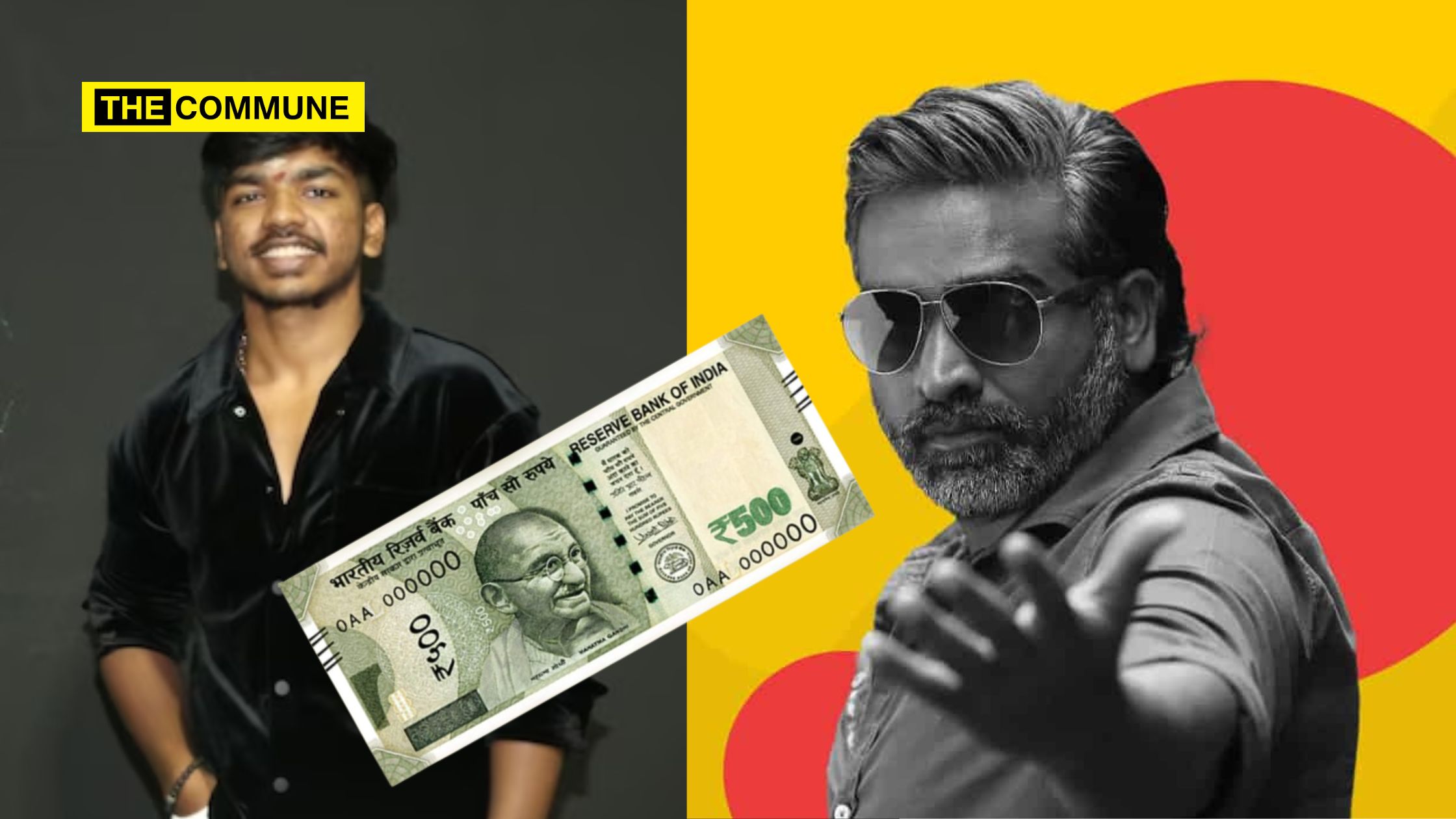
Tamil cinema’s acclaimed director Mari Selvaraj, known for his powerful storytelling, finds himself embroiled in controversy following the release of his latest film, Vaazhai. The film, which has received widespread praise and is running successfully in theatres, is now under scrutiny after Sahitya Akademi award-winning author Cho Dharman accused Selvaraj of plagiarizing his work.

Cho Dharman, a celebrated writer from Kovilpatti in Thoothukudi district, alleges that Vaazhai bears striking similarities to a short story he penned a decade ago, also titled similarly as Vaazhaiadi... The story, part of his Neerppazhi (Waterfall) collection of stories, revolves around the hardships faced by children working in the banana industry. This theme, he claims, is mirrored in Selvaraj’s film.

Selvaraj, who made a significant impact with his debut film Pariyerum Perumal, has quickly risen to prominence in the Tamil film industry. His latest offering, Vaazhai, features actors Kalaiyarasan, Divya Duraisamy, and Nikila Vimal and is set in Puliangulam, a village in Thoothukudi. The film portrays the laborious lives of children transporting bananas, highlighting their poverty and struggle. Despite its critical success and endorsements from leading directors like Bala, Shankar, and Mysskin, the film is now clouded by these plagiarism accusations.

Dharman shared his concerns both publicly and on social media, stating that several friends urged him to watch Vaazhai due to its resemblance to his short story. After viewing the film, Dharman expressed his shock at the similarities, noting that the narrative elements, character dynamics, and specific scenes closely match those in his short story. While acknowledging that Selvaraj might not have directly copied his work, Dharman emphasized that he was the first to capture these struggles in literature. He said, “Maybe he didn’t even read my story. He may have carried the banana load. But as the person who gave shape to the hardships that those children may face, I am the one who has full right to it,” 

“I have written the story of the movie that came up 10 years ago under the name of Vaazhaiadi… My story and the film tell one thing: how the hard labour of boys carrying the bananas are exploited,” Dharman said. He also highlighted that his story included the same plot points as the film, except for a few additional elements created for cinematic effect.

Dharman took to Facebook to express his thoughts further, posting a link to his original short story and reflecting on how his work, despite being written a decade earlier, has only now gained wider recognition through its adaptation to cinema.

Mari Selvaraj wrote on his Facebook “I just read a short story written by author So Dharman on banana load lifting workers. Here’s the banana short story. Everyone must read this story… Author Cho. Thank you Mr Dharman”

(With inputs from OneIndia Tamil)

Subscribe to our TelegramWhatsApp, and Instagram channels and instantly get the day’s best stories.

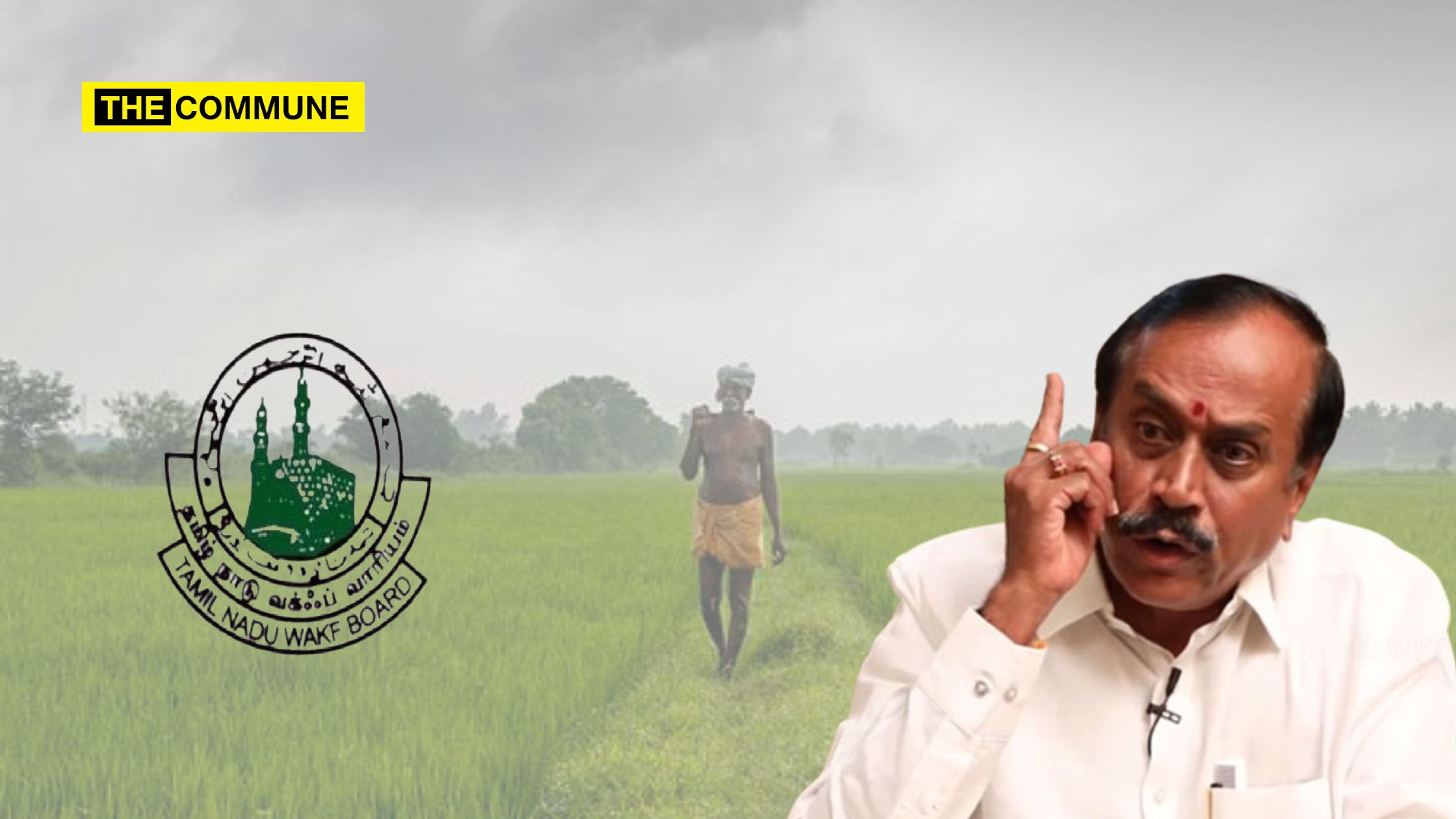
Voices Rise Calling For Amending Waqf Board Act As Bihar Sunni Waqf Claims Entire Village & Orders Residents To Vacate In 30 Days

In a alarming situation reminiscent of the Tamil Nadu villages that were swallowed by the Tamil Nadu Waqf Board, the Bihar State Sunni Waqf Board is reportedly asserting ownership over an entire village and is demanding that the residents vacate within 30 days.

Bihar Waqf Claims Entire Govindpur

The Bihar State Sunni Waqf Board has reportedly claimed ownership of a village where approximately 95% of the residents are Hindu. At least seven individuals have been issued notices instructing them to leave the land within a month in Govindpur village, located 30 kilometres from Patna.

The notices inform the villagers that the Waqf Board owns the land they occupy and that they must vacate. Those who have received these notices include Brijesh Ballabh Prasad, Malti Devi, Rajkishore Mehta, Ramlal Sao, Sanjay Prasad, Sudip Kumar, and Surendra Vishwakarma.

The villagers dispute this claim, asserting their ancestors granted them the land. The seven affected villagers have petitioned the Patna High Court in response to the notices. The High Court has noted that the land has been in the name of the villagers’ descendants since 1910.

Why is the Waqf (Amendment) Act necessary?

  • In 2020, the Tamil Nadu Waqf Board claimed ownership of the entire Balasamudram Municipality in Dindigul district, asserting that their records indicate the area spans 389 acres. Due to ongoing legal disputes, this claim has left approximately 10,000 residents in limbo, as they can now not sell their ancestral properties.
  • In September 2022, the Tamil Nadu Waqf Board claimed ownership of the entire Thiruchendurai village in Tiruchirapalli, including temple lands, sparking significant concern among residents. This claim emerged when local farmer Rajagopal was required to obtain a No Objection Certificate from the Waqf Board to register his land sale, despite having proper revenue documents. The claim was recently debated in parliament, including over the 1,500-year-old Manendiyavalli Sametha Chandrasekhara Swamy temple. The Tamil Nadu Registration Department has acknowledged issues with encroachments and disputed properties but struggled to justify the Waqf Board’s claims over temple lands.
  • In 2023, the Tamil Nadu Waqf Board asserted ownership over land allocated to 73 Scheduled Caste families in Anganakaundan Puthur, Erode District. The Tamil Nadu government provided this land in 1980 after a flood, and since then, it has been their home for 40 years. The Waqf Board’s claim has caused significant challenges, including transferring land titles, registering deeds, and obtaining loans.
  • In January 2023, the DMK government wrongly reclassified 57 acres of agricultural land in Veppur village, Ranipet District, as Waqf Board property. This land, which Hindu families had farmed for decades, was abruptly claimed by the Waqf Board without proper notice or due process, causing considerable distress among the affected farmers.

Currently, the Waqf Board’s sudden claims over lands in India including ancient temple lands has sparked controversy. The Board cannot demand the Hindu residents, who have invested generations of labor into their properties, vacate their homes. This issue highlights the outdated and problematic nature of laws inherited from the British era and perpetuated by Congress. Such practices are no longer acceptable in the modern era, and there must be checks and balances on the Waqf Board’s claims.

To address these concerns, Union Minister of Minority Affairs Kiren Rijiju recently introduced the Waqf (Amendment) Bill, 2024, in the Lok Sabha. Despite opposition from various political parties, Rijiju defended the Bill, asserting that it respects the rights of all religious organizations. The proposed legislation aims to redefine the powers of State Waqf Boards, improve property registration and surveying processes, and address encroachments. Additionally, Rijiju introduced the Mussalman Wakf (Repeal) Bill, 2024, to repeal the Mussalman Wakf Act of 1923, reflecting a move towards modernizing and reforming Waqf property management.

(With Inputs From Aaj Tak)

Subscribe to our TelegramWhatsApp, and Instagram channels and instantly get the day’s best stories.

₹1.5 Crore Collected From 500 TASMAC Stores, Widespread Corruption Exposed In Viral Video

₹1.5 Crore Collected From 500 TASMAC Stores, Widespread Corruption Exposed In Viral Video

There have been widespread complaints about government-run TASMAC liquor stores charging more than the maximum retail price (MRP), with allegations that influential individuals are illegally profiting from these sales. Recently, a video featuring TASMAC Supervisor Raghavan has gone viral, in which he is confronted about the overpricing and admits to significant financial misconduct.

The video reveals that the TASMAC store in Somanayakkanpatti village near Jolarpet in the Tirupathur district charged an extra ₹5 to ₹10 per bottle. In the footage, Supervisor Raghavan explains that the extra money collected is used to pay SRM/HRM in Salem through the union account rather than directly handling the funds himself. He details how there are 500 shops under the Salem officer’s control, each contributing around ₹3,000, totaling approximately ₹1.5 crore across all shops.

Raghavan said, “SRM has 500 stores. We don’t handle the money directly; our union is in Vellore, and we transfer the funds through the account. From there, it reaches Salem. There are 500 shops under the control of one officer. Each store contributes ₹3,000, so roughly calculate the total amount. Besides this, we need to give a separate amount to that particular officer for deputations or transfers. At least five districts, such as Ranipet, Tirupathur, Tiruvannamalai, Dharmapuri, and Krishnagiri, are under the officer’s control.

Raghavan also claims that the current officer, a woman, never visits the stores personally. Instead, individuals associated with her come for checks, collect funds, and audit the accounts. During these audits, they reportedly receive additional bribes of ₹500 to ₹1,000. Raghavan admits that the extra charges of ₹5 to ₹10 per bottle are a means to cover these costs, though he acknowledges that it still falls short of compensating for the total amount.

Following the viral video, reports indicate that TASMAC officials are investigating Raghavan’s conduct.

Subscribe to our TelegramWhatsApp, and Instagram channels and instantly get the day’s best stories.

Ancient Sivan Temple In Kallikottai Lies In Shambles, Gopuram Of Amman Temple In Pudukottai Dist Collapses, Hindu Munnani Slams DMK Govt’s HR&CE

The Hindu Munnani has harshly criticized the Hindu Religious and Charitable Endowments (HR&CE) Department and the state government for neglecting ancient temples, vital symbols of our history, culture, and civilization. According to the organization, these temples, some of which have stood for thousands of years, are now falling into disrepair under the current DMK government in Tamil Nadu. They question whether the HR&CE department will take action on temples with high incomes and will carry out immediate repairs to the deteriorating structures amidst allegations of mismanagement.

In Thiruvarangulam, near Alangudi in the Pudukkottai district, the renowned Perianayaki Amman Udanurai Arungulanathar temple, which hosts the Vaikasi Visagam and Aadipura festivals with great pomp annually, is in distress. The temple’s Rajagopuram has become overgrown with plants and is dilapidated, causing concerns that the Swami idols in the Gopuram might fall.

Devotees were alarmed when the top of the Rajagopuram collapsed, leading them to demand immediate repairs. Despite petitions sent to the HR&CE Department and the Chief Minister over several months, no action has been taken, and on the 13th of this month, the Maha Mandapam collapsed. Similar ancient temples are also suffering from neglect and are not being considered for reconstruction, for example, the Maha Mandapam at the temple in Thiruchitrambalam village, Tenkasi district, also collapsed, shocking devotees. They, too, have called for urgent repairs to the temple tower.

Hence, the Hindu Munnani urged the Tamil Nadu Government and the HR&CE department not to neglect these temples further and to restore and protect them before more damage occurs.

Additionally, the Hindu Munnani has urged the government to ensure the preservation of two recently uncovered Pandya period inscriptions found by the Archaeological Survey of India at the ancient Kallikottai Shiva temple in Paramakudi, Ramanathapuram district.

Therefore, the Hindu Munnani has called on the Tamil Nadu Government and the HR&CE department to take immediate action to prevent further neglect and to restore and protect these temples before they suffer more damage.

Subscribe to our TelegramWhatsApp, and Instagram channels and instantly get the day’s best stories.

Hindu Munnani Reports Alleged Love Jihad In Vellore District, Complaint Filed

A case of alleged “Love Jihad” has come to light in Kilithampatarai village, Katpadi Mandal, Vellore District. An Islamist man named Yashik has been accused of marrying a Hindu girl under the pretence of love and then abandoning her after just eight months. Disturbingly, it has been reported that Yashik has since become involved with another Hindu girl from the same street.

The father of the second girl, concerned for his daughter’s safety, filed a complaint at the local police station. However, frustrated by the lack of action from the authorities, he sought the help of the Hindu Munnani, a Hindu nationalist organization in Vellore.

Hindu Munnani Protest In Vellore To Protect Girl From Love Jihad

Responding to the family’s plea, Vellore Divisional President K. Mahesh, Divisional Secretary V. Ravi, and more than 100 residents organized a protest. They led a delegation to the office of the District Superintendent of Police and filed a formal complaint, demanding immediate action to locate the girl and hold Yashik accountable.

Love Jihad Menace

These incidents of love jihad in Tamil Nadu often go unnoticed because of the failure of the victims and their families to acknowledge it as love jihad in the first place. The Hindu Munnani has called for increased awareness and intervention to protect Hindu girls from such situations.

Uttar Pradesh, Assam, Kerala and several other states are pursuing strict laws against the Love Jihad menace. Assam Chief Minister Himanta Biswa Sarma announced early this month that his government will introduce lifetime imprisonment as punishment for Love Jihad criminals. The victims of Love Jihad are almost always non-Muslim girls.

In 2009, a Kerala court observed that groups like the NDF, PFI, and Campus Front have established bases in college campuses across various cities in India for carrying out well-funded Love Jihad against Hindu and Christian girls.

The court hearing revealed that the strategy involved targeting highly talented girls from affluent Hindu and Christian families. The court observed that the program allegedly began in 1996 with the support of Muslim organizations.

Subscribe to our TelegramWhatsApp, and Instagram channels and instantly get the day’s best stories.

Dravidian Model: Newly Opened School Ceiling Collapses In Krishnagiri, Three Students Injured

Dravidian Model: Newly Opened School Ceiling Collapses In Krishnagiri, Three Students Injured

In a troubling incident on 27 August 2024, three students were injured when a section of the ceiling plaster fell on them during class at a government-run school in Krishnagiri. The accident raised significant concerns about the safety and structural integrity of the building, which had only been opened two months ago.

The injured students, Santhosh, Venkatesh, and Manikandan, all in the 11th grade, sustained head injuries and were promptly taken to Singarapettai Government Hospital for medical attention. The Government Higher Secondary School, located in Periathallapadi village within Uthangarai Taluk, Krishnagiri, has over 400 students enrolled.

The new building, financed through the MP’s constituency development funds, saw the three students receive stitches at the Singarapettai Government Primary Health Centre before being discharged once their conditions stabilized.

Following the incident, over 50 parents assembled at the school to protest, demanding accountability from the contractor for what they claimed was substandard construction. As tensions rose, the school authorities promised to take appropriate action.

In the aftermath, Tamil Nadu BJP state secretary SG Suryah criticized the situation and ridiculed Congress former MP A. Chella Kumar, stating, In Krishnagiri govt. school, the building opened just 2 months ago built with MPLAD Funds of Congress MP @DrAChellaKumar collapses & 3 students are hospitalised. The great #DravidianModel at display.”

Three weeks ago, the ceiling of a classroom at a government school in Thiruporur collapsed, injuring five female students and sparking protests from parents who questioned the quality of the construction.

The incident occurred at the Government Higher Secondary School in Siruthavur village, which serves over 350 students. At around 2 pm on 8 August 2024, a section of the ceiling in a Class 10 room gave way while 48 students were inside. Five girls sustained injuries and were promptly transported to the Thiruporur government hospital. According to police sources, two of the students were treated and sent home, while Suji, Prathikshaw, and Tamilrasi were admitted with multiple injuries.

Upon hearing about the collapse, parents and locals gathered at the school, demanding an investigation into the building’s construction, which was completed only seven years prior. They protested, calling for the structure to be demolished and rebuilt to ensure the safety of their children.

In response to the protests, the Chengalpattu district education officer, Thiruporur Panchayat Union Commissioner, and Revenue Department officials visited the school. They assured the parents that the building would be inspected and that appropriate actions would be taken. Meanwhile, the officials temporarily relocated students from classes 9 and 10 to a nearby building.

In another incident last month, the ceiling of a newly constructed Panchayat Union Middle School near Kanchipuram collapsed, causing significant concern. The building, completed three months prior at an estimated cost of ₹62 lakhs, had its ceiling in one classroom suddenly give way. The incident resulted in a fan blade bending. Fortunately, the students were on the ground at the time, offering their prayers, and no one was injured.

In response, parents demanded an immediate investigation by the District Collector into the building’s stability and called for strict action against those responsible. The Panchayat Union Primary and Middle Schools in Kuruvimalai had three new structures erected at a cost of ₹61.73 lakhs before the last parliamentary elections.

Residents urged that the building be thoroughly inspected, and if found to be substandard, they requested that it be demolished and replaced with a properly constructed facility.

(With inputs from DTNext)

Subscribe to our TelegramWhatsApp, and Instagram channels and instantly get the day’s best stories.

CM Stalin’s US Visit, FeTNA, “Dravidian Movement”: Here’s Why Govt Of India Should Be Concerned

TN: CM Stalin US Visit Sparks Scrutiny Over Investment Claims & Separatist Allegations

Tamil Nadu Chief Minister M.K. Stalin departed for the United States (US) on the evening of 27 August 2024 for a two-week official trip. He is scheduled to travel to San Francisco and Chicago during his visit, likely aiming to attract investment proposals for Tamil Nadu.

Since assuming power in May 2021, Stalin’s trips to the UAE, Singapore, Japan, and Spain to attract investment for the state have been questioned by critics. Doubts were raised, especially over the credibility of these investments. Some leaders even called for a ‘white paper’ to clarify the actual outcomes.

While Stalin’s previous foreign visits have resulted in investment proposals totalling ₹10,882 crores through 17 Memorandums of Understanding (MoUs), which were projected to create over 18,500 jobs, only five projects amounting to ₹990 crores have so far begun.

On one hand, there are concerns and speculations about the authenticity of the investments claimed by the government, with accusations piling up that public funds are being squandered on foreign trips that yield unreliable results, and on the other hand, the DMK government seems to be fostering a separatist agenda abroad, like the “Khalistani” movement. The DMK is potentially inciting divisive sentiments among the Tamil diaspora, advocating for a “separate Tamil Nadualigning with Dravidian ideologists and Periyarist supporters through the DMK’s NRI wing located overseas.

This accusation merits consideration, as the Tamil Nadu government has established a special act and created a separate commissionerate to support the Tamil diaspora abroad under the banner of “Non-Resident Tamils (NRT).

While the tag of Non-Resident Indian (NRI) tag applies to all Indians including Tamil people, the assertion of a separate NRT has raised eyebrows given that the DMK is a party that once advocated for separatism and still has the same separate Dravida Nadu undercurrents in its political rhetorics. Organizations such as the Federation of Tamil Sangams of North America (FeTNA) are directly linked to the DMK’s NRI wing, with figures like P. Pugazh Gandhi, a Joint Secretary, serving as members of the NRT Welfare Board.

If you look at the above poster, you can see the three DMK personalities identifying themselves as members of the Non-Resident Tamils Welfare Board, which is a body of the Tamil Nadu government.

Critics argue that Dravidianists may be engaging in some form of “cultural terrorism” to support a separatist agenda, which they liken to the “Khalistani” movement. This can be acknowledged in previous instances with the involvement of Father Jegath Gasper Raj and his NGO, Tamil Maiyyam, in Keezhadi has raised concerns. Father Raj, referred to in U.S. crime records as ‘Gaspar Raj Maria Paulian,’ has faced allegations of supporting LTTE activities, a group designated as a Foreign Terrorist Organization by the U.S. The increased foreign funding to Tamil NGOs, many of which are Christian organizations, has been noted. In 2013-14, Tamil Nadu received substantial foreign donations through NGOs, leading to investigations by Indian authorities. Academics affiliated with foreign-funded NGOs have secured roles in advisory boards related to archaeological projects, influencing excavation licenses and other concessions.

The U.S. Department of the Treasury froze the assets of the Tamils Rehabilitation Organization (TRO) in 2007 due to its links with LTTE. This freeze aimed to isolate terrorist groups financially. Father Gasper Raj’s association with the TRO further complicates the narrative.

The tenth World Tamil Conference, sponsored by FeTNA, held in Chicago in July 2019, focused on Keezhadi and was dedicated to Tamil scholar Rev. G.U. Pope. Many have warned of the significant impact of FeTNA’s foreign donations on India’s socio-political landscape, suggesting that these funds have influenced religious demographics and socio-economic conditions.

While these activities may outwardly appear to promote cultural preservation and welfare of NRTs, the key individuals involved are heavily aligned with left-leaning and Dravidian ideologies. This alignment raises concerns that they might advance separatist agendas and undermine national unity. Therefore, it is suggested that the central government should closely monitor these developments.

(With inputs from Maridhas)

Subscribe to our TelegramWhatsApp, and Instagram channels and instantly get the day’s best stories.