Home Blog Page 820

DMK Govt Gets A Knock On Its Head From Madras High Court For Attempting To Take Over Madras Race Club Property Without Notice

DMK Govt Gets A Knock On Its Head From Madras High Court For Attempting To Take Over MRC Property Without Notice

The Madras High Court on Monday (9 September 2024) criticized the Tamil Nadu government officials for attempting to seize the Madras Race Club (MRC) land at Guindy, Chennai just two days after issuing a Government Order (G.O.) on September 6 to prematurely terminate the 99-year lease, which was granted to the club in 1946 for 160.86 acres.

A Division Bench of Justices S.S. Sundar and K. Rajasekar expressed disapproval over the wording of the G.O., both in terminating the lease and taking immediate possession of the property. The senior judge described the officials’ actions, which included bringing a large police presence to the MRC premises, as “illegal and high-handed.”

The court’s remarks came after senior counsel A.L. Somayaji, assisted by Vaibhav R. Venkatesh, informed the judges that officials had misinterpreted an interim order from September 4 related to pending rental arrears and sealed the club premises, ignoring the fact that the horses at the club needed to be cared for.

Advocate General P.S. Raman admitted that the G.O. was not correctly worded. He referred to a 1996 Supreme Court ruling in the Anamallai Club case, which stated that while the government is entitled to reclaim property, it cannot take possession unilaterally without following the law. The Advocate General assured the court that new proceedings would be initiated to properly terminate the lease and give the Madras Race Club adequate time to vacate. The court recorded his submissions.

In response to Somayaji’s request for permission to challenge the G.O. and related actions, the Division Bench clarified that the MRC could pursue legal recourse. The orders were issued after an urgent hearing on the writ appeal, prompted by concerns over the swift and coercive action of sealing the club premises.

Somayaji argued that the revenue officials had misused the interim order from September 4, which had only addressed rental arrears and allowed for lease termination per the law. He said the order had been wrongly interpreted to justify possessing the property without proper notice.

The Bench clarified that its September 4 order did not direct or authorize the state to seize the property and that any termination of the lease must follow due process of law. Despite this clear directive, the officials issued the G.O. on September 6, instructing the Chennai Collector to take control of the land, a move that was strongly contested in court.

(With inputs from The Hindu)

Subscribe to our channels on TelegramWhatsApp, and Instagram and get the best stories of the day delivered to you personally.

“Sins In Past Life – Boy, Good Deeds – Girl”: DMK Minister R Gandhi’s Controversial Remarks On Karma Go Viral, Critics Demand Action Similar To Motivational Speaker Mahavishnu

Sins In Past Life - Boy, Good Deeds - Girl: DMK Minister R Gandhi’s Controversial Remarks On Karma Go Viral, Critics Demand Action Similar To Motivational Speaker Mahavishnu

An old speech by DMK Minister for Handlooms and Textiles, R. Gandhi, in which he discussed sins and karma while distributing welfare schemes at a government school, has recently gone viral. This has led to widespread trolling of DMK’s Education Minister, Anbil Mahesh. Netizens are questioning whether Mahesh will take similar action against Gandhi as he did with spiritual and motivational speakers like Mahavishnu of the Paramporul Foundation.

In the video, DMK Minister R. Gandhi is seen at Ranipet Government School, where he was distributing welfare schemes, including free bicycles, to students. Following the distribution, while addressing the gathered parents and teachers, he made a controversial statement. Gandhi suggested that sons are born to those who have committed sins in their previous lives, whereas daughters are born to those who have performed good deeds in past life.

DMK Minister Gandhi advised parents, saying, “Parents, do not forget how hard they are studying. Not only that, I will often say another thing. If someone in their past life has committed many sins, male children will be born, and if someone has done good deeds, only girl children will be born. Only a woman, wherever she is, will care for father and mother.”

The speech has gone viral following the recent arrest and 14-day remand of a spiritual speaker, Mahavishnu, who delivered a talk on rebirth, karma, past life and Thirukkural philosophy at government-run schools in Ashok Nagar and Saidapet on 5 September 2024, during Teacher’s Day celebrations.

The speaker’s comments reportedly angered Dravidianists and Periyarists, sparking significant backlash and criticism towards Tamil Nadu’s School Education Minister, Anbil Mahesh.

In response, Minister Anbil Mahesh visited the affected schools to investigate the incident. After his review, he addressed the media, warning that stringent action would be taken against the speaker. Mahesh expressed his frustration, saying, “You came to my area, spoke, and left, you have insulted my teachers. So, I’m stressing at this point that I will not let you off lightly.” 

Narayanan Thirupathy, the Vice President of the Tamil Nadu BJP, shared the video on his X page and mocked Education Minister Anbil Mahesh, stating, “Minister R Gandhi says that if you commit sin in the previous birth, you will have male children. Is it a sin to be born male? Isn’t this superstitious talk? You took action by arresting Mahavishnu  for speaking like this in a government school. Will you leave this minister alone who has come to your area and talked like this? Anbil_Mahesh will you not insist on arrest.”

The Saidapet police have charged Mahavishnu under four sections of the Bharatiya Nyaya Sanhita Act 2023, Section 192 (Incitement to riot), Section 196(1)(a) (Dissemination of objectionable information), Section 352 (Disturbing public peace), and Section 353(2) (Spreading false information about religion and caste). Additionally, he faces charges under one section of the Persons with Disabilities Act 2016.

Mahavishnu was subsequently presented before the Saidapet judicial magistrate, who remanded him to 14 days of judicial custody. The city police are preparing to file separate First Information Reports (FIRs) as additional complaints continue to be lodged across various police stations, including Tiruvottiyur.

Subscribe to our channels on TelegramWhatsApp, and Instagram and get the best stories of the day delivered to you personally.


Mamata Banerjee’s Appeal To Return To ‘Festive Mood’ Amidst RG Kar Protests Draws Ire

West Bengal Chief Minister Mamata Banerjee’s appeal on Monday that people protesting on the streets against the rape and murder of a junior doctor at R.G. Kar Medical College and Hospital should return to festive mood ahead of next month’s Durga Puja has drawn scathing criticism from the opposition parties and a section of the protesters.

“If you stay on the roads every night, it will cause inconvenience for many people, especially the elders. There is a bar for using microphones after 10 p.m., which we have ignored so far. I will request that all of you get back to the festive mood. I will also request the CBI to ensure justice in the RG Kar case,” the Chief Minister said on Monday while interacting with media persons.

According to Bengal BJP President and Union Minister of State Sukanta Majumdar, the Chief Minister does not have the right to dictate to people when they will end their agitation on such a sensitive issue.

“Entire Bengal is in a state of shock. Even elderly persons who never walked in any procession in their lives are now on the streets, condemning the ghastly rape-murder. But instead of expressing solidarity with the spontaneous protesters, the Chief Minister asks them to get into a festive mood. This is simply unacceptable,” Majumdar said.

CPI(M) central committee member Sujan Chakraborty said the forthcoming Durga Puja cannot be used to bridge the spontaneous public protests against the R.G. Kar tragedy.

“Let the festival and protests continue side by side,” Chakraborty said. Rimjhim Sinha, who has become the face of women’s protests on the issue, said people should decide whether they will continue with the protests or get swayed by the festival mood.

“The protest is not just against what has already happened. It is also to ensure such things are not repeated in the future,” she said.

This story is based on an IANS wire feed. 

Subscribe to our TelegramWhatsApp, and Instagram channels and get the best stories of the day delivered instantly.

Union Minister Pradhan Accuses Tamil Nadu CM Stalin Of Inciting State Conflict Over NEP Funding Dispute

Union Minister Pradhan Accuses Tamil Nadu CM Stalin Of Inciting State Conflict Over NEP Funding Dispute

On 9 September 2024, Union Education Minister Dharmendra Pradhan accused Tamil Nadu Chief Minister M.K. Stalin of attempting to create conflict between states to criticize the non-implementation of the National Education Policy (NEP).

Pradhan’s remarks were in response to Stalin’s allegations that the central government is withholding funds under the Samagra Shiksha Scheme from well-performing states that refuse to adopt the NEP.

Union Education Minister Dharmendra Pradhan via his official X account stated, “Healthy competition amongst the states is always welcome in a democracy. However, pitting states against each other to make a point, goes against the spirit of the Constitution and the value of a unified India. NEP 2020 was formulated through wide range of consultations and has the collective wisdom of the people of India.”

The education minister also challenged Stalin on the state’s objections to the NEP and questioned, “I want to raise a few questions on your “principled” opposition to NEP:

  1. Are you opposing education in mother tongue including Tamil ?
  2. Are you opposing the conduct of exams in Indian languages including Tamil ?
  3. Are you opposing the creation of textbooks and content in Indian languages including Tamil ?
  4. Are you opposed to the holistic, multi-disciplinary, equitable, futuristic and inclusive framework of NEP? If not, I urge you to prioritise the interests of the students of Tamil Nadu over your political gains and implement NEP.”

Earlier, Tamil Nadu Chief Minister M.K. Stalin had shared a report from news column on X, that highlighted the reduction of Samagra Shiksha funds for states refusing to implement the NEP.

With the article, Stalin questioned the ruling BJP government at the Centre, “Denying funds to the best-performing states for refusing to bow to the #NEP, while generously rewarding those who are not delivering on the objectives – Is this how the Union BJP Government plans to promote quality education and equity? I leave it to the wisdom of our nation and our people to decide!”

Samagra Shiksha Scheme

The Samagra Shiksha Scheme is an integrated program that spans the entire education spectrum from pre-school through to class 12. It aims to provide inclusive, equitable, and affordable education and integrates the previous schemes of Sarva Shiksha Abhiyan (SSA), Rashtriya Madhyamik Shiksha Abhiyan (RMSA), and Teacher Education (TE). The scheme covers 1.16 million schools, over 156 million students, and 5.7 million teachers in government and aided schools, from pre-primary to senior secondary levels. Launched by the Ministry of Education in 2018, it is implemented as a centrally sponsored scheme with a 60:40 funding split between the Centre and most states.

 Samagra Shiksha Scheme 2.0

The Cabinet Committee on Economic Affairs has approved the continuation of the Samagra Shiksha Scheme 2.0 until the 2025-26 financial year. This upgraded version of the program aligns with the Sustainable Development Goal for Education and the 2020 National Education Policy (NEP).

Direct Benefit Transfer (DBT): To enhance outreach, the scheme will now deliver child-centric benefits directly to students through an IT-based DBT platform. This includes RTE (Right to Education) entitlements such as textbooks, uniforms, and transport allowances.

NEP Recommendations: The scheme introduces new components, including the appointment of language teachers, bilingual books, and teaching materials, in line with NEP recommendations. It will also support pre-primary education with funding for teaching materials, indigenous toys, and play-based activities, as well as training for master trainers and anganwadi workers.

NIPUN Bharat Initiative: This initiative provides annual funding of Rs. 500 per child for learning materials, Rs. 150 per teacher for manuals and resources, and Rs. 10-20 lakh per district for foundational literacy and numeracy assessments.

Digital Initiatives: The scheme includes provisions for ICT labs, smart classrooms, digital boards, virtual classrooms, and DTH channels, which have gained importance following the Covid-19 pandemic.

Support for Out-of-School Children: It allocates Rs. 2000 per grade to support out-of-school children aged 16 to 19 to complete their education through open schooling and emphasizes skills and vocational education.

Other Features: The scheme also offers financial support for the State Commission for Protection of Child Rights, introduces a Holistic Progress Card (HPC) to track student progress, supports PARAKH, a national assessment center, and provides additional sports grants. It includes provisions for Bagless Days, school complexes, internships with local artisans, curriculum reforms, and social audits covering 20% of schools annually to ensure comprehensive coverage within five years.

The Tamil Nadu government is resistant to initiatives from the central government aimed at benefiting underprivileged government school students, citing concerns over language policies and other measures that has no logic. This opposition is perceived as impeding the growth and development of young students in the state.

Subscribe to our TelegramWhatsApp, and Instagram channels and get the best stories of the day delivered instantly.

Ajit Pawar Meets HM Amit Shah, Discusses MahaYuti’s Assembly Polls Strategy

NCP national president and Deputy Maharashtra Chief Minister Ajit Pawar on Monday met Home Minister Amit Shah here at the airport before he left for Delhi. During the meeting, he discussed the MahaYuti’s electoral strategy for the upcoming Maharashtra Assembly polls.

Chief Minister Eknath Shinde and Deputy Chief Minister Devendra Fadnavis were also present during the meeting.

Amit Shah is believed to have asked them to strengthen the coordination among the MahaYuti’s partners further, which would have paved the way for the transfer of votes among each other.

Besides, the Home Minister advised the MahaYuti’s partners to reach out to the voters on the development plank while flagging off a slew of welfare and development schemes during the assembly poll campaign.

He also asked them to counter the opposition’s fake narratives strongly.

Although Shinde and Fadnavis were present at the airport on Sunday during Amit Shah’s arrival, Ajit Pawar’s absence was conspicuous, leading to a buzz in state political circles.

Despite media reports about his absence, Pawar remained silent. However, his party legislator Amol Mitkari said: “Yesterday, Ajit Pawar was in Baramati due to his prior engagements.

Today, he arrived in Mumbai and met Home Minister Amit Shah at the airport.

Why should Ajit Pawar go to Sagar bungalow (the official residence of Deputy CM Devendra Fadnavis)? He will go there if there is a MahaYuti meeting,” he added.

Ajit Pawar’s meeting with Amit Shah came a day after the latter held a marathon meeting late Sunday night with top BJP leaders. They discussed the party’s poll strategy and MahaYuti’s plan to face the upcoming Assembly elections together at full strength.

State BJP leaders are quite adamant about getting at least 160 seats while leaving the balance of 128 to Shiv Sena, NCP and other smaller parties for the 288-member Assembly election likely to occur in the second week of November.

However, in the wake of its strike rate in the Lok Sabha election after winning 7 of the 15 seats it fought, the Eknath Shinde-led faction insists that the party should not settle for less than 100 seats.

For their part, NCP leaders are making a case for getting 90 seats as promised when they moved to join the MahaYuti in July 2023. Meanwhile, Amit Shah had a busy day on Monday as he went for Ganesh ‘darshan’ at Eknath Shinde’s official residence, Varsha.

Thereafter, he visited Devendra Fadnavis’ official residence, Sagar, and also had a darshan of Ganapati. Amit Shah and his wife also visited the famous Lalbaugcha Raja to seek blessings, and later he visited Sarvajanik Ganeshotsav at Bandra. The Home Minister eventually left for Delhi.

This story is based on an IANS wire feed. 

Subscribe to our TelegramWhatsApp, and Instagram channels and get the best stories of the day delivered instantly.

Revenues From Online Gaming Surged 412% At ₹6909 Crore

Revenues From AVGC Online Gaming Surged 412% At ₹6909 Crore

Finance Minister Nirmala Sitharaman on Monday informed that revenue from online gaming has increased 412 percent, reaching ₹6,909 crore in six months, due to the increased levy on the sector.

Addressing a press conference after the 54th GST Council meeting, the Finance Minister said casino revenues have “jumped by 30 per cent.” “For casinos, revenue increased 30 per cent to ₹214 crore over the six months,” she said.

In July last year, the 50th GST meeting placed online games, both skill-based and chance-based, in the 28 percent GST slab. The measure came into effect on October 1, 2023. Earlier, skill-based games were taxed at 18 percent.

This is in addition to the tax on winnings from different gaming tournaments. Under income tax law, these winnings are treated as revenue from online games and taxed at 30 percent under the heading ‘Income from other Sources’.

The GoM on GST rate rationalisation will hold a meeting on September 23, informed FM Sitharaman.

The GoM on health insurance premium GST is likely to include a status report by the end of October and the decision will likely be made at the November GST Council meeting.

The GST Council has also agreed to form a GoM on compensation cess and slashed the tax on cancer drugs from 12 per cent to 5 per cent. “GST rates on cancer drugs are also being brought down.

It’s being reduced from 12 per cent to 5 per cent to reduce the cost of cancer treatment further,” said the Finance Minister. The GST on selected snacks has also been reduced from 18 per cent to 12 per cent.

Revenue Secretary Sanjay Malhotra said the Council did not discuss exempting payment aggregators from paying tax on online payments.

This story is based on an IANS wire feed. 

Subscribe to our TelegramWhatsApp, and Instagram channels and get the best stories of the day delivered instantly.

Tamil Nadu Sees Six Murders In One Day Raising Concerns About Deteriorating Law And Order

Six Murdered In One Day Raising Concerns About Deteriorating Law And Order

On 8 September 2024, Tamil Nadu witnessed a series of violent incidents, with six individuals, including a notable member of the ADMK from Tenkasi district, being murdered. These killings, driven by factors such as alcohol and drug abuse, have raised serious concerns about law and order in the state.

The recent murders of several political figures, including Armstrong, the former state president of the Bahujan Samaj Party, have caused significant upheaval. The ruling DMK’s coalition partners have strongly condemned the rising violence and are pressing the DMK government in Tamil Nadu to adopt stricter measures to restore order. Despite these calls for action, incidents of murder related to intoxication and mercenary violence persist unabated.

AIADMK Functionary Murder

Valliappan, a 52-year-old AIADMK functionary from Melanilithanallur near Sankarankovil in Tenkasi district, was brutally attacked and killed with blades and a sickle while taking his morning walk on 8 September. The assailants remain unidentified.

In connection with the case, Balamurugan, a resident of the same town, was apprehended by the Melanilithanallur police on the same day. The motive behind the murder is still under investigation. Notably, Valliappan’s wife, Mari Selvi, previously served as the Vice-Chairman of the Panchayat Union.

Murder Of Auto Driver

Jayaraj, a 26-year-old auto driver from Perumbakkam Ezhil Nagar, Chennai, was murdered early morning on 9 September 2024. Jayaraj, living separately from his wife Divya, 24, due to marital disagreements, was spending time with friends at Besant Nagar Velankanni Church and later at the beach.

During a late-night gathering, a dispute erupted among Jayaraj’s friends, leading to one of them stabbing him in the stomach around 1:00 a.m. The assailant then fled the scene. Bystanders reported the incident, and the Shastrinagar police recovered Jayaraj’s body, which was sent to Royapettah  Government Hospital for an autopsy.

Sneha, 25, a friend’s wife who was present at the time, is being questioned by the police due to her inconsistent statements. Authorities have arrested two individuals in connection with the case and are exploring the possibility that the murder might be linked to an affair. The investigation is ongoing.

Murder Following Brawl

On 9 September 2024, the Karumathampatty police apprehended a 46-year-old man in connection with the alleged murder of his neighbour during a confrontation that took place on 8th September.

S. Duraisamy, a headload worker from Perumalkovil Street in Aathupalayam near Somanur, was known to frequently drink alcohol with his neighbour, M. Gokul, a 26-year-old employee of a private company in Tiruppur. On Saturday evening, the two were drinking at a secluded spot near a local temple when an argument over borrowed money escalated. Duraisamy reportedly attacked Gokul with a stone, inflicting severe head injuries.

Residents rushed Gokul to Coimbatore Medical College Hospital, but he was pronounced dead upon arrival. The police arrested Duraisamy on Sunday and placed him in judicial remand as the investigation continues.

Property Dispute Leads to Fatal Stabbing

Kannayiram, 65, from Pochampalli in Krishnagiri district, and his younger brother Palani, 61, had been in a long-standing feud over their property. They jointly owned three acres of land in Mozhivayanur village and one acre in Chinnaparayur village. Their dispute, which has lasted over a decade, intensified recently.

Palani was constructing a new house on his land in Chinnaparayur village when Kannayiram’s son, Ganapati, set fire to the old hut where Palani was living, destroying it. This act led to a heated argument between the two brothers on September 9th afternoon.

During the altercation, Palani was fatally attacked and cut in the neck, dying at the scene. Palani’s son, Periyaswamy, who tried to intervene, sustained a cut on his hand. The Barur police have since arrested Kannayiram in connection with the incident.

Drunken Altercation Leads to Fatal Stabbing

Gokul, a 30-year-old labourer from Kempatty Colony near Ukkadam in Coimbatore, was preparing for his brother’s wedding on September 9th. While his family was busy with wedding preparations, Gokul was seen drinking with friends.

As Gokul and his friends walked through Ashok Nagar, Balaji Avenue, near Selvapuram, they encountered Gokul’s cousin, Praveen. An argument quickly escalated, prompting Praveen to summon his friends. In a fit of rage, Praveen and his group attacked Gokul with a knife. After the assault, Praveen and his associates fled the scene.

Gokul, severely wounded, staggered a short distance before collapsing into a ditch, where he died from his injuries. The Selvapuram police later recovered his body.

The police have arrested five individuals in connection with the incident: Praveen (29), Nagaraj (27), his brothers Chandru (25), Surya (26), and Sanjay (25). The tragic death of Gokul, just before his brother’s wedding, has brought profound sorrow to the family and the community.

Revenge Killing While on Bail

Gopalsamy, 40, was murdered on 30th May in Paruthikulam, Mudukulathur Block, Ramanathapuram District, amid an ongoing feud. Following the murder, five individuals, including Karthikaraja, Mohan, Parameshwari, Siliyammal, and Vani, were arrested and detained by the Keelathooval police.

Mohan, who had been granted conditional bail, was required to report to the Keelathooval police station starting 20th August. On the morning of the incident, he had signed in at the station around 11:00 a.m. and was leaving when three people on a two-wheeler confronted him. They attacked Mohan, who succumbed to his injuries at the scene. The police are actively searching for the three suspects who escaped.

Summary of Murders from  September 1-7, 2024

  • Mahendran, a former soldier, was killed in Kovilpatti, Thoothukudi district, following an argument over money and alcohol abuse.
  • Selvamani was murdered by Subramaniyan, the son of Siddhi, over a salary dispute in the Virudhachalam Chinnakanganankuppam area of Cuddalore district.
  • Kalikumar, a motorist from Perumalthevanpatti near Kamuthi in Ramanathapuram district, was killed by an unknown gang near Kethanayakanpatti Thiruchuli in Virudhunagar district.
  • Velkumar, the owner of a rice mill in Puzhal, Chennai, who had been missing for two months, was recovered as skeletal remains. The case is being investigated as a potential murder by unknown assailants.
  • Kapildev, an IT employee from Nanjaikalakurichi, Karur district, was stabbed to death by his brother-in-law, Veeramalai.
  • Ashika Parveen, a woman from Nilgiri district, was killed as a result of dowry-related abuse.
  • Ramesh, a railway employee from Chengalpattu district, was found murdered in Uthiramerur, Kancheepuram district, after failing to repay a loan.

(With Inputs From Dinamalar)

Subscribe to our TelegramWhatsApp, and Instagram channels and get the best stories of the day delivered instantly.

Dravidian Model: Tamil Nadu Emerges As Major Transit Hub for International Meth Trafficking Syndicates

Chennai's Rising Drug Menace: Tamil Nadu Becoming A Hub For Synthetic Narcotics As Cartels Operates With Labs

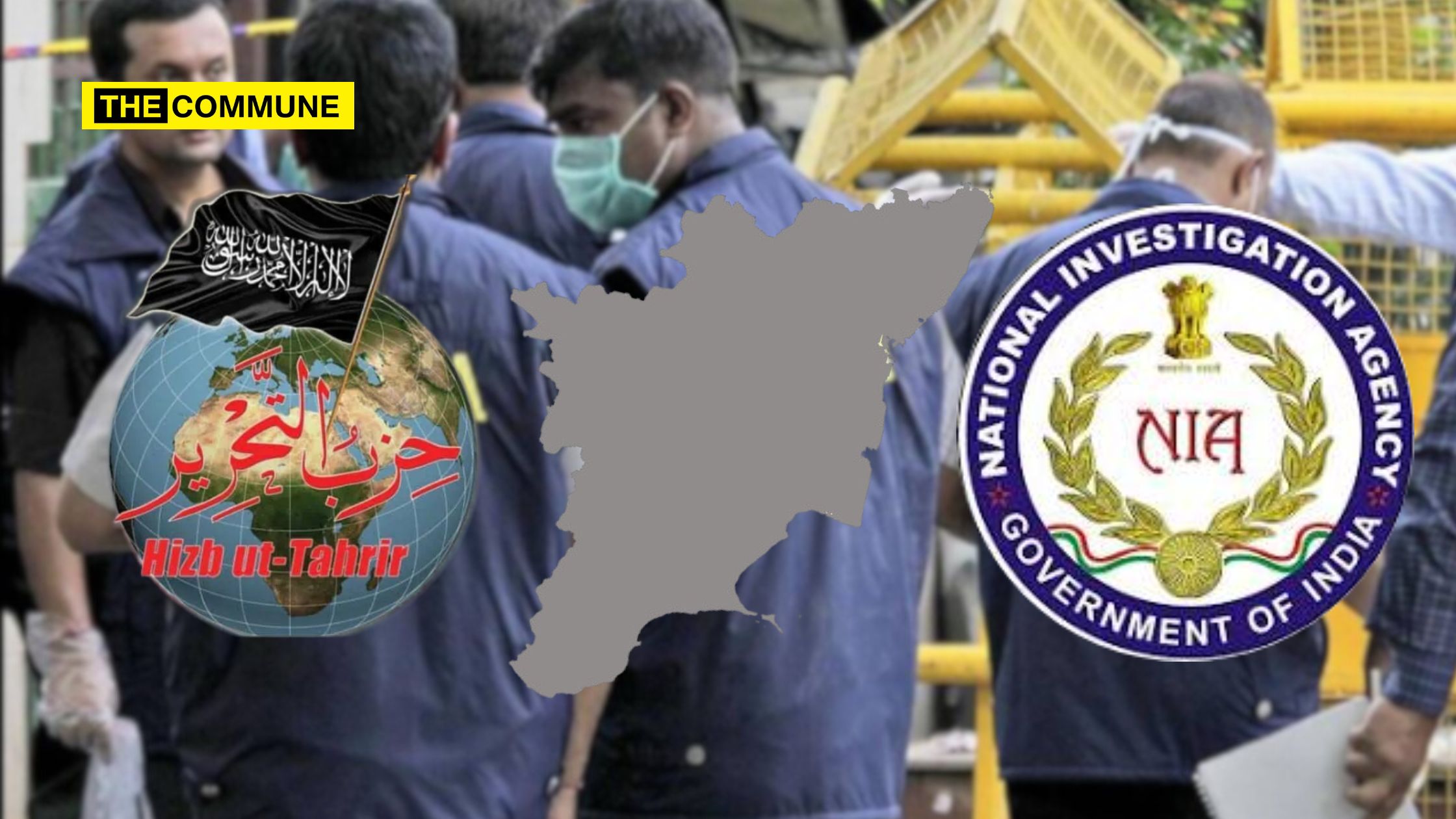
Tamil Nadu has become a critical transit point for international drug syndicates trafficking the banned narcotic methamphetamine (meth) and its precursor pseudoephedrine, with shipments heading primarily to Sri Lanka, Malaysia, and Australia, where demand is high, according to recent investigations by Indian authorities.

Data from the Narcotics Control Bureau’s (NCB) Chennai zone reveals a significant surge in meth seizures bound for Sri Lanka, increasing from 12kg in 2021 to 66kg in 2022 and reaching 81kg in 2023. This rise in seizures signals the expanding scope of the transnational drug trade through Tamil Nadu.

In 2024, seizures by the NCB and the Directorate of Revenue Intelligence (DRI) in the Chennai zone have already amounted to 57kg of meth, with a street value of Rs 360 crore, across just four cases. These cases involved meth sourced from Myanmar and headed to Sri Lanka. The most recent bust saw the DRI seize 10kg of meth last week, leading to the arrest of six individuals and the dismantling of an international drug syndicate.

Methamphetamine trafficking has proven to be a highly profitable enterprise, with officials estimating the drug’s price ranging from Rs 50,000 to Rs 1,00,000 per kilogram in Manipur, increasing to Rs 7 lakh in Chennai, and multiplying several times more in markets like Sri Lanka and Malaysia. The NCB estimates the drug’s street value at Rs 10 crore per kilogram, while the DRI places it at Rs 5 crore.

Investigations have traced the methamphetamine supply to Myanmar, part of the infamous Golden Triangle along with Thailand and Laos. The drug is smuggled across the India-Myanmar border into Manipur, from where it is transported to Tamil Nadu via human carriers, primarily using trains. Upon reaching Tamil Nadu, the narcotics are concealed in vehicles and transported to coastal towns like Rameswaram, Thoothukudi, or Nagapattinam. From there, the meth is moved across the porous maritime border to Sri Lanka through mid-sea transfers conducted by local fishing boats.

Officials have also uncovered the involvement of Sri Lankan Tamils living in Tamil Nadu’s cities and refugee camps, who are employed by drug syndicates to facilitate the trade. Locals from Manipur are also playing a key role in the trafficking operations. This illicit trade has seen a noticeable increase in the last five years.

One notable case involved a vegetable trader from Koyambedu, Chennai, with trade links to Sri Lanka, who was arrested in connection with a recent meth seizure. Another accused in last week’s DRI bust was a Tamil man who had spent his school years in Manipur before moving to Tamil Nadu.

Investigators have identified Moreh, a town in Manipur located near the India-Myanmar border, as a key transit point due to its Tamil community. In 2023, the NCB arrested three Tamils in Imphal during a 4kg meth seizure in Tamil Nadu, which later led to an 11kg seizure in Manipur — the largest by the agency that year.

Following that case, authorities have been examining links between the Tamil community in Moreh and a syndicate based in Red Hills, Chennai. Sri Lankan Tamils are particularly valuable to these drug operations as they are familiar with the terrain and play a pivotal role in coordinating mid-sea transfers and facilitating hawala payments. Manipur locals, meanwhile, assist syndicates in navigating the complex smuggling routes along India’s northeastern border.

Despite the scale of these trafficking operations, methamphetamine consumption in Tamil Nadu remains low. Local users of high-end drugs typically prefer cocaine or LSD, according to officials.

In another significant development, the seizure of meth packaged inYellow teapackets with Chinese markings indicates that global drug syndicates in Southeast Asia and Australia are involved in these operations. Methamphetamine has now become the second most popular drug in Sri Lanka.

(With inputs from TNIE)

Subscribe to our TelegramWhatsApp, and Instagram channels and get the best stories of the day delivered instantly.

Hindu Munnani Files Complaint Against Dravidar Kazhagam’s Alleged Anti-Hindu Meeting, Citing Potential For Riots

The Hindu Munnani has formally complained to the R7 police station against a special meeting organized by the Dravidar Kazhagam on 9 September 2024. The meeting, titled “Rationalism and Students,” is alleged to target Hinduism, and the Hindu Munnani argues that it could incite riots. They have requested that the police ban the meeting to maintain law and order.

The complaint was filed by the South Chennai District President, addressed to the Inspector of R7 Police Station. In the correspondence, the district head expressed concern that the Dravidar Kazhagam’s planned meeting could potentially lead to riots, given that Hindus will be celebrating Vinayakar Chaturthi on the same day. The Dravidar Kazhagam, known for its criticism of Hinduism and Hindu deities, has obtained permission to hold their meeting near the Sakthi Vinayakar Temple on Jeevanandham Road, which falls under the R7 police jurisdiction. The district head highlighted that similar situations in the past have led to law-and-order issues due to the actions of such groups. He requested that the meeting be halted, alleging that the Dravidar Kazhagam is deliberately attempting to incite riots and disrupt the peaceful celebrations of Vinayakar Chaturthi.

Recently, a tense standoff occurred in Mayiladuthurai district when members of the Dravidar Kazhagam (DK) allegedly tried to assault a police officer. The officer had intervened to stop inflammatory speeches targeting Hindus during a religious procession. According to reports, the police sub-inspector faced physical threats and verbal abuse while attempting to deescalate the situation.

DK Cadre Assault Mayiladuthurai Cop

DK and a few Dravida Munnetra Kazhagam (DMK) affiliates reportedly attempted to assault a bandobast police sub-inspector on August 23, 2024. The altercation arose after the police officer requested that the DK halt their alleged inflammatory speech against Hindus and Hindu deities, particularly as a religious procession was passing by the DK stage in Mayiladuthurai.

The incident occurred when DK had received permission to hold an event near a temple on Chinna Kadai Street. During the event, DK’s Mathivathini delivered a speech that allegedly included derogatory remarks about Brahmins and criticized the procession of the Mayuranathar Swamy temple.

Sub-Inspector Kannan, stationed to maintain order, requested that Mathivathini’s speech be halted until the procession had passed. About 20 individuals, including Panchayat Council President Selvamani and DMK Councilor Rajini, confronted the officer in response. The Dravidar Kazhagam members reportedly surrounded, pushed, and attempted to assault him, resulting in a heated argument.

This confrontation has stirred controversy in the area, with DMK celebrating the Murugan festival on one hand while causing a violent attack on the police in Mayiladuthurai on the other.

Based on previous incidents and statements from the South Chennai District President, there are concerns that the Dravidar Kazhagam might deliberately provoke conflicts during the peaceful Vinayaka Chaturthi celebrations. This could lead to riots and result in the banning of future celebrations, similar to the situation in V Kalathur village in Peramballur.

Subscribe to our TelegramWhatsApp, and Instagram channels and get the best stories of the day delivered instantly.

Police Clash With Hindu Munnani Over Lord Ganesha Idol Consecration In Perambalur On Vinayakar Chathurthi; Later Give Permission

Police Clash With Hindu Munnani Over Lord Ganesha Idol Consecration In Perambalur On Vinayakar Chathurthi; Later Give Permission

In VKalathur, Perambalur district, the police prevented the consecration of Lord Ganesha idol. This resulted in a scuffle between the police and Hindu Munnani members. Police alleged that the idol was being brought into the village without permission and prevented its entry. It is noteworthy that there are clear court orders permitting the Hindus in the locality to celebrate the festival with the deity’s consecration like all over India.

The Hindu Munnani members were taking the Ganesha idol in a vehicle that was stopped on the way by the police. Then the argument and scuffle ensued. As per the High Court order, it was required that organisers must ensure a peaceful procession of the idol. A total of 19 conditions including not hurting others’ religious sentiments during the procession were put forth by the police before finally allowing the idol to be consecrated and worshipped.

Background

Last year, during the Vinayakar Chathurthi celebration, the village faced significant resistance despite its long tradition of celebrating the festival. The Village Administrative Officer and later the Collector denied permission, claiming there was no historical record of such events in the village. When the villagers went ahead with the installation of the Vinayakar idol anyway, the police intervened violently. They forcibly removed the idol and assaulted residents, including women and children. The authorities’ actions, which involved physical attacks and damage to personal property, left the community shocked and seeking justice. The villagers questioned the fairness of the police treatment and the reasons behind the denial of their long-standing religious practices. It is to be noted, that since 2012, some local Muslims have been raising objections to the Hindu processions, branding these religious festivals assins’.

In 2021, a petition was filed with the Madras High Court concerning the practice of conducting temple processions through the Muslim-majority neighborhood of V. Kalathur, Perambalur district, Tamil Nadu. The petitioner requested police protection for these rituals, and while permission was granted, it came with certain restrictions.

During the hearing, the bench of Justices N. Kirubakaran and P. Velmurugan stressed that religious intolerance threatens the secular fabric of the country. They noted that resistance to religious festivals could lead to riots if reciprocated by another religious group.

The court reviewed an affidavit from the Deputy Superintendent of Police, noting that objections to temple processions had surfaced only since 2012, despite such processions being conducted without issues before that. The court observed that, although permission was granted under Section 180A of the District Municipalities Act 1920, objections from the Muslim community persisted.

The court ruled that dominance by one religious group in a locality should not justify prohibiting other religious groups from celebrating their festivals or organizing processions. The judges highlighted that allowing such intolerance undermines secularism and could lead to widespread conflict if minority communities were barred from celebrating their festivals.

Subscribe to our TelegramWhatsApp, and Instagram channels and get the best stories of the day delivered instantly.