Home Blog Page 82

Hijab Allowed, Bindi Barred: Lenskart Policy Sparks Nationwide Outrage; Founder Peyush Bansal Claims 2026 Document ‘Outdated’

Hijab Allowed, Bindi Barred: Lenskart Policy Sparks Nationwide Outrage; Founder Peyush Bansal Claims 2026 Document ‘Outdated’

Amid the widening controversy over alleged sexual exploitation and forced religious conversion involving employees in a TCS-linked case in Nashik, a parallel debate has emerged on social media around corporate workplace culture, with Lenskart coming under scrutiny for its internal grooming guidelines.

The controversy centres around an introductory training document issued to employees, which outlines grooming and uniform standards to be followed across the company. The document, portions of which have gone viral online, reportedly specifies rules on employee appearance and accessories, as reported in OpIndia Hindi.

What the Document Says

At the centre of the storm is a 23-page introductory training document given to Lenskart employees during onboarding, which lays out the company’s grooming and uniform standards. Pages 7 and 10 of the document, now widely circulated on social media — contain the following explicit rules:

  • Employees are prohibited from wearing bindi, kalawa (sacred wrist thread) and clutchers
  • Sindoor (vermillion), worn by married Hindu women, is permitted, but must be applied in a very small amount and must not spread across the forehead
  • Hijabs and turbans are explicitly permitted with the only condition being that they must be black in colour and that a hijab should “moderately cover up to the chest”

At the same time, it reportedly allows the wearing of hijab or turban, with conditions that they must be black in colour and styled in a prescribed manner. It also mentions that coloured gemstone rings are not allowed.

Image Source: OpIndia

Another section of the document, reportedly on page 10, addresses the use of sindoor, stating that if worn, it must be minimal and not spread across the forehead.
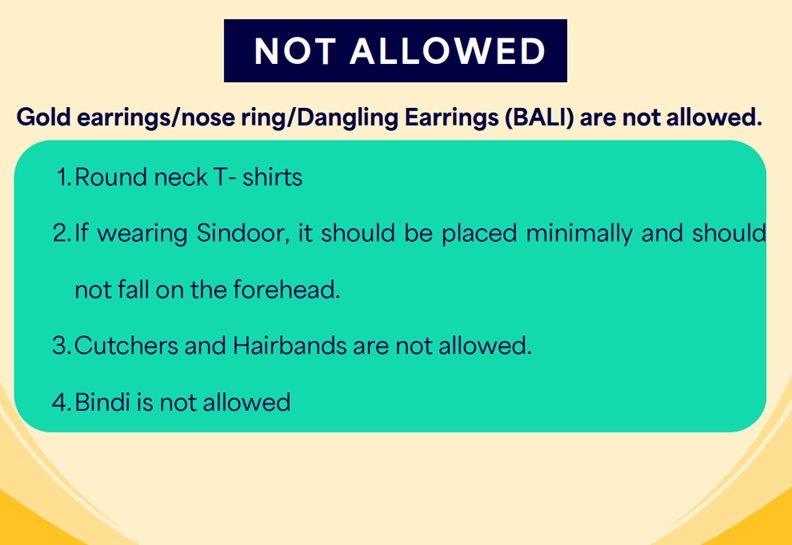
Image Source: OpIndia

The viral circulation of these pages triggered strong reactions online, with several users alleging that the rules selectively target Hindu religious symbols while permitting Islamic attire. Social media users called for boycotts and criticised the company’s policies as discriminatory.

Posts circulating online also referenced a “Lenskart style guide,” shared by writer Shefali Vaidya, which reiterated similar restrictions on bindi while allowing hijab. The post questioned the rationale behind such policies in a country where a majority of employees and customers are Hindus.

Ground Report

A ground report by OpIndia from a Lenskart store in Delhi confirmed that the document is authentic and in active use. A store employee, speaking on condition of anonymity, confirmed that all store-level employees are bound by these rules without exception.

Additionally, any employee who comes to work wearing a kalawa or bindi is asked to leave for the day and told they can return only if they comply. They also found that if an employee insists on wearing a kalawa, they must hide it inside their sleeve so that no customer or colleague can see it.

It is reported that rules are even stricter in laboratory settings, citing safety but the same restrictions apply even to store staff whose only job is talking to customers and selling eyewear.

When the ground reporter asked the store employee how a kalawa makes someone “unprofessional,” the employee fell silent and offered no response.

Peyush Bansal Responds But Fails To Convince Anyone

As the backlash intensified, Lenskart founder Peyush Bansal issued a statement on X. He wrote, “Hi, all. I’ve been seeing an inaccurate policy document going viral about Lenskart. I want to speak directly that this document does not reflect our present guidelines. Our policy has no restrictions on any form of religious expression, including bindi and tilak, and we continue to review our guidelines regularly. Our grooming policy has evolved over the years and outdated versions do not represent who we are today. We apologize for the confusion and concern this situation has caused. We as a company, continue to learn and build. Any lapses in our language or policies have and will continue to be addressed. We have thousands of team members across Bharat who wear their faith and culture proudly every day at our stores. They are Lenskart. Lenskart was built in Bharat, by Indians, for Indians. Every symbol and every tradition our people carry is a part of who we are as a company. I will never let that be compromised.”

But this was immediately challenged by netizens pointing out that the document being circulated is dated February 2026.

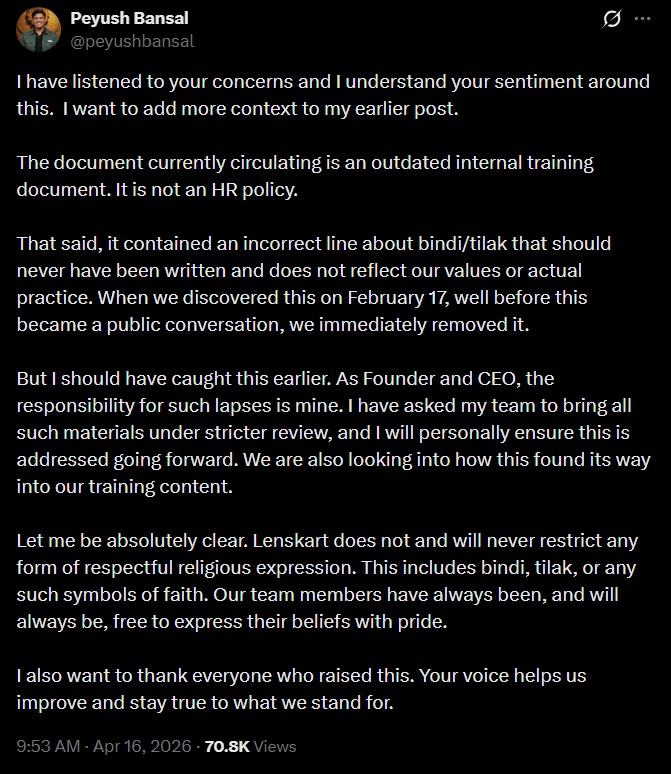
On 16 April 2026, Bansal replied to his own post and continued to claim it was an ‘outdated’, “I have listened to your concerns and I understand your sentiment around this. I want to add more context to my earlier post. The document currently circulating is an outdated internal training document. It is not an HR policy. That said, it contained an incorrect line about bindi/tilak that should never have been written and does not reflect our values or actual practice. When we discovered this on February 17, well before this became a public conversation, we immediately removed it. But I should have caught this earlier. As Founder and CEO, the responsibility for such lapses is mine. I have asked my team to bring all such materials under stricter review, and I will personally ensure this is addressed going forward. We are also looking into how this found its way into our training content. Let me be absolutely clear. Lenskart does not and will never restrict any form of respectful religious expression. This includes bindi, tilak, or any such symbols of faith. Our team members have always been, and will always be, free to express their beliefs with pride. I also want to thank everyone who raised this. Your voice helps us improve and stay true to what we stand for.”

He did not apologise nor share the latest ‘edited’ or updated document.
Why the Clarification Does Not Add Up

Several critical questions remain unanswered and Bansal’s clarification fails to address them:

The document in circulation is dated February 2026 – the very same month Bansal claims he “fixed” it. If the fix happened in February, why is a February-dated document still making the rounds?

Bansal has not released the “corrected” policy document publicly, making it impossible to verify whether any change was actually made

The Delhi store employee confirmed on the ground (as reported above) in April 2026 that these rules are still being actively enforced on staff. This directly contradicts Bansal’s claim of a fix

The Larger Context: TCS, Lenskart, and Corporate India’s Identity Problem

This controversy has erupted in the same week as the TCS Nashik case, in which a BPO unit of Tata Consultancy Services saw multiple women file FIRs alleging sexual harassment, religious coercion, and forced conversion. The dual flashpoints have triggered a broader national conversation about the work culture at large Indian corporations, specifically, whether certain companies have developed internal environments where Hindu employees’ religious identity is treated as a liability to be managed or concealed.

In Lenskart’s case, the fact that hijabs are explicitly accommodated with detailed instructions (colour, coverage, style) while Hindu symbols are either banned or must be hidden under clothing, points to a policy that is anything but neutral. In a country where religion and culture are inseparable from daily life, forcing a store employee to tuck away her kalawa or limit her sindoor is not a matter of professionalism. It is a question of dignity.

Subscribe to our channels on WhatsAppTelegram, Instagram and YouTube to get the best stories of the day delivered to you personally.
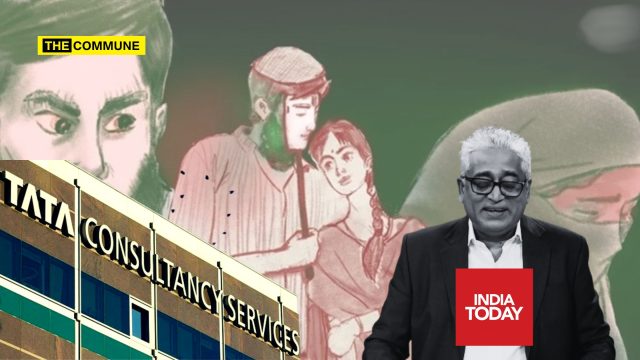
India Today’s Rajdeep Sardesai Amplifies “Relationship Gone Wrong” Narrative In TCS Nashik Muslim Gang Grooming Case

As the Nashik TCS sexual harassment and forced religious conversion case widened with three more women preparing to file FIRs, taking the total to 12–14 complainants, India Today’s Editor-in-Chief Rajdeep Sardesai chose to amplify a counter-narrative: the unsourced, unverified account of an arrested accused’s wife.

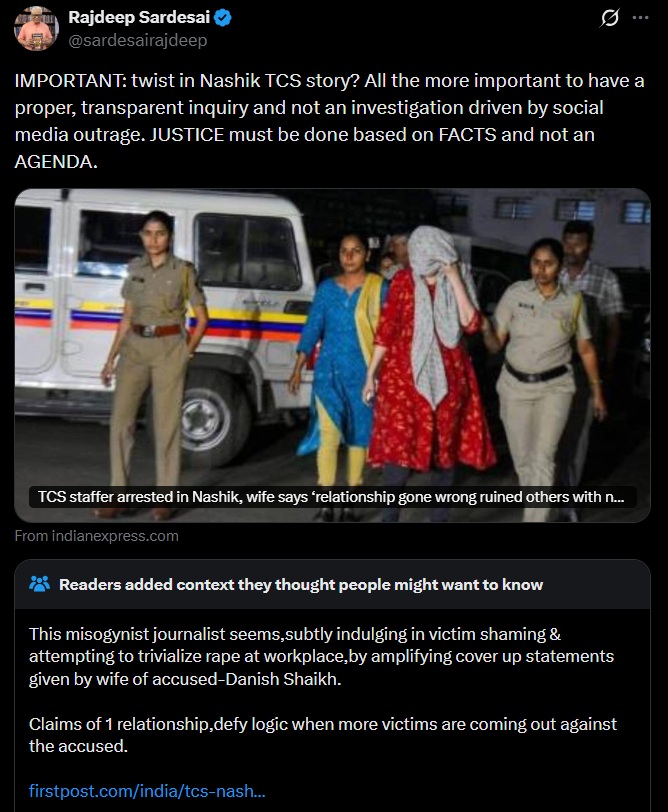
On 15 April 2026, Sardesai shared an Indian Express article, authored by Mohammed Thaver, quoting the wife of one of the seven arrested TCS BPO employees on the condition of anonymity.

The piece presented her claim that the entire case stems from “a relationship gone wrong” between rape-accused Danish Shaikh and one complainant, and that the other accused were “not involved.” Sharing the article on X, Sardesai wrote, “IMPORTANT: twist in Nashik TCS story? All the more important to have a proper, transparent inquiry and not an investigation driven by social media outrage. JUSTICE must be done based on FACTS and not an AGENDA.”

The framing drew immediate backlash. Sardesai’s post on the case which had been unfolding for nearly five days and had already produced nine FIRs, did not centre the victims’ accounts but instead cast doubt on the investigation’s integrity by platforming a defence statement from a family member of the accused.

The core contradiction is glaring: The “relationship gone wrong” theory is offered to explain away nine separate FIRs filed by multiple unconnected women – many of whom came forward only after sustained counselling by the Nashik Police’s SIT, specifically because they feared social stigma and professional retaliation. Sardesai’s framing of an accused’s wife’s claim as an “important twist” rather than the SIT’s confirmation that three additional victims are coming forward raises serious questions about editorial judgment.

The investigation itself was not “driven by social media outrage.” Nashik Police ran a 40-day undercover operation, with female officers embedded inside the BPO unit, before arrests were made. Complainants’ statements were recorded before a magistrate. The SIT has stated it is building its case on evidence, not public pressure.

The contrast with Sardesai’s usual editorial posture is notable. On cases where the accused belong to a different community or political affiliation, Sardesai has historically been among the first and loudest voices demanding accountability. In this case where the primary accused, Danish Shaikh, faces rape charges, and where allegations include targeted grooming and coercion for religious conversion of Hindu women including a Dalit employee, the India Today editor-in-chief’s comments seems to signal that “justice must not be agenda-driven.”

What Sardesai calls “social media outrage” was, in fact, public reaction to arrests and FIRs that were already made following a court-supervised police investigation, not the other way around.

With the probe now expanding under SIT supervision, the Maharashtra ATS also reportedly examining a potential organised network angle, and more victims emboldened to speak up, the question being asked by many observers is simple: Why is the “twist” the wife’s denial and not the growing number of women finally finding the courage to speak?

Subscribe to our channels on WhatsAppTelegram, Instagram and YouTube to get the best stories of the day delivered to you personally.
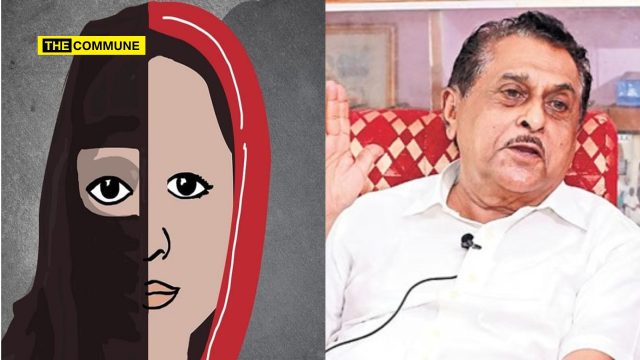
“Love Jihad Concerns In Kerala Are Real”, Says Former Patna High Court Chief Justice JB Koshy

"Love Jihad Concerns In Kerala Are Real", Says Former Patna High Court Chief Justice JB Koshy

A commission report on issues faced by the Christian community in Kerala has reignited debate over minority rights and allegations of forced religious conversions, following remarks by retired Chief Justice of the Patna High Court, Justice JB Koshy.

The 357-page report, approved by the Kerala government on 26 February 2026, has highlighted the need to ensure that minority benefits for Christians are aligned with their population share. The findings and recommendations were discussed by Justice Koshy in an interaction with The New Indian Express (Kerala edition), where he outlined concerns affecting the Christian community and called for a broader understanding of minority status beyond its perceived association with Muslims.

During the discussion, Justice Koshy addressed the long-standing concern within sections of the Christian community over Love Jihad where Muslim men systematically target and convert Christian and Hindu women through relationships and marriage.

Responding to a question on whether such fears were real, Justice Koshy stated, “Yes, there is a lot of fear about it, and rightly so. There is a practice of converting good girls into Muslims. Even while they are still studying, they are taken to homes and indoctrinated. When I was a judge, such cases came before me. When they came, the girls were nowhere to be found. Habeas corpus petitions would be filed. No matter how much we searched, after one or two years, when the girl was finally brought to court, by that time she had already been fully converted into a Muslim.”

He further elaborated on specific instances he claimed to have encountered during his judicial tenure, “One case, a single daughter of a family, she was very beautiful and well-mannered. She fell in love with A Muslim man. While she was going to school, he would take her to boutiques under the pretext of fashion designing or something. Eventually, she became pregnant, a marriage was hurriedly arranged but she had not converted yet. Then, after the marriage, he initially said, ‘I won’t bring her into my house, no problem, you go wherever you want.’ But slowly, after some time, a child was born, and the child was not baptised. Eventually, the whole family became a Muslim family. The parents were helpless – the entire family of the girl who married into the Muslim side had socially excluded them. I have practically seen many such cases. When I was a judge, many such cases came before me.”

Justice Koshy also cited another case involving a woman from the Hindu community, “One case was of a Namboodiri girl, even while she was studying, they took her to their homes. During that time, she would observe fasts (Ramzan). When her family members asked about it, she would say, ‘It’s just a fast, no problem, I don’t need to eat.’ Gradually, she stopped being seen. After one or two years, a habeas corpus petition came. When she was brought to court, she said, ‘I belong to the Muslim community, I have Muslim faith.’ But the marriage had already taken place.”


Subscribe to our channels on WhatsAppTelegram, Instagram and YouTube to get the best stories of the day delivered to you personally.
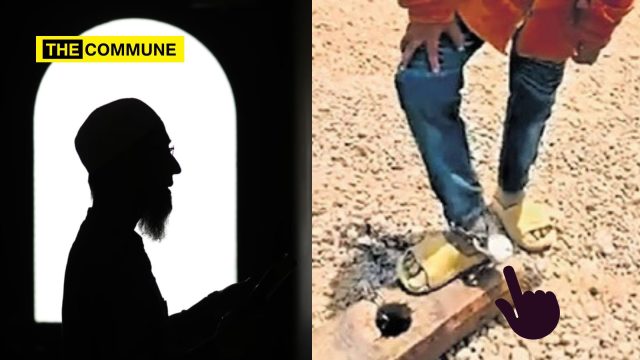
Andhra Pradesh: 11-Year-Old Boy Found Leg-Cuffed And Chained To Wooden Log By Madrasa Staff As Punishment

Andhra Pradesh: 11-Year-Old Boy Found Leg-Cuffed And Chained To Wooden Log By Madrasa Staff As Punishment

The Banaganapalle police and the district child protection authorities have launched an investigation into an incident in which an 11-year-old boy was allegedly subjected to leg-cuffing as punishment at a madrasa in Banaganapalle town of Andhra Pradesh’s Nandyal district, as reported in Times of India.

The incident triggered widespread outrage after visuals showing the minor with his legs chained while walking on the streets surfaced on social media on Monday (12 April 2026), leaving residents shocked and drawing sharp reactions over the treatment of the child.

Police officials reported that a preliminary enquiry was initiated soon after the videos went viral. The enquiry found that the boy had been subjected to what officials described as an inhumane form of punishment.

Banaganapalle Sub-Inspector Duggi Reddy stated that the child’s parents had separated recently and that the boy, along with his two siblings, had been living with their mother in the Idgah Nagar locality of Banaganapalle. He reported that the boy had been irregular in attending classes at the local madrasa and was considered mischievous.

According to the police enquiry, the child was tied with iron chains to a wooden log as a form of punishment. The officer stated that it had been learnt that the action was carried out by madrasa staff following a request from the boy’s mother, who had sought disciplinary measures due to his irregular attendance.

The Sub-Inspector further stated that, regardless of the circumstances, the method used amounted to inhumane punishment, following which a case had been registered, and a detailed investigation had been launched into the incident.

District Child Protection Officer Swapna Priya Darshini reported that the child would be produced before the Child Welfare Committee in accordance with provisions of the Juvenile Justice Act to ensure his care and protection.

Subscribe to our channels on WhatsAppTelegram, Instagram and YouTube to get the best stories of the day delivered to you personally.
Manachallur: 25-Year-Old Mother Dies By Suicide After Alleged Public Abuse & Assault By DMK Workers Who Refused To Give Her Election Gifts

Manachallur: 25-Year-Old Mother Dies By Suicide After Alleged Public Abuse & Assault By DMK Workers Who Refused To Give Her Election Gifts

A 25-year-old woman from Manachanallur in Trichy district died by suicide on Tuesday (14 April 2026) night following an alleged assault and public humiliation by local DMK workers during the distribution of election-related gift items. Police have arrested six persons in connection with the case, while three others remain absconding, as reported in DT Next.

The deceased, identified as Sindhuja, a resident of Vaazhaikattai village in Thalakudi panchayat, was married to Prasanth, an auto driver, and was the mother of a three-year-old girl.

According to Trichy district superintendent of police S. Selvanagarathinam, the incident occurred around 7.30 pm on Monday when DMK workers were distributing silver utensils to villagers. When Sindhuja approached them seeking the items, she was allegedly told that the gifts were meant only for party members and their relatives, as reported in Times of India.

An argument ensued after Sindhuja objected and reportedly stated that she would question the DMK candidate during vote canvassing. Police said that the confrontation escalated, with the group allegedly pulling her by her hair and dress and beating her with a broomstick. She was also subjected to verbal abuse and threats in public view.

The altercation intensified further when Sindhuja warned the cadre against supporting the DMK candidate S. Kathiravan, who was scheduled to campaign in the area. Following the incident, she reportedly felt deeply humiliated and withdrew from interacting with others in the locality.

On Tuesday night, Sindhuja informed her husband about the assault and urged him to identify those responsible. Police said Prasanth attempted to pacify her and suggested addressing the issue the next day. This reportedly led to further distress, following which Sindhuja pushed him out of the room, locked the door, and attempted to hang herself.

Hearing the commotion, neighbours and her husband broke open the door and rushed her to a private hospital. However, she died on the way.

On Wednesday (15 April 2026) morning, the Kollidam police retrieved the body and sent it to the Srirangam Government Hospital for postmortem. Subsequently, relatives of the deceased staged a road blockade on the Trichy-Lalgudi road and the Trichy-Salem bypass, demanding strict action against those involved. Traffic was disrupted before police intervened and held talks with the protesters.

Based on a complaint filed by Sindhuja’s mother Ilayarani, police registered a case against nine persons including Raja, Rajendran, Ravikumar, Rajkumar, Sureshkumar, Pushpam, Rajeswari, Karthiga, and Angumani under multiple sections of the Bharatiya Nyaya Sanhita, including 296 (obscene acts), 115(2) (voluntarily causing hurt), 351 (criminal intimidation), 79 (insult to the modesty of a woman), and 108 (abetment of suicide). Relevant provisions of the Tamil Nadu Prohibition of Harassment of Women Act and the Representation of the People Act were also invoked.

Police arrested six accused, including a DMK branch secretary Rajendran, his wife Rajeswari, Raja, Pushpam, Ravikumar, and Angumani. They were produced before a court and remanded to judicial custody. The remaining three, Sureshkumar, Rajkumar, and Karthiga are absconding, and a search is underway.

The Manachanallur Assembly constituency, where the incident occurred, is witnessing a multi-cornered contest involving candidates including S. Kathiravan (DMK), R.V. Bharathan (Singa Thamizhar Munnetra Kazhagam with AIADMK symbol), V. Saravanan (TVK), and R. Thenmozhi (NTK). Allegations of gift distribution to voters have also been reported against candidates from multiple parties, with complaints lodged before election authorities.

Meanwhile, AIADMK North District Secretary and former minister M. Pranjothi visited the victim’s family and consoled them.

Subscribe to our channels on WhatsAppTelegram, Instagram and YouTube to get the best stories of the day delivered to you personally.
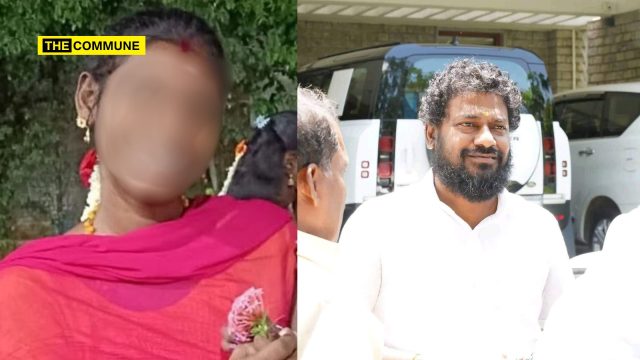
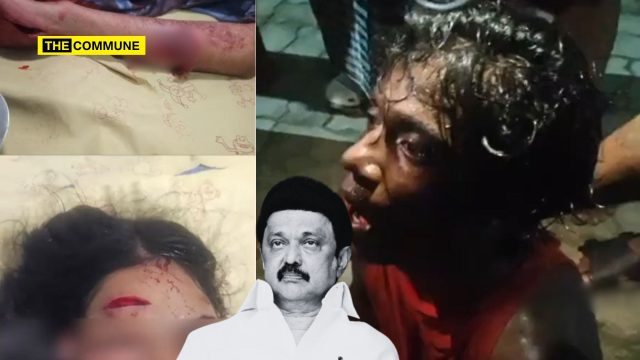
Dravidian Model: Intoxicated Gang Attacks 18-Yr-Old College Student With Machete In Minjur, Victim Critical

Dravidian Model Intoxicated Gang Attacks 18-Yr-Old College Student With Machete In Minjur, Victim Critical

Dravidian Model law and order is once again in the spotlight as the state of Tamil Nadu heads to polls.

In a shocking late-night attack near Chennai, a gang of allegedly intoxicated youth trespassed into a house in Minjur and brutally assaulted an 18-year-old college student who was studying alone, leaving her with serious injuries and battling for life in hospital.

The incident occurred around 10.30 pm on Tuesday, 14 April 2026, in Vallur’s Walaja Mosque Street under Minjur in Tiruvallur district. The victim, Sumaiya Fathima (18), a first-year B.Com student at a private college, was preparing for her semester examinations in a room on the terrace of her house when the attack took place.

According to police and local accounts, three youth under the influence of ganja entered the premises through a bushy rear pathway, climbed onto the terrace via a neighbouring house, and jumped into the victim’s terrace.

The accused then allegedly barged into the girl’s room. While investigators said the exact motive is yet to be ascertained and maintained that the accused were attempting robbery, residents in the neighbourhood alleged that the gang attempted to sexually assault the student.

When the girl raised an alarm upon seeing the intruders, the attackers allegedly turned violent and assaulted her with a machete in an attempt to silence her. She sustained deep cut injuries on her forearm, as well as multiple injuries to her head, hands, and legs, as reported in DT Next.

Hearing her screams, her parents Mohammed Askar and his wife Salma along with neighbours rushed upstairs. The attackers attempted to flee the scene, but one of them was chased down, caught by locals, and beaten before being handed over to the Minjur police.

The accused was identified as D Dillibabu (23), alias Rolex, who police said has a prior criminal case (damage to property). He was taken into custody after being subjected to mob assault, as reported in Tamil Samayam.

Subsequently, special police teams launched a manhunt and arrested three more accused on Wednesday, 15 April 2026, D Lokesh (22), T Muthamizh Selvan (24), and A Sidiq (19). All four were produced before a magistrate and remanded in judicial custody.

Police said a case has been registered and further investigation is underway. Dillibabu is being interrogated, and officers are probing the sequence of events and motive behind the attack.

During the investigation, it also emerged that the arrested youth had been posting Instagram reels featuring themselves with knives and other weapons, allegedly intimidating people in the locality.

Meanwhile, the injured student was rushed to a nearby private hospital, where she remains in critical condition. Doctors are administering intensive treatment as her condition continues to be described as life-threatening.

BJP leader Annamalai and ADMK chief Edappadi Palaniswami called out the inaction of the DMK government and also called for stringent action against the perpetrators.

Subscribe to our channels on WhatsAppTelegram, Instagram and YouTube to get the best stories of the day delivered to you personally.
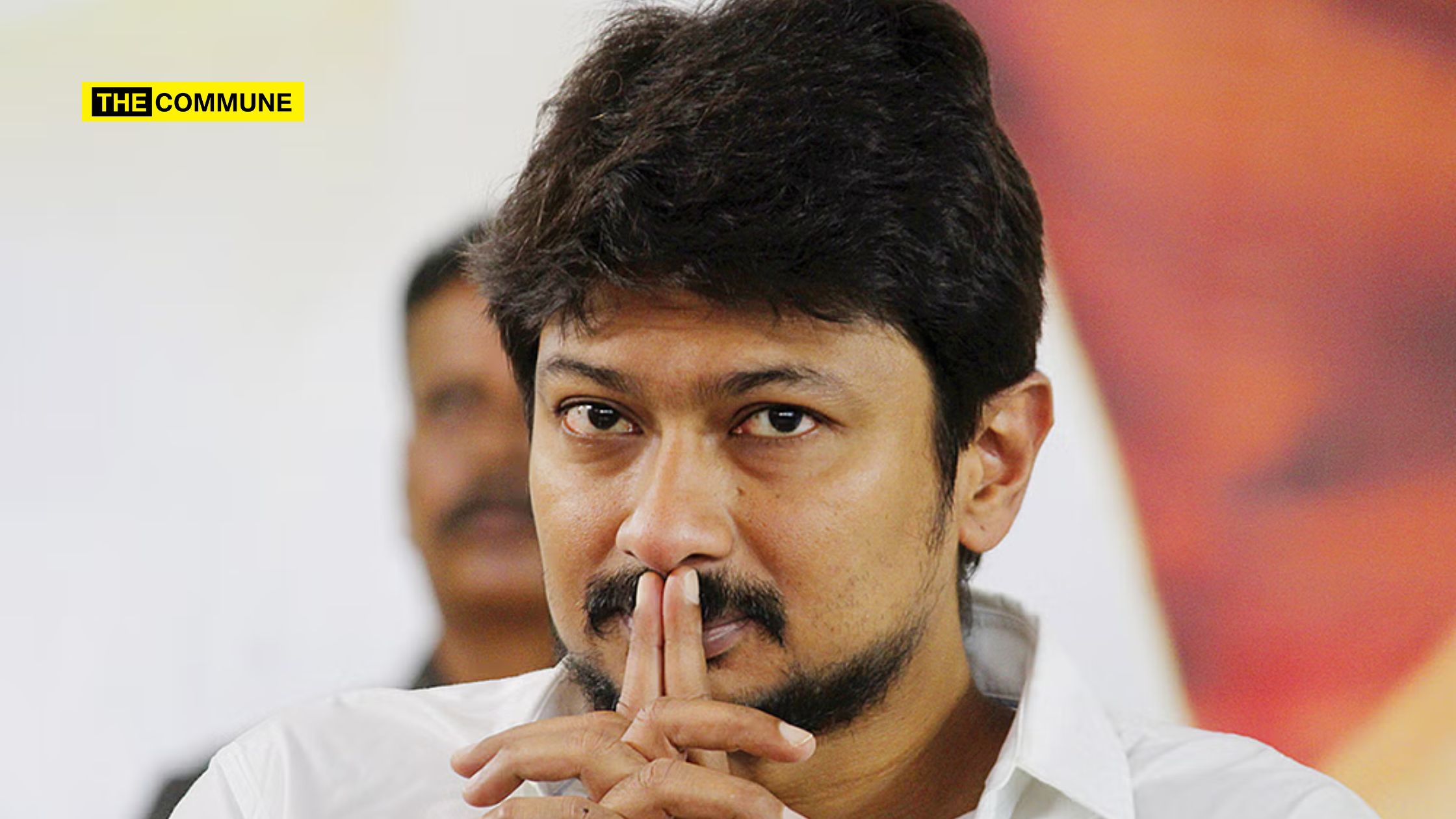
Madras High Court Seeks IT, MCA Report On Plea Alleging Irregularities In Udhayanidhi Stalin’s Election Affidavit

udhayanidhi stalin madras high court affidavit discrepancies

The Madras High Court has called for a status report from the Director General of Income Tax (Investigation) and the Ministry of Corporate Affairs on a plea seeking a probe into the assets declared by Tamil Nadu Deputy Chief Minister Udhayanidhi Stalin in his election affidavit for the 2026 Assembly elections, as reported in LiveLaw.

A bench comprising Chief Justice Sushrut Arvind Dharmadhikari and Justice G Arul Murugan directed the authorities to file a status report by 20 April 2026 and adjourned the matter. The Assembly elections in Tamil Nadu are scheduled to be held on April 23.

The plea was filed by R Kumaravel, a voter from Chennai, who argued that voters have a fundamental right to be informed about the true and complete particulars of candidates contesting elections. He relied on judgments of the Supreme Court of India to submit that a voter’s right to know the antecedents of a candidate flows from Article 19(1)(a) of the Constitution and is essential for meaningful exercise of the franchise.

The petitioner submitted that a reading of Udhayanidhi Stalin’s election affidavits from 2021 and 2026 revealed what he described as a “consistent pattern of irregularities,” including disappearance of previously declared assets, contradictions with corporate records, unexplained changes in financial exposure, and mischaracterisation of transactions.

According to the plea, these discrepancies rendered the disclosures untrustworthy from a voter’s perspective and undermined the objective of the transparency regime prescribed by law. The petitioner argued that this warranted an independent investigation by specialised agencies to safeguard the integrity of the electoral process.

Kumaravel sought directions to the Election Commission of India and the Returning Officer to verify the financial disclosures, sources of income, transactions, and statutory filings made by Udhayanidhi Stalin. He also sought an interim direction to the Income Tax (Investigation) wing and the Ministry of Corporate Affairs to conduct a preliminary inquiry into alleged discrepancies, suppression, and misstatements in the disclosures.

When the matter was taken up, senior advocate V Raghavachari, appearing for the petitioner, argued that there was a mismatch between the affidavits filed by Udhayanidhi Stalin in 2021 and 2026 and the records maintained by statutory authorities.

“I’m not against anyone. The affidavit filed in 2021 and 2026 and the records maintained by the statutory authorities are different. A voter needs to know about the candidate. He needs to know what kind of person is contesting. If anything, a wrong picturisation is given. Let disclosure of true fact be made before the Election Commission,” Raghavachari submitted.

When the court questioned how the voter’s right was affected, he argued that if it was established that a candidate had not made true disclosures, it would affect the candidate’s rights and the sanctity of the declaration itself.

Appearing for the Election Commission, advocate Niranjan Rajagopal submitted that the Representation of the People Act, 1951 already provides for penal action under Section 125A in cases of false disclosure. He argued that the Returning Officer is required to display the information furnished by candidates but cannot examine its truthfulness, as that would require a trial and evaluation of evidence.

In response, Raghavachari contended that filing an election petition after the polls was not a practical remedy given the significant expenditure involved in elections. He argued that the genuineness of the election process must be ensured prior to the conduct of polls.

After hearing the submissions, the bench directed the concerned authorities to submit their status report by April 20 and adjourned the case for further hearing.

Subscribe to our channels on WhatsAppTelegram, Instagram and YouTube to get the best stories of the day delivered to you personally.
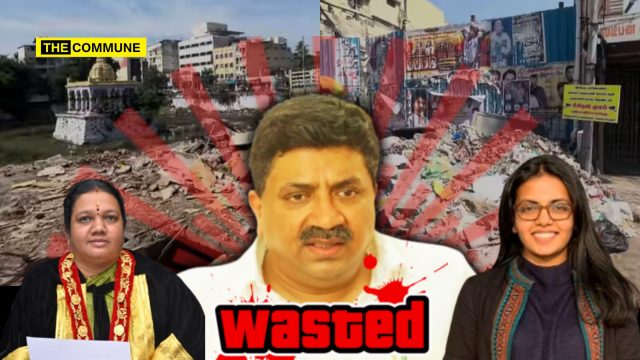
Pannaiyaar PTR Exposed: Denies Having Any Role In Madurai Corporation, But His Own Staff Archana Devi Was Assisting Mayor During The ₹200 Crore Scam Period

In a classic display of political doublespeak, DMK IT Minister and Madurai Central MLA Dr. P. Thiaga Rajan (PTR) has repeatedly tried to wash his hands of the mess in Madurai Corporation. He claims that maintaining roads, civic works, and local body affairs are not his responsibility as a state minister or MLA — it’s all on the elected Corporation, the Mayor, and councillors under the banner of “federalism.”

But the facts tell a very different story. For over four years, Archana Devi A — PTR’s own Executive Coordinator for Policy and Communications since February 2021 — has simultaneously served in an advisory/assistant capacity to the Mayor of Madurai Corporation (starting around February 2022). This overlapping dual role, confirmed through her professional profiles and public associations, creates a direct pipeline between PTR’s ministerial office and the Corporation’s day-to-day affairs.

It is also well known that Indrani Ponvasanth was handpicked or backed by PTR for the mayor’s post. Her husband Pon Vasanth was a known supporter and close associate of PTR. Reports indicated he wielded significant influence in the Corporation’s functioning.

While PTR lectures about constitutional separation of powers and distances himself from civic failures, his trusted staffer was embedded right at the heart of the Corporation’s operations.

It coincides precisely with the period of the infamous ₹200 crore property tax scam in Madurai Corporation (roughly 2022–2024). The scandal involved officials and temporary employees misusing a loophole in the Urban Tree Information System (UTIS) software to illegally downgrade commercial properties to residential rates for around 150 high-value buildings. This caused massive revenue loss to the civic body — funds that could have fixed those crumbling roads PTR loves to disclaim.

The fallout was severe: Madurai Mayor Indrani Ponvasanth (a DMK leader) resigned amid the allegations. Her husband, Pon Vasanth (reportedly a supporter with influence in the Corporation), was arrested by the Special Investigation Team. Five zonal chairpersons were forced to resign on orders from CM MK Stalin himself. An SIT probe was mandated by the Madras High Court, and arrests of officials and middlemen followed.

PTR, a man who reeks of entitlement and arrogance, who only talent is to endlessly self-trumpet about his dynastic privilege has portrayed himself as a sophisticated, transparent, no-nonsense man who rose above petty politics. But in Madurai, the reality on the ground — pothole-ridden roads, poor civic services, and now a massive tax loot scandal — is his legacy.

Subscribe to our channels on WhatsAppTelegram, Instagram and YouTube to get the best stories of the day delivered to you personally.
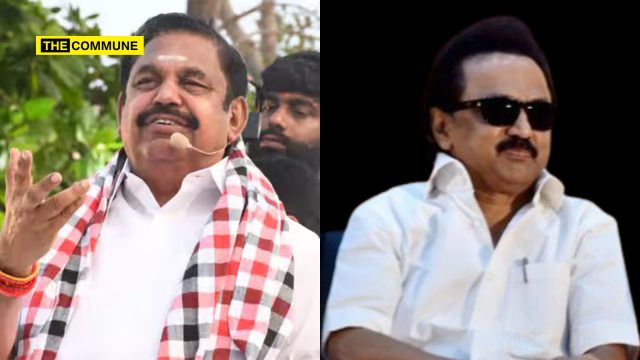
“Stalin Is A Dummy Piece”: AIADMK Leader EPS Roasts DMK Leader

In the heat of the Tamil Nadu assembly election campaign 2026, political rhetoric has reached a fever pitch. AIADMK General Secretary Edappadi K. Palaniswami (EPS) has launched a sharp counter-offensive against Chief Minister MK Stalin and the ruling DMK, using strong language to portray the CM as ineffective and controlled by others.

In a recent public meeting, EPS reportedly called out Stalin as a “dummy piece” (or “dummy CM”), accusing him of being a mere puppet while the state grapples with issues like corruption, lawlessness, and administrative failures.

Addressing a public meeting in Madurai, EPS mocked Stalin’s recent aggressive statements on television — including challenges like “come to my area and see” — comparing them to comedic scenes from Tamil films featuring actors Sundar C and Vadivelu. “When I see Stalin’s condition, I feel pity. Stalin is a dummy piece… that is his state,” EPS said, drawing loud cheers from the crowd.

The AIADMK leader accused the DMK government of turning Madurai into a hub of corruption and deteriorating law and order. He highlighted delays in key projects such as the AIIMS hospital in Madurai and listed alleged scams under the ruling dispensation. “Stalin watches as Madurai drowns in corruption and lawlessness,” EPS charged, claiming the Chief Minister prefers “photo-op stages” and dramatic speeches over actual governance.

This sharp attack comes just days after Stalin himself targeted EPS and the AIADMK. In a recent speech, the DMK chief praised the late AIADMK supremo J. Jayalalithaa for boldly opposing certain central policies like GST and NEET, while dismissing EPS as a “dummy” who has reduced the AIADMK to a “waste product” after Jayalalithaa’s demise. Stalin had also accused EPS of remaining a silent spectator (“summa”) on issues affecting Tamil Nadu.

Subscribe to our channels on WhatsAppTelegram, Instagram and YouTube to get the best stories of the day delivered to you personally.
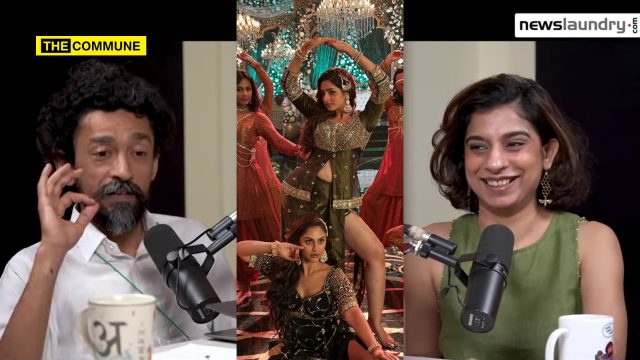
Leftist Rag Newslaundry’s Abhinandan Sekhri Laments About Dhurandhar Having Just 1 ‘Item Song’ Coming Very Late, Sucharita Tyagi Nods Along

In the latest episode of Newslaundry’s Awful & Awesome Entertainment Wrap (Episode 406, released April 10, 2026), co-founder Abhinandan Sekhri was joined by film critic Sucharita Tyagi and quiz winners Trupti Kulkarni and Veer Ojas Khanna to review Dhurandhar 2, along with other releases like Sentimental Value and How to Get to Heaven from Belfast.

During the casual chat about Dhurandhar film, Abhinandan Sekhri lamented about wanting item songs in the film, preferably right at the beginning: flashy, sexualised dance sequences that serve little narrative purpose beyond titillation

This film had f*cking one item song which came at 2 hours 25 minutes which was very nice. Ting ding ting ding. Shararat. Fantastic song. But dude I sat [for so long]. In Hum, f*cking Jumma Chumma came in the first 7 minutes dude. You were happy. I was like..’Neither there is item song in this film, there’s one which comes in the third hour’. I got really irritated watching the film. And I found.. I mean again.. they said it’s a very smartly done propaganda. And it was stupidly done.“, Abhinandan Sekhri lamented.

Sucharita Tyagi, who has repeatedly positioned herself as a sharp critic of Bollywood’s treatment of women, didn’t push back. She didn’t call out the reduction of women to dancing props for the male gaze. She didn’t deliver her usual lecture on objectification or sexism. Instead, she nodded and smiled along, treating the comment as harmless banter.

This is the same Sucharita Tyagi who, alongside outlets like Newslaundry, has spent years slamming films for “misogynistic” tropes whenever they stray from left-liberal ideological comfort zones. Item songs have long been a favourite target: accused of commodifying women, normalising the male gaze, and degrading actresses into sexual commodities. Yet when the trope appears in a discussion that doesn’t immediately trigger their anti-nationalist or anti-majoritarian reflexes — or when it comes from voices they engage with — the outrage machine suddenly stalls.

The selective silence is glaring. Newslaundry and Tyagi have no hesitation in dissecting films like Dhurandhar (and its sequel) for perceived propaganda, historical framing, or anything that smells of patriotism. Abhinandan Sekhri himself expressed visceral disdain for director Aditya Dhar’s earlier press remarks, claiming they made him “almost vomit” and accusing them of grovelling. But on the item song comment? Crickets from the feminist critic in the room.

Item songs are problematic by the very standards Newslaundry claims to uphold. They reduce women to gyrating bodies, cater to mass titillation, and add zero depth to storytelling. Progressive voices have rightly criticised them for years when it suits their narrative — especially against films that celebrate tradition, heroism, or national pride. But the moment the conversation drifts into territory they don’t instinctively oppose, or when a filmmaker casually expresses a desire for more such sequences, the principles evaporate.

This perfectly captures Newslaundry’s operating manual: apply stringent “woke” scrutiny to anything that doesn’t fit their narrow ideological parameters, dredge up lame reasons to condemn it, and give a free pass — or at least polite nods — when it aligns with their worldview or simply doesn’t threaten it. Feminism here isn’t a consistent ethical stance; it’s a convenient weapon, deployed ruthlessly against cultural or political opponents and quietly shelved otherwise.