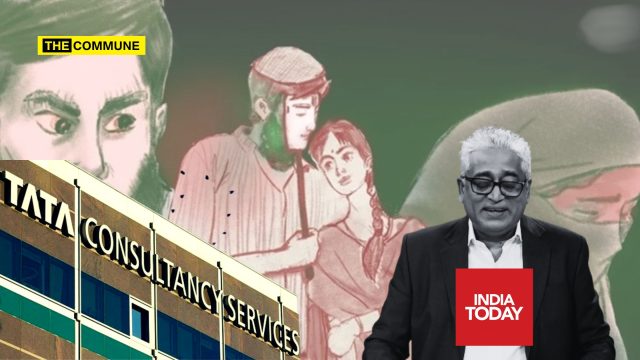
As the Nashik TCS sexual harassment and forced religious conversion case widened with three more women preparing to file FIRs, taking the total to 12–14 complainants, India Today’s Editor-in-Chief Rajdeep Sardesai chose to amplify a counter-narrative: the unsourced, unverified account of an arrested accused’s wife.
On 15 April 2026, Sardesai shared an Indian Express article, authored by Mohammed Thaver, quoting the wife of one of the seven arrested TCS BPO employees on the condition of anonymity.
The piece presented her claim that the entire case stems from “a relationship gone wrong” between rape-accused Danish Shaikh and one complainant, and that the other accused were “not involved.” Sharing the article on X, Sardesai wrote, “IMPORTANT: twist in Nashik TCS story? All the more important to have a proper, transparent inquiry and not an investigation driven by social media outrage. JUSTICE must be done based on FACTS and not an AGENDA.”
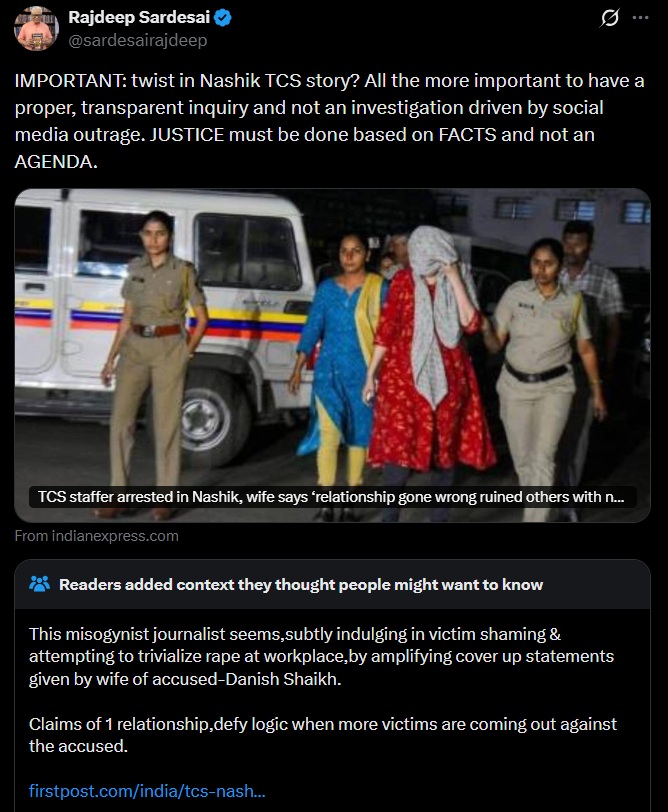
The framing drew immediate backlash. Sardesai’s post on the case which had been unfolding for nearly five days and had already produced nine FIRs, did not centre the victims’ accounts but instead cast doubt on the investigation’s integrity by platforming a defence statement from a family member of the accused.
The core contradiction is glaring: The “relationship gone wrong” theory is offered to explain away nine separate FIRs filed by multiple unconnected women – many of whom came forward only after sustained counselling by the Nashik Police’s SIT, specifically because they feared social stigma and professional retaliation. Sardesai’s framing of an accused’s wife’s claim as an “important twist” rather than the SIT’s confirmation that three additional victims are coming forward raises serious questions about editorial judgment.
The investigation itself was not “driven by social media outrage.” Nashik Police ran a 40-day undercover operation, with female officers embedded inside the BPO unit, before arrests were made. Complainants’ statements were recorded before a magistrate. The SIT has stated it is building its case on evidence, not public pressure.
The contrast with Sardesai’s usual editorial posture is notable. On cases where the accused belong to a different community or political affiliation, Sardesai has historically been among the first and loudest voices demanding accountability. In this case where the primary accused, Danish Shaikh, faces rape charges, and where allegations include targeted grooming and coercion for religious conversion of Hindu women including a Dalit employee, the India Today editor-in-chief’s comments seems to signal that “justice must not be agenda-driven.”
What Sardesai calls “social media outrage” was, in fact, public reaction to arrests and FIRs that were already made following a court-supervised police investigation, not the other way around.
With the probe now expanding under SIT supervision, the Maharashtra ATS also reportedly examining a potential organised network angle, and more victims emboldened to speak up, the question being asked by many observers is simple: Why is the “twist” the wife’s denial and not the growing number of women finally finding the courage to speak?
Subscribe to our channels on WhatsApp, Telegram, Instagram and YouTube to get the best stories of the day delivered to you personally.