Ever dreamt of slashing electricity bills and getting free power from the sun? The PM Surya Ghar – Muft Bijli Yojana has turned this dream a reality!
One such beneficiary of this scheme launched by PM Narendra Modi’s government is the residents of Samarth Nagar located in Gujarat’s Gandhinagar.
The solar panels installed under this scheme have freed the residents of this area from the hassle of electricity bills.
These families who once used to pay electricity bills to the tune of ₹10,000 to ₹13,000 every month now only have to pay up to ₹800 to ₹900 per month.
Launched by the central government, this ambitious scheme aims to provide free solar power to millions of homes across India.
A resident of Samarth Nagar, Gunjan Badrakiya, said that he has installed solar panels at his house, which have significantly reduced his electricity bill.
“Earlier, I used to pay an electricity bill of ₹12,000 to ₹13,000 per month, but now I have to pay only ₹800 to ₹900 per month. This change has come after installing solar panels barely six months ago, from which we are getting a lot of benefits.”
He also added that most people in his area are installing solar panels, which is a positive change for the environment and people.
The process of getting subsidies for installing solar panels is quite fast, so people do not face any inconvenience.
Another resident Ketul Vinayak said that after the installation of solar panels in his house under the Pradhan Mantri Surya Ghar Yojana, the electricity bill which he pays now has been significantly reduced.
He added that he also uses an air conditioner throughout the day. “Although it took some time to install solar panels, now it is yielding better results,” he said. Earlier, he used to pay an electricity bill up to ₹11,000 to ₹15,000, but now it has reduced considerably.”
Gandhinagar Executive Engineer H.V. Shah said that people are getting benefits under the Pradhan Mantri Surya Ghar Yojana. People are installing solar panels up to 10 kilowatts as per their needs, which means they do not face electricity shortages.
“If a house produces more electricity and consumes less, then the remaining energy is paid into its account. This is an excellent system, and people are getting financial benefits from it,” Shah said.
— IANS
Subscribe to ourTelegram, WhatsApp, and Instagram channels and get the best stories of the day delivered to you personally.
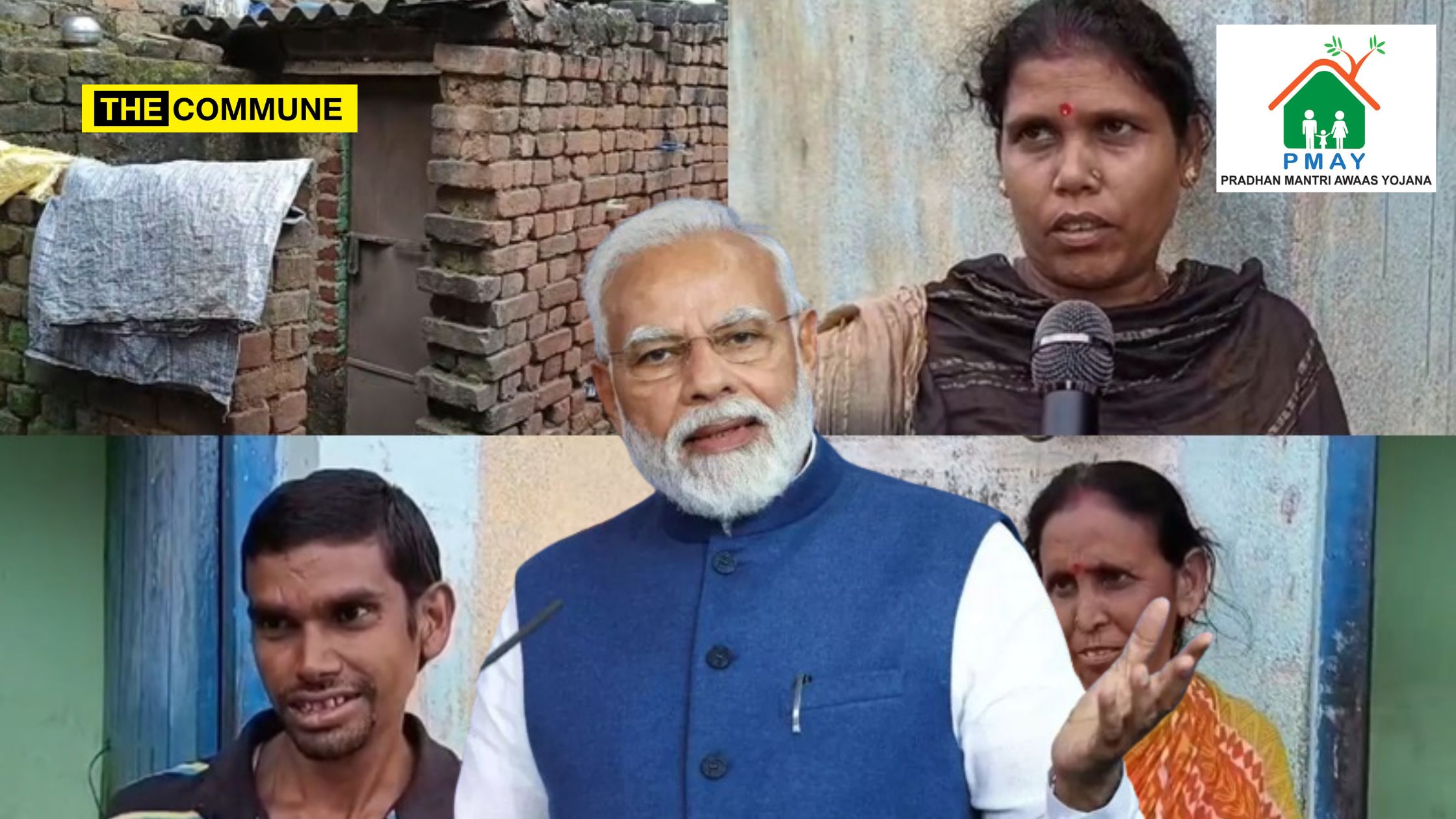
Union Minister of State for Commerce and Industry Jitin Prasada on Wednesday credited Prime Minister Narendra Modi for hosting the three-day ‘Semicon India 2024’ at Greater Noida, saying India will soon become the world’s third-largest economy due to its semiconductor technology.
“It is due to the resolve and vision of the Prime Minister that national and international CEOs and cyber experts on semiconductors have come to India. It is a big moment for India that these champions of the industry are visiting the country,” the Union Minister told IANS.
Minister Prasada also said that, with the help of semiconductor technology, India is poised to become the third-largest economy in the world.
“Under the leadership of PM Modi, India is marching ahead. Today’s programme was also a huge success,” the Minister added after the Prime Minister inaugurated the three-day Semicon India 2024 on Wednesday.
Addressing the gathering, PM Modi said this is the right time to invest in semiconductor manufacturing in India. The country provides an integrated ecosystem for global players, ease of business, and a large talent pool.
Speaking to a packed house of key industry stakeholders, PM Modi said, “The chips are never down in India,” and “you can bet on our growth story.”
“Come, invest and create value and we will provide an integrated ecosystem for your growth. India has 20 per cent of the global talent in semiconductor design which is consistently growing. We are building an 85,000-strong semiconductor workforce with technicians, R&D experts and designers,” PM Modi said.
On Tuesday, top semiconductor company CEOs hailed PM Modi’s leadership, saying he has inspired India and the entire world.
– IANS
Subscribe to ourTelegram, WhatsApp, and Instagram channels and get the best stories of the day delivered to you personally.
Union Finance Minister Nirmala Sitharaman met with entrepreneurs from various sectors, including small and micro industries, at the Kodisia campus in Coimbatore. The event, organized by Codisia and Lagu Udyog Bharati Industrial Organization, saw participation from business owners across Coimbatore, Tirupur, and Erode districts. Coimbatore South MLA Vanathi Srinivasan also attended the event, which provided a platform for the entrepreneurs to discuss their concerns and raise demands directly with the Finance Minister.
Entrepreneurs Present Demands
During the meeting, several entrepreneurs from diverse sectors voiced grievances regarding GST rates, loan schemes, and other pressing issues affecting their businesses. One of the key demands was from hoteliers, represented by Srinivasan, the chairman of Sri Annapurna Hotel, who highlighted the inconsistencies in GST rates. He pointed out that different rates were applied to items on the same bill, causing customer confusion and dissatisfaction.
“There is 5% GST on sweets but 12% on savouries, and 18% on cream-filled buns, whereas there is no GST on buns! Customers often complain, saying, ‘Just give me the bun, I’ll add the cream and jam myself,’“said Srinivasan, leading to laughter from the crowd.
He emphasized the need for a uniform GST rate on food items, particularly in Tamil Nadu, where sweet and savoury items are consumed together.
Taking a dig at BJP MLA Vanathi Srinivasan, he said, “So please increase it uniformly for everything. Secondly, this MLA, madam, is from our constituency. She said in the North of India, they are eating too many sweets, so the GST has been fixed at 5% and 12% for savouries. I said no. In TN, we call it sweet karma coffee (sweets, savouries, and coffee). So please consider it,madam; please make it uniform.”
Srinivasan further criticized the complexity of the GST system, stating,“The computer crashes when we try to input different GST percentages in a single bill. Even the GST officials are confused, as all items have the same input but different tax rates. This inconsistency is causing issues for both shopkeepers and customers.”
In response, Union Finance Minister Nirmala Sitharaman acknowledged the entrepreneurs’ concerns, stating that the government was working to simplify the GST system. She assured the attendees that she would bring these concerns to the GST Council, particularly the varying tax rates on food items. Sitharaman highlighted that GST, Customs, Income Tax, MSME, EOB, and Canara Bank officials had come from Delhi to address the grievances of the industrialists. “We will take steps to address each petition given,“she assured, adding that 1,500 outdated industrial laws have already been removed, and 40,000 complaints have been resolvednationwide.
Plans For Coimbatore
Sitharaman further announced the government’s plans to boost business development in Coimbatore and other parts of Tamil Nadu. She emphasized that Coimbatore is a favourable zone for industrial growth and cited the Atal Innovation Mission and Defense Corridor as key initiatives being implemented in the region. Additionally, she announced that CITBI Bank (Credit Guarantee Trust for Micro and Small Enterprises) would be opening 70 new branches across India in the next three years, with one branch already operational in Coimbatore’s Kurchi area. The bank has disbursed Rs 620 crore in loans to small and micro enterprises in the region, including Rs 491 crore in just one year.
Sitharaman also discussed the Mudra scheme, which provides collateral-free loans to micro and small enterprises. She revealed that 49.5 crore people across India have benefited from the scheme, with 5.6 crore beneficiaries in Tamil Nadu alone. Of this, 20 lakh people in Coimbatore have availed loans worth Rs 13,180 crore. She announced plans to increase the loan limit from Rs 10 lakh to Rs 20 lakh under the Mudra scheme, further supporting small businesses.
Industry Bodies Demand GST Reforms
Representatives from the motor pump industry, along with the hotel industry, also called for a reduction in GST rates. They expressed that the current rates are affecting the competitiveness of their products in the market, both domestically and internationally.
Sitharaman praised Coimbatore’s business environment, noting that the city’s industry-friendly policies and infrastructure make it an ideal location for government projects. She cited the Atal Innovation Mission in Coimbatore as a national model. She expressed the government’s commitment to supporting industries through various initiatives, including increased funding for skill development and business innovation.
Subscribe to ourTelegram, WhatsApp, and Instagram channels and get the best stories of the day delivered to you personally.
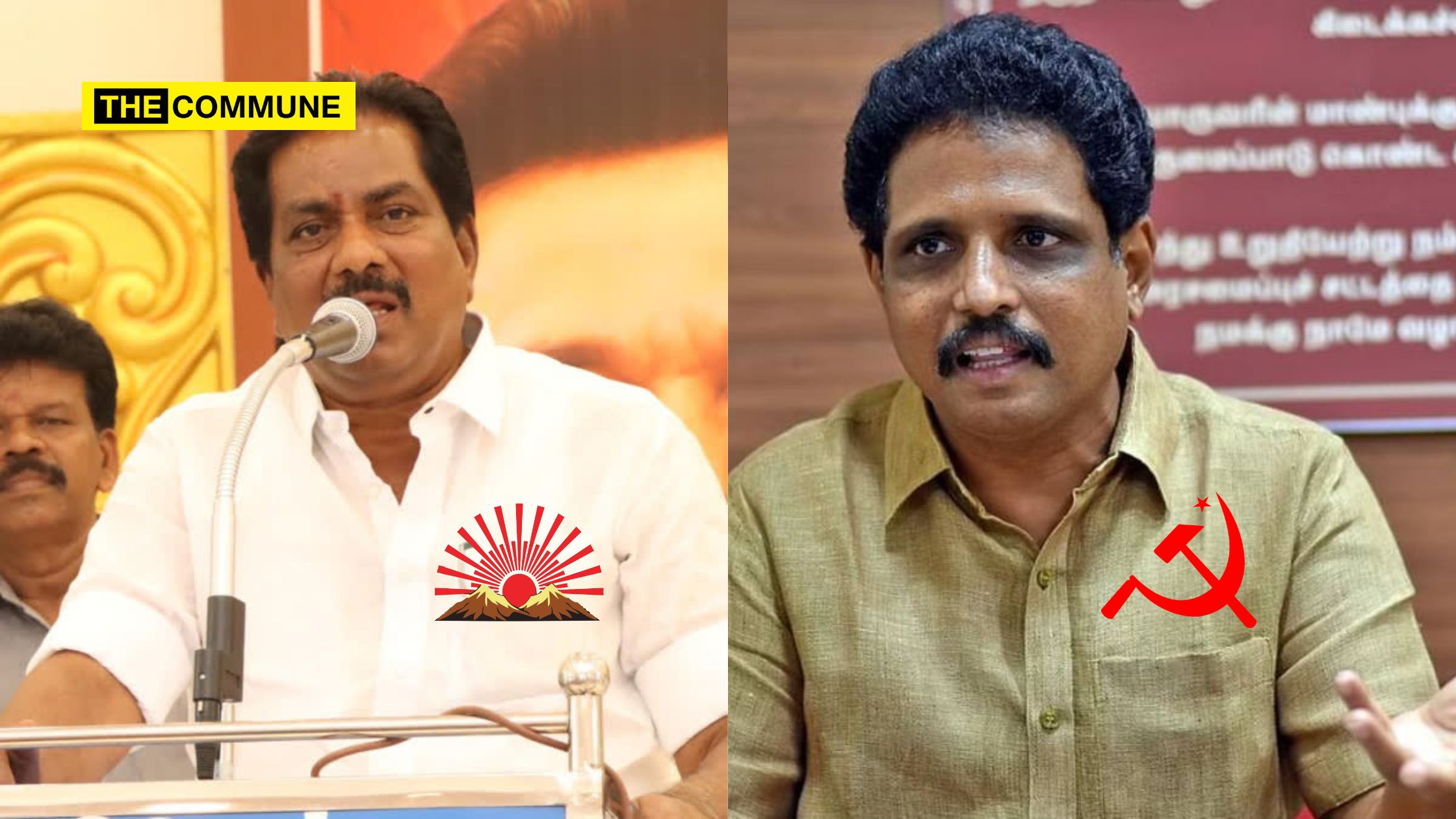
The Viduthalai Chiruthaigal Katchi (VCK) has called for an alcohol prohibition conference in Kallakurichi, the site of a recent hooch tragedy that claimed over 60 lives. He invited all political parties that support the prohibition policy, including the AIADMK, to participate in the conference.
Speaking at an event, he said, “Viduthalai Chiruthaigal Katchi is placing an important and principal request to the DMK and all alliance party members – National Policy, ban on alcohol/liquor and eradication of drugs.”
The VCK chief then went on to describe what alcohol is and about TASMAC. He said, “What does alcohol comprise? Beer, wine, whisky, brandy and several trademarks are there. Earlier the government used to sell Kedamark liquor. Now they have named it as TASMAC. Some people call it TASMARK – it is not so. They have made it a TASMAC corporation for alcohol sales. They appointed IAS officers. If anyone sells illicit liquor, they will send police to arrest them and tell them that this (TASMAC) is good liquor, sell this and drink only this. Like Dr Sivaraman who spoke earlier said, alcohol is poison. If tobacco is injurious to a human, then it is important that you alert the people that even alcohol is injurious to health. When you go to cinema theatres, the first thing you see is those advertisements on cancer after consuming/smoking beedis and cigarettes. Alcohol is bad for our homes and our country. That’s all. Liquor is injurious to health. They add this advisory in small letters and sell.”
Speaking on cigarettes and alcohol being causes of cancer, he said, “Smoking cigarettes can be fatal – why – because it causes cancer, but alcohol also causes cancer, that is what Dr Sivaraman said. They distil country liquor differently. They are distilling IMFL – Indian Made Foreign Liquor, the ones you get in shops today. Beer has less alcohol content, wine and spirits have 30-35% alcohol content, and the rest is water, flavouring agents, colouring agents, and preservatives. Alcohol is called Ethanol in chemistry. Ethanol is a type of acid. It will cause ulcers in the stomach. The digestive tract is also affected. Then the central nervous system is affected – the brain and spinal cord are some of the most important parts of the body. The brain controls all the activities we do through the nerves. The brain also controls us to drink alcohol, eat meat and get us addicted.”
Explaining how hooch was made, the VCK chief said, “IMFL is what we get – why do we consume foreign liquor because our Tamil Nadu’s liquor varieties are practically unavailable. What is country liquor – they distill it from tree barks and add things which will give the drinker a high. They add thorn apple to it. It contains alkaloids. Some herbivores die after eating such alkaloids, this is like that. They also add pig bladder to it, not many know about it. They add it because it eats a lot of things. They add battery cells. It is called “ooral” when marinated. Some drink this and they stink. I know the smell because I worked in that department. I worked in the Forensic Science department in Prohobition and Excise for some time. Police would bring this ooral also when they catch people distilling illicit liquor. When they open it, the smell is so pungent. When you distill that further, you get colourless liquor.”
Israel has revealed a document, which it says was written by a senior Hamas commander, detailing severe losses suffered by the militant group during Israel’s offensive in Gaza.
The Israeli military says the letter, attributed to Hamas’ Khan Younis Brigade commander Rafa Salama, claims that about 80 per cent of the group’s fighters have been killed, injured, or fled, Xinhua news agency reported.
The Israeli military’s Intelligence Directorate says Salama, who was killed in an airstrike in July, addressed the letter to Hamas leader Yahya Sinwar and his brother Muhammad, a top Hamas military commander.
Israeli Defense Minister Yoav Gallant said on Wednesday that the document was among the materials seized by Israeli troops in Gaza. According to Gallant, it outlines extensive damage to Hamas, including the destruction of 70 per cent of its weapons, loss of 90-95 per cent of its rockets, and death of half its fighters, with more wounded or having fled.
“They are left with about 20 per cent (of the fighters),” Gallant said, quoting the letter. The document reportedly requests help from the Sinwar brothers, which Gallant said reflects growing distress within Hamas after a monthslong Israeli bombardment.
Israel has been conducting large-scale military operations in Gaza since October 7, 2023, when Hamas attacked southern Israel, killing about 1,200 people. Around 41,000 Palestinians have been killed in the ensuing conflict, according to the health authorities in Gaza.
–IANS
Subscribe to ourTelegram, WhatsApp, and Instagram channels and get the best stories of the day delivered to you personally.

The recent political upheaval in Bangladesh, following the coup of the Sheikh Hasina government and the appointment of an interim government under the ‘leadership’ of Nobel laureate Professor Mohammad Yunus, has raised more eyebrows than ever, especially regarding minority rights, regional stability, and Bangladesh’s relationship with India.
Durga Puja Restrictions
One of the most contentious issues under the new administration is the instruction for Hindus to conclude their Durga Puja festivities before the Muslim call to prayer (azan) begins. On 10 September 2024, Bangladesh’s Home Ministry issued a directive for Durga Puja celebrations, requiring Puja committees to turn off rituals and sound systems five minutes before and during Azan and Namaz. Home Affairs Adviser Lt Gen (retd) Md Jahangir Alam Chowdhury emphasized ensuring security at Puja mandaps, with 32,666 set up this year. Cross-border movement for Puja was discouraged, urging better arrangements in border areas.
Meet the Bangladeshi Home Minister Advisor who is directing that Hindus must stop their pujas, music, & any rituals 5 minutes before Azan—or face arrest.
This is new Talibani #Bangladesh. But no Bollywoodiya will hold placards for Bangladeshi Minorities because they are Hindus. pic.twitter.com/iI6T9ODSQm
Attack On Minority Hindus in Bangladesh ‘Exaggerated’
Professor Yunus, who previously dismissed reports of attacks on Hindus in Bangladesh as exaggerated, now faces criticism for what many see as a capitulation to radical elements within Bangladeshi society. The timing of this instruction is particularly troubling, coming shortly after a widely reported incident where a Hindu boy, Utsob Mondal, was violently beaten in a police station, contradicting Yunus’s earlier claims.
Utsob Mondal a Hindu boy brutally mυπdered by a Muslim mob inside a Police station in Khulna, Bangladesh.
This brutality happened in front of the Police & Army.
The boy was falsely accused and arrested for alleged blasphemy
Critics argue that by issuing such an order, the interim government under Yunus is effectively admitting its inability to protect Hindu citizens in Bangladesh who wish to continue their celebrations during azan. This move has been interpreted as a tacit acknowledgement of the power wielded by radical mobs, potentially encouraging further acts of communal violence.
Release Of Hardline Cleric
In a move that has alarmed both domestic and international observers, the Yunus government ordered the release of Jasim Uddin Rahmani, a notorious hardline Islamic cleric and leader of the Ansar Bangla Team, a terror outfit affiliated with Al-Qaeda. This decision, made within the first 50 days of the new administration, has raised serious questions about the government’s priorities and commitment to combating extremism.
Nobel Peace laureate Yunus who is running interim govt of Bangladesh, released Jashimuddin Rahmani, chief of Terror outfit Ansarullah Bangla Team (ABT)
Now this terrorist is seeking support from Pakistan to target India on Kashmir & Khalistan
Upon his release, Rahmani wasted no time in making inflammatory statements. He called for “jihad” in Jammu and Kashmir and urged West Bengal’s Chief Minister Mamata Banerjee to declare independence from India.
#Bangladesh has released Jashimuddin Rahmani, the chief of a terror group who plotted attacks on India.
His release and subsequent statements have drawn concerns on India's national security.
More alarmingly, Rahmani outlined a five-point plan aimed at “fracturing” India, which included:
Supporting the Khalistan terror
Calling for “jihad” for the “freedom” of Jammu and Kashmir
Urging Mamata Banerjee to declare West Bengal’s independence
Advocating for cutting off the Siliguri Corridor
Proposing to raise an Islamist flag on the Red Fort in Delhi
Rahmani, a known advocate of jihadist ideology and linked to Al-Qaeda, threatens India with retaliation from Bangladesh if provoked. He envisions a united “Tawhid” movement to challenge perceived threats and claims Bangladesh’s 18 crore Muslims will defend their country and Islam from external interference.
Cooling Relations With India
The interim government’s actions have not been limited to domestic affairs. Several decisions taken by the Yunus administration in Bangladesh appear to signal a cooling of relations with neighbouring India, a shift that could have significant implications for regional stability.
Key developments in this regard include:
Lifting the ban on Jamaat-e-Islami Bangladesh, its student wing Islami Chhatra Shibir, and associated organizations. These groups are known for their anti-India rhetoric and have historically been viewed as threats to secular governance in Bangladesh.
Banning the export of the prized Padma Hilsa fish to India during Durga Puja celebrations. This move breaks a long-standing tradition of goodwill between the two nations and is seen as a deliberate provocation.
The government’s silence in the face of student groups spreading unfounded rumours that floods in Bangladesh were caused by India deliberately opening a dam. The failure to debunk these dangerous claims has allowed anti-India sentiment to fester.
The mysterious sacking of two Bangladeshi diplomats stationed at the High Commission in India further strained diplomatic ties.
These actions, taken collectively, suggest a significant shift in Bangladesh’s foreign policy orientation, potentially jeopardizing the progress made in India-Bangladesh relations during Sheikh Hasina’s tenure.
On-The-Ground Reality
Advocate Rabindra Ghosh, president of the Bangladesh Minority Watch, speaking to India Today provided a sobering assessment of the situation facing minorities in the country. According to Ghosh, atrocities against Hindu minorities have been ongoing and have intensified since Sheikh Hasina left office.
Ghosh vehemently disputes claims by the Yunus government that reports of attacks on Hindus are exaggerated. He asserts that his organization has extensive documentation, including reports, pictures, and videos of incidents across the country. He also stated that over 100 atrocities have occurred in the Thakurgaon District alone since the change in government. Many Hindus have fled their homes due to safety concerns, with some having been killed. He stated that his organization has visited numerous incident sites, spoken with victims, and compiled comprehensive evidence of the ongoing persecution. Despite efforts to seek legal recourse, the courts have remained largely silent on these issues.
"Hindus are in great difficulty in Bangladesh," said Advocate Rabindra Ghosh
Ghosh emphasized that the Hindu community in Bangladesh, who consider themselves Bengali and fought for the country’s independence in 1971, are now facing unprecedented challenges to their safety and religious freedom.
Yunus’s Mask Has Come Off Completely
Once viewed as a potential beacon of progressive values and democratic reform, Yunus’s leadership is now being characterized by decisions that appear to empower hardline elements and strain relations with India. This shift has forced many of his supporters to reckon with the unintended consequences of their advocacy.
Security experts warn that the current situation could have far-reaching implications for regional stability. There are growing concerns that radical Islamist elements might attempt to create trouble in Indian states bordering Bangladesh, necessitating increased border security measures.
The coming months will be crucial in determining whether Bangladesh can maintain its progress towards a more inclusive and stable society or whether it will push towards religious extremism and see higher regional tensions.
Subscribe to ourTelegram, WhatsApp, and Instagram channels and get the best stories of the day delivered to you personally.
Two groups clashed in Karnataka’s Mandya district on Wednesday night after stones were allegedly pelted at a Ganpati idol immersion procession in Nagamangala town. Some shops and vehicles were set afire following the incident.
According to sources, some youths took out a procession for Ganpati idol immersion. When they passed near a dargah in the town, a few miscreants started pelting stones at the procession, leading to the clashes.
Stone pelting during Ganesh immersion procession in Nagamangala, Mandya by Muslims objecting that Ganesha procession shouldn’t go in a particular road.
Police have imposed restrictive orders in the area and are on high alert. After the incident, people from the Hindu community staged a protest at the local police station, demanding the immediate arrest of those responsible for hurling stones at Ganpati Visarjan procession.
Union Minister H.D. Kumaraswamy condemned the incident and urged the public to maintain peace. He also attacked the Congress-led state government over the law and order situation and said that the “despicable incident took place in Nagamangala as a result of over-indulgence and appeasement of a particular community by the party and the state government for political gain.”
The JD-S leader further said that the state government should immediately take action to restore peace in the town.
Karnataka SDPI chief Abdul Majeed urged Chief Minister Siddaramaiah to instruct the DGP to deploy additional police forces to restore law and order and take necessary actions. “… Direct relevant authorities to take strict measures against such groups that aim to disrupt communal harmony and tarnish the state’s reputation,” he said in a post on social media platform X tagging the CM.
The Karnataka Home Minister, Dr Parameshwara, has labelled the incident where Muslims pelted stones at the Ganesha procession in Nagamangala, Mandya, as “accidental.”
This story is based on an IANS story. The headline has been changed.
Subscribe to ourTelegram, WhatsApp, and Instagram channels and get the best stories of the day delivered to you personally.
Sadhguru, spiritual leader and founder of Isha Foundation, has voiced strong opposition to the Olympic Council of Asia’s (OCA) decision to include Yogasana as a demonstration sport in the 2026 Asian Games. In a recent post on social media platform X, Sadhguru expressed deep concern over this decision, calling it a “disturbing and disappointing” move that risks reducing the ancient science of yoga into a “circus-like activity.”
It is deeply disturbing and disappointing that #Yoga is entering an arena which is essentially a competitive sport arena. Yoga cannot be a competition. Yoga is a powerful tool & mechanism for self-evolution- to raise a human being from limited possibilities to unlimited… pic.twitter.com/uhlfUJ7VfS
Sadhguru argued that yoga, long regarded as a powerful tool for self-evolution and inner growth, is fundamentally about enhancing human consciousness and should not be subject to comparison or competition.
“Yoga cannot be a competition. Yoga is a powerful tool & mechanism for self-evolution- to raise a human being from limited possibilities to unlimited perception and experience of life. This should not be done in competition with somebody else. With this, we will reduce the powerful Science of Yoga into a circus-like activity of one trying to do better than the other,” said Sadhguru on X.
He further emphasised that yoga’s true essence lies in helping individuals transcend their limitations and explore life’s deeper dimensions, making it unsuitable for a competitive framework.
“The fundamentals of yoga are about consciousness, not comparison and competition. Hope as a Civilization that gave birth to the Science of Yoga, we will have the wisdom to ensure that it does not become a ridiculous sport.”
Sadhguru’s sharp criticism comes amid the recent decision of the Olympic Council of Asia (OCA) to include Yogasana as a demonstration sport in the 2026 Asian Games, which will be hosted in Nagoya, Japan. While the decision can be seen as a way to globalize and promote yoga’s physical aspects, Sadhguru’s concern highlights the need to preserve the practice’s more profound spiritual significance to eliminate myths and distorted versions that continue to propagate in the name of Yoga.
Subscribe to ourTelegram, WhatsApp, and Instagram channels and get the best stories of the day delivered to you personally.
The Aam Aadmi Party (AAP) on Wednesday released its fourth list of candidates for the Haryana Assembly elections, adding 21 more names. This brings the total number of declared candidates to 61. Among the notable entries is Kavita Dalal, a former WWE wrestler who will challenge Olympic wrestler Vinesh Phogat for the Julana seat. The Haryana Assembly election, covering 90 seats, is scheduled for October 5, with the deadline for nominations set for September 12.
The other key names include Sunil Bindal, who will run from Karnal. Other candidates include Sham Mehta from Sirsa, Lalit Tyagi from Yamuna Nagar, Sanjay Satrodia from Hisar, and Nishant Anand from Gurugram.
The contest in Julana is shaping up to be particularly interesting, focusing on two prominent wrestlers — AAP’s Kavita Dalal and Congress’ Vinesh Phogat.
BJP candidate Captain Yogesh Bairagi, who is well-known in the constituency for his involvement with the Central government’s Vande Bharat Mission, adds to the competitive dynamic.
During the global COVID-19 pandemic, the central government launched this mission to repatriate Indian nationals and facilitate travel between India and various global destinations.
The AAP announced its first list of 20 candidates on Monday, following the breakdown of seat-sharing talks with Congress.
The Congress and AAP had previously collaborated in Delhi during Lok Sabha elections but contested separately in Punjab.
In Haryana, while Congress had allocated one seat to AAP in the general elections, AAP did not succeed.
In the 2019 Haryana Assembly elections, AAP had contested 46 seats but did not win any. AAP Haryana President Sushil Gupta stated: “We have been preparing for all 90 seats from the beginning. With the deadline for nominations approaching on September 12, the wait is over.” Earlier, AAP leader Manish Sisodia participated in the nomination rally for Anurag Dhanda, the party’s state vice president, who is contesting from the Kalayat seat. Sisodia asserted that the party’s primary focus is on combating corruption and improving education, healthcare, and job opportunities.
— IANS
Subscribe to ourTelegram, WhatsApp, and Instagram channels and get the best stories of the day delivered to you personally.
In the ongoing investigation into the rape and murder of a female trainee doctor, the CBI has uncovered evidence of corruption and illegal activities within RG Kar Hospital, as reported by Bengali media and OpIndia on September 11, 2024. One focus of the investigation is the hospital’s morgue, where it is alleged that a necrophilia pornography racket involving dead bodies has been operating.
Reports indicate that since 2021, 60 to 70 bodies have gone missing annually, and the trainee doctor’s case has exposed the hospital’s involvement in multiple criminal activities. Allegedly, illegal access to the morgue allowed miscreants to remove corpses at night, engage in necrophilic acts, and record videos of the incidents. Investigators have reportedly found videos on the mobile phone of Sanjay Roy, a suspect in the trainee doctor’s murder, which depict him and others committing these acts in the hospital’s morgue.
RG Kar Hospital’s morgue contains more than 40 cold chambers, which were allegedly accessed illegally at night. Apart from Roy, several other individuals, including civic volunteers and their relatives, are believed to have had unrestricted access to the morgue. Sanjay Roy, arrested in connection with the trainee doctor’s murder, was found to have a significant amount of banned pornographic content on his phone, including videos of necrophilia filmed at the hospital.
Additionally, CBI investigators suspect a corruption ring centred around the bodies at the RG Kar hospital, involving the removal and sale of body parts, particularly skeletons. Inconsistencies in the hospital’s mortuary records further suggest illegal activity. The CBI has collected records, CCTV footage, and other documents for the investigation. Still, the head of the forensic department, Prabir Chakraborty, has reportedly failed to provide satisfactory explanations.
Another significant scandal aspect involves the so-called “North Bengal lobby.” Reports suggest that a syndicate connected to this group used the mortuary for corrupt purposes, collecting large sums of money from post-mortem procedures and related activities. Despite the investigation’s progress, authorities are still working to uncover the full extent of the network’s involvement.
This is not the first time RG Kar Hospital has been linked to such scandals. In 2001, the mysterious death of a medical student, Soumitra Biswas, sparked allegations of a pornographic ring involving the hospital morgue. Though the case remains unsolved, it raised similar concerns about illegal activities at the hospital.
Subscribe to ourTelegram, WhatsApp, and Instagram channels and get the best stories of the day delivered to you personally.