Home Blog Page 726

Kudali Sringeri Mahasamsthan Shankaracharya: “Self-Defense Training Essential For Hindu Society’s Preservation”

Kudali Sringeri Mahasamsthan Shankaracharya: "Self-Defense Training Essential For Hindu Society's Preservation"

In a talk, Sri Sri Abhinava Shankara Bharati, the 72nd Shankaracharya of Kudali Sringeri Mahasamsthan, said that Hindu society must learn to use arms. He said that Western education has made us docile and incapable of self-protection, and more of it only makes it worse.

Talking about varnashrama which indicates the duties of an individual, he emphasized that the primary duty of a Brahmana was to teach the rest of the society. Citing the example of Dronacharya who taught the Kuru princes to fight, he said that it is the Brahmanas who must also teach the others how to wield arms. He said that even the shastras while describing the qualities of an acharya of Dhanur Vidya, the study of wielding arms, say that it is to be taught by Brahmanas who have had Vedic education.

This is not the first time Sri Abhinava Shankara Bharati has spoken about the Hindu society taking up arms. He stated the same in recent times when the ruthless attack on Hindus in Bangladesh exposed their vulnerable status in their native land where they are now a rapidly dwindling minority population due to killings and conversions.

In the Global Summit on Bangladesh held online by the United States Hindu Association (USHA) soon after the news came in, the Shankaracharya stated that if we must prevent such genocide in the future, we must look for solutions from our ancient texts. Citing Bheeshma in Mahabharata who provided clarity to Yudhishtra that it is the policymaker who determines the tide of time, the Swami indicated that the present condition is because the British brought in laws that made it illegal for people of Bharata to carry weapons without a licence. Before that, carrying weapons was as normal as wearing clothes, he pointed out.

The Mahaswami also gave direction to the future course of action towards a long-standing solution. Paraphrased below are some of the points that he shared.

The definition of peace as per Sanatana Dharma is different from the Western idea. The enemy won’t attack only when you have the strength. We were peace-loving people and knew how to fight battles to bring peace.

In every village, the people must come together, have intellectual discussions, and practice using weapons. If they do it periodically, after a year the village will be very different. Only if we practice how to do things collectively, we will get used to it. There is a wrong notion that Sanatana dharma is indestructible but if there are no practitioners of Sanatana dharma, how can it be indestructible?

However modern and developed we are, we need martial training and must not think that it is something primitive. The Western world has portrayed Hindu grassroots-level organizations like Bajrang Dal as militant organizations causing a drop in the recruits into these organizations. This must change.

He alluded to the example of Samartha Ramdas who trained farmers to wield weapons and helped Shivaji Maharaj to fight wars.
The Swamiji cited from the shastras: śastreṇa rakṣite rāṣṭre, śāstra carcā pravartate which means the advancement of knowledge is possible only when the nation is protected by weapons.

Subscribe to our channels on TelegramWhatsApp, and Instagram and get the best stories of the day delivered to you personally.

Malini Parthasarathy Slams Editors Guild Of India For Coming In Defense Of Mahesh Langa Who Faces Allegations Of GST Fraud And Illegal Wealth Accumulation

Malini Parthasarathy, Director at The Hindu Group Publishing, former chairperson of The Hindu Group and one of the founding directors of The Hindu Centre, has criticized the Editors Guild’s condemnation of further charges against a journalist, Mahesh Langa from The Hindu. She underscores the importance of accountability in journalism, arguing that journalists are not above the law and should not be shielded from investigations related to personal conduct. Parthasarathy asserts that the charges against the journalist arise from personal actions rather than his reporting.

On 28 October 2024, the Editors Guild of Indian issued a statement that read, “The Editors Guild of India has noted with concern the registration of a second FIR against Mr. Mahesh Langa, a senior assistant editor for The Hindu in Gujarat, for allegedly possessing some ‘confidential documents’ pertaining to the Gujarat Maritime Board. Journalists are often required to access and review sensitive documents in the course of their work, and initiating punitive action against them for doing their work is worrisome. The Guild is aware that Mr. Langa has already been in detention over complaints regarding certain GST violations in his personal capacity before the second FIR was filed. EGI hopes that Mr. Langa will not be deprived of fair and speedy justice. It is important that the Gujarat police disclose details about the second set of accusations leveled against him over possessing the confidential documents. That the second FIR is not accessible to the public online, which since the police have reportedly put it under the ‘sensitive category’, is of grave concern. The Editors Guild stands for the freedom of the press and reiterates the need to create a conducive environment across the country that allows all journalists to pursue their professional duties responsibly.

In response, Malini Parthasarathy criticized the Editors Guild’s stance, arguing that it is inappropriate to portray the arrest of a journalist on serious charges as an attack on press freedom. She emphasized that no journalist is above the law and that shielding journalists from accountability undermines the profession. She clarified that the FIRs against Mahesh Langa are not connected to his work at The Hindu but involve separate allegations that necessitate investigation.

Parthasarathy lamented that the situation, which pertains to individual accountability, has been misrepresented as an infringement on journalistic rights. She questioned how Langa’s freedom of expression as a journalist is being compromised and asserted that protecting press freedom should not excuse unlawful behavior.

She underscored the need for journalists to adhere to ethical standards, maintain distance from their sources, and ensure transparency in their dealings. Such integrity is crucial for enhancing the moral credibility of journalism. Ultimately, she argued that the profession deserves the highest standards of integrity, given the trust placed in it by millions of readers.

Malini Parthasarathy via her official X account stated, To cry foul when a journalist is arrested on what are evidently serious charges that require investigation & to allege that this is a case of an attack on the freedom of the press is wrong & does injustice to the essence of journalism-the pursuit of truth. No journalist is above the law. Press associations & journalists do no favour to this great profession by shielding journalists from accountability for their actions that have nothing to do with the publications they work for. The two FIRs against Mahesh Langa are not filed on the basis of reports filed by him @the_hindu & are for other charges that require further investigation. It is unfortunate that this incident centering solely on an individual answerable in his private capacity for his own actions, has taken on the colour of an attack on press freedom & said to be a violation of his journalistic rights. In what way is his freedom of expression as a journalist being attacked? If we really care about the sanctity of press freedom, we should ensure that such freedom is not abused to shield anybody from facing the consequences of breaking the law. Journalists have an obligation to stay true to the canons of reporting, to maintain distance from their news sources, to ensure transparency in their dealings with business & political contacts so that the content they offer the public is untainted by commercial considerations. It is vital that reporters & editors welcome such investigations into their dealings, it will enhance their moral credibility when they come out unscathed. The respect that journalism as a profession commands and the trust that millions of readers & users place in our news content deserve the highest standards of probity. Nothing less.”

The Hindu Journalist – Mahesh Langa

Shocking details have emerged regarding Mahesh Langa, a journalist with The Hindu, who is entangled in a GST fraud investigation. Reports indicate that he has been living well beyond his salary, allegedly accumulating crores over the past two years.

Investigations suggest that Mahesh exploited his journalistic role to engage in blackmail, settlements, and other illicit activities, reportedly earning millions through these ventures. His name has also come up in connection with the unauthorized disclosure of sensitive government documents, leading to an FIR filed in Gandhinagar.

Despite an annual income reportedly only in the lakhs, a recent search by the Ahmedabad Crime Branch at his residence uncovered Rs 20 lakhs in cash, along with expensive jewelry and property documents. Additionally, Mahesh and his wife reportedly frequented luxury hotels such as the Oberoi and Taj Man Singh, staying at these establishments over 98 times in the past year without covering any of the costs themselves.

The investigation revealed that his extravagant lifestyle was largely financed through shell companies. He also frequently traveled by chartered flights, racking up significant expenses. Notably, he hosted a lavish birthday party attended by prominent businessmen and city officials, paying a Rs 5 lakh advance for the venue and gifting gold coins to each guest.

Furthermore, it was reported that Mahesh acquired government documents not for journalistic purposes, but to blackmail officials and government entities. Official statements claim that these documents did not contain any incriminating information against the government.

Complicating matters, both his wife and brother have reportedly spoken out against him. Initially, the FIR named his brother, Manoj Langa, but later investigations revealed that Mahesh’s wife was involved with the company under scrutiny. During questioning, she claimed ignorance of the situation and attributed the actions solely to Mahesh.

Following a raid at the Gujarat Maritime Board (GMB) office, another FIR was filed in Gandhinagar. When brought in for questioning, Mahesh alleged that he was being targeted due to his journalistic work, but this defense did not hold up, leading to his arrest.

The investigation uncovered communications between Mahesh and specific officials, supported by chat logs found on his devices. Authorities discovered that he had obtained private information about the GMB, prompting a search of their office in Gandhinagar. Several documents were seized, resulting in another FIR against him at the Sector 7 police station. The inquiry is still in its early stages, and police have not yet taken him into full custody.

Currently, Mahesh’s bail plea in the GST fraud case has been denied by the Ahmedabad Metropolitan Court, and he is being held at Sabarmati Jail. As the investigation continues, there are indications that the Enforcement Directorate (ED) may also get involved, with preliminary inquiries reportedly already underway.

Subscribe to our channels on TelegramWhatsApp, and Instagram and get the best stories of the day delivered to you personally.
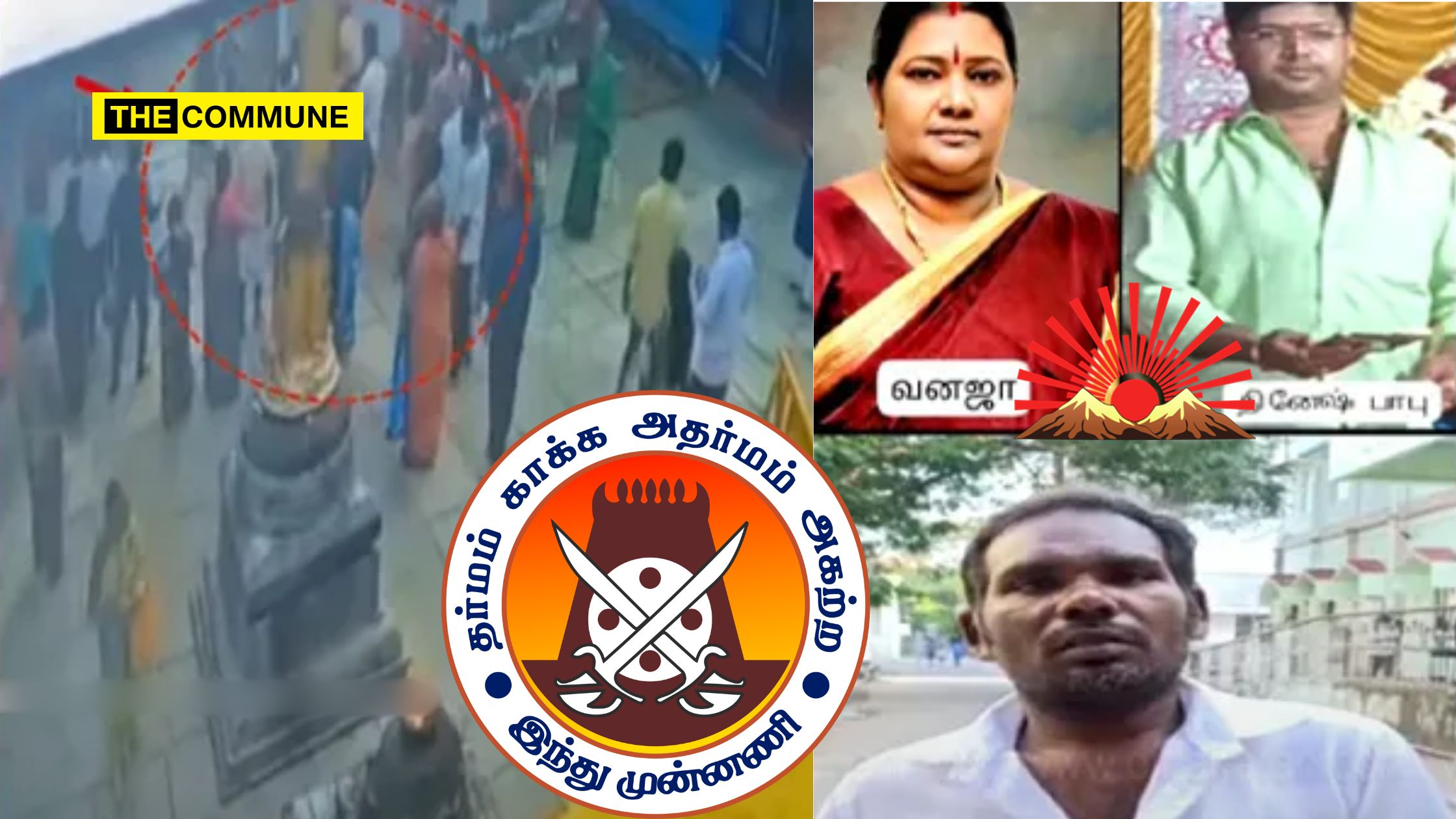
Anti-BJP Dravidianist & Self-Styled Activist Piyush Manush Makes Baseless Allegations About TN Governor RN Ravi

Anti-BJP Dravidianist & Self-Styled Activist Piyush Manush Makes Baseless Allegations About TN Governor RN Ravi

Alleged environmental activist Piyush Manush has made new (and unfounded) allegations of corruption against Tamil Nadu Governor RN Ravi, who also serves as Chairman of the Auroville Foundation. Manush has claimed a fraudulent scheme of mismanagement involving ₹1,000 crores within the foundation, but guess what? He has not provided any supporting documentation for his allegations against Governor Ravi.

In a series of social media posts, Manush criticized the management of the Auroville Foundation, describing it as a religious organization that has lost its integrity. He claims that the land donated for the Auroville community a total of 4,800 acres has been mismanaged, with 1,200 acres lying outside the master plan. Manush allegedly detailed a controversial land exchange strategy, alleging that Governor Ravi is trading valuable land along national highways for less valuable rural land in Auroville, resulting in significant financial losses. He estimates that this practice led to a loss of ₹750 crore.

Piyush Manush stated, “Listen to this big scam of RN Ravi. He is the Chairman of the Auroville Foundation. This has become a huge problem. Many people have opposed it. So what is the ₹1000 crore scam. Let us go to it directly. Auroville is like a temple. Not a temple exactly, but a religious organization. People come there out of faith. Donations were given for Mother – 4800 acres of land. Followers of Aurobindo, Mother, the movement gave donations – 4800 acres. Out of this 1200 acres is outside. Not within the master plan.”

“So, will you grab that land? You people are asking to make the temples private; it is for this reason. The temples have the highest wealth – be it gold, land, everything is owned by temples. So, in order to take that away, it needs to be privatized and not be under government control. In this case, there are lands outside. Some of them have become costly – their value has gone up. Some are valued at ₹100 crores, while others maybe ₹10-₹20 crores. But Auroville is like a village, those who have been there know it. It is like a separate town. Now that rural land is being exchanged,” he said.

“For example, Auroville land cannot be sold but they can be exchanged – that is a clause. This RN Ravi, BJP RSS fellow caught that point. So, what he is doing is, there is a land on the national highway, could be valued at ₹30 crores, but the land here will be ₹30/₹40/₹20 lakhs worth, in the rural area Auroville space. He is exchanging 1 acre each of these two lands. Will it be alright? Like this, he has exchanged 30 acres. Imagine losing ₹20-₹25 crores per acre. ₹30 crores exchanged, it has become ₹750 crores,” he further added.

In the second part of the video, the self-proclaimed activist expressed concerns about the changing administration within Auroville, stating that local residents previously managed their community services but that the introduction of the Central Public Works Department (CPWD) has led to contracts being awarded to BJP-affiliated companies, jeopardizing local employment. Manush further alleged that the governance structure was altered after Governor Ravi and Jayanti Ravi, took charge, dismantling existing committees meant to oversee land transactions and replacing them with a new governing board that includes the Puducherry and Tamil Nadu Governors. Manush also questioned the allocation of ₹1,750 crores from the central government, claiming that only ₹60 crores have been utilized effectively, hinting at a potential ₹50 crore scam.

He continued, “Earlier, the residents of Auroville would take care of their own internal administration. At first, they took care of laying roads, water, sanitation etc. But after RN Ravi, BJP came, he is bringing CPWD into the picture. CPWD is giving the contracts to BJP people in Coimbatore, Hyderabad. Local employment is gone. You know the issue with this land scam is that after the land exchange has happened, what they do is, there are 4 committees such as land committee, appraisal committee etc so that no fraud can be done. The governing board has eminent members such as MS Swaminathan, JRD Tata.”

They will put the final signature but before that there will be several checks taking place. When RN Ravi and Jayanti Ravi took over, they dismantled the existing set up. Jayanti Ravi is the lady who was the collector when the Godhra riots took place. She was the Health Secretary for many years. She is a true-blue Modi bhakt. After all these people came, they come up with a new governing board, for the first time they put the Puducherry and TN Governors on the board. They make them the Chairman and started overseeing the sale and purchase of the lands,” he alleged.

“Now there is one more thing, Auroville is a township with 2000-2500 people. The central government allots ₹1750 crores, people are asking why are you allotting this much money. ₹1 crore for one person. How is it? But the amount spent is ₹60 crores, they wouldn’t have spent even ₹10 crores from those ₹60 crores. So that is a ₹50-crore scam. This is available publicly. I can keep on going. How they brought in the RSS people, how they spoiled a well-functioning institution, how they removed 500 Dalit people from their jobs as soon as the change happened, there were 740 units, now they have made it 430,” he further alleged.

Upon investigation, it seems he may be basing his conclusions solely on the information available on a website called Auroville Media, where allegations are being made. Additionally, there are no other reports supporting his claims that the central government has allocated ₹1,750 crore specifically for the foundation. This raises questions about whether his allegations are an attempt to defame the governor and regain media attention, especially given his decreased prominence in other controversies, such as those involving Isha.

Subscribe to our channels on TelegramWhatsApp, and Instagram and get the best stories of the day delivered to you personally.
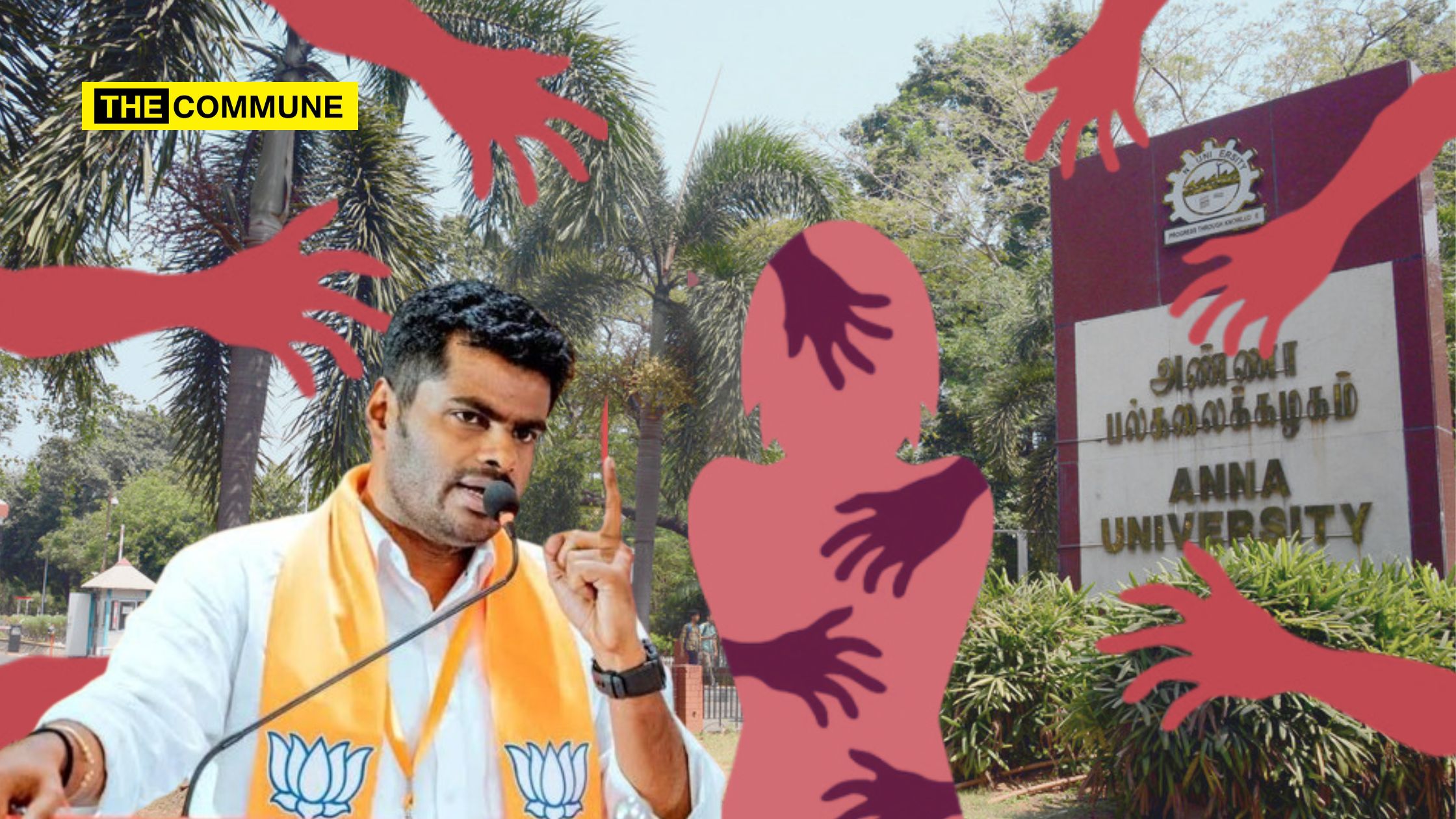
Honest Review of Vijay’s TVK: A Glossier ADMK With DMK Roots – Which Party Should Worry More?

Honest Review of Vijay's TVK: A Glossier ADMK With DMK Roots - Which Party Should Worry More? tamil nadu

Actor Vijay’s Tamilaga Vettri Kazhagam (TVK) held its first-ever state level conference on 27 October 2024 at V. Salai near Vikravandi in Vizhuppuram district where the actor-turned-politician expanded on his party’s ideologies and fixed his political opponents.

The crowd was far larger than anticipated, and Vijay’s speech surpassed expectations. For many hearing Vijay’s political voice for the first time, it was striking. Although it did feel a little amateurish, with many taking jibes at his speech as ‘deleted scenes from Sarkar’, he did press the right buttons with his extempore delivery.

Vijay’s stance seems directed at both the BJP-led central government and the DMK-led Tamil Nadu government. However, his primary political adversary appears to be the DMK, as he positions himself as a key player rooted in and representing Tamil Nadu.

But we must remember that part-time politician and former Bigg Boss host Kamal Haasan also started on a similar footing like Vijay, with dialogues aimed at the DMK and torches thrown at them. And we know how that ended. Only time will tell if Vijay will end up like Kamal. For now, we should appreciate the fact that he didn’t back off like Rajini.

The Vijayakanth Model

Vijay appears to have drawn inspiration from Vijayakanth, the icon who played a pivotal role in launching his film career. In fact, the name of Vijay’s party, Tamilaga Vettri Kazhagam, is also, in a sense, an ode to Vijayakanth from Vijay.

Vijay made his debut in cinema as a child actor in the film ‘Vettri’ directed by his father which had Vijayakanth play the lead role. Now, years later, it’s both nostalgic and symbolic that Vijay has made his political debut under the banner of Tamizhaga Vettri Kazhagam.

Actor Vijayakanth entered the film industry in the early 1980s and, over time, organized fan clubs across Tamil Nadu. Members of these clubs participated in the 2001 local body elections, gaining valuable experience in election management and grassroots networking. This foundation proved beneficial when Vijayakanth’s party, DMDK, contested the 2006 Assembly elections.

Vijay has adopted a similar strategy by transforming his fan clubs into the foundational framework of his political party. He silently tested waters in the 2021 rural local body elections, where his fan club members succeeded in securing 115 out of the 169 seats they contested by just flashing Vijay’s face and name.

If Vijayakanth’s DMDK had the word (Desiya) “nationalistic” in his party name, Vijay has added the nationalistic flavour by upholding Karmaveerar Kamaraj and making him as one of the guiding forces of the party.

Vijayakanth had a strong connect with the rural masses and Vijay too has a strong presence thanks to his filmdom and the reach of his fan clubs. Go to a random village or town in Tamil Nadu and you’ll see a flex of Vijay Rasigar Mandram with mugshots of young chaps of that locality. Till date, members of the fan clubs and their family might have voted for a DMK, ADMK, PMK or VCK. But today, they’ve their own party to canvass for and vote. Only a superficial political commentator will take these fan clubs lightly.

Vijay is just going by the playbook of Vijayakanth. As of today, he has the potential to emerge as another Vijayakanth. But Vijayakanth was of a different mettle. He was a tough political player who kept even Jayalalithaa on her toes and never yielded to enticements and pressures from the DMK despite the latter razing down his marriage hall, something that was close to his heart. Will Vijay be able to handle the pressure from DMK? We’ve to wait and watch.

Ideology And Policies: Stale And Unoriginal

‘Secular Social Justice Ideologies’ – that’s the position of Actor Vijay’s Tamilaga Vettri Kazhagam, which makes it another Dravidian party in the Tamil Nadu political landscape. And it is very much similar to what the DMDK had professed. DMDK too embraced Dravidianism, secularism, social justice, and populism. By taking such a position Vijay will be fighting for the same votebank as of other Dravidian parties.

Atleast Vijayakanth had the guts and the gumption to have this as his party principle – “Save Mother Tamil and Learn All Languages”. It is disappointing to see Vijay aping the DMK, ADMK, MDMK and other Dravidianist parties on the issue of language. However, Vijay has been smart enough to accept that ideologies and policies are subject to change in accordance with time and circumstances.

From abolishing the Governor’s post to opposing NEET, resisting Hindi, and advocating for a two-language policy—it’s the same old stuck Dravidian tape recorder playing on repeat.

This makes Vijay look like an unintelligent Dravidian Stock because if he holds Dr. Ambedkar as the guiding light of his party then it is meaningless and quite oxymoronic to call for abolishing Governor post and taking anti-Hindi position because they are very much against the Constitution.

One good thing that Vijay has been pragmatic about is cancelling EVR’s anti-Hindu ideology. For the kind attention of Sanghis, even BJP Tamil Nadu leader K. Annamalai had taken the same stance of Vijay with respect to EVR saying that the BJP opposes only EVR’s anti-Hindu views while recognizing him as a reformer relevant to his time, who fought against discrimination and for women’s rights.

On closer look, TVK resembles the early AIADMK in spirit—a genuinely “secular” Dravidian party that avoids antagonizing any religion or community, unlike the DMK which espouses a virulent anti-Hindu ideology.

Vijay, while formulating his political ideology must’ve thought of it to be like a ‘Jigarthanda’ which would entice people across the spectrum. Like how Badam Pisin is the the main and a crucial ingredient in Jigarthanda, Dravidam is the crucial base for TVK. On top of that you add the Nannari syrup of nationalism, condensed cold milk of casteism, a dash of Dalitism, topped with Tamil Nationalism ice cream and garnished with fruity feminism. Voila! Vijay’s Jigarthanda is ready to be served. But the fancy for Jigarthanda doesn’t last long.

The disadvantage for Vijay is that like NTK, the TVK is also an individual-based and individual-centric party. The vote that that TVK party gets is not for its ideology but for Brand Vijay. Once the central figure of the party is gone, its potency will wane. How Vijay’s TVK will manage to keep his party intact for years to come after 2026 will remain to be seen.

Vijay’s TVK Will Cause Max Damage To Whom?

Since Vijay has sounded his political ‘bigil‘ fixing DMK as his primary political opponent, it can be said that he’s aiming to sway the voters of ADMK to his side. But will it be the most affected party? Not actually.

The most affected party would be Seeman’s Naam Tamilar Katchi. It is not without any reason that Seeman quickly called Vijay’s ideology as the polar opposite of NTK. While NTK opposes Dravidianism, Vijay equates Dravidianism and Tamil Nationalism as his two eyes. NTK is an ideologically stronger option for those wanting a non-Dravidian alternative and has a proven electoral track record. But Vijay’s charisma overshadows Seeman. Voters of NTK are mostly floating voters who are disillusioned with the major players. For them, a Vijay’s TVK is as good as Seeman’s NTK. Seeman seems to have sensed that his potential voters could now end up in Vijay’s pocket. Also, the reach of Vijay among first-time voters, especially in rural Tamil Nadu, particularly women, has the potential to spoil NTK’s rise. So, it shouldn’t come as a surprise if Seeman doubles down his attack on Vijay.

The next affected party would be Thol. Thirumavalavan’s VCK. Vijay has a considerable following among Dalit youth. One can see Vijay fan clubs in many of the Dalit localities and given his Christian faith, minorities will now see TVK as an option.

The ADMK, though has a experienced player who has risen from the grassroots at the helm, he lacks the glamour and charisma that Vijay has. With Vijay positioning himself as an anti-DMK force and if he goes hammer and tongs against the DMK in the coming days, he’ll sway voters who would’ve otherwise voted for ADMK. If he pulls anti-DMK votes, it might fracture the DMK bloc and weaken the ADMK’s position in elections against the DMK.

Vijay’s messaging around social justice, anti-corruption, and welfare may resonate with voters who embrace the Dravidian ideology. Many young voters in urban and semi-urban areas who have been loyal to the DMK might find a new option in TVK, particularly if they see Vijay as a refreshing alternative to Udhayanidhi’s DMK.  With anti-incumbency already setting in due to misgovernance, unmet promises, and local issues, disillusioned supporters might look for alternatives. Vijay, perceived as an outsider with a clean reputation, could attract these voters.

The BJP in Tamil Nadu is likely to feel the least effect from Vijay’s political entry as there is no overlap of ideology or possible voters. So, the BJP should see an ally in Vijay and not an enemy for now. Going by the tone and tenor Vijay’s speech, he has not made BJP a political taboo and has the doors open for a potential alliance. Unless Vijay attacks the BJP heavily targeting Prime Minister Narendra Modi, the BJP should not expend its energy on attacking TVK. To put it in the words of Vijay – Decent Appoach, Decent Attack – should also be the BJP’s strategy towards TVK.

Historically, DMK and AIADMK alliances have secured over 80% of Tamil Nadu’s votes, pushing third-party options to the margins. However, in the 2024 elections, their combined share fell below 70%, even dipping under 50% without alliances. This drop is what inspired BJP to carve its own path in the state under Annamalai’s leadership.

The DMK’s influence in Tamil Nadu remains robust, with the party leading a strong alliance that has seen repeated victories. Currently, opposition forces — including AIADMK, BJP (NDA), Naam Tamilar, and now Vijay — are fragmented in their approach against the DMK coalition. This landscape suggests a potential five-way contest for the 2026 elections: DMK alliance, AIADMK, BJP (NDA), Naam Tamilar, and Vijay’s TVK.  So unless the DMK alliance splits, Vijay’s entry will only make it easier for DMK to win.

Vijay who is electorally yet to prove himself wants others to rally behind him in case of an alliance. He should understand that realpolitik doesn’t work that way. If DMK is to be defeated, a strong alliance is required. As of today, Vijay has the option of allying with only AIADMK and Puthiya Tamilagam (which is in ADMK alliance). If VCK decides to ditch DMK and join with AIADMK+, then Vijay can play second fiddle to Edappadi Palaniswami, taking cue from Andhra politics. It took Pawan Kalyan a decade of political work to be where he is today. Vijay can’t expect to become a Pawan Kalyan in just over an year.

For 2026, a 4-way (if ADMK aligns with TVK) or 5-way contest could significantly benefit non-DMK+ contenders, provided TVK dent the DMK+ vote bank. A 3-way race, however, would likely pave the way for another DMK victory.

Kaushik is a political writer. 

Subscribe to our TelegramWhatsApp, and Instagram channels and get the best stories of the day delivered to you personally.
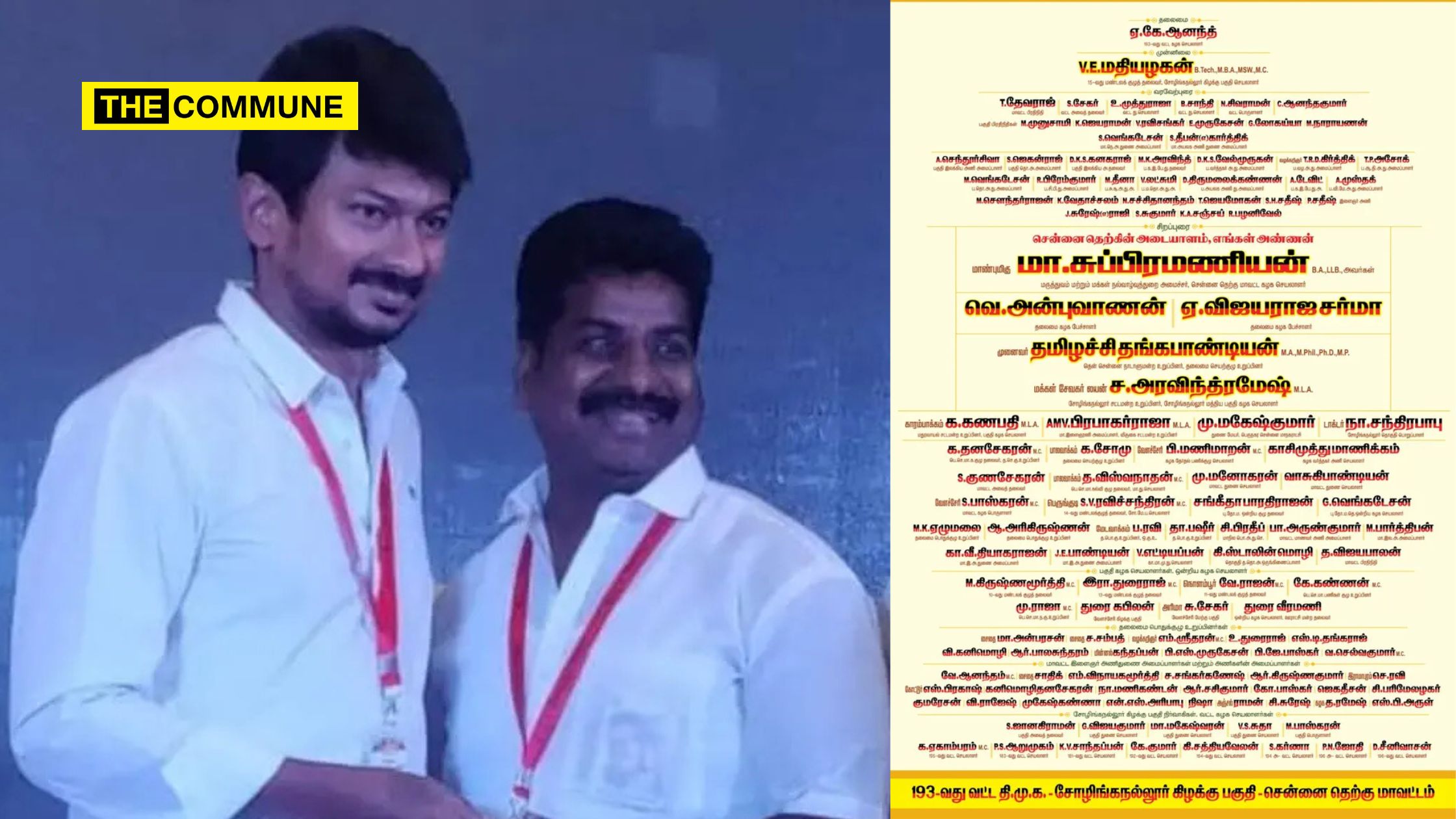
RTI Activist & Complainant Present Key Evidence As Investigations Expands In MUDA Case Involving CM Siddaramaiah

ED obtained crucial documents from an RTI activist from Mysuru, Gangaraju in the MUDA scam.

The Enforcement Directorate (ED) is probing the Mysuru Urban Development Authority (MUDA) case allegedly involving Chief Minister Siddaramaiah. On 28 October 2024, the ED obtained crucial documents from an RTI activist from Mysuru, Gangaraju. Meanwhile, the complainant in the MUDA case, Snehamayi Krishna, has submitted purported video evidence to the Additional Director of the ED, Bengaluru, Murali Kannan, linked to the case.

RTI activist Gangaraju, while speaking to the media on 28 October 2024, claimed that he has substantial and crucial information regarding the CM’s involvement in the MUDA case, and the ED has asked him to provide the documents and information. Gangaraju had also filed a complaint with the ED alleging illegal allotment of sites by MUDA to CM Siddaramaiah’s wife. Gangaraju had also complained of intimidation and harassment by strangers after he raised his voice against the CM.

“I am handing over 4,200 pages of documents to the ED. Based on my video, the ED is conducting raids on a realtor and builder named N. Manjunath,” Gangaraju stated.

Meanwhile, Snehamayi Krishna, in his written submission, stated, “I respectfully request that your office has rightly undertaken an enquiry based on the complaint I have submitted regarding illegal financial transactions at the MUDA.”

“Recently, I obtained a video wherein it is clearly visible that bundles of cash are being counted in the back seat of a vehicle, while in a conversation a sum of 25 lakh is mentioned explicitly. As per the information, the individual handling the cash is an assistant of one N. Manjunath (builder), and the video pertains to the money received by one Shivanna on behalf of Manjunath. In this video, Manjunath has reportedly handed over the settlement deed to Shivanna,” the submission stated.

“As mentioned in the deed, Manjunath resides in Dollars Colony, J.P. Nagar in Bengaluru. I request you to summon him to your office, review the video, conduct an enquiry, and gather the details regarding Manjunath’s transactions with the MUDA in 50:50 ratio allotments,” Snehamayi Krishna stated.

He has also provided a set of questions and demanded a probe into whether the plots were distributed to officials and staff. The ED sleuths began simultaneous raids in multiple locations in Bengaluru and Mysuru on 28 October in connection with the MUDA case. According to sources, simultaneous raids are underway at nine locations in Bengaluru and Mysuru cities.

The ED has targeted the offices and residences of MUDA officers and builders. The ED sleuths have raided a builder’s residence in upscale Dollar’s Colony in J.P. Nagar locality in Bengaluru and carried out search and inspection there.

-IANS

Subscribe to our TelegramWhatsApp, and Instagram channels and get the best stories of the day delivered to you personally.

LG Sanctions Prosecution Of Five PWD Engineers In ₹200 Crore Corruption Scam In Delhi

LG Sanctions Prosecution Of Five PWD Engineers In ₹200 Crore Corruption Scam In Delhi

Lieutenant Governor V.K. Saxena granted sanction for the prosecution of five engineers of the Public Works Department (PWD) in a corruption case linked to the alleged 200 crore scam in government hospitals, sources said on 28 October 2024. The scam involved generation of fake invoices and payments to contractors who carried out incomplete works in hospitals during the pandemic.

Initial investigations revealed that PWD officials approved the payments even though the contractors had not completed electrical works. The LG approved the prosecution sanction under Section 17A of Prevention of Corruption Act, 1988 against two assistant engineers and two junior engineers of PWD electrical division. The engineers named in the FIR are Assistant Engineers Subhash Chand and Subhash Chandra Dass and junior engineers Rajesh Aggarwal, Raghural Solanki and Abhinav.

In July, an additional director general of PWD and two private firm owners were arrested in connection with the alleged scam. At that time, the accused were identified as Anil Kumar Ahuja, former PWD Assistant DG, and firm owners Vinay Kumar and Akshitiz Birmani. At the time of these arrests, the Anti Corruption Branch (ACB) said, “The PWD officials paid the private firms/contractors either for no work or for incomplete work against fake/forged bills.” 

The ACB had also detected lapses in granting of approval and execution of work orders, causing a loss of around 200 crore to the government exchequer. At the time of Ahuja’s arrest, the ACB had claimed that he allegedly conspired with owners of 10 companies and gave the nod to carry out 56 works. The investigators claimed that Ahuja misused the provisions used to categorise works as emergent and urgent. The two work categories carry different SOPs for verification of bills and payment to contractors with the decision-makers enjoying wide powers under the emergent category.

The ACB, after getting a complaint, had launched a probe that revealed that the contractors involved in the scam did not have any e-way bills for materials purportedly used for carrying out electrical works. Also, there was an inordinate delay in depositing purchase invoices after the completion of work.

The LG’s sanction for prosecution against the five engineers is sure to raise political temperature in the election-bound capital with Opposition parties often targeting the AAP government over corruption. Delhi Pradesh Congress Committee president Devender Yadav said residents of Delhi were disillusioned with the misrule of the AAP government over the past 10 years as corruption was the only thing to the credit of former Chief Minister Arvind Kejriwal and current CM Atishi.

-IANS .

Subscribe to our TelegramWhatsApp, and Instagram channels and get the best stories of the day delivered to you personally.
ED Raids Former MUDA Commissioners In Land Scam Linked To Siddaramaiah

ED Raids Former MUDA Commissioners In Land Scam Linked To Siddaramaiah

The Enforcement Directorate (ED) probing the alleged Mysuru Urban Development Authority (MUDA) scam conducted raids at the residences of former MUDA commissioners D.B. Natesh and G.T. Dinesh Kumar on Monday, sources said. A team of five ED officials conducted search at the residence of Natesh located at the 10th Cross of Malleshwaram locality in Bengaluru.

Natesh was present at the house during the raids. The sleuths also raided the Deepika Royal apartment of Dinesh Kumar in Banaswadi locality of Bengaluru. Sources said that Dinesh Kumar had gone for morning walk when his flat was raided. Sources informed that Dinesh Kumar did not return to his residence and his mobile phone was switched off. The ED officers tried to contact him and waited for him to turn on his cell phone. Natesh and Dinesh Kumar are accused of creating false documents and indulging in distribution of MUDA sites worth hundreds of crores illegally to vested interests. The ED sleuths conducted raids at the residence of builder and realtor N. Manjunath at his Dollars’ Colony residence in J.P. Nagar locality of Bengaluru on Monday morning.

They also conducted raids at nine locations in Bengaluru and Mysuru cities, according to sources. The swift developments indicated that the ED sleuths might conduct raids at any time against the first accused in the case, Chief Minister Siddaramaiah. Meanwhile, complainant Snehamayi Krishna in the MUDA case allegedly involving CM Siddaramaiah, submitted a petition to Karnataka Lokayukta and demanded that former MUDA commissioners Natesh and Dinesh Kumar should be arrested and sent to judicial custody. Natesh and Dinesh Kumar should be immediately questioned and named as accused in the MUDA case. Both have caused a loss of hundreds of crore rupees for the MUDA by creating fake documents by themselves and with the help of others, Snehamayi Krishna alleged.

Among the allotted 928 plots, barring few, all were allotted by Natesh and Dinesh Kumar. They have allotted the lands acquired decades ago. They should be questioned why during their tenure the greatest number of petitions seeking compensation were submitted, he demanded. It is important to ascertain why the land owners were quiet for decades and why they were not given compensation for a long time? It was the duty of these officers to initiate action when forged documents were submitted claiming the ownership of the acquired land, Snehamayi Krishna pointed out in his petition. The Congress government had initially transferred and later suspended Dinesh Kumar after the alleged MUDA scam surfaced.

Later, he was appointed as the Haveri University Registrar (Administration). When BJP questioned the promotion of an accused officer, the Congress government placed him under suspension. Following Dinesh Kumar questioning the decision of the government in the court, the government had revoked the suspension. Meanwhile, the ED probing MUDA case allegedly involving Chief Minister Siddaramaiah, obtained crucial documents from a Mysuru-based RTI activist, Gangaraju, on Monday.

The complainant in the MUDA case, Snehamayi Krishna, has submitted purported video evidence to the Additional Director of the ED, Bengaluru, Murali Kannan, linked to the case. RTI activist Gangaraju, while speaking to the media on Monday claimed that he has substantial and crucial information regarding the CM’s involvement in the MUDA case and he has been asked by the ED to provide the documents and information. Gangaraju had also filed a complaint with the ED alleging illegal allotment of sites by MUDA to CM Siddaramaiah’s wife.

–IANS

Subscribe to our channels on TelegramWhatsApp, and Instagram and get the best stories of the day delivered to you personally.

MP: Congress Workers Sprinkle ‘Gangajal’ In Rewa Where 19-Yr Old Woman Was Gang-Raped

MP: Congress Workers Sprinkle ‘Gangajal’ In Rewa Where 19-Yr Old Woman Was Gang-Raped

In a protest against the gang-rape of a newly married woman in Rewa district, a group of women leaders of Madhya Pradesh Congress visited the crime spot and sprinkled ‘gangajal’ over the place on Monday. Congress workers also visited the victim’s residence and interacted with her in Rewa. Madhya Pradesh Congress chief Jitu Patwari also held a telephonic conversation with the victim’s family members.

Jitu Patwari had formed a fact-finding team in which five Congresswomen leaders were appointed. The team was assigned to collect the facts and evidence of the horrific incident which occurred on October 21. Congress has targeted the BJP government, saying that the State’s Home Department has collapsed. “We have sprinkled gangajal at the place where the woman was gang-raped. It is part of our protest against the incident,” Kavita Pandey, general secretary of MP Congress told IANS. Notably, the 19-year-old newly-married woman was gang-raped by a group of men in Madhya Pradesh’s Rewa district while picnicking near a temple with her husband, police said. The horrific incident occurred when the couple had gone for a picnic in the Gurh police station area on October 21, about two kilometres away from a famous temple.

Several young men, aged between 19 and 22 years, allegedly raped the woman and beat up her husband. Police said they have nabbed all seven accused in the case “When the incident came to our notice, we approached the couple and counselled them to report the crime,” Rewa SP said. The SP said that the men had gone to bathe and party at a pond near the temple and that they were also drunk. He further added that the case was registered under Bharatiya Nyay Sanhita (BNS) Sections 296, 127(2), 115, 351(3), 70(1), 79, and 3(5).

–IANS

Subscribe to our channels on TelegramWhatsApp, and Instagram and get the best stories of the day delivered to you personally.
Odisha CM Majhi Says His Govt Follows Zero Tolerance Policy Towards Corruption

Odisha Chief Minister Mohan Charan Majhi on Monday asserted that his government has adopted the policy of ‘zero tolerance’ towards corruption in the state, adding the government has been taking several steps to strengthen the Vigilance Department.

Addressing the gathering at the state level function on the occasion of the Vigilance Awareness Week 2024 here on Monday, CM Majhi said: “The conviction rate of Odisha vigilance department is today over 50 per cent while the rate of conviction in Disproportionate Assets related cases is more than 80 per cent. Our government has been taking several steps to strengthen Odisha vigilance by improving technological know-how, infrastructure and human resources. “Within 140 days of the formation of our government, six chief engineers have been arrested on charges of amassing wealth disproportionate to their income. Their assets have been seized, and they have been sent to judicial custody,” added CM Majhi.

He noted that another 20 officials of different categories have also been arrested on corruption charges. All this money was collected from the common people. The Chief Minister also said that eight new Additional Superintendent of Police posts and 24 Deputy SP posts will be created for the Vigilance Department. These additional posts will play an important role in the investigation and the process of prosecution of corruption cases by the Vigilance Department. This apart, as many as 16 new Sub-Inspectors will be employed in the anti-corruption wing of the state government for investigation. Besides, the government also approved the appointment of 24 chartered accountants, experts of banking and cybersecurity in the Vigilance Department.

As many as 135 motorcycles, 150 desktops/ laptops will be provided for the vigilance. A state forensic science laboratory will be opened in the vigilance directorate. CM Majhi noted that the government has started efforts to take the fight against corruption to the grassroots. The district collectors have been given the power to take action against corrupt officials at the district level. “Our government has been carrying out both top-down and bottom-up approach for the fight against corruption. It is not enough for the fight against corruption to take action against only one or two people,” added CM Majhi.

He said that when the campaign against corruption continues without any breaks, the corrupt officials will lose their sleep for fear of jail. “This will be a deterrent for the corrupt. Our government is taking all necessary steps to reduce the possibility of corruption,” noted CM Majhi. He also added that the Direct Benefit Transfer (DBT) procedure introduced by Prime Minister Narendra Modi is the main weapon against corruption.

–IANS

Subscribe to our channels on TelegramWhatsApp, and Instagram and get the best stories of the day delivered to you personally.
Cambodia: 12 Door Guardian Statues Unearthed At Angkor

Cambodia: 12 Door Guardian Statues Unearthed At Angkor

Archaeologists have discovered 12 door guardian statues during a recent excavation at the north gate of the ancient Royal Palace within Angkor Thom in Cambodia’s Angkor Archaeological Park, the Apsara National Authority (ANA) reported on Monday. The ANA is the government agency responsible for managing, safeguarding and preserving the Angkor Archaeological Park, a UNESCO-listed world heritage site, situated in Siem Reap province.

Archaeologist Sorn Chanthorn said the archaeological effort was a collaborative project between the ANA and the China-Cambodia Government Team for Safeguarding Angkor (CCSA), Xinhua news agency reported. “These statues were uncovered while studying the gate’s structure and searching for fallen stones,” he said. “Notably, the 12th statue was found buried at a depth of 140 cm,” he said. Chanthorn added that these sandstone statues vary in size and shape, with some measuring 110 cm high and others 100 cm high, “Each statue features different facial and hair ornaments.” After the discovery, the archaeological team documented the statues’ original locations, took photographs, and prepared for cleaning and restoration before returning them to their initial positions, he added.

“Experts believe these door guardian statues exemplify the Khleang style, aligning with the construction period of the 11th century Royal Palace,” Chanthorn said. The ancient Royal Palace is a large rectangularly walled area located within Angkor Thom in the Angkor Archaeological Park, which is the most popular tourist destination in the Southeast Asian nation. The Angkor Archaeological Park attracted almost 700,000 international visitors during the January-September period of 2024, earning a gross revenue of $32.5 million from ticket sales, according to the state-owned Angkor Enterprise.

–IANS

Subscribe to our channels on TelegramWhatsApp, and Instagram and get the best stories of the day delivered to you personally.