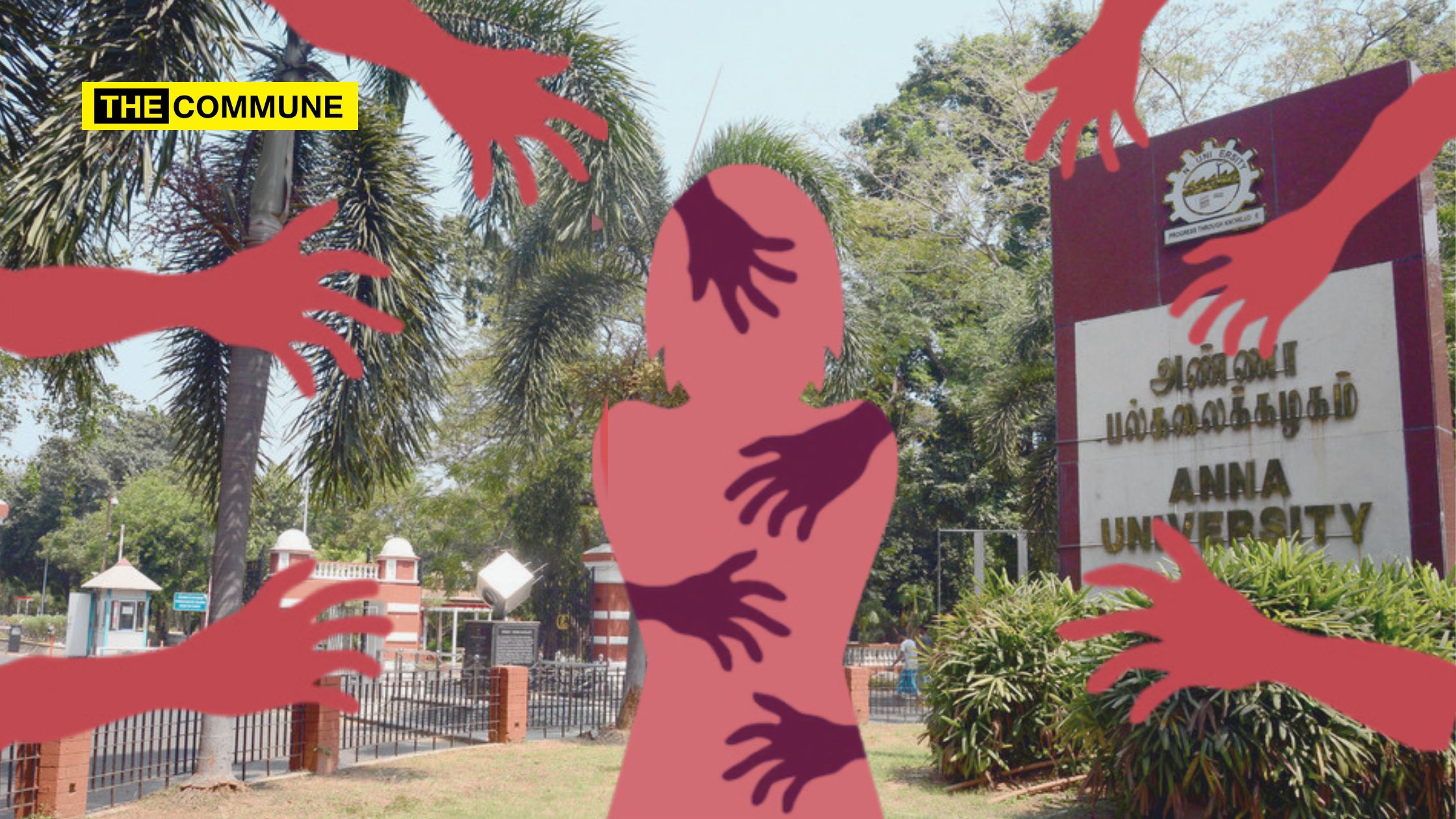
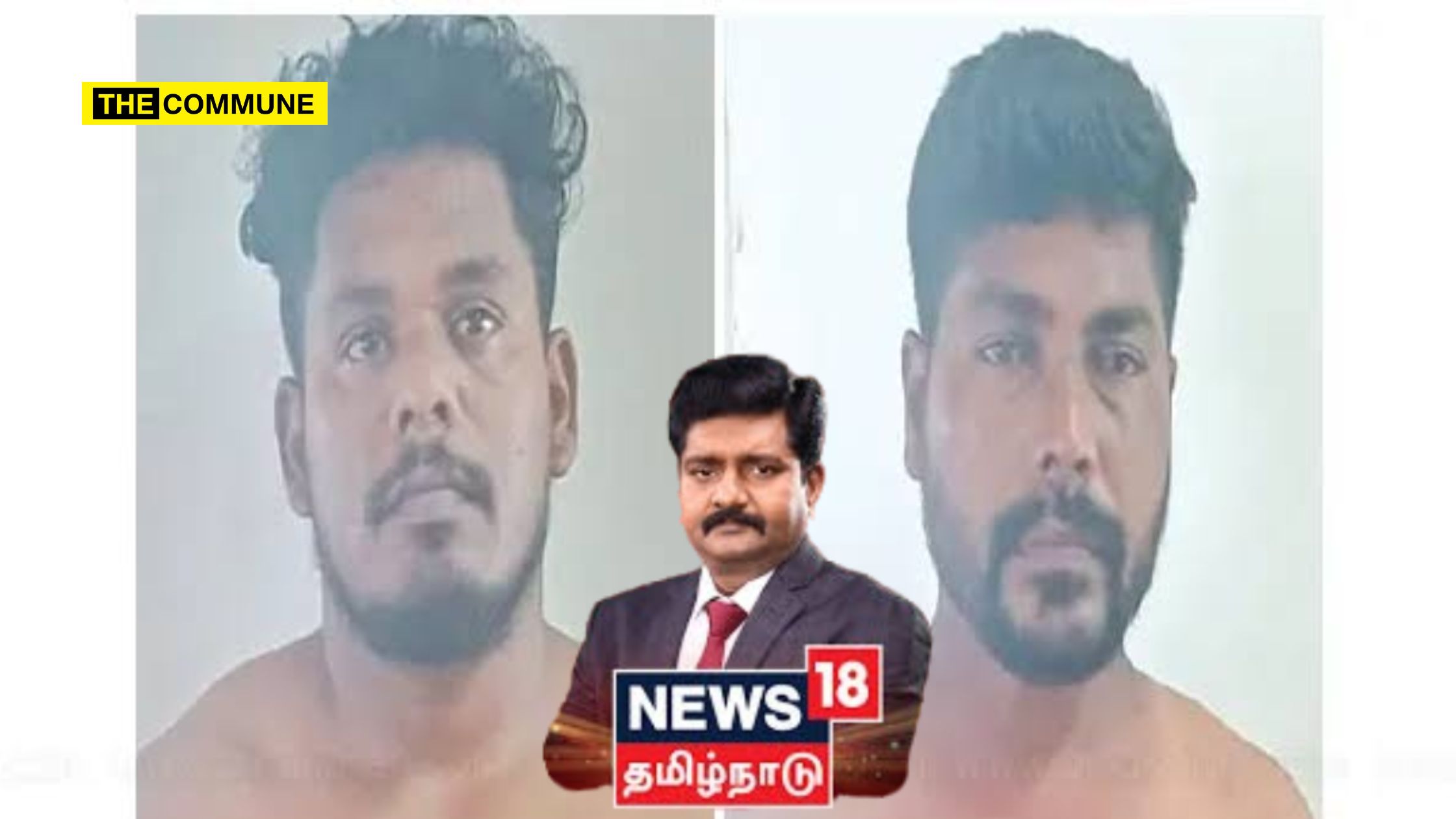
37-year-old Gnanasekaran, a roadside biriyani vendor from Kotturpuram facing multiple cases, has been arrested in the sexual harassment case involving a second-year Anna University student based on CCTV footage. The Kotturpuram police have filed a case under section 64 of the BNSS and are continuing their investigation.
The incident occurred on 23 December, when the victim, who had been in a two-year romantic relationship with a fellow student, was meeting her boyfriend at their usual secluded spot on campus. Two unknown individuals approached them, attacked the boyfriend, and then sexually harassed the woman. The perpetrators forced the student to strip, filmed her without her consent, threatened her, and fled the scene. The traumatized student reported the incident to the Kotturpuram police.
Although reports initially suggested that the CCTV cameras were not functioning due to rain damage, the Higher Education Minister Govi Chezhiaan confirmed that the arrest was based on available CCTV footage.
The victim has also filed a complaint with the university’s POSH committee. The Chennai police are working with the university to strengthen campus security. Authorities have not yet issued an official statement on the matter.
Subscribe to our channels on Telegram, WhatsApp, and Instagram and get the best stories of the day delivered to you personally.
In a shocking incident at the Ramanathaswamy temple in Rameswaram, Tamil Nadu, two individuals were arrested on 23 December 2024, after a hidden camera was discovered in a private women’s changing room near the Rameswaram beach in Ramanathapuram district. The police were further alarmed when they discovered over 120 videos on the suspects’ cell phones, raising concerns about the possibility of these videos being shared via social media platforms like WhatsApp.
Rameswaram is a popular pilgrimage destination for Hindus, attracting devotees from across the country, particularly after a holy dip in the Agni Theertham and a visit to the famous Ramanathaswamy temple. It is here, at a private changing room opposite the beach, that the disturbing incident took place.
According to police reports, a group of 10 devotees from Thirumayat in Pudukottai district, including several women, arrived in Rameswaram for a spiritual trip. After taking a dip in the Agni Theertham, they paid a fee to use the changing room at a nearby tea shop. The tea stall owner directed the elderly women to one room and the younger women to another.
One of the young women, suspecting something amiss, inspected the room and discovered a hidden camera embedded between the wall tiles. Shocked, she immediately alerted her father, who then contacted the authorities.
Following the woman’s discovery, police led by Rameswaram DSP Shanthamoorthy conducted a search of the premises and seized the camera. The investigation led to the arrest of two suspects: Rajesh Kannan (34), the tea shop owner, and Meeran Moideen (34), a tea master employed at the shop. Both were arrested on charges of secretly recording women who came to change clothes. They were subsequently placed in custody at the Ramanathapuram jail.
Upon further investigation, police seized the suspects’ cell phones and found over 120 videos of women changing clothes, filmed over the past month. The authorities are now probing whether the footage was distributed or shared with others, including via messaging platforms like WhatsApp.
In response to the incident, Ramanathapuram District Collector Simranjit Singh Kalon issued a statement confirming that the hidden camera had been seized, and that action had been taken against the perpetrators. The license for the room where the camera was discovered has been canceled, and the District Collector has urged devotees to use the changing rooms located within the temple premises or near the Agni Theertha beach, where security is ensured.
While this is already a serious invasion of privacy, what is more concerning is the Dravidianist media’s handling of the case. News reports from Dravidianist media outlets have been extremely selective in their coverage of the incident. While the name of Rajesh Kannan, the owner of the location, has been prominently featured, the name of Meeran Moideen, who is reportedly a key accomplice in this crime, has been conspicuously omitted from certain news outlets—particularly those with a clear Dravidianist bias.
For instance, News18 Tamil Nadu, under the direction of Karthigaichelvan, has chosen to focus solely on Kannan’s name, conveniently leaving out the full details of the involvement of Moideen. Their news card read,
“Secret Camera in Changing Room- Owner Arrested
Secret cameras in a changing room managed by a tea shop owner near Rameswaram beach. A camera was discovered when a woman went to change clothes; Police investigation found 3 cameras and arrested tea shop owner Rajesh and tea master.”
Alert : Hidden camera found at a private dress change room near Rameshwaram Ramanathanswamy temple.
After a holy dip in the Rameshwaram, a family paid at a private dress change room.
A girl has found a hidden camera in the room and handed it over to her father.
This selective reporting raises questions about the underlying bias that exists in the media landscape. By omitting the identity of Moideen—who is reportedly Muslim—the outlet distorts the narrative and creates an incomplete picture of the incident.
The fact that the name of one of the perpetrators is selectively hidden reflects the growing trend of media outlets allowing political and ideological biases to influence their reporting. In this case, it seems that a deliberate attempt was made to obscure the involvement of an individual based on his religious background, which can only be seen as an attempt to downplay the potential implications of the crime.
The public’s right to know the full details of criminal cases, especially those involving sensitive issues such as invasion of privacy, is paramount. By withholding important information, Dravidianist media outlets are failing in their duty to provide unbiased, factual news. Instead of offering balanced coverage, they are instead distorting the truth to cater to a particular ideological narrative. Thisnot only undermines journalistic integrity but also compromises public trust in the media.
Subscribe to our channels on Telegram, WhatsApp, and Instagram and get the best stories of the day delivered to you personally.
According to a statement issued by the Ministry of Labour and Employment on Wednesday, the Employees’ Provident Fund Organisation (EPFO) added 13.41 lakh members net during October, reflecting increased employment and higher awareness of employee benefits among workers.
The EPFO enrolled around 7.50 lakh new members in October out of which a significant 58.49 per cent were in the young 18-25 age group. The net number for this dominant age group is 5.43 lakhs.
This is in consonance with the earlier trend which indicates that most individuals joining the organized workforce are youth, primarily first-time job seekers, indicating the increasing employment opportunities in the economy. The payroll data highlights that approximately 12.90 lakh members exited and subsequently rejoined EPFO.
This figure depicts year-over-year growth of 16.23 per cent, compared to October 2023. These members switched their jobs and re-joined the establishments covered under the ambit of EPFO and opted to transfer their accumulations instead of applying for final settlement thus, safeguarding long-term financial well-being and extending their social security protection.
A gender-wise analysis of the payroll data reveals that out of the new members added during the month, around 2.09 lakhs are new female members. This figure exhibits year-on-year growth of 2.12 per cent, compared to October 2023. Also, the net female member addition during the month stood at around 2.79 lakh.
The increase in female member additions is indicative of a broader shift towards a more inclusive and diverse workforce, the official statement said. A state-wise analysis of payroll data shows that net member addition in the top five states/ UTs constitutes around 61.32 per cent of net member addition, adding a total of around 8.22 lakh net members during the month. Maharashtra is the leading state with the addition of 22.18 per cent of net members during the month.
The states/UTs of Maharashtra, Karnataka, Tamil Nadu, Delhi, Haryana, Telangana, and Gujarat individually added more than 5 per cent of the total net members during the month. A month-on-month comparison of industry-wise data displays significant growth in the members working in establishments engaged in industries such as road motor transport, electronic media companies, banks other than nationalised banks etc.
The payroll data is provisional since data generation is a continuous exercise and updating employees’ records is a continuous process, the statement added.
–IANS
Subscribe to our channels on Telegram, WhatsApp, and Instagram and get the best stories of the day delivered to you personally.
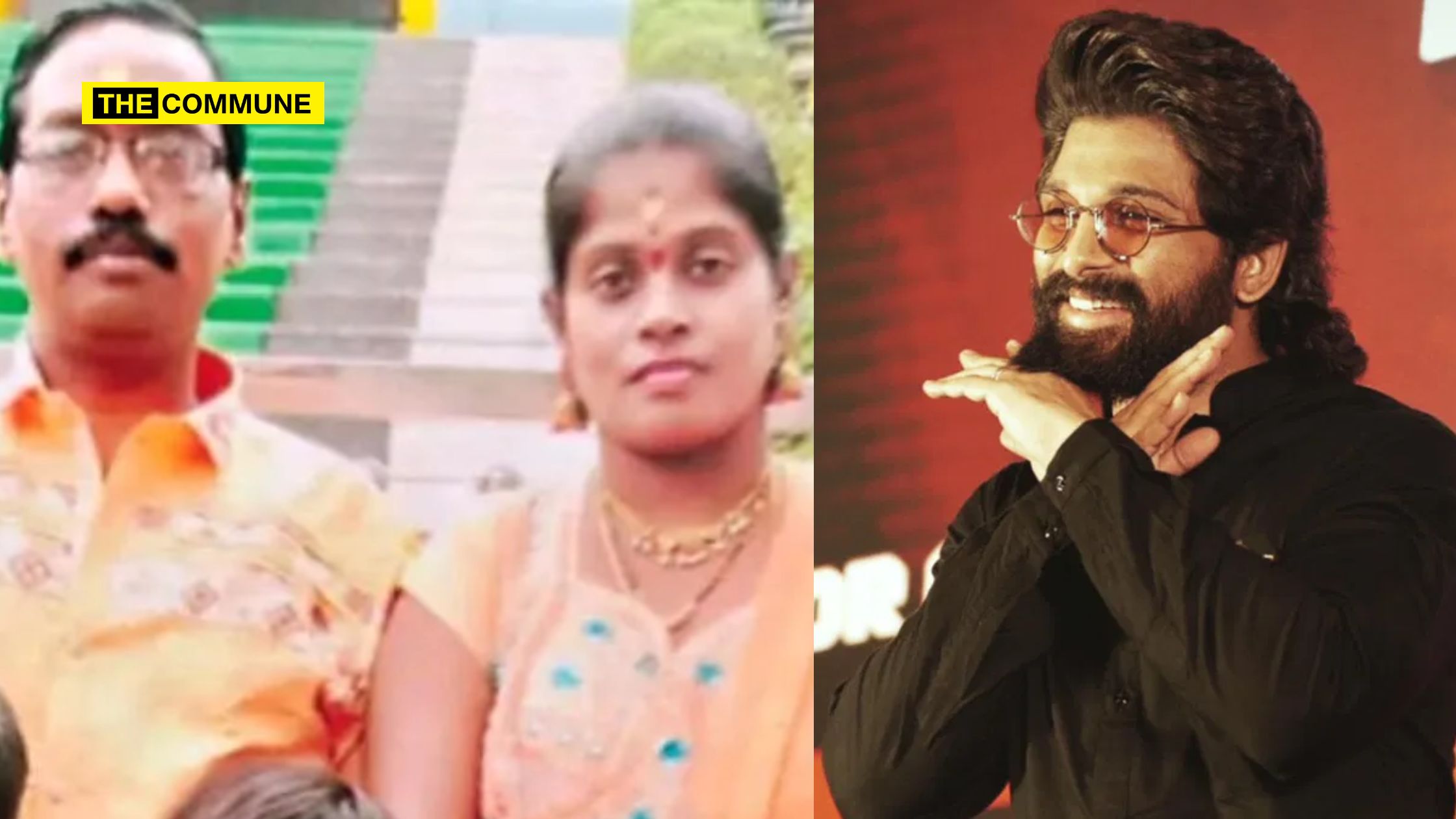
Actor Allu Arjun, producers and director of ‘Pushpa 2: The Rule’ have announced ₹2 crore for the family of the woman who was killed and her son who was critically injured during the premiere show of the movie at Sandhya Theatre on December 4.
Allu Arjun’s father and well-known producer Allu Arvind made the announcement on Wednesday after meeting Sri Teja, who is undergoing treatment at KIMS Hospital. Allu Arvind told media that the cheque was handed over to Dil Raju, chairman, Telangana State Film Development Corporation. Allu Arvind said to support the boy and his family, the film unit decided to give financial assistance of ₹2 crore.
While Allu Arjun has given ₹1 crore, Mythri Movies, the producers of the movie have extended assistance of ₹50 lakh. Film’s director Sukumar has also given ₹50 lakh to the family. Allu Arvind said they spoke to doctors and were happy to know that he is recovering. Allu Arjun had announced ₹25 lakh for the family two days after the incident. He had also assured all support to the family including treatment expenses of the boy. Sri Tej’s father Bhaskar had said on Tuesday that he received a demand draft of Rs 10 lakh from Allu Arjun. Bhaskar said that the actor’s manager is also in regular touch with the family to get updates on the boy’s condition.
The family is receiving support from both the Telangana government and Allu Arjun. Bhaskar said Minister for Roads & Buildings and Cinematography Komatireddy Venkat Reddy gave them a cheque of ₹25 lakh.
The boy’s father said after 20 days, they noticed some body movement. “He also opened his eyes but did not recognise any of us,” he said. A woman named Revathi died and her son Sri Tej was critically injured in the stampede at Sandhya Theatre. Actor Allu Arjun was arrested in the case on December 13 and was released on interim bail the next day. The Chikkadpally Police, which registered a case of culpable homicide not amounting to murder, interrogated Allu Arjun for more than three hours on Tuesday.
–IANS
Subscribe to our channels on Telegram, WhatsApp, and Instagram and get the best stories of the day delivered to you personally.
The ruling DMK’s family-owned news channel, Sun News, often seen as the party’s mouthpiece, has drawn criticism for spreading false narratives about the Telecom Regulatory Authority of India’s (TRAI) latest directive. This follows the TRAI announcement mandating telecom providers to separate data packs from voice and SMS recharges, with implementation required within a stipulated timeframe to benefit citizens. However, Sun News distorted TRAI’s intent and promoted a narrative suggesting the move would impose an additional burden on consumers, using a distorted news card to spread this misinformation.
India’s telecom regulator, the Telecom Regulatory Authority of India (TRAI), has recently amended tariff rules, requiring mobile service providers to introduce recharge plans exclusively for voice calls and SMS without including Internet data. Announced on Monday, the updated regulations aim to cater to consumers who do not use mobile data, offering more tailored options. Additionally, the validity of special recharge coupons has been extended from the current 90-day cap to a maximum of 365 days.
This move is expected to significantly benefit segments of India’s population, such as the estimated 150 million 2G users, dual-SIM owners, elderly individuals, and residents in rural areas. The new rules allow consumers to pay only for the services they use, avoiding unnecessary expenses on unused data.
TRAI emphasized the importance of this change, citing data from telecom operators indicating that around 150 million subscribers still depend on feature phones, highlighting the demand for non-data-specific recharge plans. “The service provider shall offer at least one Special Tariff Voucher exclusively for Voice and SMS with a validity period not exceeding three hundred and sixty-five days,” stated TRAI in the Telecom Consumers Protection (Twelfth Amendment) Regulations, 2024.
In this context, the DMK’s mouth piece, Sun News, on 23 December 2024, published a misleading news card stating, “TRAI puts in a fix (Vachaan Paaru Aapu!) TRAI orders telecom companies to introduce separate recharge plans for call and SMS services within the next 30 days.” By distorting the actual facts and misrepresenting the intent of the directive, the report appeared to be crafted with a malicious agenda to undermine the credibility of TRAI and create a negative perception through deliberate wordplay.
Another netizen urged the central government to take action against the spread of misinformation, stating, “@Murugan_MoS .. Sir, still this Dravidian dog spreading fake news.. When you will going to take action against for that!?.. Other wise anti modi will spread again.. Pls do kind action for this.”
@Murugan_MoS .. Sir still this dravida dog spreading fake news.. When you will going to take action against for that!?.. Other wise anti modi will spread again.. Pls do kind action for this.
Another netizen explained, “TRAI mandated separate recharge for voice & SMS ALL recharge, while its an added option for benefit of consumers who dont use Data. Previous recharge options will still be available!”
TRAI mandated separate recharge for voice & SMS ALL recharge, while its an added option for benefit of consumers who dont use Data. Previous recharge options will still be available! https://t.co/WGHBjMl0fL
After the misinformation spread by Sun News, some netizens believed that TRAI had imposed additional charges on customers and expressed their frustration without verifying the facts. Below are a few examples of such comments.
This is not the first time Sun News has been caught spreading misinformation. In February 2024, they falsely claimed that the Tamil Nadu government was contributing 70% to the PMAY scheme. However, Tamil Nadu BJP President K. Annamalai quickly debunked this claim with factual information, leading to the news being deleted.
In January 2024, a video of Tamil Nadu Chief Minister MK Stalin’s hands trembling during the inauguration of the Chennai Sangamam festival went viral, sparking rumors about his health. Sun News deleted the original clip which showed the trembling hands of the CM and shared an edited clip that removed the footage of Stalin’s trembling hands. The original video was deleted sparking netizen curiosity.
In December 2023, in the wake of the floods in Tamil Nadu, Sun News spread fake news regarding Finance Minister Nirmala Sitharaman’s statements in a press conference on 22 December 2023. The outlet claimed that Sitharaman stated Tamil Nadu flood damages couldn’t be declared a national disaster. However, Sitharaman had made no such statement, instead, she said that there was no practice of declaring state disasters as national disasters.
In November 2023, Sun News propagated misinformation, suggesting that the online gambling law applied uniformly. Contrary to this, the Madras High Court ruled on a series of writ petitions filed by the All India Gaming Federation and online gaming companies. The court upheld the Tamil Nadu Prohibition of Online Gambling and Regulation of Online Games Act, 2022 but specified that it only applied to “games of chance” and not skill-based games like rummy and poker. The court also affirmed the state government’s authority to regulate online gaming aspects.
Sun News posted a video on social media platform X in September 2023 quoting Tamil Nadu Bharatiya Janata Party President K Annamalai’s speech during his En Mann En Makkal yatra. Annamalai was speaking about the lack of electricity at the Marudhamalai Murugan temple. The incident that Annamalai quoted at his yatra mentions how it was Chinnappa Devar popularly known as Sandow MMA Chinnappa Devar was instrumental in getting an electricity connection for the Marudhamalai Temple in Coimbatore. Sun News posted the video with the question, “Was DMK in power in 1962?” and shared a photo of the engraved inauguration stone mentioning MGR and Chinnappa Devar, trying to prove that they fact-checked the claim and it turned out to be wrong.
In September 2021, Sun News, through its official handle had put a news card in which it claimed that BJP workers collected garbage at the Besant Nagar beach on the occasion of Prime Minister Narendra Modi’s birthday and left the collected garbage in bags in the beach itself. However, BJP Tamil Nadu Youth Wing President Vinoj P. Selvam clarified that the garbage collected was taken in a corporation vehicle.
In June 2021, A tampered video of an elderly Muslim man being assaulted was shared widely which was also shared by Sun News saying that his beard was forcibly cut for not chanting ‘Vande Mataram’ and ‘Jai Shri Ram’. However, this fake news was busted.
Such biased fake narratives created by Dravidian journalists favoring the ruling government while portraying the opposition in a negative light have become increasingly common in the state, turning the public into pawns in their political games.
Subscribe to our channels on Telegram, WhatsApp, and Instagram and get the best stories of the day delivered to you personally.
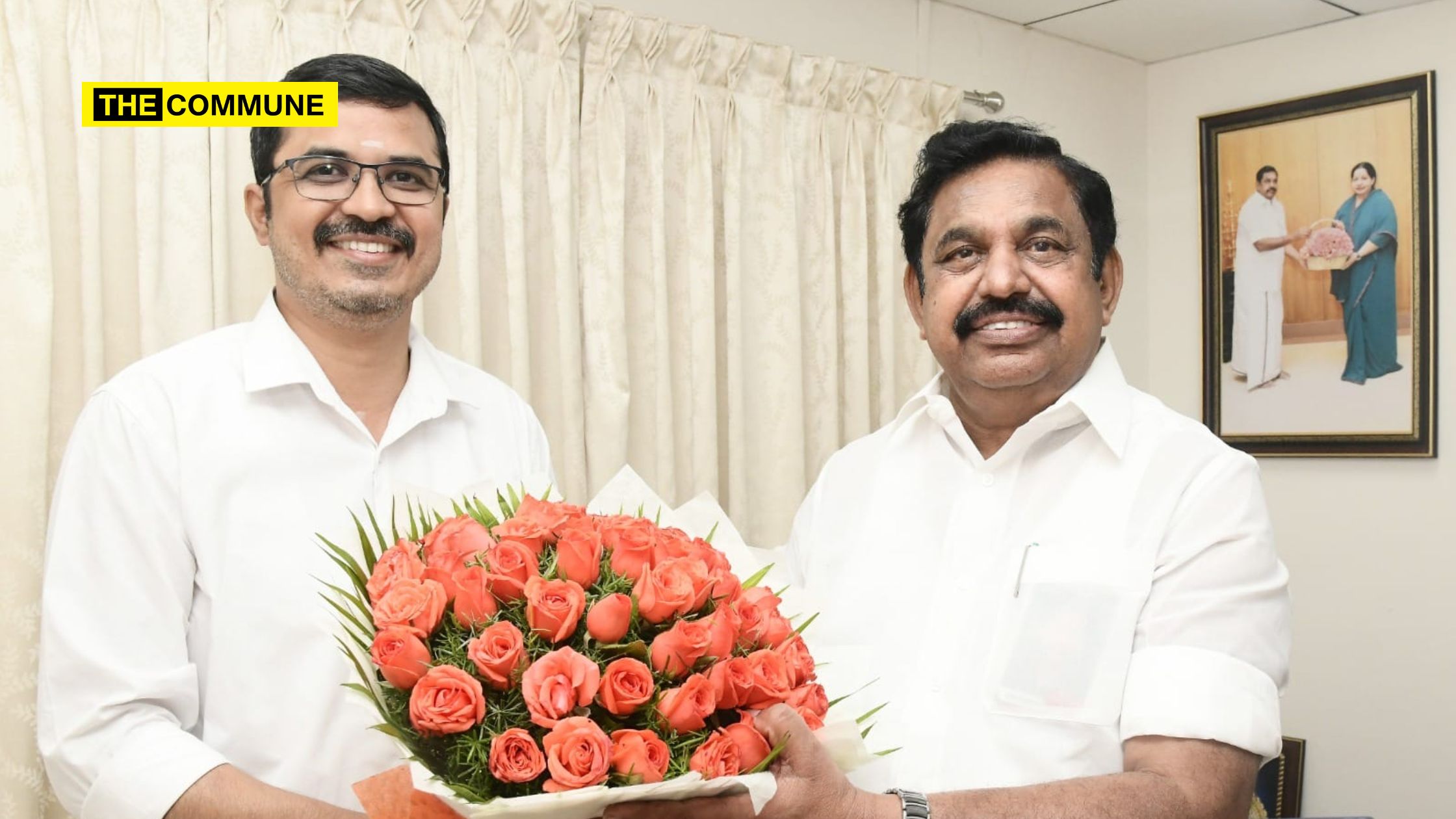
Kovai Sathyan, a prominent figure within All India Anna Dravida Munnetra Kazhagam (AIADMK), known for his intellect, logical reasoning, and political satire, has been appointed as the new president of the AIADMK IT Wing. Sathyan, who previously served as the joint secretary, brings with him a strong entrepreneurial background and is well-regarded as the party’s spokesperson.
His appointment follows several significant decisions regarding the party’s organizational structure and upcoming activities made in a recent consultative meeting of the AIADMK executives. The meeting, which brought together district executives, highlighted the party’s strategic direction for the future in light of the 2026 Assembly Elections.
He has been actively involved in party communications and digital strategy, aiming to enhance AIADMK’s political outreach through technological advancements. His leadership will focus on strengthening the party’s presence in Tamil Nadu’s political landscape, especially through digital channels.
He was instrumental in incorporating LED screens to expose the DMK’s failures during the 2021 Assembly elections, bringing a digital touch to the party’s outdoor meetings.
In addition to this appointment, Singhai G Ramachandran has been named the new secretary of the AIADMK student wing. Meanwhile, S.R. Vijayakumar, who held a key position in the party, has been relieved of his duties and appointed as the AIADMK propaganda deputy secretary.
These leadership changes reflect AIADMK’s focus on modernizing its communication efforts in preparation for 2026 Assembly Elections.
Subscribe to our channels on Telegram, WhatsApp, and Instagram and get the best stories of the day delivered to you personally.
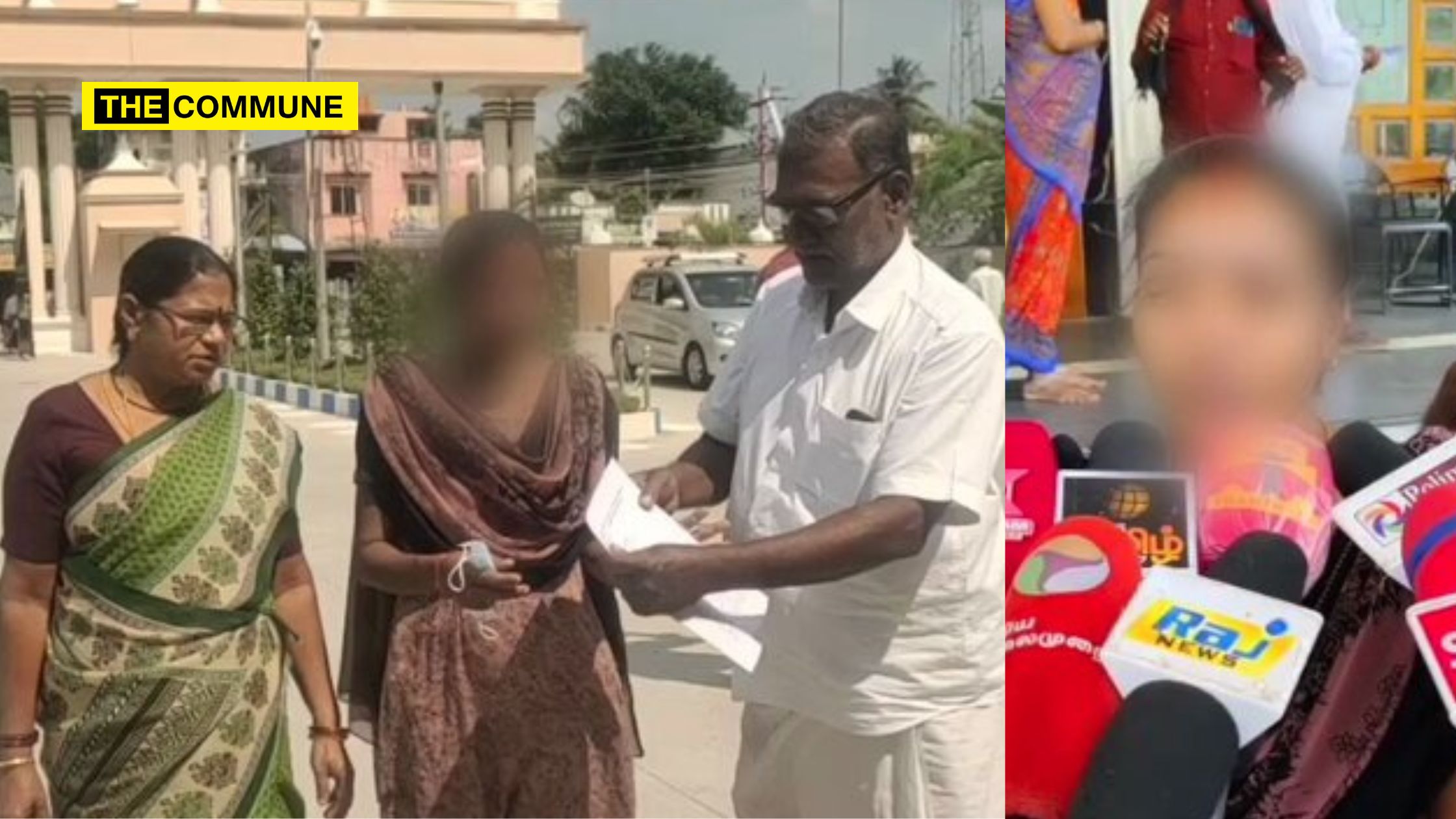
A disturbing case of alleged medical negligence emerged at a Tamil Nadu government hospital in Mayiladuthurai where a 38-year-old woman, Tamilarasi from Thenkarai, has complained to the Mayiladuthurai District Collector’s Office, accusing a gynaecologist of failing to perform a promised surgery to remove a tumour and worsening her condition.
According to the complaint, Tamilarasi sought treatment at the Mayiladuthurai Government Hospital on 19 November after experiencing severe abdominal pain. Following a CT scan, doctors diagnosed a tumor near her kidney and recommended surgery to remove it. On 4 December 2024, she was taken to the operation theatre, where the surgeon reportedly opened her abdomen but then decided the tumor was too large to remove. The doctor allegedly advised her to seek treatment at a larger hospital, such as JIPMER, before stitching the incision and discharging her.
Speaking to the press, Tamilarasi recounted her ordeal, stating, “I was admitted to the hospital on the 12th of last month for a urinary infection. During a scan, they identified a cyst and recommended for an open surgery. The scan report clearly showed from the stomach to the upper left side, but the lower part was not visible. We made this clear to then, but Dr. Prabha at the government hospital (GH) insisted on proceeding with the surgery without reviewing the scan report. I was hospitalized in the GH for a month, during which the surgery was postponed once due to a strike. Finally, on Wednesday, the 4th, they performed the operation. After opening my abdomen, the doctor said the cyst was attached to the urinary tube and intestine and told me, ‘Inform your parents that I cannot perform this surgery. It needs to be done elsewhere, by MS doctors.’ She immediately called another MS doctor, who instructed them to close the incision quickly to prevent blood loss. My heartbeat dropped, and I experienced severe anxiety. After the surgery, they transferred me to the ward. The medication they administered caused an allergic reaction, leading to swelling on my face. When I reported this, the staff treated me poorly, dismissively saying, ‘What can we do if the medicine doesn’t suit you? Go and get local treatment.’ Their negligence and attitude have left me in a dire condition.”
அரசு மருத்துவமணையில் வயிற்றில் அறுவை சிகிச்சை செய்து கொண்டிருக்கும்போதே அறுவை சிகிச்சை செய்ய முடியாது என கூறி மகப்பேறு மருத்துவர் தையல் போட்டு விட்டதாக ஆட்சியர் அலுவகத்தில் பாதிக்கப்பட்ட பெண் பரபரப்பு குற்றச்சாட்டு#Mayiladuthurai | #GovtHospital | #Patient | #Surgery |… pic.twitter.com/qQLFfq9qGg
Tamilarasi claims the procedure left her in worse pain than before and alleges the doctors did not properly evaluate her condition prior to surgery. Coming from a financially disadvantaged background, she states she cannot afford the additional treatment and is enduring significant physical and emotional distress. In her petition, she urged authorities to investigate the incident thoroughly, take appropriate action against the doctor, and ensure she receives continued medical care. She also highlighted the need for accountability to prevent similar experiences for other patients.
District Revenue Officer Uma Maheshwari has forwarded the complaint to the Joint Director of the Health Department, instructing an investigation and necessary action to address the matter.
Subscribe to our channels on Telegram, WhatsApp, and Instagram and get the best stories of the day delivered to you personally.
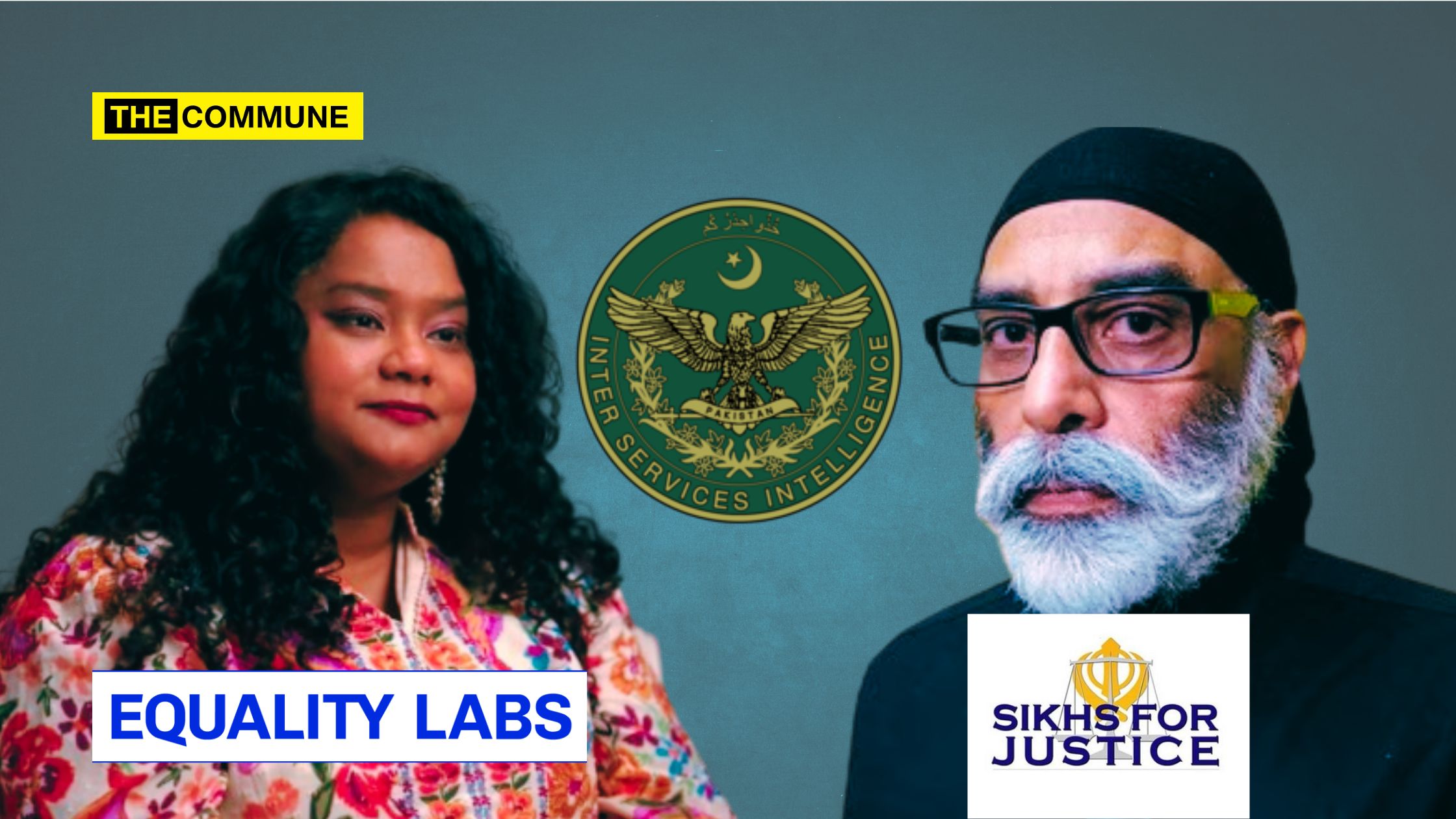
Khalistani terrorist Gurpatwant Singh Pannun issued direct threats to PM Modi and CM Yogi Adityanath in a viral video, vowing revenge for the killing of three Khalistani militants. The incident has drawn attention to Pannun’s links with US-based activist Thenmozhi Soundararajan and her group Equality Labs, tied to ISI-backed networks promoting anti-India propaganda.
On 24 December 2024, a threatening video by Khalistani terrorist Gurpatwant Singh Pannun went viral on social media, in which he issued a direct threat to Prime Minister Narendra Modi and Uttar Pradesh Chief Minister Yogi Adityanath. In the video, Pannun, a designated terrorist by the Indian government and leader of the banned separatist group Sikhs For Justice (SFJ), vowed to take revenge for the killing of three Khalistani terrorists during an encounter at the Kumbh Mela in Prayagraj, which is scheduled for 2025. The video has prompted an immediate response from the Pilibhit Police, who have filed a case against Pannun and initiated legal proceedings.
In the video, Pannun made several threatening remarks in Punjabi, accusing India of perpetrating a fake encounter against the three Sikh youths. He stated,“This Hindutva terrorist state has killed three Sikh youth in a fake encounter”and promised financial assistance of Rs 5 lakh to the families of the slain terrorists. Pannun’s threats extended to Indian political leaders as well. He referred to CM Yogi Adityanath using the derogatory term “Gangu ki aulaad,” invoking a fabricated historical figure, Gangu, whom Khalistani extremists claim betrayed the Sikh Guru’s family during a pivotal moment. Pannun also insulted Punjab CM Bhagwant Mann, calling him “Beant butcher di aulaad,” referring to the assassination of former Punjab CM Beant Singh, who had cracked down on Khalistani terrorism.
The most alarming part of Pannun’s message was his declaration of vengeance against the encounter of the three Khalistani terrorists. He threatened to launch attacks during the Maha Kumbh Mela in Prayagraj on January 14, 29, and February 3, 2025, claiming that PM Modi and CM Yogi would be present during the auspicious Shahi Snan dates. His message was unequivocal: SFJ would “shake the foundation of Hindutva terrorism” and make this Maha Kumbh the last for the two leaders.
Pilibhit Police have since taken cognisance of the video, registering a case under relevant sections at the Cyber Police Station and initiating investigations into the matter.
While Pannun’s threats to Indian leaders have captured attention, his broader affiliations with various extremist groups raise serious concerns.
The Connection Between Gurpatwant Singh Pannun And Equality Labs
One significant and disturbing connection is his association with Thenmozhi Soundararajan, the founder of the US-based group Equality Labs. Equality Labs, which claims to advocate for the rights of Dalits and marginalized communities, has been linked to Pannun’s SFJ and other pro-Khalistani elements.
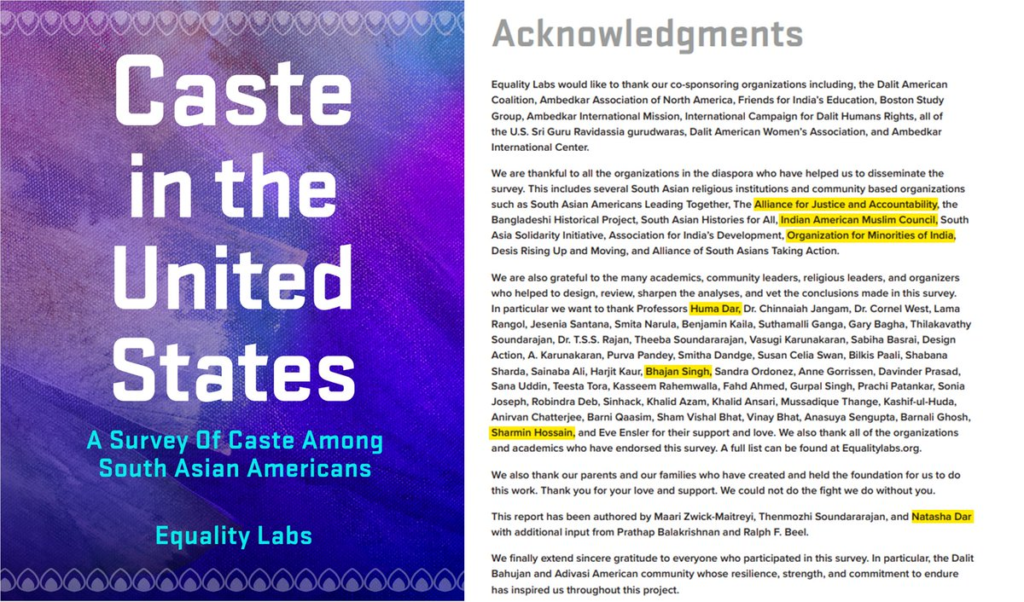
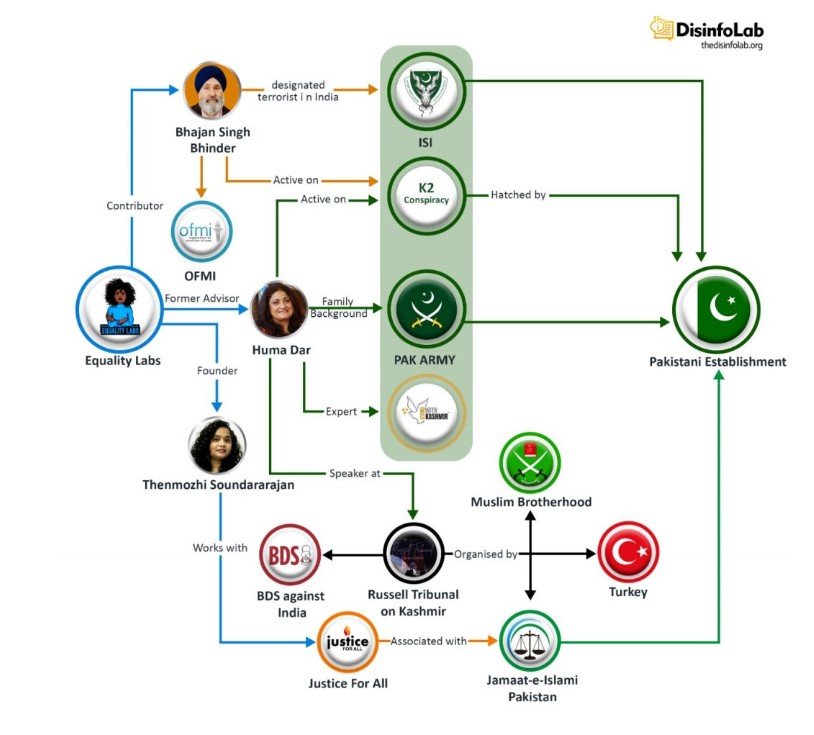
On 22 May 2019, Thenmozhi Soundararajan hosted an event in collaboration with Pannun’s SFJ, a group that openly supports Pakistan-sponsored terrorism targeting India. This collaboration further strengthens the suspicions about the pro-Khalistani leanings of Equality Labs and its founder. In fact, Soundararajan’s Equality Labs is said to also have been associated with Bhajan Singh Bhinder (alias Iqbal Choudhry), a notorious operative of Pakistan’s Inter-Services Intelligence (ISI), who has been involved with Khalistani terrorist activities for over three decades.
Did you know! -Gurpatwant Singh Pannun-a designated terrorist by Indian govt, who has openly issued threats to govt officials/leaders, is a close associate of DalitDiva (@EqualityLabs ) founder Thenmozhi Soundararajan!!
The attack at that time on the Indian Consulate in San Francisco was allegedly instigated by Khalistani groups. Notably, pro-Khalistani individuals, including Soundararajan, were linked to the Khalistani movement since Soundararajan had shared a stage with Pannun at an event held at the Allan P. Kirby Center for Constitutional Studies and Statesmanship in Washington, DC. The event occurred on the same day as the Lok Sabha 2019 election results were announced, amplifying the significance of this connection.
Khalistani elements like Amar Singh Shergill were collaborating with prominent US political figures, particularly Democrats, to escalate attacks on the Indian community through bills like SB403. The bill, sponsored by Aisha Wahab, targeted ‘caste discrimination’ in the US, a topic that Equality Labs heavily campaigned on – That it never saw the light of the day, is another story.
Equality Labs along with South Asian American Leaders of Tomorrow (SALT) pushed anti-CAA protests which culminated in the 2020 Delhi riots. Other initiatives such as Students Against Hindutva, Holi Against Hindutva, and Stand with Kashmir are not just campaign hashtags but support violent Islamists and terrorists.
The ISI And Terrorism Links
Let us unravel the thread that connects all the people mentioned above.
Bhajan Singh Bhinder is a key figure linked to Pakistan’s ISI and has a history of involvement in militant activities, particularly related to terrorism in India. After being declared a terrorist by India, Bhinder moved to the United States and, in 2007, co-founded the Organization For Minorities of India (OFMI) with Pieter Friedrich. OFMI, a US-based NGO, has been a key player in promoting anti-India narratives and has been involved in lobbying against India’s interests globally.
Now, OFMI is a key player in the network of anti-India NGOs. Its mission focuses on highlighting issues related to Sikh minorities, creating a narrative that Sikh communities are in danger in India. OFMI collaborates with various other organizations that align with its agenda to push anti-India propaganda. The group has worked closely with other anti-India entities, including Equality Labs.
Equality Labs, as we know, was founded by Thenmozhi Soundararajan, is another key organization in the anti-India network. The organization primarily focuses on caste-based narratives, claiming that caste atrocities are widespread in India.
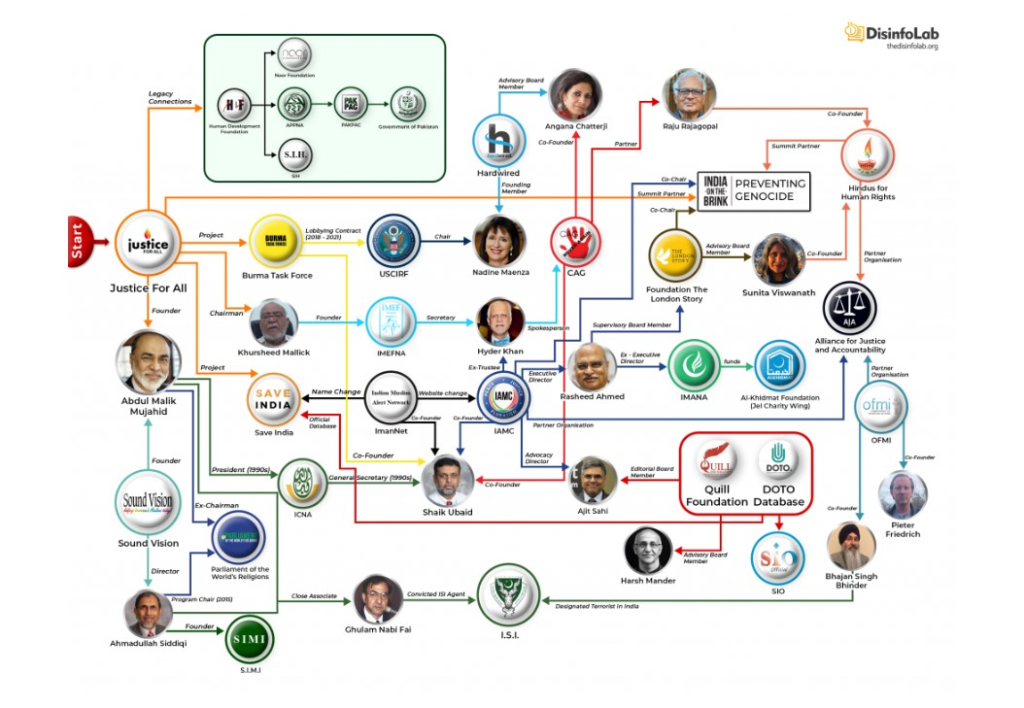
In 2016, Equality Labs, joined an alliance with several anti-India organizations. The group has received funding from sources linked to George Soros and Pakistan’s ISI. Equality Labs published a widely circulated caste report, which became a key tool in promoting a caste-based narrative aimed at criticizing India.
Image Source: Disinfo Lab
This alliance is called Alliance for Justice and Accountability (AJA), a coalition that includes OFMI, ICNA, and other anti-India NGOs such as Hindus for Human Rights and the Indian American Muslim Council (IAMC).
Image Source: Disinfo Lab
Equality Labs shares a similar agenda with OFMI, aiming to promote narratives that paint India in a negative light, focusing on caste-based issues and other minority-related concerns.
Both Bhinder and Friedrich have been implicated in supporting Khalistani terrorism, and their collaboration with Equality Labs raises alarms about the group’s potential links to extremist activities.
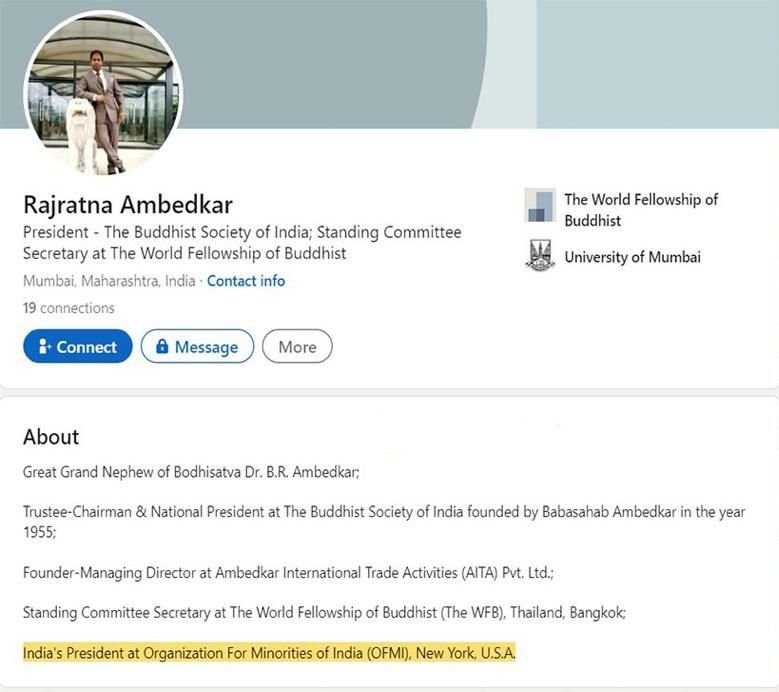
And guess what, Rajratna Ambedkar, the great grandnephew of BR Ambedkar, is the India president of OFMI!
Moreover, Bhinder’s association with the Khalistani terror groups is not a recent development. He has been a long-time operative of ISI, and his links to Pakistan-based terror organizations have been well documented. The presence of such individuals in organizations like Equality Labs is concerning, especially when considering the ongoing influence of these groups in the political landscape of both India and the US.
This series of events, from Pannun’s threats to the connections with Equality Labs and ISI, points to a growing and dangerous alliance between Khalistani separatists, pro-Khalistani organizations in the US, and Pakistani terror elements. The use of US platforms to spread anti-India rhetoric and incite violence against Indian leaders is a serious national security concern. The fact that influential individuals like Soundararajan are linked to these extremist movements only amplifies the threat posed by such alliances.
The ongoing threats, such as the one issued by Pannun, are not isolated incidents. They are part of a broader strategy by Khalistani groups to destabilize India through violent means, leveraging international platforms and alliances to garner support. The growing influence of these groups in the US, particularly among certain political circles, further complicates the situation.
Subscribe to our channels on Telegram, WhatsApp, and Instagram and get the best stories of the day delivered to you personally.
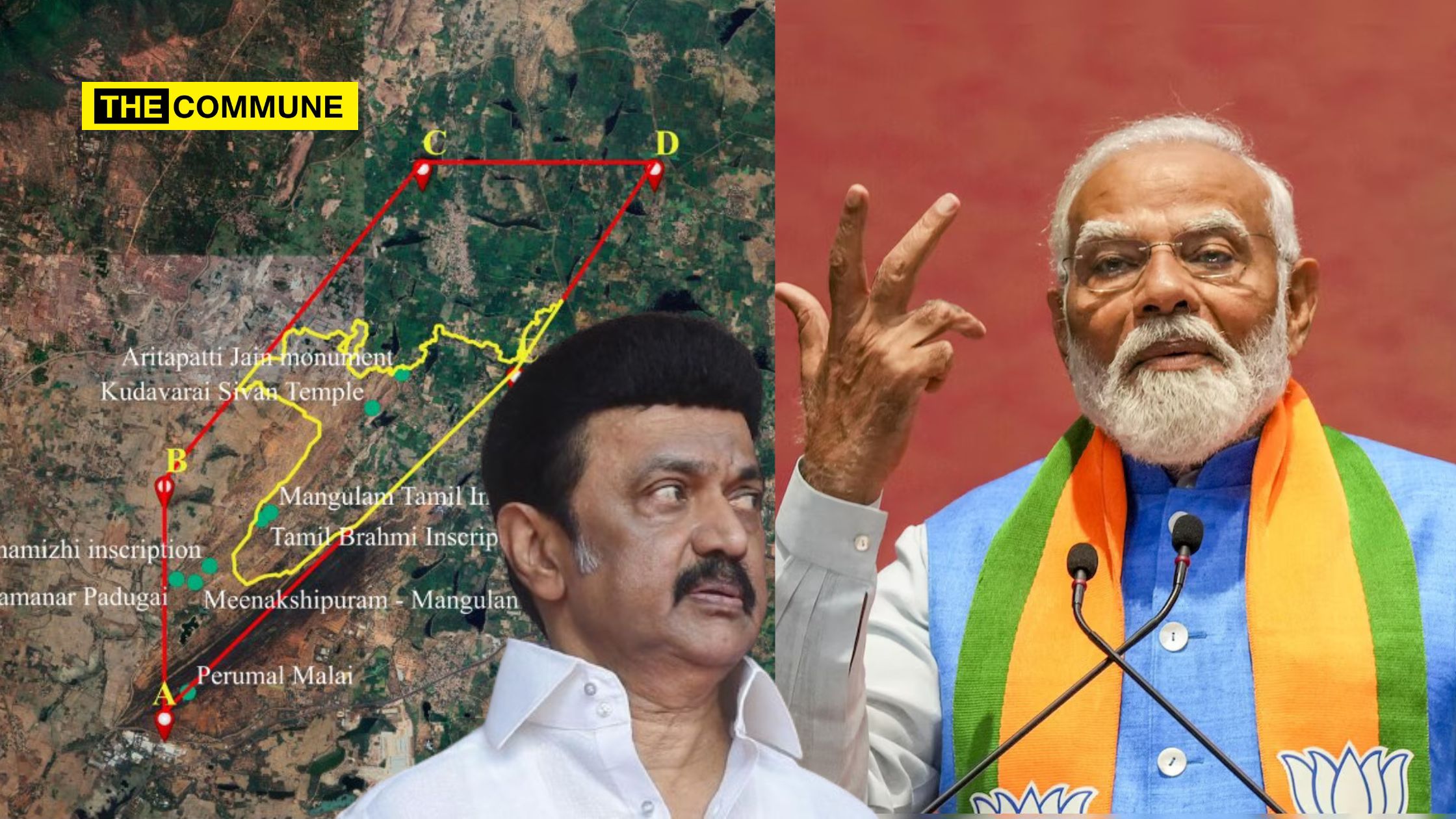
The central government, under the leadership of Prime Minister Narendra Modi, has temporarily halted the auction process for the Nayakkarpatti Tungsten Block in Tamil Nadu. This decision follows representations highlighting the presence of a biodiversity heritage site within the block’s area.
The Geological Survey of India (GSI) has been directed to re-examine and potentially redefine the block’s boundaries to exclude the biodiversity-sensitive zones. Additionally, the Tamil Nadu government has been requested to hold off on issuing the Letter of Intent (LOI) to the preferred bidder, Hindustan Zinc Ltd., until the review is completed.
Timeline Of Events
The Geological Survey of India (GSI) transferred the Geological Memorandum (GM) for tungsten deposits in Melur–Terkutteru–Muthuvelpatti areas, Madurai district, to the Tamil Nadu government on 14 September 2021. At that time, the state government held the authority to auction major minerals, including critical minerals like tungsten.
In August 2023, the Mines and Minerals (Development and Regulation) Act, 1957, was amended by the Mines and Minerals (Development and Regulation) Amendment Act, 2023. This amendment, effective from 17 August 2023, introduced Section 11D, granting exclusive rights to the Central Government for auctioning mining leases and composite licenses of critical and strategic minerals listed in Part D of the First Schedule, including tungsten.
Political Blame Game
Following this amendment, the Ministry of Mines notified Tamil Nadu on 15 September 2023, about the planned auction of critical mineral blocks, including the Nayakkarpatti Tungsten Block. In response, the Tamil Nadu Water Resources Minister raised concerns in a letter dated 3 October 2023, questioning the amendment and requesting that state governments retain auction rights over critical minerals. Notably, Tamil Nadu had not conducted any mineral auctions during the period (2021–2023) when it had the authority to do so, nor in the preceding nine years under the auction regime. The Ministry of Mines clarified to the Tamil Nadu government that auctions would proceed as per the amended law.
On 6 December 2023, the Secretary of the Ministry of Mines requested details of three critical mineral blocks, including Nayakkarpatti, for auction. The Tamil Nadu Commissioner of Geology and Mining provided this information on 8 February 2024, acknowledging the presence of a biodiversity heritage site covering approximately 10% of the Nayakkarpatti block’s area but not opposing the auction.
The Nayakkarpatti Tungsten Block, covering 20.16 sq. km, was offered for auction as a Composite Licence (CL) in February 2024 and re-notified in June 2024 after the first attempt. Hindustan Zinc Ltd. emerged as the preferred bidder in November 2024. Despite the biodiversity concerns, Tamil Nadu raised no formal objections during multiple auction-related meetings between February and November 2024.
A Composite Licence entails a two-stage process: prospecting followed by mining. The license holder must first explore and delineate a mineralized zone and then obtain requisite environmental and government clearances before transitioning to mining. Sensitive areas like biodiversity sites are typically excluded during this clearance process, a right retained by the state government.
The Ministry of Mines limits its role to auctioning critical minerals to promote economic development. Subsequent processes, such as issuing the Letter of Intent (LOI) and granting mining leases, fall under state jurisdiction. Revenue generated from production benefits the state.
However, following concerns raised about the biodiversity heritage site within the Nayakkarpatti block, the GSI has been tasked with re-examining the block’s boundaries to exclude sensitive areas. The Tamil Nadu government has been requested to temporarily withhold issuing the LOI to the preferred bidder pending this review.
Subscribe to our channels on Telegram, WhatsApp, and Instagram and get the best stories of the day delivered to you personally.
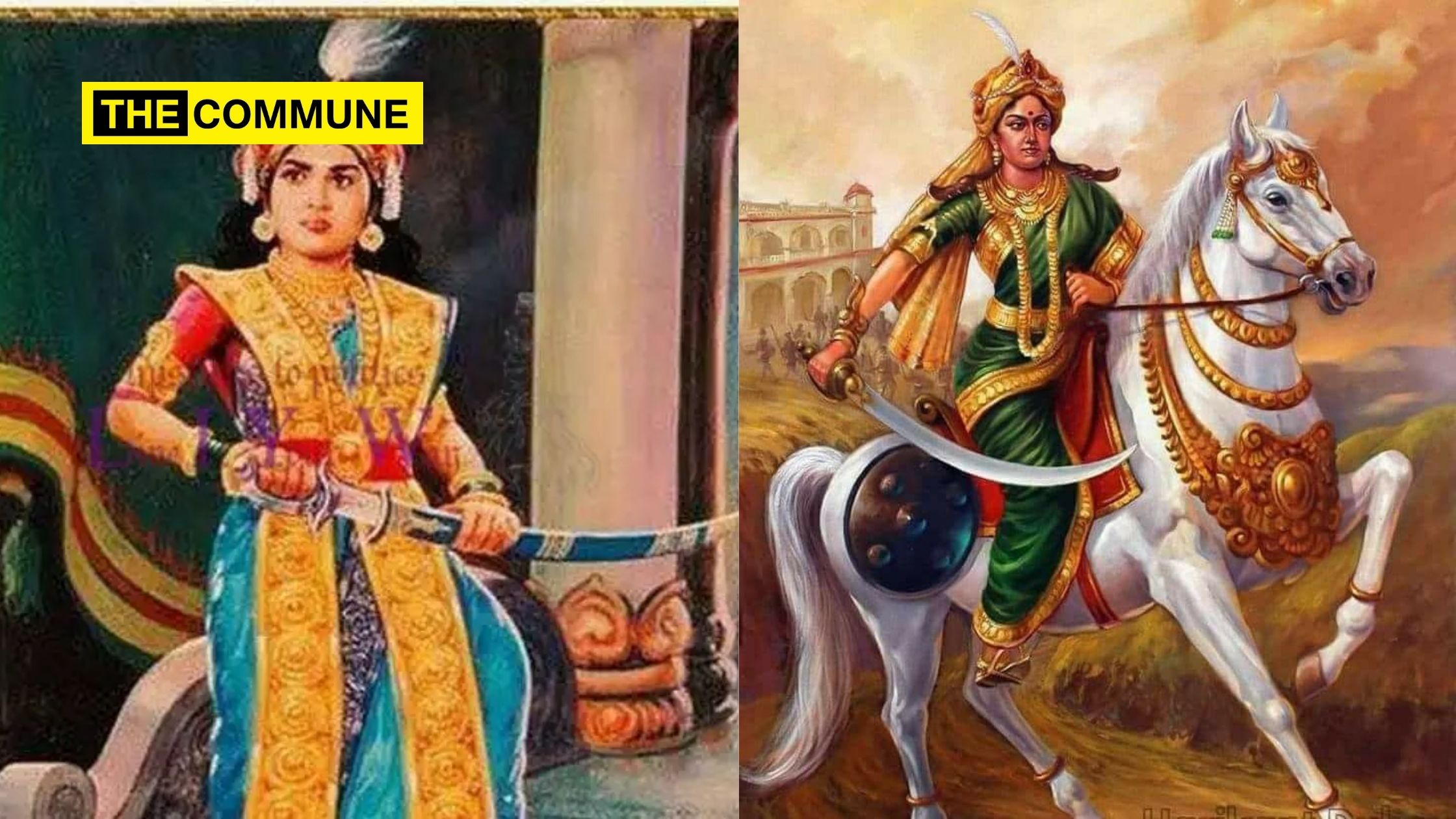
Velu Nachiyar stands out as one of the earliest rulers from Tamilagam who bravely fought the East India Company and succeeded against the might of the British onslaught through her valour and intelligence. She kept the Sivagangai Samasthanam free from Company rule until she was alive, a feat rarely matched by her contemporary rulers. She was a perfect example of ‘Nari Sakthi.’
Born in the royal family of Ramanathapuram Sethupathis, Velu Nachiyar was the only daughter of Sellamuthu Vijaya Raghunatha Sethupathi and Muthammal. Sethupathi trained her in martial arts like Valari and Silambam, and she learnt several languages, including English, French, and Urdu. It was common for those in Ramanathapuram to see her riding a horse and practising sword fighting with the guards. She married Muthu Vaduganatha Thevar of Sivagangai Samasthanam and became a queen. However, she didn’t forget her roots. She made the logo of Sivagangai similar to that of Ramanathapuram with Hanuman and Garuda.
Things took a turn when Muthu Vaduganathar raised the flag of rebellion against the East India Company, who harassed him to pay the tax due to Arcot Nawab. Muthu Vaduganathar made Vijayakumaran as the Madurai Nayak against the interests of Arcot Nawab and Company, which made them hate him further. Company forces attacked Sivaganga in 1772, and Muthu Vaduganathar fought bravely. However, when he went for a darshan at the Kalayar Kovil temple, he was assassinated by one of the soldiers in the British army. This made his army lose the battle against the Company forces, and Velu Nachiyar had to move away from the Kingdom.
Undeterred, she took the help of the Marudhu Brothers, who were commanders of Muthu Vaduganathar, and Thandavarayan Pillai, a close associate of Muthu Vaduganathar. They assembled an army of various Palayams. Hyder Ali had sent about 5000 army men. Many polygars unhappy with the Company’s growing dominance also sent their army to assist Velu Nachiyar. She slowly built her army, which included an exclusive division for women. She waited for about eight years to launch a counterattack, and the opportune moment came during the Vijayadasami day of 1780. The British placed restrictions on entering Sivaganga & only women were allowed to perform Pooja. A group of women entered the town to perform the Pooja. Suddenly, they took out their arms and started attacking the guards. Using the melee, Velu Nachiyar entered along with the Marudhu brothers and their army.
The British forces scattered and ran away, unable to withstand the sudden onslaught. Sivaganga was recaptured. Hanuma Dwaja, the flag of Hanuman, was hoisted on the ramparts of the fort. After successfully reclaiming the Samasthanam, she ruled for about ten years. Multiple attempts by the British to capture Sivaganga were foiled by her brave army. She had issued coins with Rama & Sita on one side and Sivalinga and Rishaba on the other side. She made several donations to the temples nearby. There is an inscription in the Sakkanthi Vinayagar temple that has her name as one of the donors: “The grant was made by Velu Nachiyar, who is the wife of Muthuvaduga Thevar of Sakkanthi.”
She had only a daughter ‘Vellachi Nachiyar’ and hence, she gave the administrative rights to the Marudhu Brothers in 1790 to govern the Sivagangai after her. She spent her last years in Viruppatchi near Dindugal and passed away in 1796. Marudhu brothers continued the legacy of freedom struggle and spearheaded the first rebellion against the British from South India. In the glorious history of Tamil Nadu’s contribution towards the Indian Freedom struggle, Velu Nachiyar finds an important place.
TS Krishnan is a Tamil scholar and author.
Subscribe to our channels on Telegram, WhatsApp, and Instagram and get the best stories of the day delivered to you personally.