Home Blog Page 686

J&K L-G Sinha Stresses Need To Preserve Links With Civilisational Values

J&K L-G Sinha Stresses Need To Preserve Links With Civilisational Values

Jammu and Kashmir Lt. Governor Manoj Sinha said on Tuesday that it was necessary to preserve and strengthen the links with time-tested civilizational values and pass on the treasure of art and literature to the young generation The L-G said this while attending the ‘Janam Shatabdi Samaroh’ of a famous literary figure of Hindi and Bhojpuri literature, Dr Viveki Rai, in Uttar Pradesh’s Ghazipur.

Paying homage to Dr Viveki Rai, the Lieutenant Governor said, “His wisdom and ideals continue to inspire millions across the country and guide us along in realising our dream of a developed nation. Dr Viveki Rai Ji, through his writings, brought out the aspirations of rural India, and the struggle of the common man and deprived sections of the society.”

The L-G called upon the people to take five pledges to achieve five future goals and pay a fitting tribute to Dr Viveki Rai. “Our first resolution should be to preserve and strengthen the links with our time-tested civilizational values and pass on the treasure of art and literature to the young generation. The intelligentsia of society should prepare for bigger responsibilities and provide solutions to future challenges. Our path must be of collective vision, and our fourth aim should focus on building a nation of equal opportunities through collective strength and equal consciousness,” Sinha said.

“Our fifth aim must look at ways to provide opportunities to teachers and writers in rural India to upgrade their knowledge, skills and competencies in line with the increasingly integrated world economy and ever-evolving technological landscape”, the Lieutenant Governor said.

The J&K L-G stressed the need to continue our relationship and link with the past to shape our present and future based on the firm fundamentals of morality and principles. He said great value has to be given to modern education, technology and learning. “But this would mean little in real context if we were to lose our connection with the great past of our civilisation,” he said.

–IANS

Subscribe to our channels on TelegramWhatsApp, and Instagram and get the best stories of the day delivered to you personally.
 

Pastor In Thoothukudi District Accused Of Defrauding Couple Of ₹68 Lakh In Orphanage/Old Age Home Scam

A couple from Ottapidaram filed a complaint with the Superintendent of Police on 18 November 2024, accusing a local pastor of defrauding them of ₹68 lakh under the guise of constructing an orphanage and old age home. The couple, K. Arumugakrishnan and his wife Vasantha from Kakarampatti village, claimed they had given the pastor, Newton David, a pastor with the Assemblies of God church in Ottapidaram, the money to renovate a church and fund the construction of the facilities. They have asked the police to file an FIR against him.

The couple said they handed over a total of ₹68 lakh, which included ₹16 lakh in cash, to Newton David after he convinced them he needed funds for the projects. However, after realizing they had been scammed, the couple demanded their money back. According to their statement, the pastor promised to return the money once he received funds from abroad.

The couple further alleged that Newton showed them counterfeit documents, including fake Foreign Contribution Regulation Act (FCRA) bonds worth several crores, which he claimed were approved by the Reserve Bank of India. He also presented a ₹30 crore cheque to gain their trust. The pastor supposedly gave Arumugakrishnan and Vasantha bonds worth ₹5 crore and ₹10 crore, respectively, which later turned out to be fraudulent.

In addition to these claims, Arumugakrishnan accused Newton of illegally extracting iridium from temple kalasams. He has requested the police to file an FIR against the pastor and his accomplices for these alleged activities.

However, Newton David, who has been suspended from his church denomination, denied the allegations. He asserted that the money dispute had already been resolved by the district crime branch. Newton also accused Arumugakrishnan of manipulating his images to falsely accuse him of stealing iridium and denied any involvement in issuing fake RBI bonds or cheques.

(With Inputs From The New Indian Express)

Subscribe to our channels on TelegramWhatsApp, and Instagram and get the best stories of the day delivered to you personally.
7 Shocking Instances Where Govt Welfare Schemes Were Used To Fund Illegal Activities In India

7 Shocking Instances Where Govt Welfare Schemes Were Used by terrorists & missionaries To Fund Illegal Activities In India.

On 16 November 2024, the Delhi Police, investigating anal-Qaeda-inspired terror module,informed the Patiala House Court that terrorists had planned to misuse the PM-Kisan scheme, also known as the Pradhan Mantri Kisan Samman Nidhi, to raise funds for jihad. According to the police, individuals filled out forms for the scheme under the direction of terrorists, intending to channel the funds received from the government toward terror activities.

A report by The Indian Express also highlighted this revelation. Here is a list of 7 incidents between 2018 and 2024 where government funds and welfare schemes were exploited illegally, shedding light on systemic vulnerabilities targeted for nefarious activities.

Case 1: Al-Qaeda Terrorists Misused Kisan Samman Nidhi Scheme Funds to Purchase Weapons

In November 2024, the Delhi Police, investigating anAl-Qaeda-inspired terror module,informed the Patiala House Court that the accused terrorists planned to misuse the PM-Kisan scheme to fund jihad. Two arrested suspects were beneficiaries of the scheme and allegedly provided money for arms purchases. Police are now identifying individuals who filled scheme forms on their behalf.

The probe, initiated after arrests on 22 August 2024 based on Central agency inputs, uncovered weapon training activities in Rajasthan’s Bhiwadi and illegal arms recovery. Eleven suspects, all from Ranchi villages, were arrested, including alleged module leader Dr Ishtiyaq Ahmad. Raids yielded firearms, ammunition, and ₹5.1 lakh.

The court allowed the eight accused six days of police custody to interrogate them further and identify others involved. Defence counsel claimed police framed the accused without evidence and alleged mistreatment in custody. Notably, under the PM-Kisan scheme, farmers receive ₹6,000 annually.

Case 2: Sign Language Interpreters Exploited Disabled Children For Religious Conversion

In September 2024, it was revealed that a nationwide illegal religious conversion racket, masterminded by Maulana Umar Gautam, exploited disabled children, particularly those with hearing impairments, using sign language interpreters. Irfan Sheikh, affiliated with the Indian Sign Language Research and Training Centre (ISLRTC) in Delhi, leveraged his position to target children for conversions at the Islamic Dawah Centre in Jamia Nagar. Other operatives, including medical students, professionals like Kunal Chaudhary, and networks like the Revert, Rehab, and Dawah WhatsApp group, spread the operation across Maharashtra, Gujarat, Delhi, Bihar, and Haryana.

The syndicate used organizations like the Waliullah Trust to mask its activities, with key figures such as Maulana Kaleem Siddiqui converting thousands to promote social harmony. Funds were channelled through businesses, while entities like the Global Peace Center aided operations.

Case 3: Tribal Woman Converted for Marriage Using Government Scheme In Chhattisgarh

In May 2023, a controversy in Chhattisgarh erupted after a Hindu tribal woman, Basanti, was married to a Muslim man, Haroon, in a conversion-nikah ceremony organized under the Chief Minister Kanya Vivah Scheme. The mass wedding, held on 13 March 2023 in Surajpur district, provided ₹25,000 in government assistance to brides. Basanti’s father, Devnarayan Uikey, alleged she was brainwashed into the marriage without his knowledge and filed a police complaint declaring the wedding fraudulent and demanding its annulment. Out of 85 couples in the ceremony, Basanti and Haroon were the only pair married under Islamic rituals, presided over by a cleric, while others followed Hindu customs. Uikey claimed the marriage was unacceptable, citing concerns over targeted conversions and political exploitation, such as using ST certificates for reserved elections.

Case 4: Central Website Hacked, Scholarships Tampered With

In December 2018, Babul Hussain, a data entry operator from Uttar Dinajpur district in West Bengal, was arrested by Kerala police for hacking a National Informatics Centre (NIC) website and tampering with the beneficiary list for the Post-Matric Central Scholarships for Minorities. Hussain allegedly siphoned off ₹5 crore by uploading fake scholarship applications. The issue came to light when deserving students complained of not receiving their scholarships. Kerala police traced Hussain’s activities with the help of local authorities and seized his laptop and mobile phones, though no further evidence was found.

Case 5: Christian Missionaries Exploit Government Rice Scheme For Conversions In Chhattisgarh

Earlier this month (November 2024, it was revealed that in Chhattisgarh, Christian missionaries have been exploiting government rice schemes, such as the Pradhan Mantri Garib Kalyan Anna Yojana (PMGKAY) and the state’s Annapurna Yojana, to fund religious conversions. The missionaries initiated a scheme calledEk Muthi Chawal Yojana,where each family is asked to donate a handful of rice daily. This rice is then collected in large quantities, and sold in the open market for ₹25-30 per kg, generating an estimated annual income of over ₹100 crore for the missionaries. This practice is particularly prevalent in districts like Jashpur, where a significant portion of the population has converted to Christianity. With the introduction of the Foreign Contribution Regulation Act (FCRA), which limits foreign funding for missionaries, the rice collection scheme has become a crucial source of income.

Case 6: Church Built With Govt Fund In Odisha

In August 2024, a Dainik Bhaskar report revealed that government funds are being misused in Odisha to construct and renovate churches, particularly under the Chief Minister’s Special Assistance Scheme. In 2023-24, a church in Balishankara, Sundargarh, was renovated at a cost of ₹4 lakh using government money. This church renovation is part of a broader strategy Christian missionaries use to lure individuals into converting to Christianity. In villages, free health camps are organized, where diseases aretreated,and conversions are promoted in the name of treatment. The funds meant for public welfare are being diverted for religious purposes, facilitating a conversion network across multiple states, including Odisha, Chhattisgarh, and Madhya Pradesh.

Case 7: House Allotted Under PM AWAS Yojana Converted To Church In Chhattisgarh

In February 2024, in Chhattisgarh’s Bemetara district, over 25 members of the tribal community converted to Christianity in a mass conversion that occurred in houses built under the Pradhan Mantri Awas Yojana (PMAY). The converted individuals, mostly from the Gond community, were reportedly promised better healthcare and economic benefits in exchange for their conversion. These families, who previously attended distant churches, started gathering for daily prayers at a house built under the PMAY, which was converted into a church with Christian symbols. Hindu organizations raised concerns, claiming that the conversions were induced by allurement, which is illegal. Some converted individuals cited improvements in their health, income, and personal lives. Hindu organizations have demanded action, including sealing the houses marked with Christian symbols.

Subscribe to our channels on TelegramWhatsApp, and Instagram and get the best stories of the day delivered to you personally.
Keelaseval Residents Protest After Murder Of Painter, Blame Ongoing Caste Rivalry

Keelaseval Residents Protest After Murder Of Painter, Blame Ongoing Caste Rivalry

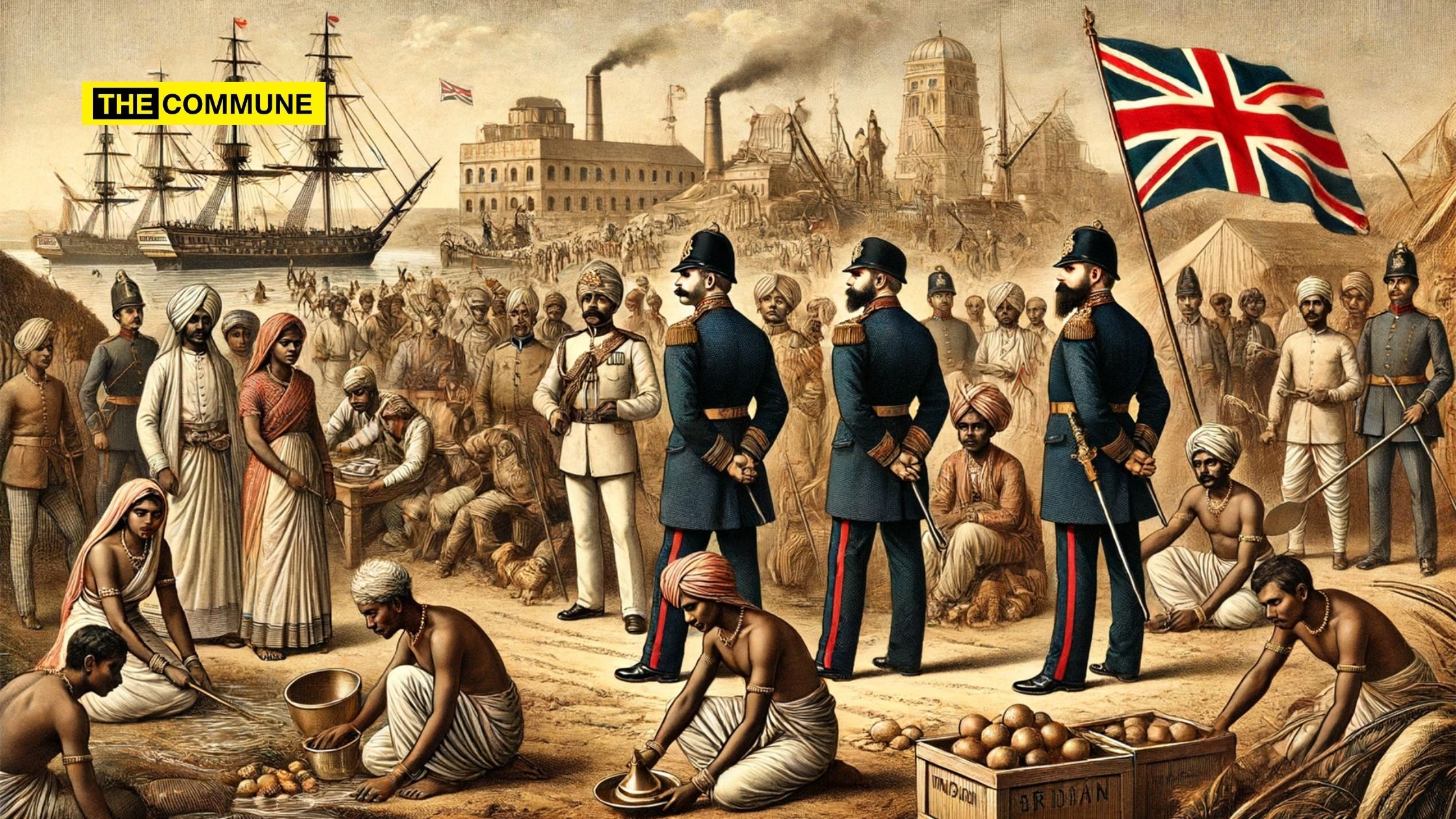
Residents of Keelaseval staged a protest on 17 November 2024, along the Tirunelveli-Ambasamudram road in Melaseval, condemning the recent murder of a local painter. The victim, M Manikandan, a member of the MBC community, was allegedly killed on 15 November night by three men from the SC community. The murder is believed to be an act of retaliation for the earlier killing of an SC man, marking the latest in a series of murders linked to ongoing tensions between the MBC and SC communities in the area.

According to reports from TNIE, the three suspects approached Manikandan while he was standing near the Karunkulam TASMAC outlet and fatally attacked him. Following the murder, Manikandan’s brother, Esakkimuthu, filed a complaint, prompting the Melapalayam police to register a case and initiate a manhunt. The suspects—identified as Anandaraj, Maharajan, and another Maharajan—turned themselves in at the Tirunelveli judicial magistrate court on Saturday and were subsequently taken into custody at Palayamkottai central prison.

In response to the murder, MBC residents in Keelaseval organized a protest, demanding government support for Manikandan’s widow and their six-year-old child, including a job, housing, and financial compensation. Local authorities, including Superintendent of Police N. Silambarasan and Cheranmahadevi Sub-Collector Arpit Jain, engaged with the protesters and eventually helped disperse the crowd.

The tensions that led to Manikandan’s death have their roots in a long-standing rivalry between the MBC and SC communities, which began in 2010. The feud escalated in 2013 after the murder of an SC man, Dharmaraj, allegedly by MBC individuals. In retaliation, MBC member Karthik was killed by SC men, and subsequent murders followed, with violence continuing for years. In 2021, the rivalry reached a grisly peak when SC men beheaded Sankara Subramanian and placed his head on the grave of a previous victim, prompting further killings and escalating the cycle of violence.

The murder of Manikandan has reignited these tensions, drawing calls from activists for higher-level intervention to stop the cycle of caste-based retaliation. Police have increased their presence in the area, with nearly 950 officers deployed to maintain order. SP Silambarasan emphasized that the ongoing investigation would determine whether Manikandan’s death is linked to previous retaliatory killings.

Following the SP’s recommendations, the district collector ordered the detention of Kannapiran (also known as Kanthasamy) and Siva (known as Rocky Siva) under the National Security Act. Both individuals, reportedly involved in inciting communal unrest, have been taken into custody at Cuddalore central prison.

(With inputs from The New Indian Express)

Subscribe to our TelegramWhatsApp, and Instagram channels and get the best stories of the day delivered to you personally.
ED Conducts Major Raids On Lottery Tycoon Santiago Martin’s Premises, Seizes ₹12.41 Crore In Cash

ED Conducts Major Raids On Lottery Tycoon Santiago Martin's Premises, Seizes ₹12.41 Crore In Cash

The Enforcement Directorate (ED) recently carried out searches at 22 locations connected to lottery tycoon Santiago Martin across six states, including Tamil Nadu, leading to the recovery of 12.41 crore in unexplained cash and the freezing of 6.42 crore in bank deposits.

The operation, conducted last week, also uncovered a range of digital devices, incriminating documents, and extensive records of significant investments in real estate in Coimbatore, Chennai, Mumbai, Dubai, and London, as well as substantial share market holdings, the agency said on 18 November 2024.

The Enforcement Directorate (ED) via its official X account, stated, “ED has conducted search operations at 22 premises in the States of Tamil Nadu, West Bengal, Karnataka, Uttar Pradesh, Meghalaya and Punjab under the provisions of PMLA, 2002 in connection with investigation against Santiago Martin and his entity M/s Future Gaming and Hotel Services Private Limited and other associates. During the search operations, various incriminating documents, digital devices, Cash of 12.41 Crore were recovered and seized, alongwithFDR of 6.42 Crore has also been freezed.”

The searches were part of an ongoing investigation into Martin and his company, M/s Future Gaming and Hotel Services Private Limited, along with its associates. The operation also targeted four printing presses involved in the production of lottery tickets.

This investigation stems from a case initiated by the Meghalaya Police, following a complaint by the Director of the Meghalaya State Lottery, and related FIRs from Kerala Police, which were later taken over by the CBI.

The main allegations against Martin and his group include monopolizing the lottery market by preventing other operators, selling fake lottery tickets, manipulating prize draws, and purchasing high-value winning tickets in cash to launder black money. These actions have led to significant financial losses for both the government and the public.

The ED’s probe has revealed that over 90% of the company’s business involves lottery tickets priced at 6, most of which offer prizes under 10,000—amounts that are non-taxable. The company has failed to maintain proper records of prize winners, as well as sold and unsold tickets. The structure of the lottery schemes is such that the company retains a large portion of the profits, while the state receives only a small share of the revenue.

The searches were carried out in various states, including West Bengal, Karnataka, Uttar Pradesh, Meghalaya, Punjab, and Tamil Nadu. In a previous investigation by the ED’s Kochi zone, it was found that Martin and his company had accumulated around 920 crore from the proceeds of illegal activities related to the lottery business.

Who Is Lottery Martin, What Is His Connection To The DMK?

Santiago Martin, often referred to as “Lottery Martin,” and his company, ‘Future Gaming and Hotel Services’, have been in the news since the Election Commission disclosed details of electoral bond transactions on 14 March 2024. The records revealed that Martin’s entity made political donations totaling ₹1,368 crore between April 2019 and January 2024. Martin is known to have close ties with several political parties, including the Communist Party of India (Marxist) in Kerala, the Dravida Munnetra Kazhagam (DMK) in Tamil Nadu, Trinamool Congress (TMC) in West Bengal, and the Congress party.

The Rise of Santiago Martin

Martin’s journey from humble beginnings to becoming a powerful figure in the lottery business is a classic rags-to-riches story. Born in Myanmar, Martin started as a laborer before returning to India in 1988. He founded Martin Lottery Agencies Ltd in Coimbatore, Tamil Nadu, and quickly became known as “Lottery Martin” during the lottery boom in South India. His business expanded across Tamil Nadu, Karnataka, and Kerala, and eventually, he established a vast lottery empire in the region.

Challenges and Expansion

In 2003, the Tamil Nadu government under Chief Minister Jayalalithaa banned lotteries, forcing Martin to pivot. He moved his focus to the northeastern states of India and even expanded into countries like Bhutan and Nepal, securing exclusive rights for lottery ticket distribution. By this time, his company, Martin Lottery Agencies, had an estimated net worth of over ₹7,000 crore.

To launder his earnings, Martin ventured into media and entertainment. He launched the SS Music television channel and financed the production of the film Ilaignan, which was also linked to DMK founder Karunanidhi’s 75th film as a scriptwriter. Some reports suggest that his film business may have been used to mask the illegal activities tied to his lottery operations.

Legal Troubles and Political Allegations

Martin’s business faced increasing legal scrutiny, particularly in 2011 when the Central Bureau of Investigation (CBI) accused him of defrauding the Sikkim government of ₹4,500 crore. In 2012, under the AIADMK government, he was arrested on charges of land grabbing, although his wife claimed this was a politically motivated attack involving the DMK.

By 2015, Martin’s operations attracted attention from multiple agencies. The Income Tax Department conducted raids across several states, and Kerala Police launched an investigation into his illegal lottery activities. In 2016, the Enforcement Directorate (ED) also initiated inquiries into money laundering connected to his lottery operations.

In 2023, the ED seized ₹457 crore from Martin under the Prevention of Money Laundering Act, linked to a case involving the misappropriation of funds intended for the Sikkim government.

Martin’s Expanding Business Empire

Aside from lotteries, Martin’s business ventures spanned various sectors, including healthcare, real estate, and media. His business holdings included Martin Homeopathy Medical College and Hospital, SS Music, and M and C Property Development. His real estate ventures included Martin Nanthavanam apartments and Leema Real Estate Private Limited.

Political Connections and Donations

Martin’s political influence is significant. His son-in-law, Aadhav Arjuna, is a key member of the Viduthalai Chiruthaigal Katchi (VCK), an ally of the DMK. Martin has also made significant financial contributions to various political parties, including the CPI(M) and Congress parties. He was reported to have donated ₹2 crore to Deshabhimani, the CPI(M)’s mouthpiece, and contributed millions to disaster relief funds, such as ₹5 crore for Cyclone Gaja relief in 2018.

Martin has maintained political relationships with whoever is in power, regardless of party affiliations, and has claimed to be one of the highest taxpayers in India.

The “Dear Lottery” and Allegations of Misuse

Martin’s company *Future Gaming* is the sole distributor of the “Dear Lottery,” a popular lottery in West Bengal. In 2022, the CBI revealed that TMC leader Anubrata Mondal and his daughter had won the lottery five times between 2021 and 2023. This raised questions about the integrity of the lottery and its political connections.

Subscribe to our channels on TelegramWhatsApp, and Instagram and get the best stories of the day delivered to you personally.
India’s Installed Renewable Energy Capacity To Reach 250 GW By March 2026

India’s Installed Renewable Energy Capacity To Reach 250 GW By March 2026

The installed renewable energy capacity (including large hydro) in India is projected to reach 250 GW by March 2026, from the level of 201 GW (as of September this year), according to a report on Tuesday. The capacity addition will be driven by the large project pipeline of over 80 GW, following the significant improvement in tendering activity in FY24, according to credit ratings ICRA. Moreover, the tendering activity remained high in the current fiscal, in line with the 50 GW annual bidding trajectory announced by the government in March 2023.

The healthy renewable project pipeline and the favourable solar PV cell and module prices are expected to improve the RE capacity addition to over 26 GW in FY2025 from 19 GW in FY2024. “This will further scale up to 32 GW in FY2026, mainly driven by the solar power segment, and given the impending expiry of the waiver on inter-state transmission system (ISTS) charges in June 2025,” said Girishkumar Kadam, SVP and Co-Group Head-Corporate Ratings, ICRA. Apart from the utility segment, ICRA expects the rooftop solar segment and the Commercial and Industrial (C&I) segments to contribute significantly to the capacity addition. The rise in the RE capacity over the next five years is estimated to enhance the share of RE plus large hydro in the all-India electricity generation from 21 per cent in FY2024 to over 35 per cent in FY2030.

“In this context, the development of adequate energy storage projects remains important to integrate the growing share of RE with the grid, given their intermittent generation,” said Kadam.

Further, the central nodal agencies are increasing their focus on awarding renewable energy projects offering round-the-clock (RTC) and firm and dispatchable supply (FDRE), which can mitigate the intermittency risk associated with RE. The report said this can be made possible through the use of hybrid RE projects complemented with energy storage systems.

–IANS

Subscribe to our channels on TelegramWhatsApp, and Instagram and get the best stories of the day delivered to you personally.
Supreme Court Constitutes SIT To Probe Chennai Minor Sexual Assault Case

Supreme Court Constitutes SIT To Probe Chennai Minor Sexual Assault Case. statehood ncpcr muslim girl marriage free speech

The Supreme Court on 18 November 2024 established a three-member Special Investigation Team (SIT) to conduct a thorough, day-to-day investigation into the sexual assault of a 10-year-old girl in Chennai’s Anna Nagar on 29 September 2024. The SIT includes DIG-rank IPS officer Saroj Kumar Thakur and women IPS officers Ayman Jamal and S. Brinda, selected based on seniority from a pool of nine IPS officers.

The bench, comprising Justices Surya Kant and Ujjal Bhuyan, modified an earlier Madras High Court order that had transferred the case to the Central Bureau of Investigation (CBI). Tamil Nadu had contested the High Court’s decision, and the Supreme Court opted for an SIT to ensure a timely and effective probe.If the probe gets entrusted to the CBI, no one will know the outcome even after five to seven years,the bench observed.

The Supreme Court directed the Tamil Nadu government and the Director General of Police (DGP) to partially relieve the SIT officers of other responsibilities to focus on the investigation. The SIT has been tasked with submitting weekly progress reports to the Madras High Court.

Monitoring And Observations

The bench requested the Chief Justice of the Madras High Court to constitute a bench to monitor the periodic progress reports. Although Tamil Nadu’s counsel, senior advocate Mukul Rohatgi, requested the Supreme Court to first review the SIT’s initial status report before delegating monitoring to the High Court, the apex court declined.

Rohatgi also expressed concerns over the political exploitation of the case and urged the court to restrain political parties from making inflammatory statements. However, the bench advised the state to ignore such remarks, stating,If we say anything, there will be numerous clarifications on how statements were distorted.”

Support For Survivor’s Family

The Supreme Court directed the Tamil Nadu government to pay ₹75,000 to the survivor’s mother to cover litigation and miscellaneous expenses within a week. The survivor’s mother, accompanied by her lawyer R. Sampath Kumar, was present in the courtroom during the proceedings.

Background And High Court’s Findings

The disturbing case centers on the brutal sexual assault of a 10-year-old girl in Chennai, which remained hidden for almost a week before coming to light on 29 August 2024. The incident was revealed when the child’s mother, a cook by profession, sought medical attention for her daughter, who was suffering from severe stomach pain. At Kilpauk Medical College, doctors discovered signs of repeated sexual assault, triggering the filing of a First Information Report (FIR) at the Anna Nagar all-women police station on 30 August 2024. The police named a 31-year-old water delivery man, Satish, as the primary suspect in the case.

Despite the gravity of the crime, there were serious delays and lapses in the police investigation. The accused, Satish, was not arrested until 12 days later after media reports brought attention to the case. This delay fueled allegations that the authorities were attempting to downplay the case and avoid public scrutiny. In the wake of these accusations, the victim’s mother came forward with shocking claims that she had been mistreated by the police during the investigation, including allegations of physical assault by a police inspector named Raji.

The Madras High Court, on 10 September 2024, took suo motu cognizance of a case involving the repeated sexual assault of a 10-year-old girl in Tamil Nadu, following allegations of police misconduct and procedural violations. The victim’s mother claimed police assaulted her and that her daughter’s statement was recorded improperly, breaching POCSO Act guidelines. The court criticized the police for targeting YouTuber Maridhas and journalist A. Selvaraj with FIRs over leaked case details, instead of investigating the source of the leak, calling it an attack on press freedom.

On 1 October 2024, the Madras High Court had ordered a CBI probe, citing delays and police harassment of the survivor’s family. Despite the severity of the crime, which involved repeated sexual assault of the minor, the primary suspect was arrested 12 days after the incident. The court condemned police procedural violations in handling the victim’s statement, noting breaches of the POCSO Act. The child was interrogated late at night in a hospital without her mother, and no trauma-informed forensic interview was conducted, risking the integrity of her testimony by failing to ensure a child-friendly environment.

(With inputs from Times Of India)

Subscribe to our TelegramWhatsApp, and Instagram channels and get the best stories of the day delivered to you personally.
Non-Hindu Employees Of Tirumala Tirupati Devasthanam To Be Transferred To State Government Pool

Non-Hindu Employees Of Tirumala Tirupati Devasthanam To Be Transferred To State Government Pool

In a significant development, the new Tirumala Tirupati Devasthanams (TTD) Trust Board, during its first meeting on 18 November 2024, decided to remove non-Hindu employees working in the iconic Tirumala Sri Balaji Temple and surrender them to the Andhra Pradesh state government pool. The decision follows a statement by the newly appointed Trust Board Chairman, B.R. Naidu, who emphasized that only Hindus should be employed at the temple. Naidu’s declaration, made shortly after assuming office on 31 October 2024, set the stage for this move.

During the meeting, the board discussed a range of issues, including the fate of non-Hindu employees. According to Naidu, these employees will have the option to voluntarily retire or be transferred to other government departments. The decision to move non-Hindu staff came after an internal review, which found that certain individuals may have either made false affidavits declaring themselves as Hindus when applying for their positions or converted after joining. The Trust Board views both cases as a violation of the temple’s ethos and has decided that such employees should be removed from their current roles.

The meeting also covered other significant matters, including the revocation of the land lease given to the Visakha Sarada Peetham. The Trust Board has decided to cancel the lease and demolish the building due to several violations. Swamy Swaroopanandendra Saraswati, the chief of Sarada Peetham, was known for his close association with former Chief Minister Y.S. Jagan Mohan Reddy.

Additionally, the board addressed the long waiting times for darshan, which can extend up to 30 hours on some days. In response, they decided to implement Artificial Intelligence technology and engage consultants to reduce the waiting time to a more manageable two hours.

Another decision made during the meeting was to withdraw all TTD fixed deposits from private banks and move them to nationalized banks, further aligning the temple’s financial activities with government institutions.

The Trust Board’s actions reflect a broader push to ensure that the functioning of the temple remains in line with religious and constitutional principles, as they seek to reinforce the temple’s identity and governance.

(With inputs from Indian Express)

Subscribe to our channels on TelegramWhatsApp, and Instagram and get the best stories of the day delivered to you personally.

Madras HC Restrains Music Academy From Presenting MS Subbulakshmi Award Along With Sangita Kalanidhi To TM Krishna

Madras HC Restrains Music Academy From Presenting MS Subbulakshmi Award Along With Sangita Kalanidhi To TM Krishna

The Madras High Court has issued a significant interim order restraining the Music Academy from conferring the prestigious Sangita Kalanidhi Award in the name of legendary Carnatic singer MS Subbulakshmi to leftist musician TM Krishna.

Justice G Jayachandran, in his ruling, stated that while the award may be granted, it cannot be done under the name of MS Subbulakshmi, as such an action would violate her wishes and mandate. The interim order was passed in response to a petition filed by V Srinivasan, the grandson of MS Subbulakshmi, who argued that conferring the award on Krishna went against Subbulakshmi’s explicit wishes. Srinivasan contended that his grandmother’s will, which had requested no memorials, trusts, or foundations be established in her name, should be honoured.

The court also dismissed an application from the Music Academy, which sought to reject Srinivasan’s petition challenging the award’s conferment to Krishna. In his judgment, Justice Jayachandran emphasized that those who truly respected Subbulakshmi’s legacy would not proceed with actions that go against her wishes. He said, “If any person is truly reverent towards MS Subbulakshmi, after knowing her desire and mandate, they should not continue to give the award in her name.”

The court recognized Srinivasan’s standing as a beneficiary of Subbulakshmi’s will, ruling that he had the right to challenge the award. Justice Jayachandran stated that Srinivasan had made a prima facie case and that the balance of convenience was in his favor. “Anyone who truly and honestly respects the sentiments and wishes of the departed soul should not receive awards instituted against her will,” the judge added.

The Music Academy has now been instructed to reconsider the conferment of the award, but without using MS Subbulakshmi’s name, ensuring that the recognition of TM Krishna’s achievements remains separate from the late musician’s legacy.

The decision follows a petition filed by V Srinivasan, grandson of Carnatic music icon MS Subbulakshmi, who raised objections against Krishna receiving the award. Further details of the judgement are awaited.

The petition had argued that Krishna had made derogatory comments about Subbulakshmi after her death, including referring to her as “the greatest hoax of the twentieth century” and a “saintly Barbie doll.” Srinivasan contended that such remarks were disrespectful and caused distress to Subbulakshmi’s family, making it inappropriate for Krishna to be honored with the award established in her name.

In response, the Madras Music Academy defended its decision, stating that the award’s selection process is transparent, and the governing body does not influence the choice of recipients. The Academy clarified that Subbulakshmi’s family had not objected to the award’s presentation since its inception. The award, instituted in 2005, is presented annually alongside the Sangita Kalanidhi, the highest honor bestowed by the Madras Music Academy.

(With inputs from LiveLaw)

Subscribe to our channels on TelegramWhatsApp, and Instagram and get the best stories of the day delivered to you personally.
AIADMK & CPI(M) Slam DMK Government Over Actress Kasthuri Shankar’s Controversial Arrest As “Unwarranted Abuse of Power”

AIADMK & CPI(M) Slam DMK Government Over Actress Kasthuri Shankar's Controversial Arrest As "Unwarranted Abuse of Power"

After the arrest of actress Kasthuri Shankar on 17 November 2024, who allegedly made offensive remarks about Telugu-speaking communities in Tamil Nadu during a protest in Chennai on 3 November, which centered on Brahmin rights and alleged discrimination against Hindus, both the opposition party AIADMK and the DMK’s ally, CPI (M), have strongly criticized the DMK government. They have condemned the arrest as an unwarranted and vindictive abuse of power.

AIADMK’s Ramya Venugopal, Deputy Secretary of the State Youth and Adolescent Girls Wing, took to her official X account to denounce the DMK, stating, “The DMK’s “Rules for thee, but not for me” approach to law enforcement is on full display. Kasthuri’s comments, though in poor taste, were followed by an apology. Arresting her isn’t about justice—it’s a blatant misuse of power and a vindictive witch hunt.”

CPI(M)’s Bala Bharathi, State Secretariat member and former MLA of Dindigul expressed her views via her official X account, stating, “I do not agree with actor Kasthuri’s opinion and speech, and strongly condemn it. Such remarks should be avoided. However, her detention in Puzhal Jail is excessive; she should have been subjected to a trial instead.”

Actress Kasthuri Shankar’s controversial arrest has raised concerns about state oppression. Despite apologizing for her remarks, which were made during a protest in Chennai on 3 November, the government pursued a deliberate witch hunt, even sending a special team from Greater Chennai Police to arrest her at her home in Hyderabad.

The police team from Chennai apprehended her in Narsingi, Hyderabad, on 17 November. Kasthuri had allegedly made offensive remarks about Telugu-speaking communities during the protest, leading to a complaint by the All India Telugu Federation. She was charged under several sections of the Indian Penal Code related to promoting enmity and causing public alarm. Additionally, the Madurai Bench of the Madras High Court rejected her request for anticipatory bail in another case involving alleged disparaging remarks against women from a specific community.

Meanwhile, no action has been taken against YouTuber Irfan, who blatantly violated medical protocols by cutting his newborn baby’s umbilical cord in a hospital. Despite the seriousness of this breach, DMK Minister Ma Subramanian, who initially vowed to pursue legal action, later downplayed the incident, dismissing it as “not a heinous crime.”

There have been many instances of Dravidianists unleashing venom against the Hindu community particularly Brahmins.

No action has been taken against Dravidianist Thirumurugan Gandhi who had recently insinuated that martyred Major Mukund Varadarajan was a war criminal.

Despite filing an FIR against Dravidianist YouTuber Mukhtar Ahmed and hate spewer Dr. Kantharaj for their crass video derogating and objectifying cinema actresses, no arrest has been made.

Piyush Manush, another Dravidianist who fashions himself as an environmental activist had made baseless allegations against Tamil Nadu Governor RN Ravi. Prior to that he made hate speech against Chidambaram Deekshitars calling them as “people who want to marry 8-year-old girls”.

A rabid anti-Hindu YouTube channel named U2 Brutus released a video titled “This is the reason why Nataraja stands with his leg lifted“, in which a person who identifies himself as ‘Minor’ resorts to slandering Hindu God Siva and Goddess Kaali.

Subscribe to our channels on TelegramWhatsApp, and Instagram and get the best stories of the day delivered to you personally.