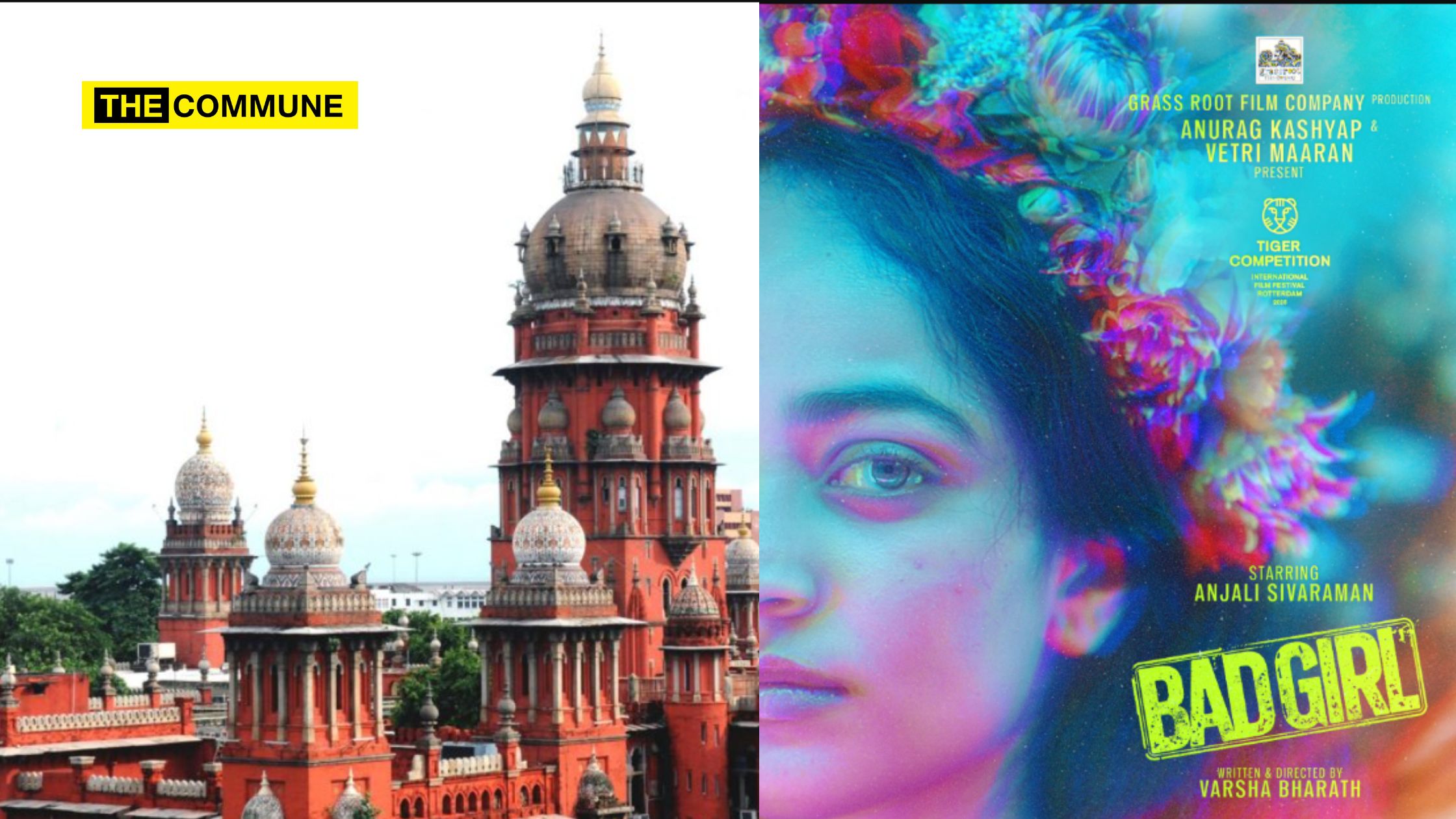
The Madras High Court recently rejected a petition requesting that the Central Board of Film Certification (CBFC) refrain from certifying the forthcoming Tamil film Bad Girl.
Justice Bharatha Chakravarthy dismissed the petition, citing a statement from the CBFC that no application for the movie’s certification had been received as of that time. The court further noted that the CBFC was fully capable of carrying out its duties and would process any application for censorship in accordance with the law.
During the hearing, M. Rajesh Vivekananthan, the Deputy Solicitor General of India, clarified that no such film or certification request had been submitted. As a result, the petitioner’s request could not be considered at that time. The court also emphasized that the CBFC had the authority to assess the film and make a decision based on legal guidelines.
This petition was filed by the President of the Rashtriya Sanadhana Seva Sangam, an organization dedicated to promoting unity and support for economically disadvantaged communities, particularly Brahmins. The association argued that certain recent Tamil films had depicted the Brahmin community in a derogatory manner, through dialogues, scenes, and storylines that negatively portrayed them. They claimed that Bad Girl was one such film, where the protagonist, a Brahmin, was depicted as succumbing to modern social vices and exhibiting immoral behavior.
The organization alleged that the film’s director, Vetrimaran, intended to tarnish the reputation of the Brahmin community by falsely portraying the corruption of its culture and values. They also pointed out that the movie’s teaser had led to significant controversy on social media and television, further fueling debates about its negative portrayal of the Brahmin community.
The petitioners contended that the CBFC had the authority to deny certification to a film that disparaged any race, religion, or social group. They argued that since the teaser itself appeared to defame the Brahmin community, the CBFC should refuse certification for the film. The organization had submitted a formal request to the CBFC on 30 January 2025, asking for the film to be withheld from certification, but with no response received, they decided to take the matter to the High Court.
Bad Girl
The teaser of the film Bad Girlwas released on 26 January 2025.Presented by filmmakers Anurag Kashyap and Vetri Maaran, the movie is penned and helmed by Varsha Bharath. The teaser introduces us to a young woman, portrayed by Anjali Sivaraman, who candidly shares her long-held desire to have a boyfriend. It then takes us back to her high school days, tracing a journey many young women may find familiar. As she navigates the challenges of puberty and the complex emotions it brings, her openness about her feelings provokes harsh judgment. Male classmates ridicule her, branding her with labels, while her female friends dismissively call her “desperate.” In college, when she enters a relationship, she faces the stark realities of a deeply ingrained “misogynistic” society.
Vetrimaaran produces Bad Girl under the Grass Root Film Company banner.Now this might look like an ordinary teaser release but when we examine the contents of the teaser, we realise it is yet another Dravidian anti-Brahmin propaganda film that is set to “delight” the ever-hungry Dravidianist’s appetite for such content.
The teaser introduces a Tamil Brahmin girl who is a rebel, defies societal expectations of being the “good girl” as she seeks to break free from the constraints of the usual trope of “Brahminical patriarchy“, and since this film is from the Dravidianist ideologue’s soil, it needs to show her embracing the identity of a modern, liberated woman. The final shot in the teaser shows the 2020 scenes of Thaali bajao during the Covid pandemic which has also been “meticulously” shot with precision to highlight those deemed regressive – Brahmins who are shown performing rituals with traditional symbols like the naamam.
Unfounded claims about delimitation arebeing peddled by the Dravidianists, led by none other than Tamil Nadu Chief Minister Stalin. Having received the cue, Dravidianists and DMK buttressers in the garb of “journalists” had to act. One such example is Arvind Gunasekar – known for his impeccable “bending over backwards” attitude to his DMK masters.
Rahul Shivshankar, Consulting Editor at Network 18 made a post on delimitation following Union Home Minister Amit Shah’s speech in Coimbatore a few days ago. Shivshankar wrote on his X handle,
“Here is an examination of the arguments being made by DMK on the delimitation debate. The more one looks into the specifics the more the inconsistencies in DMK’s stand which prompt some data-backed questions:
1. Tamil Nadu’s Declining Population Growth vs. Representation Demand:
• Tamil Nadu’s population growth rate (2011 Census): 15.6% (2001-2011), much lower than Bihar (25.4%) and Uttar Pradesh (20.2%).
• Despite this, Tamil Nadu still holds 39 Lok Sabha seats, while Bihar (with almost twice the population) has only 40 seats and UP 80 seats.
• Q: If DMK believes in proportional representation for caste-based reservations, why does it oppose fair seat allocation based on population growth? No Jitni abaadi utna haq?
2. DMK’s Contradiction on Social Justice vs. Delimitation:
• DMK demands caste-based reservations based on population (Tamil Nadu has 69% reservation).
• North Indian states have higher SC/ST/OBC populations. Bihar (63%), UP (60%), MP (68%), all have large backward-class populations.
• Q: If DMK supports representation for OBCs and Dalits based on population, why does it oppose North Indian states getting more parliamentary seats based on the same principle?
3. Freezing Delimitation Benefited Tamil Nadu at the Cost of UP/Bihar
• In 1971, Tamil Nadu’s population share was 6.6% of India; today, it is just 5.96%.
• Still, it holds 39 seats out of 543 (7.2%), meaning Tamil Nadu is overrepresented in Parliament compared to its population.
• In contrast, UP has 80 seats for 16.5% of India’s population—underrepresented.
• Q: If DMK truly believes in democracy, why does it oppose the correction of this historic imbalance?
4. Internal Hypocrisy: Unequal Representation Inside Tamil Nadu:
• Chennai has 3.5% of Tamil Nadu’s population but gets 5 out of 39 Lok Sabha seats (~13%).
• Rural areas like Ramanathapuram and Virudhunagar are underrepresented.
• Q: If DMK is truly against unfair seat allocation, why hasn’t it demanded internal seat redistribution within Tamil Nadu itself? Last, DMK must remember that TN’s economic prospects have also benefited from the labour of economic migrants from the North. So playing South against North is a self-defeating argument.”
Here is an examination of the arguments being made by DMK on the delimitation debate. The more one looks into the specifics the more the inconsistencies in DMK’s stand which prompt some data-backed questions:
Now to jump into the limelight, Gunasekar had to quote some big media person who is on the opposite side of the spectrum as him. So quoting Shivshankar, Gunasekar wrote,“RSS says “Tamil Nadu is overrepresented in Parliament compared to its population”, irony, because states like Tamil Nadu strictly implemented ‘National Population Policy’. Should States like Tamil Nadu be penalised for implementing National Population Policy ? Also to questions on what basis parties like DMK are opposing Delimitation exercise ? 1
. By tagging Delimitation exercise with Women Reservation Act, BJP Govt has ensured Delimitation (increasing number of seats) will not be frozen (Vajpayee Govt froze it in 2002).
2. Section 8(a) of the Delimitation Act says “on the basis of Census figures…”. The existing law of the land says Census figures will be the basis of Delimitation exercise. Not hearsay nor anyone made a phone call to TN CM.
3. As per Article 82 of the Constitution, data of the Census taken after the year 2026 will be basis for Delimitation exercise, and so, decadal Census has been delayed till date just to comply with Article 82 ?!
4. Are parties like DMK fear-mongering ?, not really, the country witnessed Delimitation exercise carried out by this Govt in Jammu and Kashmir between 2020-2022. On the basis of 2011 census, number of seats in Jammu increased by 6 (37 to 43) while just one seat increased in Kashmir (46 to 47).
5. Even after all these, if BJP now says Census figures alone will not be the basis of Delimitation, let them walk the talk, amend Delimitation Act 2002, enacted by Vajpayee Govt and assuage the fears of the Southern States.”
RSS says “Tamil Nadu is overrepresented in Parliament compared to its population”, irony, because states like Tamil Nadu strictly implemented ‘National Population Policy’.
Should States like Tamil Nadu be penalised for implementing National Population Policy ?
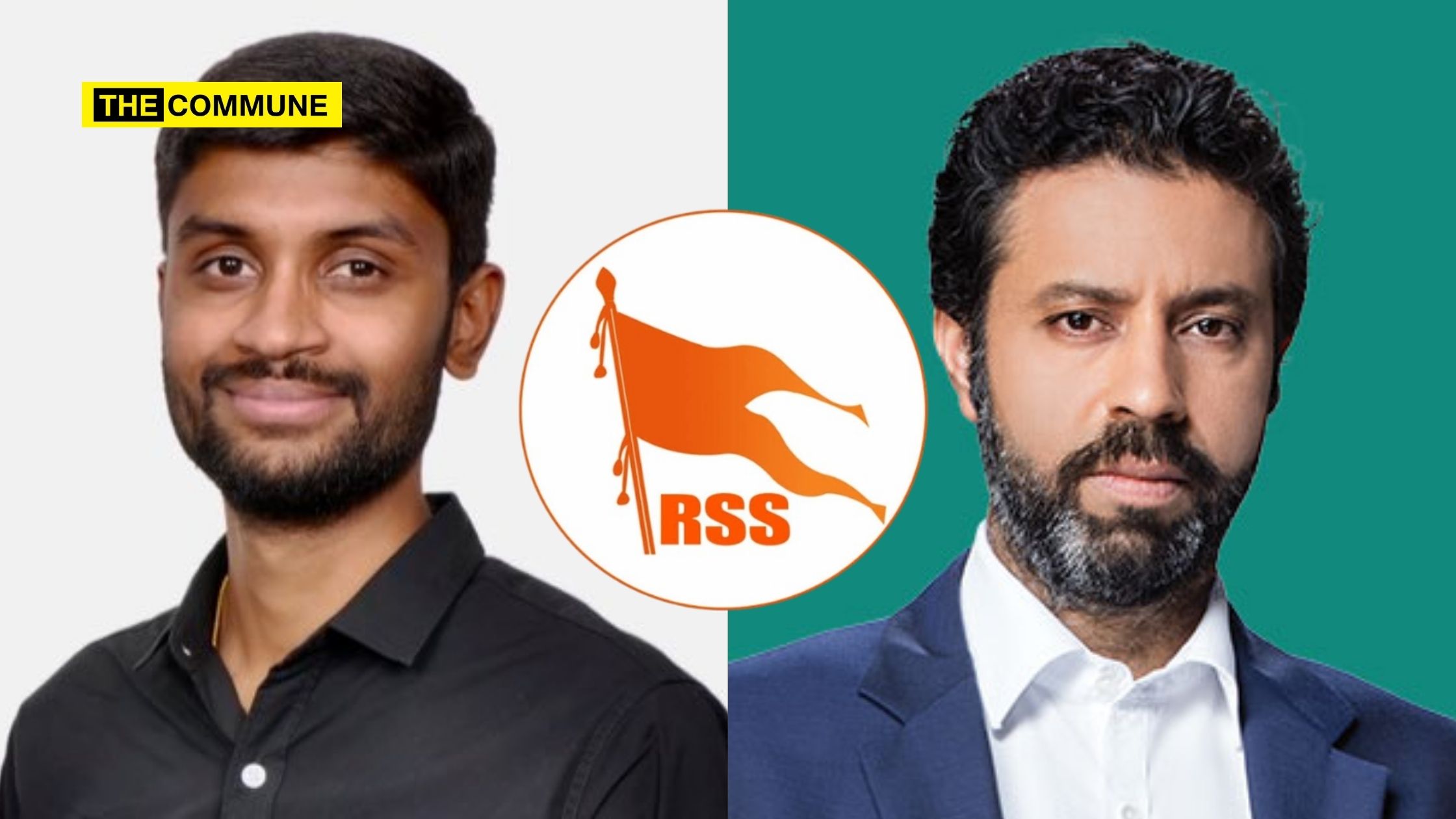
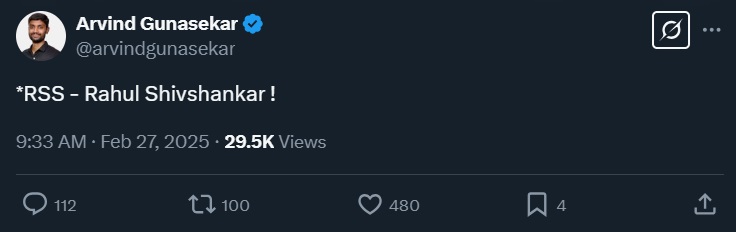
Instead of mentioning Shivshankar by his name, Gunasekar mentions him as “RSS“. He made this post on 26 February 2025 at 7.50 PM. Following the backlash, very slyly added a postscript (subsequent post in this context)
“*RSS – Rahul Shivshankar !”
He made this second post on 27 February 2025 at 9.33 AM.
Many people believed RSS, the organisation had actually made this statement. He neither apologised nor deleted/edited his tweet for the correction – no one would probably look at his second tweet for that matter and misinformation would continue to be spread.
Netizens called out his wanton mischief.
He clearly mentioned RSS later went on to clarify RSS is Rahul Shivshankar. Typical D stock. https://t.co/EY94Iu8P5k
I believe he would also report that AG strongly condemn union govt for their argument in court. AG here being arvind gunasekar not Advocate general. Whattay venom 😂 https://t.co/uXzIJVSEXq
No one, absolutely NO ONE will read his second tweet saying RSS is Rahul Shivshankar.
Pure venom!
Deliberate play to force the opponents to issue a clarification and then that clarification will have some unwarranted word which these parasites will cling on to. https://t.co/bNWopYEqwQ
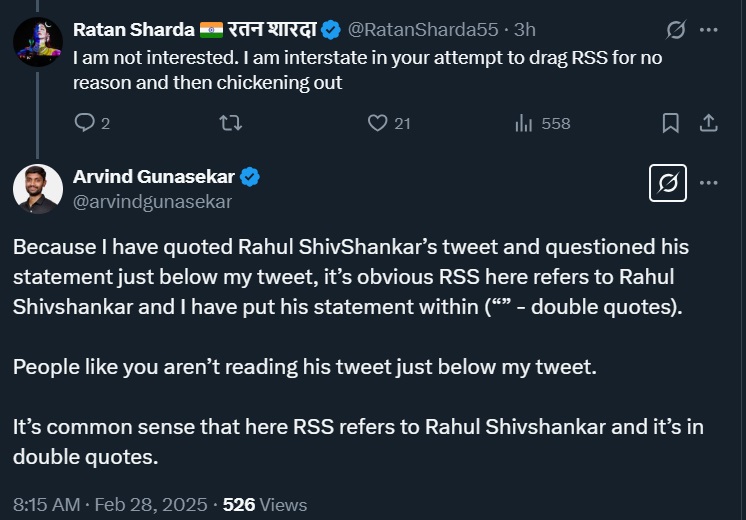
Later RSS ideologue Ratan Sharda called out his “wafer-thin defence” that RSS did not mean the organisation but the journalist Rahul Shivshankar.
Are U Serious? This is your wafer thin defence to abuse RSS with fake news? Aren’t you embarrassed? Both @RShivshankar and @RSSorg can file defamation case on you. But both have better things to do. Is it a precondition to be dumb to be a #Dravidanist, Mr @arvindgunasekar ? https://t.co/Pb9Ivb0ulg
Gunasekar continued to justify he did nothing wrong. He replied to Sharda saying, “Still you have not read Rahul ShivShankar’s tweet I have quoted. I quoted Rahul ShivShankar’s tweet and questioned his statement “Tamil Nadu is overrepresented in Parliament compared to its population” (See Pic 2 – Point 3 (2)). It’s his statement that I have questioned. If you have a problem with that statement, you too have to question him.”
Still you have not read Rahul ShivShankar’s tweet I have quoted.
I quoted Rahul ShivShankar’s tweet and questioned his statement “Tamil Nadu is overrepresented in Parliament compared to its population” (See Pic 2 – Point 3 (2)).
Sharda continued to call out his mistake and Gunasekar would not relent. He kept repeating that RSS was “obviously” referring to Shivshankar and not the organisation. He said, “Because I have quoted Rahul ShivShankar’s tweet and questioned his statement just below my tweet, it’s obvious RSS here refers to Rahul Shivshankar and I have put his statement within (“” – double quotes). People like you aren’t reading his tweet just below my tweet. It’s common sense that here RSS refers to Rahul Shivshankar and it’s in double quotes.”
This is not the first time Gunasekar has peddled fake news and buttressed the DMK.
The Dravidianist Face Of Arvind Gunasekar
Pretending to be an unbiased journalist, Arvind Gunasekar has time and again exposed his Dravidianist leanings over the years.
In August 2024, when the Kolkata rape and murder was hitting the headlines, Gunasekar downplayed the brutal rape and murder of the trainee doctor, despite substantial evidence pointing to the crime. While autopsy reports confirmed sexual assault and violent death, Gunasekar used the term “alleged” to describe the incident, casting doubt over its severity. It is noteworthy that Tamil news media did not bother to report this incident on their news channels, nor did they talk about any of the other rape incidents that occurred in the state.
CBI takes over investigation into alleged rape and mruder of a Doctor in RG Kar Medical College and Hospital in Kolkata.
He also posted a misleading post on his handle regarding the Uniform Civil Code (UCC) Bill passed in Uttarakhand. He shared an image of Schedule I from the UCC, highlighting prohibited relationships, and stated that marriages with an “Aunt/Uncle’s Daughter” would be restricted, implying this was a nationwide rule. However, in reality, many listed relationships are already prohibited under the Hindu Marriage Act and he forgot to mention the fact that the UCC applies only to Uttarakhand.
பொது சிவில் சட்டத்தின் கீழ் ‘அத்தை / மாமன் மகளை’ திருமணம் செய்துகொள்ள முடியாது.
He even defended a Times of India article by Julie Mariappan, which claimed that the central government was discriminating against Tamil Nadu in allocating National Disaster Response Funds (NDRF). The article suggested that funds were being directed only to BJP-ruled states, despite Tamil Nadu’s requests for assistance. Arvind attempted to justify the claims by citing a Press Information Bureau (PIB) release. However, a PIB release indicated that additional assistance was allocated for natural disasters occurring between May and October 2021, while TamilNadu’s heavy rains occurred in November and December, making the article’s claims misleading.
Centre approved additional Central assistance of 3,063.21 crore to six states ( Assam, Karnataka, Madhya Pradesh, Uttarakhand, Gujarat and West Bengal) from the NDRF.
During the Lok Sabha polls earlier this year, he even endorsed DMK candidate Ganapathy Rajkumar, describing him as a “calm and composed person” with a “proven administrative record” and a “Doctorate in Journalism”. However, Rajkumar’s Ph.D. was actually on the topic of “Emergence of Jayalalithaa as a Mass Leader,” not journalism. The doctoral thesis focused on assessing the leadership qualities of Jayalalithaa, a former AIADMK leader, through surveys in Tamil Nadu. Arvind’s endorsement faced criticism and mockery for inaccurately portraying the nature of Rajkumar’s degree and for endorsing a candidate with apparent political bias.
Ganapathy Rajkumar is a calm and composed person, with proven administrative record. He was the fifth Mayor of Coimbatore.
He also has a Doctorate in Journalism.
Ground situation of Coimbatore is way different from what’s being projected by National Media. https://t.co/6EEy0bmVZg
He also weighed in on the controversy surrounding AIMIM leader Asaduddin Owaisi’s “Jai Palestine” slogan during his Lok Sabha oath. In a post (that was also shared by alleged fact-checker Mohammed Zubair), Gunasekar claimed that members of the opposition alliance, I.N.D.I.A, had opposed a BJP member’s “Jai Hindu Rashtra” remark during the oath-taking, suggesting it went against the principles of the Indian Constitution. His post appeared to shift the narrative towards criticizing the BJP while subtly defending Owaisi’s statement.
MPs from United Opposition, INDIA oppose “Jai Hindu Rashtra” remarks of a BJP member while taking oath as a MP on the floor of the house in Lok Sabha, stating the same to be against the principles of Constitution of India.
In January 2025, he criticized Tamil Nadu Governor RN Ravi’s walkout from the Assembly over the omission of the National Anthem at the beginning of the session. He argued that the Speaker, not the Governor, controls Assembly proceedings and that both the Tamil Thai Vaazhthu and National Anthem were sung, as per Tamil Nadu’s practice. Gunasekar accused the Governor of using the controversy to avoid delivering the customary address. His comments dismissed the Governor’s constitutional role, downplayed the violation of protocol, and framed the issue as an attack on Tamil identity rather than a matter of national respect.
Speaker is the sole custodian of the Assembly, not the Governor.
Tamil Nadu Assembly did not say that it will not sing National Anthem, instead, ‘Tamil Thai Vaazhthu’ was sung in the beginning and National Anthem at the end. This has been the usual practice in the State.
Tamil Nadu Chief Minister MK Stalin continues to keep the fire of the “Hindi imposition” drama simmering while the state is in doldrums. Giving this “protest” a push, he alleged the imposition of Hindi through the National Education Policy (NEP), threatened the survival of several regional languages. In a post on X, Stalin questioned the impact of Hindi on linguistic diversity across India and listed several languages that he claimed were “gasping for survival.” He wrote, “My dear sisters and brothers from other states, Ever wondered how many Indian languages Hindi has swallowed? Bhojpuri, Maithili, Awadhi, Braj, Bundeli, Garhwali, Kumaoni, Magahi, Marwari, Malvi, Chhattisgarhi, Santhali, Angika, Ho, Kharia, Khortha, Kurmali, Kurukh, Mundari and many more are now gasping for survival. The push for a monolithic Hindi identity is what kills ancient mother tongues. UP and Bihar were never just “Hindi heartlands.” Their real languages are now relics of the past. Tamil Nadu resists because we know where this ends. Tamil has awakened; Tamil culture has survived! Some languages have given way to Hindi; they have disappeared without a trace!”
My dear sisters and brothers from other states,
Ever wondered how many Indian languages Hindi has swallowed? Bhojpuri, Maithili, Awadhi, Braj, Bundeli, Garhwali, Kumaoni, Magahi, Marwari, Malvi, Chhattisgarhi, Santhali, Angika, Ho, Kharia, Khortha, Kurmali, Kurukh, Mundari and… pic.twitter.com/VhkWtCDHV9
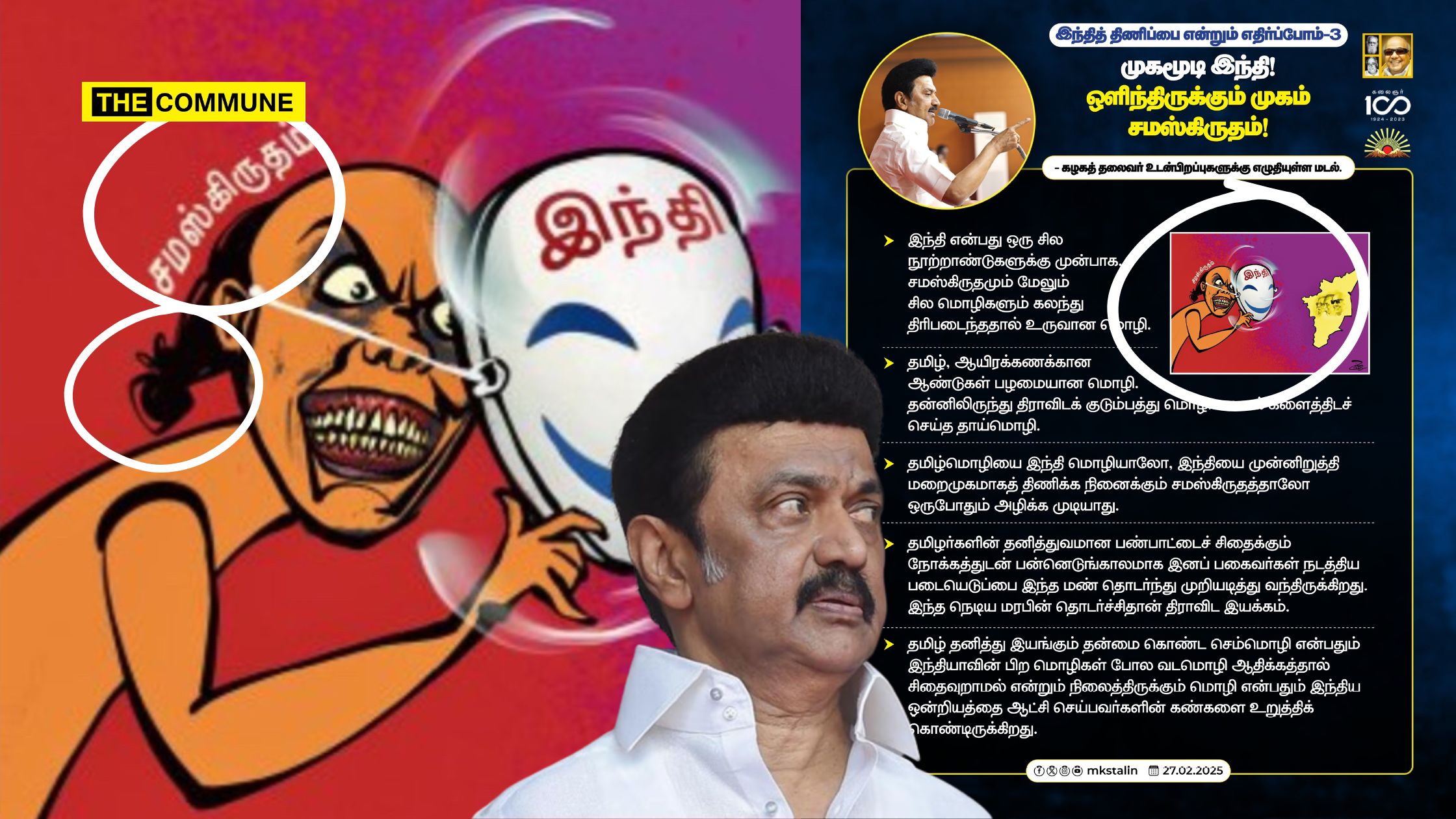
Reaffirming his party’s stance, Stalin stated in a letter to his cadre, “We will oppose Hindi imposition. Hindi is the mask, Sanskrit is the hidden face.”
However, the letter to the cadre very blatantly shows that MK Stalin is actually peddling hate against Brahmins under the guise of “opposing Hindi.”
The image in the letter shows a person who has a “Shikha” (tuft) indirectly indicating that Brahmins are pushing for Sanskrit “imposition” and people must oppose them.
The remarks come amid the Centre’s three-language policy, which the ruling Dravida Munnetra Kazhagam (DMK) has been opposing on the surface – it is noteworthy that schools run by DMK members and other Dravidianist party leaders offer Hindi as a subject in their schools and have implemented NEP 2020.
Stalin’s Brahmin Hate
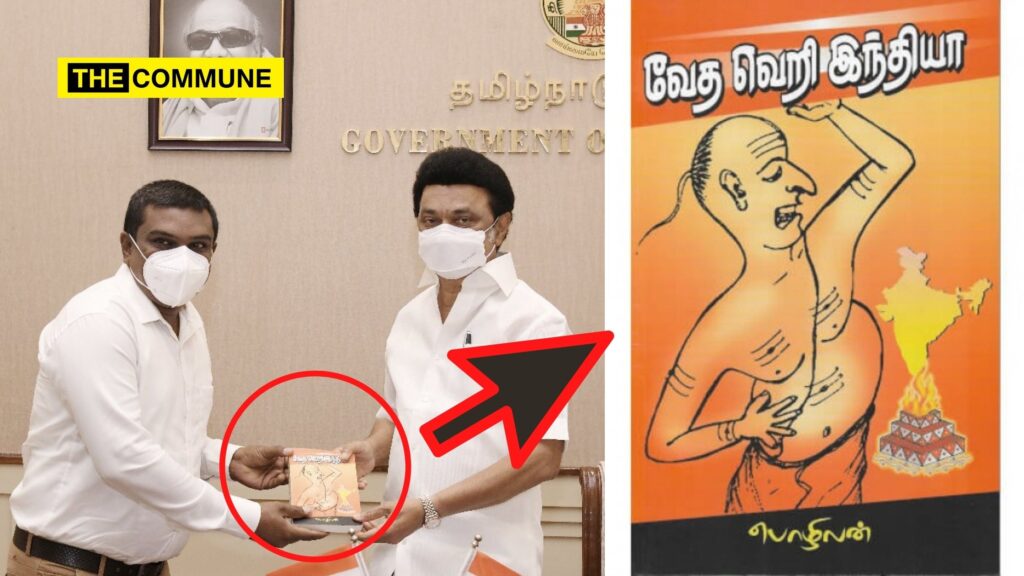
In 2021, he endorsed a book peddling Brahmin/Hindu hatred.
கொரோனா நிவாரணத்திற்காக
தமிழ் you tubers நிகழ்ச்சி நடத்தி திரட்டிய நிதி க்கான காசோலையை முதல்வரை சந்தித்து கொடுத்தோம். என் தந்தையார் மரணத்தின் போது அலைபேசியில் ஆறுதலைப் பகிர்ந்த முதல்வருக்கு நன்றியும் கூறினேன். திரு. பொழிலன் எழுதிய வேதவெறி இந்தியா புத்தகத்தை பரிசளித்தேன் pic.twitter.com/0mTiGIaXI0
When he was the Opposition leader, Stalin had made obscene remarks on Hindu rituals and mocked the purohits while participating in a Muslim wedding function.
@mkstalin@PTTVOnlineNews@Dinamalar_News This is what our STALIN. Anti-Hindu and culture & rituals as for him IT IS ALL JOKE.. Nobody clapped except Kujas
REALLY CURSE WHO CALLED HIM FOR THAT MARRIAGE.. HINDUS PLS THINK AGAIN BEFORE YOU VOTE THESE TYPE OF CHEAP POLITICIANS…. pic.twitter.com/rFF5W0Lk3f
How Dravidianists Use Nazi-Style Cartoon Propaganda To Demonize Brahmins
Let us have a look at how Brahmins are depicted across Dravidian literature and “pop culture” through Nazi-style propaganda.
Basically, the caricatures of Tamil Brahmins are based on 3 points:
They are fat, unshapely, and ugly
They are scary
They are “powerful” yet harmless but evil in nature
So, pushing the point that if there is a Brahmin around you, look at them with fear in your eyes because they are going to devour you. If we compare this with the Nazi propaganda, Jews were also described as ugly, evil, money-minded, powerful, and scary, not to forget their flowing beards – they stereotyped Brahmins as those with Shikha (tuft).
Nazi-Style Propaganda
The Dravidianists have made use of what is known as the Picture Superiority Effect – a phenomenon in which imagery/pictures are remembered more than text or words.
Most of the Dravidian literature about Brahmins has a few things in common, especially on their cover images.
The brahmin has a near-tonsured head with a tuft of hair at the back.
He is fat, has a paunch, wears the dhoti, and of course, the janeu/sacred thread.
In some cases, depending on the title and the type of content, the Brahmin is shown just next to Satan in terms of being evil.
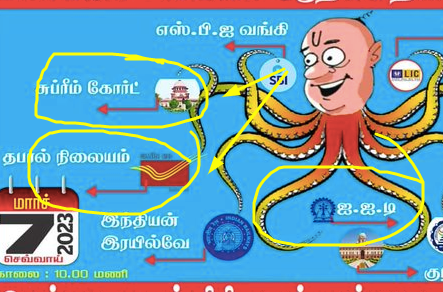
Some other methodologies used include zoomorphism – depicting brahmins as animals. In some cases, the brahmin is depicted as the 8-legged octopus. The inspiration seems to have come from (no prizes for guessing) the Nazi propaganda.
“Aariya maayai” (Aryan mAyA/illusions) by the very 1st Chief Minister of Tamil Nadu: C. N. Annadurai…Cover image: brAhmaNa with evil smile pic.twitter.com/i7AaN1W5at
pArppAn’s tuft (shikhA) is the NEET exam policy through which he destroys the lives, dreams, hopes & aspirations of non-pArppAns. pic.twitter.com/iqaOsEhC8J
— Reality Check India (@realitycheckind) March 2, 2023
for a constitutional “rights” lawyers with an interest in linkages to power #Drav cases are a goldmine.But you arent “plugged in” to Tamil.The person next to you is the same person here.. you are knowingly or unknowingly allying with anti-semitic hatred couched as social justice pic.twitter.com/q915EsYtEa
The Dravidianists have been using such imagery and Nazi-style propaganda to villainze Brahmins and imprint this message in the minds of gullible people over the years. Chief Minister MK Stalin continues to do this to this day, in an age where he and his party men claim they have “eradicated” caste.
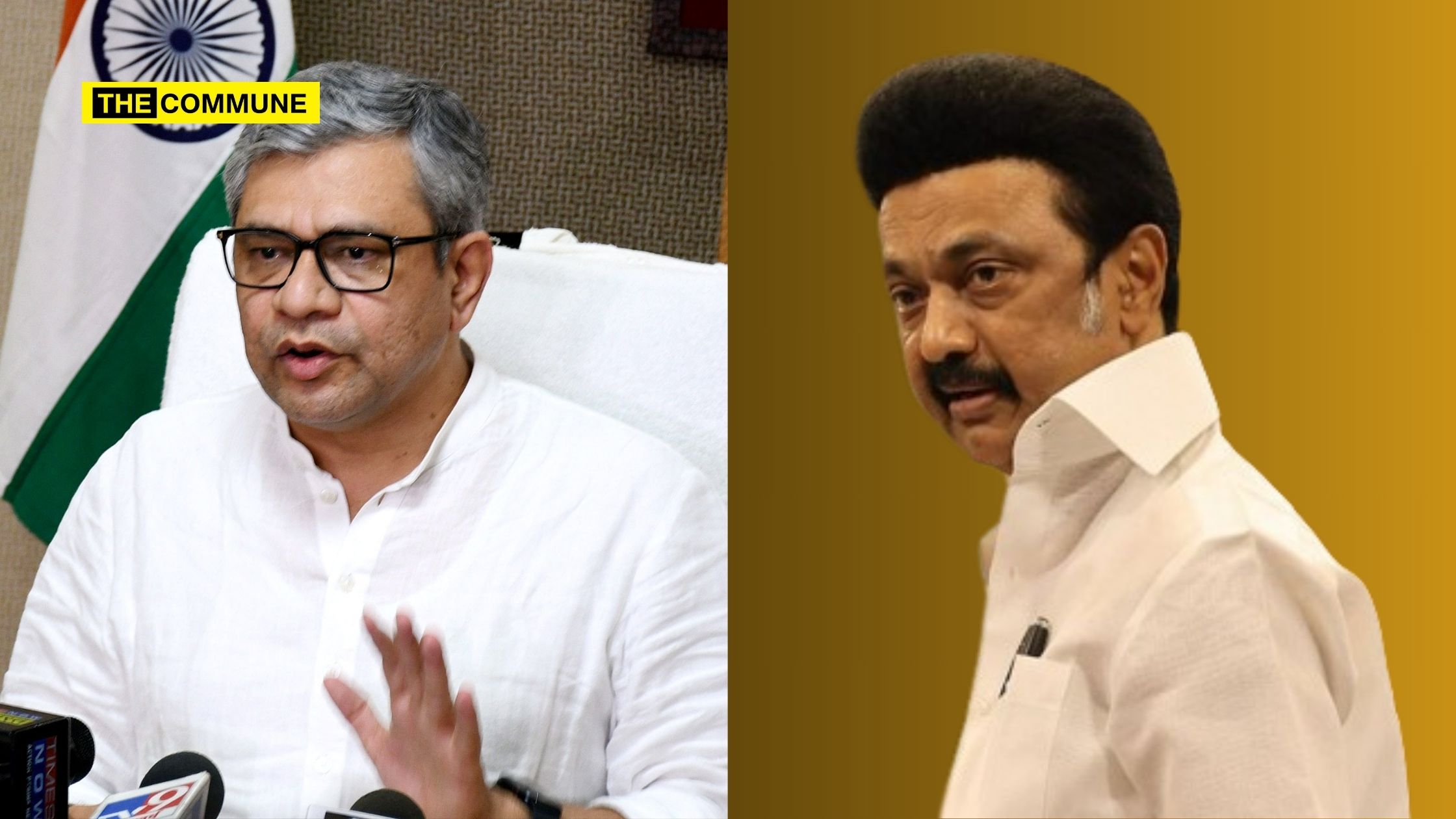
Union Railway Minister Ashwini Vaishnaw on Thursday lashed out at Tamil Nadu Chief Minister M.K. Stalin, saying that poor governance will never be hidden by shallow attempts to divide society.
In a post on the social media platform, ‘X’, Ashwini Vaishnaw said: “Poor governance will never be hidden by shallow attempts to divide society. It will be interesting to know what the Leader of the Opposition Rahul Gandhi has to say on this subject. Does he as MP of a Hindi-speaking seat agree?”
The senior BJP leader was responding to the Tamil Nadu Chief Minister‘s statement that how many Indian languages Hindi has swallowed. Stalin said that Hindi had swallowed, Maithili, Awadhi, Braj, Mundeli, Garwhali, Kumaoni, Magahi, Marwari, Malvi, Chattisgarhi, Santhali, Angika, Ho, Kharia, Khortha, Kurmali, Kurukh, Mandari and many more Indian languages.
In a letter to party cadres on Thursday, Stalin argued that several North Indian languages, such as Maithili, Brajbhasha, Bundeli, and Awadhi – spoken in Bihar, Uttar Pradesh, and Madhya Pradesh – have been suppressed by what he called the “hegemonic expansion” of Hindi. He claimed that more than 25 indigenous languages in North India have been lost due to the dominance of Hindi and Sanskrit.
Stalin credited the century-old Dravidian movement for safeguarding Tamil language and culture through continuous awareness campaigns and protests. He reiterated Tamil Nadu’s strong opposition to the NEP, accusing the Centre of promoting Hindi and Sanskrit under the guise of educational reforms.
Countering the BJP’s argument that the third language under NEP could be a foreign one, Stalin asserted that, in practice, only Sanskrit is being promoted in many states. He cited the example of BJP-ruled Rajasthan, where he said Sanskrit teachers are being appointed while Urdu instructors are being neglected. He warned that if Tamil Nadu were to adopt the trilingual policy, Tamil could eventually be sidelined, leading to increased Sanskritisation.
He pointed out that under NEP guidelines, while Sanskrit is being given prominence in schools, other Indian languages, including Tamil, are relegated to online learning.
“This clearly shows that the Centre is planning to sideline languages like Tamil and impose Sanskrit,” Stalin wrote.
Stalin reminded party members that Tamil Nadu’s two-language policy – Tamil and English – was first mandated by former Chief Minister C.N. Annadurai decades ago. Annadurai had strongly opposed the imposition of Hindi and the perceived influence of Aryan culture on Tamil identity. Stalin emphasised that the state has a long history of resisting Hindi imposition. He cited the anti-Hindi protests of 1937–39, during which leaders like Periyar (E.V. Ramasamy) and Justice Party members actively opposed efforts to make Hindi compulsory in schools under the then C. Rajagopalachari-led government. He also questioned the BJP’s criticism of blackened Hindi signboards at railway stations in Tamil Nadu.
He asked whether railway stations in Uttar Pradesh display Tamil or other South Indian languages for the benefit of passengers traveling from the South, particularly for events like the Kumbh Mela or Kashi Sangamam. He further inquired whether railway station announcements in Uttar Pradesh were made in other Indian languages. Stalin asserted that Tamil Nadu’s steadfast adherence to its two-language policy has contributed significantly to the state’s advancements in education, skill development, and employment opportunities.
He accused the BJP-led Central government of betraying Tamil Nadu and vowed to take all necessary measures to protect the Tamil language. “We won’t oppose if you don’t impose. We won’t blacken Hindi words in Tamil Nadu. Self-respect is the hallmark of Tamils, and we will not allow anyone, no matter who they are, to undermine it,” he declared.
–IANS
Subscribe to our channels on Telegram, WhatsApp, and Instagram and get the best stories of the day delivered to you personally.
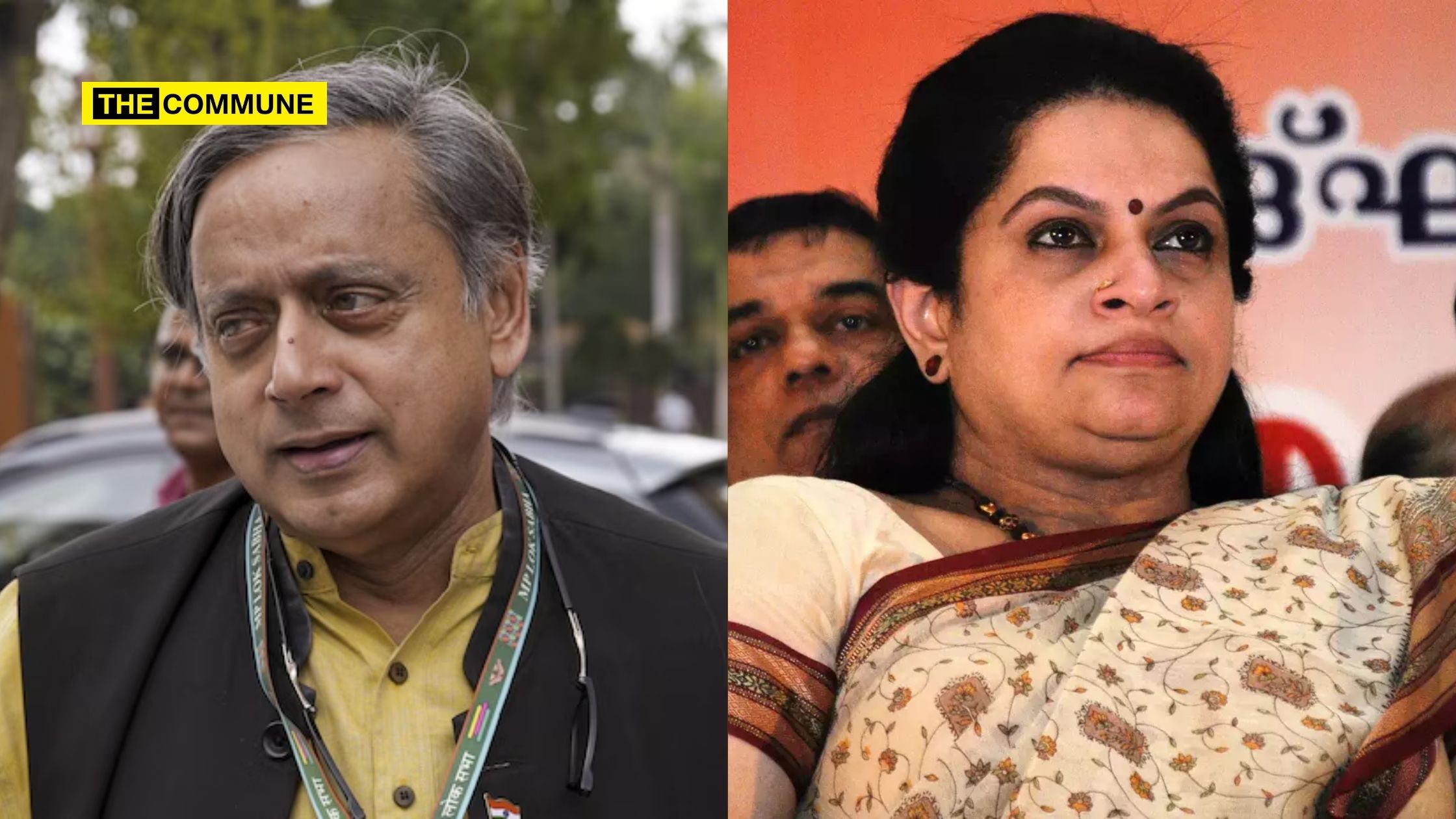
Padmaja Venugopal, the daughter of legendary four-time Congress Chief Minister K. Karunakaran on Thursday said Shashi Tharoor is welcome to join the BJP.
“There is no need to call him, as he knows how he is being treated in the Congress party. He is welcome to join the BJP. I used to see him during party meetings when in the Congress and I used to ask him, why is he not present for many meetings. He used to say he does not get the invite and hence doesn’t know of the meetings,” said Padmaja.
“I have always felt and seen how Tharoor was sidelined by the party. All what I said when I left Congress has just been repeated by Tharoor in the past few days. There is no future for him in the Congress party. I decided to leave the Congress party not for any posts or positions, but for peace of mind, which I now have. Nothing is going to happen in the state Congress leaders meeting in Delhi (Tharoor also is invited) called by the high command,” added Padmaja.
Of late Tharoor has come under fire from top state party leaders after his article in an English daily that praised PM Modi and Chief Minister Pinarayi Vijayan. However, Shashi Tharoor has already made his position clear that he will not join the BJP.
He was summoned by Rahul Gandhi last week and the two had a closed-door meeting. Speculations on Thursday have surfaced that Tharoor might be given the post of the Deputy Leader of the Lok Sabha.
Padmaja left the Congress party after former Defence Minister A.K. Antony’s son Anil Antony joined the Congress party. While Anil was given the Pathanamthitta Lok Sabha seat to contest, Padmaja failed to get one.
–IANS
Subscribe to our channels on Telegram, WhatsApp, and Instagram and get the best stories of the day delivered to you personally.
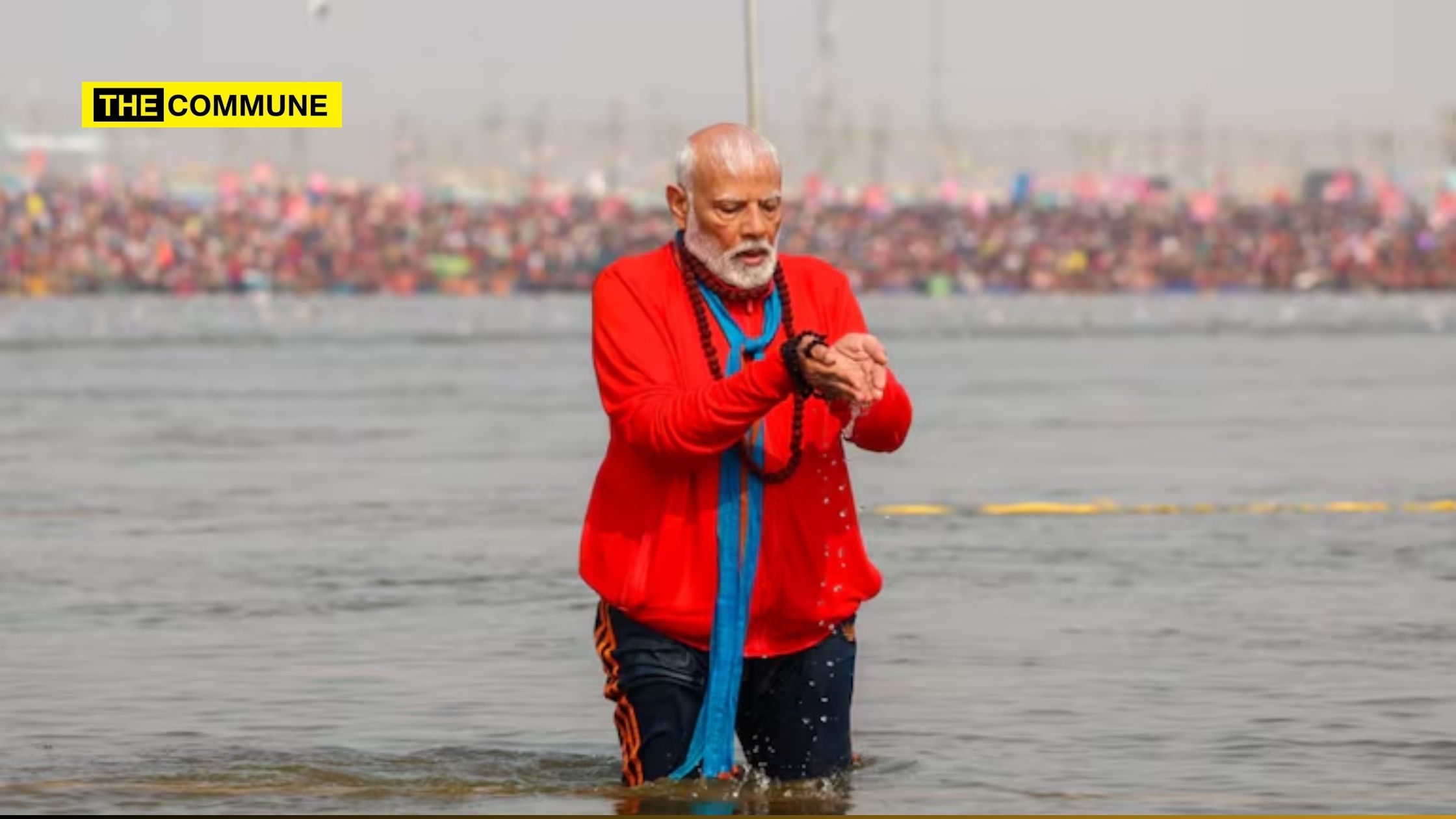
Prime Minister Narendra Modi has extolled the recently-concluded Mahakumbh in UP’s Prayagraj, as a symbol of the nation’s devotion and unity, saying “a grand Mahayajna of Unity has been completed”. The Prime Minister noted that during the Mahakumbh in Prayagraj, gods and goddesses, saints, women, children, youth, senior citizens and people from all walks of life came together.
“We witnessed the awakened consciousness of the nation. This was Ekta Ka Mahakumbh, where the sentiments of 140 crore Indians converged at the same place, at the same time, for this sacred occasion,” he said in a blog post after the festival’s end on Maha Shivratri day on Wednesday.
Following is the complete text of the Prime Minister’s blog post: The Mahakumbh has successfully concluded in the holy city of Prayagraj. A grand Mahayajna of Unity has been completed. When the consciousness of a nation awakens, when it breaks free from the shackles of a centuries-old mindset of subjugation, it breathes freely in the fresh air of renewed energy. The result of this was witnessed at the Ekta Ka Mahakumbh (Mahakumbh of Unity) in Prayagraj since January 13.
On January 22, 2024, during the Pran Pratishtha of the Ram Mandir in Ayodhya, I spoke about Devbhakti and Deshbhakti — devotion to the divine and to the nation. During the Mahakumbh in Prayagraj, Gods and Goddesses, saints, women, children, youth, senior citizens and people from all walks of life came together. We witnessed the awakened consciousness of the nation. This was Ekta Ka Mahakumbh, where the sentiments of 140 crore Indians converged at the same place, at the same time, for this sacred occasion.
In this holy region of Prayagraj is Shringverpur, a sacred land of unity, harmony and love, where Prabhu Shri Ram and Nishadraj met. Their meeting symbolized the confluence of devotion and goodwill. Even today, Prayagraj inspires us with the same spirit. For 45 days, I witnessed crores of people from every corner of the country making their way to the Sangam. The wave of emotions at the confluence kept rising. Every devotee came with one purpose – taking a dip in the Sangam. The holy confluence of Ganga, Yamuna, and Saraswati filled every pilgrim with enthusiasm, energy, and confidence.
This Mahakumbh in Prayagraj is a subject of study for modern management professionals, planning, and policy experts. Nowhere in the world is there any parallel or example of this scale. The world watched in wonder how crores of people gathered at Prayagraj at the banks of the confluence of rivers. These people had no formal invitations, no prior communication on when to go. Yet crores of people left for the Mahakumbh of their own accord and felt the bliss of taking a dip in the sacred waters. I cannot forget those faces radiating immense joy and satisfaction after the holy dip.
Women, elders, our Divyang brothers and sisters – everyone found a way to reach the Sangam. It was particularly heartening for me to see the overwhelming participation of India’s youth. The presence of the younger generation at the Mahakumbh sends a profound message that the youth of India will be the torchbearers of our glorious culture and heritage. They understand their responsibility towards preserving it and are committed to carrying it forward. The number of people who arrived in Prayagraj for this Mahakumbh has undoubtedly created new records.
But beyond those physically present, crores of people who could not reach Prayagraj were also deeply connected emotionally to the occasion. The sacred water brought back by pilgrims became a source of spiritual bliss for millions. Many of those returning from the Mahakumbh were received with respect in their villages, honoured by society. What has happened in the last few weeks is unprecedented and has laid a foundation for centuries to come. More devotees arrived in Prayagraj than anyone had imagined. The administration had estimated attendance based on past experiences of the Kumbh. Nearly twice the population of the United States participated in this Ekta Ka Mahakumbh. If scholars of spirituality analyse the enthusiastic participation of crores of Indians, they will find that India, proud of its heritage, is now surging ahead with a new-found energy.
I believe this is the dawn of a new era, which will script the future of a new India. For thousands of years, the Mahakumbh has strengthened India’s national consciousness. Every Purnakumbh used to witness a gathering of saints, scholars and thinkers deliberating upon the state of society in their times. Their reflections used to provide a new direction to the nation and society. Every six years, during the Ardhkumbh, these ideas were reviewed. After 12 Purnakumbh occurrences spanning 144 years, obsolete traditions were given up, newer ideas were embraced, and new traditions were created move ahead with the times. After 144 years, in this Mahakumbh, our saints have once again given us a new message for India’s development journey.
That message is Developed India – Viksit Bharat. At this Ekta Ka Mahakumbh, every pilgrim, whether rich or poor, young or old, from villages or cities, from India or abroad, from the East or the West, from the North or the South, irrespective of caste, creed and ideology, came together. This was an embodiment of the vision of Ek Bharat Shreshtha Bharat that filled confidence in crores of people. Now, we must come together in the same spirit for the mission of building a developed India. I am reminded of the incident where, as a little boy, Shri Krishna revealed a snapshot of the whole universe within His mouth to His mother Yashoda. Similarly, in this Mahakumbh, the people of India and the world have witnessed the massive potential of India’s collective strength. We must now move forward with this self-confidence and dedicate ourselves towards building a developed India.
Earlier, the saints of the Bhakti movement had identified and encouraged the strength of our collective resolve across India. From Swami Vivekananda to Sri Aurobindo, every great thinker reminded us of the power of our collective resolve. Even Mahatma Gandhi experienced it during the freedom movement. Post-independence, if this collective strength had been correctly recognised and harnessed towards boosting the welfare of all, it would have become a great force for a newly independent nation. Unfortunately, it was not done earlier. But now, I am gladdened to witness the way in which this collective strength of the people is coming together for a developed India. From the Vedas to Vivekananda, from the ancient scriptures to modern satellites, India’s great traditions have shaped this nation. As a citizen, I pray that we draw new inspiration from the memories of our ancestors and saints.
May this Ekta Ka Mahakumbh help us move ahead with new resolutions. Let us make unity our guiding principle. Let us work with the understanding that service to the nation is service to the divine. During my election campaign in Kashi, I had said, “Maa Ganga has called me.” This was not just an emotion but also a call of responsibility, towards the cleanliness of our sacred rivers. Standing at the confluence of the Ganga, Yamuna, and Saraswati in Prayagraj, my resolve became even stronger. The cleanliness of our rivers is deeply linked to our own lives. It is our responsibility to celebrate our rivers, big or small, as life-giving mothers. This Mahakumbh has inspired us to keep working towards the cleanliness of our rivers. I know that organizing such a massive event was no easy task. I pray to Maa Ganga, Maa Yamuna, and Maa Saraswati to forgive us in case there were any shortcomings in our devotion.
I see Janata Janardan, the people, as an embodiment of divinity. In case there has been any shortcoming in our efforts to serve them, I also seek the forgiveness of the people. Crores of people came to the Mahakumbh with a feeling of devotion. Serving them was also a responsibility that was carried out with the same feeling of devotion. As a Member of Parliament from Uttar Pradesh, I can proudly say that under the leadership of Yogi Ji, the administration and the people worked together to make this Ekta Ka Mahakumbh a success. Be it the state or Centre, there were no rulers or administrators and instead, everyone was a devoted sevak. Sanitation workers, police, boatmen, drivers, people serving food – everyone worked tirelessly.
The way the people of Prayagraj welcomed the pilgrims with open hearts despite facing many inconveniences was particularly inspirational. I express my heartfelt gratitude and appreciation to them and the people of Uttar Pradesh. I have always had unwavering confidence in the bright future of our nation. Witnessing this Mahakumbh has strengthened my conviction manifold. The way 140 crore Indians turned the Ekta Ka Mahakumbh into a global occasion is truly wonderful. Moved by the dedication, devotion and efforts of our people, I will soon visit Shri Somnath, the first among the 12 Jyotirlingas, to offer the fruits of these collective national efforts to Him and to pray for every Indian. The physical form of the Mahakumbh may have culminated successfully on Mahashivratri, but just like the eternal flow of the Ganga, the spiritual strength, national consciousness and unity that Mahakumbh has awakened will continue to inspire us for generations to come.
–IANS
Subscribe to our channels on Telegram, WhatsApp, and Instagram and get the best stories of the day delivered to you personally.
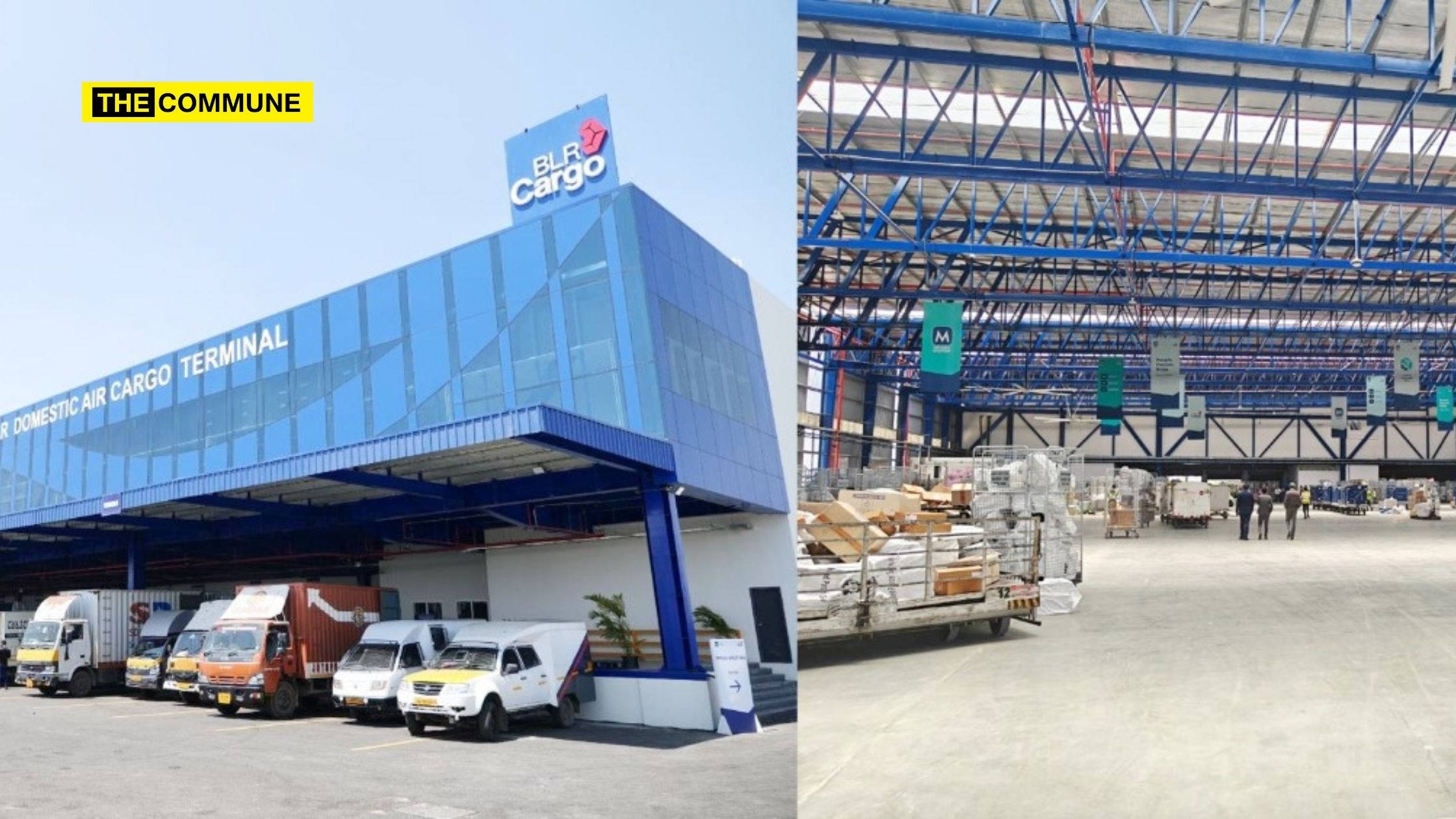
India’s largest greenfield domestic cargo terminal (DCT) was launched at the Bengaluru International Airport on Thursday. The Kempegowda International Airport Bengaluru (KIAB/BLR Airport), operated by Bangalore International Airport Limited (BIAL), has partnered with Menzies Aviation for the initiative.
BIAL COO Satyaki Raghunath said: “This domestic cargo terminal is certainly one of the best and largest cargo facilities in Asia. We have strong hopes that the domestic cargo facility will drive the growth of domestic traffic. From South India’s perspective, Bengaluru has over 40 per cent of cargo market share.”
“With this infrastructure and partnership with Menzies, who are one of the largest operators of cargo terminals globally, we are in a good position to capitalise, on what we believe is going to be a great decade for Indian aviation and Indian air cargo growth. We are excited about the new venture. This partnership will go from strength to strength,” he added.
“Bengaluru International Airport is a substantial player both in terms of passengers and cargo. By the end of this decade, we will have somewhere between 80 to 90 million passengers and probably close to a million tonnes of cargo. Eventually, we will have a saturation capacity of about 100 million passengers and certainly one and a half million tonnes of cargo. We are the third busiest airport in India in terms of cargo and passengers,” the COO said, noting that Bengaluru is located in the middle of the south Indian peninsula and has a great advantage of being equidistant from several places.
Menzies Aviation EVP Middle East, Africa and Asia, Charles Wyley, said: “Our new greenfield domestic cargo terminal at the Kempegowda International Airport, Bengaluru is a major step forward in our commitment to delivering efficient, reliable and future-ready logistics solutions. With the rapid growth in air cargo in India – which is set to reach 5.8 million tonnes by 2029, this facility is designed to not only meet today’s demand but to scale for future needs as the industry continues to evolve.”
Spanning over 7 acres, the DCT features a peak handling capacity of approximately 360,000 metric tons, with a potential to expand to 400,000 metric tons. This 245,000 square feet state-of-the-art facility signifies a major milestone in Bengaluru Airport’s cargo handling capabilities, offering enhanced infrastructure and streamlined processes to meet the growing demands of the domestic market. Bengaluru Airport has established a strong reputation as a leading hub for perishables.
The airport is already the largest exporter of mangoes, coriander, and various other perishable goods. With the DCT, it is set to further enhance its handling capacity. The new DCT will have the capability to manage perishables. The terminal will also include dedicated storage areas for specialised cargo, such as valuables, vulnerable items, live animals, dangerous goods, and radioactive materials, reinforcing its comprehensive cargo handling capabilities.
–IANS
Subscribe to our channels on Telegram, WhatsApp, and Instagram and get the best stories of the day delivered to you personally.
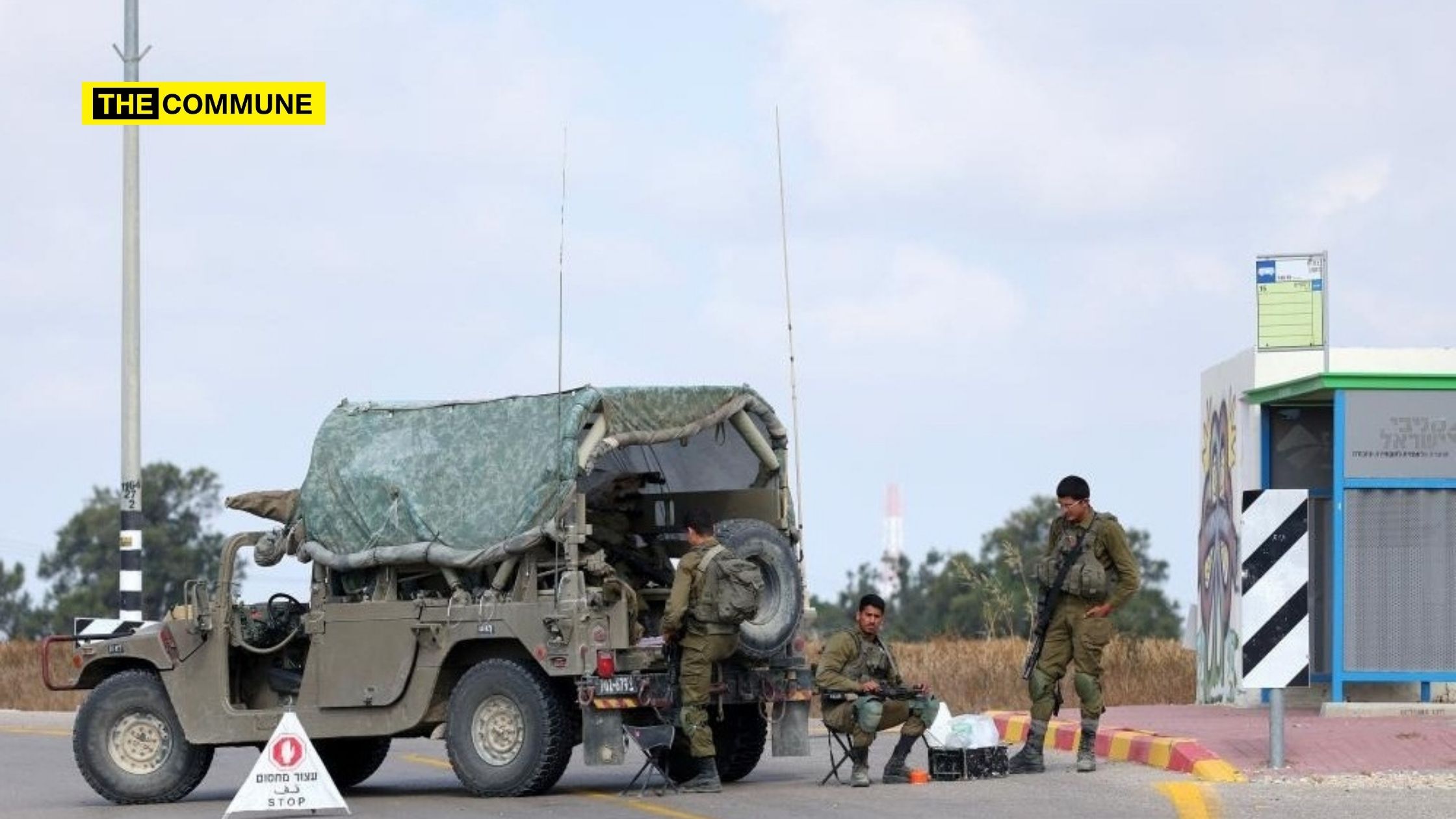
Israeli officials said on Thursday that the military would not withdraw from the strategic strip along the Gaza-Egypt border despite a ceasefire agreement that calls for a pullout by Saturday.
In the early hours of Thursday, Israel received the bodies of four hostages in exchange for hundreds of Palestinian prisoners, marking the final swap under the first phase of a three-stage ceasefire deal set to expire on Saturday. Three of the hostages were killed while in captivity, while the fourth died during the Hamas-led attack on October 7, 2023, according to the Prime Minister’s office. Forensic experts in Tel Aviv confirmed the identification of the four bodies after Hamas handed them over.
“Based on intelligence and all available information, Ohad Yahalomi, Tsahi Idan, and Itzik Elgarat were murdered while held hostage in Gaza,” the office said. It added that Shlomo Mantzur, 86, was killed during the October 7 attack and his body had been taken into Gaza. There was no immediate comment from Hamas, which has previously claimed that heavy Israeli bombardments killed hostages, Xinhua news agency reported. Under the ceasefire deal, Israel is required to begin withdrawing troops from the Philadelphi Corridor by Saturday.
However, a senior Israeli official told state broadcaster Kan that the military “will not withdraw” from the area, saying, “We will not allow Hamas militants to roam our border again with trucks and rifles, and we will not let them rearm through smuggling.” Energy Minister Eli Cohen told Kan Reshet Bet Radio that 59 hostages remain in Gaza and that securing their release remains a top priority.
He said Israel would only move to the next phase of the ceasefire if four conditions were met: the release of all hostages, the removal of Hamas from power, the demilitarization of Gaza, and full Israeli security control over the enclave. Cohen also noted that support from the US administration and the resumption of heavy bomb shipments — previously suspended by the Biden administration — had bolstered Israel’s resolve to maintain its demands. Hamas said it was ready to negotiate the next phase of the ceasefire. In a statement, the group said the “only way” to secure the release of the remaining hostages was through a commitment to a lasting truce.
–IANS
Subscribe to our channels on Telegram, WhatsApp, and Instagram and get the best stories of the day delivered to you personally.
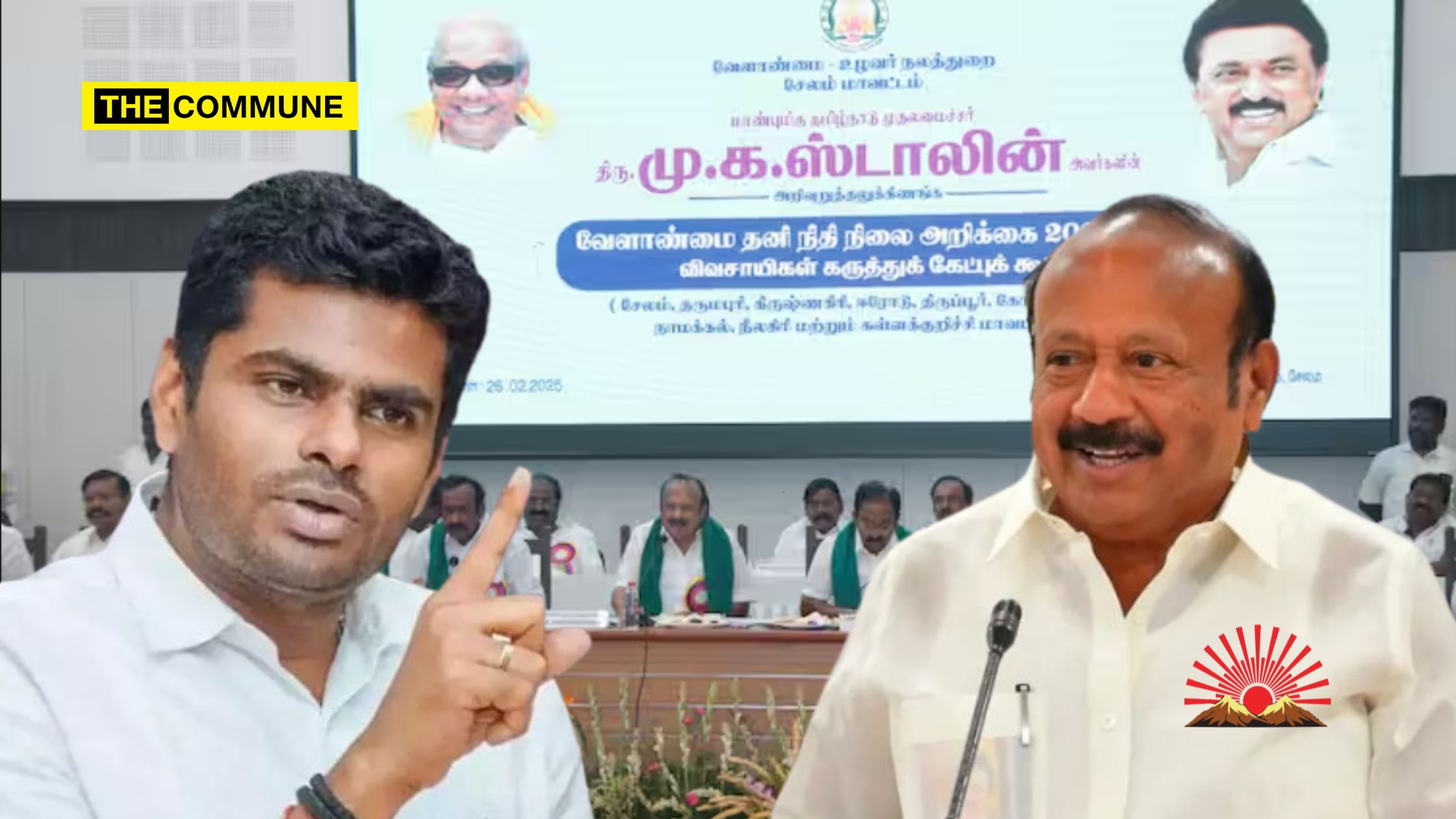
Tamil Nadu BJP leader Annamalai has slammed the ruling DMK government as a ‘Drama Model’ for failure to sing “Tamil Thai Vazhthu” at a government event in Tiruvallur, attended by DMK Agriculture and Farmers’ Welfare Minister M. R. K. Panneerselvam, district officials, and others.
In a post on X, Annamalai expressed his outrage, stating that the event, which included DMK ministers M.R.K Panneerselvam, K. Ponmudi, S. M. Nasar, the Tiruvallur MLA, and the district collector, began without the singing of “Tamil Thai Vazhthu,” calling it an illegal act. He strongly condemned the omission.
Annamalai further accused the DMK of hypocrisy, claiming that while the party advocates for a two-language policy, it has been systematically undermining the Tamil language by supporting private schools that do not offer Tamil and opposing educational reforms that prioritize mother tongue education. He argued that the DMK uses the Tamil language solely for political and business purposes.
He concluded by questioning what new response the Chief Minister would offer in light of the insult of not singing “Tamil Thai Vazhthu” at an event attended by his own ministers.
Annamalai via his official X account stated, “In Tiruvallur, the government program attended by DMK ministers MRK Panneerselvam, Ponmudi, Nassar, the Tiruvallur MLA, and the District Collector began without singing “Tamil Thai Vazhthu,” which is illegal and strongly condemned. Under the guise of the two-language policy, the DMK is building a structure of private schools in Tamil Nadu that exclude the Tamil language and opposing the new education plan that mandates mother tongue education for its own benefit, continues to use Tamil solely for political and business purposes. What new drama will the Chief Minister stage in response to the insult of not singing “Tamil Thai Vazhthu” at a function attended by his own ministers? #DramaModel”
திருவள்ளூரில், திமுக அமைச்சர்கள் திரு. MRK பன்னீர்செல்வம், திரு. பொன்முடி, திரு. நாசர் மற்றும் திருவள்ளூர் சட்டமன்ற உறுப்பினர், மாவட்ட ஆட்சியர் ஆகியோர் கலந்து கொண்ட அரசு நிகழ்ச்சி, தமிழ்த்தாய் வாழ்த்து பாடப்படாமல் தொடங்கப்பட்டுள்ளது சட்டவிரோதமானது. வன்மையாகக் கண்டிக்கத்தக்கது.…
The Enforcement Directorate (ED) has informed the Madras High Court on 27 February 2025 that drug money was funneled into the bank accounts of film director Ameer and others by Jaffer Sadiq, who is accused of being involved in illegal money transfers.
The ED made this claim in its response to the bail petition filed by Jaffer Sadiq, who has been under investigation for alleged financial crimes linked to drug trafficking. According to the agency, Sadiq deposited funds obtained from drug sales into multiple bank accounts, including that of Ameer.
#Breaking || "அமீர் வங்கி கணக்கில் பணத்தை செலுத்திய ஜாபர் சாதிக்"
"போதைப்பொருள் விற்பனை மூலம் சம்பாதித்த பணத்தை இயக்குனர் அமீர் உள்ளிட்டோரின் வங்கிக் கணக்குகளில் ஜாபர் சாதிக் செலுத்தியுள்ளார்"
Ameer has been named as the 12th accused in the ED’s chargesheet. Ameer had tried to wash his hands off of Sadiq by claiming that he was unaware of Sadiq’s “other face” and also stated that the shooting of the film Iraivan Miga Periyavan was halted abruptly following the news of the ₹2000 crore drug bust. However, during launch function of his film “Iraivan Miga Periyavan” in February 2022, Ameer is seen saying Jaffer Sadiq is a distant relative of his. He also mentions that Sadiq had been requesting Ameer to direct a film under his banner for 5 years.
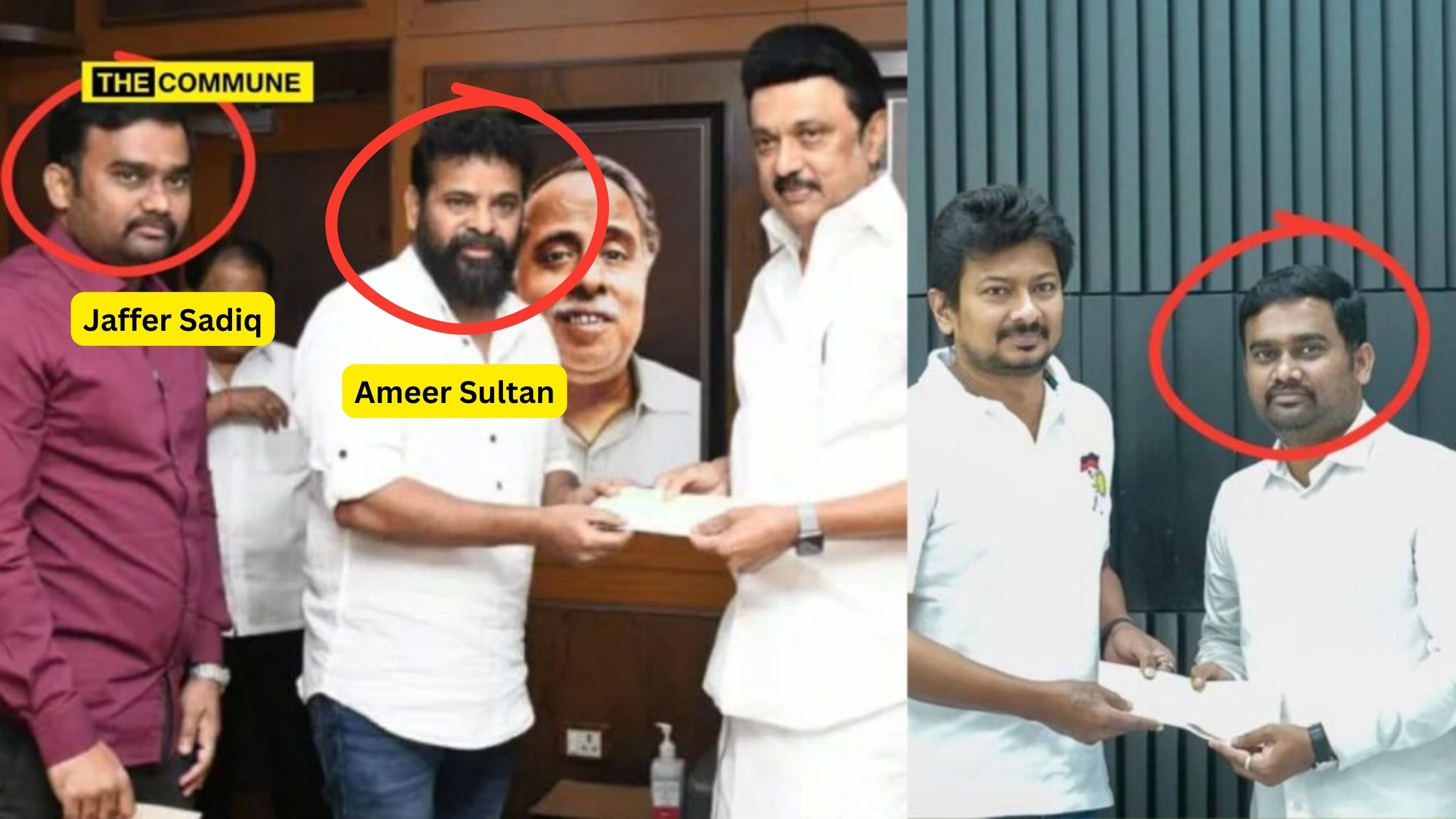
In November 2024, the ED revealed that Jaffer Sadiq, a former DMK functionary under investigation for running international drug trafficking ring, used black money to finance movies made by Dravidianist filmmaker Ameer Sultan.
The ED also filed charges against 12 individuals and eight companies in a money laundering case linked to Jaffer Sadiq. The charges, filed in a CBI court in Chennai, name Sadiq’s brother, wife, business associate, and Dravidianist actor-director Ameer Sulthan, among others. The accused allegedly laundered drug proceeds from pseudoephedrine exports to Malaysia, Australia, and New Zealand through real estate, film production, hospitality, and logistics businesses.
The case stems from three major drug seizures: 50 kg of pseudoephedrine in Delhi (2024), 39 kg of ketamine in Mumbai (2018), and 50 kg of pseudoephedrine in Chennai (2015). Drugs were smuggled disguised as food products and bangles. Over ₹30 crore in cash deposits were found in various entities linked to Sadiq. The ED has attached assets worth ₹55.3 crore, including properties owned by Sadiq, his wife, and associates.
Ameer Sulthan allegedly benefited from Sadiq’s laundered funds, investing them in films under JSM Pictures and co-owning a business with Sadiq. The court took cognizance of the prosecution complaint on 18 October 2024, as investigations continue.
Who Is Jaffer Sadiq?
Sadiq, a producer of five Tamil films, was the leader of a cartel responsible for shipping Pseudoephedrine from India to Australia and New Zealand, as per the sources. Four other individuals from Tamil Nadu were apprehended in a Delhi warehouse.
Sadiq, who was affiliated with the Dravida Munnetra Kazhagam (DMK) and serving as the Deputy Organiser for the Chennai West NRI Wing, was permanently expelled from the party on 25 February 2024 following the revelation of his involvement with the drug cartel. The case unraveled when authorities from New Zealand and Australia alerted Indian agencies about substantial drug smuggling in their countries, disguised as food products. The NCB was probing the possibility of drug money being used to fund films.
In February, New Zealand customs and Australian police provided information about large amounts of pseudoephedrine, hidden in desiccated coconut powder, being shipped to both countries. Additional information from the US Drug Enforcement Administration pointed to Delhi as the source of the consignment.
An international drug trafficking network has been broken up by a combined operation from the NCB and the Special Cell of Delhi Police, resulting in the seizure of at least 50 kg of Pseudoephedrine in Delhi.
Following extensive questioning, officials disclosed that over the past three years, 45 shipments containing roughly 3,500 kg of pseudoephedrine, worth over ₹2,000 crore in the international market, had been dispatched.
On 9 March 2024, the Narcotics Control Bureau (NCB) announced the arrest of Jaffer Sadiq, the mastermind behind the India-Australia-New Zealand drug trafficking network. According to the NCB, Sadiq is reportedly the mastermind behind the drug trafficking ring spanning India, Australia, and New Zealand. Sadiq, who has five film productions to his credit, allegedly operated a cartel that transported pseudoephedrine from India to Australia and New Zealand. Four individuals from Tamil Nadu were apprehended in a Delhi warehouse two weeks prior.
Director Ameer Sulthan’s close ties with drug kingpin Jaffer Sadiq have come under scrutiny. At the 2022 launch of Iraivan Miga Periyavan, Ameer called Sadiq a “distant relative” and praised his business ventures. They co-founded 4AM Coffee and Law Cafe, with Ameer also serving as a director in Sadiq’s Zuko Overseas Pvt Ltd. Sadiq produced Ameer’s films under JSM Pictures, and DMK Minister Udhayanidhi Stalin’s wife attended Mangai’s music launch. Ameer also inaugurated Sadiq’s Saleem Bhai Biriyani. Their political connections, including meetings with MK Stalin, raise questions about Ameer’s financial sources and his deep ties to the DMK-linked businessman.
Subscribe to ourTelegram, WhatsApp, and Instagramchannels and get the best stories of the day delivered to you personally.