Home Blog Page 631

Anna University Sexual Assault Case: BJP TN President Annamalai Slams DMK Govt Over Lawlessness In State

Anna University Sexual Assault Case: BJP TN President Annamalai Slams DMK Govt Over Lawlessness In State

In the wake of the student sexual assault case in Anna University, Tamil Nadu BJP President K Annamalai has strongly criticized the DMK government, accusing it of turning the state into a “breeding ground for unlawful activities and a haven for criminals.” His comments came in the wake of a recent incident where a female student from Chennai’s Anna University was sexually assaulted on campus. Annamalai expressed concern that women in the state no longer feel safe and called on the DMK government to take immediate action.

In a statement posted on his official X account, Annamalai said, “It is absolutely shocking to hear the news of the Sexual Assault of a Student at Anna University, the premier Institute of TN, situated in the heart of Chennai, by 2 miscreants. @BJP4TamilNadu demands that the miscreants be immediately arrested. Tamil Nadu, under the DMK Government, has become a breeding ground of unlawful activities and a haven for criminals. Women don’t feel safe in the State anymore, as the Police are kept busy by the ruling administration to silence the opposition. BJP Tamil Nadu has to call for a protest for the police to act if the criminal is a functionary of DMK. This is the dire state of law & order in the State. @BJP4TamilNadu demands that the Chief Minister of Tamil Nadu takes responsibility at least now and addresses the people on the Status of this sexual assault case in Anna University and do justice to the portfolio he holds.”

Shocking Incident Of Sexual Harassment At Anna University

A deeply disturbing incident involving a 19-year-old college student sexually harassed inside college campus has sent shockwaves through Chennai. Anna University in Chennai attracts thousands of students from across Tamil Nadu and other states, offering hostel facilities for both male and female students. The victim, a second-year student has been residing in the university’s hostel.

It is alleged that she had been in a romantic relationship with another student from the same college for two years. The couple often met discreetly in secluded spots on campus. In this regard, while the couple was meeting at their usual spot last night, they were approached by two unknown individuals. The intruders allegedly threatened and attacked the boyfriend and then targeted the young woman. They forced her to strip, filmed her without her consent, and sexually harassed her. After recording the video, the perpetrators threatened the victim and fled the scene.

The traumatized student has since lodged a complaint at the Kotturpuram police station. A detailed investigation, led by Assistant Commissioner Bharathirajan, is currently underway. Authorities are working to determine whether the attackers were fellow students or outsiders who gained access to the campus. This incident has sparked widespread outrage and concern, shedding light on the need for stricter security measures and greater vigilance on college campuses.

Subscribe to our channels on TelegramWhatsApp, and Instagram and get the best stories of the day delivered to you personally.

DMK District Cadres Accused Of Extorting Funds From Public And Traders For DMK Scion Udhayanidhi Stalin’s ‘Udhaya Day’ Celebration In Chennai

DMK Extorting Funds From Public For Udhaya Day Celebration In Chennai.

A report from Vikatan reveals that residents of the Thoraipakkam area in Chennai have expressed concerns that the Dravida Munnetra Kazhagam is demanding money from local traders and the public to finance ‘Udhaya day‘, a public meeting celebrating DMK scion and Deputy Chief Minister Udhayanidhi Stalin. The party is organizing the event in the 193rd ward of Chennai.

The event, scheduled for 26 December 2024, is titled the “Udayanidhi’s Udhaya Day Celebration” and will include a public meeting and the distribution of welfare assistance in Chennai. It is said to be organized by the DMK in the 193rd ward, with expected participation, DMK Health Minister Ma. Subramanian, South Chennai MP Tamilachi Thangapandian, and Sholinganallur MLA S. Aravindramesh. The event will take place at Arignar Anna Nagar 8th Street in the Thoraipakkam area.

Vikatan reported that they had received complaints from local residents, alleging that the DMK was demanding funds from area traders and the public to support the event. In response, the news outlet reached out to A.K. Anand, the DMK’s 193rd District Secretary, for a comment. Anand, visibly upset, asked, “Tell me who accused me. I’ll explain. We work tirelessly for the people. The government has implemented numerous welfare schemes. We are out in the field helping during floods and rain. Does anyone come to your office and acknowledge that? Are you trying to intimidate me by not telling me who made the complaint?” Despite multiple requests for an explanation, Anand focused on determining the identity of the complainants and failed to offer a clear response to the allegations surrounding the event. His primary concern seemed to be identifying the individuals who made the complaint.

(With inputs from Vikatan)

Subscribe to our channels on TelegramWhatsApp, and Instagram and get the best stories of the day delivered to you personally.

The Environmental Cost Of Christmas: How The Festival Contributes Tons And Tons Of Waste

The Environmental Cost Of Christmas: How The Festival Contributes Tons And Tons Of Waste

Christmas celebrations worldwide generate significant environmental impact through various forms of waste. Cards, gifts, gift wrapping, electronics, and plastics contribute to overflowing landfills across Europe, USA, Australia, and other countries. Additionally, food wastage and the disposal of both real and artificial Christmas trees make it one of the most environmentally harmful festivals.

A report published on 9 December 2024, revealed that 70% of people acknowledge purchasing excessive food for Christmas celebrations. Over-purchasing results in approximately 230,000 tonnes of food being discarded during the festive season.

This report compiles 25 facts about Christmas-related waste and its environmental impact.

Wasted Christmas Cards

Card Volume in the UK:

Royal Mail estimates 150 million Christmas cards are delivered during the Christmas period.

Other sources claim one billion Christmas cards are sold annually in the UK.

Card Usage in the UK:

On average, each person in the UK sends and receives 17 Christmas cards.

Each person discards 24 Christmas cards after the celebrations.

The average cost per Christmas card ranges between $2 and $5.

Card Volume in the USA:

Hallmark and the Greeting Card Association estimate 1.3 billion cards are sent by Americans annually.

Environmental Impact of Cards:

It takes one tree to produce 3,000 Christmas cards. A single tree is only enough for 176 people to send cards.

Over one billion discarded Christmas cards worldwide equate to 33 million trees.

Distance Covered by UK Cards:

The volume of cards used in the UK during Christmas could stretch the distance between London and Lapland (and back) 103 times. This is equivalent to the distance between Delhi and Bengaluru.

Packaging and Card Usage:

The total number of Christmas cards and associated packaging used in the UK could cover the Statue of Unity in Gujarat, India, about 130,000 times or Big Ben in London 260,000 times.

Financial Insights (USA):

The U.S. greeting cards market generated $7.45 billion in revenue in 2022 and is expected to reach $8.17 billion by 2030.

Americans spend approximately $2 billion annually on Christmas cards, accounting for 25% of all greeting card sales.

Miles and Miles of Waste Packaging Material

Wrapping Paper Usage in the UK:

Consumers in the UK use 227,000 miles (365,321 km) of wrapping paper each year.

This is equivalent to the distance between Kashmir and Kanyakumari (around 3,000 km) being covered approximately 100 times.

Wrapping Paper Usage in Australia:

Australians use over 150,000 km of wrapping paper during the festive season.

This is nearly enough to wrap around Earth’s equator four times.

Additionally, an estimated $921 million worth of presents go to waste.

Potential Savings in the USA:

If every American family reused materials to wrap a minimum of three presents, enough paper could be saved to cover 45,000 football fields.

Environmental Impact of Christmas Trees

Global Tree Cutting for Christmas:

120 million trees are cut down every Christmas worldwide.

These trees contribute 2–3 billion kilograms of carbon footprint annually.

Tree Consumption by Country:

Great Britain: Consumes approximately 8 million Christmas trees annually.

United States: Sells between 35 and 40 million Christmas trees each season.

Tree Disposal in the UK:

An estimated 160,000 tonnes of Christmas trees are discarded in the UK every January.

Christmas Tree Market Growth:

Market value in 2023: USD 7.68 billion.

Projected growth from 2024 (USD 8.1 billion) to 2032 (USD 11.27 billion).

Plastic and Food Waste During Christmas

Plastic & Packaging Waste:

The UK discards plastic waste at Christmas equivalent to the weight of 76,000 giraffes.

Approximately 2.1 million metric tons of plastic packaging waste were generated in the UK in 2023.

Australians use 150,000 kilometers of wrapping paper during Christmas, enough to wrap around Earth’s equator four times.

Fairy Lights Waste:

Christmas fairy lights discarded each year could stretch 70,000 miles—almost three times the Earth’s circumference.

In the UK, 13,350 tonnes of glass are disposed of over the festive period, adding to environmental concerns.

Food Waste in the UK:

£12.8 billion spent on groceries during Christmas in 2022, with significant food waste:

  • 2 million turkeys, 5 million Christmas puddings, and 74 million mince pies disposed of while still edible.
  • Total food waste: 270,000 tonnes.

Seven in ten people admit to over-purchasing food, resulting in 230,000 tonnes of food being wasted.

2 million kilograms of cheese wasted—equivalent to the weight of 2,000 great white sharks.

11.3 million potatoes, 9 million carrots, and 7.1 million pigs in blankets wasted during the festive season.

Beer consumption over the holidays could fill 57 Olympic-sized pools—equivalent to 250 million pints.

Wastage in Ireland:

97,000 tonnes of packaging waste generated during Christmas in 2022.

50% of food purchased for the Christmas period goes uneaten.

25% of households admit to wasting bread, from uneaten loaves to crusts.

Christmas Waste in New Zealand:

Waste generated could fill 14,000 shipping containers, stacked three times the height of Mount Everest.

Wastage In Australia

Over 5 million tonnes of food wasted annually, enough to fill 9,000 Olympic-sized swimming pools.

Subscribe to our channels on Telegram, WhatsApp, and Instagram and get the best stories of the day delivered to you personally.

Awarding Turmoil? The Economist Hails Bangladesh As ‘Country Of The Year’ While Ignoring 4,500% Spike In Anti-Hindu Violence

The British weekly The Economist has met with mockery after naming Bangladesh its “Country of the Year,” citing recent political developments. The magazine praised Bangladesh for “toppling a despot” and “taking strides towards a more liberal government.” However, the decision has been met with backlash, especially given the country’s increasing political instability, economic turmoil, and escalating violence against minorities, particularly Hindus since Sheikh Hasina’s fall from power.

The award has left many questioning the magazine’s judgment, particularly in light of Bangladesh’s ongoing struggles with corruption, economic decline, and rising communal tensions. Critics have pointed out that the country’s descent into chaos contradicts The Economist portraying Bangladesh as a success story. The magazine’s recognition came despite the increasing threat of Islamic extremism in the region, which The Economist acknowledged, along with the urgent need for Bangladesh to repair its relationship with India and hold elections on time.

A Flawed Narrative Of The Economist’s Rationale

In justifying its decision, The Economist stated that “the winner is not the richest, happiest, or most virtuous place, but the one that has improved the most in the previous 12 months.” This year, Bangladesh was chosen over other contenders such as Syria, Argentina, South Africa, and Poland. The magazine acknowledged the toppling of the Bashar al-Assad regime in Syria but noted that the quality of the successor government remained uncertain. Similarly, it described Bangladesh as a country that had also “overthrown an autocrat,” linking it to their broader agenda of promoting “regime change” in the name of liberalization.

Questioning The ‘Improvement’ Claim

The Economist defended its decision by asserting that the award is not for the wealthiest or happiest countries, but for those showing the most significant improvements. Yet, it is difficult to reconcile this claim with the current reality in Bangladesh. The country has faced severe economic challenges, including demands for 50,000 tonnes of rice from India and unpaid electricity bills to the Adani Group. The textile sector, a backbone of the economy, is also in disarray. Despite these setbacks, The Economist lauds the nation’s economic stability as a sign of progress.

This raises the question: can a nation truly be considered to have “improved” when its economic situation is faltering, and when such instability is coupled with rising violence and persecution of minority communities?

Ignoring Violence Against Minorities

One of the most glaring oversights in The Economist’s coverage is the rising violence against Hindus in Bangladesh since Hasina’s removal. Within days of the regime change in August 2024, over 200 attacks on Hindu temples, businesses, and homes were reported. These assaults on the Hindu community, including the destruction of religious idols and attacks on Hindu leaders, have escalated sharply. From 47 reported attacks in 2022, the number rose to 302 in 2023, and by 2024, the figure soared to 2,200—an alarming increase of over 4,500%.

Yet The Economist chose not to address this horrific surge in targeted violence. The question arises: can a country be said to be improving when its minority communities are facing increasing persecution, with little or no justice?

The Plight Of Hindus In Bangladesh

The violence against Hindus in Bangladesh reflects a broader pattern of religious intolerance that has intensified in recent months. Radical Islamist groups have increasingly targeted Hindus, accusing them of blasphemy and using such charges as a pretext for violence. The persecution has extended to Hindu organisations such as ISKCON, with leaders like Chinmoy Krishna Das Prabhu being arrested under fabricated charges. The interim government has cracked down on Hindu protests, accusing them of sedition, showing a clear attempt to suppress the rights and freedoms of the Hindu community.

Despite mounting evidence of these atrocities, international organizations and media outlets, including The Economist, have failed to adequately address the religious dimensions of the violence. The Office of the High Commissioner for Human Rights (OHCHR) has notably ignored these hate crimes, reframing them as part of broader political unrest. Similarly, the Indian news outlet The Wire and the BBC have downplayed the intensity of the persecution, often labeling the attacks as politically motivated rather than religiously driven. This whitewashing of anti-Hindu violence serves to minimize the scale of the atrocities and exonerate those responsible.

Selective Morality Of The West

The selective morality exhibited by Western media is particularly troubling when it comes to reporting on violence against Hindus. While The Economist, The Wire, and the BBC often ignore or minimize the role of radical Islamist groups in these attacks, they consistently highlight religious violence when it involves other communities. This double standard contributes to a global narrative that disregards the plight of Hindus, especially in countries where they are a minority.

The failure to address the rising anti-Hindu violence in Bangladesh and the broader South Asian region speaks to a larger issue in Western media coverage: a tendency to downplay or misinterpret the persecution of Hindu communities, often framing such violence as a byproduct of political or economic strife, rather than a deliberate religious targeting.

The Economist’s Anti-Hindu Bias

Over the years, The Economist has developed a clear bias against Hinduism, Hindu nationalist movements like Hindutva, and the Indian government, particularly under Prime Minister Narendra Modi. The magazine has consistently portrayed Hindu nationalism as a form of exclusionary extremism, without engaging with its historical, cultural, or political context.

For instance, The Economist’s coverage of Hindutva has often reduced it to a narrow, supremacist ideology, ignoring its roots in India’s anti-colonial struggle and its complex cultural philosophy. Similarly, the magazine’s criticism of the Citizenship Amendment Act (CAA) in India overlooked the law’s intent to provide refuge to persecuted minorities from neighboring countries, framing it as discriminatory without addressing the context of religious persecution faced by Hindus, Sikhs, Buddhists, and other non-Muslim minorities in these nations.

The publication’s portrayal of Hindu organizations like the Rashtriya Swayamsevak Sangh (RSS) and Vishva Hindu Parishad (VHP) has also been consistently negative, focusing on unsubstantiated allegations while ignoring their extensive charitable work. The Economist’s coverage of Hindu cultural expressions, such as the construction of the Ram Mandir in Ayodhya or religious tourism initiatives, often frames them as attempts to consolidate Hindu dominance, disregarding their deep cultural and spiritual significance.

Bangladesh’s post-Covid recovery has been slow, with high inflation, a balance of payments deficit, and other vulnerabilities in the financial sector. The International Monetary Fund (IMF) has downgraded its economic projections for the country, forecasting a slowdown in GDP growth and an increasingly precarious fiscal situation. In addition, local business elites and oligarchs continue to exert significant influence over the economy, stifling much-needed reforms.

Political critics have raised concerns about the growing repression of minorities, citing violent attacks on Hindus and the imprisonment of activists like Chinmoy Krishna Das, who campaigned for better protection of minority rights. Many have questioned the magazine’s portrayal of Bangladesh as a beacon of progress, given these issues.

The Economist’s Role In Promoting Regime Change?

The choice of Bangladesh is seen by some as part of The Economist’s broader bias towards regime change, especially in countries where autocratic leaders are ousted in favor of new, often unstable, governments. Critics have pointed out that previous winners of the “Country of the Year” title, such as Tunisia (2014), Myanmar (2015), Armenia (2018), and Ukraine (2022), have experienced significant political and economic challenges after receiving the accolade.

For instance, Tunisia’s post-award period was marked by political turmoil after opposition leader Mohamed Brahmi’s assassination, triggering widespread unrest.

Myanmar’s selection in 2015 was followed by the devastating Rohingya crisis. The situation worsened when the military junta overthrew Aung San Suu Kyi’s democratic government, plunging the nation into an ongoing civil war.

In 2016, Colombia received the title after signing a historic peace agreement with FARC. However, initial referendum rejection caused complications and delays. Recent reports from the Norwegian Refugee Council reveal that 8.4 million Colombians continue to live in conflict zones, indicating the peace process remains incomplete.

Armenia’s 2018 recognition came after the Velvet Revolution, where peaceful protests led by Nikol Pashinyan forced Prime Minister Serzh Sargsyan’s resignation over allegations of corruption and incompetence. However, the nation subsequently faced multiple crises: the COVID-19 pandemic, territorial losses in the Azerbaijan conflict, and a refugee crisis in 2023, all of which have severely impacted its economy.

Bangladesh’s economic challenges are another major reason for criticism of The Economist’s choice. Despite initial gains made under the leadership of Sheikh Hasina, including lifting millions out of poverty through industrial development, corruption and cronyism have undermined economic progress. The caretaker government has released reports detailing the extensive corruption within Hasina’s administration.

The country’s economic situation has worsened post-regime change, with GDP growth projections dropping and inflation remaining high, particularly in food and energy sectors. Analysts have warned that without swift action to boost investments and stabilize the economy, Bangladesh risks a full-blown economic crisis.

While the recognition does not inherently doom a country to failure, the history of past winners has led many to question the criteria and foresight behind the selection process. The Economist’s decision to award Bangladesh the title raises important questions about the magazine’s priorities and its understanding of what truly constitutes progress.

The Economist’s choice of Bangladesh as “Country of the Year” while ignoring the systemic persecution of its Hindu minority speaks to a broader issue of selective reporting in Western media. By prioritizing a superficial narrative of political change over the lived experiences of persecuted minorities, The Economist has undermined its credibility as an impartial observer.

(With inputs from India Today & OpIndia)

Subscribe to our channels on TelegramWhatsApp, and Instagram and get the best stories of the day delivered to you personally.

Hindu Munnani’s ‘200 Questions’ Challenge Leads To Cancellation Of TNTJ’s ‘Islam, A Pleasant Path’ Event In Tirunelveli

Hindu Munnani's '200 Questions' Challenge Leads To Cancellation Of TNTJ's 'Islam, A Pleasant Path' Event In Tirunelveli

The Hindu Munnani has successfully thwarted an attempt by the Tamil Nadu Thowheed Jamath (TNTJ), an Islamic organization, to hold a meeting in Tirunelveli on 22 December 2024, which was seen as indirectly challenging Hindu principles of pluralism. The TNTJ had been granted permission by local authorities to conduct an event promoting Islam, with banners erected claiming “Islam, a Pleasant Path.” However, concerns among local residents about the potential for communal tensions led to widespread opposition.

In response, the Hindu Munnani issued a statement declaring its intention to attend the event in Tirunelveli and asking 200 pointed questions about Islam. This move prompted the authorities to intervene, and the program was subsequently cancelled.

The Hindu Munnani took to its official X account to announce the outcome, stating, “A program titled ‘Islam Oru Iniya Markam’ (Islam, a Pleasant Path), organized by the Tamil Nadu Thowheed Jamath for people of other religions in Tirunelveli Town on Sunday, 22 December 2024, advertised with the questions like ‘Is there one God or many Gods?’ ‘Does God have a son?’ and How to worship a formless God?—implying an indirect criticism of Hinduism. Yesterday, the Nellai City Hindu Munnani announced that we would participate and ask 200 questions regarding Islam. In response, the Nellai City Police denied permission for the event, and the program has been canceled.”

The cancellation of the event is seen as a victory for the Hindu Munnani and the local community, which voiced concerns about the potential for divisive rhetoric.

Subscribe to our channels on TelegramWhatsApp, and Instagram and get the best stories of the day delivered to you personally.
Hindu Munnani Slams Authorities Over Beef Biryani Stall And Signboard Erected Near Nellaiappar Temple’s Vinayagar Chariot

Hindu Munnani Slams Authorities Over Beef Biryani Stall And Signboard Erected Near Nellaiappar Temple's Vinayagar Chariot

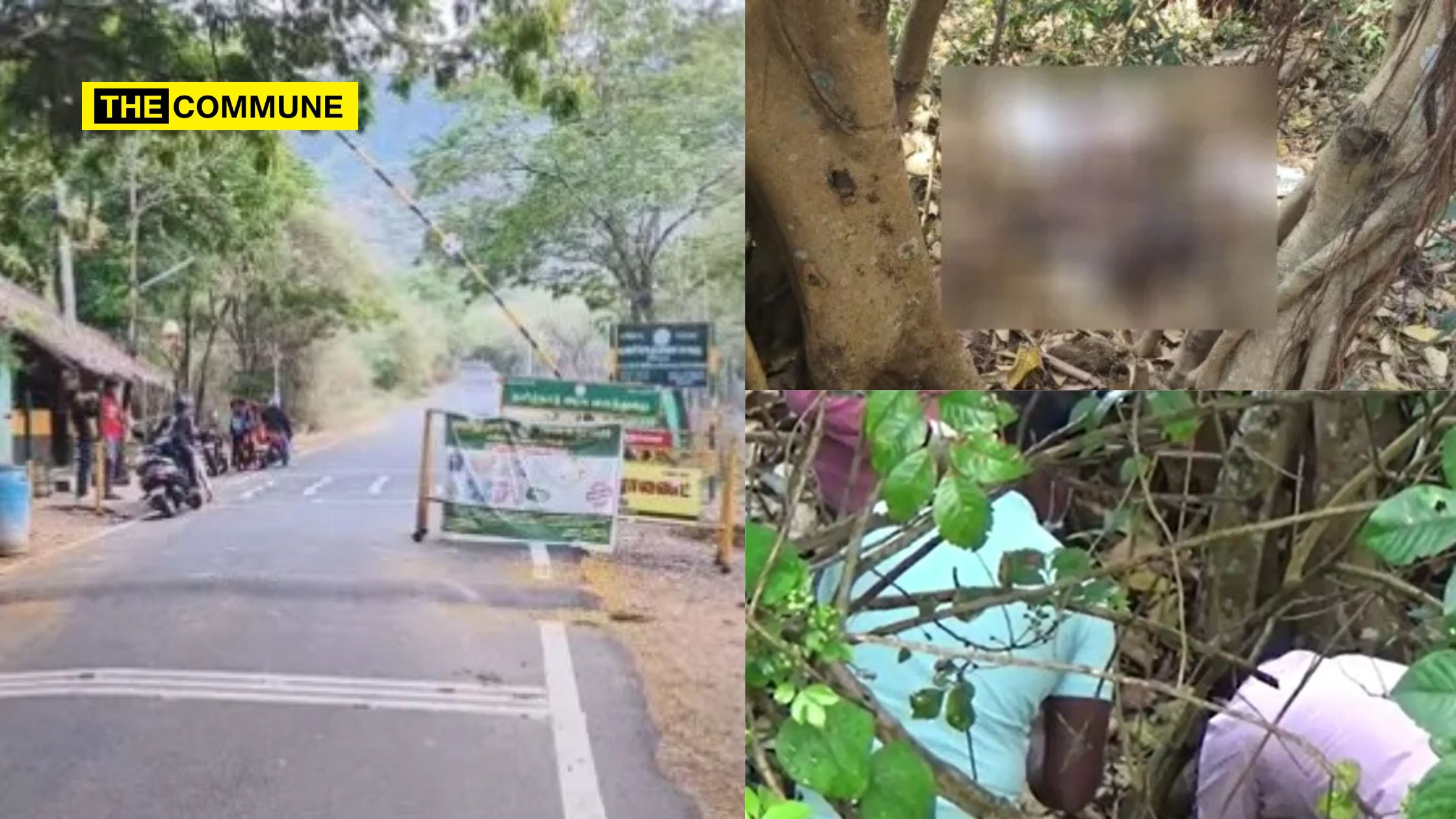
The Hindu Munnani has strongly criticized the HRCE Department, the Nellaiappar Temple administration, and local municipality officials for permitting a non-vegetarian stall selling chicken and beef near the Tirunelveli Nellaiappar Temple. The stall, which audaciously displayed a banner promoting biryani, was located close to the Vinayagar chariot, sparking outrage among devotees and Hindu activists alike.

K Kutralanathan, State Secretary of Hindu Munnani, took to social media to condemn the presence of a beef stall so close to the Nellaiappar temple and raise serious questions about how such a disrespectful act was allowed. In a post, he wrote, “Hindu Religious Endowments Department! Nellaiappar Temple Administration! Municipal Corporation Administration! A beef biryani board is set up right in front of the Pillaiyar chariot at the revered Nellaiappar temple. A biryani stall, with a tin roof extending all the way to the chariot, is occupying the road and that too near the Pillaiyar chariot. The beef biryani signboard has been placed to hide the security fence erected by devotees for the Pillaiyar chariot. How did the Corporation grant permission for this stall to operate near the Vinayagar chariot?”

He called for immediate action from the temple authorities, local officials, and the police, urging them to remove the stall.

He questioned, “Should the Hindu Munnani have to fight for this too?”

Subscribe to our channels on TelegramWhatsApp, and Instagram and get the best stories of the day delivered to you personally.
“BJP Has Consistently Spoken Proudly Of Ambedkar, Not Just On That Occasion,” Says VCK Chief Thirumavalavan Acknowledging BJP’s Efforts In Honoring Ambedkar’s Legacy

VCK Thirumavalavan acknowledged the BJP's efforts in honoring Dr BR Ambedkar and projecting his legacy positively.

Viduthalai Chiruthaigal Katchi (VCK) chief Thirumavalavan has acknowledged the BJP’s efforts in honoring Dr BR Ambedkar and projecting his legacy positively. In an interview with a private TV channel, Thirumavalavan stated, “It is true that the BJP is doing a commendable job in honoring Ambedkar.” He also highlighted the party’s initiatives across various states in promoting Ambedkar’s ideals and legacy.

During the interview, the discussion turned to recent controversies in Parliament, including the Congress’ propaganda that Amit Shah had disrespected Ambedkar. When VCK chief Thirumavalavan was asked to comment, he acknowledged that the first 12 seconds of Amit Shah’s speech could be seen as controversial due to the comparison to God. However, he emphasized that beyond that, the BJP has consistently worked to project and uphold Ambedkar’s legacy.

Thirumavalavan stated, “They have consistently spoken proudly of Ambedkar, not just on those occasions but throughout. That is the fact. In Alipore road, they established an international memorial center at the place where he once lived. In addition to the grand statue, they have built a structure resembling a constitution, designed like an open book, which is very beautiful and meets international standards. Similarly, Ambedkar’s ashes are kept in Mumbai by the Arabian Sea. Initially, the memorial was small, but now they are expanding it by acquiring one and a half acres of land and constructing a 433-foot statue for Ambedkar.”

He further added, “They have also located and purchased the place in London where Ambedkar stayed during his studies and converted it into a memorial today. All these efforts are truly commendable and will bring great joy to Ambedkar’s followers.”

https://twitter.com/Abitha96960262/status/1871395951958757423

Subscribe to our channels on TelegramWhatsApp, and Instagram and get the best stories of the day delivered to you personally.

NTK Chief Seeman Claims Muslims Won’t Abandon DMK ‘Even If Prophet Advises’

NTK Chief Seeman Claims Muslims Won't Abandon DMK 'Even If Prophet Advises'

Naam Tamilar Katchi (NTK) chief Seeman has ignited controversy with his recent remarks, claiming that Muslims in Tamil Nadu have developed a habit of always supporting the ruling DMK. He stated that voting for the DMK has become almost like a “sixth duty” for them, suggesting that even if a divine messenger were to advise them against supporting the party, they would reject the messenger, mocking the strong allegiance of the minority community towards the DMK.

Seeman’s comments were made in response to a statement by Tamil Nadu BJP president K. Annamalai, who had criticized both Seeman and VCK leader Thirumavalavan for allegedly “begging for votes” during the Black Day rally organized by the All Hindu Movement Alliance. The rally was convened to condemn the Tamil Nadu police’s permission for the funeral procession of Badshah, a leader of the Al Umma Movement, in Coimbatore, and to protest against the state government. At the event, Annamalai took aim at the NTK and VCK leaders, accusing them of minority appeasement, stated, “Seeman says, ‘Father’ Oh, Basha is your father? We should learn from you how to beg for votes.” He went on to say, “Thirumavalavan post this, ‘Martyrs, Heroic Salute.’ No one in Tamil Nadu can beg for votes more shamelessly than this.”

In response to the Tamil Nadu BJP chief’s criticism, Seeman spoke to the press on 22 December 2024 in Trichy, asserting, “I’m saying this openly and swearing on my leader, they (muslims) have not voted for me so far. Only they will know if they will vote for me in the future. They have decided that, in addition to their five duties, the sixth is to vote for the DMK. Even if the messenger of God himself comes and tells them not to vote for the DMK, my people will say, ‘You are not the messenger of God’ than… As far as they’re concerned, I am the B team of the BJP. As the DMK is the A team, and I have become the B team.”

Subscribe to our channels on TelegramWhatsApp, and Instagram and get the best stories of the day delivered to you personally.

Bangladeshi Terror Suspect Arrested In Kerala, Found To Have Voting Rights In Two Districts Of West Bengal Districts

Bangladeshi Terror Suspect Arrested In Kerala, Found To Have Voting Rights In Two Districts Of West Bengal Districts

In a startling revelation, Mohammad Sad Radi, a Bangladeshi terrorist linked to the Islamist militant group Ansarullah Bangla Team (ABT), has been found to have his name listed in the electoral rolls and to possess voting rights in two districts of West Bengal. The discovery, along with the possession of Indian identification documents, has ignited a political debate, with accusations directed at the ruling Trinamool Congress (TMC) government under Mamata Banerjee.

Radi, the mastermind behind a sleeper cell affiliated with ABT, a group connected to Al-Qaeda in the Indian Subcontinent (AQIS), was arrested in Kasargod after a coordinated raid by Assam and West Bengal police. Investigations revealed that Radi, who entered Kerala under the guise of a construction worker, acquired forged Indian documents, including an Aadhaar card, voter ID, and a fake passport, raising serious concerns about the ease with which terror networks can infiltrate and exploit India’s identification systems.

This arrest has sparked a wave of political controversy, with opposition parties, particularly the BJP, accusing the TMC government of providing a “safe haven” for terrorist elements.

Following Radi’s arrest, another individual with links to the banned Tehreek-e-Mujahideen was apprehended in South 24 Parganas, West Bengal, following a joint operation between Jammu and Kashmir Police and the West Bengal Special Task Force.

These back-to-back arrests have raised questions about the security measures in West Bengal, with the opposition BJP accusing Chief Minister Mamata Banerjee’s government of offering a “safe sanctuary” to terror modules. BJP state president Sukanata Majumdar stated that the Union government was ready to take full responsibility for the Bangladesh border, provided the state government allocates land for border fencing.

BJP leader Amit Malviya claimed that the arrested ABT members had voter IDs from two different constituencies in Murshidabad, alleging that illegal infiltrators, granted voting rights, have become a significant voter base for the TMC. He called this a “tip of the iceberg” and suggested that it helped the TMC maintain its hold on power.

In response, Firhad Hakim, Kolkata’s mayor and a TMC leader, defended the West Bengal Police’s actions, stating that the arrests demonstrated the government’s “complete lack of tolerance for extremists.” TMC spokesperson Kunal Ghosh argued that the presence of terrorist elements in Bengal was not new, citing the Left Front’s tenure and past attacks, such as the blasts at Lalbazar and the American consulate. He added that, according to the Union Home Ministry, terrorists are active in 14 states, many of which are governed by the BJP. Ghosh emphasized that the responsibility to address cross-border infiltration lies with the Centre and the BSF.

Critics have pointed to a controversial comment made by a TMC leader on 26 November 2023, which has fueled accusations of vote manipulation and illegal voter enrollment. The leader reportedly stated, “Many Bangladeshi people live here. Those who have come from Bangladesh, if they face any issues in enrolling their names in the voter list, Zakir da (Jakir Hossain, a TMC leader in Habra) will assist you. Please contact this office… we don’t want a single voter to be left out.” At the time, Ratna Biswas was the organizational district head of the TMC in Barasat, North 24 Parganas. This remark has stirred controversy, with critics alleging that it hints at the systematic facilitation of illegal voters, particularly from Bangladesh.

(With inputs from News 18)

Subscribe to our channels on TelegramWhatsApp, and Instagram and get the best stories of the day delivered to you personally.
600-Year-Old Pandya Inscription Unearthed, Reveals Shelter Given To Victims Of Malik Kafur’s Invasion

600-Year-Old Pandya Inscription Unearthed, Reveals Shelter Given To Victims Of Malik Kafur's Invasion

A 600-year-old inscription dating back to the Pandya period has been uncovered, shedding light on the shelter provided to those affected by the invasion of Malik Gafur then.

The discovery was made during a survey led by Devi Arivu Selvam, Kathiresan, Tamil Dasan, Kallanai Sundaram, and others from the Madurai Natural Heritage Trust at Palkudi, located at the foot of the Aruvimalai in Kachirayanpatti panchayat near Kottampatti. The inscription, featuring Tamil characters, was found on a large stone slab measuring four feet in height and three feet in width. Udayakumar and Muthupandi from the Pandya Nadu Centre for Historical Research later copied the inscription, with archaeologist Shanthalingam providing an analysis of its contents.

According to Devi Arivu Selvam from the Madurai Natural Heritage Trust, the inscription includes a carving of a complete Kumbha, one of the Ashtamangalam symbols, at the bottom. The text records the reign of Sundara Pandiyan, who ruled in the 14th century and was responsible for the invasion of Malik Kafur in Madurai, which was part of the Pandya country.

The inscription is dated to the 12th day of the month of Vaikasi in the seventh year of the king’s reign. It references a significant rebellion that occurred during this period. At the time, the chief of the small state in the Melur region was Deiva Shilai Peruman, also known as Veera Parakrama Singhadevan. The inscription notes that Veera Parakrama Singhadevan provided shelter to the Duru kanmiyar, from Surabi Nadu, an area encompassing present-day Thirujunai, Karungalakudi, and Aruvi Malai.

This sheltering act is attributed to those affected by the Turkish invasion. Interestingly, the village now known as Palkudi is referred to as Pakudi in the inscription on Aruzhi Hill. Additionally, Peruman Veera Parakrama Singhadevan is mentioned in another inscription on Aruvi Hill, further linking these historical events.

This inscription stands out as a unique source of information on the historical events in Madurai during the 14th century. The area around the discovery site also holds other archaeological treasures, including stone shelters from the Iron Age and Paleolithic period, an ancient Vinayagar temple, stone beds, red sandalwood, paintings, and remnants of a 13th-century Shiva temple on Aruvi Hill.

This inscription is categorized as an Asiriyam type, which typically details the protection granted to a group of people and features the symbol of a Poorna Kumbha. In this specific case, the inscription records how Veera Parakrama Singadevan offered shelter and security to those who sought refuge from the brutalities inflicted by the Sultanate forces during Malik Kafur’s invasion of Madurai. It serves as a poignant testament to the suffering endured by the people during the violent period of the Sultanate’s invasion.

(With inputs from Kamadenu)

Subscribe to our channels on TelegramWhatsApp, and Instagram and get the best stories of the day delivered to you personally.