Home Blog Page 566

Dravidianist Media Puthiya Thalaimurai Brings Dubious “Researcher” To Justify Renaming Of Thiruparankundram Temple Hill To Sikandar Malai

The systematic erosion of Hindu identity has been gradually underway, spearheaded by Islamist organizations, political parties, and fundamentalist groups, with full backing from the ruling DMK. This has been evident in the Thiruparankundram Murugan hills, where these groups assert their rights to animal sacrifice at the hilltop Sikkandar Dargah and eating non vegetarian food in the foothills. Additionally, there are reports of them painting Jain caves green and DMK ally, Ramanathapuram IUML MP Navaskani, claiming the dargah as part of Waqf property, which indirectly implies the entire hill falls under the Waqf board’s jurisdiction. To add fuel to the fire, the Dravidian-aligned media has been shamelessly spreading narratives suggesting that Tamil saints like Bogar praised and recognized the Muslim figure Sikkandar in their poems, which is a baseless and absurd claim masked as research. This is the height of media bias and sycophantic support for the ruling DMK.

After a series of protests by Islamist fundamentalist groups in Thiruparankundram, Hindus and devotees became increasingly agitated and concerned about the situation. The Hindu Munnani, along with other Hindu organizations and political parties like the BJP, took up the issue and announced a protest scheduled for 4 February 2025, two weeks in advance. However, the DMK government, in a last-minute move, imposed Section 144 on the eve of the protest to prevent public gatherings and arrest anyone under the guise of maintaining public order. This was a response to the large number of Hindus who planned to show their unity and protest against the cultural erosion of their identity. The DMK deployed over 1,000 police officers, set up barricades, arrested individuals who even attempted to buy bus tickets to Thiruparankundram or take autos from the railway station and leaders were house arrested. The crackdown was harsh and authoritarian. It was only after the intervention of the Madras High Court, which permitted the protest, that the DMK’s plan unraveled. Faced with this setback, the DMK activated its media networks to spread their own narratives. The Dravidian media, particularly Puthiyathalaimurai TV, has consistently been a mouthpiece for the ruling DMK, pushing narratives to serve their agenda.

The logic behind the Dravidianist media’s fake propaganda was to claim that small temples around the hills then adding it to the name of the temple hills and claim authority, which is an odd argument.

To support the Dravidianist media’s narrative, a self-proclaimed research scholar made the following argument, he said, “The hills are not called Sikkandar Hills only recently; they have been known by this name for centuries. In the ‘Bogar 7000’ poem, in the writings Bogar, who is part of the 18 Siddhas, he mentions Sikkandar Hills in the Saptakanda, stating that he visited the place and saw the samadhi of Sikandar Rishi. There are also royal gazette notes confirming this as Sikkandar Hills. There is an ‘Inam register’ which mentions ‘Sikkandar Hills’. Additionally, a folk song from the 1982 compilation book named ‘Verkottam,’ which records local folk songs, mentions Sikkandar Hills, along with other references to the mountain in songs. So, this name didn’t just come about today or yesterday; it has been known as Sikkandar Hills for centuries.”

What he peddled next was the height of absurdity, “For those who worship Murugan, this is Murugan hills; for those who revere Kandan, this is Kandan hills; for those who honor Satyagiri Eeshwaran, this is Satyagiri Mountain. Similarly, for those who follow Sikandar, it is Sikandhar Mountain. At the base of the hills, there is a Karuppanasamy temple, which is also seen as Karuppan Mountain. This mountain provides ample opportunities for all to visit and appreciate it.”

If we follow their logic, we could call Nirajan Kumar, a journalist earlier associated with PTTV news who works in the news building, the owner of the channel. But that would clearly be incorrect. In Hinduism, a temple is named after its main deity, and the main deity holds the primary ownership of the temple. For example, the main deity of the Thiruparankundram temple is Lord Murugan, who is worshipped as the first abode of Murugan, and no other deity takes precedence over him in this context.

Until now, the Dravidianist media has shown a lack of understanding of Hindu practices, but now it has started distorting history to claim that these are Sikkandar Hills with the help of Tamil “scholar” not even a history professor, who says, “When the Nayak kings fought, he escaped and climbed the Thiruparankundram hill, where he was killed. After his death, he was buried, and where he was buried, it is called dargah. A dargah is different from Mosque. Then the dargah was established prior. This dargah, which dates back to the end of the Sultan’s rule, was built on the land on top of the Thiruparankundram hills and temple in the foothills, to the north Jains. In addition to this, Christians have also lived here. So, all 4 religions lived in harmony here and there was no difference among them.”

Subscribe to our channels on TelegramWhatsApp, and Instagram and get the best stories of the day delivered to you personally.

Congress MP Gaurav Gogoi, His Wife Elizabeth, And A Hidden Soros Trail?

Congress MP Gaurav Gogoi accused the central government led by Prime Minister Modi of using George Soros “as a shield to hide their failures”. But did you know there is actually a Soros connection to Gogoi himself? Let’s take a brief look at the history of Elizabeth Colburn Gogoi, wife of Gaurav Gogoi.

Gaurav Gogoi met Elizabeth in the USA and fell in love. Gaurav married Elizabeth in 2013 in New Delhi. Elizabeth is a British citizen and is currently working for Oxford Policy Management, which works on Climate.

Before this, she worked with the Climate Development and Knowledge Network (CDKN) stationed mostly in Pakistan.

CDKN is a partner of ICLEI, the International Council for local environment initiatives.

ICLEI received 2.1 million from the Open Society Foundation of George Soros.

Elizabeth also worked with US Senator Tom Udall. Tom Udall has a strong relationship with George Soros and the latter also funded the former’s election campaign. Tom Udall was a member of the US Senate intelligence committee, which recommended more funding to Pakistan.

It was true love or another successful plant inside a rich political family, we will never know.

This article is based on an X thread by Befitting Facts.

Subscribe to our channels on Telegram, WhatsApp, and Instagram and get the best stories of the day delivered to you personally.
Central Funds, Local Loot: Allegations Of Corruption In TN’s Handling Of Funds Disbursed By Centre For Developmental Projects

In the aftermath of widespread political criticism directed at the central government’s Budget 2025, Dravidian party leaders have once again claimed that the recent budget holds no value for Tamil Nadu with their usual narrative that, once again, the central government has neglected the state in its budgetary allocations. Political commentators have shifted the focus, questioning the Dravidian parties whether, even if adequate funding is provided, Tamil Nadu’s state government has the capacity to utilize these funds effectively, without leaks, embezzlement, and corruption, to benefit the common people.

Critics have raised concerns about both Dravidian parties, DMK and AIADMK, suggesting that regardless of which party is in power, public funds are likely to be misused.

In November 2024, the Enforcement Directorate (ED) raided residences of several AIADMK partymen and BJP’s Pudukkottai district treasurer, Muruganandam, and his two brothers. Muruganandam, a businessman from Pudukkottai, was central to the investigation. His younger brother, Palanivel, the AIADMK’s Pudukkottai district youth wing secretary, and their elder brother, Ravichandran, a Deputy Block Development Officer, were also involved in the raids.

The focus of the investigation was Muruganandam’s alleged involvement in irregularities tied to solar streetlight contracts during the previous AIADMK administration. The DMK government filed a case in 2021 with the Directorate of Vigilance and Anti-Corruption (DVAC), prompting a search of his residence. Muruganandam and his brothers are accused of illegal financial transactions, which attracted the attention of the ED. Muruganandam, who began his career as a clerk at the Veppankudi village panchayat office, later worked at the Assistant Director of Panchayats office. During this period, he reportedly established a connection with former AIADMK minister S.P. Velumani. He eventually retired voluntarily from his government position to pursue a business career and secure lucrative government contracts.

When the DMK came to power, the DVAC registered a case against Muruganandam for amassing disproportionate wealth. Later he joined the BJP and was made the party’s Pudukkottai district treasurer.

Political critics have seized on this case, questioning how a clerk earning ₹24,000 per month could suddenly amass ₹20,000 crore in just four years—an accomplishment that seems impossible in any other state or nation, except Tamil Nadu. They argue that such drastic financial growth is a result of corruption and looting rather than legitimate business success. The critics emphasize that despite the Central Government’s allocation of funds in the budget, questions about how those funds are used and whether they reach the common people remain crucial. How can a a lower-level clerk can suddenly gain immense wealth?

The UJALA scheme, launched by the Central Government, aims to promote energy efficiency and reduce electricity bills by distributing LED bulbs across India. The program’s goal is to cut electricity consumption by 8.5 million kWh and reduce carbon dioxide (CO2) emissions by 15,000 tonnes by replacing 77 crore traditional bulbs and 3.5 crore streetlights with energy-efficient LEDs. However, rampant corruption has marred its implementation.

Critics argue that the installation of streetlights with solar panels, which should cost around ₹1,500 per light, was vastly inflated under the UJALA scheme. Similarly, the cost of installing a standard LED bulb typically ranges from ₹450 to ₹600. However, the bills submitted for reimbursement under the scheme showed costs ranging from ₹2,500 to ₹3,500 per light, highlighting a significant markup. This glaring discrepancy raises serious concerns about corruption within the program.

Furthermore, the widespread installation of LED lights, which many see as unnecessary, prompts questions about who is behind these inflated contracts. It was reported that during this period, ministers were reportedly pocketing ₹2,000 per light. With over 14 lakh lights installed across Tamil Nadu, the total profits made through these inflated contracts were substantial. Despite the ₹1,000 crore allocated for the project, only ₹200 crore was actually spent on the installation, with the remaining ₹800 crore possibly funneled into private pockets through corrupt practices, according to sources.

They also point to the larger issue of mismanagement and corruption in the handling of funds by state governments. They argue that even when substantial amounts of money are allocated by the central government, much of it is lost through inefficient spending and corruption at the local level. This mismanagement means that projects meant to benefit the public, like infrastructure improvements and energy efficiency programs, often do not reach their intended targets.

In the case of Muruganandam and his brothers, they managed to secure multiple tenders worth hundreds of crores, raising questions about how such contracts were awarded. Political analysts point to these discrepancies as evidence of a larger system of corruption where individuals with ties to political power can enrich themselves at the expense of the public.

The focus, critics argue, should not only be on how much the central government allocates, but on how those funds are spent once they reach the state level. With massive loans taken by the state government and funds allocated for rural development, critics ask whether any of this money is being used properly, or whether it is merely another avenue for corrupt practices that benefit a select few.

Ultimately, these criticisms highlight a recurring theme in Tamil Nadu politics: regardless of which party is in power, systemic corruption continues to undermine efforts to improve the state’s infrastructure and deliver services to the people. Until this fundamental issue is addressed, many argue, Tamil Nadu will continue to face challenges in utilizing allocated funds effectively for the public good.

(With Inputs from Maridhas)

Subscribe to our channels on TelegramWhatsApp, and Instagram and get the best stories of the day delivered to you personally.


3 Govt School Teachers In Krishnagiri Arrested For Gang-Raping Minor Girl, BJP TN Chief Annamalai Slams MK Stalin Over Failure To Address Women & Child Safety

Tamil Nadu BJP President Annamalai has criticized the DMK government following a recent sexual assault on minor school girl by her teachers in the Pochampally area of Krishnagiri district. He accused the government of failing to raise awareness among schoolchildren, particularly girls, regarding their safety. Annamalai further pointed out that the Child Welfare Board, which is responsible for addressing such issues, has not been adequately staffed, with several vacancies remaining unfilled, hindering its ability to perform its duties effectively.

This criticism comes in light of a disturbing incident, where three teachers have been arrested under the POCSO Act for the sexual assault of a female student at a Panchayat Union middle school near Bargur, in Krishnagiri district.

The victim, an 8th grade student, who had not attended school for over a month, revealed to the school headmistress that she had been sexually assaulted by three teachers from the same school—Arumugam (48), Chinnaswamy (57), and Prakash (37). According to the student, the teachers gang-raped her, resulting in pregnancy and an abortion. The headmistress, upon learning of the assault, filed a complaint with the Child Welfare Protection Center (Child Line), which then conducted an investigation at the student’s home.

The Child Welfare Committee immediately informed the Bargur All Women Police Station, leading to an inquiry by local police and DSP Muthukrishnan. Following the investigation, the teachers were arrested and charged under the POCSO Act. The victim was sent for a medical examination at the Krishnagiri Government Medical College Hospital.

The Krishnagiri District Principal Educational Officer (In-charge), Muniraj, has ordered the suspension of the three teachers pending further investigation. The incident has shocked the local community, prompting public protests. Residents staged a road blockade near the school, demanding strict action against the accused teachers and a thorough investigation into whether other students had been affected. Police intervened and held discussions with the protesters, eventually dispersing the crowd.

This case comes just months after a similar incident involving a fake NCC trainer who sexually harassed a 13-year-old student in a private school in Bargur. Social activists have called for the establishment of permanent investigation teams to visit schools regularly and hear students’ concerns in order to prevent such incidents in the future.

In this backdrop the Tamil Nadu BJP President Annamalai, via his official X account, stated, “The news of a 13-year-old government schoolgirl being assaulted by her teachers in the Pochampally area of Krishnagiri district is deeply shocking. The fact that teachers sexually assaulted a student shows that we, as a society, have failed miserably. This is truly saddening. A report published in the Tamil Nadu Journal of Public Health and Medical Research reveals that teenage pregnancy is increasing each year in Tamil Nadu. In 2024 alone, 14,360 children between the ages of 13 and 19 became pregnant. This is about 35% more than in 2023. There is insufficient awareness among school children. The Child Welfare Board, which should be addressing these issues, is not fully functional in at least 10 districts. In 15 districts, there are not enough members. There are various schemes, including the Central Government’s Kishori Shakti Yojana, aimed at the welfare of girl children and creating awareness but none of them have been implemented in Tamil Nadu schools. On one hand, sexual crimes and the prevalence of drug use are rising, while on the other hand, government agencies that are meant to control these issues are paralyzed. The DMK government has completely failed to ensure the basic safety of our children. I urge the DMK government to take immediate departmental action to dismiss all those involved in this crime, take strict legal action, appoint members to the Child Welfare Board in all districts across Tamil Nadu, and create awareness programs for girl children in schools.”

Subscribe to our channels on TelegramWhatsApp, and Instagram and get the best stories of the day delivered to you personally.

AIADMK General Secretary Edappadi K Palaniswami Calls Out DMK Govt For ‘Institutionalizing Illicit Liquor Trade’

On 5 February 2025, AIADMK General Secretary and Leader of the Opposition, Edappadi K. Palaniswami, criticized Chief Minister M.K. Stalin for failing to take action against the sale of illicit liquor in Tamil Nadu.

In a social media post, Palaniswami expressed his concern over reports of illegal liquor being sold at a Tasmac outlet near Attur in Salem district. He questioned, “The news that Illicit liquor is being sold at a TASMAC shop near Athur in Salem district is shocking. Has the Stalin-model government not learned a single lesson from the tragic hooch deaths in Marakkanam and Kallakurichi that shook the country? The Stalin-model DMK government should be ashamed of institutionalizing the sale of illicit liquor to the extent that a bootlegger boldly claims, ‘We only sell it after paying off the police.’ In this he (seller) is also identified as a ‘DMK party member.’ If they are from the DMK, are they two-horned? Why isn’t the police taking action against them, even if they commit illegal acts? Did you @mkstalin come to power in Tamil Nadu just so DMK members could use their party identity as a license to commit crimes? I urge the Stalin-model DMK government to immediately arrest all those involved in the illegal sale of liquor and ensure legal action is taken against them without any political interference. I also urge the government to implement strict measures to eliminate illegal liquor trade across Tamil Nadu.”

In this context, it has been reported that the whistleblower, DMK executive Ravi, who released the video, is facing a case filed by the local police. Additionally, the DMK Union Trader Wing executives Jothivel, Sakthivel, and Suresh who have been selling packet liquors have been arrested by the prohibition wing police.

Subscribe to our channels on TelegramWhatsApp, and Instagram and get the best stories of the day delivered to you personally.

Madurai Bench Of Madras High Court Orders Immediate Demolition Of DMK Youth Wing Office On Encroached Land

The Madurai Bench of the High Court has ordered the immediate demolition of the DMK Youth Wing office, which was built on encroached land in the Mullai Nagar water body. The court questioned why the office had not yet been removed, despite earlier assurances from the party that they would demolish it themselves.

The case pertains to the illegal occupation of the PP Pond area, a public land designated as a water body, where the DMK Youth Wing office has been functioning for over 30 years. The court has taken a firm stance on the encroachment, emphasizing that such structures cannot be allowed to remain on government land.

During a recent hearing, Justice G.R. Swaminathan pointed out that the government had previously assured the court that the office would be demolished, yet no action had been taken. In response, government representatives stated that the office had been vacated and was no longer in use. However, the court was not satisfied and demanded immediate action, leading to an official demolition order.

The area in question, located in Madurai’s Mullai Nagar, is home to over 3,000 families, with many houses provided under government hutment conversion schemes. The court’s order is seen as part of a larger effort to remove illegal encroachments on public land and restore water bodies.

With the High Court’s directive in place, authorities are now expected to carry out the demolition without further delay. The case has been postponed for further review, pending compliance with the court’s order.

Subscribe to our channels on Telegram, WhatsApp, and Instagram and get the best stories of the day delivered to you personally.
Tirupati Temple Board Acts Against 18 Non-Hindu Employees, Offers Transfer Or Voluntary Retirement

Non-Hindu Employees Of Tirumala Tirupati Devasthanam To Be Transferred To State Government Pool

Tirumala Tirupati Devasthanams (TTD), the governing body of the Tirupati temple, has taken disciplinary action against 18 non-Hindu employees for allegedly participating in non-Hindu religious activities while being involved in temple festivals and rituals. Following directives from TTD Chairman B.R. Naidu, the board has issued orders for their removal, citing its commitment to preserving the temple’s spiritual sanctity.

As per the resolution passed during a recent TTD board meeting, these employees have been given the option to either transfer to government departments or opt for the Voluntary Retirement Scheme (VRS). The board has emphasized that non-Hindu individuals should not be involved in temple administration or rituals and has warned of further actions against similar cases in the future.

Reports suggest that the hiring of non-Hindu employees allegedly increased during the tenure of the previous YSR Congress-led government in Andhra Pradesh. The issue has been a point of contention for some time, with concerns raised about individuals from other religious backgrounds holding positions within the temple administration.

TTD authorities have indicated that more such cases may be identified, especially among employees in lower-ranking positions. The latest action has stirred controversy, with debates emerging over the rights of non-Hindu staff members and the temple’s policies regarding religious adherence.

The TTD board has stated that it will not take these violations lightly and remains firm in its stance that all staff members involved in temple activities must adhere to Hindu religious traditions. The affected employees now face the choice of either taking VRS or transferring out of TTD-affiliated institutions.

This decision is expected to spark further discussions on the role of religious identity in temple administration and the broader implications for employees working in faith-based institutions.

It is noteworthy that the Tirumala Tirupati Devasthanams (TTD) Trust Board, in its meeting on 18 November 2024, decided to remove non-Hindu employees from the Tirumala Sri Balaji Temple and transfer them to the Andhra Pradesh government pool. Chairman B.R. Naidu emphasized that only Hindus should work in the temple, citing concerns over false affidavits and conversions. The board also revoked the Visakha Sarada Peetham land lease, planned AI-based solutions to reduce darshan wait times, and moved TTD deposits from private to nationalized banks. These decisions aimed to align temple administration with religious and constitutional principles while improving governance and efficiency.

Subscribe to our channels on Telegram, WhatsApp, and Instagram and get the best stories of the day delivered to you personally.
“‘They’ve Created This Issue For Upcoming Elections”, Director Mohan G Criticizes DMK Govt’s Suppression Of Hindu Munnani Protest At Thiruparankundram Hill

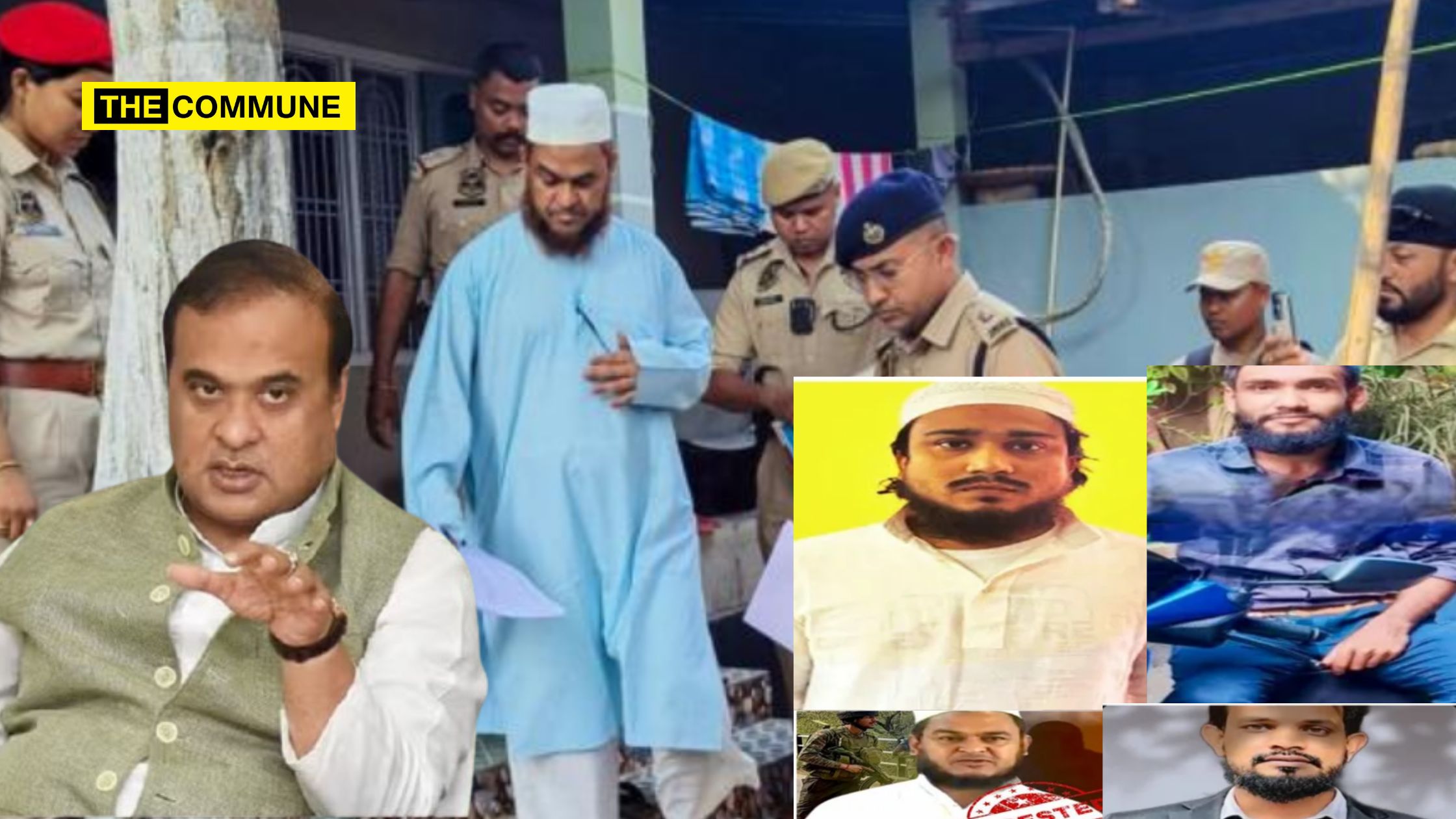
There has been a systematic abuse of power in recent days by the ruling DMK government to suppress the protest planned by the Hindu Munnani on 4 February 2024. The protest was aimed at condemning the actions of Muslim fundamentalists who tried to sacrifice an animal at a sacred Thiruparankundram temple hilltop, as well as the claims made by DMK ally and Ramanathapuram IUML MP Navaskani, who declared the hilltop dargah as Waqf Board property. The government imposed Section 144 to curb public gatherings and made arrests under the pretext of preventing unlawful assemblies. While Dravidianist media portrayed this as a preventive measure, Director Mohan G strongly criticized the move, calling it a clear attempt to gain political advantage.

Speaking to the press while participating in the protest in Madurai, Director Mohan G expressed his gratitude to the Hindu Munnani for organizing the demonstration and thanked the Murugan devotees for their overwhelming support. He then criticized the government, stating that what should have been a straightforward show of unity and opposition was hindered by numerous barricades along the roads, only eased after the High Court’s intervention. He further condemned the house arrests, asserting that the Constitution guarantees the right for citizens to move freely within the country. He called invoking Section 144 and arresting people in a democratic nation unjust, emphasizing that house arrests were even more severe and inappropriate.

Mohan G continued, stating that a government must adhere to the law and not violate it. He pointed out that the root of the problem stemmed from attempts by Islamists to sacrifice animals on the hilltops, an act that hadn’t caused issues before. He concluded by suggesting, “I suspect a conspiracy behind this. They’ve created this issue to build a narrative ahead of the upcoming elections. However, it’s no longer just about political parties; it has reached the common people, who are now deeply worried about this.”

Later, criticizing the government he questioned, “If the government hasn’t directly intervened, then why to deploy four thousand police officers, impose house arrests, and have CID SPs calling each person to say they should not come here, is wrong right? I too received numerous phone calls telling me not to come from Chennai. Why are you blocking that? These are direct involvement from the government. When the opposition speak about their rights then we should be allowed the space to speak about ours. If we want to prevent a large crowd from gathering, it will happen, but it is the government’s responsibility to ensure that it doesn’t. The government should give special attention to this and resolve it.”

Subscribe to our channels on TelegramWhatsApp, and Instagram and get the best stories of the day delivered to you personally.

“Viksit Bharat” Vision: The Key Highlights of India’s Union Budget 2025-26

Recently, the Finance Minister of India Nirmala Sitharaman, presented the Union Budget for the financial year 2025-26 (FY26). A day prior, she released the Economic Survey for the financial year 2024-25 (FY25) which narrated the state of the economy and presented an outlook for India’s economic future. The Survey, projected the Indian economy to expand by 6.4% in FY25, maintaining a trajectory consistent with its long-term growth pattern.

Forecasts for FY26 suggested a GDP growth rate between 6.3% and 6.8%, reflecting cautious optimism amid global uncertainties. It underscored the resilience of the Indian economy, emphasising domestic consumption and investment as critical growth levers. The Survey forecasted that in FY25, the agricultural sector would grow by 3.8% (driven by Kharif crop production and allied farm activities), manufacturing sector by 6.2% and services by 7.2%.

Consumer price inflation has shown signs of moderation, with retail inflation easing to 4.9% between April and December 2024 (from 5.4% in FY24) and is expected to further stabilise with projected inflation aligning closer to the targeted 4% in the coming financial year.

Capital expenditure has exhibited an upward trajectory, registering 8.2% growth between July and November 2024. India’s external trade performance has remained strong, with overall exports rising by 6.0% year-on-year during April-December 2024. The services sector has particularly excelled, recording a 12.8% surge in exports over the same period, significantly outpacing the previous year’s growth rate of 5.7%.

Foreign investment inflows have also seen a notable increase, with gross FDI rising by 17.9% to reach USD 55.6 billion in FY25. Expenditure on social services has grown consistently, averaging an annual increase of 15% between FY21 and FY25. Government spendings on healthcare have notably improved, with its share rising from 29% to 48%, while out-of-pocket health expenditures have declined from 62.6% to 39.4% over the past decade.

In terms of employment, the unemployment rate has shown a steady decline to 3.2% in 2023-24, compared to 6.0% in 2017-18, reflecting a positive shift in the labour market.

This year’s Economic Survey concluded by advocating for regulatory reforms to enhance economic efficiency and suggested that sustained infrastructure investments over the next two decades will be critical for maintaining high growth rates.

It emphasises the role of deregulation, technological advancements, and targeted fiscal measures in ensuring long-term economic resilience. The Economic Survey laid out the foundation for the Budget of 2025-26 which was expected to address concerns around inflation, job creation, fiscal prudence, and sustained economic expansion.

This year’s Budget relied on the current Government’s mantra of a “Viksit Bharat” and it focused on developing ten broad areas in line with this agenda. These ten areas included, spurring agricultural growth and productivity, building rural prosperity and resilience, taking everyone together on an inclusive growth path, boosting manufacturing and furthering make in India, supporting MSMEs, enabling employment-led development, investing in people, economy, and innovation, securing energy supplies, promoting exports, and nurturing innovation.

The fiscal deficit target for FY26 is set at 4.4% of GDP, revised down from 4.8% in the current financial year. The Government also plans to shift to debt-to-GDP as the key benchmark for fiscal policy from 2026-27 onwards while targeting to bring down debt level from current 57.1% to 50% by March 2031. Capital expenditure has been raised from 11.11 lakh crore rupees in the current fiscal year to 11.21 lakh crore rupees (0.9% over last year) for the oncoming fiscal year.

This year, the biggest announcement perhaps has been on personal income tax. The finance minister announced that there would be no income tax for people earning up to 12 lac rupees. This is an excellent move considering this change is expected to boost disposable incomes, leading to increased household consumption and economic growth. Moreover, with the soon-to-be-implemented 8th Central Pay Commission, the expected loss (of 1 lakh crore direct tax and 2600 crore indirect taxes) from this change would only be for a short period. This move is also expected to work in favour of the Bhartiya Janata Party (BJP) in the upcoming assembly elections in Delhi.

Another big announcement in the budget was the Government’s plan to register and provide identity cards to gig workers which would enable them to afford various social services schemes run by the Government such as the PM Jan Arogya Yojana. This is an excellent initiative as this data can be further utilised for offering other social benefits such as pension/provident funds and other social benefits by employers in the future. This would also provide better bargaining power to gig workers in the private sector. The Government has enhanced the Kisan credit card limit from 3 lakh rupees to 5 lakh rupees and raised the credit guarantee for MSMEs from 5 lakh rupees to 10 lakh rupees. Both initiatives are expected to have a positive impact on MSME production and agriculture.

This budget also introduced a credit card for MSMEs which is expected to relax working capital limitations and increase financial inclusion for micro and small enterprises.

The Government has been promoting tourism as a sustainable sector for creating jobs and infrastructure development. To further this initiative, this budget has planned to develop 50 tourist destinations across the country in partnership with states. This would entail providing skill development among youths, providing loans through the MUDRA scheme, improving ease of travel, and streamlining e-visa facilities. As a part of this, spiritual tourism (especially Buddhist circuits) and medical tourism are also expected to get a boost. To improve connectivity with far-fetched destinations and enhance regional connectivity, especially in North East India, a modified UDAN scheme is being launched to connect 120 new destinations in the next ten years.

A major announcement made in this Budget was raising the FDI limit in insurance from the existing 74% to 100% with an added caveat that the premium raised is invested in India. Although, this garnered mixed reaction from the industry, but this will bring in further competition in the insurance sector especially in lesser looked areas such as disaster risk financing.

Increasing domestic production and export have been prime areas of focus of this Government and it was reflected in this budget. To create a better logistical framework and efficient supply chain for domestic and overseas movement of goods, the finance minister announced transforming the large network of India Post services to a large public logistic organisation.

This decision would benefit small domestic manufacturers and exporters in accessing affordable logistical support to transport their goods and merchandise. This move could benefit India the same way how China Post benefitted the Chinese supply chain system. To increase domestic production, the Government has also initiated several duty cuts and tax rebates. For example, cobalt powder and waste, the scrap of the lithium-ion battery, lead, zinc, and twelve more critical minerals; thirty-five capital goods for EV battery manufacturing, and twenty-eight capital goods for mobile phone battery manufacturing are fully exempted from basic customs duty (BCD). These apart, BCD has been reduced for several other items such as carrier-grade ethernet switches, crust leathers, and frozen fish paste among others, used as raw material in various manufacturing.

This budget has announced several initiatives to boost innovation and technology in India. Setting up a Deep Tech Fund of Funds for next-generation startups, launching a National Geospatial Mission to develop foundational geospatial infrastructure and data, and setting up a 2nd Gene Bank with 10 lakh germplasm lines for future food and nutritional security are among few of the major announcements.

Unexpectedly, there have been no new announcements on sustainable financing (except maybe allocation of 20000 crore rupees for the development of Small and Nuclear Reactors under the Nuclear Energy Mission) or climate finance in this Budget. Considering the increasing number of natural disasters and environmental hazards in India, creating a climate finance taxonomy with a disaster financing framework should be among the top priorities of the Government. The absence of any relevant announcement around this raises eyebrows on the country’s COP26 commitments. The Budget also missed an opportunity to announce the creation of a regulatory framework or any new policy around the growing virtual digital asset ecosystem. This too questions the country’s commitment towards developing global standards in regulating crypto-assets during the G20 Summit in 2023.

The finance minister also stayed away from making any new announcements on gold or the gems and jewellery sector, one of the most export-oriented MSMEs in India. Most importantly, similar to the last Budget, this Budget too gave no indication around divestment (dis-investment) targets. This raises the imminent question that in the absence of a divestment plan and a massive income tax cut, will higher market borrowings and public-private partnerships sustain this year’s fiscal target?

To summarise, the Union Budget 2025-26 addressed major economic concerns while reiterating this Government’s commitment to long-term economic transformation. This budget also came at a crucial political juncture, as this was the first full budget after the BJP-led NDA coalition came to power for the third time, making it a balancing act between fiscal discipline, growth aspirations, public expectation, and maintaining a political bonhomie among all the stakeholders of this coalition. This Budget ensured continued investment in critical sectors and innovation, although certain sectors, particularly health and infrastructure development, could have seen greater support.

However, the long-term success of this budget will depend on policy execution and global economic stability.

Arindam Goswami is an economist and the co-founder of Policy Consensus Centre, New Delhi.

Subscribe to our channels on Telegram, WhatsApp, and Instagram and get the best stories of the day delivered to you personally.
“If Justice Is Not Served, People Will Be Forced To Convert”, Says VCK Chief Thirumavalavan On Vengaivayal Issue

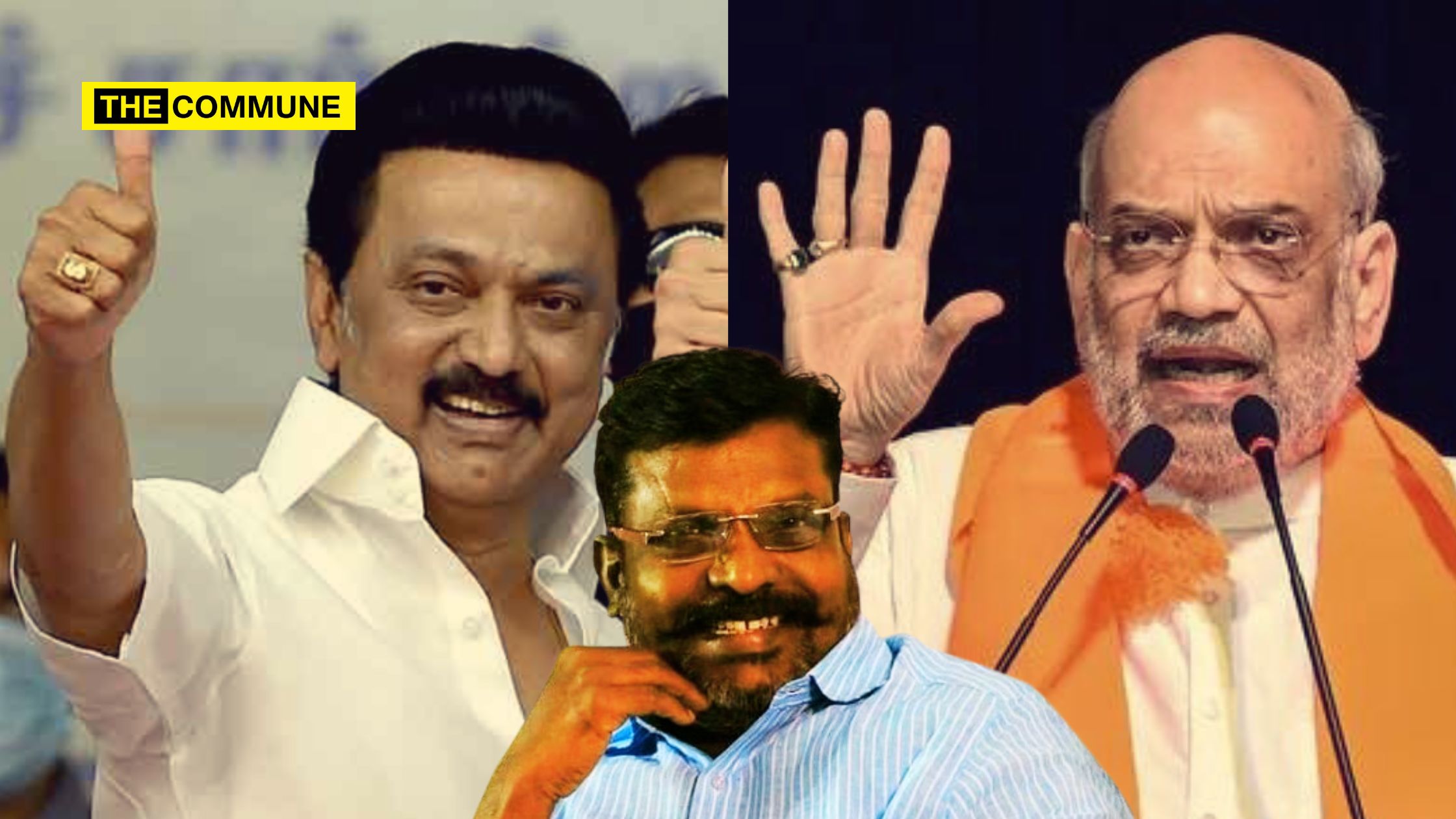
The VCK (Viduthalai Chiruthaigal Katchi) chief, Thirumavalavan, has stirred controversy with his recent comments on the Vengaivayal issue in Pudukkottai district. Speaking at a VCK meeting, Thirumavalavan suggested that if justice is not served to the people of Vengaivayal, they would have no option but to change their religion. This statement has raised eyebrows, particularly since his party is allied with the ruling DMK. Critics are questioning whether Thirumavalavan’s remarks are part of a larger agenda to promote religious conversions, rather than pressuring the government for justice in the case.

Thirumavalavan, who also serves as a Member of Parliament for Chidambaram, has repeatedly criticized the police investigation and charge sheet in the case. During his speech, he referenced the legacy of Dr. B.R. Ambedkar, stating that Ambedkar was a staunch opponent of Sanatan and even more radical than EV Ramasamy Naicker (EVR) in his stance on religion. He emphasized that if justice is not delivered in Vengai Vayal, the people there would have no choice but to change their religion. Thirumavalavan added that while he had advised people not to rush, he still stressed the importance of justice being served in the case.

He said, “If there is any revolutionary who fought against Sanatana Dharma until his last breath, it is the revolutionary B.R. Ambedkar. He went a step ahead of Periyar, stating, ‘You will humiliate me as long as I remain in this religion, so I will convert.’ I want to indicate that if justice is not served in Vengaivayal, it will inevitably that people will take that decision.”

After a two-year investigation into the Vengaivayal case, where an overhead drinking water tank was intentionally contaminated with human faeces in a Scheduled Caste village in Pudukkottai district, the Tamil Nadu government informed the Madras High Court on 24 January 2025, that three individuals were involved in the incident. The government revealed that Sudarsan, Muthukrishnan, and Muraliraja, all from the Vengaivayal area, were linked to the crime. However, this revelation has not satisfied local residents, opposition parties, or even the ruling DMK allies, all calling for a CBI investigation amid suspicions surrounding the case.

A charge sheet was filed against the accused, alleging that Muraliraja spread false information, while Sudarsan and Muthukrishnan climbed onto the overhead tank and deliberately contaminated the water with human feces. Reports suggest the act was motivated by revenge against the husband of the Muttukadu panchayat president. The incident, which occurred on 26 December 2022, shocked the village, as human waste was discovered in the overhead water tank supplying water to Scheduled Caste residents. Initially, a Special Investigation Team (SIT) was formed to probe the case, and it was later transferred to the CB-CID in 2023.

After the charge sheet was filed in the Madras High Court, VCK chief Thol Thirumavalavan, an ally of the ruling DMK, urged the court not to accept the charge sheet and called for a CBI investigation into the sensitive case. Communist Party of India (Marxist) state secretary P. Shanmugam echoed Thirumavalavan’s demands, urging the DMK government to hand the case over to the central agency to uncover the “real culprits.

Thirumavalavan expressed his shock at the police’s final report, which implicated three Dalits as the perpetrators, and accused the authorities of attempting to protect the true offenders. He further argued that the case should be transferred to the CBI to ensure a thorough investigation into the incident.

Subscribe to our channels on TelegramWhatsApp, and Instagram and get the best stories of the day delivered to you personally.