Home Blog Page 559

Hindu Munnani Protests Speaker Appavu’s Role In Uvari Suyambulingaswamy Temple Chariot Inauguration, Had Earlier Praised Christianity

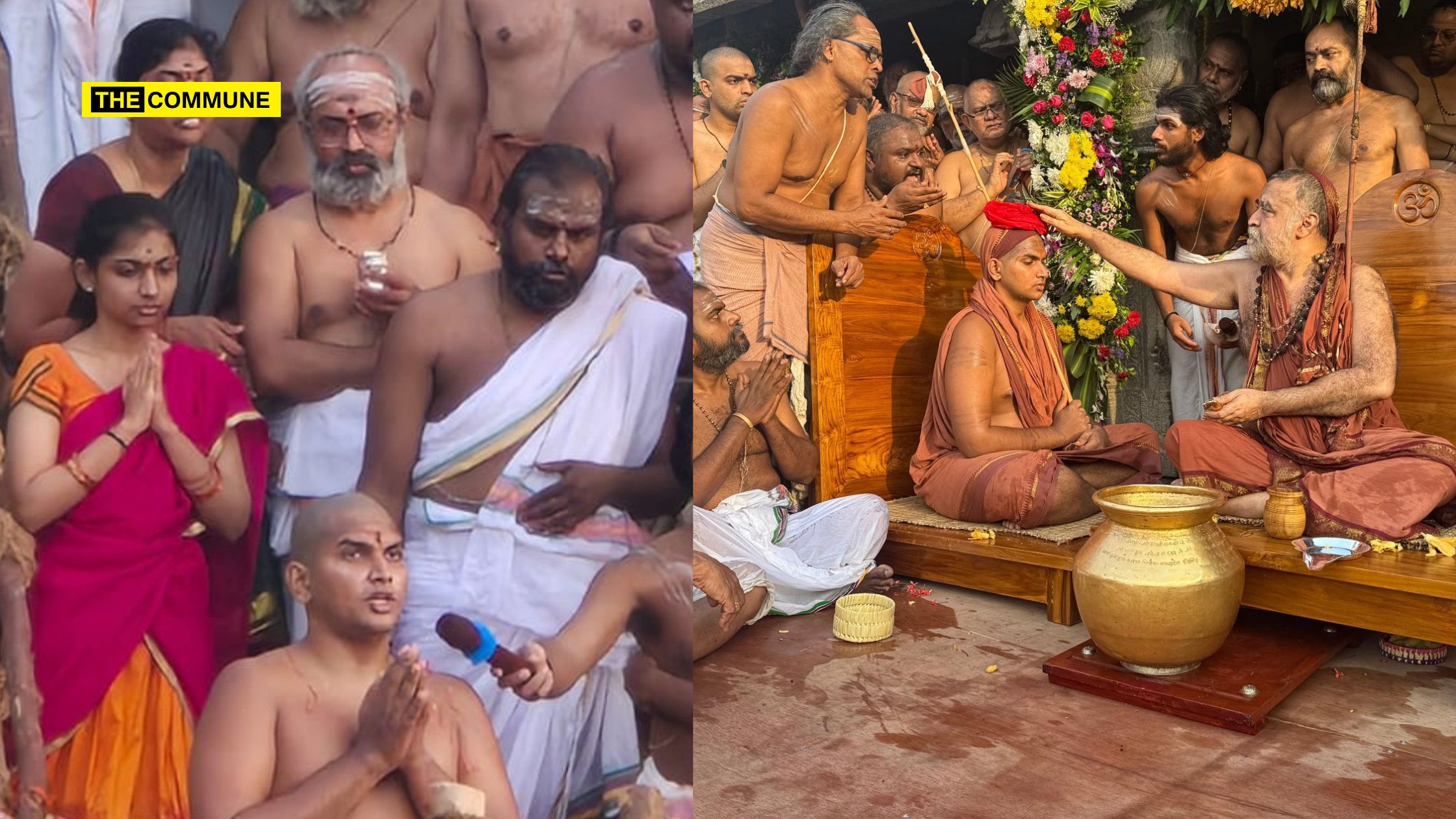
The Hindu Munnani has expressed its disapproval of Speaker Appavu’s involvement in the inauguration procession of the Suyambulingaswamy Temple chariot in Uvari, Tirunelveli district due to his prolonged approach of praising missionary activities in the church events, while now being invited to inaugurate a significant Hindu festival. When the Cheranmadevi Sub-Collector initiated an inquiry, Hindu Munnani State Vice President V.P. Jayakumar walked out, citing the officer’s biased attitude. He claimed that the officer refused to acknowledge their complaints or review the necessary documents, and he warned that if this practice continued, it would lead to protests against injustices towards Hinduism.

In the meeting, the Hindu Munnani argued that the Uvari Suyambulingaswamy Temple is a significant religious site, and they criticized the Tamil Nadu Speaker, Appavu, who has previously expressed support for Christianity while making negative remarks about Hinduism. In protest, the Hindu Munnani filed a complaint on behalf of the Hindu community and temple devotees. On 10 February 2025, V.P. Jayakumar attended the inquiry called by the Cheranmadevi Sub-Collector, where he presented evidence, including a recorded video, showing Speaker Appavu praising Christianity and making disparaging remarks about Hinduism. However, the Sub-Collector rejected the video, stating, “This is a public temple; anyone can go.”

While Jayakumar accepted the argument and clarified that while only Hindus are free to visit the temple without discrimination, people of other religions are not allowed, as many temples have notices stating such. He further explained that, according to temple tradition, participation in ceremonies is only permitted for those who sign an agreement affirming their faith in Hinduism. The Sub-Collector, however, dismissed these points and stated, “You should not stop him.”

The Hindu Munnani leadership questioned the fairness of the inquiry, noting the Sub-Collector’s refusal to accept crucial evidence. Disappointed with the lack of a fair investigation, Jayakumar and the other leaders walked out of the meeting, condemning the Sub-Collector’s actions. They also criticized the Sub-Collector for failing to conduct a thorough investigation despite calling it an inquiry.

V.P. Jayakumar warned that if Speaker Appavu is allowed to participate in the procession, the Hindu Munnani would mobilize Hindus and organize a protest. The event was attended by Tirunelveli District General Secretary K. Brahma nayakam, as well as executive committee members Guna, Karthik, Kombaiya, and city union in-charges.

Subscribe to our channels on Telegram, WhatsApp, and Instagram and get the best stories of the day delivered to you personally.

Part-Time Politician Vijay Appoints ECR Saravanan As TVK Functionary, Was Linked To News Journalist Kidnapping

Tamilaga Vetri Kazhagam (TVK) has found itself embroiled in controversy once again, following the appointment of ECR.P. Saravanan as the Party’s Chennai Suburban District Secretary.

Saravanan has faced severe criticism due to his involvement in the kidnapping of Tamil media journalists, which has sparked significant backlash.

Since the party began appointing district heads, there have been allegations of internal conflicts, with claims that hardworking members have been overlooked in favor of those who offer favors, leading to accusations that posts are being treated like “horse trading.” The appointment of individuals with questionable backgrounds, like Saravanan, has raised further concerns about the party’s leadership.

According to a report by News Tamil 24×7, on 22 November 2022, a group of journalists went to the Nazarathpettai area of Chennai to gather news. While on assignment, their equipment, including cameras and microphones, was seized by an unknown gang. The journalists were subsequently kidnapped, taken in a car to an undisclosed location, and held for over an hour.

The report also mentioned that the journalists were physically assaulted during the ordeal. Though they were eventually rescued with the help of the police, their seized equipment was not recovered. The media outlet further reported that the incident occurred when the journalists were investigating claims of animals being used illegally on a nearby movie set, based on information they had received. The goons, allegedly led by Saravanan, confronted the journalists, questioned their intentions, and attacked them to prevent them from reporting. The journalists’ equipment was confiscated before they were kidnapped.

Despite the serious nature of the incident, Saravanan has now been appointed to a significant position within the party, raising eyebrows and fueling suspicions about the party’s connections to such individuals.

Subscribe to our channels on Telegram, WhatsApp, and Instagram and get the best stories of the day delivered to you personally.
The Eternal Values of Bharat: How Respect And Reverence Define Our Culture

The recent fracas over the utterances of some social media “influencers” turned my mind onto how society degenerates when it loses certain core values.

Bharatiya values are to revere the parents. Mata, Pita, Guru, Deivam (Bhagwan) is a saying in Tamil. Your first God is your mother, who gives birth to you. Then your father, who helps to nourish you, then the Guru who enriches your mind, and ultimately, the God of the Universe (however one sees it, as the Brahman and Ultimate Reality, or in any of the myriad forms in which we imagine that Reality).

We revere the feminine as divine. The ONLY civilization existing that still does that. And yet, calumny is heaped upon us, calling us the “Rape capital of the world.” Frankly, given our meagre citizen-police ratios and the HUGE population, it is a wonder that we are still mostly a peaceful society.

This was brought home to me again, during our recent Kumbh visit. My younger child, on the way back, said, “You know. What was amazing was that, given the crowds, I never felt unsafe.”

Let that sink in. She never felt unsafe! Despite the huge number of men there (and women and children of course). There were no lecherous looks that came her way, no attempts to touch her. Things that are so common in so-called, well-heeled crowds in urban cities. None of that.

Women were having their baths, getting soaking wet, and changing in makeshift changing rooms formed by holding up towels by members of their groups, or under hastily held up tarpaulins. Yet, I didn’t see any lechery. No unfriendly eyes on women. People were gathered together, yes. But yet, each person seemed to inhabit their own personal universe and space, searching for something. Perhaps joy, peace of mind, or simply, an understanding of the Eternal Truth.

So how, if we are the “Rape capital of the world” as one well-known news portal pronounced us, did we not see any untoward behaviour? Nearly 450 MILLION people have been there and there have not been ANY cases of eve-teasing or lechery or debauchery or rape.

How can I be so certain, you ask? Because the outside world is constantly looking for it. Looking for that ONE slip, that they can then take to the world as evidence of the baseness of Hindutva and Sanatana. that they haven’t tells me, that it hasn’t.

Coming back to my question, why is it that so many women have been able to travel and get wet and change their clothes without feeling unsafe? It has to do with our culture. The culture of respect. We, the urban folks have lost it. But the rural folks, the ones who make up the majority of the crowds at the Kumbh, haven’t.

This is the culture that doesn’t mind subsuming ego at the feet of anyone blessing them, be they ever so humble. This is why, when a random woman asked me for money, and I gave her, she blessed us. And this is the same culture that prompted my kids to touch her feet in a gesture of respect.

They didn’t know or care for who that person was– which caste, or jati or varna or social status. They just fell at the feet of someone blessing them with all their heart.

And this culture is what the social media influencers don’t seem to have imbibed. If they had, they would not have tried to ape an alien mindset to pass the crassest of comments.

This culture is us. This is Bharat. This is Sanatana. This is eternal!

Arun Krishnan is the author of Battle of Vathapi: Nandi’s Charge.

Subscribe to our channels on Telegram, WhatsApp, and Instagram and get the best stories of the day delivered to you personally.
Are Dravidian Model Govt Schools Safe? Incidents Of Staff Sexually Assaulting Children On The Rise

Law and order situation in Tamil Nadu is deteriorating by the minute in the state. In under 48 hours, nearly 3-4 cases of sexual assault were reported in TN. Let’s take a look at these cases.

Math Teacher Accused Of Sexual Harassment At Tiruppur Corporation School

A math teacher at a corporation school at Noyyal Road in Tiruppur has been accused of sexually harassing multiple students, triggering protests from outraged parents. The accused, identified as Sundara Vadivelu, allegedly targeted seventh-grade students over the past few months.

The issue came to light last Friday (7 February 2025) when parents lodged a complaint with the school principal. Following the allegations, officials, including the Tiruppur District Education Officer, the Assistant Commissioner of Police, and the District Child Protection Officer, launched an investigation. Sources indicate that more than ten children have come forward with complaints so far.

Authorities are also probing whether similar incidents have occurred involving other students, including boys, given that the school has a mixed-gender enrollment of over 700 students.

The accused teacher has been absent from school for the past week, reportedly taking leave before the allegations surfaced. His absence has further fueled tensions, with parents cordoning off the school in protest.

To control the situation, police have been deployed, and officials have urged parents gathered at the school premises to disperse. The investigation is ongoing as authorities work to determine the full extent of the allegations.

Temporary Teacher Arrested For Sexually Harassing Students At Government School In Yercaud

A shocking incident of sexual harassment has come to light at a government higher secondary school in Yercaud, Salem district, where a temporary graduate teacher has been accused of harassing students. According to reports, Ilayakannu, a 37-year-old teacher from Neyyamali, Bettanayakkanpalayam, Salem district, had been sexually harassing 10th and 11th grade students at the school.

In a swift and decisive move, the Salem District Tribal Welfare Project Officer, Suganthi Parimalam, has ordered the permanent dismissal of the teacher. 

The incident came to light when an 11th standard student from Vellimalai, who is a resident of the school hostel, complained to the school principal that Ilayakannu, a 37-year-old temporary graduate teacher, had been sexually harassing her and four of her friends. The principal immediately informed the Salem District Child Protection and Welfare Committee officials, who conducted an investigation and found the allegations to be true.

A complaint was filed at the Kondambatti All Women’s Police Station, and a case was registered against Ilayakannu under the Protection of Children from Sexual Offences (POCSO) Act. The police subsequently arrested him.

The Tribal Welfare Department was informed about the incident, and Officer Suganthi Parimalam conducted an investigation, which led to the dismissal of Ilayakannu from his position as a temporary graduate teacher.

The incident has sent shockwaves through the community in Yercaud, and parents of students at the school are demanding greater safety and security measures to protect their children from such incidents in the future. The swift action taken by the Tribal Welfare Officer has been welcomed by social activists, who are calling for greater accountability and stricter measures to prevent such abuses of power and trust.

The government higher secondary school in Yercaud is run by the Tribal Welfare Department, and the incident has raised concerns about the safety and well-being of students, particularly girls, in educational institutions.

Temporary Physical Education Teacher Arrested For Sexually Harassing Student In Salem

In yet another disturbing incident of teacher misconduct, a temporary physical education teacher at a government model school in Kuppur, Sikkampat panchayat of Salem district, has been accused of sexually harassing an 11th grade female student. The incident comes on the heels of similar cases reported in Krishnagiri and Trichy, where teachers and school administrators were accused of abusing female students.

According to reports, Sivakumar, a 40-year-old temporary physical education teacher, allegedly sexually harassed the 11th grade student and violated her by making inappropriate comments about her appearance. The student reported the incident to the school principal, who immediately informed the District Child Protection Commission.

Following an investigation by the commission, it was confirmed that Sivakumar had indeed sexually harassed the student. The principal then filed a complaint against Sivakumar at the Omalur All Women Police Station, and the police registered a case under the Protection of Children from Sexual Offences (POCSO) Act. Sivakumar was subsequently arrested and is currently being investigated.

3 Govt School Teachers In Krishnagiri Arrested For Gang-Raping Minor Girl

A disturbing incident, came to light where three teachers have been arrested under the POCSO Act for the sexual assault of a female student at a Panchayat Union middle school near Bargur, in Krishnagiri district.

The victim, an 8th grade student, who had not attended school for over a month, revealed to the school headmistress that she had been sexually assaulted by three teachers from the same school—Arumugam (48), Chinnaswamy (57), and Prakash (37). According to the student, the teachers gang-raped her, resulting in pregnancy and an abortion.

The headmistress, upon learning of the assault, filed a complaint with the Child Welfare Protection Center (Child Line), which then conducted an investigation at the student’s home.The Child Welfare Committee immediately informed the Bargur All Women Police Station, leading to an inquiry by local police and DSP Muthukrishnan.

Following the investigation, the teachers were arrested and charged under the POCSO Act. The victim was sent for a medical examination at the Krishnagiri Government Medical College Hospital.The Krishnagiri District Principal Educational Officer (In-charge), Muniraj, has ordered the suspension of the three teachers pending further investigation.

The incident has shocked the local community, prompting public protests. Residents staged a road blockade near the school, demanding strict action against the accused teachers and a thorough investigation into whether other students had been affected. Police intervened and held discussions with the protesters, eventually dispersing the crowd.

Other Recent Minor Sexual Assault Cases In TN

Let’s take a look at a few other cases of sexual assault on minors in Tamil Nadu.

Manapparai Minor Sexual Assault

The Trichy District Police arrested five individuals, including the trustee and senior staff members of a private CBSE School near Manapparai, following a complaint of sexual harassment of a fourth-grade student. According to the police statement, a trustee of the school and the husband of the principal, allegedly sexually abused a 9-year-old student inside her classroom after sending the teacher outside on 6 February 2025. The victim’s grandmother lodged a written complaint at 10:00 PM the same day at the Manapparai All Women’s Police Station, leading to the immediate registration of a case and subsequent arrests. Five individuals were arrested.

Salem Govt School Teacher Booked Under POCSO Act

A 48-year-old government schoolteacher has been booked under the POCSO Act for allegedly misbehaving with a plus-one student in Salem district. The accused, Sivakumar of Sasthri Nagar, Erode, works as a physical education teacher at a government school in Omalur. On 2 February 2025, during a seminar at a polytechnic college, he allegedly acted inappropriately toward the student. The victim later reported the incident to the school headmaster, who conducted an internal inquiry before filing a complaint with the Omalur All Women’s Police Station. Following this, police registered a case and have launched a detailed investigation.

These incidents have sparked widespread outrage and concern among social activists, who are demanding that the government take immediate action to address the growing number of cases of teacher misconduct and sexual harassment in schools. 

Within just a week, these incidents highlight the deteriorating law and order situation in Dravidian Model Tamil Nadu under the DMK regime. The state is witnessing a pattern of unchecked violence against women and children. Lawlessness has reached the hilt in the state within just 3.5 years of DMK rule.

Dindigul-Based AR Dairy MD Among Four Arrested By CBI In Tirupati Laddu Ghee Adulteration Case

In a major development in the Tirupati laddu ghee adulteration case, the Special Investigation Team (SIT) of the Central Bureau of Investigation (CBI) arrested four individuals on Sunday, including the managing director of a Tamil Nadu-based dairy company.

According to sources, those taken into custody include R Rajasekharan, MD of Dindigul-based AR Dairy; Vipin Jain and Pomil Jain of Uttarakhand-based Bhole Baba Dairy; and Apoorva Chawda from Vaishnavi Dairy in Nellore. The arrests followed three days of intense questioning, after which the accused were produced before a local magistrate in Tirupati.

The investigation uncovered widespread irregularities in the ghee supply process, with violations at multiple levels, according to sources in the Tirumala Tirupati Devasthanams (TTD). Representatives of Vaishnavi Dairy allegedly secured tenders under the name of AR Dairy for supplying ghee. To manipulate the tender process, Vaishnavi Dairy reportedly fabricated documents and seals using AR Dairy’s name. Additionally, the company is accused of creating false records, falsely claiming that the ghee was sourced from Bhole Baba Dairy in Roorkee.

Background

The SIT’s probe uncovered widespread irregularities in the ghee supply process, with violations at multiple levels, sources said. The controversy first erupted in September last year when Andhra Pradesh Chief Minister N Chandrababu Naidu accused the previous YSRCP government of allowing the use of adulterated ghee containing animal fat in the preparation of Tirupati laddus.

The allegations gained momentum after the Telugu Desam Party (TDP) released a laboratory report supporting the claims. However, the YSR Congress Party (YSRCP) dismissed the report, calling it an attempt to malign the party.

Following the scandal, the Tirumala Tirupati Devasthanams (TTD) blacklisted AR Dairy and filed a complaint at the Tirupati East police station. The Andhra Pradesh government initiated an investigation, but after the matter reached the Supreme Court, the apex court directed the CBI to take over the case in October last year.

A Special Investigation Team (SIT) was subsequently formed, comprising CBI Joint Director (Hyderabad) S Veeresh Prabhu, CBI SP (Visakhapatnam) Murali Rambha, Guntur IG Sarvashresth Tripathi, Visakhapatnam Range DIG Gopinath Jatti, and an FSSAI official.

With the latest arrests, the probe is expected to intensify, as authorities seek to determine the full extent of the adulteration and those responsible for compromising the sanctity of the Tirupati laddu preparation process.

(With inputs from Times Of India)

Subscribe to our channels on Telegram, WhatsApp, and Instagram and get the best stories of the day delivered to you personally.
Preacher Carries Out Evangelism On Board Chennai-Thoothukudi Flight, Netizens Call It Harassment

A video widely circulated on social media has sparked debate after a Christian preacher openly proselytized inside a Chennai-Tuticorin flight on 27 January 2025. The incident has drawn criticism, with many questioning selective outrage over religious expressions in public spaces, particularly in Tamil Nadu’s socio-political context.

In the video, a man identified as Wilson Maduram from Thoothukudi stood up mid-flight and began addressing passengers in a style reminiscent of missionary preaching. He greeted passengers, invoked Jesus Christ’s blessings, and quoted a Bible verse. He said, “Greetings in the name of Jesus Christ. My name is Wilson Maduram and I am from Thoothukudi. I would like to pray for our journey and also I’d like to share good news with you this afternoon. The Bible says, “For God so loved the world that he gave his one and only son that whoever believes in him shall not perish but have everlasting life. God loves you and me. That’s why God sent His begotten son Jesus Christ to this world. Also, I’ll pray for our journey. In the name of Jesus Christ, God bless our journey. Be with us oh God. You are so loving and merciful God, be with us we pray for pilot and also all passengers who are travelling, be with them, bless them. God bless you all, wish you a happy journey.”

Surprisingly, neither the passengers nor the airline staff called out the proselytisation. Netizens called out the public harassment inside the flight.

Subscribe to our channels on Telegram, WhatsApp, and Instagram and get the best stories of the day delivered to you personally.


Congress MP Instigates People To Hit The Streets Against Indian State? Says There’ll Be Civil Disobedience

A recent episode of Kapil Sibal’s Dil Se programme on YouTube has ignited a firestorm of political debate, with Congress leaders appearing to advocate for civil disobedience against the Indian state. Speaking with Shiv Sena (UBT) RS MP Sanjay Raut, Congress RS MP Renuka Chowdhury, and RJD RS MP Manoj Kumar Jha, Sibal spoke or rather ranted on a variety of topics with the guests and also raised “concerns” about “media control”, electoral bonds, and government “suppression” – while Chowdhury went as far as to suggest that people must take to the streets in protest.

The discussion/rant centered around various topics and then touched upon media bias and the alleged muzzling of dissent, with Raut claiming that “half of the media is owned by coal contractors” and that the government has stifled any avenue for discussion, whether in Parliament or the press. The rest of them agreed and Chowdhury agreed, questioning where debates on crucial issues—such as the farmers’ protests and the recent Kumbh tragedy—can take place if Parliament refuses to entertain them.

However, Chowdhury’s remarks have raised eyebrows. “When people will come out on the streets, there will be civil disobedience; when people will recognize their rights that under the constitution, we the people, we will speak up for our rights, the country has seen this before and it will happen in the future as well,” she declared, hinting at mass protests and potential civil unrest.

Critics argue that such rhetoric amounts to open instigation against the government, with many interpreting it as a call for large-scale disobedience.

Rahul Gandhi: A Pawn of Foreign Interests?

The timing of these statements is also significant, as they come amid accusations that Rahul Gandhi is working at the behest of anti-India forces. His repeated calls for mass agitation, coupled with his alignment with divisive figures like George Soros—who has openly spoken about his agenda to destabilize India—have fueled speculation about foreign interference in domestic affairs.

The Congress party’s messaging increasingly appears to be veering toward confrontation with the Indian state rather than engagement within democratic institutions. Whether this signals a genuine political strategy or sheer desperation remains to be seen, but the implications are clear: calls for civil disobedience, if unchecked, could lead to dangerous instability.

The growing perception that Congress leaders are encouraging disorder rather than constructive opposition has alarmed political observers. With India facing multiple internal and external challenges, instigating protests and unrest could weaken national unity at a critical juncture. If the party continues down this path, it risks not just political irrelevance but also being seen as actively working against the interests of the country.

The question remains: Is Congress willing to sacrifice the nation’s stability for political gain? And if so, who is truly pulling the strings?

Subscribe to our channels on Telegram, WhatsApp, and Instagram and get the best stories of the day delivered to you personally.
“In Which Country Are You Living? This Is Bharat!”: Lok Sabha Speaker Gives Belt Treatment To DMK MP Dayanidhi Maran For Asking “Why Waste Taxpayer’s Money On Translating To Sanskrit”

DMK MP Dayanidhi Maran on 11 February 2025 opposed the simultaneous interpretation of Lok Sabha proceedings in Sanskrit, arguing that it was unnecessary and a waste of taxpayers’ money. He linked the move to RSS ideology and questioned the relevance of Sanskrit as a communicative language.

During Question Hour, Maran cited the 2011 Census, which recorded only 73,000 Sanskrit speakers, and emphasized that while he supported interpretation in official state languages, he objected to Sanskrit being included. He said, “Sir, you are giving translation which is most welcome, for the languages, which are the state languages, official state languages, can you tell me which state official language is Sanskrit? Why are we wasting tax payers’ money with this language which is not even communicable, nobody communicates with it in any of the states in India, nobody speaks with it. The population survey in 2011 said only 73000 people are supposed to be speaking. Sir, when there is data, why should the tax payers’ money be wasted because of your RSS ideologies?”

His remarks drew a strong response from Lok Sabha Speaker Om Birla, who defended the decision, asserting that Sanskrit has been India’s primary language. Birla clarified that interpretation services were being provided in multiple languages, not just Sanskrit, and later announced the inclusion of six more languages—Bodo, Dogri, Maithili, Manipuri, Sanskrit, and Urdu—for simultaneous interpretation in Parliament.

As DMK MPs protested the move, Birla questioned Maran’s objection. Om Birla replied, “Respected member, which country are you living in? This is Bharat, and its primary language has been Sanskrit. That is why we interpreted in 22 recognized languages in Parliament. Not just in Sanskrit. Why do you have a problem with Sanskrit? You have a problem with Hindi and Sanskrit. There are 22 languages in the country that are recognised in the Parliament and simultaneous interpretations will take place in the 22 languages and the simultaneous interpretation will take place in Hindi as well as Sanskrit.”

(With inputs from India Today)

Subscribe to our channels on Telegram, WhatsApp, and Instagram and get the best stories of the day delivered to you personally.
‘We Have 1000s Of Sarees, But No Salary Hike’: Anganwadi Workers Confront DMK MP Kanimozhi Over Unfulfilled Promises

A welfare distribution event organized by the DMK’s Tirunelveli unit turned chaotic as Anganwadi workers confronted Thoothukudi DMK MP Kanimozhi over the party’s unfulfilled election promise of granting them permanent jobs.

The event, held at the DMK district secretary’s office, saw around 300 Anganwadi workers in attendance. Reports suggest they were allegedly compelled to participate and made to wait for several hours before Kanimozhi arrived. When she eventually distributed sarees and blankets to just a handful of workers and prepared to leave, frustration boiled over.

A large group of workers surrounded her car, demanding answers about the DMK’s pledge to make their positions permanent. Kanimozhi briefly responded, saying, “The Chief Minister will take action,” but left without further engagement.

Many workers reportedly rejected the gifts in protest, stating they had been made to wait an entire day for what they saw as a token gesture instead of meaningful action. The incident has sparked criticism, with observers calling it a public relations misstep for the ruling party.

The confrontation follows Kanimozhi’s participation in the Porunai Book Festival and a DMK public meeting in Tirunelveli earlier that evening.

Speaking to reporters earlier, an anganwadi worker said, “They promised that we will be made permanent and also said that they have given this in their manifesto. Till date no step to enable this has been taken. They asked us all to attend this event, but we are not sure why they asked us to? Are we without sarees? We have thousands of sarees but we have come here to place our request but no one listened to us. They have not appointed people, there is a staff shortage and we are working with that. At one centre, I have 37 children to take care of. There is no helper, parents are asking us what we are teaching them, with no help, I have to do everything, what do I focus on first? I have not be able to focus on anything and have become depressed, I wonder whether I must even do this work. Ok. you have given us sarees, but you have not kept your promise, that is all we ask. First give us a salary hike. We have given petitions countless times, we even met CM Stalin but no heed was paid to our requests. You are not listening to our problem. Today, we were all told by the office to come here, they said they are giving saree and bedsheets – do you think we cannot afford to buy them? They said Kanimozhi madam is giving these. They are calling it a scheme for us, but you are not giving us what we need. We can buy 1000s of sarees and bedsheets. But please solve our problems first, we dont even have a basic salary. We are working as part-time workers. When they came to power, they said the anganwadi workers are suffering and your salaries are low, they said they will be like our brothers and sisters, but nothing has happened. We are still the same. There is no one to even ask us anything. Even if we retire, there is no pension benefit. We are working as part-time workers, that is our situation.”

However, it is the Anganwadi workers’ agitation that has drawn attention, highlighting growing discontent over the government’s failure to implement key election promises.

(With inputs from Dinamalar)

Subscribe to our channels on Telegram, WhatsApp, and Instagram and get the best stories of the day delivered to you personally.
Budget 2025: A Blueprint For Sustainable Growth, Not Short-Term Populism As Claimed By Cong MP P Chidambaram

Former Finance Minister P Chidambaram’s address in Parliament yesterday was high on rhetoric but lacked factual accuracy. I have responded to 6 of his key allegations with detailed response notes and facts. While attempting to critique the current government’s economic policies, he conveniently ignored the financial mismanagement, high inflation, and reckless lending practices that defined the UPA era. It’s time to set the record straight with facts.

Statement 1

Former Finance Minister P. Chidambaram’s recent assertion that the 2025 Budget should have included a reduction in Indirect taxes, particularly on petrol and diesel, alongside the income tax cuts, warrants a closer examination of the fiscal implications and economic strategies involved. Let us see the truth:

It’s important to note that petrol and diesel are currently outside the purview of GST. 96%+ meetings of the GST Council have taken decisions unanimously. Even DMK and Congress FMs have opposed Petrol under GST. So Instead, now they are subject to excise duties imposed by the central government and VAT by state governments. As of the latest data, the excise duty is ₹19.90 per litre for petrol and ₹15.80 per litre for diesel. Additionally, state governments levy VAT, which varies across states. Chidambaram must note that the Congress government’s ally DMK in Tamil Nadu is unable to implement even a ₹4 cut that they promised vigorously in 2021 while the NDA Govt reduced Central Excise duty fully from Central Share by a total of ₹13/litre and ₹16/litre on petrol and diesel respectively in two tranches in November 2021 and May 2022, which was fully passed on to consumers. Some state governments also reduced state VAT rates to provide relief to citizens. In March 2024, OMCs also reduced the retail prices of petrol and diesel by ₹2 per litre each, across the country.!! Instead of asking a govt that has reduced its portion of prices by ₹15 since 2021, he should instead ask tough questions to his ally the DMK and the Chief Minister of TN.

Income Tax Reduction and Consumption

The 2025 Budget’s decision to cut personal income tax rates aims to increase disposable income for the middle class, thereby boosting consumption. Estimates suggest that these tax cuts will inject approximately ₹1 lakh crore into the hands of consumers. Considering a marginal propensity to consume of 80%, this could lead to an overall increase in consumption of about ₹5 lakh crore, representing approximately 2.7% of GDP. This surge in consumption is expected to stimulate demand across various sectors, fostering economic growth. While the suggestion to reduce taxes on petrol and diesel is well-intentioned, it’s crucial to balance such measures against fiscal responsibilities. The current strategy of reducing personal income taxes is designed to boost consumption without compromising essential government revenues. Therefore, the approach taken in the 2025 Budget aligns with the broader objective of sustaining economic growth while maintaining fiscal prudence.

Statement 2:

Chidambaram compared the Finance Minister’s budget allocation for the External Affairs Ministry (MEA) to Elon Musk’s cost-cutting strategies is misplaced and ignores economic realities. Here’s why:

Budget Allocation vs. Effective Spending  

MEA’s core functions—diplomacy, international trade relations, foreign aid, and security cooperation—are shifting towards efficiency-driven models, with greater digital diplomacy, AI-driven consular services, and targeted foreign policy interventions. The previous budget allocation of ₹28,915 Cr was underspent, leading to ₹3,638 Cr of unused funds in FY 2023-24. A lower allocation reflects realigned priorities, not a shrinking global presence.

International Best Practices: Efficiency > Expansion

Global trends show that leaner diplomatic budgets improve agility rather than dilute influence. Example: The UK Foreign Office saw a 10% budget cut in 2022 yet strengthened global influence through strategic alliances and AI-powered diplomacy.

India’s Diplomatic Presence is Expanding, Not Shrinking  

New Embassies Opened in Africa, Indo-Pacific: India has expanded its diplomatic missions, particularly in Africa and the Pacific, countering China’s influence. G20 Presidency showcased India’s leadership—a global-first strategy that focused on outcomes over excessive spending.

Fiscal Prudence & Growth Priorities

The Budget 2025 prioritizes economic growth, infrastructure, defense, and social sector spending, which aligns with long-term global positioning. A smaller MEA budget does not mean reduced influence—it means a focus on strategic diplomacy, not wasteful expenditure.

Verdict: Chidambaram’s “Elon Musk” analogy is mud mathematics. Budget efficiency ≠ Diplomatic weakness India is expanding its influence through smart diplomacy, not excessive spending Strategic prioritization is the hallmark of modern global leadership Smart foreign policy is about outcomes, not just budget size.

Statement 3:

Chidambaram criticized the income tax cuts in Budget 2025, arguing that while they provide relief to the middle class, they also disproportionately benefit the richest taxpayers. He claimed that 2.27 lakh people earning over ₹1 crore, 262 people earning over ₹100 crore, and 23 people earning over ₹500 crore would also benefit from the revised tax slabs.

Response:

The Reality of Tax Savings

Maximum tax savings per taxpayer = ₹1.10 lakh. How much do high-income earners actually save?

  • ₹1 crore+ earners (2.27 lakh people): 1.1% of their income saved
  • ₹100 crore+ earners (262 people): 0.011% of their income saved
  • ₹500 crore+ earners (23 people): 0.0022% of their income saved  

Chidambaram’s claim that the rich gain disproportionately is misleading -for ultra-high earners, ₹1.10 lakh is an insignificant fraction of their income. Middle-class gains the most—80-85 lakh taxpayers exit the tax net, keeping more of their earnings to spend, invest, and drive economic growth.

Economic Growth & Consumption Impact

₹1 lakh crore back into taxpayers’ hands → ₹5 lakh crore consumption boost (~2.7% of GDP). Increased spending stimulates businesses, drives demand, and creates jobs. Countries like the US, UK, and Singapore have used direct tax cuts to boost demand and drive GDP growth.

Final Verdict: Chidambaram’s Argument is Mud Mathematics. If this is how he calculated numbers when he was FM, then India did well not to become bankrupt during his term. Numbers don’t lie—the tax cuts are designed for middle-class relief, not a giveaway to billionaires. Tax policy is structured to stimulate demand, ensuring broad-based economic growth. Smart taxation fuels consumption, investment, and economic stability—not misleading populism.

Statement 4:

Chidambaram questioned how the Finance Minister (FM) could claim 11.1% growth in net tax revenues in 2025-26 despite foregoing ₹1 lakh crore in tax cuts. He argued that the ₹1 lakh crore is only 0.3% of GDP (₹324 lakh crore) and doubted its impact on economic growth. He also suggested that a portion of this tax relief would go into savings, debt repayment, and foreign spending, rather than domestic consumption. He further pointed out that even the SBI Chairman expects part of the ₹1 lakh crore to go into savings, implying that it may not fuel domestic consumption as projected.

Response:

Why is the 11.1% Tax Revenue Growth Achievable?  

Chidambaram calls it “magic,” but it’s mathematics. Despite the ₹1 lakh crore tax cut, net tax revenues will still increase by ₹3.49 lakh crore due to:

  • Stronger GST collections from increased consumption.
  • Corporate tax buoyancy as businesses grow.
  • Higher direct tax compliance as economic activity expands.  

Even in 2024-25, net tax revenue grew by 11% despite earlier tax adjustments—proving that growth-driven policies offset short-term revenue losses.

Consumption vs. Savings: The SBI Chairman’s View Supports Growth

Chidambaram assumes that savings don’t contribute to economic expansion, which is incorrect. SBI Chairman’s expectation of increased savings is actually good for the economy:

  • Higher savings → Increased bank deposits → More credit availability
  • Increased credit → More business loans → Higher business expansion & sales
  • Higher investment → More jobs & economic momentum  

Empirical data from past tax cuts (India & globally) show that increased disposable income leads to greater spending, even if part of it goes to savings or debt repayment.

Does 0.3% of GDP Matter? Yes!  

₹1 lakh crore is 0.3% of GDP, but its impact is amplified through the consumption multiplier. With a spending multiplier effect of ~5x, this translates to a ₹5 lakh crore boost to demand (~2.7% of GDP), not just 0.3%.

Example: The US tax cuts in 2018 were around 0.4% of GDP but led to a significant economic expansion.

Other Growth Engines: FM is Already Acting on It  

  • Exports: PLI schemes, global trade agreements, and Make-in-India initiatives are expanding export potential.
  • Capex: The FM has allocated record-high infrastructure spending, which directly fuels economic growth.
  • Balanced Growth Strategy: Tax cuts + infrastructure + exports = sustained economic expansion.

To sum up: 11.1% revenue growth is backed by data, not “magic.” Savings don’t disappear—they fuel investment & credit expansion. A ₹1 lakh crore tax cut translates into a much larger GDP impact. Even the SBI Chairman’s expectation of increased savings is an economic positive, as it fuels lending and business expansion. Smart economics relies on multiple growth levers, not just tax collections. This is sound policy, not guesswork.

Statement 5:

Chidambaram criticized the Finance Minister’s claim of improving the fiscal deficit from 4.9% to 4.8%, arguing that this was achieved by rationalizing capital expenditure (capex) by ₹1.83 lakh crore. He claimed that this adjustment reduced the fiscal deficit by ₹43,785 crore, which accounts for 23.85% of the total capex rationalization, and argued that this was not sound economic policy. He further pointed out adjustments in key sectors. Additionally, he highlighted adjustments in flagship welfare schemes like Poshan, Jal Jeevan Mission, Crop Insurance, Urea Subsidy, PM Gram Sadak Yojana, and SC/ST Scholarships, calling them “cruel cuts.”

Response:

Fiscal Deficit Improvement: The Right Approach  

Fiscal discipline is a necessity, not an afterthought. Rationalizing spending ensures lower borrowing costs, stable inflation, and a better credit rating—key for attracting foreign investment and maintaining economic growth. Even after fiscal adjustments, India has the highest capital expenditure allocation in history—₹11.21 lakh crore for FY26 (3.1% of GDP).  

Before 2014, average capex allocations were significantly lower. The current capex level is a strategic shift toward long-term growth, not a reduction.  

Capex Rationalization: Strategic & Temporary, Not Permanent

Capex isn’t stopped—it’s optimized for maximum efficiency. Projects facing delays are realigned to ensure high-impact infrastructure investments rather than wasteful expenditure. Even with rationalization, India’s capex-to-GDP ratio remains among the highest globally. Countries like Germany & the UK have strategically adjusted capex in economic slowdowns while ensuring sustainable deficit management.  

Social Sector Spending: The Full Picture  

Despite realignment, social spending remains strong: ₹86,175 crore was allocated for healthcare. PM Awas Yojana’s budget has increased. Food security & rural employment schemes remain fully funded. Education & scholarships continue under efficiency-focused models. Reprioritizing inefficient spending does not mean abandoning welfare. Balanced expenditure ensures fiscal health while meeting social obligations.

Tax Cuts & Economic Growth: Not Magic, but Sound Economics  

Tax cuts = more disposable income = higher demand. ₹1 lakh crore in tax relief is not just 0.3% of GDP—it has a 5x multiplier effect, boosting demand by ₹5 lakh crore (~2.7% of GDP). Savings don’t disappear—they fuel bank deposits, increase credit availability, and drive business expansion. Even the SBI Chairman acknowledged that increased savings would strengthen credit availability, fueling business growth. 11.1% revenue growth is not an illusion—it’s a result of expanding tax compliance, GST collections, and business growth.

To sum up: Fiscal discipline ensures long-term stability, not reckless spending. Capex rationalization is temporary & strategic—high-impact projects continue. Tax cuts fuel demand, and savings enhance credit & business expansion. Welfare spending remains intact, with a focus on efficiency. Smart fiscal management prioritizes sustainable economic expansion, not short-term populism.

Statement 6:

Chidambaram criticized the budget for not addressing inflation’s impact on Indian households He argued that GST, fuel taxes, and wage policies should have been adjusted to ease financial pressure on low-income households.

Response:

Let’s go by data. Under the UPA, inflation averaged 8.1% (2004-14); under the NDA, it stands at 5.1%. Also, India’s Inflation is lower than global trends.

Inflation in India is lower than in most major economies:

  • Global Average (2012-24): 4.66%
  • US: 5.3%
  • UK: 6.2%
  • Eurozone: 6.8%

India has managed inflation better than developed economies despite global crises (pandemic, supply chain disruptions, oil price spikes). Food inflation is lower than education & healthcare because of strong PDS and government food programs. Healthcare inflation is being tackled with Ayushman Bharat & public health infra investments. Education reforms & scholarships continue to improve affordability.

Household Savings: The Right Perspective  

The savings rate declined from 25.2% (2012) to 18.4% (2024) is due to higher spending & investment, not just inflation.

Banking deposits have surged, proving that people are investing their savings more productively.

SBI Chairman has noted that tax savings from Budget 2025 will increase bank deposits, improving credit access & business expansion. Government schemes like PM Jan Dhan Yojana have boosted financial inclusion, increasing access to credit & reducing reliance on informal loans.

Tax & Fiscal Strategy is Designed for Sustainable Growth

GST Adjustments: India already has one of the lowest GST rates on essential goods globally to protect consumers.

Fuel Taxes: A reduction in fuel taxes would reduce government revenue needed for welfare & infrastructure. Instead, India is promoting EV adoption & alternative fuels to mitigate fuel cost burdens.

Capex & Job Creation: Instead of raising MGNREGA wages, the focus is on higher-value employment in manufacturing & services, ensuring sustainable income growth. Real wages & employment data show that job creation is outpacing inflationary pressures.

To sum up: India’s inflation is lower than most global economies. Household savings shift towards investments & productive growth, not just consumption pressure. Budget 2025’s tax relief will increase disposable income, boosting spending & savings. Targeted welfare schemes ensure essential spending on food, education, & healthcare remains supported. This is sustainable economic policy, not short-term populism.

S Sundar Raman is a Chartered Accountant and the Vice President of BJP Tamil Nadu’s Thinker’s Cell

Subscribe to our channels on Telegram, WhatsApp, and Instagram and get the best stories of the day delivered to you personally.