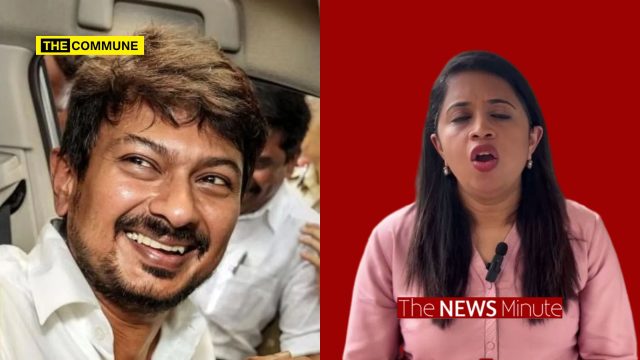
Udhayanidhi Stalin gets arrested over remarks so vulgar even his own allies struggled to defend them, and the editor-in-chief of The News Minute finds exactly one word for the moment: “unnecessary.” Not the remark. The arrest. So much for her ‘feminist’ credentials.
Replying to Vasudha Venugopal’s “Arrest for words is always a bad precedent,” Rajendran agreed – fine, arguable. But watch what happened next. At 12:02 pm on August 4, her tweet read: “And unnecessary. Of course in this case, a bad political move too.”
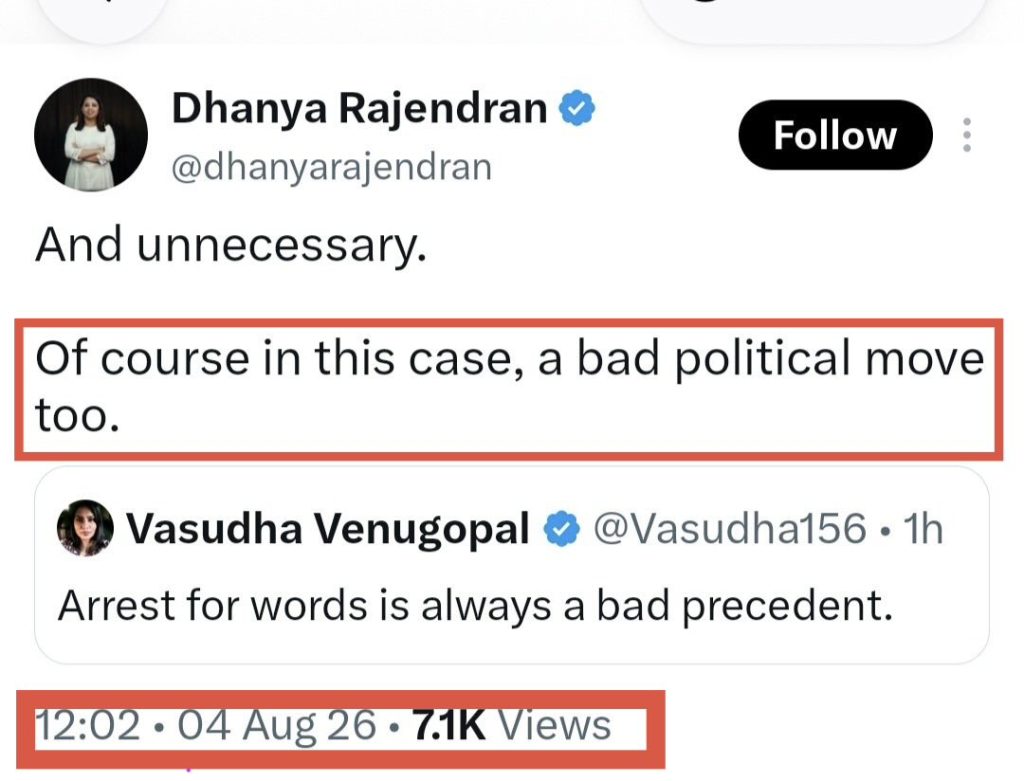
A second sentence doing real work – tactical advice to the new TVK government showing that this might backfire as it would probably elevate Udhayanidhi.
By 1:25 pm, that sentence was gone. What’s left is a bare, deniable, ideology-free objection to arrests-for-speech in general – no longer a specific read on whether Vijay’s government had blundered.
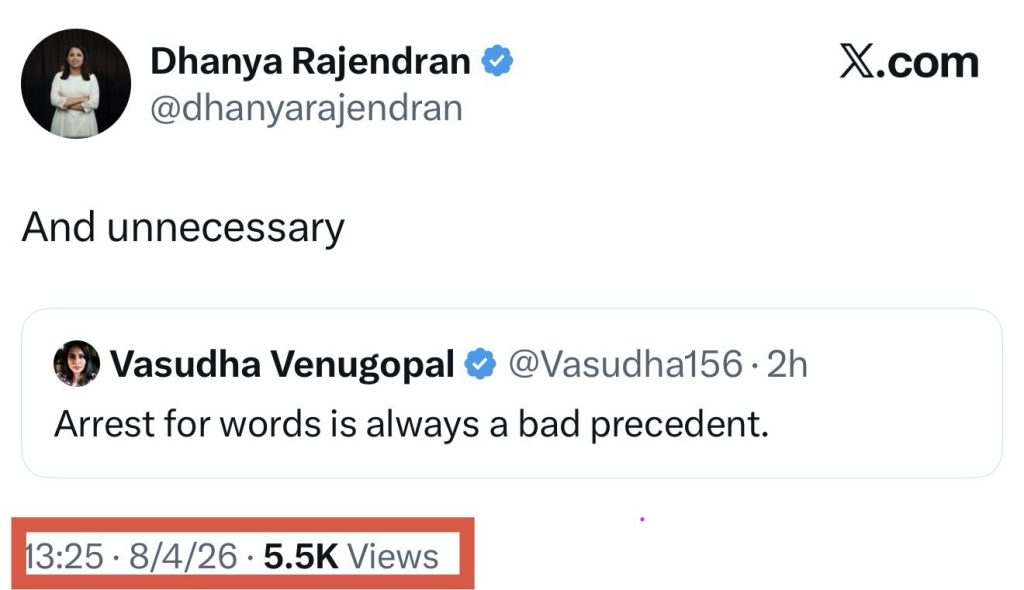
Notice what never appears in either version: the word vulgar. Trisha. Any acknowledgment that a sitting Leader of the Opposition made a “double-meaning” remark about a woman that even his own party couldn’t spin as anything but crude. Rajendran had space to say the remark itself was indefensible. She used it to litigate process – first as advice to the new establishment, then, an hour later, with the advice retracted. Fifty-three minutes is exactly enough time to reconsider how unsolicited tactical commentary aimed at Tamil Nadu’s new ruling party is going to read to the people who now control the access.
Hours later, the pattern completed itself. Rajendran pointed followers to her own outlet’s investigation into T Raja Singh – the former Goshamahal MLA who spent a decade as Hyderabad’s most prosecuted face of Hindutva politics before quitting the BJP last year. Her framing: “As one more arrest over a speech happens, I want to point out how frivolous this whole thing is. We looked at almost 120 acquittals of Raja Singh and this is hate speech.”
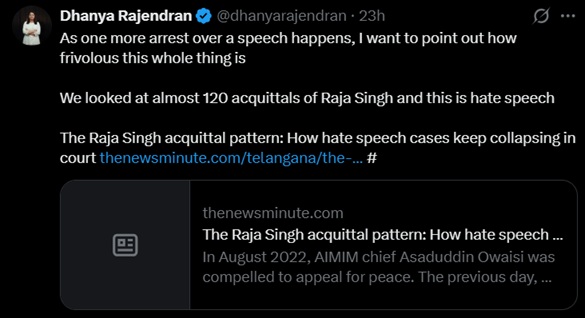
Set the two performances side by side and the double standard is structural. For an independent ex-BJP politician, her outlet spends real reporting hours combing court records to argue the prosecutions were theatre and Rajendran amplifies that in the plainest language: frivolous. For the DMK’s own crown prince, the same outlet can’t write the sentence he actually said. TNM’s report on the Trisha remark runs long on the Cauvery dispute, the kuruvai season’s losses, and the Mekedatu project, and never once tells the reader what the “double meaning” was. It quotes everyone else, every other politician calling it “disgusting, obscene, vulgar and shameful,” it quotes TVK’s complaint to the NCW, then declines to explain what the outrage is about.
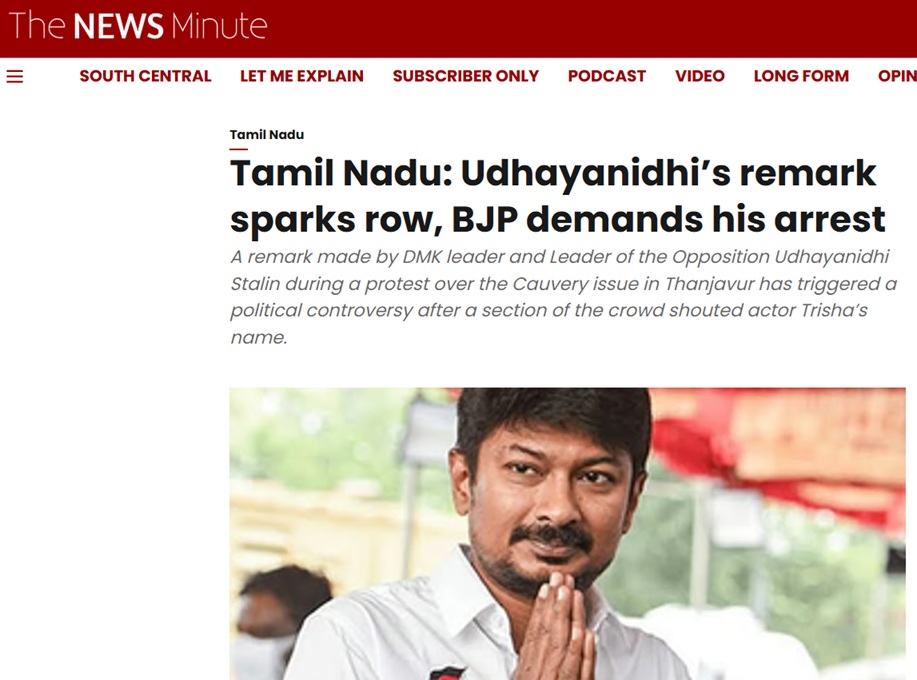
“Allegedly” isn’t there because anyone disputes what was said; multiple outlets describe Udhayanidhi pausing for the crowd to chant Trisha’s name before delivering the line. The word just buys distance. And the piece doesn’t end on Trisha. It ends on Udhayanidhi’s own talking points about drought and loan waivers – his framing, in his own words, as the last thing the reader carries out.
That’s two different editorial instincts under one byline’s endorsement. A hundred-odd court failures become proof the speech was never the point. One undisputed, on-video remark becomes too indistinct to describe. If this were really about hate speech law, both cases would get the same skepticism about whether the arrest fit the offence. They don’t. The one thing that reliably predicts the register is who’s in trouble.
Subscribe to our channels on WhatsApp, Telegram, Instagram and YouTube to get the best stories of the day delivered to you personally.