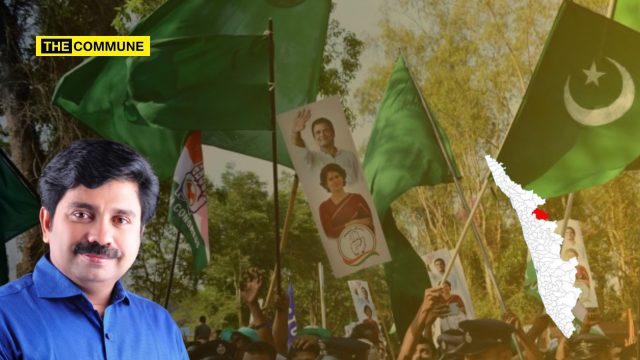
Within minutes after the counting of votes started for the Nilambur Assembly by-election on Monday morning, Congress candidate Aryadan Shoukath opened with a lead at both the postal votes and at the Electronic Voting Machines.
At the end of the first of 19 rounds, Shoukath has secured 3,614 votes, as per the Election Commission of India data. Shoukath led with around 500 votes after the postal votes were taken up for counting and the first round of EVMs began. Voting took place on June 19 when around 75.25 per cent of the 2.31 lakh total votes were polled.
The Congress has partnered with radical Islamist outfit Jamaat-e-Islami that had mourned for 26/11 Mumbai attack Pakistani terrorist Ajmal Kasab and glorifies Hamas terrorists. The 2008 Bengaluru serial blasts accused Abdul Nasar Madani was also trained by Jamaat-e-Islami.
The CPI(M) fielded former legislator M.Swaraj, who was trailing. The others in the fray include two-time sitting Left independent legislator P.V. Anvar, who quit in January after differences of opinion surfaced with Chief Minister Pinarayi Vijayan. The BJP fielded Mohan George first, and then he took membership in the saffron party.
The more than three-week campaign saw an intense poll battle, especially between the Left camp led by CM Vijayan.
The Left Democratic Front had announced that victory is theirs and this would be the semi-final for the 2026 Assembly polls when CM Vijayan would win a third successive term. But with votes counting gaining momentum, what has been revealed is that Anvar is trailing and has slipped down.
It remains to be seen if he manages to maintain momentum, then one has to wait a bit more to see whose votes he is going to take away. Incidentally, Nilambur has been a citadel of the Congress since its inception in 1965, with Shoukath’s father, Aryadan Mohammed, winning it a record eight times and losing thrice.
Moreover, the CPI(M) all along has banked on supporting independent candidates, and it last won on its party symbol in 1977. After that, it was only in 2006 that the CPI(M) fielded its own candidate. At the end of the first round, Swaraj had polled 3,195, Anvar had 1,588 votes, and the BJP’s George with 400 votes.
Subscribe to our channels on Telegram, WhatsApp, and Instagram and get the best stories of the day delivered to you personally.
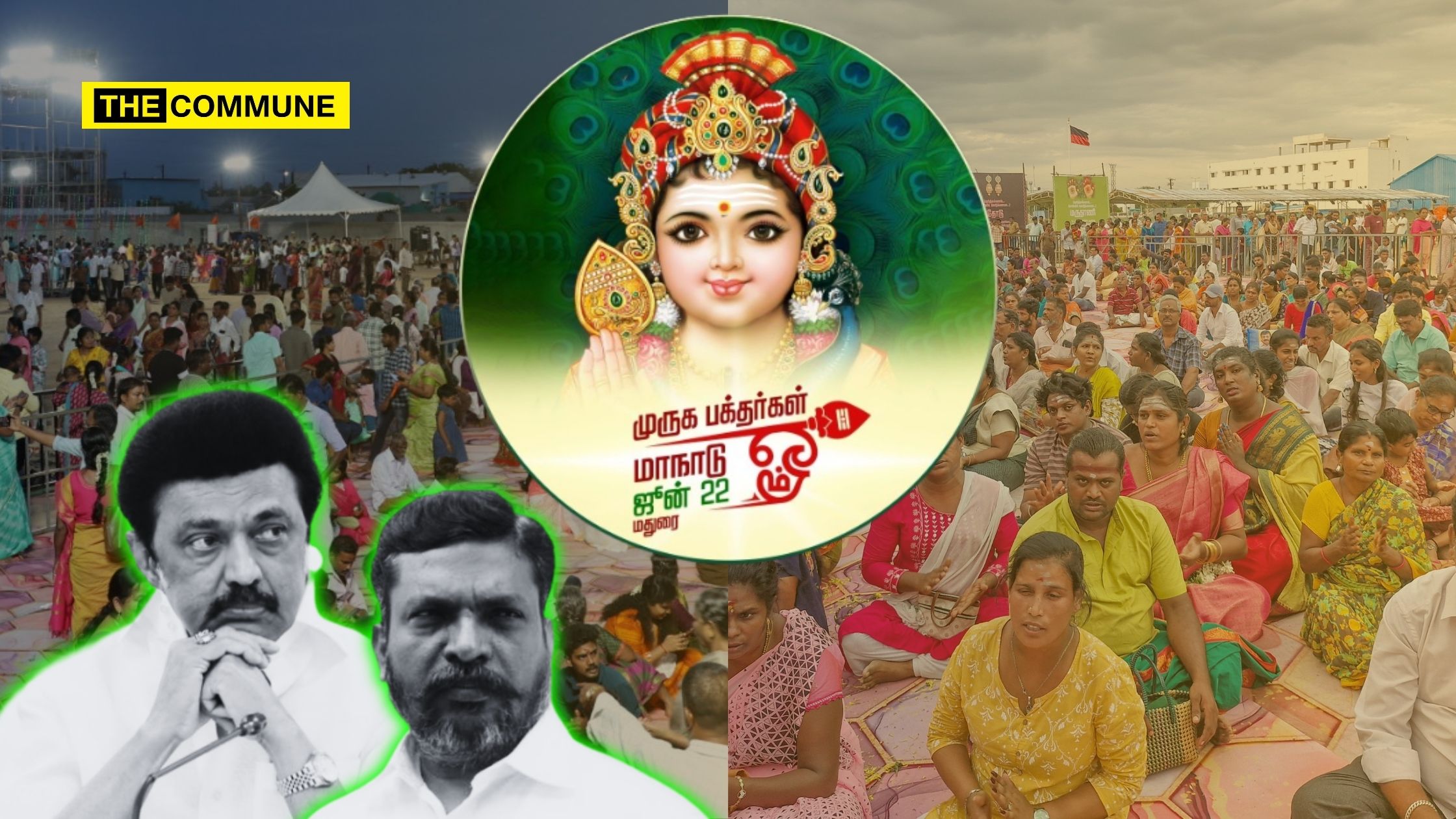
A large gathering of devotees, spiritual leaders, political leaders, members of various Hindu organizations, and cultural performers marked the Murugan Devotees Conference, organized by the Hindu Munnani, at Amma Thidal near the historic Pandi Temple in Madurai on 22 June 2025. Held in a fervent spiritual atmosphere, the event saw the participation of leaders including Andhra Pradesh Deputy Chief Minister Pawan Kalyan, Tamil Nadu BJP president Nainar Nagendran, former TN BJP chief K Annamalai, and Union Minister L Murugan, along with AIADMK leaders such as R.P. Udayakumar, Sellur Raju, and Kadambur Raju.
The conference, which showcased Murugan bhakti through the showcase of the six abodes of Lord Muruga – the Arupadaiveedu along with cultural performances, culminated in the passage of six key resolutions reflecting both religious sentiment and political undertones. Hindu Munnani executive Kishore formally presented the resolutions, which were unanimously passed by the assembly.
The six resolutions taken at the conference are as follows:
Karthigai Deepam Lighting On Thiruparankundram Hill
The conference resolved that the sacred Karthigai Deepam festival should be formally celebrated atop the Thirupparankundram Hill, the first of the six abodes of Lord Murugan.
Support & Praise For Prime Minister Modi
The gathering extended its congratulations and support to Prime Minister Narendra Modi for his firm response in the form of Operation Sindoor to the recent dastardly Pahalgam terror attack, recognizing it as a decisive act of national security.
Protection Of Murugan Temples & Hills
The conference demanded protection for Murugan-dedicated hills, affirming that these sacred sites (Kundram) belong to Kumaran – Lord Muruga and should be preserved against encroachments or neglect.
Call To Remove The HR&CE Department
A major resolution called for the removal of the Tamil Nadu government’s Hindu Religious & Charitable Endowments Department from temple administration, asserting that temple management should return to Hindu devotees and traditional custodians.
Hindu Electoral Unity
Emphasizing the need for political influence, the conference urged Hindus to remain united during elections and demonstrate their collective voting power.
Observance of Shashti With Devotional Unity
It was resolved that the hymn Kanda Shashti Kavasam should be sung collectively by devotees across Tamil Nadu on Shashti day every month as an expression of unity and devotion.
The resolutions, framed against a backdrop of ongoing political debates over religious rights and temple governance in Tamil Nadu, come amid sharp criticism from DMK alliance parties. However, the show of strength and cross-party participation highlighted the resonance of Murugan worship and the political significance it continues to carry in Tamil culture.
The programme ended with over 5 lakh attendees chanting the Kanda Shashti Kavasam at the venue and over a crore Hindus virtually joining the event and reciting the hymn – a Guiness record of sorts.
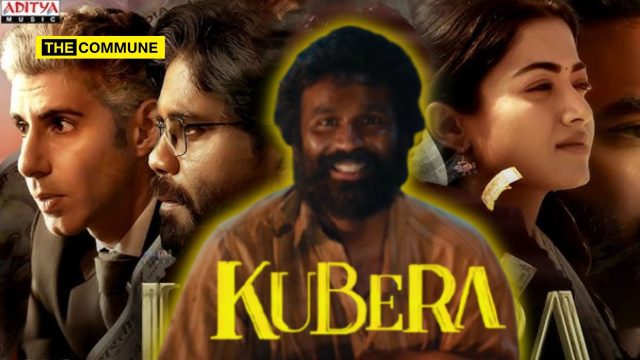
Sekhar Kammula’s Kubera is an ambitious film that swings for the fences with a promising plot and Dhanush’s towering performance, but it stumbles mainly because of the runtime. The film manages to deliver as a family entertainer, but falls short of being a slick power-packed thriller.
Dhanush, as expected, is the heartbeat of Kubera. His portrayal of a beggar is nothing short of extraordinary, reaffirming that he is a ‘Nadippu Asuran’ (the acting demon).
Be it his introduction scene or the scene at the Gateway of India, where he begs with raw intensity, is charming, goosebumps-inducing and worth it. Dhanush’s audacity to dive into any role and emerge shining is on full display.
Nagarjuna’s performance is convincing but generic with limited scope for acting. Jim Sarbh on the other hand has his moments but doesn’t come across as the menacing villain he ought to be.
The film’s core strength lies in its intriguing premise between the haves and have-nots. There’s ample conflict for the director to play around and set the stage for satisfying character arcs. The screenplay, for the most part, keeps you hooked with its engaging twists and turns. But again, it is the same screenplay that wears out thin as the film progresses.
At a bloated three-hour runtime, the film tests the audience’s patience, with a screenplay that could’ve been tighter. Just when you think the plot is wrapping up, it stretches needlessly, diluting the impact of what could’ve been a taut thriller. The cat-and-mouse dynamic, while intriguing, lacks the pace and believability to fully grip viewers.
Emotional disconnect is another sore point—character deaths fail to resonate, and a misplaced death song feels jarring. Sunaina’s role, unfortunately, seems pointless, adding little to the narrative. The climax, rushed and underwhelming, leaves you wanting more resolution.
In the end, Kubera is a mixed bag—a film with a solid foundation, elevated by Dhanush’s brilliance and engaging moments, but bogged down by its length and uneven execution. Trimmed by 30 minutes and with a sharper focus, it could’ve been a knockout. As it stands, it’s a good watch for Dhanush fans but it falls short of being a classic.
Subscribe to our channels on Telegram, WhatsApp, and Instagram and get the best stories of the day delivered to you personally.
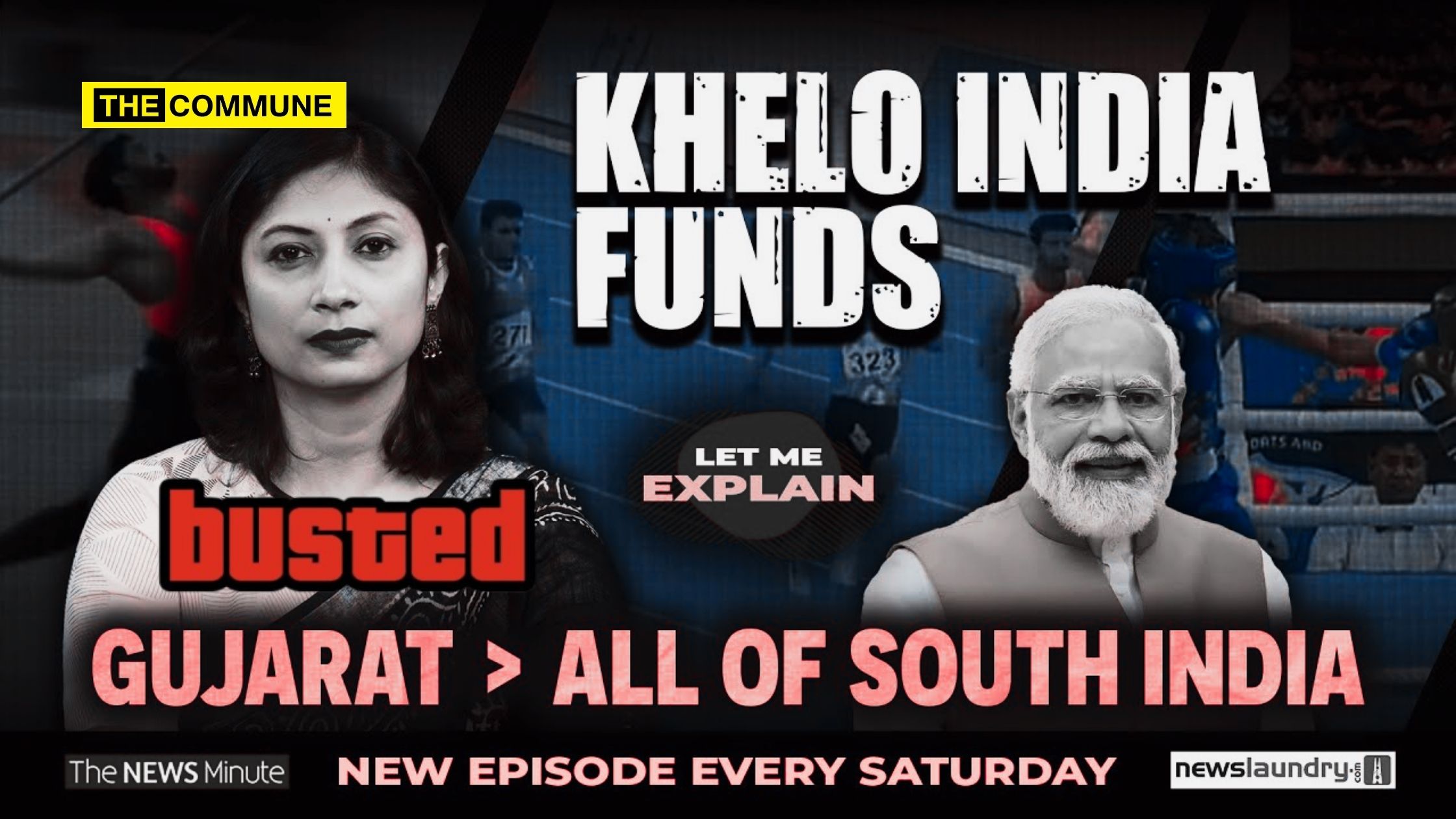
In a recent video published by The News Minute (TNM) under the Let Me Explain series, their journalist Pooja Prasanna alleged a pattern of political favouritism in the Union government’s flagship sports development initiative — Khelo India. They claimed that BJP-ruled states such as Gujarat and Uttar Pradesh received disproportionately high funding, while opposition-ruled states like Tamil Nadu and Kerala were allegedly sidelined.
However, a deeper examination of official documents, sports ministry records, and performance data tells a more nuanced story. This report dissects the flaws in TNM’s assertions and reveals how selective data presentation distorts public perception.
Claim 1: BJP-ruled states are favoured in Khelo India allocations.
The News Minute’s video asserted that BJP-ruled states like Gujarat (₹606 crore) and Uttar Pradesh (₹500 crore) received disproportionate Khelo India funds while opposition states were sidelined. While they have mentioned the BJP-ruled states in the video, somehow the narrative is set such that it makes the viewer think the Central government is giving step-motherly treatment to other states.
The video mentions that despite being home to Olympian Rudrankksh Patil who the gold medal in the men’s 10m air rifle shooting event at the ISSF World Cup 2025 Buenos Aires in April 2025, it was allocatedonly ₹87.43 crore, ranking just above non-BJP Punjab (₹78.02 crore).
The video fails to mention that funds for Gujarat were primarily for building mega-projects like Ahmedabad’s Sports Enclave.
While they did mention the Khel Sahayak issue, why did TNM not consider it as an issue when the coaches protested delayed salaries and 8-month contracts (vs. 11-month promises). Is this favouritism as per TNM’s standards?
Claim 2: Tamil Nadu and other opposition states are penalized.
TNM suggests that Tamil Nadu receives poor funding despite strong performance
It is very easy to cherry pick such facts to suit one’s narrative. But the truth is that:
Tamil Nadu has 18 Khelo India Academies, 38 Centres, and 1 State Centre of Excellence.
Union Ministry clarified in 2024:“There is no pending proposal under consideration from Tamil Nadu for new Khelo India Centres.”
The state is already a beneficiary of prior rounds and has alternative funding for new projects via non-Khelo India schemes.
Existing infrastructure density explains lower recent allocations. As clarified by the Union Ministry, the question of active rejection of new proposals does not stand valid.
Understanding The Allocation Mechanism
Contrary to political interpretations, the Ministry of Youth Affairs and Sports follows a defined methodology. A few months ago, DMK Rajya Sabha MP P. Wilson raised ‘concerns’ over the disparity in fund allocation and sports infrastructure development under the Khelo India scheme in Tamil Nadu. In response, the Union Ministry of Youth Affairs and Sports clarified that funds under the Khelo India programme are allocated scheme-wise, not state-wise, and emphasized that the submission and evaluation of proposals is an ongoing process.
In response to my Parliamentary question on the development of sports infrastructure under the Khelo India Scheme, regarding:- (a) whether States like Uttar Pradesh and Gujarat have been allocated more than ₹400 crores for the development of sports infrastructure under Khelo… pic.twitter.com/54YbSkf4E6
Andhra Pradesh: ₹237 crore worth of proposals rejected from 2021–2023.
Haryana, a BJP-governed sporting powerhouse, received just ₹66 crore due to low proposal volume.
What TNM Didn’t Tell You
Performance vs. Allocation: A Non-Linear Correlation
TNM implies poor-performing states received more funding. But medal tallies don’t tell the whole story.
Tamil Nadu fielded 13 athletes at the 2024 Olympics, all supported under the TOPS (Target Olympic Podium Scheme) – independent of state allocations.
Bihar, once a low-priority state, surged from 21st to 15th place in Khelo India rankings by investing in niche sports like Rugby 7s – backed by targeted funding.
Rajasthan, a Congress-ruled state until 2023, received ₹107 crore but bagged fewer medals than Tamil Nadu, which had only ₹29.5 crore allocated.
Athletes from “low-fund” states like Tamil Nadu (13 Olympians) and Manipur (multiple medalists) consistently access elite programs like TOPS, which provides ₹50,000/month stipends, foreign coaching, and training support regardless of home-state funding.
Funding supports infrastructure and institutional building, not just immediate performance.
Gujarat’s ₹606 crore allocation includes high-cost, event-specific investments:
FIFA U-17 Women’s World Cup venues
Sardar Patel Stadium revamp under Ahmedabad Sports Enclave
And despite high funding, Gujarat’s khel sahayaks (sports teachers) protested for months over delayed salaries and incomplete contracts, undermining claims of privilege, as mentioned above.
Maharashtra’s Olympic medalist Rudrankksh Patil received no state-specific privilege – a BJP-governed state that didn’t make TNM’s cut.
Also, state projects like Coimbatore hockey stadium or Ramanathapuram synthetic track can utilize state budgets or non-Khelo India central schemes (e.g., Urban Infrastructure Development). It is not necessary that the centre keeps spoonfeeding the states for every single project. Had the DMK government repealed the Kalaignar Magalir Urimai Thogai Thittam, those funds nearly about 1000 crores and upwards could be diverted to better projects that will help the state come up further.
TNM’s narrative cherry-picks optics while ignoring other important information.
Systemic Reforms In Progress
The Sports Ministry has implemented key reforms to address fairness and transparency:
Mandatory video recordings of selection trials
Anti-age fraud initiatives
Integrity Officers posted at national camps
All fund approvals require technical feasibility reports and are published on Ministry portals
Uniform scholarships of ₹6.28 lakh/year for 2,781 Khelo India Athletes across all states – irrespective of regional allocation
Additionally, the Draft National Sports Governance Bill promises further structural accountability in national sports administration.
The Takeaway: The Real Picture Is More Complex
The Khelo India initiative is not without flaws, but attributing fund distribution to partisan bias oversimplifies a layered reality:
States with poor infrastructure receive higher allocations to balance regional inequities
States with robust existing frameworks, like Tamil Nadu, require fewer new investments
Proposal quality and event-readiness are the primary drivers – not party alignment
Here are some numbers that TNM must consider:
For the financial year 2025-26, the Ministry of Youth Affairs and Sports was allocated a record ₹3,794 crore by the government. Of this, ₹2,191.01 crore is earmarked for Central Sector Schemes, with the flagship Khelo India Programme receiving a substantial ₹1,000 crore. This marks a 130.9% increase from the ministry’s allocation of ₹1,643 crore in 2014–15, reflecting the government’s growing commitment to nurturing sporting talent and infrastructure across the country.
Launched in 2016–17, the Khelo India – National Programme for Development of Sports was launched in 2016-17 under PM Modi. The programme aims to foster both mass participation and excellence in sports, targeting communities in both rural and urban areas.
Key milestones so far include:
Approval of 326 new sports infrastructure projects worth ₹3,124.12 crore.
Establishment of 1,045 Khelo India Centres (KICs) to support grassroots-level training.
Notification of 34 Khelo India State Centres of Excellence (KISCEs) and accreditation of 306 sports academies.
Support for 2,845 Khelo India Athletes (KIAs), who receive coaching, equipment, medical support, and a monthly out-of-pocket allowance.
All this was not possible under the previous UPA regime. Maybe TNM would want to do an expose on that era?
Instead of blindly questioning the Modi government just to set a narrative, The News Minute can make use of its journalistic abilities to question the ruling DMK and asking questions that matter – especially when it comes to such issues. Why not use state funds, MP funds, MLA funds to boost sports activities and other infrastructure in Tamil Nadu? Will TNM dare to ask this of its masters?
Subscribe to our channels on Telegram, WhatsApp, and Instagram and get the best stories of the day delivered to you personally.
Madurai, Tamil Nadu’s ancient temple city, is ablaze with spiritual fervor as lakhs of Lord Murugan devotees flood the Muruga Bakthargalin Aanmeega Maanadu (Spiritual Conference of Murugan Devotees), a historic 10-day event organized by Hindu Munnani, which kicked off on June 22, 2025. This first-of-its-kind conference, held on an unprecedented scale at Amma Thidal near Pandikovil in Madurai, has drawn an estimated five lakh devotees from across Tamil Nadu and beyond, signaling a powerful wave of Hindu consciousness that has left the ruling Dravida Munnetra Kazhagam (DMK) and its Dravidianist allies visibly unsettled ahead of the 2026 Assembly elections.
A Historic Celebration Of Murugan Devotion
Marking a milestone in Tamil Nadu’s spiritual landscape, the Murugan Conference is the state’s largest-ever gathering dedicated to Lord Murugan, the revered Tamil deity embodying valor, wisdom, and devotion. The event features a stunning replica of Arupadai Veedu—the six sacred abodes of Murugan, which includes Palani, Thiruchendur, Swamimalai, Thiruthani, Pazhamudhircholai and Thiruparankundram—drawing devotees from every corner of Tamil Nadu to offer prayers and immerse themselves in devotion. From rural villages to urban centers, the faithful have thronged Madurai, creating a sea of saffron that underscores Tamil Nadu’s unbreakable bond with its Hindu heritage.
The conference’s inclusivity stands out, with special arrangements made for specially-abled individuals, ensuring they can participate fully in the spiritual experience. Wheelchair-accessible pathways, dedicated assistance counters, and priority access to prayer zones have been lauded by attendees, reflecting the organizers’ commitment to universal devotion.
The event has attracted high-profile guests from across India, amplifying its national significance. Uttar Pradesh Chief Minister Yogi Adityanath, known for his staunch advocacy of Hindu causes, and Andhra Pradesh Deputy Chief Minister Pawan Kalyan, a vocal supporter of Sanatana Dharma, are among the prominent figures joining the conference. Their presence has energized devotees and lent political weight to the gathering. Union Home Minister Amit Shah, during his June 8 visit to Madurai, rallied support for the event, accusing the DMK of disrespecting Hindu traditions by referring to Thiruparankundram Hill as “Sikandar Hill.” The participation of such leaders has framed the conference as a unifying force for Hindus nationwide.
Political Tensions: BJP vs. DMK
The massive turnout and high-profile endorsements have sparked a fierce political showdown between the Bharatiya Janata Party (BJP) and the DMK. The BJP, leveraging Murugan’s cultural resonance, has positioned the conference as a symbol of Hindu unity and a counter to the DMK’s Dravidianist ideology, which has historically questioned religious orthodoxy. The Madras High Court’s recent rulings, striking down restrictive police conditions like mandatory vehicle passes and permitting miniature temple installations for pre-event rituals, have further emboldened organizers, who see these as victories against the DMK’s alleged anti-Hindu stance.
The DMK, visibly disturbed by the thronging crowds, has dismissed the conference as a “Sanghi political stunt” aimed at polarizing voters. Tamil Nadu Hindu Religious and Charitable Endowments Minister PK Sekar Babu downplayed the event, claiming the DMK’s own Murugan conference in Palani in 2024 drew 7–8 lakh devotees from 27 countries without political motives. DMK allies, including the Viduthalai Chiruthaigal Katchi (VCK) and Communist Party of India (CPI), have echoed this, with filmmaker and DMK supporter Ameer Sultan publicly objecting to the conference as a “divisive tactic” that exploits Murugan devotion for political gain.
Rising Hindu Consciousness Disturbs DMK
The conference’s success has visibly disturbed the DMK and its Dravidianist ecosystem, which has long dominated Tamil Nadu’s political narrative. The DMK’s historical anti-Hindu rhetoric, exemplified by Deputy Chief Minister Udhayanidhi Stalin’s remarks against Sanatana Dharma, has alienated many devout Tamils. Hindu Munnani leaders argue that the DMK’s initial opposition to the conference—through police restrictions and public protests—betrays its fear of a united Hindu vote.
In response, the DMK and its allies have mounted a counter-offensive. VCK president Thol. Thirumavalavan and CPI’s R. Mutharasan led protests, including a human chain in Madurai on June 19, to oppose what they call the “Sangh Parivar’s” divisive agenda. Critics argue that the conference, timed strategically before the 2026 elections, risks fracturing Tamil Nadu’s social harmony. DMK supporter Advocate S. Vanchinathan warned of parallels with the Ram Janmabhoomi campaign, urging vigilance against politicized religion. The DMK has also highlighted its own Murugan conference in Palani to deflect anti-Hindu accusations, though its failure to condemn groups like Karuppar Kootam, which insulted Murugan, continues to fuel devotee anger.
A Defining Moment?
As Madurai reverberates with devotion, the Murugan Devotees Conference is more than a spiritual milestone—it’s a potential game-changer in Tamil Nadu’s political arena. The BJP sees it as a golden opportunity to expand its influence in a Dravidian stronghold, while the DMK grapples with the implications of a resurgent Hindu consciousness. With over five lakh devotees defying obstacles to attend, the event underscores a growing assertion of Hindu identity that could reshape the state’s electoral future.
Subscribe to our channels on Telegram, WhatsApp, and Instagram and get the best stories of the day delivered to you personally.
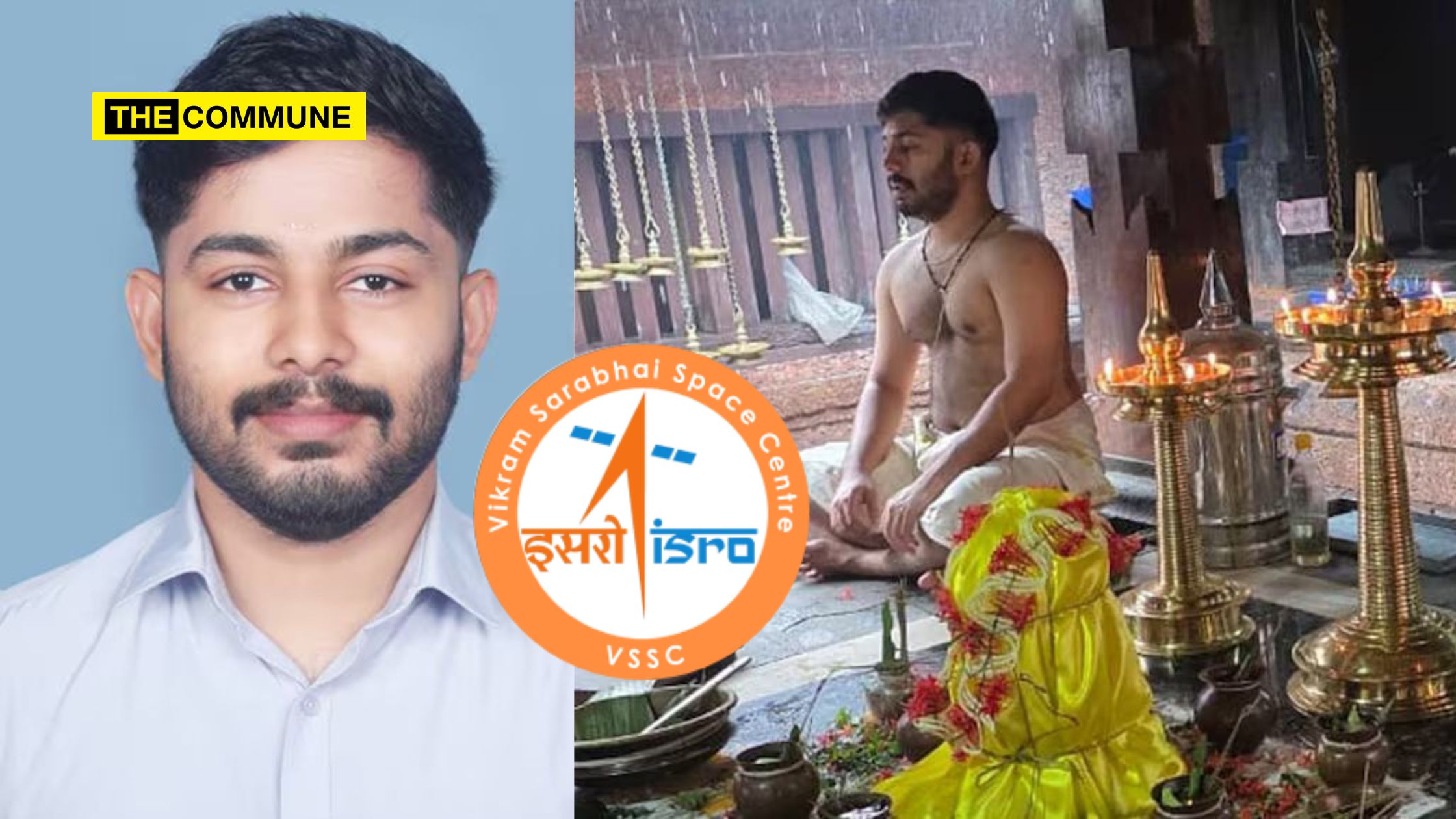
When tradition meets technology, stories like that of Govind Krishnan M emerge, where deep-rooted cultural learning complements cutting-edge science. A native of Kannur, Kerala, Govind is set to join the Vikram Sarabhai Space Centre (VSSC), the premier arm of ISRO based in Thiruvananthapuram. Unlike his peers from the Vedic path who chose priesthood, Govind took a different route—one that merges ancient knowledge with modern space science.
“There’s a common belief that Vedic education restricts career growth or doesn’t align with science,” Govind reflects. “But my journey shows that both can coexist. With discipline and balance, it’s possible to embrace both spirituality and science.”
Govind’s educational path defies convention. After completing Grade 4 at Kendriya Vidyalaya, Payyannur, in 2011, he left mainstream schooling to join a gurukula at Bhramaswam Madham, Thrissur. Over four intensive years completing a five-year course in less time he immersed himself in Vedic study.
The decision to pursue Vedic education was influenced by his father, Hareesh Kumar, a former Indian Navy officer who retired voluntarily in 2009. After years of relocating across naval bases in cities like Kochi, Mumbai, and Lonavala, the family returned to their hometown Kaithapram in Kannur. Govind’s sacred thread ceremony (upanayanam) took place while he was still in school, marking the beginning of his spiritual training.
“The initial phase was challenging—I was away from home for the first time,” Govind recalls. “There were five of us in my batch, and we studied the Yajurveda. There were no textbooks or visuals—everything was passed down orally from the guru. It was a life of discipline.”
He attended a nearby government school only for exams, focusing primarily on Vedic learning. His day began at 5 a.m., packed with chanting, rituals, and a tightly scheduled routine. It wasn’t until the fifth year that he resumed regular schooling, enrolling in Vivekodayam Boys Higher Secondary School, Nadakkavu, for Grades 8 to 10—all while continuing his gurukula life.
His daily schedule remained intense: Vedic classes until early morning and late evening, followed by academic studies until nearly midnight. Despite this demanding routine, Govind scored top grades in his 10th board exams. He then left the gurukula and joined Alva’s College in Moodbidri, Mangaluru, for his higher secondary education, simultaneously preparing for competitive entrance exams.
Govind succeeded in clearing both JEE Main and Advanced, securing admission to the Indian Institute of Space Science and Technology (IIST) in Valiamala, Thiruvananthapuram. He enrolled in the BTech Electronics and Communication program in 2021.
Even after leaving the gurukula, Govind continued his spiritual routines. “I maintain at least an hour a day for what I’ve learned,” he says. “Just like people go to the gym for physical fitness, I train my mind—for focus, clarity, and memory.”
While his batchmates pursued priesthood due to family traditions, Govind charted a new course. Though he knows basic rituals like Ganapathihomam and Thevaram, he clarifies that temple priesthood requires specific training beyond Vedic study.
Now, selected through ISRO’s Centralised Recruitment Board (ICRB), which includes rigorous testing and interviews, Govind is preparing to start his new role in July. He hopes to continue his spiritual practices even as he steps into his scientific career.
“In the future, I’d love to teach young minds what I’ve learned,” he says. “The Vedas have given me more than knowledge—they’ve given me strength and direction.”
Govind’s family remains rooted in humble aspirations. His father now works at a private bank in Kannur, his mother Suja is pursuing a BA in Music, and his twin sister, Gayathri, is employed as a physiotherapist in Mumbai.
Govind’s story stands as a powerful testament to how ancient Indian wisdom and modern science can not only coexist but thrive together.
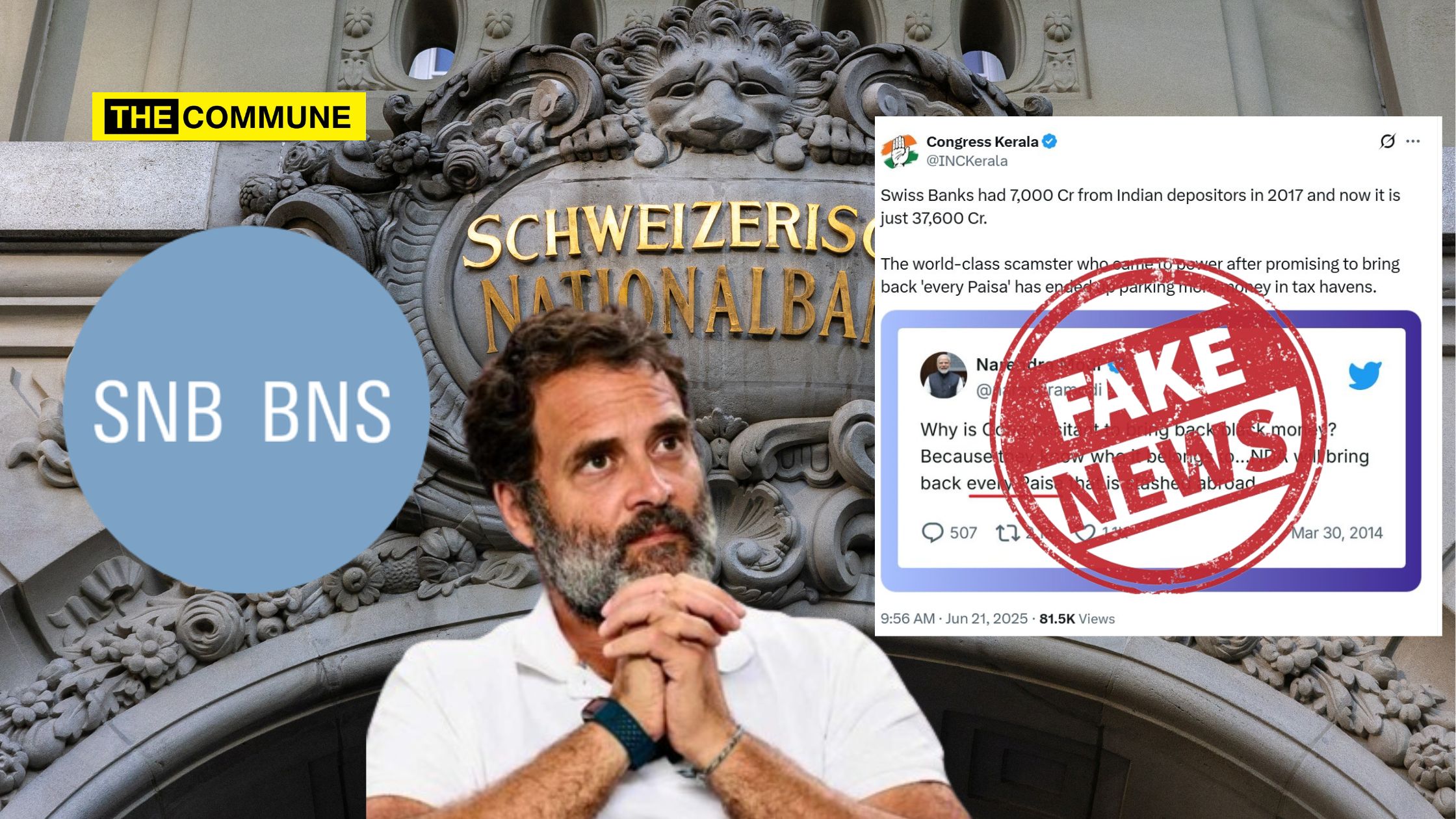
The Congress, unable to find any real grounds to critique the BJP government, has stooped to running a “fake news factory.” Its official channels and ill-informed supporters now spread unchecked propaganda without verifying facts.
A glaring example, the party seized upon a Swiss National Bank headline—“Indian money parked in Swiss banks more than tripled in 2024, reaching 3.54 billion Swiss francs” — and spun it as yet another case of black money flight from India. However, a closer look at the report reveals a very different story.
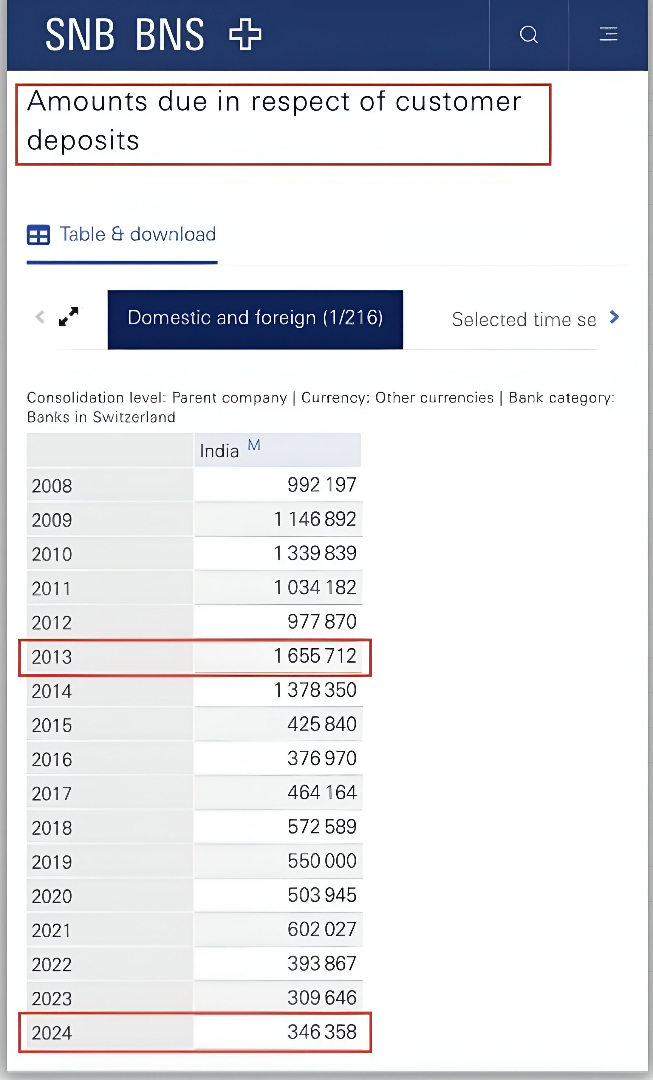
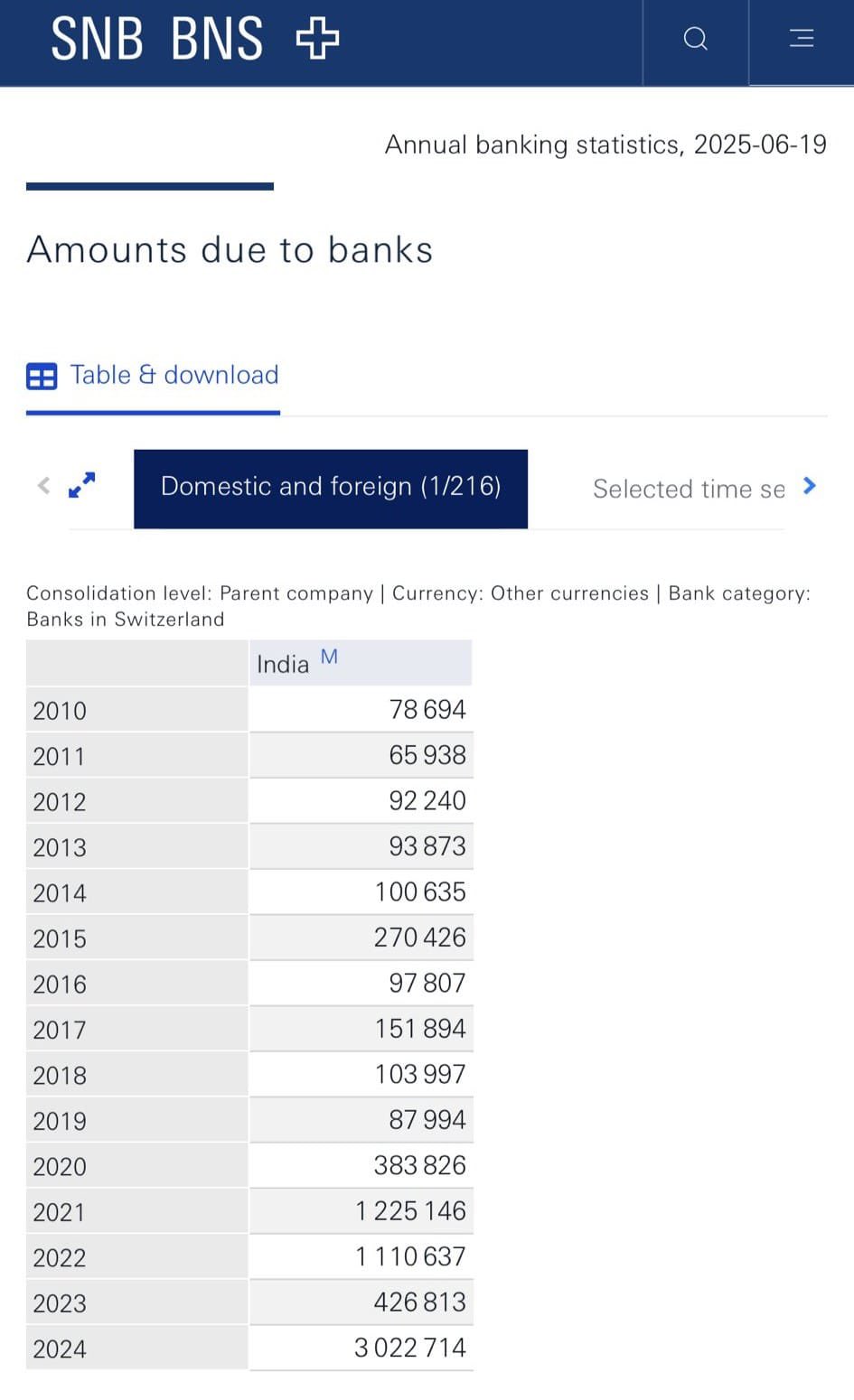
Since 2014, Indian individual deposits in Swiss banks have actually declined, while valid interbank investments have surged. The Swiss National Bank report clearly differentiates between:
Liabilities due to Indian banks – funds that Swiss banks owe Indian banks, an expected outcome of routine financial dealings.
Individual Indian deposits – money held in personal accounts, often associated with black money concerns.
In 2024, liabilities owed to Indian banks rose dramatically from 427 million to 3,022 million CHF—reflecting normal banking activity, not illicit transfers. Meanwhile, individual deposits by Indian citizens dropped to just 346 million CHF, down nearly 80% from 1,656 million CHF in 2013.
The truth: Black money inflows have plummeted over the past decade. What increased was interbank activity—a legitimate financial trend. Congress’s portrayal of the headline isn’t merely mistaken—it’s intentionally misleading, marking yet another chapter in their long-standing playbook of distortion.
In claiming a surge in black money, Congress ends up looking foolish—caught with egg on its face.
Check below how Congress and its allies fabricate and fuel misleading narratives.
The Kerala Congress recently reposted a 2014 tweet from Prime Minister Modi proclaiming, “Why is Cong hesitant to bring back black money? Because they know who it belongs to…NDA will bring back every Paisa that is stashed abroad.” They followed up by alleging, “Swiss Banks had 7,000 Cr from Indian depositors in 2017 and now it is just 37,600 Cr. The world-class scamster who came to power after promising to bring back ‘every Paisa’ has ended up parking more money in tax havens.”
Swiss Banks had 7,000 Cr from Indian depositors in 2017 and now it is just 37,600 Cr.
The world-class scamster who came to power after promising to bring back 'every Paisa' has ended up parking more money in tax havens. pic.twitter.com/FGB62f9dMP
In another piece of opportunistic messaging, they mocked the PM-CARES fund, writing, “If you’ve paid using this QR code, you’ve a small share in the Swiss Bank deposits or other tax havens of 37,600 Cr. Feel proud!”
Meanwhile, UWC Congress circulated an old video of Modi with the mocking caption, “All talks, No show…Only Multiply! They promised to bring back black money. Instead, they sent more… straight to Swiss banks!”
Another DMK sympathizer echoed the congress sentiments and peddled, “Indian Black Money in Swiss Bank in the Past 7 Years :- 2017 : ₹6.8K Cr 2018 : ₹7K Cr 2019 : ₹6.6K Cr 2020: ₹20.7K Cr 2021 : ₹30.5K Cr 2024 : ₹37.4K Cr (Highest) 11 years ago, a person fooled the entire Nation that he will bring back the black money.”
Indian Black Money in Swiss Bank in the Past 7 Years :-
These examples show a deliberate strategy cherry-picking figures, twisting headlines, and stoking outrage to nurture false narratives against the government.
Subscribe to our channels on Telegram, WhatsApp, and Instagram and get the best stories of the day delivered to you personally.
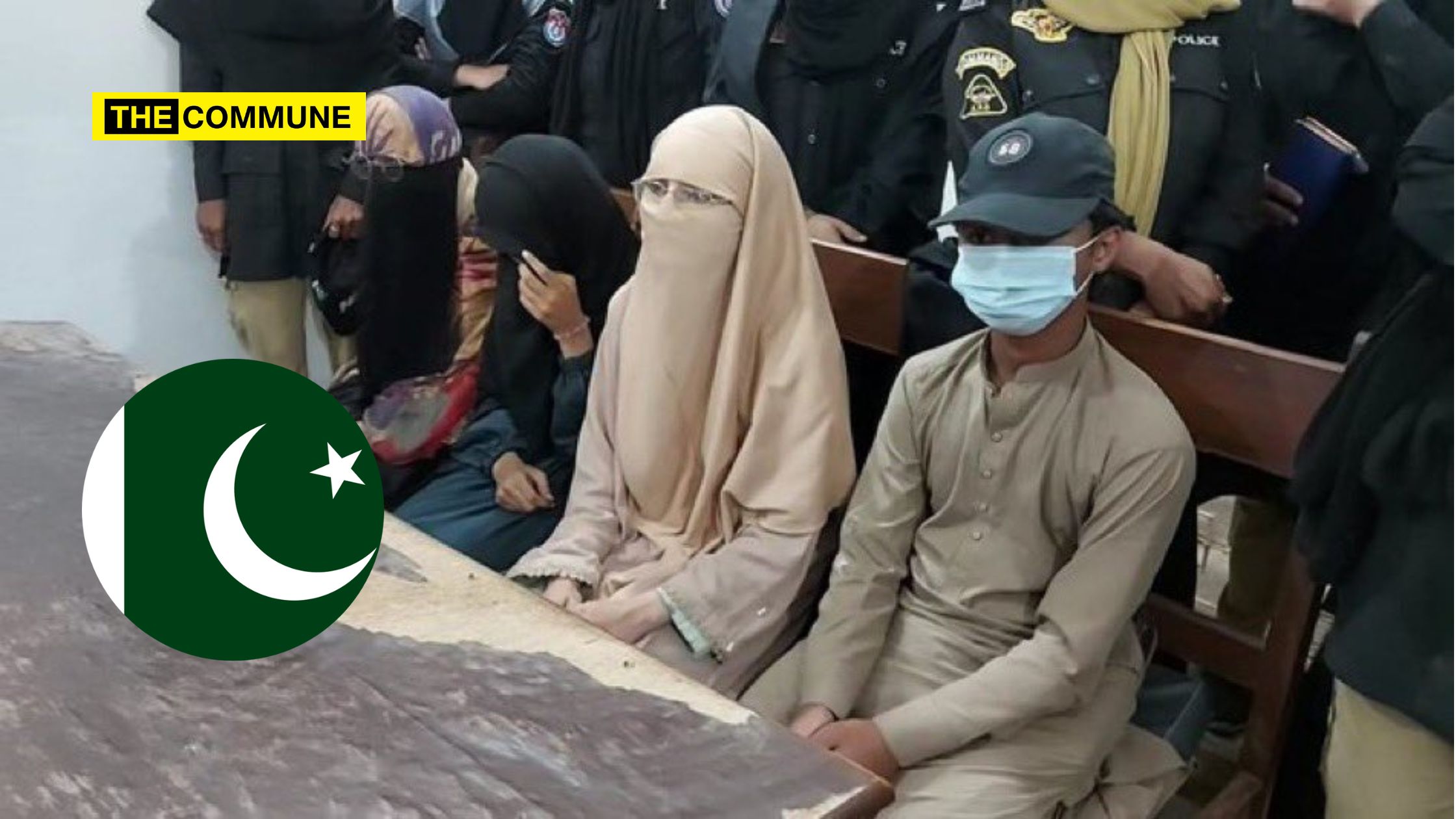
In a disturbing development highlighting the growing dangers faced by Hindus in Pakistan, a court in Sindh province has ordered two Hindu families to post a security bond of PKR 10 million (approximately ₹1 crore) each before they can regain custody of their minor children—who were allegedly abducted and forcibly converted to Islam.
This case reveals how the Pakistani judiciary is effectively enabling forced conversions by granting legal cover to radical elements. The ruling sends a clear message: abduction and coerced conversion of non-Muslims can proceed with minimal consequence when wrapped in legal proceedings.
The incident occurred in Sanghar district, where three Hindu sisters and their male cousin vanished earlier this year. The families promptly filed missing person reports, suspecting foul play. Police located the children living with Muslim families and reported that they had converted to Islam. The families maintained that the conversions were made under duress.
Court Ruling and Shock Clauses
When the case was brought before the court
Diya and Jiya, the two female cousins, were declared adults. The court ruled they could not be compelled to reunite with their families, citing “free will.”
Dashina and Harjeet, the younger minor cousins, were recognized as underage. However, though acknowledging parental rights, the court demanded that each family post a PKR 10 million bond. This bond supposedly ensures they will not attempt to reconvert the children back to Hinduism.
In effect, the court is financially penalizing families for affirming their religious identity.
The Sanghar ruling starkly underscores how minorities in Pakistan are being targeted through a combination of abduction, forced conversion, and judicial coercion. By mandating hefty security deposits before families can recover their children, the court is institutionalizing religious persecution. This conditional reinstatement of custody sets a dangerous standard—sanctioning apartheid under the guise of judicial propriety.
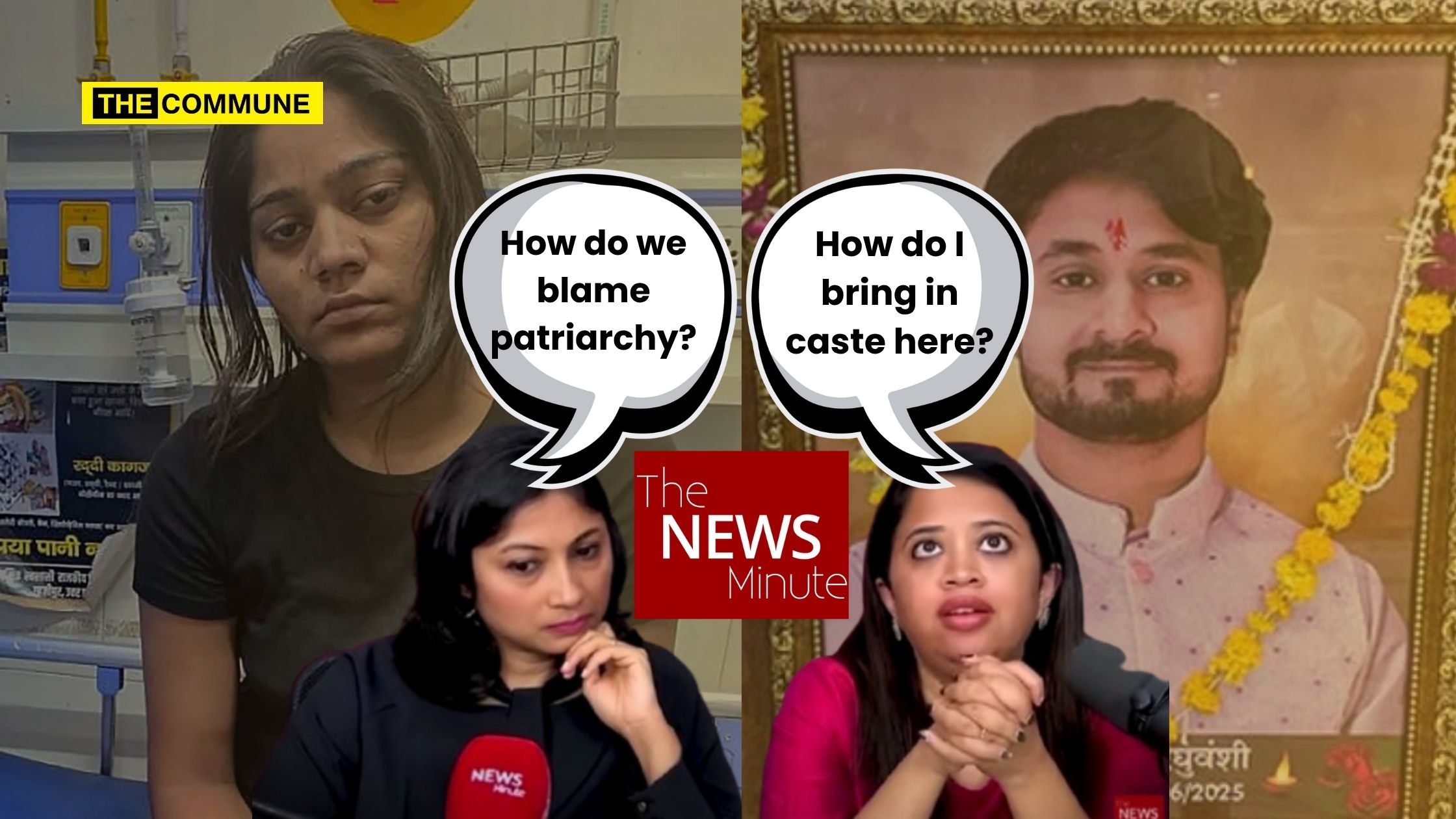
The News Minute recently published a video podcast “South Central” and if one listens to this episode, it is sure to leave one speechless for the kind of discussions the speakers – Dhanya Rajendran & Pooja Prasanna have. In this article, we focus on the “angle ignored in Sonam Raghuvanshi case”. Note that it is not Raja Raghuvanshi murder case but Sonam Raghuvanshi case – as if Sonam is the victim.
As you listen in to the podcast, you realise, oh yes, Sonam is the victim, but of whom? Drum roll (but no prizes for guessing) – Patriarchy!!
So, by the end of the episode, were you naive you are highly likely to come away thinking that patriarchy is the real killer —more so than the wife who confessed to planning and executing her husband’s murder with her lover.
“It’s Never Just A Crime—It’s A Symptom Of The System”
This is the central thesis repeated throughout the episode. Dhanya Rajendran says, “We have to look beyond that on the circumstances which makes a newly married woman actually murder her newlywed husband than to stand up for herself.” On the surface, this sounds reasonable. After all, India’s social fabric is riddled with these problems. But here’s the problem: Sonam Raghuvanshi confessed to planning the murder. She didn’t just passively suffer under patriarchy—she actively chose to kill her husband.
By framing the story primarily as a “patriarchy problem,” The News Minute effectively shifts blame away from the perpetrators. It’s as if the wife and her lover are victims of circumstance, rather than criminals who made a cold, calculated decision. One panelist even questions, “What drives a woman to such extremes?”—as if the answer lies solely in oppressive social structures, ignoring the agency, motive, and responsibility of the accused.
The Hypocrisy of Selective Outrage
Imagine if the genders were reversed. If a husband had murdered his wife to be with his girlfriend, would the media be scrambling to explain his actions as a result of “societal expectations”? Or would they (rightly) call it cold-blooded murder?
The truth is, feminism is about equality—not excusing female criminals while demanding maximum punishment for male ones. Dhanya quotes an article by some Priya Ramani on The Quint, titled “Meghalaya Murder Is What Happens When You Criminalise Love In India” blaming Sonam’s parents also for the crime. Dhanya says, “It’s not just Sonam Raghuvanshi who should be blamed for the crime that she allegedly did, but it’s also her parents, it’s also society which does not allow her to choose her partner.”
But this logic is absurd. Millions of women face arranged marriages—they don’t resort to murder. If Sonam was unhappy, she could have protested in such a way she could convince her parents not to proceed with the marriage, she was financially independent. If all this failed, she could have left Raja Raghuvanshi’s life or sought a divorce instead of plotting and staging a honeymoon murder!
By suggesting that patriarchy “made her do it,” Dhanya and her gang are essentially arguing that women lack agency—which is actually insulting to women everywhere.
What’s most disturbing is how quickly people like Dhanya sensationalize crimes against women but downplay or excuse female perpetrators. When a man kills his wife, it’s “toxic masculinity” or “patriarchal entitlement.” When a woman kills her husband, suddenly it’s “society’s fault” and once again “patriarchy.”
This isn’t feminism—it’s hypocrisy.
Caste & Honour Killing
Dhanya and Pooja then come to the second, if not equally favourite topic of discussion after patriarchy – Caste. They point out that Sonam’s family belongs to the Rajput community, while her lover, Raj, is from an OBC community. According to them, this difference in caste, along with class distinctions (Raj was also Sonam’s employee), created a situation where Sonam was not allowed to choose her own partner and was instead forced into marriage with Raja Raghuvanshi.
Dhanya compares this murder to “honour killings”. She says, “This is the first time perhaps in the recent past that we have seen a woman plotting this kind of a murder. But this happens all the time right, we call them honor killings. I personally have a huge problem calling them honor killings because those murders have nothing to do with honor, but those killings whether it’s caste killings or dishonor killings – those are mostly done by the families where a man and a woman perhaps coming from two different castes or two different religions marry each other, one family does not approve and we do see quotations being given, murders being committed by the family members themselves, perhaps this one made a lot more headlines because it was the not the family, but the woman who plotted the murder.”
How does Sonam killing her newlywed husband equal or even comparable to honour killing?
Both speakers go on to argue that these caste and class barriers are integral to understanding the context in which the crime occurred, suggesting that the inability to marry across caste lines and the resulting forced marriage set the stage for the tragedy. Mindblowing stuff, right?
Agency Erased, Accountability Diluted
Sonam’s confession and the police investigation clearly establish her role in the murder. Yet, Dhanya and Pooja repeatedly circle back to systemic issues, sometimes at the expense of the victim’s story and the truth of the crime. But here’s the inconvenient truth: the crime was planned, executed, and covered up. The wife and her lover fled, only surrendering when the net closed in. This is not a spontaneous act of desperation forced by patriarchy; this is premeditated murder. To obscure this fact by focusing on “patriarchy” as the root cause is to dilute justice.
The Danger Of Over-Contextualizing
Context matters. No one is denying that. But when context becomes a shield that excuses or rationalizes criminal behavior, it becomes a problem. The News Minute’s approach honestly infantilizes women, denies them moral agency, and ultimately reinforces stereotypes that women are helpless victims of their environment.
If patriarchy truly explains this murder, then what about the lover? What about the conscious decisions made by both individuals? The podcast barely addresses these questions. Instead, it leans heavily into the narrative that “patriarchy made her do it,” which feels less like analysis and more like a get-out-of-jail-free card.
Justice For The Victim?
Raja Raghuvanshi’s murder deserves more than sociological speculation. It deserves justice. The victim’s life was brutally cut short by people who chose to commit a heinous crime. Portals like The News Minute prioritize abstract social debates over the facts of a case, they risk sidelining the victim’s story and the demands of justice – because it is important for them to make everything about patriarchy and caste.
The question is not whether to judge Sonam why she committed the crime, but how to ensure that justice is served fairly and fully. Blaming patriarchy instead of the murderers does neither.
Murder is murder, regardless of the perpetrator’s gender or background. By shifting blame to “patriarchy,” the media is doing a disservice to real victims of oppression while giving a free pass to a calculated killer.
It’s acold-blooded crime and just that. And no amount of woke rhetoric should change that.
Subscribe to our channels on Telegram, WhatsApp, and Instagram and get the best stories of the day delivered to you personally.
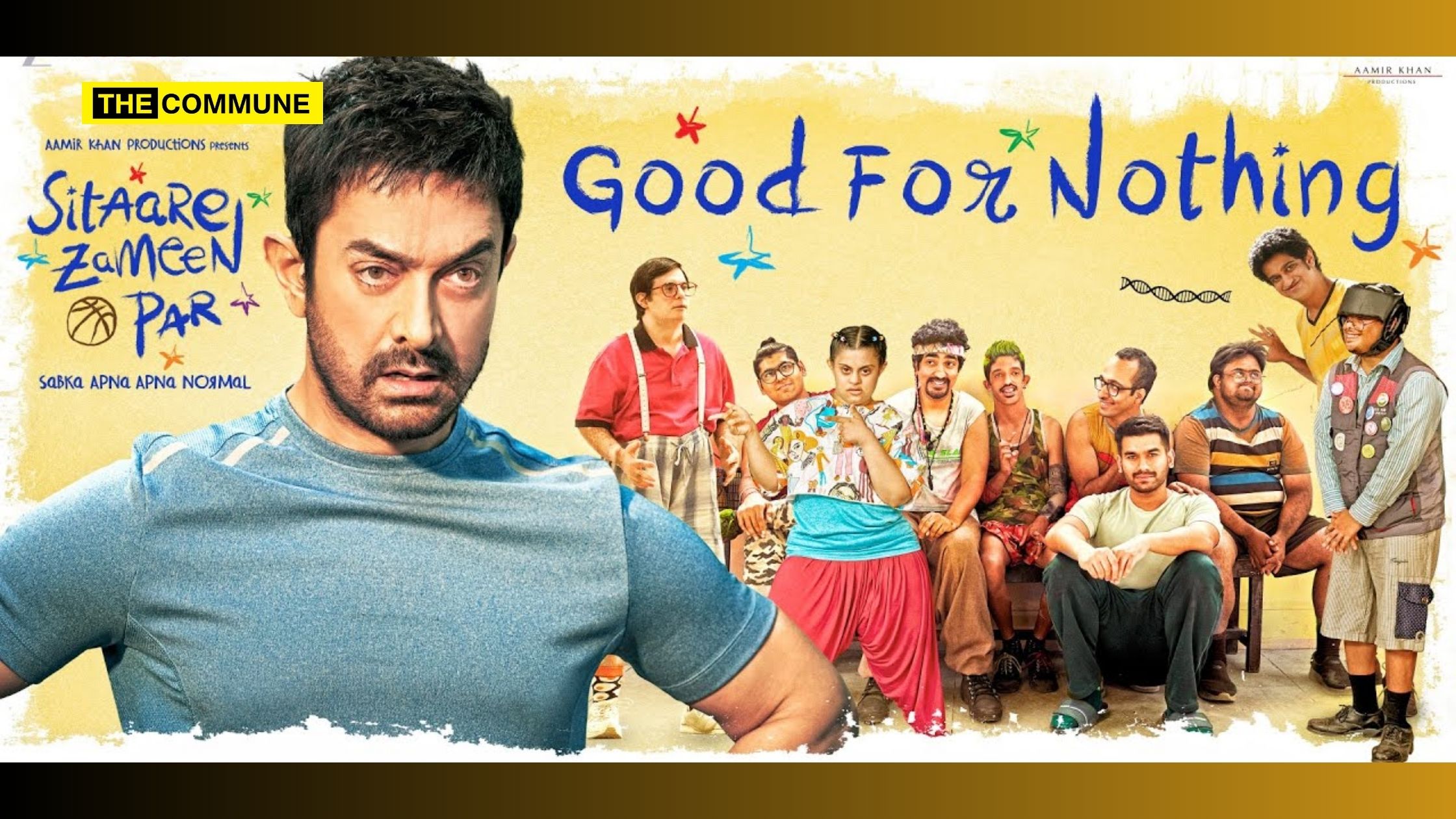
Aamir Khan, Bollywood’s perennial perfectionist, has had a rough patch with back-to-back disappointments in Thugs of Hindostan and Lal Singh Chaddha. The latter, in particular, saw him lean into an over-the-top performance that left audiences cringing. In Sitare Zameen Par, directed by RS Prasanna, Aamir steps back from that exaggerated style, delivering a more restrained act. But Aamir, please stop raising your eyebrows to let us know that you’re acting.
The film, centered around a group of neurodiverse children and their mentor, aims to tug at heartstrings while delivering a feel-good narrative. It’s a premise that echoes Aamir’s own Taare Zameen Par, but Sitare struggles to capture that same emotional depth or the rousing inspiration of a Chak De India. Instead, it lands somewhere in the middle—pleasant but not profound, heartfelt but not unforgettable. The screenplay feels like it’s stuck in a time warp, with a predictable arc that might have charmed audiences a decade ago. In 2025, however, audience sensibilities have evolved, and the film’s old-school approach feels a tad out of touch.
The pacing doesn’t help. The story starts sluggishly, taking its time to introduce the specially-abled characters who are, without question, the heart of the film. Their extraordinary performances—raw, authentic, and brimming with life—steal the show, and director RS Prasanna deserves applause for coaxing such brilliance from them. In fact, a behind-the-scenes look at how the crew nurtured these performances might have been more compelling than the film itself. Yet, the delayed introductions make the audience wait too long for the story’s emotional core to kick in, and there’s no gripping hook at the intermission to keep you invested. RS Prasanna story-telling talent turns out to be ‘good for nothing’ in its failure to truly inspire.
Humor, a key ingredient in feel-good films, is a mixed bag here. Some scenes land well, tickling the ribs with genuine charm, but others try too hard, coming off as forced and flat. The bigger issue, though, is the film’s tendency to preach. Lines about man’s ego or the neurodiverse children being the “real teachers” feel heavy-handed, as if Aamir and team don’t trust the audience to get the point without spelling it out. In an era where subtlety is king, these moments of overt moralizing—especially the forced “gyan” on disability and what’s “normal”—feel dated and cringe-inducing.
Despite these flaws, Sitare Zameen Par isn’t a misstep on the scale of Aamir’s recent flops. It’s a step toward redemption, showcasing his ability to anchor a story with sincerity, even if the magic of his earlier classics remains elusive. The specially-abled cast is the film’s shining light, their performances a testament to Prasanna’s skill in bringing out their potential. But with a predictable narrative, uneven pacing, and a tendency to over-explain, Sitare doesn’t soar as high as it could. It’s a film that warms the heart but doesn’t quite set it ablaze, leaving you wishing for a spark that never fully ignites.
Subscribe to our channels on Telegram, WhatsApp, and Instagram and get the best stories of the day delivered to you personally.