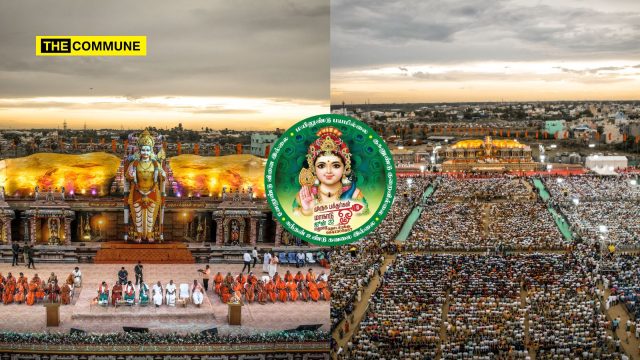
The massive show of Hindu unity at the Muruga Bakthargal Maanaadu in Madurai organized by Hindu Munnani seems to have rattled the DMK and its Dravidianist allies.
The conference, held amid heightened political interest ahead of the 2026 Assembly elections, witnessed a historic moment when five lakh devotees sang the Kandha Shashti Kavasam in unison and a staggering one crore people viewed the event online.
In light of this, the Dravidianists have been pushed to the edge with many now claiming that Murugan is not a Hindu god but a Tamil god and that attempt by ‘Sanghis’ to do politics over Murugan will not give political yields.
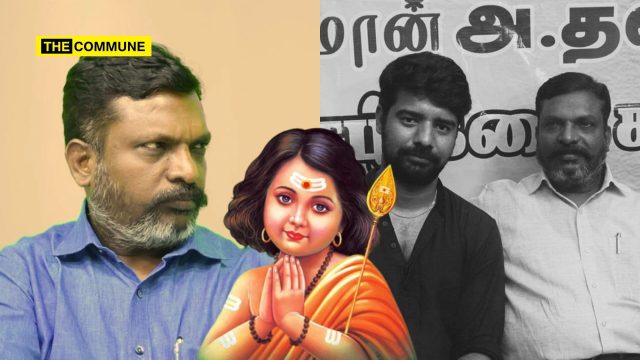
One such character is DMK stooge and VCK MP Thirumavalavan who runs his party as if it was the Dalit wing of the DMK.
In a recent press meet, Thirumavalavan said “Unlike people of other states, people of Tamil Nadu will not be enticeed by communal politics. Murugan too will not be swayed. Murugan is the God of Tamil Nadu. He’ll chase away the Sanghis and ensure that they’re defeated in 2026 elections. Even if they do these rallies, it will not have any effect in Tamil Nadu”.
The point to be emphasized here is how Thirumavalavan sounds like a believer in Lord Murugan.
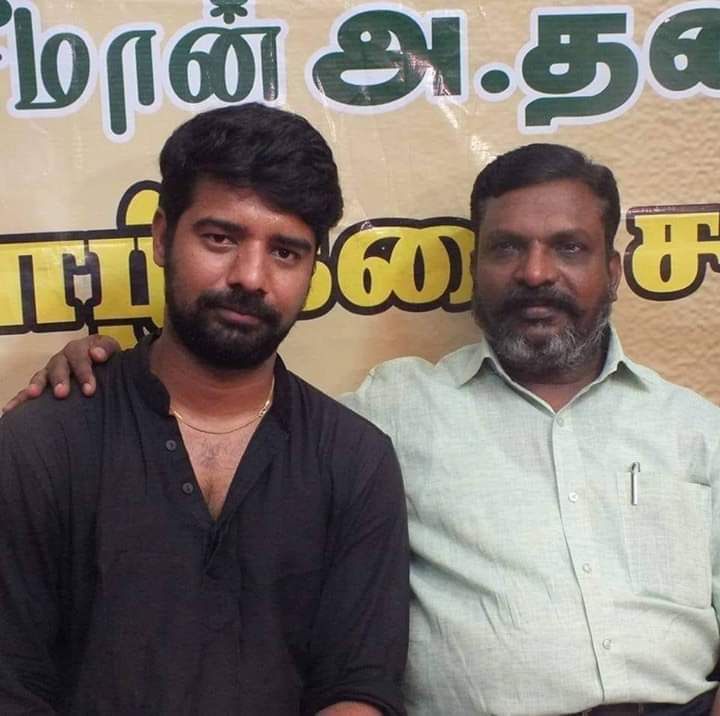
However, the same Thirumavalavan had disparaged Lord Murugan and hugged those who abused the Hindu God.
When Thirumavalavan Opposed Murugan Being Declared As Tamil God
Speaking at an event on 7 January 2021, the Chidambaram MP said “Today we are calling Murugan as our God. Mind you, if you step on that slippery rock you will fall into the deep pit of Sanatana Dharma. That is why Dravidar Kazhagam has totally stayed away from it. Tell me, how can you separate Murugan as Tamil God? He may have been Tamil God. There could be a history for that. But how will you separate and liberate that Tamil God from the wretched clutches of the Sanatan forces [Hindus]?”
Adding further, Thirmavalavan said “If Vinayagan is Murugan’s brother, then he must also be a Tamil God right? Why are we not calling him [Lord Vinayagar] as Tamil God? There are some cooked up stories in all this. Both are brothers. They fought for a mango. Both are brothers and are born to 1 father and 1 mother. Even though he [Lord Sivan] has 2-3 wives, two sons have been born. How can it be that one of them is Tamil God and the other is Hindi God? Why is Vinayagan not being called as Tamil God neither by us nor by them?”
The then AIADMK government had declared Thai Poosam as state holiday. Commenting on the move, he said “If you call Murugan as Tamil God and announce holiday for Thai Poosam, will we as Tamils be able to walk with our heads held high? All of this is being done for votes. If we go by this, then we will fall in to their trap.”
Thirumavalavan Supported Karuppar Koottam Who Abused Murugan
Thirumavalavan had expressed his support for Karuppar Koottam after they had published a video in which they made slanderous abusive comments about Lord Murugan and the sacred hymn Kandha Sashti Kavasam.
Dravidianist Duplicity
Thirumavalavan’s shifting stance on Lord Murugan exposes the opportunistic and contradictory nature of Dravidianist politics. While he now invokes Murugan as a Tamil deity to counter what he calls “Sanghi” influence, his earlier speeches reveal deep hostility towards the very idea of associating Murugan with Tamil identity, dismissing it as a trap of Sanatana Dharma. His past defense of those who insulted sacred Hindu traditions further undercuts his current claims. This duplicity highlights a larger anxiety within the Dravidianist camp—faced with a growing assertion of Hindu unity and devotion, they are struggling to recalibrate their rhetoric in a way that preserves their ideological relevance while not alienating the religious sentiments of the Tamil people. The Madurai event was not merely a religious congregation; it was a cultural assertion that has unsettled long-standing narratives, forcing even the loudest detractors to speak in the name of a god they once denounced.
Subscribe to our channels on Telegram, WhatsApp, and Instagram and get the best stories of the day delivered to you personally.
The grand Muruga Devotees Conference, organised by the Hindu Front in Madurai under the banner “Protect the Hill, Protect the Temple”, has drawn national attention after a staggering one crore people viewed the event online, with over 80 lakh likes across various social media platforms.
The conference, held amid heightened political interest ahead of the 2026 Assembly elections, witnessed a historic moment when five lakh devotees sang the Kandha Shashti Kavasam in unison. The devotional event, heavily shared on Facebook, YouTube, and X-Dal, reached audiences not only in Tamil Nadu but also across the Tamil diaspora in Singapore, Malaysia, and other countries.
Organisers revealed that the conference attracted over 1.5 million international viewers, with full-length streams of the event watched widely on YouTube. Licensed television and digital platforms also broadcast the event live, further boosting its reach.
The scale and digital reach of the conference have reportedly startled opposition parties, particularly the DMK, as the visuals and devotional energy resonated with lakhs of people across the state and beyond. The massive turnout and online traction are being seen as a politically significant moment, particularly in the southern districts where Murugan worship is deeply rooted.
Leading Hindu Front organisers hailed the conference as a “spiritual milestone”, stating that more than one crore people watched the conference live and that it was a major achievement. They went on to add that this showed that spirituality had power, and the collective devotion of Tamil people was still alive and strong.
The conference, despite logistical and ideological challenges, emerged as one of the largest mass devotional gatherings in recent memory, blending traditional spirituality with the digital age to leave a cultural and political imprint.
India is likely to see a GDP growth of 6.5 per cent in current fiscal (FY26) due to robust domestic demand, a normal monsoon and monetary easing, a report by S&P Global Ratings said on Tuesday.
Domestic demand resilience is particularly relevant in limiting the economic slowdown in economies less exposed to goods exports such as India. “We see India’s GDP growth holding up at 6.5 per cent in fiscal 2026 (year ending March 31, 2026). That forecast assumes a normal monsoon, lower crude oil prices, income-tax concessions and monetary easing,” said the report covering Asia-Pacific economies.
In India, falling food inflation also helps contain headline inflation. The country’s annual rate of inflation based on the Wholesale Price Index (WPI) eased further to a 14-month low of 0.39 per cent in May from 0.85 per cent in April and 2.05 per cent in March.
Meanwhile, the country’s inflation rate based on the Consumer Price Index (CPI) has declined to 2.82 per cent in May this year compared to the same month of the previous year. This is the lowest level of retail inflation since February 2019, figures released last week showed.
Food Inflation declined to 0.99 per cent during May, which is the lowest since October 2021. This is the seventh month in a row that food inflation has registered a decline as the agricultural output has been on the rise. The RBI has also revised its inflation outlook for 2025-26 downwards from the earlier forecast of 4 per cent to 3.7 per cent, Reserve Bank Governor Sanjay Malhotra said on Friday.
The sharp decline in inflation has enabled the RBI to go in for a 50 basis points cut in the repo rate from 6 per cent to 5.5 per cent to spur growth in the economy, in the monetary policy review.
According to S&P Global Ratings, many regional economies had a good start to 2025 on robust domestic demand. Several got a temporary fillip from a front-loading of exports to the U.S. ahead of anticipated tariffs. In India, growth picked up after a soft patch. The report now expects 4.3 per cent GDP growth in China in 2025 and 4.0 per cent in 2026.
“While this is significantly lower than the government’s target for this year, it would be a solid result given the external strains. Chinese imports will be subdued this year and next, but not as weak as exports,” it mentioned. Asia-Pacific economies face sizable external pressure, notably from uncertain US tariff policy and soft imports in China.
“We expect domestic demand to broadly remain healthy, in part because of policy easing. But what this means for the resilience of regional economies varies sharply, with export-dependent ones less well placed,” the report mentioned.
–IANS
Subscribe to our channels on Telegram, WhatsApp, and Instagram and get the best stories of the day delivered to you personally.
Taiwan’s Ministry of National Defence (MND) on Tuesday reported the detection of 12 sorties of Chinese People’s Liberation Army (PLA) aircraft and seven People’s Liberation Army Navy (PLAN) vessels operating around its territory.
According to the MND, the activity was observed up until 6 a.m. (local time), with 10 of the 12 PLA aircraft crossing the median line of the Taiwan Strait and entering Taiwan’s northern, southwestern, and southeastern air defence identification zones (ADIZ).
“12 sorties of PLA aircraft and 7 PLAN vessels operating around Taiwan were detected up until 6 a.m. (UTC 8) today. 10 out of 12 sorties crossed the median line and entered Taiwan’s northern, southwestern and southeastern ADIZ. We have monitored the situation and responded,” the defence ministry said in a statement.
This latest incursion follows similar activity the previous day when Taiwan’s defence ministry recorded five Chinese military aircraft and nine PLAN vessels near its territory by 6 a.m. on Monday.
“5 sorties of PLA aircraft and 9 PLAN vessels operating around Taiwan were detected up until 6 a.m. (UTC 8) today. 3 out of 5 sorties crossed the median line and entered Taiwan’s southwestern and southeastern ADIZ. We have monitored the situation and responded accordingly,” the MND noted in a post on X.
The increase in Chinese military manoeuvres around Taiwan underscores Beijing’s intensifying pressure campaign. Taiwan, governed independently since 1949, continues to face threats from China, which claims the self-ruled island as part of its territory under the “One China” principle and has not ruled out the use of force to achieve reunification.
Taiwanese defence forces have remained on high alert, tracking the incursions and responding to them as part of ongoing efforts to safeguard the island’s sovereignty and maintain regional stability.
–IANS
Subscribe to our channels on Telegram, WhatsApp, and Instagram and get the best stories of the day delivered to you personally.
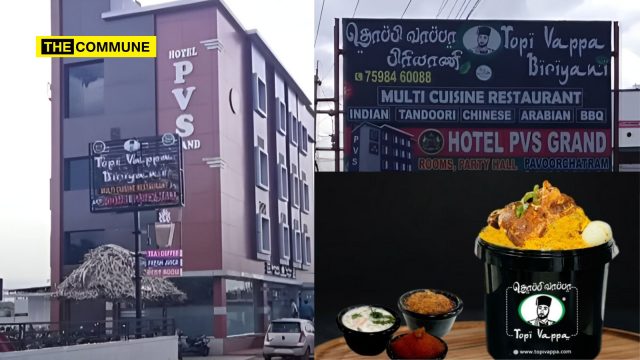
In a troubling development, a second family has been hospitalized after experiencing symptoms of vomiting and fainting—just a day after a similar incident involving nine people. On 23 June 2025, Murugan and his family of four from Guruswamypuram were admitted to a private hospital after falling ill, reportedly following the consumption of bucket biryani purchased from a private Thoppi Vappa Biryani outlet located on Melappavur Road in Pavurchatram, Tenkasi district.
This incident comes in the wake of a similar case on 22 June 2025, where nine members of a family from Kadayam who had also eaten bucket biryani from the same shop suffered severe food poisoning symptoms and required hospitalization.
According to sources, the affected individuals displayed symptoms including vomiting and loss of consciousness, suspected to be caused by an allergic or toxic reaction. The fact that a total of 13 people have now been hospitalized after eating from the same establishment has raised serious concerns and caused alarm among local residents. Health officials are expected to investigate the source of the contamination.
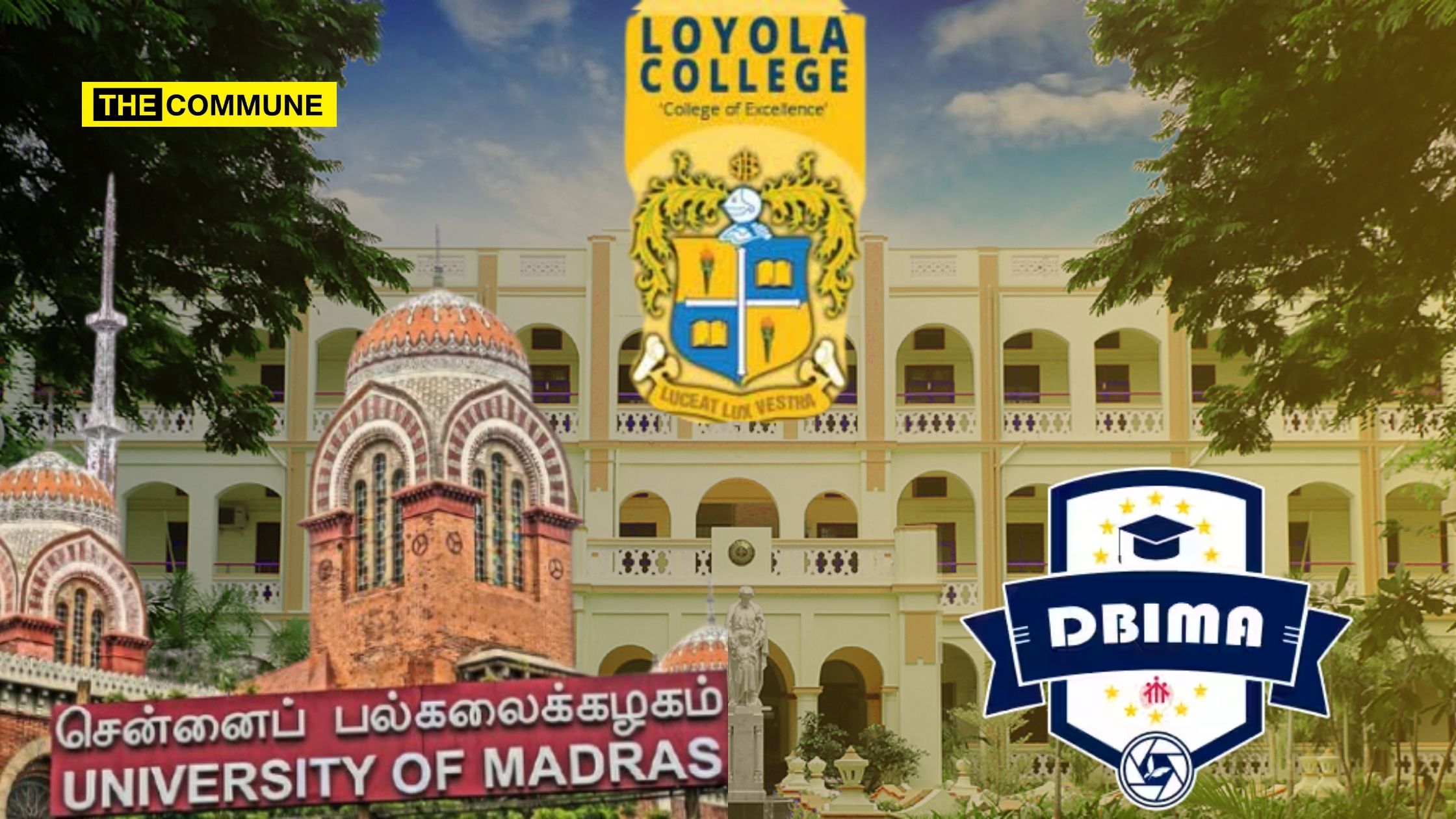
The Legal Rights Protection Forum (LRPF), a legal advocacy group, has filed a formal complaint with the University Grants Commission (UGC), Ministry of Education, and the University of Madras against Loyola College, Chennai, accusing the institution of running an unauthorized diploma program in filmmaking in collaboration with a foreign institute, thereby violating key higher education regulations and potentially endangering the visa status of Indian students abroad.
The program in question, titled “Diploma in Filmmaking (AI) France”, was launched by Loyola College in partnership with Don Bosco International Media Academy (DBIMA) in Paris, France. According to promotional material on both institutions’ websites, the course entails eight months of training in Chennai and a one-month project residency in Paris, offering dual certification from both institutes.
However, in an RTI reply dated March 21, 2025 (Ref: PIO/RTI/2024/219), the University of Madras has categorically denied granting any affiliation, approval, or record of foreign collaboration for this diploma. The complaint also asserts that the program violates multiple clauses of the UGC (Academic Collaboration) Regulations, 2022, which govern joint academic ventures between Indian and foreign institutions.
Serious Regulatory and Immigration Violations Alleged
The LRPF alleges that:
1. The course was launched without mandatory approvals from the affiliating university or the UGC.
2. Don Bosco International Media Academy does not figure in the top 1000 rankings of QS or Times Higher Education, making the collaboration ineligible under UGC rules.
Students enrolled in the program were reportedly charged ₹15–20 lakh each, and a batch of seven students has already been sent to France.
The most alarming allegation relates to potential misuse of international student visa norms. Since the program lacks formal recognition, the visas issued to students may be subject to revocation, putting them at risk of deportation, future visa denials, and academic and financial losses.
Request For Immediate Government Action
In its complaint, LRPF has urged the UGC to:
1. Initiate a probe under Rule 8 of the UGC Academic Collaboration Regulations.
2. Take action against Loyola College under Section 14 of the UGC Act for running an unapproved program.
3. Notify the public through the official UGC website that the program is unauthorized.
4. Coordinate with the French Embassy in India to verify visa statuses and protect affected students.
5. Ensure reimbursement of fees and assistance in academic rehabilitation for the affected students.
Copies of the complaint have been marked to the Governor of Tamil Nadu, French consular authorities, and other relevant government bodies.
Loyola College Yet to Respond
As of now, Loyola College has not publicly responded to the allegations. The controversy raises serious questions about the due diligence exercised in international academic collaborations and the safeguards in place to protect students from exploitative or unrecognized programs.
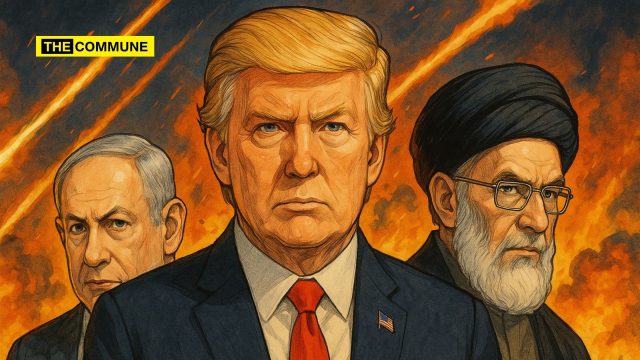
Iran Israel conflict isn’t really about Iran’s nuclear program or assassinating its top leadership. The deeper, long-term objective seems to be regime change. But achieving that is far more complicated than just military strikes or media pressure. There are only a few possible paths to such a change—and none of them look likely at this point.
Case 1: A Ground Invasion
Think back to Iraq. The U.S. gained air superiority over Saddam’s forces in no time, yet regime change required boots on the ground. The same principle applies here. But Iran isn’t Iraq.
The country’s size, landscape, and defensive depth are completely different.
The Iranian military is more disciplined and battle-hardened than Saddam’s ever was.
Even if a combined U.S.-Israel ground operation were launched, it wouldn’t be an easy win. Even if they win, it would be long, costly, and messy. And then there’s the possibility of Russia and China stepping in to supply Iran – much like the U.S. is aiding Ukraine. In this scenario, the conflict could be a proxy war dragging on indefinitely, turning into a slowburning, expensive war of attrition.
Case 2: Civil War Scenario
Some might point to Afghanistan (2021) or Syria (2024) as examples of regime change through civil war. But those countries already had fragmented political landscapes and powerful local militant factions.
Syria endured a brutal civil war for more than a decade. Assad didn’t fall to foreign troops directly but to another faction that rose from within but backed by foreign powers – Al-Sharaa’s group.
In Afghanistan, Taliban forces didn’t come out of nowhere. They had existed since the days of the Mujahideen’s victory over the Soviets, fought through civil wars, were removed temporarily by the U.S. using local militias like the Northern Alliance, but ultimately re-emerged.
Iran, by contrast, doesn’t have any such homegrown armed opposition strong enough to attempt a power grab. There’s no militia waiting with foreign support and enough influence, support, or firepower to challenge Tehran.
Case 3: Uprising and Military Coup
Western media loves to highlight public dissatisfaction in Iran. There’s some truth to it. Yes, people are frustrated with the regime’s hardline stance – but the idea that Iran is on the verge
of a mass revolt is often overblown.
West is trying to reinstall Shah Regime in Iran but even among the dissenters, very few are actually calling for foreign intervention or a return to monarchy headed by Shah. And when it comes to the military, the picture gets more complex. Iran has two key forces:
The Artesh, the traditional army from before the 1979 revolution.
The IRGC, created by Khomeini to keep the Artesh in check.
Today, the IRGC wields far more power, but the two forces still operate in tandem. Unless there’s a dramatic shift within Artesh—something we’ve seen no signs of—an internal coup looks very unlikely. And let’s not forget: the Iranian public has seen what American regime change looks like in their neighbourhood. Iraq and Afghanistan are their stark reminders.
Most Iranians, even those disillusioned with their leaders, won’t back a movement that opens the door to foreign intervention.
So where does that leave us? Not at a breakthrough. Not at peace. Not even at victory for either side.
We’re looking at a prolonged stalemate. The idea of toppling Iran’s regime may keep popping up in think tanks and newsrooms, but on the ground, the odds are slim. All the
realistic paths to regime change are blocked. The longer this drags on, the higher the global economic costs—and still, the political outcome may be nothing more than a deadlock.
Saiganesh is a political commentator and the founder of Desiyasiragugal YouTube channel.
Subscribe to our channels on Telegram, WhatsApp, and Instagram and get the best stories of the day delivered to you personally.
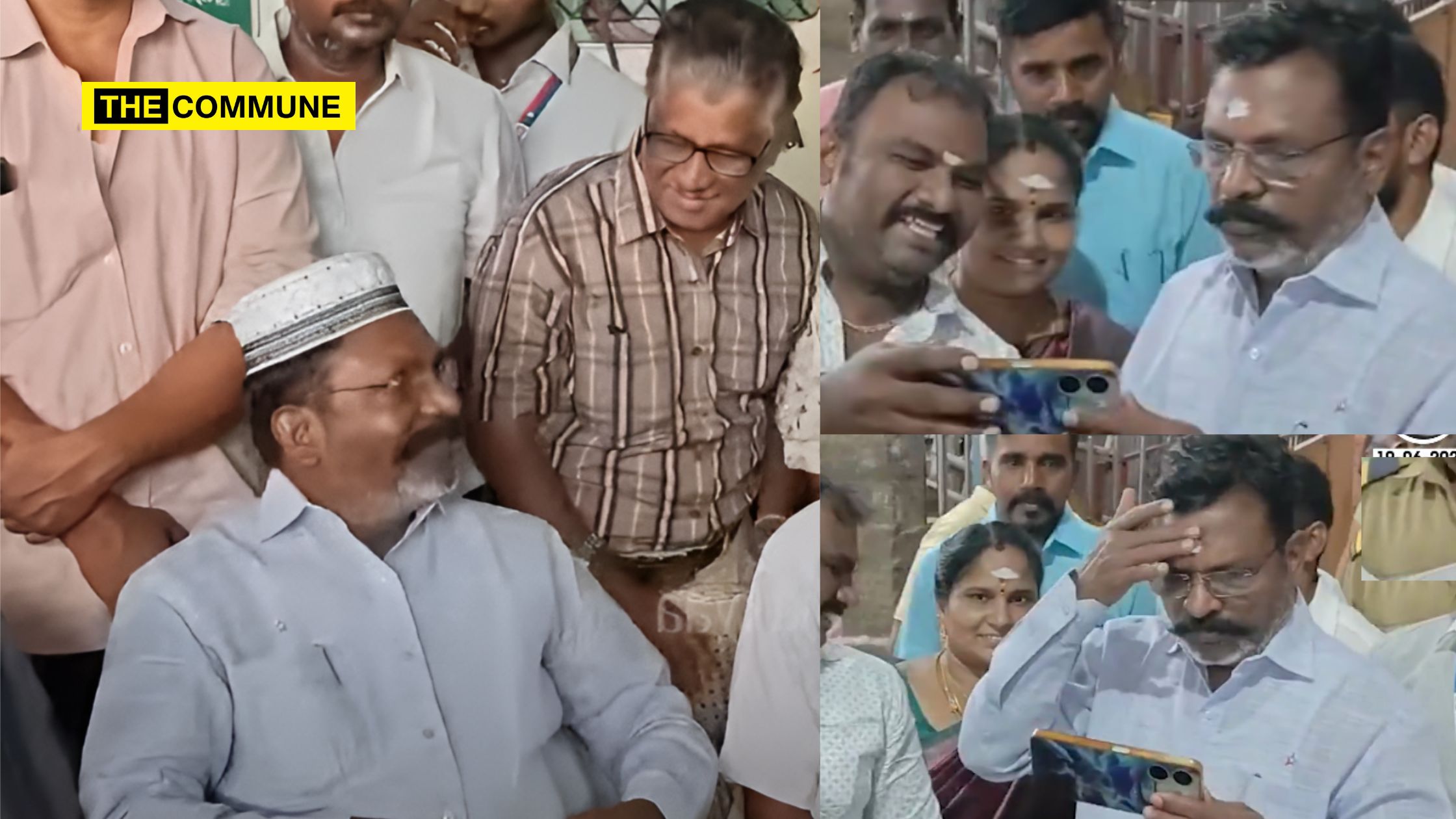
On 19 June 2025, VCK MP Thirumavalavan courted controversy by rubbing off the vibhuti on his forehead after his visit to the Thirupparankundram temple when a supporter asked for a selfie with him.
The public act of wiping off the vibhuti drew criticism from various quarters, with many accusing Thirumavalavan of attempting to distance himself from Hindu symbolism for political or ideological gain but while during the same visit to Thiruparankundram, he proceeded to the nearby Sikkandar Hill dargah, where members of the Muslim community warmly received him and placed a skullcap on his head – an act he accepted with a smile.
Critics labelled this as an example of selective secularism and hypocrisy, arguing that true secularism means either staying equidistant from all religions or treating them equally. Appeasing one religious group while dismissing or disrespecting another, they say, amounts to political opportunism that risks alienating the sentiments of the Hindu community.
Speaking to the press amid the controversy a few days ago he said, “I had the vibhuti for nearly half an hour on my forehead. You did not see it on my forehead for half an hour. Can I keep it on my forehead all day?”
Following the backlash, today the VCK MP claimed he did not rub off the vibhuti intentionally. He said, “I didn’t intentionally wipe off the vibhuti. I worshipped at the Thiruparankundram Murugan Temple. At that time, many people were taking pictures with me. As usual, I wiped my forehead when taking a selfie with someone. I didn’t intentionally rub off the vibhuti. But they are criticizing me harshly for that.”
Calls Hinduism A Threat To Liberty, Equality & Fraternity
On 18 October 2024, VCK chief Thirumavalavan via his official X account stated, “How can Savarkar’s descendants tolerate the fact that the entire country is talking about revolutionary Ambedkar? #AmitShah has revealed how much they are fed up. He has torn off his own veil. This is the true face of the Sangh Parivar. The Constitution and revolutionary Ambedkar are their real enemies. This is what the Viduthalai Chiruthaigal has been continuously exposing. All the praise given by the Sangh Parivar to the revolutionary Ambedkar is a great act of deceiving the common people. The revolutionary Ambedkar takes the form of ‘universal form’ (Vishwaroopam). The conspiracy attempts of the Sanadhanis will be in ashes!” He further, with intent, shared an image of Ambedkar along with a quote aimed at criticizing Hinduism and Hindus, seemingly to settle a personal political score, “Whatever Hindus say, Hinduism is a threat to Liberty, Equality, and Fraternity.”
Tirupati Laddu Prasadam Row
During the recent controversy over the presence of beef and pig fat in Tirupati Laddu Prasadam, which sparked outrage among the Hindu community, VCK leader and Chidambaram MP Thol Thirumavalavan intentionally trivialized the issue by claiming that animal fat in sweets is common, further exacerbating the situation.
A laboratory report revealed that beef tallow, fish oil, and palm oil were used to prepare laddus, distributed as prasad at the renowned Sri Venkateswara temple in Tirupati. The report’s findings indicate that the ghee used to prepare the iconic Tirupati laddu prasadam during the YSRCP regime contained traces of animal fat, including beef tallow and fish oil, leading to widespread outrage and claims of disrespect toward religious sentiments.
Speaking to a reporter after hoisting a 62-foot flag of his party near Madurai, Thirumavalavan said, “In most sweets or food products, using animal fat is normal and is a common practice across the world. I don’t know why it is being politicized. If it (Tirupati Laddu) should not contain animal/beef fat, then accordingly guidelines should be framed to prevent such occurrences in the future.”
Called Temples – A Place with Obscene Figurines
Some time ago, Thirumavalavan addressed a gathering, expressing opposition to educational policies based on Sanatana Dharma and humorously criticizes Hindu temples in front of the audience that, “if the building has a dome, it is a mosque. If it is tall and straight, it is a church. And if it has dirty figurines, it is a temple”.
Called For Destruction Of All Hindu Temples
Thirumavalavan is known for his anti-Hindu politics and for spreading canards about Hinduism. He had once called temple gopurams structures with ugly figurines. In 2017, Thirumavalavan called for the destruction of all Hindu temples and building of Buddhist viharas in those places.
Thirumavalavan said, “Destroy all hindu temples and in it place build Buddhist Viharas”. Addressing a gathering convened in Perambalur, VCK Chief Thirumavalavan, asserted that areas housing Shiva and Perumal temples were originally sites of Buddhist monasteries. He contended that these Buddhist structures were replaced by the construction of Shiva and Perumal temples, advocating for their demolition to pave the way for the erection of Buddhist temples in their stead. Furthermore, he proposed the establishment of Buddhist temples at the purported sites of Lord Thiruvaranganathar’s presence and the Kanji Kamachi Amman Temple.
Said Building Temples Is A Business & Profitable
In a book release event held in Chennai, Thirumavalavan said, “Building a temple is a business. I am not joking. Unlike any other business, building temples is the most profitable and provides the highest income. Which other business is more profitable than the income generated by the Tirupati temple? What are the temple’s income and expenditure? People donate money to the Tirupathi temple. People pour money into the Ayyappan temple.”
Called Women Adhering to Sanatana Dharma Prostitutes
In another occurrence during a webinar hosted by Periyarist groups, Thirumavalavan referred to women adhering to the Sanatana tradition as prostitutes. A particular excerpt from his speech circulating on social media highlights, “how are women valued in Sanatana Dharma, how are they treated? From time immemorial, how they have been oppressed and exploited… what does Sanatana Dharma say about women? Basically, women are created as prostitutes by God. All women are prostitutes as per Hindu Dharma…Manu Dharma… All women are prostitutes… that’s how they were created by God… they’re of a status lower than men. It applies to Brahmin women as well as to other women”.
Participated In Eradicate Sanatana Dharma Conference
He also took part in the September 2023 Eradicate Sanatana Dharma conference where Udhayanidhi Stalin had compared Sanatana Dharma to mosquito and dengue and said that it had to be eradicated. In the same conference, Thirumavalavan had said“Sanatana Dharma can be destroyed when we turn OBC against FC (Forward Caste).”
Peddled Lies About Sanatana Dharma Comparing It With Islam & Christianity
On International Women’s Day (8 March 2024), a special symposium took place at Chennai Ambedkar Thital, with Thirumavalavan as the chief guest discussing “Revolutionary Ambedkar and Women’s Rights.” He said, “Take Islam, Christianity, Buddhism, Jainism, or any other religion, the core fundamental philosophy of it would be fraternity i.e brotherhood. There is one religion in the world that denies brotherhood completely, they are asking do you know what is Sanatana Dharma? Sanatana Dharma is a dharma that says there should not be brotherhood, they say that we have understood it wrongly. Today a women judge in High Court has said that Sanatana Dharma is different from rituals, yes that’s correct, as we say, rituals and principles are different, but this Sanatana Dharma’s particular principle defines hierarchy based on birth and no one can deny it.”
“The word Sanatana means permanent, that’s different, means unchanging, it is anti-physical, anti-scientific. Nothing is fixed, everything is changing, this is the law of physics, this is the dialectic rule, that is the paradox, but they are… In Sanatana Dharma discrimination is its core, discrimination is the lifeline of Sanatana Dharma in no other religion discrimination will be the basic factor, No one talks about this. They ask why I did not criticize Christianity or Islam, without criticizing them why singling out us, that is because the discrimination is here only. I’m saying that in core principles, RC (Roman Catholic) can have discrimination, it’s an institution. CSI (Church Of South India) can have discrimination, it’s an institution, but there is no discrimination in Christianity that is the difference between the two,” he added.
Insulted Periyapuranam And Hinduism
During the Nandanar Guru Puja celebration, a sacred thread ceremony was organized to promote inclusivity. One of the key highlights of the event was Governor RN Ravi presiding over a ceremony in which over 100 individuals from Adi Dravidar communities were presented with the sacred thread, known as ‘poonool’ or ‘janeu,’ traditionally worn by Brahmins and other communities. This symbolic gesture aimed to foster inclusivity and equality. However, I.N.D.I.A. ally and VCK MP seized the opportunity to launch a tirade against Hinduism.
Hitting out at Tamil Nadu Governor RN Ravi for presiding over the function in which Nandanar community were adorned the poonool, Thirumavalavan said that the act amounted to denigration the working-class people in the name of upliftment.
“This is what is Sanathanam“, he said condemning the Hindu faith.
“Does the governor say that others who do not wear poonul are inferior? Will the Governor make the Adi Dravidians who are dressed in Poonul as temple priests?“, he added.
“Let us reject the Periya Puranam which denigrates the king Nandan, as a cow-eating Pulayan“, Thirumavalavan said.
Subscribe to our channels on Telegram, WhatsApp, and Instagram and get the best stories of the day delivered to you personally.
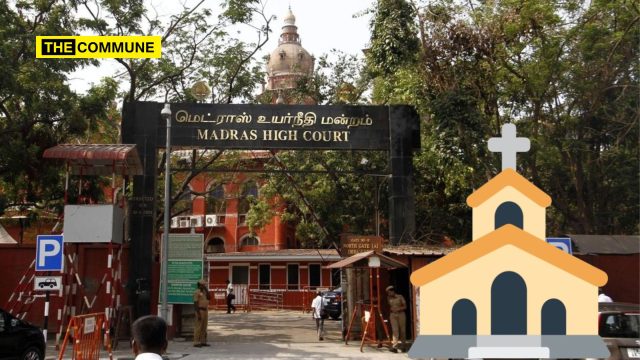
The Madras High Court has held that a residential house cannot be converted into a prayer hall without proper permission from the authorities under applicable planning laws.
Justice N. Anand Venkatesh made this observation while dismissing a plea filed by Pastor L. Joseph Wilson of the Word of God Ministries Trust, who had challenged a notice issued by the Tahsildar, Kodavasal Taluk, directing him to shut down a prayer house within 10 days.
The petitioner claimed that he had purchased the property in January 2023 and had been holding regular prayer meetings with relatives and neighbours. He said an application for building plan approval for constructing a church was rejected by the district collector, following which the Tahsildar issued the impugned notice.
The government, in its response, submitted that the petitioner was using the premises for large-scale public worship without requisite permissions and that the prayer meetings were causing disturbance to neighbours.
Citing previous orders of the High Court, particularly W.P.(MD) No.5226 of 2016, the judge reiterated that religious gatherings of this scale transform the character of the property into a public place of worship, requiring compliance with the Tamil Nadu Panchayats Building Rules and planning permissions.
“It is clear from the above judgment that conducting prayer meetings in a prayer hall requires obtaining permission from the authority concerned under the relevant rules. Hence, the petitioner cannot, as a matter of right, have a prayer hall to conduct prayer meetings without obtaining any permission,” the court observed.
The court also declined to accept an affidavit filed by the petitioner in which he undertook to conduct house prayers “peacefully without using loudspeaker and microphone,” calling it inadequate.
“This undertaking given by the petitioner falls short of the undertaking that was expected by this Court. Mere non-usage of loudspeaker and microphone will not solve the issue. The crux of the issue is that the petitioner cannot convert a house into a prayer hall to conduct prayer meetings,” the court said.
Relying on judgments including Church of God (Full Gospel) in India v. K.K.R. Majestic Colony Welfare Association (2000) and Acharya Jagadishwarananda Avadhuta (2004), the bench noted that religious rights, though protected under Articles 25 and 26 of the Constitution, are subject to reasonable restrictions and public order.
“In any case, if there is such practice, it should not adversely affect the rights of others including that of being not disturbed in their activities,” the Supreme Court had held in Church of God, which the High Court quoted in support of its conclusion.
Accordingly, the court directed that the seal on the petitioner’s premises may be removed, but strictly on the condition that it is not used as a prayer hall unless due permission is obtained from the District Collector. If the property is again used for public worship without such approval, the authorities are at liberty to take appropriate action.
The writ petition was disposed of with these directions.
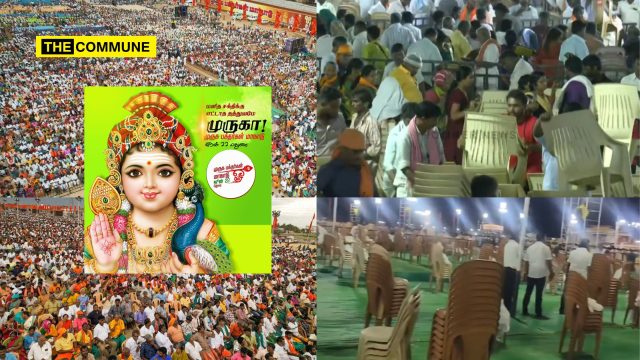
Social media users took a jab at the DMK after the recently concluded Murugan Devotees Conference organized by Hindu Munnani drew massive public participation — not just for its scale, but for the discipline on display. At the end of the event, attendees followed organizers’ instructions and neatly arranged the chairs before leaving. Hindu Munnani volunteers and other Hindu groups stayed behind to clean up the entire venue.
By the next morning, Amma Thidal, the event site, was back to how it was before the event – all chairs rearranged and spotless — returned in the same condition it was initially, without a trace of litter. This display of civic responsibility sparked online praise and comparisons to DMK meetings, where cadres are often accused of leaving behind heaps of garbage — or worse, walking off with anything they can get their hands on.
While the Murugan Devotees Conference organized by Hindu Munnani drew praise for the discipline of its attendees who put the venue back to its original form, recent scenes from DMK events have drawn ridicule for quite the opposite behavior.
In June 2025 in Tiruppur, during the wedding reception of DMK MLA Selvaraj’s daughter, people were seen scrambling to grab sugarcane and banana garlands used for decoration.
திருப்பூரில் திமுக எம்.எல்.ஏ செல்வராஜ் மகளின் திருமண வரவேற்பு நிகழ்ச்சியில் கரும்பு,வாழை தார்களை போட்டிபோட்டுக்கொண்டு எடுத்து சென்ற மக்கள்!
— PuthiyathalaimuraiTV (@PTTVOnlineNews) June 11, 2025
A similar scene unfolded in Virudhunagar in 2024, where after Chief Minister M.K. Stalin’s event concluded, people began picking up bananas and coconuts that had been used to decorate the stage.
Back in June 2024, a DMK public meeting in Velachery, Chennai—attended by DK’s Suba Veerapandian, director Karu Pazhaniappan, and Minister Ma. Subramanian—saw something even more bizarre. As the meeting wrapped up, party cadres and attendees helped themselves to the chairs arranged for seating, carrying them on their heads as they walked home.
In another case from Salem, during a DMK conference, cadres didn’t stop at chairs. Reports allege they took off with 20-litre water cans provided for the event. To make matters worse, the canteen owner who had supplied food later complained that utensils like karandis (ladles), cookers, oil packets, rice bags and even other kitchen items were stolen—right in front of them.
The contrast between the dignity displayed at religious gatherings and the unruly scenes at political events has become a subject of mockery online, with many questioning the culture of entitlement and chaos that seems to follow DMK functions.
Subscribe to our channels on Telegram, WhatsApp, and Instagram and get the best stories of the day delivered to you personally.