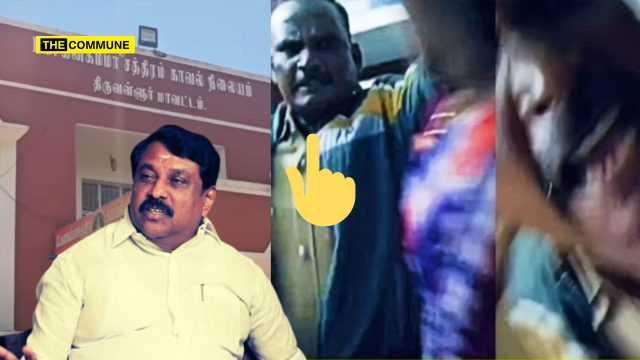
In yet another “win” for the Dravidian Model government, a video has surfaced online showing an employee at a government-run TASMAC liquor outlet in Thiruvennainallur, Villupuram district, allegedly charging ₹10 more than the Maximum Retail Price (MRP) for a bottle of alcohol. The clip has quickly gained traction on social media.
Residents have long reported that this particular TASMAC shop, located in the Thiruvennainallur town panchayat area, consistently adds extra charges of ₹10 for a quarter bottle and ₹15 for a beer bottle beyond the listed price.
In the viral video, a customer questions the staff after being asked to pay ₹240 for a quarter bottle that is priced at ₹230. In response, the employee dismissively claims there’s nothing anyone can do about it, sparking public outrage.
Such overpricing appears to have become a routine issue in several government-run TASMAC shops. Despite mounting video evidence and frequent complaints, authorities including DMK ministers responsible for the Prohibition and Excise Department often deny the allegations.
This persists even though the judiciary has issued clear directives on the matter. In a 2020 ruling, the court mandated that TASMAC must sell liquor strictly at MRP. It imposed a fine of ₹1,000 for every rupee charged above MRP, capped at ₹9,000 plus GST. Furthermore, if overcharging exceeds ₹30, both the involved employee and the shop supervisor must be suspended immediately.
Despite these strict rules and penalties, the illegal practice of overcharging continues unabated, raising concerns over enforcement and accountability in state-run liquor sales.
In April 2025, a viral video of a foreign tourist being overcharged at a Chennai TASMAC outlet reignited scrutiny over pricing irregularities under the supervision of Tamil Nadu’s Prohibition and Excise Minister Senthil Balaji. The tourist was charged ₹180 for a beer with an MRP of ₹140, with staff casually admitting to inflated pricing, citing the presence of an attached bar.
This incident echoes long-standing complaints about overcharging and lack of price transparency at TASMAC outlets, often operating without displayed rate cards or functioning billing systems. The controversy follows ongoing ED investigations into a ₹1,000 crore TASMAC scam and a critical CAG report highlighting issues such as non-functional PoS machines, irregular tenders, and unpaid excise duties. Despite mounting evidence, overcharging remains widespread, suggesting systemic corruption and administrative negligence.
Subscribe to our channels on Telegram, WhatsApp, and Instagram and get the best stories of the day delivered to you personally.
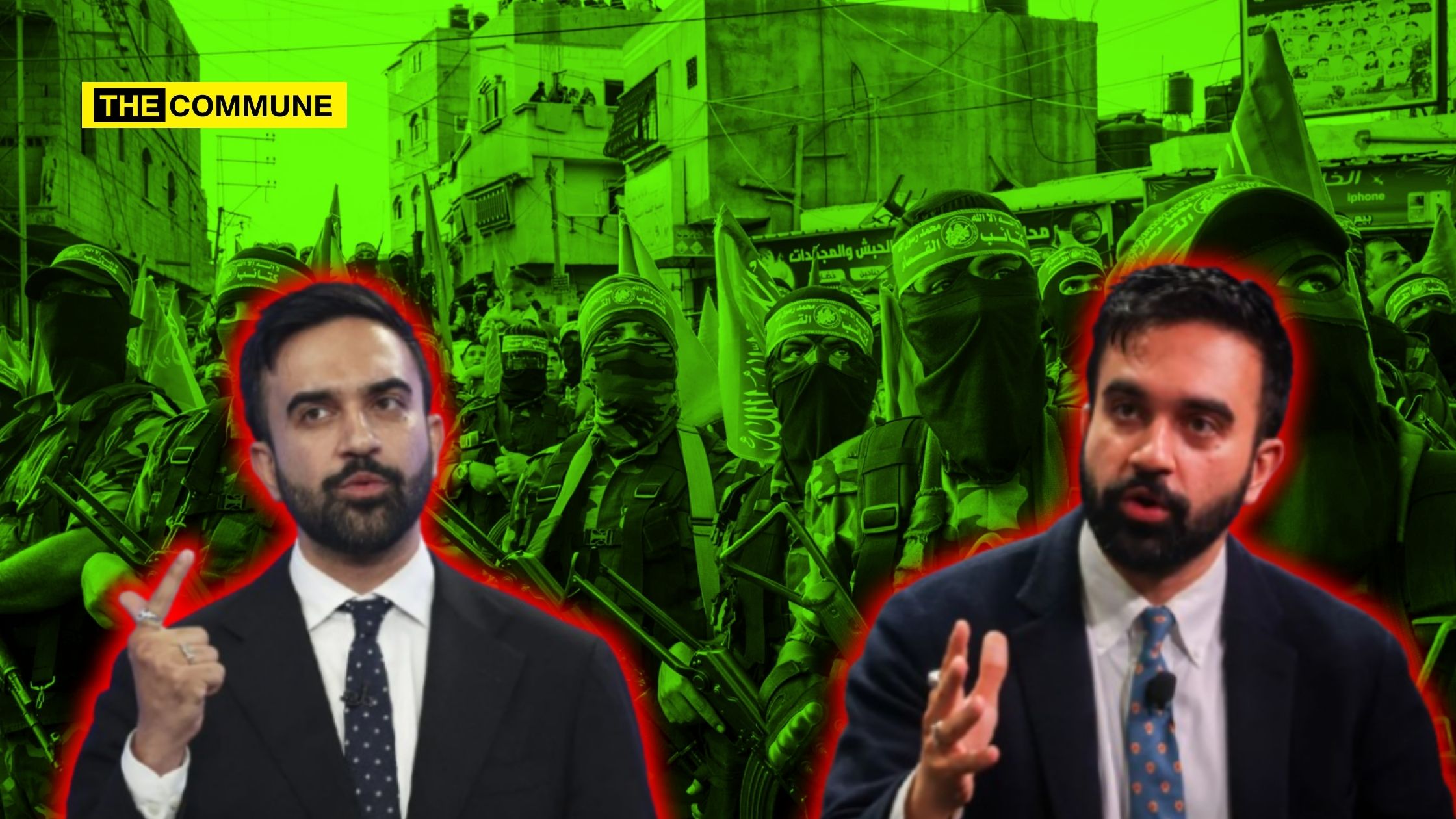
In a stunning political upset, self-described socialist Zohran Mamdani has won the Democratic primary for New York City’s mayoral race, defeating former governor Andrew Cuomo and capturing the support of the party’s progressive wing.
Mamdani, a 33-year-old state assembly member, built his campaign around tackling the city’s rising cost of living. His platform included ambitious proposals such as free public buses, universal childcare, expanded affordable housing, and an increase in the minimum wage. He pledged to fund these policies through new taxes on the wealthy.
If elected in November, Mamdani would become the first Muslim and first Indian mayor in New York City’s history.
The primary result deals a significant blow to Andrew Cuomo, who was attempting a political comeback following his resignation amid a sexual harassment scandal. Once considered the frontrunner due to his executive experience and name recognition, Cuomo ultimately conceded defeat late Tuesday night. “We are going to take a look and make some tough decisions. Tonight is his night,” he said.
🚨BREAKING🚨
Andrew Cuomo has conceded to Zohran Mamdani.
“Tonight was not our night. It was Assemblyman Mamdani’s night.”
Mamdani’s campaign drew endorsements from prominent progressive leaders, including Representative Alexandria Ocasio-Cortez and Senator Bernie Sanders. His use of slickly produced social media videos helped boost his visibility and mobilize younger voters around his message of economic justice.
Critics, however, have raised concerns about Mamdani’s lack of executive experience, arguing that the city needs a steady hand to address ongoing challenges. During the campaign, Cuomo frequently accused Mamdani of being unqualified for the role.
The race also took a dramatic turn with current mayor Eric Adams announcing his decision to run as an independent following his indictment on federal corruption charges.
Voter turnout remained strong despite sweltering heat across the city, with temperatures soaring above 37 degrees Celsius (100 degrees Fahrenheit) on 24 June 2025 (Tuesday).
Why Zohran Mamdani Is A Danger To NYC?
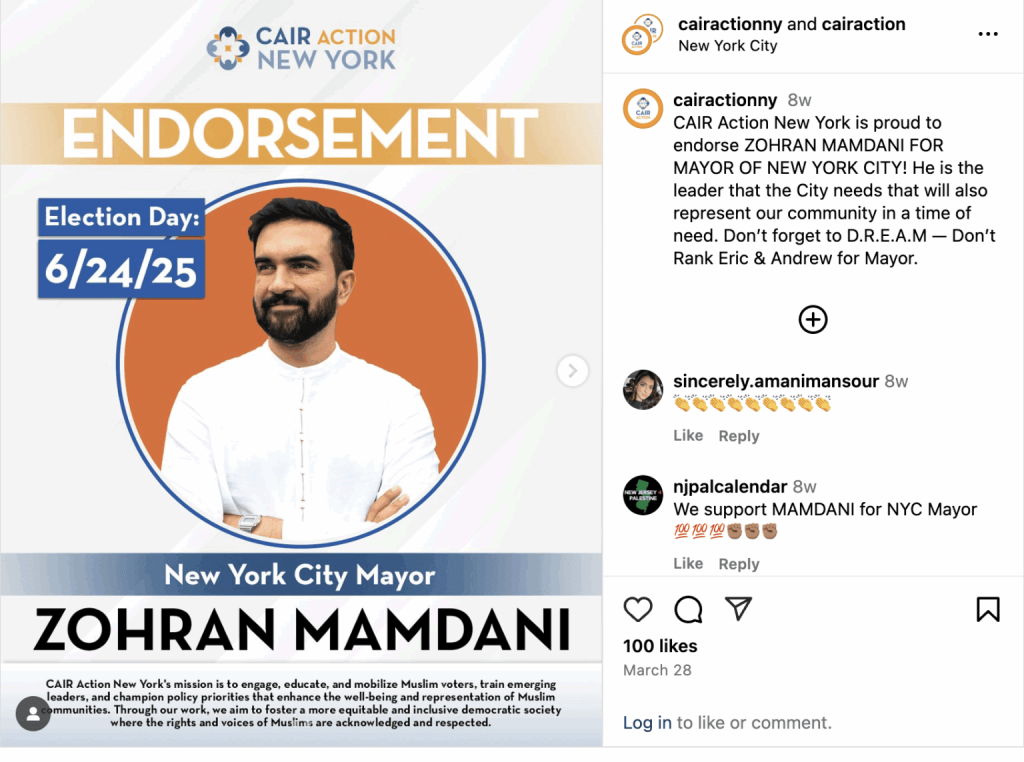
Mamdani’s campaign is officially backed by the Council on American-Islamic Relations (CAIR), an organization with a long history of supporting terrorism.
CAIR was named an unindicted co-conspirator in the Holy Land Foundation trial, the largest terrorism financing case in U.S. history, which exposed a vast network funding Hamas. The CAIR was designated a terrorist organization by the UAE in 2014 for its extremist ties. CAIR was founded by Hamas operatives, including Omar Ahmad, who declared: “Islam isn’t in America to be equal to any other faith, but to become dominant.”
CAIR’s endorsement is a stamp of approval from an Islamist network that seeks to impose Sharia law in America.
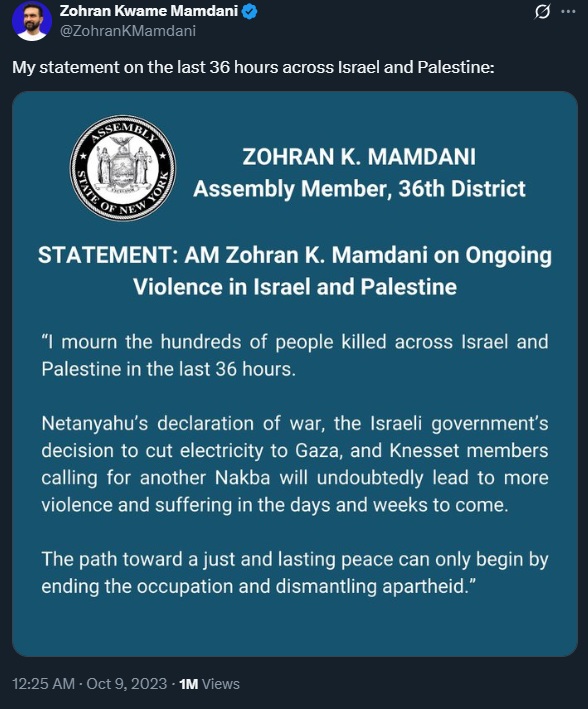
It is noteworthy that in 2023 when Hamas carried out the deadly strikes against innocent civilians of Israel on 7 October, he justified the attack.
Refusal to Condemn “Globalize the Intifada” – A Call for Jewish Genocide
Mamdani has repeatedly refused to denounce the phrase “Globalize the Intifada,” a rallying cry for global jihad against Jews. When pressed, he compared it to the Warsaw Ghetto Uprising, a grotesque inversion of Holocaust history. He said, “I think what’s difficult also is that the very word has been used by the Holocaust Museum when translating the Warsaw Ghetto Uprising into Arabic, because it’s a word that means struggle,” and added, “And as a Muslim man who grew up post-9/11, I’m all too familiar in the way in which Arabic words can be twisted, can be distorted, can be used to justify any kind of meaning.”
Mamdani, on The Bulwark podcast, says ‘Globalize the Intifada’ chant signifies, to him, a call for Palestinian human rights.
Adds: “The word has been used by the Holocaust Museum when translating the Warsaw Ghetto Uprising into Arabic — because it’s a word that means struggle.” pic.twitter.com/k2yeiSJpMy
The U.S. Holocaust Memorial Museum condemned him, stating: “Exploiting the Museum to sanitize ‘Globalize the Intifada’ is outrageous… Jews have been attacked and murdered under its banner.” The phrase is directly linked to Hamas and Palestinian Islamic Jihad, responsible for suicide bombings and massacres.
It is noteworthy that Mamdani cheered the 2015-2016 “Stabbing Intifada” as a “Third Intifada”. He clearly knows what it means. The Stabbing Intifada, also known as the “Knife Intifada”, refers to a wave of individual stabbing, shooting, and car-ramming attacks carried out by Palestinian assailants against Israeli civilians and security forces, beginning in late 2015 and peaking during 2015–2016. These attacks were concentrated in Jerusalem, the West Bank, and other Israeli cities.
Many attackers were motivated by religious fervor, nationalist anger, or a desire for martyrdom. The attacks were often sudden, unplanned, and carried out with knives or vehicles, making them extremely difficult for Israeli authorities to predict or prevent.
Dozens of Israelis were killed and hundreds wounded in these attacks. In response, Israeli security forces implemented stricter measures, including increased checkpoints and demolitions of attackers’ family homes. Many of the Palestinian assailants were killed during or shortly after their attacks.
Here’s Zohran cheering on the 2015-2016 “Stabbing Intifada” as a “Third Intifada.”
Mamdani’s defense of this genocidal slogan reveals his true allegiance: not to New Yorkers, but to the global jihadist movement.
Pledged to Arrest Israeli PM Netanyahu – An Act of War
In a shocking declaration, Mamdani vowed that, if elected mayor, he would order the NYPD to arrest Israeli Prime Minister Benjamin Netanyahu if he visited New York. He cited a politicized ICC warrant, despite the U.S. and Israel not being ICC members. This is not a legal stance; it is a declaration of war against America’s closest ally. His comparison of Netanyahu to Vladimir Putin was not just inflammatory, it was a deliberate blood libel against Jews. This is not a legal stance but a declaration of war against America’s closest ally – in fact, America is supporting Israel in the ongoing war against Iran.
He even spread a widely debunked conspiracy theory against the Jews.
🚨 Here’s a clip of Zohran Mamdani spreading the debunked antisemitic conspiracy theory referred to as the “Deadly Exchange” program, which has been repeated by Linda Sarsour and JVP.
He also spread an anti-semitic lie that Jews were controlling the country.
LOOK what NY State Assembly Member @ZohranKMamdani left out of his speech when he posted it on his Instagram feed! “We are here today because [AIPAC is] subverting American democracy!” A blatant antisemitic lie that a Jewish lobby group is controlling the US. pic.twitter.com/mV6d9EO6hY
Islamist Infiltration: Mamdani’s Agenda To Islamize NYC
Let us take a look at how Mamdani seemingly plans to islamize New York City once he becomes Mayor.
Mandating Halal Food in Public Schools – Imposing Sharia Law
One of Mamdani’s key legislative pushes is forcing all NYC public schools to serve halal food. He framed it as “inclusion,” but this is a Trojan Horse for Islamization. Halal certification is controlled by groups with ties to extremist funding networks. It sets a precedent for religious imposition on taxpayer-funded institutions, while Christian and Jewish dietary laws are ignored.
WARNING NYC 🚨 Zohran Mamdani Isn’t Running a Campaign — He’s Leading an Islamic Political Insurgency
What we’re witnessing in New York isn’t a mayoral race. It’s civilizational jihad, and Zohran Mamdani is its smiling face.
This is creeping Sharia – a hallmark of Islamist political strategy.
Muslim Democratic Club of New York – A Political Jihad Network
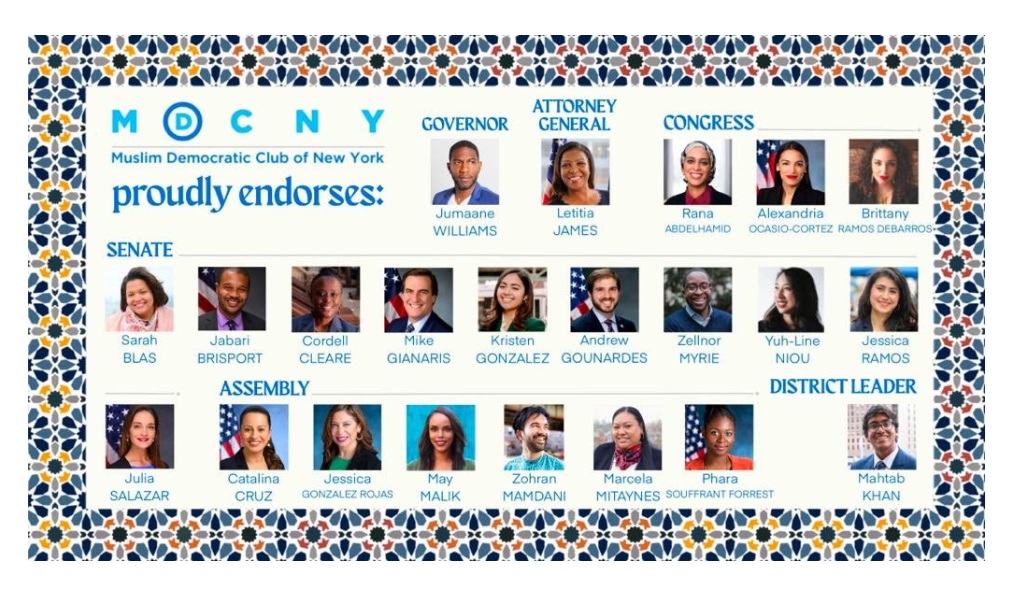
Mamdani is a board member of the Muslim Democratic Club of New York (MDCNY), a group tied to Linda Sarsour and other radical Islamists. MDCNY seeks to consolidate Muslim voting blocs to push far-left, anti-Israel policies. It operates under the guise of “civil rights” while advancing Islamic supremacy.
This is political jihad using democracy to dismantle democracy.
Anti-Hindu Bigotry – Importing Sectarian Hate
Mamdani has a long history of anti-Hindu rhetoric. In 2020, Mamdani led an aggressive protest in Times Square against the construction of the Ram Mandir in Ayodhya. According to videos circulated at the time, slurs like “Hindus are bastards” were shouted during the protest, statements Mamdani has neither disavowed nor clarified. That protest was backed by Khalistani separatists, raising additional concerns about the ideological company Mamdani keeps.
NYC Candidate for Mayor Zohran Mamdani led a mob of protestors in Times Square calling Hindus as bastards and heaping abuses upon Lord Rama, who is worshipped by Hindus
He called the Ram Temple reconstruction in India a “fascist atrocity” and framed Hindu nationalism as a global threat, while ignoring Islamic extremism. He allegedly declared, “As an Indian Muslim whose family is witnessing the rising tide of fascism in India, I won’t be silent.”
His hatred for PM Modi knows no bounds. In a video of a discussion/debate that went viral earlier in June 2025, Mamdani repeatedly likened Modi to Israeli PM Benjamin Netanyahu, going so far as to call him a “war criminal” during a recent public forum. He cited the 2002 Gujarat riots as justification, failing to mention that India’s Supreme Court had cleared Modi of any involvement after extensive investigations. In the video, he responds to the question “Modi is holding a rally in Madison Square Garden. He wants to hold a joint press conference with you afterwards reaffirming the strong bond between India and New York. Do you agree to the event?” with this response – “No, and I just want to say something here which is that. My father, his family comes from Gujarat in India and his family is Muslim, I am Muslim and Narendra Modi helped to orchestrate what was a mass slaughter of Muslims in Gujarat to the extent that we don’t even believe there are Gujarati Muslims anymore, and when I tell someone that I am, it’s a shock to them that that is even the case. And this is someone who we should view in the same manner that we do Benjamin Netanyahu; this is a war criminal.”
What???? There are no Gujarati Muslims left anymore? Ha ha ha ha ha ha ha . This kid is going to lose for sure. But such illiteracy? Where was he educated? Can he read high school level books? pic.twitter.com/jeoo82psJH
— Sunanda Vashisht (@sunandavashisht) June 3, 2025
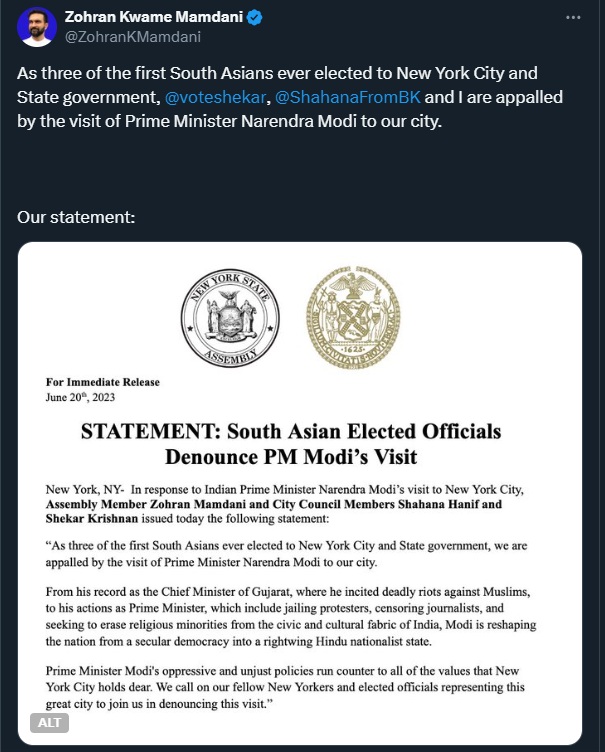
Mamdani often conflates Hindus with India’s ruling BJP, turning political dissent into religious animosity. When fellow politicians like Jennifer Rajkumar and Kevin Thomas refused to denounce Modi during his 2023 New York visit, Mamdani labeled them as complicit, again stoking intra-community rifts.
His hatred for Hindus mirrors his hatred for Jews, both are enemies in the Islamist worldview.
Mamdani’s Socialist Terror Network
If you thought he was just involved in anti-Hindu/Jew activities and furthering his Islamist point of view, think again. Let’s take a look at how he is embroiled with the marxists/socialists.
Democratic Socialists of America (DSA) – A Marxist Terror Front
Mamdani is a key figure in the DSA, which has abolitionist agendas (defund police, open borders); ties to Antifa and far-left militants, and has pushed BDS as part of its anti-capitalist, anti-Western crusade.
His allies include Julia Salazar (BDS activist), Jabari Brisport (self-declared Marxist), and Rashida Tlaib (Hamas sympathizer).
Open Borders Advocacy – Dismantling U.S. Sovereignty
Mamdani has screamed at ICE officials, calling for abolishing immigration enforcement. His policies would flood NYC with illegal migrants, overwhelming social services. This aligns with the far-left “No Borders” movement, which seeks to erase nation-states.
Foreign Terror Links: Mamdani’s Global Jihad Network
New York mayoral candidate Zohran Mamdani appeared on a Pakistani news channel allegedly known for its links to ISI-backed narratives and militant outfits like Tehrik-i-Taliban, actively campaigning for votes and showcasing his progressive credentials. Speaking in a mix of English and Urdu, Mamdani repeatedly emphasized his identity as a Muslim, a socialist, and an immigrant, framing his candidacy as a fight against systemic injustice, unaffordability, and Islamophobia in New York City. He made sweeping accusations against his rival Andrew Cuomo and criticized Prime Minister Narendra Modi over Gujarat and policies on Indian Muslims, aligning himself with anti-Modi and pro-Palestinian positions. Mamdani also defended his controversial usage of the term “genocide” for the Israel-Gaza conflict, insisting that many Jewish New Yorkers support his stance. Notably, his appearance on a channel with a documented history of radical affiliations raises serious questions about his political judgment and the messaging he is willing to platform to court South Asian voters, especially in a global city like New York, where national security sensitivities and diaspora politics are deeply intertwined.
Yup, that’s the New York mayoral candidate, Zohran Mamdani, actively campaigning for votes on a Pakistani news channel known to be infiltrated by the ISI & militant outfits like Tehrik-i-Taliban. pic.twitter.com/GwNEkYa9Hf
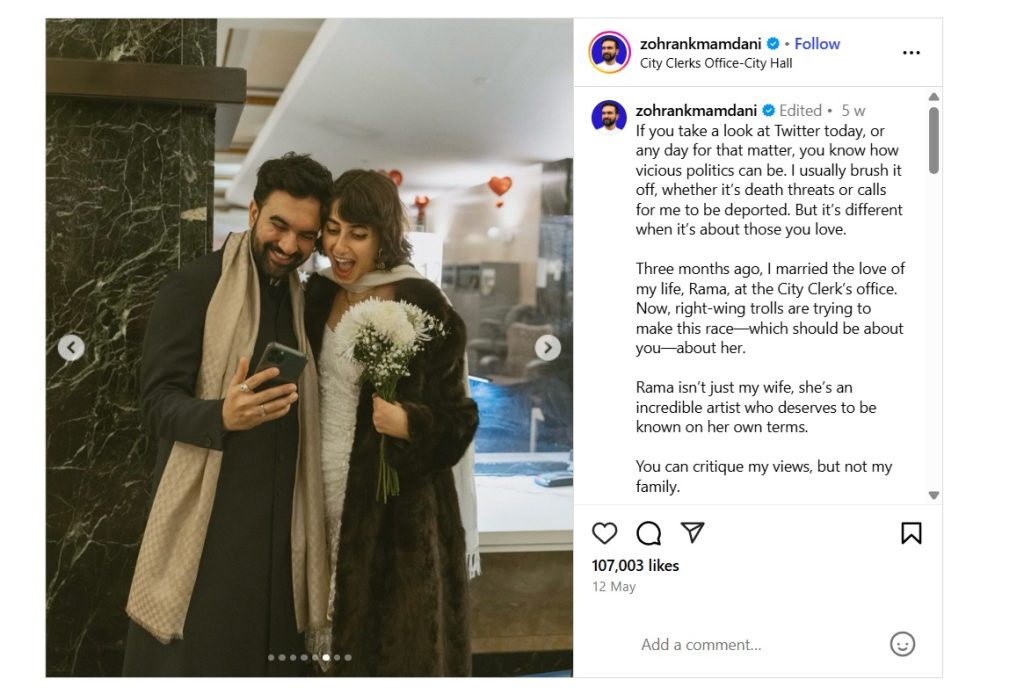
Mamdani’s wife, Rama Duwaji, is a Syrian artist who glorifies Hamas in her work, a pro-Palestinian activist.
The couple’s ideological alignment is rooted in radical leftist politics, anti-Israel sentiment, and identity-based activism. She is part of his ideological machine, blending Islamic extremism with socialist revolution. Duwaji’s artwork reportedly supports the Palestinian cause, including Hamas-linked narratives, amplifying Mamdani’s political agenda. Their lavish Dubai wedding, despite Mamdani’s socialist platform, exposed his hypocrisy on “class struggle.”
Zohran, who constantly rails about how NYC is a city that only works for the rich, had his wedding in Dubai, one of the only ultra-luxury cities in the world that CURRENTLY has slaves.
— Jason Curtis Anderson 🇺🇸🎗️ (@JCAndersonNYC) May 12, 2025
A Clear And Present Danger To America
Zohran Mamdani is not a mayoral candidate; he is an Islamist terrorist operating within the Democratic Party. His campaign is a coordinated assault on U.S. sovereignty, Jewish safety, and Western values.
If elected, it only seems he would empower Hamas sympathizers in NYC government, normalize anti-Jewish and anti-Hindu hatred, institutionalize Sharia-compliant policies and turn NYC into a hub for anti-American radicalism.
In a shocking incident that has sent ripples across the state, a leader of the Hindu Munnani organization was brutally hacked to death by three unidentified individuals near his residence in Tiruppur during the early hours of Tuesday, 24 June 2025.
The victim, Balamurugan, aged 35, was the president of the Tiruppur North Lawyers’ Union affiliated with the Hindu Munnani. He also worked as an accountant in the same locality. He resided on Kamaraj Street in Kumaranandapuram, Tiruppur.
According to police sources, the attack took place around 4 am. A gang of three assailants reportedly ambushed Balamurugan near his house and launched a violent assault using sharp weapons including knives and sickles. He succumbed to multiple injuries on the spot.
Upon receiving the information, Tiruppur City Police arrived at the scene and began preliminary investigations. Authorities have begun reviewing CCTV footage from nearby areas to identify the attackers.
In response to the gravity of the crime, three special investigation teams have been formed to track down the culprits. The motive behind the murder is yet to be established.
A disturbing video showing a police officer violently attacking a pregnant woman at a police station who came to file sexual harassment case has sparked widespread outrage.
The victim, Madhumitha, a resident of Kanakamma Chatram in Tiruvallur district, had approached the local police to lodge a complaint against Shivaji, a nearby bakery owner. Shivaji, despite being married, had reportedly obtained her phone number through a third party and began sending her obscene messages and pressuring her to meet him, amounting to persistent sexual harassment.
Five months into her pregnancy, Madhumitha, accompanied by another woman named Dhanam, Sevanthi, went to the Kanakamma Chatram police station to report the abuse. However, instead of receiving support, the women were allegedly met with hostility by a police officer named Raman, who is said to have sided with the accused.
Eyewitnesses and the viral video reveal that Officer Raman physically assaulted both women and acted in a degrading manner toward Madhumitha, including allegedly pulling at her clothing; an act perceived as an attempt to humiliate her. The two women were then reportedly forced out of the police station without their complaint being registered.
The incident has provoked condemnation from across the political and social spectrum, with many calling for immediate disciplinary action against both the officer involved and the accused harasser, Shivaji. The case has once again raised serious concerns about the treatment of women, especially vulnerable women, within police systems meant to protect them
Speaking to the media, the victim’s family said, “My aunt’s daughter who is five months pregnant came home. She was pushed aside assaulted, hit in the stomach and on the head. When my sister went to inquire about it, my sister was also beaten. When we went to the police station to file a complaint, they had taken money from Sivaji. Three people were sitting there, we don’t know their names, but we know Sivaji well. When we went there, they verbally abused us terribly, assaulted us, pushed us out, and he used very inappropriate language and touched us inappropriately. That police officer, Raman, touched us in inappropriate places. Action needs to be taken against him. The Chief Minister should take appropriate action and punish him.”
Following the incident, Tamil Nadu BJP President Nainar Nagendran strongly criticized the actions of the police officer and called on the Chief Minister to step in and ensure justice is served. In a post on social media platform X, he stated, “Avideohassurfaced,causinggreatshock,showingapoliceofficerbrutallyattackingthreewomen,includingafive-monthpregnantwoman,whowenttotheKanakammachathirampolicestationinTiruvallurdistricttofileacomplaintaboutsexualharassment. From where did the police officer get the audacity to accept bribes from the accused and mercilessly assault the victims? Has humanity eroded so much in the police that they would stoop to attacking a poor pregnant woman? Ifthepolice,whoaresupposedtoprotectvictimsfromcriminals,aretheonesattackingthevictims, I don’t understand wheretoseekjusticeintheDravidianmodelofgovernance. I strongly urge the Honorable Chief Minister, Mr.@mkstalin, to immediately intervene in this incident that questions the dignity of the police force, conduct a thorough investigation and take appropriate action against the police officer who in a display of arrogance and power acted as a source of anarchy by attacking three women.”
திருவள்ளூர் மாவட்டம், கனகம்மாசத்திரம் காவல்நிலையத்தில் பாலியல் தொல்லை குறித்து புகார் அளிக்கச் சென்ற 5 மாதக் கர்ப்பிணி உட்பட மூன்று பெண்களை காவலர் கொடூரமாக தாக்கியதாக வெளிவந்துள்ள காணொளி மிகுந்த அதிர்ச்சியளிக்கிறது.
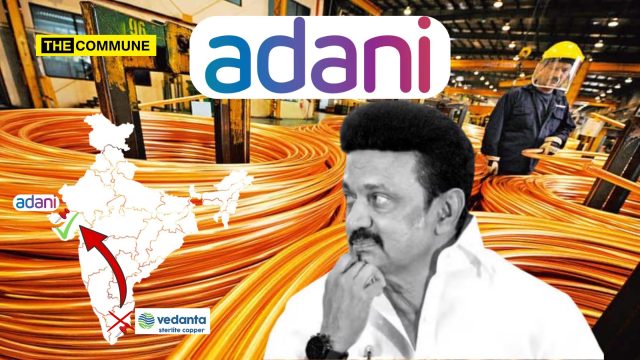
Years after the closure of copper plants in Tamil Nadu—which shifted India from a net exporter to a reliant importer of copper—a new development signals a turnaround. This week, a copper smelting facility owned by Indian billionaire Gautam Adani began processing ore, amid rising global demand and a critical shortage of supply.
Located in Gujarat, the Kutch Copper plant has an annual capacity of 500,000 tons and is part of Adani’s broader strategy to reduce India’s dependence on copper imports. Although the facility was initially set to launch in 2024, delays—caused by a global shortfall in copper concentrates—pushed back operations.
According to sources familiar with the matter, the plant has begun receiving and processing raw material, though reaching full operational capacity could take up to 18 months—significantly longer than the usual 2–3 month ramp-up timeline. Full-scale production will require around 1.6 million tons of copper concentrate annually.
Industry research firm CRU Group estimates that the global shortfall between copper ore supply and smelter demand will hit 1.2 million tons in 2025—the largest gap recorded in over a decade.
An Adani Enterprises spokesperson confirmed that Kutch Copper has entered operational mode and is currently focused on scaling up to full capacity as swiftly as possible.
Smelters around the world are grappling with the challenge of securing copper concentrate, as increased competition from new facilities has drastically reduced processing margins.
The squeeze is partly due to integrated copper plants that have come online at mining sites in Indonesia and the Democratic Republic of Congo, diverting concentrate supplies from independent smelters.
However, a more significant factor is the rapid rise of standalone smelting operations that rely heavily on the open market for raw materials. This group includes Adani’s new Gujarat plant, along with large-scale Chinese facilities like the 500,000-ton-a-year smelter launched earlier this year by Tongling Nonferrous Metals Group Co.
Why Tamil Nadu’s loss has become Gujarat’s gain
Once a major contributor to India’s copper production, Tamil Nadu witnessed a sharp industrial decline after the closure of the Sterlite Copper plant in Thoothukudi (Tuticorin) in 2018. Now, Gujarat is emerging as a major player in copper smelting, thanks to a new plant launched by the Adani Group—signaling a shift in India’s copper map.
Sterlite Shutdown in Tamil Nadu
Until 2018, India was a net exporter of refined copper, with Sterlite Copper (a unit of Vedanta Ltd) producing nearly 40% of the country’s copper output. The plant in Thoothukudi had a capacity of 400,000 tonnes per year and played a crucial role in meeting domestic and export demands.
However, large-scale protests—allegedly fueled by foreign-funded NGOs, activists, and media outlets—led to its closure. Groups like The Other Media (TOM), supported by overseas Christian organizations, were accused of manipulating public sentiment and social unrest. Prominent activists and media platforms also amplified the anti-Sterlite narrative, resulting in the loss of thousands of jobs and a major economic blow to the region.
As copper production in India dropped, the country became increasingly reliant on copper imports, reversing its earlier status as an exporter. Commerce Minister Piyush Goyal confirmed that the fall in copper exports was directly linked to the shutdown of the Sterlite facility.
While Tamil Nadu lost its industrial edge, Gujarat has capitalized on the opportunity. The Adani Group is currently building a $1.2 billion copper smelting complex at Mundra, under its subsidiary Kutch Copper Ltd.
The project is designed to:
Produce 500,000 tonnes per year in Phase I (operational by 2024).
Reach 1 million tonnes annually by 2029.
Recover valuable by-products like gold, silver, platinum, phosphoric acid, and sulphuric acid.
This project is part of a broader national strategy to reduce dependence on copper imports and align with India’s energy transition goals. Copper is critical in green technologies such as electric vehicles, solar energy, and battery storage systems.
With India’s per capita copper consumption at just 0.6 kg (far below the global average of 3.2 kg), the Adani facility is expected to meet rising domestic demand and position India competitively in the global market.
From Political Protests to Economic Shift
The contrast is striking. At the height of the Sterlite protests, some critics sarcastically remarked, “If the copper plant is so safe, set it up in Gujarat.” That suggestion has now become reality. Adani’s copper project is not just an industrial investment—it is a symbol of what Tamil Nadu lost due to politicized activism and what Gujarat has gained by welcoming industry and infrastructure.
The Sterlite episode also exposed what some analysts call the NGO-Activist-Media (NAM) ecosystem—a network accused of leveraging foreign funding and ideological positions to shape public opinion and influence state policy. The Indian government has since tightened controls over FCRA-registered NGOs and foreign funding to prevent similar disruptions.
A Missed Opportunity for Tamil Nadu
The closure of the Sterlite Copper plant in Thoothukudi has had long-lasting socio-economic consequences for Tamil Nadu. Once a major contributor to India’s copper output, the plant’s shutdown in 2018 turned a prosperous region into one grappling with unemployment and economic hardship—while Gujarat moved in to fill the gap.
Mounting Protests from the Ground
Years after its closure, frustration continues to grow among residents of Thoothukudi and surrounding areas. On 16 June 2025, villagers from South Veerapandiapuram, Saminatham, and nearby communities gathered outside the Thoothukudi District Collector’s Office. Their demand was simple: reopen the Sterlite Copper plant and the associated thermal power station. Many of the protesters were former employees, who now struggle to survive as low-paid laborers. According to their statements, over 300 youth from these villages had worked at the plant, and the shutdown pushed them into economic instability.
Surprisingly, the call for reopening the facility has come not just from locals, but also from the Indian National Trade Union Congress (INTUC)—a key ally of the ruling DMK in Tamil Nadu. INTUC national secretary Kathirvelu openly questioned the inconsistency in allowing copper smelters to operate in other states while Sterlite remains shut. He pointed out that if pollution was the concern, it should be addressed with uniform regulations across India.
INTUC maintained that the economic cost of closure has been immense. Thousands of jobs were lost—not only within Sterlite itself but across hundreds of ancillary businesses that depended on the plant’s operations.
Wider Impact Across Industries
The plant’s closure didn’t just affect direct employees. On 6 January 2024, members of the Namakkal Lorry Owners’ and Trailer Owners’ Associations staged protests, claiming the shutdown paralyzed the logistics sector in the region. Over 6,500 trucks were impacted, and more than 600 vehicle owners had to seek alternative sources of income. Daily revenue losses were estimated at around ₹10 crore. Protesters proposed restarting the plant under strict environmental guidelines to balance development and sustainability.
In February 2025, the Thoothukudi Contractors’ Association joined the demand, highlighting job losses for 20,000 workers and severe financial strain on 400 SMEs, with income levels dropping by 40%. They have called for a Government Order to restart operations.
Community Voices
On 13 May, representatives from the Thoothukudi People Livelihood Protection Association met with MP Kanimozhi, urging her to support efforts to revive the copper plant. Their appeal noted that the facility had supported 20,000+ families across 50 villages for over two decades. Around 64 contractors had invested in trucks and machinery solely to serve Sterlite’s logistics operations. When the plant was shut, many were left facing crippling debts, having mortgaged personal property to finance their businesses.
Association president S. Thiyagarajan criticized the misleading narrative that labeled Thoothukudi as the “cancer capital” due to the plant’s presence. He pointed to multiple independent environmental assessments that found no such link, yet the perception persisted, fueling protests and ultimately the closure.
The plant’s shutdown, driven by both public outcry and political pressure, ultimately cost Tamil Nadu a vital industrial asset.
Tamil Nadu’s Setback, Gujarat’s Gain
While Tamil Nadu struggles with the fallout, Gujarat has stepped up. The Adani Group is developing a $1.2 billion copper manufacturing facility in Mundra, with plans to reach 1 million tonnes of annual capacity by 2029. With India aiming to double copper consumption by 2030, the plant will meet surging demand driven by electric vehicles and renewable energy.
What began as a regional protest has resulted in national industrial realignment. Tamil Nadu, once a cornerstone of India’s copper industry, has become a cautionary tale—while Gujarat is now poised to become a new hub for copper production. In hindsight, Sterlite’s closure reflects a missed opportunity shaped by activism, policy decisions, and political optics—leaving a legacy of economic loss and industrial migration.
BJP leader Amit Malviya has claimed that Congress leader Rahul Gandhi has been going on secret foreign holidays, and as the Leader of Opposition (LoP), he needs to answer the people of the country. In a post on his X handle on Tuesday, Malviya shared the information that Rahul Gandhi was on a secret foreign holiday last week and has again gone abroad.
“Rahul Gandhi was on a secret foreign holiday just last week. Now, he has flown abroad again — to yet another undisclosed location,” wrote Malviya. He also raised questions about these ‘secret visits’ and demanded that, as LoP, the Congress leader needs to answer them.
“Why these frequent disappearances? What is so compelling that keeps him away from the country so often? As the Leader of the Opposition, he owes the people of India answers,” Malviya further said in his post.
The Congress was quick to debunk the claims of the BJP leader and accused the PMO of playing tricks. Congress spokesperson Pawan Khera posted on his X handle that Rahul Gandhi has gone to London to attend his niece’s graduation ceremony.
“The Prime Minister’s Office is playing its dirty tricks as usual. It knows nothing else apart from these dirty tricks. Mr Rahul Gandhi has gone to London to attend his niece’s graduation ceremony and will be back soon,” Khera wrote on X.
Questions about Rahul Gandhi’s frequent foreign travels have always been raised. Recently, when Congress president Mallikarjun Kharge went to the Air India plane crash site in Ahmedabad, Rahul Gandhi’s absence raised eyebrows. Gandhi, however, had posted on X expressing grief and calling it heartbreaking.
He had also called upon the Congress workers to do everything they could to help on the ground. He was later seen on the day when his mother, Sonia Gandhi, was discharged from the hospital in the national capital on June 19, where she had been admitted on June 15.
A photograph showed him holding gifts as it was his birthday with his mother and other hospital staff. Even as Malviya, the BJP’s In-charge of its National Information and Technology Dept, pointed out Rahul Gandhi’s intermittent absence and foreign jaunts, the latter has been active on his social media handles.
A History Of Unannounced Travels
Rahul Gandhi’s foreign trips have frequently been criticized for their lack of transparency, often coinciding with significant political or party events in India. Social media platforms, particularly X, are abuzz with questions about his latest Doha-Cairo trip, with users echoing sentiments like, “How are his foreign travels always clandestine and suspicious?”
Below is an updated compilation of notable instances of Gandhi’s unannounced or minimally disclosed foreign trips.
March 2025: Secret Private Trip to Vietnam during Budget session
Rahul Gandhi’s trip to Vietnam came amid 2025 Budget session. The details of this trip remains hidden from the public. Many speculate that Rahul Gandhi’s frequents Vietnam as there are many entities linked to notorious anarchist George Soros there.
December 2024: Another Private Trip to Vietnam when nation was mourning Manmohan Singh’s death
Gandhi embarked on a “private” trip to Vietnam, which was not publicly announced in advance. The Congress leader left for New Year’s celebrations when the “country was mourning Prime Minister Dr. Manmohan Singh’s demise. The lack of details about his activities or return date drew criticism, especially given the Congress party’s ongoing efforts to strengthen its opposition stance ahead of the 2025 political calendar.
December 2023: Spotted on SpiceJet Flight to Dubai
Gandhi was reportedly seen boarding a SpiceJet flight to Dubai, with no prior announcement from the Congress party. The trip’s purpose remained undisclosed, prompting questions about its timing amid state election campaigns.
December 2022: Bharat Jodo Yatra Paused, Whereabouts Unknown
During the Bharat Jodo Yatra, the march was halted for nine days in December 2022. Gandhi’s whereabouts during this period were not disclosed, leading to speculation about a possible foreign trip.
December 2021: Personal Trip to Italy via Doha, Qatar
Gandhi traveled to Italy via Doha on December 29, 2021, reportedly to visit family, skipping election rallies in Punjab ahead of the 2022 state elections. The Congress party confirmed the “personal” nature of the trip but provided no further details, drawing criticism for his absence during a critical campaign period.
December 2020: Personal Trip to Italy
Gandhi undertook a “personal trip” to Italy to visit his grandmother, skipping the Congress party’s Foundation Day celebrations. The unannounced departure was seen as a missed opportunity to rally party workers, prompting backlash from opponents.
October 2023: Mysterious Trip to Uzbekistan
Gandhi’s “mysterious trip” to Uzbekistan was highlighted by critics for its lack of transparency. Unverified reports suggested meetings with unspecified individuals, though no concrete evidence supported claims of controversial engagements.
2015–2018: Frequent Personal Trips
Gandhi’s travels during this period included Turkey (June 2016, for his birthday), Italy (2017, to visit his grandmother), and multiple trips to Europe and the US for personal and party-related engagements.
February–April 2015: South-East Asia (Thailand, Cambodia, Myanmar, Vietnam)
Gandhi was absent from India for nearly 60 days, visiting Thailand, Cambodia, Myanmar, and Vietnam. He reportedly attended a meditation course in Myanmar, raising concerns about his prolonged absence during a politically active period.
Subscribe to our channels on Telegram, WhatsApp, and Instagram and get the best stories of the day delivered to you personally.
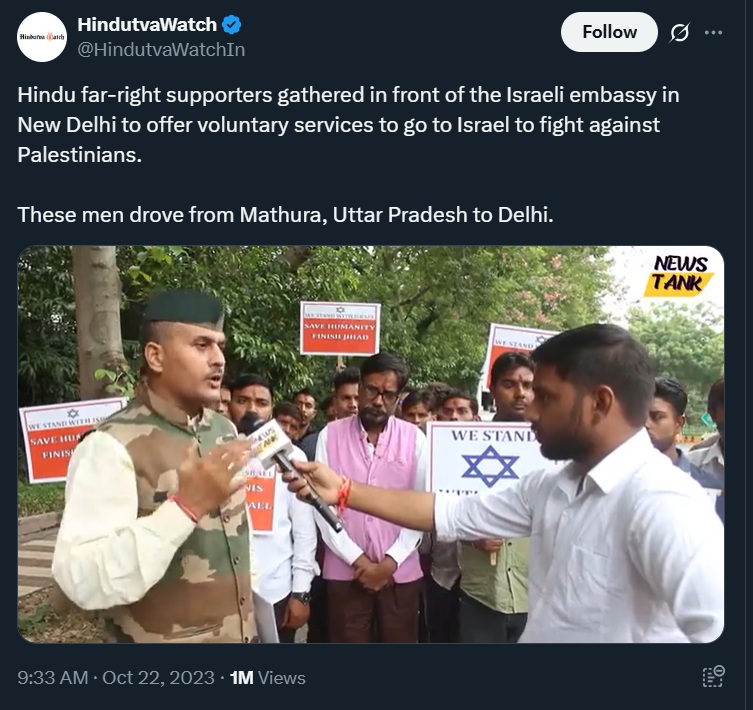
A video of Varsha Gandikota-Nellutla, Co-General Coordinator of the Progressive International, has surfaced online sparking outrage across Indian and Israeli social media spaces. In the undated video, Gandikota-Nellutla, a Hyderabad-based policy advisor and left-wing commentator, makes controversial claims about right-wing Indians expressing a desire to fight for the Israeli Defence Forces (IDF) and targeting Muslims.
In the video, she alleges, “Because of the merging of Zionist and Hindutva ideology, large numbers of right-wing young people in fact have been made to fall prey to a right-wing ideology where they are saying we’ll go fight for the IDF and queuing up outside the Israeli embassy in Delhi and saying we’ll kill Muslims. Because that’s really the ideology that the government has proposed and it also believes that it can get a ticket, in a way, that it can pay the price for the ticket into the exclusive club of the global north into this western civilization so to speak by killing some Muslims in its own backyard.”
She further claims that Israeli reactions to this online have been racist. She said, “But of course, the response from both actually everyday common Israelis has been brutal and racist where on social media as soon as they heard about this, they’ve gone we don’t actually want dirty Indians to be coming here tagging the IDF and saying don’t let them into our army, our army is pure noble pure blood”
Did you know that a large number of right-wing Indians have been queueing outside the Israeli Embassy in Delhi, trying to sign up for the IDF and saying we want to kill Muslims? pic.twitter.com/oKeDwVjokG
However, available evidence suggests that Gandikota-Nellutla’s statements may be an overgeneralization based on isolated incidents. In the aftermath of the 7 October 2023 Hamas attack on Israel, a small group of about 10 Indians gathered outside the Israeli Embassy in New Delhi in a show of support for Israel. These individuals were wearing tilaks, with one man claimed he was a retired Subedar expressed interest in joining the Israeli military and stated his intent to “finish the Islamist jihadis.” Notably, no direct mention of Muslims as a group was made.
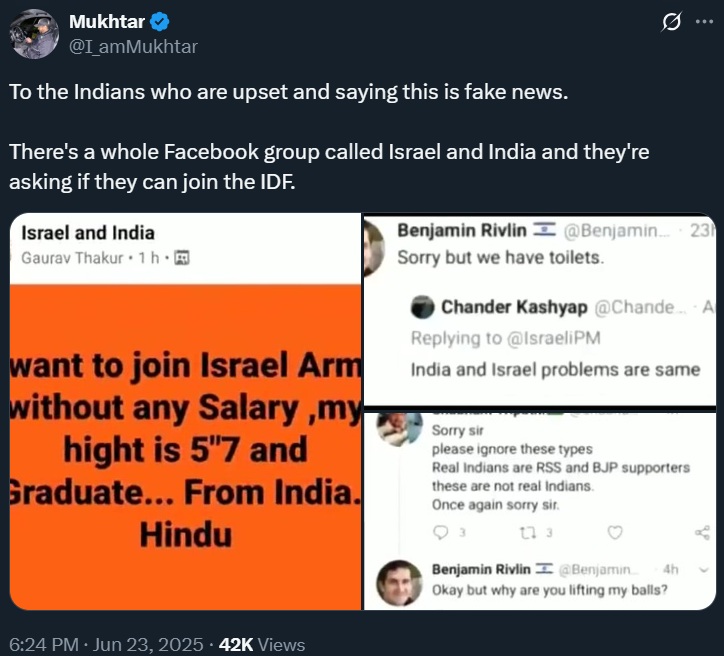
Online, a handful of posts by Indian netizens did express support for Israel, including mentions of wanting to join the IDF. However, such comments were found on fringe Facebook groups or X and do not represent mainstream political sentiment or institutional initiatives.
Gandikota-Nellutla’s remarks about racist Israeli responses appear to stem from a now-deleted post by an individual named Benjamin Rivlin, who reportedly made derogatory remarks against Indians and tagged the IDF, stating Indians should not be allowed into “our army.” Again, this comment appears to be a lone post, not reflective of official Israeli government or IDF positions.
Israeli Embassy spokesperson Guy Nir has refuted these claims. In a post quoting the said video, he wrote, “100% fake news. Honestly madam, where do you get your information from? Israelis love Indians.”
100% fake news. Honestly madam, where do you get your information from?
Varsha Gandikota-Nellutla has previously worked with Women Deliver in New York, the Economic Development Board of Andhra Pradesh, and as a strategy consultant in Hong Kong, is the niece of Maoist Varavara Rao who was arrested on charges of co-conspiring a plot to assassinate Prime Minister Narendra Modi. He’s also one of the prime accused in the Bhima Koregaon case.
She's the niece of this commie dog P Varavara Rao who was arrested on charges of being part of a plot to assassinate Prime Minister Narendra Modi. He's also one of the prime accused in the Bhima Koregaon case.
Varsha is an alumna of Princeton University, her academic focus included political economy and feminist theory. She currently co-leads the Soros-funded Progressive International and chairs The Hague Group.
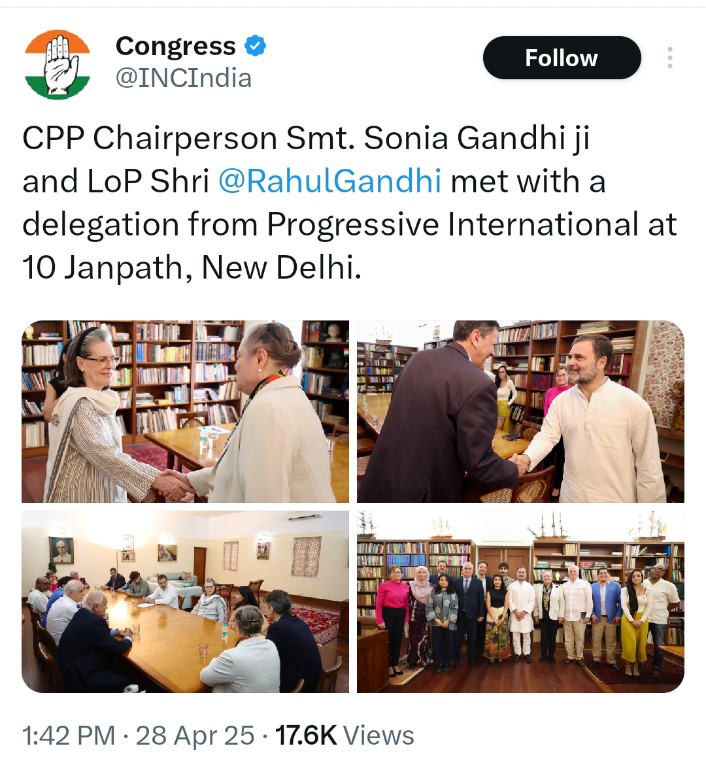
Varsha Gandikota-Nellutla is Co-General Coordinator of Soros funded Progressive International. PI representatives met Congress's Sonia Gandhi on April 25. Varsha is a leftist policy advisor and lives in Hyderabad. The lie she is peddling was peddled by Palestinian Prof. of law,… https://t.co/YyhsFcgVgtpic.twitter.com/21636xpBBQ
— Stop Hindu Hate Advocacy Network (SHHAN) (@HinduHate) June 23, 2025
She was also part of a Progressive International delegation that met Sonia Gandhi in April 2025.
Critics argue that her statements conflate a few scattered events with broader national or ideological tendencies. Her lie linking Hindutva with Zionism and painting entire ideological groups as violent or Islamophobic has triggered pushback for its lack of nuance.
Subscribe to our channels on Telegram, WhatsApp, and Instagram and get the best stories of the day delivered to you personally.
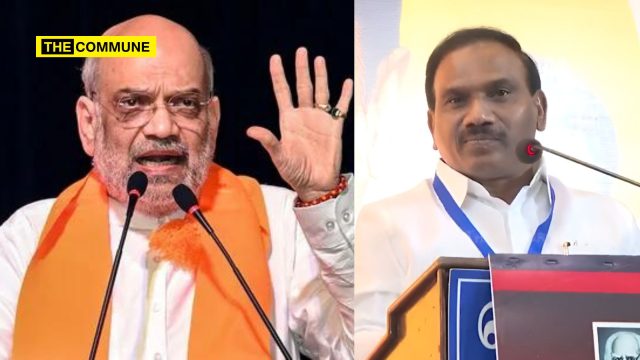
DMK Deputy General Secretary and Member of Parliament A. Raja has once again ignited a political firestorm after mocking Union Home Minister Amit Shah, referring to him as a “fool” during a public address organized by the DMK. His comments were in response to Shah’s recent statement expressing confidence that the BJP would expand its presence in Tamil Nadu following electoral wins in other states.
While addressing a crowd, Raja recounted Shah’s speech in Madurai and responded pointedly, “Now Amit Shah came to Madurai. What did he say? ‘We’ve captured Delhi, we’ve captured Haryana, we’ve captured Maharashtra, next is Tamil Nadu.’ Fool! Fool!! In Delhi, Arvind Kejriwal is an individual leader, just a political party, that’s all. In Haryana, you defeated an individual, in Maharashtra, you defeated an individual, but Muthuvel Karunanidhi Stalin is not an individual; behind him lies the Dravidian philosophy of Periyar (E.V. Ramasamy Naicker), Anna, and Kalaignar (Karunanidhi). That’s the philosophy you’re now desperately trying to defeat.”
— PuthiyathalaimuraiTV (@PTTVOnlineNews) June 23, 2025
The BJP was quick to respond. Party spokesperson Narayanan Thirupathy slammed Raja’s remarks, calling them disrespectful and undignified. “I strongly condemn @dmk_raja on his filthy comments about India’s Home Minister @AmitShah . A former Union Minister, now a member of Parliament indulging in derogatory remarks shows not only the mentality of the Dravida model @arivalayam , but also its uncultured, uncivilised, dirty , silly politics. I am sorry but I have to say that only fools and idiots would use these kind of words out of frustration for not being in power at the centre and fear of losing power at the state in the coming assembly election. Though We can’t expect more than this from a person who always abuses the Hindu religion and faith of Hindus, he should remember that he is member of Parliament and behave in a dignified manner,” he said.
I strongly condemn @dmk_raja on his filthy comments about India’s Home Minister @AmitShah . A former Union Minister, now a member of Parliament indulging in derogatory remarks shows not only the mentality of the Dravida model @arivalayam , but also its uncultured, uncivilised,…
— Narayanan Thirupathy (@narayanantbjp) June 24, 2025
Subscribe to our channels on Telegram, WhatsApp, and Instagram and get the best stories of the day delivered to you personally.
The Madras High Court has raised critical questions about the financial situation of the Tamil Nadu government, following a petition filed by a private company seeking delayed payments for essential supplies.
The issue arose during the hearing of a case filed by KTV Health Food Private Limited, which had supplied cooking oil under the Public Distribution System (PDS) in Tamil Nadu. According to the terms of the government tender, the payment of ₹141.22 crore was to be made within 30 days. However, the company alleged that the amount remains unpaid well beyond the stipulated period.
The petition was heard by Justice N. Anand Venkatesh, who expressed concern over the government’s handling of financial obligations. Counsel for the petitioner stated that not only had ₹141 crore remained unpaid, but the total dues had exceeded ₹200 crore, while the government was proceeding to float a new tender without settling existing payments.
Justice Venkatesh observed that multiple similar cases have come before the court in the past two weeks, including those related to pending retirement benefits. He remarked, “What is happening in the state? The state government should lead by example. Is this a case of unwillingness to pay or is the government facing a financial crisis?”
He further warned that such delays in fulfilling contractual obligations and dues reflect poorly on governance and must be addressed with seriousness.
The court directed the Additional Advocate General representing the state to clarify the government’s position on the pending payments. The case has been adjourned to 27 June 2025 for further hearing.
Subscribe to our channels on Telegram, WhatsApp, and Instagram and get the best stories of the day delivered to you personally.
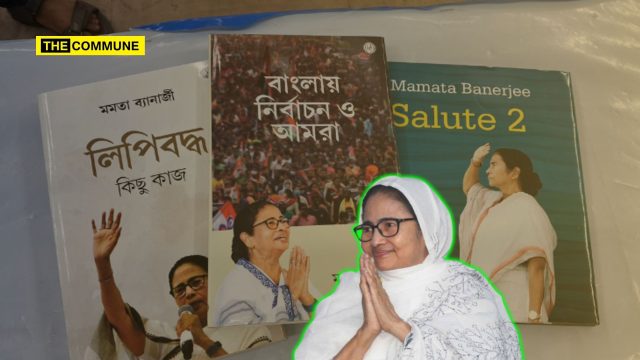
A circular from the West Bengal School Education Department, directing all state-run schools to keep 19 books penned by Chief Minister Mamata Banerjee, has created a major controversy.
In the circular, the Commissioner of School Education directed all District Inspectors (DIs) of schools to ensure that 515 books, including 19 penned by CM Banerjee, are kept in the libraries.
BJP’s Information Technology Cell chief and the party’s central observer for West Bengal, Amit Malviya, ridiculed the state government over the development and claimed that in the Trinamool Congress regime, even school children were not spared from the “scam”.
“Another Day, Another TMC Scam! In Mamata Banerjee’s Bengal, even schoolchildren are not spared from corruption. In a bizarre and shameful move, government schools in West Bengal are being forced to buy 19 books written by Mamata Banerjee to be eligible for a Rs 1 lakh grant. Yes, you read that right – public money, meant to improve infrastructure and education, is now being used to market the Chief Minister’s vanity projects,” said Malviya in a statement, which he posted on the wall of his official X handle on Tuesday morning.
Claiming that no student deserves to be “punished with Mamata Banerjee’s incoherent literary output”, Malviya said that this move by the state School Education Department was a misuse of taxpayers’ money to fill up the coffers of the Trinamool Congress through “fake” book sales and “backdoor royalties”.
“Another ploy to convert black money into white ahead of elections? After destroying the future of Bengal’s youth through violence, unemployment, and political interference in education, Mamata Banerjee is now monetising school libraries for personal and political gain. We will not stay silent. We will not let TMC loot education. We will not let Bengal’s future be sold for propaganda,” Malviya’s statement read.
Even the different academic associations in West Bengal have criticised the move. According to the general secretary of Sikshak Sikshakarmi Sikshanuragi Aikya Mancha (Unity Forum of Teachers, Non-teaching staff and Learners), Kinkar Adhikari, the state School Education Department should immediately withdraw the direction given to the state-run schools in the matter.
He claimed that this move was somewhat similar to the British rule in the country when the British Empire had set certain conditions for the then vice-chancellor of the University of Calcutta, Asutosh Mukhopadhyay, for a financial grant for the university. “Asutosh Mukhopadhyay rejected the offer.
Unfortunately, we have witnessed a similar approach on the part of the Trinamool government in independent India,” Adhikari added. All in the Trinamool Congress had maintained total silence on the matter.
–IANS
Subscribe to our channels on Telegram, WhatsApp, and Instagram and get the best stories of the day delivered to you personally.