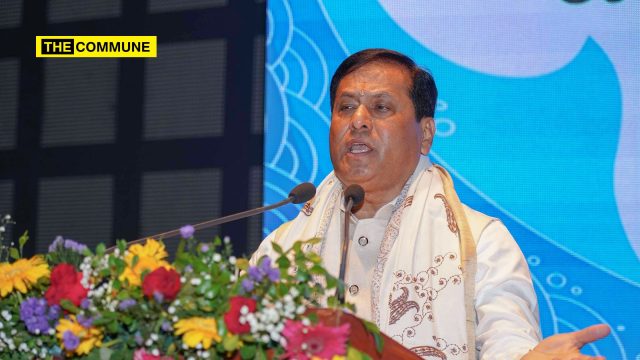
Union Minister for Ports, Shipping and Waterways Sarbananda Sonowal on 28 August urged global investors to view India as a hub for investment and innovation, highlighting the government’s $1 trillion maritime investment roadmap.
The new opportunities in India’s maritime sector “open up a $1 trillion maritime investment roadmap, with strong potential for joint ventures in developing ports and cargo terminal operations, multi-modal terminals, maritime services, shipbuilding, ship recycling and ship repairs, green hydrogen hubs, and sustainable shipping solutions,” the minister said at an event here.
Sonowal was speaking at the Ambassadors’ Roundtable Meet hosted by the Shipping Ministry, which brought together envoys from 28 countries to discuss cooperation for India Maritime Week (IMW) 2025 scheduled for 27 to 31 October in Mumbai. India Maritime Week is the Shipping Ministry’s biennial flagship platform bringing together policymakers, investors, and thought leaders to shape the future of Indian ports and logistics. Further, the Union minister said that Maritime India Vision 2030 and Maritime Amrit Kaal Vision 2047 are shaping India’s ports, shipping and logistics ecosystem to be more resilient, sustainable and future-ready.
Key mega projects with investment opportunities are Vadhavan Port, Galathea Bay Transshipment Port, Tuna Tekra Terminal, LNG bunkering and green hydrogen hubs, an official release said. “Global players are joining hands with their Indian counterparts in shipbuilding, port modernisation, smart logistics, and green shipping. Technology is at the heart of this progress as AI-driven logistics, digital port operations, and automation are making our ports more efficient and globally competitive,” said Shantanu Thakur, Minister of State for Ports and Shipping.
The Centre has enacted five new pieces of legislation earlier this month the Bills of Lading Act, Carriage of Goods by Sea Act, Merchant Shipping Act, Coastal Shipping Act and the Indian Ports Act which replace colonial-era laws and align India’s framework with global best practices.
-IANS
Subscribe to our channels on Telegram, WhatsApp, and Instagram and get the best stories of the day delivered to you personally.
The starting point of India’s macro balance sheet is positively positioned, underpinned by a robust macro-stability framework (fiscal consolidation and flexible inflation targeting framework), productivity enhancing policy reforms, and favourable structural factors such as demographics, that lend support to the growth trajectory, a Morgan Stanley report said on 28 August 2025.
The report expects growth to average 6.5 per cent in the next 10 years, with inflation likely to align with the RBI’s target of 4 per cent, thus providing a favourable backdrop to the cost of capital and ensuring debt sustainability. “India’s overall indebtedness levels reflect an incipient inflexion with a rise in private sector leverage. We expect private sector debt to continue to see modest expansion while public sector debt decline keeps overall debt manageable and improves the productivity of incremental debt,” said the report.
The report further stated that the pace of expansion of overall debt levels is likely to remain modest, even as the mix changes more in favour of productivity-augmenting private sector debt. “As such, we expect overall debt levels to remain range-bound between 157-158 per cent of GDP over the next two years. A pickup in private sector capex may lead to a rise in corporate leverage, albeit at a modest level, while expansion in household leverage could continue. The reduction in public sector debt should be driven by gradual fiscal consolidation even as the quality of spending remains skewed towards capex,” it noted.
The share of private sector debt in overall debt levels is seeing incipient signs of pickup, offset by a commensurate decline in public sector leverage, indicating improved debt dynamics. Private sector debt has risen to 76 per cent of GDP as of FY2025 from 73.9 per cent of GDP at the trough in FY2024, while public sector debt has fallen to 82 per cent of GDP in FY2025 from 83.4 per cent of GDP in FY2024. In addition, the productivity of incremental debt has also improved in a broad-based manner across sectors, including the public sector, which has directed its funds towards infrastructure expansion, said the report.
-IANS
Subscribe to our channels on Telegram, WhatsApp, and Instagram and get the best stories of the day delivered to you personally.
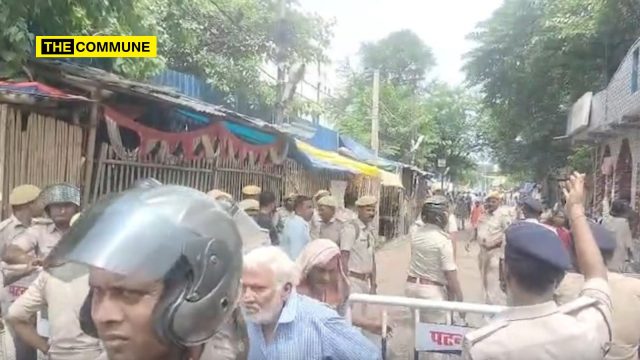
A class 5 girl student, who was found with severe burns in a Patna school, died at Patna Medical College and Hospital (PMCH). The girl was found with severe burns inside the washroom of Amla Tola Kanya Vidyalaya in Gardanibagh. The incident has triggered outrage, with the victim’s family alleging foul play.
An FIR of murder has been lodged at the Gardanibagh Police Station against unknown persons, based on the statement of Zoya’s father.
According to police, Zoya was rushed to PMCH’s burn ward with severe injuries to her face, throat and eyes, but she could not survive and breathed her last on Wednesday night. The family, however, has made serious allegations. Zoya’s sister, Nargis, alleged that a teacher, identified as Anil Sir, and others from the school conspired to murder her. She said Zoya had confided a week earlier that she saw a teacher misbehaving with a girl and was later threatened with expulsion if she revealed the incident.
“By 10 a.m., school was over, but my sister did not return home. Later, we were told she was found unconscious in the toilet. This is a murder,” Nargis alleged. Zoya’s mother also accused the school staff of burning her daughter. The victim, in her dying declaration, has not named anyone responsible for the incident.
Police have begun scanning CCTV footage of the school and are questioning students and staff to determine how the girl accessed inflammable material inside the washroom. Officials said they are probing both angles – whether it was self-inflicted or a planned attack. The mysterious death of the 5th-grade student has created tension in the locality, with demands for strict action. Central SP Diksha said the matter is being probed from all angles.
“The family has raised concerns about a prior molestation incident. We are investigating that as well. So far, no arrests or detentions have been made. We have registered an FIR of murder against unknown persons in the Gardanibagh police station,” she said. The death of the young student has created shockwaves across Patna, with locals demanding strict action against those responsible.
-IANS
Subscribe to our channels on Telegram, WhatsApp, and Instagram and get the best stories of the day delivered to you personally.
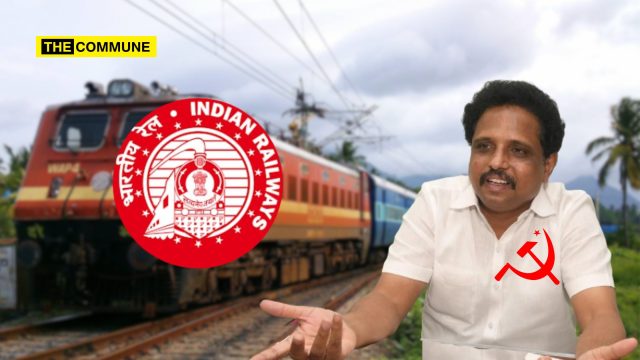
Madurai CPI(M) MP Su Venkatesan, has stirred a fresh controversy by suggesting that a key factor behind several recent railway accidents is the deployment of other state staffs unfamiliar with the local language of the region have contributed to safety lapses.
The comments came during a review meeting held at the Madurai District Collector’s office, chaired by Collector Praveen Kumar, which focused on issues within the Public Distribution System. Su. Venkatesan, present at the meeting, also addressed reporters afterward.
He pointed out that the promotional examination conducted by Southern Railway last week violated a key guideline that question papers must be available in English, Hindi, and the local state language. However, the test reportedly included only English and Hindi, with Tamil omitted entirely.
“I have written to the Railway Minister urging that the exam be annulled and reconducted with the inclusion of Tamil,” Venkatesan stated, adding that he expects a decision on the matter soon.
He also criticized a new Southern Railway directive advising officers to improve their Hindi skills, calling it an unfair imposition. According to Venkatesan, such one-sided language policies not only marginalize regional languages but can also have serious operational consequences.
Citing safety concerns, he said, “Advise has been given to officials to train and develop their personality in Hindi. The language problem is not just related to the office. A major reason for many recent railway accidents is the employment of staff who do not know the state’s language.”
His remarks have drawn both support and criticism, with some viewing it as a necessary stand for linguistic inclusion, while others argue it could deepen regional divides.
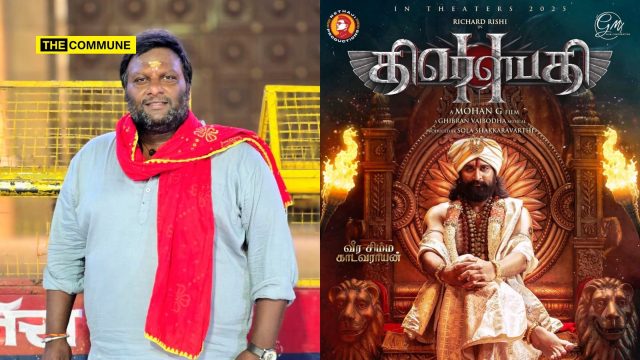
Filmmaker Mohan G, known for his bold and often controversial storytelling, is back with Draupathi 2, the sequel to his previous hit Draupathi. Reuniting once again with actor Richard Rishi, this marks their third collaboration. The film is expected to continue Mohan G’s tradition of tackling intense themes, with music composed by the acclaimed Ghibran.
The first poster of Draupathi 2 was unveiled in conjunction with Vinayaka Chaturthi, adding a festive spotlight to the film’s launch. Mohan G shared the poster on social media, hinting at a powerful historical narrative centered on the courage and sacrifices of South Indian rulers specifically, the Hoysala Emperor Veera Ballala III and the Kadavaraya kings of Senthamangalam.
மீண்டும் திரெளபதியின் மிரட்டல் ஆரம்பம்.. தென்னகத்தை ஆண்ட ஹொய்சாள பேரரசன் மூன்றாம் வீர வல்லாளர் மற்றும் சேந்தமங்கலத்தை ஆண்ட காடவராயர்களின் வீரம், தியாகம், ஆகியவற்றுடன் வலி நிறைந்த இரத்த சரித்திரம் #திரெளபதி2.. விரைவில் திரையில் சந்திப்போம் 🔥🔥🔥 #Draupathi2@richardrishi… pic.twitter.com/bdWnEJZyyh
In the poster, Richard Rishi is seen in a regal avatar, setting the tone to be a period drama infused with socio-political commentary. The film aims to explore a turbulent chapter in regional history, focusing on themes of valor, struggle, and identity.
The first look has sparked conversation among audiences, with many speculating on the film’s ideological undertones. Known for integrating social critique into his films, Mohan G once again appears to be using cinema as a platform for debate and reflection.
Despite often being labeled as a “caste-centric” filmmaker, Mohan G remains unapologetic in his approach. His previous works have stirred both praise and protest, and Draupathi 2 seems poised to follow the same path.
The director has faced legal and public backlash in the past from the leftist yet he continues to pursue his filmmaking vision without compromise.
While the official release date is yet to be announced, Draupathi 2 is expected to reignite discussions around identity, history, and caste in Tamil cinema. With its historical backdrop and modern implications, the film is shaping up to be both a cinematic and cultural statement.
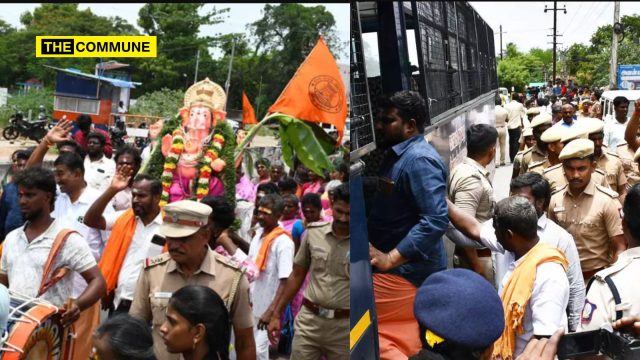
Members of the Hindu Munnani were arrested by the Dindigul police after they attempted to carry out a Vinayagar Chaturthi procession despite an official ban.
Traditionally, residents of Kudaiparaipatti organize a procession of Lord Ganesha idols every year to mark the festival. However, this year, authorities prohibited the procession on behalf of Hindu organizations, citing law and order concerns.
Refusing to comply with the police directive, Hindu Munnani announced that they would proceed with the event regardless of the restrictions. In anticipation of potential unrest, a heavy police force was deployed in the area under the supervision of Dindigul City Superintendent of Police, Karthik.
Led by Hindu Munnani’s city president Gnanasundaram, district vice presidents Ravichandran and Rajendran, and executive committee member Shankar Ganesh, the group loaded the idol into a van and moved forward with the procession. The group, accompanied by drum beats, transported the idol to temples including Vinayagar, Kaliamman, and Bhagavathiyamman in the area, where special poojas and offerings such as sundal, kozhukattai, pongal, and fruits were conducted.
Following this, the idol was brought to the Karupanaswamy temple, where additional rituals were performed before the procession continued. However, the procession was halted by the police at the Dindigul-Batlagundu road. Authorities seized the idol and stopped the event, citing violation of the imposed ban.
The Hindu Munnani protested the police action, leading to the arrest of 36 of its members, including 24 women. Meanwhile, under the supervision of West Tahsildar Jayaprakash, the police transported the confiscated Ganesha idol in a cargo vehicle and immersed it in the Kottaikulam pond. The sequence of events led to mild unrest and tension in Kudaiparaipatti.
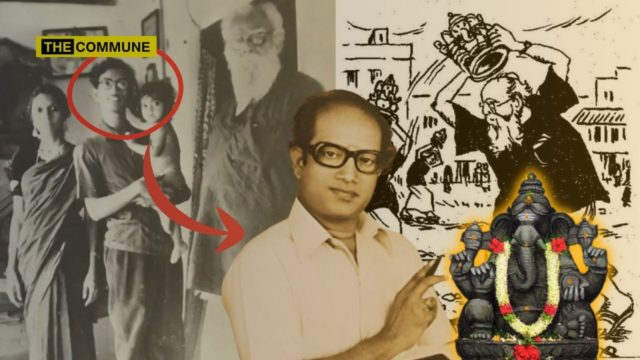
History is full of unexpected transformations, and Tamil Nadu a land steeped in spiritual tradition has witnessed many such profound personal journeys. One such story is that of Ulundurpettai Shanmugam, a name that might not ring as many bells as poet Kannadasan’s, but whose impact is no less significant.
While most people are familiar with Kannadasan’s famous shift from atheism to devout belief, fewer have heard of Ulundurpettai Shanmugam a committed rationalist who later became one of Tamil Nadu’s most celebrated devotional lyricists. Ironically, his lyrics now echo through streets and temples during Vinayagar Chaturthi, especially the beloved song “Vinayagane Vinai Theerpavane”, soulfully sung by Seerkazhi Govindarajan.
From Breaking Idols To Writing Bhakti Songs
In an old Doordarshan interview, poet Valli shared the fascinating story of Shanmugam’s ideological transformation. According to him, Shanmugam was once deeply involved in the rationalist movement spearheaded by E.V. Ramasamy Naicker (Periyar), even participating in protests where Ganesha idols were destroyed. In fact, during one such event led by Periyar, it was Shanmugam himself who reportedly smashed a Vinayagar idol.
Valli says, “Ulundurpettai Shanmugam is a respected Tamil scholar and poet. A special fact about him I know that many people don’t know is that he was once a great atheist who broke idols of Vinayagar (Ganesha). When Periyar led the protest to break Vinayagar idols, this very same Ulundurpettai Shanmugam was the one who broke them. Afterward, he became a theist and wrote a wonderful song, “Vinayagane Vinai Theerppavane”, which is sung by Sirkaali Govindarajan in a concert. That song was written by him.”
The famous “Vinayakane, Vinai Theerpavane” song was written by Ulundhurpettai Shanmugham, who was a former atheist. Once a participant in EVR’s Pillayar idol breaking stunts, he eventually reformed into a devout theist and wrote 4000+ Bhakti songs.
It is believed that the life took a spiritual turn for Shanmugam. At some point, he underwent a major personal transformation, turning away from atheism and embracing belief. One pivotal moment, as accounts suggest, came during a serious health crisis in his middle age. Close to death and with little hope, Shanmugam experienced what he believed was divine intervention a miraculous recovery that he attributed to Lord Muruga.
This spiritual awakening led him to immerse himself in devotional writing. Over time, he composed more than 4,000 Bhakti songs, many of which are still sung today. Among his most famous are “Nee Allal Deivam Illai Muruga”, “Thirupathi Malai Vaazhum Venkatesa”, and “Madurai Arasaalum Meenakshi” — songs that remain widely cherished by Tamil devotees.
A Life Rich In Scholarship And Devotion
Dr. Ulundurpettai Shanmugam wasn’t just a lyricist; he was also a respected Tamil scholar and academic with a doctorate in Tamil. He came from a large family reportedly having fathered between 15 and 16 children and many of his descendants continue to contribute to Tamil arts and literature.
His talents extended beyond devotional music. He wrote lyrics for several Tamil films including Raja Raja Sozhan, Agathiyar, and Thirumalai Thenkumari. His collaborations with renowned singer Seerkazhi Govindarajan — who was also his co-brother — brought many of his compositions to life. Notably, Shanmugam authored the Murugan Suprabatham, and translated into Tamil both the Venkatesa Suprabatham (popularized by the Bombay Sisters), Bhaja Govindam, and Hanuman Chalisa.
His legacy extends through his children as well. One of his sons, Saravanan, is a film director and cinematographer, married to actress Sangeetha. Another son, Shankar, is known for the project Saadagaparavaigal.
In a twist of fate rich with poetic irony, the man who once destroyed Ganesha idols would go on to be celebrated for a song that now forms the spiritual soundtrack of Vinayagar Chaturthi across Tamil Nadu. His composition “Vinayagane Vinai Theerpavane” has become an integral part of the festival, sung with devotion and reverence each year.
Ulundurpettai Shanmugam passed away in 2003, but his story from fiery rationalist to revered spiritual poet remains a compelling narrative of personal evolution, cultural integration, and the enduring power of belief.
(This article is based on an X Thread By K Bala Kumar)
Subscribe to our channels on Telegram, WhatsApp, and Instagram and get the best stories of the day delivered to you personally.
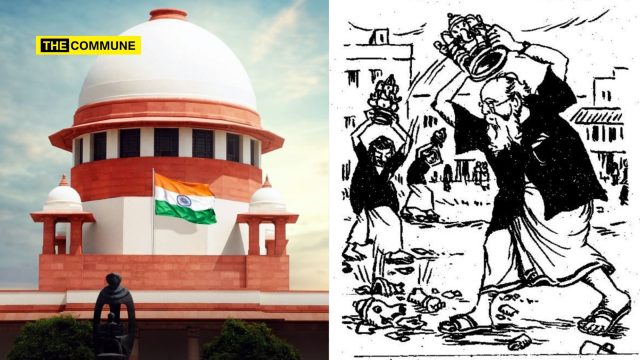
There is a well-known cartoon of EV Ramasamy Naicker (EVR hailed as ‘Periyar’ by his followers) breaking idols of Vinayagar. It based on the real life of incident when EVR smashed an idol of Hindu God Vinayagar in public at the Town Hall maidan in Tiruchirappalli. A Saivite Hindu named S. Veerabadran Chettiar filed a case against EVR under Section 295 and Section 295-A.
According to court records, on 27 May 27 1953, at about 5-30 PM, EVR broke an idol of Vinayagar in public at the Town Hall Maidan, and before breaking the idol, he blatantly stated that his action was intended to insult the feelings of the Hindu community.
The matter first came up to the local court which ordered the police to investigate. The police after investigation said that incident had happened and it was upto the courts to decide whether it was an offense under section 295.
“The mud figure of Ganesa alleged to have been broken by accused is not an object held sacred or worshipped by any class of persons. Simply because it resembled the God Ganesa held in veneration by a section it cannot become an object hold sacred. Even Ganesa idol abandoned by the people as unworthy of worship loses its sanctity and it is no longer an object held sacred by anybody, since such given up idols are found in several places of defilement. It is not an offence if a person treads union any such abandoned idol. Therefore the breaking of mud figure of Ganesa does not amount to an offence under Section 295, Indian Penal Code.“, the lower court magistrate ordered.
The court further added “The speeches delivered by the accused with deliberate and malicious intention of outraging religious feelings of a community, no doubt amount to an offence under Section 295-A, Indian Penal Code. But for laying a complaint under this section the sanction of the Government is necessary. This section has been clearly mentioned in the complaint and it cannot be said it was included by oversight. Without a proper sanction an offence under this section is unsustainable. I therefore see no sufficient ground for proceeding with the complaint and I dismiss the same under section 203, Criminal Procedure Code.”
In effect, the lower court rejected the petitioners arguments stating that a mud representation of a deity did not meet the criteria of being an “object revered by a group of individuals,” as stipulated by IPC section 295.
Subsequently, Veerabadran Chettiar moved the Sessions Court in Trichy for setting aside the lower court’s order. However, the Sessions Court too dismissed Veerabadran Chettiar’s petition saying that it did not amount to an offence.
“I agree with the learned Magistrate that the acts complained of do not amount to an offence. The accused, who profess to be religious reformers in a campaign against idolatory organized a public meeting at which they broke an earthern image of the God Ganesa. The particular image broken was the private property of the accused and was not in itself an object held sacred by any class of persons; nor do I think that idol breaking by a non-believer can reasonably be regarded by a believer as an insult to his religion; and the ingredients of Section 295, Indian Penal Code, are therefore not made out.“, the Sessions Court in Trichy ruled.
The matter then went to the High Court, which citing a few case laws said that this was not an offence under Section 295 and did not allow further appeal.
“The dolls in the shop, though they may resemble several of the deities in the temple, cannot be held to be objects held sacred by any class of persons. In modern society there are several images of the deities in the drawing rooms of several houses. It cannot for a moment be suggested that these images are objects held sacred. These have got to be distinguished from the objects held sacred, which can only be when they are duly installed in a temple and from which they are subsequently taken out in procession on festival occasions. What was broken therefore by the respondents is nothing more than a doll taken either from a shop or made for the occasion, and it cannot by any means be called ail object held sacred. The offence is not made out and the dismissal is therefore justified.“, the High Court had ruled.
However, under the rights guaranteed by the constitution, the petitioners approached the Supreme Court which was very critical of the lower court judgments and opined in the future such narrow interpretation should not be used and those in charge of law and order were supposed to apply the law based on this judgment.
The judgement delivered by Justice BP Sinha said that the legislative intent behind this provision was to enhance protection for the religious sentiments of communities.
“Any object however trivial or destitute of real value in itself, if regarded as sacred by any class of persons would come within the meaning of the penal section. Nor is it absolutely necessary that the object, in order to be held sacred, should have been actually worshipped. An object may be held sacred by a class of persons without being worshipped by them. It is clear, therefore, that the courts below were rather cynical in so lightly brushing aside the religious susceptibilities of that class of persons to which the complainant claims to belong.“, the Supreme Court said.
The Supreme Court ruled that the lower courts had erred in their preliminary determination that the mud idol did not qualify as an “object held sacred by a class of persons.” The Court even suggested that Lord Ganesha was revered by certain segments of the Hindu community, even if the mud idol had not been formally consecrated.
Furthermore, the Court extended the interpretation of this section to include objects that may not necessarily be objects of worship. The Court emphasized the need for the judiciary to show great respect for people’s religious sentiments and refrain from passing judgment on those beliefs, even when they differ from the Court’s own views or appear irrational.
However, considering the protracted duration of the case, which had spanned over five years, the Court deemed the matter “stale” and declined to order further investigation.
Subscribe to our channels on Telegram, WhatsApp, and Instagram and get the best stories of the day delivered to you personally.
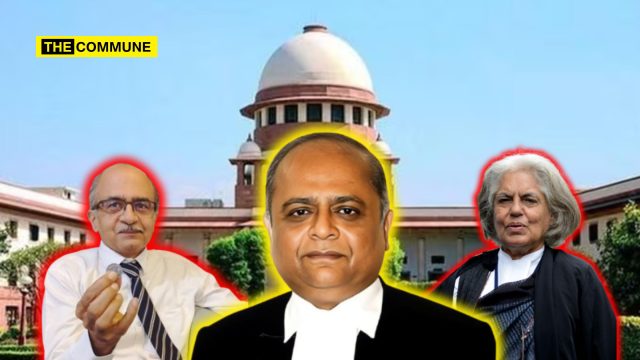
In a classic case of cherry-picking dissent while ignoring overwhelming merit, senior advocates Indira Jaising and Prashant Bhushan have launched a public campaign against the elevation of Justice Vipul M. Pancholi to the Supreme Court, focusing solely on a lone collegium dissent while conspicuously ignoring his decade-long legacy of judicial brilliance, compassion, and overwhelming support from the Bar.
The recent elevation of Patna High Court Chief Justice Vipul Manubhai Pancholi to the Supreme Court of India was a decision ratified by a 4-1 majority of the Supreme Court Collegium, led by the Chief Justice of India. Yet, if one were to follow the narrative being aggressively pushed by a section of the legal commentariat, it was a clandestine and controversial move.
Senior advocates Indira Jaising and Prashant Bhushan have taken to public platforms to question the appointment, citing the dissent recorded by Justice BV Nagarathna. Their critique hinges on two main points: the circumstances of Justice Pancholi’s 2023 transfer from Gujarat to Patna and the supersession of senior women judges. However, a deep dive into Justice Pancholi’s record and the context of his appointment reveals a story they have entirely omitted, one of a judge held in the highest esteem by his peers, known for his groundbreaking jurisprudence and profound humanity.
In addition , now we know Justice Nagarathna dissented , why are there three judges from Gujrat while other states and women unrepresented ? https://t.co/Oc8Rh98rq3
Statement of the Campaign for Judicial accountability and Reforms on the lack of transparency & problems highlighted by Justice Nagarathna about recent recommendations of the Collegium for appointments to the HCs & SC. pic.twitter.com/RmRjEyNoAZ
In a show of support to Justice Nagarathna, former Supreme Court CJI Markandeya Katju also posted an elaborate post on his X handle.
Long live Justice Nagarathna ! By Justice Katju I regard Justice BV Nagarathna as the best Judge in the Indian Supreme Court today, erudite, upright and totally independent, as a judge should be. It is because of judges like her that I still have some hope in the Indian…
However, in all this chaos showing support to the sole lady judge in the name of “diversity” and “gender representation”, they forget what is more important for the Supreme Court, the nation and justice.
The Conveniently Forgotten Truth: A Judge The Bar Fought For
The most glaring omission in the critics’ narrative is the fierce advocacy mounted by the Gujarat High Court Advocates’ Association (GHCAA) to prevent his transfer in 2022-23.
When the Collegium first recommended Justice Pancholi’s transfer to Patna in September 2022, the GHCAA did not see it as a punitive action against a compromised judge. On the contrary, they saw it as the potential loss of a stellar jurist. The Association launched an indefinite strike, wrote detailed representations to CJI DY Chandrachud, and held meetings condemning the move.
In its representation, the GHCAA painted a picture of a judge that Jaising and Bhushan have failed to acknowledge:
A Judicial Workhorse: They highlighted his “staggering” disposal of over 35,000 matters in his eight-year tenure.
An Administrator Par Excellence: He was a key member of multiple committees formed by successive Chief Justices of the Gujarat High Court, a testament to the “faith reposed” in him.
An Invaluable Asset: The GHCAA pleaded that transferring a judge of his calibre, with eight years left in Gujarat, would be “counter-productive to the administration of justice in Gujarat.” They called him a “fine judge” who imbibed “all the good qualities a judge should possess.”
He is also known to be a balanced, patient, and a person with calm demeanour having positive working relationships with the bar.
This was not an isolated incident. The GHCAA has a long history of fiercely defending judges it believes in, having previously stood up for Justices Akil Kureshi and Jayant Patel. Their vigorous defence of Justice Pancholi was based on his proven track record, a fact that finds no place in the current criticism.
Beyond The Numbers: A Jurist Of Profound Compassion and Principle
Justice Pancholi’s courtroom was not just efficient; it was empathetic. His landmark judgments reveal a jurist who balanced the letter of the law with its spirit and a deep concern for the vulnerable.
A Beacon for Victims: In March 2022, Justice Pancholi presided over a heart-wrenching plea by a 17-year-old rape victim to terminate her 6-week pregnancy. In a powerful order, he recognized that a “pregnancy caused by rape may constitute lifelong mental agony, pose socio-economic problems” and that forcing the minor to continue would cause “grave injury to her mental health.” His judgment was a masterclass in applying the Medical Termination of Pregnancy Act with compassion, granting her relief and dignity.
Championing Taxpayer Fairness: In a 2023 verdict, he ruled that the benefit of an amnesty scheme (‘Vera Samadhan Yojna, 2019’) could not be denied to a business, Sky Industries, merely because it had inadvertently paid Rs. 2,000 less towards the principal tax amount. This decision protected businesses from technicalities overriding substantive justice, showcasing his pro-citizen approach.
Managing High-Profile Cases: He also deftly handled the politically sensitive criminal defamation case against Rahul Gandhi concerning the “Modi surname” remark. He initially granted a stay on the trial but later vacated it pragmatically after the petitioner argued that sufficient evidence was on record and a stay would only delay proceedings, demonstrating a commitment to the timely course of justice.
His judicial work spans civil, criminal, and constitutional law with a reputation for detailed, well-reasoned judgments.
The Collegium’s Calculus: A Holistic View Beyond The Dissent
While Justice Nagarathna’s dissent raised valid concerns about representation, the majority of the Collegium likely considered a broader set of factors that advocates Jaising and Bhushan are ignoring. As Advocate Naveen Kumar Murthi, a practicing lawyer in the Madras High Court, pointed out in a detailed analysis, the criticism “conveniently ignores the positive things the Gujarat High Court Association has written about the judge.”
“The resolutions they have passed in his favour, the good things that the bar has spoken about them. Why is that not being highlighted?” questioned Advocate Murthi, cutting to the heart of the selective outrage.
The Collegium’s decision was likely based on:
Merit and Performance: His unparalleled disposal rate and the effusive praise from the Bar are undeniable indicators of judicial efficiency and competence.
Diversity of Experience: His tenure in both Gujarat and, following his transfer, Patna High Courts provided him with a diverse legal exposure across two major jurisdictions.
Succession Planning & Stability: The Collegium is constitutionally mandated to ensure stable leadership. Justice Pancholi is slated for a substantial term as Chief Justice of India from October 2031 to May 2033.
Advocate Murthi remarked judges who have been CJI for a month or few months would not have sufficient time to make substantial reforms or big changes.
It is noteworthy that Justice Nagarathna, though becoming the first Woman CJI in September 2027, will only have a tenure of less than 40 days.
Elevating a judge who can provide long-term leadership is a paramount administrative consideration. Succession planning requires ensuring Chief Justices with sufficient tenure to effect meaningful reforms, a factor supporting Justice Pancholi’s appointment.
Community Diversity: His elevation also adds to the non-traditional social diversity of the Supreme Court bench – we have Chief Justice Gavai who is from the Dalit community, Justice Pancholi is from either the Ahir community – it is not clear if he is from the Ahir-Yadav or Rajput community of Gujarat. In either case, he is from a backward community – BC or OBC, and this serves well for the diversity of the Supreme Court bench.
The opposition’s arguments about bypassed senior women judges and regional representation require understanding the nuanced realities. The Supreme Court has a sanctioned strength of 34 judges with representation calibrated to accommodate larger and smaller High Courts proportionally. Several competent women judges, including Justice Revati Mohite Dere (Bombay HC) and Justice Sunita Agarwal (Allahabad HC), are in line for elevation in the near future, but timing, retirements, and existing representations affect immediate appointments.
High Courts such as Bombay, Madhya Pradesh, and Allahabad already have three judges each in the Supreme Court; appointing a fourth from the same court would disrupt the delicate balance.
A Narrative Of Selective Amnesia
The campaign by Indira Jaising and Prashant Bhushan presents a one-sided narrative that amplifies a solitary dissent while willfully ignoring a mountain of evidence pointing to Justice Pancholi’s merit. It disregards the passionate defence by the Gujarat Bar, overlooks a jurisprudence marked by efficiency and empathy, and reduces a complex collegium decision to a simplistic controversy.
As Advocate Naveen Kumar Murthi aptly concluded, “They are trying to make a fracas over everything conveniently ignoring the good parts.”
In doing so, they risk undermining the public’s faith in a well-considered judicial appointment process and, more importantly, do a grave disservice to a judge whose career has been defined by a commitment to justice, both in its quantitative and profound qualitative forms.
The elevation of Justice Vipul Pancholi to the Supreme Court reflects a decision balancing merit, seniority, continuity, and representational dynamics. While dissent and scrutiny are vital, the opposition’s campaign led by Indira Jaising and Prashant Bhushan appears disproportionate and dismissive of Justice Pancholi’s strong judicial record and community backing.
Subscribe to our channels on Telegram, WhatsApp, and Instagram and get the best stories of the day delivered to you personally.
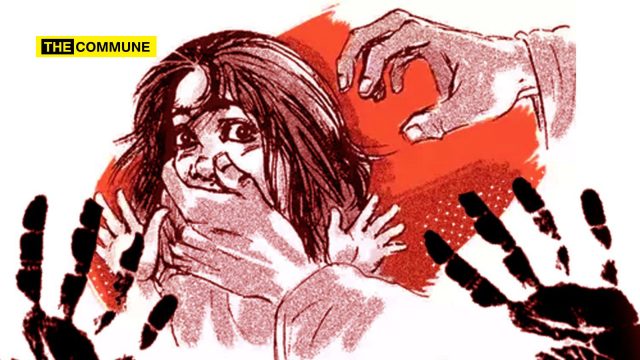
Nearly two months after the shocking sexual assault of a 10-year-old girl in Arambakkam, Tiruvallur district of Tamil Nadu, the accused has now been detained under the stringent Goondas Act. Authorities confirmed on 27 August that the action was taken following a recommendation from the district police chief and subsequent orders issued by the District Collector.
The crime took place on 12 July, when the minor, who was on her way to her grandmother’s house, was ambushed in a mango grove by a 35-year-old man and sexually assaulted. The incident triggered widespread public outrage and immediate demands for justice.
In response, the Tamil Nadu Police launched a massive manhunt to trace the suspect and announced a reward of Rs 5 lakh for any information leading to his arrest. Within days, investigators tracked down the accused, identified as Raju Bishwakarma, a migrant worker from Assam. Bishwakarma had been employed at a roadside dhaba in Sulurpet, located in neighbouring Andhra Pradesh, when he was apprehended.
The police subsequently booked him under three crucial Sections, including those pertaining to sexual assault against a minor, ensuring that the case would be pursued under the most stringent provisions of law. The severity of the offence, coupled with the threat he posed to society, led authorities to invoke the Goondas Act against him — a preventive detention law that allows the state to keep repeat or habitual offenders in custody without bail for up to one year.
Officials stated that such action was necessary to send a strong message against heinous crimes targeting women and children, and to ensure the safety of the community. The use of the Goondas Act in this case underscores the administration’s zero-tolerance stance towards sexual offences. The case continues to draw attention across Tamil Nadu, with child rights activists and women’s groups demanding speedy trial and strictest possible punishment for the accused. The district administration has assured that all legal measures will be taken to ensure justice for the young girl and her family.
-IANS
Subscribe to our channels onTelegram, WhatsApp, and Instagram and get the best stories of the day delivered to you personally.