Home Blog Page 377

Congress Opposed Linking Aadhaar With Voter ID Then, Wants EC To Consider It As Citizenship Proof For Bihar Voter List Revision

congress aadhar voter id linking bihar elections

The Congress party is facing renewed scrutiny over its changing stance on the use of Aadhaar for voter identification, following the Supreme Court’s recent observations during a hearing on the Special Intensive Revision (SIR) of Bihar’s electoral rolls.

During the proceedings on 10 July 2025, the Supreme Court suggested that documents such as Aadhaar, voter ID, and ration cards should be accepted during the verification process, prompting Congress to declare it an “initial victory.” Senior leader Pramod Tiwari stated that this was precisely what the party had been demanding. “They said that Aadhaar card, ration card, and others must also be considered during the process — and this is what we wanted,” he said.

However, this position has triggered criticism and raised questions, given that Congress had strongly opposed the use of Aadhaar in the electoral process just four years ago. In 2021, when the central government proposed the voluntary linking of Aadhaar with Voter ID to clean up electoral rolls, Congress had protested both inside and outside Parliament, insisting that Aadhaar was not a valid proof of citizenship and warning that such linkage could lead to non-citizens gaining voting rights.

During the Parliamentary session in 2021, when the Modi government proposed to link Voter ID and Aadhar on a voluntary basis, Congress MP Manish Tiwari is seen saying, “Mr Chairperson sir, the Aadhar Act does not allow for the linking of the Aadhar number to the electoral roll. The Aadhar Act is very explicit. It is an Act which is for the targeted delivery of financial benefits and other subsidies, benefits, and services. Voting is a legal right, and the Aadhar Act is beyond the legislative competence. So we are against the introduction of this Bill, and this must be rolled back.”

At the time, party representatives had argued that Aadhaar was meant only for welfare delivery and could not be used for electoral verification. Placards and statements from that period decried the move, with concerns centered on the risk of disenfranchisement and data misuse.

Now, as the Election Commission undertakes a fast-tracked revision of the electoral rolls in Bihar ahead of Assembly elections, Congress is actively advocating for Aadhaar’s inclusion as a valid identity document. This apparent reversal has drawn attention to what observers see as a political shift driven by electoral strategy rather than policy consistency.

The Supreme Court, while permitting the ECI to proceed with the ongoing revision process, acknowledged the challenges posed by a limited timeline. It directed the poll panel to file a detailed affidavit within a week and scheduled the next hearing for 28 July 2025.

The Court also questioned the exclusion of commonly held documents such as Aadhaar and ration cards from the ECI’s list of acceptable proofs, noting that even documents like birth certificates or passports are not definitive evidence of citizenship.

Aadhaar cannot be used as proof of Indian citizenship because it was never designed or legally defined for that purpose. Under the Aadhaar Act, 2016, the identification number is issued to any “resident” of India—defined as anyone who has lived in the country for at least 182 days in the previous year—regardless of nationality. At no stage during Aadhaar enrollment is an applicant required to furnish documents proving citizenship, such as a birth certificate or passport. The Supreme Court, in its 2018 judgment, explicitly stated that Aadhaar is meant for identifying residents, not for establishing citizenship. Even the UIDAI, which administers Aadhaar, has repeatedly clarified that it is not a document of nationality. Accepting Aadhaar as proof of citizenship poses legal and security risks, as it could allow non-citizens, including illegal immigrants, to falsely claim rights reserved for Indian citizens, such as voting or applying for government positions.

Congress’s present demand to include these documents, including Aadhaar, stands in contrast with its earlier position that Aadhaar could not be relied upon to confirm eligibility to vote.

(With inputs from Times of India)

Subscribe to our channels on Telegram, WhatsApp, and Instagram and get the best stories of the day delivered to you personally.
A Living Temple Through Millennia: Gudimallam’s Parasurameswara Temple, Home To India’s Oldest Shiva Linga

Parasurameswara temple gudimallam

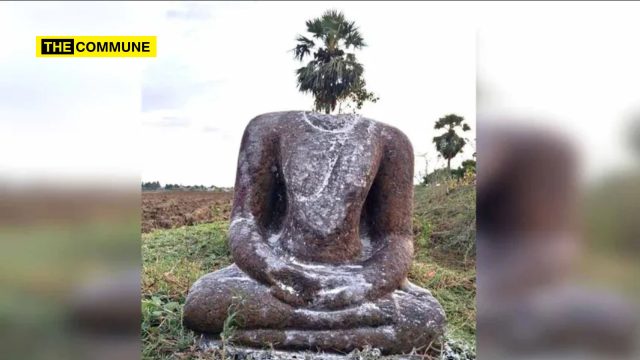
India’s reputation as a land of rich culture extends beyond art and tradition it is also home to architectural wonders steeped in rich spiritual history and mysticism. Among these, the Parasurameswara Temple in Gudimallam, a modest village located about 40 kilometers from Tirupati, stands out as a monumental site.

This sacred site is renowned for enshrining one of the earliest known Shiva Lingas in the Indian subcontinent, with scholars dating its origin anywhere between the 3rd century BCE and 2nd century CE, most likely constructed during the Satavahana era.

What sets this temple apart is the Gudimallam Lingam, a seven-sided monolithic sculpture carved from polished dark brown sandstone, believed to be sourced locally. The Lingam features a rare anthropomorphic depiction of Lord Shiva, portrayed as a dynamic hunter standing over a squatting Yaksha, or nature spirit. This high-relief image is considered to be one of the earliest surviving depictions of Shiva in human form.

The temple complex also includes shrines for Subramanya Swamy with consorts Srivalli and Anandavalli, Surya Bhagavan, and Vinayaka, reflecting a harmonious blend of Vedic, folk, and tribal traditions in worship. Local legends even hint at underground chambers and divine origins for the Lingam’s stone, contributing to its aura of mystery.

According to the Sthala Purana (temple legend), Parashurama, the warrior-sage and incarnation of Vishnu, performed rigorous penance at this very site to seek redemption for killing his mother at his father’s command. Offering a single flower each day from the Swarnamukhi River, he worshipped the Lingam until an incident occurred: Brahma, disguised as a Yaksha named Chitrasena, took the flower for his own offering. This led to a fierce battle between them, prompting Lord Shiva to appear and merge the three figures Brahma (the Yaksha), Vishnu (as Parashurama), and himself — into the Gudimallam Lingam, symbolizing the Trimurti (the trinity of creation, preservation, and destruction).

Inscriptions on the temple walls, mainly from the Pallava, Chola, and Vijayanagara dynasties, indicate that the temple was renovated and maintained consistently from the 1st or 2nd century CE onward. However, during Archaeological Survey of India (ASI) excavations in 1973, Black-and-Red Ware pottery, Satavahana-era bricks, and ancient structural remains were discovered, leading experts to date the original temple’s construction as early as the 2nd century BCE making this one of the oldest continuously active Shaivite temples in the country. This predates the earliest known inscriptions at the Tirumala Temple, which appear around the 9th century CE.

It is widely believed that the Lingam was originally worshipped in the open air, and that the surrounding stone structure was built later to house and protect it. The rectangular stone enclosure around the Lingam is thought to be part of its initial sanctum. The decorative style of the enclosure bears similarities to ancient Buddhist railing motifs, indicating possible cross-cultural architectural influence. Early construction likely involved wooden elements, many of which were later replaced or fortified during Chola and Vijayanagara renovations.

The temple came under the protection of the ASI in 1954, and since then, has undergone careful restoration work. Notably, the 1970s excavation to lower the floor revealed the full height of the Lingam and its intricately designed pedestal. The temple was first studied in detail by T.A. Gopinath Rao, an eminent archaeologist, who described it thoroughly in his work, Elements of Hindu Iconography. Rao measured the Lingam at approximately five feet tall, though its base remains buried, suggesting it may be taller than what’s visible.

What truly distinguishes this Lingam is its unique design and symbolic depth. Unlike later Lingams that tend to be abstract and cylindrical, the Gudimallam Lingam features anatomical precision, including a visible glans and a subtle groove. The bent-backward posture and partially circular shape give the figure a striking presence. Shiva is rendered in the elegant tribhanga pose, adorned with braided hair, armlets, five distinct bangles on each wrist, and other tribal-style ornaments.

The sculpture lacks the sacred thread (yajnopavita), further emphasizing its non-Brahmanical, ascetic character. Instead of a crown, Shiva wears a turban-like headgear and a simple, wide dhoti that gracefully merges with the Lingam’s shaft — blending cosmic symbolism with human form. In his right hand, Shiva holds a ram or deer, alluding to his Bhikshatana (wandering ascetic) form, while the kamandalu (water pot) in his left hand represents purification and spiritual discipline. The battle axe (parasu) resting on his shoulder signifies both Parashurama’s identity and Shiva’s ferocious, protective aspect.

Beneath his feet lies a dwarf-like figure, often identified as Apasmara, the embodiment of spiritual ignorance a motif that would later appear in the Nataraja iconography. The intricate detailing from the tribal aesthetic to the ritualistic accessories suggests that this sculpture originated from pre-Vedic or folk Shaiva traditions, where Shiva was revered as a spiritual warrior and forest-dwelling ascetic rather than a royal deity.

Throughout centuries, the temple has been consistently referred to as the Parashurameswara Temple, as confirmed by numerous inscriptions. While none of the records mention its original builders, they meticulously document donations of land, livestock, and wealth, underscoring its central role in a community-based temple economy. This indicates that worship was sustained by the local populace, not just through royal endowments.

The architectural layout of the temple is equally remarkable. The square sanctum, terminating in an apsidal (semi-circular) rear wall, is among the earliest known Hindu temple designs, commonly associated with brick and wooden shrines from the 2nd century BCE. According to scholar Himanshu Ray, the apsidal form was not exclusively borrowed from Buddhist structures but was part of a shared architectural tradition among Hindu, Buddhist, and regional faiths. The Mayamatam, a South Indian treatise on temple architecture, explicitly includes apsidal layouts among its recommended temple plans.

Even during later reconstructions under the Cholas and Vijayanagara kings, the original apsidal structure was preserved, demonstrating a profound respect for the temple’s ancient sanctity. The curved rear wall resembles a womb-like enclosure, reinforcing the garbhagriha’s role as a cosmic center. The seamless architectural evolution from temporary wooden structures to enduring stone monuments echoes the spiritual permanence of the Lingam, which has remained a center of devotion for over 2,000 years.

Located about 40 kilometers from Tirupati, the temple can be accessed via Renigunta Airport and Papanayudu Peta, with regular buses available from Tirupati. However, there is currently no dedicated transportation to the temple.

For those with a passion for history, spirituality, and ancient art, the Gudimallam Parasurameswara Temple is a site of immense value. It not only offers a rare and early anthropomorphic representation of Shiva but also stands as a testament to the continuity of faith, architectural ingenuity, and cultural synthesis across millennia.

(This article is based on an X Thread By Lone Wolf Ratnakar)

Subscribe to our channels on TelegramWhatsApp, and Instagram and get the best stories of the day delivered to you personally.

From Jesuit Roots To Jihadist Rhetoric: How Qatari Money Rewired A Top U.S. Catholic University Into A Radical Islamist Hub

Georgetown University (GU), a leading Catholic institution in the United States, is facing mounting criticism following the release of two reports alleging that it has become a hub for radical Islamist influence due to extensive foreign funding, particularly from Qatar and other Middle Eastern regimes.

The Middle East Forum (MEF), in a report titled Beachhead: Georgetown University, accuses the Jesuit university of partnering with foreign entities linked to extremist ideologies. The report claims that GU has received more than $1 billion from nations including Qatar, Turkey, and Malaysia over the past two decades, enabling what it calls “a fundamental reshaping of Middle East and Islamic studies in the U.S.”

Central to these allegations is Georgetown’s Alwaleed Bin Talal Center for Muslim-Christian Understanding (ACMCU), which was established in 2005 with a $20 million gift from a Saudi royal. MEF claims the center functions as an ideological stronghold promoting views sympathetic to America’s adversaries and hostile to U.S. interests, and that many of its faculty have links to the Safa Network, a Virginia-based group previously investigated by U.S. federal agencies for alleged ties to Hamas and Palestinian Islamic Jihad.

The report alleges that 40 of ACMCU’s faculty and advisers over the past 30 years have had affiliations with the Safa Network, which has been accused of pushing Islamist ideology, suppressing intellectual diversity, and theocratizing education.

A second investigation, published in June by the Institute for the Study of Global Antisemitism and Policy (ISGAP), raises additional concerns. Titled Foreign Infiltration: Georgetown University, Qatar, and the Muslim Brotherhood, the 135-page report accuses GU of underreporting $146 million in funding from Qatar to the U.S. Department of Education in violation of disclosure laws. ISGAP estimates that undisclosed Qatari scholarships and grants could total over $102 million, with millions more allegedly omitted in reporting donations from the Qatar Foundation.

According to ISGAP, foreign funding has led to “a dilution of Georgetown’s foundational Jesuit principles,” claiming that the university’s culture has shifted toward a “pro-Islamist and anti-Israel orientation.” The report warns that this ideological realignment has contributed to increased hostility toward Western values, the normalization of Hamas-linked rhetoric, and the growth of antisemitic activism on campus.

The MEF further links Georgetown to a broader Sunni Islamist alliance involving Qatar, Turkey, and Malaysia, describing these nations as ideological and logistical supporters of extremist movements. Qatar, in particular, has been labeled a principal sponsor of the Muslim Brotherhood and its affiliates, including Hamas.

Critics argue that allowing the Qatari regime such deep involvement in an American academic institution poses a threat to national interests. “How can the Qatari regime be permitted to fund one of the most important and sensitive universities in the United States?” the MEF report asks.

The ISGAP report notes a growing trend of Georgetown graduates expressing sympathy for extremist ideologies and hostility toward Israel, a shift it attributes to the university’s evolving academic climate. Medical students and faculty have reportedly made public statements justifying Hamas violence, and the university has hosted pro-Hamas speakers as part of lecture series such as “Anatomy of Genocide in Gaza.”

In 2023, Georgetown drew criticism for inviting UN Special Rapporteur Francesca Albanese, widely criticized for anti-Israel bias, to deliver a lecture under its Gaza series. Israeli officials condemned the university’s platforming of what they viewed as pro-Hamas propaganda.

Despite being founded by the Society of Jesus and ranking as the top Catholic college in America, Georgetown has received significant financial support from multiple Arab nations, including Oman, Saudi Arabia, Kuwait, Egypt, and Jordan. It ranks second nationally, behind Cornell University, for total funding from Arab Muslim donors, with Qatar alone providing the majority.

In 2023, GU unveiled the Yarrow Mamout Masjid, describing it as the first mosque on an American college campus to feature ablution stations, a halal kitchen, and a spirituality hall. The university has also boasted of being the first U.S. school to appoint a full-time Muslim chaplain.

The U.S. Department of Education previously warned in 2020 that ACMCU had drawn criticism for misrepresenting its pluralistic mission, with observers noting the absence of meaningful Christian representation at the center.

Georgetown University has not responded to recent media inquiries regarding the allegations outlined in the MEF and ISGAP reports.

(With inputs from Stream)

Subscribe to our channels on Telegram, WhatsApp, and Instagram and get the best stories of the day delivered to you personally.
Afghanistan: 45-Year-Old Man Marries 6-Year-Old Girl; Taliban Intervenes, Asks Man To Wait Till She Turns 9

afghanistan afghan man child marriage taliban

A disturbing case of child marriage in southern Afghanistan has triggered widespread condemnation after reports emerged that a six-year-old girl was married to a 45-year-old man in Helmand province’s Marjah district. The incident, which has gone viral on social media following the circulation of images from the wedding ceremony, has prompted criticism from Afghan citizens, human rights organisations, and international observers.

According to US-based Afghan news outlet Amu.tv, the man—who already has two wives—allegedly paid the girl’s family in a traditional walwar arrangement, a customary bride price determined by the girl’s appearance, education level, and perceived social value.

Local Taliban officials reportedly intervened after learning of the marriage and stopped the man from taking the child to his home. However, they stated that the girl could be sent to her husband’s household once she reaches the age of nine. While both the groom and the child’s father were arrested in Marjah, no formal charges have been filed. The girl currently remains with her parents, according to Hasht-e Subh Daily.

Since the Taliban’s return to power in 2021, rates of child marriage have surged sharply. A 2024 report by UN Women noted a 25% rise in underage marriages and a 45% increase in early childbearing, correlating the trend with the regime’s ban on girls’ education and the economic crisis affecting families nationwide. Afghanistan remains one of the countries with the highest number of child brides globally, according to UNICEF.

The country currently lacks a legal minimum age for marriage. The previous civil code, which set the minimum age for girls at 16, has not been reinstated. Marriages are now governed by the Taliban’s interpretation of Islamic law, primarily the Hanafi school of jurisprudence, which permits marriage at or around the onset of puberty. However, there is no formal or medical consensus on the age at which this occurs.

Human rights groups argue that such interpretations leave children vulnerable to abuse and exploitation. Girls subjected to early marriages often face severe health risks from premature pregnancies, as well as social isolation, lack of education, and increased exposure to domestic violence.

Last month, the International Criminal Court (ICC) issued arrest warrants for Taliban Supreme Leader Haibatullah Akhundzada and Chief Justice Abdul Hakim Haqqani on charges of crimes against humanity, specifically regarding their policies against women. The Taliban dismissed the warrants, calling them an “insult to the beliefs of Muslims.”

Meanwhile, restrictions on women continue to intensify across Afghanistan. Girls are banned from secondary schools and universities, and women are excluded from most public-facing jobs and recreational spaces. Travel without a male guardian is prohibited, and face coverings are mandatory in public.

Subscribe to our channels on Telegram, WhatsApp, and Instagram and get the best stories of the day delivered to you personally.
“Police Harassment Or Suicide?”, TN BJP Chief Nainar Nagenthiran Questions CM Stalin Over Suspicious Death Of Thirumala Milk Manager

nainar nagenthiran thirumala milk

Tamil Nadu BJP president Nainar Nagenthiran has publicly raised serious concerns regarding the death of Naveen Bollineni, a manager at Thirumala Milk Products Pvt. Ltd., who allegedly died by suicide amid allegations of financial misconduct.

In a post on X, Nagenthiran expressed skepticism over the reported suicide, citing claims that Naveen was subjected to prolonged and unofficial interrogation by Kolathur Deputy Commissioner of Police, Pandiarajan. “The news emerging about the alleged suicide of Naveen, manager at Thirumala Milk Company, who was reportedly being illegally interrogated by Kolathur Deputy Commissioner Pandiarajan on accusations of embezzling funds is deeply unsettling and hard to believe,” he wrote.

Nagenthiran drew parallels between Naveen’s case and that of Ajith Kumar, who allegedly died in police custody just days earlier. He emphasized that Naveen’s family had claimed he was interrogated for two weeks without a formal FIR being filed and that he was threatened with his family’s arrest unless he confessed. He added, “This incident raises strong suspicions among the public that the police might played a role in Naveen’s death, similar to the recent case of Ajith Kumar, who was allegedly beaten to death by police a few days ago. The family of Naveen has stated that the police interrogated him for two weeks without formally registering a First Information Report (FIR) and claim that the police threatened to implicate his family in the case if he did not confess to the crime. How will the Hon’ble Chief Minister @mkstalin, who boasts himself on directly controlling law and order, explain away the police excesses that have occurred in his own constituency?”

Taking aim at the ruling DMK government, Nagenthiran questioned Chief Minister M.K. Stalin’s claim of direct control over the state’s law and order, especially since the incident occurred in his own constituency. He demanded that the government clarify whether Naveen died due to sustained police harassment or became a victim of custodial violence masked as interrogation. He further urged for an impartial investigation to ensure justice is served without political interference.

He added, “Therefore, the @arivalayam government must clearly explain to the public whether Naveen committed suicide due to continuous police pressure or if he became a victim of police brutality under the guise of interrogation and also must ensure that a fair and impartial investigation into his death is conducted without any compromises.

This criticism surfaces in the wake of the death of 38-year-old Naveen Bollineni, a chartered accountant from Visakhapatnam, Andhra Pradesh. Employed as a treasury manager at LACTALIS India, which owns Thirumala Milk, Naveen was found dead on 9 July in a hut on a vacant property he owned in Puzhal, Chennai. He had been accused of siphoning off ₹40 crore from the company’s funds.

According to police, Naveen had emailed a note to his sister and company officials before his death, where he reportedly admitted to the financial fraud but also claimed that two senior company officials threatened to jail him even if he repaid the money. This message, police say, made no mention of any police misconduct.

The Greater Chennai Police issued a statement confirming that Naveen died by suicide and noted that he had not been formally interrogated or summoned by the police. Although a complaint was filed by the company on 24 and 25 June with the Central Crime Branch and the Kolathur DCP respectively, an FIR had not been registered. Police said Naveen had already repaid ₹5 crore and had requested that the company not escalate the issue legally.

Amid rising public scrutiny and social media allegations linking DCP Pandiarajan to Naveen’s death, West Zone Joint Commissioner Disha Mittal has been tasked with investigating the case and submitting a detailed report.

Police maintained that the ongoing investigation by the firm’s auditors had uncovered irregularities amounting to ₹40 crore, and that Naveen had acknowledged the fraud and sought anticipatory bail, the hearing for which had been postponed twice.

Despite the BJP’s sharp criticism and public outcry, authorities insist that Naveen’s email does not accuse law enforcement and instead places blame on internal company pressures. His body was recovered after his sister alerted police upon receiving the email. It was sent for post-mortem examination at Government Stanley Hospital. Naveen had been living alone in Madhavaram and was unmarried.

Subscribe to our channels on TelegramWhatsApp, and Instagram and get the best stories of the day delivered to you personally.

BJP Alleges Tiruchendur Priests Denied Access During Temple Kumbhabishekam While Ruling DMK Party Members Were Given Priority

tiruchendur sekar babu

A video has recently gone viral showing Tamil Nadu HR&CE Minister P.K. Sekar Babu being confronted by a group of Trisuthandharas, a class of priests who perform key rituals and daily services at the Tiruchendur Subramania Swamy Temple.

The incident reportedly took place during the Kodamuzhukku (kumbhabishekam) ceremony on 7 July 2025, where the Trisuthandharas were allegedly denied access by officials to the first floor of the temple to witness the sacred event. In contrast, members of the ruling party were reportedly granted entry, sparking outrage among the priests and leading to a heated exchange. This perceived exclusion of those who play a vital role in the temple’s religious functioning caused significant distress and led to a commotion within the premises.

The Trisuthandharas are responsible for a wide range of essential temple duties: conducting daily pujas for the deity, reciting Katyam, preparing Neyvethyam (offering food), performing various rituals, reciting Vedic chants, guarding temple treasures, and overseeing morning and night ceremonies such as Tirupalli Eluchi and Palliyarai puja. Their exclusion from such a major event was seen as a serious affront to both tradition and religious protocol.

State president of the Spiritual and Temple Development Wing of the Bharatiya Janata Party in Tamil Nadu, M Nachiappan, alleged, At the consecration ceremony of the Thiruchendur Subramaniya Swamy Temple, permission was denied to the Thiruchendur traditionalists, and only DMK party members were allowed. In a situation where there are 800 traditionalists performing rituals in the temple, only a mere 100 were permitted—what an atrocity! The traditionalists who perform daily pujas for the deity, chant hymns, read the panchangam, prepare offerings, serve in daily rituals, recite Vedas, safeguard the deity’s ornaments, protect the sanctum, conduct the morning and evening pujas, and sing the Viswaroopam—when even these traditionalists face such a situation, just imagine the plight of the devotees. Scenes of the Thiruchendur traditionalists engaging in heated arguments with Minister Sekarbabu inside the temple, protesting this issue, have now surfaced, causing a stir. What is the purpose of the HR&CE Department for such chaos?”

Subscribe to our channels on TelegramWhatsApp, and Instagram and get the best stories of the day delivered to you personally.

“Burden Not On Me But On ECI To Prove Citizenship”, Argues Kapil Sibal; Opposes ECI’s Fake Voters Purge Ahead Of Bihar Polls

supreme court bihar elections voter list kapil sibal

The Supreme Court today questioned the Election Commission of India (ECI) over its special drive to verify citizenship in Bihar’s electoral rolls ahead of the upcoming Assembly elections. The move, aimed at weeding out non-citizens, has drawn sharp criticism from Senior Advocate Kapil Sibal, who argued that the burden of proving citizenship should not fall on voters.

The ECI’s Special Intensive Revision (SIR) exercise, initiated on 24 June 2025 under the Representation of the People Act, 1950, seeks to ensure only Indian citizens remain on the voter list. However, Sibal, representing RJD MP Manoj Jha, claimed that the exercise unfairly targets genuine voters while ignoring the practical difficulties in furnishing documents.

Sibal vehemently opposed the ECI’s move, stating, “The burden is not on me to prove citizenship. Before removing anyone from the electoral roll, the ECI must show documents proving they are not citizens.” He further claimed that many common identity proofs such as Aadhaar, MNREGA cards, and ration cards were excluded from the ECI’s list of acceptable documents, making compliance difficult for ordinary citizens.

It is argued that Sibal’s stance undermines efforts to identify and remove illegal Bangladeshi and Rohingya migrants who have fraudulently enrolled as voters. Government sources estimate that lakhs of such immigrants reside illegally in states like Bihar, West Bengal, and Assam, often with fake documents.

The ECI defended its exercise, stating that its duty under the law is to ensure only citizens can vote. Senior Advocate Rakesh Dwivedi, representing the ECI, argued that while Aadhaar can verify identity, it does not confirm citizenship, a distinction that necessitates stricter scrutiny.

Justice Sudhanshu Dhulia questioned the timing of the exercise, asking, “Isn’t it too late now?” He expressed concern that genuine voters could be disenfranchised if forced into lengthy appeals just before elections. However, Justice Joymalya Bagchi noted that even existing documents like passports or birth certificates do not conclusively prove citizenship.

The debate comes amid growing concerns over illegal migrants influencing elections. The Bihar government’s own survey revealed that only a negligible percentage of people possess citizenship certificates, raising doubts over the legitimacy of many voters.

Sibal’s argument that the ECI should not demand proof of citizenship has sparked backlash, with critics accusing him of protecting illegal voters. BJP leaders allege that opposition parties benefit from such irregularities, hence their resistance to verification.

The Supreme Court directed the ECI to include Aadhaar, voter ID, and ration cards as acceptable documents for verification but emphasized that the process must not disenfranchise legitimate voters. The next hearing is scheduled for 28 July 2025.

(With inputs from Live Law)

Subscribe to our channels on Telegram, WhatsApp, and Instagram and get the best stories of the day delivered to you personally.
“Vicious, Cinematic Vandalism, Harmful To The Country”: Kapil Sibal Argues Against ‘Udaipur Files’ Film Based On Kanhaiya Lal’s Murder By Islamists

kapil sibal udaipur files

In a last-minute decision on 10 July 2025, the Delhi High Court issued a stay on the release of the film Udaipur Files, which was set to premiere on 11 July 2025. The stay will remain in effect until the central government evaluates petitions calling for a permanent ban on the film due to concerns it may incite social unrest.

The decision was issued by a division bench comprising Chief Justice D.K. Upadhyaya and Justice Anish Dayal, who instructed the petitioners to submit their concerns to the central government within two days. The court noted that the petitioners had not yet pursued this formal route.

“Until the central government reviews the interim relief request submitted along with the revision petition, the release of the film shall remain stayed,” the bench ruled.

During the proceedings, senior advocate Kapil Sibal urged the court to preview the film, which is based on the 2022 murder of Udaipur tailor Kanhaiya Lal. Sibal described the film as “vicious” and referred to it as “cinematic vandalism,” arguing that it has the potential to reignite communal tensions.

Among the petitioners is Maulana Arshad Madani, president of the Jamiat Ulama-i-Hind and principal of Darul Uloom Deoband. The petitions contend that the film’s trailer, released on 26 June, contains provocative content and language similar to elements that contributed to communal unrest in 2022.

Sibal strongly criticized the film, stating, “This is harmful to the country. Please don’t allow such destructive content to reach the public. This is not art; it’s an incitement.

He also claimed that the film’s producer has a history of creating content that promotes hate.

The court observed that the film’s trailer included content previously ordered to be removed. Additional Solicitor General Chetan Sharma, representing the Central Board of Film Certification (CBFC), assured the bench that appropriate legal action would be taken if necessary.

The bench instructed the petitioners to file a formal revision petition with the central government by the following Monday. It further directed the government to make a decision within a week after hearing both sides, including the producer.

The court emphasized that approving films is primarily the responsibility of expert bodies, and that judicial involvement should be minimal in such matters.

The ASG argued in defense of the film, stating it is a fictionalized account inspired by real events and grants limited artistic freedom. According to him, the movie is not aimed at any particular community but rather exposes how communal unrest is allegedly orchestrated from across the border.

“This film is a warning showing how foreign elements attempt to disturb India’s peace,” Sharma said. “It’s crime-oriented, not community-targeted.”

In response to the court’s questioning of its relevance, Sharma reiterated, “It’s a crime drama that encourages harmony and warns against division. If that’s controversial, I have no further comments.”

The film’s producer maintained that the narrative aligns with common India-Pakistan themes and accused the petitioners of misrepresenting the film by quoting dialogue out of context. Earlier, on 9 July, the court had directed the filmmakers to organize a private screening for the petitioners.

The film centers around the murder of Kanhaiya Lal, a tailor from Udaipur who was killed in June 2022. The assailants, Mohammad Riyaz and Mohammad Ghous reportedly targeted him for allegedly supporting a controversial statement made by former BJP spokesperson Nupur Sharma on social media. The attackers released a video claiming responsibility for the killing. The case is under investigation by the National Investigation Agency (NIA), and the suspects are being prosecuted under the Unlawful Activities (Prevention) Act and relevant sections of the Indian Penal Code. The trial is ongoing in the NIA special court in Jaipur

(With inputs from Business Standard)

Subscribe to our channels on TelegramWhatsApp, and Instagram and get the best stories of the day delivered to you personally.
PM Modi To Attend Aadithiruvathirai Festival At Gangaikonda Cholapuram

pm modi gangaikonda cholapuram aadithiruvathirai festival

Prime Minister Narendra Modi will attend the Aadithiruvathirai festival at the Brihadeeswarar Temple in Gangaikonda Cholapuram on 27 July 2025 as the guest of honour, marking a significant moment for the annual state-sponsored celebration.

The Aadithiruvathirai festival, held on the birth star of Chola emperor Rajendra I in the Tamil month of Aadi, has grown in national prominence since being declared a government-sponsored event by the Tamil Nadu government in 2021. The Brihadeeswarar Temple, a UNESCO World Heritage Site built by Rajendra I, serves as the focal point of the celebration.

Ahead of the Prime Minister’s visit, security and logistical preparations are underway. Senior officials from the Special Protection Group (SPG), the Archaeological Survey of India (ASI), the Hindu Religious and Charitable Endowments (HR&CE) Department, and the Tamil Nadu Police have arrived in the temple town to oversee arrangements.

Ariyalur District Collector S. Rathinasamy and Superintendent of Police Deepak Sivas have conducted on-site inspections of the temple complex. Coordination meetings with central and state agencies are ongoing to finalise the venue layout, crowd control strategies, and emergency response protocols.

Authorities are preparing for a large turnout of devotees. Drinking water facilities, medical aid kiosks, and sheltered waiting areas will be set up to accommodate the public. Traffic diversions and shuttle transport services from nearby towns will be announced in the days leading up to the festival.

The event will include traditional rituals, a special abhishekam and alankaram for the temple deity, cultural performances, and a public address by the Prime Minister. Set against the historic backdrop of the Chola capital, the festival aims to showcase Tamil Nadu’s cultural heritage on a national platform.

(With inputs from News Today)

Subscribe to our channels on TelegramWhatsApp, and Instagram and get the best stories of the day delivered to you personally.

Vetrimaaran-Backed Anti-Brahmin Dravidianist Propaganda Film ‘Bad Girl’ That Glamorizes Promiscuity Set For Theatrical Release On 5 September 2025

vetrimaaran bad girl madurai bench of madras high court varsha bharath

Highly controversial Dravidianist propaganda movie Bad Girl, certified U/A by the Censor Board, is set to hit theatres on 5 September 2025. Directed by Varsha Bharath and backed by Dravidianist filmmaker Vetrimaaran in collaboration with Bollywood director Anurag Kashyap, the film has faced backlash since its teaser release on 26 January 2025.

Critics argue that Bad Girl is less a coming-of-age story and more an ideological statement meant to reinforce anti-Brahmin narratives under the guise of empowerment. The teaser introduces audiences to a Tamil Brahmin girl, played by Anjali Sivaraman, who openly expresses her desire for a boyfriend, setting off a journey through her adolescence and college years marked by societal judgment and emotional conflict. The teaser culminates in a scene reminiscent of the 2020 “Thaali Bajao” ritual during the COVID pandemic, depicting traditional Brahmin practices—seemingly to ridicule them.

Produced under Grass Root Film Company, Bad Girl has been labeled by detractors as another attempt to push Dravidian ideological propaganda, particularly targeting Brahmin culture.

Backlash From The Film Industry

Actress and former Bigg Boss Tamil contestant Sanam Shetty strongly condemned the film, accusing it of glamorizing rebellion, promiscuity, and substance abuse among minors. She noted that the portrayal sends an unhealthy message to impressionable adolescents and slammed the industry for overlooking deeper gender inequality issues.

Taking to X on 18 February 2025, she stated, “#BADGIRL Teaser is NOT a BOLD Example.. It’s a #BAD Example! #Freedom of choice and #GenderEquality concepts are wrongly portrayed in case of #Minors here! #Legally#Ethically and even #Medically it sends a terribly #wrong message to the already influenceable adolescent children! Extremely disappointed with the so called Responsible Film Makers funding and supporting this Film. Do you agree with me?”

Later speaking to reporters, she said, “Equality doesn’t mean sleeping with multiple people, smoking cigarettes or ganja. Equality means asking us with equal opportunities. If you ask whether there’s equal opportunity between men and women, the answer is no. Take our industry, for example. Are the salaries given to male and female actors the same? No. Is the way male and female actors are approached the same? No. I’m speaking from personal experience. When we think they call us to act in movies, instead they call us for sleeping with them. This is the approach. Equality is needed here and you should speak for this. If you’re suggesting schoolgirl to sleep with ten people, smoke cigarette, ganja and  consume alcohol what kind of thinking is that? Hair”

Similarly, Director Mohan G Kshatriyan, known for films like Bakasuran and Draupathi, also weighed in, accusing Vetrimaaran and Kashyap of recycling anti-Brahmin tropes for cinematic appeal. In a sarcastic post, he said, Portraying a brahmin girl personal life is always a bold and refreshing film for this clan. What more can be expected from vetrimaran, Anurag kasyap & Co.. Bashing Brahmin father and mother is old and not trendy.. Try with your own caste girls and showcase it to your own family first.

Legal Pushback

The Tamil Nadu Brahmin Association (THAMBRAAS) has issued a legal notice to Vetrimaaran, asserting that the film insults their community and contributes to cultural erosion. According to their complaint, the film’s protagonist a Tamil Brahmin schoolgirl is portrayed engaging in relationships, alcohol consumption, and other behaviors the group deems derogatory and misleading.

The notice alleges that Bad Girl violates Article 19 of the Indian Constitution, which allows freedom of expression but with reasonable restrictions. It further cites Section 294 of the Bharatiya Nyaya Sanhita (BNS) Act, 2023, for obscene representation, especially concerning the use of “Iyer Bashai” (Brahmin dialect) and the depiction of Brahmin rituals in a negative light.

The association urged the Central Board of Film Certification (CBFC) in Chennai to deny certification to the film, calling its content culturally divisive and offensive. The Nadar community has also voiced concerns, stating that the teaser normalizes immoral behavior among schoolgirls and spreads a misleading message to youth.

Subscribe to our channels on TelegramWhatsApp, and Instagram and get the best stories of the day delivered to you personally.