The world is projected to face a shortage of one million semiconductor professionals by 2030 and India has the opportunity to bridge a significant part of this gap, according to Minister of Electronics and IT, Ashwini Vaishnaw.
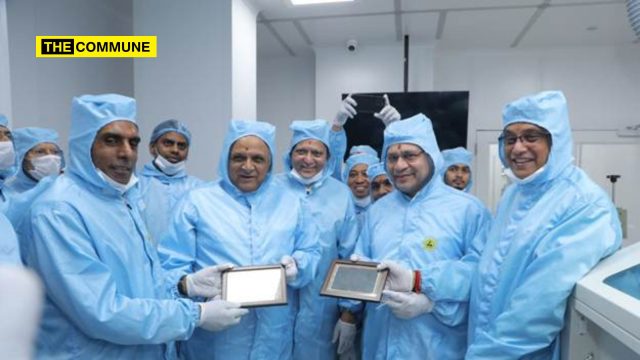
Highlighting the importance of developing a strong talent base, the minister said that one of the major objectives of the India Semiconductor Mission (ISM) is to create a global pipeline of skilled professionals. Speaking at the launch of India’s first end-to-end Semiconductor OSAT Pilot Line Facility of CG Power at Sanand, Gujarat, Vaishnaw said the inauguration of the pilot line represents a decisive step in fulfilling Bharat’s dream of developing semiconductor design, manufacturing, and downstream capabilities, with Gujarat emerging as a pivotal hub in this transformation.
Vaishnaw underlined the critical role of the OSAT Pilot Line, noting that chips manufactured here will be used for customer qualification. Once these chips are approved, it becomes much easier for commercial plants to commence full-scale production of qualified products. He emphasised that this inauguration is among the most significant milestones achieved under the India Semiconductor Mission, which has approved 10 projects so far. The government has also partnered 270 universities and equipped them with state-of-the-art semiconductor design tools. In 2025 alone, these tools recorded over 1.2 crore usages. As a direct outcome, 20 chips designed by 17 institutions have already been successfully fabricated at the Semi-Conductor Laboratory (SCL), Mohali.
The minister stated that very few countries in the world provide students with access to such advanced tools. He added that this initiative will empower India’s youth, strengthen the technical ecosystem, and position the nation as a global hub of semiconductor talent. The CG Semi facility at Sanand provides end-to-end solutions for chip assembly, packaging, testing and post-test services, covering both traditional and advanced packaging technologies. This marks a major step in strengthening India’s semiconductor capabilities and supporting the country’s goal of becoming self-reliant while also serving global markets.
-IANS
Subscribe to our channels on Telegram, WhatsApp, and Instagram and get the best stories of the day delivered to you personally.
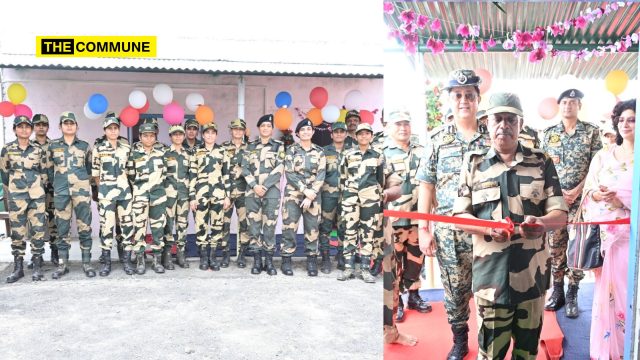
India’s border guards, the Border Security Force (BSF), dedicated a new canteen, aptly named “A Canteen for Courage”, in the treacherous ‘Harami Nala’ region of the Rann of Kutch. The facility was inaugurated not by a senior officer, but by CT/WCSS Mondal, a veteran cook of the 68 Battalion who has served the Force for nearly four decades, including 20 years with the battalion.
The event was attended by Commandant Vipin Panthri, officers, and all ranks of the 68 Bn BSF. The canteen is expected to provide much-needed nourishment and comfort to troops deployed in one of the harshest terrains along the India-Pakistan border. “Service in Harami Nala is not just about guarding a frontier it’s about enduring some of the toughest conditions in the world. This facility will ensure our men have a place of respite and sustenance,” a senior officer said. Harami Nala is a 22-kilometre-long tidal channel in Gujarat’s Kutch region that forms part of the India-Pakistan border. A stretch of Rajasthan’s Barmer district also meets this area.
The channel, which carries large amounts of water and silt, is rich in marine life such as prawns and other species though most are protected.
Despite this, illegal fishing continues due to its high value. Water levels and flow vary with weather conditions, and the channel itself spans nearly 20 to 25 kilometres. The name translates to “rogue” or “treacherous channel”, reflecting its reputation as a vulnerable entry point for infiltration from Pakistan into India. Over the years, smugglers, criminals, and even terror operatives have tried to exploit this route. Pakistani fishermen are often caught here, and security forces occasionally discover abandoned boats in the area.
One of the most widely circulated claims is that Ajmal Kasab, the lone surviving gunman of the 2008 Mumbai terror attacks, who was later hanged, may have entered India through Harami Nala. Its proximity to Gujarat’s coastline and access to Mumbai makes it a strategic yet sensitive location. While security on the Indian side remains tight, the channel continues to pose a challenge for border forces. Interestingly, attempts to cross into Pakistan from the Indian side through this route are virtually unheard of.
-IANS
Subscribe to our channels on Telegram, WhatsApp, and Instagram and get the best stories of the day delivered to you personally.
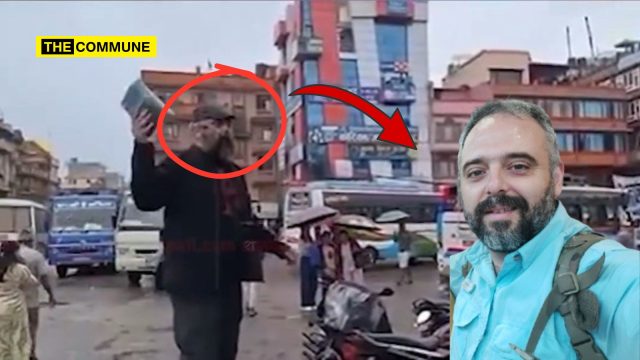
Daniel S. Courney was recently arrested in Lalitpur by Nepal’s immigration officers on allegations of preaching Christianity while on a visit visa. A resident of Nepal since 2015, Courney is accused of engaging in proselytisation in public areas including Lagankhel, Jawalakhel, and Sundhara. Authorities also discovered that he operated a children’s home in Bhaisepati housing around 20 children, along with a publishing house based in Lalitpur. Investigations are ongoing to determine whether minors were being used in religious conversion activities, and whether there was any violation of local laws related to child welfare and religious outreach.
नेपालमा व्यावसायिक भिसा लिएर ईसाइ धर्मको प्रचार गर्दै आएका अमेरिकी नागरिक Daniel S. Courney अध्यागमन विभागको नियन्त्रणमा pic.twitter.com/badYpBgzKK
Daniel Stephen Courney, originally from New York, USA, has been involved in proselytisation activities for quite some time.
A Reddit thread reveals that he arrived in India on 27 August 2009 and was hosted by his pastor friend in Guntur, Andhra Pradesh. He lived with this pastor friend for several months in a remote village and was given the advice that if he wanted to remain in India, he had to marry locally. In this way, he would be able to have dual citizenship in both India and the US. So, his marriage was arranged with the pastor friend’s niece Anusha. This information was obtained in a Reddit thread that was from this website. The blog post has been removed since.
The Reddit thread also says that during his stint in the US Army as a combat medic, he was allegedly put in the psychiatric ward because of his “preaching” activities.
His Facebook page reveals that he is now a father of 6 children. He is said to have arrived in India on a tourist visa and stayed on for over 10 years during which he involved himself in conversion-related activities in the then Andhra Pradesh state.
In 2018, he was convicted on two counts of religious and racially motivated public order offences.
In 2021, he was reported to have stalked an abortion doctor in Englewood with a drone. He was apprehended and found operating the drone which had a speaker and camera outside Metropolitan Medical Associates on Engle Street. Courney and fellow pro-life activists have often protested at this location in the past. He also tried to stop people from entering the reproductive health services clinic. Subsequently, he was barred from coming within 25ft of the Englewood clinic.
He is also reported to have been charged along with two other Christians in 2021 for violating the state’s anti-bias intimidation statute, specifically for “shouting homophobic rhetoric directly in front of Allure Salon,” after the trio preached to the salon owner and an employee who are both openly homosexual.
His Facebook page reveals a lot of information about his move from Nepal where he resided during the pandemic and continued his conversion activities as a missionary.
Mr. Daniel Stephen Courney.. US Evangelist who settled down in AP (for 15 years) & married to local Telugu girl was deported & blacklisted in 2017 with our complaints. Later settled down in Nepal. #Noted: below image circulating is from Nepal, not India.
— Legal Rights Protection Forum (@lawinforce) March 27, 2020
@HMOIndia@lawinforce Daniel Stephen Courney once deported from India for rabid evangelist activities is back in India committing the same offence again. He is staying in Nepal and entering India regularly for Christian evangelist activities#noconversionpic.twitter.com/KRwtWLglXN
In the first week of August 2023, his Facebook page reveals that they took a flight to Assam, and allegedly with the help of the West Bengal Joint Secretary, International Human Rights Council, he has been moving around the North-Eastern states.
On 3 August 2023, he posted on his Facebook account that he along with another person named Mr. M.S Kumar from Hyderabad have distributed 50 Assamese New Testaments on the Platform No. 6 of the Guwahati Railway Station, Assam.
On 5 August 2023, he visited Senapati town of the Manipur State and telecasted a live video criticizing the government of India calling it a ‘Radical Hindu Government’ and accused the Indian Government of the ongoing violence against Christians in the state.
On 10 August 2023, he posted on his Facebook account seeking funds from foreigners for the Manipur violence victims by saying that “At least 400 churches were burned to the ground. Hundreds of Christians kills. Countless families had their homes and entire villages razed to the ground.”
Courney’s Video On Manipur
In his 13-minute video, he speaks about the “persecution of Kuki tribals” because they are Christians and that he was reporting from a village called Senapati in Manipur.
Full video here –
He goes on to say that the ruling BJP government is very radically Hindu and was looking to make the entire country “Hindustan”. He claims that about 41 villages have been burned down and churches destroyed. He also claims that the ruling government at the centre felt threatened by the fact that Christianity was metastatizing at an exponential state in the North East and hence these measures were taken. He said, “… they’re attempting to, like I said, to exterminate, to expunge, to curtail the growth of Christianity, the spread of Christianity…”
He also says that he had never seen a more Christian region anywhere in the world and even though the people were converted Christians, they were a force to reckon with. He also mentioned that there are 5 churches in a single village, something he would never see in his country (US).
He then goes on to explain who the Kukis and the Meities are, and how the Kukis remained Christian while the Meiteis were converted to mainstream Hinduism 300 years ago by their king. He claimed that the Kukis lived a very comfortable and prosperous life because they were blessed by God and that the Meities were jealous of their prosperity. – “…I mean they have cars, they have refrigerators, they have washing machines, God has blessed them, God has blessed this region, they’re with wealth and prosperity, don’t you think tribal you think bows and arrows, but these people are living better than some people in in the Appalachian region of America. These people are living well even in the small towns in small villages people are having washing machines and cars, God has blessed the cookie people, and naturally jealousy is growing and the Meitei people are feeling threatened, they’re feeling threatened by the growth and prosperity of the Kukis…”
He also claimed that this is not just a land dispute but also an identity crisis and that Christianity is changing the North East of the country and that he was shocked to see the number of churches in the region.
“… as a result, there’s a lot of threat, there’s a lot of concern among the Meiteis, the Kukis are taking over because they’re buying land and they’re not able to sell it, and yeah just in a nutshell, there’s the conflict comes down to a land dispute, of course, a land dispute but it’s not only a land dispute, it’s an identity crisis because like I said Christianity has rapidly it’s terraforming Northeast India I mean it’s completely radically altering the landscape of this region. It’s amazing, I’m shocked, I’ve never seen so many churches consolidated in such a small geographical region and this is actually a large geographical region. Northeast India is is is a considerable land and so Christianity is a force to be reckoned with in Northeast India. This is not merely an ethnic feud, it’s not merely a family feud, this is not merely anything like that, this is faith-based my dear friends.”
He blames the ruling central government and the Prime Minister for wanting to change this country into a Hindu country and that they have deliberately persecuted Christians and Muslims to make it a homogenous Hindu land. – “… there are the powers that be the current political party of India, the BJP Janata Party wants this country to be a Hindu country, the current prime minister is a radical, they have deliberately persecuted Christians and Muslims, trying to make this uh a homogeneous Hindu land which violates the very spirit of the Indian constitution.”
He claims that at least 400 churches were burned down and that this was documented online.
“… I’ve confirmed this with local sources with local people I’ve spoken to and also it’s documented online, you can Google it because I’ve had some people challenge me, oh no that’s exaggerated, that’s an inflated number. It’s not inflated, I’ve asked the local people, and I’ve we visited at least five or six refugee camps in the past two days. I’ve seen hundreds hundreds of Kuki Christians who have been forcibly displaced, their villages were burned to the ground, razed to the ground. Do you understand what I’m telling you, 400 churches at 41 churches in one District alone the Kangpokpi district alone has had 41 Villages razed, burned to the ground for their faith in Jesus, for their Christian identity because they’re not Hindus.”
He says that although the internet is not to be used in the region, he had to spread the message and hence borrowed internet from someone to share the information about the ground situation. He also laid the accusation that the Manipur violence was a human rights violation, he said, “This is a human rights violation, this is an egregious mass human rights crisis that is being ignored by the mass media because it doesn’t fit the narrative.”
He claims that he is in Manipur to do social service, but the person he is with MS Kumar has been seen involved in proselytisation activities. It is unclear whether the blacklist on him has been lifted and how he managed to enter the country. .
More recently, in connection with the USAID exposé, Daniel Stephen Courney was identified as one of the missionaries actively involved in supporting and facilitating the arming of tribal groups
Daniel Stephen Courney remains a highly polarizing figure seen by some as a passionate missionary, but by many as a disruptive foreign agent using religion to stoke division in India’s vulnerable regions. Given his prior deportation, repeated violations of visa norms, and inflammatory rhetoric, calls for a permanent ban on his re-entry are growing louder.
Whether Courney is an isolated zealot or part of a larger international network, his activities underscore the complex intersection of faith, geopolitics, and national security in India.
Subscribe to our channels on Telegram, WhatsApp, and Instagram and get the best stories of the day delivered to you personally.
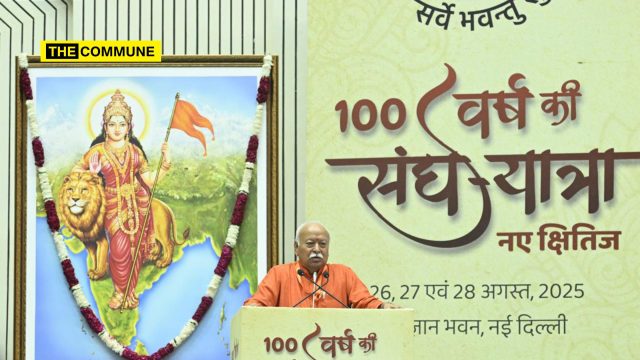
Rashtriya Swayamsevak Sangh (RSS) Sarsanghchalak Mohan Bhagwat on 28 August 2025 dismissed the perception that the Sangh dictates the Bharatiya Janata Party’s (BJP) decisions, stressing that the party is independent in running the government and conducting its own affairs.
Speaking on Day 3 of the ‘RSS Centenary Lecture Series – 100 Years of Sangh’s Journey: New Horizons’ at Vigyan Bhavan in Delhi, Bhagwat underlined that the RSS “only offers suggestions” but never interferes in the BJP’s decision-making process. “This is completely wrong. This cannot happen,” Bhagwat said, responding to a question on whether “everything in BJP is managed and arranged by the Sangh.” Drawing a comparison, he remarked, “I have been running the Shakha for 50 years. If someone gives me a suggestion, I will listen. But the party is running the country. They are experts in that. We (RSS) are not.”
He added that while the RSS can advise, the final call always rests with the BJP leadership. In a pointed remark on delays in the BJP’s internal elections, including the selection of its next party president, Bhagwat quipped: “If we were deciding everything, would it have taken so much time? They should take their own time.” On the Sangh’s broader relationship with government, Bhagwat said the organisation coordinates well with both central and state administrations, irrespective of political party. However, he flagged structural challenges, noting that India’s governance system, largely inherited from the British, has “internal contradictions.” “Even if the man in the chair is 100 per cent for us, he has to work through hurdles. He may succeed or he may not. We give him independence. There is no quarrel anywhere,” he explained.
Addressing examples of friction, Bhagwat cited differences between trade unions, small-scale industry bodies, and the government, stressing that such contradictions are natural. “Our swayamsevaks work honestly. We allow experiments, and if results are good, everyone accepts,” he said. Bhagwat reiterated that the Sangh and the BJP “trust each other” but differences on issues are natural. “We are not at loggerheads. We are trying to extract the truth, which includes struggle, but it does not mean quarrel.”
-IANS
Subscribe to our channels on Telegram, WhatsApp, and Instagram and get the best stories of the day delivered to you personally.
The National Human Rights Commission (NHRC) has taken suo motu cognisance of a media report that an Imam allegedly sexually abused a 7-year-old boy at a mosque in the Jhabreda area of Uttarakhand’s Roorkee last week.
According to the Press report, the boy had gone to the mosque for religious studies when the perpetrator allegedly took him to his room by force and committed the heinous act. The Imam also threatened the child with dire consequences if he disclosed the incident to anyone. The report further mentioned that the victim narrated the incident to his family members after returning home, following which the matter came to light. Taking note of the news item, the apex human rights body observed that the contents, if true, raise serious concerns of human rights violations.
The NHRC has issued notices to the Roorkee District Magistrate and District Superintendent of Police, seeking a detailed report on the incident within two weeks. The Uttarakhand Police registered a criminal case against the accused under the relevant Sections of the POCSO (Protection of Children from Sexual Offences) Act and took him into custody. As per SP (Rural) S.C. Suyal, the perpetrator was produced before the local court, from where he was sent to judicial custody.
Established under the Protection of Human Rights Act, 1993, the NHRC, an autonomous statutory body, is an embodiment of India’s concern for the promotion and protection of human rights. Its primary role is to protect and promote human rights, defined as the rights relating to life, liberty, equality, and dignity of individuals guaranteed by the Constitution or embodied in the International Covenants and enforceable by courts in India. The apex human rights body has the power to take suo motu (on its own motion) action based on media reports, public knowledge or other sources, without receiving a formal complaint of human rights violations.
-IANS
Subscribe to our channels on Telegram, WhatsApp, and Instagram and get the best stories of the day delivered to you personally.
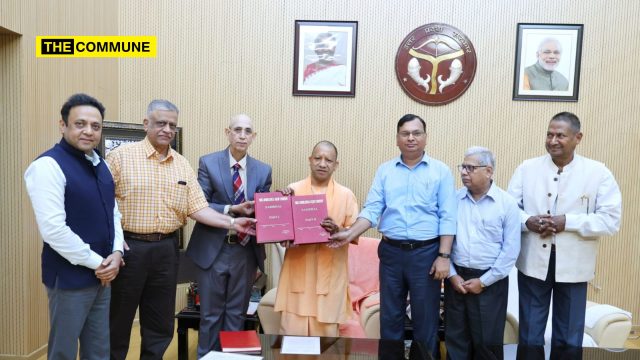
The three-member judicial committee, formed to investigate Sambhal violence, submitted its report to Uttar Pradesh Chief Minister Yogi Adityanath on 28 August 2025. The report, yet to be made public, will shed light on the reasons behind the November 2024 violence and is also expected to fix blame on the culprits behind the stir, which resulted in the deaths of four individuals and injuries to many others.
The probe report has started evoking reactions, even before being put in the public domain. Vishnu Shankar Jain, senior advocate and one of the petitioners in the Sambhal case, said there was a coordinated plot to block the court-mandated survey of the Shahi Jama Masjid by the Archaeological Survey of India (ASI) team, and this was done with active connivance and support from the ‘foreign forces’.
He stated that the ASI team found it very difficult to conduct the survey of the Mughal era mosque on 19 and 24 November last year, despite clear instructions from the Court. Claiming a foreign plot behind the Sambhal violence, he said that the attack on police personnel was pre-planned and done with an intention to eliminate the survey team, thwart the court order and stall any survey of the premises.
“Many disruptive and anti-national forces are active in Sambhal. The so-called vanguards of secularism should visit the city and see the ground reality,” he said. He further stated that the Shahi Jama Masjid used to be the Harihar temple in the past. It was demolished by the Mughal ruler Babar and then, in later years, was appropriated by the Muslim community, claiming it to be a mosque.
The three-member judicial committee, in its 450-page report, has also reportedly shared insights on the declining Hindu population in Sambhal in the post-Independence era. According to the report, during independence, Muslims and Hindus constituted about 55 per cent and 45 per cent of the population in the district, but currently, the Hindu population has declined to 15 per cent while the Muslim community has risen to 85 per cent.
Responding to these findings, Vishnu Som said that Sambhal has seen dramatic demographic change over the years and added that the Hindu community has been made to live under constant fear and also forced to live as ‘second-class citizens’ in the city.
-IANS
Subscribe to our channels on Telegram, WhatsApp, and Instagram and get the best stories of the day delivered to you personally.
The Bihar Police Headquarters (PHQ) has issued a statewide high alert after receiving intelligence inputs about the possible entry of Pakistan-based terrorists into the state through the porous Nepal border.
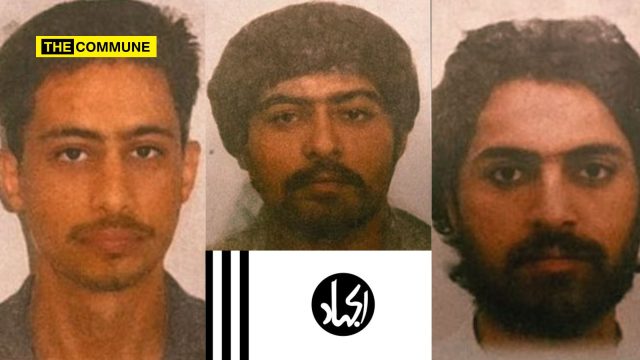
According to intelligence sources, three individuals believed to be affiliated with the Pakistan-based terror group Jaish-e-Mohammed (JeM) reportedly infiltrated Bihar by crossing over from Nepal. The suspects have been identified as Hasnain Ali from Rawalpindi, Adil Hussain from Umerkot, and Mohammad Usman from Bahawalpur.
In response, the PHQ has circulated their names, photographs, and passport information to police units in all border districts, directing heightened surveillance and verification efforts.
Reports suggest the suspects arrived in Kathmandu in the second week of August and made their way into Bihar during the third week. With the Bihar Assembly elections approaching, security agencies are on high alert amid concerns about potential terror threats during the election period.
Senior police officials across the state have been briefed, and district intelligence units have been instructed to ramp up field monitoring, gather actionable information, and respond swiftly to any suspicious developments.
Authorities are concerned that the infiltrators could be plotting a significant terror attack, possibly targeting the poll-bound state or other regions in India.
This development comes just months after a similar security breach in May, when 18 individuals illegally entered Bihar over a span of 20 days. One of those apprehended was found to be a Khalistani-linked operative.
Bihar’s extensive 729-kilometre open border with Nepal continues to pose a serious security challenge. Seven districts in the state share this international boundary, complicating efforts for round-the-clock monitoring. Additionally, the proximity of the Bangladesh border just 20 km from Kishanganj district adds another layer of vulnerability.
As Prime Minister Narendra Modi’s two-day Japan visit is set to begin, both nations have accelerated trade and economic ties, with over 170 MoUs signed in two years representing more than $13 billion in committed investments.
PM Modi will travel to Japan from 29-30 August to take part in the 15th India-Japan Annual Summit at the invitation of his Japanese counterpart, Shigeru Ishiba. From steel plants in Gujarat to biogas projects in rural India, from Assam’s gateway role to Tokyo’s advanced Research and Development labs, from farmers in rural India to AI engineers in Bengaluru and Tokyo, from semiconductor fabs to academic exchanges, the India–Japan MoUs are building the bridge to a new era of cooperation.
With ‘Make in India, Make for the World’ as guiding vision, this partnership is set to reshape industrial, agricultural, and human capital landscapes, not only for the two nations but for the whole region and the world at large. Nippon Steel (AM/NS India) is expanding in Gujarat with ₹15 billion investments, along with ₹56 billion integrated steel plant in Andhra Pradesh. While Suzuki Motor has announced ₹350 billion for a new plant in Gujarat and ₹32 billion to expand production lines, Toyota Kirloskar has ₹33 billion expansion plans in Karnataka and a ₹200 billion new plant in Maharashtra.
Sumitomo Realty has invested $4.76 billion in real estate, while JFE Steel has ₹445 billion worth of investment to strengthen electrical steel production. Astroscale is the first Japanese commercial satellite launch using ISRO’s PSLV. This spread of investment across steel, automotive, renewables, semiconductors, real estate, and aerospace cements Japan’s confidence in India’s long-term economic potential.
Japanese industry partnerships are pulling Indian SMEs into global supply chains. Tokyo Electron and Fujifilm, and Tata Electronics are building a semiconductor ecosystem, with Indian SMEs becoming suppliers for high-value components. Toyota and Suzuki’s value chains will integrate hundreds of tier 2 and 3 Indian SMEs. Fujitsu is recruiting 9,000 Indian engineers in its Global Capability Centre, boosting IT-linked SMEs. With these initiatives, SMEs will gain global-standard practices, technology infusion, and market access, elevating India’s export competitiveness.
Japanese cooperation is also directly empowering India’s rural economy through green energy projects. Sojitz Corporation, in partnership with Indian Oil, is investing $395 million to establish 30 biogas plants that will produce 1.6 million tonnes annually. Farmers will supply crop residues and agri-waste, earning additional income while supporting India’s clean energy transition. Suzuki Motor Corporation, working with the National Dairy Development Board and local dairy cooperatives, is launching a biogas initiative adopted by UNIDO under its Industrial Cooperation Programme in the Global South (funded by Japan’s METI).
Starting operations in 2025, four biogas production plants in Banaskantha district in Gujarat were made with a total investment of Rs 2.3 billion. This project will convert cow dung into carbon-neutral biogas for CNG vehicles, which make up 20 per cent of India’s passenger car market. This will cut emissions, strengthen energy self-sufficiency, create rural jobs, and raise farmer incomes, while embedding Japanese technology into scalable clean-energy infrastructure.
Moreover, Nippon Steel’s projects will boost speciality steel exports to auto and energy markets. Toyota and Suzuki’s hybrid/EV ‘Made in India’ vehicles will be exported to Africa, the Middle East, and Southeast Asia. When it comes to human resources and knowledge exchange, the area is rapidly expanding under the India–Japan Talent Bridge programme and METI initiatives. As part of the ‘Talent Exchange Target’, 50,000 Indians and Japanese are part of the exchange programme in five years via study abroad, internships, and employment.
Professors and students are being invited for company visits, university roundtables, and networking with Japanese firms. A notable MoU was recently signed between the government of Assam and ASEAN Holdings, highlighting Japan’s commitment to India’s northeast. This also dovetails with Japan’s long-standing interest in the Act East Policy and the development of the northeast. At the Japan-India-Africa Forum and the recently held 9th TICAD Summit in Tokyo, India emerged as an anchor country for connectivity and industrial corridors. Priority areas are mineral security (rare earths, lithium, cobalt); supply chain resilience in semiconductors and EVs; and exploring export markets in Africa and the Middle East for Made-in-India goods with Japanese technology.
-IANS
Subscribe to our channels on Telegram, WhatsApp, and Instagram and get the best stories of the day delivered to you personally.
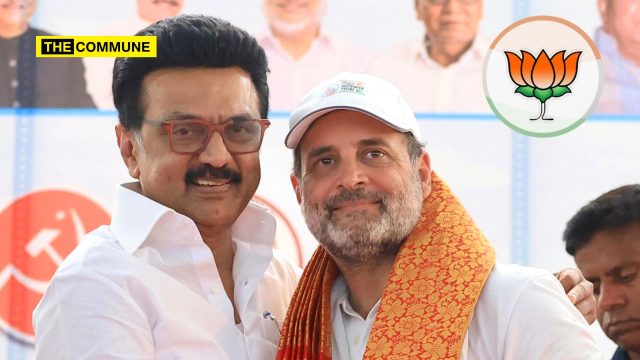
The Tamil Nadu unit of the BJP has strongly criticised Congress leader Rahul Gandhi’s ongoing campaign in Bihar, describing it as a “publicity stunt” aimed at reviving his political career and projecting himself as the Opposition’s Prime Ministerial candidate for 2029.
In a statement, BJP spokesperson A.N.S. Prasad said Rahul Gandhi’s “Vote Chori” allegations against Prime Minister Narendra Modi, Home Minister Amit Shah, the Election Commission of India (ECI), and the BJP were “baseless” and “anti-national”. He alleged the Vote Adhikar Rally by Rahul Gandhi was being orchestrated with the support of foreign political and media agencies to rebrand Gandhi’s image and pressure the INDIA bloc partners like M.K. Stalin and Mamata Banerjee into endorsing him as a national leader.
According to Prasad, the Congress scion has failed to produce any evidence to substantiate his claims despite repeated challenges by the ECI. “Deadlines have lapsed without proof. This is the same pattern we saw with earlier allegations of EVM tampering,” he noted, adding that the ECI, a “globally respected institution,” has already dismissed the accusations as baseless. Prasad further questioned why Congress leaders continue to accuse the ECI only when election results go in the BJP’s favour. “If vote theft was systemic, how did Congress win in Karnataka and Himachal Pradesh?” he asked.
The BJP spokesperson accused Gandhi of undermining public trust in democratic institutions for personal gain. “This selective outrage erodes confidence in the electoral process and could even invite legal consequences for defaming constitutional bodies,” he said. Citing comments from Union Minister Anurag Thakur, Prasad said Congress has developed a pattern of blaming EVMs, voter suppression, or now “vote chori” to cover up its “repeated electoral failures”.
He added that Gandhi’s reliance on foreign firms for political branding raises serious concerns about external influence in Indian politics. Prasad also targeted the INDIA bloc partners for supporting the Bihar campaign, pointing to alleged failures of the DMK government in Tamil Nadu, such as power tariff hikes and law-and-order issues, as “mirror images” of Congress misrule. “Rahul Gandhi’s agitation is an attempt to derail Prime Minister Modi’s vision of Viksit Bharat 2047, which has already put India on the path to global leadership,” Prasad said. He concluded that the people of Bihar have “rejected Rahul Gandhi’s divisive rhetoric”, and called the campaign a turning point toward a “Congress-free Bharat”.
-IANS
Subscribe to our channels on Telegram, WhatsApp, and Instagram and get the best stories of the day delivered to you personally.
A massive hunt has been launched by cybercrime police in Tamil Nadu’s Tiruvarur after fraudsters posing as Enforcement Directorate (ED) officials conned an 81-year-old man of ₹13.50 lakh in a sophisticated WhatsApp scam.
According to police sources, the victim, identified as Kunjithapadam, a resident of Tiruvarur, received a WhatsApp call a few days ago from an unknown person who claimed to be an ED officer. The caller, speaking in an authoritative tone, demanded details of his bank account and alleged that the octogenarian had carried out “illegal financial transactions”. When the elderly man denied the allegations, the fraudster intensified the threats, warning that action would be taken against him unless he paid a penalty. The caller further threatened that the case would be escalated to the Central Bureau of Investigation (CBI).
To make the scam appear authentic, the gang also sent him bank account details, instructing him to transfer the “fine” immediately. Frightened and anxious about possible legal action, Kunjithapadam complied and transferred a total of Rs 13.50 lakh to the accounts provided. Once the money was received, the fraudsters switched off their phones, cutting off all contact. Realising he had been duped, the senior citizen informed his two sons, both working abroad, about the incident.
Alarmed, they filed a complaint with the Special Branch police. The case was subsequently forwarded to the district cybercrime police. Based on the complaint, the cybercrime wing registered a case and initiated a search to trace the culprits. Investigators are now analysing the phone numbers and bank account details used by the fraudsters, and efforts are on to track the money trail. Police officials have also urged the public to remain vigilant and avoid sharing personal or financial details over phone calls or WhatsApp messages, stressing that government agencies never demand payments or threaten individuals in this manner.
The incident has once again highlighted the growing menace of cyber fraud targeting senior citizens, who are often vulnerable to intimidation and deception. Authorities have appealed to families to educate elderly members about such scams and to report suspicious calls immediately.
-IANS
Subscribe to our channels on Telegram, WhatsApp, and Instagram and get the best stories of the day delivered to you personally.