Home Blog Page 371

‘I May Forgive, Bihar Won’t’: PM Modi Gets Emotional Over Abuses Targeting Late Mother

pm modi mother abuse bihar

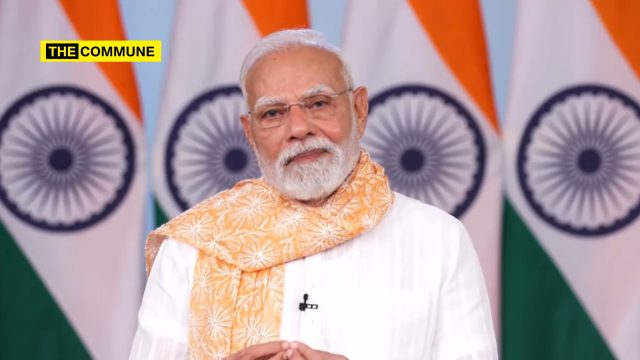
Prime Minister Narendra Modi on 2 September 2025 turned emotional while sharing his pain and anguish over name-calling of his late mother from the Congress-RJD stage during their recent ‘Voter Adhikar Yatra’ in Bihar. His emotional outburst, during a virtual address to the Jeevika Didis, was, however, marked with a warning “he may forgive the abusers, but the people of Bihar and Bharat won’t”.

It was during the launch of Bihar Rajya Jeevika Nidhi Saakh Sahkari Sangh, a platform that will help Jeevika Didis with funds, that the Prime Minister looked visibly moved while sharing his agony and suffering on his late mother getting abused and humiliated on a political stage. “You all know that my mother is no longer in this world. Some time ago, after completing 100 years of age, she left us all. My mother, who had nothing to do with politics, was subjected to vile abuses from the RJD-Congress platform. This is deeply saddening, painful, and distressing,” PM Modi said.

What was the fault of that mother that she was made to hear such vile abuses?” he asked. Abuses were hurled at the Prime Minister’s mother during the Voter Adhikar Yatra in Bihar’s Darbhanga, from the stage featuring Rahul Gandhi and Tejashwi Yadav’s posters; however, neither of them was present at the venue when the incident happened. Slamming the Congress-RJD alliance, PM Modi said the mentality that abuses mothers, the mentality that abuses sisters looks down upon women as weak human beings. It is this mindset that treats women as objects of exploitation and oppression.

The Prime Minister further said that whenever the dispensations with anti-woman mentality have come to power, “our mothers, sisters, daughters have had to endure the most suffering”. PM Modi further stressed the respect given to mothers, particularly in Bihar, where ‘Chhatti Maiya‘ is worshipped, and stated that people won’t forgive such abusive acts. “I want to tell those who abused my mother in front of the people of Bihar — Modi might forgive you once, but the land of Bihar and India has never tolerated the insult to a mother,” he said.

PM Modi also asked people to demand answers from the RJD and Congress over abusive slogans against mothers during all upcoming public meetings and rallies. Notably, the person who hurled expletives at PM Modi’s mother was arrested days later, but RJD or Congress have yet to express regret or tender an apology over the incident.

-IANS

Subscribe to our channels on TelegramWhatsApp, and Instagram and get the best stories of the day delivered to you personally.

Deletion Requests Outnumber Inclusions 6:1 In Bihar Voter List Update, ECI Tells Supreme Court

eci voter list supreme court

In a recent submission to the Supreme Court, the Election Commission of India (ECI) disclosed that during the Special Intensive Revision (SIR) of electoral rolls in Bihar, requests for the deletion of names far exceeded those seeking inclusion by nearly six times between 22 and 30 August 2025.

This period followed the apex court’s decision on 22 August 2025, which allowed voters to use Aadhaar as a standalone identity document when filing claims or objections under the ongoing revision drive. While this move was expected to ease the process and boost inclusion applications, actual numbers told a different story.

The ECI reported that only 22,723 requests for inclusion were submitted during that week, in contrast to a staggering 1,34,738 objections calling for name deletions from the draft voter list.

Representing the poll body, Senior Advocate Rakesh Dwivedi explained that many of these objections stemmed from voters identifying that their names were duplicated in other constituencies or needed removal due to reasons such as death or relocation.

Following the release of the draft electoral roll on 1 August 2025, approximately 65 lakh voters were removed, reducing Bihar’s voter count from 7.89 crore to 7.24 crore. The ECI noted these removals were largely due to duplication, permanent migration, or death.

Claims Still Open After September 1, Says ECI

During the hearing, petitioners including the Rashtriya Janata Dal (RJD), represented by Senior Advocate Shoaib Alam, and lawyers Prashant Bhushan and Neha Rathi, had sought an extension of the deadline to 15 September 2025, citing ongoing challenges.

However, the Election Commission clarified that while 1 September 2025 marked the formal end of the initial phase, claims and objections will still be accepted beyond this date. Any submissions made after the deadline would be processed post-finalisation of the electoral roll but before the final list is submitted at the time of nominations.

“The process for filing claims, objections, or corrections continues up to the last date for filing nominations. All changes will be reflected in the final roll,” the ECI explained in its note to the bench, led by Justices Surya Kant and Joymalya Bagchi.

Political Parties Criticised for Inaction

The ECI also raised concerns over the lack of involvement from most political parties. Apart from the RJD and the Communist Party of India (Marxist-Leninist) Liberation – CPI(ML-L), the commission stated that none of the other recognized parties had taken steps to assist excluded voters in filing Form 6, the official request for inclusion.

“Other than RJD and CPI(ML-L), no political party not even through their booth-level agents (BLAs) helped any of the nearly 65 lakh excluded individuals file their claims,” the ECI said, pointing out a major lapse despite having 1.6 lakh BLAs on the ground.

Parties named in the court order include: Aam Aadmi Party (AAP), Bahujan Samaj Party (BSP), Bharatiya Janata Party (BJP), Communist Party of India (Marxist) – CPI(M), Indian National Congress, National People’s Party (NPP), Janata Dal (United) – JD(U), Lok Janshakti Party (Ram Vilas) – LJP-RV, Rashtriya Lok Janshakti Party (RLJP), Rashtriya Lok Samta Party (RLSP)

During the claims period, the total forms received from all political parties stood at 128, 103 forms requested deletion and only 25 forms were for inclusion.

In contrast, individual voters were significantly more active, submitting, 33,326 inclusion forms, 2,07,565 deletion forms (Form 7)

Concerned by the apparent disconnect between voters and political parties, Justice Kant observed signs of a “trust deficit.” The bench directed the Chairperson of the Bihar State Legal Services Authority to mobilize paralegal volunteers across all districts. These volunteers are to assist individuals and parties in filing corrections, claims, and objections, and will be required to submit confidential reports to the respective District and Sessions Judges.

The ECI assured the court that 99.5% of the 7.24 crore voters listed in the draft roll had already provided their eligibility documents. The verification process for these submissions is currently underway and is expected to be completed by September 25, 2025, in line with the original SIR order dated June 26.

Additionally, the poll body noted that over 15.3 lakh newly eligible voters had submitted their applications to be added to the electoral roll for the first time.

(With inputs from The Hindu)

Subscribe to our channels on TelegramWhatsApp, and Instagram and get the best stories of the day delivered to you personally.

The Real Reason Trump Throws Tantrums At India

trump india pakistan tantrums

What happens when a 5-year-old child doesn’t get what it wants? First, it cries. When parents don’t relent, it starts throwing tantrums. A child can be forgiven, but what happens when the Head of State behaves that way? I have lost count of how many times the US President Donald Trump has openly expressed his craving for the Nobel Peace Prize.

It all started when he claimed to have stopped the India-Pakistan war in May 2025. This claim has no basis in truth. After being badly hit, Pakistan requested a ceasefire and India agreed. Trump has not succeeded in stopping the Russia-Ukraine war, yet. Iran-Israel war ended after heavy destruction on both sides.

In fact, the USA bombed military facilities in Iran. If at all, Trump stopped any wars, just 2 conflicts, the first between Thailand & Cambodia, and the second one between Rwanda & Congo come to mind. These, too, are not wars but just skirmishes.

It has become more routine for Trump to claim the coveted Nobel Peace Prize. Pakistan, Cambodia, Congo, and Israel have nominated Trump for the big prize, but the largest democracy in the world, India, hasn’t. It has emerged that Modi’s refusal to nominate Trump for the big prize has caused a big upset to POTUS.

India has also refused to acknowledge Trump’s bluff of having stopped the India-Pakistan war.  India has refused to allow the import of US farm produce and dairy products to India. Hence, Trump accused India of buying oil from Russia.  America’s double standard got exposed when Trump showed his helplessness, upon being asked about America’s import of Uranium and fertilizers from Russia. He has spared China, the largest importer of Russian Oil.

Trump called the Indian economy, a dead economy. His trade adviser, Peter Navarro, described the Russia-Ukraine war as Modi’s war, and he continues to make increasingly nonsensical arguments.” So, it is evident that it is not about India buying Russian oil, but it is more about personal ego.

It is clear that Trump tried to poke India by signing deals with Pakistan and also posted about investing in oil exploration in Pakistan. He nonchalantly commented that ‘India might be buying oil from Pakistan in the future’, a comment which invited laughs around the world.

Over the last four decades, Pakistan has announced the discovery of oil basins 10 times, explored 18 wells, but has extracted nothing. This was seen clearly as pressure tactics by the US to make India sign a deal, but Bharat, being Bharat, didn’t budge.

The world has rarely seen politicians who run after awards. No one has the right to demand any Prize; it has to be earned. But why is Trump behaving so indifferently to get nominated for the Nobel? The reason is Barack Obama, the First Black President of the USA, who got the Nobel Peace Prize in 2009.

The entire world knows about the dislike Trump has towards Barack Obama. It is not just political but more personal, if not racial. In 2011, Trump openly accused Barack Obama of being born in Kenya, and he also said, ‘Obama may be a Muslim’. Trump, of course, retracted his statements in 2016 but didn’t apologize for calling Obama an African.

Trump has a sense of discrimination against Black people. There have been so many incidents in the last few decades.

John O’Donnell, a former employee of Trump, in his book ‘Trumped! The Inside Story of the Real Donald Trump—His Cunning Rise and Spectacular Fall, co-authored with James Rutherford, alleges that Trump said, “Laziness is a trait in Blacks” and that Trump had a dislike for Black employees

Trump Management Company, whose head was Donald Trump, was sued by the U.S. Justice Department for showing discrimination towards Black applicants by marking ‘C’, meaning coloured on their applications.

Kip Brown, a former employee at Trump’s Castle, claimed in a 2015 New Yorker article that when Trump and his wife used to visit Casinos, Black employees were hidden from them. He said, “When Donald and Ivana came to the casino, the bosses would order all the Black people off the floor.”

In 2005, Trump pitched the idea of racially segregated teams for his reality show The Apprentice. He suggested having an “assortment” of Black contestants compete against an all-white team of blondes, an idea criticized as promoting racial stereotypes.

Even as recently as during his 2024 campaign, he attacked Diversity, Equity, and Inclusion (DEI) programmes. Indirectly, he highlighted that Blacks and minorities are less capable. A few media houses also have carried articles between 2016 and 2020 on how racist the President was in his private life.

These incidents give us an indication of Trump’s indifference to Black people. A few political commentators opine that Trump has yet to come to terms that Barack Obama, a Black has the Nobel Peace Prize, but he hasn’t. That is the reason he never misses an opportunity to express his craving for the piece of gold. If Bharat backs up his case, then it’s almost certain for Trump to win the Nobel Peace Prize, but Modi hasn’t batted an eyelid.

Experts say that the tariffs on India are not due to the import of Russian Oil but due to 3 other reasons, as mentioned earlier.

  1. India’s refusal to acknowledge Trump’s lie about stopping the India-Pakistan war, Bharat has clearly said No to any third-party mediation.
  2. India’s strong resistance against the farm and milk products of America.
  3. India not backing Trump for the Nobel Peace Prize nomination.

Hence, we get to see these tantrums by Donald Trump and his aides. There could be a fourth reason, too – Deep State elements in the US may have changed camp.

Whatever may come, we will stand tall. This is New Bharat.

Kannappan is a writer.

Subscribe to our channels on TelegramWhatsApp, and Instagram and get the best stories of the day delivered to you personally.

Social Media Influencer Kavya Karnatac Peddles Half-Truths About Mehr To Glorify Islam & Slander Hinduism

kavya karnatac mehr dowry islam hinduism

Over the past few years, social media users would have noticed a trend – the glorification of Islamic practices as inherently feminist and superior, often through a deliberate and sly comparison with distorted versions of Hindu customs.

In a recent video, self-styled influencer Kavya Karnatac who is known by her handle @kk.create, tried to glorify Islamic marriage by presenting Mehr as a woman’s golden ticket to security and independence. She confidently declared that brides receive mandatory payments in the form of cash, gold, or property, and that marriages can only happen if the bride agrees to it.

Sounds empowering… until you scratch beneath the surface. What Kavya is doing is not an objective discussion on women’s rights. It is a sly attempt to project Islam as superior for women while subtly painting Hindu traditions as regressive. But reality paints a very different picture.

While presenting this half-truth, she conveniently omits the grim realities millions of Muslim women face under the very same Personal Law system that governs Mehr.

This woman is a perfect example of Liberal sweet poison.

The Selective Showcase: The “Mehr” Half-Truth

The speaker correctly states that Mehr is a mandatory payment from the groom to the bride, enshrined in the marriage contract. She highlights that it becomes her exclusive property and is a debt upon the husband’s estate.

This is technically true. However, this rosy picture is a fraction of the whole story. What she deliberately omits is far more telling:

The Reality of “Deferred Mehr”

While Mehr can be paid upfront (Mu’ajjal), it is very often “deferred” (Mu’wajjal), meaning it is only payable upon divorce or the husband’s death. In practice, this means a woman may never see this money unless her marriage ends. It is not an empowerment fund she can access during the marriage for her needs or independence; it is often a theoretical safety net that is notoriously difficult to enforce legally without a prolonged court battle.

The Illusion of “Choice”

The speaker claims, “the bride can demand anything.” In reality, the amount is frequently negotiated by male guardians (wali), and societal and familial pressures often lead to women accepting token amounts to not appear “greedy” or to make the marriage easier for the groom. The idea of a woman freely dictating a high price is often a fantasy, not the norm.

A Right Does Not Equal Empowerment

Having a right on paper and having the social, legal, and financial agency to enforce it are two different things. For many women, claiming Mehr from a resistant husband or his family can mean inviting social ostracization and a grueling legal fight.

The Glaring Omissions: The Reality for Muslim Women Under Personal Law That Karnatac Will Not Discuss

While Kavya boasts about Mehr, she conveniently ignores the systemic inequalities that Muslim women face:

  • Polygamy Legal for Muslim Men – Under Muslim Personal Law in India, men are allowed four wives at a time. Hindu men are legally restricted to one wife. Which system respects women more?
  • Triple Talaq and Divorce Insecurity – Though “instant” triple talaq has been banned, Muslim men still hold disproportionate power in divorce. Women have far less autonomy and are often left vulnerable.
  • Halala Exploitation – In cases of divorce, women are sometimes forced into humiliating “Nikah Halala,” where they must marry another man, consummate the marriage, and then divorce again before returning to their first husband. This is sanctioned by certain interpretations of Sharia, not Hinduism. Research reveals that Nikah Halala has become a commercial enterprise where “professional Maulvis” charge between ₹20,000 to ₹1.5 lakh for facilitating what amounts to legalized rape. Women are forced into temporary marriages, sexually exploited, and then divorced; all to satisfy male egos and religious technicalities. A 2022 case exposed how a woman was gang-raped by her former husband and others under the guise of Nikah Halala, while another incident involved a woman being forced into this practice after her husband lost her to a friend in gambling. These aren’t isolated incidents but systematic exploitation enabled by Islamic personal law.
  • Inheritance Inequality – Muslim women inherit only half of what male heirs receive, whereas Hindu daughters now enjoy equal inheritance rights under the Hindu Succession Act.
  • Hijab and Control Over Women’s Bodies – From Iran to India, Muslim women are pressured or forced to wear hijab, niqab, or burqa—often not out of choice but compulsion. Hindu women, despite social pressures, face no such legal impositions.
  • Mehr as Illusion – While marketed as “mandatory security,” Mehr is often set at token amounts in many Muslim marriages (sometimes as little as a few rupees) and deferred indefinitely. Many women never actually see it. In reality, it’s a paper shield, not real empowerment.
  • Custody Rights (Hizanat) – The mother’s right to custody of her children is often limited to a very young age (usually 7 years for boys, puberty for girls), after which custody typically reverts to the father.
  • Legal Battles for Equality – Muslim women’s groups have repeatedly had to go to court (e.g., Shah Bano, Shayara Bano cases) to demand basic rights—alimony, equality, dignity. Hindu women already enjoy such protections under codified Hindu law.

To promote Islamic marriage as the “best thing for a woman” while ignoring these patriarchal pillars is pure dishonesty on Karnatac’s part.

The Sly Dig: The False Equivalence with “Dowry”

The most insidious part of this narrative is the sly, derogatory comparison with Hinduism. The speaker sets up a strawman: “Is dowry only given to the boys? No.” This implies that Hindu marriages are solely defined by the illegal practice of dowry (giving from the bride’s family to the groom’s), while Islamic marriages are defined by the “gift” of Mehr to the bride.

This is a malicious false equivalence. it is a deliberate attempt to make one faith look inherently oppressive and the other inherently progressive.

Furthermore, she completely ignores the concept of Stridhan in Hindu law, which is the woman’s exclusive property – gifts given to her by her parents, relatives, and husband before, during, and after marriage. This, like Mehr, is her absolute right. But acknowledging this would ruin the false narrative.

By glorifying Mehr, Kavya Karnatac indirectly suggests that Hindu traditions shortchange women. This is a distortion and a half-truth:

  • Hinduism does not mandate dowry; it condemns it. Dowry is a social evil, not a religious requirement. Kavya conveniently ignores this.
  • Hindu law ensures equal rights of inheritance, monogamy, alimony, and maintenance – clear legal safeguards that Muslim women are still fighting for.
  • Hindu marriages treat women as equal legal partners, not as dependents subject to religiously sanctioned male control.
Final Word

If Kavya Karnatac truly cared about women’s rights, she would speak about the urgent reforms Muslim women desperately need such as ending polygamy, abolishing halala, ensuring equal inheritance, and enforcing Mehr properly. Instead, she cherry-picks half-truths to romanticize Islam and subtly insult Hinduism. Empowerment is not about covering up oppression with pretty words. It’s about confronting injustice honestly – something Kavya will never do.

Subscribe to our channels on Telegram, WhatsApp, and Instagram and get the best stories of the day delivered to you personally. 

TN-CERT Blocks Over 80,000 Suspicious IP Addresses To Strengthen Cybersecurity

ip address

Tamil Nadu’s Information Technology Minister, Palanivel Thiagarajan, has announced that the state has taken proactive measures to bolster cybersecurity by blocking over 80,000 suspicious IP addresses through the Tamil Nadu Computer Emergency Response Team (TN-CERT).

In a recent statement, the Minister highlighted that the state’s first Cyber Security Policy was introduced in 2020, aimed at safeguarding its digital infrastructure and IT services. Recognizing the evolving nature of cyber threats and the rapid growth of technologies such as cloud computing, the government introduced an updated Cyber Security Policy 2.0 in 2024. This updated framework includes modern security practices tailored to today’s digital landscape.

To implement this policy effectively, the Department of Information Technology and Digital Services established TN-CERT, in partnership with ELCOT and the Advanced Computing Development Centre. This dedicated team functions as an autonomous unit, supporting all government departments in managing and protecting their digital assets.

Currently, TN-CERT is responsible for overseeing the cybersecurity of over 500 government websites and maintaining around 1,200 IT assets across departments. To build cyber awareness and preparedness, the team has conducted 130 specialized training programs, reaching 3,200 government officials.

Furthermore, the state has appointed 36 Chief Information Security Officers (CISOs) and 103 Information Security Officers (ISOs) to various departments to ensure continuous oversight and rapid response to potential threats.

Among the significant achievements highlighted was the identification and blocking of 80,039 potentially harmful IP addresses unique identifiers for devices connected to the internet that posed a threat to the state’s digital ecosystem.

These efforts reflect Tamil Nadu’s growing emphasis on cybersecurity and digital resilience as it continues to expand its digital infrastructure.

(With inputs from Hindu Tamil)

Subscribe to our channels on TelegramWhatsApp, and Instagram and get the best stories of the day delivered to you personally.

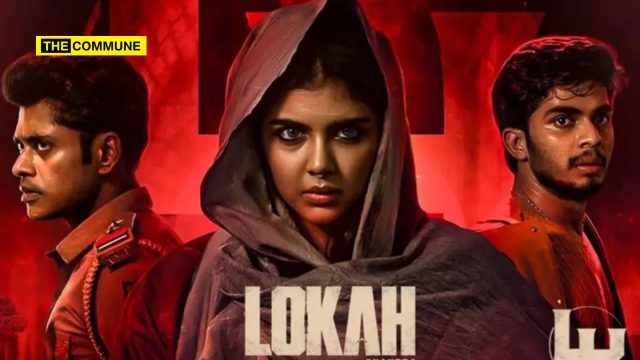
Lokah Chapter 1 Weaponizes Kerala Folklore To Push Anti-Hindu Propaganda While Glorifying Christianity

Following the controversial release of Empuraan, Malayalam cinema has sparked another round of debate with anti-Hindu film Lokah, which is being hailed as a groundbreaking superhero film rooted in Kerala folklore. However, critics argue that beneath its cinematic appeal lies a narrative with clear ideological overtones particularly one that casts Hindu traditions in a negative light while portraying Christian imagery in a glorified manner.

The protagonist, Kalliyankattu Neeli, is a figure from Kerala’s traditional folklore, historically feared as a Yakshi, a spirit known for its vengeful nature. In Lokah, however, she is reinterpreted as a liberator of the oppressed. A key turning point in the story involves her killing a Hindu king who had ordered the massacre of her people for entering a temple. This portrayal positions Hindu rulers as brutal and exclusionary, and temples as symbols of systemic oppression framing defiance against these structures as heroic.

Interestingly, the character who guides Neeli toward becoming a force for good is not a Hindu figure such as a sage or protector but Kadamattathu Kathanar, a Christian priest. He is depicted as the one who recruits Neeli to serve a greater moral purpose. This narrative choice places the Christian cleric in the role of the redemptive guide, a common trope in stories where religious authority is used to frame morality.

The underlying message, as critics see it, is unambiguous: Hindu figures are cast as antagonists, while Christian characters are shown as moral saviors. This theme continues into the climax, where Neeli and her companion defeat Nachiyappa, a Hindu police officer portrayed as corrupt and abusive. They also dismantle the Garuda Force a fictional elite military unit resembling the Indian armed forces in a location named the Holy Grail Café. The symbolism here is carefully chosen: Hindu law enforcement is villainized, the military is portrayed as oppressive, and Christian symbols like the “Holy Grail” represent righteousness and victory.

Though marketed under the themes of folklore, feminism, and fantasy, the film has drawn criticism for allegedly embedding a polarizing ideological message into mainstream entertainment. Detractors believe that traditional Hindu symbols are vilified, while Christian motifs are upheld and celebrated.

The timing of the film’s release has also been questioned. Arriving during Onam, Kerala’s most significant Hindu festival, Lokah’s reimagining of folklore and cultural memory has struck a nerve with some viewers, who feel that it seeks to redefine long-standing traditions at a moment when they are publicly honored.

(This article is based on an X Thread By The Jaipur Dialogues)

Subscribe to our channels on TelegramWhatsApp, and Instagram and get the best stories of the day delivered to you personally.

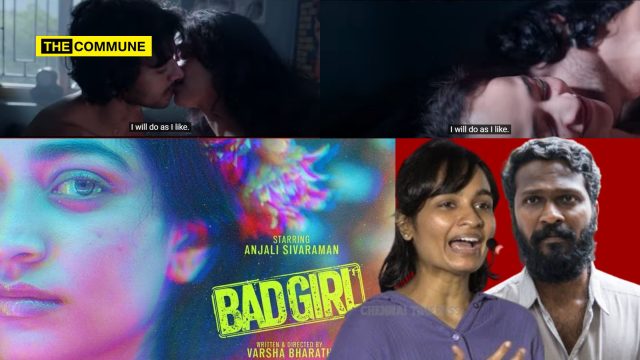
“K**dhi, F**k, A**H*le, Naadhaari B**du”: Abusive And Vulgar Content Revealed In Vetrimaaran Anurag Kashyap Backed Anti-Brahmin Dravidianist Propaganda Film ‘Bad Girl’

vetrimaaran bad girl madurai bench of madras high court varsha bharath

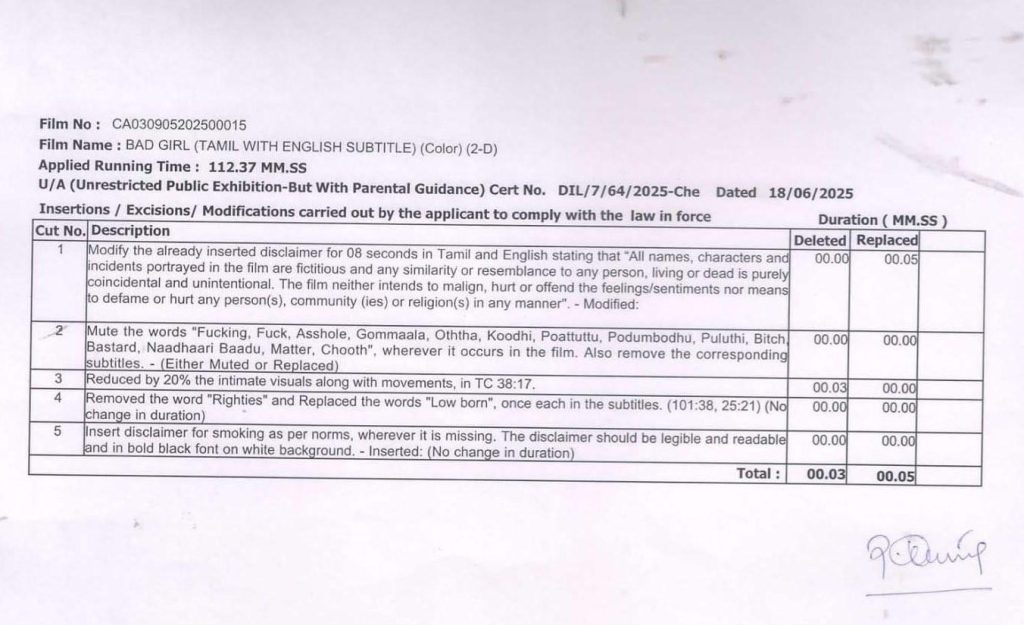
The censor certificate of the Dravidianist Brahmin woman fetish film “Bad Girl” that was labelled as “child pornography” by the Madras High Court has been making the rounds on social media.

The certificate issued on 18 June 2025 has some shocking revelations.

Backed by Vetrimaaran and Anurag Kashyap and directed by Varsha Bharath, the film is already under the scanner after the Madras High Court slammed its teaser as “child pornography.” Now, the Central Board of Film Certification’s (CBFC) order exposes the shocking vulgarity, abuse, and caste-hatred that the makers tried to smuggle into theatres.

This isn’t cinema – it’s Dravidianist propaganda wrapped in obscenity, and its release would set a dangerous precedent.

The CBFC’s Shocking Findings

The censor certificate dated 18 June 2025 lists the following disturbing content:

Profanity everywhere: Words like “f**ing, asshole, bitch, bastard, chooth”* had to be muted from dialogue and removed from subtitles.

Sexual obscenity: Intimate visuals were cut down by 20%.

Slurs: The word “Righties” was removed – this was likely there earlier to derogate the “right wing” population in the country/state.

The words “Low born” was replaced, showing the obsession with injecting caste hatred into every frame.

Mandatory disclaimers: The CBFC forced the filmmakers to declare that the movie does not intend to defame communities – an admission that its content clearly does.

If this is what survived after censorship, one can only imagine what was originally filmed.

Judicial Condemnation: A Landmark Order

Justice P Dhanabal’s order leaves no room for ambiguity. The High Court has unequivocally termed the teaser “child pornography” and ordered its removal from YouTube – an extraordinary legal intervention. The judgment highlights that:

School students (minors) are depicted in sexualized scenarios.

The content of the teaser, freely available, can “spoil the minds of children” and constitutes a “continuing offence.”

The State’s constitutional duty, under Articles 39(f) and 45 of the Constitution, is to protect children, not let their exploitation masquerade as entertainment.

This is not just artistic overreach, it is criminal irresponsibility, exploiting children and communities for cheap controversy and ideological vendetta.

When a court calls your teaser “child pornography,” you lose every shred of artistic credibility. Yet the film is brazenly marching toward a September 5 release.

The Makers’ Tired and Hateful Formula

Vetrimaaran and Anurag Kashyap are not brave artists challenging societal norms. They are merchants of outrage, specialists in a particularly vile form of storytelling that masquerades as social commentary while its true purpose is to defame, provoke, and divide.

Their formula is tired and transparent:

Target a Community: In this case, the Tamil Brahmin community. Make the protagonist a Brahmin girl only to have her “rebel” in the most clichéd, offensive ways possible, through substance abuse and promiscuity, thereby equating an entire community’s values with oppression.

Sexualize Minors: Set this “rebellion” in a school environment, sexualizing children to sell your warped narrative. This is exploitation. It is the oldest trick in the book to garner cheap attention, and the court has rightly called it what it is: child pornography.

Hide Behind “Art”: When caught, cry censorship and claim to be champions of free speech. But free speech does not include the right to depict children in a pornographic manner. It does not include the right to hate speech disguised as storytelling.

The teaser itself mimics a Brahmin household’s practices and rituals to ridicule them and uses imagery from the COVID-era ‘thaali bajao’ to mock supporters of the central government. This is a calculated, hate-filled propaganda piece designed to “delight the ever-hungry Dravidianist appetite”.

This Film Must Be Stopped

Bad Girl is yet another example of the peculiar Dravidianist fetish for Brahmin women, where hate and lust merge into vulgar cinema disguised as “progress.”

Such films must never see the light of the day. This is not about silencing “creativity”; it about stopping the exploitation of children for a political agenda. It is about telling Vetrimaaran, Kashyap, and director Varsha Bharath that their brand of hate-filled, child-endangering cinema has no place in a civilized society.

Subscribe to our channels on Telegram, WhatsApp, and Instagram and get the best stories of the day delivered to you personally.

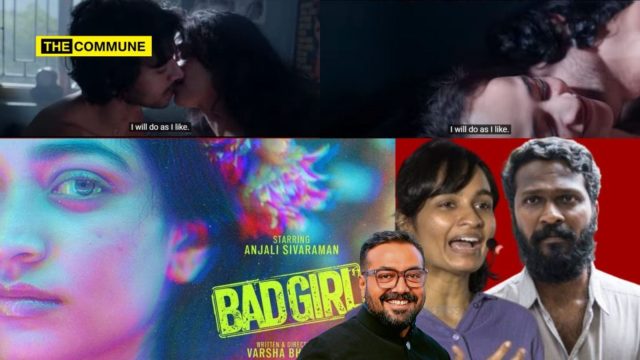
Vetrimaaran, Anurag Kashyap Backed Anti-Brahmin Film Dubbed As “Child Porno” By Court To Release On 5 September 2025

The controversial Tamil film Bad Girl, directed by Varsha Bharath and backed by filmmaker Vetrimaaran in collaboration with Anurag Kashyap, is set to release on 5 September 2025 despite severe criticism and a damning court verdict against its teaser.

On 29 August 2025, the Madras High Court, in an order delivered by Justice P. Dhanabal, termed the teaser of Bad Girl as “child pornography” and directed the Union Ministry of Electronics and Information Technology to ensure its removal from YouTube within one month. The Court further instructed the National Commission for Protection of Child Rights (NCPCR) and the National Commission for Women (NCW) to monitor the issue and take appropriate action under existing laws.

The petition, filed by three citizens, alleged that the teaser promotes child sexual exploitation, violates the Protection of Children from Sexual Offences (POCSO) Act, and breaches provisions of the Information Technology Act. Justice Dhanabal observed that the video depicted school students in a sexual manner, warned that it could “spoil the minds of teenage children,” and described the continued online availability of the content as a “continuing offence.”

The Court stressed that the State has a constitutional responsibility under Articles 39(f) and 45 to protect children against exploitation. While refraining from initiating criminal prosecution at this stage, it left petitioners free to approach the authorities.

The teaser has also provoked sharp reactions from social groups. The Tamil Nadu Brahmin Association (THAMBRAAS) issued a legal notice to the filmmakers, accusing them of defaming Brahmin traditions. Critics have pointed to scenes allegedly ridiculing religious rituals and normalizing adolescent rebellion through sex, alcohol, and drug use. Actress Sanam Shetty and director Mohan G Kshatriyan have also spoken out against the film.

Despite the legal and cultural storm, Bad Girl, certified U/A by the Central Board of Film Certification, is scheduled to hit theatres on 5 September 2025.

Subscribe to our channels on Telegram, WhatsApp, and Instagram and get the best stories of the day delivered to you personally.
Bad Girl Becomes Bad Omen, Vetrimaaran To Shut Down His Production House “Grass Root Film Company”

bad girl vetrimaaran

Dravidianist filmmaker Vetrimaaran has announced his decision to step away from film production, bringing an end to over a decade of work under his production banner, Grass Root Film Company. The director confirmed that the company will officially wind down following the release of his latest project, Bad Girl, due to the increasing pressures and difficulties associated with producing films.

Speaking at a press event in Chennai ahead of the release, Vetrimaaran reflected on the struggles he faced during the making of Manushi and Bad Girl. He admitted that the role of a producer took a much heavier toll on him compared to directing, noting that producing involved constant stress and a level of scrutiny that extended far beyond the creative process.

“While directing allows me to focus solely on the story and characters, producing is all-consuming,” he said, highlighting that even social media reactions such as comments on a teaser can impact the film’s performance. He explained that for independent producers like himself, who often rely on borrowed funds, the financial and emotional burden can become too much to manage.

Due to these challenges, Bad Girl will mark the final production from Grass Root Film Company, which will be closing its operations after the film’s release.

Both Manushi and Bad Girl have encountered hurdles with the Central Board of Film Certification (CBFC). In June, Vetrimaaran approached the Madras High Court after the CBFC refused certification for Manushi, directed by N. Gopi Nainar and featuring Andrea Jeremiah. The court later ordered that the film be cleared only after implementing 25 cuts and 12 changes.

Bad Girl, starring Anjali Sivaraman and directed by Varsha Bharat, also drew controversy after its teaser was released, with accusations that the film portrayed Brahmins in a negative light. Vetrimaaran clarified that these reactions were based on misinterpretations and that the full film had received a U/A certificate from the CBFC.

“People jumped to conclusions based on the teaser, but the film isn’t what they assumed it to be,” he explained. “In the case of Manushi, we had to go through multiple rounds of screening one initial review and two by the revising committee.”

With Bad Girl marking the end of his journey as a producer, Vetrimaaran intends to shift his focus back to directing an area where he says he finds creative fulfillment without the burdens of production logistics and financial strain.

(With inputs from TOI)

Subscribe to our channels on TelegramWhatsApp, and Instagram and get the best stories of the day delivered to you personally.
The Secular Hijack: From Onam To Dasara, How Hindu Festivals Are Being Stripped Of Its Dharmic Identity

secular hindu festival dasara onam

The mist-shrouded peak of Chamundi Hill has witnessed centuries of devotion. For generations, the rhythmic chants, the sacred fire of the homa, and the unwavering faith of millions have risen towards the sanctum sanctorum of Goddess Chamundeshwari, the divine protector of Mysuru. The Mysuru Dasara is not merely an event; it is the living, breathing heartbeat of a dharmic tradition, a grand narrative of the victory of good over evil that traces its lineage to the Vijayanagara emperors.

But today, a different sound echoes from the corridors of power in Karnataka. It is the sound of a deliberate, calculated dismantling.

The Congress government’s decision to have Banu Mushtaq, a Muslim author with a record of critiquing Hindu traditions, inaugurate the 2025 Mysuru Dasara is not an isolated event; it is part of a systematic secularization and distortion of Hindu festivals by a Left-Congress-Dravidianist axis bent on erasing their dharmic identity. This campaign to secularize Hindu celebrations, while painting them merely as “cultural” events, is a direct assault on India’s civilizational continuity.

Let’s examine this in detail.

Congress Decision To Invite Banu Mushtaq For Mysore Dasara Festival

The Congress government in Karnataka has chosen provocation over preservation. By inviting International Booker Prize-winning Kannada author Banu Mushtaq to inaugurate the 2025 Mysuru Dasara celebrations, it has thrown open a familiar question: Why is the political establishment so desperate to strip Hindu festivals of their dharmic identity?

Dasara is not a generic carnival. It is not just a “Naada Habba.” It is a Hindu Dharmic Utsava, rooted in the worship of Chamundeshwari Devi, the presiding deity of Mysuru. Every ritual, every procession, every symbol of Dasara points back to Devi, to the victory of dharma over adharma. The Vijayanagara kings celebrated it, the Mysuru Wadiyars revived it in 1610, and the royal family continues to lead its ceremonies. As far back as the 16th century, travellers like Domingo Paes were awed by the grandeur of Dasara – its religious core was unmistakable.

And yet, the Congress government wants us to believe that Dasara is “secular” – a cultural jamboree to be inaugurated by anyone, regardless of their faith or respect for Devi. Deputy Chief Minister DK Shivakumar even went so far as to say that Chamundi Hill and Goddess Chamundeshwari do not belong to Hindus.

By doing so, DK Shivakumar wasn’t preaching inclusivity. He was committing cultural appropriation. He was denying the very theological foundation upon which the festival stands. He was, in effect, saying that the reverence for Durga and the worship of the Devi are merely cultural artifacts, empty symbols to be filled with whatever meaning the state deems politically convenient.

In the 2023 video, Banu Mushtaq voices her sense of exclusion from Kannada cultural spaces. She says that though Kannada is celebrated as Bhuvaneshwari with flags and rituals, she as a minority woman was denied the chance to speak Kannada even at home. She likens her exclusion to seating “Kannada Amma” on a bench despite worshipping her as a goddess, calling it hypocrisy, cruelty, and a form of violence. Addressing Kannada leaders, she accuses them of sidelining her while glorifying the language through festivals and councils, stressing that her marginalisation began long ago and is now reaching completion.

Chief Minister Siddaramaiah dismissed those objecting as “religious fanatics,” calling the festival a “celebration for all communities.” But the facts do not change:

The inauguration beginning with puja at Chamundi Hill is an act of worship. The royal family leading the rituals is not as a cultural performance, but as a dharmic duty.

The Kerala Blueprint: The Onam Precedent

Onam is a Hindu festival rooted in the Bhagavata Purana and other texts, commemorating the annual visit of King Mahabali, the benevolent Asura ruler, and the divine act of Bhagwan Vamana, an incarnation of Vishnu. According to Hindu scriptures, after the Devas lost their kingdom to Mahabali, Vishnu was born as Vamana to Aditi and Kashyap. During Mahabali’s Ashwamedha Yagna, Vamana asked for three paces of land. Expanding into Trivikrama, He measured the earth with one step and the heavens with another. With no space left, Mahabali offered his head, upon which Vishnu sent him to Sutala but granted him the boon of visiting his subjects once a year, celebrated as Onam.

Historical records like the 9th-century Chera copper-plates, the Malabar Manual, and writings of Francis Day, as well as Sangam literature, confirm Onam’s antiquity as a Hindu festival linked to Vishnu and Mahabali. The festival is observed with rituals, feasting (Onasadya), and cultural celebrations.

But the Left-ecosystem, in its relentless drive to create a deracinated, secular populace, systematically scrubbed it clean. Onam was stripped of its dharmic roots and repackaged as a generic “harvest festival” or a celebration of “Kerala’s culture.” The profound connection to Vamana and Mahabali was pushed to the background, replaced by boat races and flower carpets. The soul of the festival was surgically removed, leaving behind a hollow cultural shell – a template now being ruthlessly applied elsewhere.

The Secularizing of Pongal

In Tamil Nadu, the Dravidianist machinery has been working for decades on the same project. Thai Pongal, the joyous celebration of Makara Sankranti, is a pan-Indian festival of gratitude to Surya Dev, the farm animals, and the earth itself. It is Sanatana Dharma in motion—a philosophy of compassion and thankfulness towards all forces of nature.

Yet, the Dravidianist-Left cabal first rebranded it as a solely “Tamil” festival (Thirunaal), attempting to sever its bonds with the broader Hindu universe. Then came the next step: “Samathuva Pongal” or “Secular Pongal.” Churches across the state host events where the sanctity of the Sun God is replaced by the sharing of sweet pongal, transforming a sacred rite into a food festival. Imagine stripping Christmas of Christ and calling it a “Plum Cake Festival” – the absurdity lays bare the agenda.

Churches in TN celebrate the festival, often citing Vatican’s Second General Council, which endorsed adopting local cultural practices. The Catholic Church in Tamil Nadu officially included Pongal in its liturgy in the 1990s, presenting it as a festival of gratitude and unity. Preachers have justified Christian celebrations of Pongal by separating its “cultural” aspects from Hindu rituals, claiming it as a harvest festival aligned with Biblical teachings. Some equate it to Pentecost Day, while others view it as an opportunity for cultural integration.

Jallikattu, traditionally linked to Pongal, has also been incorporated into church festivities under the banner of “communal harmony” and pushed to be viewed through a purely “sporting” lens, divorcing it from its dharmic context.

Such selective appropriation reflects the missionary strategy of “inculturation”, the DMK and Church have been deliberately de-Hinduizing Pongal, stripping it of its religious essence while presenting it as a secular, cultural celebration.

The Navratri and Garba Appropriation

Even festivals like Navratri, centered on Goddess worship, face secularization attempts. The nine-night celebration honouring Devi Shakti (Mother Goddess) through various forms including Garba dance is being reframed as a “cultural” rather than religious event.

In Gujarat, Navratri begins with Aarti of Maa Amba and involves dancing (garba) around the Goddess’s idol as a form of worship. Yet “liberal” activists demand entry into Garba events for those whose faiths consider idol worship sinful, creating the absurdity of forcing Hindu religious spaces to accommodate those who fundamentally oppose Hindu practices.

Interference Into Hindu Festivals By Courts/Govts

Targeted bureaucratic restrictions such as curbs on idol heights, processions, timings, and locations or use of loudspeakers during Ganesh Chaturthi or the timing and limit to how much Hindus can burst crackers on Deepavali – such restrictions disappear and are never imposed on non-Hindu festivals.

The pattern is undeniable and repeats with mechanical precision: First, a festival’s dharmic roots are denied. Then, it is rebranded as a ‘secular’ or ‘harvest’ festival. Finally, those who object are smeared as ‘bigots’ or ‘fanatics.’ This is not inclusivity; it is erasure.

It happened with Onam in Kerala. It is happening with Pongal in Tamil Nadu. And now, it is being attempted with Dasara in Karnataka.

Why Hindus Must Resist

The controversy in Mysuru is therefore not an isolated event. It is the latest battle in a long-running war for the soul of Bharat. The breaking forces: the Left-Congress-Dravidianist ecosystem understand that to break a people, you must first break their connection to their gods, their history, and their festivals.

They want to reduce Dasara to a state-funded carnival, where the sacred rituals are mere cultural performances and the sanctum sanctorum is just a tourist spot. They want to erase the truth so eloquently stated by Mysuru’s royal scion, Yaduveer Wadiyar, that Dasara is a Hindu Dharmic festival rooted in the Shastra & Puranas.

Without Chamundeshwari, there is no Dasara. Without Vamana, there is no Onam. Without Surya Dev, there is no Pongal.

We must see this strategy for what it is: a conscious, malicious effort to secularize, sanitize, and ultimately sever our festivals from their Hindu roots. This Dussehra, as we celebrate the victory of righteousness over evil, we must also commit to protecting the very essence of our celebrations. We must reject the hollowing out of our traditions and assert, with pride and unwavering clarity, that our festivals are not mere cultural events. They are the timeless, dharmic heartbeat of a civilization that will not be silenced.

The time for polite silence is over. The theft must be called out.

Subscribe to our channels on Telegram, WhatsApp, and Instagram and get the best stories of the day delivered to you personally.