A protest by migrant workers demanding justice for a deceased colleague turned violent on Tuesday at Kattupalli, in Chennai’s northern suburb, after the workers clashed with police personnel.
The unrest broke out following the death of Amaresh Prasad (32), a migrant worker from Uttar Pradesh, who tragically fell from the roof of an under-construction building on September 1 in Kattupalli, located in neighbouring Tiruvallur district.
His death sparked outrage among fellow workers, who gathered in large numbers outside their dormitory on Tuesday morning, demanding an enquiry and adequate compensation for his family. According to police, the demonstration began peacefully but quickly escalated when the workers suddenly started pelting stones at the police party that had arrived to negotiate with them.
A senior officer said the sudden violence caught the police off guard, making it difficult for them to approach the crowd initially. Several policemen narrowly escaped injuries during the attack. As the situation grew tense, reinforcements were rushed to the spot.
Police then resorted to mild force, including baton charge and dispersal measures, to bring the mob under control. Tear gas shells were also reportedly used in a bid to quell the protesters. Later in the day, police teams entered the workers’ dormitory, where several individuals had climbed onto the rooftop as part of their agitation. Officers stormed the premises and rounded up those involved.
More than 55 migrant workers were detained for questioning in connection with the violent incidents, officials confirmed. “We had no option but to intervene after the protest turned violent and police personnel were attacked,” a senior officer said, adding that investigations were underway to determine the circumstances that led to the unrest.
The incident has once again thrown the spotlight on the difficult living and working conditions of thousands of migrant labourers employed in and around Chennai’s industrial belt. Workers have repeatedly voiced concerns over safety standards at construction sites and residential facilities, urging companies and contractors to take stronger measures to prevent accidents and provide adequate welfare support.
Police have assured that an enquiry into Amaresh Prasad’s death is underway and that appropriate legal action will follow. Meanwhile, additional security personnel remain deployed in the area to prevent further flare-ups.
-IANS
Subscribe to our channels on Telegram, WhatsApp, and Instagram and get the best stories of the day delivered to you personally.
The United States has recently declared The Resistance Front as a Foreign Terrorist Organisation and a Specially Designated Global Terrorist entity. This was a huge blow for Pakistan as the move exposed Pakistan’s terror playbook.
The Resistance Front is nothing but a proxy of the Lashkar-e-Taiba. It was, in fact, formed and projected as a local outfit from Jammu and Kashmir. The outfit was meant to give both Pakistan and the Lashkar-e-Taiba a deniability factor.
The intention was to project the fight in Kashmir as a localised one. Moreover, Pakistan wanted terror attacks to continue and also ensure that it did not come under the scrutiny of the Financial Action Task Force (FATF). Going by the latest details that the National Investigation Agency has dug out during its probe into the activities of The Resistance Front, it seems that Pakistan cannot use this proxy to escape from the FATF.
The Resistance Front has a deep-rooted network in Jammu and Kashmir. It has locals who, at the behest of Pakistan, are in touch with people in the Gulf and Malaysia to ensure that the funds are provided to run the activities of this terror outfit. During the probe, the name of one Sajad Ahmed Mir, a resident of Malaysia, cropped up.
Phone calls of a suspect, Yasir Hayat, revealed that he was in touch with Mir to arrange for the funds. Hayat has made several visits to Malaysia to arrange for funds. Details that have cropped up so far reveal that with the help of his Malaysian contact, he had raised Rs 9 lakh for The Resistance Front. The money was given to another operative by the name Shafat Wani to run the activities of the outfit.
Wani, who is a key operative of the TRF, is also said to have visited Malaysia. He stated that he was attending a conference at a university, and it was on this pretext that he visited the country. The university had, however, not sponsored this visit. The NIA also learnt that Hayat, apart from staying in touch with Mir, was also in contact with two Pakistanis. His activities were all about raising funds, and the probe suggests that his job was to be in touch with foreign operatives and raise money for the terror outfit.
While the NIA has plenty of details regarding the operations of the TRF, finding the complete money trail is key to the probe. On August 13, the NIA had said that it had uncovered a foreign trail of funds that was being probed extensively. There are 463 contacts on Hayat’s phone that the NIA is probing extensively. Calls have been made to Pakistan and Malaysia on several occasions.
All these numbers are being probed, and investigators say that this is crucial to uncover the funding network of The Resistance Front. These details are important to uncover the trail, and they would help India expose Pakistan before the FATF. India has been building up a case against Pakistan on terror funding to ensure that it gets back onto the Grey List.
The Resistance Front was created in 2019 to replace the declining Hizbul Mujahideen and also give a fresh identity to local terror activities. It was also created to offer the Lashkar-e-Taiba a deniability cover and to make attacks appear as indigenous resistance, rather than Pakistan-sponsored terrorism. What appeared to be a new homegrown movement was actually a rebranded arm of the Lashkar-e-Tayiba, which was designed to misguide the global community and deflect pressure from institutions such as the FATF.
-IANS
Subscribe to our channels on Telegram, WhatsApp, and Instagram and get the best stories of the day delivered to you personally.
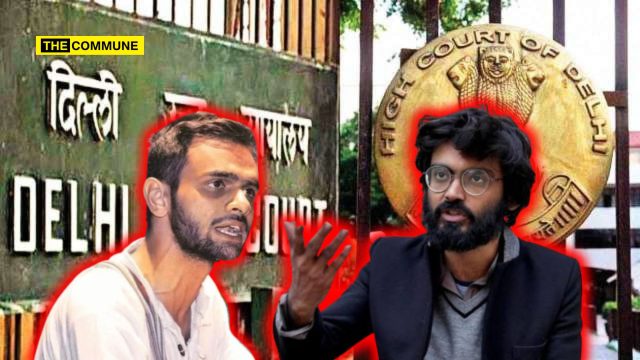
The Delhi High Court on Monday dismissed the bail applications of Umar Khalid, Sharjeel Imam, and seven other accused in the 2020 Delhi riots “larger conspiracy” case. A division bench comprising Justice Naveen Chawla and Justice Shalinder Kaur pronounced the verdict.
The other accused in the case include Athar Khan, Khalid Saifi, Mohd Saleem Khan, Shifa ur Rehman, Meeran Haider, Gulfisha Fatima, and Shadab Ahmed. The accused were arrested on different dates: Sharjeel Imam on 28 January 2020; Umar Khalid on 13 September 2020; Athar Khan on 29 June 2020; Khalid Saifi on 26 February 2020; Mohd. Saleem Khan on 24 June 2020; Shifa ur Rehman on 26 April 2020; Meeran Haider on 1 April 2020; Gulfisha Fatima on 4 April 2020; and Shadab Ahmed on 11 June 2020.
All the accused had challenged the trial court’s earlier orders denying them bail in the case.
During the hearings, Umar Khalid, represented by Senior Advocate Trideep Pais, submitted that “merely being on WhatsApp groups, without sending any message, is no criminality.” Pais also argued that “there is no recovery, money or otherwise, effected from Khalid” and that the alleged secret meeting on the night of 23-24 February 2020 “was not at all secretive as claimed by the prosecution.”
Khalid Saifi, represented by Senior Advocate Rebecca John, contended: “Can UAPA on the basis of innocuous messages or their (prosecution) attempt to make stories out of such messages, can it become a reason to deny me bail or is it even a ground to prosecute me under UAPA?” She further submitted that Saifi deserved to be released on bail on the ground of parity with three co-accused who had been granted bail in June 2021.
Sharjeel Imam submitted that he is “completely disconnected from all the co-accused persons and is not part of any kind of conspiracy or conspiracy meetings as alleged by the Delhi Police.” Imam’s counsel, Advocate Talib Mustafa, added that Imam’s alleged role in the riots “is stated to be till January 23, 2020, and the last overt act relied upon by the Delhi Police is a speech delivered by him in Bihar.”
Opposing the bail pleas, Solicitor General Tushar Mehta, representing Delhi Police, said: “If you are doing something against the nation, then you better be in jail till you are acquitted or convicted.” Mehta argued that the accused persons’ intention was “to globally defame the nation by choosing a particular day for more rioting and more arson.” Delhi Police was also represented by Special Public Prosecutor Amit Prasad.
In a related matter, another coordinate bench of Justice Prasad and Justice Harish Vaidyanathan Shankar recently denied bail to co-accused Tasleem Ahmed in FIR 59/2020. The FIR, registered by Delhi Police’s Special Cell, names Tahir Hussain, Umar Khalid, Khalid Saifi, Isharat Jahan, Meeran Haider, Gulfisha Fatima, Shifa-Ur-Rehman, Asif Iqbal Tanha, Shadab Ahmed, Tasleem Ahmed, Saleem Malik, Mohd. Saleem Khan, Athar Khan, Safoora Zargar, Sharjeel Imam, Faizan Khan, and Natasha Narwal as accused under various provisions of the Indian Penal Code, 1860, and the Unlawful Activities (Prevention) Act, 1967.
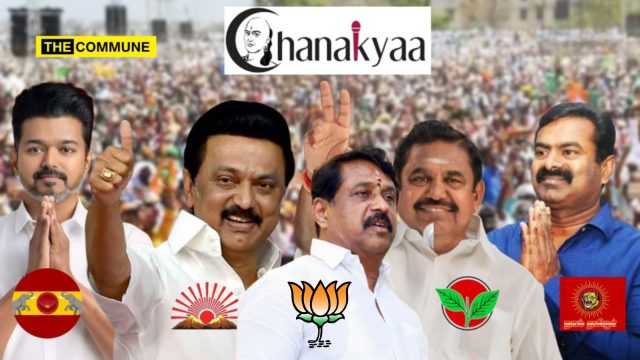
As Tamil Nadu prepares for the crucial 2026 Assembly elections, political commentator Rangaraj Pandey provides an in-depth evaluation of the star candidates likely to shape the electoral outcomes. Drawing on historical voting margins, constituency profiles, and grassroots intel, Pandey’s analysis, offers a nuanced forecast of victories, challenges, and strategic shifts across major political camps in the state.
“Chanakyaa Analysis,” which blends historical voting data, ground-level intelligence (“cephalological input”), and constituency-specific factors, provides one of the most detailed early previews of the electoral battleground, covering over 80 high-profile candidates.
Key Star Candidates and Constituency-wise Forecasts
Let’s first look at the DMK.
The DMK Juggernaut: Certain Victories for the First Family and Staunch Allies
The analysis presents a formidable picture for the DMK-led alliance. Chief Minister M.K. Stalin is predicted to easily retain his Kolathur stronghold, a seat he won by over 70,000 votes in 2021. His son and Deputy CM, Udhayanidhi Stalin, is also forecasted to win again from Chepauk-Thiruvallikeni.
The DMK’s core leadership appears unshakable. Heavyweights like E.V. Velu (Tiruvannamalai, won by ~94,000 votes), K.N. Nehru (Tiruchirappalli West, ~85,000 votes), and I. Periyasamy (Athoor) are seen as certain winners, their massive victory margins and local influence creating “fortresses” deemed impregnable to opposition challenges.
Other key DMK ministers expected to cruise to victory include Anbil Mahesh Poyyamozhi, Geetha Jeevan (Thoothukudi), and Ma Subramanian (Saidapet).
S.M. Nassar (Avadi): With a formidable lead of over 55,000 votes, the senior minister is forecasted to clinch a hat-trick, irrespective of minor shifts in ministerial status or party dynamics.
Dharanidharan Anbarasan (Alandur): He holds a commanding lead of over 40,000 votes and is poised for another successful re-election campaign.
Senthil Balaji (Karur): Winning by roughly 12,400 votes, this influential DMK leader remains a central political figure destined for re-election.
K.N. Nehru (Tiruchi West): With an 85,000 vote margin in a strong party bastion, Nehru’s victory is almost guaranteed.
Anitha Radhakrishnan (Tiruchendur): Despite past challenges, Anitha has rebuilt significant presence with a 25,000-vote margin. Forecasts suggest sustained electoral success.
Ponmudi (Thirukovilur): Although previously a strong ministerial figure, uncertainty clouds his 2026 prospects due to strained party relations, predicting a tough battle.
Raghupati (Thirumayam): With a slim winning margin under 1,500 votes, his reelection chances are bleak given changing political tides.
Velmurugan (Panruti): Likely to lose in 2026, reflecting shifting local allegiances.
M.C. Sampath (Cuddalore): A narrow defeat by 5,000 votes in prior elections places him as a contender for a strong comeback in 2026.
AIADMK’s Mixed Fortunes: EPS Holds Fort, Others Face Uncertainty
For the principal opposition AIADMK, the forecast is a tale of two realities. Leader Edappadi K. Palaniswami (EPS) is predicted to hold his home turf of Edappadi, though Pandey notes a potential challenge if the Pattali Makkal Katchi (PMK) fields a strong candidate.
Edappadi K. Palaniswami (Edappadi): The former Chief Minister won with an approximate 9,300 vote margin in a constituency with a sizable Vanniyar community. While facing challenges including the possible consolidation of opposition factions, he is still tipped to prevail.
However, the analysis highlights internal strife and slim past margins as major hurdles for other AIADMK stalwarts:
Sellur Raju (Madurai West): Despite winning by over 9,000 votes, he may face intense challenges, possibly leading to reduced margins.
KP Munusamy (Veppanahalli) – Won by 3,054 votes) is tipped to lose.
Ponmudi (Thirukoyilur) – Despite a large past win, faces doubt due to legal troubles.
O. Panneerselvam (OPS) (Bodi Nayakkanur): The former CM, remains a “million-dollar question.” His political future is clouded by uncertainty over which party or alliance he will contest from, if at all. In the previous election, he won by approximately 11,000 votes; expected to maintain electoral strength though candidacy remains to be confirmed.
SP Velumani (Thondamuthur) and Kadambur Raju (Kovilpatti) are among the few AIADMK leaders predicted to secure comfortable wins.
Jayakumar (Royapuram): After a sizeable defeat by over 27,000 votes, he may seek alternate constituencies with better prospects.
Kadambur Raju (Kovilpatti): Holds a comfortable margin of 12,400 votes and is projected to win again, though political alignments may cause shifts.
Vijayabhaskar (Viralimalai): Nearly 24,000 vote lead signals a safe seat for him.
K.A. Sengottayan (Gobichettypalayam): A durable political figure with multiple victories, maintaining a strong voter base.
BJP’s Uphill Battle: Annamalai’s Constituency a Key Question
The analysis underscores the significant challenges facing the BJP in making inroads into the state assembly. While the party is expected to improve its vote share, winning seats remains a tough ask.
The fate of K. Annamalai is a central focus. Pandey notes that Annamalai put up a spirited fight in Aravakurichi in 2021, losing by a narrow margin. However, the analysis strongly suggests he will change his constituency for 2026. His victory, the prediction states, is entirely dependent on which seat he chooses to contest, making it impossible to call at this stage.
Other BJP leaders like Nainar Nagenthiran (Tirunelveli) and MR Gandhi (Nagercoil) are forecast to have a “high chance” or a “safe” win, banking on strong local presence and the potential consolidation of the NDA alliance votes. Conversely, Union Minister L. Murugan is predicted to lose if he contests from Tiruporur again and is advised to seek a different constituency.
Individual Leaders of Interest
Some of the other leaders who are also in the fray include:
Seeman (NTK): Predicted to face defeat if he contests again from Tiruvottiyur. The analysis suggests he will likely change his constituency.
TTV Dhinakaran (AMMK): His prospects are put “on hold,” pending a decision on whether his party will join the NDA alliance or contest alone.
Vijay (TVK): The analysis confirms the actor-politician will contest but labels his chosen constituency a “million-dollar question.” Madurai and the Kongu belt are speculated as potential arenas, with his victory chances entirely dependent on the seat selection.
Congress: The party’s fortunes seem tied to its alliance with the DMK. While a leader like Selvaperunthagai (Sriperumbudur) is predicted to win, Hasan Maulana (Velachery) is forecast to lose.
Manoj Pandian: Navigating intra-party alliances and minority votes, Pandian’s fate depends on broader coalition formations.
V.A. Shanmugam: An influential educationist, he is expected to leverage his local support into electoral success.
Sarathkumar and Radhika: Star power combined with political groundwork makes them prominent candidates, likely to influence multiple constituencies.
Methodology and Caveats
Pandey repeatedly emphasizes that his predictions are not based on fresh polls but are a “rough calculation” derived from past data (2021 results), local caste equations, the strength of party machinery, and the analyst’s own ground-level assessment.
He issues a crucial caveat: these predictions are highly susceptible to change based on:
Alliance Arithmetic: Final seat-sharing agreements between the AIADMK-BJP and within the DMK-led front could drastically alter calculations.
Candidate Changes: A leader switching constituencies or parties, or being replaced by a family member, can upend any prediction.
Rebellion: Internal party rebellions are flagged as a constant threat to sitting MLAs, even those with strongholds.
The Bottom Line
Rangaraj Pandey’s Chanakyaa Analysis sketches a political landscape where the DMK enters the 2026 election as the clear frontrunner, with its core vote base and leadership seemingly secure. The opposition’s best hopes lie in capitalizing on anti-incumbency at the local level, leveraging a strong NDA alliance, and forcing close contests in constituencies where the DMK’s victory margin was thin. However, as of now, the analyst’s crystal ball shows a distinct shade of DMK red across most of Tamil Nadu’s electoral map.
Subscribe to our channels on Telegram, WhatsApp, and Instagram and get the best stories of the day delivered to you personally.
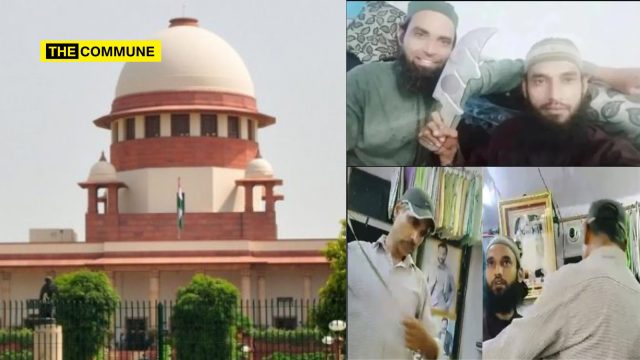
The Supreme Court on 2 September refused to interfere with a Rajasthan High Court order granting bail to one of the accused in the Kanhaiya Lal murder case.
Kanhaiya Lal, a tailor from Rajasthan’s Udaipur, was brutally murdered in broad daylight in June 2022, allegedly by Mohammad Riyaz Attari and Ghaus Mohammad, a gruesome crime that sent shockwaves across the country. A bench of Justices M.M. Sundresh and Satish Chandra Sharma dismissed the special leave petitions (SLPs) filed by the National Investigation Agency (NIA) and Yash Teli, the son of the slain tailor Kanhaiya Lal, challenging the Rajasthan High Court order granting bail to the accused Mohammed Javed.
The SLP filed by the deceased’s son said that he was “constrained to approach the Supreme Court” as the Rajasthan High Court, on 5 September 2024, “without properly looking into the facts and circumstances of the case and without properly considering the requirement of Section 43D(5) of UAPA, erroneously allowed the bail application filed by the respondent (Mohammed Javed)”. The plea added that Javed allegedly played a pivotal role in orchestrating the crime. “He was in contact with the main accused prior to the incident and provided information about the deceased’s whereabouts to aid in carrying out the act,” stated the petition, citing witness statements under Section 164 CrPC and call records showing coordination on the day of the killing.
It further argued that the Rajasthan High Court failed to apply the stringent bail restrictions under the Unlawful Activities (Prevention) Act (UAPA). “The Hon’ble High Court has erroneously conducted a mini-trial and questioned the authenticity of the documents relied upon by the Special Judge, Jaipur,” the plea stated.
In November last year, the Supreme Court had agreed to examine the matter and issued notices to the anti-terror agency and the accused, Mohammed Javed.
-IANS
Subscribe to our channels on Telegram, WhatsApp, and Instagram and get the best stories of the day delivered to you personally.
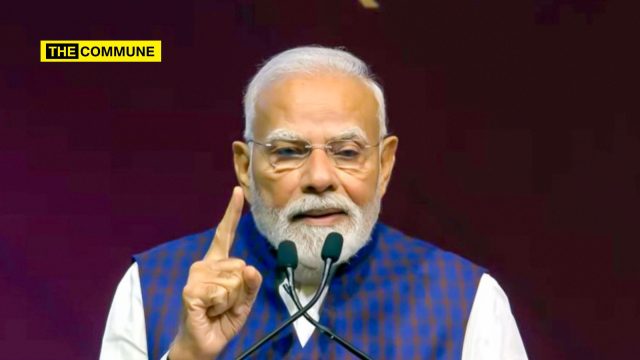
Prime Minister Narendra Modi on 2 September highlighted India’s robust GDP growth in the April-June quarter despite the challenges in the global market arising due to “economic selfishness”.
The Prime Minister’s remark comes in the backdrop of the tariff turmoil triggered by US President Donald Trump’s policy, which has led to heightened economic uncertainty in global markets. Addressing the SEMICON 2025 event here, PM Modi said, “On the one hand, many of the world’s economies are facing uncertainty and challenges related to economic selfishness. Yet, in this environment, Bharat has achieved a remarkable growth rate of 7.8 per cent,” he said.
The Prime Minister’s oblique reference to Trump’s tariff policy also comes a day after the joint declaration of the heads of member countries of the Shanghai Cooperation Organisation (SCO) which opposed the “unilateral coercive measures, including those of an economic nature, that contravene the UN Charter and other norms of international law, the rules and principles of the World Trade Organisation, damaging the interests of international security, including its food and energy components, negatively affecting the global economy, undermining fair competition, hindering international cooperation and the achievement of the UN Sustainable Development Goals,” the joint declaration states.
The SCO summit, attended by Prime Minister Narendra Modi, Chinese President Xi Jinping and Russian President Vladimir Putin, adopted a statement on support for the multilateral trading system. The joint declaration agreed to uphold and strengthen an open, transparent, fair, non-discriminatory and multilateral trading system based on universally recognised international principles and rules, which promote the development of an open global economy.
PM Modi said, “The world trusts India. The world believes in India. And the world is ready to build the semiconductor future in India this is the message that Semicon 2025 is sending out to the world,” he said. Affirming that India is moving beyond backend operations and progressing towards becoming a full-stack semiconductor nation, PM Modi reiterated that the day is not far when India’s smallest chip will drive the world’s biggest change. He stated, “Our journey began late… but nothing can stop us now.”
The Prime Minister informed that CG Power’s pilot plant commenced operations on 28 August , just 4-5 days ago. He added that the pilot plant of Kaynes is also about to begin. Test chips from Micron and Tata are already in production. He reiterated that commercial chip production will begin this year, underscoring the rapid progress India is making in the semiconductor sector.
Emphasising that India’s semiconductor success story is not confined to a single vertical or a single technology, PM Modi stated that India is building a comprehensive ecosystem one that encompasses designing, manufacturing, packaging, and high-tech devices, all within the country. He clarified that the Semiconductor Mission is not limited to establishing a single fab or producing a single chip. Rather, India is creating a robust semiconductor ecosystem that will make the nation self-reliant and globally competitive, the Prime Minister added.
PM Modi said that India’s rapid growth is infusing new energy across industries and among every citizen. He affirmed that this trajectory of growth is propelling India swiftly towards becoming the third-largest economy in the world. Emphasising that in the semiconductor sector, speed matters, PM Modi said, “The shorter the time from file to factory, and the lesser the paperwork, the sooner wafer work can begin.” He stressed that the government is working with this very approach. The National Single Window System has been implemented, enabling all approvals from both the Centre and states to be accessed on a single platform. As a result, investors have been freed from extensive paperwork, he further added.
-IANS
Subscribe to our channels on Telegram, WhatsApp, and Instagram and get the best stories of the day delivered to you personally.
The combination of the upcoming GST 2.0 reforms, rising rural incomes and easing inflation could set the stage for a major revival in India’s consumption story, a new report said on 2 September 2025.
The data compiled by Wright Research, an investment manager on smallcase, suggests that India’s consumption cycle, which has been sluggish for the past few years, has likely bottomed out and is now on an upward path. If GST 2.0 is finalised in October, just ahead of the festive season, it could bring down consumer prices, boost demand, and encourage stronger household spending. Among the expected changes, goods currently taxed at 12 per cent such as processed foods, affordable footwear, and certain wellness products may be shifted to the 5 per cent slab. This could make everyday essentials cheaper and motivate consumers to switch from unbranded to branded options, the report said. In big-ticket items, GST on products like air conditioners and large televisions may drop from 28 per cent to 18 per cent, translating into nearly 8 per cent lower prices and wider penetration in Tier-2 and Tier-3 cities. A cut in GST on cement, currently taxed at 28 per cent, would reduce costs for both retail home projects and larger construction activities, as per the report.
“GST 2.0 represents one of the most pro-consumption policy moves in recent years. By reducing prices in everyday categories and big-ticket durables alike, the reform could accelerate demand just as rural incomes and inflation trends are turning favourable,” said Sonam Srivastava, Founder of Wright Research and investment manager on smallcase.
The sectoral outlook is also promising. FMCG companies are expected to see revenue growth of nearly 10 per cent in FY26, while consumer durables could grow by more than 21 per cent depending on how fast the reforms are implemented. Cement companies may benefit the most, with EBITDA forecast to rise by over 40 per cent and profit growth close to 80 per cent.
Internet platforms are projected to grow revenues by 35-40 per cent as MSMEs continue to adopt digital solutions, while oil marketing companies are expected to improve cash flows due to falling crude prices. Early signs of revival are already visible. FMCG majors, quick-service restaurants, and paint companies have reported volume recovery in the first quarter (Q1) of FY26, while retailers in smaller towns are seeing faster sales momentum, the report said.
-IANS
Subscribe to our channels on Telegram, WhatsApp, and Instagram and get the best stories of the day delivered to you personally.
The list of tainted candidates released by the West Bengal School Service Commission (WBSSC) in connection with the school jobs case was “truncated“, and many other names may surface in the coming days, according to legal brains. They also feel that the list of just 1,806 tainted candidates, which had already been made public by the commission last week, had been published to “conceal rather than reveal”.
According to the former judge of the Calcutta High Court and the BJP Lok Sabha member from Tamluk constituency in East Midnapore district of West Bengal, Abhijit Gangopadhyay, who had been dealing with the different cases on the multi-crore cash-for-school job matter in West Bengal since the beginning as the-then judge of Calcutta High Court, feel that the number of tainted candidates would be no less than 6,000.
“According to him, the number of tainted candidates, as revealed by WBSSC last week, could not be as low as 1,806, since there were a total of four categories of tainted candidates getting jobs after paying money. According to him, the first category of tainted candidates includes those who got jobs even without appearing for the written examination. The second category of talented candidates, he said, consists of those who got jobs after submitting blank answer sheets in the written examination.
The third category, he added, includes those whose optical mark recognition (OMR) sheets were tampered with to increase their secured marks. And finally, the fourth category of tainted candidates includes those who were recruited from expired panels. Hence, he added, if all the tainted candidates under these four categories are combined, the total number of tainted candidates will be nothing less than 6,000.
Senior advocate and CPI(M) Rajya Sabha member, Bikas Ranjan Bhattacharya, who had long been fighting several legal battles in the matter, also feels that the total of possible tainted candidates as quoted by Gangopadhyay sounded quite accurate. “As far as my experience is concerned, because of my long association with similar cases, the total number of tainted candidates would be nothing less than 6,000, and if not more. In my opinion, the only aim of the state government and the commission is to shield as many tainted candidates as possible, and to do that, they have been adopting different tricks at different times, with the last list of just 1,806 tainted candidates,” said Bhattacharya.
-IANS
Subscribe to our channels on Telegram, WhatsApp, and Instagram and get the best stories of the day delivered to you personally.
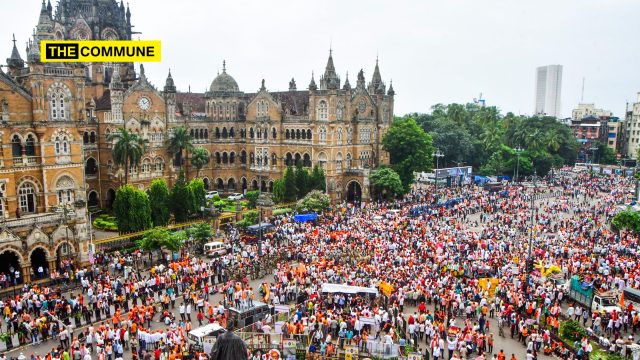
Giving time till 3 p.m. to restore normalcy, the Bombay High Court on 2 September pulled up the Maharashtra government for laxity in removing Maratha quota protesters’ nearly 5,000 vehicles choking Mumbai roads.
A bench of Chief Justice Chandrashekhar and Justice Aarti Sathe told state government counsel Satish Maneshinde, “We should not see any vehicle of the protestors when we leave the court today.” “The roads should be freed of congestion as fast as possible; otherwise, strict action will be taken,” said the bench, directing the government to take whatever urgent measures are needed to restore order in the city.
“We want normalcy. Let the state government give a report by 3 p.m. on what action has been taken. Tell us which vehicles are allowed, and which are banned,” said CJI Chandrashekhar. Seeking data on the number of protestors’ vehicles and their drivers, the court said, “What action have you taken so far. Have you made any video… How many schools have been ordered shut? People are afraid of stepping out of their homes.” Venting its anger on the alleged laxity of the authorities in controlling the unruly protestors and the resultant congestion on Mumbai roads, the bench said, “There is no space for vehicles on the road. There is no space for judges to move around in court.”
Mumbai Police on 2 September served a notice to pro-Maratha quota activist Manoj Jarange-Patil to vacate Azad Maidan as soon as possible, saying that due to repeated violations by his supporters, the protest permission cannot be continued. The police move came a day after the Bombay High Court order asking the state government to maintain law and order during the protest.
Jarange-Patil, who has launched an indefinite fast from 29 August, demanding reservation for the Maratha community from the OBC quota, has declared that he won’t leave Mumbai until the state government implements the reservation. The Mumbai Police, in its notice, said, “The terms and conditions laid down for the protest have been violated. Therefore, Azad Maidan should be vacated as soon as possible.”
The police said that they have taken a serious note of statements made by Jarange-Patil to the print and electronic media. Since 1 September morning, a large number of pro-Maratha reservation activists and Jarange-Patil’s supporters have started arriving at Azad Maidan, causing huge traffic jams on roads connecting south Mumbai from the eastern express highway and Atal Setu.
-IANS
Subscribe to our channels on Telegram, WhatsApp, and Instagram and get the best stories of the day delivered to you personally.
In a shocking revelation, despite being trained to handle medico-legal duties such as autopsies and forensic examinations, eight doctors with postgraduate degrees in forensic medicine are currently stationed at Primary Health Centres (PHCs) across Tamil Nadu. Instead of using their specialized training, they are attending to general outpatient cases, including fevers, coughs, and antenatal care.
This situation arises at a time when government medical colleges in the state are facing a significant shortage more than 70 positions for assistant professors and senior residents in forensic medicine remain vacant, out of 265 sanctioned posts.
Due to the absence of a distinct recruitment channel for specialists in Tamil Nadu’s medical services, many postgraduates with MD or MS degrees have had to apply through the Medical Services Recruitment Board (MRB) exam meant for assistant surgeons a position typically requiring only an MBBS qualification.
Among those affected are doctors who completed an MD in forensic medicine and cleared the 2025 MRB examination. They were subsequently posted to PHCs under the Directorate of Public Health and Preventive Medicine. Their current responsibilities include routine outpatient care, antenatal screenings, and school health checks roles far removed from their core forensic training.
“We are trained to manage medico-legal responsibilities like autopsies, age assessments, and examinations in cases of sexual assault, as well as to serve as expert witnesses in court. But with the specialist MRB exam discontinued years ago, our only option was to enter through the general assistant surgeon recruitment process,” said one of the affected doctors.
Many of them had previously worked in government hospitals as Non-Service Postgraduates (NSPGs) during their bond period, but mechanisms that once allowed for regular absorption of NSPGs into the system have been phased out, further narrowing their career prospects.
Uneven Transfers Raise Concerns
In recent months, other specialists including gynaecologists, paediatricians, anaesthetists, and general medicine doctors who were recruited via MRB and posted to PHCs have been transferred to government hospitals under the Directorate of Medical and Rural Health Services (DMS). Over 350 such transfers have reportedly taken place. However, forensic specialists remain excluded from these relocation opportunities despite repeated representations.
“Just last week, some general surgery and medicine doctors were moved to DMS hospitals through counselling, but our requests to be posted in medical college hospitals have gone unanswered,” another doctor pointed out.
Department Aware, May Initiate Counselling
Sources within the Health Department suggested that counselling sessions may be organized to reassign specialists recruited through the 2025 MRB exam, ensuring that in-service doctors’ seniority and placement rights are preserved while also addressing the high number of vacancies in specialty departments.
Officials confirmed that the department is reviewing batch-wise lists of doctors and noted that another batch of in-service postgraduates is expected to complete their training by October, which may provide an opportunity to fill some of the remaining vacancies.