Home Blog Page 367

Actor-Turned-Politician Vijay’s TVK To Kick Off State-Wide Tour From Tiruchy This Month
Vijay TVK First State Conference

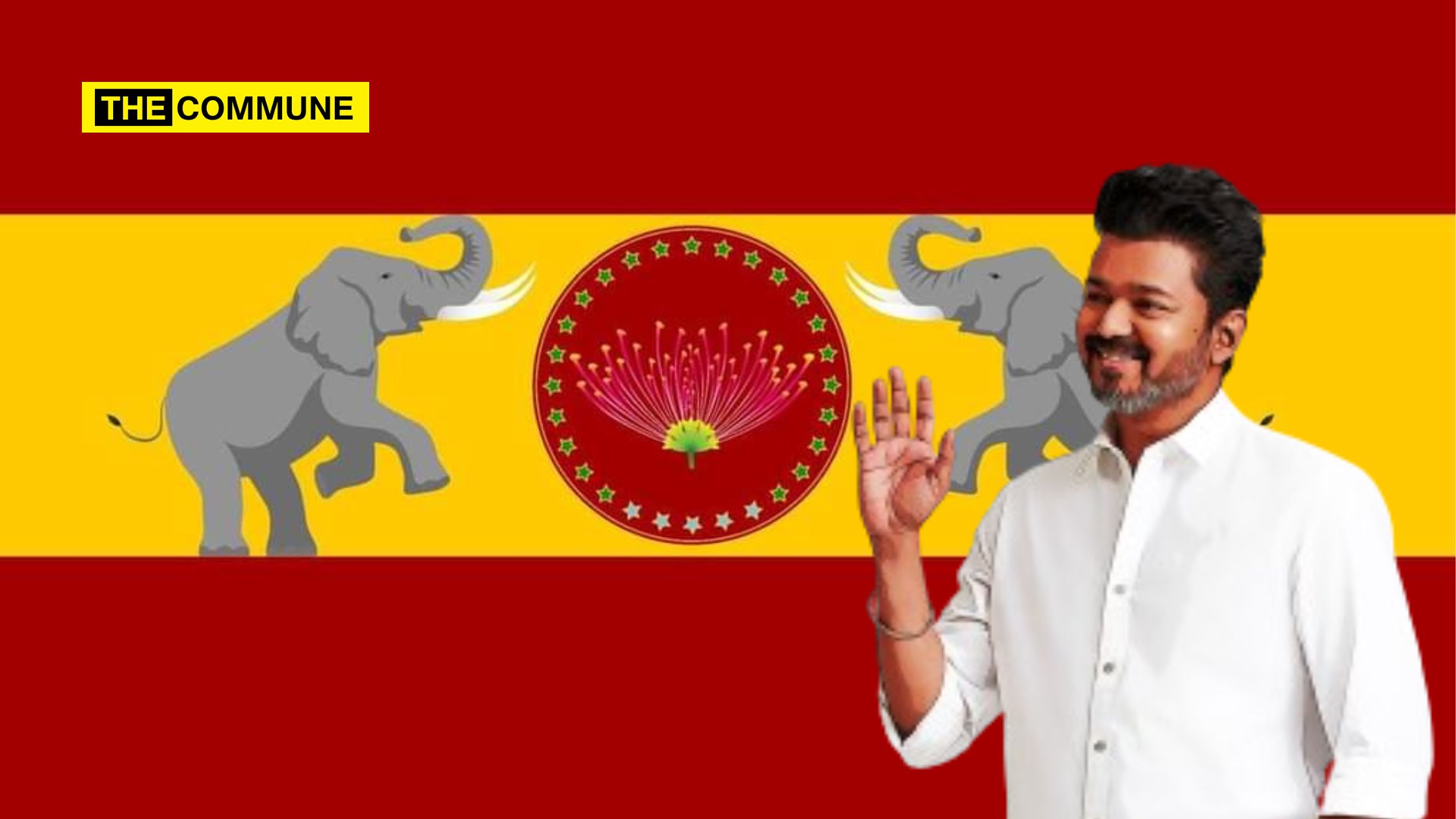
Tamilaga Vettri Kazhagam (TVK) President and actor Vijay is set to launch his much-awaited ‘Meet the People’ state-wide tour in the third week of September, beginning from the politically significant delta region, party sources said on Thursday.

Party insiders indicated that Tiruchy is the frontrunner to host the inaugural leg of the campaign, with the first phase expected to span about a week and cover nearly 10 districts. The actor-turned-politician had announced the tour during his party’s second state conference in Madurai last month, promising to take his political outreach directly to the grassroots.

According to TVK leaders, the campaign will be designed in a format that mirrors mass contact programmes of mainstream Dravidian parties, with a focus on roadshows and street-corner meetings. Tiruchy’s selection as the launch venue is not accidental.

Apart from its political weight in Tamil Nadu’s electoral landscape, the city and surrounding delta districts carry symbolic value as the cradle of the Chola empire, an imagery the party is keen to tap into. The TVK cadre in the region have been tasked with finalising locations for Vijay’s roadshows, public interactions, and short addresses in various towns and villages.

Adding a touch of grandeur, a specially designed luxury campaign bus has been prepared at the party’s Panaiyur headquarters. The bus, equipped with modern facilities for long-distance travel, awaits Vijay’s final approval and is expected to serve as the centrepiece of the campaign trail.

Beyond the delta belt, the first phase of the tour is also likely to extend to Namakkal and Erode, marking TVK’s entry into the Kongu region, a stronghold that the party has been eyeing.

Following the delta tour, TVK has planned a massive public conference in western Tamil Nadu, which party functionaries say will mark the formal launch of the party’s full-scale election campaign.

The event is expected to showcase the party’s organisational strength and signal its preparedness for the 2026 state Assembly elections. With preparations in full swing, the campaign is being seen as a crucial step for Vijay as he gears up to transform his stardom into sustained political momentum.

-IANS

Subscribe to our channels on TelegramWhatsApp, and Instagram and get the best stories of the day delivered to you personally.

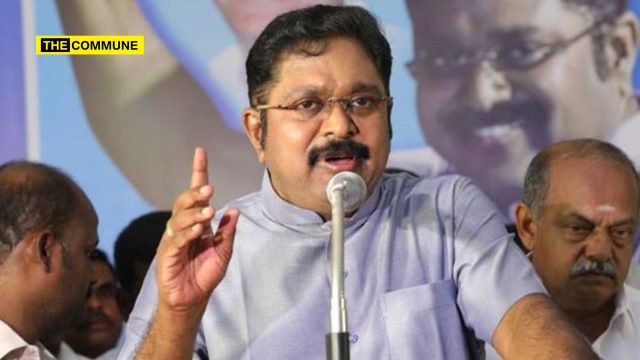
TTV Dhinakaran Pulls Out Of NDA, Keeps 2026 Alliance Options Open

ttv dhinakaran ammk ops bjp dmk admk nda

Amma Makkal Munnetra Kazhagam (AMMK) General Secretary TTV Dhinakaran on Wednesday declared that his party is no longer part of the BJP-led National Democratic Alliance (NDA) in Tamil Nadu, marking a major shift ahead of the 2026 Assembly elections.

Once a steadfast ally of the BJP, Dhinakaran said his party would decide on new alliances only in December, after wide consultations with functionaries and cadres. Speaking to reporters in Tenkasi, he noted that his earlier support for the BJP during the 2024 Lok Sabha elections was “unconditional and in the national interest”, as he and his party believed Narendra Modi’s third term as Prime Minister would benefit the country.

However, he drew a sharp distinction between national and state elections. “The 2026 Assembly elections are different from the Lok Sabha polls. We will announce our alliance decision only in December, taking into account the sentiments of our cadres and office-bearers,” he said.

The AMMK chief also dismissed the idea that Union Home Minister Amit Shah’s efforts to bring the AIADMK factions together had succeeded. “The attempt to unify AIADMK has failed,” he said, while leaving the door open to possible collaborations with other parties, including Vijay’s Tamilaga Vettri Kazhagam (TVK).

Meanwhile, former Chief Minister O. Panneerselvam (OPS) has also distanced himself from the BJP alliance. Recently, he convened a meeting with supporters in Alwarpet, Chennai, where three key resolutions were adopted, including a formal withdrawal from the NDA.

Panruti Ramachandran, who was present, announced that OPS would undertake a state-wide tour, emphasising that his group was not currently aligned with any party. OPS has also called for unity within the AIADMK, urging all factions to stand together to revive the party’s lost influence.

With the Assembly polls expected in April or May 2026, Tamil Nadu’s political landscape is fast shifting. The ruling DMK-led alliance, the AIADMK, and the BJP-led bloc remain key players, while Naam Tamilar Katchi (NTK) and TVK have confirmed they will contest independently.

Against this backdrop, Dhinakaran’s move to exit the NDA and keep alliance options open adds to the fluidity of the state’s political scene.

-IANS

Subscribe to our channels on TelegramWhatsApp, and Instagram and get the best stories of the day delivered to you personally.

GST Council’s Big Reform: Everyday Goods To Get Cheaper From September 22

gst registration rates pm modi insurance premium

After the GST Council approved historical changes to India’s indirect tax structure, several daily-use goods will become cheaper from September 22.

The new tax structure, adopted on Wednesday, has two major slabs now 5 per cent and 18 per cent, and a whopping 40 per cent for sin goods. For the common man, this change means more money in hand, which the government hopes will be routed into the economy, giving it a significant boost.

From groceries and fertilisers to footwear, textiles, and even renewable energy, a broad basket of goods and services is set to become more affordable. Items earlier taxed at 12 per cent and 28 per cent will now largely migrate to the other two slabs, making a wide range of products cheaper.

Food and daily essentials Milk products: Ultra-high temperature (UHT) milk will now be tax-free (down from 5 per cent), while condensed milk, butter, ghee, paneer, and cheese have moved from 12 per cent to 5 per cent or nil in some cases.

Staple foods: Malt, starches, pasta, cornflakes, biscuits, and even chocolates and cocoa products will see rates reduced from 12–18 per cent to 5 per cent.

Dry fruits and nuts: Almonds, pistachios, hazelnuts, cashews, and dates, earlier taxed at 12 per cent, will now attract just 5 per cent.

Sugar and confectionery: Refined sugar, sugar syrups, and confectionery items like toffees and candy have shifted to the 5 per cent slab.

Other packaged foods: Vegetable oils, animal fats, edible spreads, sausages, meat preparations, fish products, and malt extract-based packaged foods have been moved to the 5 per cent slab.

Namkeens, bhujia, mixture, chabena and similar edible preparations ready for consumption form (other than roasted gram), pre-packaged and labelled to go from 18 per cent to 5 per cent.

Waters, including natural or artificial mineral waters and aerated waters, not containing added sugar or other sweetening matter, nor flavoured to move from 18 per cent to 5 per cent.

Agriculture and fertilisers Fertilisers are down from 12 per cent/18 per cent to 5 per cent. Select agricultural inputs, including seeds and crop nutrients, have been rationalised from 12 per cent to 5 per cent.

Healthcare Life-saving drugs, health-related products, and some medical devices have seen rate cuts from 12 per cent/18 per cent to 5 per cent or nil.

Individual life and health insurance policies, including family floater, which had a 12 per cent tax, will no longer be taxed A massive chunk of medical items of regular use — including thermometers and glucometers — will be in the 5 per cent tax bracket.

Consumer goods Entry-level and mass-use items like select electrical appliances will move from 28 per cent to 18 per cent.

Footwear and textiles have seen GST cut from 12 per cent to 5 per cent, reducing costs for mass-market products. However, certain goods and services remain firmly under higher taxation.

Pan masala, gutkha, cigarettes, chewing tobacco, zarda, unmanufactured tobacco, and bidi will continue under existing high GST rates and compensation cess until outstanding cess-linked loans are cleared.

Additionally, the valuation of these products will now be shifted to Retail Sale Price (RSP) instead of transaction value, tightening compliance.

All goods (including aerated waters), containing added sugar or other sweetening matter or flavoured to go from 28 per cent to 40 per cent.

A new 40 per cent slab for sin and luxury goods remains, ensuring that items like cigarettes, premium liquor, and high-end cars don’t see tax relief. Imported armoured luxury sedans will be exempt only in special cases, such as those brought in by the President’s Secretariat.

-IANS

Subscribe to our channels on Telegram, WhatsApp, and Instagram and get the best stories of the day delivered to you personally.
Jesuit Scandal: Loyola College Under Scrutiny For Taking Funds From Money Laundering Kingping ‘Lottery’ Martin Group, Christian Activist Urges Rome’s Intervention

loyola college

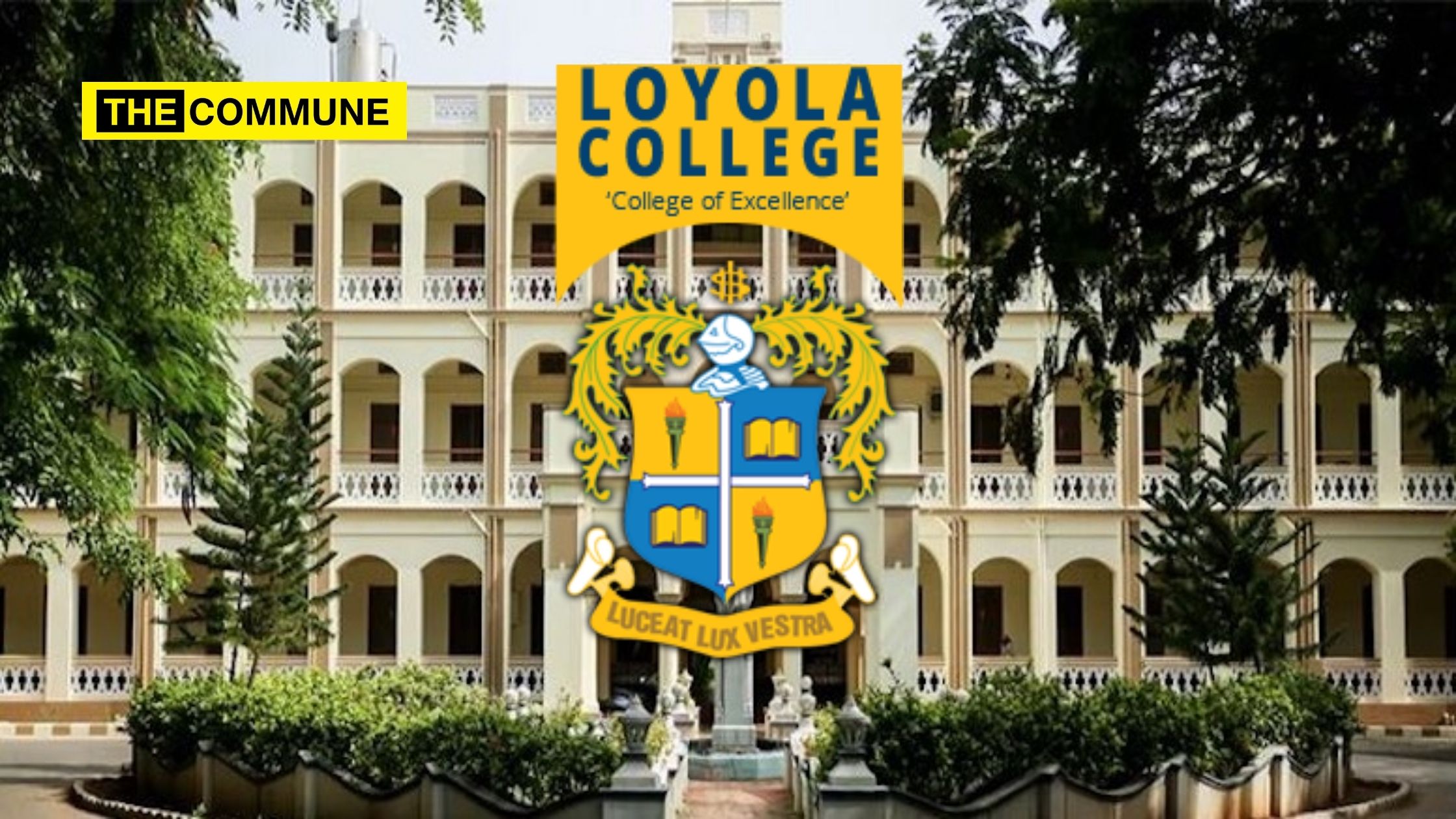
Loyola College, a prestigious Jesuit institution in Chennai, is embroiled in serious allegations of financial misconduct, academic fraud, and systemic corruption, according to a detailed indictment submitted to the Jesuit Curia in Rome by R. Joseph D’ Kennedy, Indian Representative of Ending Clergy Abuse (ECA) Global and an alumnus of the college.

Acceptance Of CSR Funds From Accused Money Launderer

In August 2025, Loyola College publicly accepted a ₹1 crore donation from the Martin Charitable Trust, the corporate social responsibility (CSR) arm of Santiago Martin’s lottery empire. Martin is currently under investigation by India’s Enforcement Directorate (ED) for fraud, lottery manipulation, and money laundering, with assets worth hundreds of crores already seized.

The donation, intended for building four classrooms, has drawn sharp criticism for legitimizing what Kennedy describes as “blood money.” He equated accepting funds from Martin to taking money from Dawood Ibrahim, India’s most wanted terrorist, stating that both represent “wealth built on the wreckage of human lives.”

Legal experts note that CSR donations from tainted sources are not protected under philanthropic pretexts. The Ministry of Corporate Affairs and the Enforcement Directorate have jurisdiction to act against institutions receiving such funds if they are linked to illicit activities.

Academic Fraud Exposed By University Inspection

A surprise inspection by the University of Madras revealed shocking violations in Loyola’s M.A. Philosophy programme:

  • No students were present during inspection, suggesting the programme may not exist on campus or is operated fraudulently elsewhere.
  • Faculty listed for the programme do not meet University Grants Commission (UGC) qualifications, with some fraudulently shown as “full-time” at both Loyola and Satya Nilayam Research Institute.
  • The college failed to follow Tamil Nadu’s Rule of Reservation, violating state law.
  • No dedicated classrooms, library, or departmental facilities were found.

The National Human Rights Commission has issued notices to the UGC and University of Madras Registrar, seeking an Action Taken Report within four weeks. A UGC committee conducted further inspections on August 13-14, 2025, underscoring the seriousness of the violations.

Questionable Spending And Offshore Company

During Loyola’s centennial celebrations, the college management allegedly flew an entire group of Jesuits to Dubai for what Kennedy characterizes as “needless extravagance.” This lavish spending occurred while the college was allegedly charging students tuition and application fees far exceeding government norms.

Additionally, the college established “Loyola Alumni Events LLC” in Dubai under the guise of an event management company. The website for this entity (loyolaalumnievents.com) was reportedly taken down after the Enforcement Directorate was alerted, raising suspicions of a deliberate cover-up.

Alumni Association Corruption And Historical Failures

Kennedy alleged that the Loyola Alumni Association has been “hijacked by entrenched, morally bankrupt individuals” who have maintained leadership positions for over a decade. He claims to have warned the Jesuit Superior General about these issues as early as 2019 during the Global Clergy Abuse Summit in Rome.

The Association Director allegedly wastes money on foreign trips to meet only 4-5 people, while the organization functions like a cartel with the same executives clinging to power.

Obfuscation In Clergy Death Investigation

The mysterious death of a Canadian priest, Father Omala, on Loyola’s campus has further damaged the institution’s credibility. Instead of transparency, Loyola’s ambiguous response provoked political outrage and calls for a Central Bureau of Investigation (CBI) probe.

Systemic Failure And Call For Action

Kennedy’s report concluded that Jesuit governance in Chennai has shown “systemic corruption and arrogance” and is incapable of reform. He urged the Jesuit Curia to appoint leadership from outside the province to realign Loyola with Jesuit mission values.

The allegations come against the backdrop of Loyola’s failed 2022 bid for university status, which Kennedy had warned would be “extremely suicidal for India as a nation and the Christian faithful.”

The Jesuit Curia has been called upon to direct Loyola College to immediately return the ₹1 crore donation, issue a public statement disassociating from such donations, and adopt clear protocols to prevent similar compromises in the future. Failure to act, Kennedy warns, could invite government intervention and criminal liability, irreparably damaging the moral and institutional credibility of the Society of Jesus.

Subscribe to our channels on TelegramWhatsApp, and Instagram and get the best stories of the day delivered to you personally.

Dog Found Dead At Arunachaleswarar Temple Shrine, Devotees Raise Concerns

tiruvannamalai arunachaleswarar temple dead dog
Representative Image

A dead dog was discovered at the shrine of the Arunachaleswarar Temple in Tiruvannamalai, raising concerns among devotees about hygiene and temple management.

Visitors and worshippers expressed distress over the incident, pointing to lapses in the temple administration’s maintenance and vigilance.

Devotees urged the authorities to take immediate action to ensure proper cleanliness and prevent such incidents in the future.

Temple officials have yet to issue a statement regarding the discovery or the steps being taken to address the situation.

Subscribe to our channels on Telegram, WhatsApp, and Instagram and get the best stories of the day delivered to you personally.
Tamil Nadu Hotels To Boycott American Food Brands Over US Tariffs On Indian Goods

boycott american tamil nadu hotels

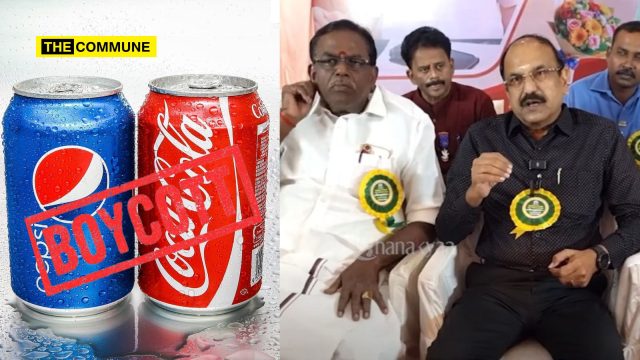
In response to the United States’ recent decision to impose steep tariffs on Indian exports, the Tamil Nadu Hotel Owners’ Association has declared a statewide boycott of American food and beverage products in hotels.

The move comes after U.S. President Donald Trump announced a significant tariff hike on imports from 70 countries including India. Beginning 7 August 2025, Indian goods were hit with a 25% tariff. Later, an additional 25% duty was imposed as a punitive measure for India’s continued procurement of Russian crude oil and defense equipment, bringing the total tariff to 50%.

This sharp increase has severely impacted Indian exports to the U.S., particularly in sectors like textiles, garments, seafood (especially shrimp), leather, gems and jewelry, chemicals, electrical equipment, and engineering goods.

Reacting to this development, the President of the Tamil Nadu Hotel Owners’ Association, Venkadasubbu, addressed the media, stating, “With the U.S. government levying a 50% tariff on Indian products, we have unanimously decided to stop using American food products in our hotels. Popular American brands like Pepsi, Coca-Cola, KFC, and certain imported mineral water brands will no longer be served. We will instead promote and prioritize Indian alternatives.”

He also announced that the association plans to sever ties with major food delivery platforms like Swiggy and Zomato, accusing them of unfair practices. In their place, a new Tamil Nadu-based delivery app named Zaaroz will be launched. Venkadasubbu added that delivery workers from Swiggy and Zomato will be welcomed to join Zaaroz and offered opportunities to continue their work under the new platform.

(With inputs from Daily Thanthi)

Subscribe to our channels on TelegramWhatsApp, and Instagram and get the best stories of the day delivered to you personally.

“Stereotyping Boys Isn’t Harmful, But Women Stereotypes Are Dangerous”, Says Varsha Bharath, Woke Director Of “Bad Girl” That Was Flagged As Child Porno By Madras High Court

vetrimaaran bad girl madurai bench of madras high court varsha bharath

Director Varsha Bharath, whose coming-of-age drama, ‘Bad Girl’, is to hit screens across India on September 5 this year, says that she doesn’t think stereotyping boys as failures is harmful.

During a pre-release event of the film, which was held recently, the makers of the film showcased a teaser which has a scene in which a lady teacher is seen chiding a girl student saying, “You walk like a boy, you talk like a boy and you fail like a boy.”

When IANS caught up with the director for an interview and pointed out that this scene was stereotyping boys as failures, the director replied, “No, that is stereotyping girls actually…”

Point out to her that the scene and the dialogue were actually doing the contrary to what she claimed as the statement “You fail like a boy” was stereotyping boys as failures and she replies, “In my class, this is my experience. I have always failed in class and I have always been told I’m like a boy.”

So there is a stereotype that boys are associated with failures? She replies, “Girls, out of fear, will study.” The point is that a stereotype exists? “I don’t think that that is a stereotype that is harmful,” she opines and goes on to give an explanation about the stereotypes that she thinks are harmful.

“So, what kind of stereotype is harmful? There is a power dynamic in society. If you were to say women are bad drivers. That is a stereotype that is harmful. We live in a patriarchal world. And this is being spoken by the teacher. The teacher is stereotyping the student. It is very important when we are reading a film to understand who is saying it. Whether the filmmaker is saying it or a character is speaking it. A character is speaking it from her prejudice. The character is prejudiced. This teacher has her prejudice and she is stereotyping boys as failures. I am not stereotyping boys as failures,” says the director of ‘Bad Girl’.

“I have always been a really bad student. I have gotten thrown out of school for being a really bad student. Every time when failed students were made to stand out, I would be the only girl standing with them. Even those not so smart girl students, who would study only as much as I would, will be hardworking and somehow manage to pass. They will not fail. They will have fear and devotion. That is why it was always very lonely for me to be a bad student. So, it comes from that place. Boys at least have company when they are failing in school,” she further explains.

It may be recalled that a teaser of the film, which was released in January this year, sparked a major debate on Brahmin bashing in cinema with one section claiming the film to be a bold and refreshing film and another claiming that it was indulging in Brahmin bashing.

The censor board has cleared the film for release with a U/A certificate. Produced by acclaimed filmmaker Vetri Maaran, the film is being presented by Anurag Kashyap under the banner of Grass Root Film Company. The film has won accolades on the international film festival circuit.

It won the NETPAC Award for Best Asian Film at the International Film Festival in Rotterdam (IFFR)and the Young Jury Award for Best Feature Film at the 40th Cinema Jove – Valencia International Film Festival in Spain. It also won the Student Choice Award at the Indian Film Festival of Toulouse in France.

Additionally, the film has been officially selected and screened at prestigious festivals including the Shanghai International Film Festival and the Indian Film Festival of Los Angeles. Bad Girl features an ensemble cast including Anjali Sivaraman, Shanthi Priya, Hridhu Haroon, TeeJay Arunasalam, Sashank Bommireddipalli, and Saranya Ravichandran.

On the technical front, it has cinematography by Preetha Jayaraman Jagadeesh Ravi and Prince Anderson. Editing for the film is by Radha Sridhar and music is by Amit Trivedi. Costume Design for the film is by Shruthi Manjari while sound design is by Vinoth Thanigasalam and Sound mixing is by Prathap. VFX for the film has been handled by R Hariharasuthan (Lorven).

-IANS

Subscribe to our channels on Telegram, WhatsApp, and Instagram and get the best stories of the day delivered to you personally.

Nigerians Among Six Arrested By Delhi Police In Major Meth Trafficking Crackdown; Drugs Worth ₹21 Crore Seized

delhi police methamphetamine drug bust

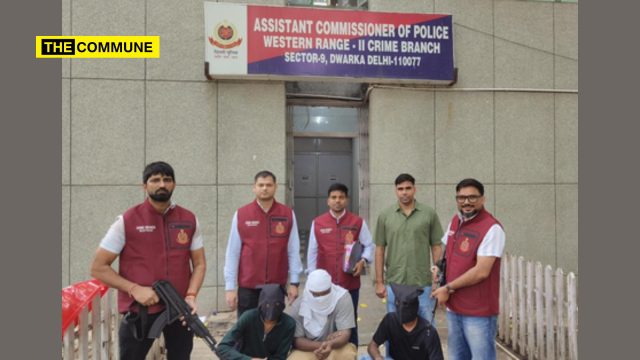
In a breakthrough against narcotics trafficking, the Delhi Police Crime Branch has busted an international syndicate of drug suppliers, arresting six persons, including two Nigerian nationals and a woman, from Delhi, Greater Noida and Bengaluru.

Around 7 kg of methamphetamine worth Rs 21 crore has been recovered. According to police, the syndicate was largely run by Keralites based in Bengaluru, while the drugs were being sourced through Nigerian suppliers. The operation was carried out by the WR-II unit of the Crime Branch under DCP Harsh Indora, IPS, following inputs from Kerala Police.

The crackdown began on July 19, when secret information led to the arrest of Suhail (31) and Sujin (32), both residents of Kerala, from a South-West Delhi guest house. Nearly 6 kg of methamphetamine was seized from them. Investigation revealed that the duo was distributing the contraband from Delhi to Bengaluru, Kerala, and other parts of South India.

Subsequent leads pointed to a Nigerian national, Toby Deco, who was tracked down and arrested in Mohan Garden, Delhi, with 64 grams of meth. A further 865 grams were recovered from his rented room. He confessed to supplying drugs to Suhail and disclosed links with syndicate handlers in Nigeria.

The probe extended to Bengaluru, where police arrested Suha Fatima alias Neha (29) and her husband, Md Zaheed alias Firoze (29), who financed Suhail’s operations. Later, another Nigerian, Chikwado Nnake Kingsley (29), was arrested in Greater Noida.

“Accused Chikwado Nnake Kingsley disclosed that he came to India in 2015 on the pretext of getting medical treatment and has been in India since. He was introduced to the business of drugs by two of his fellow Nigerians, Chigmo and Ajuko. Ajuko is now in Nigeria and is operating his business from there through WhatsApp and other social media,” the Delhi Police said in its press statement.

During interrogation, the accused revealed that the syndicate used “dead drop” methods, leaving packets at isolated spots and sharing images and locations with buyers to evade detection. Their primary clientele included students and IT professionals in Bengaluru. Police said Suhail, a former addict, gradually turned into a major trafficker after earlier arrests in Kerala. His network in Bengaluru was financed by Fatima and Zaheed, while Nigerians acted as suppliers.

In total, 6,895 grams of methamphetamine were seized. Police said efforts are underway to identify more financiers and trace the kingpin, believed to be operating from Nigeria.

“Further investigation is being carried out, and efforts are being made to completely unearth this syndicate and to arrest all the members of this syndicate who are involved in the supply of psychotropic substances. This long, relentless effort has shown that the Crime Branch is dutifully uprooting the nemesis of drugs from Delhi NCR and all over India,” said DCP Harsh Indora.

-IANS

Subscribe to our channels on TelegramWhatsApp, and Instagram and get the best stories of the day delivered to you personally.
Over 2 Crore Fraudulent Mobile Connections Blocked, Spoof Calls Drop 97%: DoT

spoof calls blocked dot

The Union Department of Telecommunication (DoT) has blocked more than 2 crore mobile connections that were being used for fraudulent activities and successfully reduced spoof calls by 97 per cent, according to DoT Secretary Dr. Neeraj Mittal on Wednesday.

Dr. Mittal was speaking during the annual West Zone Conference on security-related matters, which was organised by the DoT in South Goa. He addressed the gathering through a video link and shared key achievements in the telecom sector’s fight against cyber fraud. He credited the reduction in spoof calls to the government’s ‘Sanchar Saathi’ initiative, a platform launched to tackle misuse of telecom services.

Spoof calls are fake calls in which scammers disguise their identity by manipulating caller ID information to commit fraud or deceive people. Mittal said that alongside Sanchar Saathi, the department has developed a ‘Digital Intelligence Platform’ to crowdsource information related to frauds, particularly in the financial sector.

This platform helps banks and other financial institutions share and access data about ongoing scams, making the digital ecosystem safer and more secure. Highlighting the growing importance of telecom, Mittal said that while the number of telecom users has increased rapidly, the misuse of telecom resources — especially in financial fraud — has also gone up.

To counter this, the DoT has launched multiple initiatives to strengthen cybersecurity infrastructure. He noted that artificial intelligence (AI) has played a key role in identifying and eliminating fraud. With the help of AI, 78 lakh fake mobile connections and 71,000 fraudulent retail points of sale have been disconnected so far.

The department is also expanding its network of telecom testing labs to ensure that high-quality and certified telecom equipment is used across the country. In another major move, the DoT has introduced a ‘Financial Fraud Risk Indicator’, developed in collaboration with its partners. This tool helps detect mobile numbers involved in financial frauds more effectively.

Mittal also announced that the DoT is working on upgrading the Centralised Monitoring System (CMS) to keep pace with modern cyber threats and improve real-time surveillance capabilities. The department is actively collaborating with private players to boost sector-specific and application-level security, ensuring that the telecom infrastructure remains resilient and trustworthy.

With these efforts, the DoT aims to build a safer and more reliable digital environment for millions of mobile users in India.

-IANS

Subscribe to our channels on TelegramWhatsApp, and Instagram and get the best stories of the day delivered to you personally.

Andhra Pradesh Backs Centre’s GST Reforms, Aiming To Benefit The Poor

andhra pradesh gst reform

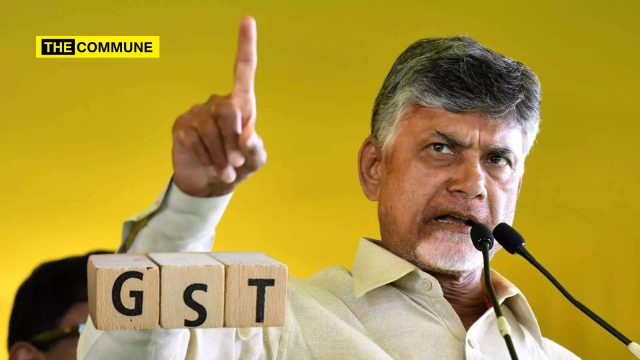
The Andhra Pradesh government has asserted its support for next-generation GST reforms proposed by the Centre. Participating in the 56th meeting of the Goods and Services Tax (GST) Council, chaired by Union Finance Minister Nirmala Sitharaman in New Delhi on Wednesday, Andhra Pradesh Finance Minister Payyavula Keshav stated that the State government fully supports the reforms being proposed by the centre.

He called it a measure taken in the best interest of the ‘poorest of the poor.’ The two-day meeting is expected to take up a major revamp of GST slabs, compliance simplification measures, and next-generation reforms.

Speaking about the Andhra Pradesh government’s stand, Finance Minister and Telugu Desam Party (TDP) leader Payyavula Keshav said the reforms were in line with Prime Minister Narendra Modi’s Independence Day announcement of a “Diwali gift” for the people.

“As an alliance partner, the Andhra Pradesh government supports these reforms in the GST sector being proposed by the Government of India. Most of them are aimed at helping the common man and the poorest of the poor. They cover critical sectors such as food, education, health, steel, cement, and textiles,” Minister Keshav said.

Being a crucial NDA ally, he added, the TDP president and Chief Minister Chandrababu Naidu has also backed the reforms, calling them a significant step toward reviving the economy and improving people’s lives.

“The reforms are aimed at expanding the Indian economy while rationalising the tax rates on items of common consumption, reducing costs for households and providing relief to millions,” the Minister noted.

“The reforms are being suggested with the intention of ensuring benefits are passed on to the customer and end-consumers. From the Government of India to all participating states, including even opposition voices, there is a shared understanding that the consumer must benefit,” the Finance Minister emphasised.

-IANS

Subscribe to our channels on Telegram, WhatsApp, and Instagram and get the best stories of the day delivered to you personally.