Home Blog Page 366

CBI Nabs Deputy GM Of Jabalpur Ordnance Factory Over Corruption Allegations

The Central Bureau of Investigation (CBI) arrested a senior official of the Ordnance Factory in Jabalpur, Madhya Pradesh, following a late-night raid linked to a corruption case, sources said on 4 September 2025.

The CBI carried out a raid at the Gray Iron Foundry (GIF) of the Jabalpur-based Ordnance Factory late 3 September night. Following a two-hour raid and a short interrogation, the agency arrested Ordnance Factory’s Deputy General Manager Deepak Lamba. He was later taken to Delhi for detailed interrogation, said the sources.

Sources told IANS that the raid was linked to alleged corruption and financial irregularities involving Lamba during his earlier posting in Maharashtra. Notably, the GIF is a unit of the Ordnance Factory Board under the Ministry of Defence. It specialises in producing ferrous and non-ferrous materials, including steel castings, and components for military equipment. Lamba was earlier posted at the Nagpur-based Ordnance Factory before his transfer to Jabalpur. Reports indicated that during his tenure at the Ambazari unit in Nagpur, he allegedly favoured a private firm for his personal gains.

The issue came to light after DKT Gupta, Deputy Chief Vigilance Officer of Yantra India Limited (YIL), filed a complaint against Lamba with the CBI. Following the investigation, an FIR was registered on 25 August against Lamba and a Nagpur-based private firm, Automation Engineering and Industrial Services. Following this, the raid was conducted in the Jabalpur Ordnance Factory on Wednesday night. According to sources, the initial investigation revealed that he had formed a proprietorship firm and it is operated by one Mohit Tholia, who is reportedly Lamba’s relative.

The CBI also seized documents pertaining to suspicious financial transactions, which are now under investigation. Lamba’s family members, including his wife and sister, are also being examined, as the probe uncovered a trail of questionable monetary dealings. It is also alleged that Lamba altered tender conditions to benefit the specific private firm. Notably, the CBI has previously taken similar action against another officer at the Ordnance Factory in Jabalpur. The CBI’s late-night raid has sparked panic at the Jabalpur Ordnance Factory.

-IANS

Subscribe to our channels on TelegramWhatsApp, and Instagram and get the best stories of the day delivered to you personally.

TN Education Department Placed College Principal And HOD On Compulsory Wait Over Event Featuring TVK Functionary

tvk functionary

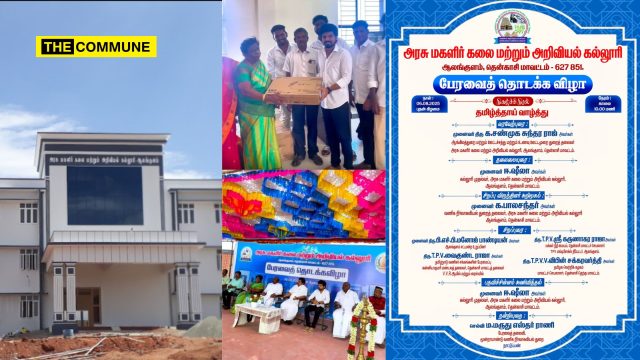
The Tamil Nadu Education Department has placed the principal and the head of the English department at the Government Arts and Science College for Women in Alangulam on compulsory wait an administrative sidelining following allegations that they permitted a representative of the Tamilaga Vettri Kazhagam (TVK) to take part in a college event held in August.

According to reports, Principal E. Sheela and English Department Head K. Shanmuga Sundara Raj had invited several individuals affiliated with political organizations to attend an event on August 6. The invitees included TPV Vaikunda Raja (district secretary of Tamil Nadu Vanigar Sangankalin Peramaippu), TPV Karunakara Raja (district secretary of Makkal Needhi Maiam), and TPVV Vibin Chakkaravarthy (district secretary of TVK).

The three guests, who are also executives of the TPV Group a business conglomerate involved in oil and rice milling as well as cinema operations donated 25 computers to the college. The computers were formally handed over during the event by Vibin, the TVK functionary.

When approached for comment, Principal Sheela stated that the guests had been invited strictly in their capacity as TPV Group administrators and as representatives of a traders’ association, not for any political affiliation. “They expressed interest in donating 25 computers to the college, and I accepted. The controversy began only after a video of the event went viral,” she explained.

In response, P. Victoria Thangam, Regional Joint Director of Collegiate Education for Tirunelveli has said that disciplinary action was initiated directly by the Directorate of Collegiate Education and that she had not received prior notification regarding the decision.

(With inputs from The New Indian Express)

Subscribe to our channels on TelegramWhatsApp, and Instagram and get the best stories of the day delivered to you personally.

Tamil Nadu Declines Centre’s Offer Of 900 Electric Buses Under PM e-Drive Scheme

electric buses tamil nadu

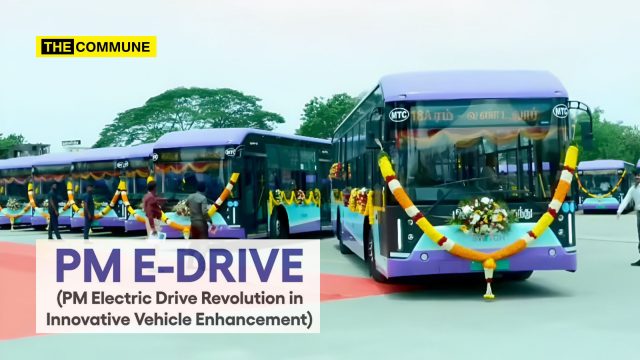
The Tamil Nadu government has opted out of the Central Government’s e-Drive initiative, declining the allocation of 900 buses designated for 11 cities across the state. While several other states have actively embraced the scheme, Tamil Nadu has expressed disinterest, citing concerns over the implementation structure.

The Central Government is currently rolling out two major green mobility initiatives PM e-Bus Sewa and PM Electric Drive aimed at promoting electric public transport as part of its environmental agenda. Announced in 2023, the PM e-Bus Sewa scheme has a total budget of ₹57,613 crore and plans to deploy 10,000 electric buses across 169 cities in two phases.

As per the scheme’s guidelines, cities with populations exceeding 40 lakhs are excluded. Based on the 2011 Census data, cities with populations between 20 and 40 lakhs are to receive 150 buses each, those between 5 and 20 lakhs are allocated 100, and cities below 5 lakh population are to receive 50 buses.

The central government will fund the operational cost of the buses based on a per-kilometer fare model, while the procurement, maintenance, and day-to-day operation are to be handled by private firms selected through a tender process. These firms will operate the buses until 2037. Although the state governments retain control over fare collection and advertising revenue, they are expected to provide the necessary infrastructure, such as charging stations for which the Centre is also offering financial aid.

So far, the scheme has seen strong uptake. The Centre has approved the deployment of 7,293 buses in various states, with tenders floated for 6,518 of them. Additionally, ₹437 crore has already been disbursed to eight states to support infrastructure development, including charging facilities.

Under this scheme, Tamil Nadu was allocated 900 electric buses for 11 cities: Coimbatore (150), Madurai, Trichy, Salem, Erode, and Tiruppur (100 each), and Ambattur, Avadi, Thoothukudi, Tirunelveli, and Vellore (50 each). Despite this, officials from the state government have reportedly declined participation.

According to a central official, Tamil Nadu was allotted 9% of the total buses under the scheme, and formal communication had been sent to the state. However, Tamil Nadu officials responded that no request was received from their end, indicating a lack of interest in participating.

When asked about the rationale behind this decision, Tamil Nadu’s Minister for Transport, S.S. Sivasankar, offered an explanation. Speaking at the Chennai Secretariat, he stated that central government schemes often come with constraints where “only the name is ours, but the funds don’t come as expected.” He clarified that this is why the Tamil Nadu government has decided to implement its own electric bus program independently, rather than relying on the centrally funded scheme.

Meanwhile, Chennai one of India’s major metropolitan areas has also been excluded from the PM e-Bus Sewa due to its population exceeding 40 lakh. Instead, Chennai is eligible under the PM Electric Drive initiative, under which the Centre is supporting the procurement of 14,000 electric buses across cities like Delhi, Mumbai, Bengaluru, Hyderabad, Kolkata, Ahmedabad, Surat, and Pune. However, the Tamil Nadu government has similarly chosen not to avail this opportunity for Chennai.

(With inputs from Maalai Malar)

Subscribe to our channels on TelegramWhatsApp, and Instagram and get the best stories of the day delivered to you personally.

Financially Independent Wife Can’t Claim Interim Maintenance, Says Madras High Court

In a significant ruling that underscores the true intent of spousal support under the Hindu Marriage Act, the Madras High Court has refused interim maintenance to a wife with a substantial income and valuable assets. The judgment reaffirmed that interim maintenance is meant to assist a financially dependent spouse in maintaining a dignified standard of living, not to supplement the lifestyle of someone who is already self-sufficient.

Delivered on 22 August 2025, by Justice P.B. Balaji, the verdict came in response to a petition filed by a husband challenging a family court order that had directed him to pay ₹30,000 per month in interim maintenance to his wife. The woman, a doctor and company director, had approached the family court for financial support while their divorce case was ongoing. Despite earning over ₹47 lakh in the last three financial years and allegedly owning nearly one-third of an acre of land valued in crores, she sought interim financial assistance from her husband.

The family court had initially granted her ₹30,000 per month. However, the husband took the matter to the Madras High Court, arguing that she had a stable income and significant assets. He also highlighted that he was already covering his son’s educational expenses, including coaching fees for competitive exams, in accordance with a 2021 court order.

During the High Court proceedings, the wife’s legal team acknowledged that she had earned ₹15 to ₹16 lakh annually over the past three years through dividends from her company. However, they contended that most of this income was spent on their son’s education and that she was therefore still entitled to financial support.

Justice Balaji rejected this argument. He noted that the wife was financially capable of supporting herself and did not require any further aid from her estranged husband. The judge emphasized that Section 24 of the Hindu Marriage Act is not a tool for financial enrichment but a mechanism to ensure that a dependent spouse can lead a reasonably comfortable life during legal proceedings.

Referring to the company’s financial records, the court confirmed that the wife had received a total of ₹47.5 lakh between 2021 and 2024 through direct bank transfers. The court also took into account that she owns valuable immovable property and failed to dispute these claims effectively.

Justice Balaji observed that the husband had already accepted his responsibility toward their son and had not contested the monthly maintenance awarded for him. He had also paid an additional ₹2.77 lakh toward the child’s educational needs. The judge found no justification for awarding the same ₹30,000 amount to the wife, especially in light of her independent financial standing.

Importantly, the court referenced the Supreme Court’s landmark ruling in Rajnesh v. Neha (2021) 2 SCC 324, which laid down clear guidelines for awarding maintenance. Applying the same principles, the Madras High Court concluded that the wife did not qualify for further interim support, given her income and property holdings.

The court criticized the family court for failing to consider the wife’s assets and income while awarding her maintenance. According to the High Court, the lower court had focused solely on the child’s needs and awarded the wife financial support without a proper assessment of her financial independence.

In conclusion, the Madras High Court set aside the portion of the family court’s order that granted interim maintenance to the wife. It upheld the husband’s obligation to continue supporting his son but ruled that the wife was not entitled to any additional maintenance. The judgment made clear that interim maintenance must not be misused or treated as a financial windfall for a spouse who is already economically secure.

(With inputs from Economic Times)

Subscribe to our channels on TelegramWhatsApp, and Instagram and get the best stories of the day delivered to you personally.

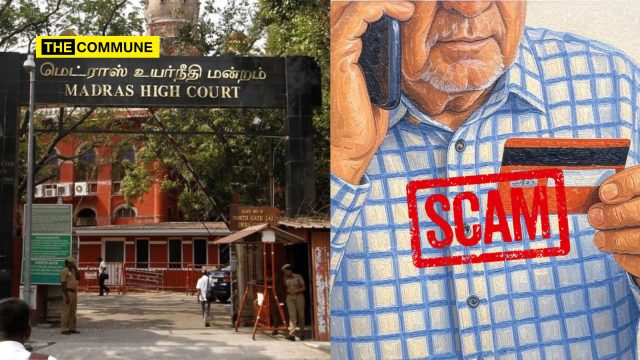
Senior Citizens Duped Of Cash Or Gold Entitled To Up To ₹5 Lakh Compensation, Says Madras High Court

madras high court compensation senior citizen

The Madras High Court has suggested that senior citizens who fall victim to fraudsters should be paid a minimum compensation of 30% of the value of the jewels or cash lost, or ₹5 lakh, whichever is lower, from the Victim Compensation Fund if the culprits remain untraced.

Justice D. Bharatha Chakravarthy made the observation while disposing of a petition filed by 68-year-old P. Krishnaveni of Ma.Po.Si. Nagar, Tiruvallur district. The petitioner, who was duped of 17.5 sovereigns of jewellery in 2018, had sought a direction to police to complete the investigation. The government informed the court that the police had already filed an “untraceable report,” with liberty to reopen the case if fresh clues emerged.

The judge said he was suggesting only a “bare minimum” compensation, and that the state government could fix an even higher quantum. He noted that scams targeting senior citizens were on the rise, both in public places and at their residences, and stressed that courts could not ignore the mental agony suffered by the elderly.

Pointing out that the new Bharatiya Nagarik Suraksha Sanhita (BNSS) emphasises citizen protection, Justice Chakravarthy observed that Section 396 of the law provides for victim compensation in cases where offenders cannot be traced. He criticised the existing Tamil Nadu Victim Compensation Scheme, framed in 2013, for capping payouts at just ₹1 lakh, and called for a significant upward revision.

In Krishnaveni’s case, the court noted that she had been duped while on her way to a medical test with her husband, when two men posing as policemen persuaded her to place her jewellery and cash into a bag, before fleeing with it. Considering the current gold price of around ₹75,000 per sovereign, the court held she was entitled to ₹4 lakh in compensation.

The judge directed the Tiruvallur District Legal Services Authority to send a para-legal volunteer to assist the petitioner with her application and ensure the amount is delivered by demand draft or bank transfer within 12 weeks. He added that the compensation must be returned if the police later trace the culprits and recover the valuables.

(With inputs from The Hindu)

Subscribe to our channels on Telegram, WhatsApp, and Instagram and get the best stories of the day delivered to you personally.

“Hate Speech Is On The Rise”: DMK Scion Udhayanidhi Stalin Who Equated Sanatana Dharma To Diseases And Called For Its Eradication Says

I'm Telling You Again And Again, I'm Proud To Be A Christian: DMK Scion Udhayanidhi Stalin Who Wants To Eradicate Sanatana Dharma Says

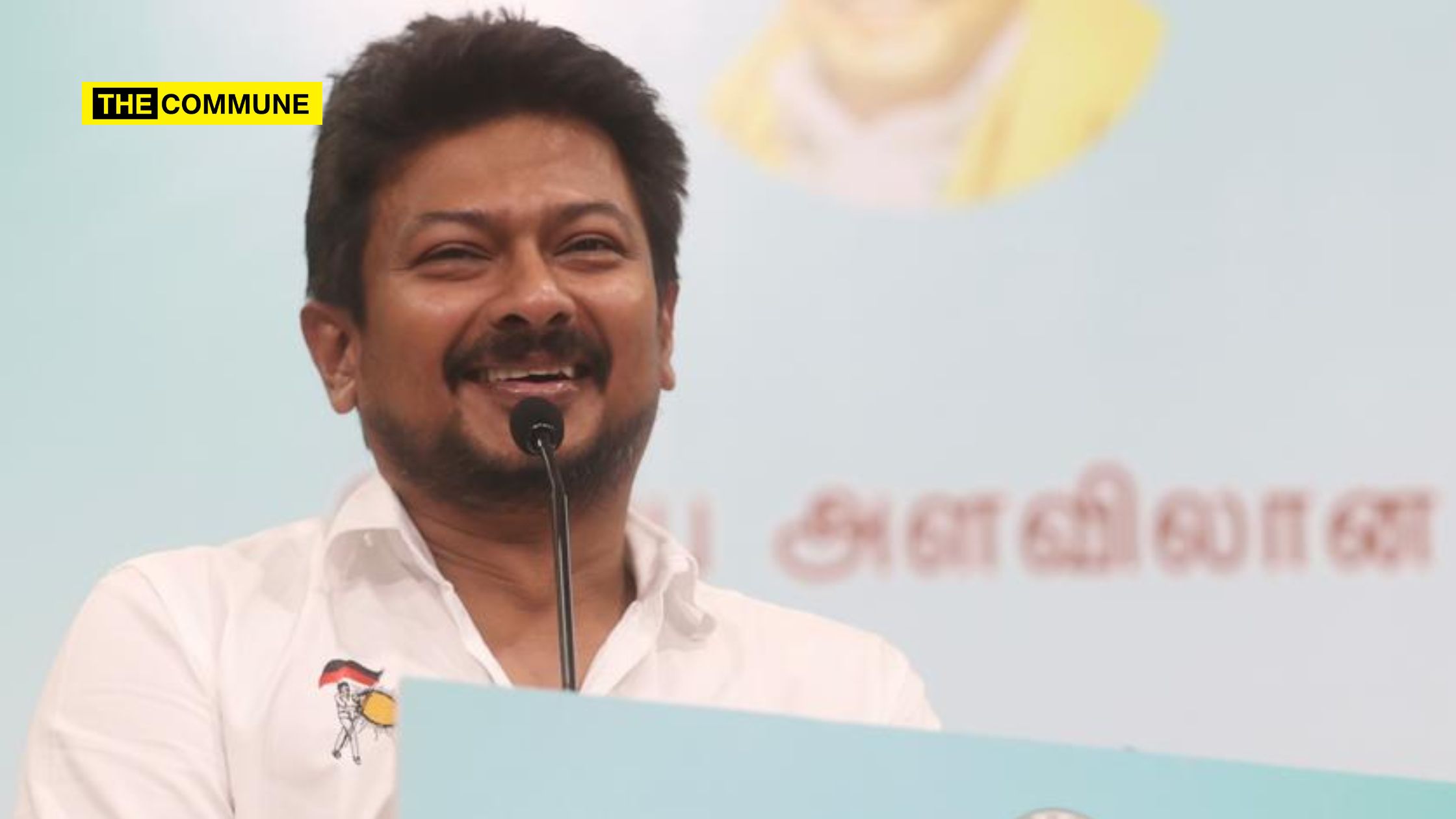
In a striking display of political irony, Tamil Nadu’s Deputy Chief Minister and DMK scion Udhayanidhi Stalin recently lamented the rise of hate speech in India particularly against minorities. Speaking at an event in Chennai, he claimed, “Hate speech is on a rise in India, it is particularly higher against minority communities. Various false propaganda has been spread on social media. There is a fascist gang in the country that has a full-time job to spread these kinds of things on social media to confuse people. I don’t want to name them, you know who they are.”

Yet, this self-styled moral guardian is the very same figure who drew national ire and a rebuke from the Supreme Court for equating Sanatana Dharma with diseases like dengue and malaria, calling for its “eradication.” The apex court’s reprimand should have served as a moment of introspection. Instead, Stalin appears to have doubled down on political opportunism masked as social concern.

Unsurprisingly, this sudden concern for minorities has surfaced just ahead of the 2026 Tamil Nadu assembly elections. Rather than an expression of genuine worry, his words seem like a carefully curated speech tailored for electoral gains. Once again, identity politics is weaponized not to unite, but to divide, distract, and dominate.

Udhayanidhi Stalin’s Selective Secularism and Recycled Rhetoric

This isn’t the first time Udhayanidhi Stalin has indulged in the politics of minority appeasement. In 2024, at a Christmas gathering, he declared, “If there is a festival that brings happiness to the whole world, it is Christmas. I am even happier when Christmas arrives.” He proudly traced his connection to Christian institutions like Don Bosco School and Loyola College and made a statement that caused considerable uproar, “I proudly declared, ‘I am also a Christian.’ Immediately many ‘Sanghis’ had stomach burns. Today, I say it again—I am proud to say that I am a Christian.”

The term “Sanghi” used pejoratively to describe devout Hindus, supporters of Hindutva ideology, support of BJP and Prime Minister Narendra Modi and everything in that spectrum, it is routinely employed by leftists, Dravidianists, and others to demonize their ideological opponents. Udhayanidhi didn’t hesitate to use the term as a slur while wrapping himself in the garb of minority solidarity.

Later, perhaps realizing the potential backlash, he attempted damage control, “If you think of me as a Christian, I am a Christian. If you think of me as a Muslim, I am a Muslim. If you think of me as a Hindu, I belong to all. The foundation of all religions is love. Every religion teaches us to love one another” A classic political maneuver – alienate first, then attempt to appease all.

A Pattern of Provocation

This pattern of strategic identity-shifting isn’t new. At a similar Christmas event in 2022, Udhayanidhi had again proclaimed, “I’m proud to call myself a Christian. Today, all Sanghis (a colloquial reference denoting devout Hindus and supporters of RSS-BJP) will be burning. Because Sekarbabu (Tamil Nadu Hindu Religious & Charitable Endowments Minister) is saying ‘Hallelujah’, Udhayanidhi is saying ‘I’m a Christian’. Yes, I will say that I’m a Muslim too.” Such statements, framed as personal affirmations, function more as political provocations designed to signal allegiance while vilifying the ideological other.

In 2023, the same rhetoric was recycled, again at the Christmas celebrations in Chennai’s Harbour constituency. With Christian clergy and political leaders sharing the stage, Udhayanidhi reiterated his pride in being a Christian and repeated the same vague, crowd-pleasing mantra of religious universality.

Yet behind this facade of pluralism lies a more calculated game one that appeals to religious minorities while implicitly targeting and antagonizing the Hindu majority under the guise of “rationalism” or “anti-fascism.”

The Sanatana Dharma Controversy

Perhaps the most telling episode in this political theatre occurred in September 2023, when Udhayanidhi Stalin openly likened Sanatana Dharma the foundational worldview of Hinduism to infectious diseases, stating, “Mosquitoes, dengue, flu, malaria, corona – we should not oppose these things. They’ve to be eradicated completely. Same is the case with Santanam (Hinduism). Our first work should be to abolish/eradicate Sanatanam instead of opposing it.”

The fallout was immediate and widespread. National outrage ensued, and even DMK’s allies within the I.N.D.I.A. bloc distanced themselves. The statement wasn’t just inflammatory it was deeply offensive to millions of Hindus who view Sanatana Dharma as integral to their identity, faith, and culture.

In light of this, Udhayanidhi’s recent handwringing over hate speech rings hollow. It’s hard to take seriously a politician who calls for the “eradication” of a millennia-old religion, only to turn around and cry foul when accused of stoking division.

With 2026 looming, Tamil Nadu is once again witnessing the DMK’s well-worn script selectively invoking communal harmony while stoking sectarian undercurrents. Udhayanidhi Stalin, poised as the party’s future face, appears more concerned with consolidating a voter base than promoting genuine social unity.

In the end, his speeches may change tones, but the strategy remains the same: appease some, alienate others, and claim moral superiority while doing both.

Subscribe to our channels on TelegramWhatsApp, and Instagram and get the best stories of the day delivered to you personally.
TN Police Submit Video Of DMK Leader Ponmudi’s Hate Speech Against Hindus In Madras High Court

dmk ponmudi madras high court

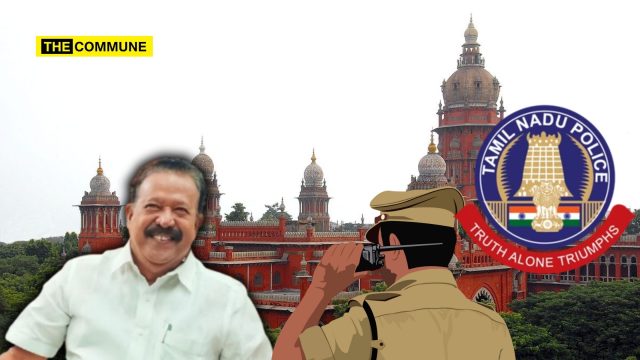
The police on Wednesday, 3 September 2025, submitted video evidence of former DMK minister K. Ponmudi’s speech on Saivism and Vaishnavism before the Madras High Court.

The case, relating to controversial remarks made by Ponmudi at a public event, came up for hearing before Justice N. Sathishkumar. Earlier, Justice N. Anand Venkatesh had taken up the matter after complaints were filed over Ponmudi’s comments on women and on religious traditions.

During the previous hearing, the state’s public prosecutor, P. S. Raman, informed the court that the police had closed the complaints, stating there was no basis for the charges. The judge questioned how such a conclusion had been reached and asked whether the same approach was followed in other complaints as well.

The prosecutor argued that Ponmudi’s remarks were not his own but had echoed the views of a social reformer expressed in 1972. He added that complainants could still approach the relevant criminal courts to challenge the police decision.

Following this, the judge directed the submission of the full video of Ponmudi’s speech along with the original 1972 speech for comparison. The police have now filed the video evidence, and the matter has been adjourned for further hearing.

What Ponmudi Said

In April 2025, a Ponmudi went viral on social media igniting widespread controversy and condemnation across social media platforms, with many calling out the then-minister for his offensive remarks targeting Shaivite and Vaishnavite communities. The video, which surfaced on X, captured Ponmudi making a crude analogy involving a prostitute to mock the religious practices of these Hindu sects, drawing sharp criticism for its insensitivity and vulgarity. In the video, Ponmudi recounted a supposed interaction between a man and a prostitute, where the woman asks the man if he is a Shaivite or a Vaishnavite. According to Ponmudi, the prostitute explains that Shaivite means “lying down position” (referencing the horizontal tilak worn by Shaivites) while a Vaishnavite means a “standing position” (referencing the vertical tilak worn by Vaishnavites).

(With inputs from Daily Thanthi)

Subscribe to our channels on TelegramWhatsApp, and Instagram and get the best stories of the day delivered to you personally. 
One Nation, One Tax: How GST Unified India’s Market And Economy

gst registration rates pm modi insurance premium

In the pre-GST era (VAT), there were no uniform tax rates, and states imposed additional levies like entry tax, undermining harmonisation. There was no consistency in tax returns, audits, or penalties across states, causing compliance burdens. Weak input tax credit provisions enabled misuse, while a lack of central oversight allowed evasion.

Double taxation with service tax, frequent rate changes, and differential structures created distortions. Therefore, GST was brought in 2017, after convincing the states. GST marked its 8th anniversary on 1 July 2025, achieving its vision of ‘One Nation, One Tax’. It unified India into a single market, streamlined interstate trade, and removed multiple layers of cascading taxes.

A recent Deloitte survey concluded that 85 per cent of respondents, including MSMEs, are happy with the GST implementation. The system simplified tax structures, made industry more competitive, and directly benefited citizens through uniform rates across the nation and unified procedures for compliance and enforcement.

The GST taxpayer base grew from 66.5 lakh in 2017 to 1.51 crore in 2025, indicating greater formalisation of the economy. FY 2024–25 saw gross GST collections of Rs 22.08 lakh crore, doubling in just four years and growing at a CAGR of over 18 per cent. Rising collections and active taxpayers reflect growing compliance, improved systems, and the strength of India’s economy.

Average revenue in this fiscal year is Rs 2,04,500 crore compared to Rs 82,000 crore in FY 2017-18. The GST 2.0 reforms will prioritise easing the lives of citizens, supporting economic growth sectors, and simplifying structures for businesses. This means kick-starting a fresh virtuous cycle of stimulating growth and reinvigorating key economic sectors, which will ultimately result in lower prices for consumers and higher revenue for the government.

The 56th meeting of the GST Council on Wednesday approved reforms with a multi-sectoral and multi-thematic focus on improving the lives of all citizens and ensuring ease of doing business for all, including small traders and businessmen. The rate rationalisation was okayed with a focus on the common man, labour-intensive Industries, farmers and agriculture, health, which are key drivers of the economy, the Finance Ministry said.

“Exemption of GST on all individual life insurance policies, whether term life, ULIP or endowment policies and reinsurance thereof to make insurance affordable for the common man and increase the insurance coverage in the country,” the ministry added.

-IANS

Subscribe to our channels on TelegramWhatsApp, and Instagram and get the best stories of the day delivered to you personally.
Retired Government Staffer Assaulted At ‘Ungaludan Stalin’ Camp, Video Sparks Outrage

ungaludan stalin camp retired government staff assaulted

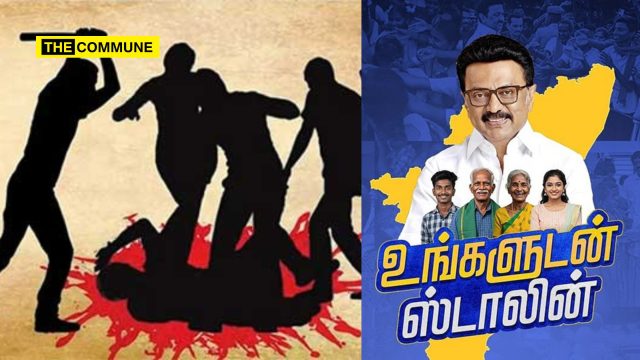
A 64-year-old retired government employee was allegedly assaulted by a police sub-inspector during a public grievance redressal camp organised under the ‘Ungaludan Stalin‘ outreach initiative at Sathur village near Arcot on Wednesday, sparking outrage after a video of the incident went viral.

The petitioner, identified as C. Venkatapathy, a native of Sathur and former employee of the Department of Cooperatives, said he had gone to the camp at the Government Middle School to submit a representation seeking action against encroachments on forest land in his village.

Since his retirement in 2018, he has been living with his wife, V. Gnana Soundarya, 60, who is differently abled, and their daughter near Arcot.

According to officials, around noon, Venkatapathy submitted his petition to Village Administrative Officer (VAO) Mohammed Shahabuddin. The Revenue staff initially hesitated to accept the document, citing that the petitioner had raised the same grievance repeatedly in the past.

When the officials eventually received it, Venkatapathy demanded a written acknowledgement, which the revenue team declined to provide. As the argument grew heated, police sub-inspector Prabhakaran of Arcot Taluk police stepped in. A video shows the officer hitting Venkatapathy in the chest. Soon after, Venkatapathy complained of pain and was taken to the Government Taluk Hospital in Walajah, where doctors said his condition was stable.

The incident triggered sharp criticism on social media, with many condemning the conduct of the police officer at a camp meant for addressing public grievances. Local residents also expressed solidarity with the petitioner, who has been campaigning for the protection of forest land in his native village for over six years.

Meanwhile, instead of action against the police officer, Arcot police registered a case against Venkatapathy based on a complaint by VAO Shahabuddin. He was booked under Section 221 of the Bharatiya Nyaya Sanhita (BNS) for allegedly obstructing a public servant from discharging official duties.

The registration of the case has intensified the public outcry, with opposition parties and rights activists questioning the accountability of officials and demanding that the alleged assault by the sub-inspector be investigated impartially.

-IANS

Subscribe to our channels on TelegramWhatsApp, and Instagram and get the best stories of the day delivered to you personally.
Centre Eases GST Registration For Small, Low-Risk Businesses

gst registration rates pm modi insurance premium

The government on Wednesday said that in order to continue with ease of doing business reforms, the GST registration process has been further simplified, especially for small businesses and low-risk applicants. Under the new system, registration will be granted within three working days to eligible applicants.

Responding to a question by IANS, Central Board of Indirect Taxes and Customs (CBIC) Chairman, Sanjay Kumar Agarwal, said that small businesses that estimate they will not be availing more than Rs 2.5 lakh of input tax credit can opt for this simplified registration.

“Such registration will be granted automatically by the system within three working days. After operating this registration, if they grow and they want to transition to the normal registration, again, there is a provision and based on the risk analysis for the normal category of registration, they can be transitioned to the normal category,” Agarwal added as the Centre rationalised the indirect tax structure, cutting the current four slabs down to two — scrapping the 12 per cent and 28 per cent rates, while retaining the 5 per cent and 18 per cent slabs.

He further stated that there is a process which has been approved by the GST Council regarding the refund. “There is a provision of granting 90 per cent of the claimed amount on a provisional basis. Now, the GST Council has recommended an amendment in the rule, which prescribes that on the basis of identification after the risk evaluation by the system, this 90 per cent amount can be granted within seven days by the officer,” the CBIC chief told IANS.

Presently, there is no provision for granting of 90 per cent amount on a provisional basis. So, an amendment in the law has been recommended by the GST Council. He further stated that this amendment is likely to take some time because it will require the approval of the Parliament.

As far as filing the monthly GST return, there is no change which has been recommended by the GST Council, said Agarwal.

-IANS

Subscribe to our channels on TelegramWhatsApp, and Instagram and get the best stories of the day delivered to you personally.