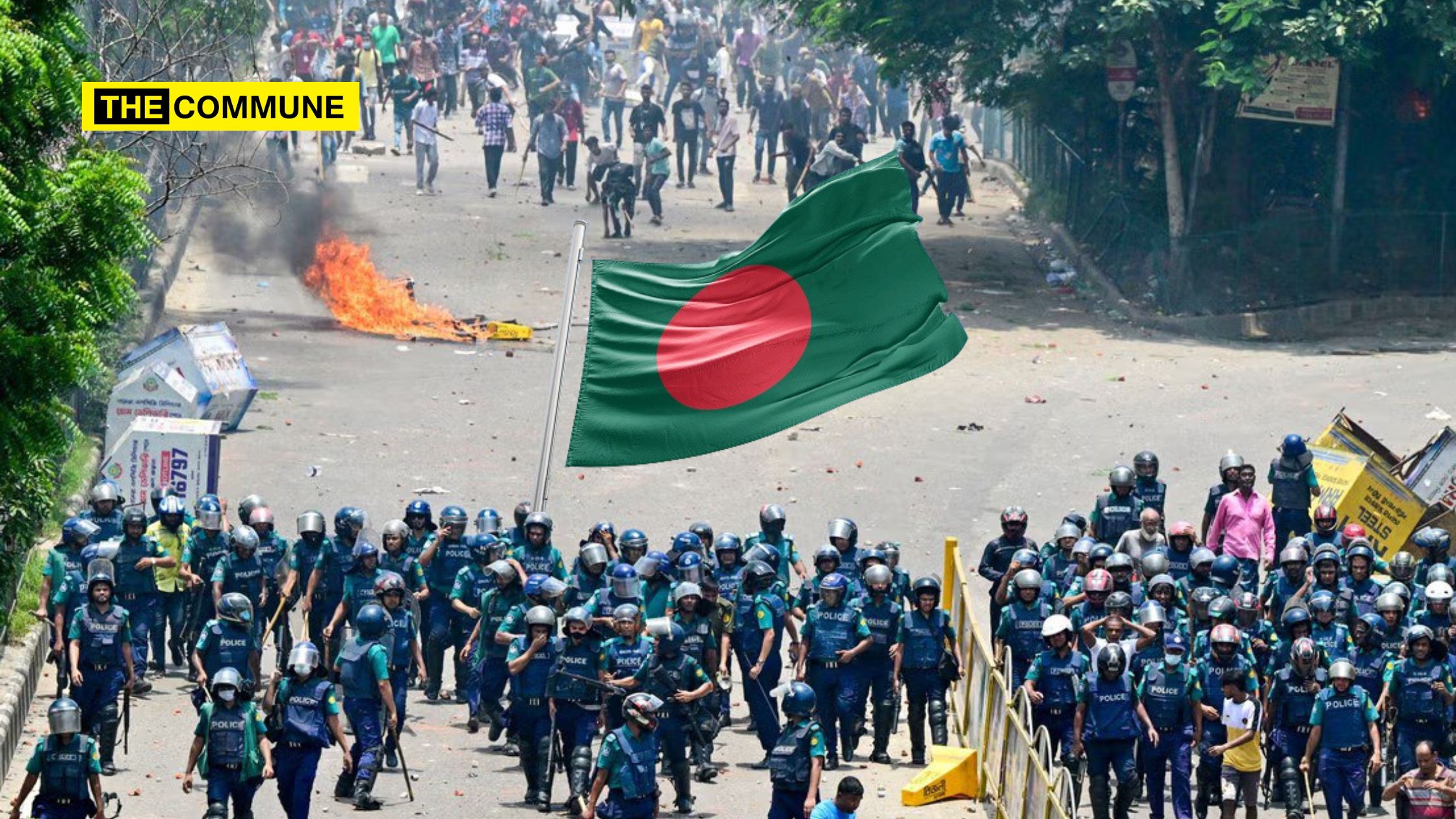
When Sheikh Hasina fled the nation on 5th August last year, anti-Hasina forces who led the July uprising hailed that Bangladesh has regained its Independence. Since a year, these forces have been rolling their sleeves to establish that only in 2024, Bangladesh has seemed to gain ‘real’ liberation, often indulging in a narrative making of pushing 2024 uprising over 1971 Liberation War.
Soon after Hasina’s deposition, Bangladesh was faced with acute law and order crisis, expected in situation of sudden political transformation. Taking advantage of this political vacuum, something Bangladeshis did not face earlier, mob, largely Islamist extremists, gained prominence. Instead of ‘real’ democracy, Bangladesh is now plunged deep into mobocracy, as law enforcement forces are on a state of perpetually struggle to maintain law and order in the country.
The interim government, on the other hand, has been paying mere lip service of promising to serve justice without any fruition. If one has to look at the pattern of Bangladesh’s rising mob culture, one would notice its common targets—secularists, women and minorities. The resurgence of Islamists is one of the many doings of the interim government, and Bangladeshis, on many occasions, have been at the receiving end of its wrath.
On one hand, Bangladesh witnessed banned groups like Hizb ut-Tahrir openly demonstrating in Dhaka demanding for establishing Caliphate system in Bangladesh. On the other Towhidi Janata, an informed group of radical Muslims, has been disrupting public spaces to protest against what it claims to be ‘un-Islamic’ activities.
These groups have been particularly notorious for suppressing social and cultural events celebrating Bangladesh’s secular ethos, like Book Fair, Basant Utsav, Lalon Mela and Pohela Baishakh. Women’s public participation, something frowned upon by these Islamists, too came under their attack.
From openly preaching for bringing the purdah system back; launching physical assaults on women for not ‘observing’ Islamic dress code; protesting for the release of a Dhaka University’s male employee who physically harassed a woman student for her ‘inappropriate clothing’; objecting women’s presence in public events to threatening and vandalizing women’s sports events, Bangladesh’s new mob culture has been predominantly anti-women, besides anti-secular.
The state of religious minorities, however, is the most deplorable in this case. With law enforcement compromised, Bangladesh’s violent mob has been justifying its actions by labelling it as restoring justice. Religious minorities have been systemically targeted since August 5 last year, threatening their already vulnerable disposition.
According to Bangladesh Hindu Buddhist Christian Unity Council’s July report, there has been a staggering 2,442 incidents of communal violence since last August. Moreover, Ahmadiyas, Sufis, deemed as ‘heresy’ by Islamists, are also targeted, with more than a hundred incidents of attacks reported in the past year.
However, while the interim government has not only failed to take effective measures to curb these mob attacks but also downplayed this systemic violence as ‘political attacks’. Indeed, mob ‘justice’ has been fairly tolerable in New Bangladesh, especially if the enemy is Awami League and its allies.
From vandalism of murals, paintings of Sheikh Mujibur Rahman, demolition of his private residence 32 Dhanmondi; to attempt of desecrating the graveyard of Sheikh Mujibur Rahman in Gopalganj, there has rarely been a word of condemnation from the chief advisor. Instead, a clear narrative making has been at play—blaming ‘external forces’ behind these mob attacks.
The latest horrifying incidents of vandalism of shrines by what believed to be members of Towhidi Janata in Rajbari and Rajshahi is an extension of new Bangladesh establishment’s silence and tolerance of mob culture, giving way for the country’s mobocracy. The deplorable act of exhuming and burning of the body of self-proclaimed spiritual leader Nurul Haque, popularly known as Nurul Pagla was so bone chilling that even the Islamic parties, who usually provide silent support to this group, have condemned this incident.
The attack and vandalism of Aziz Bhandari Khanka Sharif’s shrine in Rajshahi, occurred on the same day of Rajbari violence, despite the presence of police. The spiritual leader of the shrine has also alleged that the police took no action to prevent mob violence, despite prior warnings from the intelligence agencies.
The home advisor in charge of restoring the country’s law and order, had always denied Bangladesh’s law and order situation to be worse, rather claimed the situation to improve, despite reports telling otherwise. However, recently he agreed that the situation to be ‘somewhat worse’ in light of recent incidents.
The interim government, established primarily to restore the country’s lawlessness has utterly failed in this. Now that the country is gearing up for national election early next time (whether it’s plausible remains to be seen), it can be said with certainty that the inefficiency and deliberate nonchalance of the interim government have led ‘new’ Bangladesh towards mobocracy, perhaps, to a point of no return.
-IANS
Subscribe to our channels on Telegram, WhatsApp, and Instagram and get the best stories of the day delivered to you personally.
One would have expected that there would be an interim government in place in Nepal at the earliest. The nation descended into chaos following a massive uprising which led to the ouster of the Prime Minister and several other ministers who have been accused of large scale corruption.
Swearing in an interim Prime Minister faces a constitutional hurdle as it allows only for a sitting member of Parliament to become one. While the experts are trying find ways to abide by the Constitution and have an interim government in place, fears have set in about the country being run by an army backed caretaker regime.
The army is completely on the side of Gen Z. It has made it clear that the GenZ which carried out the protests will have a say in any future dispensation. While they were united during the protest some divisions have been found when it comes to finding a leader who would lead the negotiations. While one section is in favour of former Chief Justice Sushila Karki, the others are backing Kathmandu Mayor Balendra Shah.
This has led to a delay in the negotiations, which has raised fears about a possible army-backed caretaker government. What Nepal cannot afford at this moment is a prolonged political vacuum. If an interim government is formed, several other parties such as the Communist UML and the Nepali Congress would want some space in the same.
The problem, however, is that the Gen Z would reject this, which would again prolong the negotiations. Like many, even the army wants radical change in the country and has made it clear that those who fought for it must have the major say in any future dispensation. Even those who were backing the return of the monarchy are in the mix today. However, a return of the monarchy is highly unlikely, Nepal watchers would say as this would require amendments to the Constitution.
Intelligence agencies say that for now the protests are limited to Kathmandu, Biratnagar and Pokhara, which are urban areas. There is a danger of the protests spilling into the rural areas as well and if this takes place, it would hard to control. In the midst of all, the economy of Nepal cannot afford a crisis and if shops and establishments are shut for a prolonged time, it would take a toll on the common man.
While in Bangladesh, following the ouster of Sheikh Hasina, a caretaker government was put in place, the scenario in Nepal is slightly more complex than that. One option is to declare an Emergency Rule under Article 273 when Parliament is dissolved. Further, the President can appoint anyone under articles 76 and 77.
This appointment of a neutral figure can take place only if no party is able to form a majority government. While the army backs the Gen Z, it has, however, made it clear that it is not interested in a military takeover. It wants a quick resolution so that law and order can be restored. The Nepal Army, currently, does have enough power to force the political parties to reach a deal and find a suitable candidate to be the interim chief.
While this is a possibility, there is also the risk of other political parties moving the court challenging this decision. At this moment, to overcome these challenges, a Constitutional amendment, too, is not a possibility as for it to be enforced, a two-third majority in Parliament would be needed. Under the current circumstances, that is impossible. Declaring an Emergency would have other repercussions and the situation could get worse.
Currently, the only option available is to have a consensus candidate as the interim chief and for this all parties need to be on the same page.
-IANS
Subscribe to our channels on Telegram, WhatsApp, and Instagram and get the best stories of the day delivered to you personally.
The Supreme Court will hear the bail pleas of four accused, Sharjeel Imam, Umar Khalid, Meeran Haider, and Gulfisha Fatima, in the 2020 Delhi riots conspiracy case on Friday. The accused, booked under the stringent Unlawful Activities (Prevention) Act (UAPA), have challenged the Delhi High Court’s decision to deny them bail in connection with the alleged larger conspiracy behind the North-East Delhi riots.
A bench comprising Justice Aravind Kumar and Justice N V Anjaria will hear the petitions filed by Sharjeel Imam, Umar Khalid, and Gulfisha Fatima. Meanwhile, a separate bench led by Chief Justice D Y Chandrachud and Justice K Vinod Chandran will take up the bail plea of Meeran Haider.
The 2020 Delhi riots, which erupted in the backdrop of widespread protests against the Citizenship Amendment Act (CAA), resulted in the deaths of over 50 people and injuries to hundreds. The Delhi Police had alleged that the violence was part of a premeditated conspiracy, orchestrated during the anti-CAA protests, and invoked UAPA provisions against several activists and student leaders.
Sharjeel Imam, a former student of Jawaharlal Nehru University (JNU), was arrested on January 28, 2020, from Jehanabad in Bihar for allegedly making inflammatory speeches at Jamia Millia Islamia and Aligarh Muslim University. He has been in custody since then and was later booked under UAPA charges for his alleged role in the riots.
Umar Khalid, also a former JNU student, moved the apex court on September 10 after the Delhi High Court rejected his bail plea in the UAPA case. Gulfisha Fatima and Meeran Haider, associated with student activism, are also facing similar charges under UAPA, which has been strongly contested by civil rights advocates and legal experts.
The case has drawn significant national attention due to the nature of the charges and the prolonged incarceration of the accused. The Supreme Court’s decision on the bail pleas is expected to have major implications for how UAPA cases linked to protest movements are interpreted and handled.
-IANS
Subscribe to our channels on Telegram, WhatsApp, and Instagram and get the best stories of the day delivered to you personally.
Former Brazilian President Jair Bolsonaro was sentenced to 27 years and three months in prison after four out of five Supreme Federal Court justices voted to convict him of attempting a coup. Justices Carmen Lucia and Cristiano Zanin cast their votes to convict him on Thursday, Xinhua news agency reported.
Bolsonaro was found guilty on five counts — plotting a coup d’etat, attempted violent abolition of the democratic rule of law, participation in an armed criminal organization, aggravated damage, and deterioration of listed heritage sites.
The Supreme Federal Court opened the case on September 2, with a conviction requiring a majority of the five-justice panel reviewing the case. Justices Alexandre de Moraes and Flavio Dino on Tuesday found Bolsonaro guilty of the related charges, while Justice Luiz Fux on Wednesday voted for acquittal. The 70-year-old former president is currently under house arrest. He may still appeal the verdict to the full Supreme Federal Court of 11 justices.
Bolsonaro did not attend this final phase of the trial in person. But he has in the past said it was designed to prevent him from running in the 2026 presidential election – even though he had already been barred from public office on separate charges. He has also called it a “witch hunt”. His words have previously been echoed by US President, Donald Trump, who imposed 50 per cent tariffs on Brazilian goods, framing them as retaliation for Bolsonaro’s prosecution.
Reacting to the guilty verdict, Trump said he found it “very surprising” and compared it to his own experience: “That’s very much like they tried to do with me. But they didn’t get away with it at all.”
-IANS
Subscribe to our channels on Telegram, WhatsApp, and Instagram and get the best stories of the day delivered to you personally.
The assassination of commentator Charlie Kirk sent a shockwave through the American political landscape. For years, the public discourse has been dominated by a singular, relentless narrative: that the greatest threat to our safety and democracy emanates from the far-right. This narrative, however, has been shattered by the brutal reality of political violence from the opposite direction.
For the past decade, we have been endlessly lectured by the cultural elites and the media establishment about the supposed dangers of “Right-wing extremism.” Every time there is a lone-wolf attack or a violent incident, it is amplified to frame the political Right as the greatest threat to civilization. Yet, as the events of the past few years have shown, the far greater danger often comes not from those they vilify but from the quarters they excuse – the radical Left and Islamist extremism.
The assassination attempts on President Trump, the murder of United Healthcare CEO Brian Thompson, and now the attack on Charlie Kirk are stark reminders that the violence we were told to fear from the Right is in fact being unleashed by the Left. This is not an accident; it is a worldview, one that mirrors the same authoritarian logic as radical Islam.
The Mathematics Of Mass Murder
Let’s start with the numbers that progressives desperately want you to ignore. Communist regimes murdered approximately 110 million people between 1900 and 1987 representing “near two-thirds of all those killed by all governments, quasi-governments, and guerrillas” during that period. The Soviet Union alone killed approximately 61 million people, while communist China murdered between 35-87 million.
To put this in perspective: Communist regimes killed 154 people every hour from November 1917 to the mid-1990s North Korean famine. That’s more than 3.5 people every minute, around the clock, for nearly eight decades. By comparison, the Spanish Inquisition – history’s poster child for religious persecution, executed approximately 1,250 people over 356 years. The difference isn’t statistical; it’s categorical.
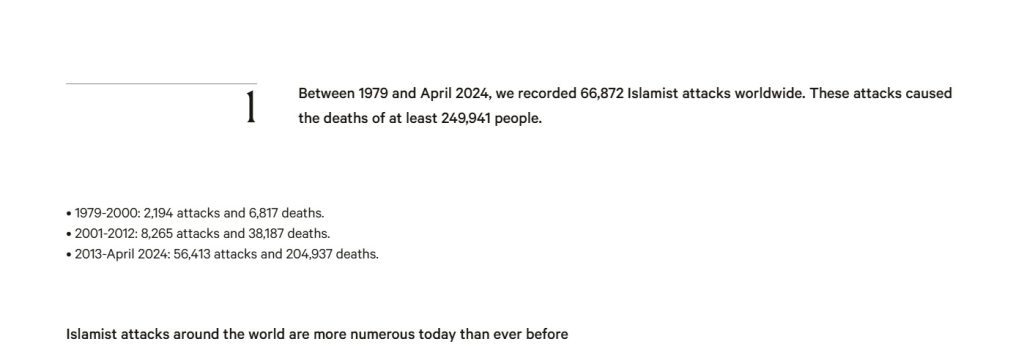
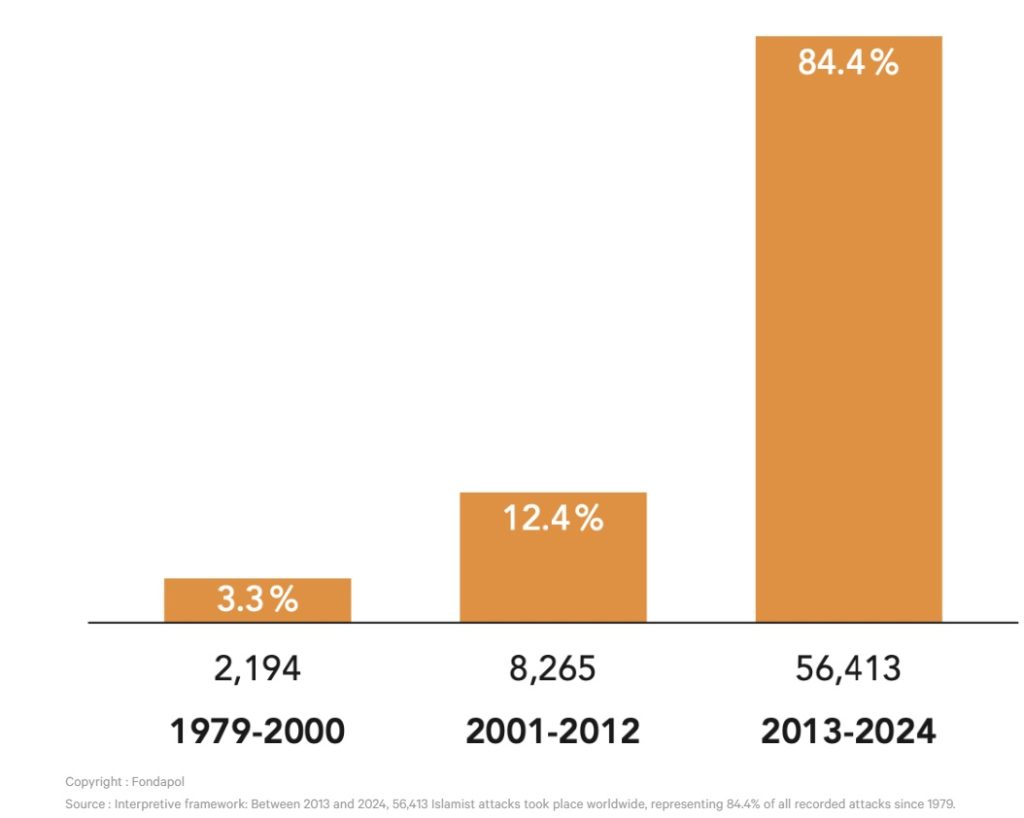
Meanwhile, Islamic terrorism, despite its spectacular brutality, has killed approximately 250,000 people globally since 1979.
Image Source: FondapolNo. of Islamic terror attacks since 1979 Image Source: Fondapol
That’s horrific, but it represents roughly 0.2% of communist mass murder totals. Even including civilian casualties from conflicts in Islamic-majority countries, the death toll pales in comparison to the systematic extermination campaigns of communist regimes.
Europe’s Red Resurrection
Today’s progressives dismiss communist violence as “historical,” but left-wing terrorism is experiencing a dangerous resurgence across Europe. Between 2006 and 2020, 414 left-wing and anarchist terrorist attacks occurred across the European Union. In 2020 alone, Italy witnessed all 24 completed left-wing terrorist attacks in Europe.
The most chilling development is the increasing sophistication and transnational coordination of these groups. The recent prosecution of the Lina Engel network in Germany reveals a new generation of left-wing terrorists employing systematic violence against political opponents. These weren’t spontaneous riots; they were carefully planned assassination attempts where the attackers were “willing to accept that their target might die”.
The Budapest attacks of February 2023 demonstrate the international reach of these networks, with German left-wing terrorists traveling to Hungary to assault suspected right-wing activists. Several suspects remain at large, establishing an underground network that spans multiple countries.
A Shared Playbook Of Violence And Intolerance
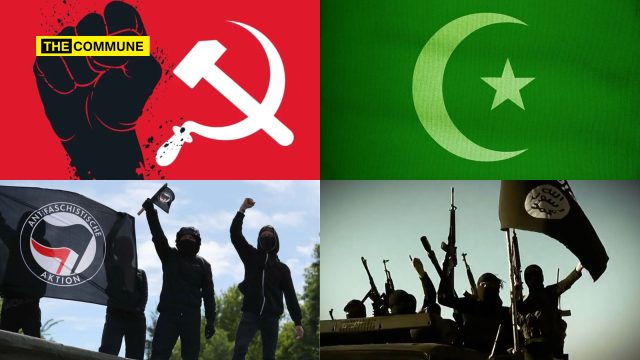
Both radical Islam and radical leftism share a common theological structure that makes them uniquely dangerous to free societies. Both believe they possess absolute truth that justifies unlimited violence. Both view compromise as betrayal and coexistence as capitulation. Both demand complete submission to their ideological vision.
Islamic terrorists justify mass murder through religious doctrine, claiming divine mandate for their violence. Communist terrorists justify mass murder through historical determinism, claiming scientific certainty about the inevitable triumph of their revolution. The packaging differs; the totalitarian core remains identical.
The most glaring parallel between the two ideologies is their identical response to criticism: elimination.
Radical Islamism operates on a theological imperative. The Quran and the Hadiths are replete with commandments to fight and subjugate non-believers until they submit to Islamic rule. The concept of “peace” in this worldview is not coexistence; it is the peace of a conquered people who have ceased to resist. The 1,400-year history of jihadist expansion, from the conquest of Persia and Byzantium to the modern-day caliphate of ISIS, is a testament to this enduring mission. Criticism of the prophet or the faith is not seen as free speech but as blasphemy – a capital offence.
The radical Left, though secular in its aesthetics, has developed its own sacred dogmas and blasphemy laws. Its religion is a fusion of critical theory, post-modernism, and neo-Marxism. Its prophets are academics who preach that our institutions are inherently oppressive and must be torn down. Its blasphemy is “hate speech,” a term elastic enough to encompass any dissent from its ever-shifting orthodoxy on race, gender, and power.
The punishment for this blasphemy is not a fatwa from a cleric, but a “cancel culture” directive from the mob. The methods are different but the goal is the same: ruin. They seek not to behead, but to de-platform, de-bank, de-job, and de-humanize anyone who dares to step out of line. They don’t use scimitars; they use smartphones and HR departments to achieve the same end: the destruction of the heretic.
Consider the parallels:
Sacred Texts: Islam has the Quran and Hadith; Marxism has Das Kapital and the Communist Manifesto. Both provide detailed justifications for violence against “enemies.”
Martyrdom Culture: Islamic terrorists promise paradise for dying in jihad; communist terrorists glorify revolutionary sacrifice for the people’s struggle.
Purification Through Violence: Islamic extremists seek to purify society through eliminating infidels; communist extremists seek to purify society through eliminating class enemies.
Global Ambition: Both movements explicitly aim to establish worldwide dominance of their ideology, viewing national boundaries as illegitimate obstacles.
The Campus-to-Cemetery Pipeline
Today’s radical left terrorism doesn’t emerge from foreign training camps – it incubates in Western universities. Lina Engel, the leader of Germany’s most significant left-wing terrorist network in decades, was a university student. The ideological foundation for her violence was laid in lecture halls where professors regularly justify political violence as necessary for “social justice.” You can say the same for India as well – we have JNU, Ashoka University for starters. We also have Indian voices spouting support for “causes” like Palestine in Western universities.
This academic radicalization pipeline operates with impunity because universities have been captured by the same ideological framework that produces terrorists. When professors teach that capitalism is inherently violent, that police are occupying armies, and that revolution is morally necessary, they create the intellectual justification for terrorism. The transition from classroom rhetoric to street violence becomes inevitable.
The Red Army Faction terrorists of the 1970s followed the same pattern – middle-class university students radicalized by Marxist professors who told them violence was not only justified but morally required. They murdered businessmen, judges, politicians, and police officers with methodical precision, believing they were advancing human liberation.
Italy’s Red Brigades followed an identical trajectory, emerging from university activism to systematic assassination campaigns. Their kidnapping and murder of former Prime Minister Aldo Moro in 1978 demonstrated the deadly consequences when academic radicalism transitions to revolutionary action.
The Silence Of Complicity
The most disturbing aspect of left-wing terrorism isn’t the violence itself; it’s the systematic cover-up by institutions that should be exposing it. Media outlets that dedicate extensive coverage to right-wing extremism barely mention left-wing terrorist attacks. Academic researchers who publish endless studies on “fascist violence” ignore communist mass murder.
This can simply be called ideological protection. The same people who claim to be fighting “misinformation” actively suppress information about left-wing violence because it threatens their political narrative. They understand that honest examination of communist history would demolish their carefully constructed mythology about progressive politics.
The Red-Green Alliance: When Left Meets Islamism
Today’s radical left increasingly embraces the same targets and tactics as Islamic extremists. Both movements target Jews (non-believers for Muslims) with particular venom, sharing antisemitic conspiracy theories about Jewish power and influence. In India, they target Hindus, the Left in India is especially abusive towards the Brahmins (remember “Smash Patriarchy”). Both exploit immigration and demographic change as weapons against traditional societies.
The “Red-Green Alliance” between radical leftists and Islamic extremists isn’t theoretical, it’s operational. Left-wing terrorist groups in Europe coordinate with Middle Eastern terrorist organizations. Academic departments dominated by Marxist professors provide platforms for Islamic extremist speakers. Progressive politicians defend Islamic terrorist groups while condemning Western military responses.
This convergence makes perfect sense ideologically. Both movements share the same fundamental enemy: liberal democratic capitalism. Both want to destroy the same institutions: constitutional government, market economics, individual rights, and pluralistic society. Their temporary alliance serves their mutual goal of civilizational destruction.
The International Terror Network Nobody Talks About
Modern left-wing terrorism operates as an international network coordinating across national boundaries. The Budapest attacks involving German terrorists demonstrate this transnational coordination. Environmental extremists coordinate across Europe and North America. Antifa networks share tactics and targets across continents. We saw how the farmer protest toolkit originated from – remember Rihanna’s “support” for the protest? And how Greta exposed the toolkit?
This international coordination mirrors Islamic terrorist networks but receives none of the same intelligence focus. While security agencies track every Islamic extremist communication, left-wing terrorist networks operate with relative impunity because academic and media establishments refuse to acknowledge their existence.
The result is a growing international movement dedicated to destroying Western civilization that faces no serious opposition because acknowledging its existence would require confronting uncomfortable truths about progressive politics.
The Common End Goal: Death Of Democracy
Both ideologies are inherently opposed to the foundations of Western liberal democracy: free speech, individual liberty, and pluralism.
Radical Islamism seeks to impose a theocratic state (Sharia law) where divine law supersedes human law. There is no separation of mosque and state, no freedom of religion away from Islam, and no concept of individual rights that contradict religious decree.
The Radical Left seeks to dismantle the existing societal structure to install a system based on “equity” (equal outcomes, not equal opportunity) and identity-based Marxism. This requires the deconstruction of free speech as a tool of “oppression,” the erosion of the nuclear family, calling it a patriarchal construct, and the dismissal of meritocracy as a racist myth. Their goal is a revolution that overthrows the constitutional order in favour of a system where dissent is not tolerated because the “correct” ideology is deemed settled.
Both see the individual as subordinate to the collective, whether the Ummah (global community of Muslim believers) or the oppressed “marginalized groups.” Both reject debate, as their truths are considered self-evident and beyond question. For both, the ends justify the means, whether those means are lying for a cause (taqiyya in Islamist doctrine; “strategic misinformation” in leftist activism) or using violence to achieve a “righteous” goal.
The Unholy Alliance Against Civilization
The most dangerous development of our time is the tactical alliance between these two forces. This is a marriage of convenience between two totalitarianisms, each believing it can use the other. The Left provides intellectual cover and apologetics for Islamism on university campuses and in media, while Islamists provide the visceral street power and a stark example of a functioning anti-Western movement.
The assassination of Charlie Kirk is a potential watershed moment. It must serve as a wake-up call that the threat to our lives and liberties is not mono-directional. The ideology that demands we “say her name” but remains silent about the honor killing of Saman Abbas, that preaches “tolerance” while cheering the cancellation of those who draw cartoons, is not a progressive force. It is a regressive, authoritarian one.
The defense of our civilization requires clarity and courage. We must reject both the sword of the jihadist and the mob of the woke. We must defend the right of every individual from Charlie Kirk to a critic of Islam to speak without fear. For if we do not, the list of names will only grow longer, and the space for freedom will grow ever smaller.
Subscribe to our channels on Telegram, WhatsApp, and Instagram and get the best stories of the day delivered to you personally.
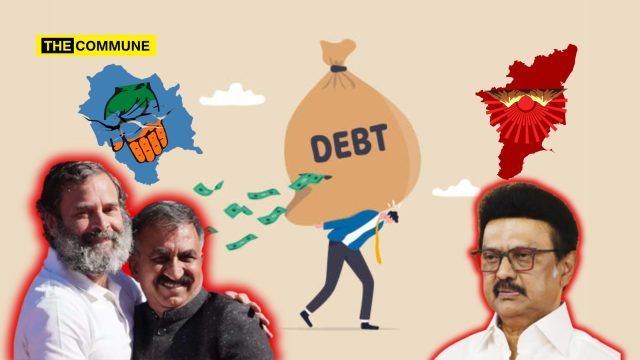
Government jobs are often seen as the safest bet in India—steady paychecks, secure pensions, and protection from market volatility. But Himachal Pradesh has just delivered a shocker that should serve as a wake-up call for every state, especially Tamil Nadu.
The Congress government in Himachal has slashed salaries of thousands of employees—clerks, teachers, nurses, peons, and more. We’re talking pay cuts of ₹10,000 to ₹15,000 a month, all because the state’s finances are in shambles. This rollback of the 2022 pay hike affects nearly 14,000 workers, many of whom had already budgeted their lives around that income.
Think about it: school fees, EMIs, groceries, medical bills—everything planned, only to be upended overnight. The government’s excuse? “Fiscal constraints.” The reality? Sheer mismanagement.
How Did It Come to This?
Congress has treated Himachal’s treasury like an ATM for freebies and short-term populist measures. Instead of investing in growth, they splurged on giveaways, reckless hiring, and politically motivated schemes. When the coffers dried up, it wasn’t the politicians who suffered—it was the ordinary employees who kept the system running.
This is the dangerous result of what Rahul Gandhi likes to call his “Khat-a-Khat model.” Quick promises, instant gratification, no thought for long-term consequences. The outcome? A financial disaster that leaves even government employees vulnerable.
Why Tamil Nadu Should Pay Attention
Tamil Nadu too is walking on the same slippery slope. With mounting debts, rising interest payments, and a never-ending list of subsidies, it risks going the Himachal way. Today it’s Himachal, tomorrow it could very well be Tamil Nadu’s clerks, teachers, and nurses facing pay cuts.
If state governments don’t manage their finances responsibly, no one is safe—not even the so-called “secure” government employees.
BJP vs Congress: A Stark Contrast
Let’s not forget—under BJP rule at the Centre, government salaries and pensions have never been tampered with despite global slowdowns, pandemics, and fiscal pressure. Stability has been maintained. Contrast that with Congress states, where reckless economics have repeatedly put livelihoods at risk.
The Big Lesson
Himachal proves one harsh truth: bad fiscal management spares no one. Secure jobs aren’t so secure when politicians treat state budgets like personal checkbooks. Freebies may win elections, but they come at a heavy cost. And in the end, it’s the employees—the backbone of governance—who are forced to pay the price.
For Tamil Nadu, the warning is clear. Unless the state reins in its populist spending and focuses on sustainable development, its own employees may soon face the same shock that has now rattled Himachal.
Because when politicians mismanage money, nobody’s salary is guaranteed anymore.
S Sundar Raman is a Chartered Accountant and State Convenor of BJP Tamil Nadu’s Professionals’ Cell
Subscribe to our channels on Telegram, WhatsApp, and Instagram and get the best stories of the day delivered to you personally.
Conservative activist Charlie Kirk, a prominent ally of former President Donald Trump, was fatally shot on 10 September 2025, during a speaking event at Utah Valley University. The incident occurred while Kirk was engaged in a public debate at his “Prove Me Wrong” table. Video footage shows him being struck in the neck by a single gunshot, causing panic among the audience.
Authorities reported that the shot was fired from a campus building some distance away. Although two individuals were briefly detained, both were released without charges. Utah Governor Spencer Cox condemned the killing as a “political assassination.”
Kirk was the founder of Turning Point USA, a major conservative youth organization, and was a influential media personality with a significant following. His provocative commentary on cultural and political issues had made him a polarizing figure. The shooting has intensified national debates over political violence and free speech.
Donald Trump also faced an assassination attempt during his campaign in the run-up to the 2024 Presidential polls.
Such violent trends directly undermine democracy’s foundations. Free speech and political pluralism cannot survive if speakers live in fear of being gunned down, and if one side feels free to sic masked mobs on dissenters. In fact, the electoral process itself is imperiled: when politicians and activists are physically targeted, normal campaigning and peaceful competition give way to terror and silence. The murder of Charlie Kirk shows how extreme rhetoric by leftist-liberals have crossed from street protests into outright attacks on citizens for their beliefs.
Campus Conformity
As former President Bush warned, “Violence and vitriol must be purged from the public square”; yet journalists and academics too often rationalize left-wing aggression as mere protest while treating conservative casualties as moral panic.
Recent surveys show a growing intolerance for open debate: a majority of U.S. college students now oppose allowing any controversial speaker – liberal or conservative – to appear on their campuses. Foundation for Individual Rights and Expression or FIRE’s annual study found that students are more willing than ever to shout down or even violently block speakers.
In other words, censorious “cancel culture” is no longer just a conservative talking point – it is a reality among students of all views. Conservatives on campus are routinely shut out or shouted down.
Multiple conservative speakers (from Ben Shapiro to Ayaan Hirsi Ali) have had events cancelled or disrupted, while administrators do little to enforce free-speech rights. The result is a stifling of political pluralism: as FIRE reports, only 27% of students today say their administrators clearly support free expression, and many hesitate to speak up at all.
In short, one side’s orthodoxy has become the next generation’s limit on “acceptable” discourse – a dangerous cultural suppression that violates the First Amendment’s promise of free speech.
Lawfare Against Dissent
Beyond campuses, intimidation of conservative voices takes many forms. During the COVID and post-2020 era, government agencies and big institutions have even used law enforcement to chill dissent. Domestic extremism narratives have been weaponized against parents. In 2021 the National School Boards Association infamously urged the Biden White House to label protesting parents – most opposing progressive school policies – as “domestic terrorists.”
The U.S. Attorney General’s own alleged plan to brand concerned moms and dads as terrorists for voicing opinions at school board meetings sparked state lawsuits and condemnation, with officials insisting that citizens “cannot be silenced for exercising their constitutional rights”. These examples of ideological policing and legal harassment send a clear message: challenge leftist ideas at your own risk. Such unequal protection – where secular leftist protesters escape serious penalties while conservative parents, activists or journalists face surveillance and subpoenas – corrodes the rule of law and equal justice under law.
The Unravelling
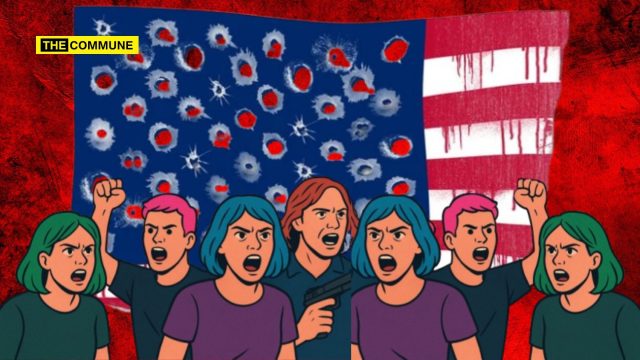
Charlie Kirk’s horrific and shocking assassination is not an isolated event. It is a symptom, a terrifying climax in a series of escalating events that point to a singular, uncomfortable truth: American democracy is under grave threat from within, and the primary source of this danger is the radical left.
For years, warnings about the rising tide of left-wing extremism were dismissed as alarmist rhetoric. We were told that “mostly peaceful protests” could include fiery buildings and looted stores. We were told that “speech is violence” but actual violence was “understandable rage.” The assassination of a prominent political figure by an individual allegedly steeped in this radical ideology is the logical, if horrifying, endpoint of this rhetoric. It forces us to ask: Is the United States still a safe country for political dissent, or has the radical left successfully weaponized intolerance to silence its opponents?
The Alarming Statistics
The numbers paint a sobering picture of American democracy under siege. Federal charges for threats against public officials have skyrocketed from an average of 38 cases per year between 2013-2016 to an average of 62 charges annually from 2017-2022 – a 63% increase. This trend shows no signs of abating, with preliminary reviews of 2023 and 2024 indicating record-breaking levels of prosecutions.
The Bridging Divides Initiative at Princeton University documented over 600 incidents of threats and harassment against local officials in 2024 alone – a 14% increase from 2023 and a staggering 74% increase from 2022. Perhaps most troubling, one in five local elected officials reported receiving threats in the first half of 2024, while 84% of Americans express concern about political violence today.
American Mainstream Media’s Role
The mainstream media compound these problems with double standards. Even as footage of Kirk’s assassination circulated, legacy outlets rushed to prevent spectacle or partisan blame, whereas they gleefully replayed January 6 images endlessly. On Capitol Hill, network anchors initially labeled the January 6 attack a “rally” before switching to “insurrection”, whereas summer 2020 street riots that torched cities were often called “protests.”
This bias is not new: one analysis found Black Lives Matter demonstrations overwhelmingly described by “concerns about violence and property damage”. The message is clear: radical left violence is downplayed as passionate dissent, but anything else is portrayed as existential menace. This media narrative itself undermines political pluralism and faith in democracy, because citizens see the press treating one side’s violence as acceptable and excusing it as mere grievance, while framing the other side as “dangerous extremists.”
From Rhetoric To Violence: A Pattern Of Escalation
The radical left’s assault on American democracy is not new; it has been a gradual erosion, a death by a thousand cuts.
The Summer Of Rage (2020)
Following the death of George Floyd, the country was engulfed in riots. While many protested peacefully, violent factions like ANTIFA seized the moment. They established “autonomous zones” like CHOP/CHAZ in Seattle, where they effectively seceded from the United States, leading to fatal shootings. Businesses were burned, federal courthouses were besieged, and police officers were assaulted – all under the banner of social justice. The message was clear: institutions are illegitimate, and violence is a valid tool for change.
The Cultural Enforcers
The danger isn’t just in the streets; it’s in the halls of power and culture. “Cancel culture” is the soft totalitarianism of the left. It seeks to destroy the livelihoods, reputations, and lives of anyone who dissents from its rigid orthodoxy. From tech executives deplatforming conservative voices to newsrooms purging journalists with wrongthink, the goal is to create a sterile public square where only approved ideas are allowed. This is intellectual purging, and it creates an environment where those silenced are seen as deserving of whatever comes next.
The Assault On Institutions
The radical left no longer believes in the foundational principles of American democracy. They label the Supreme Court “illegitimate” when it rules against them. They advocate for packing the court to manipulate its outcomes. They work to abolish the Electoral College and the Senate filibuster, not to improve democracy, but to permanently cement one-party rule. They support prosecutors who refuse to enforce laws, leading to skyrocketing crime in major cities. This systematic delegitimization of every institution that checks their power reveals an ambition not to participate in democracy, but to overthrow it.
The Education Indoctrination
From kindergarten to graduate school, a generation is being taught to view America not as a flawed but noble experiment worth improving, but as an irredeemably racist, oppressive structure that must be torn down. Critical Race Theory and its derivatives teach children to see themselves first and foremost as oppressors or oppressed, breeding division and hatred. This ideological grooming creates the foot soldiers for the movement, individuals who believe any action against the “oppressor” class is morally justified.
The Broader Pattern Of Violence
Since the 6 January 2021 Capitol attack, Reuters has identified at least 300 cases of political violence across the United States. This represents what scholars describe as “the most significant and sustained increase in political violence since the 1970s”. The 2024 election year alone saw approximately 400 reported instances of political violence in just the first six months – an 80% increase compared to 2022.
The Kirk Assassination: A Predictable Tragedy
In this toxic environment, the assassination of Charlie Kirk was a predictable tragedy. Kirk was a master of the very thing the radical left despises: the power of ideas, persuasion, and political engagement within the system. He built a massive organization dedicated to turning out young conservative voters. He was effective.
For a movement that believes its opponents are not just wrong but evil, eliminating an effective evil becomes a righteous act. The alleged assassin, likely consuming a daily diet of vitriol that dehumanizes conservatives, would have been told he wasn’t targeting a man, but a “fascist,” a “white supremacist,” a “threat to democracy.” This is the inevitable result of replacing debate with demonization.
Is The US A Safe Democracy Anymore?
The answer, today, is increasingly no. Safety in a democracy isn’t just the absence of violence; it is the guarantee that you can speak, think, and vote without fear of reprisal. Millions of Americans now feel they must hide their political views for fear of social ostracization, job loss, or worse. A prominent figure is now dead for his.
The radical left, enabled by a compliant media and feckless leadership in some quarters, has created a climate of fear. They have moved from shouting down speakers to firing shots. In sum, the new waves of leftist-fueled violence, coupled with aggressive censorship and unequal enforcement, erode core democratic principles in the United States. Free speech is stifled by “cancel culture” and campus mobs; equal protection is warped when one class of protesters is prosecuted and the other excused; political pluralism crumbles when ideological conformity becomes the norm. These are not petty grievances – they strike at the heart of our Constitution. If Americans truly believe in democracy, they must defend it consistently: by condemning violence on all sides, insisting on equal rights for dissenters, and rejecting hypocrisy in international fora. America can only be a “safe democracy” when its leaders face uncomfortable truths here at home, instead of looking abroad for scapegoats.
Subscribe to our channels on Telegram, WhatsApp, and Instagram and get the best stories of the day delivered to you personally.
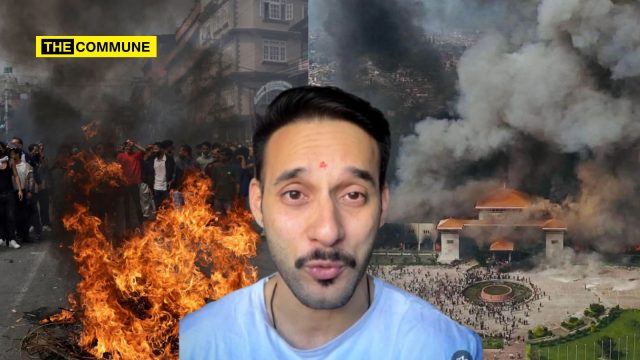
Arpit Sharma, the son of Aam Aadmi Party (AAP) politician Vikas Sharma and a figure widely recognized for his pro-leftist online commentary, has come under fire for praising the recent wave of violent protests in Nepal and encouraging Indian youth to emulate the uprising.
His remarks follow a period of severe unrest in Nepal, where anti-corruption demonstrations originally led by the country’s youth escalated into widespread violence. Over the span of two days, the country witnessed a complete breakdown of public order, with government buildings attacked, politicians assaulted, and extensive property damage reported. The protests have so far claimed at least 22 lives and left more than 300 people injured.
Sharma shared a video on platform X (formerly Twitter), applauding what he described as the “bold and fearless” actions of Nepal’s Gen Z protestors. He spoke admiringly of their willingness to directly confront the state, destroy government property, and physically target political leaders. In a troubling escalation, Sharma criticized Indian youth for what he sees as their reluctance to take similar action against the Indian government.
In the same video, Sharma encouraged young Indians to draw “inspiration” from Nepal’s violent upheaval. He referenced the debunked “vote theft” narrative popularized by Congress leader Rahul Gandhi, implying it could serve as a foundation for nationwide agitation. According to Sharma, India’s 600 million-strong youth electorate has the power to “shake the foundations of power” if mobilized properly.
His father, Vikas Sharma, ran unsuccessfully as an AAP candidate in the 2022 Uttar Pradesh Assembly Elections, further linking the controversy to the party’s broader political affiliations.
Nepal in Crisis: Violence and Political Fallout
The unrest in Nepal was triggered by a government-imposed social media blackout, which protestors claimed was an attempt to suppress dissent. The movement initially framed as a youth-led campaign against corruption rapidly devolved into chaos.
Rioters torched multiple government offices, party headquarters, and even the homes of senior officials. One of the most tragic incidents occurred when the wife of former Prime Minister Jhalanath Khanal died from injuries sustained in a fire allegedly set by demonstrators. Prime Minister KP Sharma Oli also resigned after protestors set his residence ablaze.
The Nepalese Army was eventually deployed to restore order, imposing strict curfews in several districts and forcibly dispersing crowds. Despite the restoration of relative calm, the damage both physical and political has been profound.
Backlash and Concerns Over Sharma’s Remarks
Arpit Sharma’s comments have ignited widespread criticism online, with many calling his statements irresponsible and inflammatory. Critics argue that glorifying political violence in a neighbouring country and calling for similar actions in India undermines democratic norms and encourages extremism.
Observers have also pointed to the potential consequences of such rhetoric, especially in a politically charged environment. As India prepares for upcoming elections, the amplification of violent imagery and anti-state sentiments could further deepen divisions.
Sharma has not responded publicly to the backlash as of now. Neither the Aam Aadmi Party nor the Congress has issued an official statement regarding his remarks.
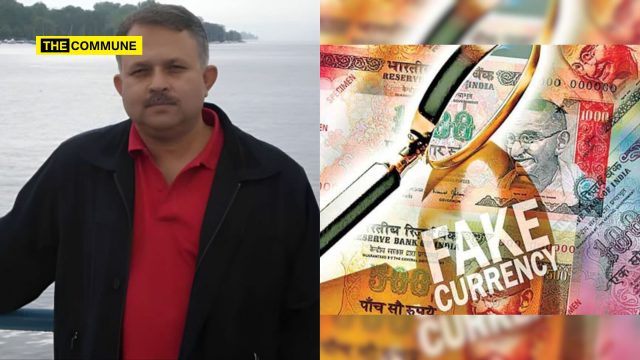
A Special Court of the National Investigation Agency (NIA) in Chennai has issued a summons to Pakistani diplomat Amir Zubair Siddique in connection with a 2018 case involving counterfeit Indian currency.
Siddique, who is currently stationed in Sri Lanka as the Counsellor (Visa) at the Pakistan High Commission, has been named as one of the key accused in the case. The NIA had earlier filed a chargesheet against him and two others, accusing them of orchestrating the distribution of Fake Indian Currency Notes (FICN).
The charges against Siddique fall under Sections 120B (criminal conspiracy) read with 121A (conspiracy to wage war against the country) and 489B (use of counterfeit currency) of the Indian Penal Code, along with Sections 16 and 18 of the Unlawful Activities (Prevention) Act (UAPA).
Authorities have labeled Siddique as an absconder, and an arrest warrant remains active against him. The NIA court has now ordered him to appear before it by 15 October 2025.
A 47-year-old man from Malappuram district in northern Kerala died of amoebic meningoencephalitis, marking the sixth death from the fatal infection caused by a brain-eating amoeba in the state in the month. Shaji, a native of Chelempra Chaliparambu in Malappuram district, was admitted to the Kozhikode Medical College Hospital (KMCH) on August 9 after his condition deteriorated.
This marks the second death from the infection this week and the sixth within a month. Shaji had liver-related ailments and did not respond to the prescribed medicines during this period, a local media report quoted health officials as saying. Health officials confirmed the death on Wednesday night, stating that the source of his infection has not yet been traced.
This latest casualty follows the death of a woman from Vandur, also in Malappuram district, earlier this week due to the same infection at the KMCH. Meanwhile, two patients — a 10-year-old girl and a woman– have tested positive for the brain infection on Wednesday after tests. With this, the health officials said that a total of 10 amoebic meningoencephalitis patients have been undergoing treatment at various hospitals, including KMCH, for over one month, in which the condition of one patient is said to be critical.
The inability to trace the source of the amoeba has hampered health officials’ efforts to control the infection in the state, particularly in the northern region, where six deaths, including a three-month-old infant and a nine-year-old girl, have been reported over the past month. The successive deaths have prompted health authorities to intensify monitoring and public awareness campaigns about the disease, which is typically caused by a waterborne amoeba.
Amoebic meningoencephalitis is a serious brain infection caused by a free-living amoeba, most often ‘Naegleria fowleri’. According to health officials, the organism enters the body through the nose when a person swims or dives in contaminated freshwater. It then travels to the brain, leading to swelling and tissue destruction.
The illness is not contagious and cannot be contracted through drinking contaminated water. Some experts have linked the recent rise in cases to climate change and closer environmental monitoring.
-IANS
Subscribe to our channels on Telegram, WhatsApp, and Instagram and get the best stories of the day delivered to you personally.