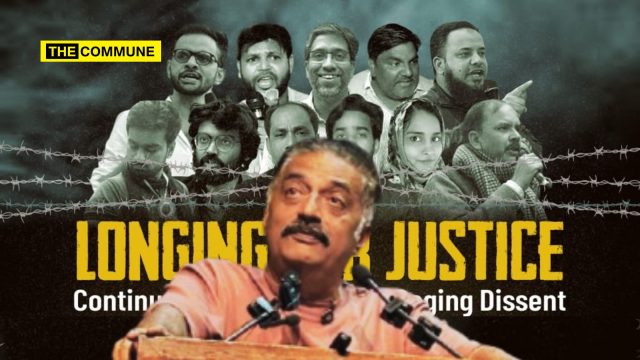
Leftist sympathizer and actor Prakash Raj has once again ignited controversy with sharp comments directed at right-wing ideologies in India. Speaking at a panel on dissent and civil liberties, Raj claimed that Indian right-wing supporters are “waiting for Israel to complete its genocide so they can replicate it here.”
The event, titled “Longing for Justice: Continuous Denial of Bail & Caging Dissent”, was organized by the Association for Protection of Civil Rights (APCR) and focused on the treatment of anti-CAA activists and the broader erosion of democratic rights.
During his speech, Raj stated, “You all should understand that this right wing government and the right wing governments of the world, wants us to watch a genocide, they want it to make it into a new normal. The Indian right wing is waiting for Israeli to achieve their genocide, so that they can do that too. If we don’t stand up and say no human is illegal on this earth. If we don’t stand up and say travelling from one place to another… a human being will move, this world belongs to all. These genocides will continue to happen if we are silent. The only way is resilience not the courts and I have hope on it.”
Prakash Raj thinks illegal migration is “not illegal” because no human is illegal on earth. 😂
Bhai, try entering his house without permission and say the same line, let’s see if he still preaches philosophy or calls the police! pic.twitter.com/qKkH6koi8o
He went on to argue that the targeting of young Muslim voices in India is deliberate, claiming they are being imprisoned because they pose a threat to the current power structure, “They are the future leaders, they are educated, they have a voice, and yes, they are Muslims. That is why the government is afraid of them.”
Raj further criticized the alleged misuse of state institutions to silence dissent. He said that an atmosphere of fear has already been manufactured in the country to suppress young Indians and maintain political control, “You know what is happening in this country, how this government is using institutions to keep young Indians in jail so that they can stay in power. The atmosphere has already been created in this country.”
To illustrate the depth of alleged societal prejudice, Raj came up with a personal anecdote about a friend who, despite idolizing Muslim celebrities like Shah Rukh Khan, Salman Khan, Aamir Khan, and listening to Mohammed Rafi and Faiz Ahmad, still harbors fear of Muslims. Raj attributed this contradiction to mass disinformation, saying, “He was the victim of WhatsApp University.”
The panel featured several notable participants, including former Supreme Court judge Justice Madan Lokur, former Patna High Court Chief Justice Iqbal Ansari, senior advocates Colin Gonsalves, Prashant Bhushan, Sanjay Hegde, Warisha Farasat, Shahrukh Alam (moderator), Nitya Ramakrishnan, former IAS officer Kannan Gopinathan, and Prakash Raj himself.
The actor’s remarks have sparked a fresh wave of debate, with critics accusing him of making inflammatory statements, that stir communal tensions in the society.
Netizens also asked if he’ll allow strangers to squat inside his home and erect a shed since no human is illegal.
Subscribe to our channels on Telegram, WhatsApp, and Instagram and get the best stories of the day delivered to you personally.
The First Bench of the Madras High Court has issued a significant directive to the revenue authorities of Chengalpattu District, ordering a time-bound enquiry and action against alleged large-scale encroachments on a vital water body in Nandivaram Village.
The order was passed in a Public Interest Litigation (W.P. No. 36349 of 2025) filed by P Baskar, a resident of Nandivaram Village, who sought the court’s intervention to protect the ‘Kandigai Thangal’ lake, classified as a water body in Survey No. 252/1.
A Decade of Inaction Alleged
During the hearing, the petitioner’s counsel, B Jagannath, presented a case of administrative delay. He informed the court that despite repeated representations sent by the petitioner in 2018 and 2024, and subsequent directives from the District Collector to the Tahsildar to conduct an enquiry, no concrete action had been taken. The counsel highlighted that as recently as October 2024, the Tahsildar had written to the Revenue Inspector instructing a physical measurement survey of the lake, but the encroachments persist.
The petitioner’s affidavit paints a grim picture, alleging that over the past decade, bureaucratic inefficiency has allowed the construction of more than 100 houses on the water body. The affidavit states that out of the lake’s total extent of 11.24 acres, approximately 6 acres are under encroachment, leaving only about 5 acres for water storage. This, the petitioner contends, is a blatant violation of the Tamil Nadu Protection of Tanks and Eviction of Encroachment Act, 2007, and various Supreme Court judgments that mandate the protection of water bodies.
Court’s Directive: A Three-Month Deadline
After hearing detailed arguments from the petitioner’s counsel and the standing counsel for the respondents, the Learned First Division Bench disposed of the writ petition with clear and specific directions.
The court order states: “The enquiry if conducted by the Respondents shall be shared with the Petitioner. If no enquiry is conducted till date, then we direct the Revenue to conduct the enquiry within 3 months in accordance with law & remove encroachment & then communicate the same to the Petitioner.”
This directive puts the onus on the revenue department to either present the findings of any prior enquiry or complete a fresh investigation and initiate eviction proceedings within a strict three-month timeframe.
Subscribe to our channels on Telegram, WhatsApp, and Instagram and get the best stories of the day delivered to you personally.
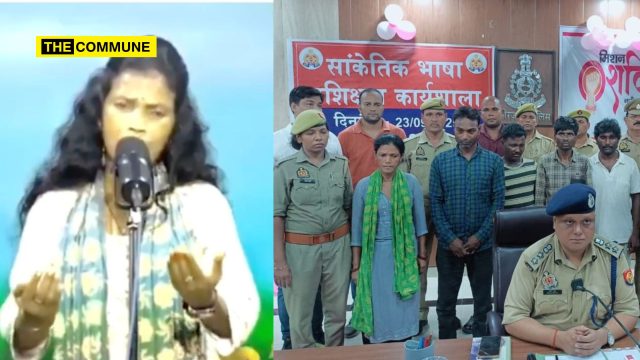
The Uttar Pradesh police have issued an official statement following the arrest of six individuals, including folk singer Saroj Sargam and her husband, for allegedly producing and sharing offensive content against Hindu deities on social media. The arrests were made after a detailed probe, with the accused taken into custody along with their musical instruments. Authorities also confirmed that Sargam and her husband Ram Milan Bind had embraced Christianity approximately ten months ago.
According to the police statement, Sargam and her associates uploaded a video to her YouTube channel featuring a song that reportedly contained obscene and disrespectful references to Goddess Durga. The content quickly drew sharp criticism from Hindu organizations and local residents, leading to multiple complaints and prompting immediate action by law enforcement.
The Mirzapur Police, through their official account on X, confirmed the arrests, stating, “Saroj Sargam, who made obscene comments/sang songs about Hindu deities on his YouTube channel, has been arrested and sent to jail along with six other accused, including his troupe, and their musical instruments.”
हिन्दू देवी-देवताओं के सम्बन्ध में अपने यूट्यूब चैनल पर अभद्र टिप्पणी/गाना गाने वाली सरोज सरगम को उसके मण्डली सहित कुल 06 नफर अभियुक्तों को मय वाद्ययत्रों सहित गिरफ्तार कर भेजा गया जेल —#Mirzapur#UPPolicepic.twitter.com/U6OjoVsb0O
The matter came to public attention when a video clip of Sargam’s performance went viral. The outrage led to a formal FIR registered on 23 March 2025 at Kotwali City Police Station, under various sections of the Indian Penal Code and Information Technology Act.
Based on technical analysis and local intelligence, police teams tracked the suspects, leading to their arrest between 23 and 24 September 2025.
The arrested include, Saroj Sargam (35) a Resident of Gaura, Mirzapur, Ram Milan Bind (40) from Handia, Prayagraj, also Sargam’s husband, Seeta Lal Kol (38) and Pujan Kol (30) both from Mirzapur, Prem Sagar Prajapati (35) from Kotwali Dehat, Mirzapur, and Rajesh Kumar Yadav (34) from Saray Mamrej, Prayagraj. All were taken into custody along with instruments allegedly used during performances.
Motive and Modus Operandi
Investigations suggest that Sargam and her husband had been creating and disseminating controversial content to gain attention online and generate revenue. Their content, police say, deliberately targeted various religious and social groups including Hindus, Dalits, and backward communities to provoke reaction and boost online visibility.
During questioning, both admitted to intentionally composing and performing the song to increase their social media following. They would often record such performances at local events and later upload them to YouTube. According to police sources, Sargam’s channel had over 60,000 subscribers and contained around 35 to 40 videos. Digital devices and other evidence recovered during the raid have been sent for forensic examination.
Links to Broader Investigation
According to SSP Barma, the case officially began with the registration of an FIR on 19 September 2025 after the video began circulating widely. Initial investigation confirmed the involvement of Saroj Sargam and her husband. The remaining four were arrested later as their names emerged during the probe.
Notably, during interrogation, Ram Milan Bind disclosed that the controversial performance was commissioned by Rajveer Singh Yadav, adding a new dimension to the investigation. Authorities also discovered that Saroj Sargam had illegally occupied 15 bighas of forest land, which has since been cleared in a joint operation by the police and forest department. Legal proceedings are underway on this front as well.
Legal Action and Charges
Multiple FIRs have been filed under IPC Sections 143, 283, 332, 336, 341, 353, 504, and Section 67 of the IT Act, which pertain to unlawful assembly, obstruction, assault on public servants, criminal intimidation, and publishing obscene content online.
Law enforcement officials have reiterated their commitment to taking strong action against anyone using digital platforms to spread hate speech, obscenity, or communal discord.
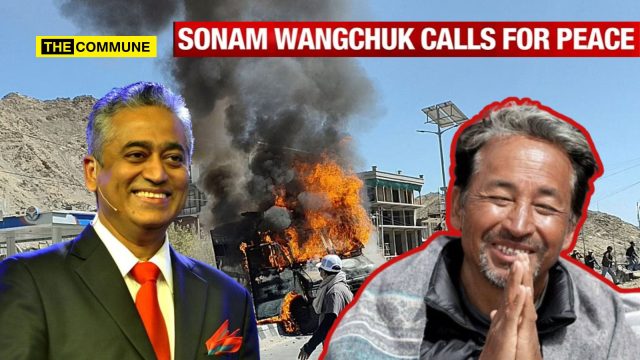
In what many are calling a glaring example of irresponsible journalism, senior journalist Rajdeep Sardesai is under heavy fire for giving a prime-time space to alleged climate activist Sonam Wangchuk, the man widely viewed as the face of the violent unrest in Leh. The interview, which aired in the aftermath of arson and violence in Ladakh’s capital, is being slammed for subtly absolving Wangchuk of responsibility while downplaying the Congress party’s alleged involvement in the protests.
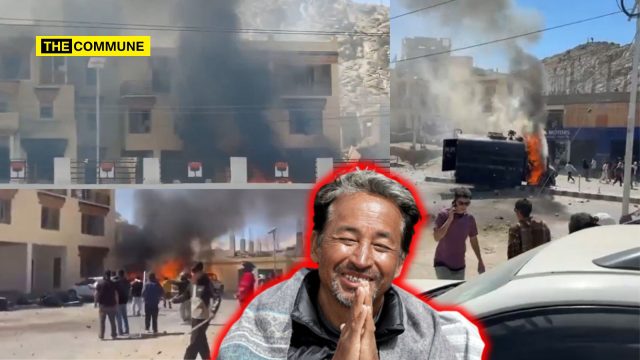
The criticism stems not only from the timing of the interview coming immediately after mob-led violence and arson that left over 80 people injured, many critically, and four dead, with police vans torched and the BJP office set ablaze but also from the way Sardesai framed his questions, which many claim were carefully worded to shift blame away from certain political actors.
Sardesai opened the interview by stating, “What’s happened today is extremely tragic. The agitation that you triggered off with your fast demanding statehood for Ladakh turning violent. The BJP office being burned down. The police vans being attacked and we are told at least four of the protesters have died in the firing. How do you see the events that have happened in the last few hours? Sonam Wangchuk.”
Wangchuk, rather than directly condemning the violence, launched into a narrative that subtly pinned the blame on government inaction and delayed talks. He said, “Rajdeep, this is one of the saddest days in my life generally and particularly during this movement. For the last 5 years, we have maintained utmost peace and always peaceful approaches following Mahatma Gandhi’s path with an many times. This is the fifth time and of five weeks we marched from Leh to Delhi inflicted pain on ourselves but never on others. But today was something totally unexpected out of the blue very organic when youth came out and went on a rampage. I’m extremely saddened about it but at the same time I can understand their frustration because on one hand they have been jobless for the last five years. There have been no almost no jobs particularly at the higher levels and democracy has been curtailed their demands have been unmet. So this frustration was painting you know inside and it started actually not today. It started yesterday when out of the 15 people who are on long fast others on a short one day fast. Out of them one elderly man and an elderly lady on their 14th day of fast were in critical condition and had to be hospitalized. They were taken on stretchers and that boiled their blood. Together with the fact that the government had given a date for talks which was so far away almost unnecessarily like 16 days away from the day it was announced when people are in such critical conditions you don’t keep 16 days away the talk. So people were very upset with this and that was the immediate cause.”
This narrative, critics argue, dangerously walks the line between justification and denial, with Wangchuk essentially excusing violent actions as an emotional outburst triggered by legitimate grievances, an explanation many feel dangerously normalizes mob violence.
What has further raised eyebrows is Sardesai’s subsequent question that echoed BJP allegations but gave Congress a convenient pass, “You’re saying this is the fury and frustration of the youth. Many of them unemployed, many of them angry that demands are not being met. but we are also hearing the BJP hitting back and now claiming that the protests were organized orchestrated by the Congress. They claim there were Congress council or there was a Congress counselor who was there on the streets going and inciting the violence. Has this protest of yours been taken over by politics and political parties? Is it totally apolitical? Can you say that with confidence that there was no politics involved in the violence?”
Wangchuk responded by firmly denying any political backing and dismissed Congress involvement, claiming they lack the influence to mobilize 5,000 people. This assertion, too, has been questioned especially given the volatile political climate and visible involvement of political elements on the ground. Furthermore, Wangchuk admitted a Congress councillor had expressed “a lot of anger” the day before the violence, but downplayed his role.
He asserted, “Totally. Already you should understand that from the apex body Congress was asked to leave just to keep it apolitical, although it was all political by having all parties. Then BJP exited few years ago there was only Congress and people said it was being politicized. So recently the chairman of the Apex body asked Congress to leave. So they even left the whole forum and therefore it was apolitical and even in the movement these were like 4 (4,000) to 5,000 young people and I know Congress they’re not so competent that one leader of theirs can call 5,000 people that would be too much credit of their influence on the people. They don’t have any such influence. I know and and to correct the fact it’s Not that they were on the road going people. What what it is is that yesterday one Congress counselor did a press conference which was with lot of anger because two of these anshan (hunger strike protesters) people who went in critical conditions was from his own village. So he was expressing that anger that alone.”
In a later statement that many found even more disturbing, Wangchuk seemed to rationalize the burning of police vehicles, saying, “Now police vans being burnt often happens because the police is what stops from carnage and damage to property. So, they come in between.”
Equally troubling was his take on the BJP office being torched, which he blamed on public anger over broken promises, “As for the BJP office, I think people here have a lot of anger against the BJP because in 2020 they had in their manifesto as point number one kept that Ladak will be taken under sixth schedule. They completely took a U-turn, and the next election is supposed to be in October and they’re trying to not keep it this time also. So people have lot of frustration about that even the jobs BJP leaders had you know on on public domain said there’ll be 22,000 jobs there’ll be 6,000 jobs all kinds of promises and hardly a one or 2,000 maybe but nothing like as they promised. So there has been a pentup frustration against them and that’s the only way I can explain.”
Rather than condemning the violence in absolute terms, Wangchuk consistently framed it as an unfortunate but understandable reaction to prolonged dissatisfaction raising serious ethical concerns.
In a moment of stunning irony, Wangchuk later shifted blame to the government for letting the protests escalate ignoring the fact that he himself initiated the agitation and allowed tensions to simmer. He said, “I think it is for the government to also think that they are allowing it to happen in a sensitive border area. They had five years to listen to peaceful ways of expression. You know with the first anshan, second anshan, third anshan they could have settled some of these but they kept dillydallying and you know with wishy-washy solutions and uh people had there were many hints from youth leaders and even uh not so young leaders that uh criticized me actually very badly saying that your path of peace is no use it’s not working at least with this government and we now have to take a different path and they would accuse me for keeping to the peaceful path of anshan. So this was already building up.”
This comment, exposes Wangchuk’s role not just as a peaceful protester but as someone who either miscalculated the direction of his movement or willingly ignored its radical shift.
The interview, aired at a time when tempers are already inflamed and lives have been lost, has been roundly condemned on social media. Many users accused Sardesai of effectively sanitizing the role of both Wangchuk and the Congress party while subtly directing all blame toward the ruling BJP. In a political landscape where Gen Z-led protests like those seen in Nepal are gaining traction, this kind of media portrayal is seen as not just biased but actively harmful.
By giving airtime to incendiary figures without rigorous challenge, and by appearing to sympathize with those linked to violence, the interview is being viewed as an example of journalism that crosses the line from reportage to recklessness.
Subscribe to our channels on Telegram, WhatsApp, and Instagram and get the best stories of the day delivered to you personally.
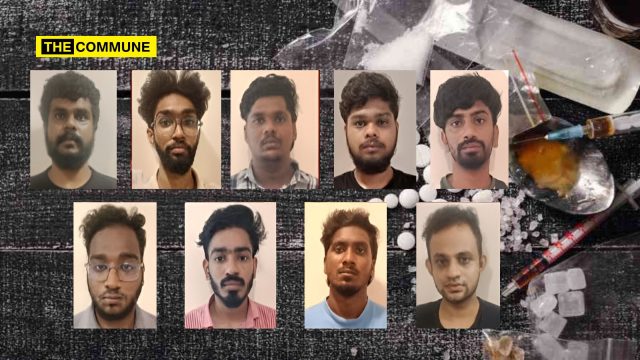
In a major crackdown on drug trafficking, the Narcotics Control Unit of Chennai’s North Zone has arrested 12 individuals, including a professional dancer who recently performed alongside actor Vijay in the film G.O.A.T. and appeared in Rajinikanth’s movie Coolie. The arrests were made in the Ashok Nagar area following a tip-off about large-scale drug distribution.
The investigation was led by Inspector Raja Singh and Assistant Inspector Jayaraj. Based on intelligence, the team initiated a covert operation after learning that drugs were being widely sold in the locality. Acting on the tip, officers contacted a suspected dealer named Yuvaraj, who instructed them to collect the narcotics from an associate named Praveen.
Surveillance was set up near Bhajanai Koil Street, under Ashok Nagar police jurisdiction. As planned, Praveen arrived at the location carrying methamphetamine. Upon being apprehended, officers found 2 grams of the drug in his possession.
During questioning, Praveen disclosed that he lived at Shiva Temple Street in Vadapalani and worked as a background dancer in the film industry. He revealed he had performed in group dance sequences for the movie G.O.A.T. starring Vijay. He also admitted to supplying drugs to colleagues in the entertainment industry who requested them. Praveen had been sourcing the narcotics from Yuvaraj, a friend and former BBA classmate from a private college they both attended in 2021 and selling them at inflated prices.
Following further investigation, the police arrested Bharath (22), a B.Com student from a private college near Pillayar Temple Street in Vadapalani. Based on information provided by Bharath, authorities tracked down and arrested additional suspects, including Yuvaraj (27), a private bank employee, Lokesh Kumar (21) a B.Com student at Chennai University, Vigneswaran (22) a B.Tech student at a private university, Sampath Kumar (21) and Raghu (25) a Viscom student and film industry dancer.
From the group, police recovered 7 grams of methamphetamine, 2 grams of ketamine, 6 LSD strips, and 10 grams of ganja (marijuana). The arrested individuals include several students and dancers with alleged connections to the local film industry.
Officials confirmed that more names have emerged during the investigation, and further arrests are expected as the Narcotics Control Unit continues to expand its probe into the network.
After making incendiary speeches to instigate violence during the ‘hunger strike’ in Leh, Ladakh, alleged climate activist Sonam Wangchuk blamed the “Gen Z” for the violence and arson.
In a video statement, he said, “Today, on the 15th day of our fast, I am deeply saddened to report that widespread violence and vandalism erupted in Leh city. Several offices and police vehicles were set on fire. Yesterday, two of those who had been on a 35-day fast here had to be taken to the hospital, in very critical condition. This sparked widespread anger, and a complete shutdown was declared across Leh today. Thousands of young people came out. Some people think they were our supporters. The entire Leh is our supporter. But this was a Gen Z revolution. They have been unemployed for the last 5 years… They are being excluded from jobs… I’ve always said that this is the recipe for social unrest: keeping young people unemployed and snatching away their democratic rights. There’s no democratic platform here today. The Sixth Schedule, which was announced and promised, hasn’t been heeded… However, as of now, I appeal to the young generation of Ladakh, not to follow this path of violence because it thwarts my five years of efforts. I’ve been fasting for so many years, marching peacefully, and then resorting to violence; this is not our path. I request the young generation to approach the government through peace. I want the government to listen to the message of peace. When they ignore peaceful protests and marches, such situations arise. I would urge the government to be sensitive about Ladakh and urge the younger generation to follow the path of peace. This (violence) path is not my path. It is a result of their anger. But this is not the time to vent their anger. It is time to have a calm, cool conversation with the government…”
#WATCH | Leh | Activist Sonam Wangchuk says, “Today, on the 15th day of our fast, I am deeply saddened to report that widespread violence and vandalism erupted in Leh city. Several offices and police vehicles were set on fire. Yesterday, two of those who had been on a 35-day fast… pic.twitter.com/uwkYLBxdYY
According to the government, Wangchuk had begun a hunger strike on 10 September 2025 demanding Sixth Schedule status and statehood for Ladakh. Officials stated that the Centre has been in active dialogue with the Apex Body Leh (ABL) and Kargil Democratic Alliance (KDA) on these issues through a High-Powered Committee (HPC), a sub-committee, and several informal meetings.
The government said this mechanism had already yielded phenomenal results, including increasing reservation for Scheduled Tribes in Ladakh from 45% to 84%, one-third reservation for women in the councils, and the declaration of Bhoti and Purgi as official languages. Recruitment for 1,800 posts had also been initiated.
However, the statement alleged that “certain politically motivated individuals” were unhappy with the progress and were attempting to sabotage the dialogue. The next HPC meeting is scheduled for October 6, while additional meetings with Ladakhi leaders are planned for September 25 and 26.
📢 Press Release on Ladakh
⭐ A hunger strike was started by Sh Sonam Wangchuk on 10-09-2025 stating the demand of 6th schedule and statehood for Ladakh. It is well known that Government of India has been actively engaged with Apex Body Leh and Kargil Democratic Alliance on…
MHA statement clearly pointed out to Wangchuk for inciting the mob and stated that despite appeals from many leaders to end his fast, Wangchuk continued and “misled people through provocative mention of Arab Spring-style protest and references to Gen-Z protests in Nepal.”
⭐ The demands on which Mr Wangchuk was on hunger strike are integral part of the discussion in HPC. In spite of many leaders urging to call off the hunger strike he continued with the hunger strike and misleading the people through provocative mention of Arab Spring-style…
The statement also alleged that amidst the violence, Wangchuk broke his fast and left for his village in an ambulance “without making serious efforts to control the situation.”
⭐ It is clear that the mob was incited by Shri Sonam Wangchuk through his provocative statements. Incidentally, amidst these violent developments, he broke his fast and left for his village in an ambulance without making serious efforts to control the situation.
Just as the Ministry of Home Affairs released a statement pointing to climate activist Sonam Wangchuk for inciting the mob in Leh that led to violence and arson leaving over 80 people injured, many critical and 4 people dead, a video clipping of Wangchuk instigating people calling for a Nepal/Bangladesh like protest became viral on social media.
While the central government has requested people to avoid sharing the incendiary speech, they continue to find their place online. In addition, the MHA statement also said that despite appeals from many leaders to end his fast, Wangchuk continued and “misled people through provocative mention of Arab Spring-style protest and references to Gen-Z protests in Nepal.”
📢 Press Release on Ladakh
⭐ A hunger strike was started by Sh Sonam Wangchuk on 10-09-2025 stating the demand of 6th schedule and statehood for Ladakh. It is well known that Government of India has been actively engaged with Apex Body Leh and Kargil Democratic Alliance on…
It is noteworthy that Wangchuk laid the blame on “Gen Z” when the protests turned violent on 24 September 2025.
In a video statement, he said, “Today, on the 15th day of our fast, I am deeply saddened to report that widespread violence and vandalism erupted in Leh city. Several offices and police vehicles were set on fire. Yesterday, two of those who had been on a 35-day fast here had to be taken to the hospital, in very critical condition. This sparked widespread anger, and a complete shutdown was declared across Leh today. Thousands of young people came out. Some people think they were our supporters. The entire Leh is our supporter. But this was a Gen Z revolution. They have been unemployed for the last 5 years… They are being excluded from jobs… I’ve always said that this is the recipe for social unrest: keeping young people unemployed and snatching away their democratic rights. There’s no democratic platform here today. The Sixth Schedule, which was announced and promised, hasn’t been heeded… However, as of now, I appeal to the young generation of Ladakh, not to follow this path of violence because it thwarts my five years of efforts. I’ve been fasting for so many years, marching peacefully, and then resorting to violence; this is not our path. I request the young generation to approach the government through peace. I want the government to listen to the message of peace. When they ignore peaceful protests and marches, such situations arise. I would urge the government to be sensitive about Ladakh and urge the younger generation to follow the path of peace. This (violence) path is not my path. It is a result of their anger. But this is not the time to vent their anger. It is time to have a calm, cool conversation with the government…”
#WATCH | Leh | Activist Sonam Wangchuk says, “Today, on the 15th day of our fast, I am deeply saddened to report that widespread violence and vandalism erupted in Leh city. Several offices and police vehicles were set on fire. Yesterday, two of those who had been on a 35-day fast… pic.twitter.com/uwkYLBxdYY
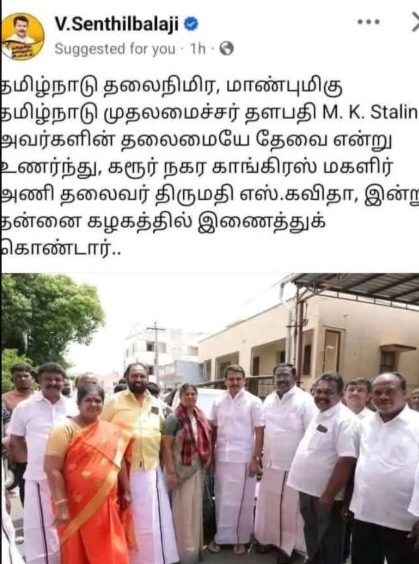
On 24 September 2025, Karur MP and Congress leader Jothimani strongly criticized former DMK minister and Karur District Secretary Senthil Balaji for allegedly luring a Congress functionary to the DMK. She condemned the act as a clear sign of disrespect towards a political ally and emphasized that alliances should be built on trust and mutual respect.
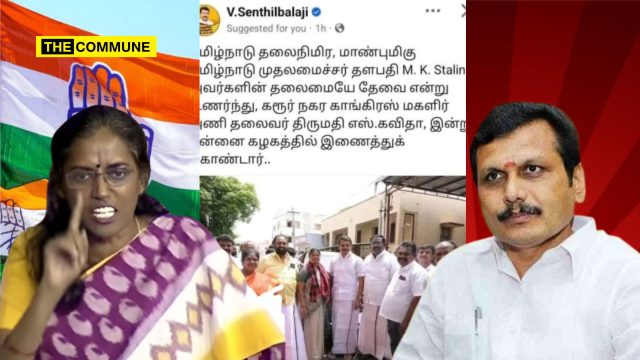
The controversy arose after Balaji announced on Facebook that S. Kavitha, identified as the president of the Karur City Mahila Congress, had officially joined the DMK in his presence.
His post read, “In recognition that the leadership of the Honorable Tamil Nadu Chief Minister, Thalapathi M.K. Stalin, is essential for Tamil Nadu to stand tall, the Karur City Congress Women’s Wing President, Mrs. S. Kavitha, joined the party today.”
Responding via X, Jothimani stated, “For the past few days, I was in Argentina to attend a political conference on behalf of the Congress party, so I couldn’t immediately react to this post by Mr. Senthil Balaji, the DMK District Secretary for Karur. Coalition dharma should exist on both sides. How are we to understand the DMK’s district secretary, a former minister, publicly insulting the Congress party like this? We will never tolerate such disrespect in the name of the alliance. This isn’t the first time this has happened. A coalition is formed based on principles, mutual understanding, cooperation, trust, and respect. There can be no compromise on any of these under any circumstances.
As the Congress Member of Parliament for the Karur constituency, I have a duty and responsibility to react to this and to protect the self-respect of the Congress party. This kind of disrespect cannot be easily overlooked. We must ensure that such bitter incidents do not happen within the alliance in the future. I hope that the Tamil Nadu Congress Committee President, Mr. Selvaperunthagai, will bring this to the attention of the Dravida Munnetra Kazhagam President, the Honorable Chief Minister and brother Mr. M.K. Stalin.
In the current political climate where the language, race, culture, and future of Tamil Nadu are under pressure from fascist forces, we must remember that we all have a duty and responsibility to act in the best interest of the people of Tamil Nadu. That is what will benefit Tamil Nadu. P.S: Following a strong reaction from the Tamil Nadu Mahila Congress, Mr. Senthil Balaji’s post has now been deleted.”
சில தினங்களாக காங்கிரஸ் கட்சி சார்பாக அர்ஜெண்டினாவில் நடைபெற்ற அரசியல் மாநாட்டில் பங்கேற்க வேண்டியிருந்ததால் கரூர் மாவட்ட திமுக மாவட்ட செயலாளர் திரு. செந்தில் பாலாஜி அவர்களின் இந்தப் பதிவு குறித்து உடனடியாக எதிர்வினையாற்ற முடியவில்லை.
However, Senthil Balaji’s post prompted sharp criticism from Congress leaders. TNCC Mahila Wing State President Haseena Syed later clarified that the woman mentioned held no official position within the party. Shortly after this clarification, Balaji removed his post.
Subscribe to our channels on Telegram, WhatsApp, and Instagram and get the best stories of the day delivered to you personally.
24 September 2025 saw the “hunger strike” of climate ‘activist’ Sonam Wangchuk turn violent as CRPF vehicle was torched and the BJP office in Ladakh was set ablaze. At least four people were reported dead and around 80 others injured, including nearly half from the police force in the Leh violence, according to official sources. Authorities warned that the death toll may rise as the condition of several injured individuals remains critical. But amid all this, it was pretty clear that these protests did not happen spontaneously, with several indications pointing to the Congress.
Instances Proving Congress Instigated Violence in Leh
While Wangchuk blamed Gen Z, there was more to that statement he made. The Congress seemed to be behind the violence and arson.
Social media behaviour is pointing to the Congress party and seems to cement the claim that it that instigated the Leh violence on 24 September 2025.
Congress Party Press Conference One Day Prior To Violence
A video of the press conference held on 23 September 2025 by the Congress in Ladakh warned of escalation if the BJP government did not address the protestors’ concerns.
The video caption stated, “Smanla Dorje Nurboo expressed deep disappointment at the BJP-led government for “ignoring the people who are sitting on a peaceful hunger strike for 14 days.” He noted that two participants have been hospitalized as their health worsened, yet the government “remains least bothered.” Nurboo criticized the delay in scheduling talks, urging that the dialogue date be advanced. “Earlier, when the council election was boycotted, the high-powered committee meeting was scheduled immediately and a delegation was flown to Delhi. Today, people are dying and the government is turning a deaf ear,” he said. The Ladakh Congress echoed these concerns, warning the BJP to address the protesters’ demands or “face action.” Calling for unity, Nurboo urged citizens to “step out and ask for our rights together” if the government continues to ignore the movement.”
If one carefully notes, it says Nurboo urged “..,citizens to “step out and ask for our rights together” if the government continues to ignore the movement.” – If this is not instigation, what is?
Congress is behind Ladakh Violence! It was pre planned!
At a press meet, Congress councillor Smanla Dorjey Norboo dared the Ladakh admin to “bring more CRPF,” vowed he’d “personally stone” BJP Ladakh office & urged people to march on Sept 24.
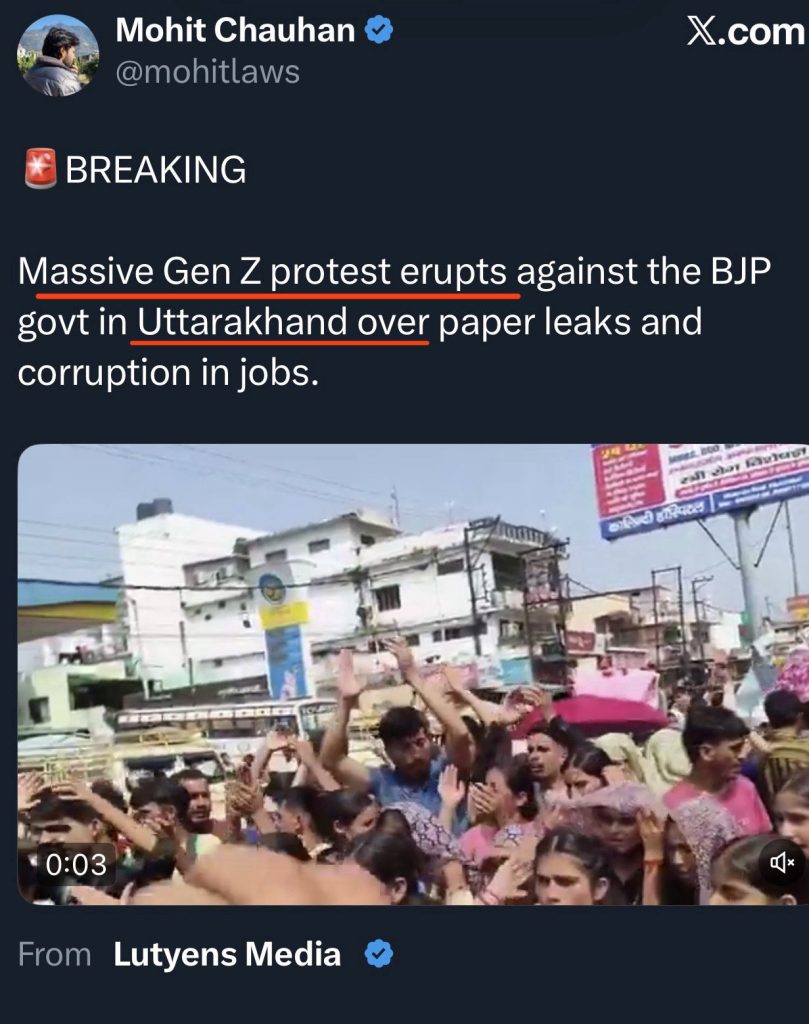
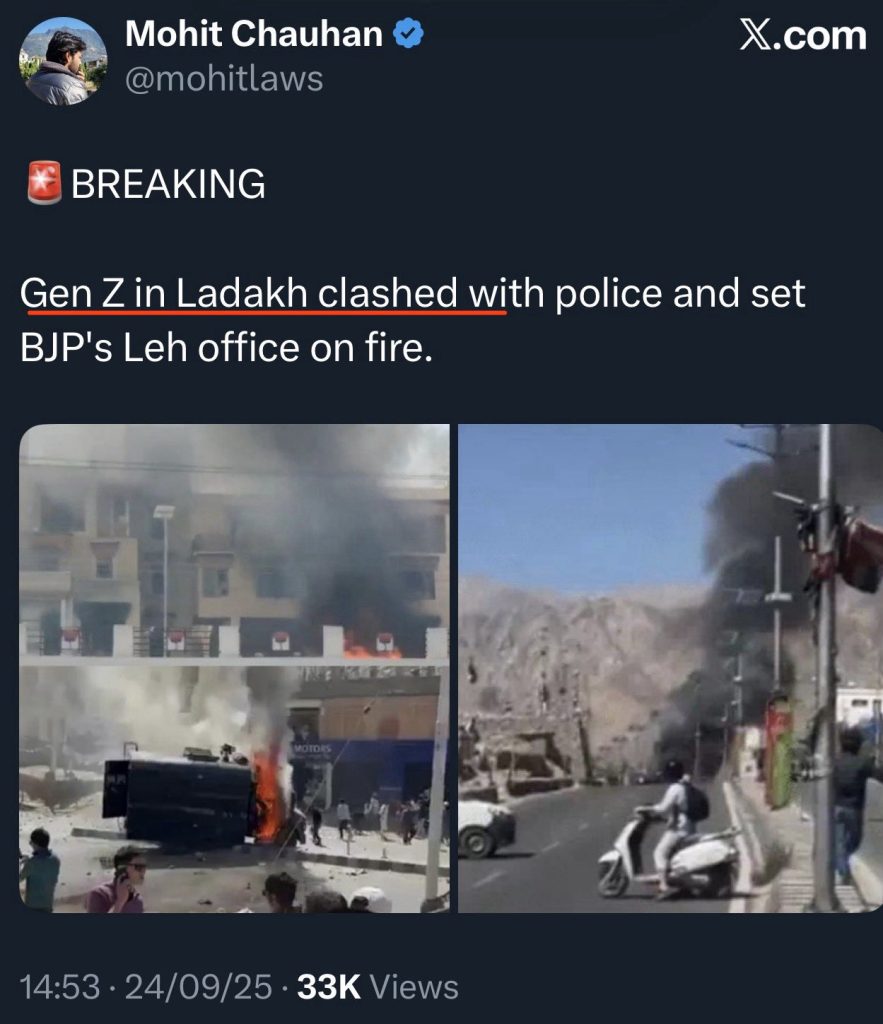
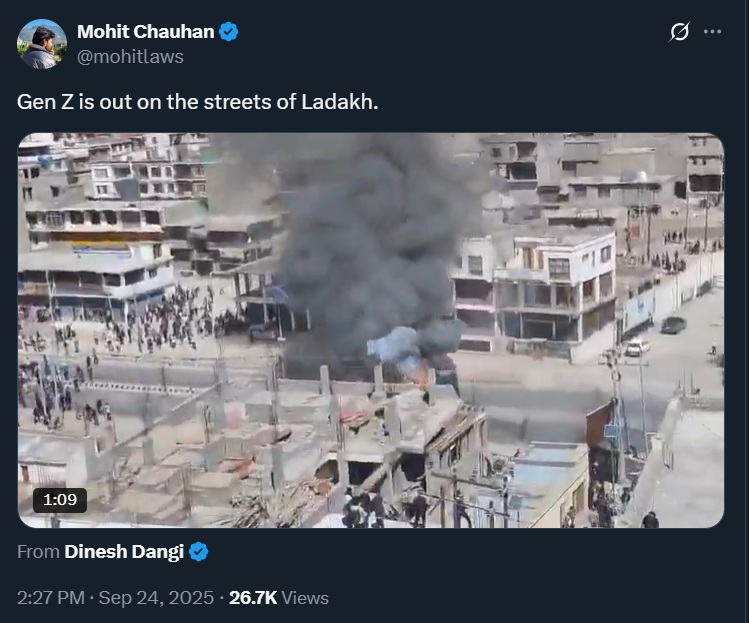
Congress/Supporter Handles Positioning Violence As Gen ZProtest
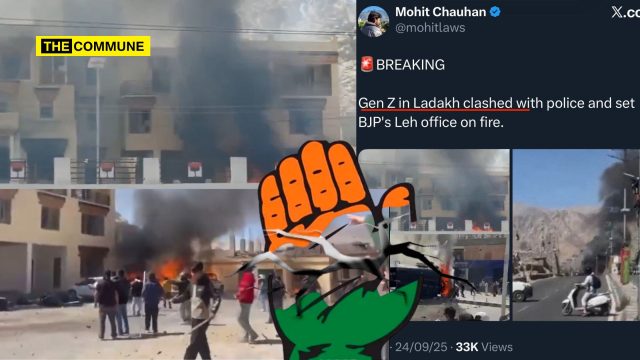
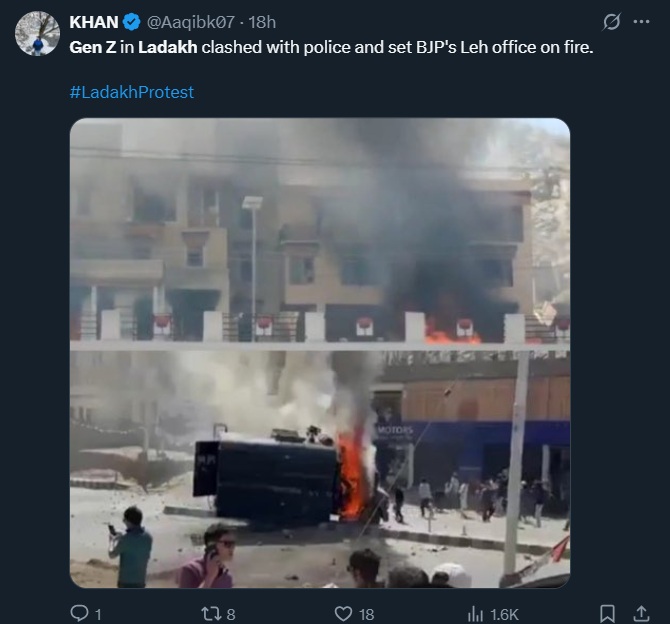
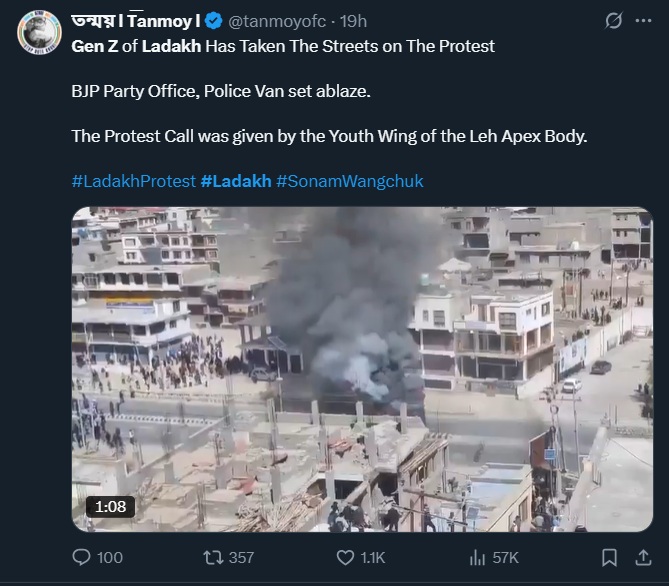
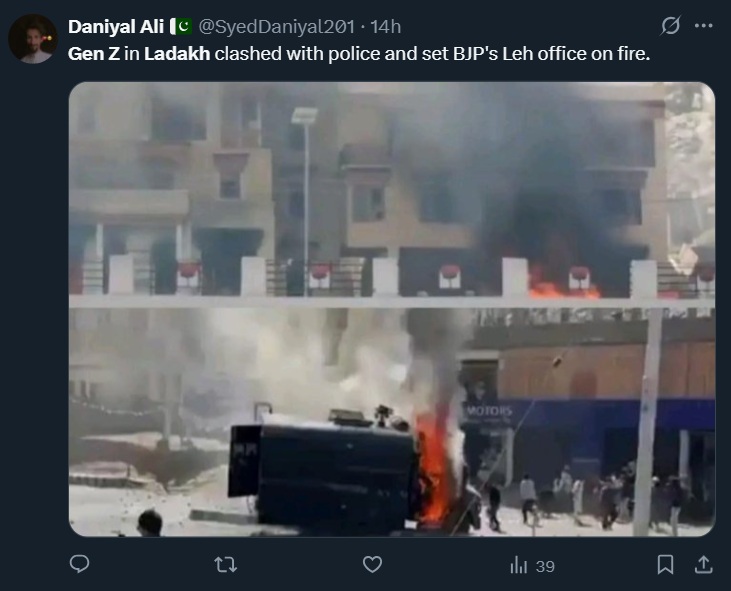
What was even more interesting is that all those Congress supporting handles prayed for a Nepal-like situation in India were also seen claiming that it was Gen Z behind yesterday’s arson and violence.
The first statement of this came from Wangchuk himself. In a video where he called off the hunger strike, Wangchuk squarely laid the blame of the escalation on “misguided Gen-Z supporters,” claiming their frustration had led to violent acts.
#WATCH | Leh | Activist Sonam Wangchuk says, “Today, on the 15th day of our fast, I am deeply saddened to report that widespread violence and vandalism erupted in Leh city. Several offices and police vehicles were set on fire. Yesterday, two of those who had been on a 35-day fast… pic.twitter.com/uwkYLBxdYY
Following suit, more handles kept repeating the same lie. Here are a few examples.
Interestingly, some Pakistani handles were also pushing the same narrative.
If one searched Gen Z protests Ladakh on X, these are the number of posts, they can find.
The toolkit of Congress IT Cell.
Key word — Gen Z, BJP, Ladakh.
Note — Pakistanis handles joined hand with extension of “illegally occupied” key word. @NIA_India@lg_ladakh – analyse these handles. pic.twitter.com/2asHJFcbW8
The Ministry of Home Affairs under the government of India on 24 September 2025 issued a statement regarding the violence that broke out in Leh, Ladakh, holding activist Sonam Wangchuk responsible for inciting the mob.
According to the government, Wangchuk had begun a hunger strike on 10 September 2025 demanding Sixth Schedule status and statehood for Ladakh. Officials stated that the Centre has been in active dialogue with the Apex Body Leh (ABL) and Kargil Democratic Alliance (KDA) on these issues through a High-Powered Committee (HPC), a sub-committee, and several informal meetings.
The government said this mechanism had already yielded phenomenal results, including increasing reservation for Scheduled Tribes in Ladakh from 45% to 84%, one-third reservation for women in the councils, and the declaration of Bhoti and Purgi as official languages. Recruitment for 1,800 posts had also been initiated.
However, the statement alleged that “certain politically motivated individuals” were unhappy with the progress and were attempting to sabotage the dialogue. The next HPC meeting is scheduled for October 6, while additional meetings with Ladakhi leaders are planned for September 25 and 26.
The government clarified that the demands raised by Wangchuk were already part of the discussions in the HPC. It said that despite appeals from many leaders to end his fast, Wangchuk continued and “misled people through provocative mention of Arab Spring-style protest and references to Gen-Z protests in Nepal.”
On 24 September 2025, around 11:30 AM, a mob allegedly instigated by Wangchuk’s speeches left the hunger strike venue and attacked both a political party office and the office of the Chief Executive Councillor (CEC) in Leh. The statement said the protesters set these offices on fire, torched a police vehicle, and assaulted security personnel, leaving more than 30 police and CRPF personnel injured.
The mob reportedly continued to destroy public property and attack security forces. Police, in what was described as self-defence, resorted to firing, during which casualties were reported. The government said the situation was brought under control by 4 pm.
The statement alleged that amidst the violence, Wangchuk broke his fast and left for his village in an ambulance “without making serious efforts to control the situation.”
The government reiterated its commitment to fulfilling the aspirations of the people of Ladakh by providing “adequate constitutional safeguards.” It also appealed to citizens not to circulate old or provocative videos on media or social media.
📢 Press Release on Ladakh
⭐ A hunger strike was started by Sh Sonam Wangchuk on 10-09-2025 stating the demand of 6th schedule and statehood for Ladakh. It is well known that Government of India has been actively engaged with Apex Body Leh and Kargil Democratic Alliance on…

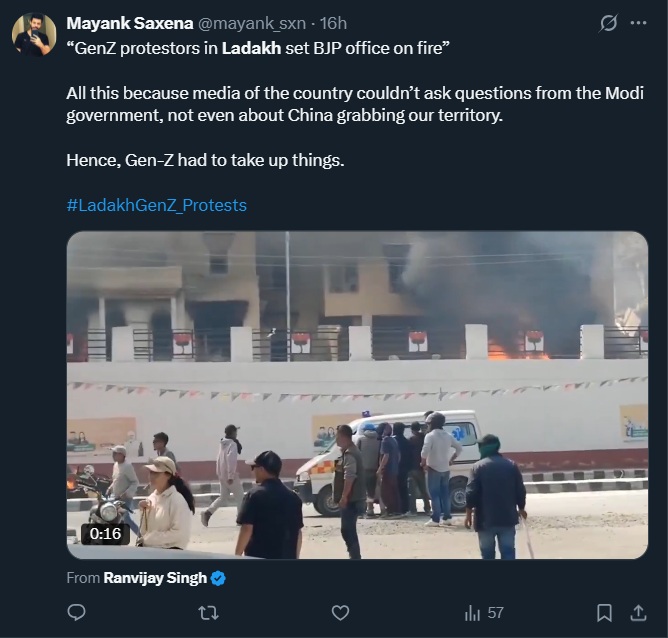
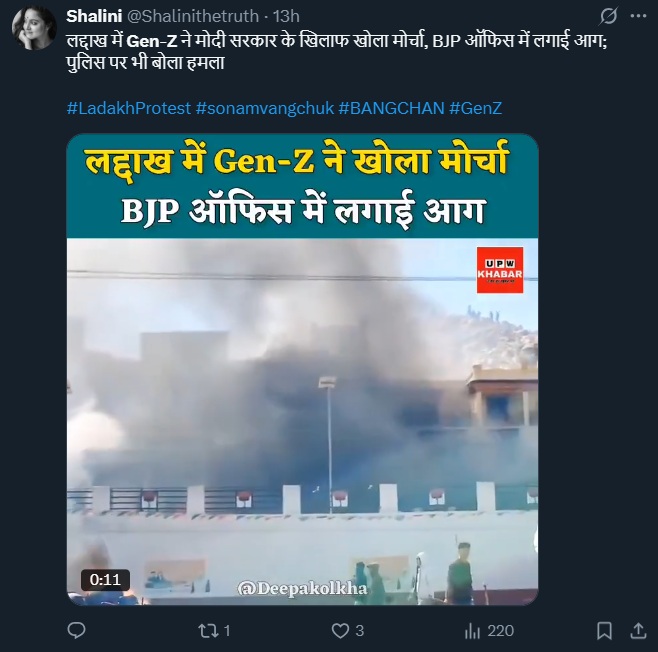
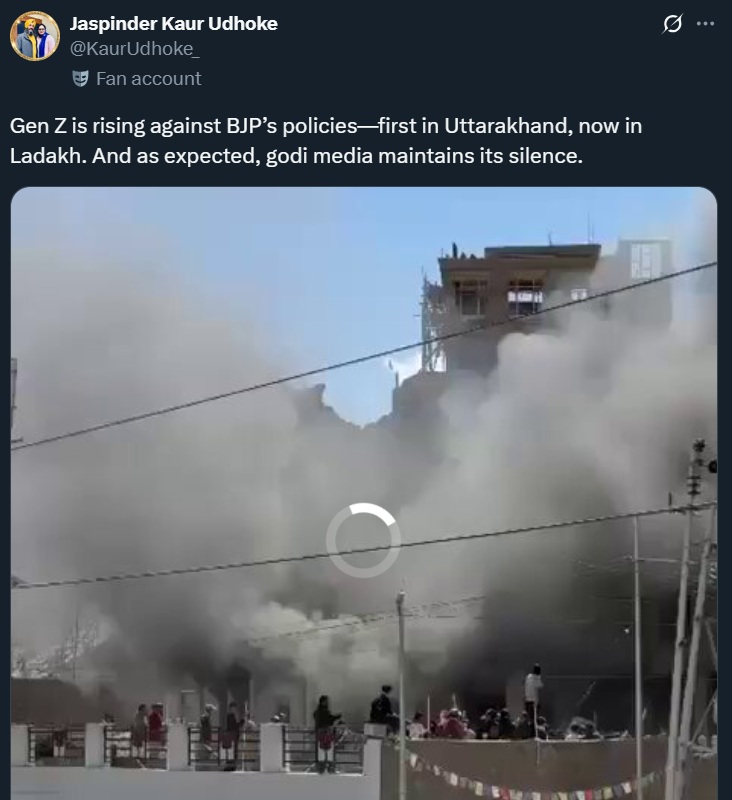
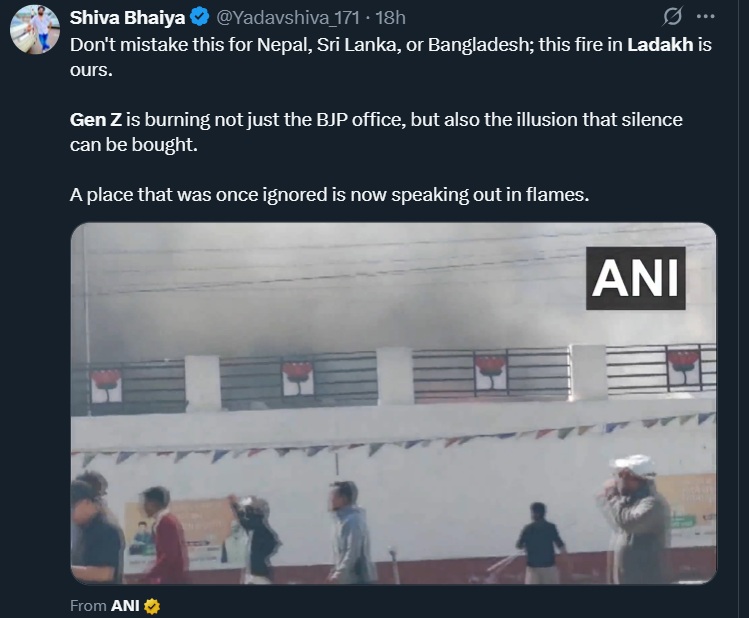
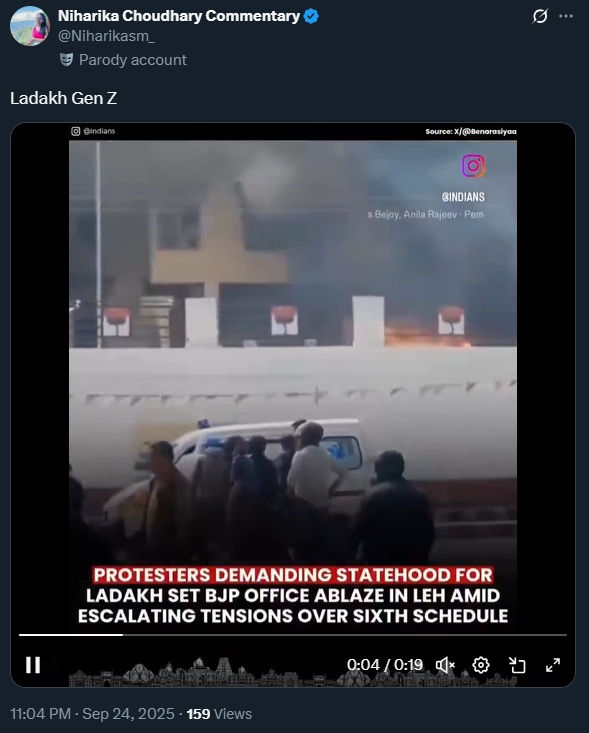
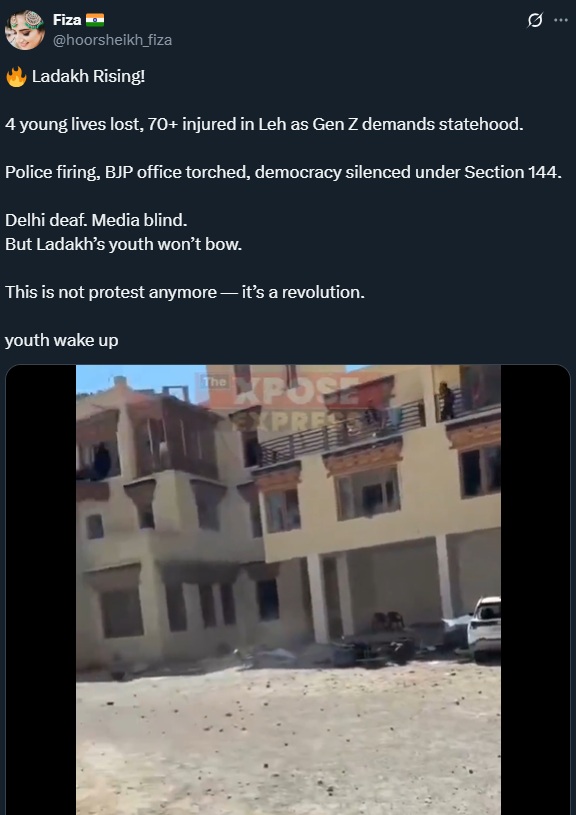
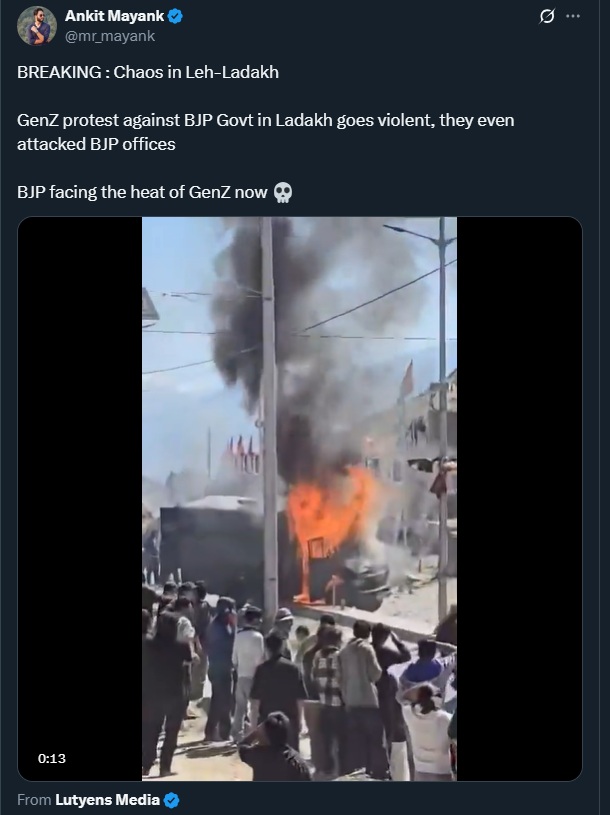
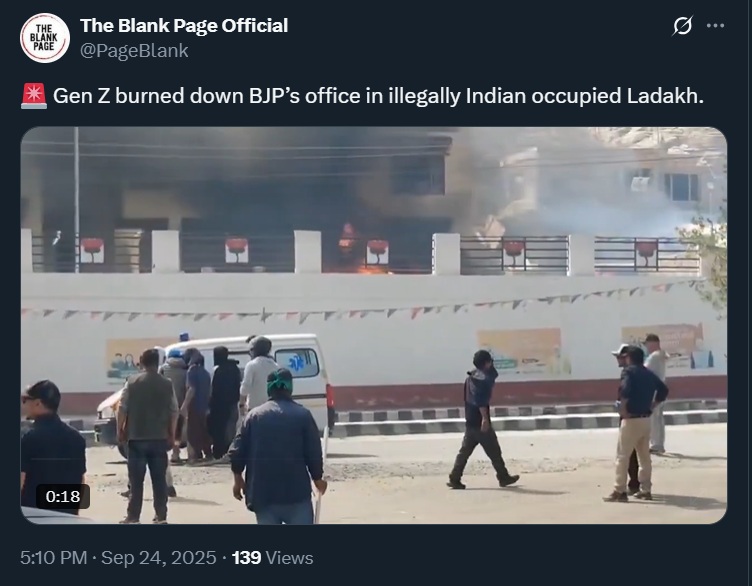
 Interestingly, some Pakistani handles were also pushing the same narrative.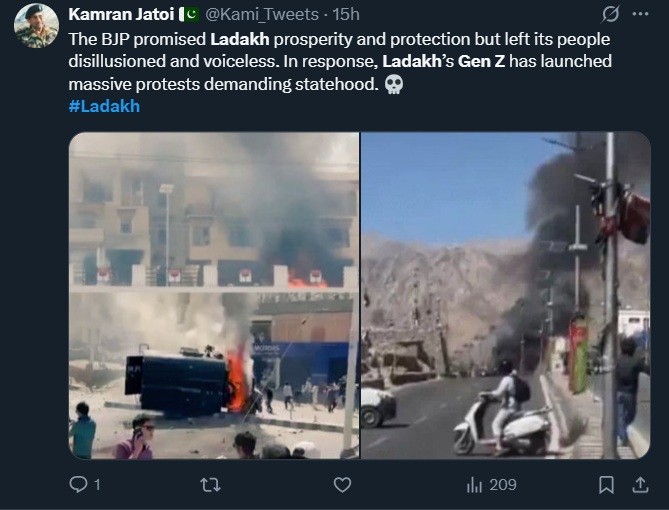
 If one searched Gen Z protests Ladakh on X, these are the number of posts, they can find.