Home Blog Page 323

DMK Govt Imposes Tamil On Non-Tamil Speaking Students Through Strict Two-Language Policy, Violates Constitutional Rights Of Linguistic Minorities

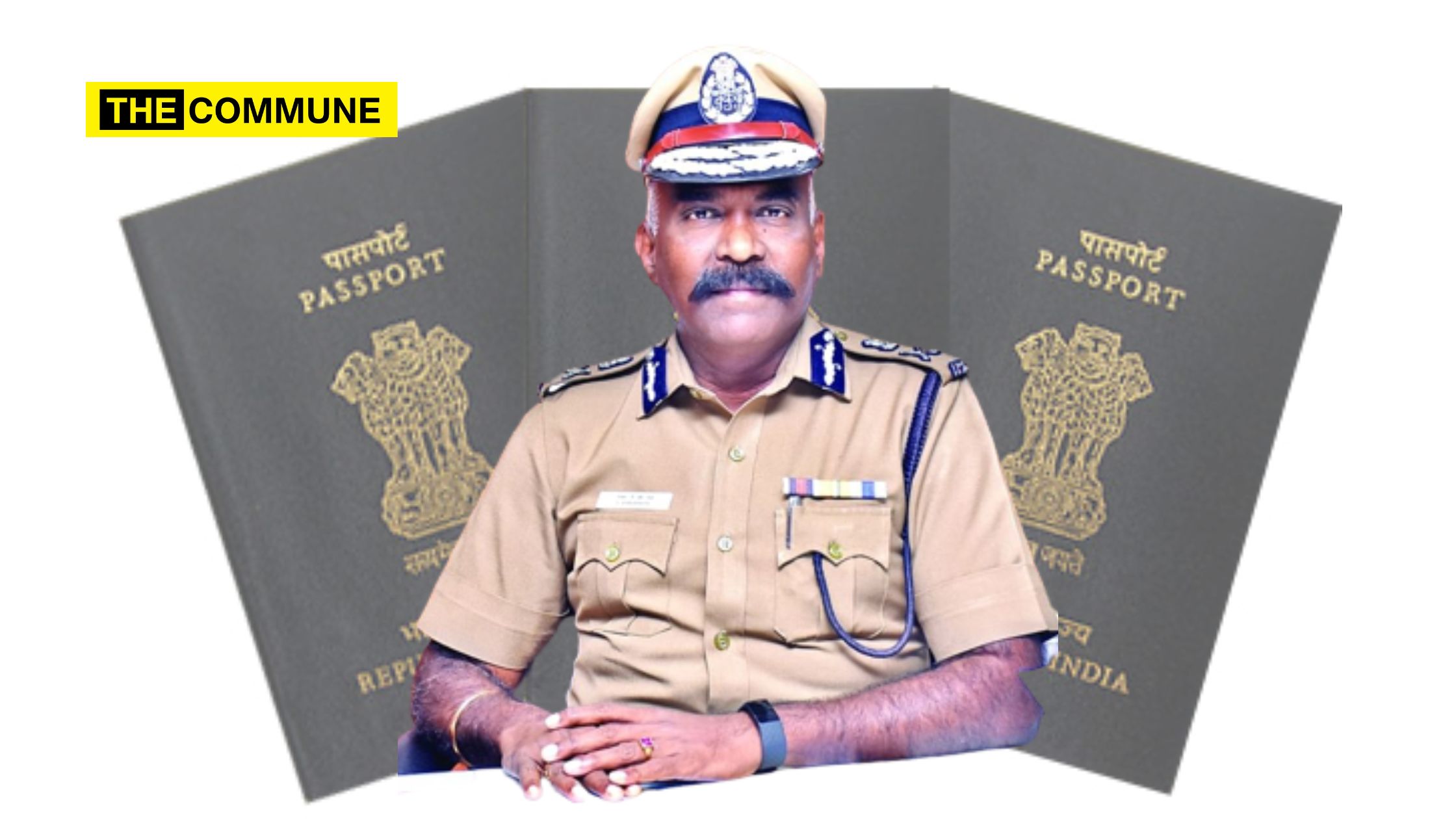
The Tamil Nadu State Education Policy 2025, unveiled by Chief Minister M.K. Stalin, has ignited fresh outrage among non-Tamil speaking communities in the state. Hidden behind the lofty rhetoric of “equity” and “inclusion” lies an unmistakable reality — the DMK government has doubled down on enforcing Tamil as a compulsory subject in all schools, effectively erasing the possibility for linguistic minorities to learn their mother tongue within the state education system.

Tamil Learning Act, 2006 — Now With Tighter Grip

The policy proudly reaffirms the Tamil Nadu Tamil Learning Act, 2006, making the study of Tamil from Class 1 to 10 mandatory across all schools — whether State Board, CBSE, ICSE, or international curricula.

This is not merely a symbolic requirement. Schools must ensure that every student can speak, read, write, and comprehend Tamil. The SEP frames this as “linguistic inclusion” and “cultural integration,” but for students whose home language is Telugu, Kannada, Malayalam, Urdu, or other tongues, it amounts to state-enforced linguistic assimilation.

Mother Tongue Sacrificed

While the National Education Policy (NEP) 2020 recommends a three-language formula allowing space for the student’s mother tongue, Tamil Nadu rejects this, sticking rigidly to a two-language formula — Tamil and English — for all. This means that in State Board schools, minority students are denied any formal opportunity to study their own mother tongue as a subject, even if it is their first language at home.

The SEP claims it will provide “bridge programmes” for migrant and tribal children. But for permanent linguistic minority communities — such as the lakhs of Telugu-speaking families in Vellore and Krishnagiri, Kannada speakers in Dharmapuri and Erode, or Malayalam speakers in Kanyakumari and Coimbatore — there is no structured pathway to retain their language academically.

Driving Minorities Out Of State Board Schools

By making Tamil compulsory while sidelining minority languages, the policy pushes non-Tamil speaking students towards CBSE and ICSE schools, where their mother tongue may still be offered as a second language. For economically disadvantaged families, this is not an option — they are forced to choose between losing their linguistic heritage or sacrificing quality education in their own tongue.

Constitutional Concerns

Article 29 of the Indian Constitution guarantees minorities the right to conserve their language, script, and culture. Education in one’s mother tongue is not just a cultural preference — it’s a constitutional safeguard. The DMK’s strict language policy raises serious questions on whether it violates this spirit, if not the letter, of the law.

Political Motives Disguised As Cultural Pride

The DMK frames this as a measure to protect Tamil identity and “integration with the local community.” But critics argue it is part of a political project to homogenise the linguistic landscape of Tamil Nadu — diluting the presence of long-established minority communities who have lived in the state for generations.

The Bottom Line

The Tamil Nadu State Education Policy’s two-language formula isn’t about inclusion — it’s about compulsion. For hundreds of thousands of Telugu, Kannada, Malayalam, and other minority students, it means their own languages will be absent from their classrooms, their textbooks, and their academic records. What the DMK calls “integration” may in practice become linguistic erasure.

If the government truly respected linguistic diversity, it would give minorities a genuine choice — not force them to assimilate through education policy.

Subscribe to our channels on TelegramWhatsApp, and Instagram and get the best stories of the day delivered to you personally.

DMK-Ally VCK’s Councillor Brutally Assaults Govt Staff Inside Cuddalore Panchayat Office, Arrested

vck councillor

In a shocking case from Cuddalore district, a councillor of the Viduthalai Chiruthaigal Katchi (VCK), an ally of the ruling DMK in Tamil Nadu, was arrested for allegedly attacking a government employee inside the Bhuvanagiri Town Panchayat office. The incident, captured on CCTV, shows the councillor storming into the office and assaulting the staff member, with the footage quickly going viral and sparking public outrage.

According to reports, the incident occurred on 7 August when councillor Bharathidasan, also known as Kalimuthu, entered the panchayat office and insisted that a bill be issued to a contractor for works completed in his ward. The employee, Radhakrishnan, who was engaged in other official duties, requested time until evening to process the request. This reportedly led to a heated exchange, during which the councillor allegedly hurled verbal abuse, issued death threats, and punched the staffer in the face.

A senior police official confirmed the arrest, stating, “We have immediately arrested the VCK functionary on the basis of the government official’s complaint. There was an issue over payments. Investigation is on.”

The CCTV footage clearly depicts Bharathidasan physically assaulting Radhakrishnan, followed by a scuffle in which both men exchange blows. The attack has since triggered a political storm, with former Tamil Nadu BJP chief K. Annamalai posting the video on X and condemning the DMK-led government.

He wrote, “When public servants are attacked in their office, it is not just a breakdown of governance; it is a breakdown of trust in the very system meant to protect the people. In a shocking incident from Bhuvanagiri, a public servant was verbally abused and physically assaulted by a VCK Councillor, a member of the DMK Alliance. Threats of further attacks also followed this attack. This isn’t just an isolated act of lawlessness in the last 4 years in TN; it is a reflection of a political culture perpetrated by DMK that has normalised intimidation, violence, and absolute disregard for public institutions.

Following the assault, Radhakrishnan, who suffered facial injuries, was taken to Bhuvanagiri Taluk Hospital and later referred to Chidambaram Medical College Hospital. Kalimuthu also claimed that he was assaulted and received treatment at the same hospital before being taken into custody.

The VCK has not issued any public statement on the matter. Police have seized the CCTV footage and are continuing their investigation.

(With inputs from NDTV)

Subscribe to our channels on TelegramWhatsApp, and Instagram and get the best stories of the day delivered to you personally.

Drugs Worth ₹1.35 Crore, Foreign Cigarettes Worth ₹1 Crore Seized In Tripura And Mizoram

mizoram tripura drugs seized

Security forces in Tripura and Mizoram have seized highly addictive banned methamphetamine tablets and foreign cigarettes worth over Rs 2.35 crore and arrested three persons, officials said on Friday.

A police official said that an auto-rickshaw driver was arrested with 90,000 methamphetamine tablets valued at Rs 1.35 crore from the Amtali areas on the outskirts of the state capital Agartala on Thursday night.

During routine patrolling, police chased an auto rickshaw coming from Khayerpur to Amtali and managed to intercept the auto-rickshaw and after a search the methamphetamine tablets, also known as Yaba or party tablets, were recovered. “The driver of the auto-rickshaw was arrested for carrying the drugs. An investigation is underway,” Superintendent of Police (SP), West Tripura district, Namit Pathak told the media. He said the police have intensified their close watch in different parts of the city and its outskirts after reports of illegal and drug related activities, and the seizure was the success of these efforts.

Chief Minister Manik Saha in a social media post on Friday, said, “During a search operation on the Amtali Bypass, Amtali police station recovered 90,000 yaba tablets, arrested one person, and seized an auto-rickshaw.” “We remain committed to building a drug-free Tripura, and our relentless fight against drug smugglers will continue with full determination,” Saha said.

Yaba, also called ‘crazy medicine’, is illegal in the country as it contains methamphetamine, a Schedule II substance under the Controlled Substances Act. In Mizoram, based on specific intelligence, Assam Rifles launched an operation on Friday to conduct a search operation at Tlangsam areas bordering Champhai district.

During the search operation, the troops recovered different types of foreign cigarettes valued approximately Rs 1 crore from a vehicle. Two persons, identified as H Ramengmawia and Zosangliana were also arrested. The recovered items, vehicle and individuals have been handed over to the Legal Metrology Department in Champhai.

Meanwhile, the Assam Rifles and Mizoram Police have seized heroin and foreign cigarettes worth more than Rs 9.47 crore and arrested one person in two separate operations in Mizoram’s same Champhai district on Wednesday night. Myanmar’s Chin State has emerged as a major hub for drug trafficking, wildlife smuggling, and other illicit activities.

The contraband is often routed through six districts in Mizoram — Champhai, Siaha, Lawngtlai, Hnahthial, Saitual, and Serchhip — which share unfenced borders of 510 km with Myanmar. Meanwhile, Assam Rifles have been conducting awareness campaigns like seminars and group discussions highlighting the bad effects of the drugs and drugs trafficking are a punishable offence under the Narcotics Drugs and Psychotropic Substances (NDPS) Act, 1985.

The Defence spokesman said that the aim of these awareness campaigns is to educate the local population, especially the youth, about the harmful effects of drug abuse and the serious legal consequences associated with drug trafficking and peddling.

-IANS

Subscribe to our channels on Telegram, WhatsApp, and Instagram and get the best stories of the day delivered to you personally.
Emory University Shooting Leaves One Dead, One Injured; No Ongoing Threat

los angeles mass shooting america usa emory university austin target store elementary school arkansas high school pennsylvania

A shooting on Emory University’s Atlanta campus in the US state of Georgia left the shooter dead and one officer injured, according to media reports.

There was a single shooter who is now dead, with no further threat to the campus or surrounding area, said NBC News, quoting the Atlanta Police Department.

A law enforcement officer was injured while confronting the shooter, according to reports. A shelter-in-place order was put into place and now has been lifted, said the latest post by the university, Xinhua news agency reported.

Georgia Governor Brian Kemp decried the shooting on social media platform X, noting it was the second high-profile shooting in the state this week. Five soldiers were shot and injured at the US Army’s Fort Stewart in southeast Georgia on Wednesday.

The suspect was identified as Quornelius Radford, an automated logistics sergeant, according to John Lubas, commanding general of the 3rd Infantry Division. Radford used a personal handgun to open fire on fellow soldiers at his assigned base.

“I can confirm it was not a military weapon. And we believe it was a personal handgun,” Lubas told a news conference on Wednesday (local time).

“We’re still not certain about the motivation, but again, he’s been interviewed by Army investigators, and we believe we’ll gain more information here shortly,” Lubas said. The shooter has been previously arrested locally for driving under the influence –

-IANS

Subscribe to our channels on TelegramWhatsApp, and Instagram and get the best stories of the day delivered to you personally.

Trump, Putin To Meet In Alaska On August 15 To Discuss Ukraine Ceasefire

trump putin meet alaska ukraine ceasefire

Amid signs of progress towards a Ukraine War ceasefire, US President Donald Trump has announced a path-breaking summit with Russia’s President Vladimir Putin next Friday, a meeting on which the future of the 25 per cent punitive tariff on India for buying Russian oil may hinge.

Crowning three days of fast developments, Trump announced on Truth Social on Friday, “The highly anticipated meeting between myself and Putin will take place next Friday, August 15, 2025, in the Great State of Alaska”. “Further details to follow.”, he said in the Truth Social post.

It was a quick turnaround because Trump had said on Thursday that he was “very disappointed” with Putin, even as he spoke of progress in discussions with him.

While speaking to reporters before the summit announcement, Trump said, “President Putin, I believe, wants to see peace, and [Ukraine’s President] Zelensky wants to see peace now”. “I think that a lot of things happened recently that would make this go forward”, he said. “I’m not going to mention anything having to do with India”, alluding to the punitive tariff.

On Wednesday, he singled out India for the punitive tariff of 25 per cent for buying Russian oil, and this was seen as a ploy to put economic pressure on Moscow by getting New Delhi to cut off oil revenue to Moscow. Preparing for the summit, Putin called Prime Minister Narendra Modi to brief him about the discussions he had with the US on Ukraine.

The Kremlin Press Office readout of their conversation said, “In light of the special privileged partnership between Russia and India, Vladimir Putin shared the key outcomes of his meeting with US President’s Special Envoy Steven Witkoff”.

India’s External Affairs Ministry said, “While thanking President Putin for his detailed assessment, Prime Minister reiterated India’s consistent position for peaceful resolution of the conflict”. Friday was the deadline Trump had set for imposing more sanctions on Moscow, and secondary tariffs – punitive levies on exports – on countries that buy energy from Russia.

With the summit on the way, he did not follow through, although the separate 25 per cent punitive tariff still hangs over India with an August 27 deadline. Kremlin Spokesperson Yury Ushakov confirmed the meeting and said that “Russia and the US are close neighbors” and “it seems quite logical that such an important and long-awaited summit between the leaders of the two countries should be held there”.

Alaska is about 90 km from Russia, separated by the Bering Straits. Witcoff’s meeting with Putin in Moscow on Wednesday laid the groundwork for the summit.

Trump said, “We had some very good talks with President Putin” and there was “a very good chance” peace was around the corner.

Speaking to the media on Friday about a possible deal, he said, “There’ll be some swapping of territories to the betterment of both”.

While a ceasefire may come soon, a settlement would be complicated because Ukraine has maintained that its territory is inviolable. And as the head of a democracy, Zelensky has to get his country behind him after three years of war of huge casualties and destruction.

Trump acknowledged this and said Zelensky is “working hard” to get everything he needs “to sign something”. Besides the territorial issues, there is also Putin’s demand that Ukraine never join NATO, and Zelensky’s for a guarantee from the US or NATO that Russia does not resume the war.

-IANS

Subscribe to our channels on TelegramWhatsApp, and Instagram and get the best stories of the day delivered to you personally.

Indian Railways To Quadruple Ticket Booking Capacity To 1 Lakh Per Minute

indian railways

Indian Railways is upgrading the current passenger reservation system to handle over 100,000 tickets per minute from existing 25,000, according to the government.

Indian Railways is undertaking complete revamp of passenger reservation system (PRS) through Centre for Railway Information Systems (CRIS).

The revamp of PRS involves upgradation and replacement of hardware, software, network equipment, security infrastructure and functionalities on new technology with design capable of handling new features.

The current PRS system was deployed in 2010 and runs over Itanium servers and open VMS(Virtual Memory System). The current PRS system requires upgradation from legacy technology systems to latest cloud technology compliant systems, said Union Railways Minister Ashwini Vaishnaw in the Parliament.

Over the years, passenger preferences and aspirations have changed. Modernised PRS aims to address and fulfil enhanced aspirations of passengers.

With effect from November 1, 2024, the Advance Reservation Period (ARP) for booking reserved tickets in trains that previously had a 120-day ARP has been reduced to 60 days, excluding the date of journey.

This change has been made keeping in view the booking trend and also to reduce the cancellations due to unforeseen events, said the minister. Railways has recently launched RailOne App.

This App enables passengers to book reserved as well as unreserved tickets on mobile phone. This, in effect, brings the PRS facility to passenger’s palm.

“Change in Advanced Reservation Period (ARP), based on trend of booking and feedback is a continuous and ongoing exercise. The present PRS can book about 25,000 ticket per minute and new system is designed for more than 4 times this capacity,” according to the minister.

Meanwhile, the percentage of non-AC coaches in trains run by Indian Railways has significantly increased to about 70 per cent, and a special manufacturing programme is being implemented to produce an additional 17,000 non-AC general and sleeper coaches over the next 5 years.

Indian Railways have significantly increased the facilities for passengers demanding general class travel. During the last financial year 2024-25 alone, 1,250 general coaches have been utilised in various long-distance trains.

-IANS

Subscribe to our channels on TelegramWhatsApp, and Instagram and get the best stories of the day delivered to you personally.

Two Soldiers Martyred, Two Injured as J&K’s Longest Anti-Terror Operation Enters Ninth Day

Infiltration Bid Foiled In J&K's Nowshera Sector, Two Terrorists Killed Two Soldiers Martyred, Two Injured as J&K’s Longest Anti-Terror Operation Enters Ninth Day

Two Indian Army soldiers were martyred and 2 others injured in the protracted Jammu and Kashmir (J&K) anti-terror operation in the Akhal Devsar forest area of Kulgam district, which entered the 9th day on Saturday. An Army spokesperson said on Saturday,

“Two Army soldiers succumbed, and two others were injured as the exchange of fire between terrorists and security forces continued throughout last night, as the gunfight entered its ninth day in the Akhal forest area of South Kashmir’s Kulgam district.”

Four Army soldiers were injured in an intense exchange of fire between terrorists and security forces late last night. However, two among the four injured armymen succumbed to their injuries. The deceased soldiers have been identified as Constable, Harminder Singh and Lance Naik, Preetpal Singh both from 19 Rashtriya Rifles (RR).

Army’s Srinagar headquartered Chinar Corps said on X, “Chinar Corps honours the supreme sacrifice of the Bravehearts, L/Nk Pritpal Singh and Sep Harminder Singh, in line of duty for the Nation. “Their courage and dedication will forever inspire us. Indian Army expresses deepest condolences and stands in solidarity with the bereaved families.”

Notably, this operation is the longest ongoing operation in the Valley entering its ninth day. On the first night of the gunfight on last Friday, one local terrorist was killed, and four Army soldiers were injured.

Officials said that since this is a vast, dense forest area, the operation may be prolonged. This longest anti-terrorist operation J&K in the last two decades entered its 9th day on Saturday. J&K DGP, Nalin Prabhat has been supervising the operation in close synergy with the Army and the CRPF. He visited the area for the 5th time on Friday. Joint forces, including the Indian Army, CRPF and J&K Police had started CASO (Cordon & Search Operations) in the area on last Friday.

The Army has deployed Rudra helicopters, drones and Para commandos to ensure that the hiding terrorists are unable to escape. Security forces have been carrying out aggressive operations against the terrorists in the hinterland while the Army has been on maximum alert guarding the Line of Control (LoC) in J&K.

The elimination of three hardcore Pakistani terrorists responsible for the April 22 Pahalgam terror attack in which 26 people were killed, is part of the aggressive operations being carried out by the joint forces.

Three hardcore Pakistani terrorists including LeT commander, Suleman Shah and his two associates Abu Hamza and Jibran Bhai responsible for Pahalgam attack were killed on July 28 in the higher reaches of Dachigam national park on the foot of Mahadev Mountain peak in Harwan area of Srinagar. The Army code named this operation as ‘Operation Mahadev’.

After the Pahalgam terror attack, the security forces are carrying out anti-terrorist operations against gun wielding terrorists, their over ground workers and sympathisers. Drug smugglers and drug peddlers are also on the radar of the security forces because it is believed that the funds generated by hawala money racket and drug smuggling are finally used to sustain terrorism in J&K.

The coordinated and Intelligence-backed operations of the joint forces are aimed at dismantling the ecosystem of terrorism in J&K rather than focussing on just the elimination of the gun-wielding terrorists.

-IANS

Subscribe to our channels on TelegramWhatsApp, and Instagram and get the best stories of the day delivered to you personally.

No Engine Failures Since E20 Rollout, Says Petroleum Minister Hardeep Puri

AI Adoption Can Generate ₹33.8 Lakh Cr Worth Economic Value By 2030: Hardeep Puri E20

There has not been a single case of engine failure or breakdown reported since ethanol 20 (E20) became a base fuel over the last 10 months, Hardeep Singh Puri, Minister of Petroleum and Natural Gas, has said.

Citing Brazil’s example, he said the country has run on E27 for years without any issues. Some lobbies with vested interests are actively attempting to create confusion and derail India’s ethanol revolution. However, such efforts will not succeed, he added. The E20 transition is already firmly underway, backed by strong policy support, industry readiness, and public acceptance — and there is no turning back, the minister emphasised on the sidelines of the ‘Pioneer Biofuels 360 Summit’ here.

Elaborating on the benefits of E20, Puri said it results into reduction in greenhouse gas emissions, improves air quality, enhances engine performance, and has already led to over Rs 1.4 lakh crore in foreign exchange savings. He pointed out that 2G ethanol refineries in Panipat and Numaligarh are converting agricultural residues like parali and bamboo into ethanol, providing a win-win solution for clean fuel, pollution control, and farmer income.

He further highlighted the remarkable growth of maize-based ethanol — from 0 per cent in 2021–22 to 42 per cent this year — calling it a transformational shift. Responding to a question on the success of the Ethanol Blended Petrol (EBP) programme, the minister highlighted that ethanol blending gained serious momentum only after 2014, when Prime Minister Narendra Modi assumed office.

In 2014, ethanol blending was merely 1.53 per cent. By 2022, India achieved 10 per cent blending, five months ahead of schedule. The original target of 20 per cent blending (E20) by 2030 was advanced to 2025 and has already been achieved in the current Ethanol Supply Year (ESY).

This success, the minister noted, was made possible through sustained policy reforms such as guaranteed pricing for ethanol, allowing multiple feedstocks, and rapidly expanding distillation capacity across the country.

On the issue of Flex-Fuel Vehicles (FFVs), Puri said that the Indian automobile industry has already demonstrated its capability. Indian OEMs have begun rolling out prototypes for E85-compatible vehicles.

-IANS

Subscribe to our channels on Telegram, WhatsApp, and Instagram and get the best stories of the day delivered to you personally.
Rahul Gandhi’s ‘Vote Theft’ Claims Fall Apart As EC, Ground Reports Debunk Allegations

rahul gandhi vote theft vote chori

Congress leader Rahul Gandhi’s dramatic accusations of voter fraud and “vote theft” against the Election Commission of India (ECI) are facing increasing scrutiny, as multiple claims he presented are now being challenged by verified information and on-ground investigations. Recent developments from Bengaluru and other regions appear to undermine his allegations.

Bengaluru Family Identified as Genuine Voters

One of Gandhi’s assertions involved a supposed case of fraudulent voters a family of three in Bengaluru he claimed were fake based on the absence of their photographs. However, an initial probe by the Election Commission (EC) has verified the family as legitimate voters.

Photos and GPS-verified addresses of the individuals Om Prakash Bagri, Saraswati Devi Bagri, and Mala Bagri have surfaced online. They were photographed holding their voter ID cards at their home on 2nd Main, JCR Layout, Panthur, near Kadubeesanahalli, Bengaluru.

According to EC sources, the reason the Chief Electoral Officer (CEO) of Karnataka asked Gandhi to personally submit an affidavit is due to his prior reluctance to formally stand by his claims. “In earlier instances, his team sent allegations but disavowed them later. This time, we insisted on a signed submission,” said an official.

The EC also addressed Gandhi’s reference to a similar issue in Maharashtra in December 2024. The Commission claims it had responded in detail at the time, and the response is publicly available. Yet, Gandhi continued to assert that no reply was received.

Ironically, on the same day Gandhi questioned the integrity of the Karnataka electoral rolls, the state’s Congress-led government adopted those very rolls as the foundation for its caste census. EC officials noted this contradiction, saying that while the state vouched for the authenticity of the voter data, the Congress leader was simultaneously casting doubts on it.

The Aditya Srivastava Case – No Evidence of Multiple Registrations

Another claim Gandhi made involved a man named Aditya Srivastava, whom he said was registered to vote in three states: Karnataka, Maharashtra, and Uttar Pradesh. He presented Srivastava’s photo and voter ID number during a press conference.

However, scrutiny on the EC website show that Srivastava is only registered in Karnataka. No entries for him were found in the voter rolls of Lucknow (Uttar Pradesh) or Maharashtra.

Gandhi had claimed that Srivastava appeared four times on the rolls twice in Karnataka, once in Maharashtra, and once in Lucknow. But according to EC records, there is currently no such duplication. Earlier this year, the Election Commission stated it had removed multiple duplicate entries from electoral rolls across states, and Srivastava’s case may have been addressed during that process.

Further clarifying the situation, the Uttar Pradesh Election Commission stated that Srivastava is registered only in the Mahadevapura Assembly constituency in Bengaluru Urban, countering Gandhi’s allegations.

Muni Reddy Garden: 80 Voters at One Address

Rahul Gandhi also alleged large-scale voter irregularities in Booth No. 470 of the Mahadevapura Assembly segment, specifically pointing to a tiny house in Muni Reddy Garden that he claimed had 80 people fraudulently registered at the address.

Local investigation confirmed that the house in question barely 10-15 sq ft is currently rented by Dipankar, a delivery worker who moved in recently. Dipankar said he has no voter registration in Bengaluru and doesn’t recognize the names listed at his address.

The property owner, Jayaram Reddy, acknowledged being a BJP supporter and admitted that many tenants had previously registered to vote using that address. While most had moved away, he said some still return during elections to cast their votes.

Reddy admitted he hadn’t informed authorities of the outdated entries but said he would now do so. He confirmed that names of roughly 80 people still appear on the voter list for the property, even though most no longer live there.

Booth Level Officer Munirathna corroborated these findings, explaining that many migrant workers obtain voter IDs using rental agreements and later relocate. Despite moving, their names often remain on the electoral rolls. Though these “shifted” voters have been reported to the Election Commission, deletion of their names is pending due to bureaucratic delays. Some voters also refuse to be removed from the rolls, citing the utility of the ID and their occasional return to vote.

Rahul Gandhi Demands Transparency, Cites ‘Vote Chori’

At a recent press conference in Delhi, Rahul Gandhi doubled down on his accusations, claiming that over one lakh fake votes existed among the 6.5 lakh voters in the Mahadevapura segment. He demanded the Election Commission release 10 years of voter data and surveillance footage, warning that failure to do so would amount to “hiding a crime.”

If you attack the ‘One Man One Vote’ principle, we will confront you,” Gandhi said, as he called for nationwide accountability in electoral processes.

Despite the seriousness of the accusations, the Election Commission insists that due process is being followed and that many of Gandhi’s examples lack substantiated evidence. Officials have asked the Congress leader to submit formal complaints rather than relying on press briefings and public protests.

Rahul Gandhi’s claims of large-scale voter fraud are increasingly being challenged by official data and ground-level investigations. While issues like outdated voter lists and procedural delays do exist, the specific allegations he has made so far, including cases in Bengaluru and alleged duplicate voter registrations, appear to lack credible proof based on current findings.

Subscribe to our channels on TelegramWhatsApp, and Instagram and get the best stories of the day delivered to you personally.
“Depicting Hindu Gods Disrespectfully Cannot Be Justified”: Madras High Court Slams TN Police For Closing Facebook Post Case On Lord Krishna; Orders Probe

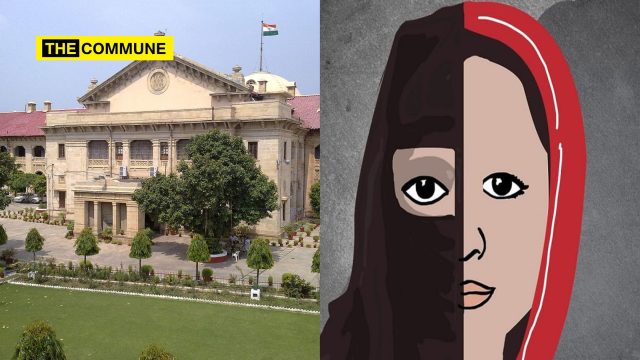
The Madras High Court has criticised the Tamil Nadu Police for “mechanically” closing a criminal case over a Facebook post that carried vulgar captions alongside an image of Lord Krishna stealing clothes from gopis. The Court directed the police to resume the investigation and file a final report within three months.

Justice K Murali Shankar, hearing a revision plea in P Paramasivan v. Inspector of Police, observed that depictions of religious figures must be handled with due sensitivity.

“Depicting Hindu Gods in a disrespectful manner, intentionally hurting the sentiments of millions, cannot be justified. Such actions have the potential to spark enmity, religious outrage, social disorder, and undermine communal harmony. Given the deep-rooted respect for religious symbols and deities, disrespect can lead to social unrest and hurt a large section of society. Therefore, it is crucial to approach such depictions with sensitivity. The Government must ensure that freedom of expression does not translate into hurting religious feelings,” the August 4 ruling stated.

The post, allegedly uploaded from an account belonging to one Sathish Kumar, included two Tamil comments, one of which claimed that Krishna Jayanti celebrated “a man who stole the clothes of bathing women.”

A complaint was filed by P Paramasivan, who alleged that the post was intended to defame Hindu gods and harm the image of Hindu women, besides potentially creating religious enmity. Police registered a case but later filed a negative final report, classifying it as “undetected” after claiming they could not obtain user details from Facebook.

Meta, which owns Facebook, had replied that a Mutual Legal Assistance Treaty (MLAT) request or letter rogatory was required for such data. In March, the trial court accepted the police’s closure report while giving the complainant liberty to file a private complaint.

Challenging the closure, Paramasivan approached the High Court, which found fault with the police’s limited investigation.

“Despite the seriousness of the allegations, the respondent police handled the case casually, halting the investigation and closing it as ‘undetected’. Given these circumstances, this Court finds it necessary to direct the respondent to continue and complete the investigation within a stipulated period,” the judge said.

The Court noted that the Facebook page in question already contained personal details that could have been verified to trace the user.

“The investigation was not pursued diligently, and the final report appears to have been filed mechanically,” it observed.

Justice Shankar also remarked that the Krishna-gopis episode is considered a symbolic tale with varied interpretations, including that it was a test of the gopis’ devotion beyond worldly attachments.

“This story highlights the importance of spiritual pursuit and detachment,” he noted, adding that he was not analysing the story’s significance but found that “the Facebook post in question has clearly exceeded acceptable limits of free speech.”

Advocate S Saravanan appeared for the petitioner, while Government Advocate (criminal side) M Aasha represented the State.

(With inputs from Bar and Bench)

Subscribe to our channels on Telegram, WhatsApp, and Instagram and get the best stories of the day delivered to you personally.