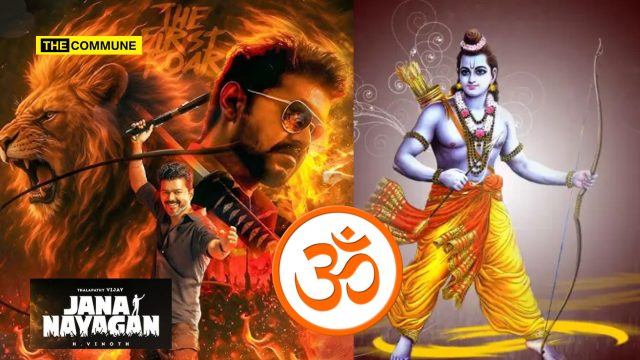
H. Vinoth’s Jana Nayagan, Joseph Vijay’s final film before his full-time political career, is far more than a remake of the Telugu film Bhagavanth Kesari. It’s an indictment of Hindu civilizational pride, dressed up as mass entertainment so the audience swallows it without noticing.
Vijay’s swan song as an actor doubles as a manifesto against Hindu civilizational pride, and the film barely bothers to hide it.
Jana Nayagan adds a political layer the original never had. That layer is where the trouble starts. That layer exists for one purpose: to put Meluha, the idea of an ancient Hindu empire tracing back to Lord Ram, on trial and convict it. The film’s central villain, played by Bobby Deol, is consumed by Meluha. Vinoth doesn’t just make him a bad man who happens to believe in it. He makes belief in it the source of his evil. And in case anyone in the audience missed the point, the villain is named Himmler, a straight lift from the Nazi era. The equation is deliberate and it is ugly: reverence for a Hindu civilizational idea tied to Ram is repackaged as the psychological starting point for genocide.
This is not subtext. It’s the film’s entire political engine.
Lord Rama’s Legacy Put in a Torturer’s Mouth
Meluha is not some obscure fringe symbol Vinoth found lying around. It is bound to Lord Ram and to a civilizational memory that lives in the imagination of Hindus across this country. Jana Nayagan takes that memory and hands it, without qualification, to a man who tortures, kidnaps, and terrorizes his way through the story. There is no rival character who holds the same belief with dignity. There is no attempt at complexity.
The film’s message is blunt: to be drawn to the idea of a Hindu nation is to be one step from being a monster, a fascist. Vinoth stages this as settled fact and asks a mass audience to cheer while it’s delivered.
A Checklist of Hindu-coded Targets, Ticked Off One by One
Meluha is only the anchor. The film also reaches for the Babri Masjid dispute, a controversy with no specific organic connection to its Tamil Nadu setting and forces it into the frame anyway. It inserts a Muslim scientist whose loyalty to India is held up as proof of the nation’s tolerance, as though patriotism needs to be issued like a certificate to one community while another’s is treated as suspect by default. Pakistan gets named as a source of terror in one breath; in the very next, any assertion of Hindu identity is quietly filed under the same heading of things to fear. This is a film picking exactly one civilizational tradition to interrogate and none other.
A Whip for The Secular hero, a Noose for Meluha
Jana Nayagan does take swings at Tamil Nadu’s political establishment – the MNM’s torch, the DMK’s dynastic politics. That’s the cover the film hides behind. But look at where the actual moral weight sits. MGR’s naan aana ittal whip is handed to the hero like a relic, sanctified, secular, safe. Meluha is handed to a man who commits atrocities. One political inheritance is treated as legitimate. The other, the one linked in Hindu civilizational memory, is treated as a disease to be cut out.
A Farewell Built To Delegitimize, Not to Unite
This is Vijay’s last film as an actor that arrived as he steps fully into his role as Tamil Nadu’s chief minister. That context matters.
A film this committed to painting Hindu civilizational pride as the gateway drug to fascism is not a nostalgic send-off to a star. It is a statement of intent – a signal of the politics Vijay and his party want stamped onto his legacy: one where secular dynastic politics gets the whip, and Hindu identity gets Himmler’s name.
H Vinoth took a loud, cartoonish Telugu spectacle and sharpened it into something focused and deliberate. What he sharpened it into is a film that spends two and a half hours teaching its audience to be ashamed of Lord Rama.
Trailer Gave Negative Connotation To Sacred OM
In the trailer, Bobby Deol’s character revealed his diabolical “master plan” named ‘O-M’ (Operation Meluha), sporting a prominent tattoo on the back of his neck – the letter M inside a circle O, which reads like OM, the most sacred syllable in Hinduism, representing the ultimate reality and divine sound.
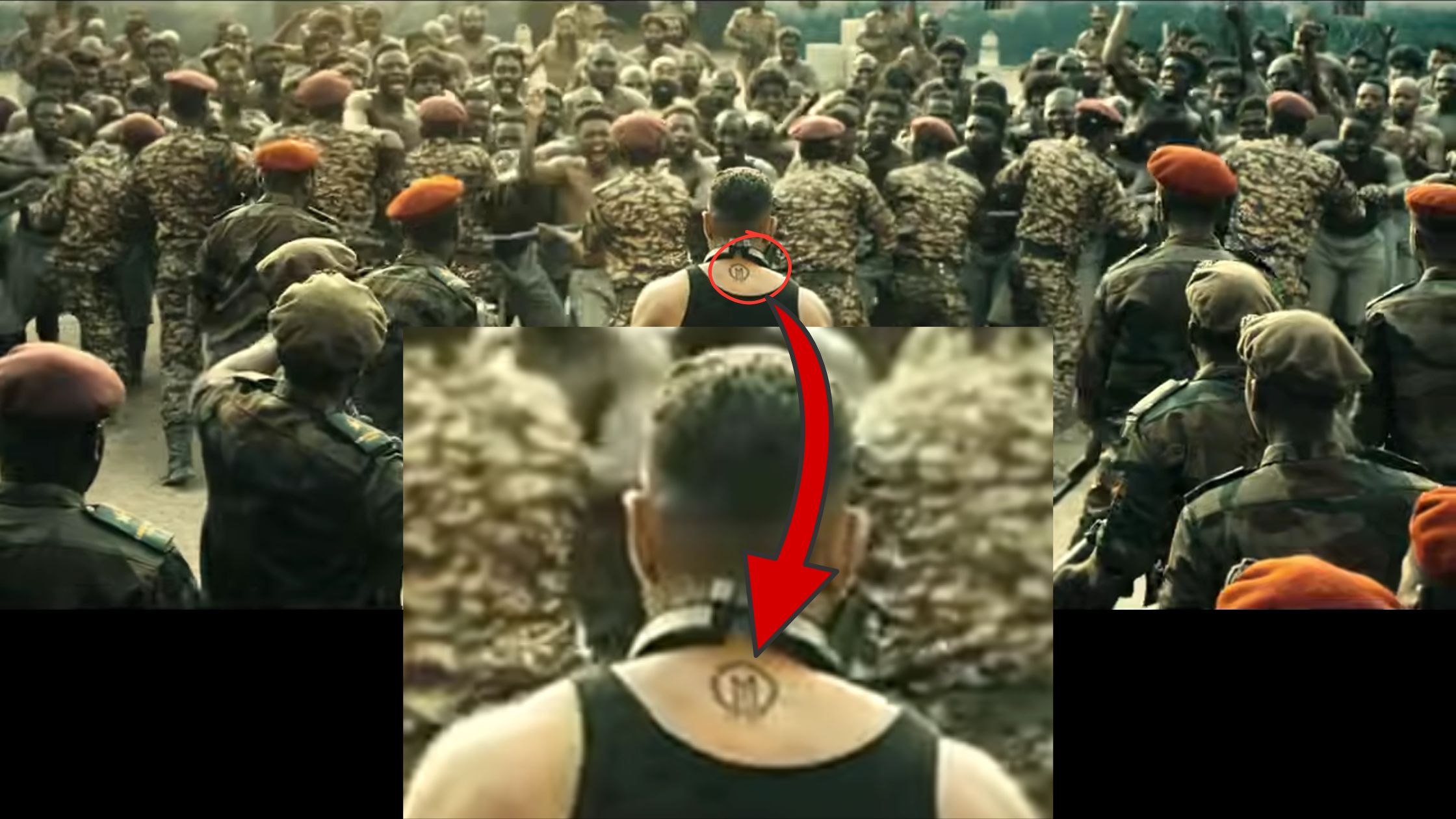
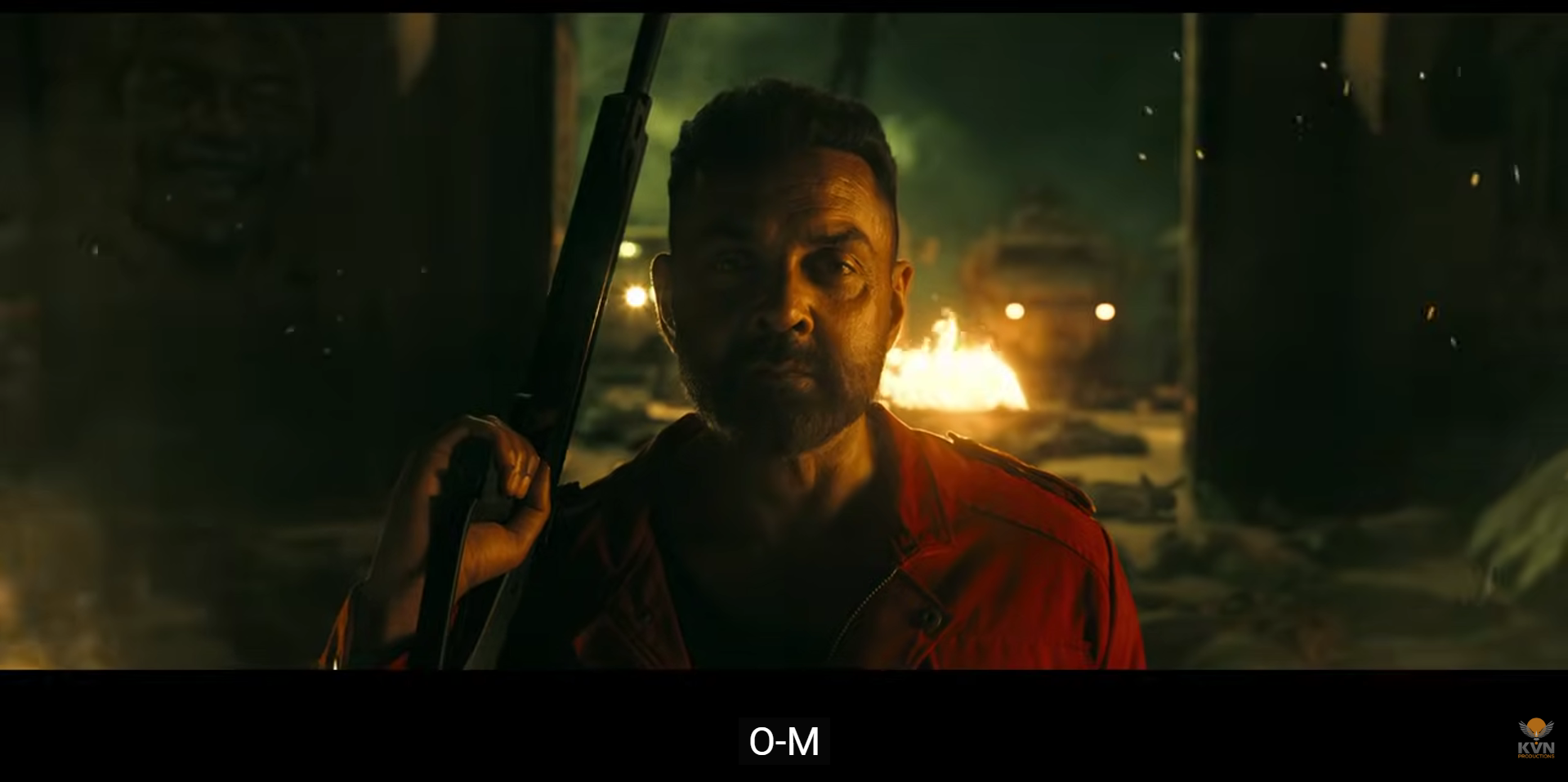
However, it is reported that these scenes have been removed since they hurt religious sentiments.
The villain’s frames were drenched in saffron in the trailer, the color central to Hindu spirituality and identity.

The trailer culminated with a humanoid robot glowing in saffron light, bearing an ‘O-M’ engraving on its armor as it charges to destroy Vijay’s hero.
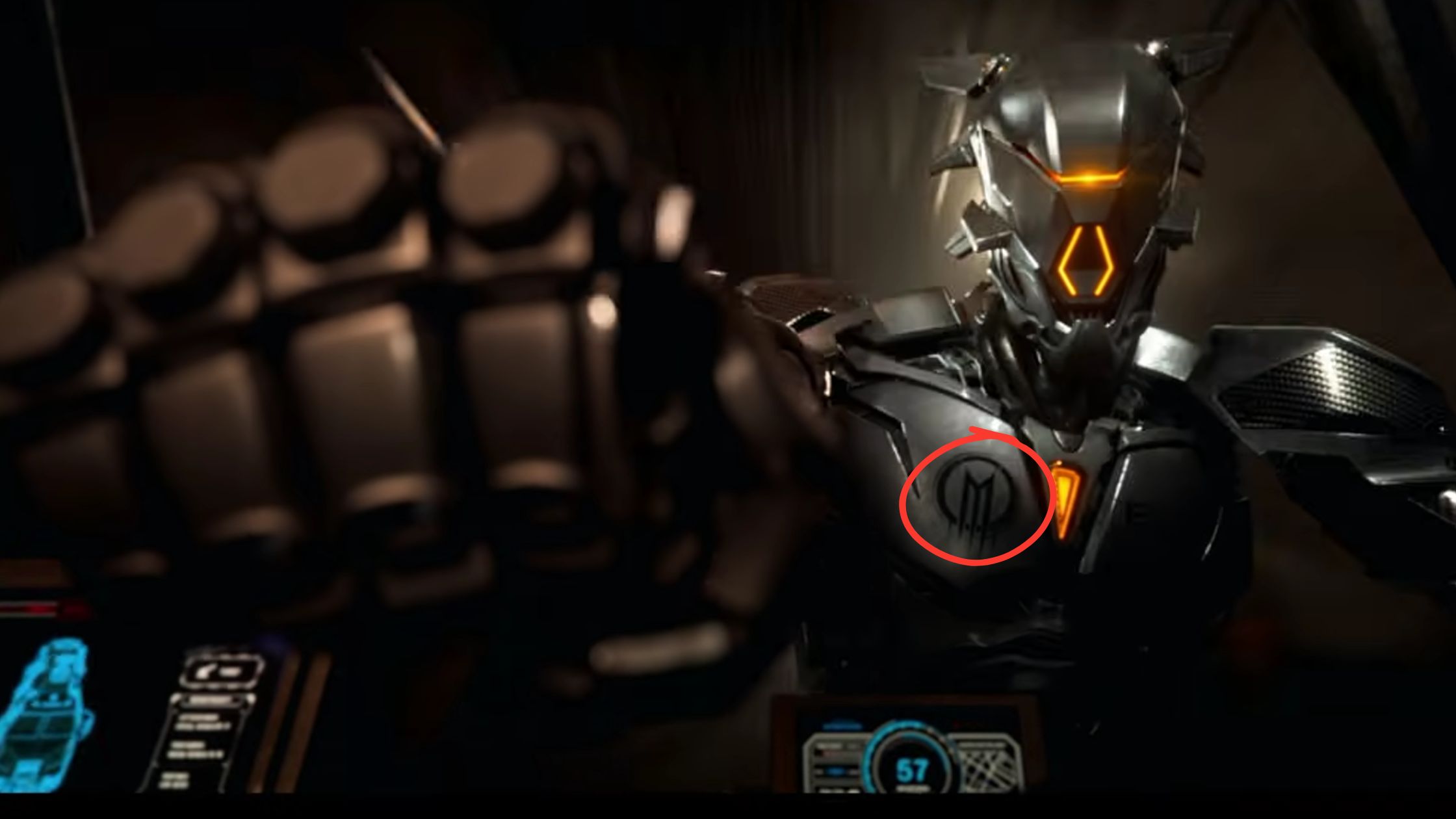
This is no coincidence. The trailer and thus the film deliberately takes O-M and saffron and attaches them to a terrorist-like villain who seeks absolute domination.
Subscribe to our channels on WhatsApp, Telegram, Instagram and YouTube to get the best stories of the day delivered to you personally.