Home Blog Page 325

Tamil Nadu Animal Husbandry Department To Begin Official Sale Of Native Dog Breeds

tn native dog breeds

In a move to counter the unregulated sale of dogs on social media platforms and promote indigenous canine breeds, the Tamil Nadu Animal Husbandry Department has announced plans to begin the official sale of native dogs. The initiative will ensure the availability of verified, pedigree-native breeds to the public through a government-monitored system.

The department is currently in the process of collecting germplasm genetic material essential for verifying breed authenticity from across the state. The focus is on native breeds like Kanni, Chippiparai, Rajapalayam, and Kombai, among others, totaling around a dozen traditional breeds.

Once the genetic verification process is completed, breeding activities will commence within a month at the newly upgraded Native Dog Conservation Centre in Saidapet. The facility, now expanded, can accommodate up to 51 dogs.

To streamline the process, the government intends to appoint a third-party operator to oversee operations and develop a dedicated online portal. This platform will serve as a direct interface between buyers and the government, providing detailed information about the dogs such as breed type, age, photographs, and other relevant data.

Animal Husbandry Department Secretary Dr. N. Subbaiyan said the portal will allow citizens to browse and purchase native puppies directly. “We will verify each dog’s breed, lineage, owner, and location before listing them. Once the puppies are ready, their details will be uploaded to the portal for sale. Though tracking pet owners, post-sale isn’t easy, we’re considering engaging with local bodies for post-adoption support,” he said.

He also pointed out the importance of offering a transparent and reliable alternative to curb the black market. “Most dogs sold online lack certified pedigree. A credible platform from the government can reduce illegal trade,” he added.

However, concerns remain about whether native breeds are suitable for all environments. Animal welfare advocate Arun Prasanna from People for Cattle in India noted that breeds like Rajapalayam, Chippiparai, and Kombai are traditionally hunting dogs and require large open spaces. “These breeds are not ideal for small apartments or gated communities they need room to run and thrive,” he said.

(With inputs from Times Of India)

Subscribe to our channels on TelegramWhatsApp, and Instagram and get the best stories of the day delivered to you personally.

Controversial Catholic Priest Who Heads TN Minorities Commission Says ‘Will Stand By Muslims’ Whenever They ‘Protest’ Against Waqf Amendment Act

The Hindu Munnani has strongly criticized the Tamil Nadu State Minorities Commission for its public opposition to the Waqf Amendment Act recently passed by Parliament. The organization accused the Tamil Nadu government of selectively supporting minority communities while neglecting the interests of Hindus. It also took aim at the Hindu Religious and Charitable Endowments (HR&CE) Department, questioning its silence when other religious bodies (Waqf board) allegedly interfere in Hindu property matters.

This backlash comes after a recent interview in which State Minorities Commission Chairman Fr. Joe Arun allegedly stated, “We will stand by the Muslims! The State Minorities Commission has expressed its opposition to the Waqf Amendment Act; we will continue to express our opposition. Whenever Muslims engage in protests regarding this, we will stand by them.”

Reacting to these remarks, the Hindu Munnani issued a pointed statement, saying, “A dangerous trend where the two foreign religions join hands with injustice. We, the State Minorities Commission, have expressed our opposition to the Waqf Amendment Act. We will continue to oppose it. We will stand by Muslims whenever they engage in protests – Joe Arun, Chairman of the State Minorities Commission. The Tamil Nadu government and the Minorities Commission under it are opposing the Waqf Amendment Bill that was passed in the Parliament. When the Waqf Board claimed ownership of Hindu properties and Hindu temple properties in Iraivan Kadu, Vellore, and Tiruchchendurai near Trichy, did the Tamil Nadu government and the Hindu Religious and Charitable Endowments Department express any opposition..?”

The statement further accuses the State of exhibiting religious bias and calls on the Hindu community to be vigilant about such developments. It concluded, “Hindus, think about it!!”

Who Is Fr. Joe Arun?

Rev. Fr. C. Joe Arun, SJ, the Chairman of the Tamil Nadu State Minorities Commission, was the Director of the Loyola Institute of Business Administration (LIBA).

His earlier stint as Secretary of Loyola College, Chennai, between 2010 and 2012, remains surrounded by controversies that continue to shadow his latest appointment. Notably, he is the only person to have served just two years in this position, instead of the standard three-year term. Sources within the institution allege that he was removed prematurely due to serious accusations of financial misconduct and deviations from Jesuit principles. Though never officially proven, these charges have left a lasting dent in his public image.

Fr. Joe Arun has long been known for his outspoken nature and polarising actions. He has publicly supported the Liberation Tigers of Tamil Eelam (LTTE), a stand that has earned both praise and criticism. While at Loyola College, he arranged a media interaction with Seeman, leader of Naam Tamilar Katchi, during which inflammatory remarks were made about the Sri Lankan conflict. This was in line with a broader trend during his leadership, where the college provided space for fringe political groups promoting a separate Tamil Nadu.

In November 2018, during a lecture at the National Conference on “Excellence in Higher Education,” Joe Arun revealed that the Tamil Nadu government had tasked him with helping revise the Social Science syllabus for Classes 1 to 12. He claimed to have incorporated significant elements of Jesuit ideology into the curriculum, particularly in the Class 1 Social Science textbook, which he said contained “only pictures” but embedded messages.

At the 2018 Christmas celebrations organised by Christhuva Nallenna Iyakkam—led by Inigo Irudhayaraj, later elected MLA on a DMK ticket—senior DMK leaders including MK Stalin, KN Nehru, Anbil Mahesh, and controversial priest Ezra Sargunam were present. During the event, Joe Arun delivered a biblical-style prophecy portraying Stalin as divinely ordained to defeat Prime Minister Narendra Modi. Drawing parallels to the era before Jesus’s birth, he referenced Isaiah and the First Book of Maccabees, predicting that, in dark times, a man with the DMK’s “sun” symbol and the fortitude to lead—sent by his “father” Karunanidhi—would rise to power and rule.

Subscribe to our channels on TelegramWhatsApp, and Instagram and get the best stories of the day delivered to you personally.

“Traitor”, “Looter”, “Pawnmaster”: How Karunanidhi Was Called By Leaders Of Tamil Nadu

karunanidhi

While it’s common for netizens to mock late DMK patriarch M. Karunanidhi on his birth anniversary, this year, his 7th death anniversary on 7 August 2025, took a different turn. Social media was abuzz with a surge of hashtags highlighting how several late political leaders had once portrayed Karunanidhi of being a “fraud,” “traitor,” and “looter.”

These historical clips, cutting across party lines, included serious allegations ranging from corruption and caste-based favoritism to political opportunism and betrayal of public trust.

DMDK Founder Vijayakanth

Among the videos shared was a fiery interview by late DMDK founder Vijayakanth, in which he openly ridiculed Karunanidhi, calling him a “pawn master” who mortgaged the state and benefited his family through schemes like free TVs while allegedly monopolizing cable connections. “He lies through his teeth,” Vijayakanth charged, calling him a “traitor” and accusing him of exploiting Tamil identity politics for personal gain.

In the video late DMDK leader Vijayakanth said, “Ah Kalaignar has done this, Kalaignar has done that. What Kalaignar? What did he do? I am giving him respect and calling him Kalaignar. What did he do? He pawned the state of Tamil Nadu. Even now, he keeps saying race, race. They have killed the same race in Ceylon, and he is talking about race? A regime where nothing was done, what a shameful regime. People must teach a lesson to these two parties, the DMK and the Congress, this is my wish. I already said he is the pinnacle of lies. If I listen, I get angry. He lies through his teeth. The example of what a big traitor he is, that he gave you free television, but he took all the connection charges. This is the truth. Who has the connections (cable TV)? Tell me. Is it with the common man? It is all there with his party people, with him, with his grandchildren, and his son. This is the truth.”

Former TN CM & AIADMK Leader J Jayalalithaa

Another widely circulated clip featured late AIADMK leader J. Jayalalithaa making explosive claims about a supposed election-time conspiracy between Karunanidhi and then Sri Lankan President Mahinda Rajapaksa. She alleged that Karunanidhi was willing to betray the Tamil cause in Sri Lanka to ensure electoral victory for his party.

In the video, late former Chief Minister J Jayalalithaa alleged, “I am bound to inform you of the information I have received regarding Karunanidhi’s conspiracy with Rajapaksa. I have received information from reliable sources that Karunanidhi has hatched a conspiracy with Rajapaksa to somehow win the election. That is, Karunanidhi has contacted and spoken with Rajapaksa. In this election, the situation is very favorable for Jayalalitha because she has expressed the opinion of a separate Tamil Eelam, hence, she has very bright chances of winning . If a central government that listens to her is formed tomorrow, Jayalalitha will send the army to Sri Lanka. If Jayalalitha says, she will follow through. She is capable of making strong decisions. Then you will have problems. Therefore, to prevent that from happening, please listen to what I am saying. Until 13 May, the day of the election, genuinely observe a ceasefire. Only then can I win. If I win and, by my grace, a central government is formed again, you can easily eliminate the Sri Lankan Tamils as you wish. If you help me, I will be a support for you. Therefore, to prevent problems for you, please wait and don’t wage war until 13 May. As soon as the election here is over, you can do as you wish. Trustworthy information has come that Karunanidhi has spoken to Rajapaksa in this manner. If his position is in jeopardy, Karunanidhi will do anything with audacity. I don’t need to tell you about Karunanidhi’s selfishness. Therefore, I appeal to all of you with folded hands to give a crushing blow to the Tamil traitor Karunanidhi in the coming election, so that he cannot rise again or raise his head again. Will you do it? Will you do it?”

Slain BSP Leader Armstrong

One among was slain BSP leader Armstrong recounted how Karunanidhi, despite initially receiving Dalit support, later neglected leaders like Sathyavani Muthu Ammaiyar, who had once championed his rise to power. Armstrong accused Karunanidhi of sidelining Dalit voices and failing to support them in governance.

He said, “Why did I support Karunanidhi? At that time, all the great leaders were against Karunanidhi, but I supported him. The reason was that the others were from higher castes but Karunanidhi was the only one who was from a backward community, a community that was insulted with caste names. What could be be a community that can be insulted with caste names? They’d say, “Hey, call that barber’s (ambatai) son.” It is okay until we are here. Why did Periyar say that villages should be abolished? When you’re in the city, there are no problems. They’ll say, “Come, comrade. Go, comrade.” But when you go to the village, they’ll say, “Call that ‘washerman’ (Vannan) boy,” “call that ‘barber’ (ambatai) boy,” “call that ‘scavenger’ (Thoti) boy.” That’s why Periyar said that village rajya should be abolished. He said this because caste originates there. Therefore, at that time, that was a community that would insult with such derogatory names. That’s why I supported Karunanidhi. I supported him hoping that my community would get some liberation, that he would protect this community. Even when I went to talk to MGR about this, there was a lot of opposition. MGR himself was saying, “Akka, you tell me. I will go to the press and announce it myself. You tell me, as Chief Minister. She says ‘how will they accept me? How will the other communities accept me? I don’t have the financial support, which is important. He is intelligent. Many other people are there, like Navalar and N.V.N., E.V.K. Sampath but they can’t work like him. So, listen to me, he is an intelligent and thoughtful person, and somehow, Sathyavani Muthu convinced MGR then he accepted him. This is the true history. Only he accepted Karunanidhi could become CM. If he had not agreed, Karunanidhi would not have been able to become Chief Minister. If you think MGR had opposed him, Karunanidhi would not have been Chief Minister. MGR would have captured power on that day itself, just as he did when he came out of the DMK. It was Annai Satyavani Muthu who convinced and pacified such a great MGR. After forming such a government and becoming a minister, from the day I became a minister, there was a struggle against Karunanidhi she says. She records every single thing. There was no financial support. The 42 people who died in Keezhvenmani… from appealing against their deaths, to all of them being released, she say Karunanidhi is the reason for everything. So, look at this woman’s integrity. When people buy this book, there are so many people in the DMK. After seeing the book they said the woman who wrote this book’s daughter is in the DMK. I asked if this book was written for the family or for the society? It was for the society. Not only is she a woman, but all the women who have come here are her daughters. This book was written for the society. Therefore, when you read this book today, they keep telling you one thing after another. If you read this book, none of you will stay in the DMK. Nobody will stay in the DMK.”

MMK Leader Jawahirullah

In another video, Manithaneya Makkal Katchi leader M.H. Jawahirullah, speaking in the Assembly, accused Karunanidhi of betraying global Tamil interests, citing his role in upholding the death sentences of three convicts in the Rajiv Gandhi assassination case while sparing only one.

He said, “Former Chief Minister of Tamil Nadu, Karunanidhi, used to call himself the leader of all Tamils worldwide. However, during his time in power, he committed various betrayals against the Tamils worldwide. I can provide a long list. One such instance is when our honorable Chief Minister yesterday, under section 110, had the opportunity to review the death sentences of Santhan, Murugan, Perarivalan, and Nalini. When the DMK government had the opportunity to reconsider the death sentences of these four people, they have only canceled Nalini’s death sentence and confirmed the death sentences of the other three. This treachery is the history of Karunanidhi’s betrayal.”

MDMK Leader Vaiko

In another video, Vaiko, leader of MDMK, in older footage, called Karunanidhi a “racial traitor,” declaring he had condemned him on “a thousand stages” since 2009.

He furiously said, “Is he a Tamil Eeelam leader? Betrayer of Tamil race. How will I reach for an agreement? I have been calling him as a ‘racial traitor’ on a thousand platforms since 2009. How will I reach for an agreement?”

Terrorist Palani Baba

In a particularly controversial clip, Palani Baba, a notorious terrorist, accused Karunanidhi of hollow Dravidian posturing, stating that he exploited religious symbols and personalities for political convenience. Calling him “a man with no principles,” he described Karunanidhi as a political opportunist.

Palani Baba said, “Karunanidhi will just wear a skullcap and drink ‘Kanji'(porridge) during this Ramadan. Don’t do that despicable work  getting up on the stage saying ‘Oh Tamils’ on us anymore, we have been cheated by these performers enough, that’s enough. He may write dialogues. He’ll write dialogues like ‘My dear brethren, May*ru’, but for his own self-interest, who will form an alliance even with Kushboo, will say support from Kushboo, from Silk Smitha. He’s a traitor, he’s one without stable principles, who is ready to sell anything – that’s Karunanidhi. Look at me, I’m the one who worked for Dravidian sentiments and the Dravida Munnetra Kazhagam more than anyone, with all my physical and intellectual labor. No one work like me. If this is my fate, then brothers, just imagine. Do not trust and get cheated by that black cobra named Karunanidhi.”

PMK Founder Dr Ramadoss

In another video, PMK chief Dr. Ramadoss referred to Karunanidhi as “The total embodiment of corruption, the fountainhead of corruption is DMK’s Kalaignar” 

CPI Leader Mutharasan

In another Video, CPI leader R. Mutharasan recounted how Karunanidhi allegedly attempted to defame his party’s candidate, labeling such moves as typical of the DMK leader’s manipulative political tactics.

R. Mutharasan slammed Karunanidhi saying, “Kalaignar, who is not even capable of meeting Comrade Thapa, the candidate of the Indian Communist Party, politically. He made someone submit a petition to the election officer, alleging that Thapa had committed land fraud. After submitting a petition here, Kanimozhi went around town campaigning that the state secretary of the Indian Communist Party is a fraud, and all that was going on. Later, it was announced that the petition was accepted at 3 o’clock. Kalaignar knows this. He knows that this objection petition will not be accepted but rejected. Defaming others… if things don’t go his way, breaking a party and defaming others is Kalaignar’s usual practice. This is his permanent trait.”

Former Sr Congress Leader EVKS Elangovan

Congress senior leader EVKS Elangovan voiced deep resentment, claiming that Karunanidhi betrayed many of his allies over the years, including N.S. Krishnan, Annadurai, MGR, and even his own father. “You could write an entire book about how many people he has deceived,” he said.

Senior Congress leader EVKS Elangovan said, “If I have to talk about Kalaignar and how ungrateful he is, I can start from the very beginning. How he cheated N.S. Krishnan? How he cheated Anna? How he cheated my father? How he cheated MGR? How he cheated the acting-singing maestro K.R. Ramasamy? How he cheated S.S. Rajendran? I can keep talking like this… one could write a separate book about it.”

Subscribe to our channels on TelegramWhatsApp, and Instagram and get the best stories of the day delivered to you personally.

Seven-Year-Old Girl Mauled By House Owner’s Pitbull In Chennai; Owner Arrested

Rabies Cases On The Rise In Dravidian Model Tamil Nadu, Highest In 5 Years pitbull one health vaccination dog bite

A seven-year-old girl in Chennai sustained serious facial injuries after being attacked by her house owner’s pitbull in the IOC area near Tondiarpet on Sunday morning. Police said the child, who lives with her parents on the first floor of the building, was bitten on the forehead and chin when she came downstairs.

The dog’s owner, identified as 45-year-old Jothi, resides on the ground floor. According to police, the attack was sudden and unprovoked. The girl’s father alleged that the child’s face was severely injured and that doctors had indicated she might require plastic surgery, with recovery possibly taking up to two years.

Neighbours reportedly rushed to the scene after hearing the child’s screams and took her to Stanley Government Medical College and Hospital, where officials confirmed she was in stable condition.

Municipal authorities said the three-year-old pitbull had been brought to the residence from a relative’s house about a month earlier. While its vaccinations were reportedly current, the owners did not possess a pet licence. The dog has since been captured and relocated to the city corporation’s animal shelter.

Police arrested Jothi and booked her under sections 291 and 125 of the Bharatiya Nyaya Sanhita (BNS) for negligent conduct with respect to animals and for endangering human life. Officials said a proposal was being considered to impose penalties on pet owners for negligence and failure to obtain proper licences.

Similar Incident in Karnataka

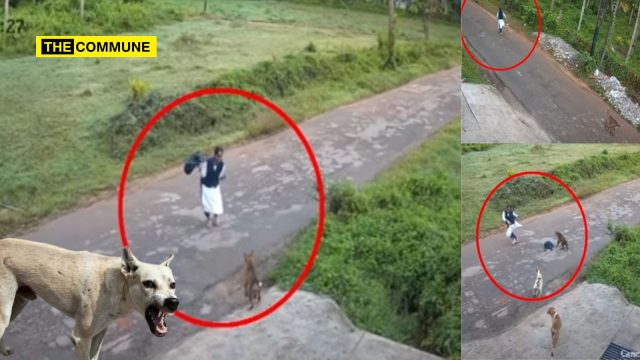
In a separate case, a young girl in Karnataka’s Chitradurga district was attacked by stray dogs on July 19 while playing in her locality. CCTV footage showed two dogs chasing the child, believed to be between six and nine years old, during the day in a residential street. The video recorded the girl tripping and falling as the dogs mauled her, before residents intervened and rescued her. She was later seen visibly shaken and in distress after the attack.

Subscribe to our channels on Telegram, WhatsApp, and Instagram and get the best stories of the day delivered to you personally.

The ‘Buffoon’ Insult: Mayasabha Reenacts Rajiv Gandhi’s Humiliation of Congress Leader Anjaiah That Triggered The Telugu Pride Movement And Birth Of TDP

mayasabha rajiv gandhi t anjaiah airport telugu pride

Sony LIV’s new political drama Mayasabha, set in the turbulent political climate of 1990s Andhra Pradesh, draws loose inspiration from landmark political events, including the 1982 confrontation between Rajiv Gandhi and then Andhra Pradesh Chief Minister T Anjaiah, an episode that reshaped state politics and gave rise to the ‘Telugu atmagauravam’ (Telugu self-respect) movement.

Created by filmmaker Deva Katta and co-directed with Kiran Jay Kumar, the series traces the friendship-turned-rivalry between two young politicians from opposing parties, Kakarla Krishnama Naidu (Aadhi Pinisetty) and MS Rami Reddy (Chaitanya Rao). Their parallel rise to political prominence unfolds against a backdrop of party coups, betrayals, and shifting loyalties. Divya Dutta features as Iravati Basu, with production by Vijay Krishna Lingamaneni and Sree Harsha under Hitmen & Proodos Productions LLP.

The scenes show a Chief Minister summoning MLAs to a hotel to expel 35 members, before shifting focus to Naidu and Reddy’s evolving camaraderie and rivalry. The narrative culminates in a high-tension sequence echoing Chandrababu Naidu’s 1995 Ashram Hotel political manoeuvre, where key figures such as Harikrishna, Daggubati Venkateshwara Rao, and K. Chandrashekar Rao (KCR) were aligned with Naidu’s camp.

Historical Parallel: The 1982 Airport Incident

The series references the February 1982 Begumpet Airport incident in which Rajiv Gandhi, then Congress general secretary, publicly rebuked Chief Minister T Anjaiah for what he considered an ostentatious welcome. Anjaiah, a loyal Congress leader from Medak district who had risen from a labour union background to the chief ministership at Indira Gandhi’s behest, had arranged elaborate state-sponsored reception arrangements, including a hired plane, band party, and hundreds of supporters.

Rajiv Gandhi, reportedly irritated by the display, chastised Anjaiah in front of assembled party workers, allegedly calling him a “buffoon” and threatening to cut short his visit if the reception did not end quickly. Refusing garlands and departing for Tirupati without the Chief Minister, Gandhi’s public rebuke was widely covered in the media and perceived as an affront to Andhra Pradesh’s dignity.

Weeks later, Anjaiah was removed from office by Indira Gandhi. While the Congress cited municipal election losses in Visakhapatnam and Vijayawada as the official reason, the airport episode was seen as a catalyst.

Rise of Telugu Desam Party

The perceived humiliation of a state leader by a national party figure became a rallying point for Telugu pride. Actor N.T. Rama Rao (NTR) capitalised on this sentiment, founding the Telugu Desam Party (TDP) later in 1982. Running on the platform of ‘Telugu atmagauravam’, NTR’s party defeated the Congress in the 1983 state elections, ending its uninterrupted rule since Independence.

Congress briefly returned to power in 1985, but NTR reclaimed the chief ministership in 1989. The TDP also became the launchpad for Chandrababu Naidu, who joined the party after losing a 1983 election as a Congress candidate. In 1995, Naidu orchestrated a political coup against NTR, forming a new government and inducting KCR into his Cabinet.

From Telugu Pride to Telangana Movement

KCR, denied a Cabinet berth after the 1999 elections and instead offered the deputy speakership, quit the TDP in 2001 to launch the Telangana Rashtra Samithi (TRS), spearheading the statehood movement. Telangana was carved out of Andhra Pradesh in 2014, with KCR’s party, now the Bharat Rashtra Samithi (BRS), dominating state politics until recently.

(With inputs from India Today)

Subscribe to our channels on Telegram, WhatsApp, and Instagram and get the best stories of the day delivered to you personally.
Supreme Court Recalls Order Ousting Allahabad High Court Judge From Criminal Cases

"Let The Past Not Haunt The Future": Supreme Court To Hear Challenges To Places Of Worship Act supreme court allahabad high court panchayat recount vantara waqf amendment posh babri masjid facebook post

The Supreme Court on Friday (8 August 2025) recalled its unprecedented 4 August 2025 order that had barred an Allahabad High Court judge from hearing criminal cases until his retirement. The recall came after criticism from within the judiciary, including a letter signed by 13 high court judges urging the Allahabad High Court Chief Justice to defy the directive.

The August 4 order, passed by a bench of Justices J.B. Pardiwala and R. Mahadevan, had taken strong exception to an order by Justice Prashant Kumar refusing to quash a criminal complaint in what the apex court deemed a purely civil dispute. Calling Justice Kumar’s ruling one of the “worst and most erroneous” they had seen, the bench had directed the Chief Justice of the Allahabad High Court to remove him from all criminal cases and make him sit with a senior judge.

High Court judge Justice Arindam Sinha, in a letter to Chief Justice Arun Bhansali signed by 12 other judges, wrote that the August 4 order was “made without direction for issuance of notice and contains scathing remarks on apparently baseless findings against the learned judge.” The letter sought a full court meeting to resolve that the high court “will not comply with the August 4 order since the Supreme Court does not have administration superintendence over High Courts” and to record “anguish over the tone and tenor of the order.”

Case Background

The dispute arose from a complaint by Lalita Textiles alleging that M/S Shikhar Chemicals had failed to pay ₹4.59 lakh from a ₹52.34 lakh thread supply. After a magisterial court issued summons, the company moved the high court, arguing the matter was civil in nature. Justice Kumar refused to quash the summons, writing:

“O.P. no.2 appears to be a very small business firm and for him, the aforesaid amount along with interest is a huge amount. In case, subject to filing civil suit, O.P. no.2 will not be in position to pursue the civil litigation. In case, O.P. no.2 files a civil suit firstly, it will take years for it to see any ray of hope and secondly, he will have to put more money to pursue the litigation. To be more precise it would seem like good money chasing bad money. If this Court allows the matter to be referred to civil court on account of civil dispute between the parties, it would amount to travesty of justice and O.P. no.2 would suffer irreparable loss and he might even not be in a position to emerge from the financial constraints to pursue the matter.”

The Supreme Court described these findings as “shocking.” The August 4 order stated, “The judge has gone to the extent of saying that asking the complainant to pursue civil remedy for the purpose of recovery of balance amount would be very unreasonable, as a civil suit may take a long time before it is decided. Therefore, complainant should be permitted to institute a criminal proceedings before the purpose of recovery of balance amount. This is the understanding of a high court judge that, even ultimately, rightly or wrongly, if the accused is convicted, the trial court will award him the balance amount.

The findings recorded in para. 12 are shocking. We are left with no other option than to set aside the order even without issuing notice to the Respondents. In the result, we partly allow the petition and set aside the impugned order passed by the High Court. We remand the matter to the High Court for fresh consideration of the criminal miscellaneous application. We request the Hon’ble Chief Justice of the High Court to assign this matter to any other judge of the High Court.”

The bench had further ordered:

“We further request the Hon’ble Chief Justice to immediately withdraw the present determination of the concerned judge. The concerned judge should be made to sit in a division bench with a seasoned senior of the High Court. In any view of the matter, the concerned judge should not be assigned any criminal determination till he demits office. If at all, he is to be to sit as a single judge, he shall not be assigned any criminal determination.”

CJI’s Intervention and Recall

Following backlash, Chief Justice of India B.R. Gavai wrote to Justice Pardiwala’s bench requesting reconsideration. When the matter was re-listed, Justice Pardiwala told the court, “We have received an undated letter from the hon’ble Chief Justice of India requesting the reconsideration of the observations in paras… In such circumstances, we directed the Registry to re-notify the main matter for considering the request made by the Chief Justice of India.”

Pronouncing the fresh order, Justice Pardiwala said, “At the outset, we must clarify that our intention was not to cause embarrassment or cast aspersions on the concerned Judge. We would not even think of doing so. However, when the matters cross a threshold and the dignity of the institution is imperilled, it becomes the constitutional responsibility of this Court to intervene even when acting under its appellate jurisdiction under Article 136 of the Constitution.”

The bench deleted paragraphs 25 and 26 of the August 4 order, leaving the matter to the Chief Justice of the Allahabad High Court, while emphasising, “We reiterate, whatever we said in our order was to ensure that the dignity and the authority of the judiciary as a whole is maintained high in the minds of the people of this country. It is not just a matter of error or mistake by the judge concerned in appreciating the legal points or facts. We were concerned about the appropriate direction to be issued in the interest of justice and to protect the honour and dignity of the institution.”

“For 90% of the litigants in the country, the High Court is the final Court of Justice. Only the remaining 10% can afford to approach the Supreme Court… In any view of the matter, since a request in writing has been received from Hon’ble the Chief Justice of India and in due deference to the same, we hereby delete para 25 and 26 from our order dated 4th August 2025. The order be corrected accordingly. While we are deleting the paragraphs, we leave it to the Chief Justice of the Allahabad High Court to now look into the matter. We fully acknowledge that the Chief Justice of a High Court is the master of the roster.”

The bench maintained that the impugned high court order was “perverse” and “illegal,” adding, “We hope that in future, we may not have to come across such perverse and unjust order from any High Court. The endeavour of the High Court should always be to uphold the rule of law and to maintain institutional credibility. If the rule of law is not maintained or protected within the Court itself, then that would be the end of the entire justice system of the Country. The Judges at any level are expected to work efficiently, discharge their duties diligently and always try and endeavour to fulfil their constitutional oath.”

(With inputs from Live Law)

Subscribe to our channels on Telegram, WhatsApp, and Instagram and get the best stories of the day delivered to you personally.
Madras High Court Slams DMK Govt For Delaying RTE Reimbursements To Private Schools

On7 August 2025, the Madras High Court expressed concern over the Tamil Nadu government’s failure to fulfill its obligations under the Right of Children to Free and Compulsory Education (RTE) Act. The Court questioned why the State was delaying reimbursements to private unaided schools that enroll underprivileged children, choosing to wait for funds from the central government instead of taking independent action.

A Division Bench comprising Justices G.R. Swaminathan and V. Lakshminarayanan remarked that the State’s hesitancy in meeting this financial responsibility could create the perception that it lacks commitment to ensuring education for economically disadvantaged children under the RTE Act.

Contempt Petition Against Education Officials

These observations came during the hearing of a contempt petition filed against School Education Secretary B. Chandra Mohan and Director of Private Schools P. Kuppusamy. The officials were accused of failing to comply with an earlier court directive issued on 10 June 2025, in a public interest litigation (PIL) matter.

During the hearing, Special Government Pleader U.M. Ravichandran informed the court that the Tamil Nadu government had filed an appeal before the Supreme Court on the same day, challenging the 10 June order. The Bench acknowledged this development and postponed the contempt hearing to 14 August 2025.

Background 

The PIL in question had urged the State government to begin RTE admissions for the 2025–26 academic year without delay. Petitioners feared that the ongoing backlog in reimbursing fees to private schools for past academic years might negatively impact the admission process.

In its 10 June judgment, the court had observed that tensions between the State and Centre particularly over Tamil Nadu’s opposition to implementing the National Education Policy (NEP) 2020 had resulted in delays in the release of central education funds. The State had already approached the Supreme Court, alleging that the Centre had withheld ₹2,151.59 crore under the Samagra Shiksha Scheme (SSS), including the RTE component.

Despite these issues, the High Court had instructed the Union government to consider separating RTE-related funding from the broader SSS allocations. Simultaneously, it directed the Tamil Nadu government to proceed with reimbursing private schools for RTE admissions, regardless of central fund disbursal.

The responsibility to reimburse private unaided schools lies with the State government,” the court had stated. “Lack of central funds cannot be used as an excuse to avoid this statutory duty.” The current contempt petition alleges that this court order has not been followed.

(With inputs from The Hindu)

Subscribe to our channels on TelegramWhatsApp, and Instagram and get the best stories of the day delivered to you personally.
TNM’s Double Standards Exposed: Dhanya Rajendran Buttresses Congress Dynast Rahul Gandhi’s Voter Fraud Claims While Turning A Blind Eye To DMK’s Illegal Voter Data Harvest

tnm congress dmk corporation workers

In a classic case of partisan journalism, The News Minute (TNM) and its editor-in-chief Dhanya Rajendran have once again exposed their blatant bias by amplifying Rahul Gandhi’s unsubstantiated allegations of voter fraud while conveniently ignoring the DMK’s brazen misuse of government machinery to harvest voter data under the guise of electoral verification.

On 7 August 2025, Gandhi triggered a political storm after threatening “consequences” for polling officials if the ECI failed to release certain electoral data. While his remarks drew condemnation from the BJP, Dhanya Rajendran took to social media to endorse his claims by reviving her outlet’s 2023 investigation into voter list irregularities in Bengaluru’s Mahadevapura constituency.

TNM’s Cherry-Picked Investigation

TNM’s 2023 report on the now-defunct alleged that the Chilume NGO, contracted by the BBMP and working with the ECI, illegally harvested voter data, trained workers at BJP offices, and facilitated targeted voter deletions in Muslim-dominated Shivajinagar. TNM’s report claimed data was sold to political actors, with some BJP leaders among the buyers, and questioned unexplained cash transfers to associates of the NGO founder. which allegedly siphoned voter data to benefit the BJP, was paraded as “investigative journalism.”

While Rajendran cited this investigation as proof that Gandhi’s charges had merit, critics note that neither she nor TNM have applied the same scrutiny to a current controversy in Tamil Nadu involving the DMK’s Oraniyil Tamil Nadu membership drive, run through the “Makkaludan Stalin” app. TNM is conspicuously silent when its own backyard witnesses a far more egregious scam: DMK cadres masquerading as Greater Chennai Corporation (GCC) officials or accompanying them to trick residents into enrolling in the party’s Makkaludan Stalin app via OTP-based verification.

In several Chennai neighbourhoods, residents have alleged that individuals wearing Greater Chennai Corporation (GCC) identity cards are going door-to-door posing as civic officials conducting electoral roll verification. Residents say they were asked to share mobile numbers, after which the number was entered into an app and a missed call to a given number was requested. Soon after, they received a pre-recorded message from Chief Minister M.K. Stalin welcoming them to the DMK’s campaign.

Multiple accounts describe entire streets undergoing this process, with many believing it to be an official ECI initiative. The ECI has issued no directive authorising such missed-call or OTP-based verification for voter lists. Observers warn that the practice blurs the line between government functions and party mobilisation, raising concerns over coercion, data privacy violations, and political misuse of civic authority.

The Madurai Bench of the Madras High Court has already issued a temporary injunction restricting the DMK’s OTP-based membership enrolment over privacy concerns. Allegations continue that local DMK functionaries are under pressure to inflate membership numbers ahead of the 2026 Assembly polls.

While TNM hyperventilates over a BJP-linked NGO, it turns a blind eye to the DMK’s systemic exploitation of civic workers to harvest voter data for political gains. The double standards are staggering.

DMK’s Data Racket: A TNM Blackout

TNM refuses to investigate how DMK cadres either allegedly posing as Greater Chennai Corporation Workers or accompanying, are going door-to-door, misleading citizens into believing they are part of an official Election Commission drive.

TNM refuses to speak up and investigate how residents are duped into providing mobile numbers, which are then fed into the DMK’s membership app, followed by a pre-recorded call from CM Stalin “thanking” them for joining the party.

TNM refuses to call out how this process has not received ECI authorization – The Election Commission has no such OTP-based verification process, confirming this as a blatant voter data heist.

Yet, TNM which claims to hold power accountable, has zero reports on this scandal. Why? Because it doesn’t fit their narrative of painting the BJP as the sole villain of Indian democracy.

TNM’s Congress Buttressing Agenda

Rahul Gandhi’s recent theatrics, threatening Election Commission officials with “consequences” if they don’t release voter data, was uncritically amplified by TNM. But when the DMK engages in actual electoral malpractice, TNM’s silence is deafening.

Subscribe to our channels on TelegramWhatsApp, and Instagram and get the best stories of the day delivered to you personally.
Manipur Police Identify 304 Without Valid Inner Line Permit In Statewide Drive Against Illegal Infiltrators

Manipur Police, which launched extensive search operations across the state to detect the illegal infiltrators from other countries, including Myanmar and Bangladesh, detected 304 people without a valid Inner Line Permit (ILP), officials said on 7 August 2025.

A senior police official said that documents of 2,412 individuals have been verified during the past week, out of which 170 were found without an ILP permit and 134 carried expired ILP documents. These defaulters were immediately taken to Mao gate ILP counter in the Senapati district and made to acquire the required ILP passes. However, so far, no illegal immigrant has been detected, he said.

The drive was carried out in market areas, along the National Highway-2, Maram-Peren road, Tadubi-Tolloi road and other inter-village roads in all Police Station jurisdictions by the Senapati District Police Task Force, which was constituted to detect the illegal migrants. Checking continues to be carried on at all border entry points. This special drive would be continued in the days to come, the official said.

The ILP under the Bengal Eastern Frontier Regulation, 1873, is an official travel document that allows an Indian citizen to visit the ILP-enforced state and areas for a limited period and with a specific purpose. The ILP, which aims to protect the identity and existence of the indigenous people, has been in force in Arunachal Pradesh, Nagaland, Mizoram and Manipur. Obtaining the ILP is mandatory for anyone who is not an indigenous inhabitant of these northeastern states, and after obtaining the permit, the individual can enter these states for a specified period and specific purpose. Agitations are being held on and off to promulgate the ILP in Meghalaya. In an all-out effort, Manipur Police last month launched extensive search operations across the state to detect the illegal infiltrators from other countries, including Myanmar and Bangladesh.

A senior official said that the Manipur Police, with utmost seriousness, have taken up the issue of illegal immigrants, including Bangladeshis, Rohingyas (Myanmar nationals) and Pakistani citizens, in view of growing challenges and threats. He said that the revised instructions outlining the procedure for detection, restriction of movement, and deportation of such illegal migrants have been issued recently by the police headquarters and circulated to all 16 district Superintendents of Police across the state.

“In addition, a comprehensive standard operating procedure (SOP) for verification and detection of illegal immigrants, including Pakistani and Bangladeshi nationals, has been provided to ensure uniform and coordinated action at the district level,” the official said. To strengthen enforcement, Special Task Forces (STFs) have been constituted by all 16 district police authorities to detect, identify, and take appropriate legal action against illegal immigrants residing in the state.

Senior officers are conducting regular and strict reviews of the progress and effectiveness of the actions being taken in this regard, the official said. Manipur shares an around 400 km unfenced international border with Myanmar in the southeast, while the state is bounded by Nagaland in the north, Assam in the west, and Mizoram in the south. Another official said that though Manipur does not border Bangladesh, neighbouring Assam and Mizoram share a porous border with it, and there is an apprehension of infiltration from this direction.

-IANS

Subscribe to our channels on TelegramWhatsApp, and Instagram and get the best stories of the day delivered to you personally.
Supreme Court To Hear Plea On Restoring J&K Statehood Today

Supreme Court Constitutes SIT To Probe Chennai Minor Sexual Assault Case. statehood ncpcr muslim girl marriage free speech

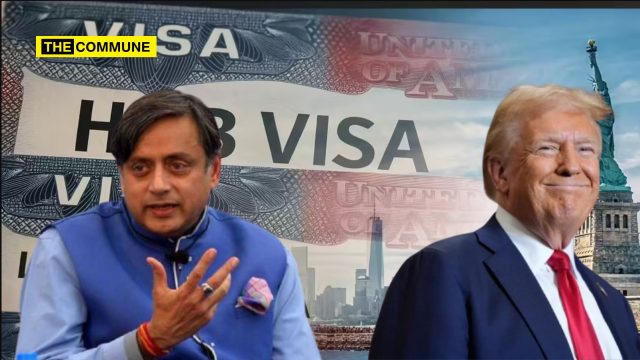
The Supreme Court will hear a petition seeking directions to the Central Government to restore statehood to the Union Territory of Jammu and Kashmir on Friday. The plea was mentioned before Chief Justice of India (CJI) B.R. Gavai by senior advocate Gopal Sankaranarayanan, who confirmed that the matter has been listed for hearing on August 8 (Friday).

The petition, filed by Zahoor Ahmed Bhat and activist Khurshaid Ahmad Malik, contends that the continued delay in restoring statehood is “gravely affecting the rights of the citizens of Jammu and Kashmir and also violating the idea of federalism.”

The applicants argue that the failure to restore statehood within a time-bound framework amounts to a violation of federalism, which forms part of the Basic Structure of the Constitution. “In re: Article 370 of the Constitution” verdict, a 5-judge Constitution Bench, headed by then CJI D.Y. Chandrachud, had left open the question of whether the Parliament can extinguish the character of statehood by converting a state into one or more Union Territories, relying on the statement made by Solicitor General Tushar Mehta that statehood would be restored to Jammu and Kashmir.

However, it had ordered the Election Commission of India to take steps to conduct elections to the Legislative Assembly of Jammu and Kashmir, constituted under Section 14 of the Reorganisation Act, by 30 September 2024, and said that “restoration of statehood shall take place at the earliest and as soon as possible”.

During the earlier hearings, SG Mehta had told the court that the Union Home Ministry could not provide a specific timeline and that it would take “some time” to restore statehood. In May 2024, the Supreme Court dismissed review petitions challenging its verdict, stating there was “no error apparent on the face of the record” and refused to list the matter in open court.

-IANS

Subscribe to our channels on TelegramWhatsApp, and Instagram and get the best stories of the day delivered to you personally.