Home Blog Page 31

2.64 Lakh Loads, ₹28 Crore Loss, Yet DMK’s Ponmudi, Son Gautham Sigamani Among 7 Acquitted As Witnesses Turn Hostile

ponmudi gautama sigamani dmk red sand quarry

The Villupuram Principal District and Sessions Court has acquitted former DMK minister K Ponmudi, his son Gautham Sigamani, and five others in the red sand quarry irregularities case, citing lack of sufficient evidence and unreliable documentation.

The case was registered in 2012 by the Villupuram District Crime Branch against eight individuals, including Ponmudi, his son Gautham Sigamani, and associates Jayachandran, Rajamahendran, Sadhanandam, Kothakumar, Gopinathan, and Lokanathan. The charges related to alleged illegal mining of red sand from a government quarry in Poothurai village near Vanur between 2006 and 2011, as reported in Dinamalar.

The prosecution had alleged that 2,64,644 lorry loads of red sand were extracted beyond permitted limits, resulting in a loss of ₹28.36 crore to the state exchequer. The quarry had been leased to private operators, and it was claimed that the operations were carried out with the backing of Ponmudi during his tenure as minister.

The trial, which went on for several years, saw examination of 57 witnesses. However, over 30 witnesses turned hostile, significantly weakening the prosecution’s case. One of the accused, Lokanathan, had died earlier due to illness, as reported in Tamil ABPLive.

Judge Manimozhi, who had reserved the verdict on 2 March 2026, delivered the judgment on 2 April 2026. The court held that the prosecution failed to submit sufficient and acceptable documentary evidence. It also noted that the quarry site was already a low-lying area that had been levelled, undermining the claims of illegal extraction.

Based on these findings, the court acquitted Ponmudi, Gautham Sigamani, and the remaining accused.

All seven accused were present in court at the time of the verdict. Following the judgment, Gautham Sigamani was seen leaving the court premises in tears.

The prosecution was represented by advocate Karthikeyan, while advocate Anantha Narayanan appeared for the defence.

Subscribe to our channels on WhatsAppTelegram, Instagram and YouTube to get the best stories of the day delivered to you personally.

DMK Stooge Kamal Haasan’s MNM Collected ₹50K From MLA Aspirants, Then Quit The Race And Still Hasn’t Returned The Money

Actor and part-time politician DMK stooge Rajya Sabha MP Kamal Haasan has come under sharp criticism from within his own party after the Makkal Needhi Maiam (MNM) abruptly decided to stay out of the Tamil Nadu Assembly elections, leaving over 60 aspirants who had paid a steep ₹50,000 application fee without a refund, a ticket, or even an explanation, as reported in The New Indian Express.

In the months leading up to the polls, MNM had called for applications from party members seeking tickets to contest. Each applicant was asked to pay ₹50,000 – an amount cadres say was significantly higher than what other parties charged. Over 60 aspirants across Tamil Nadu, including several from Coimbatore, reportedly paid the fee and submitted applications, hoping to represent the party.

Image Source: TNIE

However, the party’s sudden decision to stay away from the elections has triggered anger and disillusionment among its own functionaries. Cadres who had invested both money and years of groundwork now find themselves sidelined, with no clarity on refunding the fees collected.

Party insiders have indicated that the decision has exposed serious questions about MNM’s internal functioning and leadership intent. Several functionaries have pointed out that the party actively encouraged applications and accepted large sums despite having no clear commitment to contest, raising concerns about financial transparency and accountability.

In regions like Coimbatore, where MNM had previously built some momentum and was part of the DMK-led alliance, expectations were particularly high. Cadres believed the party stood a realistic chance in constituencies such as Coimbatore South. The withdrawal, therefore, has not only dealt a political blow but also deepened resentment within the ranks.

Adding to the controversy, multiple applications were reportedly submitted under the name of senior party leader R. Thangavelu at his request, further complicating the issue of accountability. Functionaries claim there has been little to no communication from the leadership regarding the status of these payments.

With no immediate refund announced, frustration has escalated across the state. Cadres are now openly demanding that the party return the collected money, arguing that the episode has caused both financial loss and a serious erosion of trust.

Even as internal discontent grows, MNM’s leadership has remained largely non-committal, with indications that discussions are underway on whether to issue full or partial refunds. A final decision is said to be pending.

Subscribe to our channels on WhatsAppTelegram, Instagram and YouTube to get the best stories of the day delivered to you personally.
Opposed Hindu Rituals At Govt Event As MP, Now Seeks Temple Blessings For Votes As Ex-DMK MP Senthil Kumar Turns MLA Candidate

Former Dharmapuri DMK MP S. Senthil Kumar, who had earlier triggered controversy for opposing Hindu rituals at government functions, is now under scrutiny after visiting a temple and offering prayers following his announcement as the party’s candidate for the Palacode Assembly constituency.

During his tenure as MP in 2022, Senthil Kumar had publicly objected to a Bhoomi Pooja organised by government officials for a lake restoration project at Alapuram. At the event, he questioned the inclusion of Hindu rituals in a government function and demanded the presence of representatives from other religions, including Christian priests and Muslim imams. He had also asked officials why such practices were being followed and reportedly instructed them not to invite him to similar events in the future.

In the same incident, he confronted Public Works Department officials and insisted that government functions should not feature religious rituals. The episode escalated when he intervened during the ceremony and halted the proceedings, leading to widespread criticism. The video of the incident later circulated widely on social media.

Following the backlash, Senthil Kumar remained largely absent from major party activities over the past two years.

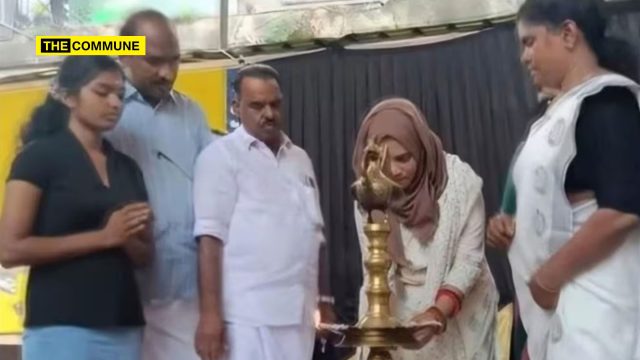
However, with the 2026 Tamil Nadu Assembly elections approaching, he has re-emerged as the DMK candidate for Palacode and has begun active campaigning, as reported in Dinamalar. As part of this, he recently participated in a Mandala Pooja at the Selakarappan–Selakarammal temple in Keragodahalli, where he was seen offering prayers and applying a sacred mark on his forehead.

This is a stark contrast between his earlier opposition to Hindu rituals and his current public display of religious participation. Even within sections of the DMK, there have reportedly been murmurs questioning the shift, with some reportedly describing the move as politically motivated in the context of electoral calculations.

Subscribe to our channels on WhatsAppTelegram, Instagram and YouTube to get the best stories of the day delivered to you personally.
Why Did Modi Govt Move To Zoho Workplace And Why This ₹180 Crore Bet Is The Smartest IT Decision Made In Decades

The government just spent ₹180 crore to move 16.68 lakh email accounts to Zoho. People are asking why. The real question is: what took so long?

The NIC Era: A System Past Its Expiry Date

The National Informatics Centre has served India’s digital backbone since 1976. For decades, NIC-managed email running on @nic.in and @gov.in domains was the default communication infrastructure for the Central government. It worked. Mostly. And for a long time, “mostly” was considered good enough.

But the cracks had been widening for years. The NIC email interface was not designed  for the smartphone era. Logging in, attaching files, and managing folders on a mobile device was cumbersome enough that officials across ministries simply stopped using it for routine communication. The more pressing problem was not inconvenience – it was what officials did instead.

A pattern emerged across government departments: officials were routing official correspondence through personal accounts on Gmail, Yahoo, and ProtonMail. Government policy discussions, inter-ministerial notes, and sensitive departmental communications were passing through servers in California, Ireland, and Switzerland – servers owned by foreign corporations, governed by foreign law, and entirely outside India’s jurisdictional control.

This was not malice. It was friction. The NIC system made modern communication harder than it needed to be, and officials found workarounds. The result was an unofficial shadow infrastructure of foreign-hosted government communication that no one had formally authorised and no one was formally monitoring.

The Security Wake-Up Call NIC Could Not Survive

Beyond usability, the NIC system carried a more dangerous vulnerability: its own domain names were being weaponised against it.

In early 2025, a sophisticated phishing campaign sent malicious emails to hundreds of government officials, from @nic.in and @gov.in addresses. The attack specifically targeted dormant, poorly secured NIC accounts that had been compromised, then used to send emails that appeared to originate from legitimate government addresses. Officials in the Ministry of External Affairs and Ministry of Defence received these emails.

This was not a new problem. A near-identical attack had hit over 450 top government officials in 2008-2009, including accounts linked to the Prime Minister’s Office and the National Security Adviser. The same architecture. The same vulnerability. Nearly two decades apart.

When a system has been exploited in the same way twice, sixteen years apart, and the underlying vulnerability has not been resolved, it is no longer a security incident – it is a structural failure.

What the Government Chose and Why

On 1 April 2026, MoS for Electronics and IT Jitin Prasada informed the Lok Sabha that the Centre had spent ₹180.10 crore migrating 16.68 lakh official email accounts to a cloud-based platform operated by Zoho. The migration was carried out through NIC, which selected Zoho as the Master System Integrator (MSI) – a key detail, because it means NIC continues to own and operate the system. Zoho is the technology backbone; the Indian government retains full ownership.

The vendor selection was not a political decision or a patriotism-driven preference. It followed a Government e-Marketplace (GeM-CPPP) competitive bidding process, including a Proof of Concept conducted with shortlisted vendors tested against actual government user groups. Zoho won on merit and pricing.

Per-account pricing ranges from ₹170 to ₹300 per month depending on mailbox storage (30 GB to 100 GB). Payments are made on a per-migrated-account basis – the government pays only for what is actually deployed.

The Data Sovereignty Question

The most significant clause in the entire deal is not the price. It is where the data lives.

MeitY’s official Parliamentary affidavit states explicitly, “The cloud-based solution, including Primary and Disaster Recovery data centres, are physically located within India, and no data can be shared or replicated outside the country. The Service Provider, M/s Zoho, is a registered Indian entity subject to Indian laws and jurisdiction.”

This matters enormously. Most SaaS providers including Microsoft 365 and Google Workspace host data on infrastructure they do not own, typically on AWS, Azure, or Google Cloud servers that may be physically located outside India. When an Indian government official sends an email on Microsoft 365, that data may pass through Dublin, Singapore, or Oregon before it arrives.

Zoho owns and operates its own data centres in Mumbai and Chennai. No third-party cloud hyperscaler is involved. The physical hardware is in India. The company is registered in India. The legal jurisdiction is Indian. If a dispute arises over data access or privacy, it is resolved under Indian law by Indian courts, not the US CLOUD Act or European GDPR frameworks.

For a government handling defence procurement correspondence, foreign policy communications, and inter-ministerial policy documents, the question of which country’s law governs data access is fundamental.

The Competitive Economics

The pricing arithmetic is worth examining carefully.

₹180 crore for 16.68 lakh accounts works out to approximately ₹1,080 per account for the current project duration. A comparable Microsoft 365 Government Cloud deployment, with equivalent storage, security, and compliance features, would have cost between ₹5,400 and ₹10,800 per account over the same period, based on Microsoft’s prevailing Government plan pricing in India.

Google Workspace for Government would have been similarly priced, with the additional complication that Google’s government-tier infrastructure does not have India-local data residency guarantees at the same level Zoho has contractually provided here.

Zoho’s pricing was not a loss-leader or a patriotic discount. It reflected a fundamentally different cost structure: an Indian company, building on its own infrastructure, with no hyperscaler margin built into the price. The savings to the Indian exchequer over the full contract period run into hundreds of crores.

What Zoho Gains

It would be naive to read this purely as national service. Zoho has won something far more valuable than a single government contract.

Zoho co-founder Sridhar Vembu has spent 25 years building a full-stack enterprise software suite: email, CRM, HR management, project management, collaboration tools, analytics, that is a comprehensive alternative to Microsoft 365 and Google Workspace. That suite has been enormously successful in the private sector globally, but has struggled to break into government procurement, where incumbency and familiarity with Microsoft products has historically been a near-insurmountable advantage.

This contract changes that calculus permanently. With 16.68 lakh government officials now using Zoho Workplace as their primary email and communication interface, the switching cost to any competitor, Microsoft, Google, or otherwise, becomes enormous. Government IT departments that retrain officials, migrate data, and rebuild workflows on Zoho will not do so again for at least a decade.

Zoho has not just won a contract. It has established itself as the default government enterprise software platform for the Indian public sector – a position it can build on with collaboration tools, document management, video conferencing, and the broader Zoho One suite in subsequent procurement cycles.

The Larger Picture

The NIC-to-Zoho migration is a small but precise illustration of a larger question India has been grappling with for a decade: whether its critical digital infrastructure should rest on foreign-owned, foreign-hosted, foreign-jurisdiction technology or whether India can build and deploy its own.

The answer, in this case, is unambiguous. An Indian company, Indian data centres, Indian legal jurisdiction, a competitive procurement process, and a price that makes the domestic alternative cheaper than the foreign one.

The 1976 infrastructure served its era. The 2026 infrastructure is being built for the next one.

Subscribe to our channels on WhatsAppTelegram, Instagram and YouTube to get the best stories of the day delivered to you personally.
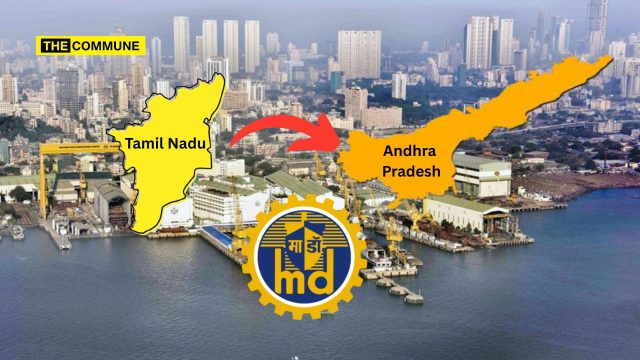
Former Foreign Secretary Nirupama Rao Who Has Reinvented Aman Ki Asha With A “Women’s Caucus” Of India & Pakistan Sits On Soros-Linked ICG Board

India’s former Foreign Secretary Nirupama Menon Rao sat atop the Ministry of External Affairs hierarchy, handling classified diplomatic cables, bilateral security frameworks, and sensitive back-channel communications between nations has now gone fully woke with her diplomacy. She is suggesting a “women’s caucus”, another fancy term for Aman Ki Asha to engage with terror state Pakistan. She’s basically proposing that a muscular India which hits back at Pakistan furiously shouldn’t be a policy. When such a figure

Such statements from a person of such stature doesn’t come out of the blue.

It is an ecosystem that is putting this forward and amplifying.

And as expected, there is a connection to George Soros, the notorious anarchist. Nirupama is on the board of a Soros-linked organisation that has repeatedly pushed narratives indistinguishable from Pakistan’s foreign policy talking points. The question is no longer academic – it is a national security concern.

Who Is On The Board?

Nirupama Menon Rao, who served as India’s Foreign Secretary from 2009 to 2011 and previously as Ambassador to the United States, China, and Sri Lanka, formally joined the Board of Trustees of the International Crisis Group (ICG) in 2024. She is listed on the ICG website as “Former Foreign Secretary of India and former Indian Ambassador to the United States”.

Image Source: X

Former NSA and Foreign Secretary Shivshankar Menon is also on the same board, meaning two of India’s most senior UPA-era diplomats with access to classified security and diplomatic intelligence now sit on the governing body of this organisation.

What Is ICG and Who Funds It?

The International Crisis Group is a Brussels-headquartered think-tank that positions itself as a conflict resolution organisation. It receives significant funding from George Soros’s Open Society Foundations. Soros has been openly hostile toward Prime Minister Modi and the Indian government – he called Modi “no democrat” – he said, “India is a democracy, but its leader Narendra Modi is no democrat. Inciting violence against Muslims was an important factor in his meteoric rise” and declared his intention to see a change in India’s leadership. Soros can be characterised as an “economic war criminal” who had “declared his ill intention to intervene in democratic processes of India”.

ICG’s Track Record on India

ICG’s body of work on India is not neutral academic analysis – it consistently echoes Pakistani state positions on Kashmir. In a 37-page report in August 2020, ICG:

  • Described Kashmir as being under “Indian military occupation”
  • Called on India’s allies to “pressure” New Delhi to relax its Kashmir approach
  • Used language such as “forcible suppression of Kashmiri dissent”
  • Warned of “dire consequences” of India’s actions in its own sovereign territory

The report was celebrated and republished by Pakistani state-linked media as international validation of Pakistan’s Kashmir narrative. ICG’s India-Pakistan Kashmir page continues to frame the issue as a bilateral dispute requiring Indian concessions, directly mirroring Islamabad’s stated foreign policy position.

The Conflict of Interest?

Nirupama Menon Rao was not a mid-level bureaucrat. As Foreign Secretary she was the seniormost official of India’s MEA – privy to the most sensitive details of India’s diplomatic postures, back-channels with Pakistan, intelligence-sharing frameworks, and strategic red lines. She held these positions during the period immediately following 26/11, when India-Pakistan diplomatic architecture was most fragile and consequential. She subsequently joined the board of an organisation that:

  • Is funded by a man who has publicly declared intent to destabilise India’s government
  • Produces reports that Pakistani media uses as international pressure tools against India
Image Source: Pakistani Portal The Express Tribune
  • Frames India’s sovereign decisions on Kashmir as human rights violations
No Law, But A Clear Ethical Gap

India currently has no post-retirement cooling-off or affiliation restriction for IFS officers joining foreign-funded geopolitical organisations, unlike the strict norms that apply to defence and intelligence personnel. This is the legal gap that allows a former Foreign Secretary to sit on the board of a Soros-funded body without any regulatory scrutiny. The FCRA Amendment 2026, which many in Nirupama Rao‘s circles have publicly opposed, is precisely designed to address foreign-funded influence on Indian policy discourse. The irony is stark.

India asks serving diplomats to sign secrecy oaths that bind them for life. It is a reasonable question to ask whether those oaths have any practical meaning when the officials who signed them can, upon retirement, join the governing boards of organisations funded by those openly working against India’s democratic integrity and territorial positions.

Subscribe to our channels on WhatsAppTelegram, Instagram and YouTube to get the best stories of the day delivered to you personally.
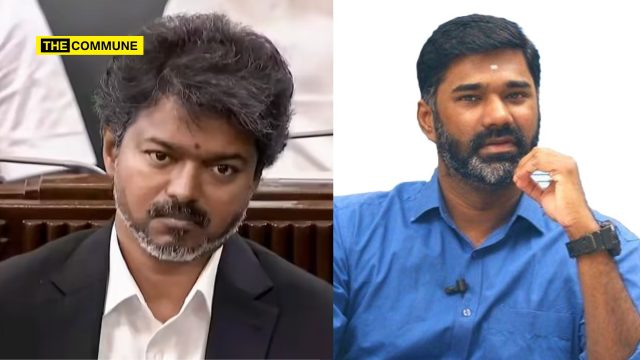
Congress-Era NSA Shivshankar Menon, A Trustee On Soros-Linked ICG, Worried About US Going ‘Soft’ On India’s Domestic Agenda

Did you know that a retired top national security official sat on the board of a George Soros organisation and used an American journal to argue the US was going too easy on India?

The Man and His Affiliations

Shivshankar Menon is no peripheral figure. He served as India’s Foreign Secretary (2006-2009) and National Security Adviser to PM Manmohan Singh (2010-2014) – positions carrying direct access to classified intelligence, diplomatic strategy, and military planning. After the UPA government’s electoral defeat in 2014, Menon took up international affiliations, most significantly, a seat on the Board of Trustees of the International Crisis Group (ICG), an organisation that counts George Soros among its fellow trustees.

This is not something miniscule. The ICG is not a neutral academic body. Soros, whose Open Society Foundations have been under active investigation by India’s Enforcement Directorate since 2025, sits at its governance level alongside Menon. The ED found that the bulk of ₹300 crore from Soros-linked funds was routed to 12 Indian entities in media, civil society, and policy advocacy. Soros has made it his life’s mission to fight nationalism especially Indian Prime Minister Narendra Modi.

Menon chose not merely an academic fellowship with this organisation, but a Trustee position – a governance-level commitment.

The Foreign Affairs Article

In August 2020, Menon published an article in Foreign Affairs, the flagship journal of the US Council on Foreign Relations, read by American policymakers, diplomats, and Congressional staffers, titled “League of Nationalists: How Trump and Modi Refashioned the U.S.-Indian Relationship”.

His central argument: that the Trump-Modi relationship was built on personal transactionalism, which had allowed Modi to pursue domestic policies the US should have challenged more firmly. Specifically, Menon characterised India’s Citizenship Amendment Act (CAA) as having “excluded Muslim immigrants from the path to citizenship” and described the revocation of Article 370 as part of a pattern that had “hyphenated India’s image with Pakistan’s in a fundamental way, as religiously driven and intolerant states”.

The implicit argument was clear: the US had been too lenient on India, and the bilateral relationship was laundering India’s domestic decisions from international scrutiny.

The Factual Distortion

Menon’s characterisation of CAA is demonstrably misleading. The law does not affect the citizenship of any existing Indian Muslim, nor does it bar any Muslim from applying for citizenship through the standard naturalisation process. What it does is provide an expedited pathway for persecuted religious minorities viz, Hindus, Sikhs, Christians, Buddhists, Jains, and Parsis who fled Pakistan, Bangladesh, and Afghanistan, where they face documented state-sanctioned persecution.

The exclusion of Muslims from this specific pathway is not discrimination – it reflects the fact that Muslims are the majority community in those three countries and are not fleeing religious persecution as a class. For a former NSA and career diplomat of Menon’s calibre, this is not a distinction he could have missed. The framing he chose was the framing of India’s domestic opposition – published in an American journal, at a moment when that framing was being actively weaponised to build international pressure against India.

The Larger Pattern

Menon’s Foreign Affairs piece was not isolated. At a January 2020 public event, he declared: “India has isolated itself with CAA. We are in violation of our international commitments.” He told The Wire: “We’ve lost the ability to be a model country.”

These statements were not made within India’s domestic democratic debate. They were delivered at international fora and published in global journals feeding directly into Western diplomatic pressure frameworks, UN rapporteur reports, and Soros-funded advocacy campaigns that India’s own agencies have since documented.

The Question India Has Not Yet Asked

India currently has no cooling-off period, foreign affiliation disclosure requirement, or post-service restriction for retired senior officials. A former NSA can join a Soros-linked board, publish in American foreign policy journals misrepresenting Indian law, and face no institutional accountability whatsoever.

The facts here are not in dispute: a man who held India’s most sensitive national security position subsequently became a trustee of an organisation co-governed by George Soros, and used that platform to argue, in the American foreign policy establishment’s most influential journal, that the US had been insufficiently critical of India’s elected government.

What one concludes from those facts is a matter of judgment. That they deserve to be read together, not dismissed in isolation, is beyond question.

Subscribe to our channels on WhatsAppTelegram, Instagram and YouTube to get the best stories of the day delivered to you personally.
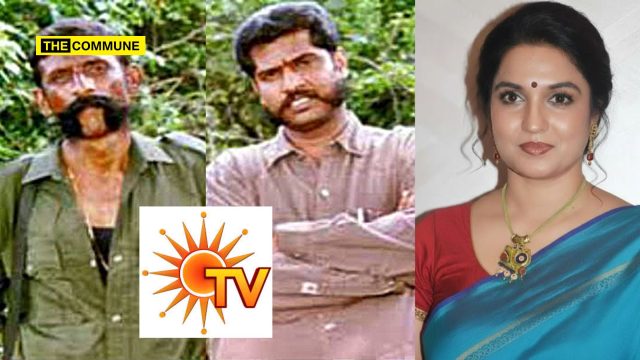
Joseph Vijay’s Driver Or Benami? Company Records Tell A Very Different Story

Joseph Vijay Gave Ticket To ‘Driver’s Son’ - Father Sits As Director In His Real Estate Firm

Two days after actor-politician Joseph Vijay, chief of Tamizhaga Vetri Kazhagam (TVK), announced his first list of candidates, one particular name triggered an emotional wave among his supporters. On social media and fan pages, TVK functionaries repeatedly highlighted that one of the party’s nominees was allegedly the son of Vijay’s long-time driver, portraying it as proof that “anyone who stands by Thalapathy will be rewarded.”

However, company and election records suggest a more complex picture.

Who Is “Driver” Rajendran?

Supporters celebrating the ticket said the candidate’s father had “driven Vijay for over 20 years” and was now being honoured through his son. The man in question is Rajendran. But corporate filings linked to Vijay indicate that Rajendran is not merely a driver but a shareholder and director in at least one of the companies associated with the actor.

In Vijay’s election affidavit, under the list of assets, a firm named “Jaya Nagar Properties” is disclosed. Ministry of Corporate Affairs (MCA) records for this company list:

  • Joseph Vijay as Managing Director
  • Sangeetha Vijay as Director
  • Rajendran as another Director and shareholder

These documents show Rajendran featuring not as an employee but as part of the ownership and management structure of Vijay-linked entities. Sources point out that he also appears as a shareholder in other Vijay-associated companies, though the extent of his role in various private trusts is unclear.

This undercuts the popular social media claim that Vijay has “elevated a mere driver” into politics. At the very least, Rajendran has been positioned as a business associate in formal records.

Entry After 2021, Exit of Sangeetha

MCA filings reviewed for Jaya Nagar Properties show that Rajendran’s effective entry into the company structure is visible around the 2021-22 financial year. Earlier filings prominently feature Sangeetha Vijay, whose signature appears across documents, indicating active participation in corporate decisions up to 2020.

Image Source: Maridhas

From 2022 onwards, however, Sangeetha appears to have been sidelined from this particular entity. Around the same period, she is learnt to have accused Vijay, privately and through legal channels, of financially weakening her position, including alleged transfers of assets into third-party names. While many of those claims remain untested in court, the timing of Rajendran’s formal arrival in the company, coinciding with Sangeetha’s removal from active roles, is reportedly documentary support for at least one of her allegations.

Pattern of Family Ousters?

Records from earlier years suggest this is not the first time key family members have been removed from Vijay-linked companies. In the five-year period preceding the last election, both Vijay’s father, director S.A. Chandrasekhar, and mother Shoba Sekhar were listed as partners in the same corporate structure.

Company documents from around 2020 show:

  • S.A. Chandrasekhar – Partner
  • Shoba Sekhar – Partner
  • Joseph Vijay – Partner
Image Source: Maridhas

Following a public rift over Chandrasekhar’s attempt to float a political party in Vijay’s name, the actor is said to have cut ties with his parents in business matters. Subsequently, they no longer appear as partners in the later filings for Jaya Nagar Properties. Vijay first used Sangeetha as a front to edge out his parents from the company and is now seen using Rajendran in a similar fashion vis-à-vis Sangeetha.

Image Source: Maridhas
The Jaya Nagar Properties Trail

A deeper look into Jaya Nagar Properties traces its roots back to the late 1990s-early 2000s. Original documents indicate that the company arose from land holdings in Jaya Nagar, Porur, and changed hands over time before eventually being acquired into the Vijay-linked ecosystem.

Image Source: Maridhas

Those familiar with the paperwork allege that Vijay has, over the years, systematically channelled a substantial portion of his income into land and real estate–linked companies, buying properties at officially undervalued rates and then transferring them into his own name. For example, a plot with a market value of around ₹5 crore might be shown in documents at ₹20–30 lakh, thereby reducing the declared value and potential tax exposure.

Jaya Nagar Properties seems to be one such vehicle, and say they have forwarded these details as “inputs” to the Income Tax Department for further scrutiny. There is, however, no official confirmation yet of any new tax probe.

“TVS 50” and Image Crafting

The controversy has also thrown up smaller but telling anecdotes about image-building. Supporters have touted the purchase of a TVS 50 moped in Vijay’s name as proof of his simplicity, claiming he would ride it during the 2026 campaign. Detractors dismiss this as a publicity gimmick, saying the vehicle was bought purely to generate such talking points.

Beyond the “Driver’s Son” Narrative

What began as a sentimental story that “Thalapathy gives a ticket to his driver’s son” has, under documentary scrutiny, raised broader questions:

Is Rajendran primarily a long-time driver or a strategic corporate proxy and shareholder?

Do the patterns of removing parents first and then Sangeetha from Jaya Nagar Properties point to systematic asset restructuring?

How much of Vijay’s wealth is parked in undervalued land assets via layered company structures?

While none of these questions have yet been adjudicated in a court of law, the available records make one thing clear: the “driver’s son” narrative is, at best, an oversimplification and at worst, a carefully constructed myth riding on selective disclosure and fan emotion.

Subscribe to our channels on WhatsAppTelegram, Instagram and YouTube to get the best stories of the day delivered to you personally.
“Let Kanimozhi Vs Stalin Break, Can He Speak English? He Thinks He’s MGR”: Total Damage Of MK Stalin In A. Raja’s Audio Leak, Hints At Massive Coup To Takeover Party

An undated audio clip attributed to DMK leader A. Raja has surfaced on social media, sparking a fresh political controversy in Tamil Nadu. The clip, which is being circulated online as previously unreleased, allegedly captures Raja speaking about his time in jail in connection with the 2G spectrum case and his interactions with senior leaders of the DMK.

We had earlier reported a part of the video where A Raja reveals alleged details about the 2G scam and who was behind it. In the longer part of the leaked audio clipping, he is heard talking about MK Stalin.

He says,

Raja says, “Did any MLA from DMK come? Did any MP come? Did any party member come? I was arrested, and only two months later did Kanimozhi come inside [the prison]. Until then, how many people, including those from Nilgiris, came to see me? What must my mental state have been inside that jail? Did they take anything from my house? The money went to Kalaignar TV, I don’t want to say more than that. Did the CBI take anything from my house? Who came to see me?”

He continued, “Did a DMK representative leader come? Did our leader send Duraimurugan? Did a single minister come? The leadership didn’t come. You must have come out of personal affection. After Kanimozhi came, then suddenly the whole army came – ministers rushing in one after another. Don’t I know that? But during those two months, what must my mental state have been? What would have happened if I had given in?

He further says, “Azhagiri came one day – there’s no secret in this. After Kanimozhi’s arrest, Azhagiri came and said, “Everything given to Kalaignar TV, wasn’t it all Stalin’s doing? Why are you and Kanimozhi in jail, why don’t you say Stalin did everything and just become an approver, and you can come out.” Look, whenever trials come in life, I always say this: Please, in politics, especially having been in such positions of power – learn to endure the heat a little. Don’t go running away in panic. I cannot say your political future is over because of this.”

He continues, “I have been a cabinet minister twice, I was cruising at the top. There is no country I have not been to. YDF has no qualification to become the chief. How does a cadre respect him? If you are not able to control your cadres, how can you be a chief?”

The clip seems to have been paused for a bit as there is a slight reduction in tone and voice. He says, “Please don’t do anything foolish or get carried away by your emotions—don’t go and ruin everything. Let me tell you one more thing. This should remain between us. After Kalaignar, the party will go to him (Stalin). But it will not slip out of my grasp. Wait for time – six months, or a year. The wind will change, the wind will change. Think like that.

After I come out, you definitely ask me. When I come out, when I walk out like a hero, a book of mine will be published. It will be published in English and Tamil. Hindu Ram read it and was shocked and ask, ‘What is this, Sir? You’ve really torn into them!’ I have torn everything apart in it. In that, from Pranab Mukherjee, Sonia Gandhi, Manmohan Singh, Chidambaram – how I handled them, all that will be there. That book will become a big star. Until then I will keep quiet and endure. After that I will create a separate identity for myself. Ask me how.

In the northern districts, Vanniyars will be .., but Sivasankar will tell you what kind of a man I am. In my town there is no caste for me. Vanniyars are all my friends, like my own people. Even now, wherever I go, if some ‘Gounder’ is looking at me lowly? All Gounders stand in attention. So I have stepped beyond caste. To live like that, do I have enough money? Do I have enough brains? Kalaignar has gone. Let Kanimozhi Vs Stalin dispute arise. For now he (Stalin) has the big brain. Can he speak English whenever he goes to Delhi? One more thing – He will not trust his ‘thangachi’ (younger sister) Kanimozhi. Isn’t it true? He will not accept her. He cannot throw me out. They cannot throw out my community or my intellect. They cannot take away the other wealth I have; I’ve kept some other ‘locks’. Understand?

The time is not right for me now. Just listen. I can’t go talk to the leader directly. He is going, banging his head and coming back, he is thinking he is MGR. After the leader is gone, a set-back will come. All the Brahmin media will hit him, all the Hindu, Express and others will hammer him. They are already doing it. He thinks he can win like MGR, but the ground is not like that.

Right now, his own father is like a prisoner. The leader has taken him out of the game. If you go and clash with him now, it will go in a very different direction. Please, overnight, convince for my sake. You come, we’ll go. We’ll move when the time is right. I tell you how correct I was. For me, what is intelligent is not to go and shout on the streets. That is the difference between a Brahmin and us – we raise the sickle, but he will not; he will finish the job silently.

I will show from inside the Assembly what I will speak. Even tonight I will show. I have never changed my language with Stalin. I called him and said, ‘Today this happened.’ Down below there is a group under him. Compromise means you agree to be controlled. By 10:30 at night his campaign will end. Then this group will come back. When they come, I will give a sharp warning so they will ask what happened. I will give a sharp warning. …”

Subscribe to our channels on WhatsAppTelegram, Instagram and YouTube to get the best stories of the day delivered to you personally.
“Break Periyar Statue” Facebook Post Not A Crime: Madras High Court Quashes FIR, Calls It Expression Of Opinion, No Enmity Or Unrest Caused

“Break Periyar Statue” Facebook Post Not A Crime: Madras High Court Quashes FIR, Calls It Expression Of Opinion, No Enmity Or Unrest Caused

The Madurai Bench of the Madras High Court has quashed a criminal case against a law student who had posted on Facebook calling for the removal of a statue of E.V.R. Periyar near the Srirangam Temple.

As reported in Bar and Bench, Justice R. Vijayakumar held that the post did not amount to any criminal offence, noting that it was merely an expression of opinion and did not lead to any law and order issue.

“As per Facebook post of the petitioner, the petitioner has only expressed his views that such the said statue would affect the religious sentiments of Hindus. No untoward incidents has happened, pursuant to the said Face book post. The petitioner was studying law in Bangalore at the time of post. Now he has completed his studies and he is about to get enrolled. It is only an expression of opinion and cannot be considered to have promoted enmity between two groups,” the Court held.

The case originated from an FIR registered at Srirangam Police Station in 2023, where the petitioner, M. Barani Dharan, was booked under sections related to promoting enmity, intentional insult, and public mischief after allegedly posting that the Periyar statue near the temple should be broken and removed.

During the hearing, the Court had directed the petitioner to file an affidavit. In response, Dharan stated that the post was made unintentionally, that he had realised his mistake, and that he would not repeat such actions in the future. He also submitted that the pending case would adversely affect his legal career, as he had completed his law degree and was about to enrol as an advocate.

Taking note of the affidavit and the absence of any resultant unrest, the Court observed that the threshold for offences relating to promoting enmity had not been met. It further held that continuing the prosecution would serve no useful purpose.

Accordingly, the FIR in Crime No.2182 of 2023 was quashed. The petitioner was represented by advocate Aayiram K. Selvakumar, while the State was represented by Government Advocate (Criminal Side) B. Thanga Aravindh.

Subscribe to our channels on WhatsAppTelegram, Instagram and YouTube to get the best stories of the day delivered to you personally.
How The News Minute Turned An Attack On Hindus In Andhra Pradesh Into A Story About “Dalit Tensions”

A violent mob attack on a sitting Deputy Speaker at a Hindu temple on Sri Rama Navami became, in The News Minute’s telling, a story about Dalit oppression. Here is what the outlet left out and what it deliberately buried.

What Actually Happened on March 27

As reported in Organiser, on the morning of Sri Rama Navami, 27 March 2026, Andhra Pradesh Assembly Deputy Speaker and Undi MLA K. Raghu Rama Krishna Raju visited the Ramalayam temple in Pedapeta, Akividu, West Godavari district, to offer prayers and garland the idol of Lord Rama. He had been invited by local Hindus who had been seeking the temple’s renovation for years.

After completing the darshan and as his convoy began to leave, a group armed with knives, sticks embedded with nails, and stones launched a coordinated attack on the Deputy Speaker and the Jana Sena and TDP leaders present. Three persons were grievously injured, including one who was stabbed approximately 12 times and hospitalised in critical condition in Bhimavaram. Another sustained a nail injury to the head.

Police registered an FIR against 58 accused, adding serious charges including attempt to murder under Section 109(1) of the Bharatiya Nyaya Sanhita, carrying a punishment of over 10 years, and Section 308(2) related to attempt to commit culpable homicide. All 58 were produced before a court on March 28.

AP Chief Minister Nara Chandrababu Naidu, Deputy CM and Jana Sena President Pawan Kalyan condemned the attack.

What The News Minute Reported Instead

The News Minute published its account on 31 March 2026, four days after the attack, under the headline: “Andhra Pradesh: TDP-RSS call for building Rama temple leads to tensions with Dalits.”

The framing only does narrative inversion. Consider what the headline does:

  • The victims, Hindu devotees at a temple on a festival day, disappear entirely
  • The attackers are recast as “Dalits” facing “tensions”
  • The Deputy Speaker visiting a temple for prayers becomes a TDP-RSS aggressor “calling for building a Rama temple”
  • A knife attack on worshippers becomes a “tension” – a word that implies mutual provocation

The article relies almost exclusively on a fact-finding report by the left-leaning Human Rights Forum (HRF), a Hyderabad-based civil liberties group, as its primary source, while treating the statements of the Deputy Speaker, the AP Chief Minister, Deputy CM Pawan Kalyan, police FIR details, and the injured victims as either secondary or unworthy of equivalent weight.

The Four Critical Facts TNM Buried

#1 The attackers were not simply “Dalits” – they were identified Christians

Deputy Speaker Raghu Rama Krishna Raju stated clearly to media: “Christians in the guise of Dalits, while I was having darshan of Bhagwan Rama, shouted loudly, and immediately after I left from there, they attacked the Rama devotees present at the temple with knives and made an attempt to murder many people.”

The Deccan Chronicle reported that among those being hunted by police was one Ismail, identified as having led the attacking group. The presence of a person named Ismail leading an assault on a Hindu festival at a Hindu temple is not a detail that fits the “Dalit vs TDP” narrative. TNM did not mention it.

#2 The temple is documented as a Rama temple in government records dating to 1923

Local Hindus and the Deputy Speaker both stated that land records confirm this is a Rama temple spread over 2.33 acres, with documentation from 1923 onwards. TNM instead relied on the HRF report characterising it as a “choultry” – a framing that conveniently erases a century of recorded history.

#3 The attack was pre-planned, not spontaneous

Raghu Rama Krishna Raju told media that on the evening before the attack (March 26), outsiders from a particular community had arrived in the village indicating advance organisation. A spontaneous communal flare-up does not involve outsiders travelling to a village the night before. TNM described it as violence arising from “repeated confrontations” stripping out all evidence of premeditation.

#4 Section 144 was imposed after the attack – not before

TNM’s framing implies a police crackdown on Dalits after communal tension. The documented sequence is the reverse: 58 members of the attacking group were arrested and charged with attempt to murder. Police imposed Section 144 to prevent retaliatory violence, not to suppress Dalit protest.

The HRF Shield

TNM’s primary armour against factual scrutiny is its near-total reliance on the Human Rights Forum (HRF), a civil liberties group that explicitly describes itself as “non-political” but whose own founding statement says its perspective was shaped by “militant leftist movements”. By presenting HRF findings as authoritative fact-finding and reducing police FIRs, CM statements, and eyewitness accounts to mere “claims,” the outlet creates an asymmetry: the left-leaning, anti-establishment narrative gets the weight of a “report,” while documented violence against Hindus gets treated as merely contested.

This is a structurally dishonest approach to journalism. A fact-finding report published by a civil society organisation three days after an incident, without access to the FIR, forensic evidence, hospital records, or police investigation is not equivalent to contemporaneous reporting, police documentation, and statements by the sitting state government. TNM presents it as though it is.

TNM Being TNM – Narrative Twist Is Its Middle Name

The Akividu coverage does not appear to be an isolated instance. It aligns with a broader pattern in how The News Minute has framed similar incidents where episodes of violence at Hindu religious sites are often presented through the lens of “tensions,” with emphasis placed on underlying social dynamics rather than the specifics of the attack.

In the case of Akividu, the incident occurred on Sri Rama Navami 2026, with reports of devotees being attacked and multiple injuries recorded, including a serious stabbing. Yet, the framing of the episode as a dispute or tension has raised questions about whether the description fully reflects the severity of the events reported elsewhere.

Subscribe to our channels on WhatsAppTelegram, Instagram and YouTube to get the best stories of the day delivered to you personally.