Home Blog Page 30

How Evangelists Waged War Against Government Schools In Tribal Madhya Pradesh And What A 1956 Report Revealed

For nearly a century before Indian independence, Christian missionaries, primarily Lutheran, Roman Catholic, and various Protestant denominations, had established a near-complete dominance over education, healthcare, and social services in the tribal belts of central India. The regions of Surguja, Jashpur, Udaipur, Changbhakar and surrounding erstwhile native states in what is today Madhya Pradesh (and later Chhattisgarh) were home to large concentrations of aboriginal tribal communities – communities that had little access to modern education and healthcare, and which missionaries had systematically targeted for over a hundred years.

The arrangement was straightforward: missions provided schools, hospitals, orphanages, and leper homes. In return, they gained unparalleled access to the most vulnerable sections of Indian society – access that was routinely used to facilitate religious conversion. As the Niyogi Committee would later record after exhaustive inquiry: “there was a general complaint from the non-Christian side that the schools and hospitals were being used as means of securing converts.”

When the British left India in 1947, these native states were merged into Madhya Pradesh. With that merger came something the missionaries had never faced before – an accountable, elected Indian government that wanted to serve its own tribal citizens directly.

The Spark: MP Government’s Backward Area Welfare Scheme

Soon after Independence, the newly elected Madhya Pradesh government launched its Backward Area Welfare Scheme – a programme specifically designed to bring government-run schools and social services to tribal areas that had historically been neglected or, more precisely, left entirely to missionary organisations.

The intent was constitutional and straightforward: the Indian state had a duty to provide education to its most marginalised citizens. Scheduled Tribes and backward communities in the tribal heartland deserved schools funded and run by their own government – schools that were religiously neutral, publicly accountable, and free from the condition of conversion.

The missionary response was immediate, organised, and fierce.

The Missionary Attack on Government Schools

The Niyogi Committee Report, the most comprehensive government investigation into missionary activities ever conducted in India, documented what happened next in unambiguous terms: “The Missionaries launched a special attack on the opening of schools by Madhya Pradesh Government under the Backward Area Welfare Scheme.”

This was not passive resistance or quiet lobbying. The missionaries mounted an active agitation, mobilising tribal Christian converts against the state government’s welfare initiative. The committee documented how missionaries deliberately inflamed religious sentiment among tribal communities to turn them against the government’s schools: “They started an agitation, playing on the religious feelings of the primitive Christian converts, representing the Madhya Pradesh Government as consisting of infidels and so on.”

In other words, tribal converts were being told that the Indian government, their own government, was an enemy of their faith, and that accepting education from a government school was tantamount to accepting the rule of “infidels.”

The Missionary Press: Echoes of Pakistan

The agitation was not limited to speeches and village-level mobilisation. Missionary-controlled publications became active propaganda organs. The committee specifically cited three missionary newspapers, ‘Nishkalank’, ‘Adiwasi’ and ‘Jharkhand’ and noted with alarm: “Some of the articles published in Missionary papers, such as ‘Nishkalank’, ‘Adiwasi’ and ‘Jharkhand’ were hardly distinguishable from the writings in Muslim papers advocating Pakistan before the 15th of August 1947.”

This was a devastating comparison. The committee was drawing a direct parallel between the secessionist political demands being fanned by missionaries among tribal communities and the communal separatism that had just torn the subcontinent apart in 1947. The implication was grave: that missionaries were not merely running schools and hospitals but actively working to drive a wedge between tribal communities and the Indian nation-state.

The Adiwasisthan Demand

The schools controversy was part of a broader, more alarming political pattern that the committee documented in detail. Missionaries had been instrumental in nurturing the demand for ‘Adiwasisthan’, a separate sovereign state carved out of tribal areas, among the aboriginal communities of central India.

The committee noted that the Christian community in the Ranchi district, described as being “‘supported’ by the Missionaries,” had organised itself into a body called ‘Raiyat Warg’ – ostensibly a social work organisation but, in the committee’s assessment, a vehicle for propagating the Adiwasi separatist movement.

Crucially, the committee traced the ideological roots of this separatism directly to colonial-era missionary policy: “The separatist tendency that has gripped the mind of the aboriginals under the influence of the Lutheran and Roman Catholic Missions is entirely due to the consistent policy pursued by the British Government and the Missionaries.”

This was the deepest charge: that decades of missionary education had been deliberately designed not to integrate tribal communities into mainstream Indian society, but to create a separate, alienated, foreign-funded constituency — one that could be mobilised against the Indian state whenever necessary.

The Niyogi Committee: Scope and Findings

The Christian Missionary Activities Enquiry Committee, Madhya Pradesh was constituted in April 1954 by the state government, chaired by Dr. M. Bhawani Shankar Niyogi, retired Chief Justice of the Nagpur High Court, along with five other members including M.B. Pathak, Ghanshyam Singh Gupta, S.K. George, Ratanlal Malviya, and Bhanu Pratap Singh. It submitted its report on 18 April 1956.

The scale of the inquiry was remarkable:

  • Contacted 11,360 persons across 14 districts
  • Visited 77 centres including hospitals, schools, churches, leper homes, and hostels
  • Interviewed people from 700 villages
  • Received 375 written statements and 385 replies to a 99-question questionnaire: 55 from Christians, 330 from non-Christians

The committee’s findings documented a systematic pattern of abuse:

  • Schools, hospitals, and orphanages were being used as instruments of proselytisation, not purely as charitable work – poor boys were attracted to mission schools through fee waivers and freeship, with the committee noting: “Only such people are rendered help, in whose case there are some chances of conversion”
  • Missionaries had used “threats and intimidation” against tribal communities that resisted conversion
  • Evangelists sang “provocative songs denouncing Hindu religion” inside tribal villages
  • Roman Catholic priests were found visiting newborn babies to give blessings “in the name of Jesus”, taking sides in local litigation, and interfering in domestic quarrels as means of securing influence
  • The report documented instances of “kidnapping of minor children, abduction of women” and “recruitment of labour for plantations in Assam or Andaman” as means of propagating the Christian faith among illiterate communities
  • Foreign organisations were funnelling the equivalent of ₹25 crore annually into conversion projects, with 4,877 foreign missionaries operating across India
The Committee’s Recommendations

Having documented this pattern, the Niyogi Committee made recommendations that remain remarkably relevant in the context of the FCRA Amendment Bill 2026:

  • Government should establish a policy that the responsibility for providing social services; education, health, medicine to Scheduled Tribes, Scheduled Castes, and other backward classes rests solely with the state government, with non-official organisations permitted to run institutions only for members of their own religious faith
  • Institutions receiving government grants-in-aid should be compulsorily inspected every quarter by government officers
  • Circulation of literature meant for religious propaganda should require approval of the state government
  • Foreign funding for religious conversion activities should be strictly regulated
Why It Was Buried

Despite the comprehensiveness of the report, its findings were largely suppressed in the years that followed. As historian Sita Ram Goel documented, the powers that be, “the Government, the political parties, the national press and the intellectual elite”, either protected the missions or “shied away from studying and discussing the exposures publicly for fear of being accused of ‘Hindu communalism’, the ultimate swear-word in the armoury of Nehruvian Secularism.”

The Secretary of the Catholic Bishops’ Conference of India himself admitted that the report “created a sensation everywhere in India”, yet it was never acted upon in any meaningful legislative sense.

The Thread to 2026

Seventy years after the Niyogi Committee submitted its report, the FCRA Amendment Bill 2026 proposes, at its core, what the committee had recommended in 1956: that the Indian state must have the power to scrutinise, regulate, and if necessary, control the assets of foreign-funded organisations operating in the name of charity.

That Cardinal Baselios Cleemis now speaks of “anxiety” over a government seeking accountability over foreign-funded NGOs is, in the light of the Niyogi Committee’s findings, a history rhyming with uncomfortable precision.

Subscribe to our channels on WhatsAppTelegram, Instagram and YouTube to get the best stories of the day delivered to you personally.

‘Will Work As A Cadre’: BJP’s Annamalai Says As His Name Doesn’t Feature In Candidate List For 2026 Assembly Polls

K Annamalai on Friday, 3 April 2026, extended his congratulations to candidates announced by the Bharatiya Janata Party for the 2026 Tamil Nadu Assembly elections, while asserting that he would work on the ground as a party cadre to ensure the NDA’s victory.

Sharing his message on social media alongside the candidate list, Annamalai stated that the nominees carried the aspirations of the people of Tamil Nadu who were disillusioned with corruption and governance under the current state government. He expressed confidence that the electorate was seeking a political shift.

Referring to the leadership of Prime Minister Narendra Modi, Annamalai highlighted the Centre’s development trajectory, contrasting it with what he described as stagnation in Tamil Nadu under the DMK government.

Significantly, Annamalai said he would function as a “karyakarta” (party worker) during the campaign, indicating that he would actively participate in electioneering across constituencies rather than focusing on a personal electoral contest.

He further stated that the BJP, along with its National Democratic Alliance (NDA) partners, was aiming for a decisive victory in the state, setting a target of winning 210 seats in the upcoming Assembly elections.

Subscribe to our channels on WhatsAppTelegram, Instagram and YouTube to get the best stories of the day delivered to you personally.

J&K Assembly Admits ‘Locals Only’ Land Bill; Is Omar Abdullah Trying To Restore Article 370 Step-by-Step?

omar abdullah article 370

The Omar Abdullah led Jammu and Kashmir government has allowed the introduction of a Private Member’s Bill seeking to restore the original provisions of the Jammu and Kashmir Land Grants Act, 1960, reversing changes made under the 2022 rules. As reported in The New Indian Express, the Bill aims to ‘protect the rights of existing leaseholders’ by allowing renewal of expired leases instead of mandating fresh auctions at market rates. It particularly impacts sectors like tourism, where many hotel leases in Gulmarg have expired. If passed, the legislation would reinstate the earlier system of lease extensions, effectively benefiting current occupants of government land and altering the framework introduced by the 2022 policy.

This new land lease bill has triggered a political row because it quietly rebuilds one of the core economic walls of the pre‑2019 Article 370 regime: a bar on non‑residents accessing prime land in the Valley.

Bill as a De‑facto “Locals Only” Wall

A private member’s bill moved by NC MLA Tanvir Sadiq seeks to repeal the 2022 Land Grants Rules and restore the old J&K Land Grants Act, 1960, including the bar on non‑residents obtaining government land on lease. The 2022 rules had opened doors for non‑resident entities to bid for leases via auction and ended long‑standing renewal rights, which the new bill explicitly aims to undo in the name of “ensuring that the land of J&K remains primarily for the benefit of the people.”

If passed in its present form, the bill would again prevent non‑locals from taking land on lease in key tourism and commercial belts, effectively ring‑fencing hotels, resorts and other high‑value properties for local players. This is why the move is being read by opponents as a piecemeal attempt to restore parts of the old special‑status architecture without formally touching Article 370.

Omar Government’s Role and Political Optics

Chief Minister Omar Abdullah allowed the bill’s introduction and chose not to oppose it, saying the House should first deliberate before the government takes a final view. Formally, the initiative is framed as protecting “lawful leaseholders” and ending the “insecurity” created when LG‑era rules threatened eviction and mandatory auctions of expired leases.

But it seems like the NC government is using its majority to rebuild legal obstacles for outside investment under the guise of correcting LG‑rule “injustices.” Coming after NC’s earlier promise to fight for restoration of special status, critics see this as Omar Abdullah trying to restore Article 370‑style protections through sector‑specific laws instead of a frontal constitutional battle.

Monopoly of Valley elites?

BJP leader and Leader of Opposition Sunil Sharma has accused the bill of being tailored to protect “elite interests,” alleging it will enable re‑leasing large tracts of government land at low rates to the same powerful business families. People’s Conference chief Sajad Lone has similarly warned that the legislation is aimed at the “super elite” sitting on some of Kashmir’s costliest real estate.

Since non‑locals would again be barred from leasing land if the pre‑2019 bar is fully restored, the effective competition for hotels, resorts and tourist venues would be restricted to Kashmiri players already entrenched in the market. This would lock in a monopoly‑style structure, limit new capital inflows and keep control of J&K’s tourism economy in the hands of a small local elite, even as the government publicly pitches the move as protecting small leaseholders and “the people of J&K.”

Subscribe to our channels on WhatsAppTelegram, Instagram and YouTube to get the best stories of the day delivered to you personally.

Did TVK’s Aadhav Arjuna Hide Wife’s Business Details In Election Affidavit?

Did TVK's Aadhav Arjuna Hide Wife’s Business Interests In Affidavit?

Allegations have been raised against a candidate named Aadhav regarding the alleged non-disclosure of his spouse’s business interests in his election affidavit, sparking debate over compliance with mandatory disclosure norms under election laws.

Aadhav is accused of failing to declare income and financial interests linked to more than 20 companies reportedly associated with his wife, Daisy Aadhav. It is alleged that these entities and their financial details were omitted from the election affidavit submitted as part of his nomination.

One of the companies cited as an example is Martin Realcon Private Limited, where Daisy Aadhav is stated to hold a directorial role. Documents circulating in the public domain, including financial records and annual reports, have been presented by those making the allegations to suggest her involvement in the company’s operations and transactions.

Despite such associations, the details of these companies do not appear in the candidate’s affidavit, raising concerns about incomplete disclosure. Under election rules, candidates are required to provide full and accurate details of assets, liabilities, and financial interests, including those of their spouse.

The allegations further point to potential violations of provisions under the Representation of the People Act (RPA), including Section 125A relating to furnishing false information, Section 123(2) concerning undue influence through concealment of facts, and Section 100(1)(d)(iv), which deals with improper acceptance of nominations. Section 36 of the RPA, governing scrutiny of nominations, has also been cited in connection with the issue.

Failure to disclose complete financial information could lead to objections during the scrutiny process and may invite legal consequences if proven.

The matter is now expected to come under the purview of the election authorities, particularly the Returning Officer for the Villivakkam constituency, who will examine the validity of the nomination and the completeness of disclosures.

Subscribe to our channels on WhatsAppTelegram, Instagram and YouTube to get the best stories of the day delivered to you personally.
BJP Announces Candidate List For TN Assembly Polls 2026, Annamalai Not In The Race

BJP Announces Candidate List For TN Assembly Polls 2026, Annamalai Not In The Race

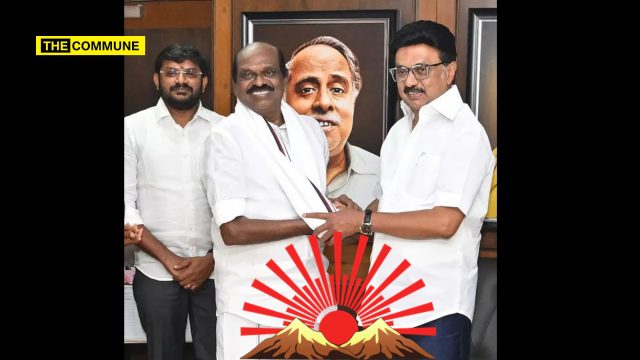
The Bharatiya Janata Party has announced its first list of candidates for the 2026 Tamil Nadu Legislative Assembly elections, but notably, K Annamalai does not feature among those contesting.

In a press release issued on 3 April 2026, the party’s Central Election Committee cleared 27 candidates across key constituencies in the state.

The list includes prominent names such as Tamilisai Soundararajan from Mylapore, L Murugan from Avanashi (SC), and Vanathi Srinivasan from Coimbatore (North). Senior leader Nainar Nagenthran has been fielded from Sattur, while M.R. Gandhi will contest from Nagercoil.

Other candidates include M. Rajasimha Mahindra (Avadi), C. Elumalai (Tiruvannamalai), S. Thangaraj (Tiruppur South), and Govi Chandru (Thiruvarur), Avadi – M. Rajasimha Mahindra (M. Ashwiinkumar).

Others include Dr. Nagesh Kumar (Thalli), Dr. S.D. Premkumar (Rasipuram (SC)), Kirthika Shivkumar (Modakkurichi), Bhojarajan (Udhagamandalam), M. Muruganandam (Thanjavur), C. Udhayakumar (Gandharvakottai (SC)), N. Ramachandran (Pudukkottai), Kavitha Srikanth (Aranthangi), K.C. Thirumaran (Tiruppattur), Pon. V. Balaganapathy (Manamadurai (SC)), and
Prof. Raama Sreenivasan (Madurai South).

Others include GBS K. Nagendran (Ramanathapuram), KRM Radhakrishnan (Tiruchendur), Ananthan Ayyasamy (Vasudevanallur (SC)), S.P. Balakrishnan (Radhapuram), T. Sivakumar (Colachel), P. Ramesh (Padmanabhapuram) and
S. Vijayadharani (Vilavancode).

However, the absence of K Annamalai from the list has drawn attention, given his high-profile role as the party’s former state chief and among its principal face in Tamil Nadu politics.

Subscribe to our channels on WhatsAppTelegram, Instagram and YouTube to get the best stories of the day delivered to you personally.
Joseph Vijay’s Poll Campaign Noise Disrupts Class 10 Exam In Trichy

Joseph Vijay's Poll Campaign Noise Disrupts Class 10 Exam In Trichy

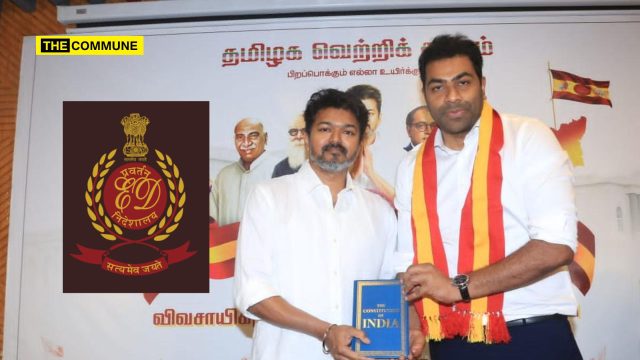
A campaign event led by Tamilaga Vettri Kazhagam (TVK) chief Vijay at Marakkadai Junction in Trichy on Thursday, 2 April 2026, caused disruption to an ongoing Class 10 public examination at a nearby government school, with students reporting disturbance due to high noise levels, as reported in Times of India.

The incident occurred at the Syed Murtaza Government Higher Secondary School, where around 175 students were appearing for their Social Science board examination between 10:00 am and 1:15 pm. The school is located in close proximity to the campaign venue.

According to sources, loudspeakers playing songs and the continuous cheering of party supporters created a noisy environment that interfered with the examination. The situation intensified when Vijay addressed the gathering between 12:35 pm and 12:55 pm, coinciding directly with the exam hours.

School authorities had reportedly taken prior precautions by submitting petitions to the police and district administration, requesting that necessary measures be implemented to ensure a disturbance-free atmosphere during the examination. Despite these requests, the campaign event proceeded as scheduled, and noise levels remained high throughout the exam duration.

Police personnel present at the venue attempted to manage the crowd and appealed to supporters to maintain silence during the examination. However, the efforts had limited impact, and the disturbance reportedly continued.

Subscribe to our channels on WhatsAppTelegram, Instagram and YouTube to get the best stories of the day delivered to you personally.
Joseph Vijay Calls Other Corrupt, Meanwhile ₹50 Lakh In Cash Seized From TVK Lalgudi Candidate’s Brother-in-Law’s House

₹50 Lakh in cash Seized From TVK Lalgudi Candidate's Brother-in-Law's House

In a significant development ahead of the Tamil Nadu Assembly elections, Income Tax officials have seized ₹50 lakh in unaccounted cash from the residence of a relative of a Tamilaga Vettri Kazhagam (TVK) candidate in the Lalgudi Assembly constituency, as reported in OneIndia Tamil.

The seizure was made from the house of Neelamegam, the brother-in-law of TVK candidate K P Krishnan, who is contesting from Lalgudi in Tiruchirappalli district. The operation was carried out following specific inputs received by the Election Flying Squad and local revenue authorities.

According to officials, the Tahsildar and Election Officer Tamilselvan received credible information regarding the storage of large amounts of cash at the residence of Neelamegam in Mazhavanur village. Acting on the tip-off, a joint inspection was conducted at the premises of Neelamegam and his son Aravind.

During the search, authorities discovered bundles of cash amounting to ₹50 lakh. As the occupants failed to produce valid documents to account for the source of the money, the cash was seized by the Income Tax Department for further investigation.

Officials stated that the responses provided by the family regarding the source of the funds were inconsistent, which further raised suspicion and led to the seizure.

The development has triggered a probe into whether the money was intended for distribution to voters in connection with the ongoing election campaign. Authorities are examining possible violations of election norms, particularly in relation to inducement of voters through cash distribution.

The Tamil Nadu Assembly elections are scheduled to be held on 23 April 2026, with counting set for 4 May 2026. The Lalgudi constituency is witnessing a multi-cornered contest, with candidates from the DMK, AIADMK, TVK, and Naam Tamilar Katchi in the fray.

Election authorities have intensified surveillance across the state to curb the distribution of cash and gifts to voters. Flying squads and enforcement teams have been conducting regular checks, seizing unaccounted money, gold, and other materials suspected to be linked to electoral malpractice.

It is noteworthy that items such as steel plates, boost bottles, other stainless steel items were already seized by flying squads from TVK side.

Subscribe to our channels on WhatsAppTelegram, Instagram and YouTube to get the best stories of the day delivered to you personally.
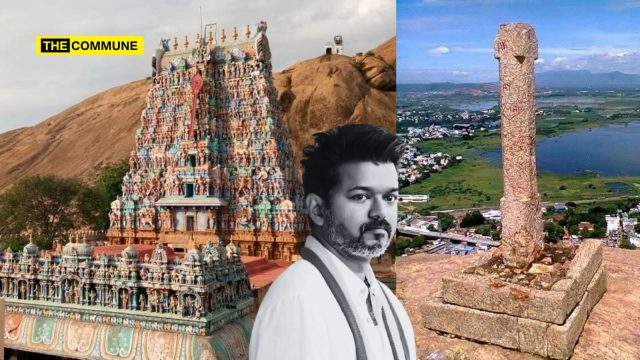
Joseph Vijay Calls Others Corrupt But TVK Vaniyambadi Candidate Syed Burhanuddin Faces A ₹600 Crore GST Fraud Case, Booked Under 13 Sections

TVK Vaniyambadi Candidate Syed Burhanuddin Is A ₹600 Crore GST Fraud Case, Booked Under 13 Sections

After fielding candidates who have sexual assault cases, ganja related cases on them, Joseph Vijay has fielded a candidate in Vaniyambadi who has caused several crores loss to the government.

A major controversy has erupted around Tamilaga Vettri Kazhagam (TVK) after a ₹600 crore GST fraud case surfaced against its Vaniyambadi Assembly constituency candidate Syed Burhanuddin, raising serious questions over candidate selection and due diligence, as reported in Dinakaran.

With the Tamil Nadu Assembly elections approaching, TVK had recently announced its list of candidates, following which nominations are being filed across constituencies. As part of this process, Syed Burhanuddin filed his nomination from the Vaniyambadi constituency in Tirupattur district.

However, it has now emerged that multiple cases are pending against him, including a major financial fraud case investigated by GST authorities in Chennai. According to officials, the case pertains to the alleged creation of over 140 fake firms using PAN and Aadhaar details of over a hundred economically vulnerable individuals, through which fraudulent transactions amounting to approximately ₹600 crore were carried out, as per a Polimer News report.

Authorities have indicated that summons were issued to Burhanuddin on at least five occasions to appear for inquiry, but he failed to do so, reportedly citing health reasons.

In December last year, GST officials conducted a search operation at his residence in Vaniyambadi as part of the investigation. Subsequently, a criminal case was registered against him under 13 sections at the Vaniyambadi Town Police Station. The probe remains ongoing.

The development has triggered strong reactions in political circles, with people questioning how a candidate facing such serious allegations was granted a party ticket. The issue has also intensified scrutiny on TVK’s internal vetting mechanisms during a crucial election cycle.

Responding to the allegations, Burhanuddin has maintained that the charges are false and politically motivated. He stated that the accusations are being spread to defame him and said that he will pursue legal action against those propagating what he describes as baseless claims.

Subscribe to our channels on WhatsAppTelegram, Instagram and YouTube to get the best stories of the day delivered to you personally.
Affidavit Blunder: Joseph Vijay Declares ‘No Cases’ In Perambur, Admits FIR In Trichy Filing

tvk joseph vijay affidavit

Actor-turned-politician Joseph Vijay has landed in controversy over a glaring discrepancy in his election nomination affidavits, exposing what appears to be a serious lapse in disclosure and legal scrutiny.

In his nomination affidavit filed for the Perambur Assembly constituency, Vijay declared that no criminal cases were pending against him. However, in a separate affidavit submitted for the Trichy East constituency, he disclosed a pending criminal case registered in 2025 at Koodakovil Police Station in Madurai.

The contradiction between the two affidavits has triggered sharp reactions, as election rules mandate full and accurate disclosure of all pending criminal cases. Any omission or misstatement in the affidavit is not a minor technical error but a serious issue that can invite objections, legal challenges, and even jeopardise the validity of the nomination.

The Perambur affidavit, which states that there are no pending cases, stands in direct conflict with the Trichy filing where the same candidate acknowledges an FIR. This raises the possibility that the Perambur nomination could come under scrutiny during the verification process unless a corrected affidavit is filed immediately.

The FIR mentioned in the Trichy affidavit relates to a 2025 case registered at Koodakovil Police Station in Madurai. The failure to disclose this in the Perambur filing has led to questions about whether the omission was an oversight, negligence, or a deeper issue within the candidate’s legal handling.

For a high-profile candidate contesting crucial constituencies, nomination papers typically undergo multiple layers of verification. The presence of such a basic inconsistency suggests a breakdown in that process.

Candidates often take precautionary legal steps to avoid precisely such situations. Filing petitions or formally verifying pending cases across jurisdictions is a standard safeguard.

Subscribe to our channels on WhatsAppTelegram, Instagram and YouTube to get the best stories of the day delivered to you personally.
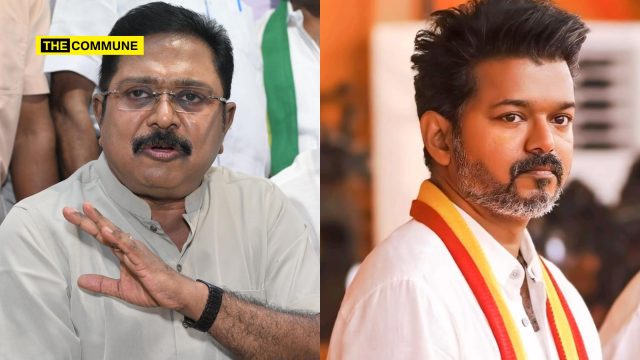
DMK MP A Raja Threatens YouTuber Maridhas With Legal Notice Over Viral Audio Clip, Calls It ‘Doctored’

A day after an alleged undated audio clip of DMK MP A. Raja circulated online, a legal notice was issued on his behalf against a social media user.

The notice, sent by advocates M. Sneha and Kavin Bharathan on 3 April 2026, is addressed to the X handle of YouTuber Maridhas – @MaridhasAnswers. It alleges that the account uploaded and circulated audio content in multiple parts, claiming it pertains to A Raja, and that the material was widely disseminated to attract attention and generate controversy without verifying its authenticity.

According to the notice, the audio clips are not original or continuous recordings but are described as manipulated compilations where portions have been selectively extracted, rearranged, and presented out of context. It further states that splitting the audio into multiple segments and releasing them separately indicates an attempt to sensationalize and mislead the public.

The legal communication also claims there are indications of tampering and possible technological interference, suggesting that artificial intelligence or other digital tools may have been used to alter or fabricate portions of the content. It alleges that the material amounts to synthetic or deepfake content designed to falsely attribute statements.

The notice contends that presenting isolated fragments without full context has created a misleading narrative, resulting in reputational harm and public speculation. It further alleges that the actions demonstrate malicious intent to defame and spread misinformation.

Citing potential violations including defamation, fabrication, misuse of electronic platforms, and digital forgery, the notice warns of both civil and criminal consequences.

The recipient has been directed to immediately remove the audio clips from all platforms, cease further circulation, issue a public clarification along with an unconditional apology, and disclose the source and method by which the audio was obtained and processed.

The notice adds that failure to comply will lead to appropriate legal proceedings being initiated.

Subscribe to our channels on WhatsAppTelegram, Instagram and YouTube to get the best stories of the day delivered to you personally.