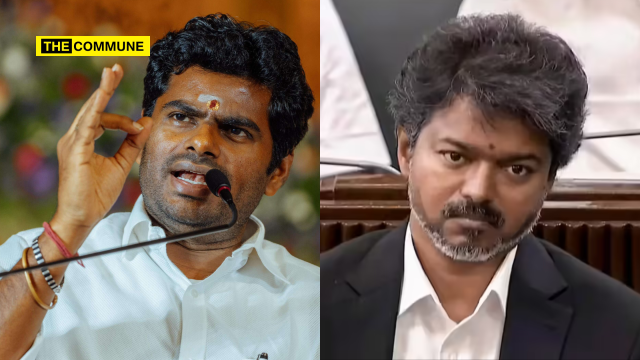
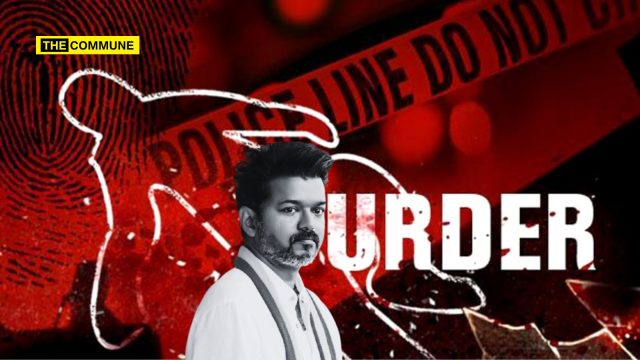
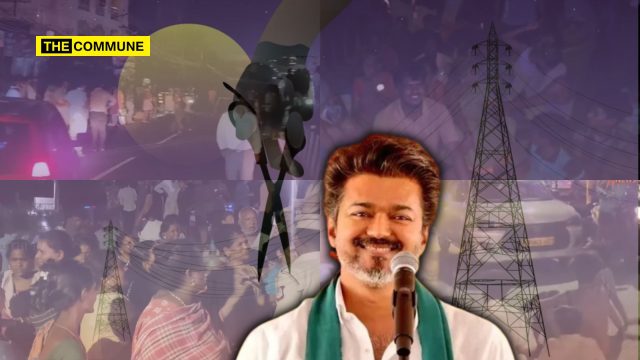
A police constable sustained serious injuries after being hit by a car allegedly linked to Aadhav Arjuna, a member of the Tamilaga Vettri Kazhagam (TVK) during a campaign event of actor-turned-politician Joseph Vijay in Tiruchirappalli.
The incident occurred when Vijay visited the city to file his nomination for the Tiruchirappalli East Assembly constituency. He arrived at the Corporation Zonal Office in the Palakkarai area in the morning, waited for about an hour, and filed his nomination around 12:30 PM. He later proceeded to the nearby Marakkadai area for campaign activities.
According to reports, a car carrying TVK member Aadhav Arjuna rammed into a police constable who was on duty for security arrangements at the venue. The vehicle allegedly ran over the constable’s leg, resulting in a fracture. Fellow police personnel rushed to his aid and shifted him to a hospital in an ambulance, where he is currently undergoing treatment.
Earlier in the day, Vijay had conducted a roadshow despite not having permission. During the event near Melapudur, a two-wheeler reportedly lost balance amid the crowd, causing a woman to sustain minor injuries. Vijay is said to have briefly stopped, checked on those injured, and continued his programme.
Following the accident involving the constable, Vijay continued with his scheduled campaign activities and later left for the airport.
As of now, no official statement has been issued by the TVK regarding the incident.
Subscribe to our channels on WhatsApp, Telegram,Instagram and YouTube to get the best stories of the day delivered to you personally.

A public interest litigation (PIL) has been filed in the Madras High Court seeking directions to the Tamil Nadu Chief Electoral Officer (CEO) to strictly scrutinise nominations filed in 44 reserved Assembly constituencies in line with a recent Supreme Court judgment on Scheduled Caste (SC) status and religion.
As reported in The Hindu, the petition was filed by Arjun Sampath of the Indu Makkal Katchi. He argued that Clause 3 of the Constitution (Scheduled Castes) Order, 1950 clearly restricts SC status to individuals professing Hinduism, Sikhism, or Buddhism, and excludes those who have converted to other religions. He further noted that this legal position was reaffirmed by the Supreme Court of India in its judgment dated 24 March 2026.
Quoting the apex court, the petition highlighted: “A person cannot simultaneously profess and practice a religion other than the ones specified in Clause 3 of Constitution (Scheduled Castes) Order, 1950, and claim membership of a Scheduled Caste at the same time. A person who professes and practices such religion for personal, social, and spiritual purposes cannot in law, assert membership of a Scheduled Caste for the purpose of securing statutory benefits. The two positions are mutually exclusive and contrary to the Constitutional scheme.”
The Supreme Court had further observed: “No statutory benefit, protection, reservation, or entitlement under the Constitution or under any enactment of Parliament or State legislature that is predicated upon the membership of a Scheduled Caste can be claimed by or extended to any person who, by operation of Clause 3 of the Constitution (Scheduled Castes) Order, 1950, is not deemed to be a member of a Scheduled Caste. This bar is absolute and admits no exception.”
The petitioner has urged that the CEO must ensure compliance with these legal provisions during the ongoing election process and issue directions to all Returning Officers to accept nominations only from eligible candidates under the law.
The PIL also claimed that nearly 90% of candidates who have filed nominations in the 44 reserved constituencies have allegedly converted to Christianity and may therefore be ineligible to contest. With the last date for filing nominations set for 6 April 2026, and scrutiny scheduled for 7 April 2026, the petitioner argued that immediate action is necessary to prevent ineligible candidates from contesting.
The matter is expected to come up for hearing before the High Court.
Subscribe to our channels on WhatsApp, Telegram,Instagram and YouTube to get the best stories of the day delivered to you personally.
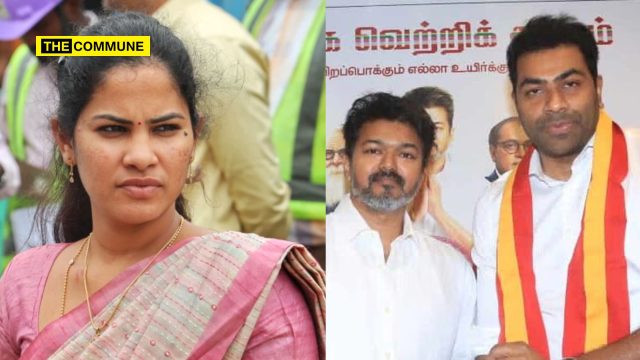
A case has been registered against an Assistant Commissioner of the Hindu Religious and Charitable Endowments Department in Salem for allegedly stealing offerings while counting temple hundial collections, as reported in Dinamalar.
Mala, the Executive Officer of the Varadaraja Perumal Temple located at Orukkamalai near Sankagiri in Salem district, submitted a complaint at the Sankagiri Police Station yesterday. In her complaint, she stated that the temple hundial was opened on March 17 on the main road from Sankagiri to Konganapuram. The counting of offerings was conducted in the presence of Sukavaneswarar Temple Assistant Commissioner Amsa and Edappadi Inspector Karthika.
During the counting, a total of ₹12,38,044 was found, which was subsequently deposited in the temple’s bank account and a receipt was obtained.
However, upon reviewing CCTV footage from the annadhanam hall, it was revealed that Amsa, who was present as the supervising officer during the counting, had allegedly stolen money from the hundial collections. The complaint requested legal action against her.
Following this, Sankagiri police have registered a case against Amsa and have begun an investigation.
Subscribe to our channels on WhatsApp, Telegram,Instagram and YouTube to get the best stories of the day delivered to you personally.
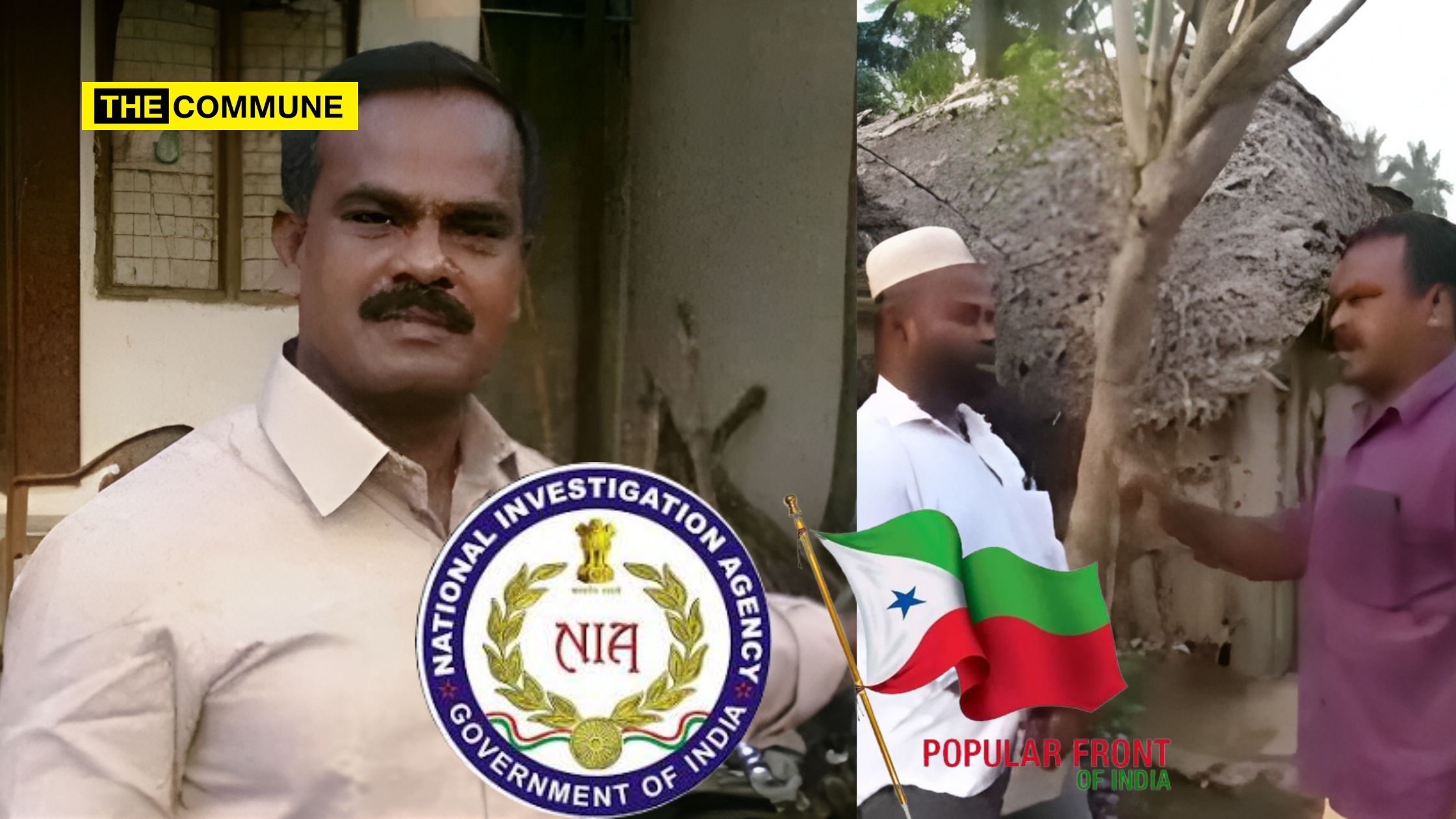
As Parliament debated the Foreign Contribution (Regulation) Amendment Bill, 2026, one of India’s most senior Catholic leaders stepped forward to voice what he called the collective unease of an entire community. Cardinal Baselios Cleemis Catholicos, President of the Kerala Catholic Bishops’ Council (KCBC), publicly stated that the bill has “caused anxiety and pressure among Christian communities,” urging the Central Government to reconsider the proposed changes before it becomes law.
The Cardinal’s statement, delivered at a press conference, has since ignited a political firestorm particularly in Kerala, where Assembly elections are scheduled for 9 April 2026 and has reopened a decades-old debate about the role of foreign-funded missionary activity in India.
Speaking to media, he said, “The context of the amendment of the new FCRA Bill 2026 presented in the Parliament which gives us certain anxieties. The Christian communities have experienced a sort of anxiety and a little pressure on us as we discharge our duties as missionaries, as well as those who have been building up this nation with our commitment and communion. The new bill with its specific amendments have brought certain anxieties, especially as it is presented in the Parliament with a designated point of reference. This is meant for those who are converting, for example. What is it all about? This is in continuation of the FCRA Bill established in 1976, later amended in 2010, and then now 2026 as a recent amendment. There is a pressure on those NGOs who have been trying to protect the interest of the vulnerables in India through different services. And more than a court, this designated authority has acquired incredible power to cancel and to take over and to take complete control over the assets which these NGOs have already created. If there is even only a small portion which you received as foreign contribution, the whole setup, the whole building, the whole property should be taken by this authority, the designated authority, as its supreme power, like. So, these concerns, these attitudes which are reflecting in a new bill naturally invite us to be reflective on the consequences. That is why all the churches, all the major political parties, of course, the opposition parties, they raise their concerns.”
“FCRA amendment bill has caused anxiety and pressure among Christian communities.”
– Cardinal Baselios Cleemis, President of the Kerala Catholic Bishops’ Council pic.twitter.com/ZIpgGN3ZX4
The Foreign Contribution (Regulation) Amendment Bill, 2026 was introduced in the Lok Sabha on 25 March 2026, by Minister of State for Home Affairs Nityanand Rai, on behalf of Home Minister Amit Shah. It proposes significant changes to India’s existing FCRA framework – a law that regulates how individuals and organisations receive foreign funding.
A Warning Written 70 Years Ago: The Niyogi Committee
What makes the current FCRA debate uniquely layered is the historical precedent it evokes – one that dates back to the very early years of independent India.
In April 1954, the Madhya Pradesh state government constituted the Christian Missionary Activities Enquiry Committee, popularly known as the Niyogi Committee, after its chairman M. Bhawani Shankar Niyogi, a retired Chief Justice of the Nagpur High Court. Over two years, the committee conducted one of the most thorough government investigations into missionary activities ever undertaken in India: it contacted 11,360 persons, interviewed people from 700 villages, and received 375 written statements before publishing its report in 1956.
The Schools Episode
Among the committee’s most striking findings was an incident that directly mirrors today’s tensions over the FCRA. When the post-Independence Madhya Pradesh government launched its Backward Area Welfare Scheme, an initiative to open government-run schools in tribal areas, missionaries mounted fierce opposition to it. As documented in the Niyogi Committee findings and subsequently recorded by historian Sita Ram Goel: “The Missionaries launched a special attack on the opening of schools by Madhya Pradesh Government under the Backward Area Welfare Scheme.”
The logic was straightforward and deeply revealing. Missionaries had until then enjoyed a near-monopoly over education in tribal regions, and schools were not merely centres of learning. They were the primary gateway through which tribal communities were introduced to Christianity and gradually drawn into conversion. A government school, publicly funded and religiously neutral, represented a direct threat to that pipeline.
The committee’s findings went far beyond the schools controversy. It documented a systematic pattern that it deemed incompatible with India’s constitutional framework:
Schools, hospitals, and orphanages run by missions were being used as instruments of proselytisation, not purely as charitable or social work
Missionaries had used “threats and intimidation” against tribal communities that resisted conversion
Evangelists sang “provocative songs denouncing Hindu religion” inside tribal villages
The report documented instances of “kidnapping of minor children, abduction of women” conducted under the cover of missionary activity
Perhaps most alarmingly, the committee found that some missions had ties to the demand for ‘Adiwasisthan’, a proposal for a separate state carved out of tribal areas, a demand that had been raised in 1938 alongside the demand for Pakistan.
Foreign organisations were funnelling the equivalent of ₹25 crore annually (an enormous sum in 1950s India) into conversion projects in the country, with 4,877 foreign missionaries then operating across India
The Thread That Connects Them
Seventy years separate the Niyogi Committee report and the FCRA Amendment Bill 2026. Yet the essential tension at the heart of both remains unchanged: the question of whether foreign-funded institutions operating under the banner of charity and education in India’s most vulnerable communities are also, simultaneously, instruments of religious and political influence and how the Indian state ought to respond.
Subscribe to our channels on WhatsApp, Telegram,Instagram and YouTube to get the best stories of the day delivered to you personally.
An undated audio clip attributed to DMK leader A. Raja has surfaced on social media, sparking a fresh political controversy in Tamil Nadu. The clip, which is being circulated online as previously unreleased, allegedly captures Raja speaking about his time in jail in connection with the 2G spectrum case and his interactions with senior leaders of the DMK.
In the audio, the speaker DMK MP A Raja, appears to express disappointment over the lack of visits from party leadership during his incarceration and makes references to internal party dynamics. Here are the excerpts of the audio.
Raja says, “Did any MLA from DMK come? Did any MP come? Did any party member come? I was arrested, and only two months later did Kanimozhi come inside [the prison]. Until then, how many people, including those from Nilgiris, came to see me? What must my mental state have been inside that jail? Did you take anything from my house? The money went to Kalaignar TV, I don’t want to say more than that. Did the CBI take anything from my house? Who came to see me?”
He continued, “Did a DMK representative leader come? Did our leader send Duraimurugan? Did a single minister come? The leadership didn’t come. You must have come out of personal affection. After Kanimozhi came, then suddenly the whole army came – ministers rushing in one after another, dhur dhur dhur. Don’t I know that? But during those two months, what must my mental state have been? What would have happened if I had been bust?”
He further says, “Azhagiri came one day – there’s no secret in this. After Kanimozhi’s arrest, Azhagiri came and said, “Everything given to Kalaignar TV, wasn’t it all Stalin’s doing? Why are you and Kanimozhi in jail, why don’t you say Stalin did everything and just become an approver, and you can come out.” Look, whenever trials come in life, I always say this: Please, in politics, especially having been in such positions of power – learn to endure the heat a little. Don’t go running away in panic. I cannot say your political future is over because of this.”
இதுவரை வெளியாகாத முக்கிய ஆடிய இதோ மக்களுக்காக..
ஆ ராசா நீங்கள் தானே பேசுவது?
உடனடியாக திமுக ஆ ராசா கைது செய்யப்பட்டு கலைஞர் டீவிக்கு பணம் கைமாறியதன் 2G ஊழல் விவகாரத்தை விசாரிக்கபட வேண்டும். கலைஞர் டீவிக்கு காசு கைமாறியதை அவரே கூறுகிறார் கேளுங்கள்.. முக்கியமாக திமுக தலைவர்… pic.twitter.com/QUfjjZuG1f
DMK’s A Raja served as India’s Union Minister for Telecommunications under the UPA-II government from 2007 to 2008. His tenure became synonymous with one of the country’s most infamous corruption scandals. The 2G spectrum scam involved the alleged illegal allocation of mobile telephone spectrum licenses to telecom companies at throwaway 2001 prices, despite the applications being made in 2007-08 1 a period when spectrum values had skyrocketed due to India’s booming telecom market.
The Comptroller and Auditor General of India (CAG) estimated the notional loss to the public exchequer at a staggering ₹1.76 lakh crore, making it one of the largest alleged scams in post-independence India. Raja was accused of manipulating the first-come, first-served policy, advancing the cut-off date without notice, and allegedly favouring certain companies over others. He resigned in November 2010 following intense public and parliamentary pressure, and was subsequently arrested by the CBI in February 2011.
After years of legal proceedings, a special CBI court acquitted Raja and all other accused in December 2017, citing a lack of sufficient evidence.
Subscribe to our channels on WhatsApp, Telegram,Instagram and YouTube to get the best stories of the day delivered to you personally.
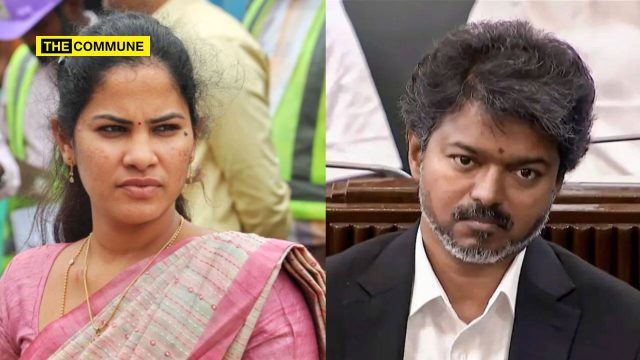
The political landscape in Tamil Nadu is intensifying as Joseph Vijay, founder of the Tamilaga Vettri Kazhagam (TVK), makes his electoral debut by contesting from Perumbur and Tiruchirappalli East constituencies. He recently filed his nomination from Perumbur, submitting details of his assets, educational qualifications, and financial disclosures.
According to the affidavit, Vijay has extended a loan of ₹20 crore to an educational trust that runs a NEET coaching centre. The disclosure has triggered widespread debate, particularly in the context of his consistent public opposition to the National Eligibility cum Entrance Test (NEET).
The issue has drawn attention due to its contrast with Vijay’s earlier stance following the death of medical aspirant Anitha, who died by suicide after failing to secure a medical seat despite legal efforts against NEET. The incident had sparked statewide outrage, and Vijay had personally met her family, expressing condolences – an act that had significantly boosted his public image.
Vijay has also repeatedly called for the abolition of NEET and had questioned the DMK government over its unfulfilled electoral promise to scrap the exam. In this context, his financial support to a NEET coaching institution has led to sharp reactions and questions over a possible contradiction.
Several observers and social media users have raised concerns over whether this indicates indirect support for NEET or reflects a broader inconsistency in his public position. Questions have also been raised about whether such actions align with his earlier expressions of solidarity with students affected by NEET.
In addition to this, other disclosures in the affidavit have also sparked discussion. While industry sources have claimed that Vijay earned up to ₹200 crore per film, his declared total assets stand at ₹400 crore, leading to further questions about discrepancies between reported earnings and declared wealth.
Edappadi K. Palaniswami launched a sharp attack on the DMK government led by MK Stalin, alleging mismanagement of law and order and misuse of temple resources.
Addressing a campaign rally in Sivaganga, Palaniswami accused the state government of failing to ensure public safety and upholding governance standards. He also questioned the administration’s handling of temple funds and jewellery, particularly in connection with projects linked to the Palani Murugan Temple, where allocations reportedly faced judicial scrutiny.
Edappadi K. Palaniswami said that God Himself will punish the DMK government led by MK Stalin for laying hands on temple properties.
Speaking during campaigning in Sivaganga, he said: “Today, there is no safety for young girls, no safety for women, and no safety even for elderly mothers. Such a government has no qualification or right to speak about us. Under the AIADMK, there was rule of law. But in your regime, law itself is laughing. Law and order has completely collapsed in Tamil Nadu.
If you deliberately continue false propaganda, our cadre will give a fitting reply. Mr. Stalin. After the DMK came to power, law and order has worsened so much. The reason is that you have not even been able to appoint a permanent DGP. Even after going to court and despite court directions, a permanent DGP has not been appointed. Then how can law and order function properly? Law and order is in a pitiable state in Tamil Nadu.
In Palani, where Lord Murugan resides, around ₹162 crore, I think ₹162 crore, was decided to be spent for 11 schemes, and tenders were floated. The High Court has now granted a stay. Announce schemes, we welcome them, but can’t you spend government money? Why are you taking funds belonging to temples under the HR&CE Department?
Devotees place offerings in hundis for the maintenance of the temple. You are announcing 11 schemes using that money and taking commissions. Does the state need such a shameless government? They won’t even spare temple property. They show Murugan and say, “Look, Murugan is here, I am a devotee,” but that very God will question this government.
Temple jewels – there have been many governments in Tamil Nadu: Congress, DMK, AIADMK. In all those years, no one touched temple jewellery. Even during earlier DMK regimes, they mostly did not touch them. But this present government under Stalin has melted temple jewels belonging to temples. On what basis did you melt them?
If you had formed committees, brought local people, identified the jewels, recorded everything on video, and then proceeded, it would have been acceptable. But without anyone knowing, we don’t know how much jewellery existed, how much was melted, or how much was misappropriated.
Mr. Stalin, God will question you. If you usurp God’s property, that very God will give you the appropriate punishment.”
Subscribe to our channels on WhatsApp, Telegram,Instagram and YouTube to get the best stories of the day delivered to you personally.
A video of DMK General Secretary and Water Resources Minister Duraimurugan wiping off vibhuti from his forehead immediately after it being applied by the temple priest while inside a temple has gone viral on social media, triggering sharp criticism from all corners ahead of the Tamil Nadu Assembly elections scheduled for 2026.
The footage shows Duraimurugan visiting a temple as part of what appeared to be election campaign-related activities. He refuses it initially from the priest who then applies it on his forehead, following which he is seen promptly wiping it off his forehead – a gesture that is evidence of the DMK’s anti-Hindu leanings dressed up in election-season religiosity.
The incident has drawn pointed comparisons to a similar episode in June 2025, when DMK ally and VCK chief Thol. Thirumavalavan was caught on camera wiping vibhuti off his forehead at the Thiruparankundram Murugan Temple while taking a selfie with devotees. Duraimurugan’s act fits the same pattern.
Subscribe to our channels on WhatsApp, Telegram,Instagram and YouTube to get the best stories of the day delivered to you personally.
In what comes across as a blatantly open support of christian missionary NGOs, DMK chief MK Stalin has ‘condemned’ the Foreign Contribution Regulation (Amendment) Bill 2026 proposed by the central government.
On 2 April 2026, taking to his X handle, he wrote, “I strongly condemn the Foreign Contribution Regulation (Amendment) Bill, 2026, proposed by the Union BJP Government, which is a direct attack on Christian NGOs, Churches and other minority institutions. After attempts to take over Waqf properties, the Union BJP Government is now moving to choke foreign funding for other minority institutions. Despite stepping back for now due to Opposition protests and the upcoming elections in Kerala, where Christians live in large numbers, there are clear plans to push #FCRA through in a special session of Parliament. This unjust, arbitrary Bill must be withdrawn in full, and I urge the Hon’ble @PMOIndia to act immediately.”
I strongly condemn the Foreign Contribution Regulation (Amendment) Bill, 2026, proposed by the Union BJP Government, which is a direct attack on Christian NGOs, Churches and other minority institutions.
After attempts to take over Waqf properties, the Union BJP Government…
— M.K.Stalin – தமிழ்நாட்டை தலைகுனிய விடமாட்டேன் (@mkstalin) April 2, 2026
It is noteworthy that in 2023, the DMK government told the Supreme Court of India that religious propagation by missionaries is protected under Article 25 and is not illegal unless it violates public order, morality, or health. Responding to a PIL by Ashwini Kumar Upadhyay seeking action against alleged forced conversions, the state said no such incidents have occurred in Tamil Nadu in recent years. It added that such allegations are limited to other states, warned against misuse of anti-conversion laws, and termed the plea “religiously motivated,” urging its dismissal.
Subscribe to our channels on WhatsApp, Telegram,Instagram and YouTube to get the best stories of the day delivered to you personally.
On 30 March 2026, as the US-Iran war continued to reshape West Asia and India navigated one of its most consequential geopolitical moments since Operation Sindoor, India’s former Foreign Secretary Nirupama Menon Rao posted on X critiquing the Modi government’s posture on “strategic autonomy”.
The world is being reordered by those who act and those who define. If India wishes to be counted among the latter, it must ensure that its silence does not speak louder than its convictions.
We are living through a moment when the rules of the international system are being…
The post itself did not mention Pakistan by name. But Pakistan’s former Foreign Minister Hina Rabbani Khar, watching from across the border, had seen enough.
Khar immediately quote-tweeted Rao’s post, saying she “felt deep nostalgia for such strategic clarity” and framed the West Asia crisis as one that India and Pakistan must face together as a region.
Felt deep nostalgia for such strategic clarity. As a citizen of the region it was & remains impinging upon all of us to make South Asia a safe and thriving place for all its citizens. Hope the current trend is an aberration and not the final chapter of South Asia s destiny https://t.co/chAD1nn2XX
What happened next stunned a significant cross-section of India’s strategic community: rather than maintaining the distance expected of a former Foreign Secretary from a Pakistani politician with a well-documented record of anti-India provocations, Rao reshared Khar’s post and went further. She called for a women’s caucus between India and Pakistan, writing: “The women of India and Pakistan need to deploy our ingrained common sense and suggest ways forward in our relationship. We need a women’s caucus. Not to throw accusations against each other but to think calmly and sensibly about the future ahead. For the sake of our children. The women must speak.”
The women of India and Pakistan need to deploy our ingrained common sense and suggest ways forward in our relationship. We need a women’s caucus. Not to throw accusations against each other but to think calmly and sensibly about the future ahead. For the sake of our children.… https://t.co/8xyaITcJ1L
The backlash was swift and fierce across the political spectrum. Shiv Sena (UBT) MP Priyanka Chaturvedi shot back: “Stop this romanticism of getting into a dialogue with Pakistan. Who does one talk to, what authority do their government or elected representatives have? It is the army that wields the power and all they seek is to hurt India.”
On X, commentators pointed out that this was the same Hina Rabbani Khar who had called India a “rogue state” after Operation Sindoor and whose idea of “strategic clarity” included defending a UN-designated Lashkar-e-Taiba terrorist at a Pakistan state funeral by saying “there are millions of Abdul Raufs in Pakistan”. Rao, rather than stepping back, responded to critics with further posts defending the women’s caucus idea, insisting it was “not a career move” but “an attempt to widen the space for reflection”.
This exchange did not emerge from a vacuum. It was the latest episode in a long-running pattern – one that stretches from Rao’s tenure as Foreign Secretary under the UPA government, through her public interventions during Operation Sindoor, to her broadside against the film Dhurandhar in March 2026.
What follows is a comprehensive account of who Nirupama Menon Rao is, what she has said and done at each critical juncture, and why this latest controversy has provoked the degree of anger it has.
Who Is Nirupama Menon Rao?
Nirupama Menon Rao (born 6 December 1950) is a retired Indian Foreign Service (IFS) officer of the 1973 batch who reached the apex of India’s diplomatic establishment. She served as India’s Foreign Secretary from August 2009 to July 2011, becoming only the second woman in Indian history to hold that position — after Chokila Iyer. Over her distinguished career, she served as India’s Ambassador to China and the United States, High Commissioner to Sri Lanka, Deputy Chief of Mission in Moscow, and was the first woman spokesperson of the Ministry of External Affairs.
Her formative years in the MEA were defined by China expertise – she spent an unprecedented eight consecutive years (1984–1992) in the MEA’s East Asia Division, eventually becoming Joint Secretary and a key player in the normalisation of Sino-Indian ties. She later participated in the first three rounds of Special Representative border talks with China in 2003. In short, Rao represents the elite intellectual face of India’s old-school diplomatic establishment – one that prized “strategic patience,” composite dialogue, and Track II engagement with Pakistan as central pillars of its worldview.
She comes from a defence family background – her father was an Army officer, and she grew up living across different military stations, as is common with children raised in Indian defence households. Despite this, she has cultivated a public persona that is sharply critical of hawkish Indian foreign policy positions and frequently dismissive of nationalist voices, especially on social media.
Career Milestones And Pakistan Engagement
The 2001 Agra Summit and MEA Spokesperson Role
Rao’s tenure as MEA Spokesperson overlapped with a turbulent era: the failed Agra Summit (July 2001) between Vajpayee and Musharraf, and the December 2001 Parliament Attack. She gave live briefings during the subsequent military standoff between India and Pakistan – a period that shaped India’s security doctrine for years. Even then, the spokesperson’s office walked the tightrope of diplomatic language rather than unequivocal attribution of state responsibility to Pakistan for the attack.
China Summons Her At 2 AM (2008)
When Rao was India’s Ambassador to China during the UPA-era, she was summoned by the Chinese Foreign Ministry at the extraordinary hour of 2 AM on 21 March 2008 during the Tibet disturbances that threatened to disrupt the Olympic torch relay in Beijing. The Chinese handed over details of protests being organised by Tibetan groups in India and essentially demanded India act against them. The episode was widely reported as a humiliation – an Indian envoy being pulled out of bed in the middle of the night to receive a lecture from Beijing. The fallout was severe enough that India cancelled Commerce Minister Kamal Nath’s planned China visit in protest. It raised questions about India’s leverage with China and whether New Delhi was being treated as an equal partner.
The “Pakistan’s Attitude Has Changed” Statement (2011)
As Foreign Secretary, Rao gave a TV interview in July 2011, barely three years after the 26/11 Mumbai attacks, claiming that Pakistan’s attitude towards terrorism had “changed“. This drew immediate outrage from security analysts and opposition politicians who pointed out that Pakistan had just sheltered Osama bin Laden (killed by the US in May 2011) and that the handlers of 26/11 were still walking free in Lahore. This remark was diplomatically naive at best, and dangerous at worst, softening India’s hard-earned post-26/11 stance towards Islamabad.
The Haqqani-Diwali Diplomatic Scandal (2011)
This is perhaps her most damaging controversy during her time as India’s Ambassador to the US. Just as Pakistan’s ambassador to the US, Husain Haqqani, was embroiled in the infamous “Memogate” scandal, accused of secretly passing a memo to the Obama administration asking the US to rein in Pakistan’s military to avert a coup, Rao invited him to her Diwali reception in Washington.
The timing was staggering. Haqqani was under investigation by Pakistan’s Supreme Court for alleged treason. India’s own former foreign secretary who had been the public face of India’s outrage after 26/11 was seen hosting him and other South Asian envoys at a social gathering while this scandal was unravelling. The Telegraph India reported it bluntly: “Any outreach by Rao towards Pakistan has ramifications that go beyond any courtesy extended by an ordinary Indian ambassador to the US.” Was she covering for Haqqani’s activities by creating “a smokescreen” through the multi-ambassador gathering?
2011: The Hina Rabbani Khar-Hurriyat Scandal
The most revealing episode from Rao’s tenure as Foreign Secretary came in July 2011. When newly appointed Pakistani Foreign Minister Hina Rabbani Khar visited India for talks with External Affairs Minister S.M. Krishna, she made a provocative detour – meeting separatist Hurriyat Conference leaders before sitting with the Indian EAM. This was a direct breach of the diplomatic framework India had insisted upon as a pre-condition for meaningful dialogue: that Pakistan not undermine India’s sovereignty claims on Jammu & Kashmir by engaging with separatists on Indian soil.
India’s response was formally conveyed by Foreign Secretary Nirupama Rao herself, who “conveyed India’s concerns about the meeting in a frank and candid manner”. At the joint press conference with Pakistani Foreign Secretary Salman Bashir, Rao had to publicly highlight the divergent views between India and Pakistan – an embarrassment that resulted directly from her ministry’s failure to prevent the Hurriyat meeting in the first place. Pakistan’s Salman Bashir bluntly told the assembled press that “nothing more should be read into Hina Rabbani’s meeting” with the Hurriyat.
Crucially, it was also in June 2011, just weeks before the visit, that Rao had herself “called on Hina Rabbani Khar, Minister of State for Foreign Affairs” in Islamabad, laying the groundwork for the visit. This adds context to her long-standing personal familiarity with Khar, which would resurface dramatically in 2026.
Hina Rabbani was known to praise the terrorists.
Here is Nirupama Menon Rao’s best friend Hina Rabbani Khar praising Pakistan’s forefathers for securing Nuclear weapons to attack India.
WikiLeaks Cables Reveal Private Briefings to the US (2010–11)
When WikiLeaks released classified US Embassy cables in late 2010, several involved Nirupama Rao. As Foreign Secretary, she had held closed-door strategic dialogues with US Under Secretary Ellen Tauscher on sensitive topics including nuclear arms and India’s security posture – contents of which ended up in leaked cables. While Rao officially condemned the leaks, calling diplomatic communications “privileged” in nature, the Left parties in Parliament used the cables to accuse the UPA government with Rao as Foreign Secretary of being excessively close to American interests, citing US pressure on decisions like India’s votes against Iran at the IAEA. Rao’s public “disapproval” of WikiLeaks was itself a suspicious deflection, defending US diplomatic secrecy over India’s own right to transparency.
“Dialogue With Pak Is Necessary and a Must” – February 2011
In February 2011, barely 26 months after the 26/11 Mumbai attacks that killed 166 people, Rao, serving as India’s Foreign Secretary, told reporters ahead of Foreign Secretary-level talks in Thimphu, Bhutan, that “dialogue between India and Pakistan is necessary and a must if we are to satisfactorily resolve the outstanding issues between our two countries.” The outrage was immediate. She was not framing engagement as a conditional offer, one that required Pakistan to first act against the 26/11 masterminds still living freely in Lahore, but as an unconditional strategic necessity. Hafiz Saeed was holding rallies in Pakistan. Zakiur Rehman Lakhvi was out on bail. Major Iqbal, the serving Pakistani Army officer named in India’s own dossiers as a 26/11 handler, had faced zero accountability. And yet India’s top diplomat was telling the world that talking to Pakistan was not a choice but a must. It was a statement that handed Islamabad dialogue without preconditions, at precisely the moment when preconditions were India’s only leverage.
Exporting Electricity To Pakistan – September 2012
One year later came a controversy that was even harder to explain. In September 2012, while serving as India’s Ambassador to the United States, Rao publicly tweeted that India was considering exporting 500 MW of electricity to Pakistan, a proposal she endorsed and actively defended. The timing was staggering. Just two months earlier, in July 2012, India had suffered the largest power blackout in world history – over 600 million Indians were left without electricity for days in a cascading grid failure that exposed the country’s chronic power deficit. Indian villages were dark. Indian hospitals were on generators. Indian factories had shut down. India did not have enough electricity for its own 1.2 billion people and its Ambassador to Washington was publicly floating the export of half a gigawatt to Pakistan. Pakistan’s own newspaper Dawn ran the headline approvingly: “India considering exporting electricity to Pakistan: Nirupama Rao” treating it as a diplomatic win for Islamabad.
“Turning India Into a Land Only for Hindus Goes Against Our Nation” (2017)
In an article for Firstpost, Rao wrote a piece with the incendiary headline “Turning India into a land only for Hindus goes against our nation”. She stated upfront, “I am a Hindu by birth and by enduring faith” but went on to argue against what she called right-wing majoritarianism. While liberals applauded it, large sections of the nationalist commentariat were furious: a former Foreign Secretary of India, a constitutional officer who had held the highest office in Indian diplomacy, was seen as openly intervening in a domestic political and Hindu-Muslim fault line and effectively lending her institutional credibility to an anti-government narrative. This was more an abuse of her post-retirement prestige.
The ICG Connection: A Soros-Funded Organisation, a Board Seat – 2024
Nirupama Rao has been a Trustee of the International Crisis Group (ICG) since 2024 and as of April 2026, she remains an active member of its board. This is not a peripheral or honorary affiliation. The ICG was officially established in 1995 with seed funding from George Soros, who continues to sit on its board as does his son Alexander Soros, Chair of the Open Society Foundations as confirmed by ICG’s own board page, which lists Rao, George Soros, and Alexander Soros as fellow trustees. Alexander Soros personally donated $500,000 to ICG for fellowships as recently as 2017. The Open Society Foundations has also been part of a $50 million ICG capital fundraising campaign alongside other donors. ICG’s own founding document states it was built with “generous support from financier and philanthropist George Soros.”
The organisation describes itself as committed to “preventing and resolving deadly conflict” through dialogue and negotiated settlements – a mandate that, in the South Asian context, has consistently translated into advocacy for India-Pakistan engagement, de-escalation, and dialogue frameworks. Indian strategic affairs analysts have long criticised ICG’s South Asia reports as being sympathetic to Pakistani framing on Kashmir and cross-border terrorism. And now, sitting on that same board, alongside the Soros father-son duo, is India’s former Foreign Secretary, who joined in 2024, just one year before she began her most aggressive phase of public advocacy for India-Pakistan peace talks, her criticism of Operation Sindoor-era India, her Dhurandhar op-ed, and ultimately, her “women’s caucus” proposal with Hina Rabbani Khar in March 2026.
INDIA’S EX US AND CHINA AMBASSADOR NIRUOMA RAO, BOARD MEMBER SOROS SEED FUNDED AND FOUNDED INTERNATIONAL CRISIS GROUP, Starts AMAN KI ASHA WITH PAKISTAN trash talk by quoting an eternal anti India loud mouth Ex Pakistan Foreign minister/ Bilwal Bhutto wrestling toy Hina Rabbani… pic.twitter.com/deZhc850LA
The question is this: is Nirupama Rao’s sustained, consistent, post-retirement drumbeat for India-Pakistan dialogue simply the honest conviction of a seasoned diplomat – or is it, at least in part, shaped by her active membership of an institution that was built on Soros money, counts George Soros and Alexander Soros as fellow board members, and whose institutional mandate is to push conflicting parties toward dialogue regardless of ground realities? The answer may be both but the question itself is no longer a fringe conspiracy theory. It is a documented institutional reality, confirmed by ICG’s own website, Wikipedia, and NUS Institute of South Asian Studies’ faculty listing.
The Operation Sindoor-Media Criticism Connection (2025)
In the immediate aftermath of Operation Sindoor in May 2025, Rao also spoke to the Washington Post about the Indian media’s coverage of the conflict, describing TV channels as creating a “parallel reality” through “hyperism” and “triumphalism,” filling the information void left by the absence of official briefings. While media accountability is a legitimate concern, her framing which went on to be amplified by a foreign publication was criticised for inadvertently undermining India’s information posture during an ongoing conflict with Pakistan.
The Dhurandhar Controversy (March 2026) –Nirupama Rao Attacks the Film
In March 2026, as the film Dhurandhar, directed by Aditya Dhar released and sparked nationalist pride, Nirupama Rao took to X with a sharp critique that triggered a furious nationwide backlash. She wrote an elaborate article in a newspaper that the film would affect India-Pakistan relations.
Nirupama Rao didn’t like Dhurandhar. And no one should be surprised because she wanted to sell electricity to Pakistan to help them with shortages despite the fact that India did not have enough electricity for its own people at that time.
Calling India’s Position a “Strategic Embarrassment” (2026)
In March 2026, when the US sank an Iranian warship in the Arabian Sea, effectively in India’s maritime backyard, Rao publicly called it a “strategic embarrassment for New Delhi”. While India’s discomfort is,acknowledged, the choice of phrase using the word embarrassment to describe India’s own government’s handling by a former Foreign Secretary should not so publicly shaming the nation’s strategic posture.
The “Aman Ki Asha” Intellectual Framework
Looking at Nirupama Rao’s entire arc, from her 2011 tolerance of Khar’s Hurriyat stunt, to her 2025 media criticism during Operation Sindoor, to her March 2026 women’s caucus proposal, a consistent ideological thread emerges:
Persistent minimisation of Pakistani state terrorism as the central organising reality of India-Pakistan relations
Framing Indian strategic assertiveness as a sign of democratic deterioration rather than legitimate security response
Romanticising bilateral engagement frameworks (Track II, women’s caucus, people-to-people) that have historically been used by Pakistan to deflect accountability for terrorism
Seeking or welcoming validation from Pakistani establishment figures particularly Hina Rabbani Khar while dismissing criticism from Indian nationalists
Praising Chinese realpolitik while simultaneously advocating for emotional and gender-based diplomacy with Pakistan
Questioning films, media, and public sentiment that reflect India’s changed strategic psychology post-Sindoor
This framework is precisely what critics call the “Aman Ki Asha” doctrine – a cosmopolitan, upper-class, English-language elite intellectual consensus that dominated India’s foreign policy establishment during the UPA era and continues to operate through retired diplomats, former bureaucrats, and liberal commentators on social media and in Western publications.
Subscribe to our channels on WhatsApp, Telegram,Instagram and YouTube to get the best stories of the day delivered to you personally.