Home Blog Page 300

From Burqa Bans To Mosque Restrictions, Here Are 7 Of Italy’s Policies On Islam
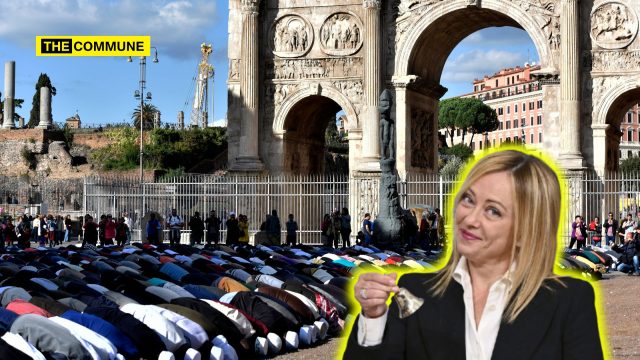
From Burqa Bans To Mosque Restrictions, Here Are 7 Of Italy’s Policies On Islam

On 8 October 2025, the Italian government, led by Prime Minister Giorgia Meloni, proposed a nationwide ban on burqas and niqabs in public spaces. The new bill aims to address what the government terms “Islamic and cultural separatism.” Under the draft legislation, individuals found violating the ban could face fines ranging from €300 to €3,000.

In this report, we look at 7 actions taken by Italian governments over the years against Islamic practices.

#1 Italy’s Legislative Action Against Islamic Face Coverings

In October 2025, Prime Minister Giorgia Meloni’s government proposed nationwide legislation to ban burqas and niqabs in all public spaces, including educational institutions and businesses. The draft bill, aimed at countering “Islamic and cultural separation,” stipulates fines from £300 to £3,000 for violations. Additionally, the legislation includes measures to enforce transparency in mosque funding and restrict foreign financial contributions to religious institutions. This move represents a significant step in Italy’s efforts to assert cultural and legal norms, sparking debate over religious freedom and national identity.

#2 New Law to Criminalize Coerced Marital Unions

On 9 October 2025, Italy’s ruling Brothers of Italy party advanced a bill criminalizing forced marriages. The legislation specifically targets marriages conducted under threat, coercion, or religious pressure. This initiative forms part of a broader governmental effort to protect women’s rights and strengthen national security frameworks. By establishing legal consequences for forced matrimony, the administration aims to safeguard individual autonomy while addressing concerns about certain cultural practices conflicting with Italian legal standards.

#3 Expulsion of Radical Cleric on Security Grounds

In October 2024, Italian authorities ordered the expulsion of Pakistani imam Zulfiqar Khan, citing radicalization and security threats. The 54-year-old cleric, residing in Italy since 1995, had publicly endorsed Hamas and disseminated anti-Western, antisemitic, and anti-Italy rhetoric. His sermons encouraged tax evasion among Muslims and advocated reserving national resources exclusively for Islamic communities. The Meloni government signed his expulsion documents, removing him for promoting ideologies deemed incompatible with public safety and social cohesion.

#4 Municipal Ban on Islamic Prayer Gatherings

Monfalcone’s mayor imposed a ban on Muslim prayers in two cultural centers in May 2024, invoking urban planning regulations. Mayor Anna Cisint defended the prohibition, emphasizing her secular duty to enforce laws rather than accommodate religious spaces. With Monfalcone experiencing demographic shifts due to Muslim migration, the policy has faced legal challenges. The mayor maintained that the growing demand for religious facilities presented urban management challenges that existing regulations are designed to address.

#5 Controversy Over Modest Swimwear at Public Beach

In July 2023, Monfalcone’s mayor publicly criticized Muslim visitors for swimming fully clothed at Marina Julia beach, deeming the practice a breach of local decorum. Anna Cisint issued an open letter insisting that all residents adhere to Italian customs, specifically regarding beach attire. She characterized clothed swimming as an unacceptable form of “Islamisation” threatening community standards.

#6 Cancellation of Women-Only Pool Event

A privately organized pool party for Muslim women in Limbiate was canceled in July 2023 following criticism from Lega MEP Isabella Tovaglieri. The politician labeled the event a “female segregation party” and raised concerns about security arrangements. The cancellation reflected broader debates about religious accommodation versus integration, with opponents arguing such gender-segregated events contradict principles of social inclusion, while supporters viewed it as respecting cultural preferences.

#7 Restrictions on Islamic Worship Spaces

In June 2023, the ruling Brothers of Italy (FdI) party, led by Prime Minister Giorgia Meloni, introduced a draft bill proposing amendments to Italy’s urban planning laws. The legislation aimed to prevent industrial garages and warehouses from being converted into mosques or prayer facilities and to impose regulations on outdoor prayers. The bill, sponsored by FdI group leader Tommaso Foti, was under discussion in the Chamber’s Environment Commission for Islamic communities and has faced significant opposition.

Subscribe to our channels on TelegramWhatsApp, and Instagram and get the best stories of the day delivered to you personally.

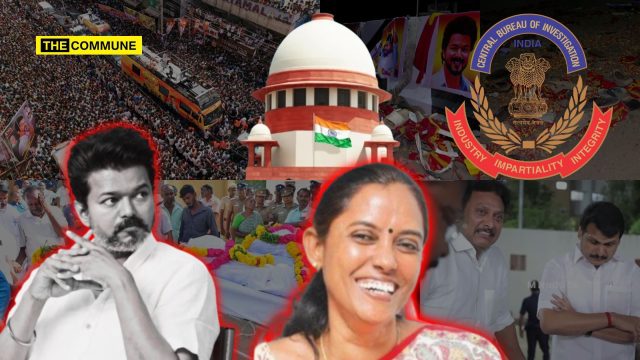
Congress MP Jothimani Lies About Supreme Court’s Order To Transfer TVK Karur Stampede Case To CBI

In a shocking display of misinformation, Congress MP Jothimani has peddled false information regarding the Supreme Court’s order to transfer the TVK Karur stampede case to CBI. The incident, which occurred on September 27, 2025, during a rally by Tamilaga Vettri Kazhagam (TVK) led by actor-politician Vijay, resulted in the loss of 41 lives and left several others injured.

On October 13, 2025, the Supreme Court issued a landmark order transferring the investigation of the Karur stampede from the Tamil Nadu state authorities to the Central Bureau of Investigation (CBI). The court’s decision was a response to concerns over the impartiality of the initial probe, which had been handled by a Special Investigation Team (SIT) constituted by the Madras High Court and a one-man commission appointed by the DMK government in Tamil Nadu.

A key excerpt from the Supreme Court order states: “In view of transferring the investigation to the CBI, the direction for appointment of SIT or one-man enquiry commission shall remain suspended.

This suspension was a clear indication that the court sought an independent and unbiased investigation, free from state influence.

Furthermore, the court directed the Tamil Nadu government to extend full cooperation to the CBI and provide necessary logistical support. To ensure oversight, the Supreme Court proposed the formation of a three-member Supervisory Committee, headed by retired Justice Ajay Rastogi, with the mandate to monitor the CBI’s investigation and issue appropriate directives. This move was intended to address the concerns of all parties involved and uphold the principles of independence and impartiality.

Jothimani’s Contradictory Claims

Despite the Supreme Court’s explicit order, Congress MP Jothimani appeared to contradict the ruling in statements reported by various news outlets.

Jothimani suggested that the Supreme Court had prioritized the one-man commission appointed by the Tamil Nadu government over a CBI probe, stating, “The Supreme Court judgment still allows the one-member commission from the Tamil Nadu government to do its job.” This claim stands in direct opposition to the court’s suspension of the state-appointed commission, as outlined in the official order.

The discrepancy was quickly highlighted by BJP leader C.R. Kesavan, who took to X to criticize Jothimani’s remarks. In a strongly worded post, Kesavan accused the Congress party of peddling “perilous false propaganda and blatant lies,” pointing out that the MP’s statements contradicted the Supreme Court’s directive. He further questioned whether Jothimani’s remarks constituted contempt of court, given the clear suspension of the state-led commission.

The Supreme Court’s decision to transfer the case to the CBI and establish a supervisory committee reflects growing concerns about the independence of the state-led probe, especially given allegations of mismanagement and political interference. Jothimani’s earlier statements, where she criticized the TVK for holding the rally on an unsuitable day, had already drawn attention, but her latest remarks have amplified the controversy.

It seems like a calculated effort to undermine the court’s authority and protect the interests of the ruling DMK government in Tamil Nadu, which has faced scrutiny over its handling of the stampede incident.

Subscribe to our channels on TelegramWhatsApp, and Instagram and get the best stories of the day delivered to you personally.

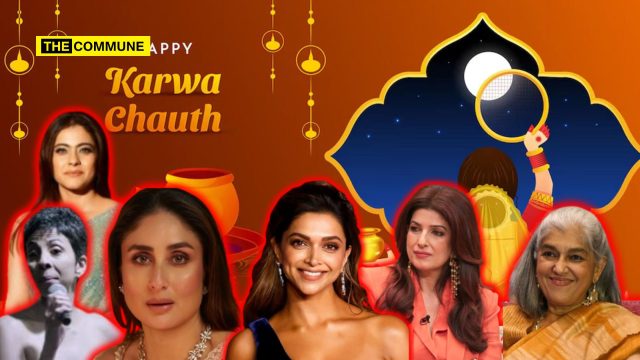
10 Times When Celebrities Attacked Karwa Chauth And Hindu Customs (2013-2025)

10 Times When Celebrities Attacked Karwa Chauth And Hindu Customs (2013-2025)

The Hindu festival of Karwa Chauth, traditionally observed by married women fasting for their husbands’ longevity, has faced increasing public criticism from women in the public eye over the past decade. From 2016 to 2025, numerous celebrities, journalists, and artists have questioned the ritual’s relevance in modern society, labeling it as patriarchal, unnecessary, or openly mocking its practices. Their statements have consistently ignited widespread debate on social media and in public discourse, creating a clear cultural fault line between traditional practices and evolving perspectives on gender equality and personal choice. 

#1 Deepika Padukone’s Personal Choice (2025)

In October 2025, Bollywood superstar Deepika Padukone announced she would not be observing Karwa Chauth, a decision that quickly became a national talking point. The actress stated that her choice stemmed from a personal belief that her husband’s well-being was not contingent on her fasting. Her prominence ensured the comment sparked extensive discussion, with many applauding her stance on personal agency while others defended the tradition as a cultural and voluntary expression of love. It is noteworthy that the actress has earlier claimed personal choice about her body as well.

#2 Arati Kadav’s Critique of Bollywood (2025)

Filmmaker Arati Kadav, in March 2025, directed her criticism not just at the ritual but at Bollywood’s role in shaping its perception. She argued that the film industry has systematically “glorified the ritual, turning it into something celebratory and even gender-neutral,” which she believes misrepresents its inherently unequal nature. Kadav contended that this cinematic portrayal creates a powerful, misleading narrative that pressures women into participation. 

#3 Kajol Questions Fasting in DDLJ

In an interview with The Indian Express on 25 October 2024, actress Kajol expressed her disagreement with several choices of her iconic character Simran in Dilwale Dulhania Le Jayenge. When asked about Simran observing the Karwa Chauth fast, Kajol said she “didn’t agree in a lot of places.” Reacting to co-star Kriti Sanon’s comment that Shah Rukh Khan’s Raj also fasted for Simran, Kajol remarked, “Haantoh? I don’t understand why people have to starve themselves. Bhookh kaise rokhna hai (Who likes to starve)?”

#4 Neha Dixit’s Social Media Stance (2022)

Journalist Neha Dixit ignited a fierce online debate in October 2022 with her blunt critique of Karwa Chauth. Her statement, “No man is worth staying hungry for,” served as a direct challenge to the festival’s core premise. The post immediately went viral, drawing both strong support and significant backlash. While many users defended the festival as a personal and cultural choice, Dixit’s comment resonated with those who view it as an outdated symbol of patriarchal expectation. 

#5 Kamla Bhasin’s Patriarchal Analysis (2022)

In August 2022, noted feminist author and activist Kamla Bhasin delivered a structural critique of Karwa Chauth, framing it as a festival that reinforces patriarchy. Bhasin argued that such traditions symbolically cast men in the role of perpetual protectors, subtly implying that women are inherently in need of male guardianship, first from their fathers and then their husbands. Her analysis moved beyond the act of fasting to question the underlying power dynamics the ritual represents, positioning it within a broader framework of systemic gender inequality rather than an isolated cultural practice.

#6 Ratna Pathak Shah’s “Appalling” Remark (2022)

Veteran actress Ratna Pathak Shah stirred controversy in July 2022 by describing the sight of modern, educated women observing Karwa Chauth as “appalling.” She expressed dismay at the persistence of the ritual, even drawing a comparison to societal trends in Saudi Arabia to underscore her point. Her comments triggered a massive online backlash, with many accusing her of disrespecting cultural and religious sentiments. 

#7 Rhea Kapoor Rejects Peer Pressure (2021)

Filmmaker and stylist Rhea Kapoor used her social media platform in October 2021 to publicly reject Karwa Chauth and address the social pressure surrounding it. She explicitly stated that she does not observe the fast and urged others to stop pressuring her to conform to the tradition. Kapoor’s post highlighted a growing trend of women openly resisting what they perceive as coercive social expectations, moving the conversation from abstract critique to personal boundary-setting. 

#8 Radhika Vaz’s Satirical Take (2020)

‘Comedian’ Radhika Vaz faced significant backlash in July 2020 for her routine mocking Karwa Chauth, in which she used derogatory terms to describe women who observe the fast. In the two-minute video, she referred to women observing the fast for their husbands’ health in derogatory terms, igniting anger on social media. Critics argue her comments insult Hindu traditions and hurt religious sentiments, while Vaz has defended herself, claiming she was merely questioning man-made practices. The controversy forms part of a larger pattern of provocative acts by Vaz, who has faced backlash for public nudity and abusive posts, raising debates over freedom of expression versus cultural respect.

#9 Twinkle Khanna’s Sarcastic Commentary (2016)

In a 2016 tweet that set an early precedent for such critiques, author and former actress Twinkle Khanna mocked Karwa Chauth with her signature sarcasm. She quipped that modern life’s conveniences made fasting an unnecessary component for a lasting marriage, humorously questioning the ritual’s logic.

#10 Kareena Kapoor Khan Declines Karwa Chauth Fast (2013)

In October 2013, actress Kareena Kapoor announced that she will not observe the Karwa Chauth fast for her husband, Saif Ali Khan, stating she does not believe in going without food to prove love. “I don’t need to starve to prove my love. I am a Kapoor… I can’t live without food,” she said, adding that she would instead celebrate the day by eating, working, and promoting her film.

Subscribe to our channels on Telegram, WhatsApp, and Instagram and get the best stories of the day delivered to you personally.
TN Congress Spokesperson Lakshmi Ramachandran Peddles North-South Divide Claiming Preferential Treatment For Refugees In Hindi Heartland

TN Congress Spokesperson Lakshmi Ramachandran Peddles North-South Divide Claiming Preferential Treatment For Refugees In Hindi Heartland

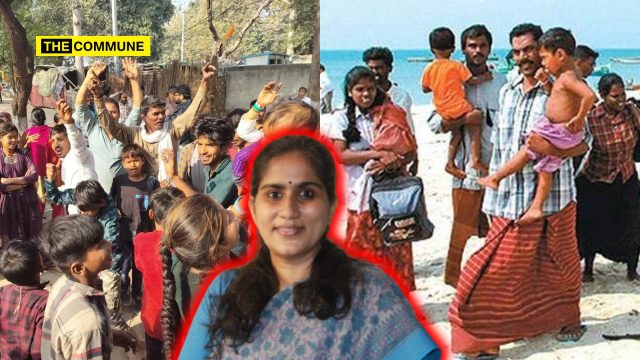
Tamil Nadu Congress Committee spokesperson and general secretary Lakshmi Ramachandran has come under scrutiny for comments on the citizenship process for Sri Lankan Tamil refugees. Sharing a clipping of The Hindu article titled “The Bumpy Road to Citizenship”, Ramachandran noted that while some refugee families have recently moved into concrete houses provided by the state government, she could not understand why Hindus from Afghanistan received citizenship so quickly compared to Sri Lankan Tamil Hindus who have been residing in India for 30–40 years. She further stated, “The Hindi heartland gets first preference always,” suggesting a regional bias in the citizenship process.

The situation of Sri Lankan Tamil refugees is complex and differs significantly from that of refugees from Afghanistan or Pakistan. Historical factors, including the civil war in Sri Lanka that lasted until 2009, have influenced the experiences of these refugees. Many had initially hoped to return to Sri Lanka, but various obstacles prevented them from doing so.

A significant number of Sri Lankan Tamil refugees still wish to return home. Any return would require a structured assistance package to ensure that they can live with dignity. Additionally, the return of at least a portion of the refugee population would increase Tamil representation in Sri Lanka’s Parliament under the country’s proportional representation system.

Experts emphasize the need for India to formalize a clear policy and law for refugees, clarifying that individuals who enter or overstay illegally should not automatically expect citizenship. Observers note that the Indian state’s primary responsibility is to address the issues and needs of its citizens first, while managing refugee populations through structured and legally defined procedures.

 Subscribe to our channels on TelegramWhatsApp, and Instagram and get the best stories of the day delivered to you personally.

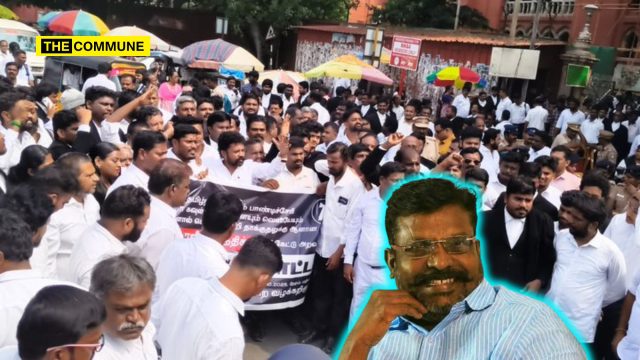
VCK Hit & Run Case: Lawyers Protest Against VCK MP Thirumavalavan To Protest Against His Goons Thrashing An Advocate

Lawyers Protest Against VCK MP Thirumavalavan Outside Madras High Court, Demand Action Against Him

A group of lawyers staged a protest and road blockade outside the Madras High Court on 13 October 2025, demanding justice for an advocate allegedly assaulted during an encounter involving VCK (Viduthalai Chiruthaigal Katchi) MP Thol Thirumavalavan. The protest was organized after claims that the police have not registered a case or provided CCTV footage related to the incident, raising concerns over police inaction.

During the protest, a lawyer addressing the crowd alleged that the Tamil Nadu government “has the police in its hands,” and that lawyers across the state will continue their struggle until justice is delivered for the affected advocate, Rajiv Gandhi. The speaker also cited a prior incident at the DGP office where the police reportedly mishandled evidence, emphasizing the lack of relief for victims in such cases.

The protesters urged Tamil Nadu lawyers to boycott the upcoming Bar Council elections, questioning the role of the Bar Council as a representative forum for lawyers. They argued that lawyers face repeated attacks across courts in Tamil Nadu and India, with little protection even from institutions meant to safeguard them.

The lawyer described the alleged assault on Rajiv Gandhi, claiming he was beaten while sitting in his car and that the incident was witnessed by Thirumavalavan, who had earlier expressed anger at similar incidents involving judges. The protestors condemned the MP’s speech, alleging it incited violence and was inappropriate for someone in Parliament.

The Lawyers’ Social Justice Council expressed strong regret and condemnation over the MP’s remarks, calling for accountability. Bar Council member K. Balu also demanded that authorities take appropriate action against Thirumavalavan. The protest highlights ongoing tensions between lawyers and political figures in Tamil Nadu.

Subscribe to our channels on TelegramWhatsApp, and Instagram and get the best stories of the day delivered to you personally. 

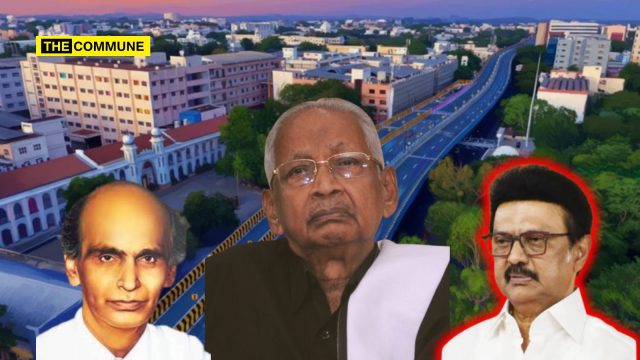
Dravidar Kazhagam Which Claims To Fight Against Caste Defends Naming Coimbatore Flyover As GD ‘Naidu’ Bridge

Dravidar Kazhagam Defends Naming Of Avinashi Bridge After GD Naidu Amid Caste Surname Controversy

The Dravidar Kazhagam has issued a strong statement defending the Tamil Nadu government’s decision to name the newly constructed Avinashi bridge, the state’s longest, after the renowned Coimbatore scientist GD Naidu. This comes amid objections from certain quarters over the inclusion of the caste identifier “Naidu” in the memorial’s name amid the DMK government passing a GO about removing caste names from streets/places etc.

In a detailed communique, Dravidar Kazhagam President Ki. Veeramani praised the move as a fitting tribute to an “extraordinary individual” and “unique scientist,” while dismissing the opposition as “either mischief or ignorance.” He argued that historical and personal names, when they have gained public recognition over time, should be treated as exceptions to the norm of avoiding caste-based nomenclature.

Citing examples such as T.M. Nair and Madhavan Nair, Veeramani contended that removing the community-associated suffix would erase the very identity of these figures. “When we say GD Naidu, no one sees him as a Naidu; they see him as a scientist,” he stated, adding that a proposal to call it the “GD Bridge” would fail to resonate with the public, as the full name is integral to his legacy.

The statement also highlighted that GD Naidu’s own descendants, including his son GD Gopal, do not use the caste suffix—a fact presented as evidence of the Self-Respect Movement’s success. Veeramani questioned the motives of the critics, asking what they had done to abolish caste, and asserted that such “petty tactics” would not undermine the public’s support for the state government.

On his X handle, Veeramani wrote, If the ‘Naidu’ part is removed from the name of the person popularly known as ‘G.D. Naidu,’ would the purpose of naming the bridge in his memory be fulfilled?

—————————-

The unparalleled Chief Minister of the ‘Dravidian Model’ government, recognizing the most important leaders and scholars who lived and are living in Tamil Nadu, honors them by naming new projects, buildings, roads, and flyovers after them. This is a remarkable achievement that brings joy to the people and ensures that future generations remember these figures.

This news deserves praise!

Recently, naming the Avinashi bridge, constructed as the longest bridge in Tamil Nadu, after the Coimbatore scientist G.D. Naidu, who remains immortal in our hearts despite his passing, is an act appreciated not only by the people of Coimbatore but by people from all walks of life. In Tamil Nadu, our scientist G.D. Naidu stands out as a unique figure, an extraordinary individual who captured the attention of others like no one else. Naming Tamil Nadu’s longest bridge after him has been widely welcomed. However, some political opportunists and those who fail to understand are unnecessarily opposing it, questioning whether it is appropriate to include the caste name in ‘G.D. Naidu’ for political reasons.

Some things require exceptions!

This is either mischief or ignorance. There is no need to discuss mischief. Those who don’t understand need to be enlightened. When names like G.D. Naidu or Rajagopalachari are mentioned, they sign their names in that manner. They are identified as such. If you remove that and call it the Duraisamy Bridge, no one would know which Duraisamy it refers to. Even in Coimbatore, the name Duraisamy wouldn’t ring a bell. Worse still, even G.D. Naidu’s grandchildren might not know who Duraisamy is if asked. In such a context, some exceptions are necessary. When we say G.D. Naidu, no one sees him as a Naidu; they see him as a scientist. That scientist is identified as G.D. Naidu. Therefore, naming it the G.D. Bridge wouldn’t suffice.

Those who fought for the abolition of caste!

Once, in Ezhumbur, instead of T.M. Nair Road, during the time when M.G.R. was Chief Minister, the ‘Nair’ part was removed, and it was renamed ‘T.M. Road.’ ‘T.M. Road’ meant nothing to anyone. Similarly, if you remove Nair from Madhavan Nair and call it just Madhavan, how many Madhavans are there? No one would know which Madhavan it refers to among the many. Therefore, it is correct to say T.M. Nair or Madhavan Nair. It doesn’t signify caste; these individuals fought for the abolition of caste! Their names have become historical and established as such. Thus, raising objections and creating unnecessary controversies only reveal their narrow-mindedness and a petty desire to find fault with the ‘Dravidian Model’ government, rather than conveying any meaningful critique. What have these self-proclaimed warriors done for caste abolition? What is their contribution? Have they eradicated caste? Let them place their hands on their hearts and answer! People will only laugh mockingly at them, and their efforts will not succeed. Such petty tactics cannot bring down the ‘Dravidian Model’ government! It’s about communicating in a way that people understand.

Thanks to the Chief Minister! Thanks!! Thanks!!!

It’s already a well-known name! Would the purpose of naming the bridge after G.D. Naidu be fulfilled if the ‘Naidu’ part is removed? Thus, every rule has an exception, and this is one of them. The fact that even G.D. Naidu’s son, G.D. Gopal, and other family members across generations do not use the caste suffix is a testament to the success of the Self-Respect Movement, isn’t it? Thanks to the Chief Minister for naming the Coimbatore bridge after G.D. Naidu!

Thanks!! Thanks!!! 

Ki. Veeramani President, Dravidar Kazhagam 10.10.2025″

Subscribe to our channels on Telegram, WhatsApp, and Instagram and get the best stories of the day delivered to you personally. 
2018 IIT Kanpur “Research” Paper On Bhakti Saints Interprets Radha-Meerabai Bond Through ‘Lesbian Continuum’ Lens

2018 IIT Kanpur "Research" Paper On Bhakti Saints Interprets Radha-Meerabai Bond Through ‘Lesbian Continuum’ Lens

An academic paper authored by Dr. Rima Bhattacharya, a faculty member of the Department of Humanities and Social Sciences at the Indian Institute of Technology (IIT) Kharagpur, has triggered a wave of criticism on social media after excerpts from the study were circulated online this week. The paper, published in 2018 in the Indian Journal of Gender Studies (SAGE Publications), explores themes of gender and sexuality within Bhakti literature and interprets the emotional relationship between Radha and Mirabai through a “lesbian continuum” framework.

This research was done when Bhattacharya was with IIT Kanpur (as mentioned in the paper). It is unclear whether she is still with IIT Kharagpur or has moved to Christ University.

The article, titled “The Transgendered Devotee: Ambiguity of Gender in Devotional Poetry,” examines two prominent devotees of Lord Krishna, Mirabai and Surdas, and argues that early Bhakti poetry contains “instances of queer identity” which have been erased or overlooked in later interpretations. The author applies queer theory to explore gender fluidity and non-heteronormative expressions within Bhakti traditions, suggesting that devotional emotion often transcends fixed gender categories.

According to the abstract, the paper seeks to determine whether gender divisions remain constant or evolve with the emotional dynamics of Bhakti. It claims that both Mirabai and Surdas can be understood as “sexual subjects who are culturally dependent and historically specific.” The author writes that the study uses queer theory “to explore the contested categorisation of gender and sexuality,” asserting that identities are not fixed but composed of varying constituents.

A section of the paper that has sparked controversy online draws from literary interpretations of devotional poetry and states, “The bonding of Mira and Radha expressed in this poem may recall Adrienne Rich’s idea of a ‘lesbian continuum’ which includes a range of woman-identified experiences… not simply the fact that a woman has had or consciously desired sexual experience with another woman.”

The paper further notes that “Mira and Radha could be a part of this lesbian continuum,” interpreting their emotional and spiritual bond as an instance of woman-identified power and solidarity. It also references queer theorists such as Jonathan Dollimore and Alan Sinfield, describing non-heterosexual subcultures as “points at which alternative or oppositional ideologies may achieve plausibility.” The article argues that “sexual dissidence” may function as a political act capable of challenging dominant cultural norms.

In discussing the emotional dualities of sangam (union) and viraha (separation) in Bhakti poetry, the paper states that these states are “ideally felt and expressed in a poem towards a lover.” It equates the ecstasy of spiritual union with the joy of sexual union, suggesting that “the highest form of worship in the Bhakti cult is considered a mixture of the spiritual and the sensual.”

The publication has drawn sharp criticism from several social media users, who have questioned the appropriateness of such interpretations in publicly funded institutions.

Some critics described the work as “academic perversion,” alleging that it reflected a “Western lens being imposed on Hindu sacred figures.” A number of users also compared the paper to earlier instances where religious themes were interpreted through modern gender or psychoanalytic frameworks, arguing that such studies were part of a broader pattern of “de-Hinduisation” within Indian academia.

The 2018 paper was published in Volume 25, Issue 2 of the Indian Journal of Gender Studies, a peer-reviewed journal of the Centre for Women’s Development Studies (CWDS). The journal is published by SAGE Publications.

So far, neither IIT Kharagpur nor Dr. Bhattacharya had issued a public statement in response to the controversy. The Ministry of Education has also not commented on the matter.

Subscribe to our channels on Telegram, WhatsApp, and Instagram and get the best stories of the day delivered to you personally.
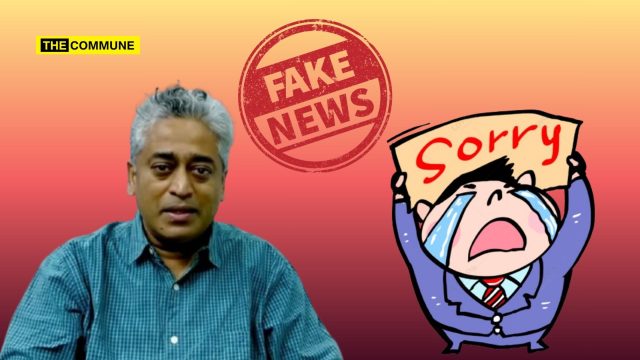
Rajdeep Sardesai Apologizes To BJP Councillor 14 Years After Telecasting False Corruption Claims

Rajdeep Sardesai Apologizes To BJP Councillor 14 Years After Telecasting False Corruption Claims

Senior journalist and television anchor Rajdeep Sardesai has once again tendered a public apology for broadcasting false and defamatory news, this time related to a sting operation involving BJP councillor Ajit Singh Tokas.

Apology to former BJP Councillor Ajit Singh Tokas

Sardesai issued a public apology 14 years after a programme titled ‘IBN7 and Cobra Post Investigation’ aired on November 7 and 6, 2011, as part of a series called ‘Dilli’s Double Agents’. The show alleged that former BJP councillor Ajit Singh Tokas had demanded money in connection with unauthorized construction in Munirka, Delhi.

Subsequent third-party investigations found that Tokas had not demanded any money and that such practices were not tolerated in his ward. Sardesai, in his apology note, stated that his role was limited to anchoring the programme based on the investigation.

History of Misreporting and Selective Coverage

Sardesai’s record includes multiple instances of misreporting:

During the UPA I government, he allegedly withheld the full broadcast of a sting exposing the cash-for-votes scandal related to the 2008 Nuclear Bill trust vote. BJP MPs Ashok Argal, Faggan Singh Kulaste, and Mahavir Bhagora had claimed to possess cash offered to sway their votes. The partial telecast led to allegations of selective editing and media manipulation.

Former colleagues reported that Sardesai, along with Ashutosh (then heading the Hindi channel and later co-founder of the Aam Aadmi Party), did not allow the full sting to be aired, which could have potentially brought down the UPA government.

Sardesai was awarded the Padma Shri in journalism by the UPA government in 2008.

Sohrabuddin Encounter Case Apology

In May 2007, Rajdeep Sardesai, then Editor-in-Chief of CNN-IBN, aired a programme titled ‘30 Minutes – Sohrabuddin: The Inside Story’, alleging that IPS officer Rajiv Trivedi had facilitated the abduction and fake encounter killing of Sohrabuddin Sheikh and his wife Kausar Bi. The programme claimed that Trivedi provided cars with fake number plates for the alleged transfer of the couple to Ahmedabad.

A complaint was filed in Hyderabad court against Sardesai and ten other reporters, claiming that the report was false, fabricated, and defamatory. Efforts to quash the case through the Hyderabad High Court were dismissed in April 2011, and the Supreme Court dismissed a Special Leave Petition in May 2015. A plea to transfer the trial to Noida was also dismissed.

On November 27, 2019, Sardesai submitted an unconditional apology to IPS officer Rajiv Trivedi, acknowledging that the allegations against him were false. He stated, “…I realise that there is nothing to substantiate the allegation that Vanzara and Pandian nabbed Sohrabuddin and Kauserbi in Bidar with the help from SP Rajiv Trivedi of Hyderabad, Special Investigation Unit, and hence it was a false news telecast… I further submit that there is nothing to substantiate the allegation that Rajiv Trivedi provided cars with fake number plates in which Sohrabuddin was brought to Ahmedabad and then killed in a fake encounter.”

Following the apology, Additional Metropolitan Sessions Judge D. Hemanth Kumar accepted it and passed an acquittal order the same day, noting that all respondents tendered unconditional apologies and were found not guilty under Section 500 of the IPC.

More recently, Sardesai was penalized for falsely claiming that a protesting farmer had been shot dead by police in Delhi, which led to him being taken off air and docked a month’s salary.

Despite his long record of misinformation, Sardesai continues to be a prominent anchor on India Today, raising concerns about the credibility of primetime news on the channel.

Subscribe to our channels on TelegramWhatsApp, and Instagram and get the best stories of the day delivered to you personally.
Karnataka Congress Minister Priyank Kharge Calls For Ban On RSS ‘Shakhas’, His Father Mallikarjun Kharge Had Once Visited A Camp And Praised RSS’ Service

Karnataka Minister and Congress leader Priyank Kharge has formally urged Chief Minister Siddaramaiah to impose a ban on all activities conducted by the Rashtriya Swayamsevak Sangh (RSS) in government institutions and public premises across the state. In a letter dated 4 October 2025, Kharge contended that such activities go against India’s unity and the constitutional spirit.

Kharge, the son of Congress president Mallikarjun Kharge, alleged that the RSS has been conducting its ‘shakhas’ in government and government-aided schools, as well as on public grounds, where “slogans are shouted and negative ideas are instilled in the minds of children and youth.” The letter was shared with the media by the Chief Minister’s Office (CMO) on Sunday.

According to Priyank Kharge, the RSS belief system is “contrary to India’s ideals of unity and secular framework.” He warned that “when divisive forces that sow hatred among the people raise their heads, our Constitution, founded on the core principles of integrity, equality, and unity, grants us the authority to curb such elements and uphold the secular values of the nation.”

The minister further alleged that these activities often occur without police permission, and that “aggressive displays are being carried out while wielding sticks,” which he claimed could have harmful psychological effects on children and young people.

Calling for firm government action, Kharge urged that a ban be imposed on all RSS activities, whether under the name of ‘shakha’, ‘sanghik’, or ‘baithak’. He specified that the ban should cover government schools, government-aided schools, public playgrounds, parks, temples under the Muzrai Department, sites under the Archaeology Department, and all other government premises.

Kharge emphasized that the Constitution empowers both citizens and the State to act against forces that spread division, asserting that such intervention is necessary to ensure the protection of secular and democratic values.

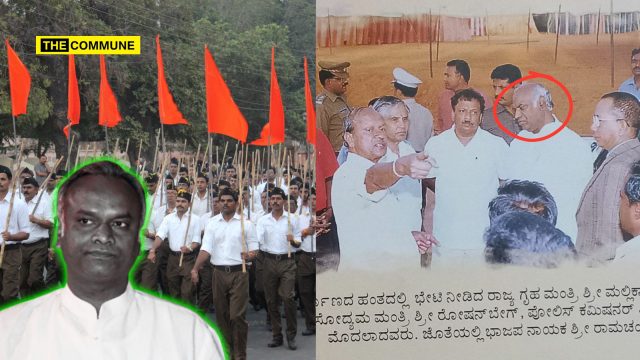
It is noteworthy that during the preparations for the RSS Samarasata Sangama held at Nagawara, Bengaluru, from January 25 to 27, 2002, the then Karnataka Home Minister, Mallikarjun Kharge – father of Priyank Kharge, who has recently called for a ban on RSS activities in the state, visited the RSS campsite along with other Congress ministers. The ministers reportedly commended the organisation for its social service initiatives during the event. The gathering was attended by prominent RSS functionaries, including the recently deceased veteran Shri K. R. Narahari. Congress leader Roshan Baig and then Bengaluru Police Commissioner T. Sangliana were also present at the occasion.

(With inputs from Times of India)

Subscribe to our channels on TelegramWhatsApp, and Instagram and get the best stories of the day delivered to you personally.
Dravidian Model: North Chennai Residents Struggle With Sewage-Contaminated Supply

CM Stalin, Dy CM Udhayanidhi At Kalaimamani Awards, North Chennai Residents Struggle with Sewage-Contaminated Supply

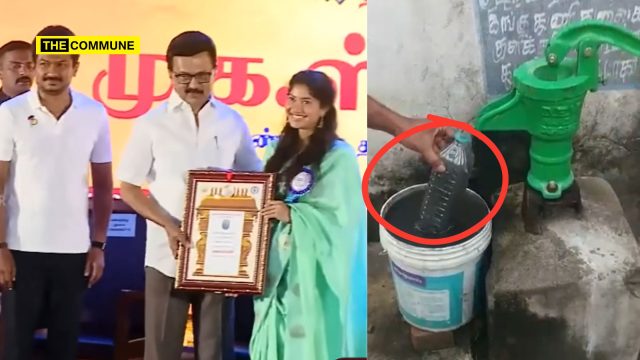
While Chief Minister M.K. Stalin and Deputy Chief Minister Duraimurugan presided over the state’s Kalaimamani awards this week, celebrating achievements in film and culture, residents in North Chennai neighborhoods were left to confront a grimmer reality: raw sewage contaminating their water sources.

The stark contrast between the government’s cultural priorities and the persistent civic crises in the capital city has sparked criticism, particularly from areas like Old Washermenpet, where residents report that hand pumps are yielding sewage water instead of clean water.

The issue underscores a long-standing grievance in North Chennai, where aging and overwhelmed infrastructure has led to frequent sewage backflows and contaminated groundwater. Despite the visible government focus on high-profile award ceremonies, the fundamental task of ensuring clean drinking water remains an unfulfilled promise for many.

In response to the ongoing crisis, Metrowater has announced a ₹946 crore project to replace 213 km of 40-year-old sewer lines in areas including Royapuram, Tondiarpet, and Thiru Vi Ka Nagar. The plan, part of the Vada Chennai Valarchi Thittam, aims to benefit over 20 lakh residents.

Metrowater managing director T.G. Vinay stated that the work, which includes expanding pipe diameters and installing new pump sets, is scheduled for completion by June 2026. He confirmed that some work has already begun.

However, local legislators indicate the problem is acute and the solution may be insufficient. “About 40% of the estimated project cost is allotted for RK Nagar, but this won’t be enough,” said Dr. Radhakrishnan Nagar MLA J.J. Ebenezer, highlighting that older areas like Kasimedu also require urgent attention.

With the government’s current public focus centered on cultural events, residents and critics are left questioning when their basic, life-and-death needs will receive the same level of top-level attention and urgency.

(Source: Times of India)

Subscribe to our channels on TelegramWhatsApp, and Instagram and get the best stories of the day delivered to you personally.