Home Blog Page 282

Priyank Kharge’s Talent: Mallikarjun Kharge’s Son And Karnataka Congress Minister Has Passed Class 12 Or No?

A recent political controversy ignited by Karnataka Congress Minister Priyank Kharge over the “talent” available in other states has redirected scrutiny onto his own educational qualifications, as revealed by a series of affidavits submitted to the Election Commission.

The controversy began on Sunday, 26 October 2025, when Kharge, the Minister for IT/BT and Rural Development, publicly questioned the rationale behind semiconductor industries choosing to invest in Assam and Gujarat.

“Why are semiconductor industries going to Assam and Gujarat when they actually want to come to Bengaluru?” Kharge queried. “What is there in Gujarat? Is there talent there? What is there in Assam? Is there talent there?”

These remarks, seen as dismissive of the workforce in the two states, have sparked a backlash and led to a closer examination of the minister’s own declared credentials.

An Educational Record In Flux

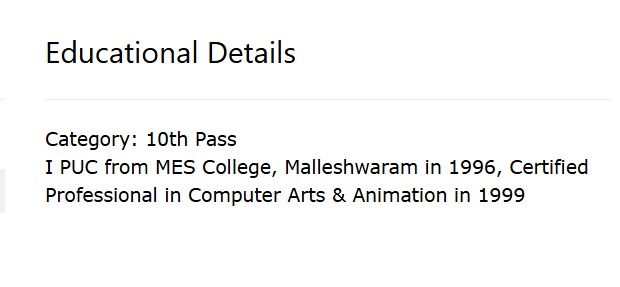
An analysis of Priyank Kharge‘s sworn affidavits from his four electoral contests reveals inconsistencies in his declared educational level, a matter of public record when he filed his nomination and as available on the MyNeta website.

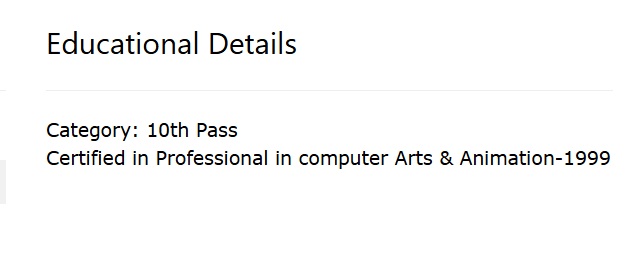
In 2008 (Bye-election): At the age of 30, Kharge declared his educational qualification as “10th Pass.”

Source: MyNeta

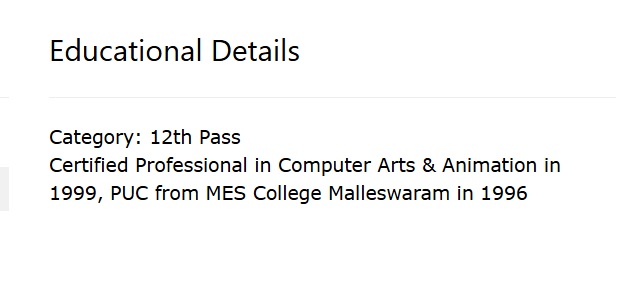
In 2013: At 34, his qualification was updated to “12th Pass.”

Source: MyNeta

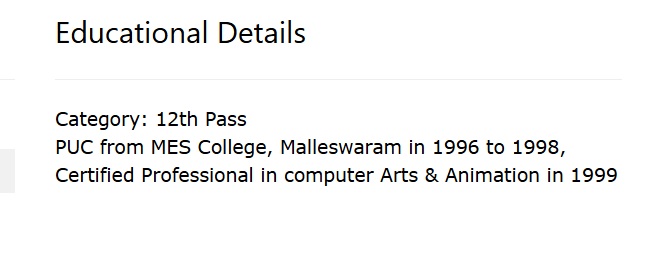
In 2018: At 39, he again declared himself as “12th Pass.”

Source: MyNeta

In 2023: In a surprising reversal, the 44-year-old minister’s affidavit once again lists his education as “10th Pass.”

Source: MyNeta

Priyank Kharge’s 2023 affidavit backtrack raises uncomfortable questions — did he even pass Class 12? His educational record has somehow regressed over time, showing that he isn’t a graduate at all. His only consistent credential appears to be his dynastic privilege.

The contradiction between his successive affidavits is particularly glaring given his habit of questioning the “talent” of others.

Subscribe to our channels on WhatsAppTelegram, Instagram and YouTube to get the best stories of the day delivered to you personally. 

Karur Stampede Victims’ Families Allege ₹30 Lakh Bribe Offer, Pressure From DMK Functionaries To Skip Vijay Meeting

"Vijay Fled From Scene Of Occurrence, Party Has No Remorse", Madurai Bench Of Madras High Court Slams TVK For dmk Karur Stampede karur stampede dmk

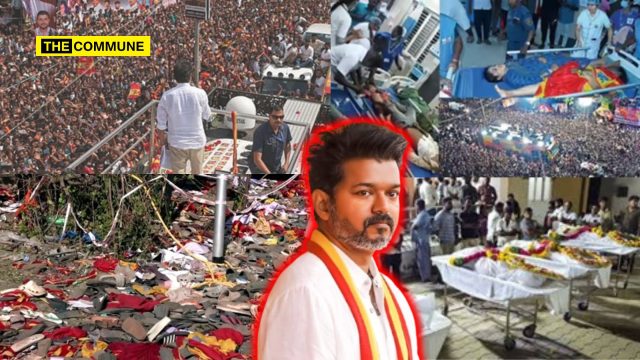
Actor and Tamilaga Vettri Kazhagam (TVK) leader Vijay met the families of those who died in the Karur stampede tragedy on Monday, 27 October 2025, at a private hotel in Mamallapuram. The meeting, held exactly a month after the incident, saw Vijay reportedly spend up to half an hour with each family, offering emotional and material support.

According to party sources, more than 30 families attended the session. TVK members made all logistical arrangements, including transport from Karur, hotel accommodation, and return travel. A total of 46 rooms were booked for the families, who were brought to Mamallapuram on 26 October 2025. Vijay began his meetings with the bereaved families the next morning, engaging with each individually.

Several family members said the actor appeared visibly emotional during the interactions and assured assistance such as employment or educational support for affected families. They stated that he listened to their concerns and spent time acknowledging their personal losses.

A family member of the victim alleged that local functionaries of the ruling Dravida Munnetra Kazhagam (DMK) attempted to dissuade them from attending the meeting by offering up to ₹30 lakh in cash. They claimed that these offers were made through intermediaries the day before the scheduled interaction but declined to identify the individuals or specify their positions in the party.

One family member alleged that even the driver of the bus that transported the families from Karur faced threats and was pressured not to proceed with the trip. The individual alleged that the intimidation came from local political figures seeking to prevent attendance at Vijay’s meeting.

In addition to allegations of bribery and coercion, the same relative raised questions about discrepancies in official records. He claimed that the death certificates for his children stated that they were dead on arrival at the hospital, whereas he maintained that one of the children was still alive when brought in. He alleged that the record did not reflect the actual sequence of events and said this caused further anguish to the bereaved families.

The Karur tragedy occurred on 27 September 2025 during a TVK rally, where 41 people lost their lives in a stampede. The cause of the incident remains under investigation, with earlier reports citing overcrowding and intense heat as contributing factors.

(Source: South First)

Subscribe to our channels on WhatsAppTelegram, Instagram and YouTube to get the best stories of the day delivered to you personally. 
“What About Cruelty Towards Humans? Your Country Being Shown Down In The Eyes Of Foreign Nations”, Says Supreme Court On Stray Dog Menace

Stray Dog Menace: Madurai Bench Of Madras High Court Considers Enforcing Supreme Court’s Delhi Directive

The Supreme Court on Monday, 27 October 2025, expressed serious concern over the growing menace of stray dogs across India, observing that the recurring incidents of attacks had damaged the country’s global image.

“Continuous incidents are happening. Your country is being shown as down in the eyes of foreign nations. We are also reading news reports,” Justice Vikram Nath remarked during the hearing. When a counsel highlighted instances of cruelty against dogs, the bench countered, “What about the cruelty towards humans?”

The bench, which is hearing a suo motu case on the issue, noted that several states had failed to comply with its earlier directions. Taking exception to the lapse, the court said, “Your officers don’t read newspapers? Were they not aware of our orders?” It then directed the Chief Secretaries of all states except West Bengal, Delhi and Telangana to remain present before it for failing to file compliance affidavits.

The judges also expressed frustration at the growing number of parties seeking to intervene in the matter. “Also if all RWA wants to be party… how many crores of parties we will have here before us. Make suggestions which are reasonable,” the bench said.

The ongoing case originated in late July after reports of fatal stray dog attacks and rabies-related deaths in the Delhi-NCR region. In its first significant order on 11 August 2025, a two-judge bench had instructed authorities to capture all stray dogs in the NCR and keep them permanently in shelters. The directive drew strong criticism from animal welfare organisations, who termed the move both unworkable and inhumane.

On 22 August 2025, a newly constituted three-judge bench revisited the order, calling it “too harsh,” and expanded the scope of the case to include all states and Union Territories. The bench also decided to transfer similar cases pending before various high courts to the Supreme Court, with the aim of developing a unified national policy in accordance with the Animal Birth Control (ABC) Rules, 2023.

The matter will next be taken up on 27 October 2025, when the apex court is expected to review compliance reports and suggestions from the states.

(Source: News18)

Subscribe to our channels on WhatsAppTelegram, Instagram and YouTube to get the best stories of the day delivered to you personally. 
Did Tamil Nadu’s Private Universities (Amendment) Bill Go Too Far? Institutions Cry Foul Over New Controls

Did Tamil Nadu’s Private Universities (Amendment) Bill Go Too Far? Institutions Cry Foul Over New Controls

The Tamil Nadu Private Universities (Amendment) Bill, 2025, has triggered widespread opposition from academic institutions, students, and other stakeholders after it was passed in the Tamil Nadu Legislative Assembly. Responding to the backlash, the state’s Education Minister announced that the Bill will be reviewed, acknowledging concerns raised by multiple universities and educational associations regarding governance, approval procedures, and compliance rules.

The controversy centres on how the new amendments reshape the existing regulatory structure for private universities in Tamil Nadu. While the government has defended the Bill as a measure to bring transparency, uniformity, and accountability, stakeholders argue that several provisions could compromise institutional autonomy and create administrative uncertainty.

Retroactive Validation of Notifications

One of the most debated aspects of the Bill is the provision granting retroactive legal validity to all government notifications issued between January 2021 and March 2024. The Tamil Nadu Law Department clarified that any actions, decisions, or proceedings taken under these notifications are now deemed legally valid.

Several private universities have objected to this clause, warning that such retroactive validation could blur the distinction between approved and unapproved courses. They argue that this move risks legitimising administrative irregularities that were previously under scrutiny and could affect pending or disputed approvals.

Changes in Governance and Approvals

The amendment introduces a uniform process for establishing private universities. Institutions must now comply with all conditions mentioned in the Letter of Intent issued by the state government, and inclusion in the official Schedule of Private Universities will only be permitted after these criteria are fulfilled.

The government insists this change is aimed at ensuring transparent and accountable university operations. However, university sponsors have voiced concern that these tighter requirements could lead to excessive government oversight, limiting autonomy in both administrative and academic decision-making. This concern is especially pronounced for multi-campus universities and those offering interdisciplinary courses, which may face multiple layers of scrutiny during approval.

Alignment with NMC Regulations for Medical Courses

The Bill replaces references to the now-defunct Medical Council of India (MCI) with the National Medical Commission (NMC). As a result, all medical courses offered by private universities must now comply with NMC’s updated regulations on faculty qualifications, infrastructure standards, and curriculum frameworks.

While this alignment is intended to harmonise Tamil Nadu’s private medical education with national standards, several institutions have expressed that the transition may impose additional administrative and financial burdens. Universities that had structured their programmes around MCI norms now face the challenge of adapting to new NMC requirements, potentially delaying admissions and course approvals.

Requirements for Sponsoring Bodies

The amended law mandates that every private university must be sponsored by a registered entity, either a trust or a company under the Companies Act, 2013. The registration number and official address of each sponsoring body must also be published in the government gazette.

Although the government describes this as a step towards greater legal clarity, some long-established institutions argue that these provisions are overly rigid. They claim that older trusts and organisations with complex historical registrations could face significant administrative hurdles in meeting the new documentation and registration criteria.

Government’s Response and Review

Following the widespread pushback, the state’s Education Minister announced that the government would undertake a review of the Bill to address the concerns raised by private universities, associations, and political parties — including the DMK and AIADMK and the Association of University Teachers (AUT). The review is expected to explore ways to balance regulatory oversight with operational flexibility, ensuring that institutions can comply with national standards without unnecessary bureaucratic delays.

Significance of the Backlash

The strong reactions to the Tamil Nadu Private Universities (Amendment) Bill, 2025, underscore the ongoing tension between the state’s drive for regulatory reform and the private education sector’s demand for autonomy. While the government has positioned the Bill as an effort to streamline approval processes, ensure NMC compliance, and validate prior actions, educational stakeholders emphasise the need for clearer implementation timelines, procedural transparency, and protection against retrospective ambiguities.

(Source: Times of India)

Subscribe to our channels on WhatsAppTelegram, Instagram and YouTube to get the best stories of the day delivered to you personally. 
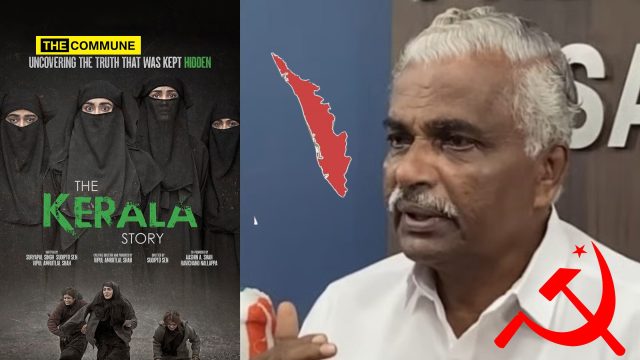
Love Jihad Comes Home: CPM Leader Who Mocked The Kerala Story Faces Family Crisis

A senior Communist Party of India (Marxist) leader in Kerala, whose party has long dismissed the concept of Love Jihad as a myth, Sangh Parivar’s vicious fabrication, now finds himself at the centre of a controversy strikingly similar to the phenomenon they denied.

PV Bhaskaran, 73, a branch committee member of the CPI(M) in Uduma, Kasaragod district, is now battling allegations from his 35-year-old daughter Sangeetha, who has accused him of keeping her confined at home for months for wanting to marry a Muslim man.

In a video released on 21 October 2025, Sangeetha introduced herself as “a prisoner in her own house” and appealed to the public and political leaders to intervene. Paralysed from the waist down after a road accident in 2023, she alleged that her parents and brother had isolated her and withheld her phone because she wished to marry Rasheed, an ayurvedic practitioner who had been treating her.

In her now-viral video, Sangeetha wanted the world to know her truth and questioned if she had the right to live freely. She also alleged that police action was being delayed because of her father’s political influence.

PV Bhaskaran’s Response

Bhaskaran, who has been with the CPI(M) since the age of 18, held a press conference the next day denying his daughter’s claims. He said the issue had “nothing to do with religion” and that his opposition stemmed from Rasheed’s personal background.

“I am a Communist. I don’t look at caste or religion,” Bhaskaran told reporters. “But my daughter’s well-being comes first. Rasheed is already married and has two children. His wife has filed a police complaint against him. He came into our lives as a therapist and then began manipulating my daughter for her compensation money.”

According to Bhaskaran, the family spent nearly ₹52 lakh on Sangeetha’s treatment after her accident, and she has since been awarded ₹1.5 crore in insurance compensation. He alleged that Rasheed was targeting that money under the pretext of marriage. “If I oppose this, it is not because he is Muslim, but because his intentions are not pure,” he said.

Police sources confirmed that Rasheed’s wife had filed a complaint against him for neglect and that he had previously been questioned regarding Sangeetha’s case.

From Denial to Reality

The episode has drawn attention because Bhaskaran had publicly ridiculed the 2023 film The Kerala Story, which depicted cases of religiously motivated targeting of non-Muslim women. At the time, he had called the film “RSS propaganda” and said Love Jihad was a myth used to polarise society.

However, his daughter’s case has forced uncomfortable questions for the CPI(M) and others who have long dismissed interfaith exploitation as a right-wing invention.

Sangeetha’s accusations have divided public opinion: while many sympathise with her claim of confinement, others see the incident as proof that Bhaskaran’s family has fallen prey to the very pattern the Left refuses to acknowledge.

Police are continuing their inquiry. Meanwhile, Sangeetha’s friend Arjun, who earlier filed a habeas corpus petition in the Kerala High Court seeking her release, withdrew it after the court noted inconsistencies and observed that “third parties may be acting on behalf of someone else.”

Political Irony

For Kerala’s ruling CPI(M), which has consistently denied that any organised pattern of Love Jihad exists in the state, the episode is politically awkward.

While Bhaskaran insists that his daughter’s case is a matter of family and financial concern, his situation underscores what critics call a “pattern of selective denial” within Kerala’s Left establishment which has often dismissed reports of targeted interfaith manipulation until it strikes closer to home.

(Source: Organiser)

Subscribe to our channels on WhatsAppTelegram, Instagram and YouTube to get the best stories of the day delivered to you personally. 
US Goes The UK Way As Islamists Line Up To Become Mayors

US Goes The UK Way As Islamists Set To Become Mayors zohran mamdani omar fateh

A political and cultural transformation is underway in the West, and the United Kingdom has become its blueprint. The recent surge in violence – anti-Semitic/anti-Hindu/Indian, while critical to the context, is not the root cause of the crisis but a symptom of a deeper shift: the systematic entry of Islamist politicians into the highest echelons of power. Having watched the UK establish this troubling precedent, the United States now appears to be following the same playbook, with political movements actively working to install mayors whose ideologies mirror those that have reshaped British politics.

The UK Precedent: How Islamists Captured the Corridors of Power

The British political landscape has been fundamentally altered. The narrative is no longer about isolated acts of violence, but about the political empowerment of a community whose leadership often openly rejects assimilation and champions ideologies at odds with liberal, Western values.

The Unprecedented Political Rise: In the 2024 UK general election, a record 25 Muslim MPs were elected to Parliament. While representing a diversity of views, this bloc includes figures whose political identities are explicitly formed in opposition to the traditional British consensus.

Key Figures in Power

Shabana Mahmood: As the Secretary of State for Justice and Lord Chancellor, Mahmood holds one of the Great Offices of State. She has publicly stated her Islamic faith is the “absolute driver of everything” she does. Her history includes supporting the Boycott, Divestment, and Sanctions (BDS) movement against Israel and opposing the deportation of foreign criminals, raising questions about the primacy of British law versus her personal religious and political beliefs in her role as the nation’s top legal official.

Tulip Siddiq: As the Economic Secretary to the Treasury, she holds significant economic influence.

Rushanara Ali: Serves as a Parliamentary Under-Secretary of State, further embedding this ideological bloc within the government machinery.

Control of Major Cities

Sadiq Khan: Now serving his third term as Mayor of London, Khan oversees a budget of £20.4 billion and commands the capital’s police force. His tenure has been marked by persistent criticism over rising crime and his handling of community relations, with detractors arguing his policies often align with or appease Islamist sentiments at the expense of other communities.

Grassroots Entrenchment

Beyond Westminster, the entrenchment is even more pronounced. Over 200 Muslim councillors now serve in local governments across the UK. In 2024 alone, 39 Muslim candidates won seats across 24 local authorities. Cities like Tower Hamlets, Bradford, and Birmingham have significant Muslim political representation that directly influences local policy, from education to social services.

The Ideological Impact

This is not merely about demographic representation. It is about the advancement of a specific political project. The election of MPs like Apsana Begum and Zarah Sultana, who are known for their hardline anti-Western and anti-Israel stances, demonstrates a conscious voter choice to support candidates who define themselves in opposition to the mainstream. This political movement has successfully capitalized on identity politics, creating a powerful voting bloc that prioritizes religious and ideological loyalty over integration into the British cultural fabric.

The result is a government that, at multiple levels, includes individuals who have opposed policies against foreign criminals, supported movements that seek the destruction of a key ally (Israel), and whose primary driver is a faith-based ideology. This has created a palpable sense of institutional alienation for other communities, particularly British Jews, who see their government’s moral and political compass shifting away from them.

The American Imitation: Mamdani and Fateh as the Vanguard

The UK’s experiment is now being imported into the United States. The strategies are identical: run on a platform of Democratic Socialism to attract the progressive left, while being propelled into power by a base motivated by identity politics and an anti-Western, anti-Israel agenda.

Zohran Mamdani (New York City): The Ideological Import

Mamdani is not a typical New York politician; he is a product of the same ideological ecosystem that has reshaped UK politics. He has pushed for mandatory Halal food in all NYC public schools, a policy critics label as the enforcement of religious doctrine using public funds. While framed as “inclusion,” it notably sidelines Kosher and other dietary laws, signaling a privileging of one specific religious practice.

His campaign has accepted $100,000 from the Council on American-Islamic Relations (CAIR), an organization that was named an unindicted co-conspirator in the 2007 Holy Land Foundation terrorism financing trial.

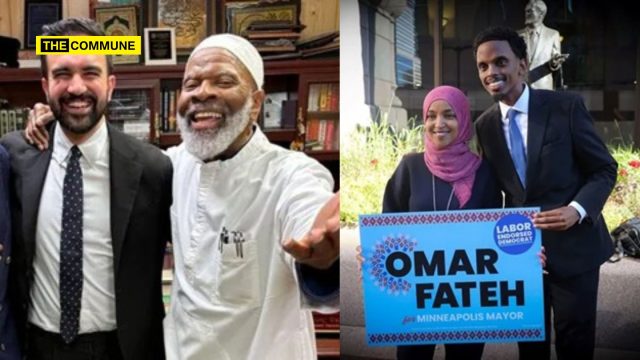
Mamdani has visited and been photographed standing with Imam Muhammad Al-Barr, a religious leader who was recorded praying for violent jihad, asking Allah to “annihilate those who occupied their lands.” The mosque’s former imam has a history of spreading virulently antisemitic rhetoric.

His support from groups like the Indian American Muslim Council (IAMC) and endorsement by Sunita Vishwanath who founded Hindus for Human Rights (HfHR) – organizations with alleged ties to Pakistan-backed Islamist networks suggests his political project extends beyond NYC to advancing global anti-India narratives.

Omar Fateh (Minneapolis): The Playbook Replicated

In Minneapolis, Omar Fateh is applying the same model. His calls to block police cooperation with ICE and to radically defund the police mirror the kind of policies that critics argue prioritize the demands of specific immigrant and religious blocs over public safety and the rule of law.

The fierce, often racist, backlash against him has, in turn, solidified his support within his community, creating the same kind of identity-based political fortress seen in UK constituencies like Birmingham Ladywood or Bradford West.

It is noteworthy that Fateh has been endorsed by anti-Indian US Congresswoman Ilhan Omar who seemingly justified Charlie Kirk’s assassination and said, “Some people did something” about the 11 September terrorist attacks and completely absolved the involvement of Islamic terrorists who carried out the attack.

A Coordinated Political Conquest?

The violence in the UK is a consequence, not the cause. The cause is the political empowerment of an ideology that refuses to assimilate and actively seeks to reshape the West from within. The UK has demonstrated how this is done: through disciplined bloc voting, leveraging identity politics, and running candidates under the broad and often misleading banner of “progressivism.”

The United States is now on the same trajectory. The mayoral campaigns of Zohran Mamdani and Omar Fateh are not isolated incidents. They are the American beachhead of a political movement perfected in the UK. If they succeed, they will not merely be mayors of their cities; they will be enablers of a transformative project that seeks to redefine the very identity of Western nations, with consequences for community safety, foreign policy, and national cohesion that are already terrifyingly visible across the Atlantic.

Subscribe to our channels on WhatsAppTelegram, Instagram and YouTube to get the best stories of the day delivered to you personally. 
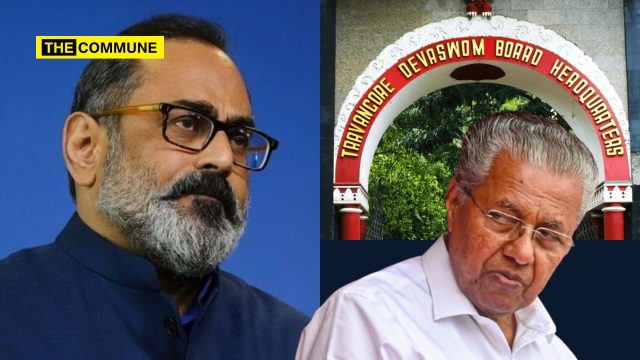
Temple Land Vanishing: Rajeev Chandrasekhar Flags 25,000 Acres Missing in Kerala, Hindu Munnani Says Tamil Nadu HR&CE In “Competition” Of Neglect

Kerala BJP President Rajeev Chandrasekhar has sounded the alarm over large-scale encroachments and misappropriation of temple land in Kerala, demanding an immediate central investigation. Chandrasekhar claims that nearly 25,000 acres of Devaswom (temple) land in the state have been illegally taken over by individuals closely linked to the ruling government, raising “serious questions over the security of Hindu temple assets.”

Accusing the government-appointed Devaswom Boards of systemic mismanagement and corruption, he said the missing lands were only the latest in a string of disturbing revelations — including gold theft from the Sabarimala shrine and fraud in gold-plating works at major temples.

Chandrasekhar has written to Union Home Minister Amit Shah seeking intervention from central agencies and a comprehensive audit of all Devaswom Board assets by the Comptroller and Auditor General of India. He asserted that the Kerala Police, being directly controlled by the state’s Home Minister, “cannot be trusted with such sensitive investigations.”

The Kerala High Court has also intervened, ordering the formation of a Special Investigation Team (SIT) to probe discrepancies in temple administration, missing gold, and unauthorized sales or encroachments of vast tracts of temple land. Chandrasekhar warned that public faith in temple institutions is “at grave risk,” insisting that only transparent oversight can restore trust among devotees.

In protest, the Kerala BJP plans a series of demonstrations, including a blockade outside the Chief Minister’s residence, to highlight what it calls “unforgivable and unpardonable” government complicity in the theft and sale of temple assets.

Meanwhile, the Hindu Munnani has drawn parallels between the Kerala scandal and the situation in Tamil Nadu, accusing the Hindu Religious and Charitable Endowments (HR&CE) Department of being equally negligent. In a statement on 25 October 2025, the organisation said that 25,000 acres of temple land belonging to 23 temples under the Travancore Devaswom Board have gone missing — and compared it to the “tens of thousands of acres” of temple property already untraceable in Tamil Nadu.

“The Kerala Devaswom Board and Tamil Nadu HR&CE seem to be in a competition to lose more temple land through neglect and corruption,” Hindu Munnani said, calling the ongoing losses a “disturbing pattern of disregard for heritage management.”

The group demanded urgent government intervention to locate, recover, and restore the missing properties and ensure accountability in both states.

With parallel controversies in Kerala and Tamil Nadu, Hindu organisations have warned that the issue goes beyond regional politics — reflecting a broader crisis of temple administration and state interference in religious institutions.

Subscribe to our channels on WhatsAppTelegram, Instagram and YouTube to get the best stories of the day delivered to you personally. 
How Serial Rage-Baiter And Ultra-Woke ‘Feminist’ Chinmayi Turned A Canadian House Fire Incident Into A Rant Against Brahmins

When a Canadian family lost their home to a fire sparked by Diwali fireworks, the reasonable response would have been to condemn irresponsible behavior and demand accountability. Instead, singer Chinmayi Sripaada saw an opportunity to rage-bait and unleash her pathological anti-Brahminical venom, revealing the stunning intellectual bankruptcy of her worldview.

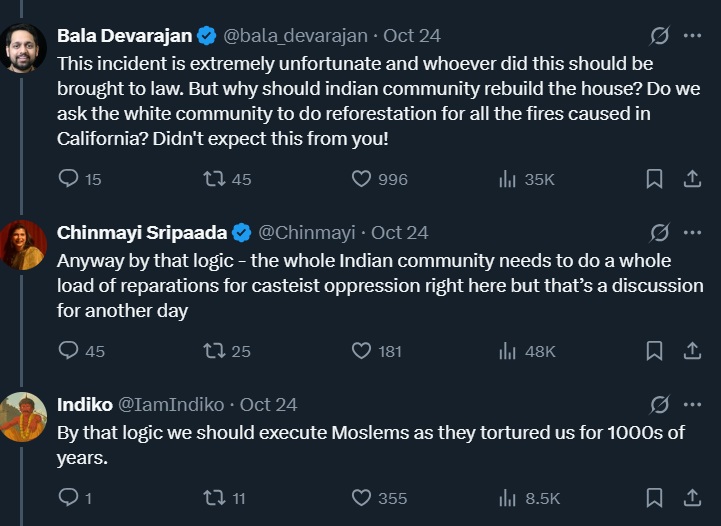
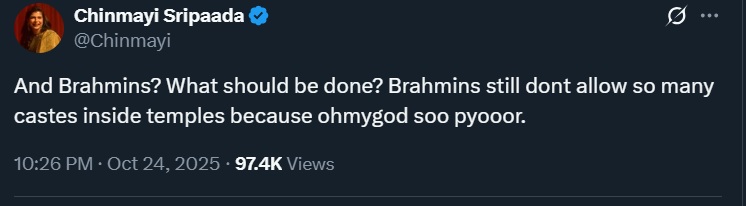
Her initial tweet demanding that “the Indian community should basically rebuild his house for him” was rightly challenged.

Why should an entire community be held responsible for the actions of a few individuals? This collective guilt narrative is as absurd as demanding the white community fund reforestation for every California wildfire.

But Chinmayi’s true colors emerged when cornered. Like a broken record stuck in a colonial-era groove, she pivoted with the predictability of a conditioned response: “And Brahmins!”

Suddenly, a house fire in Canada became about “Brahminical oppression” – a bizarre logical leap that would embarrass even the most dedicated conspiracy theorist.

The Temple Lie Exposed

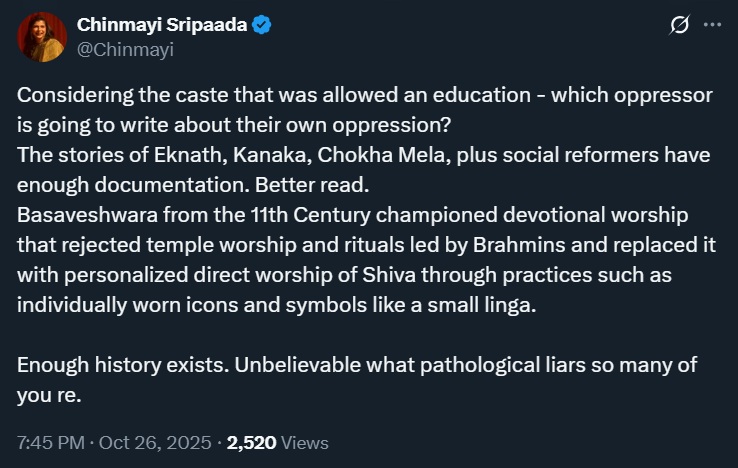
When challenged to name a single temple where Brahmins currently prevent entry to other castes, Chinmayi retreated into historical anecdotes from the 11th century. Why? Because she cannot name a single contemporary temple practicing such exclusion. The truth she deliberately ignores facts such as the Tirumala Tirupati Devasthanams (TTD) actively sponsoring SC/ST students in Veda Patashalas and appointing SC/ST archakas across Telugu temples, temple entry restrictions today are based on religious protocols that apply to all devotees regardless of caste – Brahmins are barred from entering inside the garbha griha unless they’re performing priestly duties.

The real caste discrimination is seen within SC communities themselves, where sub-castes bar each other from temples – a fact Chinmayi conveniently overlooks.

The Historical Illiteracy Of Selective Outrage

Chinmayi’s historical references betray either shocking ignorance or deliberate deception.

She cites Basaveshwara’s 11th century movement as evidence of “Brahminical oppression,” while ignoring that multiple non-Brahmin scholars and authors flourished in ancient India, educational access wasn’t exclusively Brahmin-dominated as she claims and every major religion historically restricted access – Catholic priests barred serfs, Islamic practices maintained hierarchies, yet she singles out only Brahmins.

Her demand for “reparations from Brahmins” while dismissing calls for accountability from medieval Islamic invaders reveals her selective morality. Why are alleged Brahmin actions from centuries ago condemnable while medieval atrocities get a free pass?

The Reservation Hypocrisy

This “oppression” narrative continues despite Brahmins having faced decades of state-mandated discrimination through reservation quotas in education, jobs, and promotions, age relaxations that disadvantage Brahmin candidates, temple control wrested from Brahmin communities, systemic discrimination justified by the very rhetoric Chinmayi peddles.

Yet she speaks as if Brahmins remain privileged oppressors rather than communities systematically marginalized by the very policies she champions.

The Real Agenda Exposed

Chinmayi’s logic follows a disturbing pattern:

Fire accident in Canada? Punish Brahmins.

Someone fails an exam? Blame Brahmins.

Fictional police brutality in movies? Hang Brahmins.

Rains in Chennai? Blame Brahmins.

This is pathological scapegoating. She is practicing the blame game where every topic inevitably circles back to predetermined conclusions regardless of relevance.

When confronted with facts, Chinmayi will resort to personal attacks and vague historical references rather than addressing contemporary reality. She cannot name specific temples practicing exclusion because such institutional discrimination largely doesn’t exist in modern Hindu temple administration.

The tragedy isn’t just Chinmayi’s manufactured outrage – it’s that she commands a million followers while peddling this divisive hatred. She represents the worst of activist culture: privileged individuals manufacturing grievances to stay relevant while actual communities move toward integration and progress.

Perhaps instead of searching for Brahmins to blame for every global misfortune, Chinmayi should look inward at her own prejudice. The real oppression isn’t in temple corridors – it’s in minds poisoned by ideological hatred that sees every incident through the narrow lens of caste warfare. Would she allow people of all castes into her home, sleep on her bed? Why did she choose to marry someone from her own caste, she could have very well led the reparations and married out of the community?

The Canadian family deserves sympathy, and the responsible individuals deserve legal consequences. What they don’t deserve is becoming pawns in Chinmayi’s tired, fact-free crusade against a community she’s determined to villainize regardless of truth or context.

Subscribe to our channels on WhatsAppTelegram, Instagram and YouTube to get the best stories of the day delivered to you personally. 

Madras High Court Grants Bail To Retired Police Officer R Varadharajan After Over 20 Days In Custody For Social Media Post

On 27 October 2025, Justice K. Rajasekar of the Madras High Court has granted bail to retired police officer and YouTuber R. Varadharajan in what was thought to be in connection with a case filed against him for his online commentary following the Karur stampede tragedy. The court directed him to appear before the investigating officer daily for two weeks.

Varadharajan, aged 71, was arrested on 7 October 2025 by the Chennai South Cyber Crime Police after he allegedly posted defamatory content against Justice N. Senthilkumar of the Madras High Court. His bail plea had earlier been adjourned to Monday, (27 October 2025) extending his incarceration beyond 20 days.

What Court Order Said

Varadharajan, who leads the political outfit Nethaji Makkal Katchi and runs a YouTube channel, was arrested in connection with a First Information Report (FIR) originally registered on December 20, 2024. The case, investigated by the Cyber Crime police, invokes sections of the Bharatiya Nyaya Sanhita (BNS) and the Information Technology Act, 2000.

The prosecution alleged that videos uploaded by the petitioner in 2024 contained remarks that could “incite violence” and cause law and order problems. They argued that as a retired police officer and political leader, Varadharajan should behave responsibly and objected to his bail, stating the comments were made for political gain.

However, the defense counsel, LV Rohith, argued that no violence had erupted as a result of the comments, which were made the previous year. He contended that the arrest, coming nearly ten months after the FIR was filed, was motivated because Varadarajan had recently commented on a judgment delivered by a sitting judge of the Madras High Court.

In the order accessed by The Commune, Principal Sessions Judge S. Karthikeyan noted that the police had not arrested the petitioner immediately after registering the FIR in 2024. The court observed that “admittedly, no violence was erupted as claimed by the respondent police,” and deemed the arrest after a 10-month lapse as a significant factor in its decision to grant bail.

The court ordered Varadarajan’s release on executing a bond for Rs. 10,000 with two sureties for the like sum. The bail conditions mandate that he must appear before the investigating police daily at 10:00 AM and is prohibited from tampering with evidence or absconding. A breach of these conditions would allow the court to take appropriate action, including the registration of a fresh FIR under Section 269 of the BNS for absconding.

Subscribe to our channels on WhatsAppTelegram, Instagram and YouTube to get the best stories of the day delivered to you personally. 
Tiruppur: Ajmal Khan Allegedly Enters Temple In Drunken State, Offers Namaz; Police Probe Underway

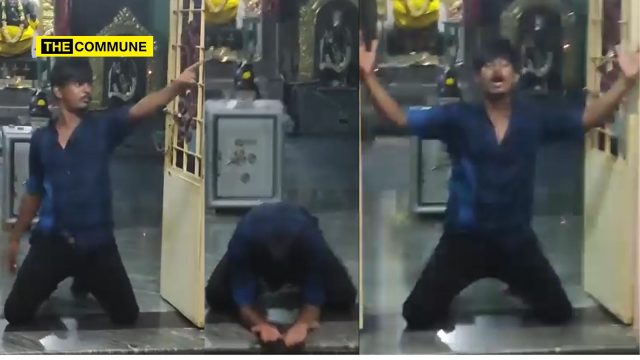
A 21-year-old Muslim youth was taken into custody after allegedly entering a temple in an intoxicated state and offering Namaz, causing alarm among devotees in Tiruppur.

The incident took place at the Rajaganapathy Temple located in the Sengunthapuram area on Mangalam Road. The youth, identified as Ajmal Khan, reportedly resides nearby with his parents.

According to reports, Ajmal Khan had consumed alcohol following an argument with his parents on Sunday (26 October 2025) evening. In an inebriated state, he allegedly entered the temple premises, sat inside, and began offering Namaz.

Devotees present at the spot were reportedly shocked and requested him to leave. When he refused and allegedly threatened those who confronted him, a complaint was filed with the local police.

Police have launched an investigation into the incident based on the complaint.

(Source: Dinamalar)

Subscribe to our channels on WhatsAppTelegram, Instagram and YouTube to get the best stories of the day delivered to you personally.